Adderall, Mixed Amphetamine Salts, and Prescription-Stimulant Poisoning
Is Adderall Poisonous to Dogs, Cats, and Other Animals?
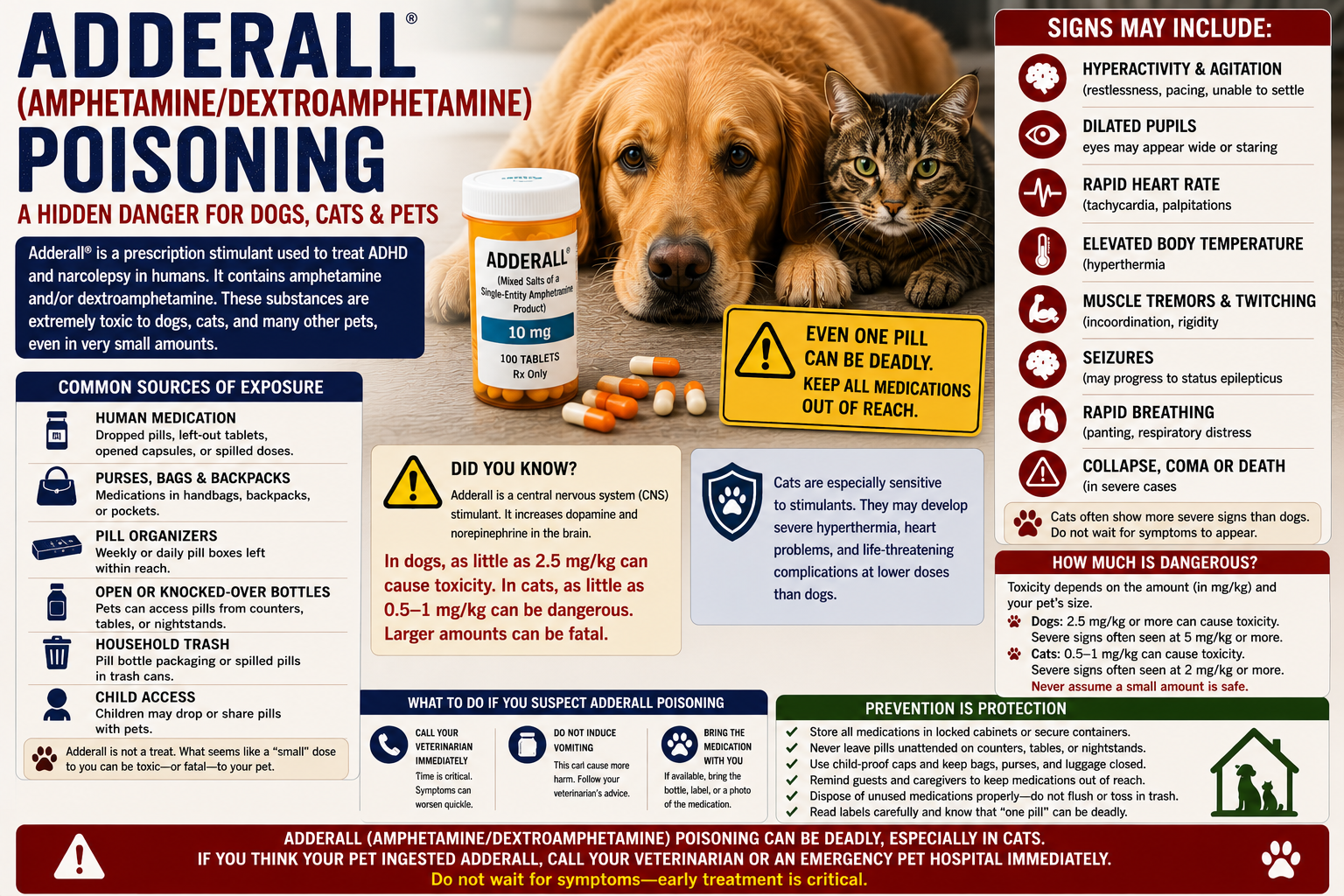
Yes. Adderall and generic amphetamine/dextroamphetamine products can cause rapidly progressive, life-threatening stimulant poisoning in dogs, cats, birds, and other animals. Expected signs include extreme agitation, repetitive pacing, vocalization, dilated pupils, panting, rapid heart rate, hypertension, tremors, hyperthermia, vomiting, diarrhea, seizures, collapse, and severe muscle injury. Large or prolonged exposures can cause disseminated intravascular coagulation, acute kidney injury, arrhythmias, respiratory failure, and death.
Adderall contains mixed amphetamine salts that provide both dextroamphetamine and levoamphetamine. Immediate-release tablets, Adderall XR capsules, generic extended-release products, and longer-acting mixed-amphetamine formulations are not interchangeable. Extended-release beads may sustain absorption for many hours, and a chewed capsule can expose an animal to both immediate and delayed-release material.
Dogs are affected most often because prescription stimulants are commonly stored in backpacks, purses, pill organizers, nightstands, school bags, and countertop bottles. Cats, ferrets, birds, rabbits, and small dogs can become severely ill after a much smaller absolute amount. An animal may ingest Adderall together with antidepressants, decongestants, caffeine, atomoxetine, methylphenidate, cannabis, or other medications, creating a mixed sympathomimetic or serotonergic emergency.
About this guide: This page provides general pet-poisoning information and cannot diagnose or treat an individual animal. For any suspected exposure, contact a veterinarian or animal poison-control service immediately. Do not induce vomiting, give medication, or attempt home decontamination unless directed by a veterinary professional.
Agent and Exposure Profile
Quick Reference
Adderall Identity, Amphetamine Salts, and Related Stimulants
Mixed Amphetamine Salts
Adderall tablets contain four amphetamine salts: dextroamphetamine saccharate, amphetamine aspartate, dextroamphetamine sulfate, and amphetamine sulfate. Together they provide dextroamphetamine and levoamphetamine in an approximate three-to-one ratio. Dextroamphetamine has stronger central nervous system effects, while levoamphetamine contributes important peripheral sympathomimetic effects.
Immediate-Release Adderall
Immediate-release tablets are designed to dissolve promptly and may produce signs quickly after ingestion. Generic products can differ in shape, color, and imprint while containing the same mixed amphetamine salts. Tablet appearance alone is not a reliable way to identify strength.
Adderall XR and Extended-Release Beads
Adderall XR capsules contain immediate-release and delayed-release beads. Generic extended-release capsules and related products may use different bead systems. Swallowed beads can continue releasing drug after early stabilization, and crushed or chewed capsules may alter the expected absorption pattern.
Mydayis and Other Long-Acting Mixed-Amphetamine Products
Mydayis is another mixed-amphetamine product designed for prolonged delivery. Long-acting formulations may produce a longer monitoring period than immediate-release tablets. Owners should preserve the exact bottle because “amphetamine salts ER” can refer to more than one release system.
Dextroamphetamine and Lisdexamfetamine
Dexedrine and generic dextroamphetamine contain primarily the dextro isomer. Vyvanse contains lisdexamfetamine, a prodrug converted in the body to dextroamphetamine. These are related stimulant poisonings but are not chemically identical to Adderall, and their onset and duration may differ.
Methylphenidate Is a Different Stimulant
Ritalin, Concerta, Focalin, and related methylphenidate products are not amphetamine salts. They can produce a similar stimulant syndrome and may be found in the same household, but pharmacokinetics, formulation, and toxicology differ. Mixed pill-organizer exposures require identification of every product.
Illicit and Counterfeit Products
Counterfeit tablets sold as Adderall may contain methamphetamine, fentanyl, caffeine, or other substances. Illicit powders and capsules can be far more unpredictable than a labeled prescription. Preserve the material safely and tell the veterinary team when the product may not have come from a pharmacy.
Where Adderall Exposure May Occur
Backpacks, School Bags, and Desks
Prescription stimulants are commonly carried to school, college, work, or travel destinations. Dogs may open backpacks, lunch bags, desk drawers, pencil cases, or medication pouches. Loose tablets can remain hidden in fabric seams or pockets after a bottle is removed.
Purses, Nightstands, and Pill Organizers
Adderall may be stored beside antidepressants, sleep aids, antihistamines, pain medication, or cardiovascular drugs. A pet that empties a weekly organizer can ingest a mixed collection with overlapping or opposing effects. The original prescription containers are essential for reconstruction.
Extended-Release Capsule Beads
Capsules may be opened for prescribed human administration, leaving loose beads on counters, plates, utensils, or food. Beads are small and easily overlooked but still contain active drug. Dogs and cats may lick them from floors or bedding.
Mail-Order Deliveries and Pharmacy Bags
Medication shipments, refill bags, and bottles may be left on porches, counters, or tables. Dogs can tear open padded envelopes and child-resistant containers. Large refill quantities increase the maximum possible exposure substantially.
Visitor and House-Sitter Medication
Guests may carry stimulants in luggage, purses, coat pockets, or unlabeled organizers. The pet owner may not know the drug name, strength, or number of tablets available until the visitor or pharmacy is contacted.
Deliberate Misuse and Recreational Exposure
Crushed tablets, powders, capsules, and counterfeit stimulants may be left on surfaces, in plastic bags, or in discarded paraphernalia. Animals can also be exposed through intentionally adulterated food. Any suspected malicious or illicit exposure should be documented carefully and may require law-enforcement involvement.
Exposure Scenarios and Risk Factors
Common Companion-Animal Scenarios
- A dog chews a bottle of immediate-release Adderall tablets.
- A pet swallows an Adderall XR capsule or licks spilled extended-release beads.
- A dog empties a weekly pill organizer containing several psychiatric or stimulant medications.
- A small dog, cat, bird, rabbit, or ferret consumes part of a human tablet.
- A pet ingests a counterfeit stimulant tablet with unknown ingredients.
- An animal receives an intentional but inappropriate dose to increase activity or suppress appetite.
- A dog consumes discarded powder, capsule material, or medication from a school or work bag.
Small Body Size
One human tablet or capsule can represent a major exposure to a toy dog, cat, bird, rabbit, or ferret. The total milligram amount should be compared with the animal's current body weight, but public dose tables are unsafe when the strength, formulation, or number missing is uncertain.
Extended-Release Exposure
Extended-release beads can sustain stimulant absorption after early signs have been controlled. Recurrence of agitation, tachycardia, or hyperthermia is possible. Long-acting products may require prolonged hospitalization and repeated reassessment.
Heart, Seizure, and Endocrine Disease
Preexisting arrhythmia, hypertension, heart disease, seizure disorders, hyperthyroidism, diabetes, kidney disease, and severe anxiety can complicate the response. Stimulant-induced hyperthermia and catecholamine release place additional stress on compromised patients.
Medication Interactions
Monoamine oxidase inhibitors, serotonergic antidepressants, decongestants, caffeine, atomoxetine, methylphenidate, cocaine, methamphetamine, and some veterinary behavior medications can intensify autonomic and neurologic stimulation. Opioids, sedatives, or counterfeit-tablet ingredients may mask or complicate the classic syndrome.
Repeated or Chronic Access
A pet may find dropped tablets repeatedly, particularly in homes where medication is divided or capsules are opened. Recurrent agitation, unexplained hyperthermia, or episodic tremors should prompt a search for repeated access rather than assuming a one-time event.
Adderall Poisoning Symptoms and Clinical Progression
Behavioral and Central Nervous System Stimulation
Restlessness, anxiety, hypervigilance, repetitive pacing, vocalization, inability to settle, disorientation, circling, and exaggerated responses to sound or touch are common. Animals may appear frightened, frantic, or compulsive rather than merely energetic. Severe agitation can progress to tremors, seizures, and exhaustion.
Cardiovascular Signs
Tachycardia, hypertension, strong pulses, and arrhythmias can develop as catecholamine concentrations rise. Persistent cardiovascular stimulation increases myocardial oxygen demand and can reduce effective circulation when rhythm becomes unstable. Collapse may reflect arrhythmia, hyperthermia, shock, or seizure activity.
Hyperthermia
Elevated temperature is one of the most dangerous complications. Agitation, tremors, vasoconstriction, and sustained muscle activity generate heat rapidly. Severe hyperthermia can damage the brain, gastrointestinal tract, liver, kidneys, coagulation system, and skeletal muscle.
Gastrointestinal and Autonomic Signs
Vomiting, diarrhea, drooling, panting, dilated pupils, urinary incontinence, and excessive urination may occur. Appetite is often absent during the stimulant phase. Gastrointestinal signs can also reflect co-ingestants or stress-related injury.
Tremors, Seizures, and Neuromuscular Injury
Muscle fasciculations, tremors, rigidity, ataxia, and seizures may develop as central stimulation intensifies. Sustained activity can produce rhabdomyolysis, dark urine, elevated creatine kinase, hyperkalemia, and acute kidney injury. A published canine case documented severe amphetamine-associated rhabdomyolysis despite eventual recovery.
Hypoglycemia and Metabolic Disturbance
Hypoglycemia has been reported in canine amphetamine and lisdexamfetamine intoxication. Lactic acidosis, electrolyte abnormalities, dehydration, and increased metabolic demand may occur. Blood glucose should be monitored rather than assuming all stimulant-poisoned animals are hyperglycemic.
Hematologic and Coagulation Changes
Severe Adderall poisoning has been associated with nucleated red blood cells, hypersegmented neutrophils, leukopenia, thrombocytopenia, and other transient hematologic abnormalities. Hyperthermia and tissue injury can also trigger disseminated intravascular coagulation in critically ill patients.
Late Depression and Collapse
After prolonged stimulation, animals may become weak, recumbent, depressed, or poorly responsive. This does not necessarily mean the toxin has cleared. Exhaustion, hypoglycemia, hyperthermic injury, arrhythmia, shock, or organ failure may be developing.
First Aid for Suspected Adderall Exposure
Immediate Owner Actions
- Remove all medication, capsule beads, powders, bags, and pill organizers.
- Preserve the original bottle, active ingredients, strength, formulation, imprint, and remaining count.
- Record the maximum amount missing, exposure window, current weight, and all observed signs.
- Identify every possible co-ingestant, including antidepressants, decongestants, caffeine, and illicit drugs.
- Move the animal to a quiet, cool, dim environment away from stairs and hazards.
- Contact a veterinarian immediately; do not wait for seizures or collapse.
Do Not Induce Vomiting Without Veterinary Direction
Do not give hydrogen peroxide, salt, mustard, syrup of ipecac, or attempt manual gagging. Agitation, tremors, seizures, and loss of coordination increase aspiration and injury risk. Extended-release beads and mixed pill-organizer exposures require individualized decontamination decisions.
Do Not Give Human Heart or Anxiety Medication
Beta blockers, benzodiazepines, antidepressants, sedating antihistamines, clonidine, and other drugs can produce dangerous interactions or obscure the clinical picture. Veterinary treatment must be based on the patient's blood pressure, rhythm, temperature, neurologic status, and co-ingestants.
Cooling Must Be Controlled
Do not immerse the animal in ice water or pack it in ice. Extreme peripheral vasoconstriction can slow heat loss and cause additional injury. Move the patient to a cooler environment, minimize exertion, and allow the veterinary team to provide controlled evaporative cooling and temperature monitoring.
Safe Transport
Use a secure carrier or padded restrained area and minimize noise, light, and physical stimulation. Avoid placing hands near the mouth of a tremoring or seizuring animal. Call ahead for hyperthermia, severe agitation, collapse, or an unknown stimulant so the hospital can prepare rapid sedation and cooling.
Adderall Toxicology and Mechanism
Monoamine Release
Amphetamines enter presynaptic neurons through monoamine transporters and promote release of dopamine, norepinephrine, and serotonin. They also reverse transporter direction and redistribute neurotransmitters from storage vesicles into the cytoplasm. The result is intense central and peripheral sympathomimetic stimulation.
Dopamine and Behavioral Stimulation
Increased dopamine contributes to hyperactivity, repetitive behavior, agitation, stereotypy, and seizure susceptibility. Dextroamphetamine has particularly strong central effects. Severe dopaminergic stimulation can become self-sustaining as activity, stress, and temperature rise together.
Norepinephrine and Cardiovascular Effects
Increased norepinephrine causes tachycardia, hypertension, vasoconstriction, mydriasis, and heightened arousal. Peripheral vasoconstriction can reduce heat dissipation while muscle activity generates more heat. Cardiac oxygen demand rises, increasing arrhythmia and ischemia risk.
Serotonin and Mixed Syndromes
Amphetamines also increase serotonin signaling. When combined with serotonergic antidepressants, monoamine oxidase inhibitors, tramadol, or other serotonergic drugs, the syndrome may include hyperthermia, tremors, rigidity, autonomic instability, diarrhea, and seizures consistent with serotonin toxicity.
Rhabdomyolysis and Organ Injury
Sustained muscle contraction, seizures, hyperthermia, hypoperfusion, and catecholamine excess can injure skeletal muscle. Released myoglobin and electrolyte shifts may then damage kidneys and destabilize cardiac rhythm. Severe hyperthermia can also cause hepatic injury, gastrointestinal barrier failure, and disseminated intravascular coagulation.
Immediate-Release Versus Extended-Release
Immediate-release tablets generally produce earlier peak exposure, while Adderall XR and related products can sustain absorption through delayed-release beads. Chewed capsules may create an early surge while still leaving material available for later release. Monitoring must follow the formulation rather than the brand name alone.
Urinary pH and Elimination
Amphetamines are weak bases, and urinary pH influences renal elimination. Acidifying urine can increase excretion, but deliberate acidification carries metabolic and renal risks and is not routine home or public guidance. Supportive care and specialist-directed therapy remain the standard.
Evidence Boundaries
Veterinary evidence includes historical canine series, Adderall case reports, stimulant toxicology reviews, rhabdomyolysis reports, and newer lisdexamfetamine cases. Controlled comparative trials are limited, so treatment relies on mechanism, intensive monitoring, and rapid control of hyperthermia, agitation, and seizures.
Clinical Management
Veterinary Care and Prognosis
Veterinary Diagnosis and Treatment
Exposure Reconstruction
The veterinary team identifies the exact product, strength, immediate- or extended-release formulation, maximum amount, exposure time, tablet or capsule imprint, and every co-ingestant. Pharmacy records or laboratory analysis may be needed when the material is unlabeled or counterfeit.
Initial Stabilization
Airway, breathing, circulation, temperature, neurologic status, blood pressure, cardiac rhythm, perfusion, hydration, and glucose are assessed immediately. Severe agitation, seizures, hyperthermia, or arrhythmia may require treatment before gastrointestinal decontamination can be considered safely.
Diagnostic Testing
Testing may include electrocardiography, continuous rhythm monitoring, blood pressure, blood glucose, complete blood count, electrolytes, serum chemistry, blood-gas analysis, lactate, creatine kinase, urinalysis, coagulation testing, and serial kidney and liver values. Dark urine or marked muscle pain increases concern for rhabdomyolysis.
Urine Drug Screening and Confirmatory Testing
Human urine drug screens may support suspicion but can produce false-positive or false-negative results in animals. Confirmatory gas or liquid chromatography with mass spectrometry is more specific but often unavailable rapidly. Treatment should not be delayed when the history and clinical syndrome are compelling.
Professional Decontamination
Veterinary-induced emesis may be considered soon after ingestion in a clinically normal patient with a protected airway. Once agitation, tremors, hyperthermia, or seizures develop, emesis becomes unsafe. Activated charcoal may be considered for selected immediate- or extended-release exposures with appropriate airway and sodium monitoring.
Sedation and Seizure Control
Rapid control of agitation and excessive muscle activity is essential. Veterinarian-selected benzodiazepines, phenothiazines, alpha-2 agonists, anesthetic agents, or anticonvulsants may be used according to blood pressure, temperature, rhythm, and co-ingestants. Refractory seizures may require intubation and general anesthesia.
Hyperthermia Treatment
Controlled evaporative cooling, intravenous fluids, active sedation, oxygen, and rapid seizure control are used while temperature is measured repeatedly. Cooling is slowed as the patient approaches a safe temperature to avoid rebound hypothermia. Severe cases require monitoring for coagulation failure, hepatic injury, kidney injury, and gastrointestinal damage.
Cardiovascular Management
Tachycardia and hypertension often improve as agitation and hyperthermia are controlled. Persistent clinically important arrhythmias or hypertension require targeted short-acting therapy selected from the actual rhythm and hemodynamic state. Unopposed alpha stimulation is a concern with inappropriate beta blockade in severe sympathomimetic poisoning.
Rhabdomyolysis and Kidney Protection
Intravenous crystalloid therapy supports perfusion and urine production while creatine kinase, electrolytes, urine color, kidney values, body weight, and fluid balance are followed. Hyperkalemia, myoglobinuria, or oliguria may require intensive or referral-level renal support.
Intravenous Lipid Emulsion and Extracorporeal Options
Intravenous lipid emulsion has been reported as an adjunct in a dog with Adderall XR intoxication, but evidence remains limited and it does not replace sedation, cooling, cardiovascular care, and decontamination. Hemoperfusion or other extracorporeal techniques may be discussed in exceptional life-threatening cases, depending on availability and toxicokinetic considerations.
Monitoring Duration
Immediate-release cases may improve within hours after adequate control, while extended-release products can produce recurrent or prolonged signs. Discharge requires stable temperature, rhythm, blood pressure, mentation, coordination, glucose, hydration, and laboratory trends. Public treatment doses are intentionally omitted.
Prognosis, Recovery, and Follow-Up
Early Treatment Improves Outcome
Prognosis is often favorable when exposure is identified quickly and agitation, temperature, seizures, and cardiovascular changes are controlled before organ injury develops. Published dogs with severe Adderall and amphetamine intoxication have recovered with aggressive supportive care.
Guarded Situations
The outlook becomes guarded with extreme hyperthermia, prolonged seizures, refractory arrhythmias, disseminated intravascular coagulation, rhabdomyolysis, acute kidney injury, hepatic injury, aspiration, shock, counterfeit-tablet exposure, or delayed presentation. Extended-release products can prolong the period of risk.
Laboratory Abnormalities May Outlast Behavior Changes
An animal may appear calmer while creatine kinase, kidney values, platelet count, or coagulation abnormalities continue to evolve. Serial testing is especially important after severe hyperthermia, dark urine, recumbency, or prolonged tremors.
After Discharge
Keep the animal quiet, cool, and closely supervised. Return promptly for renewed pacing, panting, tremors, weakness, dark urine, vomiting, diarrhea, appetite loss, collapse, seizures, or any decrease in urination. Complete every recommended kidney, liver, muscle-enzyme, and blood-count recheck.
Preventing Adderall and Stimulant Exposure
Store Stimulants in Locked Medication Storage
Keep Adderall, Adderall XR, Mydayis, dextroamphetamine, lisdexamfetamine, and all ADHD medication in original labeled containers inside a locked cabinet or medication box. Child-resistant caps and blister packs are not pet resistant.
Secure Backpacks, Purses, and School Supplies
Place backpacks, purses, lunch bags, and travel cases behind closed doors or in high cabinets. Do not leave medication in desk drawers, countertop organizers, coat pockets, or vehicle cup holders accessible to animals.
Control Extended-Release Beads
When a human prescription directs opening a capsule, handle the beads over a contained surface away from pets and clean spills immediately. Do not leave food containing medication unattended, and dispose of empty capsule shells securely.
Maintain Accurate Pill Counts
Keep a current medication list and count tablets after a spill or damaged bottle. Report a missing stimulant tablet immediately rather than waiting for symptoms. Multi-pet households should assume every animal had possible access until proven otherwise.
Protect Visitor and House-Sitter Medication
Ask guests, students, workers, and house sitters to secure prescription stimulants and pill organizers. A pet owner may have no way to identify a missing tablet after the visitor leaves unless medication is documented promptly.
Never Give Prescription Stimulants to an Animal Without Veterinary Direction
Do not use Adderall to increase energy, suppress appetite, treat behavior, or imitate human ADHD therapy. Veterinary behavioral and neurologic conditions require species-appropriate diagnosis and medication.
Facility Procedures
Boarding facilities, rescues, daycares, schools with resident animals, and veterinary hospitals should require original containers, written administration records, controlled storage, and immediate reporting of dropped or missing medication.
Adderall Poisoning FAQ
Does Adderall contain both amphetamine and dextroamphetamine?
Yes. Adderall contains mixed amphetamine salts that provide dextroamphetamine and levoamphetamine in an approximate three-to-one ratio. Both contribute to the toxic syndrome.
Can one Adderall tablet poison a dog?
Yes, especially in a small dog. Tablet strengths vary, and one human dose can produce serious stimulation, hyperthermia, tachycardia, and tremors relative to a small animal's body weight.
Is Adderall XR more dangerous than immediate-release Adderall?
It can produce a longer or recurrent course because the capsule contains delayed-release beads. Immediate-release products may peak sooner, while XR exposure can require extended monitoring.
Why is my dog pacing and panting after eating Adderall?
Amphetamines sharply increase dopamine and norepinephrine signaling. Pacing, panting, dilated pupils, agitation, and inability to settle are characteristic early signs and can progress to hyperthermia, tremors, and seizures.
Can Adderall cause hyperthermia?
Yes. Muscle activity, agitation, vasoconstriction, and catecholamine release can raise body temperature rapidly. Severe hyperthermia can damage multiple organs and is a veterinary emergency.
Can amphetamine poisoning cause rhabdomyolysis?
Yes. Sustained tremors, seizures, hyperthermia, and muscle overactivity can break down skeletal muscle, releasing myoglobin and electrolytes that threaten the kidneys and heart.
Can Adderall cause low blood sugar?
Yes. Hypoglycemia has been reported in canine stimulant poisoning and should be checked rather than assumed absent. Small, young, or highly active patients may be especially vulnerable.
Can cats be poisoned by Adderall?
Yes. Cats may develop agitation, tremors, tachycardia, hyperthermia, seizures, or collapse. Published feline stimulant cases are fewer than canine cases, but small body size makes any exposure important.
Is Vyvanse the same as Adderall?
No. Vyvanse contains lisdexamfetamine, a prodrug converted to dextroamphetamine. It produces a related stimulant syndrome but may have a different onset and duration.
Is Ritalin the same as Adderall?
No. Ritalin contains methylphenidate, not amphetamine salts. It can cause a similar stimulant toxicosis, but the active ingredient and formulation must be identified separately.
Can I make my dog vomit after an Adderall ingestion?
Not without veterinary direction. Once agitation, tremors, ataxia, or seizures begin, induced vomiting can cause aspiration and injury. Extended-release beads also require product-specific decisions.
Does activated charcoal help?
It may be considered professionally in selected early or extended-release exposures. It is not safe for unsupervised use because aspiration, sodium abnormalities, dehydration, and neurologic deterioration are possible.
Should I cool my dog in ice water?
No. Ice-water immersion can cause extreme vasoconstriction and additional complications. Move the animal to a cooler environment and seek emergency care for controlled cooling, sedation, and continuous temperature measurement.
Can a human urine drug test diagnose Adderall poisoning in a dog?
It may support suspicion but can produce false results in animals. Confirmatory mass-spectrometry testing is more specific, and treatment should not wait when the history and signs strongly fit stimulant poisoning.
Can Adderall cause heart arrhythmias?
Yes. Tachycardia, hypertension, premature beats, and more serious rhythm disturbances can occur. Continuous electrocardiographic and blood-pressure monitoring may be needed.
What if the tablet may be counterfeit?
Tell the veterinarian immediately. Counterfeit tablets can contain methamphetamine, fentanyl, caffeine, or other unexpected substances and may require a broader diagnostic and treatment plan.
What if several pets had access to the same bottle?
Do not divide the missing amount evenly. Separate the animals, record each weight and signs, preserve the bottle, and report the maximum possible exposure for every animal.
How long can signs last?
Duration depends on dose, formulation, treatment, and co-ingestants. Immediate-release effects may resolve sooner, while extended-release products can produce recurrent or prolonged stimulation and require longer hospitalization.