Ethylene Glycol, Propylene Glycol, Engine Coolant, and Heat-Transfer Fluid Poisoning
Are Antifreeze and Coolants Poisonous to Dogs, Cats, Horses, and Other Animals?
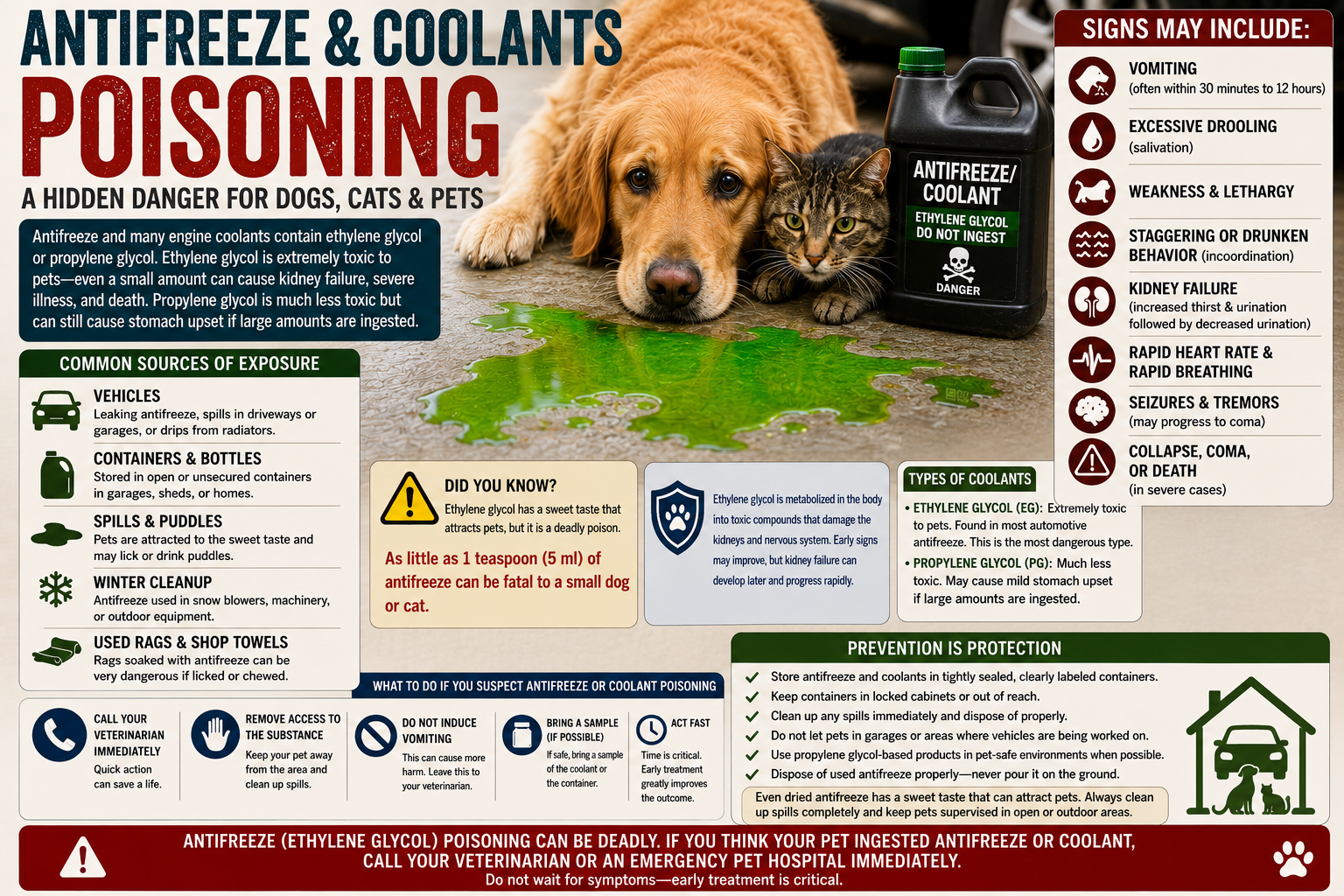
Yes. Ethylene glycol antifreeze is one of the most time-critical household poisons because an animal can appear merely drunk or uncoordinated before toxic metabolites cause severe metabolic acidosis, calcium oxalate formation, and irreversible acute kidney failure. Dogs and cats are affected most often, but horses, livestock, birds, wildlife, and small mammals can also be exposed. Treatment is most effective before substantial metabolism and before kidney injury develops.
Not every coolant contains the same glycol. Automotive engine coolant commonly contains ethylene glycol, while some RV, marine, plumbing, food-processing, geothermal, solar, and low-toxicity products use propylene glycol. Propylene glycol is less acutely nephrotoxic than ethylene glycol but is not harmless in concentrated exposure; cats are especially vulnerable to oxidative red-blood-cell changes and neurologic effects after substantial or repeated exposure. Some washer and deicing fluids contain methanol or alcohols rather than engine-coolant glycol.
Color, sweetness, “pet-safe” wording, bitterness additives, and brand family cannot identify the toxic ingredient or prove safety. Used coolant can also contain corrosion products, heavy metals, stop-leak compounds, petroleum residue, and other additives. The exact label, safety data sheet, concentration, amount missing, route, and time since exposure determine the emergency.
About this guide: This page provides general pet-poisoning information and cannot diagnose or treat an individual animal. For any suspected exposure, contact a veterinarian or animal poison-control service immediately. Do not induce vomiting, give medication, or attempt home decontamination unless directed by a veterinary professional.
Agent and Exposure Profile
Quick Reference
Antifreeze and Coolant Ingredients
Ethylene Glycol
Ethylene glycol is the principal toxic alcohol in many automotive coolants and some industrial heat-transfer fluids. The parent compound causes early central nervous system depression and intoxication-like signs, but its metabolites are responsible for the most destructive effects. Glycolic acid drives severe metabolic acidosis, while oxalic acid binds calcium and contributes to calcium oxalate crystal deposition and renal tubular injury.
Propylene Glycol
Propylene glycol is used in some products marketed as lower toxicity or safer alternatives. It has a wider safety margin than ethylene glycol and does not produce the same calcium oxalate nephropathy, but concentrated exposure can still cause central nervous system depression, hyperosmolality, lactic-acid disturbances, and other systemic effects. Cats can develop Heinz bodies and shortened red-cell survival with substantial or repeated exposure.
Glycerin- and Glycerol-Based Products
Some specialty coolants and winterizing products use glycerin or glycerol. These products are generally less systemically toxic than ethylene glycol, but a concentrated ingestion may still cause gastrointestinal upset, osmotic effects, and complications from dyes, inhibitors, alcohols, or other additives. The label must be reviewed rather than relying on the front-panel marketing claim.
Methanol and Windshield-Washer Fluid
Methanol is more commonly associated with windshield-washer fluid, deicing products, solvents, and some fuel or maintenance products than with ordinary engine coolant. It produces a different toxicology involving toxic metabolites, metabolic acidosis, central nervous system depression, and potential visual or neurologic injury. A blue or brightly colored vehicle fluid should not automatically be classified as engine antifreeze.
Corrosion Inhibitors, Dyes, Bitterants, and Additives
Coolants may also contain silicates, phosphates, borates, nitrites, organic-acid inhibitors, antifoaming agents, dyes, bitterants, and proprietary additives. Stop-leak products may add fibers, particles, metals, or sealants. These ingredients rarely replace the glycol as the main acute concern, but they can alter irritation, laboratory findings, or foreign-material risk.
Used Coolant
Drained coolant may contain lead, copper, iron, zinc, aluminum, combustion by-products, oil, fuel, and degraded additives. Used fluid is not safer because it is old or dirty. It can create a mixed chemical and environmental exposure for pets, livestock, wildlife, and people.
Where Antifreeze and Coolant Exposure Occurs
Vehicles and Garage Floors
Radiator leaks, damaged hoses, overflow reservoirs, water pumps, heater cores, loose caps, collision damage, and routine coolant service can create puddles under cars, trucks, tractors, motorcycles, ATVs, and heavy equipment. Dogs may lick fluid directly or groom contaminated paws after walking through a spill.
Open Containers and Maintenance Work
Drain pans, funnels, buckets, jugs, recycled beverage bottles, and uncapped concentrate create high-risk access during maintenance. A small amount left in a pan or hose can be enough for a serious exposure, especially in a cat or small dog. Spills may spread under shelving or vehicles where they remain unnoticed.
RV, Marine, Plumbing, and Winterizing Products
Recreational vehicles, boats, seasonal cabins, pools, plumbing systems, and water lines may use propylene-glycol, ethanol, glycerin, or mixed winterizing formulations. “RV antifreeze” is not one standardized toxicology category. Product-specific review remains necessary before deciding that an exposure is lower risk.
Industrial and Building Heat-Transfer Systems
Ethylene glycol or propylene glycol may circulate through commercial refrigeration, geothermal loops, solar heating systems, ice rinks, food-processing equipment, HVAC systems, and industrial chillers. Leaks can contaminate floors, drains, soil, animal housing, feed areas, or water sources.
Windshield-Washer and Deicing Fluids
Windshield-washer concentrate, aircraft or pavement deicers, lock deicers, and fuel-line products may contain methanol, ethanol, isopropanol, ethylene glycol, propylene glycol, or mixtures. The name “antifreeze” is sometimes used loosely for these products even though their toxicology differs from radiator coolant.
Farms, Stables, and Equipment Yards
Tractors, combines, generators, pumps, trucks, and old equipment can leak coolant near barns, feed rooms, paddocks, and poultry areas. Livestock and farm dogs may drink from puddles, buckets, or discarded containers. Used coolant should never be poured onto soil, into drains, or near water troughs.
Exposure Scenarios and Risk Factors
Common Companion-Animal Scenarios
- A dog drinks from a fresh puddle beneath a leaking vehicle or tractor.
- A cat walks through coolant and later grooms the fluid from its paws and coat.
- A pet reaches an open drain pan, funnel, bucket, or uncapped concentrate during vehicle maintenance.
- An animal drinks from a reused beverage bottle containing coolant or winterizing fluid.
- A dog chews a jug, hose, or reservoir and swallows both fluid and plastic.
- Livestock or wildlife reaches a spill near farm equipment, a shop, a marina, or an industrial system.
- An unknown brightly colored vehicle fluid is mistaken for harmless water or a lower-toxicity product.
Cats Have a Shorter Rescue Window
Cats are highly susceptible to ethylene glycol and generally require treatment even sooner than dogs. Their small body size means a limited amount can represent a major exposure, and the transition from apparent intoxication to irreversible renal injury can occur rapidly. Any credible feline exposure is an emergency even before signs appear.
Concentrate Versus Premixed Coolant
Full-strength concentrate contains more glycol per unit volume than a premixed product, but a diluted coolant can still be lethal. Puddle size does not establish how much was swallowed, and evaporation can change concentration. The product label and maximum accessible amount are needed for risk assessment.
Repeated Small Exposures
Chronic leaks may allow repeated licking over several days. Repeated small access can be difficult to recognize because no single event seems dramatic, yet cumulative renal injury or persistent gastrointestinal and neurologic signs can develop. Repairing the leak and cleaning the environment are part of treatment.
Medical Vulnerability
Dehydration, preexisting kidney disease, heart disease, liver disease, anemia, very young or advanced age, and concurrent nephrotoxic medication can worsen outcome or complicate fluid therapy. Small animals, birds, rabbits, and other exotics have little margin for uncertainty.
Antifreeze and Coolant Poisoning Symptoms
Early Neurologic and Gastrointestinal Phase
Ethylene glycol exposure may initially resemble alcohol intoxication. Staggering, weakness, depression, vomiting, excessive thirst, excessive urination, low body temperature, abnormal eye movements, tremors, seizures, and coma can occur within hours. Some animals improve temporarily as the parent compound is metabolized, creating a dangerous false sense of recovery.
Metabolic Acidosis and Cardiopulmonary Stress
As acidic metabolites accumulate, animals may develop rapid or deep breathing, worsening depression, tachycardia, weakness, dehydration, low blood pressure, and electrolyte abnormalities. Hypocalcemia may contribute to tremors or seizures. Severe acidosis can impair cardiovascular function and accelerate organ injury.
Acute Kidney Injury
Over the next day or two, calcium oxalate deposition and direct tubular injury can produce painful enlarged kidneys, vomiting, appetite loss, severe depression, oral ulceration, bad breath, reduced or absent urination, fluid overload, hypertension, seizures, coma, and death. Once established oliguric or anuric renal failure develops, prognosis becomes much worse.
Propylene Glycol Signs
Large propylene-glycol exposure can cause depression, ataxia, weakness, vomiting, hyperosmolality, lactic-acid disturbances, and altered mentation. Cats may develop Heinz bodies and reduced red-cell survival with substantial or repeated exposure. Propylene glycol does not produce the classic calcium oxalate nephropathy of ethylene glycol.
Methanol and Other Alcohols
Methanol, ethanol, and isopropanol produce different combinations of central nervous system depression, vomiting, hypoglycemia, metabolic acidosis, gastrointestinal irritation, and respiratory or cardiovascular compromise. The ingredient list is therefore essential when the fluid was washer solution, deicer, fuel additive, or industrial solvent rather than radiator coolant.
Dermal, Ocular, and Aspiration Exposure
Skin contact is less likely than ingestion to cause severe systemic ethylene glycol poisoning, but contaminated fur and paws become an oral source during grooming. Eye exposure can cause irritation. Aspiration during vomiting or forced home treatment can add chemical pneumonitis and respiratory distress.
First Aid for Suspected Antifreeze or Coolant Exposure
Immediate Owner Actions
- Remove the animal from the spill and block access by every other animal and person.
- Preserve the original container, product label, safety data sheet, receipt, and photographs of the spill and vehicle.
- Record whether the product was concentrate, premixed coolant, RV antifreeze, washer fluid, deicer, or unknown.
- Estimate the maximum amount accessible and the earliest and latest possible exposure time.
- Prevent grooming of contaminated paws or fur.
- Contact a veterinarian immediately and travel for care without waiting for symptoms.
Do Not Induce Vomiting Without Veterinary Direction
Do not give hydrogen peroxide, salt, mustard, or attempt manual gagging. Rapid neurologic depression and loss of airway protection make aspiration a serious risk. Veterinary professionals decide whether the timing and patient status still make emesis appropriate.
Do Not Give Alcohol at Home
Ethanol can inhibit ethylene glycol metabolism, but unsupervised alcohol dosing is dangerous. It can cause severe sedation, hypoglycemia, aspiration, hypothermia, respiratory depression, and dosing errors while delaying definitive treatment. Fomepizole or carefully controlled ethanol therapy belongs in veterinary care.
Activated Charcoal Is Not a Reliable Antidote
Ethylene glycol is absorbed quickly and is poorly adsorbed by activated charcoal. Charcoal does not replace alcohol-dehydrogenase inhibition, fluid therapy, or dialysis. It can also be aspirated by a depressed or vomiting patient.
Skin and Paw Contamination
Prevent grooming and wear gloves. A veterinarian may recommend prompt washing with lukewarm water and a mild cleanser when coolant is on the coat or paws. Do not use solvents, gasoline, bleach, or harsh degreasers.
Safe Transport
Transport the animal in a secure carrier or restrained area, keep it warm but not overheated, and bring the product container. Call ahead so the hospital can prepare antidotal treatment, laboratory testing, and referral options without delay.
Antifreeze Toxicology and Mechanism
Alcohol Dehydrogenase Metabolism
Ethylene glycol itself causes early central nervous system depression, but alcohol dehydrogenase converts it to glycoaldehyde, glycolic acid, glyoxylic acid, and oxalic acid. Blocking this first metabolic step is the central goal of early antidotal treatment. Once toxic metabolites and renal injury are established, antidote alone cannot reverse the damage.
Glycolic Acid and Metabolic Acidosis
Glycolic acid is a major contributor to the high-anion-gap metabolic acidosis of ethylene glycol poisoning. Acidosis impairs cardiac function, alters electrolyte balance, increases respiratory effort, and contributes to neurologic deterioration. The osmolal gap may be most prominent early, while the anion gap rises as metabolism progresses.
Oxalate, Hypocalcemia, and Renal Tubular Injury
Oxalic acid binds calcium and forms calcium oxalate monohydrate crystals. Crystals can injure proximal renal tubules, obstruct flow, and contribute to acute kidney failure. Calcium binding may also reduce ionized calcium and worsen tremors, seizures, or cardiac instability in severe cases.
Why Apparent Improvement Is Dangerous
Early intoxication-like signs can fade as ethylene glycol leaves the bloodstream, even while glycolate and oxalate are accumulating. The animal may look better during the interval between central nervous system depression and overt renal failure. This temporary improvement is not recovery.
Propylene Glycol Differs Mechanistically
Propylene glycol is metabolized largely to lactate-related compounds and does not create the same oxalate nephropathy. At high exposure it can still cause hyperosmolality, central nervous system depression, and D-lactic acidosis. Cats are uniquely sensitive to Heinz-body formation and shortened red-cell survival.
Why Color and Taste Cannot Identify Risk
Coolants are sold in many colors, and manufacturers may add bittering agents to discourage ingestion. Color reflects formulation and branding, not a universal toxicology code. Bitterants reduce palatability inconsistently and do not guarantee that a thirsty, curious, or already-exposed animal will avoid the product.
Evidence Boundaries
Veterinary evidence strongly supports early alcohol-dehydrogenase inhibition in dogs and cats, with species-specific differences in the timing and performance of fomepizole and ethanol. Dialysis evidence includes case reports and referral experience rather than large controlled trials. Point-of-care assays are useful but must be interpreted with timing, product type, and possible interference in mind.
Clinical Management
Veterinary Care and Prognosis
Veterinary Diagnosis and Treatment
Exposure History and Product Identification
The veterinary team determines the exact product, glycol type, concentration, amount accessible, exposure time, and whether the animal licked a spill, drank fluid, or groomed contaminated fur. Safety data sheets and manufacturer information may be needed for RV, marine, industrial, geothermal, and washer products.
Early Laboratory Pattern
Testing may include complete blood count, serum chemistry, electrolytes, ionized calcium, blood gas, lactate, measured osmolality, calculated osmolal gap, anion gap, urinalysis, urine sediment, blood pressure, and serial kidney values. A large osmolal gap can support early exposure, while a rising anion gap suggests metabolism to acidic compounds.
Ethylene Glycol Assays
Direct ethylene glycol measurement is most useful before the parent compound has been extensively metabolized. Point-of-care tests can support rapid decisions, but false positives and false negatives can occur depending on product, timing, assay design, and interfering alcohols or glycols. A negative late test does not rule out established oxalate nephropathy.
Urine Crystals
Calcium oxalate monohydrate crystals can support the diagnosis but may be absent early, absent after urine production declines, or missed in a single sample. Their absence never makes a credible antifreeze exposure safe. Crystal morphology must also be distinguished from other forms of calcium oxalate and urinary debris.
Fomepizole
Fomepizole inhibits alcohol dehydrogenase and is the preferred antidote for many canine ethylene glycol exposures when administered before substantial metabolism. High-dose feline protocols have also shown efficacy when started very early. The treatment window is shorter in cats, and delayed administration after renal failure has developed offers little benefit.
Ethanol
Ethanol competes for alcohol dehydrogenase and can be used when fomepizole is unavailable or when species-specific considerations favor it. It requires intensive monitoring because it causes sedation, hypoglycemia, respiratory depression, diuresis, and handling hazards. It must never be improvised at home.
Fluids, Acid-Base, and Electrolyte Support
Intravenous crystalloids support perfusion, correct dehydration, and promote renal elimination before kidney failure develops. Severe metabolic acidosis and symptomatic hypocalcemia may require carefully selected correction. Persistent hypotension after appropriate fluid resuscitation may require vasopressor support. Fluid therapy must be reduced or redesigned when urine production falls to avoid life-threatening overload.
Hemodialysis and Renal Replacement Therapy
Hemodialysis can remove ethylene glycol and toxic metabolites, correct acidosis and electrolyte derangement, and manage established acute kidney injury. Intermittent hemodialysis or continuous renal replacement may be life-saving when the exposure is late, the glycol concentration is high, acidosis is severe, or urine production is inadequate. Availability and timing strongly affect outcome.
Propylene Glycol and Other Coolant Ingredients
Propylene glycol poisoning is treated primarily with supportive care rather than alcohol-dehydrogenase inhibitors. Methanol, isopropanol, ethanol, corrosion inhibitors, stop-leak products, and heavy-metal contamination require product-specific treatment. The wrong antidote can add harm when the fluid was misidentified.
Monitoring and Prognosis Decisions
Serial kidney values, urine output, acid-base status, calcium, phosphorus, electrolytes, neurologic status, and hydration guide the plan. Public treatment doses are intentionally omitted because antidote selection, timing, dialysis, fluid rate, and electrolyte correction depend on species, product, exposure time, and current organ function.
Prognosis, Recovery, and Follow-Up
Before Metabolism and Kidney Injury
Prognosis can be favorable when a credible exposure is recognized immediately, an alcohol-dehydrogenase inhibitor is started before substantial metabolism, and the patient maintains normal renal function. Early treatment is the single most important determinant of outcome.
After Acute Kidney Failure Develops
The outlook becomes guarded to poor once severe oliguria or anuria, marked azotemia, calcium oxalate nephropathy, or fluid overload develops. Dialysis can improve survival in selected patients, but prolonged hospitalization and weeks of renal support may be required.
Propylene Glycol Exposures
Most limited propylene-glycol exposures have a better prognosis than ethylene glycol exposures, especially when the product contains no dangerous co-ingredients. Severe hyperosmolality, neurologic depression, acidosis, or feline red-cell injury can still require hospitalization and serial monitoring.
Delayed and Chronic Consequences
Survivors of severe ethylene glycol poisoning may retain chronic kidney disease, reduced concentrating ability, hypertension, or recurrent electrolyte abnormalities. An apparently normal appetite after discharge does not guarantee complete renal recovery.
After Discharge
Follow all medication, fluid, diet, activity, and recheck instructions. Return promptly for vomiting, appetite loss, increased or reduced thirst or urination, weakness, oral ulcers, bad breath, breathing changes, seizures, or any decline after apparent improvement.
Preventing Antifreeze and Coolant Poisoning
Repair Leaks Immediately
Inspect vehicles and equipment for drips, wet hoses, damaged reservoirs, and sweet-smelling puddles. Keep animals out of the area until the leak is repaired and the surface is fully cleaned. A recurring small leak can be as dangerous as one obvious spill.
Store Products in Original Containers
Keep antifreeze, coolant concentrate, RV winterizer, washer fluid, and deicers in their original labeled containers inside a locked cabinet or inaccessible shelf. Never transfer them into beverage bottles, food containers, buckets, or unlabeled jugs.
Use Closed Drain Pans and Immediate Cleanup
During maintenance, confine pets indoors or in a secure area. Use a covered drain pan, cap every container, and clean even small drips immediately with an absorbent method appropriate for the surface. Dispose of contaminated absorbent material so animals cannot reach it.
Do Not Rely on Bitterants or “Pet-Safe” Labels
Bitterants may reduce voluntary drinking but do not make ethylene glycol nontoxic. Propylene-glycol and glycerin products generally have lower acute toxicity but can still harm animals in concentrated or mixed exposures. Product choice should reduce risk, not replace secure handling.
Dispose of Used Coolant Properly
Recycle or dispose of used coolant through an approved automotive or hazardous-waste program. Do not pour it onto soil, into storm drains, septic systems, gutters, ponds, feed areas, or water troughs. Used fluid can contaminate wildlife habitat and groundwater.
Farm, Stable, Marina, and Facility Procedures
Maintain written spill-response procedures, labeled storage, leak inspections, and restricted maintenance zones. Boarding facilities, farms, stables, marinas, warehouses, and shops should train staff to treat every unknown coolant spill as an emergency until the product is identified.
Antifreeze and Coolant FAQ
Are all antifreeze products made with ethylene glycol?
No. Products may contain ethylene glycol, propylene glycol, glycerin, methanol, ethanol, isopropanol, or mixtures. Engine coolant, RV winterizer, washer fluid, and deicer are not interchangeable toxicology categories.
Is propylene-glycol antifreeze safe for pets?
It is less acutely nephrotoxic than ethylene glycol but not harmless. Concentrated exposure can cause neurologic and osmotic effects, and cats can develop Heinz-body changes after substantial or repeated exposure.
Can one lick from a coolant puddle be dangerous?
Yes. The risk depends on the product, concentration, animal size, and actual amount swallowed, which is often impossible to estimate from one observed lick. Any credible ethylene glycol exposure requires immediate veterinary assessment.
Can coolant color identify the ingredient?
No. Green, orange, yellow, pink, blue, and other colors are used across many formulations. Color is a branding and formulation clue, not a reliable toxicology test.
Why can a pet seem better before kidney failure appears?
The parent ethylene glycol causes early intoxication-like signs that may fade as it is metabolized. Toxic acids and oxalate can continue accumulating during that apparent improvement, leading later to renal failure.
Is windshield-washer fluid the same as antifreeze?
No. Washer fluid commonly contains methanol or other alcohols, while engine coolant often contains ethylene glycol or propylene glycol. The label and safety data sheet are essential.
Can a pet be poisoned by grooming coolant off its paws?
Yes. Skin absorption is usually less important than ingestion, but contaminated paws and fur become an oral source during grooming. Prevent licking and contact a veterinarian for decontamination guidance.
Does vomiting mean the antifreeze is gone?
No. Ethylene glycol is absorbed quickly, and vomiting does not prove that the dose was removed. Neurologic depression can also make further vomiting dangerous because of aspiration.
Why is activated charcoal usually not useful?
Ethylene glycol is poorly bound by charcoal and is absorbed rapidly. Charcoal does not block alcohol dehydrogenase or remove toxic metabolites and can be aspirated by a depressed patient.
What does fomepizole do?
Fomepizole inhibits alcohol dehydrogenase, preventing ethylene glycol from being converted into the metabolites that cause acidosis and renal injury. It works best when given very early.
Why is ethanol sometimes used?
Ethanol competes for alcohol dehydrogenase and can slow ethylene glycol metabolism. Because it causes sedation, hypoglycemia, and respiratory risk, it must be administered and monitored by veterinary professionals.
Why are cats especially urgent cases?
Cats are highly susceptible, have a shorter effective treatment window, and can develop severe renal injury after a small exposure. A cat should never be watched at home after credible access to ethylene glycol.
Do calcium oxalate crystals prove antifreeze poisoning?
They strongly support the diagnosis in the right context but are not present in every case and are not unique to ethylene glycol. Their absence does not rule out poisoning.
Can an ethylene-glycol test be wrong?
Yes. Point-of-care assays can be affected by timing, concentration, and other glycols or alcohols. A negative result late in the course does not exclude poisoning after the parent compound has been metabolized.
Can dialysis save an animal after kidney failure begins?
Sometimes. Hemodialysis or continuous renal replacement can remove ethylene glycol and metabolites, correct severe acidosis, and support a patient with inadequate urine production. Availability and early referral matter.
Can used coolant be more dangerous than new coolant?
It may contain the original glycol plus metals, petroleum residue, degraded inhibitors, and other contaminants. Used coolant should be treated as hazardous and kept away from animals.
Can livestock and wildlife be poisoned by coolant?
Yes. Farm-equipment leaks, industrial systems, discarded containers, and contaminated puddles can expose cattle, horses, poultry, wild birds, and mammals. A shared source can affect many animals.
How should an antifreeze spill be cleaned around pets?
Exclude all animals, absorb the liquid promptly, clean the surface according to product and local environmental guidance, and dispose of contaminated material securely. Repair the source before animals return.