Arsenic and Arsenical Compound Poisoning in Animals
Is Arsenic Poisonous to Dogs, Cats, Horses, and Livestock?
Yes. Inorganic arsenic is a highly toxic gastrointestinal, vascular, metabolic, neurologic, hepatic, and renal poison that can kill dogs, cats, horses, cattle, sheep, goats, poultry, and other animals. Acute poisoning may begin with salivation, severe abdominal pain, vomiting in species able to vomit, profuse or bloody diarrhea, weakness, dehydration, an abnormal pulse, tremors, ataxia, collapse, and shock. A severely exposed animal can die before a complete diagnostic workup is available.
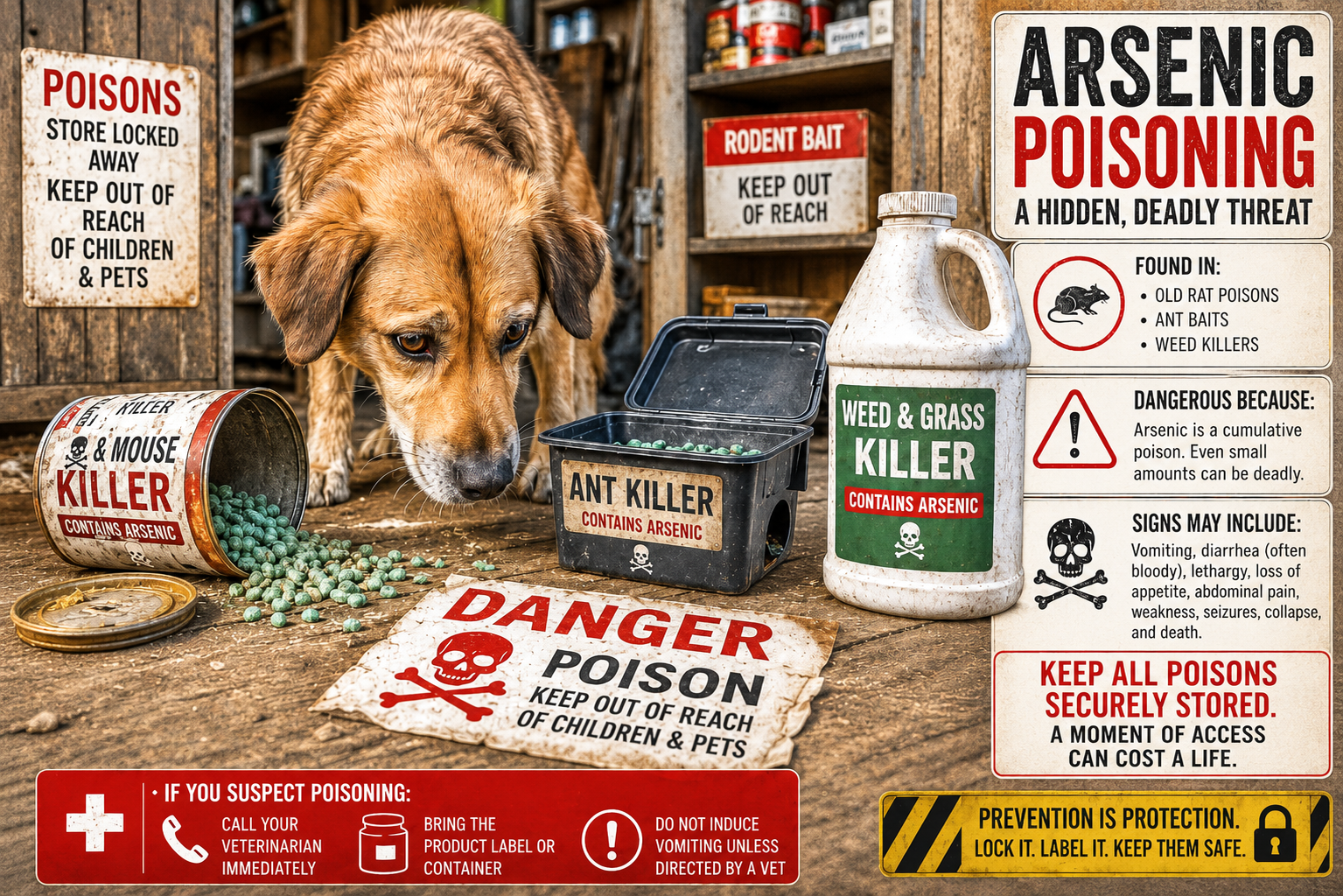
Modern household poison products in the United States rarely use inorganic arsenic, but dangerous exposures still occur from old rat poisons, ant baits, insecticides, weed killers, orchard chemicals, livestock treatments, contaminated soil or water, mining and smelting waste, arsenical herbicides, and ashes from burned pressure-treated lumber. Old containers may be unlabeled, corroded, transferred into food jars, or stored in barns, sheds, garages, crawl spaces, workshops, and inherited properties.
The chemical form matters. Trivalent inorganic arsenic compounds such as arsenite are generally more acutely reactive than pentavalent arsenate compounds, while some organic arsenicals are less acutely toxic but are not automatically safe. Chromated copper arsenate-treated wood also contains copper and chromium, so smoke, sawdust, contaminated soil, and especially ash can create a mixed-metal exposure rather than pure arsenic poisoning.
About this guide: This page provides general pet-poisoning information and cannot diagnose or treat an individual animal. For any suspected exposure, contact a veterinarian or animal poison-control service immediately. Do not induce vomiting, give medication, or attempt home decontamination unless directed by a veterinary professional.
Agent and Exposure Profile
Quick Reference
Arsenic Identity, Chemical Forms, and Product Recognition
Elemental Arsenic Versus Arsenic Compounds
Arsenic is a naturally occurring metalloid found in rock, soil, groundwater, ores, and industrial materials. Poisoning usually involves an arsenic compound rather than a piece of elemental arsenic. The toxic behavior depends on oxidation state, solubility, formulation, route, dose, and whether copper, chromium, lead, solvents, surfactants, or other pesticides are present.
Trivalent Inorganic Arsenic
Trivalent arsenic compounds include arsenic trioxide, sodium arsenite, potassium arsenite, and related arsenites. These compounds bind strongly to sulfhydryl groups in enzymes and proteins, disrupt cellular energy metabolism, injure capillaries, and produce severe gastrointestinal and cardiovascular effects. Historically, arsenic trioxide and arsenites appeared in rodenticides, ant poisons, insecticides, herbicides, livestock dips, tonics, and industrial preparations.
Pentavalent Inorganic Arsenic
Pentavalent forms include arsenic acid, sodium arsenate, calcium arsenate, lead arsenate, and arsenate in chromated copper arsenate wood preservative. Arsenate can substitute for phosphate in biochemical reactions and interfere with ATP generation. Pentavalent compounds may be reduced or metabolized into more reactive forms within the body.
Organic Arsenicals
Organic arsenicals contain carbon and include monosodium methanearsonate, disodium methanearsonate, cacodylic acid, and several historical feed or pharmaceutical compounds. Some are less acutely toxic than inorganic arsenic, but formulation, environmental conversion, repeated exposure, and mixed ingredients prevent a blanket assumption of safety. A 2025 equine outbreak associated with an MSMA herbicide reinforces that arsenic-based weed killers remain relevant in veterinary investigation.
Chromated Copper Arsenate and Other Wood Preservatives
Chromated copper arsenate, commonly abbreviated CCA, combines arsenic, chromium, and copper to protect wood from insects and decay. Residential use of newly treated CCA lumber was largely discontinued in the United States after 2003, but older decks, fences, playground structures, barns, posts, utility poles, landscaping timbers, marine structures, and stored scrap remain. Some commercial and industrial uses continue.
Burning treated wood does not destroy the arsenic. It creates contaminated smoke, fine particulate matter, and ash in which metals can be concentrated and more accessible. Veterinary outbreaks in cattle have followed ingestion of ash from burned CCA-treated lumber or posts.
Historic Names and Search Terms
Labels and records may use arsenic trioxide, white arsenic, arsenious oxide, arsenious acid, sodium arsenite, sodium arsenate, lead arsenate, calcium arsenate, Paris green, London purple, Scheele's green, cacodylic acid, MSMA, DSMA, arsenical herbicide, arsenical pesticide, CCA, ACA, or chromated arsenicals. A historic name is not enough to determine the exact toxicant; the complete label and laboratory analysis remain important.
Where Arsenic Exposure May Occur
Old Rat Poisons, Ant Baits, and Insecticides
Before safer alternatives replaced many arsenical pesticides, arsenic trioxide, arsenites, arsenates, and copper arsenicals were used against rodents, ants, termites, orchard insects, and other pests. Old products may remain in barns, garden sheds, basements, garages, crawl spaces, farm shops, inherited cabinets, abandoned buildings, estate cleanouts, and unlabeled jars. Powder can spill into feed, bedding, soil, or floor cracks long after the original container deteriorates.
Historic Weed Killers and Orchard Chemicals
Lead arsenate, calcium arsenate, sodium arsenite, arsenic acid compounds, MSMA, DSMA, and cacodylic acid have been used as herbicides, defoliants, desiccants, or orchard pesticides. Most historic inorganic uses are no longer available for ordinary residential application in the United States, but old stock, imported products, contaminated sprayers, discarded containers, treated pasture, and industrial or agricultural formulations remain possible sources.
Pressure-Treated Lumber, Sawdust, Smoke, and Ash
Older green-tinted outdoor lumber may contain CCA, although color alone cannot confirm treatment. Dogs may chew scraps or ingest contaminated soil, and livestock may lick or eat ash because of its salty or mineral character. Sawing, sanding, demolition, fires, burn piles, wood stoves, and disposal of old structures can release dust, smoke, and ash containing arsenic, chromium, and copper.
The most dramatic veterinary wood-preservative cases involve ash rather than casual contact with an intact structure. Ash should never be spread in pastures, gardens, kennels, poultry yards, compost, bedding, or areas accessible to animals.
Contaminated Water, Soil, Feed, and Mineral Supplements
Arsenic can enter groundwater from natural geology, mining, smelting, pesticide runoff, industrial waste, coal combustion, or disposal of arsenical chemicals. Private wells may be untested. Soil near old orchards, smelters, mine tailings, wood-treatment facilities, burn sites, hazardous-waste areas, and former pesticide storage buildings may contain elevated arsenic.
Livestock exposure may involve contaminated forage, hay, grain, mineral supplements, drilling waste, poultry litter, or water. A single sick animal can be the first warning that a shared environmental source threatens the entire herd, household, wildlife, and people.
Traditional Remedies, Imported Products, and Industrial Materials
Some traditional, imported, homeopathic, or naturopathic products have contained arsenic. Industrial sources include metal smelting, glass and pigment production, semiconductor work, hide tanning, ammunition manufacturing, and treated-wood facilities. Pets may be exposed when contaminated work clothing, dust, waste, or equipment enters the home.
Exposure Scenarios and Risk Factors
Common Companion-Animal Scenarios
- A dog tears open an old rat-poison, ant-bait, or weed-killer container found during a move, renovation, estate cleanout, or barn cleanup.
- A pet walks through spilled powder and later licks contaminated paws or fur.
- A dog chews CCA-treated lumber scraps, eats ash from a burn pile, or drinks water collected near treated wood or contaminated soil.
- A cat or dog contacts pesticide residue stored in an unlabeled food jar or reused beverage container.
- Several pets share access to a garage, basement, shed, crawl space, or yard containing unknown historic chemicals.
- A pet is exposed indirectly through contaminated work boots, clothing, tools, vehicle cargo, or demolition debris.
Livestock and Horse Exposure
Horses and livestock may encounter arsenic through contaminated pasture, sprayed forage, old herbicide drums, mineral supplements, drilling fluids, ash piles, treated fence posts, wood-preservative waste, mine or smelter runoff, and water sources. Documented equine cases have involved acute watery diarrhea, salivation, tremors, ataxia, depression, and exposure to arsenic-based herbicide.
Cattle are particularly vulnerable when ash or contaminated material is spread over pasture or left near mineral-feeding areas. Because multiple animals share feed and water, exposure may become an outbreak before the source is recognized.
Fire, Demolition, and Disaster Cleanup
Structure fires, wildfires, hurricanes, floods, demolition, and rebuilding can mix treated lumber ash with ordinary debris. Burning or grinding old lumber can produce inhalable dust and ash that settles on coats, feed, soil, and water. Animals should be excluded until the material is identified, contained, and removed under appropriate environmental guidance.
Patients at Greater Risk of Severe Decompensation
Young, small, geriatric, dehydrated, underweight, or medically compromised animals have less reserve to tolerate severe diarrhea, vomiting, vascular leakage, hypotension, metabolic disruption, and kidney injury. Ruminants and horses may deteriorate rapidly from fluid loss and cardiovascular collapse even though they do not vomit like dogs and cats.
Unknown Product and Mixed-Metal Exposure
Arsenic-containing products may also contain copper, chromium, lead, solvents, acids, surfactants, or other pesticides. A green powder, ash, or unlabeled bait cannot be assumed to be pure arsenic. Treatment and environmental cleanup should remain broad enough to address the entire mixture.
Arsenic Poisoning Symptoms and Clinical Progression
Severe Gastrointestinal Irritation
Acute inorganic arsenic poisoning often begins with intense abdominal pain, salivation, nausea, vomiting in dogs and cats, and profuse watery, mucoid, or bloody diarrhea. The stool may become foul, hemorrhagic, or rice-water-like. Horses may show severe colic, pawing, rolling, sweating, salivation, and diarrhea; ruminants may develop abdominal pain, diarrhea, rumen dysfunction, weakness, and dehydration.
Gastrointestinal signs reflect direct mucosal injury, altered epithelial transport, capillary damage, and systemic metabolic effects. Fluid loss can become massive, producing electrolyte abnormalities, acid-base disturbance, poor perfusion, and shock.
Cardiovascular Collapse and Vascular Injury
Arsenic damages vascular endothelium and disrupts cellular energy production. Affected animals may have pale or injected mucous membranes, weak pulses, rapid or irregular heart rate, low blood pressure, cold extremities, prolonged capillary refill, collapse, or sudden death. Severe shock may be disproportionate to the visible gastrointestinal losses.
Neurologic and Muscular Signs
Weakness, depression, staggering, ataxia, muscle tremors, abnormal posture, disorientation, seizures, reduced consciousness, and coma can develop as perfusion fails or arsenic directly affects nervous tissue. Peripheral neuropathy is more often associated with subacute or chronic exposure and may produce weakness, altered reflexes, gait abnormalities, or persistent sensory deficits.
Kidney, Liver, and Blood Abnormalities
Dehydration, hypotension, hemolysis in some circumstances, direct cellular injury, and pigment or protein losses can contribute to acute kidney injury. Liver enzymes may rise, and severe cases can develop hepatic dysfunction, coagulopathy, metabolic acidosis, electrolyte derangement, and multi-organ failure.
Respiratory Exposure and Secondary Ingestion
Smoke or dust from burned, sawed, or sanded arsenic-containing material can irritate the eyes and respiratory tract. Larger particles trapped in the upper airway may be swallowed, adding gastrointestinal exposure, while smaller particles can reach deeper lung tissue. Coughing, nasal discharge, breathing difficulty, eye irritation, and gastrointestinal signs may occur together.
Subacute and Chronic Exposure
Longer-term exposure may cause poor appetite, weight loss, intermittent vomiting or diarrhea, weakness, reduced growth, anemia, skin or coat changes, reduced performance, neuropathy, liver or kidney abnormalities, and reproductive or developmental concerns. These signs are nonspecific and require investigation of water, feed, soil, supplements, and industrial or pesticide history.
Signs That Suggest a Mixed Exposure
Marked hemolysis, severe methemoglobinemia, cholinergic signs, profound sedation, unusual odor, caustic burns, or a distinctive neurologic syndrome may reflect another pesticide, metal, solvent, or co-ingredient. Old pest-control and wood-preservative products often contain mixtures, so diagnosis should not stop after detecting arsenic.
First Aid for Suspected Arsenic Exposure
Immediate Owner Actions
- Remove animals and people from the contaminated area without spreading dust or ash.
- Prevent licking, grazing, drinking, grooming, or access by other pets and livestock.
- Preserve the original container, label, safety data sheet, photographs, product remnants, bait, ash, soil, feed, water, vomit, and stool.
- Record every animal with possible access, each animal's weight, exposure window, clinical signs, and changes in feed or water.
- Contact a veterinarian immediately and describe whether the source involved powder, liquid, bait, treated wood, ash, smoke, soil, water, feed, or an unknown material.
- Contact local environmental or hazardous-material authorities when a property, well, pasture, feed source, or burn site may remain contaminated.
Do Not Create More Exposure During Cleanup
Do not dry sweep, use a leaf blower, shop vacuum, household vacuum, pressure washer, hose, or burn suspicious powder, ash, or treated wood. These actions can aerosolize arsenic-containing dust or move contamination into soil, drains, water, kennels, pastures, vehicles, and buildings. Keep people and animals away until the material can be assessed and contained safely.
Do Not Induce Vomiting Without Veterinary Direction
Hydrogen peroxide, salt, mustard, syrup of ipecac, and manual gagging can cause additional injury. Emesis may be unsafe when the product is caustic, the animal is weak or neurologically abnormal, aspiration risk is present, or the exposure involves dust, petroleum, solvents, or multiple pesticides.
Activated Charcoal Is Not a Reliable Arsenic Binder
Activated charcoal does not bind many metals effectively and should not be treated as a home antidote for arsenic. Professional gastrointestinal decontamination decisions depend on the product, timing, formulation, airway, hydration, and possibility of mixed ingredients.
Skin, Coat, and Paw Contamination
Prevent grooming and wear appropriate gloves and protective clothing. Do not brush dry powder from the coat where it can become airborne. A veterinarian, hazardous-material specialist, or product safety professional should advise whether controlled wet decontamination is appropriate. Avoid solvents, gasoline, kerosene, bleach, acids, or concentrated detergents.
Eye Exposure
When liquid or fine dust has entered the eye and irrigation can be performed without contaminating the handler or spreading powder, gently flush with sterile saline or clean lukewarm water. Persistent pain, squinting, redness, cloudiness, or visual difficulty requires prompt veterinary examination.
Safe Transport and Sample Handling
Transport the animal in a secure carrier or restrained area with absorbent material for diarrhea or vomit. Double-bag the product container or sample without mixing different materials together. Do not bring an open, leaking, dusty, or highly contaminated container into the clinic without calling first; the hospital may direct sample containment or outdoor transfer procedures.
Arsenic Toxicology and Mechanism
Sulfhydryl Binding and Enzyme Inhibition
Trivalent inorganic arsenic binds to sulfhydryl groups in enzymes and structural proteins. A central target is the lipoic-acid-dependent pyruvate dehydrogenase complex, which links glycolysis to the citric acid cycle. Inhibition reduces acetyl-CoA production, disrupts ATP generation, and impairs tissues with high metabolic demand.
Arsenate Substitution for Phosphate
Pentavalent arsenate resembles phosphate and can enter phosphate-dependent reactions. Unstable arsenate-containing intermediates uncouple energy conservation, allowing biochemical reactions to proceed without generating normal ATP. This contributes to cellular energy failure even when oxygen is available.
Oxidative Stress and Protein Damage
Arsenic increases reactive oxygen species, alters antioxidant defenses, disrupts mitochondria, affects protein folding, and changes cell signaling and gene regulation. Experimental animal work documents lipid peroxidation and altered antioxidant enzyme activity in liver, kidney, and blood during repeated exposure.
Capillary and Gastrointestinal Injury
Endothelial damage increases vascular permeability and promotes fluid movement out of the circulation. Combined with severe gastrointestinal secretion and mucosal injury, this produces dehydration, hemoconcentration or blood loss, hypotension, and shock. Vascular injury is a major reason animals can collapse rapidly.
Distribution, Methylation, and Elimination
Absorbed arsenic distributes to liver, kidney, gastrointestinal tissue, blood, nervous tissue, and keratin-rich structures. Methylation can aid elimination but does not guarantee detoxification, because some intermediate metabolites remain biologically active. Urinary excretion is important, so kidney injury can prolong exposure and complicate chelation.
Inorganic, Organic, and Seafood Arsenic
Inorganic arsenic is generally the principal concern in acute veterinary poisoning. Some organic arsenic compounds are less acutely toxic, and seafood commonly contains arsenobetaine or arsenocholine, which are comparatively low-toxicity forms. A laboratory reporting only total arsenic may therefore require speciation and dietary context before the result is interpreted.
Mixed-Metal Toxicology from Treated Wood
CCA-treated wood contains chromium and copper in addition to arsenic. Burning can concentrate these metals in ash and produce inhalable particles. Clinical and laboratory findings may reflect combined gastrointestinal, renal, hepatic, vascular, and oxidative injury rather than arsenic alone.
Why a Universal Public Toxic Threshold Is Misleading
Solubility, oxidation state, formulation, route, acute versus repeated exposure, species, body size, hydration, nutritional status, and co-contaminants all change risk. The quantity in a corroded container, ash pile, soil sample, or herbicide formulation is often unknown. Public dose cutoffs can create false reassurance when the chemical form and exposure estimate are uncertain.
Evidence Boundaries
Veterinary evidence includes domestic-animal outbreaks, equine and bovine case reports, experimental animal studies, toxicologic reviews, and government evaluations. Evidence for individual chelators and chronic low-dose treatment is less complete in many veterinary species, so therapy must be individualized with toxicology and diagnostic-laboratory support.
Clinical Management
Veterinary Care and Prognosis
Veterinary Diagnosis and Treatment
Exposure History and Scene Investigation
The veterinary team will ask about old pesticides, rodenticides, ant baits, herbicides, treated lumber, fires, ash, orchards, wells, mine or smelter sites, feed changes, mineral supplements, industrial work, imported remedies, and every animal sharing the environment. Photographs, labels, safety data sheets, property history, and environmental samples may be as important as the first blood test.
Stabilization Comes Before Laboratory Confirmation
Severe cases require immediate assessment of airway, breathing, circulation, hydration, temperature, neurologic status, blood pressure, pulse quality, abdominal pain, gastrointestinal hemorrhage, and urine production. Laboratory confirmation may not return quickly enough to guide the first hours of care.
Clinical Laboratory Evaluation
Testing may include a complete blood count, packed cell volume and total solids, serum chemistry profile, electrolytes, glucose, kidney and liver values, urinalysis, blood-gas analysis, lactate, coagulation tests, electrocardiography, blood pressure, and serial monitoring of urine output. Severe diarrhea, hemorrhage, hemolysis, or shock may require repeated values rather than a single admission sample.
Arsenic Testing and Speciation
Urine is often useful for recent exposure because arsenic is excreted through the kidneys. Blood may help early but can decline as arsenic redistributes. Liver, kidney, gastrointestinal contents, feed, water, soil, ash, bait, and suspect product may be submitted to a veterinary diagnostic laboratory. Hair and nails can support chronic-exposure investigation but are vulnerable to external contamination and should not be interpreted alone.
Speciation distinguishes inorganic arsenic and its metabolites from low-toxicity dietary organic forms. Seafood or seaweed consumption can elevate total arsenic and complicate interpretation if the laboratory does not separate species.
Professional Gastrointestinal Decontamination
Emesis or gastric lavage may be considered after a recent ingestion in a stable patient when the airway is protected and the formulation does not make the procedure dangerous. Activated charcoal is not a dependable binder for inorganic arsenic. Whole-bowel irrigation, endoscopic removal, or other methods may be selected for a specific solid product, but no procedure is routine for every exposure.
Fluids, Perfusion, and Shock Management
Intravenous crystalloid therapy is often central to correcting dehydration, restoring circulating volume, supporting renal perfusion, and replacing ongoing gastrointestinal losses. Electrolytes, acid-base status, glucose, urine output, blood pressure, and cardiovascular response guide the plan. Persistent hypotension after appropriate fluid resuscitation may require vasopressor support.
Chelation
Dimercaprol has long been used for acute inorganic arsenic poisoning and may be most effective when started early. Succimer, also called DMSA, and DMPS may be considered depending on species, clinical status, renal function, availability, route, and specialist guidance. Chelation can redistribute metals, strain the kidneys, cause adverse effects, and complicate interpretation of follow-up testing, so it is not a home treatment.
The decision to chelate should integrate a credible exposure, clinical signs, arsenic form, time since exposure, urine production, renal and hepatic function, and access to monitoring. Treatment may begin before laboratory confirmation when the history and syndrome are compelling.
Gastrointestinal, Pain, and Hemorrhage Support
Veterinarian-selected antiemetics, analgesia, mucosal protection, nutritional support, and management of severe diarrhea may be required. Blood or plasma-containing products may be necessary for major hemorrhage, anemia, coagulopathy, or shock. Antidiarrheal drugs that slow intestinal movement are not automatically appropriate when toxic material remains in the gut.
Renal, Neurologic, and Respiratory Support
Oliguria or anuria requires reassessment of perfusion, kidney injury, obstruction, fluid balance, and referral options. Tremors and seizures require anticonvulsants and correction of glucose, electrolytes, temperature, perfusion, and oxygenation. Inhalational exposure may require oxygen, airway support, bronchodilator or anti-inflammatory treatment selected by the clinician, and monitoring for pulmonary injury.
Environmental and Herd Management
Treatment fails if animals return to the same contaminated source. Feed, water, soil, ash, pasture, bedding, supplements, and structures may require professional sampling and removal. Public-health, environmental, agricultural, or hazardous-material agencies may need to be involved when people, livestock, wildlife, wells, or food products are affected.
Monitoring Duration and Evidence Boundaries
Observation depends on the arsenic form, dose certainty, clinical progression, kidney function, response to fluids and chelation, and whether the exposure was acute or repeated. Public chelator doses are intentionally omitted because product selection, route, timing, renal function, and species materially change safe treatment.
Prognosis, Recovery, and Follow-Up
Early Recognition Improves the Outlook
Prognosis is more favorable when the source is identified quickly, exposure stops before severe gastrointestinal and vascular injury develops, circulation and kidney function remain stable, and chelation is started promptly when indicated. Mild exposures may recover with decontamination, fluid support, monitoring, and source control.
Guarded and Poor-Prognosis Findings
The outlook becomes guarded with profound diarrhea, gastrointestinal hemorrhage, persistent hypotension, severe dehydration, arrhythmias, acute kidney injury, liver dysfunction, seizures, coma, disseminated intravascular coagulation, delayed treatment, or continued access to contaminated feed or water. Large-animal outbreaks may have a grave prognosis because several animals can deteriorate before the common source is recognized.
Recovery Can Be Prolonged
Gastrointestinal signs may improve before renal, hepatic, hematologic, or neurologic injury has fully evolved. Peripheral neuropathy and weakness can persist after the acute crisis. Serial examination, bloodwork, urinalysis, blood pressure, body weight, hydration, appetite, gait, and production records may be needed.
After Discharge
Return promptly for recurrent vomiting or diarrhea, blood in stool, abdominal pain, weakness, stumbling, tremors, seizures, appetite loss, reduced urination, jaundice, collapse, or any decline after initial improvement. Do not reintroduce animals to the suspected area until environmental clearance is complete.
Preventing Arsenic Exposure
Identify and Remove Historic Products
Inspect barns, sheds, garages, crawl spaces, basements, workshops, inherited properties, orchard buildings, and old farm chemical storage for unlabeled or deteriorating pesticides. Do not open, smell, taste, mix, pour, burn, or discard unknown powders with ordinary household waste. Use local hazardous-waste programs or environmental authorities.
Never Burn Treated Wood
Do not burn pressure-treated lumber in fireplaces, wood stoves, fire pits, burn barrels, campfires, pasture piles, or demolition fires. Do not use treated-wood ash in gardens, compost, kennels, barns, poultry yards, or livestock areas. Keep animals away from old ash deposits and contaminated soil.
Manage Older Outdoor Structures
Existing older CCA-treated structures do not automatically require removal, but damaged wood, sawdust, soil, and demolition debris should be managed carefully. Prevent chewing, repair splintered surfaces, do not turn scraps into mulch, and follow current EPA and local disposal guidance.
Protect Feed and Water
Store feed, hay, mineral supplements, and bedding away from pesticides, treated wood, ash, industrial dust, and runoff. Test private wells when property history, local geology, mining, smelting, or prior pesticide use creates concern. A contaminated water source can affect animals and people simultaneously.
Control Worksite-to-Home Transfer
Workers involved in mining, smelting, wood treatment, demolition, pesticide application, or semiconductor production should keep contaminated boots, clothing, tools, and dust away from pets. Use workplace decontamination procedures and launder contaminated clothing separately when directed.
Facility and Herd Procedures
Boarding facilities, kennels, rescues, farms, stables, and daycares should document chemical storage, prohibit unlabeled products, inspect burn and debris areas, and maintain emergency records for every animal. When one animal develops unexplained severe gastrointestinal illness, immediately evaluate shared feed, water, bedding, pasture, and chemical access.
Arsenic Poisoning FAQ
Is arsenic still used in rat poison, ant bait, or weed killer?
Most modern consumer products in the United States no longer use inorganic arsenic for those purposes, but old arsenical rodenticides, ant poisons, insecticides, and herbicides remain in inherited buildings, barns, sheds, and unlabeled containers. Some specialized organic arsenical herbicide uses also continue. The label and laboratory analysis determine whether a specific product contains arsenic.
Does modern pressure-treated lumber contain arsenic?
Most newly treated residential lumber sold in the United States uses alternatives to CCA, but older residential structures and some current commercial or industrial products may contain chromated arsenicals. Age, green color, or appearance cannot confirm the preservative with certainty.
Why is burned treated-wood ash especially dangerous?
Burning does not destroy arsenic. It transfers arsenic, chromium, and copper into smoke, dust, and ash, where the metals may become concentrated and easy to ingest or inhale. Cattle outbreaks have followed access to ash from burned CCA-treated posts and lumber.
Can a dog be poisoned by chewing an old treated deck or fence?
Chewing should be prevented because it can expose the dog to preservatives, contaminated surface material, splinters, paint, and other hazards. Acute arsenic poisoning is more strongly associated with concentrated preservative, contaminated soil, sawdust, smoke, or ash than with brief contact with an intact structure, but the exact risk depends on the wood and amount consumed.
Can arsenic be identified by smell or taste?
No dependable smell or taste rules out arsenic. Many arsenic compounds are odorless and nearly tasteless. The historic description of a garlic odor is inconsistent and should never be used to diagnose or exclude exposure.
Should I bring ash, soil, bait, feed, or water to the veterinarian?
Yes, but call first so the clinic can advise safe containment. Keep different materials separate, label the source and collection time, and avoid opening dusty or leaking containers indoors. Environmental samples may be essential when blood results are delayed or several animals are affected.
Can an arsenic blood test be normal after a real exposure?
Yes. Blood arsenic may fall as the element redistributes into tissues and is excreted. Urine, liver, kidney, gastrointestinal contents, hair, nails, feed, water, soil, and product analysis may provide different information depending on timing. No single specimen is ideal for every case.
Why can seafood affect an arsenic test?
Seafood often contains arsenobetaine and arsenocholine, organic forms with comparatively low toxicity. A total-arsenic test can rise after seafood consumption without proving inorganic arsenic poisoning. Speciation separates the chemical forms and improves interpretation.
Is organic arsenic safe?
No. Organic arsenic is a broad category, not a guarantee of safety. Some compounds are less acutely toxic than inorganic arsenic, while arsenical herbicides and metabolites can still injure animals or convert into other forms in the environment.
Will activated charcoal absorb arsenic?
Activated charcoal is not a reliable binder for inorganic arsenic and should not be used as a home antidote. Veterinary decontamination is selected according to the product, timing, airway, hydration, and co-ingredients.
What if several animals shared the same pasture, barn, or water source?
Evaluate every animal separately, including those that still appear normal. Remove the group from the suspected source, preserve feed and water samples, and investigate the environment immediately. One sick animal may signal a larger herd, household, wildlife, or public-health problem.
Can contaminated well water poison pets?
Yes. Long-term exposure to inorganic arsenic in private well water can affect animals and people. Testing is especially important near naturally arsenic-rich geology, mines, smelters, old orchards, geothermal areas, or known contamination sites.
Can arsenic poisoning cause long-term nerve damage?
Subacute and chronic arsenic exposure can cause peripheral neuropathy, weakness, altered gait, and sensory or reflex abnormalities. Recovery may take weeks or months, and some deficits can persist after the source is removed.
Is arsenic poisoning the same as lead poisoning?
No. Both are toxic elements and can occur in old agricultural or industrial settings, but their mechanisms, specimen choices, clinical patterns, and chelation plans differ. Mixed-metal exposure is possible and should be considered when the source is paint, ash, treated wood, smelting waste, or old pesticide.
Does rain make an old ash pile safe?
No. Rain can move arsenic from ash into surrounding soil, puddles, groundwater, forage, and sediment. Weathering changes distribution but does not destroy the element. Animals should remain excluded until the site is evaluated and remediated.
Could poultry litter, mineral supplements, or feed contain arsenic?
Historic arsenical feed additives, contaminated mineral ingredients, industrial dust, water, or pesticide residues can contribute arsenic to feed systems. Modern regulations have reduced many uses, but testing is appropriate when multiple animals are affected or the source history is suspicious.
How does chronic arsenic exposure differ from an acute poisoning?
Acute poisoning often produces severe gastrointestinal illness, dehydration, shock, weakness, and rapid collapse. Chronic exposure is more likely to cause weight loss, poor performance, intermittent gastrointestinal signs, neuropathy, skin or coat changes, anemia, and liver or kidney abnormalities over time.
When is chelation considered?
Chelation may be considered when a credible inorganic arsenic exposure and compatible clinical syndrome are present, especially early in severe poisoning. The veterinarian or toxicology specialist selects the agent according to species, timing, kidney function, clinical stability, and available monitoring. Chelators can cause serious adverse effects and are never appropriate for unsupervised home use.