Baclofen Muscle-Relaxant Poisoning, Respiratory Depression, Coma, and Prolonged Neurologic Effects
Is Baclofen Poisonous to Dogs, Cats, and Other Animals?
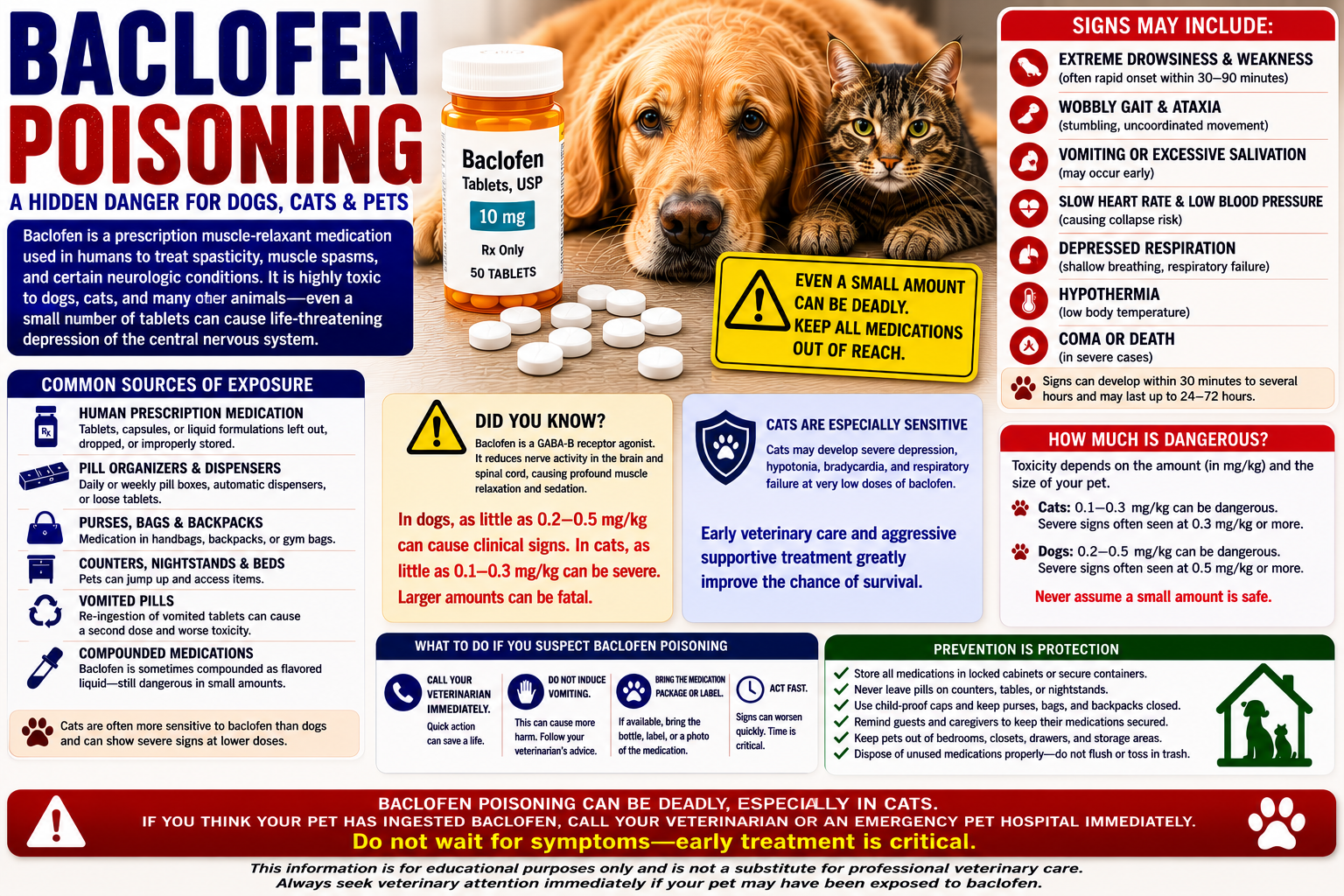
Yes. Baclofen can cause rapid, profound, and life-threatening poisoning in dogs and cats after accidental ingestion of human medication. Early signs may include vomiting, drooling, disorientation, abnormal vocalization, agitation, or loss of coordination, followed by marked weakness, recumbency, stupor, coma, loss of protective airway reflexes, respiratory depression, abnormal heart rate or blood pressure, tremors, seizures, and death.
Baclofen is a centrally acting antispastic muscle relaxant and gamma-aminobutyric acid type B receptor agonist. It is sold as generic baclofen and under brand names that include Lioresal, Ozobax, Fleqsuvy, and Lyvispah; intrathecal products include brands such as Gablofen and Lioresal Intrathecal. Tablets, oral liquids, suspensions, dissolving granules, compounded preparations, pill organizers, and mixed medication bags can all be exposure sources. Product strength and formulation must be confirmed from the label rather than guessed from pill color or shape.
Veterinary cases can look catastrophically severe even when the animal ultimately recovers with intensive support. In the largest published dog-and-cat case series, most exposed animals developed clinical signs and the central nervous system was affected most often. More recent multicenter data show that many severely affected dogs require intubation or mechanical ventilation, yet survival can still be high when airway support, monitoring, nursing care, and advanced therapies are available.
About this guide: This page provides general pet-poisoning information and cannot diagnose or treat an individual animal. For any suspected exposure, contact a veterinarian or animal poison-control service immediately. Do not induce vomiting, give medication, or attempt home decontamination unless directed by a veterinary professional.
Agent and Exposure Profile
Quick Reference
Baclofen Identity, Brand Names, Formulations, and Product Recognition
Baclofen is the active drug
Baclofen is a prescription antispastic medication used in human medicine to reduce muscle spasms, rigidity, and spasticity associated with spinal-cord disease, multiple sclerosis, and other neurologic conditions. It is a structural analog of gamma-aminobutyric acid and acts primarily as a GABA-B receptor agonist. Generic labels may display only the word baclofen, while brand names can obscure the active ingredient if the full pharmacy or package label is not read.
Common oral formulations
Human products include conventional tablets, oral solutions, oral suspensions, dissolving or sprinkle granules, and pharmacy-compounded liquids. Current tablet labels commonly include several strengths, including 5-, 10-, 15-, and 20-mg products. Single-dose granule packets and concentrated liquids can expose a small animal to a clinically important amount even when only one packet, spoonful, syringe, or partially chewed container is missing.
Brand families include Lioresal, Ozobax, Fleqsuvy, and Lyvispah, along with many generic manufacturers and compounded formulations. The exact inactive ingredients also matter. Some flavored granules, suspensions, or compounded liquids may contain sweeteners or flavoring agents that create additional questions, so the entire ingredient panel and pharmacy recipe should be preserved.
Intrathecal baclofen products
Intrathecal baclofen is delivered directly into spinal fluid through an implanted pump for severe human spasticity. These concentrated sterile products are not equivalent to ordinary tablets. Veterinary exposure can occur if a pet accesses medical supplies, leaked medication, discarded packaging, or a caregiver's equipment. Any suspected exposure to an injectable or intrathecal formulation requires immediate product identification and emergency consultation.
Baclofen is not the same as other muscle relaxants
Cyclobenzaprine, methocarbamol, tizanidine, carisoprodol, metaxalone, chlorzoxazone, dantrolene, and benzodiazepines are different drugs with different mechanisms and treatment concerns. A pill organizer may contain several of them. The patient history should list every medication that could be missing rather than treating all muscle relaxants as baclofen.
No dependable home safety threshold
Veterinary case data show wide variability in outcome and severity, with clinically important signs reported after relatively small exposures and deaths occurring across overlapping dose ranges. Age, body size, renal function, formulation, co-ingestants, timing, and uncertainty in the amount swallowed all affect risk. A single public cutoff would create false reassurance and should not replace case-specific veterinary assessment.
Where Baclofen May Be Found
Prescription bottles and bedside medication
Baclofen is commonly stored in pharmacy bottles, weekly pill organizers, bedside cups, bathroom cabinets, kitchen counters, purses, backpacks, luggage, mobility-equipment bags, and caregiver medication trays. Dogs may crush child-resistant bottles or blister packs, while cats and small animals may contact dropped tablets or spilled liquid.
Spasticity, pain, rehabilitation, and neurologic-care settings
Homes caring for people with spinal-cord injury, multiple sclerosis, cerebral palsy, severe muscle spasms, or rehabilitation needs may contain several baclofen formulations and related sedating medicines. Tablets may be divided, crushed, dissolved, or placed in feeding-tube supplies, increasing the chance of spills or mislabeled containers.
Compounded liquids and oral syringes
Compounded baclofen may be prepared at concentrations that differ substantially between pharmacies. Oral syringes, dropper bottles, feeding tubes, and refrigerator containers can retain residue. The concentration printed on the prescription label is essential because volume alone cannot be interpreted safely.
Hospice, home health, and medical equipment
Caregiver bags, medication lockboxes, pump supplies, refill paperwork, and discarded packaging may be present in homes with visiting nurses or home-health services. A pet may find medication in a temporary work area that is normally inaccessible. Used containers and empty-looking syringes should be treated as medication-bearing until accounted for.
Mixed human medication exposures
Baclofen may be stored with opioids, benzodiazepines, gabapentin, pregabalin, antidepressants, sleep aids, antihistamines, blood-pressure medication, or pain relievers. A chewed pill organizer can therefore produce simultaneous central-nervous-system depression, serotonin toxicity, cardiovascular instability, gastrointestinal injury, or other overlapping syndromes.
Baclofen Exposure Scenarios and Risk Factors
Chewed bottle, blister pack, or pill organizer
Dogs frequently gain access by crushing a medication bottle, chewing a blister card, emptying a weekly organizer, or stealing pills from a purse or bedside table. The number swallowed is often uncertain because tablets fragment, dissolve in saliva, adhere to bedding, or are consumed by more than one animal. The maximum credible amount should be used until proven otherwise.
Dropped tablet or caregiver dosing error
A single dropped tablet can be important for a small dog, cat, puppy, kitten, bird, rabbit, or other small companion animal. Errors may also occur when a human medication is given to the wrong patient, a compounded concentration is misread, multiple caregivers administer the same dose, or a pet receives an outdated prescription intended for another animal.
Liquid, granule, or feeding-tube spill
Flavored liquids and granules may be licked directly from the floor, bedding, fur, syringe, or opened packet. Spilled medication on the coat creates a continuing oral exposure during grooming. Feeding-tube preparation areas can also contain concentrated residue that is invisible once dry.
Multiple pets with access
When several animals were present, the missing amount cannot be divided evenly. One pet may have swallowed nearly all of the medication while another only chewed the container. Separate the animals, document each weight and clinical sign, and report the maximum possible exposure for every patient.
Renal disease and reduced clearance
Baclofen is eliminated largely unchanged by the kidneys. Pre-existing kidney disease, dehydration, poor perfusion, advanced age, or acute kidney injury can prolong exposure and worsen central-nervous-system depression. A dose that might produce a shorter course in one animal may cause sustained coma or respiratory compromise in another with impaired renal clearance.
Co-ingestion of sedatives and respiratory depressants
Opioids, benzodiazepines, gabapentin, pregabalin, sleep medications, antihistamines, alcohol-containing products, and some anesthetic or pain medications can intensify sedation, loss of airway reflexes, hypotension, and respiratory depression. Stimulants or serotonergic drugs may instead add agitation, tremors, hyperthermia, or seizures, producing a mixed clinical picture.
Species and age considerations
Dogs account for most published veterinary cases, but cats have also developed serious and fatal toxicosis. The largest case series included only a small number of cats, so feline dose-response predictions are weak. Evidence in horses, livestock, rabbits, birds, reptiles, and other species is even more limited; lack of published cases must not be mistaken for safety.
Baclofen Poisoning Symptoms and Clinical Progression
Early gastrointestinal and behavioral signs
Vomiting, hypersalivation, lip licking, diarrhea, restlessness, disorientation, unusual barking or crying, pacing, and apparent anxiety may occur early. Some animals become paradoxically agitated or vocal before progressing to depression. These signs can be mistaken for fear, pain, or a behavioral episode unless the medication exposure is recognized.
Ataxia, weakness, and loss of motor control
Progressive loss of coordination, swaying, stumbling, inability to rise, generalized weakness, reduced muscle tone, and recumbency are common. The animal may appear profoundly drunk or floppy. A weak patient can aspirate saliva or vomit, develop pressure injury, or become hypothermic even before loss of consciousness.
Stupor, coma, and loss of protective reflexes
Severe poisoning can cause profound central-nervous-system depression, minimal response to stimulation, absent gag reflex, reduced swallowing, fixed recumbency, and coma. The depth of unconsciousness can mimic catastrophic brain disease. Baclofen toxicosis should remain in the differential when the history is uncertain and the neurologic examination is dominated by flaccidity and respiratory depression.
Respiratory depression and arrest
Slow shallow breathing, weak chest movement, irregular respiration, carbon-dioxide retention, cyanosis, apnea, and respiratory arrest are the most immediately life-threatening complications. Depression of central respiratory drive and skeletal-muscle function can occur together. Oxygen alone may not be enough when ventilation is inadequate; intubation and mechanical ventilation may be required.
Cardiovascular and temperature abnormalities
Bradycardia or tachycardia, abnormal blood pressure, poor perfusion, arrhythmias, hypothermia, or less commonly hyperthermia may develop. Cardiovascular changes can reflect direct drug effects, hypoventilation, aspiration, shock, co-ingestants, or complications of prolonged recumbency.
Tremors, abnormal movements, and seizures
Muscle twitching, tremors, opisthotonus, involuntary movements, and seizures can occur despite baclofen's inhibitory pharmacology. Severe intoxication can disrupt normal inhibitory and excitatory signaling in complex ways. Seizures may also reflect hypoxia, electrolyte disturbance, co-ingestants, or abrupt withdrawal in an animal receiving chronic baclofen.
Urinary and aspiration complications
Urinary incontinence, retention, or altered bladder tone may occur. Regurgitation, loss of swallowing reflexes, and prolonged recumbency increase the risk of aspiration pneumonia. Fever, coughing, increased respiratory effort, or worsening oxygenation after apparent neurologic improvement may signal a secondary aspiration complication.
Duration and delayed recovery
Signs may persist for one to several days, especially after large or uncertain exposure, delayed treatment, renal dysfunction, concentrated formulations, or co-ingestion of other depressants. Improvement may be uneven. A patient that becomes more responsive can still relapse into hypoventilation, regurgitate, or develop aspiration-related disease and therefore requires continued monitoring.
First Aid for Suspected Baclofen Exposure
Immediate owner actions
- Remove access to tablets, liquid, granules, packaging, vomit, and contaminated bedding while preventing other animals from entering the area.
- Preserve every container, label, strength, concentration, packet, pill organizer, syringe, and co-medication that could be involved.
- Estimate the maximum amount missing and record the earliest and latest possible exposure time.
- Obtain the animal's current weight and prepare a complete list of kidney, heart, respiratory, and neurologic disease.
- Contact a veterinarian or emergency hospital immediately and begin transport when directed.
Do not induce vomiting at home
Baclofen can rapidly impair coordination, consciousness, gag reflexes, and breathing. Hydrogen peroxide, salt, mustard, syrup of ipecac, manual gagging, or other home-emesis methods can cause aspiration, severe gastrointestinal injury, or dangerous delay. Even an animal that looks alert can deteriorate during the attempt.
Do not give activated charcoal at home
Activated charcoal may be considered by veterinary professionals in selected cases, but a weak, sedated, vomiting, or neurologically abnormal animal can aspirate it. Charcoal also complicates airway management and nursing care. It should only be given after the patient's airway and exposure timing have been assessed.
Protect the airway during transport
Keep the animal quiet and transport in a secure carrier or padded vehicle area. If the patient is recumbent, position the head and neck so saliva or vomit can drain outward without forcing the neck into an extreme position. Do not place fingers into the mouth of a disoriented or seizing animal, and do not offer food or water to a patient with abnormal swallowing.
Liquid or coat contamination
Prevent grooming and wear gloves when handling spilled medication. If an alert animal has liquid baclofen on the coat, gently rinse the affected fur with lukewarm water and mild dishwashing liquid while avoiding chilling and facial aspiration, provided this does not delay transport. Bring the compounded label because concentration and inactive ingredients may vary.
Respiratory emergency signs
Slow, shallow, irregular, or absent breathing; blue or gray gums; collapse; profound unresponsiveness; and repeated regurgitation are immediate emergencies. Call ahead so the hospital can prepare oxygen, suction, intubation, mechanical ventilation, and critical-care monitoring.
Baclofen Toxicology and Mechanism
GABA-B receptor agonism
Baclofen acts mainly at metabotropic GABA-B receptors in the spinal cord and brain. Presynaptic receptor activation reduces release of excitatory neurotransmitters, while postsynaptic effects increase inhibitory signaling and reduce neuronal excitability. Therapeutically, this suppresses excessive muscle reflexes; in overdose, the same actions can produce profound weakness, flaccidity, sedation, coma, and respiratory depression.
Spinal and supraspinal effects
The drug reduces mono- and polysynaptic reflex activity at the spinal level but also acts at supraspinal sites. This combination helps explain why poisoned animals can show both loss of muscle tone and severe changes in consciousness. Respiratory failure may reflect depression of central respiratory drive, weakness of respiratory muscles, or both.
Why excitation and seizures can occur
Although baclofen is an inhibitory agonist, overdose does not produce a uniform sedative state. Abnormal vocalization, agitation, tremors, and seizures are well documented. Proposed explanations include complex presynaptic effects on neurotransmitter release, disinhibition within selected circuits, hypoxia, metabolic disturbance, and co-ingestants. The clinical pattern should guide treatment rather than an assumption that an inhibitory drug cannot cause excitation.
Absorption, distribution, and renal elimination
Oral baclofen is absorbed relatively rapidly. It has modest protein binding and is eliminated predominantly by the kidneys in unchanged form. Renal impairment can therefore prolong intoxication. In severe overdose, clinical effects may last much longer than the usual therapeutic dosing interval because of high body burden, altered clearance, tissue redistribution, and critical illness.
Why extracorporeal removal is possible
Baclofen's relatively low molecular weight, limited protein binding, and substantial renal elimination make it amenable to hemodialysis or related extracorporeal techniques. A canine case demonstrated rapid clinical improvement and markedly accelerated drug elimination during hemodialysis. A 2026 multicenter study found high survival in both extracorporeal and medically managed dogs and associated extracorporeal therapy with shorter mechanical-ventilation duration, but not with a proven survival advantage.
Intravenous lipid emulsion evidence boundaries
Intravenous lipid emulsion has been used in canine and feline baclofen cases, and some reports describe rapid improvement. However, baclofen is not among the most highly lipophilic toxins, controlled veterinary evidence is limited, and serious complications can occur when excessive lipid is administered. Lipid therapy is therefore a case-specific critical-care decision, not a universal antidote or home treatment.
No specific reversal agent
There is no established, universally effective antidote that reverses baclofen poisoning in dogs and cats. Management centers on preventing further absorption when safe, maintaining ventilation and circulation, controlling seizures or agitation without worsening respiratory depression, supporting renal elimination, preventing aspiration, and sustaining the patient until the drug is cleared.
Clinical Management
Veterinary Care and Prognosis
Veterinary Diagnosis and Treatment
Emergency stabilization
The veterinary team immediately evaluates airway, breathing, circulation, temperature, blood pressure, heart rhythm, mentation, gag reflex, swallowing, pupil responses, muscle tone, and seizure activity. A severely depressed patient may require rapid endotracheal intubation, suction, oxygen, and mechanical ventilation before a complete diagnostic history can be obtained.
Exposure reconstruction and differential diagnosis
The team identifies the exact product, strength, concentration, maximum amount, formulation, exposure window, and all possible co-ingestants. Differential diagnoses include opioids, benzodiazepines, gabapentinoids, sedating antihistamines, cannabis, bromethalin, ethylene glycol, metabolic encephalopathy, intracranial disease, spinal injury, hypoglycemia, and other muscle relaxants. A history of a chewed medication container can be more diagnostically useful than one normal early laboratory panel.
Laboratory and monitoring plan
Testing may include packed cell volume, complete blood count, serum chemistry, kidney values, glucose, electrolytes, blood-gas analysis, lactate, urinalysis, and serial renal monitoring. Continuous ECG, pulse oximetry, capnography, blood pressure, temperature, urine output, and neurologic reassessment help detect deterioration. Baclofen concentrations are not routinely available quickly enough to guide emergency treatment and a negative general drug screen does not exclude exposure.
Professional decontamination
Emesis may be considered only in a very recent exposure when the patient is fully alert, neurologically normal, and able to protect the airway. Because deterioration can be rapid, many patients are not safe candidates. Gastric lavage or activated charcoal may be considered after airway protection in selected severe or recent cases, but benefit must be weighed against aspiration, anesthesia, and gastrointestinal risks.
Ventilation and aspiration prevention
Mechanical ventilation can be lifesaving when hypoventilation, apnea, hypercapnia, or loss of protective reflexes develops. Nursing care includes suctioning secretions, positioning, eye lubrication, oral care, turning, padding, bladder management, and aspiration surveillance. Regurgitation or pneumonia may require imaging, oxygen, antibiotics when bacterial infection is suspected, and prolonged respiratory support.
Fluids, perfusion, and renal support
Intravenous crystalloids may correct dehydration and support perfusion and renal elimination, but fluid plans must be individualized to blood pressure, urine output, heart function, pulmonary status, and aspiration risk. Persistent hypotension after appropriate fluid resuscitation may require vasopressor support. Kidney disease or declining urine production raises concern for prolonged intoxication and may strengthen the case for extracorporeal treatment.
Seizure, agitation, and temperature control
Seizures and severe agitation require prompt control with veterinary anticonvulsants or sedatives selected to minimize additional respiratory depression. Hyperthermia from sustained motor activity requires controlled cooling, while hypothermia requires gradual rewarming. Serial glucose and electrolyte assessment helps identify reversible contributors to abnormal neurologic activity.
Hemodialysis and other extracorporeal therapies
Hemodialysis, hemoperfusion, or combined extracorporeal approaches may be considered for severe coma, prolonged ventilation, renal dysfunction, very large exposure, or failure to improve with intensive supportive care. Published canine data demonstrate efficient removal and high survival, but availability, vascular access, patient size, hemodynamic stability, cost, and treatment complications influence candidacy.
Intravenous lipid emulsion
Some clinicians consider intravenous lipid emulsion in severe baclofen intoxication, particularly when other options are unavailable. Evidence consists mainly of case reports and small series. Excessive lipid can cause profound hypertriglyceridemia, hemolysis, coagulopathy, pancreatitis risk, interference with laboratory testing, and organ dysfunction, so dosing and monitoring must remain under experienced critical-care supervision.
Duration of hospitalization
Hospitalization continues until the animal can maintain ventilation, airway reflexes, normal mentation, safe swallowing, stable cardiovascular function, body temperature, urine output, and adequate mobility without intensive support. A patient should not be discharged solely because it briefly wakes up; delayed aspiration, relapse, and weakness can occur.
Baclofen Prognosis, Recovery, and Follow-Up
Severe neurologic signs do not automatically mean irreversible brain injury
Baclofen can produce deep coma, absent gag reflexes, and respiratory failure that resemble terminal neurologic disease. With ventilation and intensive support, many animals recover as the drug is eliminated. Prognosis should therefore be based on oxygenation, complications, co-ingestants, organ function, and response over time rather than the dramatic initial appearance alone.
Published outcome data
In the 145-case dog-and-cat series, most animals developed clinical signs and canine survival among cases with known outcome was substantial, although deaths occurred and cats were too few for confident predictions. In a 2026 multicenter cohort of 80 severely affected dogs, survival exceeded 90 percent in both extracorporeal and medically managed groups despite frequent need for intubation and mechanical ventilation. These results reflect hospital-treated populations and do not justify waiting at home.
Factors associated with a more guarded outlook
Prolonged hypoxia, respiratory arrest before treatment, aspiration pneumonia, severe renal dysfunction, refractory seizures, cardiovascular collapse, delayed presentation, very large or unknown exposure, multiple sedative co-ingestants, and complications from therapy worsen the outlook. Very young, geriatric, or medically fragile patients may have less reserve.
Recovery can take time
Some patients recover within a day, while others need several days of ventilation, monitoring, and nursing care. Residual weakness, disorientation, poor coordination, appetite changes, or coughing may persist after consciousness returns. Renal disease can lengthen recovery because baclofen clearance depends heavily on kidney function.
After discharge
Owners should follow all activity, feeding, medication, and recheck instructions. Return immediately for recurrent sleepiness, weakness, stumbling, vomiting, regurgitation, coughing, rapid or labored breathing, fever, tremors, seizures, reduced urination, or collapse. Animals that aspirated or required prolonged ventilation may need follow-up chest imaging and respiratory assessment.
Preventing Baclofen Poisoning
Store baclofen in a latched cabinet
Keep bottles, blister packs, granule packets, liquids, and pill organizers inside a closed cabinet rather than on counters, bedside tables, mobility equipment, purses, or backpacks. Child-resistant packaging is not dog-proof. Large bottles and weekly organizers are especially attractive chew objects.
Control medication during administration
Prepare one dose at a time over a clear surface with pets excluded from the room. Confirm that the patient swallowed the human dose and immediately recover any dropped tablet or spilled granules. Inspect beneath furniture, wheelchair cushions, beds, and feeding-tube work areas when a dose cannot be found.
Label compounded liquids clearly
Keep pharmacy-compounded medication in its original labeled container and store oral syringes with it. Do not transfer baclofen into food jars, beverage bottles, or unlabeled containers. Record the concentration whenever caregivers change pharmacies or receive a new formulation.
Separate human and veterinary medications
Use distinct storage areas and written medication charts for every person and animal. Never administer an old baclofen prescription to a pet unless the veterinarian currently managing that animal has confirmed the exact product and plan. Baclofen has a narrow veterinary safety margin and should not be improvised as a muscle relaxant.
Visitor, hospice, and home-health procedures
Ask visitors and home-health personnel to keep medication bags closed and elevated. After a nursing or therapy visit, inspect temporary work areas for dropped pills, granules, syringe caps, and packaging. Secure disposal containers and never leave medication in an open trash can.
Plan for multiple caregivers
Use a written or electronic log showing the medication, strength, time, and person who administered it. This prevents duplicate dosing and makes exposure reconstruction possible. Count tablets periodically when a household includes pets that chew containers.
Do not abruptly stop a prescribed veterinary plan
If a veterinarian has prescribed baclofen or another antispastic medication, do not stop it suddenly without instructions. Abrupt withdrawal after repeated use can cause rebound muscle rigidity, agitation, fever, hallucination-like behavior, or seizures. Prevention includes both avoiding overdose and following a supervised taper when treatment changes.
Baclofen Poisoning FAQ
Can one baclofen tablet poison a dog or cat?
Yes. A single human tablet can represent a serious exposure for a small animal, and published veterinary cases show substantial individual variability. Product strength, patient weight, kidney function, formulation, and co-ingestants must be evaluated immediately.
Are Lioresal, Ozobax, Fleqsuvy, and Lyvispah all baclofen?
Yes, those are baclofen brand names or formulations. Generic baclofen is also common. Gablofen and Lioresal Intrathecal are concentrated intrathecal products. Always preserve the exact label because strength and formulation differ.
Can veterinarians prescribe baclofen to animals?
Baclofen has been used in selected veterinary neurologic or urinary cases, but its narrow margin of safety makes unsupervised use dangerous. A prescription for one patient does not make a human tablet or another animal's dose safe.
Why is my dog vocalizing or agitated if baclofen is a depressant?
Baclofen overdose can produce paradoxical excitation, disorientation, abnormal vocalization, tremors, or seizures before or alongside depression. Toxic effects on complex inhibitory and excitatory circuits are not limited to simple sleepiness.
My pet is sleeping quietly. Can I monitor at home?
No. Apparent sleep may actually be progressive central-nervous-system depression. A poisoned animal can lose gag reflexes, hypoventilate, aspirate, or stop breathing without dramatic movement. Any known or credible exposure requires prompt veterinary assessment.
How quickly can signs begin?
Signs can begin rapidly after oral ingestion, but timing varies with formulation, stomach contents, amount, and co-ingestants. Do not wait for symptoms because early decontamination options disappear once sedation or ataxia develops.
Should I make my dog vomit immediately?
Not without direct veterinary instruction. Baclofen can impair coordination and airway reflexes quickly, making home vomiting particularly dangerous. The veterinarian must decide whether emesis is still safe based on timing and neurologic status.
Does activated charcoal neutralize baclofen?
Activated charcoal may reduce absorption in selected professionally managed cases, but it does not reverse drug already absorbed. A sedated or vomiting animal can aspirate charcoal, so it should never be given at home.
Why might mechanical ventilation be necessary?
Baclofen can depress the brain's respiratory drive and weaken respiratory muscles. When the patient cannot move enough air, oxygen alone is insufficient; a ventilator must control breathing until the drug is cleared.
Can a routine blood test confirm baclofen poisoning?
Routine bloodwork helps assess complications and alternative diagnoses but does not specifically confirm baclofen. Specialized concentrations are rarely available fast enough for emergency decisions. Diagnosis usually relies on exposure evidence and the compatible clinical pattern.
Why does kidney disease make baclofen more dangerous?
Most baclofen is eliminated unchanged through the kidneys. Reduced filtration can prolong high blood and tissue concentrations, causing deeper or longer-lasting coma and respiratory depression.
Can hemodialysis remove baclofen?
Yes. Baclofen's physical and pharmacokinetic properties allow efficient extracorporeal removal, and canine case data document rapid improvement during hemodialysis. It is reserved for selected severe cases and requires a specialty critical-care facility.
Is intravenous lipid emulsion an antidote?
No. Some veterinary cases improved after lipid therapy, but evidence is limited and serious complications can occur if it is used excessively. It is an adjunct considered by experienced clinicians, not a guaranteed reversal agent.
What if baclofen was swallowed with an opioid or benzodiazepine?
Combined central-nervous-system depressants can intensify sedation, hypotension, loss of airway reflexes, and respiratory failure. Bring every possible medication container so each drug can be assessed and treated.
Is liquid baclofen safer than tablets?
No. Liquids can be highly concentrated and are easier to ingest rapidly. Compounded concentrations vary, so the pharmacy label and amount missing are essential. Flavored products may also attract animals.
What if several pets had access to the bottle?
Separate the animals and do not divide the missing amount evenly. Report the maximum possible exposure for each pet and have every potentially exposed animal evaluated, even if only one is currently symptomatic.
Can signs return after the animal wakes up?
Yes. Sedation and weakness can fluctuate, and aspiration pneumonia may appear after neurologic improvement. Safe swallowing, stable ventilation, mobility, and cardiovascular function must be sustained before discharge.
Can abruptly stopping prescribed baclofen cause problems?
Yes. Animals receiving repeated baclofen may develop withdrawal if it is stopped suddenly, with rebound spasticity, agitation, hyperthermia, or seizures. Medication changes should be supervised by the prescribing veterinarian.