Chocolate, Cocoa, Theobromine, and Caffeine Poisoning
Is Chocolate Poisonous to Dogs, Cats, and Other Pets?
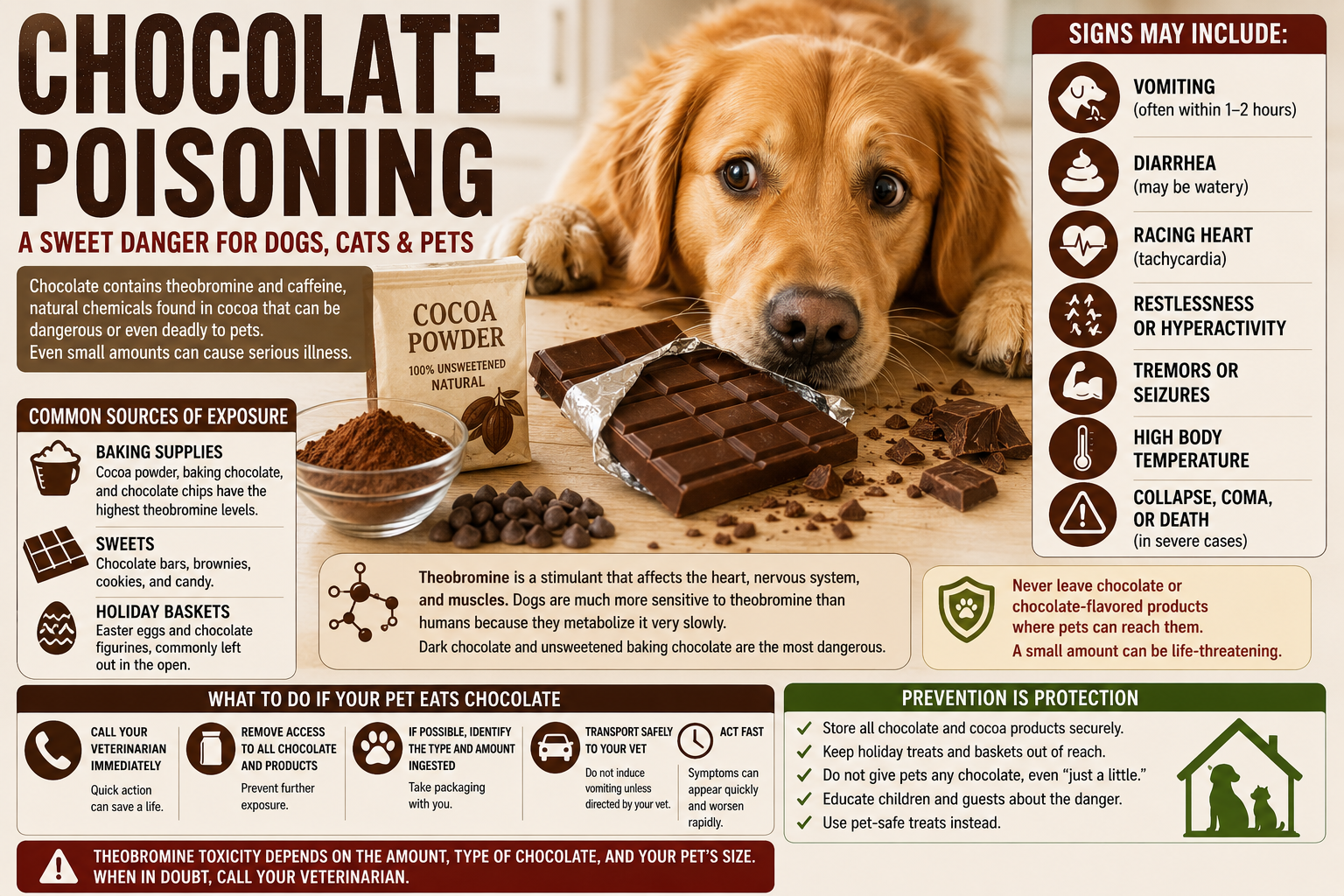
Yes. Chocolate and cocoa products can poison dogs, cats, birds, and other animals because they contain the methylxanthines theobromine and caffeine. Dogs are affected most often because they readily consume sweets, baked goods, cocoa powder, candy, and packaging. Poisoning can cause vomiting, diarrhea, restlessness, excessive thirst and urination, rapid or irregular heartbeat, hypertension, panting, hyperthermia, tremors, seizures, collapse, and death.
Risk is determined by the animal's size, the exact product, cocoa-solids concentration, amount eaten, time since exposure, and co-ingredients. Unsweetened cocoa powder, baking chocolate, cacao nibs, cocoa-bean-shell mulch, and high-cocoa dark chocolate generally contain far more methylxanthines than ordinary milk chocolate. White chocolate contains very little cocoa solids but can still cause gastrointestinal upset, pancreatitis, foreign-body complications, or toxicity from xylitol, raisins, macadamia nuts, caffeine, alcohol, cannabis, or other ingredients.
An animal may appear normal for several hours while theobromine and caffeine are being absorbed. The absence of immediate vomiting does not establish safety, and labels such as dark, semisweet, bittersweet, baking, cacao percentage, or chocolate-flavored are not interchangeable. Exact package information is more useful than guessing from color or taste.
About this guide: This page provides general pet-poisoning information and cannot diagnose or treat an individual animal. For any suspected exposure, contact a veterinarian or animal poison-control service immediately. Do not induce vomiting, give medication, or attempt home decontamination unless directed by a veterinary professional.
Agent and Exposure Profile
Quick Reference
Chocolate Identity, Methylxanthines, and Product Recognition
Theobromine
Theobromine is the principal methylxanthine in cocoa products and the main driver of most canine chocolate poisoning. It is structurally related to caffeine and theophylline. Dogs eliminate theobromine slowly enough that stimulant, cardiac, renal, and neurologic effects can persist long after the chocolate has left the stomach.
Caffeine
Cocoa also contains caffeine, generally in lower concentration than theobromine. Coffee, espresso, energy products, caffeine powder, guarana, tea concentrates, and chocolate-covered coffee beans can add substantially more caffeine. Theobromine and caffeine effects are additive because they act through overlapping methylxanthine mechanisms.
Cocoa Solids Determine the Main Chocolate Risk
Cocoa powder, cocoa liquor, chocolate liquor, cocoa mass, cacao nibs, and unsweetened baking chocolate are concentrated sources of cocoa solids. Dark, semisweet, and bittersweet chocolate vary widely by manufacturer and cacao percentage. Milk chocolate contains less cocoa material per unit weight, while white chocolate is primarily cocoa butter, sugar, and milk solids and contains little methylxanthine compared with cocoa-rich products.
Cocoa Butter Is Not the Same as Cocoa Solids
Cocoa butter is the fat fraction of the cacao bean and contains far less theobromine than cocoa powder or chocolate liquor. A product dominated by cocoa butter can still be hazardous because of fat, sugar, xylitol, nuts, raisins, alcohol, cannabis, wrappers, or other ingredients. “Chocolate flavor” also does not reveal the actual cocoa content.
Cacao and Cocoa Mean Related Products
Cacao commonly refers to the bean or less-processed products, while cocoa often refers to roasted or processed powder and chocolate ingredients. The terminology is not a reliable toxicity ranking. Cacao nibs, cacao powder, cocoa powder, and baking cocoa can all contain concentrated methylxanthines.
Methylxanthines Beyond Chocolate
Caffeine and related methylxanthines also occur in coffee, tea, energy drinks, caffeine tablets, workout supplements, guarana, kola nut, and some medications. A mixed exposure may contain more caffeine than the chocolate calculation alone suggests. The entire product and recipe must be evaluated.
Where Chocolate and Cocoa Exposure May Occur
Candy, Bars, Chips, and Baking Ingredients
Chocolate bars, baking squares, cocoa powder, cake coatings, chocolate chips, melting wafers, cacao nibs, brownie mix, hot-cocoa powder, frosting, ganache, pudding mix, and dessert toppings may be stored in cabinets, pantries, purses, gift boxes, baking drawers, hotel rooms, and delivery packages. Bulk baking products create more concentrated exposure than many finished candies.
Cakes, Brownies, Cookies, Donuts, and Desserts
Finished desserts are difficult to assess without the recipe. A brownie made with cocoa powder and dark chocolate may contain substantial methylxanthine, while another contains little cocoa. Fat, sugar, butter, cream, coffee, alcohol, raisins, macadamia nuts, xylitol, or cannabis may add separate hazards.
Holiday and Gift Exposures
Chocolate poisonings increase around celebrations when wrapped candy, stockings, baskets, advent calendars, gift boxes, Easter eggs, Halloween bags, baked goods, and visitor luggage are left within reach. Foil, plastic, paper, sticks, and cardboard may be swallowed with the food.
Cocoa-Bean-Shell Mulch
Cocoa-shell mulch can smell attractive to dogs and may retain clinically important theobromine and caffeine. A published fatal canine case followed ingestion of cacao bean shell mulch. Weathering and product variability make the concentration difficult to predict, so cocoa mulch should not be used where dogs or other animals can eat it.
Chocolate-Covered Coffee, Espresso Desserts, and Mocha Products
Chocolate-covered espresso beans, mocha powders, coffee desserts, tiramisu, coffee-flavored candies, and energy confections combine cocoa methylxanthines with additional caffeine. Alcohol may also be present in tiramisu, liqueur chocolates, or baking extracts.
Protein Bars, Supplements, and “Healthy” Snacks
Chocolate-flavored protein bars, keto products, meal replacements, energy bites, supplements, and sugar-free snacks may contain cocoa, caffeine, guarana, xylitol, raisins, nuts, or concentrated vitamins and minerals. Marketing terms do not identify the toxic ingredients.
Cocoa Powder in Feed, Bedding, Compost, and Waste
Bakery waste, confectionery by-products, compost, discarded desserts, cocoa-containing feed ingredients, spilled manufacturing material, and trash can expose livestock, poultry, wildlife, and pets. Food-processing side streams should not be fed to animals without ingredient and methylxanthine assessment.
Exposure Scenarios and Risk Factors
Common Companion-Animal Scenarios
- A dog opens a gift box, holiday basket, purse, backpack, pantry, grocery bag, hotel suitcase, or delivery package containing chocolate.
- A pet consumes brownies, cookies, cake, frosting, cocoa powder, baking chocolate, or chocolate chips from a counter or cooling rack.
- A dog eats cocoa-shell mulch, compost, bakery waste, or discarded candy and wrappers.
- Several animals share access to one package and the actual consumer is unknown.
- A pet swallows chocolate combined with xylitol, raisins, macadamia nuts, coffee, alcohol, cannabis, or medication.
- A dog eats the food and the foil, plastic, paper, stick, tray, or gift packaging.
Product Concentration Matters More Than Color Alone
Two dark chocolates can contain very different cocoa percentages, and two brownies can have completely different recipes. Cocoa powder and unsweetened baking chocolate can deliver a large methylxanthine amount in a small mass. Milk chocolate generally requires a larger quantity to create the same methylxanthine exposure, but a small dog can still become ill.
Small Dogs and Concentrated Products
Toy breeds, puppies, underweight dogs, and small exotic pets receive a larger dose per unit body weight. One baking square, a small bag of cacao nibs, or a few chocolate-covered espresso beans can matter far more to a small patient than the package size suggests.
Preexisting Disease and Medication
Heart disease, arrhythmia, seizure disorders, hypertension, kidney disease, dehydration, pancreatitis history, endocrine disease, and medications affecting heart rate or the nervous system can complicate the response. Obese or hyperlipidemic dogs may also face greater concern from the fat content of candy and desserts.
Repeated Access and Delayed Discovery
A dog may return repeatedly to a hidden candy stash, compost pile, mulch bed, or baking area. Theobromine's slow elimination means repeated exposure can accumulate. Owners should report every possible event rather than treating the most recent ingestion as the only dose.
Cats, Birds, and Other Species
Cats are physiologically susceptible to methylxanthines but are poisoned less often because they usually consume less sweet food. Birds, rabbits, rodents, ferrets, horses, livestock, and wildlife can also be affected by cocoa products, caffeine, or contaminated feed. Species-specific assessment remains necessary because behavior, body size, metabolism, and gastrointestinal anatomy differ.
Chocolate Poisoning Symptoms and Clinical Progression
Early Gastrointestinal Signs
Vomiting, diarrhea, drooling, abdominal discomfort, restlessness, and reduced appetite may occur first. Some dogs drink and urinate excessively because methylxanthines increase renal blood flow and interfere with water balance. Vomiting may contain chocolate or wrappers, but visible material does not prove that the absorbed dose was removed.
Cardiovascular Stimulation
Sinus tachycardia, hypertension, strong pulses, premature beats, and other arrhythmias can develop. Severe rhythm disturbances reduce effective cardiac output and can lead to weakness, collapse, pulmonary edema, or sudden death. A racing heart after chocolate exposure is not merely anxiety.
Neurologic and Muscular Signs
Agitation, inability to settle, pacing, hypervigilance, panting, muscle fasciculations, tremors, rigidity, ataxia, seizures, and coma can occur as methylxanthine stimulation intensifies. Seizures and sustained muscle activity increase oxygen demand and heat production and can worsen acidosis and organ injury.
Hyperthermia and Metabolic Abnormalities
Excitement, tremors, and seizures can raise body temperature. Clinical series have identified hyperlactatemia, hypokalemia, mild hyperglycemia, dehydration, and transient liver-enzyme elevations in symptomatic dogs. Electrolyte and acid-base abnormalities can worsen weakness and arrhythmias.
Delayed and Prolonged Signs
Clinical signs may be delayed for several hours, especially when the stomach contains food or the product is high in fat. Theobromine undergoes slow elimination and can recirculate between the liver, intestine, urine, and bloodstream. Moderate or severe illness may continue for a day or longer and requires serial monitoring.
Pancreatitis and High-Fat Complications
Chocolate candy and desserts can contain large amounts of fat and sugar. Vomiting and abdominal pain developing after the stimulant phase may reflect pancreatitis or dietary indiscretion rather than ongoing methylxanthine effects alone. Pancreatitis can arise even when white chocolate contains little theobromine.
Co-Ingredient Syndromes
Hypoglycemia and liver injury may indicate xylitol; weakness and kidney injury may follow grapes or raisins; vomiting, weakness, and tremors may be influenced by macadamia nuts; profound sedation or respiratory depression can involve alcohol or cannabis; and extreme stimulation may reflect coffee, caffeine powder, or guarana. Mixed products can produce overlapping syndromes.
Foreign-Body and Obstruction Signs
Persistent vomiting, abdominal pain, reduced stool, straining, lethargy, or appetite loss after the methylxanthine signs improve can indicate swallowed wrappers, foil, sticks, plastic trays, gift packaging, or cocoa-mulch material. Foreign-body risk must be evaluated separately from the chocolate dose.
First Aid for Suspected Chocolate Exposure
Immediate Owner Actions
- Remove all remaining chocolate, cocoa, desserts, mulch, coffee products, and packaging.
- Separate every animal that may have had access and record each animal's weight and signs.
- Preserve the wrapper, cocoa percentage, nutrition label, ingredient list, recipe, brand, remaining product, and photographs.
- Estimate the maximum amount missing and record the earliest and latest possible exposure time.
- Identify xylitol, raisins, macadamia nuts, coffee, caffeine, alcohol, cannabis, medication, wrappers, sticks, or sharp objects.
- Contact a veterinarian promptly rather than waiting for symptoms.
Do Not Induce Vomiting Without Veterinary Direction
Do not give hydrogen peroxide, salt, mustard, syrup of ipecac, or attempt manual gagging. Vomiting may be unsafe when the animal is already agitated, tremoring, seizuring, weak, unable to swallow normally, or exposed to sharp packaging, alcohol, cannabis, or another sedating ingredient.
Do Not Give Activated Charcoal at Home
Veterinary professionals sometimes use activated charcoal because methylxanthines can undergo enterohepatic recirculation. Charcoal can be aspirated, worsen dehydration, cause severe sodium abnormalities, and complicate care in a vomiting or neurologically abnormal dog. A 2025 canine case documented severe hypernatremia after charcoal treatment following chocolate ingestion.
Do Not Force Food, Milk, Oil, or Water
Food does not neutralize theobromine or caffeine and can delay professional decontamination. Milk and oil do not bind methylxanthines. Forcing liquid into an agitated, vomiting, or neurologically abnormal animal creates aspiration risk.
Packaging and Foreign Objects
Do not pull line, ribbon, or packaging from the mouth or rectum when resistance is felt. Bring an identical wrapper or product when available. A radiograph or endoscopic examination may be needed even when the chocolate dose itself is modest.
Safe Transport
Keep the animal quiet, cool, and securely restrained. Minimize running, excitement, barking, and heat exposure because activity can worsen tachycardia and hyperthermia. Call ahead for tremors, seizures, collapse, severe agitation, an irregular heartbeat, or a concentrated cocoa exposure.
Chocolate Toxicology and Mechanism
Adenosine-Receptor Antagonism
Theobromine and caffeine block adenosine receptors. Adenosine normally helps restrain neuronal activity, modulate heart rate, influence vascular tone, and promote rest. Blocking these receptors contributes to wakefulness, agitation, tachycardia, catecholamine effects, and seizure susceptibility.
Phosphodiesterase Inhibition
At sufficiently high concentrations, methylxanthines inhibit phosphodiesterase enzymes and increase intracellular cyclic nucleotides. This amplifies adrenergic signaling, cardiac stimulation, smooth-muscle effects, and metabolic activity. The degree of phosphodiesterase inhibition varies with drug and concentration.
Intracellular Calcium and Muscle Activity
Methylxanthines can increase intracellular calcium availability and sensitivity in cardiac and skeletal muscle. This contributes to stronger contraction, increased heart rate, tremors, rigidity, and arrhythmias. Sustained muscle activity generates heat and lactate.
Diuresis and Electrolyte Loss
Theobromine and caffeine increase renal blood flow and urine production. Polyuria combined with vomiting, panting, and poor intake can cause dehydration and electrolyte abnormalities. Hypokalemia documented in clinical cases can increase muscular weakness and arrhythmia risk.
Slow Elimination in Dogs
Dogs metabolize and eliminate theobromine much more slowly than people. Hepatic metabolism, biliary excretion, intestinal reabsorption, and urinary reabsorption can prolong exposure. This supports extended observation, repeated assessment, and veterinary strategies that promote safe elimination.
Product Variability
Methylxanthine concentration depends on cacao variety, processing, cocoa-solids content, recipe, manufacturer, and serving form. Cocoa powder and baking chocolate are generally concentrated, but a label's color or marketing description cannot provide an exact dose. Laboratory or manufacturer data are sometimes needed for unusual products.
White Chocolate and Non-Methylxanthine Injury
White chocolate contains little cocoa solids and therefore much less theobromine than dark or baking chocolate. It is not harmless. Fat and sugar can cause gastrointestinal upset or pancreatitis, and sugar-free or mixed products may contain xylitol, raisins, macadamia nuts, alcohol, cannabis, or caffeine.
Why a Universal Public Toxic Threshold Is Misleading
Chocolate type, cocoa percentage, recipe, body weight, co-ingredients, repeated access, and uncertainty in the amount all affect risk. A threshold calculated from an assumed average product can be wrong for a particular bar, brownie, powder, or cacao product. Public dose tables can create false reassurance when the product or amount is uncertain.
Evidence Boundaries
Veterinary evidence includes retrospective canine series, case reports, holiday-exposure studies, pharmacology research, and documented cocoa-mulch fatalities. Cats and other species are biologically susceptible but less represented in clinical series. Treatment is therefore based on product reconstruction, known methylxanthine pharmacology, and the individual patient's signs.
Clinical Management
Veterinary Care and Prognosis
Veterinary Diagnosis and Treatment
Product and Dose Reconstruction
The veterinary team identifies the exact chocolate or cocoa product, cocoa percentage, recipe, amount missing, exposure window, animal weight, repeated access, and co-ingredients. Calculations are useful for triage but are estimates because methylxanthine concentrations vary among products.
Initial Stabilization
Airway, breathing, circulation, temperature, neurologic status, hydration, heart rate, rhythm, blood pressure, perfusion, and glucose are assessed first. Severe agitation, seizures, arrhythmia, hyperthermia, collapse, or respiratory compromise may require treatment before gastrointestinal decontamination.
Diagnostic Testing
Testing may include electrocardiography, continuous rhythm monitoring, blood pressure, complete blood count, serum chemistry, glucose, electrolytes, kidney and liver values, blood-gas analysis, lactate, creatine kinase, urinalysis, and temperature trends. Imaging may be needed when wrappers, sticks, trays, mulch, or other foreign material was swallowed.
Professional Emesis and Gastric Decontamination
Veterinary-induced emesis may be considered after a recent exposure in an alert, clinically normal patient with a protected airway. Chocolate can remain in the stomach for hours because of fat and bulk, but emesis becomes unsafe after significant agitation, tremors, seizures, weakness, aspiration risk, or ingestion of sharp packaging.
Activated Charcoal
Activated charcoal may reduce absorption and interrupt enterohepatic recirculation in selected patients. Repeated administration has historically been used in substantial exposures, but dehydration, aspiration, ileus, hypernatremia, and impaired swallowing must be considered. Charcoal use should be individualized and accompanied by appropriate fluid and electrolyte monitoring.
Fluids and Bladder Management
Intravenous crystalloid therapy supports perfusion, corrects dehydration, replaces losses, and promotes renal elimination. Frequent urination or urinary-catheter management may be used in hospitalized dogs to reduce prolonged bladder exposure and reabsorption. Fluid plans are adjusted to cardiovascular status, electrolytes, urine output, and risk of overload.
Tachycardia and Arrhythmias
Electrocardiographic rhythm, blood pressure, perfusion, temperature, and the patient's underlying heart status guide treatment. Short-acting beta blockade or other antiarrhythmic therapy may be selected for clinically important tachycardia or arrhythmia. A retrospective veterinary study found esmolol was generally well tolerated in dogs and cats treated for intoxication-associated tachycardia, although response was not uniform.
Agitation, Tremors, and Seizures
Veterinarian-selected sedatives, muscle relaxants, and anticonvulsants are used according to the dominant syndrome. Temperature, oxygenation, glucose, electrolytes, acid-base status, and perfusion are corrected simultaneously. Refractory seizures may require anesthesia, airway protection, and mechanical ventilation.
Hyperthermia and Muscle Injury
Controlled cooling and rapid control of excessive muscle activity are essential. Creatine kinase, kidney function, urine color, electrolytes, coagulation, and lactate may be monitored when severe tremors, seizures, or hyperthermia raise concern for rhabdomyolysis and secondary organ injury.
Co-Ingredient and Foreign-Body Treatment
Xylitol, raisins, macadamia nuts, alcohol, cannabis, coffee, medication, and packaging require their own diagnostic and treatment plans. Endoscopy or surgery may be necessary for retained wrappers, sticks, hooks, trays, or compacted cocoa material.
Monitoring Duration
Observation depends on the product, estimated exposure, formulation, co-ingredients, clinical signs, rhythm, temperature, electrolyte trends, and response to therapy. Moderate or severe cases may require prolonged hospitalization because methylxanthines are eliminated slowly and signs can recur after early improvement.
Evidence Boundaries
Public treatment doses are intentionally omitted. Drug selection, charcoal use, fluid rate, cardiac treatment, sedation, and discharge timing depend on the patient's actual rhythm, blood pressure, neurologic status, hydration, kidney function, and co-ingestants.
Prognosis, Recovery, and Follow-Up
Most Promptly Treated Dogs Recover
Prognosis is usually favorable when the product and amount are identified early, decontamination is performed before severe signs develop, cardiovascular rhythm remains controllable, temperature is managed, and no dangerous co-ingredient or foreign body is present. In a 156-event retrospective study, 43 of 44 clinically affected dogs survived.
Guarded Situations
The outlook becomes more guarded with delayed presentation, concentrated cocoa products, repeated access, severe arrhythmias, pulmonary edema, persistent hyperthermia, prolonged tremors, seizures, collapse, aspiration, kidney injury, or mixed xylitol, caffeine, alcohol, cannabis, raisin, or medication exposure.
Clinical Improvement May Be Temporary
Heart rate and behavior may improve before theobromine has been fully eliminated. Rebound agitation, tachycardia, vomiting, or tremors can occur, particularly after a large exposure. Continued observation and serial monitoring are more reliable than one normal examination.
Pancreatitis and Foreign Bodies Can Appear Later
Abdominal pain, vomiting, appetite loss, or lethargy developing after the stimulant signs resolve may indicate pancreatitis or swallowed packaging. These complications can extend recovery beyond the methylxanthine phase.
After Discharge
Follow all feeding, medication, activity, and recheck instructions. Return promptly for renewed restlessness, vomiting, diarrhea, abdominal pain, rapid breathing, a racing or irregular heartbeat, tremors, seizures, weakness, collapse, reduced urination, or appetite loss.
Preventing Chocolate Poisoning
Store Cocoa-Rich Products as Medications
Keep cocoa powder, baking chocolate, dark bars, cacao nibs, coffee beans, supplements, and chocolate chips inside closed upper cabinets or pet-resistant storage. A pantry door, countertop, grocery bag, or paper gift box is not secure from a determined dog.
Plan for Holidays and Visitors
Inspect stockings, baskets, wrapped gifts, luggage, purses, coat pockets, children's rooms, guest rooms, and low tables. Ask visitors to store sweets and medications securely. Count and remove candy after parties rather than leaving cleanup until morning.
Avoid Cocoa-Shell Mulch in Animal Areas
Choose a non-cocoa landscaping material where dogs, livestock, poultry, or wildlife can reach mulch. Do not assume weathered mulch has lost all methylxanthines, and prevent access to compost containing cocoa or bakery waste.
Read Every Ingredient List
Check sugar-free products for xylitol and desserts for raisins, macadamia nuts, coffee, caffeine, alcohol, cannabis, and medication. White chocolate and chocolate-flavored products can be dangerous for reasons other than theobromine.
Control Baking and Food-Service Areas
Keep animals out while baking, cooling, decorating, packaging, or cleaning. Secure trash, mixing bowls, utensils, cooling racks, delivery cartons, and bulk ingredients. Commercial kitchens, bakeries, cafes, daycares, boarding facilities, and events need written spill and waste procedures.
Do Not Use Chocolate as a Training Treat
Use species-appropriate treats. Carob may be used in some pet products because it contains little methylxanthine compared with cocoa, but the finished product must still be checked for sugar, fat, xylitol, raisins, nuts, and other unsuitable ingredients.
Chocolate Poisoning FAQ
Is dark chocolate always more dangerous than milk chocolate?
Usually it contains more cocoa solids and therefore more methylxanthines per unit weight, but products vary. Cocoa percentage, recipe, serving size, and the animal's weight are more informative than the word “dark” alone.
Why are cocoa powder and baking chocolate especially concerning?
They are concentrated sources of cocoa solids, so a relatively small amount can deliver much more theobromine and caffeine than ordinary milk chocolate. Baking ingredients are also commonly available in bulk containers.
Is white chocolate safe?
White chocolate contains little cocoa solids and far less methylxanthine, but it can still cause vomiting, diarrhea, or pancreatitis because of fat and sugar. Sugar-free, raisin, nut, alcohol, cannabis, or coffee-containing products create additional risks.
My dog ate brownies. How is the amount calculated?
The recipe matters. Cocoa powder, baking chocolate, dark chips, serving size, number of pieces, and total pan size are used to estimate exposure. Coffee, xylitol, raisins, macadamia nuts, cannabis, and wrappers must be assessed separately.
What if the wrapper does not list the cocoa percentage?
Preserve the brand, product name, lot information, package size, and ingredient list. The veterinarian may use manufacturer information or conservative assumptions rather than treating an unknown product as low risk.
Can chocolate poisoning occur without vomiting?
Yes. Some animals first develop restlessness, rapid heart rate, panting, thirst, urination, tremors, or seizures. Lack of vomiting does not mean that the chocolate was not absorbed.
Why can signs start hours after ingestion?
Food and fat can slow stomach emptying, and methylxanthines continue to be absorbed and recirculated. An animal can appear normal while blood concentrations are still rising.
What if my dog vomited all the chocolate?
Visible chocolate does not prove complete recovery of the dose. Melted material may have passed into the intestine, and wrappers or concentrated fragments may remain. Preserve the vomit information and obtain veterinary guidance.
Can I use a chocolate-toxicity calculator by myself?
A calculator can support triage only when the product, cocoa concentration, amount, and weight are accurate. It cannot evaluate co-ingredients, wrappers, heart disease, repeated access, symptoms, or product variability. It should not replace veterinary assessment.
Can cocoa-shell mulch poison a dog?
Yes. Cacao shell mulch can contain theobromine and caffeine, and a fatal canine case has been published. Concentration varies, so cocoa mulch should not be used where animals can ingest it.
Are chocolate-covered coffee beans more dangerous?
They can be because the animal receives methylxanthines from both cocoa and coffee. Espresso beans, guarana, energy ingredients, or caffeine powder may make caffeine the dominant toxicant.
Why does chocolate make dogs urinate so much?
Theobromine and caffeine increase renal blood flow and diuresis. Excessive urination combined with vomiting and panting can worsen dehydration and electrolyte losses.
Why might activated charcoal be repeated at the hospital?
Methylxanthines can undergo enterohepatic recirculation, so charcoal may reduce reabsorption in selected substantial exposures. Repeated charcoal also carries dehydration, aspiration, ileus, and hypernatremia risks and therefore requires veterinary monitoring.
Can chocolate cause pancreatitis even when methylxanthine exposure is low?
Yes. Fatty candy, frosting, ganache, brownies, and white chocolate can trigger pancreatitis or severe dietary gastrointestinal upset, especially in susceptible dogs. This is a separate mechanism from theobromine poisoning.
Can cats be poisoned by chocolate?
Yes. Cats are biologically susceptible to methylxanthines but are exposed less often because they are less likely to consume large amounts of sweets. Cocoa powder, chocolate desserts, caffeine, and deliberate feeding can still produce an emergency.
Is carob a safe chocolate substitute for pets?
Carob contains little methylxanthine compared with cocoa and is used in some pet treats, but the finished product still matters. High fat, sugar, xylitol, raisins, nuts, and unsuitable flavorings can make a carob product unsafe.
What if several pets had access to the same chocolate?
Do not divide the missing amount evenly. Separate the animals, record each weight and signs, preserve the package, and report the maximum possible amount for every pet. One animal may have consumed most of it.
Can symptoms return after a dog seems better?
Yes. Slow elimination and recirculation can produce recurrent tachycardia, agitation, vomiting, or tremors. Later abdominal pain or appetite loss may also indicate pancreatitis or a swallowed wrapper rather than recurrent methylxanthine stimulation.