Cocoa Bean Hull Mulch, Theobromine, Caffeine, and Garden Exposure
Is Cocoa Shell Mulch Poisonous to Dogs, Cats, and Other Animals?
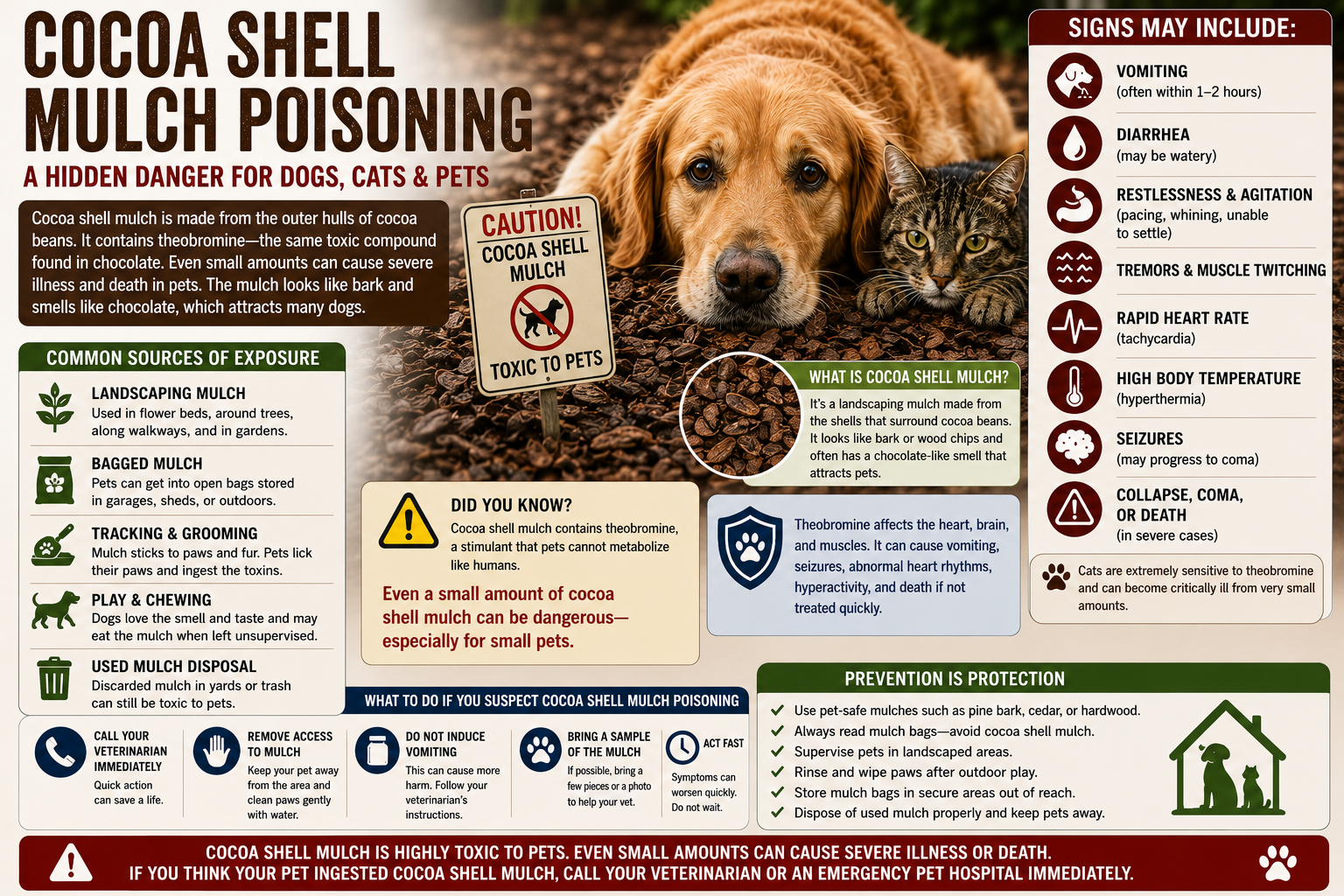
Yes. Cocoa shell mulch can cause life-threatening methylxanthine poisoning, especially in dogs that eat the sweet-smelling shells from landscaped beds or opened bags. Cocoa bean shells naturally retain theobromine and smaller amounts of caffeine. These compounds can cause vomiting, restlessness, excessive thirst and urination, rapid or abnormal heart rhythms, tremors, hyperthermia, seizures, collapse, and death.
Cocoa shell mulch is also sold as cocoa bean mulch, cacao shell mulch, cocoa hull mulch, cocoa bean hull mulch, or chocolate mulch. Its methylxanthine content is not uniform. Processing, source material, batch, storage, weathering, microbial growth, and the proportion of shells, fines, or residual bean material can change the exposure. A volume or handful that caused no signs in one event cannot be treated as safe in another.
Dogs account for most reported cases because the chocolate odor can attract them and they may consume large amounts quickly. Cats, horses, livestock, birds, rabbits, rodents, and other animals are biologically susceptible to methylxanthines, although their exposure patterns and evidence base differ. Bags, piles, composted material, and recently spread beds can all be sources.
About this guide: This page provides general pet-poisoning information and cannot diagnose or treat an individual animal. For any suspected exposure, contact a veterinarian or animal poison-control service immediately. Do not induce vomiting, give medication, or attempt home decontamination unless directed by a veterinary professional.
Agent and Exposure Profile
Quick Reference
Cocoa Shell Mulch Identity, Methylxanthines, and Product Recognition
What cocoa shell mulch is
Cocoa shell mulch is made from the brittle outer coverings removed from roasted or processed cacao beans. The botanical source is Theobroma cacao. The shells are a chocolate-industry by-product and may be screened, dried, bagged, and marketed as decorative organic mulch because of their dark color, light weight, mat-forming texture, and chocolate-like aroma.
Product names vary. Labels may say cocoa shells, cocoa bean shells, cacao shells, cocoa hulls, cocoa bean hulls, chocolate mulch, or cocoa mulch. A dark-brown wood mulch with added color is not necessarily a cocoa product, while a bag labeled natural or organic can still contain toxic methylxanthines. The ingredient statement and source material matter more than color alone.
Theobromine and caffeine
The principal toxicant is theobromine, with caffeine adding to the total methylxanthine burden. Both compounds stimulate the cardiovascular and central nervous systems, promote diuresis, and can interfere with normal muscle and cardiac electrical activity. Cocoa shells generally contain less fat and sugar than chocolate candy, but that does not make them safe; the shells can retain substantial methylxanthines and may be eaten by the mouthful.
Concentration varies between products and batches
Cocoa shell mulch should not be assigned one fixed theobromine concentration. Cacao variety, fermentation, roasting, shell separation, residual nib material, blending, storage, and environmental exposure can all affect composition. Weathering may reduce aroma or leach some soluble material, but an old or rain-soaked bed cannot be assumed nontoxic without analysis.
Published case material establishes that cacao bean shells used as garden mulch can cause fatal poisoning in dogs. However, many public dose charts are estimates derived from small product samples or chocolate data rather than assay of the exact mulch involved. Clinical decisions should use the most conservative credible amount, the animal's weight, signs, timing, and, when available, product-specific analytical information.
Mulch is not the same as cocoa powder, cacao nibs, or chocolate
Cocoa powder, baking chocolate, cacao nibs, cocoa beans, chocolate candy, and cocoa shell mulch differ in methylxanthine concentration, fat, sugar, and physical form. A chocolate calculator built for a standardized food product may not accurately estimate a landscape-mulch exposure. The correct history should identify the actual product instead of converting it automatically into ounces of milk or dark chocolate.
Secondary hazards
Large volumes of shells can contribute to gastrointestinal irritation, dehydration, abdominal distention, or physical obstruction, particularly in small animals. Mulch contaminated with fertilizers, herbicides, insecticides, slug bait, animal waste, or discarded food creates a mixed exposure. Moldy organic material may also contain tremorgenic mycotoxins, but that is an independent hazard and should not be assumed merely because cocoa mulch is damp or decomposing.
Where Cocoa Shell Mulch May Be Found
Landscaped beds and decorative borders
Cocoa shells may be spread around flowers, shrubs, trees, patios, walkways, mailbox beds, apartment entrances, commercial landscaping, hotels, restaurants, parks, schools, and community gardens. Dogs can encounter the product during walks, off-leash yard access, daycare play, boarding, travel, or visits to homes that do not normally keep pets.
Opened and unopened bags
Bagged mulch may be stored in garages, sheds, basements, vehicles, garden carts, porches, greenhouses, or retail displays. Dogs can tear open a bag and ingest a more concentrated quantity than they would collect from a weathered bed. Spilled material under pallets or in delivery areas can remain accessible after cleanup appears complete.
Fresh application piles and yard projects
Risk is high while mulch is being spread because open bags, wheelbarrows, piles, and raked windrows allow rapid consumption. Fresh product often has a stronger cocoa odor. Workers may assume a dog is eating harmless organic material and fail to recognize how much disappeared before the bed was leveled.
Compost, yard waste, and discarded landscaping material
Removed cocoa mulch may be placed in compost bins, brush piles, yard-waste bags, trailers, dumpsters, or curbside collection. Decomposition does not provide a dependable safety endpoint. Compost also introduces separate risks from mold, food waste, medications, pesticides, and fermentation products.
Commercial products and blends
Some products are nearly pure cocoa shells; others may be blended with bark, wood, compost, or other plant material. A product marketed as cocoa-colored, chocolate-colored, or dark cocoa may contain no cacao at all. Preserve the exact package or a representative clean sample because the name used in conversation may not match the ingredient.
Cocoa Shell Mulch Exposure Scenarios and Risk Factors
Dogs grazing directly from a flower bed
A dog may repeatedly return to the same landscaped area because the shells smell like chocolate. Consumption can occur unnoticed over several minutes or in repeated visits across a day. Owners may underestimate the amount because the thin shells settle, overlap, and cover a broad surface area.
Bag or pile ingestion
Tearing into a bag, wheelbarrow, or fresh pile can produce a large exposure quickly. Small dogs are at particular risk because a modest absolute amount becomes a high dose per unit of body weight. Large dogs can also develop severe poisoning after eating freely from bulk material.
Repeated low-volume access
Several smaller exposures can matter because theobromine is eliminated slowly in dogs and may undergo enterohepatic recirculation. A dog that grazes from the bed on consecutive walks or days may accumulate a clinically important burden even when no single event looked dramatic. Every possible episode should be included in the history.
Multiple animals with access
When several pets share a yard, the missing amount cannot be divided evenly. One dog may consume most of the shells while another only investigates. Separate animals, record each weight and clinical signs, and report the maximum plausible exposure for each patient.
Cats and exotic companion animals
Cats are less likely than dogs to eat a large quantity of mulch, but they are not physiologically immune to methylxanthines. Rabbits, rodents, birds, reptiles, and other pets may nibble shells, ingest contaminated substrate, or access an open bag. Species-specific dose and treatment evidence is limited, so credible access should be evaluated rather than dismissed.
Horses and livestock
Cacao by-products have caused illness when incorporated into animal feed or consumed in quantity. Horses, cattle, goats, pigs, poultry, and other livestock can encounter shells in feed contamination, compost, landscaping, or discarded processing material. Group exposure requires evaluation of the shared source and removal from feed and pasture access.
Mixed yard-product exposure
Mulched beds may also contain granular fertilizer, cocoa-based fertilizer blends, herbicides, insecticides, slug bait, rodenticide, mushrooms, toxic plants, or discarded food. Neurologic signs after yard access should not automatically be attributed to theobromine when another toxicant could be present. Preserve every product used in the area.
Cocoa Shell Mulch Poisoning Symptoms and Clinical Progression
Early gastrointestinal signs
Vomiting, diarrhea, drooling, nausea, abdominal discomfort, appetite change, and increased thirst may be the first signs. Shell fragments may be visible in vomit or stool, but their presence does not show how much methylxanthine was absorbed. Vomiting can also dehydrate the patient while theobromine-driven diuresis increases fluid losses.
Restlessness and stimulation
Affected dogs may pace, pant, appear unusually alert, fail to settle, vocalize, become hyperactive, or react excessively to sound and touch. The behavior may be mistaken for anxiety or excitement after yard activity. Progression to muscle twitching or tremors indicates a more serious neurologic burden.
Cardiovascular effects
Tachycardia is common, and blood pressure may rise. Premature beats, supraventricular or ventricular arrhythmias, weak pulses, or collapse can occur in severe cases. A fast heartbeat after exertion should begin to slow with rest; persistent or irregular tachycardia after cocoa mulch access is an emergency.
Excessive thirst and urination
Methylxanthines promote diuresis and may cause polydipsia and frequent urination. These signs can worsen dehydration and electrolyte abnormalities when combined with vomiting, diarrhea, panting, and hyperthermia. Urination does not mean the toxin is being eliminated safely without treatment.
Tremors, hyperthermia, and seizures
Muscle tremors generate heat and can progress to marked hyperthermia, exhaustion, acid-base disturbance, rhabdomyolysis, and kidney injury. Severe agitation or seizures increase oxygen demand and can destabilize the heart. Continuous tremors, a rising temperature, or any seizure requires immediate intensive care.
Delayed or prolonged illness
Signs commonly begin within hours, but onset and duration vary with amount, stomach contents, product composition, repeated exposure, and individual metabolism. Theobromine can persist for many hours in dogs, and clinical effects may continue well beyond the initial vomiting episode. Apparent early improvement does not justify ending monitoring.
Obstruction, mold, and other differential diagnoses
Persistent vomiting, abdominal pain, distention, or failure to pass stool can indicate a large-volume foreign-material problem rather than methylxanthines alone. Very abrupt violent tremors after compost or moldy organic material exposure may raise concern for tremorgenic mycotoxins. Slug bait, caffeine products, amphetamines, decongestants, pesticides, and heat illness can create overlapping signs.
First Aid for Suspected Cocoa Shell Mulch Exposure
Immediate owner actions
- Remove the animal from the bed, pile, bag, compost, or yard-waste area and block access for every other animal.
- Preserve the original package, receipt, lot number, ingredient statement, photographs, and a clean sample of the mulch.
- Estimate the maximum quantity missing rather than the amount you directly watched the animal eat.
- Record the earliest and latest possible exposure time and every earlier visit to the same area.
- Obtain a current weight and prepare the animal's medical, medication, and supplement history.
- Contact a veterinarian promptly even when the patient appears normal.
Do not induce vomiting without veterinary direction
Hydrogen peroxide can cause prolonged vomiting, aspiration, and gastrointestinal injury. Emesis is unsafe in an animal that is already tremoring, seizing, depressed, bloated, struggling to breathe, or unable to protect its airway. Timing and patient condition determine whether professional decontamination is appropriate.
Do not give activated charcoal at home
Veterinarians may use activated charcoal, sometimes in repeated doses because methylxanthines can recirculate through the gastrointestinal tract. Home administration risks aspiration, dehydration, hypernatremia, and delay. The decision requires assessment of swallowing ability, hydration, neurologic status, and gastrointestinal function.
Do not rely on a chocolate calculator
Calculators estimate exposure from standardized chocolate categories, not an untested bag or weathered landscape product. Cocoa shell mulch concentration can vary, and the volume eaten is often uncertain. A low estimate should not override symptoms or a credible large exposure.
Safe transport
Keep the animal quiet and cool, minimize excitement, and use a secure carrier or restrained vehicle area. Do not force food or large amounts of water into a nauseated, agitated, tremoring, or neurologically abnormal patient. Bring the product sample separately from vomit or contaminated debris.
Multiple pets and yard safety
Separate all animals and do not allow them to consume vomit, stool, or additional mulch. Photograph the bed before cleanup if doing so does not delay care. Remove or cover the product only after the exposed animals are secured and veterinary contact has been made.
Cocoa Shell Mulch Toxicology and Mechanism
Adenosine-receptor antagonism
Theobromine and caffeine block adenosine receptors. Loss of adenosine's normal inhibitory effects contributes to central nervous system stimulation, increased heart rate, altered vascular tone, and heightened release of neurotransmitters. The resulting syndrome can involve behavior, skeletal muscle, temperature regulation, blood pressure, and cardiac rhythm at the same time.
Phosphodiesterase inhibition and intracellular signaling
At higher concentrations, methylxanthines inhibit phosphodiesterase and increase cyclic nucleotide signaling. They can also influence intracellular calcium handling and catecholamine effects. These mechanisms help explain tremors, increased contractility, tachyarrhythmias, and seizures in severe poisoning.
Slow canine elimination
Dogs metabolize theobromine much more slowly than people. Published pharmacokinetic information describes a prolonged plasma half-life, and enterohepatic recirculation can return methylxanthines to the intestinal tract. This supports extended monitoring and is one reason repeated charcoal may be considered in selected hospitalized patients.
Total methylxanthine burden
Theobromine usually dominates cocoa-shell exposure, but caffeine adds to cardiac and neurologic stimulation. Risk assessment should consider their combined effect rather than treating caffeine as irrelevant. Product analysis may report one or both compounds, while labels usually report neither.
Why public dose thresholds have limits
Experimental and chocolate-derived dose ranges can help veterinarians frame risk, but they do not turn an unknown mulch exposure into a precise calculation. The amount eaten, methylxanthine concentration, individual susceptibility, stomach contents, repeated access, and co-exposures may all be uncertain. Severe signs can occur below a commonly quoted lethal dose.
Evidence boundaries for other species
Dogs have the strongest companion-animal evidence because they commonly consume cocoa products. Cats and many other species are considered susceptible based on methylxanthine pharmacology and animal-feed experience, but direct cocoa-mulch case data are sparse. Lack of published cases should not be interpreted as a safe species exemption.
Mold is a separate mechanism
Decomposing organic material can support fungi capable of producing tremorgenic mycotoxins. That syndrome can cause sudden tremors, seizures, and hyperthermia independent of theobromine. Cocoa odor, visible mold, or compost exposure does not identify the toxin by itself; clinicians may need to manage both possibilities while reconstructing the source.
Clinical Management
Veterinary Care and Prognosis
Veterinary Diagnosis and Treatment
Exposure reconstruction and triage
The veterinary team identifies the exact product, estimated amount, timing, repeated access, patient weight, symptoms, and every product used in the landscaped area. Triage focuses on airway, breathing, circulation, mental status, heart rate and rhythm, blood pressure, temperature, hydration, abdominal findings, tremors, and seizure activity.
Diagnostic evaluation
Testing may include a complete blood count, serum chemistry profile, electrolytes, glucose, kidney and liver values, urinalysis, blood-gas analysis, lactate, creatine kinase, and serial temperature measurements. Electrocardiographic monitoring is important when tachycardia, ectopy, weakness, or collapse is present. Abdominal imaging may be indicated after large-volume ingestion or persistent gastrointestinal signs.
Methylxanthine testing
Theobromine or caffeine measurement can support a diagnosis in specialized settings, but results are rarely rapid enough to guide initial emergency care. A negative or unavailable test does not exclude poisoning. Product assay may be useful in unusual outbreaks, litigation, livestock exposure, or when the mulch identity is disputed.
Professional decontamination
Veterinary emesis may be considered after a recent exposure in an alert, clinically stable patient with a protected airway. Activated charcoal may be administered when benefits outweigh aspiration and electrolyte risks. Repeated charcoal can be considered because methylxanthines undergo enterohepatic recirculation, but it requires hydration and sodium monitoring.
Fluids and perfusion support
Intravenous crystalloids can correct dehydration, support renal perfusion, and replace losses from vomiting, diarrhea, panting, and diuresis. Fluid therapy must be individualized around cardiovascular status, urine output, electrolyte values, and risk of overload. Persistent hypotension after appropriate fluid resuscitation may require vasopressor support.
Cardiac monitoring and arrhythmia control
Continuous ECG monitoring helps distinguish sinus tachycardia from clinically important arrhythmias. Treatment is selected for the actual rhythm, blood pressure, perfusion, and concurrent neurologic signs. A medication appropriate for one arrhythmia may worsen another, which is why public dosing instructions are inappropriate.
Tremor, seizure, and temperature control
Sedatives, muscle relaxants, and anticonvulsants may be required to stop agitation, tremors, or seizures. Active cooling is used when hyperthermia is present, while avoiding overshoot hypothermia. Refractory neurologic activity may require airway control, anesthesia, ventilation, and intensive care.
Urinary management and monitoring duration
Frequent urination can complicate nursing care and fluid balance. Bladder management and quiet confinement may be needed. Hospitalization length depends on the estimated burden, rhythm stability, temperature, neurologic status, hydration, laboratory trends, and the time since the last possible exposure.
Managing alternative or mixed diagnoses
Persistent abdominal signs may require evaluation for obstruction. Violent tremors after moldy compost exposure may prompt treatment for tremorgenic mycotoxins. Pesticides, slug bait, fertilizers, medications, and toxic plants require their own diagnostic and treatment pathways. The presence of cocoa shells should not end the search when the clinical picture does not fit.
Prognosis, Recovery, and Follow-Up
Early treatment usually improves outcome
Many animals recover when exposure is recognized before severe cardiovascular or neurologic signs develop and decontamination and supportive care begin promptly. Prognosis is influenced by the actual methylxanthine burden, patient size, repeated access, time to treatment, and response of heart rhythm, temperature, and neurologic status.
Guarded and poor-prognosis findings
Seizures, continuous tremors, marked hyperthermia, ventricular arrhythmias, collapse, severe acid-base disturbance, rhabdomyolysis, kidney injury, aspiration, or delayed presentation make prognosis more guarded. Fatal cacao-shell mulch poisoning has been documented in a dog.
Clinical signs may persist
Because theobromine is eliminated slowly, restlessness, tachycardia, thirst, urination, or gastrointestinal signs may continue after initial stabilization. Premature discharge based only on temporary quietness can miss recurrent stimulation or arrhythmia. The treating veterinarian determines when monitoring can safely end.
After discharge
Owners should follow medication, feeding, activity, and recheck instructions exactly. Return promptly for vomiting, diarrhea, refusal to eat, pacing, panting, weakness, tremors, abnormal urination, collapse, or any renewed behavior change. Restrict access to the landscaped area until all cocoa shells have been removed.
Long-term effects
Animals that recover without prolonged hyperthermia, hypoxia, severe arrhythmia, aspiration, or organ injury often have no lasting consequences. Patients with rhabdomyolysis, kidney injury, aspiration pneumonia, or complications from seizures may require longer laboratory and clinical follow-up.
Preventing Cocoa Shell Mulch Poisoning
Do not use cocoa shell mulch where animals have access
The most reliable prevention is choosing a non-cocoa landscaping material for yards, dog runs, apartment relief areas, boarding facilities, veterinary grounds, farms, and public spaces used by animals. Training and supervision reduce risk but do not neutralize a product that remains available every day.
Confirm the ingredient, not just the color
Ask suppliers whether a product contains cocoa bean shells, cacao hulls, chocolate-industry by-products, or cocoa fines. Terms such as chocolate brown, cocoa color, or dark mulch may describe appearance only. Keep the package and product specification until the landscaping material is gone.
Secure bags, deliveries, and work areas
Store bags in a locked or animal-proof area. Keep pets indoors or physically separated while mulch is delivered and spread. Sweep spills from driveways, sidewalks, vehicles, and garage floors, and inspect beneath pallets or torn bags before animals return.
Remove existing cocoa mulch completely
Raking only the surface may leave shells mixed into soil or beneath plants. Bag removed material securely and place it where pets, wildlife, and livestock cannot access it. Do not move the hazard to an open compost pile, brush pile, or curbside bag that a dog can tear.
Facility and neighborhood communication
Dog daycares, boarding facilities, rescues, apartment managers, landscapers, schools, parks, and homeowner associations should include cocoa-shell products in prohibited-material lists where animals are expected. Inform walkers, sitters, and neighbors when a nearby property uses cocoa mulch.
Respond to grazing behavior early
A dog repeatedly eating soil, mulch, compost, or plant material may have behavioral, dietary, gastrointestinal, or medical contributors. Veterinary evaluation and environmental management are appropriate, but the animal should not remain exposed while the underlying behavior is investigated.
Choose alternatives thoughtfully
No mulch is edible or completely risk-free. Large wood pieces can obstruct, sharp material can injure, dyed or treated products may contain additives, and moldy organic matter can cause separate illness. Select a pet-area material based on composition, particle size, maintenance, drainage, and the behavior of the animals using the space.
Cocoa Shell Mulch Poisoning FAQ
Is cocoa shell mulch the same as chocolate mulch?
Often, yes. Cocoa bean shell mulch, cocoa hull mulch, cacao shell mulch, and chocolate mulch commonly describe cacao-processing shells used for landscaping. Confirm the ingredient because some products use chocolate only as a color description.
Why are dogs attracted to cocoa mulch?
Fresh shells can retain a strong cocoa or chocolate aroma, and some dogs find the lightweight pieces palatable or interesting to forage. Attraction varies by dog and product, so a dog that ignored one bed may still eat from a new bag or freshly spread area.
Is weathered cocoa mulch still poisonous?
It may be. Rain, sun, age, and decomposition can change methylxanthine content and aroma, but they do not establish a dependable safe date. Old shells also remain ingestible foreign material and may be mixed with mold, pesticides, or yard waste.
Can one mouthful harm a dog?
Risk depends on the dog's weight, the size of the mouthful, product concentration, and whether earlier access occurred. A small taste may cause no signs, but an unknown amount from an untested product should not be declared safe without veterinary assessment.
Can I use a chocolate-toxicity calculator for cocoa mulch?
Not reliably. Calculators assume a typical concentration for named chocolate products. Cocoa shell mulch varies by batch and may include shell fines or residual bean material, so the estimate can be misleading.
My dog vomited shells. Is the danger over?
No. Some methylxanthine may already have been absorbed, additional shells may remain, and vomiting can worsen dehydration. Preserve the vomit or a photograph and continue with veterinary guidance.
Should I induce vomiting immediately?
Only when a veterinarian directs it for that patient. Vomiting is unsafe with tremors, seizures, altered consciousness, respiratory compromise, marked bloating, or aspiration risk, and hydrogen peroxide can cause its own injury.
Does activated charcoal neutralize cocoa mulch?
No. Activated charcoal may bind methylxanthines and may be used by veterinary professionals, sometimes repeatedly, but it does not neutralize the product. It can cause serious complications when given to the wrong patient or without hydration and sodium monitoring.
Why does poisoning cause excessive urination?
Theobromine and caffeine have diuretic effects. Increased urination can combine with vomiting, diarrhea, panting, and fever to produce dehydration and electrolyte abnormalities.
How soon do symptoms begin?
Signs often begin within several hours, but timing varies with amount, stomach contents, concentration, and repeated access. Waiting for symptoms sacrifices the period when decontamination may be most useful.
How long can signs last?
Theobromine is eliminated slowly in dogs, so stimulation and cardiac effects may persist for many hours and sometimes longer in severe exposures. Monitoring should continue until the heart rhythm, temperature, hydration, and neurologic examination are stable.
Are cats safe around cocoa mulch?
No species exemption is justified. Cats are less likely to eat large quantities than dogs, but methylxanthines are not safe for them. Any credible ingestion should be discussed with a veterinarian.
What about rabbits, birds, reptiles, or rodents?
Direct cocoa-mulch evidence is limited, but these animals can ingest shells or contaminated substrate and may have little physiologic reserve. Small body size can make a modest amount important. Contact a veterinarian familiar with the species.
Can horses or livestock be poisoned by cacao shells?
Yes. Cacao by-products have a history of adverse effects in animal feed, and official feed-safety assessments recognize theobromine as an undesirable substance. Remove access to contaminated feed, compost, or landscaping and seek herd-specific veterinary guidance.
Can moldy cocoa mulch cause a different poisoning?
Potentially. Moldy organic material can contain tremorgenic mycotoxins that cause acute tremors, seizures, and hyperthermia. That mechanism is separate from theobromine, and visible mold alone cannot identify which toxin is present.
Could fertilizer or slug bait in the same bed be responsible?
Yes. Landscaped beds often contain multiple products, and several can produce gastrointestinal, neurologic, or cardiovascular signs. Preserve every label and tell the veterinarian exactly what was applied and when.
Is cocoa shell mulch dangerous only when freshly spread?
No. Fresh product may be more aromatic and accessible, but shells can remain in soil, beneath plants, or in compost after the surface looks weathered. Risk ends most reliably when the material is removed from animal access.
What should I replace cocoa shell mulch with?
Use a material that does not contain cacao by-products and that suits the animals and site. Consider particle size, chewing behavior, chemical treatment, drainage, mold potential, and obstruction risk. No landscaping product should be treated as pet food.