Duloxetine Delayed-Release Capsules, SNRI Toxicity, and Serotonin Syndrome
Is Cymbalta (Duloxetine) Poisonous to Dogs, Cats, and Other Animals?
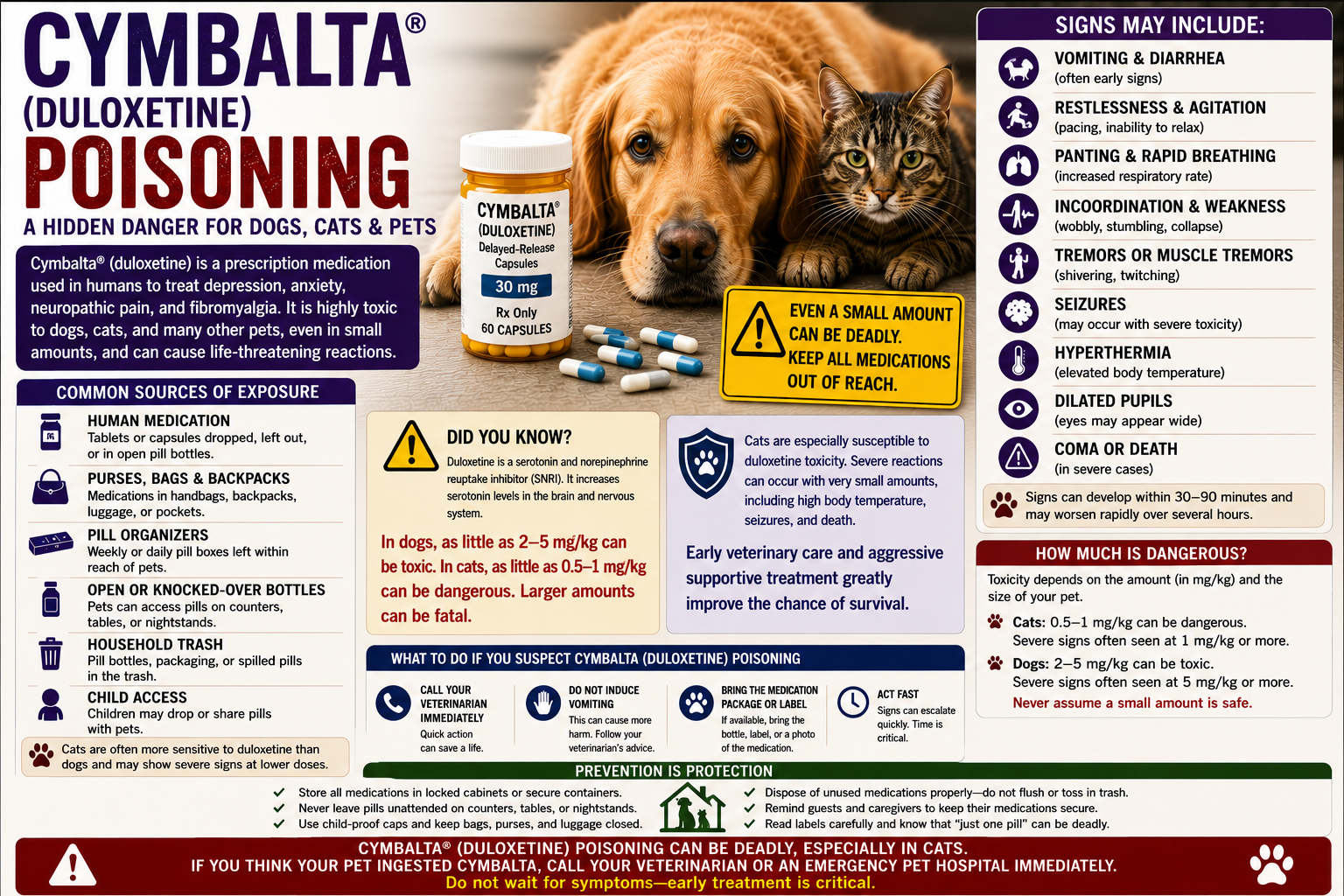
Yes. Cymbalta and generic duloxetine can poison dogs, cats, and other animals, and any unprescribed exposure warrants prompt veterinary assessment. Duloxetine is a serotonin-norepinephrine reuptake inhibitor, or SNRI. Overexposure can cause vomiting, lethargy, dilated pupils, agitation, vocalization, trembling, incoordination, abnormal heart rate or blood pressure, hyperthermia, muscle rigidity, seizures, serotonin syndrome, collapse, and complications from mixed medications or swallowed packaging.
Cymbalta is a brand name; duloxetine hydrochloride is the active drug. Most products are delayed-release capsules containing enteric-coated pellets, beads, granules, or miniature tablets designed to resist stomach acid. A capsule that has been chewed or scattered across the floor may expose more than one animal and may not behave like an ordinary immediate-release tablet. Generic duloxetine, Drizalma Sprinkle, Irenka, and products dispensed under manufacturer-specific names require the same ingredient-level evaluation.
A retrospective study of 364 dogs found that many reported ingestions caused no observed signs, while affected dogs most often developed lethargy, dilated pupils, vomiting, or trembling. Larger estimated exposures were associated with a greater likelihood of abnormal signs, but individual responses varied and the study did not establish a universal safe dose. Cats and exotic species have a much thinner duloxetine-specific evidence base, so absence of a species-specific threshold must not be mistaken for safety.
About this guide: This page provides general pet-poisoning information and cannot diagnose or treat an individual animal. For any suspected exposure, contact a veterinarian or animal poison-control service immediately. Do not induce vomiting, give medication, or attempt home decontamination unless directed by a veterinary professional.
Agent and Exposure Profile
Quick Reference
Cymbalta, Duloxetine, Delayed-Release Formulations, and Product Recognition
Cymbalta is the brand; duloxetine is the active drug
Cymbalta contains duloxetine hydrochloride, an SNRI used in people for depression, anxiety, neuropathic pain, fibromyalgia, and chronic musculoskeletal pain. The medication may also be dispensed as generic duloxetine or under other brand names. The label may list the amount as duloxetine even though the capsule contains duloxetine hydrochloride; veterinary exposure calculations must use the labeled active-drug strength rather than the total weight of capsule contents.
Duloxetine is not the same drug as venlafaxine, desvenlafaxine, milnacipran, levomilnacipran, fluoxetine, sertraline, or a tricyclic antidepressant. These medications overlap in serotonin-related toxic effects but differ in formulation, pharmacokinetics, co-ingredients, and clinical experience. A pet's prior tolerance of one antidepressant does not establish safety for another.
Delayed-release capsules and enteric-coated pellets
Most duloxetine products are delayed-release capsules filled with enteric-coated pellets, beads, granules, or mini-tablets. The coating is intended to protect duloxetine from degradation in the stomach and release it after the material reaches a higher-pH portion of the gastrointestinal tract. This can create a lag between ingestion and peak exposure and can complicate decontamination decisions when capsules were swallowed intact, chewed, or scattered.
Some sprinkle formulations are designed for specific human administration methods, but that does not make loose pellets safe for animals. Tiny beads can adhere to carpet, bedding, saliva, fur, vomit, or the inside of a chewed container. Owners should preserve the material rather than sweeping it away before the number and strength of missing capsules are reconstructed.
Common strengths and dispensing forms
Duloxetine is commonly dispensed in several capsule strengths, and appearance varies among brands and manufacturers. Pharmacy bottles, unit-dose packs, mail-order packets, medication organizers, and mixed travel containers may omit the familiar Cymbalta name. The imprint, strength, National Drug Code, pharmacy record, and active-ingredient line are more reliable than capsule color.
Veterinary and off-label context
Duloxetine has been studied experimentally in dogs and is sometimes discussed for neuropathic pain or urinary disorders, but it is not a routine owner-directed veterinary medication. Canine oral pharmacokinetic studies demonstrate absorption after delayed-release pellets and substantial formulation-dependent behavior, while clinical efficacy and safety for most veterinary uses remain insufficiently established. An accidental human-capsule ingestion should never be treated as equivalent to a prescribed veterinary course.
Combination exposure matters
Duloxetine is usually a single-active-ingredient product, but pets often reach pill organizers, purses, bedside containers, or discarded medication packs containing several drugs. Opioids, sleep aids, stimulants, antihistamines, blood-pressure medications, acetaminophen, NSAIDs, and other antidepressants can change the expected syndrome, alter decontamination safety, or require separate antidotal and monitoring plans.
Where Cymbalta and Duloxetine May Be Found
Human prescription bottles and mail-order supplies
Duloxetine is commonly stored in medicine cabinets, bathroom drawers, kitchen organizers, bedside tables, purses, backpacks, luggage, office drawers, vehicles, and mail-order medication boxes. Dogs may crush child-resistant bottles or chew through blister packs. Cats may bat a loose capsule under furniture, where a dog or another pet later finds it.
Pill organizers and mixed medication containers
Weekly organizers, travel pouches, plastic bags, cups, and bedside dishes often contain duloxetine beside unrelated prescriptions. A missing group of pills therefore cannot be assessed as duloxetine alone until every tablet and capsule is identified. Mixed containers also make it difficult to know whether a pet swallowed immediate-release tablets, delayed-release pellets, or both.
Loose pellets from opened capsules
Enteric-coated pellets can spill when a capsule is crushed, opened, punctured, or vomited. The material may look like tiny white or off-white beads, granules, or mini-tablets rather than recognizable medicine. Pellets can remain in carpet, pet bedding, furniture seams, clothing, or a dog's beard after the obvious capsule shell is recovered.
Generic and alternate-brand products
The front label may say duloxetine delayed-release capsules rather than Cymbalta. Other brand or formulation names may be used, and manufacturers can change capsule colors and imprints. Search terms such as duloxetine HCl, duloxetine hydrochloride, DR, delayed release, enteric coated, sprinkle, SNRI, and the pharmacy's abbreviated drug name can help identify the product.
Homes with chronic pain, psychiatric, or neurologic medication
Duloxetine may be prescribed for depression, generalized anxiety, diabetic neuropathic pain, fibromyalgia, chronic back or musculoskeletal pain, and other human conditions. Exposure risk can be higher where several family members take medication, doses are prepared in advance, capsules are opened for a person with swallowing difficulty, or visitors bring medication into a pet-accessible room.
Trash, vomit, and discarded packaging
Pets may retrieve capsules from wastebaskets, chew pharmacy vials, consume medication-contaminated food, or eat vomit containing partially dissolved pellets. Used packaging and recovered pellets should be secured because a second animal can be exposed after the original event.
Cymbalta and Duloxetine Exposure Scenarios and Risk Factors
One dropped capsule
A single human capsule can represent a clinically important exposure for a small dog, cat, puppy, kitten, bird, ferret, rabbit, or other small animal. Risk cannot be judged from capsule count alone because strengths differ and individual responses vary. The animal's weight, exact strength, formulation, time, and concurrent medications must be considered together.
Chewed bottle or blister pack
Dogs may ingest multiple capsules, plastic, foil, cotton, desiccant, and label fragments in one event. Packaging can cause oral injury or gastrointestinal obstruction independently of duloxetine. A destroyed bottle also creates uncertainty because capsules and pellets may be scattered, hidden, or consumed by several animals.
Delayed-release material and uncertain timing
Intact enteric-coated pellets can delay drug release, while chewing may damage some coatings and leave others intact. An animal that appears normal soon after exposure may still develop signs later. The exposure window should include the last time the medication count was known to be correct, not merely the moment the empty container was discovered.
Repeated dosing or medication error
Accidental repeated administration can occur when multiple caregivers dose the same animal, a human capsule is mistaken for a veterinary medication, or a pill organizer is filled incorrectly. Repeated exposure may extend the clinical course and makes a single-dose risk estimate unreliable. Chronic duloxetine use also raises a separate question of withdrawal if prescribed medication is abruptly stopped; that issue should be managed by the prescribing veterinarian rather than corrected with an extra dose at home.
Concurrent serotonergic drugs
Risk rises when duloxetine is combined with tramadol, trazodone, fluoxetine, sertraline, paroxetine, venlafaxine, desvenlafaxine, clomipramine, amitriptyline, buspirone, mirtazapine, dextromethorphan, amphetamines, 5-hydroxytryptophan, St. John's wort, selegiline, linezolid, amitraz, or another monoamine-enhancing substance. Therapeutic doses can become clinically significant when mechanisms overlap.
Patients with reduced reserve
Young, geriatric, underweight, dehydrated, neurologically impaired, cardiovascularly unstable, or medically fragile animals may tolerate agitation, vomiting, hyperthermia, hypertension, arrhythmia, or seizures poorly. Liver disease, kidney disease, electrolyte disturbance, and concurrent CYP-modifying drugs can further complicate exposure even when the exact veterinary significance is not fully quantified.
Cats and other species
The largest duloxetine-specific clinical dataset concerns dogs. Cats can develop serotonin syndrome from serotonergic drugs, and other species have biologic serotonin and norepinephrine systems, but species-specific duloxetine thresholds are not well defined. Small body size, limited published experience, and differences in metabolism justify conservative assessment rather than reassurance based on canine data.
Cymbalta and Duloxetine Poisoning Symptoms and Clinical Progression
Early gastrointestinal and behavioral signs
Vomiting, nausea, drooling, reduced appetite, diarrhea, lethargy, hiding, restlessness, pacing, vocalization, or an unusual response to handling may appear first. In the 364-dog retrospective series, lethargy, dilated pupils, vomiting, and trembling were the most frequently reported abnormal signs. A quiet or sleepy presentation does not exclude later stimulation.
Neurologic stimulation or depression
Duloxetine can produce a mixed neurologic picture. Animals may be depressed, weak, or difficult to rouse, or they may become agitated, hyperalert, disoriented, hypersensitive to touch, uncoordinated, tremulous, rigid, or unable to settle. Mydriasis, nystagmus, repetitive movements, jaw chattering, muscle fasciculations, and seizures may occur in more severe serotonergic toxicity.
Serotonin syndrome
Serotonin syndrome is a clinical constellation rather than one laboratory result. Veterinary patients may develop altered mental status, autonomic instability, and neuromuscular abnormalities in varying combinations. Agitation, hyperthermia, tachycardia, hypertension, diarrhea, tremors, clonus-like movements, hyperreflexia, rigidity, and seizures are particularly concerning when duloxetine was combined with another serotonergic drug.
Not every duloxetine-exposed animal develops the full syndrome. Mild lethargy or vomiting may be the only observed sign, while mixed overdoses can create simultaneous sedation, respiratory depression, or anticholinergic effects that obscure the classic pattern. Diagnosis depends on the exposure history and evolving clinical examination.
Cardiovascular and autonomic effects
Increased norepinephrine can contribute to rapid heart rate, elevated blood pressure, panting, dilated pupils, agitation, and peripheral vasoconstriction. Severe cases may develop hypertension, hypotension, syncope, abnormal rhythms, poor perfusion, or cardiovascular collapse. Vomiting, fever, and sustained muscle activity can worsen dehydration and electrolyte disturbance.
Hyperthermia and muscle injury
High body temperature may result from agitation, tremors, rigidity, seizures, and increased muscle metabolism rather than environmental heat alone. Prolonged hyperthermia can contribute to rhabdomyolysis, kidney injury, coagulopathy, acid-base disturbance, and multi-organ dysfunction. Temperature can rise quickly and requires active monitored control rather than unsupervised ice-water cooling.
Delayed or prolonged signs
Delayed-release pellets may create a lag before maximal signs, and substantial or repeated exposures can require prolonged monitoring. A dog that initially looks normal may later vomit, become lethargic, develop mydriasis, tremble, or become agitated. Improvement after an early sedative dose does not prove that absorption is complete.
Mixed-product signs
Profound respiratory depression may point to an opioid or sedative co-ingestant; severe anticholinergic signs may reflect an antihistamine or tricyclic drug; hypoglycemia may indicate xylitol or another cause; and gastrointestinal bleeding or kidney injury may come from an NSAID. Every missing medication must remain in the differential diagnosis.
First Aid for Suspected Cymbalta or Duloxetine Exposure
Immediate owner actions
- Remove access to capsules, pellets, packaging, pill organizers, vomit, and contaminated bedding.
- Preserve the original bottle, pharmacy label, blister pack, capsule shell, loose pellets, and photographs of imprints.
- Record the strength, maximum number missing, earliest and latest possible exposure time, and whether capsules were intact or chewed.
- Obtain the animal's current weight and list every medication, supplement, flea product, and behavioral drug in the home.
- Separate all animals that had access and report the maximum plausible exposure for each rather than dividing the missing amount evenly.
- Contact a veterinarian or veterinary emergency service promptly, even when the animal appears normal.
Do not induce vomiting without veterinary direction
Do not give hydrogen peroxide, salt, mustard, syrup of ipecac, or attempt manual gagging. Duloxetine can cause lethargy, agitation, tremors, seizures, or altered swallowing, and delayed-release pellets may remain in the gastrointestinal tract after the safe window for home action has passed. Vomiting also increases aspiration risk and may scatter medication where another animal can ingest it.
Do not give activated charcoal at home
Veterinary professionals may consider activated charcoal in selected patients, especially after a substantial delayed-release exposure, but the decision depends on airway protection, neurologic status, vomiting risk, hydration, formulation, and timing. Charcoal can be aspirated and can complicate sodium balance or gastrointestinal assessment.
Do not give cyproheptadine or sedatives on your own
Cyproheptadine may be used by veterinarians as a serotonin antagonist in selected patients, but oral absorption, dose, repeated administration, and the animal's ability to swallow must be assessed. Human sleep aids, benzodiazepines, antihistamines, trazodone, gabapentin, acepromazine, heart medication, or leftover veterinary prescriptions can worsen a mixed exposure or obscure progression.
Safe transport
Keep the animal in a quiet, dim, temperature-controlled environment and minimize stimulation. Use a secure carrier or restrained vehicle area, protect the animal from falling, and do not place hands near the mouth of a disoriented or tremoring patient. Call ahead for seizures, severe agitation, collapse, respiratory difficulty, or hyperthermia so the hospital can prepare monitoring and rapid sedation.
Preserve exposure evidence
Do not discard vomit containing capsules or pellets until the veterinary team has enough information. A photograph beside a ruler, a sealed sample, and an identical intact capsule can help identify what was recovered. Medication counts should be repeated carefully because pellets and capsules can hide in bottle shoulders, carpet, and furniture seams.
Duloxetine Toxicology and Mechanism
Serotonin and norepinephrine reuptake inhibition
Duloxetine inhibits presynaptic reuptake of serotonin and norepinephrine, increasing monoamine signaling within the central nervous system and elsewhere in the body. Therapeutic effects are sought through this mechanism, but excessive signaling can disrupt behavior, thermoregulation, muscle activity, gastrointestinal function, cardiovascular control, and autonomic balance.
Why the syndrome can look both sedating and stimulating
Monoamine toxicity does not produce one uniform appearance. Some dogs in clinical series were lethargic, while others developed trembling, agitation, or mydriasis. Dose, individual pharmacokinetics, time since exposure, co-ingestants, receptor effects, and prior medication can shift the presentation. A sleepy patient may later become stimulated as delayed-release material is absorbed.
Delayed-release pharmacokinetics
Cymbalta capsules contain enteric-coated material intended to delay release until after gastric transit. A canine pharmacokinetic study using 30- and 60-mg Cymbalta capsules found dose-proportional increases in systemic exposure and modeled absorption with a lag time. Those experimental data help explain why immediate clinical normality cannot be treated as proof that the exposure is over.
Formulation damage complicates prediction. Chewing can expose some pellets earlier while leaving others intact; food, gastric emptying, capsule strength, and manufacturing design may also affect timing. Human pharmacokinetic assumptions should not be transferred mechanically to every dog, cat, or exotic species.
Serotonin syndrome as a spectrum
Veterinary serotonin syndrome is recognized through compatible exposure plus mental-status, autonomic, and neuromuscular abnormalities. Experimental and clinical veterinary literature involving 5-hydroxytryptophan, SSRIs, tramadol, and other serotonergic agents shows that severe serotonin excess can be life-threatening. Duloxetine adds norepinephrine reuptake inhibition, so hypertension and cardiovascular stimulation may accompany serotonergic signs.
Drug interactions
Other serotonin-enhancing drugs can produce additive or synergistic toxicity. MAO inhibition is especially concerning because serotonin breakdown is impaired while reuptake is also blocked. Opioids such as tramadol, cough suppressants such as dextromethorphan, stimulants, tricyclic antidepressants, SSRIs, other SNRIs, trazodone, buspirone, mirtazapine, selegiline, linezolid, and 5-hydroxytryptophan should all be specifically investigated.
Metabolism and organ-disease considerations
Duloxetine is extensively metabolized, with human data emphasizing CYP1A2 and CYP2D6 pathways. Canine metabolism and exposure can differ from people, and veterinary data are incomplete for many breeds, ages, disease states, and interacting drugs. Liver dysfunction may reduce metabolic reserve, while severe hyperthermia, hypotension, seizures, or muscle injury can secondarily damage the liver and kidneys.
Evidence boundaries and dose interpretation
The 364-dog series provides the strongest duloxetine-specific clinical dataset but was retrospective and depended on estimated exposures and reported outcomes. Most dogs did not develop observed signs, and dogs with larger estimated ingestions were more likely to become abnormal, yet individual variation remained substantial. The reported association is not a public safe-dose cutoff and does not resolve risk for cats, repeated dosing, delayed-release damage, mixed drugs, or medically fragile patients.
Clinical Management
Veterinary Care and Prognosis
Veterinary Diagnosis and Treatment
Exposure reconstruction and triage
The veterinary team identifies the exact product, strength, delayed-release design, maximum possible number of capsules, exposure window, whether pellets were chewed, and every possible co-ingestant. Triage focuses on airway, breathing, circulation, mental status, gait, pupil size, tremors, muscle tone, temperature, heart rate and rhythm, blood pressure, perfusion, vomiting, and seizure activity.
Diagnostic evaluation
Testing may include blood glucose, electrolytes, packed cell volume, serum chemistry, kidney and liver values, blood gas analysis, lactate, urinalysis, creatine kinase, and electrocardiography. Severe hyperthermia, persistent tremors, seizures, hypotension, or muscle injury may justify serial acid-base, renal, hepatic, and coagulation assessment. No routine laboratory test alone confirms or excludes duloxetine toxicity.
Professional decontamination
Emesis may be considered after a recent exposure in an alert, clinically normal patient with a protected airway and no contraindicating co-ingestant. The benefit declines as signs develop and aspiration risk rises. Activated charcoal may be considered because delayed-release pellets can prolong absorption, but administration must account for vomiting, neurologic status, sodium balance, hydration, and the need for repeated dosing.
Sedation and control of neuromuscular activity
Agitation, tremors, rigidity, and seizures require prompt control to reduce hyperthermia, oxygen demand, trauma, and muscle breakdown. Veterinary sedatives, anticonvulsants, and muscle relaxants are selected according to the clinical pattern, blood pressure, respiratory function, and co-ingestants. Refractory patients may require continuous infusions, intubation, ventilation, or anesthetic-level support.
Serotonin antagonism
Cyproheptadine may be used in compatible serotonin syndrome when oral or rectal administration is feasible. It is an adjunct, not a substitute for airway protection, sedation, temperature control, fluids, cardiovascular monitoring, and seizure management. Chlorpromazine and other agents require careful risk-benefit assessment because hypotension, sedation, and drug interactions can complicate use.
Temperature management
Hyperthermia is treated by stopping excessive muscle activity and using controlled active cooling while continuously monitoring core temperature. Cooling must be tapered before overshoot hypothermia occurs. Antipyretic drugs do not correct toxin-driven muscle heat production and may add hepatic or gastrointestinal risk.
Cardiovascular support
Continuous ECG and blood-pressure monitoring may be required for tachycardia, hypertension, hypotension, syncope, or rhythm disturbance. Intravenous crystalloids can correct dehydration and support perfusion, but persistent hypertension or hypotension requires targeted therapy rather than indiscriminate fluids. Vasopressors may be necessary after appropriate fluid resuscitation when shock persists.
Respiratory and aspiration support
Oxygen, suction, antiemetic therapy, airway protection, and ventilation may be needed for depressed consciousness, recurrent vomiting, aspiration, severe seizures, or sedative complications. Chest imaging and blood-gas monitoring may be indicated when coughing, abnormal lung sounds, hypoxemia, or respiratory distress develops.
Monitoring duration
Observation length is individualized according to dose uncertainty, formulation, pellet damage, clinical signs, co-ingestants, response to decontamination, and laboratory trends. Delayed-release exposure and repeated ingestion can justify longer monitoring than an ordinary immediate-release tablet. Discharge should be based on sustained neurologic, cardiovascular, temperature, and gastrointestinal stability.
Advanced and rescue therapies
Intravenous lipid emulsion has been discussed for severe poisoning by lipophilic drugs, but evidence for duloxetine in veterinary patients is limited and it is not routine first-line treatment. Potential interference with laboratory testing, pancreatitis risk, fat overload, and uncertain benefit must be weighed by the treating criticalist. Hemodialysis is not a standard antidote and would be considered only in exceptional circumstances involving broader organ-support needs.
Prognosis, Recovery, and Follow-Up
Most recognized single-drug canine exposures recover with care
The large retrospective dog series found that most reported duloxetine ingestions produced no observed abnormal signs, and clinically affected dogs commonly had limited neurologic or gastrointestinal findings. Prognosis is generally favorable when exposure is recognized early, severe serotonin syndrome does not develop, co-ingestants are excluded, and temperature, cardiovascular status, and seizures are controlled.
Findings that make prognosis more guarded
The outlook becomes more guarded with severe hyperthermia, prolonged seizures, persistent rigidity, aspiration pneumonia, refractory hypertension or hypotension, serious arrhythmia, rhabdomyolysis, kidney injury, coagulopathy, coma, delayed presentation, repeated dosing, or a mixed overdose. Small patients can receive a large body-weight-adjusted exposure from only a few capsules.
Recovery may outlast visible agitation
Tremors and agitation may resolve before dehydration, muscle injury, aspiration, or delayed-release absorption is fully addressed. Conversely, lethargy after treatment may reflect necessary sedation rather than worsening toxicity. Serial examinations and laboratory trends help distinguish medication effects from complications.
After discharge
Owners should follow all recheck, feeding, activity, and medication instructions. Return promptly for recurrent vomiting, weakness, pacing, dilated pupils, trembling, incoordination, fever, abnormal breathing, coughing, collapse, seizures, dark urine, reduced urination, or any deterioration after initial improvement.
Prescribed duloxetine and discontinuation
If the animal was receiving duloxetine under veterinary direction, the prescribing veterinarian should decide whether and how therapy resumes. Do not replace a vomited or missed dose, double the next dose, or restart after overdose without instructions. Abrupt discontinuation after chronic exposure may cause its own clinical problems, but preventing recurrent overdose takes priority.
Preventing Cymbalta and Duloxetine Poisoning
Store delayed-release capsules in a closed cabinet
Keep duloxetine in its original labeled container inside a latched or closed cabinet. Child-resistant packaging is not dog-proof. Purses, backpacks, bedside tables, weekly organizers, luggage, mail-order boxes, and bathroom counters remain common access points.
Control loose pellets immediately
If a capsule opens, remove pets before cleanup, use bright lighting, inspect carpet and furniture seams, and count recovered pellets or mini-tablets when practical. Seal waste in a pet-inaccessible container. Check paws, fur, bedding, and clothing before animals return to the area.
Use a written medication system
Record the patient, drug, strength, time, and caregiver for every administered dose. Keep human and veterinary medications physically separate. Never prepare a pet's pills beside open human capsules when similar colors or sizes could be confused.
Review serotonergic combinations
Tell every veterinarian about antidepressants, pain medications, behavior drugs, cough products, supplements, flea and tick products, and recent medication changes. Do not add tramadol, trazodone, dextromethorphan, 5-hydroxytryptophan, St. John's wort, selegiline, or another serotonergic product without a case-specific interaction review.
Protect visitors, workers, and shared spaces
Guest medications, home-health supplies, employee lockers, boarding luggage, and maintenance areas should be secured. Facilities should require labeled containers, document every dose, prohibit loose pills in client bags, and have a dropped-medication response that separates animals until the item is found.
Dispose of medication safely
Use a pharmacy or community medication take-back program when available. Do not leave capsules in an open trash can or compost. Remove identifying information from packaging only after the drug is secured, because the label may be essential if an exposure occurs.
Cymbalta (Duloxetine) Poisoning FAQ
Are Cymbalta and duloxetine the same medication?
Cymbalta is a brand name for duloxetine hydrochloride. Generic duloxetine and other brand-name delayed-release products contain the same active drug, although pellet design, capsule appearance, and labeled strengths may differ.
Is duloxetine an SSRI?
Duloxetine is usually classified as a serotonin-norepinephrine reuptake inhibitor, or SNRI, because it inhibits reuptake of both monoamines. It can still cause serotonin syndrome and shares several toxic effects with SSRIs.
Can one Cymbalta capsule poison a dog?
It can be clinically important, especially for a small dog or a high-strength capsule. Risk depends on the labeled strength, body weight, delayed-release formulation, individual sensitivity, co-ingestants, and time since exposure. One capsule should be assessed rather than assumed harmless.
What did the 364-dog duloxetine study show?
Most reported dogs had no observed clinical signs, while 55 developed signs, most commonly lethargy, dilated pupils, vomiting, and trembling. Larger estimated exposures were associated with a higher likelihood of signs, but individual responses varied and the study did not establish a universal safe dose.
Why are the tiny pellets inside the capsule important?
They are enteric-coated delayed-release units. Some may remain intact after the capsule shell is destroyed, creating delayed absorption and making the true amount recovered difficult to judge. Loose pellets can also expose another animal.
My dog chewed the capsule but spit out the shell. Is that reassuring?
No. The shell contains little of the active drug; most duloxetine is in the pellets or mini-tablets inside it. Preserve the shell and search for loose contents, but assume ingestion is possible until the amount is reconstructed.
Can signs be delayed?
Yes. Delayed-release material is designed to resist stomach acid and release later in the gastrointestinal tract. Chewed capsules may contain a mixture of damaged and intact pellets, so a normal early examination does not always end the risk period.
What is serotonin syndrome?
It is a toxin- or drug-induced state of excessive serotonergic activity. Veterinary patients may show altered mental status, agitation, vomiting or diarrhea, rapid heart rate, abnormal blood pressure, hyperthermia, tremors, hyperreflexia, rigidity, or seizures in different combinations.
Which medications make duloxetine exposure more dangerous?
Other serotonergic or monoamine-enhancing agents are especially important, including tramadol, trazodone, SSRIs, other SNRIs, tricyclic antidepressants, buspirone, mirtazapine, dextromethorphan, amphetamines, 5-hydroxytryptophan, selegiline, linezolid, and some amitraz products. Mixed pill-organizer exposures may add opioids, sedatives, NSAIDs, or other unrelated toxins.
Does lethargy rule out serotonin syndrome?
No. Duloxetine exposure can produce depression, stimulation, or a changing mixture of both. Co-ingested sedatives can mask agitation, and delayed-release absorption can change the clinical picture over time.
Should I induce vomiting because the capsule was just swallowed?
Not without veterinary direction. The patient may already be developing altered mentation or swallowing, and delayed-release pellets complicate timing. A veterinarian can decide whether emesis is safe and useful after considering the exact exposure and airway risk.
Does activated charcoal neutralize duloxetine?
No. It may reduce absorption in selected veterinary patients, but it does not chemically neutralize the drug and carries aspiration, dehydration, and sodium-related risks. It should not be given at home.
Is cyproheptadine an antidote I can give at home?
No. Veterinarians may use cyproheptadine as a serotonin antagonist in compatible cases, but it is only one part of treatment and must be selected around swallowing ability, blood pressure, sedation, co-ingestants, and ongoing monitoring.
Can a blood test confirm duloxetine poisoning?
Routine bloodwork does not directly prove or exclude it. Diagnosis usually relies on product evidence, exposure timing, compatible signs, and exclusion of other causes. Laboratory tests are used mainly to detect dehydration, electrolyte changes, muscle injury, organ complications, and co-ingestant effects.
Are cats affected the same way as dogs?
Cats can develop serotonin syndrome from serotonergic drugs, but duloxetine-specific feline exposure data are limited. Canine dose associations should not be used as feline safety thresholds. A cat that ingests duloxetine needs prompt case-specific assessment.
Could duloxetine be mistaken for a seizure disorder or stimulant poisoning?
Yes. Tremors, mydriasis, agitation, hyperthermia, abnormal gait, and seizures overlap with amphetamines, methylphenidate, tremorgenic toxins, metaldehyde, 5-hydroxytryptophan, and neurologic disease. The medication history and full examination are essential.
What if several pets had access to the bottle?
Separate them, identify each weight and signs, preserve the container, and report the maximum possible exposure for every animal. Do not divide the missing capsules evenly; one pet may have consumed most of them while another only scattered pellets.
Can signs return after the animal seems better?
They can, particularly after delayed-release or repeated exposure. Sedation may temporarily suppress visible agitation while absorption continues. Follow the recommended observation period and return immediately for recurrent vomiting, tremors, pacing, fever, weakness, breathing changes, or seizures.