Ibuprofen, Advil, Motrin, Midol, NSAID, Kidney, and Gastrointestinal Toxicity
Is Ibuprofen Poisonous to Dogs, Cats, and Other Animals?
Yes. Ibuprofen can cause serious or fatal poisoning in dogs and cats, and even a single human tablet can be important in a small animal. Ibuprofen is a nonsteroidal anti-inflammatory drug, or NSAID. In pets it can damage the stomach and intestines, reduce protective kidney blood flow, interfere with platelet function, and at larger exposures cause weakness, low blood pressure, seizures, coma, and multi-organ failure.
Ibuprofen is sold alone and inside many brand families, including Advil, Motrin, store-brand pain relievers, migraine products, cold and sinus products, nighttime products, and some menstrual-pain products. A brand name does not identify the ingredients reliably. Products sold under names such as Midol may contain ibuprofen in some formulations but acetaminophen, naproxen, caffeine, antihistamines, or other ingredients in others. The complete active-ingredient panel must be preserved and evaluated.
Veterinarians use selected veterinary NSAIDs under patient-specific supervision, but human ibuprofen is not an acceptable substitute. Risk changes with species, body weight, amount, formulation, repeated dosing, hydration, blood pressure, kidney and gastrointestinal health, concurrent steroids or NSAIDs, and co-ingredients. A pet may appear normal before ulceration, bleeding, or acute kidney injury becomes evident.
About this guide: This page provides general pet-poisoning information and cannot diagnose or treat an individual animal. For any suspected exposure, contact a veterinarian or animal poison-control service immediately. Do not induce vomiting, give medication, or attempt home decontamination unless directed by a veterinary professional.
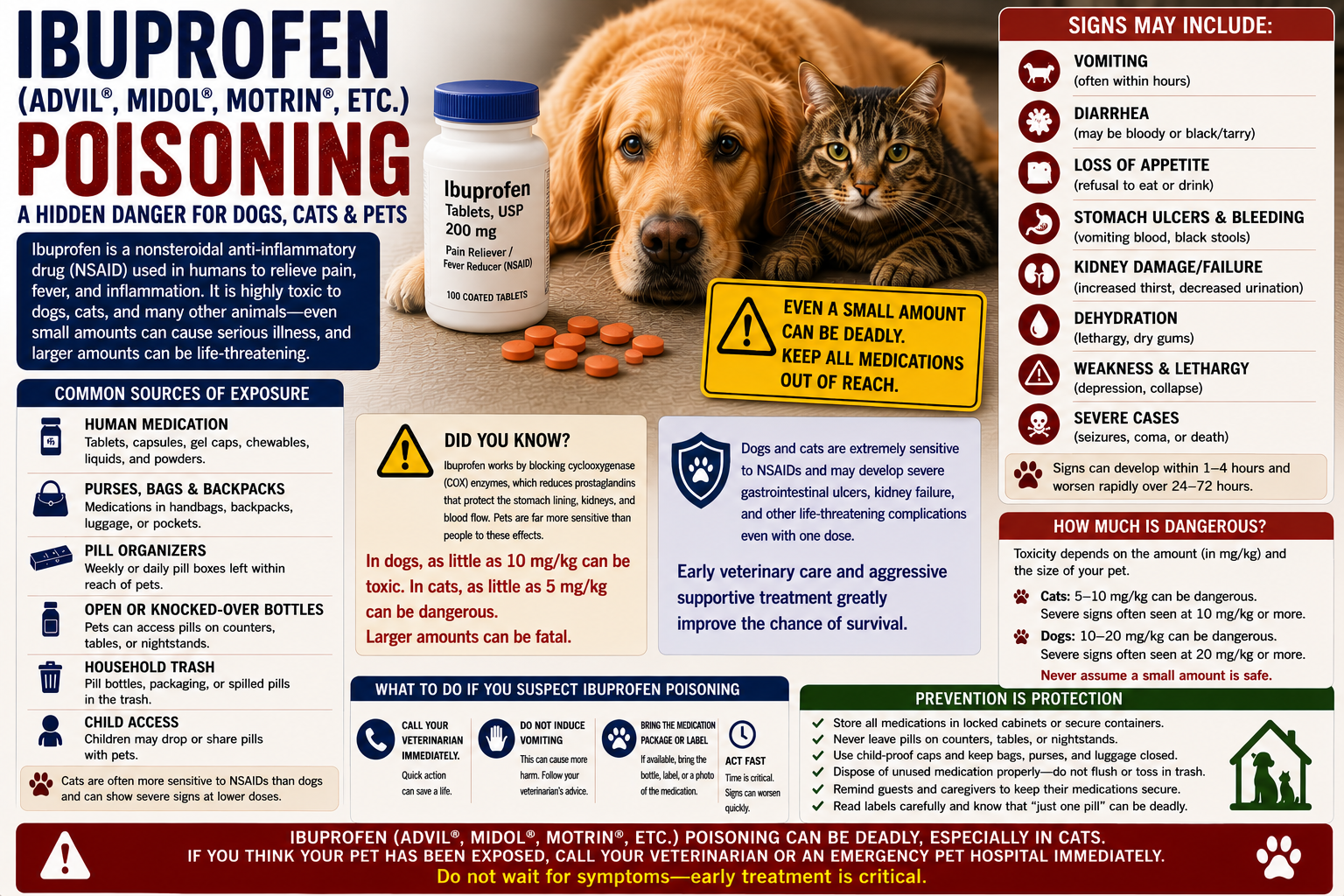
Agent and Exposure Profile
Quick Reference
Ibuprofen Identity, Strengths, Brand Names, and Product Recognition
Ibuprofen is a nonselective NSAID
Ibuprofen is a propionic-acid nonsteroidal anti-inflammatory drug that reduces pain, fever, and inflammation by inhibiting cyclooxygenase activity and lowering prostaglandin synthesis. That same mechanism removes prostaglandin-dependent protection from the gastrointestinal tract and kidneys. Human therapeutic use does not establish safety for dogs, cats, rabbits, birds, or other animals.
Common human products include tablets, caplets, capsules, liquid-filled capsules, chewable tablets, suspensions, concentrated infant drops, and prescription-strength tablets. Human tablets are commonly sold in 200-milligram strength, while prescription products may contain larger amounts per unit. Liquid concentrations and dosing devices vary, so a spoonful or partially emptied bottle cannot be estimated from volume alone.
Advil, Motrin, and store brands
Advil and Motrin are prominent ibuprofen brand families, but packages within a brand can differ. Some products contain only ibuprofen; others add acetaminophen, diphenhydramine, pseudoephedrine, phenylephrine, or other drugs. Generic labels may say ibuprofen, pain reliever, fever reducer, migraine relief, sinus relief, or nighttime pain relief. The front label is not enough.
Midol and menstrual-pain products
Midol is a brand family rather than a single drug. Depending on the exact product and market, a menstrual-pain medicine may contain ibuprofen, naproxen, acetaminophen, caffeine, an antihistamine, or a diuretic. Two boxes with similar colors or names can require entirely different toxicology and treatment plans. Preserve the Drug Facts panel and do not report the exposure merely as "Midol."
Combination and dual-action products
Combination products may pair ibuprofen with acetaminophen or a decongestant, antihistamine, stimulant, cough suppressant, or sleep aid. The ibuprofen component can cause gastrointestinal and renal injury while the co-ingredient creates liver, cardiovascular, respiratory, neurologic, or anticholinergic complications. Every active ingredient must be assessed independently and then as part of the combined syndrome.
Ibuprofen is not the same as veterinary NSAIDs
Carprofen, meloxicam, deracoxib, firocoxib, grapiprant, robenacoxib, and other veterinary pain medicines are not interchangeable with ibuprofen. They differ in pharmacology, approved species, formulation, dosing, and safety monitoring. Giving human ibuprofen because a pet has previously tolerated a veterinary NSAID can produce an overdose or dangerous drug overlap.
Where Ibuprofen May Be Found
Household pain and fever products
Ibuprofen may be stored in medicine cabinets, bathroom drawers, kitchen cabinets, bedside tables, purses, backpacks, luggage, gym bags, vehicles, desk drawers, employee lockers, pill organizers, and visitor belongings. Dogs often reach it by chewing a plastic bottle, blister card, purse, or weekly organizer. Cats may be exposed when a caregiver intentionally gives a human pain medicine.
Children's and infant formulations
Flavored suspensions, chewables, and concentrated drops may be attractive to animals and can be spilled during dosing. Child-oriented packaging does not make the drug safe for a pet. Concentrations, sweeteners, flavors, and dosing syringes differ, and some liquid products contain additional ingredients that require review.
Cold, sinus, migraine, nighttime, and dual-action products
Ibuprofen may be combined with pseudoephedrine, phenylephrine, diphenhydramine, acetaminophen, or other ingredients. A product marketed primarily for congestion, sleep, migraine, or menstrual pain may still contain an NSAID. Daytime and nighttime versions of the same brand may have different formulas.
Prescription and institutional supplies
Higher-strength tablets can be present in prescription bottles, hospitals, clinics, dental offices, schools, nursing facilities, workplace first-aid stations, sports facilities, and travel kits. A single prescription tablet can represent several times the ibuprofen content of an over-the-counter unit.
Trash, dropped pills, and mixed medication containers
Loose tablets may be found under furniture, beside a bed, in couch cushions, on vehicle floors, or in trash containing used packaging. Mixed pill organizers create uncertainty because several drugs may be missing. Vomit or chewed wrappers can also be consumed by another animal, extending the exposure beyond the pet first observed.
Ibuprofen Exposure Scenarios and Risk Factors
Acute bottle or package ingestion
A dog may swallow many tablets after crushing a bottle or blister pack. The maximum possible amount should be calculated from the original count, remaining tablets, tablet strength, and every missing fragment rather than from what the owner thinks the dog probably ate. Damaged packaging can add sharp plastic, foil, or desiccant exposure.
Owner-administered dosing
Many cases begin when a well-meaning caregiver gives ibuprofen for limping, arthritis, fever, dental pain, post-operative discomfort, or another human-style indication. Repeated smaller doses can be especially dangerous because gastrointestinal ulceration and kidney injury may develop progressively. An old recommendation for a different pet or a previous body weight should never be reused.
Duplicate NSAID or steroid exposure
Risk rises when ibuprofen is given near aspirin, naproxen, carprofen, meloxicam, deracoxib, firocoxib, robenacoxib, prednisone, dexamethasone, or another corticosteroid. Drug overlap can magnify gastrointestinal ulceration, bleeding, and renal hypoperfusion even when each individual product was given at a seemingly modest amount.
Dehydration, low blood pressure, and pre-existing disease
Vomiting, diarrhea, heat exposure, anesthesia, heart disease, shock, kidney disease, advanced age, and poor water intake reduce physiologic reserve. In these patients, renal blood flow may depend more heavily on prostaglandins, making NSAID inhibition more consequential. A normal baseline creatinine value does not eliminate the risk of delayed injury.
Small patients and uncertain histories
Toy-breed dogs, puppies, kittens, and underweight animals can receive a high dose from one or two tablets. When several pets had access, do not divide the missing amount evenly. Each animal should be assessed using the maximum plausible exposure until evidence identifies the actual consumer.
Cats and other species
Cats can develop severe acute kidney injury and glomerular protein loss after ibuprofen exposure. Rabbits, ferrets, birds, reptiles, horses, and livestock have different pharmacokinetics and exposure patterns, and the evidence base is much smaller. Lack of a species-specific public threshold is not evidence of safety.
Ibuprofen Poisoning Symptoms and Clinical Progression
Early gastrointestinal signs
Vomiting, drooling, nausea, reduced appetite, abdominal discomfort, diarrhea, and lethargy are common early findings. Vomit may contain tablet material or blood. An animal can initially appear only mildly ill while mucosal injury is progressing.
Ulceration and gastrointestinal bleeding
Loss of protective prostaglandins, direct mucosal irritation, impaired platelet function, and reduced tissue perfusion can produce gastric or intestinal erosions and ulcers. Warning signs include repeated vomiting, coffee-ground material, fresh blood, black tarry stool, pale gums, weakness, abdominal guarding, and collapse. Perforation can lead to septic peritonitis, fever, severe pain, and shock.
Acute kidney injury
Kidney injury may appear after an interval during which the animal seemed stable. Signs can include vomiting, anorexia, dehydration, increased thirst, increased urination, reduced urination, absence of urine, oral odor, weakness, and worsening depression. Laboratory changes may lag behind the exposure, which is why serial monitoring matters.
Neurologic and cardiovascular toxicity
Large exposures can cause depression, incoordination, weakness, low blood pressure, tremors, seizures, stupor, coma, abnormal breathing, and loss of normal temperature control. Severe gastrointestinal bleeding, shock, acid-base disturbance, or kidney failure can worsen neurologic status. Combination ingredients may add agitation, sedation, arrhythmias, or respiratory depression.
Feline presentation
Cats may present with vomiting, anorexia, lethargy, dehydration, severe azotemia, reduced urine production, and marked proteinuria. Published feline cases document substantial acute kidney injury after witnessed ibuprofen ingestion. The absence of black stool or overt bleeding does not rule out a kidney-dominant syndrome.
Delayed and repeated-dose disease
Repeated owner dosing may produce vague appetite loss, intermittent vomiting, weight loss, dark stool, anemia, increased thirst, or reduced activity before the severity is recognized. Ulceration and kidney injury can evolve after the last dose. Improvement in vomiting does not prove that renal or gastrointestinal risk has ended.
First Aid for Suspected Ibuprofen Exposure
Immediate owner actions
- Remove access and prevent every other animal from reaching tablets, liquids, wrappers, pill organizers, or vomited material.
- Preserve the complete package and every active-ingredient panel, including front and back labels.
- Record the strength, formulation, maximum number missing, earliest and latest possible exposure time, and every prior dose.
- Obtain the animal's current weight and list all prescription drugs, supplements, veterinary NSAIDs, and steroids.
- Contact a veterinarian or veterinary emergency service immediately, even when the animal still appears normal.
Do not induce vomiting without veterinary direction
Do not give hydrogen peroxide, salt, mustard, syrup of ipecac, or attempt manual gagging. Vomiting may be inappropriate after a delay, with neurologic depression, repeated vomiting, aspiration risk, gastrointestinal bleeding, or a combination product. A veterinary professional should weigh the expected benefit against airway and mucosal risk.
Do not give activated charcoal at home
Veterinary teams may use activated charcoal in selected ibuprofen exposures because the drug can undergo enterohepatic recirculation, but charcoal can be aspirated and can worsen dehydration or electrolyte disturbances. Multiple-dose plans require case-specific monitoring and should never be improvised at home.
Do not self-treat the stomach or kidneys
Milk, bread, oil, antacids, bismuth, famotidine, omeprazole, sucralfate, misoprostol, kidney supplements, and extra water do not replace decontamination, perfusion support, and laboratory monitoring. Some products can obscure bleeding or interact with other medications. Do not force oral fluids into a nauseated, weak, or neurologically abnormal animal.
Safe transport
Transport the animal in a secure carrier or restrained vehicle area. Bring the product, wrappers, pill count, medication list, and any vomited tablets in a sealed container. Call ahead for collapse, pale gums, blood in vomit or stool, seizures, reduced consciousness, or reduced urine production so the hospital can prepare emergency stabilization.
Ibuprofen Toxicology and Mechanism
Cyclooxygenase inhibition and prostaglandin depletion
Ibuprofen inhibits cyclooxygenase enzymes and reduces prostaglandin synthesis. Prostaglandins contribute to pain and inflammation, but they also support gastric mucus and bicarbonate secretion, mucosal blood flow, platelet function, and renal perfusion. Toxicity reflects loss of these protective functions rather than one isolated corrosive effect.
Gastrointestinal injury
Reduced prostaglandin activity weakens mucosal defenses while direct drug exposure and local ion trapping can add irritation. Impaired microcirculation and platelet effects increase the chance that erosions become clinically important ulcers or hemorrhage. Injury can affect the stomach, duodenum, and other intestinal segments.
Renal hemodynamic injury
Renal prostaglandins help maintain afferent arteriolar dilation when circulating volume or perfusion is compromised. Ibuprofen can remove that compensation, reduce glomerular blood flow, and contribute to ischemic tubular injury. Dehydration, hypotension, anesthesia, pre-existing kidney disease, heart disease, and concurrent nephrotoxic drugs increase risk.
Protein binding, distribution, and enterohepatic recirculation
Ibuprofen is highly protein bound and lipid soluble. These properties influence the rationale for repeated charcoal, intravenous lipid emulsion, therapeutic plasma exchange, and hemoperfusion in selected severe cases. Enterohepatic recirculation can prolong gastrointestinal exposure and systemic absorption, but the importance varies with amount, timing, formulation, and patient condition.
Central nervous system effects at severe exposure
At large exposures, animals may develop depression, ataxia, tremors, seizures, stupor, or coma. Proposed contributors include direct drug effects, metabolic acidosis, hypotension, renal dysfunction, and secondary complications. Neurologic severity does not predict the absence or presence of kidney injury; both systems require monitoring.
Why a universal public cutoff is misleading
Clinical risk is dose related, but tablet strength, actual amount swallowed, product formulation, repeated dosing, dehydration, co-medications, species, and individual susceptibility create substantial variation. Retrospective canine data show that delayed intervention and baseline patient factors influence outcome. A single public number should not be used to decide that home observation is safe.
Evidence boundaries
Veterinary evidence includes retrospective dog cohorts, feline case reports, experimental pharmacology, and advanced-treatment case series. Outcomes are generally favorable when exposure is recognized and treated before severe injury develops, but published hospital populations may underrepresent animals that were never presented or died before referral. Human overdose protocols and nomograms should not be transferred mechanically to pets.
Clinical Management
Veterinary Care and Prognosis
Veterinary Diagnosis and Treatment
Exposure reconstruction and emergency assessment
The veterinary team identifies the exact product, tablet or liquid strength, maximum amount, timing, repeated doses, formulation, and co-ingredients. Triage assesses airway, breathing, circulation, hydration, abdominal pain, mucous-membrane color, blood pressure, temperature, mental status, urine production, and evidence of gastrointestinal bleeding or shock.
Laboratory evaluation
Testing may include a complete blood count, packed cell volume and total solids, serum chemistry profile, electrolytes, kidney values, liver values, glucose, acid-base status, lactate, urinalysis, urine specific gravity, urine protein assessment, and coagulation testing when bleeding is suspected. Serial values are often more informative than one early normal result.
Imaging and gastrointestinal assessment
Abdominal imaging may be used when packaging, a pill organizer, obstruction, perforation, severe pain, or persistent vomiting is suspected. Ultrasound can help evaluate gastric and intestinal wall changes, free fluid, and kidney structure, but a normal image does not exclude early mucosal injury. Endoscopy may be considered for selected foreign material or significant upper gastrointestinal disease.
Professional decontamination
Veterinary induction of emesis may be considered after a recent exposure in an alert patient with a protected airway and no contraindication. Activated charcoal may be used in selected patients, sometimes in repeated administrations, because ibuprofen can recirculate through bile. The plan must account for aspiration, hydration, sodium balance, vomiting, and gastrointestinal motility.
Fluid therapy and renal protection
Intravenous crystalloids may correct dehydration, support blood pressure and renal perfusion, and permit close monitoring of urine output. Fluid plans must be individualized to cardiovascular status, current hydration, kidney function, ongoing losses, and the risk of overload. Persistent hypotension after appropriate fluid resuscitation may require vasopressor support.
Gastrointestinal protection and bleeding management
Treatment may include acid suppression, mucosal protectants, prostaglandin analog therapy, antiemetics, analgesia selected to avoid further NSAID injury, nutritional planning, and monitoring for ulceration or perforation. Significant hemorrhage may require blood products. Antibiotics are not automatically indicated for every exposure but may be necessary with perforation, sepsis, or another documented infection risk.
Neurologic and intensive-care support
Seizures require rapid anticonvulsant therapy, temperature control, oxygen and airway support when indicated, and correction of glucose, electrolyte, acid-base, or perfusion abnormalities. Patients with coma, shock, anuria, gastrointestinal perforation, or severe bleeding require intensive monitoring and may need transfer to a specialty critical-care facility.
Advanced drug-removal techniques
Intravenous lipid emulsion, therapeutic plasma exchange, charcoal hemoperfusion, and combined hemoperfusion-hemodialysis have been reported in severe canine NSAID or ibuprofen intoxication. These are not routine substitutes for early decontamination and supportive care. Selection depends on exposure severity, timing, neurologic status, kidney function, resources, and specialist judgment.
Monitoring duration
Hospitalization and follow-up depend on the estimated exposure, formulation, repeated dosing, hydration, baseline kidney status, gastrointestinal signs, laboratory trends, urine output, and response to treatment. Kidney injury and bleeding can appear after initial stabilization, so discharge decisions should not rely only on the absence of early vomiting.
Ibuprofen Prognosis, Recovery, and Follow-Up
Early treatment generally improves outcome
Prognosis is often favorable when the exposure is recognized quickly, the product and maximum amount are known, decontamination is appropriate, hydration and blood pressure are maintained, and kidney and gastrointestinal injury do not develop. Large retrospective canine cohorts report high survival among animals receiving veterinary care.
Guarded and poor-prognosis findings
The outlook becomes more guarded with delayed presentation, progressive azotemia, reduced or absent urine production, severe proteinuria, gastrointestinal hemorrhage, perforation, hypotension, seizures, coma, aspiration, or mixed-drug exposure. Pre-existing kidney disease, dehydration, steroid or NSAID overlap, and inability to provide intensive monitoring can worsen risk.
Clinical improvement does not end monitoring
Vomiting may stop before kidney values rise, and an animal may remain bright while occult ulceration or blood loss develops. Serial chemistry panels, blood counts, urinalysis, urine output measurements, blood pressure, and stool or vomit observations may be required. Follow the treating veterinarian's recheck schedule even when the pet seems normal.
After discharge
Owners should give only prescribed medications and follow feeding, hydration, activity, and recheck instructions. Return promptly for vomiting, appetite loss, black or bloody stool, pale gums, weakness, abdominal pain, increased thirst, reduced urination, swelling, collapse, tremors, seizures, or any decline after apparent improvement.
Longer-term recovery
Animals recovering from acute kidney injury may require repeated laboratory monitoring, blood-pressure assessment, urine testing, diet adjustment, and avoidance of nephrotoxic medications. Severe gastrointestinal injury can require prolonged acid suppression, mucosal protection, nutritional support, or surgery. The future use of any NSAID should be discussed with the veterinarian who knows the complete event.
Preventing Ibuprofen Poisoning
Never give human ibuprofen without veterinary direction
Do not give Advil, Motrin, Midol, generic ibuprofen, or a combination pain product to a pet unless the veterinarian managing that patient has specifically identified the exact product and plan. A smaller fraction of a human tablet does not create predictable safety.
Secure every medication source
- Store bottles, liquids, blister packs, pill organizers, and travel containers inside a closed cabinet.
- Keep purses, backpacks, luggage, gym bags, visitor medications, and bedside products inaccessible.
- Treat child-resistant packaging as human-resistant, not dog-proof.
- Pick up dropped tablets immediately and check beneath furniture, appliances, and vehicle seats.
- Keep flavored children's liquids and chewables away from animals.
Prevent duplicate NSAID and steroid dosing
Maintain one current medication list and a written dose log for every caregiver. Before giving any pain medicine, check for ibuprofen, naproxen, aspirin, veterinary NSAIDs, prednisone, dexamethasone, or combination ingredients. Do not add a human product when a prescribed veterinary medication appears not to be working.
Read every active-ingredient panel
Brand families change formulas and may contain ibuprofen in one package and acetaminophen, naproxen, caffeine, antihistamines, or decongestants in another. Compare the exact Drug Facts panel rather than relying on the brand name, package color, or words such as migraine, sinus, nighttime, or menstrual.
Facility and multi-pet controls
Boarding facilities, rescues, daycares, groomers, and multi-pet homes should require medications in labeled containers with written instructions. Staff should document each dose, secure client bags, report dropped pills immediately, and identify every animal with possible access rather than assuming only one pet consumed the medication.
Dispose of medication safely
Use a pharmacy or community medication take-back program when available. Do not leave loose tablets or damaged bottles in an open trash can. Remove personal information from packaging while preserving enough label information for emergency identification if a recent exposure is suspected.
Ibuprofen Poisoning FAQ
Are Advil, Motrin, and ibuprofen the same drug?
Advil and Motrin are brand families that commonly contain ibuprofen. Some branded products add other active ingredients, so the complete label still matters. Generic ibuprofen has the same active drug even when the package name is different.
Does every Midol product contain ibuprofen?
No. Midol is a brand family, not one fixed formula. Depending on the product, ingredients may include ibuprofen, acetaminophen, naproxen, caffeine, an antihistamine, or a diuretic. Preserve the exact Drug Facts panel.
Can one 200-milligram tablet be dangerous?
Yes, particularly for a small dog, cat, puppy, kitten, dehydrated patient, or animal already receiving another NSAID or steroid. Risk cannot be judged from tablet count alone without the animal's weight, health, timing, and exact formulation.
My veterinarian prescribed a different NSAID. Does that make ibuprofen safe?
No. Veterinary NSAIDs are selected and dosed for a specific patient. Adding ibuprofen can create an overdose or dangerous drug overlap and may increase gastrointestinal and kidney injury.
What if my pet vomited the tablets?
Visible tablets do not prove that the entire dose was recovered. Some drug may have dissolved, passed into the intestine, remained in the stomach, or been swallowed by another pet. Preserve the material and obtain veterinary direction.
Why can kidney injury be delayed?
Early bloodwork may precede measurable loss of filtration, and kidney damage can evolve as dehydration, hypotension, and prostaglandin inhibition interact. Serial creatinine, urine, blood-pressure, and urine-output monitoring may be needed after the animal appears stable.
Why does ibuprofen cause black stool?
Black tarry stool can indicate digested blood from upper gastrointestinal ulceration. It is an emergency warning sign, especially with weakness, pale gums, vomiting, abdominal pain, or collapse.
Can ibuprofen cause seizures or coma?
Yes, at severe exposures. Neurologic signs may reflect direct toxicity, metabolic acidosis, shock, kidney dysfunction, or other complications. Combination ingredients can add separate neurologic hazards.
Is liquid children's ibuprofen safer than tablets?
No. Liquid products can be concentrated, flavored, and rapidly consumed. The veterinarian needs the concentration, total volume missing, formulation, and complete ingredient list.
Should I give food, milk, or bread to protect the stomach?
Do not improvise oral treatment. Food can complicate veterinary decontamination or anesthesia, and milk or bread does not prevent prostaglandin-related ulceration or kidney injury. Follow case-specific veterinary instructions.
Why should I not give hydrogen peroxide?
Hydrogen peroxide can cause severe gastric irritation and may be unsafe with repeated vomiting, neurologic depression, aspiration risk, or an uncertain combination product. A veterinarian should decide whether emesis is appropriate.
Does activated charcoal treat ibuprofen poisoning?
Veterinarians may use it in selected cases, sometimes repeatedly, but it does not reverse established ulceration or kidney injury. Aspiration, dehydration, electrolyte problems, and impaired gastrointestinal motility make home administration unsafe.
Can a normal first blood test rule out toxicity?
No. Kidney values and anemia can change later, and routine bloodwork may not detect early mucosal ulceration. Exposure history, serial testing, urine output, blood pressure, and clinical progression must be interpreted together.
What if several pets had access to the bottle?
Do not divide the missing amount evenly. Separate the animals, record each weight and signs, preserve the package, and report the maximum possible exposure for every pet. More than one animal may need evaluation.
Are cats affected differently from dogs?
Cats can develop severe kidney injury and marked proteinuria after ibuprofen exposure. They are less often involved in bottle-chewing events but may be intentionally dosed by an owner. The absence of canine-style gastrointestinal signs does not establish safety.
Why might the clinic ask about prednisone or another pain medicine?
Corticosteroids and other NSAIDs can amplify gastrointestinal ulceration, bleeding, and renal risk. The treatment plan depends on every recent medication, not only the ibuprofen exposure.
When are plasma exchange or hemoperfusion considered?
Specialty centers may consider advanced drug-removal techniques after exceptionally large exposures or severe neurologic disease. These procedures require intensive-care expertise and do not replace early stabilization, decontamination, fluids, gastrointestinal protection, and monitoring.
Can a pet relapse after appearing better?
Yes. Vomiting may improve before kidney injury, anemia, ulceration, or perforation becomes obvious. Keep all rechecks and return immediately for appetite loss, dark stool, weakness, abdominal pain, increased thirst, reduced urination, or neurologic signs.