Iron Supplements, Oxygen Absorbers, Heat Patches, Fertilizers, and Concentrated Products
Is Iron Poisonous to Dogs, Cats, and Other Animals?
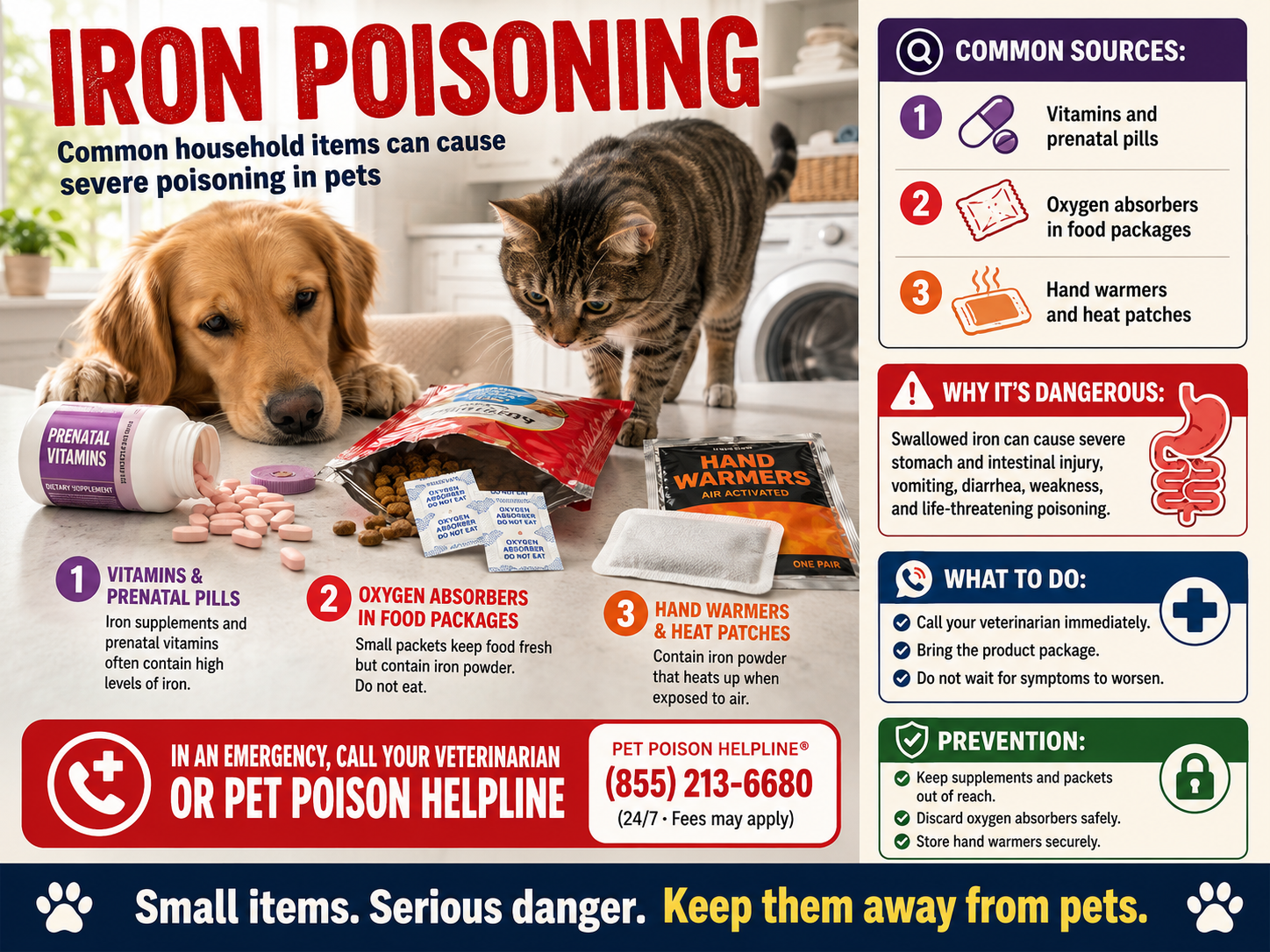
Yes. Iron is an essential nutrient, but concentrated or excessive iron can cause life-threatening poisoning in dogs, cats, and other animals. Human multivitamins, prenatal supplements, iron tablets and liquids, disposable hand warmers, body heat patches, oxygen-absorber packets, some fertilizers, blood meal, and iron-containing slug or snail products can deliver far more absorbable iron than an animal can safely handle.
The risk cannot be judged from the number of pills or packets alone. Veterinarians calculate the amount of elemental iron, identify the iron salt or product chemistry, consider whether the exposure was a single ingestion or repeated dosing, and evaluate co-ingredients such as vitamin D, xylitol, calcium, zinc, stimulants, medications, pesticides, or other minerals. A small pet can become critically ill after access to a product that appears ordinary or is marketed as natural, child-friendly, organic, or pet-related.
Acute iron toxicosis can begin with vomiting, abdominal pain, diarrhea, and gastrointestinal bleeding, then progress to dehydration, metabolic acidosis, shock, liver injury, coagulation abnormalities, kidney injury, neurologic signs, and death. Some animals appear to improve temporarily before systemic injury becomes obvious. Swallowed metal objects and sharp packaging add separate risks of obstruction, laceration, or perforation even when they do not release a highly absorbable iron compound.
About this guide: This page provides general pet-poisoning information and cannot diagnose or treat an individual animal. For any suspected exposure, contact a veterinarian or animal poison-control service immediately. Do not induce vomiting, give medication, or attempt home decontamination unless directed by a veterinary professional.
Agent and Exposure Profile
Quick Reference
Iron Identity, Formulations, and Product Recognition
Elemental Iron Versus the Iron Salt
Product labels may list ferrous sulfate, ferrous fumarate, ferrous gluconate, carbonyl iron, polysaccharide-iron complex, iron bisglycinate, heme iron, ferric citrate, ferric pyrophosphate, iron EDTA, iron phosphate, or another compound. The printed milligrams of the entire compound are not necessarily the milligrams of elemental iron. Toxicologic assessment therefore requires the specific salt, formulation, and elemental-iron content rather than a simple tablet count.
Two products with the same total tablet weight can provide very different amounts of absorbable iron. Extended-release coatings, enteric coatings, liquid concentrates, chewable forms, and combination products also alter exposure. When the label is unclear, preserve the National Drug Code, supplement facts panel, lot number, manufacturer, and photographs so the veterinary team can identify the formulation.
Human Vitamins, Prenatal Supplements, and Stand-Alone Iron
Human prenatal vitamins and therapeutic iron supplements are among the most concentrated household sources. Adult multivitamins, bariatric supplements, postpartum products, children's drops, liquid iron, anemia treatments, and some performance or energy supplements may also contain clinically important iron. Products designed for pregnancy often contain substantially more iron than ordinary multivitamins, making a small number of tablets dangerous to a dog or cat.
Gummy vitamins are not automatically iron-free or safe. Many gummy products omit iron because of taste and stability issues, while others include it or contain additional hazards such as xylitol, vitamin D, or other concentrated nutrients. The actual Supplement Facts or Drug Facts panel controls the assessment.
Veterinary and Livestock Iron Products
Veterinary iron tablets, liquids, pastes, tonics, mineral drenches, boluses, injectable preparations, and neonatal livestock products are therapeutic only when matched to the correct species, diagnosis, route, and dose. Accidental access to the bottle, a dosing error, repeated administration by different caregivers, or use in the wrong species can create poisoning. Injectable iron produces a different exposure pattern from oral supplements and requires immediate veterinary evaluation when overdosing, misinjection, or accidental self-administration is suspected.
Oxygen Absorbers and Disposable Warmers
Oxygen-absorber packets used in bags of jerky, dried foods, pet treats, dehydrated products, and some pharmaceuticals often contain reduced iron or iron powder. They are different from silica-gel desiccants even though both may be small packets labeled not to eat. A published canine case documented clinically important iron intoxication after ingestion of oxygen-absorber sachets from pet-treat packaging.
Disposable hand warmers, toe warmers, body warmers, and some heat patches commonly use iron powder that oxidizes to generate heat. Salt, activated carbon, water-retaining materials, and other ingredients may be present. An unused or partially used warmer can contain enough iron-bearing material to require urgent assessment, and the torn packet itself may be swallowed.
Garden, Lawn, and Pest-Control Products
Iron may appear in lawn greening products, iron chelates, soil amendments, blood meal, fertilizers, moss-control products, and slug or snail baits. Iron phosphate and iron EDTA products are not interchangeable. Some iron phosphate baits have relatively low iron bioavailability, but veterinary exposure reports and canine case series show that iron-containing molluscicides cannot be assumed harmless, especially after large ingestion or when a more absorbable chelated form is present.
Rust, Metal Objects, and Foreign Bodies
Rust on an ordinary iron object is not equivalent to swallowing a concentrated soluble iron supplement. The more immediate concern after chewing nails, screws, wire, steel wool, tools, fencing, cans, machinery fragments, or rusty debris is often oral injury, gastrointestinal obstruction, laceration, or perforation. Painted, plated, soldered, or industrial metal may also contain lead, zinc, copper, cadmium, or other toxicants that require separate identification.
Where Iron May Be Found
Medicine Cabinets, Bedrooms, Kitchens, and Travel Bags
Iron products are commonly stored in bathroom cabinets, bedside tables, kitchen drawers, purses, backpacks, luggage, weekly pill organizers, gym bags, hospital discharge kits, and containers belonging to visitors. Dogs may crush bottles or blister packs, while cats and small animals may be exposed when a liquid is spilled, a tablet is dropped, or a caregiver intentionally gives a human supplement.
- Prenatal and postnatal vitamins
- Adult and children's multivitamins
- Stand-alone iron tablets, capsules, liquids, and drops
- Anemia, bariatric, vegan, athletic, and nutritional supplements
- Combination products containing vitamins, minerals, herbs, stimulants, or medications
- Veterinary and livestock iron supplements or injectable iron products
Food and Treat Packaging
Oxygen absorbers may be hidden beneath pet treats, jerky, dried fruit, seaweed snacks, powdered foods, dehydrated meals, pharmaceuticals, and other packaged products. The outer food bag may not clearly state that the packet contains iron. A dog can ingest the sachet while eating the food or after retrieving the discarded package from the trash.
Silica gel, moisture absorbers, ethanol emitters, and oxygen absorbers are not the same. Preserve the packet wording, package source, lot information, and any remaining identical packets. Guessing from packet size or color can lead to the wrong risk assessment.
Warmers, Heat Patches, and Emergency Supplies
Hand warmers, toe warmers, body warmers, adhesive heat wraps, menstrual heat patches, outdoor emergency kits, sports bags, hunting equipment, vehicles, and winter clothing may contain iron-based heating material. Used packets may retain iron and remain attractive because of salt, sweat, food odor, or soft chewable packaging.
Garden Sheds, Garages, Farms, and Workshops
Potential sources include blood meal, lawn iron, iron chelates, iron-fortified fertilizer, moss treatments, slug and snail products, mineral supplements, livestock drenches, vehicle or machinery debris, wire, nails, steel wool, and metal shavings. Some products contain several toxic ingredients, so the front label description such as organic, natural, pet-friendly, or fertilizer is not enough.
Facilities and Multi-Animal Environments
Boarding facilities, kennels, rescues, farms, veterinary workplaces, grooming shops, warehouses, and daycare settings may receive client medications, treat bags containing oxygen absorbers, maintenance products, landscaping supplies, and employee supplements. A written inventory and immediate accounting for dropped tablets, torn packets, or damaged containers helps identify every animal with possible access.
Exposure Scenarios and Risk Factors
Chewed Bottles, Blister Packs, and Pill Organizers
Dogs commonly gain access by crushing a supplement bottle, chewing a blister pack, opening luggage, or swallowing the contents of a weekly organizer. A pill organizer may contain several iron tablets plus unrelated medications, and the amount missing may be uncertain because tablets scatter beneath furniture. The highest possible exposure for each active ingredient should be reported rather than assuming the animal consumed an average share.
Owner-Administered Dosing Errors
Poisoning can follow use of a human prenatal vitamin, anemia supplement, or children's liquid for a pet without veterinary direction. Errors also occur when the wrong concentration is measured, a decimal point is misplaced, an iron salt is confused with its elemental-iron content, or more than one caregiver gives the scheduled dose. Repeated smaller overdoses may be less obvious than a destroyed bottle but still require immediate assessment.
Oxygen Absorbers in Pet Treats and Human Foods
A pet may swallow one or more oxygen-absorber packets while consuming treats, jerky, dried meat, or discarded packaging. Owners often mistake the packet for silica gel and are falsely reassured. The packet may contain a high proportion of iron by weight, and vomiting, melena, elevated serum iron, and liver-enzyme abnormalities have been documented in a dog after this exposure route.
Hand Warmers and Body Heat Patches
Dogs may tear warmers from gloves, boots, pockets, bedding, sports bags, vehicles, or adhesive wraps. The powder spreads easily across carpet or bedding and can be consumed by more than one animal. A used warmer is not automatically empty or nontoxic, and the paper or plastic wrapper may create a foreign-body problem.
Fertilizers, Blood Meal, and Molluscicides
Garden products can be attractive because of meal-based carriers, salts, fats, or organic odors. Dogs may gorge from an open bag, lick granules from paws, or eat bait distributed across a yard. Iron EDTA and some concentrated iron products can cause severe gastrointestinal disease and systemic toxicosis, while other formulations may be less bioavailable but still cause substantial illness after large exposure.
Slug and snail products may contain iron phosphate, iron EDTA, metaldehyde, or other active ingredients. Neurologic excitation, tremors, seizures, or marked hyperthermia can indicate a non-iron co-ingredient or a different product altogether. The exact active-ingredient panel is essential.
Multiple Pets, Small Patients, and Medically Vulnerable Animals
Toy-breed dogs, puppies, kittens, rabbits, ferrets, birds, reptiles, and other small animals can receive a large exposure relative to body size from one tablet, packet, or warmer. Risk also rises when an animal is dehydrated, has preexisting gastrointestinal, liver, kidney, endocrine, or metabolic disease, or has swallowed a product with several active ingredients.
When several animals had access, do not divide the missing amount evenly. Separate the animals, document each weight and signs, and present the maximum plausible exposure for each patient. One animal may have swallowed nearly all of the product while another only chewed the container.
Metal Fragments and Sharp Objects
Chewing rusty hardware or metal debris may cause broken teeth, oral wounds, esophageal injury, obstruction, laceration, or perforation. The object may not create classic systemic iron toxicosis, but delay can still be life-threatening. Radiographs and product identification help distinguish a concentrated iron ingestion from a physical foreign body or another metal exposure.
Iron Poisoning Symptoms and Clinical Progression
Early Gastrointestinal Injury
Early signs may include drooling, nausea, repeated vomiting, diarrhea, loss of appetite, abdominal pain, restlessness, lethargy, and dehydration. Vomit or stool may contain fresh or digested blood. Iron directly injures gastrointestinal mucosa and can produce erosions, ulceration, hemorrhage, and substantial fluid loss before systemic organ damage is apparent.
Tablets, dark supplement material, packet contents, or warmer powder may be visible in vomit, but their appearance does not prove that the full exposure was removed. Some iron may already have dissolved or been absorbed, and additional tablets or material may remain in the stomach or intestine.
Apparent Improvement Can Be Misleading
Some descriptions of iron poisoning use a staged progression in which gastrointestinal signs are followed by a temporary quiet period and then systemic deterioration. Recent canine studies emphasize that dogs do not always follow a predictable four-stage human model. Improvement in vomiting or behavior therefore cannot be used as proof that the exposure was minor or that liver, circulatory, or metabolic injury will not develop.
Shock, Acidosis, and Cardiovascular Collapse
As unbound iron increases, affected animals may develop weakness, pale or injected gums, rapid heart rate, low blood pressure, poor perfusion, rapid breathing, metabolic acidosis, hypoglycemia or abnormal glucose regulation, and collapse. Gastrointestinal bleeding and fluid loss can compound direct cellular and vascular injury. Severe cases may progress despite an earlier period in which the animal seemed brighter.
Liver Injury and Coagulation Abnormalities
The liver is a major target of systemic iron injury. Clinical findings may include worsening depression, vomiting, jaundice, increased liver enzymes, impaired glucose regulation, prolonged clotting times, bruising, bleeding, hepatic encephalopathy, and acute liver failure. Hepatic injury may become evident after the earliest gastrointestinal phase.
Kidney, Neurologic, and Multi-Organ Complications
Severe dehydration, shock, hemolysis, pigment exposure, direct oxidative injury, and liver failure can contribute to kidney dysfunction. Tremors, ataxia, seizures, altered consciousness, coma, respiratory distress, and multi-organ failure may occur in advanced poisoning or in mixed-product exposures.
Delayed Gastrointestinal Scarring or Obstruction
Animals that survive severe corrosive gastrointestinal injury may later develop narrowing, impaired gastric emptying, or obstruction from scarring. Recurrent vomiting, regurgitation, poor appetite, abdominal discomfort, weight loss, or difficulty keeping food down days to weeks after the event requires prompt reassessment. Swallowed wrappers, blister-pack material, or metal objects can produce an independent delayed obstruction.
Signs from Co-Ingested Ingredients
Combination vitamins, supplements, fertilizers, and slug baits can add xylitol-associated hypoglycemia, vitamin D-associated hypercalcemia, stimulant effects, neurologic excitation, pesticide toxicosis, electrolyte disturbances, or toxicity from zinc, copper, selenium, lead, or other minerals. The clinical picture may therefore extend beyond iron toxicosis alone.
First Aid for Suspected Iron Exposure
Immediate Owner Actions
- Remove access to tablets, liquids, packets, warmers, fertilizers, bait, vomit, contaminated food, and damaged containers.
- Separate every animal that may have had access and record each animal's current weight and symptoms.
- Preserve the complete package, Supplement Facts or Drug Facts panel, active-ingredient list, packet wording, warmer label, fertilizer analysis, and remaining product.
- Record the iron compound, elemental iron per tablet or serving when listed, maximum number or weight missing, formulation, and exposure time.
- Photograph labels before transport and bring the original product whenever it can be handled safely.
- Contact a veterinarian or veterinary emergency service immediately, even when the animal appears normal.
Do Not Induce Vomiting Without Veterinary Direction
Do not give hydrogen peroxide, salt, mustard, syrup of ipecac, or attempt manual gagging. Vomiting can be unsafe when the animal is depressed, actively vomiting, bleeding, neurologically abnormal, unable to swallow normally, or exposed to sharp blister packaging, metal fragments, or a corrosive combination product. The veterinary decision depends on timing, formulation, clinical status, and airway protection.
Activated Charcoal Does Not Reliably Bind Iron
Activated charcoal is not an effective general antidote for elemental iron and can increase aspiration risk or obscure gastrointestinal bleeding. It may be considered only when a veterinarian identifies another co-ingested ingredient that is charcoal-responsive and determines that administration is safe.
Do Not Attempt Home Chelation or Neutralization
Do not give vitamin C, calcium, magnesium, antacids, milk, bread, oil, clay, herbal products, or human chelators. Vitamin C can increase iron absorption in some circumstances, and improvised treatments can delay decontamination, worsen vomiting, or interfere with planned anesthesia and endoscopy. Deferoxamine is a prescription chelator requiring case-specific veterinary dosing and monitoring.
Spills on Skin or Eyes
For liquid supplements, fertilizer dust, or warmer material on the coat or skin, prevent licking and gently remove dry material without spreading it. Flush exposed skin or eyes with clean lukewarm water while another person contacts the veterinarian. Do not scrub painful tissue or apply acids, alkalis, peroxide, or household cleaners.
Safe Transport
Keep the animal quiet and transport in a secure carrier or restrained vehicle area. Bring product evidence in a sealed secondary container. Call ahead for repeated vomiting, blood, weakness, collapse, tremors, seizures, severe abdominal pain, suspected prenatal-vitamin ingestion, oxygen-absorber ingestion, or exposure involving a small patient or several animals.
Iron Toxicology and Mechanism
Normal Iron Handling Has Limited Capacity
Iron is required for hemoglobin, myoglobin, enzymes, and cellular metabolism. Under normal conditions, intestinal uptake and transport proteins tightly regulate how much enters circulation. Absorbed iron is carried largely by transferrin and stored in ferritin or hemosiderin. Acute overdose can overwhelm these binding systems and create non-transferrin-bound iron capable of widespread injury.
Direct Gastrointestinal Corrosion
Concentrated iron salts are locally irritating and corrosive. They damage epithelial cells, disrupt mucosal barriers, and can produce ulceration, hemorrhage, fluid loss, and bacterial translocation. The gastrointestinal tract is therefore both the entry site and an early target organ. Severe local injury can occur before serum markers fully reflect the eventual systemic burden.
Oxidative and Mitochondrial Injury
Unbound iron catalyzes formation of highly reactive oxygen species and disrupts mitochondrial energy production. Lipid membranes, proteins, nucleic acids, and vascular endothelium can be damaged. These effects contribute to metabolic acidosis, vasodilation, impaired circulation, shock, hepatic necrosis, renal injury, and multi-organ dysfunction.
Why Elemental Iron Matters
The toxicologic dose is based on elemental iron, not the total weight of ferrous sulfate, ferrous fumarate, ferrous gluconate, or another salt. Carbonyl or reduced iron may have different absorption characteristics from soluble salts, while chelated forms such as iron EDTA may increase bioavailability. Formulation, dissolution, food, gastrointestinal conditions, and repeated dosing further affect absorption.
Oxygen Absorbers and Warmers
Oxygen absorbers and disposable warmers often rely on finely divided iron that oxidizes when exposed to air and moisture. Reduced iron may be less readily absorbed than some soluble salts, but packet composition, particle size, amount consumed, and gastrointestinal conditions vary. The published oxygen-absorber canine case demonstrates that reduced-iron packaging products can still produce clinically important intoxication.
Iron Phosphate, Iron EDTA, and Product-Specific Risk
Iron phosphate is generally less soluble than many medicinal iron salts, yet large exposures can cause gastrointestinal illness and suspected iron toxicosis. Iron EDTA is a chelated form with greater potential bioavailability, and canine case series document hemorrhagic gastroenteritis, abdominal pain, abnormal serum iron, hepatic injury, hospitalization, and the need for chelation in some patients. Product identity is therefore more useful than the broad label iron-based.
Serum Iron Is Time Sensitive
Serum iron concentration can support diagnosis and treatment decisions, but interpretation depends on when the sample was collected, the formulation, ongoing absorption, tissue distribution, prior vomiting, decontamination, and laboratory method. A late or mistimed value may underestimate an earlier peak. Clinical signs, acid-base status, liver values, coagulation, imaging, and product reconstruction remain important even when one result is not dramatically elevated.
Evidence Boundaries Across Species
Most detailed veterinary reports involve dogs, with fewer data for cats, horses, livestock, birds, rabbits, reptiles, and other species. The absence of a species-specific toxic-dose study does not establish safety. Small body size, inability to vomit, species-specific gastrointestinal anatomy, and limited access to rapid chelation can change practical risk.
Clinical Management
Veterinary Care and Prognosis
Veterinary Diagnosis and Treatment
Exposure Reconstruction and Triage
The veterinary team identifies the exact product, iron compound, elemental-iron content, maximum possible amount, formulation, exposure window, repeated doses, and every co-ingredient. Emergency assessment focuses on airway, breathing, circulation, mental status, hydration, abdominal pain, gastrointestinal bleeding, blood pressure, perfusion, temperature, and evidence of shock or neurologic dysfunction.
Laboratory Evaluation
Testing may include serum iron measured at an appropriate interval, complete blood count, serum chemistry profile, glucose, electrolytes, kidney values, liver enzymes, bilirubin, blood-gas analysis, lactate, urinalysis, and coagulation testing. Serial results are often more informative than one early panel because systemic injury can evolve after the initial gastrointestinal signs.
Total iron-binding capacity or transferrin-related measures may help in selected cases, but laboratory numbers are not interpreted in isolation. Hemolysis, sample timing, laboratory method, formulation, chelation, and tissue distribution can alter results. Treatment should not be delayed in a clinically unstable patient while waiting for a perfect confirmatory value.
Imaging and Retained Material
Abdominal radiographs may identify some iron tablets, metallic fragments, blister-pack material, or other foreign bodies, but not every preparation is reliably radiopaque. A negative radiograph does not rule out iron ingestion. Repeated imaging, ultrasound, endoscopy, or surgical consultation may be needed when a large tablet burden, packet, sharp object, obstruction, or perforation is suspected.
Professional Gastrointestinal Decontamination
Veterinarians may consider emesis in a recent, asymptomatic exposure when the patient can protect the airway and the formulation does not create a contraindication. Because activated charcoal does not bind iron effectively, other approaches may be selected for significant retained material, including endoscopic removal, gastric evacuation under protected conditions, or whole-bowel irrigation in carefully chosen patients. The approach depends on location, tablet burden, clinical status, and available expertise.
Deferoxamine Chelation
Deferoxamine binds free ferric iron and forms a water-soluble complex that can be excreted. It is the principal chelator used in acute severe iron toxicosis when clinical findings, exposure reconstruction, serum iron, or systemic instability justify treatment. Route, infusion rate, duration, kidney function, blood pressure, hydration, and response require close monitoring.
Urine may become orange, red, or rose-colored during chelation as iron-deferoxamine complexes are eliminated, but color change is not required for treatment to be working and its absence does not rule out significant poisoning. Public dosing instructions are intentionally omitted because concentration and infusion errors can cause hypotension, respiratory complications, kidney injury, or inadequate chelation.
Fluids, Perfusion, and Organ Support
Intravenous crystalloids are commonly used to correct dehydration, support circulation, and protect renal perfusion. Persistent hypotension after appropriate fluid resuscitation may require vasopressor support. Severe gastrointestinal bleeding or anemia may require blood products, while antiemetics, analgesia, mucosal protection, glucose management, nutritional support, and treatment of acid-base or electrolyte disturbances are tailored to the patient.
Liver Failure, Coagulopathy, and Critical Care
Patients with progressive hepatic injury may require intensive glucose monitoring, coagulation assessment, plasma-containing products, encephalopathy management, and serial liver testing. Seizures, respiratory compromise, acute kidney injury, shock, or multi-organ failure require critical-care support. Co-ingested xylitol, vitamin D, pesticides, stimulants, or other minerals must be treated simultaneously.
Foreign-Body and Surgical Management
Swallowed metal, blister packs, packets, or damaged containers may require endoscopic or surgical removal even when systemic iron toxicosis is not confirmed. Perforation, obstruction, persistent retained material, or delayed scar-related narrowing may require surgery. Removing the object does not reverse iron already absorbed or tissue injury already established, so medical monitoring continues afterward.
Monitoring Duration
Hospitalization and recheck intervals depend on the amount and formulation, clinical signs, serum iron timing, acid-base status, liver and kidney trends, coagulation, gastrointestinal bleeding, retained material, and response to chelation and supportive care. A patient that stops vomiting may still require observation for systemic or delayed complications.
Prognosis, Recovery, and Follow-Up
Prompt Treatment Improves the Outlook
Prognosis is often favorable when the product is identified quickly, the maximum elemental-iron exposure can be reconstructed, significant retained material is removed, and treatment begins before shock, severe acidosis, hepatic necrosis, coagulopathy, or kidney injury develops. Recent canine iron EDTA series report generally good outcomes with prompt veterinary care, including patients requiring hospitalization and chelation.
Guarded and Poor-Prognosis Findings
The outlook becomes more guarded with persistent bloody vomiting or diarrhea, severe abdominal pain, profound dehydration, hypotension, metabolic acidosis, altered consciousness, seizures, liver failure, coagulation abnormalities, kidney injury, multi-organ dysfunction, or delayed presentation after a large or unknown exposure. Mixed products and retained tablets or foreign material can worsen risk.
Temporary Improvement Does Not End Monitoring
Clinical signs may lessen before systemic injury has fully evolved. Owners should not discontinue treatment, decline repeat laboratory testing, or cancel rechecks solely because the animal becomes brighter or stops vomiting. Serial liver values, kidney values, glucose, coagulation tests, acid-base measurements, and clinical examinations may be needed.
After Discharge
Follow all feeding, medication, activity, and recheck instructions. Return promptly for recurrent vomiting, blood in vomit or stool, appetite loss, abdominal pain, weakness, pale gums, jaundice, bruising, reduced urination, tremors, seizures, collapse, or any decline after apparent improvement. Delayed obstruction or scarring should be considered when vomiting or poor food passage returns days to weeks later.
Preventing Iron Poisoning
Secure Supplements Like Prescription Medication
Store prenatal vitamins, multivitamins, stand-alone iron, children's drops, liquid iron, bariatric supplements, and veterinary products inside a latched cabinet. Pill organizers, blister packs, purses, luggage, visitor medications, bedside containers, and gym bags are not pet-resistant storage. Pick up dropped tablets immediately and check beneath furniture and appliances.
Use Only a Current Veterinary Dosing Plan
Do not give a pet human iron or continue an old veterinary recommendation without confirming the exact product, concentration, patient weight, diagnosis, and schedule. Use a written medication log so multiple caregivers cannot duplicate doses. Keep oral and injectable products in their original labeled containers.
Remove Oxygen Absorbers Before Offering Treats
Open pet-treat and dried-food packages where the packet cannot fall onto the floor. Remove oxygen absorbers immediately and place them in a closed trash container. Do not assume a packet is silica gel, and do not let pets play with empty treat bags or food packaging.
Control Access to Warmers and Heat Patches
Keep unused and used hand warmers, toe warmers, body warmers, and adhesive heat patches out of pockets, bedding, boots, sports bags, hunting gear, vehicles, and trash that pets can reach. Count packets after outdoor activities and dispose of them in a closed container.
Store Garden and Pest Products Securely
Keep blood meal, fertilizers, iron chelates, moss-control products, and slug or snail baits in original packaging behind a physical barrier. Follow label restrictions for animals and remove spills immediately. Natural, organic, or iron-based does not mean harmless. Verify whether a molluscicide contains iron phosphate, iron EDTA, metaldehyde, or another active ingredient.
Prevent Metal Foreign Bodies
Collect nails, screws, wire, steel wool, metal shavings, broken tools, cans, and machinery fragments from yards, garages, barns, and work areas. Repair fencing and secure renovation debris. Painted or plated metal should be treated as a possible mixed-metal exposure rather than ordinary rust.
Facility and Multi-Animal Procedures
Boarding facilities, rescues, farms, groomers, and veterinary workplaces should require labeled medications, document every administered dose, inspect client treat bags for packets, secure employee supplements, and maintain controlled storage for landscaping and maintenance products. Any missing tablets or packets should trigger an immediate animal count and exposure review.
Iron Poisoning FAQ
How can an essential nutrient become poisonous?
Normal dietary iron is tightly regulated and is required for blood and cellular function. Concentrated supplements or products can overwhelm intestinal regulation and transferrin binding, leaving free iron that damages the gastrointestinal tract, circulation, liver, kidneys, and other tissues.
Can one prenatal vitamin be dangerous to a pet?
Yes, particularly for a small dog, cat, puppy, kitten, or exotic animal. Prenatal products often contain more iron than ordinary multivitamins, and some include vitamin D, xylitol, or other ingredients. The exact elemental iron, product, and patient weight must be assessed immediately.
Are gummy vitamins safe because many contain no iron?
No general assumption is safe. Many gummies omit iron, but some contain it, and iron-free gummies may contain xylitol, vitamin D, or other concentrated nutrients. Read and preserve the complete label rather than relying on the dosage form.
What is the difference between milligrams of ferrous sulfate and milligrams of elemental iron?
Ferrous sulfate is an iron-containing compound, and only part of its total weight is elemental iron. Other salts contain different proportions. Veterinarians use the compound and label information to calculate the relevant elemental amount rather than treating every printed milligram as equivalent.
Is an oxygen absorber the same as silica gel?
No. Oxygen absorbers often contain reduced iron, while silica gel is a desiccant. Packets can look similar and may not list their contents clearly. Preserve the packet and the food or treat package so the product can be identified.
Can a used hand warmer still poison a dog?
Yes. A used warmer may retain iron-bearing powder and other ingredients, and the packet can become a foreign body. The risk depends on the product, remaining contents, amount swallowed, and patient size, not simply whether the warmer still feels hot.
Are iron phosphate slug baits harmless to pets?
No. Some formulations have lower iron bioavailability than soluble supplements, but large exposures can cause gastrointestinal illness and suspected iron toxicosis. Iron EDTA products may be more absorbable, and some slug baits contain entirely different active ingredients. The label must be checked.
Can blood meal or iron fertilizer cause poisoning?
Yes, especially when a dog consumes a large amount from a bag or treated area. Blood meal can also cause severe gastrointestinal upset and may be combined with other fertilizer ingredients. Iron concentration, chemical form, total amount, and additives determine the risk.
Is rust itself as dangerous as an iron tablet?
Ordinary rust is generally much less bioavailable than concentrated medicinal iron. However, rusty nails, wire, metal fragments, and industrial debris can puncture or obstruct the gastrointestinal tract and may contain lead, zinc, paint, or other contaminants. The physical object can be an emergency even without classic iron toxicosis.
What if my pet vomited the tablets or packet?
Visible material does not prove that the entire exposure was recovered. Iron may already have dissolved or been absorbed, additional material may remain, and another pet may have swallowed part of it. Preserve the vomit or photograph it and obtain veterinary direction.
Can an animal look normal after a serious iron ingestion?
Yes. Early signs may be mild, and some animals appear to improve temporarily before systemic injury becomes evident. Recent canine data do not support relying on a rigid stage-by-stage timeline. A normal appearance does not replace product reconstruction and veterinary assessment.
Why is activated charcoal usually not useful for iron?
Activated charcoal does not bind elemental iron effectively. It can also increase aspiration risk or obscure gastrointestinal bleeding. A veterinarian may use it only for a separate co-ingested toxin when the airway and gastrointestinal condition permit.
Why should I not induce vomiting at home?
An animal may already be vomiting, bleeding, weak, or unable to protect the airway. Sharp blister packaging, metal fragments, or caustic combination products can injure the esophagus during return. Veterinary decontamination decisions depend on timing, formulation, and clinical status.
Why does the timing of the serum iron test matter?
Iron concentration changes as the product dissolves, is absorbed, binds to proteins, and moves into tissues. A sample collected too early or late may not reflect the highest concentration. Veterinarians interpret the result with the exposure time, clinical signs, acid-base status, liver values, and repeated testing when needed.
Will an X-ray show iron tablets?
Some tablets and metallic materials are visible, but radiopacity varies by formulation and patient. A negative radiograph does not exclude ingestion. Imaging is used with the product history and may be repeated or supplemented by ultrasound or endoscopy.
Why can deferoxamine turn urine orange or reddish?
Deferoxamine binds iron and the complex may color urine orange, red, or rose as it is excreted. Color change can support evidence of chelation, but it is not required and should not be used by an owner to decide whether treatment is working.
What should I do when several pets had access?
Separate them, record each weight and symptoms, preserve all product evidence, and report the maximum possible exposure for every animal. Do not divide the missing amount evenly. More than one animal may require examination, laboratory testing, or imaging.
Can problems return after the animal seems recovered?
Yes. Liver injury, coagulation abnormalities, kidney dysfunction, gastrointestinal scarring, or obstruction from packaging can appear after early improvement. Keep every scheduled recheck and return promptly for recurrent vomiting, poor appetite, abdominal pain, weakness, jaundice, bleeding, or neurologic changes.