Lead and Lead-Compound Poisoning in Animals
Is Lead Poisonous to Dogs, Cats, Horses, Livestock, and Birds?
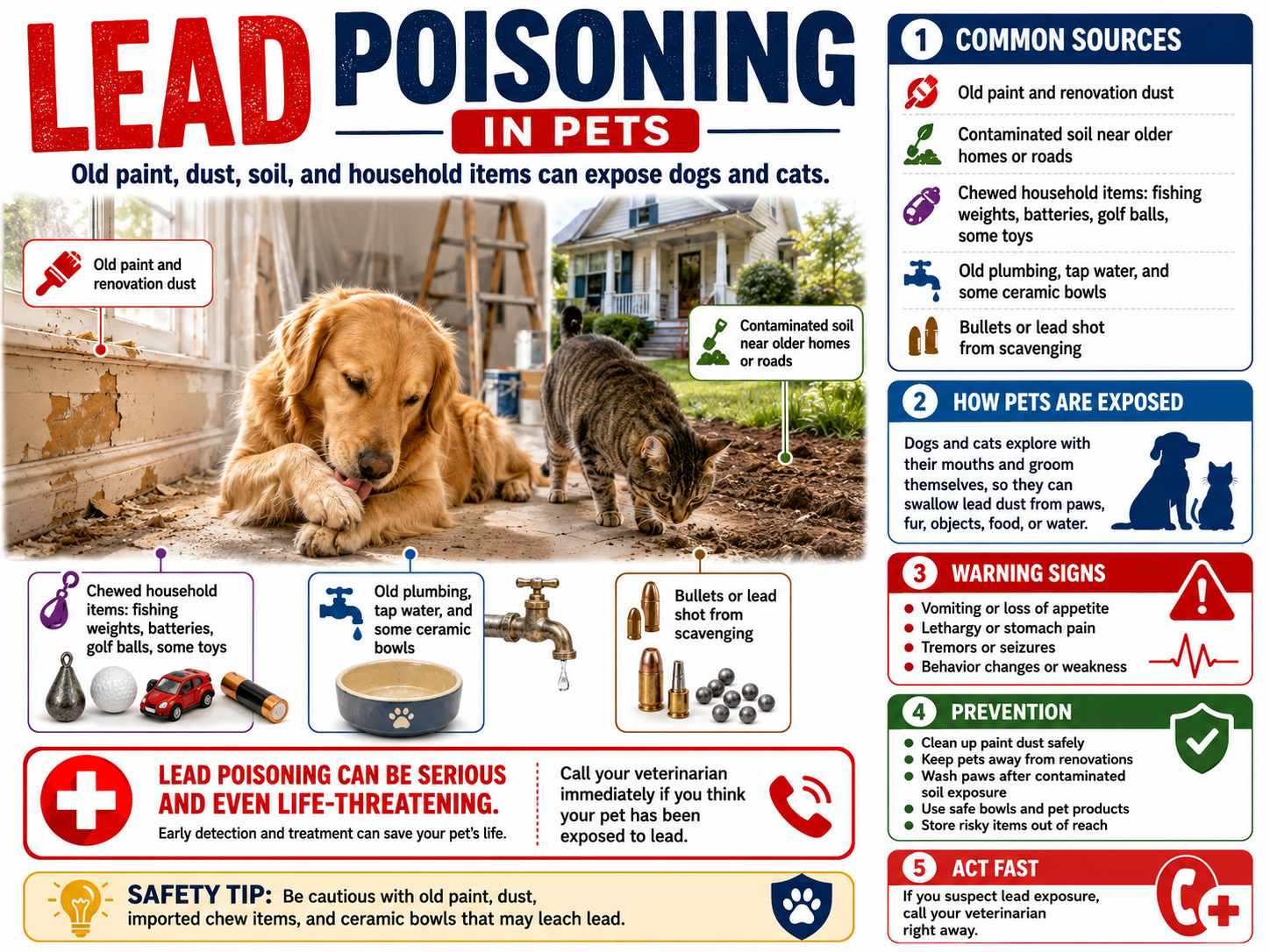
Yes. Lead is a cumulative neurotoxic metal that can poison dogs, cats, horses, cattle, sheep, goats, poultry, companion birds, and wildlife after ingestion or inhalation. Acute or repeated exposure can cause vomiting, abdominal pain, constipation or diarrhea, appetite loss, behavior change, blindness, ataxia, tremors, seizures, anemia, kidney injury, peripheral neuropathy, collapse, and death. Some animals have substantial blood or tissue lead burdens before the signs are recognized as poisoning.
Common veterinary sources include deteriorating paint and renovation dust from older buildings, lead-acid batteries, fishing sinkers and weights, ammunition and shot, solder, stained-glass materials, wheel weights, plumbing components, ceramic glazes, industrial dust, contaminated soil or water, toys, jewelry, curtain or drapery weights, imported products, traditional remedies, and discarded metal objects. A retained sinker, shot pellet, battery fragment, paint chip, or hardware object can continue releasing lead inside the gastrointestinal tract.
A poisoned pet can be an environmental sentinel for people sharing the same home, farm, workplace, soil, water, renovation project, or hobby area. Dogs and cats do not transmit lead poisoning like an infection, but a diagnosis in an animal should trigger immediate source investigation and may justify human medical or public-health evaluation, especially when children, pregnant people, or workers share the exposure.
About this guide: This page provides general pet-poisoning information and cannot diagnose or treat an individual animal. For any suspected exposure, contact a veterinarian or animal poison-control service immediately. Do not induce vomiting, give medication, or attempt home decontamination unless directed by a veterinary professional.
Agent and Exposure Profile
Quick Reference
Lead Identity, Chemical Forms, and Product Recognition
Elemental Lead
Lead is a dense blue-gray metal with the chemical symbol Pb, derived from the Latin word plumbum. Elemental lead is used in weights, sinkers, shot, bullets, battery plates, shielding, flashing, stained-glass cames, solder, and older manufactured objects. Solid metal is not chemically inert inside an animal; stomach acid, surface oxidation, fragmentation, and prolonged retention can increase dissolution and absorption.
Inorganic Lead Compounds
Lead oxides, carbonates, acetates, sulfates, chromates, arsenates, and other salts have been used in pigments, paints, glazes, batteries, pesticides, ceramics, industrial materials, and laboratory products. Solubility varies, but insoluble appearance does not guarantee safety. Fine dust and small particles present far more surface area than one intact object.
Lead-Based Paint and Pigments
Historic paints used compounds such as basic lead carbonate, lead chromate, and red lead oxide. Consumer residential lead-based paint was banned in the United States in 1978, but older homes, barns, schools, windows, doors, trim, porches, furniture, toys, machinery, bridges, boats, and industrial structures can still contain lead. Friction, weathering, sanding, scraping, demolition, and fire create chips and fine dust.
Lead-Acid Batteries
Automotive, motorcycle, lawn-equipment, marine, backup-power, and industrial batteries contain lead, lead dioxide, lead sulfate, sulfuric acid, plastic, and sometimes additional metals or additives. A chewed or broken battery creates both a corrosive-acid emergency and a potential heavy-metal exposure. Battery paste, plates, and debris should never be handled as though they were ordinary household trash.
Organic Lead Compounds
Organic lead compounds such as tetraethyllead and tetramethyllead have different absorption and neurologic behavior from ordinary inorganic lead. Their former widespread use in gasoline has declined substantially, but some aviation fuel and industrial settings remain relevant. A page about paint chips or fishing sinkers cannot safely substitute for product-specific assessment of an organolead exposure.
Lead Alloys and Mixed-Metal Objects
Bullets, shot, solder, wheel weights, pewter, fishing gear, hardware, and recycled metal may contain antimony, tin, arsenic, copper, zinc, or other metals. A battery adds sulfuric acid, and electronic waste may add cadmium or other hazardous materials. The full object or product must be considered rather than assuming pure lead.
Where Lead Exposure May Occur
Older Paint, Windows, Doors, Porches, and Renovation Dust
Deteriorating paint and the dust created by renovation are among the most important shared household sources. Windows and doors generate friction dust; porches, railings, siding, barns, kennels, fences, furniture, and trim can shed chips. Dogs may chew painted wood, while cats and small animals ingest dust while grooming paws and coats.
Pre-1978 construction raises concern, but age alone does not prove that a surface contains lead. EPA-certified inspection, risk assessment, paint-chip analysis, or approved field testing can identify hazards. Painted salvage materials and antique doors or windows can move lead hazards into newer buildings.
Fishing Gear
Lead sinkers, split shot, jig heads, downrigger weights, weighted lines, and tackle can be swallowed by dogs, birds, and wildlife. Hooks, line, and lures may cause perforation or obstruction while the lead component dissolves. A single retained object can act as a continuing source rather than a one-time exposure.
Ammunition, Pellets, and Shooting-Ranges
Lead shot, bullets, air-rifle pellets, muzzleloader projectiles, fragments in carcasses, and contaminated range soil expose domestic animals and wildlife. Waterfowl and other birds may ingest pellets as grit, while scavengers and raptors consume fragments in tissue. Livestock and pets may encounter shot, spent ammunition, or heavily contaminated soil around firing areas.
Batteries, Electronics, and Recycling Areas
Discarded vehicle batteries, battery-recycling waste, battery plates, cable coverings, electronic scrap, and contaminated soil can expose animals. Farms, workshops, garages, junkyards, recycling sites, and informal repair areas may contain old fragments long after the original battery or equipment is gone.
Solder, Stained Glass, Ceramics, and Hobby Materials
Stained-glass work, electronics soldering, fishing-weight casting, ammunition reloading, pottery glazing, jewelry making, metal casting, and restoration can contaminate tables, floors, shoes, clothing, vehicles, and household dust. Pets may lick flux, chew solder, drink contaminated water, or groom settled dust from their coats.
Plumbing, Water, Soil, and Industrial Sources
Lead can enter drinking water through lead service lines, pipes, solder, brass, and corroding fixtures. Soil may be contaminated by historic leaded gasoline, peeling exterior paint, smelters, mines, battery recycling, shooting ranges, waste disposal, or industrial emissions. Floods and demolition can redistribute contaminated soil and dust.
Toys, Jewelry, Weights, Imported Goods, and Traditional Products
Lead has been found in some imported toys, jewelry, charms, curtain weights, cosmetics, folk remedies, ceremonial powders, glazed dishes, crystal, spices, and painted consumer products. Product recalls and regulations reduce risk but do not eliminate old, counterfeit, imported, handmade, or secondhand items.
Feed, Mineral Supplements, and Farm Equipment
Cattle, horses, sheep, goats, and poultry may be exposed through discarded batteries, paint, machinery grease, crankcase waste, contaminated mineral supplements, feed, water, roofing materials, old buildings, and industrial fallout. One neurologically abnormal animal may be the first sign of a shared herd and human exposure.
Exposure Scenarios and Risk Factors
Common Companion-Animal Scenarios
- A puppy chews peeling paint, an antique window, painted trim, porch debris, or renovation waste.
- A dog swallows a fishing sinker, split shot, bullet, pellet, wheel weight, solder, curtain weight, or battery fragment.
- A cat walks through lead dust and ingests it while grooming.
- A pet enters a stained-glass, pottery, shooting, reloading, battery, or metal-casting workspace.
- A dog consumes contaminated soil near an old house, range, smelter, mine, junkyard, or battery-recycling area.
- Several animals share contaminated water, feed, bedding, soil, dust, or demolition debris.
- A pet repeatedly receives low exposure from a source no one initially recognizes.
Retained Objects
A radiopaque object remaining in the stomach or intestines can continue releasing lead. Small fragments may be more rapidly available than one intact object, but large objects can remain for days or weeks. Fishing line, hooks, plastic, battery casing, or sharp metal may add obstruction, perforation, or corrosive injury.
Pica and Repeated Chewing
Young animals, animals with pica, and dogs that repeatedly chew windowsills, walls, batteries, hardware, or soil can accumulate lead over time. Nutritional deficiency may increase absorption, but it should not be assumed to be the cause of every pica behavior. The source must be removed even when the animal has no obvious signs.
Renovation, Fire, Flood, and Demolition
Sanding, scraping, heat guns, dry demolition, grinding, pressure washing, and uncontrolled cleanup can create extensive lead dust. Fire can contaminate ash and debris, while floods move paint chips and contaminated soil. Animals should be excluded from the work area until lead-safe cleanup and clearance are complete.
Patients with Greater Susceptibility
Young animals absorb a larger fraction of ingested lead and have developing nervous systems. Malnutrition, iron or calcium deficiency, pregnancy, lactation, kidney disease, gastrointestinal disease, and repeated fasting may alter absorption, distribution, or mobilization. Small body size makes one object or one paint-chip exposure a larger dose.
Birds and Grazing Animals
Waterfowl ingest shot and sinkers as grit, raptors consume ammunition fragments in prey or carcasses, and companion birds chew cage hardware, solder, bells, jewelry, or painted objects. Cattle and horses investigate discarded batteries, grease, paint, and machinery and may consume material repeatedly before neurologic signs develop.
Shared Human Exposure
Dogs and cats live close to floors, soil, dust, windows, and renovation debris and may become ill before human household members are tested. A veterinary diagnosis should prompt questions about children, pregnancy, occupational exposure, old paint, hobbies, soil, water, and workplace contamination carried home on clothing or shoes.
Lead Poisoning Symptoms and Clinical Progression
Gastrointestinal Signs
Dogs and cats may develop appetite loss, nausea, vomiting, salivation, abdominal pain, constipation, diarrhea, weight loss, or intermittent gastrointestinal illness. Lead colic can be severe and may mimic obstruction, pancreatitis, inflammatory bowel disease, dietary indiscretion, or another toxin.
Behavioral and Neurologic Changes
Restlessness, anxiety, aggression, altered responsiveness, vocalization, compulsive behavior, circling, head pressing, ataxia, weakness, tremors, blindness, seizures, collapse, and coma can occur. Signs may wax and wane as blood lead changes, a retained object continues dissolving, or lead redistributes between blood, soft tissue, and bone.
Peripheral Neuropathy and Megaesophagus
Lead can injure peripheral nerves and neuromuscular function. Weakness, reduced reflexes, abnormal gait, dysphagia, regurgitation, laryngeal dysfunction, or megaesophagus may develop. Megaesophagus attributable to lead toxicosis has been reported in a cat and creates aspiration-pneumonia risk.
Hematologic Effects
Lead disrupts heme synthesis and shortens red-cell survival. Anemia may be microcytic or hypochromic, and blood smears may show basophilic stippling, nucleated red blood cells, or other abnormalities. These findings are supportive rather than mandatory; their absence does not rule out poisoning.
Kidney and Cardiovascular Effects
Acute or chronic exposure can injure renal tubules, alter blood pressure, and contribute to dehydration, electrolyte abnormalities, protein loss, or reduced urine-concentrating ability. Severe seizures, vomiting, poor intake, and chelation can further stress kidney function.
Cats
Reviews of feline lead toxicosis identify anorexia, vomiting, and seizures among the most common signs, with younger cats more likely to show central nervous system disease. Cats may also develop behavioral change, blindness, anemia, weight loss, regurgitation, or megaesophagus.
Horses and Livestock
Cattle commonly develop sudden blindness, head pressing, jaw champing, muscle tremors, ataxia, seizures, bellowing, depression, gastrointestinal dysfunction, and death. Horses may show dysphagia, laryngeal paralysis, roaring, weakness, ataxia, colic, weight loss, facial-nerve abnormalities, and chronic neuromuscular dysfunction.
Birds
Companion birds and wild birds may develop appetite loss, weakness, weight loss, regurgitation, crop stasis, green droppings, anemia, wing droop, ataxia, tremors, seizures, blindness, and inability to fly or perch. Lead shot or fishing tackle may remain visible radiographically in the gastrointestinal tract.
Chronic or Subclinical Exposure
Repeated low-level exposure may present as poor growth, weight loss, reduced performance, subtle behavior change, anemia, neuropathy, reproductive effects, kidney abnormalities, or intermittent gastrointestinal signs. A normal appearance does not prove that blood lead, bone stores, or the environment are safe.
First Aid for Suspected Lead Exposure
Immediate Owner Actions
- Remove the animal from the source and prevent access by every other animal and person.
- Preserve the object, product, paint chip, sinker package, ammunition, battery, solder, soil, water, feed, dust sample, and photographs.
- Count missing sinkers, weights, pellets, bullets, batteries, or hardware pieces when possible.
- Record the exposure window, renovation history, property age, hobbies, occupations, and every animal or person sharing the environment.
- Contact a veterinarian immediately for any swallowed metal object, battery, neurologic sign, severe gastrointestinal illness, or unknown exposure.
Do Not Induce Vomiting Without Veterinary Direction
Do not give hydrogen peroxide, salt, mustard, syrup of ipecac, or attempt manual gagging. A metal object may have sharp edges, a fishing hook may be attached, a battery may cause corrosive injury, and a neurologically abnormal animal may aspirate.
Activated Charcoal Does Not Reliably Bind Lead
Activated charcoal is not a dependable treatment for elemental lead or simple inorganic lead compounds. It can be aspirated by a vomiting, weak, seizuring, or poorly swallowing patient. A veterinarian may consider charcoal only for another co-ingested toxicant.
Do Not Give Chelators or Mineral Supplements at Home
EDTA, succimer, dimercaprol, penicillamine, calcium, iron, zinc, sulfur, and herbal products are not safe home antidotes. Chelators can injure the kidneys, redistribute lead, deplete essential minerals, or cause severe complications when the wrong drug or salt is used.
Lead Dust and Paint Debris
Keep animals out of the area. Do not dry sweep, sand, grind, blow, or use an ordinary vacuum. Use lead-safe containment and wet-cleaning practices directed by an EPA-certified professional or local lead program. Prevent pets from tracking dust through the home or grooming contaminated coats.
Battery Exposure
A chewed lead-acid battery can burn the mouth, esophagus, skin, and eyes while also exposing the animal to lead. Prevent licking and avoid direct contact with leaking material. Call the veterinarian before attempting cleanup and bring battery information without transporting a leaking battery inside the passenger compartment.
Skin, Coat, and Eye Contamination
Wear gloves and prevent grooming. For visible dust on fur, avoid dry brushing that makes it airborne. Veterinary or hazardous-material guidance may recommend controlled wet decontamination. Eyes exposed to dust or liquid can be rinsed with sterile saline or clean lukewarm water when this can be done safely, followed by veterinary examination for persistent irritation.
Safe Transport
Transport the animal in a secure carrier or restrained area with minimal stimulation. Bring the product or object in a sealed secondary container. Call ahead for seizures, blindness, severe agitation, battery acid, dusty contamination, or a retained hook or metal object so the clinic can plan safe handling.
Lead Toxicology and Mechanism
Absorption and Bioavailability
Lead enters mainly through ingestion and inhalation. Fine dust, soluble salts, acidic conditions, fasting, young age, and nutritional deficiencies can increase absorption. Intact skin limits most inorganic lead absorption, while organolead compounds and damaged skin require separate consideration.
Distribution and Bone Storage
After entering blood, lead distributes to brain, liver, kidneys, bone marrow, and other soft tissues. Over time, a large fraction becomes stored in bone and teeth, where it can remain for years. Pregnancy, lactation, illness, fracture healing, malnutrition, and other states of bone turnover can release stored lead back into circulation.
Heme-Synthesis Inhibition
Lead inhibits delta-aminolevulinic acid dehydratase and ferrochelatase, enzymes required for heme production. This contributes to anemia, elevated heme precursors, basophilic stippling, and impaired oxygen transport. Lead also damages red-cell membranes and can shorten erythrocyte survival.
Calcium Mimicry and Neurotoxicity
Lead can substitute for or interfere with calcium in neurons, synapses, mitochondria, and signaling proteins. It alters neurotransmitter release, blood-brain barrier function, energy metabolism, and neuronal development. Severe exposure can produce encephalopathy, cerebral edema, blindness, seizures, and permanent neurologic injury.
Sulfhydryl Binding, Oxidative Stress, and Mitochondria
Lead binds to sulfhydryl groups, displaces essential metals, generates oxidative stress, impairs antioxidant systems, and disrupts mitochondrial function. These effects contribute to injury in the nervous system, kidneys, gastrointestinal tract, cardiovascular system, reproductive system, and developing fetus.
Peripheral Nerve and Smooth-Muscle Effects
Peripheral neuropathy can impair gait, swallowing, laryngeal function, and esophageal motility. Lead also alters autonomic and smooth-muscle function, contributing to abdominal pain, constipation, ileus, or variable gastrointestinal signs.
Renal Injury and Blood Pressure
Lead can damage proximal renal tubules and, with chronic exposure, contribute to interstitial kidney disease and altered blood-pressure regulation. Dehydration and reduced kidney function slow elimination and increase the risk of adverse effects during chelation.
Why Blood Lead Does Not Equal Total Body Burden
Whole-blood lead reflects circulating and recently mobilized lead, not the entire amount stored in bone and tissue. Blood concentrations can fall while a retained object or contaminated environment remains, and they can rebound after chelation as lead redistributes from bone.
Why a Universal Public Toxic Threshold Is Misleading
Species, age, chemical form, particle size, retained objects, acute versus chronic exposure, nutritional status, pregnancy, kidney function, and laboratory method all change interpretation. Clinical signs and source evidence matter alongside the blood result. Human reference values should not be imported mechanically as veterinary treatment thresholds.
Evidence Boundaries
Veterinary evidence includes feline reviews, domestic-animal outbreaks, canine and feline sentinel studies, equine and bovine experiments, avian trials, and broader toxicology research. Chelator performance, treatment thresholds, and long-term neurologic recovery vary by species and are not supported equally for every animal.
Clinical Management
Veterinary Care and Prognosis
Veterinary Diagnosis and Treatment
Exposure History and Environmental Investigation
The veterinarian will ask about property age, renovation, paint condition, fishing gear, batteries, ammunition, hobbies, occupations, stained glass, pottery, soldering, recycling, soil, water, feed, imported products, and every animal or person sharing the environment. Source control is part of treatment, not an optional later step.
Physical and Neurologic Examination
Assessment includes hydration, abdominal pain, gastrointestinal motility, vision, behavior, gait, cranial nerves, swallowing, reflexes, seizure activity, blood pressure, kidney function, and respiratory status. Regurgitation or dysphagia raises concern for megaesophagus, laryngeal dysfunction, aspiration, or peripheral neuropathy.
Whole-Blood Lead Testing
Whole blood is the standard clinical specimen for current circulating lead. Interpretation must consider signs, timing, species, age, anemia, chelation history, retained objects, and laboratory method. Serial results are often more informative than one isolated value.
Hematology and Biochemistry
A complete blood count, blood smear, reticulocyte count, chemistry profile, electrolytes, urinalysis, blood pressure, and kidney values help identify anemia, basophilic stippling, nucleated red cells, dehydration, renal injury, and treatment risk. Zinc protoporphyrin or related heme-pathway markers may support chronic-exposure assessment but do not replace direct lead measurement.
Radiography and Object Localization
Abdominal radiographs can reveal fishing weights, shot, bullets, battery pieces, paint chips, or other radiopaque material. Radiographs may miss fine dust, dissolved salts, very small particles, or a source that has already passed. Repeat imaging may be needed to confirm movement or removal.
Environmental and Postmortem Testing
Paint, dust, soil, water, feed, batteries, shot, hobby materials, liver, kidney, bone, and gastrointestinal contents may be tested through qualified laboratories. Lead-isotope or compositional analysis can sometimes help connect an animal's exposure to a suspected source. Hair testing is vulnerable to external contamination and should not stand alone.
Removal of Retained Lead
Endoscopic retrieval, surgery, gastric lavage, cathartic therapy, or carefully selected whole-bowel techniques may be used to remove a retained object. The safest method depends on object shape, location, attached hooks or line, battery acid, neurologic status, and whether the material is moving through the gastrointestinal tract.
Chelation Therapy
Veterinary chelators include calcium disodium EDTA, succimer or DMSA, dimercaprol, and penicillamine. Selection depends on species, severity, neurologic disease, kidney function, route, availability, retained source, and clinician experience. Experimental studies in calves and cockatiels demonstrate that calcium disodium EDTA and DMSA can reduce blood or tissue lead, but safety and effectiveness vary with regimen and species.
Calcium disodium EDTA is not the same as disodium EDTA. Confusing the salts can cause profound hypocalcemia and death. Chelation requires kidney monitoring, hydration, electrolyte assessment, and repeated blood testing. It does not reverse established neurologic injury or substitute for removing the source.
Seizure, Brain, and Airway Support
Seizures are treated promptly with veterinarian-selected anticonvulsants while oxygenation, glucose, temperature, electrolytes, perfusion, and blood pressure are managed. Severe encephalopathy may require intensive care for cerebral edema and airway protection. Megaesophagus or dysphagia requires aspiration precautions and a feeding plan.
Fluids, Nutrition, and Kidney Protection
Intravenous crystalloid therapy may correct dehydration, support renal perfusion, and reduce chelator-associated kidney risk. Nutrition and correction of documented iron, calcium, or other deficiencies may reduce further absorption, but supplements are not antidotes and should be based on measured needs.
Monitoring and Repeat Chelation
Blood lead can rebound after an initial decline because bone stores redistribute lead or a retained environmental source remains. Repeat chelation may be considered after reassessment, but treatment intervals and end points are case-specific. Serial neurologic examinations, blood counts, kidney tests, radiographs, and environmental clearance are essential.
Public-Health Coordination
A veterinary diagnosis may reveal a shared hazard affecting children, pregnant people, workers, livestock products, wildlife, or neighbors. Local health departments, lead programs, environmental agencies, occupational-health clinicians, agricultural authorities, or certified lead professionals may need to participate.
Prognosis, Recovery, and Follow-Up
Early Source Removal Improves the Outlook
Prognosis is more favorable when the source is identified quickly, retained objects are removed, neurologic signs are absent or mild, kidney function remains stable, and chelation begins before severe encephalopathy develops. Gastrointestinal signs may improve rapidly once exposure stops.
Guarded and Poor-Prognosis Findings
The outlook becomes guarded with repeated seizures, blindness, cerebral edema, coma, aspiration pneumonia, profound anemia, kidney injury, severe neuropathy, persistent megaesophagus, delayed diagnosis, or continued environmental exposure. Livestock outbreaks and avian lead-shot cases may have substantial mortality before the common source is controlled.
Neurologic Deficits May Persist
Some animals recover behavior, vision, gait, and appetite completely, while others retain learning changes, seizures, weakness, swallowing dysfunction, or peripheral neuropathy. Clinical improvement does not prove that bone stores, blood lead, or the environment are normal.
Rebound and Recurrence
Blood lead may rise again after chelation because lead moves from bone into blood or because a hidden source remains. Repeat testing after treatment and after environmental cleanup is necessary. Recurrence should prompt renewed imaging and source investigation rather than automatic assumption of treatment failure.
After Discharge
Follow all feeding, medication, activity, seizure, and recheck instructions. Return promptly for vomiting, abdominal pain, constipation, regurgitation, weakness, behavior change, blindness, circling, tremors, seizures, reduced urination, collapse, or any decline after initial improvement.
Preventing Lead Poisoning
Use Lead-Safe Renovation Practices
Before disturbing paint in an older building, determine whether lead may be present and use EPA-certified inspectors, risk assessors, renovators, or abatement professionals when appropriate. Contain the work area, minimize dust, use proper high-efficiency particulate air equipment, wet-clean surfaces, control waste, and keep animals out until clearance is complete.
Secure Fishing and Shooting Materials
Store sinkers, split shot, jig heads, pellets, bullets, ammunition, reloading components, and carcass remains in closed containers. Pick up spent shot and fragments when possible. Use non-lead alternatives where practical and prevent animals from eating quarry, gut piles, or discarded fishing tackle.
Manage Batteries and Electronic Waste
Store batteries upright and inaccessible, repair leaks promptly, and use approved recycling programs. Do not leave batteries, plates, cable ends, solder, circuit boards, or electronic scrap in barns, yards, kennels, garages, or pastures.
Control Hobby and Workplace Dust
Keep stained-glass, pottery, soldering, shooting, reloading, metal-casting, and restoration areas separate from animals and food preparation. Use dedicated clothing and shoes, wash hands, clean with lead-safe methods, and prevent contaminated dust from traveling into the home or vehicle.
Test Water, Soil, Paint, and Products When Risk Exists
Private wells, old plumbing, soil near roads or industry, imported ceramics, antique furniture, painted toys, and secondhand building materials may require testing. Do not use unverified ceramic containers for pet food or water when the glaze may leach lead.
Protect Farms and Facilities
Remove discarded batteries, painted machinery, old grease, range debris, roofing scraps, and contaminated soil from animal areas. Store feed and minerals away from workshops and chemicals. Investigate shared feed, water, soil, or building materials immediately when one animal develops unexplained blindness, seizures, or gastrointestinal disease.
Treat a Poisoned Pet as a Sentinel
When a pet is diagnosed, do not stop after veterinary treatment. Identify everyone and every animal sharing the site, contact appropriate medical or environmental professionals, and obtain documented clearance before normal access resumes.
Lead Poisoning FAQ
Can one fishing sinker poison a dog?
Yes. Risk depends on the sinker's size, lead content, location, surface area, and how long it remains in the stomach or intestines. A retained object can continue dissolving, and attached hooks or line create additional emergencies.
Is old lead paint dangerous only when a pet eats visible chips?
No. Fine lead dust from friction, peeling paint, sanding, scraping, or demolition can be inhaled, swallowed from floors, or groomed from paws and fur. Dust may be more widely distributed than visible chips.
Can an intact lead-painted wall be left alone?
Well-maintained paint may present less immediate exposure than peeling or disturbed paint, but the correct management depends on condition, location, friction, and test results. Do not sand or scrape a suspect surface before obtaining lead-safe guidance.
Can a pet give lead poisoning to a child?
Lead poisoning is not contagious. The concern is a shared source or contaminated dust carried on fur, paws, bedding, vomit, stool, clothing, or floors. A poisoned pet should prompt environmental investigation and medical advice for exposed people.
Why might a veterinarian recommend that household members be tested?
Dogs and cats can act as sentinels because they share dust, soil, water, renovation debris, and hobbies with people. Published farm and community investigations have found elevated lead in animals and humans exposed to the same environment.
Can a bullet or shot fragment already inside an animal cause poisoning?
It can. Many embedded fragments become encapsulated and release little lead, but fragments in joints, body cavities, the gastrointestinal tract, or other chemically active locations may dissolve. Fragment number, location, movement, and clinical evidence determine whether removal is considered.
Can chewing a battery cause more than lead poisoning?
Yes. Lead-acid batteries can cause severe sulfuric-acid burns, aspiration, gastrointestinal perforation, plastic foreign bodies, and exposure to lead and other materials. This is an immediate emergency even before blood lead results are available.
Can a normal radiograph rule out lead exposure?
No. Radiographs may reveal retained metal but can miss fine dust, dissolved compounds, small particles, contaminated water, and exposure that has already passed through the gastrointestinal tract. Blood and environmental testing may still be necessary.
Can a normal blood count rule out lead poisoning?
No. Anemia, basophilic stippling, and nucleated red blood cells can support the diagnosis, but they are inconsistent and may appear late. Direct whole-blood lead measurement and exposure evidence are more important.
Why can blood lead rise again after chelation?
Lead stored in bone can move back into blood after circulating lead is removed, and a retained object or contaminated environment may continue exposure. Rebound does not automatically mean the chelator was ineffective.
Why is calcium disodium EDTA different from disodium EDTA?
They are different salts with very different safety profiles. Calcium disodium EDTA is used in lead chelation under medical supervision. Disodium EDTA can remove calcium from the bloodstream and cause fatal hypocalcemia. Neither belongs in home treatment.
Can calcium, iron, or zinc supplements cure lead poisoning?
No. Correcting a documented deficiency may reduce further absorption and support recovery, but supplements do not remove a retained source or replace chelation. Excess supplementation can create new problems.
Can cats develop megaesophagus from lead?
Yes. A published feline case linked lead toxicosis to megaesophagus and regurgitation. Lead-related peripheral neuropathy can impair esophageal and swallowing function and create aspiration risk.
Are birds especially vulnerable to lead shot and fishing tackle?
Yes. Waterfowl ingest shot as grit, raptors consume ammunition fragments in prey, and companion birds chew lead-containing hardware. Even small objects can remain in the gastrointestinal tract and produce progressive neurologic, gastrointestinal, and hematologic disease.
Can ceramic bowls or imported pottery expose a pet to lead?
Improperly formulated or fired glaze can leach lead, especially with acidic food, prolonged storage, worn surfaces, or decorative ware not intended for food use. Use verified food-safe dishes and replace chipped or questionable ceramics.
Does lead stay in the body after the animal looks normal?
Yes. Lead can remain in bone and teeth long after outward signs improve. Stored lead may later redistribute, and some neurologic or renal effects can persist. Follow-up testing is part of recovery.
What should be tested after a pet is diagnosed?
The plan may include other animals, human household members, paint, dust, soil, water, feed, batteries, fishing gear, ammunition, hobby materials, and workplace contamination. Testing should be directed by veterinary, medical, environmental, and public-health professionals.
When can an animal return to a renovated or remediated area?
Only after the source has been controlled, debris removed, lead-safe cleaning completed, and any required clearance testing confirms the area is suitable. A visual impression that the room looks clean is not enough for fine lead dust.