Lyrica, Pregabalin, and Gabapentinoid Poisoning
Is Lyrica (Pregabalin) Poisonous to Dogs, Cats, and Other Animals?
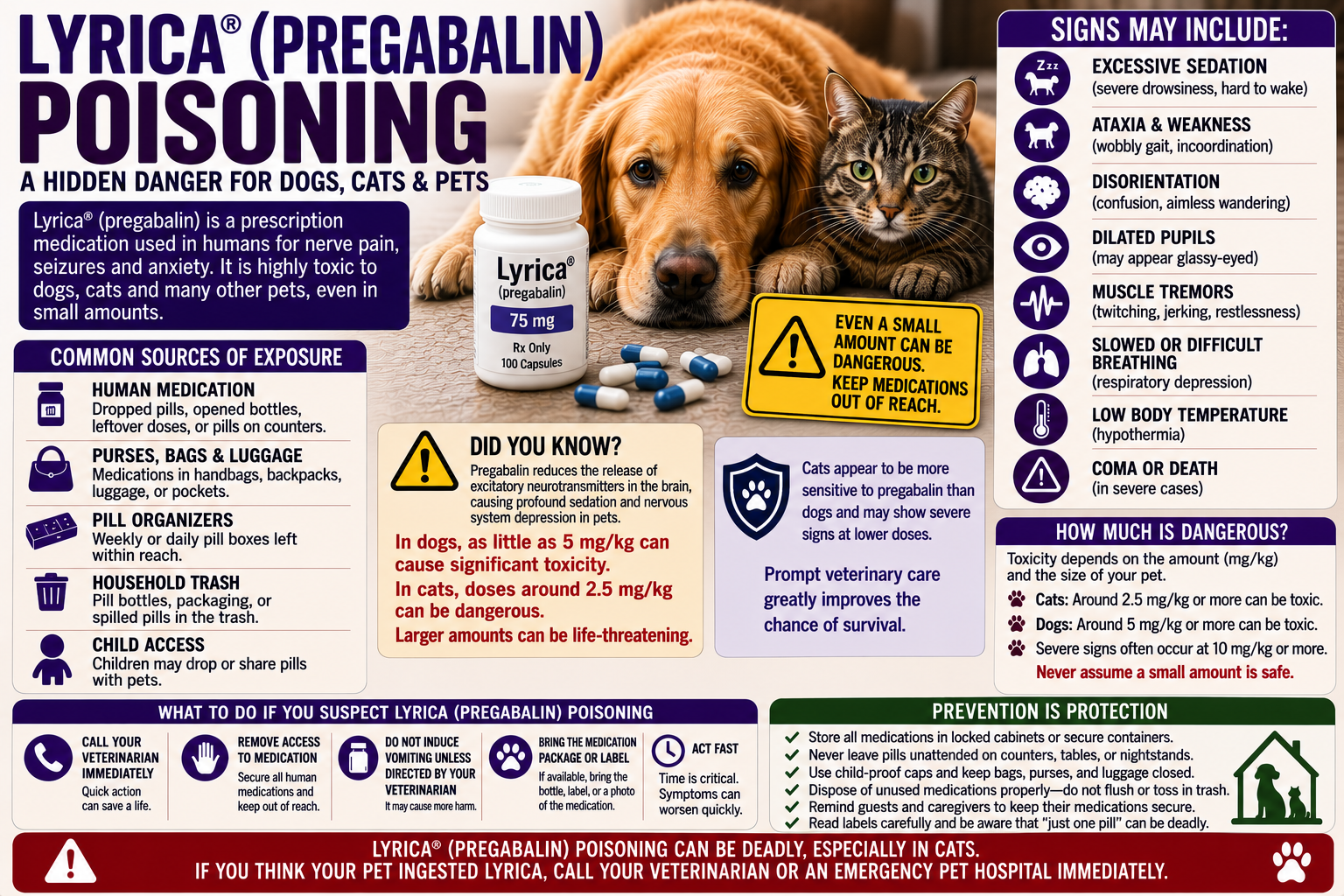
Yes. Lyrica and generic pregabalin can cause clinically important poisoning in dogs, cats, birds, and other animals after accidental ingestion, duplicate dosing, wrong-strength administration, or exposure to a concentrated oral solution. Expected signs include sleepiness, weakness, ataxia, stumbling, disorientation, lethargy, vomiting, drooling, dilated pupils, tremors, reduced body temperature, slow heart rate, and—in severe or mixed exposures—stupor, coma, aspiration, and respiratory depression.
Pregabalin is a gabapentinoid anticonvulsant and neuropathic-pain medication. Human products include Lyrica capsules, generic pregabalin capsules, oral solution, and Lyrica CR extended-release tablets. A veterinary pregabalin oral solution is also approved for reducing transportation- and veterinary-visit anxiety in cats. Human and veterinary products can differ sharply in concentration, formulation, intended dosing, and packaging.
The greatest danger often comes from a combination of pregabalin with opioids, benzodiazepines, sleep aids, gabapentin, antihistamines, muscle relaxants, alcohol, cannabis, or other sedatives. Pregabalin is eliminated primarily through the kidneys, so kidney disease, dehydration, advanced age, and repeated dosing can prolong or intensify neurologic depression. Abruptly stopping chronic pregabalin therapy may also provoke withdrawal signs or seizures in susceptible patients.
About this guide: This page provides general pet-poisoning information and cannot diagnose or treat an individual animal. For any suspected exposure, contact a veterinarian or animal poison-control service immediately. Do not induce vomiting, give medication, or attempt home decontamination unless directed by a veterinary professional.
Agent and Exposure Profile
Quick Reference
Pregabalin Identity, Formulations, and Related Products
Pregabalin
Pregabalin is the active ingredient in Lyrica and generic products. It is structurally related to gamma-aminobutyric acid but does not act directly as a GABA-A or GABA-B receptor agonist. Instead, it binds the alpha-2-delta subunit of voltage-gated calcium channels and reduces release of excitatory neurotransmitters.
Lyrica Capsules
Immediate-release Lyrica and generic pregabalin capsules are sold in multiple strengths. Capsules may be kept in bottles, blister packs, pill organizers, purses, backpacks, and bedside medication areas. One capsule can represent a large exposure for a small animal.
Pregabalin Oral Solution
Human pregabalin oral solution is concentrated and can expose a pet rapidly if a bottle is punctured, a dosing syringe is chewed, or medication is spilled. Liquid exposure is harder to quantify than a missing capsule count and can contaminate fur or bedding.
Lyrica CR Extended-Release Tablets
Lyrica CR is an extended-release product designed for prolonged absorption. Extended-release tablets should not be crushed or chewed for human use, and a chewed tablet may alter the release pattern. Animals exposed to extended-release pregabalin may require longer observation than those exposed to an immediate-release capsule.
Bonqat Veterinary Pregabalin Oral Solution
Bonqat is an FDA-approved veterinary pregabalin oral solution for alleviating acute anxiety and fear associated with transportation and veterinary visits in cats. Mild sedation, ataxia, lethargy, vomiting, abnormal proprioception, tremor, and mydriasis were reported in clinical and safety studies. A veterinary prescription does not make the bottle safe for unsupervised access or for use in another animal.
Gabapentin Is Related but Not Identical
Gabapentin and pregabalin are both gabapentinoids, but they differ in absorption, potency, formulation, and pharmacokinetics. Combining them can intensify sedation and ataxia. A pet exposed to both should not be assessed as though only one drug was involved.
Compounded and Flavored Preparations
Veterinary pharmacies may compound pregabalin into flavored liquids or capsules. Sweetened or meat-flavored products can attract animals, and the concentration may differ from commercial products. Some human liquid formulations or compounded products may contain additional excipients that require separate evaluation.
Where Lyrica and Pregabalin Exposure May Occur
Medicine Cabinets, Nightstands, and Pill Organizers
Pregabalin is commonly stored with pain medication, anticonvulsants, sleep aids, antidepressants, opioids, and muscle relaxants. Dogs may chew a bottle or organizer, while cats and small dogs may swallow a single dropped capsule. The presence of several medications makes mixed exposure likely.
Purses, Backpacks, Luggage, and Vehicles
People often carry pregabalin for chronic pain or seizure treatment. Purses, travel bags, coat pockets, gym bags, and vehicle consoles are common access points. Guest medication may be unlabeled or stored outside its original container.
Veterinary Medication Areas
Pregabalin prescribed for dogs or cats may be stored with other animal medications, pre-visit sedatives, or pain-control drugs. Duplicate dosing can occur when more than one caregiver administers medication or when a vomited dose is repeated without veterinary instruction.
Oral-Solution Bottles and Syringes
Human or veterinary oral solution may be left beside dosing syringes, food, or carrier-preparation supplies. A chewed syringe or bottle can release a concentrated amount and create plastic-fragment or glass injury in addition to drug exposure.
Trash, Pharmacy Mailers, and Damaged Bottles
Expired capsules, pharmacy bags, refill mailers, empty-looking bottles, and contaminated dosing supplies may remain in open trash. Residual liquid or capsules can still expose pets, and discarded packaging can become a foreign body.
Intentional but Improper Administration
Pregabalin should not be given for pain, anxiety, seizures, travel, or grooming unless the animal's veterinarian has prescribed the exact product and plan. Human strengths, veterinary liquids, and compounded preparations are not interchangeable.
Exposure Scenarios and Risk Factors
Common Companion-Animal Scenarios
- A dog chews a bottle of Lyrica or generic pregabalin capsules.
- A cat or small dog swallows one capsule dropped near a bed or sofa.
- A pet empties a pill organizer containing pregabalin, opioids, sleep aids, or antidepressants.
- An animal punctures a human or veterinary oral-solution bottle.
- A dog consumes an extended-release tablet or chews it into fragments.
- Two caregivers accidentally give the same prescribed dose.
- An owner repeats a dose after vomiting without veterinary instruction.
Small Body Size
Human capsule strengths can represent substantial exposures to toy dogs, cats, birds, rabbits, and ferrets. Small animals also have less physiologic reserve against hypothermia, aspiration, and prolonged recumbency.
Kidney Disease
Pregabalin is eliminated largely unchanged through the kidneys. Reduced renal function can prolong exposure and increase neurologic depression even when the amount would be less concerning in a patient with normal kidney function. Dehydration and low blood pressure can compound this problem.
Opioids and Other Central Nervous System Depressants
Opioids, benzodiazepines, zolpidem, antihistamines, muscle relaxants, gabapentin, anesthetic drugs, alcohol, and cannabis can intensify sleepiness, weakness, aspiration, and respiratory depression. The combined syndrome may be much more severe than pregabalin alone.
Chronic Therapy and Abrupt Discontinuation
Animals receiving pregabalin for neuropathic pain or seizures should not have treatment stopped abruptly without veterinary direction. Withdrawal can cause agitation, gastrointestinal signs, rebound pain, and potentially seizures, especially in patients receiving the drug for seizure control.
Extended-Release and Liquid Products
Extended-release tablets can sustain exposure, while liquid products may be absorbed rapidly and are harder to measure after a spill. Product formulation therefore influences both decontamination and observation decisions.
Pregabalin Poisoning Symptoms and Clinical Progression
Sedation and Lethargy
Sleepiness, reduced activity, weakness, delayed responses, and prolonged recumbency are common. Mildly affected animals may remain responsive but unusually quiet, while larger or mixed exposures can progress to stupor or coma.
Ataxia and Incoordination
Stumbling, swaying, falling, knuckling, abnormal proprioception, and difficulty standing are characteristic pregabalin effects. Controlled canine and feline studies document sedation and uncoordinated movement at higher exposures. Ataxic animals are vulnerable to falls, head injury, drowning, and aspiration.
Vomiting, Drooling, and Appetite Changes
Vomiting, hypersalivation, nausea, and reduced appetite may occur. Vomiting becomes more dangerous as sedation deepens because airway protection is impaired. Persistent vomiting also worsens dehydration and renal clearance.
Pupil, Temperature, and Heart-Rate Changes
Mydriasis has been observed in cats, while decreased body temperature and bradycardia occurred in dose-related veterinary safety studies. Some patients may develop reflex tachycardia or hypertension depending on cardiovascular response and co-ingestants.
Tremors and Neurologic Deterioration
Muscle tremors, disorientation, unusual behavior, and profound weakness can develop. Seizures are less typical of isolated acute pregabalin exposure than sedation and ataxia, but they may occur with withdrawal, mixed overdose, hypoglycemia, head trauma, or another proconvulsant drug.
Respiratory Depression
Serious breathing impairment is most concerning after large exposure, kidney impairment, or co-ingestion with opioids and other sedatives. Slow breathing, long pauses, blue or pale gums, snoring-like obstruction, and inability to awaken the animal are emergency signs.
Prolonged Signs in Cats and Renal Patients
Pregabalin has a relatively long elimination half-life in cats, and kidney disease can extend the duration in any species. A patient may remain ataxic or sedated longer than expected even after the stomach is empty.
First Aid for Suspected Lyrica Exposure
Immediate Owner Actions
- Remove all capsules, extended-release tablets, liquids, syringes, and pill organizers.
- Preserve the product label, strength, formulation, concentration, remaining quantity, and photographs.
- Record the maximum amount missing, exposure window, current weight, and every observed sign.
- Identify opioids, benzodiazepines, gabapentin, sleep aids, antihistamines, alcohol, or other co-ingestants.
- Confine the animal safely away from stairs, pools, furniture edges, and traffic.
- Contact a veterinarian immediately rather than waiting for deeper sedation.
Do Not Induce Vomiting Without Veterinary Direction
Do not give hydrogen peroxide, salt, mustard, syrup of ipecac, or attempt manual gagging. Ataxia, sleepiness, weakness, and impaired swallowing increase aspiration risk. Extended-release tablets, concentrated liquids, and mixed exposures require individualized decisions.
Do Not Give Caffeine, Stimulants, or Another Sedative
Caffeine and energy products do not safely reverse pregabalin depression. Additional sedatives, gabapentin, benzodiazepines, antihistamines, or sleep aids can worsen respiratory and neurologic effects. Naloxone reverses opioids, not pregabalin itself.
Prevent Aspiration and Trauma
Keep the animal quiet and on a stable surface. Do not force food or water. If vomiting occurs, allow material to drain without blocking the airway, but do not place hands into the mouth of a poorly responsive or seizuring animal.
Liquid or Fur Contamination
Prevent grooming after a pregabalin solution spill. Wear gloves and preserve the bottle. A veterinarian may recommend controlled washing with a mild cleanser after assessing the formulation, amount, and patient's condition.
Safe Transport
Use a carrier or padded restrained area. Bring every medication container and dosing syringe. Call ahead for slow breathing, severe weakness, collapse, coma, repeated vomiting, or opioid co-ingestion so the hospital can prepare oxygen, airway equipment, and reversal treatment for co-ingestants.
Pregabalin Toxicology and Mechanism
Alpha-2-Delta Calcium-Channel Binding
Pregabalin binds with high affinity to the alpha-2-delta subunit of presynaptic voltage-gated calcium channels. This reduces calcium entry and decreases release of excitatory neurotransmitters such as glutamate, norepinephrine, and substance P. The result is anticonvulsant, analgesic, and dose-related sedative activity.
Pregabalin Does Not Directly Activate GABA Receptors
Despite being structurally related to gamma-aminobutyric acid, pregabalin does not act as a direct GABA-A or GABA-B agonist and is not metabolized into GABA. This distinguishes its mechanism from benzodiazepines, barbiturates, and baclofen.
Rapid and Predictable Absorption
Pregabalin is absorbed efficiently, with more predictable exposure than gabapentin. Canine pharmacokinetic research demonstrates rapid oral absorption, while feline studies show high bioavailability and a relatively prolonged half-life. Oral solutions can reach peak concentrations sooner than solid formulations.
Minimal Protein Binding and Renal Elimination
Pregabalin is not substantially bound to plasma proteins and undergoes little metabolism. Most absorbed drug is eliminated unchanged by the kidneys. This explains why renal impairment can markedly prolong toxicity and why hemodialysis can remove pregabalin in selected severe cases.
Why Opioids Increase Risk
Pregabalin and opioids depress different parts of the central nervous system but can have additive effects on alertness, ventilation, and airway protection. Respiratory risk rises further with benzodiazepines, sleep aids, alcohol, antihistamines, muscle relaxants, or underlying respiratory disease.
Withdrawal and Dependence
Pregabalin is a Schedule V controlled substance and can produce dependence after repeated exposure. Abrupt discontinuation may cause restlessness, gastrointestinal signs, insomnia-like behavior, rebound pain, autonomic signs, or seizures. Animals receiving chronic therapy should be tapered only under veterinary supervision.
Evidence Boundaries
Veterinary evidence is strongest for pharmacokinetics, therapeutic use, feline safety studies, and expected dose-related sedation and ataxia. Published companion-animal overdose series are limited. Severe-overdose decisions therefore combine veterinary pharmacology, product data, renal function, co-ingestants, and broader pregabalin-poisoning evidence.
Clinical Management
Veterinary Care and Prognosis
Veterinary Diagnosis and Treatment
Exposure Reconstruction
The veterinary team identifies the exact product, strength, formulation, concentration, maximum amount, exposure time, chronic-use history, kidney status, and every possible co-ingestant. Human capsules, Lyrica CR tablets, compounded products, and veterinary oral solution are documented separately.
Initial Stabilization
Airway, breathing, circulation, temperature, neurologic status, hydration, blood pressure, heart rate, oxygenation, and aspiration risk are assessed first. Profoundly sedated animals may require oxygen, suction, intubation, or assisted ventilation before decontamination is considered.
Diagnostic Testing
Testing may include blood glucose, complete blood count, serum chemistry, electrolytes, kidney values, urinalysis, blood-gas analysis, blood pressure, electrocardiography, pulse oximetry, and chest imaging when aspiration is suspected. Serial kidney and neurologic assessment is particularly important in renal patients.
Professional Decontamination
Veterinary-induced emesis may be considered after a recent exposure in an alert, clinically normal patient with a protected airway. Once ataxia, sedation, weakness, or vomiting begins, aspiration risk may outweigh benefit. Activated charcoal may be considered selectively, but pregabalin's rapid absorption and neurologic effects limit its usefulness in some cases.
Supportive Care
Quiet confinement, padded bedding, temperature support, intravenous crystalloids, antiemetics, oxygen, and serial neurologic monitoring are central. Fluids are adjusted to hydration, blood pressure, heart disease, kidney function, urine output, and risk of overload. Persistent hypotension after appropriate volume support may require vasopressors.
Respiratory and Mixed-Drug Management
Respiratory depression requires oxygen, airway protection, and ventilation when necessary. Naloxone may be used when opioid co-ingestion is suspected, but it does not reverse pregabalin. Other sedatives and stimulants require their own product-specific treatment plans.
Renal Failure and Extracorporeal Treatment
Because pregabalin is small, minimally protein bound, and renally eliminated, hemodialysis can remove it. Extracorporeal treatment is not routinely needed in patients with normal kidney function and manageable sedation. It may be considered in severe coma requiring ventilation when kidney function is reduced, although veterinary clinical evidence remains limited.
Withdrawal Risk
An animal receiving long-term pregabalin should not have the drug stopped abruptly without considering dependence and seizure history. The veterinarian may resume or taper treatment after stabilization depending on the original indication and exposure circumstances.
Monitoring Duration
Observation depends on formulation, amount, renal function, neurologic signs, co-ingestants, and response to care. Extended-release products, oral-solution exposure, cats, kidney disease, and mixed sedatives can prolong hospitalization. Public treatment doses are intentionally omitted.
Prognosis, Recovery, and Follow-Up
Most Isolated Exposures Are Supportive-Care Cases
The prognosis is often favorable when pregabalin is the only drug involved, breathing remains adequate, renal function is normal, and aspiration or trauma does not occur. Many patients improve as the drug is eliminated and normal coordination returns.
Guarded Situations
The outlook becomes more guarded with opioid or multiple-sedative co-ingestion, coma, mechanical-ventilation requirement, aspiration pneumonia, severe hypothermia, kidney failure, extended-release exposure, prolonged recumbency, or delayed presentation.
Recovery May Be Prolonged
Kidney disease, feline pharmacokinetics, and sustained-release formulations can extend sedation and ataxia. An animal may look more alert before swallowing, balance, temperature regulation, and respiratory safety have fully normalized.
After Discharge
Keep the animal quiet, warm, and away from stairs, furniture, pools, and unsupervised outdoor access. Return promptly for renewed sedation, stumbling, vomiting, coughing, breathing difficulty, weakness, tremors, seizures, collapse, or reduced urination.
Preventing Lyrica and Pregabalin Exposure
Use Locked Medication Storage
Keep Lyrica, generic pregabalin, Lyrica CR, veterinary pregabalin solution, and compounded products in original labeled containers inside a locked cabinet or medication box. Child-resistant packaging is not pet resistant.
Secure Oral Solutions and Dosing Syringes
Replace child-resistant caps immediately and store syringes separately after cleaning. Never leave a measured dose unattended on food, a countertop, or beside a pet carrier.
Use One Documented Dosing Plan
When pregabalin is prescribed for an animal, record the patient, product concentration, amount, administration time, and caregiver. Do not repeat a dose after vomiting or allow two caregivers to administer medication without checking the log.
Protect Purses, Backpacks, and Pill Organizers
Store personal bags and weekly organizers behind closed doors or in high cabinets. Check floors and furniture after filling a pill organizer because dropped capsules are easily overlooked.
Do Not Combine Gabapentinoids or Sedatives Without Direction
Do not add gabapentin, opioids, antihistamines, sleep aids, benzodiazepines, or other sedatives unless the treating veterinarian has reviewed the entire medication plan. Additive depression can occur even when each drug was prescribed separately.
Do Not Stop Chronic Therapy Abruptly
Animals receiving pregabalin for seizure control or chronic neuropathic pain may need a gradual veterinary-directed taper. Sudden discontinuation can create withdrawal signs or destabilize seizure control.
Lyrica (Pregabalin) Poisoning FAQ
Is pregabalin the active ingredient in Lyrica?
Yes. Lyrica is a brand name for pregabalin, a gabapentinoid anticonvulsant and neuropathic-pain medication.
Can one Lyrica capsule poison a dog?
Yes, especially in a small dog. Human capsule strengths vary, and one capsule can cause clinically important sedation, ataxia, weakness, or vomiting relative to body weight.
Can cats be poisoned by pregabalin?
Yes. Cats can develop sedation, ataxia, lethargy, vomiting, mydriasis, tremors, hypothermia, and heart-rate changes after excessive exposure.
Is pregabalin ever prescribed for cats?
Yes. Bonqat is an FDA-approved pregabalin oral solution for acute anxiety and fear associated with transportation and veterinary visits in cats. It must still be stored and administered exactly as directed.
Is pregabalin the same as gabapentin?
No. They are related gabapentinoids but differ in potency, absorption, formulation, and elimination. Combining them can intensify sedation and incoordination.
Can I make my dog vomit after a pregabalin ingestion?
Not without veterinary direction. Once sleepiness, weakness, ataxia, or impaired swallowing develops, induced vomiting can cause aspiration.
Does activated charcoal help?
It may be considered professionally in selected early cases, but pregabalin is absorbed rapidly and charcoal can be dangerous in a sedated animal. It is not a safe home treatment.
Can Lyrica slow a pet's breathing?
Yes, especially after a large exposure or when combined with opioids, benzodiazepines, sleep aids, antihistamines, gabapentin, alcohol, or other depressants.
Why is kidney disease important?
Pregabalin is eliminated primarily unchanged by the kidneys. Reduced kidney function can prolong drug exposure and deepen neurologic depression.
Is Lyrica CR different from regular Lyrica?
Yes. Lyrica CR is an extended-release tablet designed for prolonged absorption. A chewed or swallowed tablet can produce a longer clinical course than an immediate-release capsule.
Can pregabalin cause tremors or seizures?
Tremors can occur. Seizures are less typical of isolated acute overdose but may develop with withdrawal, mixed drugs, hypoglycemia, head trauma, or severe neurologic illness.
Can pregabalin be removed by dialysis?
Yes. It is minimally protein bound and renally eliminated, so hemodialysis can remove it. Dialysis is generally reserved for selected severe cases, particularly when kidney function is poor and coma requires ventilation.
Can a pet become dependent on pregabalin?
Repeated use can produce physiologic dependence. Chronic therapy should not be stopped abruptly because withdrawal or seizure destabilization may occur.
What if my pet swallowed pregabalin with an opioid?
That is a higher-risk emergency because both drugs can impair alertness, breathing, and airway protection. Bring every medication bottle and seek immediate veterinary care.
What if several pets had access to the same bottle?
Do not divide the missing capsules evenly. Separate the animals, record each weight and signs, and report the maximum possible exposure for every pet.
Can pregabalin oral solution poison a pet through fur contamination?
Yes. Liquid on fur or paws can be swallowed during grooming. Prevent licking and contact a veterinarian for safe decontamination instructions.
How long can signs last?
Duration depends on formulation, amount, species, kidney function, and co-ingestants. Cats, renal patients, and extended-release exposures may remain affected longer.
Can I give my pet human Lyrica for pain or anxiety?
Only when the animal's veterinarian has prescribed the exact product and plan. Human strengths, oral solutions, extended-release tablets, and veterinary formulations are not interchangeable.