Methylphenidate, Dexmethylphenidate, Ritalin, Concerta, Focalin, and ADHD-Stimulant Poisoning
Is Methylphenidate Poisonous to Dogs, Cats, and Other Animals?
Yes. Methylphenidate and dexmethylphenidate can cause rapidly progressive, life-threatening stimulant poisoning in dogs, cats, birds, and other animals. Expected signs include hyperactivity, relentless pacing, agitation, vocalization, dilated pupils, panting, rapid heart rate, hypertension, vomiting, diarrhea, tremors, hyperthermia, abnormal movements, seizures, collapse, and severe exhaustion. Extended-release tablets, capsules, liquids, chewables, orally disintegrating tablets, and transdermal patches can prolong or complicate the course.
Ritalin, Concerta, Metadate, Aptensio XR, Jornay PM, Quillivant XR, QuilliChew ER, Cotempla XR-ODT, Daytrana, Relexxii, Methylin, and many generics contain methylphenidate. Focalin contains dexmethylphenidate, the pharmacologically active d-enantiomer of methylphenidate. Azstarys combines dexmethylphenidate with serdexmethylphenidate, a prodrug. These products are related but not interchangeable, and the release system strongly affects onset and duration.
In a veterinary series of 128 dogs, most exposed animals developed clinical signs, including hyperactivity, tachycardia, vomiting, agitation, and hyperthermia. Even relatively small ingestions can be clinically important. A cat given a single human tablet developed restlessness, vocalization, and circling. Any suspected exposure warrants immediate veterinary assessment rather than observation at home.
About this guide: This page provides general pet-poisoning information and cannot diagnose or treat an individual animal. For any suspected exposure, contact a veterinarian or animal poison-control service immediately. Do not induce vomiting, give medication, or attempt home decontamination unless directed by a veterinary professional.
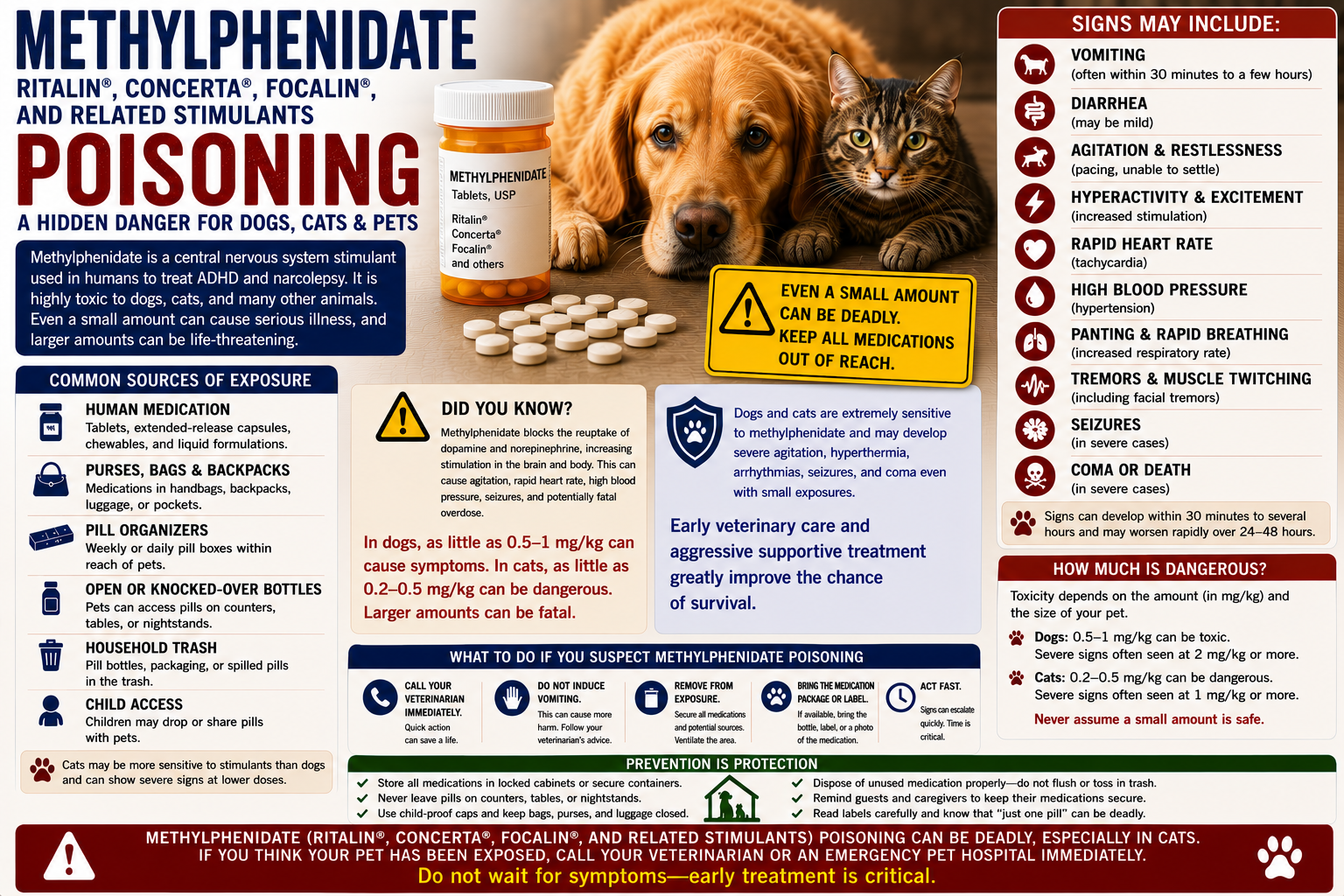
Agent and Exposure Profile
Quick Reference
Methylphenidate Products, Release Systems, and Related Stimulants
Immediate-Release Methylphenidate
Ritalin, Methylin, and generic methylphenidate tablets are immediate-release central nervous system stimulants. Chewable tablets and oral solutions are also available. These products can produce signs quickly because the drug is absorbed rapidly after ingestion.
Ritalin SR, Ritalin LA, and Metadate Products
Ritalin SR is a sustained-release tablet, while Ritalin LA and Metadate CD are extended-release capsules containing beads designed to release drug in phases. Chewing or crushing can disrupt the delivery system, but delayed-release material may still remain available for absorption after early signs are controlled.
Concerta and Relexxii OROS Tablets
Concerta and related osmotic-release tablets use an internal delivery system that pushes methylphenidate through a laser-drilled opening over many hours. The nonabsorbable shell may remain visible in stool. A swallowed veterinary exposure can therefore continue releasing drug long after the outer coating dissolves.
Aptensio XR, Cotempla XR-ODT, and Other Extended-Release Products
Aptensio XR uses extended-release capsules, while Cotempla XR-ODT is an extended-release orally disintegrating tablet. Generic long-acting methylphenidate products may use different proportions of immediate and delayed release. Brand and formulation are essential for estimating the likely time course.
Quillivant XR and QuilliChew ER
Quillivant XR is an extended-release oral suspension and QuilliChew ER is an extended-release chewable tablet. A punctured liquid bottle can expose a pet to a large, difficult-to-measure volume, while flavored chewable products may be especially attractive to dogs.
Jornay PM
Jornay PM is designed for delayed release after evening administration, followed by extended release the next day. A pet may appear normal for a period before substantial absorption begins. This delayed-onset design makes a symptom-free interval particularly unreliable.
Daytrana Transdermal Patches
Daytrana delivers methylphenidate through the skin. New and used patches retain active drug. A pet can be exposed by chewing or swallowing a patch, licking the adhesive, contacting a patch stuck to fur, or ingesting a discarded patch. Oral ingestion and dermal absorption may occur together.
Focalin and Dexmethylphenidate
Focalin and Focalin XR contain dexmethylphenidate, the d-threo enantiomer responsible for most of methylphenidate's pharmacologic activity. It is not simply a different brand of the identical racemic mixture. The milligram strengths cannot be compared one-for-one without considering the active enantiomer and formulation.
Azstarys
Azstarys combines immediate-release dexmethylphenidate with serdexmethylphenidate, a prodrug converted to dexmethylphenidate. Its dual-component design can produce both early and prolonged stimulant exposure. Preserve the exact package because it is not equivalent to Concerta, Ritalin LA, or Focalin XR.
Methylphenidate Is Not Amphetamine
Adderall, dextroamphetamine, and lisdexamfetamine are amphetamine products. Methylphenidate produces a similar sympathomimetic emergency but primarily blocks dopamine and norepinephrine reuptake rather than promoting transmitter release in the same way as amphetamines. The products, kinetics, and toxicologic evidence should not be merged.
Where Methylphenidate Exposure Happens
School Bags, Backpacks, Desks, and Lockers
ADHD medications are commonly carried between home, school, college, and work. Dogs may open backpacks, lunch bags, pencil cases, medication pouches, or desk drawers. Loose tablets can remain hidden in fabric seams or pockets after the bottle is removed.
Purses, Nightstands, Pill Organizers, and Travel Containers
Methylphenidate may be stored with antidepressants, sleep aids, blood-pressure medications, or other stimulants. A pet that empties an organizer may ingest several pharmacologic classes at once. Unlabeled travel containers also make product identification and dose reconstruction harder.
Extended-Release Beads and Opened Capsules
Some human prescriptions permit opening a capsule and sprinkling beads on food. Spilled beads can remain on counters, plates, spoons, floors, bedding, or clothing. They are small, easy to overlook, and still contain active medication.
Liquid Suspensions and Dosing Devices
Quillivant XR and compounded methylphenidate liquids may be stored beside oral syringes or adapters. A chewed bottle can release a large quantity rapidly. Residue on fur, paws, food, or bedding can create secondary grooming exposure.
Chewable and Orally Disintegrating Products
Flavored chewable tablets and orally disintegrating products may be more appealing to animals than conventional tablets. Packaging can resemble candy or ordinary medication. One missing unit can be important for a small dog, cat, bird, rabbit, or ferret.
Transdermal Patches
Daytrana patches may be found on treated skin, clothing, bedding, bathroom surfaces, or household trash. A used patch is not inactive. Folding the adhesive sides together and placing the patch in secure disposal still requires preventing pet access.
Counterfeit or Illicit “Study Drugs”
Tablets or powders obtained outside a licensed pharmacy may contain methamphetamine, caffeine, fentanyl, novel stimulants, or other unexpected substances. Tell the veterinary team when the product may be counterfeit, crushed, snorted, injected, or mixed with another drug.
Exposure Scenarios and Risk Factors
Common Companion-Animal Scenarios
- A dog chews a bottle of Ritalin, Concerta, Focalin, or generic tablets.
- A pet swallows one or more tablets dropped from a school bag or pill organizer.
- A dog ingests extended-release beads spilled from an opened capsule.
- A pet punctures a Quillivant XR or compounded oral-suspension bottle.
- A dog chews or swallows a new or used Daytrana patch.
- A small dog, cat, bird, rabbit, or ferret consumes part of a chewable tablet.
- A pet empties an organizer containing methylphenidate plus antidepressants or other stimulants.
Extended, Delayed, and Multipart Release
Ritalin LA, Concerta, Jornay PM, Focalin XR, Quillivant XR, QuilliChew ER, Aptensio XR, Cotempla XR-ODT, and other products use different delivery technologies. Some produce a rapid first pulse followed by a later pulse, while others delay the start of absorption. Early improvement does not guarantee that the full dose has been absorbed.
Small Body Size
A single human unit may represent a substantial exposure to a toy dog, cat, bird, rabbit, or ferret. Dexmethylphenidate products add another complication because the active d-enantiomer is provided without the less-active l-enantiomer present in racemic methylphenidate.
Cardiac, Seizure, and Endocrine Disease
Preexisting arrhythmia, hypertension, structural heart disease, seizure disorders, hyperthyroidism, diabetes, kidney disease, and severe anxiety can complicate stimulant poisoning. Hyperthermia and catecholamine excess place additional demand on already compromised organs.
Medication Interactions
Monoamine oxidase inhibitors, amphetamines, atomoxetine, bupropion, decongestants, caffeine, serotonergic antidepressants, cocaine, and other stimulants can intensify cardiovascular and neurologic effects. Sedatives, opioids, or counterfeit-tablet ingredients may mask the classic stimulant pattern while adding respiratory risk.
Patch Adhesive and Foreign-Material Exposure
Chewed transdermal patches expose the animal to drug, adhesive, and patch backing. Swallowed OROS shells, blister material, bottle fragments, or dosing devices may create additional gastrointestinal concerns. Packaging exposure should be reported separately from the medication amount.
Methylphenidate Poisoning Symptoms and Clinical Progression
Hyperactivity, Pacing, and Agitation
Restlessness, repetitive pacing, frantic behavior, inability to settle, vocalization, circling, hypervigilance, and exaggerated responses to sound or touch are common. In the largest published canine series, hyperactivity was the most frequently reported sign. Animals can injure themselves while disoriented or difficult to restrain.
Tachycardia, Hypertension, and Arrhythmias
Rapid heart rate and elevated blood pressure reflect increased dopamine and norepinephrine signaling. Premature beats and more serious arrhythmias may develop in severe cases or mixed exposures. Persistent cardiovascular stimulation raises myocardial oxygen demand and can contribute to collapse.
Hyperthermia
Agitation, tremors, vasoconstriction, and sustained muscle activity can raise body temperature rapidly. Severe hyperthermia damages the brain, kidneys, liver, gastrointestinal tract, skeletal muscle, and coagulation system. Temperature can continue rising during transport if the animal remains physically active.
Vomiting, Diarrhea, and Hypersalivation
Vomiting, diarrhea, drooling, retching, and appetite loss occur in some animals. Gastrointestinal signs may worsen dehydration and impair heat dissipation. Vomiting combined with severe agitation or seizures creates aspiration risk.
Tremors, Abnormal Movements, and Seizures
Muscle fasciculations, tremors, head bobbing, ataxia, circling, rigidity, and seizures may occur as central stimulation intensifies. Sustained tremors or seizures can produce lactic acidosis, hyperthermia, rhabdomyolysis, electrolyte abnormalities, and acute kidney injury.
Pupil and Autonomic Changes
Dilated pupils, panting, urinary accidents, increased urination, altered salivation, and heightened startle responses are consistent with sympathomimetic stimulation. These findings can overlap with amphetamine, cocaine, decongestant, or anticholinergic exposure.
Exhaustion, Weakness, and Collapse
After prolonged stimulation, an animal may become weak, recumbent, depressed, or poorly responsive. This is not necessarily recovery. Exhaustion, hypoglycemia, hyperthermic injury, arrhythmia, shock, aspiration, or organ dysfunction may be developing.
Typical Timing
Immediate-release products can cause signs within a short period, while delayed- and extended-release products may produce later onset, prolonged effects, or recurrence after early control. Patch exposure can continue until the patch is removed and contaminated fur or skin is cleaned safely.
First Aid for Suspected Methylphenidate Exposure
Immediate Owner Actions
- Remove every tablet, capsule, bead, liquid bottle, syringe, chewable, and patch.
- Preserve the original package, strength, release system, imprint, remaining count, and photographs.
- Record the maximum amount missing, exposure window, current weight, and every observed sign.
- Identify antidepressants, decongestants, caffeine, amphetamines, atomoxetine, and all co-ingestants.
- Move the animal to a quiet, cool, dim environment away from stairs, pools, and traffic.
- Contact a veterinarian immediately; do not wait for seizures or collapse.
Do Not Induce Vomiting Without Veterinary Direction
Do not give hydrogen peroxide, salt, mustard, syrup of ipecac, or attempt manual gagging. Agitation, tremors, seizures, and impaired coordination increase aspiration and injury risk. Extended-release material and patch ingestion require individualized decontamination decisions.
Do Not Give Human Heart, Anxiety, or Sleep Medication
Beta blockers, benzodiazepines, clonidine, antihistamines, sleep aids, antidepressants, and other drugs can create dangerous interactions or obscure the clinical picture. Treatment must be based on the actual blood pressure, rhythm, temperature, neurologic status, and product involved.
Daytrana Patch Contact
Wear gloves, remove any patch still attached to the pet, prevent licking, and preserve it in a sealed container. Do not use alcohol, acetone, citrus solvent, or harsh cleaners on the skin or fur. A veterinarian may direct gentle washing once the animal's neurologic and cardiovascular condition is stable.
Cooling Must Be Controlled
Do not immerse the animal in ice water or pack it in ice. Extreme vasoconstriction can impair heat loss. Reduce activity, move to a cool environment, and seek emergency care for measured, controlled cooling and rapid treatment of agitation or tremors.
Safe Transport
Use a secure carrier or padded restrained area and minimize noise, light, and handling. Avoid placing hands near the mouth of a tremoring or seizuring animal. Call ahead for hyperthermia, collapse, severe agitation, or an unknown stimulant so the hospital can prepare sedation, cooling, oxygen, and cardiac monitoring.
Methylphenidate Toxicology and Mechanism
Dopamine and Norepinephrine Transporter Blockade
Methylphenidate blocks dopamine and norepinephrine transporters, reducing reuptake of these neurotransmitters into presynaptic neurons. Extracellular concentrations rise in the central nervous system and peripheral sympathetic pathways. The result is increased alertness, locomotor activity, heart rate, blood pressure, and heat production.
How It Differs from Amphetamine
Amphetamines enter neurons and promote transmitter release in addition to reversing transporters. Methylphenidate acts primarily as a reuptake inhibitor. The outward poisoning syndromes overlap substantially, but the molecular mechanism and product pharmacokinetics are not identical.
Racemic Methylphenidate and Dexmethylphenidate
Most methylphenidate products contain a racemic mixture of d- and l-threo enantiomers. Dexmethylphenidate contains the d-threo enantiomer, which contributes most of the clinically relevant transporter activity. This is why Focalin strengths cannot be interpreted as though they were the same milligram amount of racemic methylphenidate.
Rapid Absorption in Dogs
Canine pharmacokinetic studies show that oral methylphenidate is absorbed rapidly, with peak concentrations occurring early after immediate-release administration. Sustained-release formulations extend exposure and may create different concentration peaks. Product design therefore matters as much as tablet strength.
Release-System Toxicology
OROS tablets, coated beads, delayed-release capsules, extended-release liquids, chewables, orally disintegrating tablets, and patches control when drug becomes available. Chewing can disrupt some systems, but it does not always release the entire dose immediately. Residual product may continue delivering drug for hours.
Hyperthermia and Secondary Organ Injury
Hyperthermia results from central stimulation, vasoconstriction, agitation, and excessive muscle activity. Severe cases can develop rhabdomyolysis, hyperkalemia, lactic acidosis, acute kidney injury, hepatic injury, gastrointestinal barrier damage, and disseminated intravascular coagulation.
Metabolism and Elimination
Methylphenidate is hydrolyzed primarily to ritalinic acid, an inactive metabolite, and is eliminated largely in urine as metabolites. The toxic course is governed not only by elimination but also by formulation-dependent absorption, patient temperature, cardiovascular status, and co-ingestants.
Evidence Boundaries
The strongest veterinary evidence includes a 128-dog retrospective series, a feline case report, canine immediate- and sustained-release pharmacokinetic studies, and controlled toxicology studies. Evidence for every modern delivery system is not equally developed, so treatment must combine known stimulant toxicology with the exact product's release characteristics.
Clinical Management
Veterinary Care and Prognosis
Veterinary Diagnosis and Treatment
Exposure Reconstruction
The veterinary team identifies methylphenidate versus dexmethylphenidate, brand, strength, immediate-, delayed-, or extended-release design, maximum amount, exposure time, patch status, and all co-ingestants. Pharmacy records or tablet identification may be required when medication was stored loose or in a pill organizer.
Initial Stabilization
Airway, breathing, circulation, temperature, neurologic status, glucose, blood pressure, cardiac rhythm, hydration, perfusion, and trauma are assessed immediately. Severe agitation, seizures, hyperthermia, or arrhythmia may require treatment before gastrointestinal decontamination can be considered safely.
Diagnostic Testing
Testing may include electrocardiography, continuous rhythm monitoring, blood pressure, blood glucose, complete blood count, electrolytes, serum chemistry, blood-gas analysis, lactate, creatine kinase, urinalysis, coagulation tests, and serial kidney and liver values. Chest imaging may be needed after vomiting or suspected aspiration.
Drug Screening Limitations
Routine human amphetamine immunoassays do not reliably identify methylphenidate, and false-positive or false-negative results are possible. Confirmatory chromatography with mass spectrometry is more specific but rarely available fast enough to guide initial treatment. A convincing history and compatible syndrome should not be ignored because a screening test is negative.
Professional Decontamination
Veterinary-induced emesis may be considered after a recent ingestion in an alert, clinically normal patient with a protected airway. Once agitation, tremors, hyperthermia, vomiting, or seizures develop, emesis becomes unsafe. Activated charcoal may be considered in selected cases, particularly with delayed-release products, but airway protection, hydration, sodium, and gastrointestinal motility must be monitored.
Extended-Release and Patch Management
Large extended-release exposures may require prolonged observation and additional gastrointestinal decontamination strategies selected by a toxicologist or critical-care clinician. Transdermal patches are removed with gloves, preserved for inspection, and the contact site is cleaned carefully after stabilization. Used patches are treated as active drug sources.
Control of Agitation, Tremors, and Seizures
Rapid reduction of central stimulation and muscle activity is essential. Veterinarian-selected sedatives, anticonvulsants, or anesthetic agents are titrated to the patient's blood pressure, rhythm, temperature, respiratory status, and co-ingestants. Refractory seizures may require intubation, continuous infusions, and general anesthesia.
Hyperthermia Treatment
Controlled evaporative cooling, sedation, intravenous fluids, oxygen, and seizure control are used while temperature is measured repeatedly. Cooling is reduced as the patient approaches a safe range to prevent rebound hypothermia. Severe hyperthermia prompts monitoring for coagulation failure, muscle injury, kidney injury, and gastrointestinal damage.
Cardiovascular Management
Tachycardia and hypertension often improve when agitation and temperature are controlled. Persistent clinically important hypertension or arrhythmia requires short-acting, titratable therapy chosen from the actual rhythm and hemodynamic state. Unselective home treatment or inappropriate isolated beta blockade can worsen severe sympathomimetic instability.
Rhabdomyolysis and Kidney Protection
Intravenous crystalloids support perfusion and replace losses while creatine kinase, electrolytes, urine color, kidney values, body weight, urine output, and fluid balance are followed. Hyperkalemia, myoglobinuria, oliguria, or severe kidney injury may require intensive or referral-level renal support.
Monitoring Duration
Immediate-release cases may improve within hours after adequate control, while Concerta, Jornay PM, Quillivant XR, Daytrana, Focalin XR, and other long-acting products can produce recurrent or prolonged signs. Discharge requires stable temperature, rhythm, blood pressure, mentation, coordination, glucose, hydration, and laboratory trends. Public treatment doses are intentionally omitted.
Prognosis, Recovery, and Follow-Up
Promptly Treated Patients Often Recover
Prognosis is generally favorable when the exposure is recognized quickly and agitation, temperature, seizures, and cardiovascular abnormalities are controlled before secondary organ injury develops. In the large canine series, supportive treatment was effective for many patients.
Guarded Situations
The outlook becomes more guarded with extreme hyperthermia, status epilepticus, refractory arrhythmias, disseminated intravascular coagulation, rhabdomyolysis, acute kidney injury, aspiration pneumonia, shock, counterfeit-tablet exposure, or delayed presentation.
Extended-Release Products Can Recur
A patient may appear calmer while delayed-release beads, OROS tablets, Jornay PM capsules, liquid suspensions, or patch residue continue delivering drug. Recurrent pacing, tachycardia, hypertension, or hyperthermia can develop after early improvement.
Laboratory Injury May Outlast Behavior Changes
Creatine kinase, kidney values, electrolytes, platelet count, or coagulation abnormalities can continue evolving after the animal becomes quieter. Serial testing is especially important after severe hyperthermia, dark urine, prolonged tremors, seizures, or recumbency.
After Discharge
Keep the animal quiet, cool, and closely supervised. Return promptly for renewed pacing, panting, tremors, weakness, vomiting, diarrhea, dark urine, reduced urination, collapse, seizures, coughing, or breathing difficulty. Complete every recommended laboratory and cardiac recheck.
Preventing Methylphenidate and Focalin Exposure
Use Locked Medication Storage
Keep Ritalin, Concerta, Focalin, Daytrana, Quillivant XR, Jornay PM, and every ADHD medication in original labeled containers inside a locked cabinet or medication box. Child-resistant caps, blister packs, and zippered bags are not pet resistant.
Secure School Bags, Purses, and Work Materials
Place backpacks, purses, lunch bags, desk organizers, and travel cases behind closed doors or in high cabinets. Do not leave stimulant medication in coat pockets, pencil cases, vehicle consoles, or bedside drawers accessible to animals.
Control Beads, Liquids, and Chewables
Open capsules only over a contained surface and clean spilled beads immediately. Replace liquid bottle caps and syringe adapters after every use. Flavored chewables and orally disintegrating tablets should never be left on food or counters unattended.
Dispose of Daytrana Patches Securely
Used patches retain medication. Fold adhesive sides together, follow current product-disposal directions, and place the patch where pets cannot reach it. Check clothing, bedding, and skin to confirm the patch did not detach unexpectedly.
Maintain Accurate Counts and Product Records
Keep a current list of brand, strength, release type, and pill count. Report a missing stimulant immediately rather than waiting for symptoms. In multi-pet homes, assume every animal had possible access until the consumer is identified.
Never Give Human Stimulants Without Veterinary Direction
Do not use methylphenidate or dexmethylphenidate to increase energy, suppress appetite, treat behavior, or imitate human ADHD therapy. Veterinary behavioral and neurologic disorders require species-appropriate diagnosis and a documented treatment plan.
Methylphenidate Poisoning FAQ
Are Ritalin and methylphenidate the same drug?
Yes. Ritalin is a brand name for methylphenidate hydrochloride. Ritalin SR and Ritalin LA use longer-acting delivery systems than immediate-release Ritalin.
Is Concerta methylphenidate?
Yes. Concerta contains methylphenidate in an osmotic extended-release tablet designed to release drug for many hours.
Is Focalin the same as methylphenidate?
Focalin contains dexmethylphenidate, the active d-enantiomer of methylphenidate. It is closely related but not milligram-for-milligram identical to racemic methylphenidate products.
Can one Ritalin tablet poison a dog?
Yes, especially in a small dog. Published veterinary evidence shows that even small ingestions can produce severe signs, so the exact strength and body weight require immediate professional assessment.
Can cats be poisoned by methylphenidate?
Yes. A published cat developed restlessness, vocalization, and circling after a human tablet was administered accidentally. Any feline exposure is important.
Why is my dog pacing and panting?
Methylphenidate increases extracellular dopamine and norepinephrine. Pacing, agitation, panting, dilated pupils, rapid heart rate, and inability to settle are characteristic stimulant signs.
Can methylphenidate cause hyperthermia?
Yes. Agitation, tremors, muscle activity, and vasoconstriction can raise temperature quickly and damage multiple organs.
Can it cause seizures?
Yes. Severe central stimulation can produce tremors, rigidity, abnormal movements, and seizures. Mixed drugs, hyperthermia, hypoglycemia, or head trauma can increase seizure risk.
Is Concerta more dangerous than immediate-release Ritalin?
Concerta may produce a longer or recurrent course because its OROS system continues releasing drug. Immediate-release products may peak sooner, but either can cause severe poisoning.
Why is Jornay PM different?
Jornay PM is designed to delay the start of release after evening dosing and then provide prolonged exposure. A pet can remain symptom free before signs begin.
Can a used Daytrana patch still poison a pet?
Yes. Used patches retain active methylphenidate. Chewing, swallowing, licking, or prolonged skin contact can expose an animal.
What should I do if a patch is stuck to my pet?
Wear gloves, remove it, prevent licking, preserve the patch, and contact a veterinarian immediately. Do not scrub the animal with alcohol, acetone, or harsh solvents.
Can I make my dog vomit?
Not without veterinary direction. Once agitation, tremors, ataxia, or seizures begin, vomiting can cause aspiration and injury.
Does activated charcoal help?
It may be considered professionally in selected early or extended-release exposures. It is unsafe for unsupervised use because aspiration, dehydration, sodium abnormalities, and neurologic deterioration are possible.
Will an amphetamine urine test detect methylphenidate?
Not reliably. Methylphenidate is chemically distinct from amphetamine, and routine screening tests may be negative despite a genuine exposure. Confirmatory laboratory testing is more specific.
Can methylphenidate cause rhabdomyolysis?
Severe tremors, seizures, hyperthermia, and prolonged muscle activity can break down skeletal muscle, releasing myoglobin and electrolytes that threaten the kidneys and heart.
What if my pet swallowed methylphenidate with an antidepressant?
Bring every bottle. Bupropion, monoamine oxidase inhibitors, serotonergic antidepressants, and other drugs can increase seizure, cardiovascular, or hyperthermia risk.
What if several pets had access?
Do not divide the missing amount evenly. Separate the animals, record each weight and signs, and report the maximum possible exposure for every pet.
How long can signs last?
Immediate-release cases may resolve sooner, while Concerta, Jornay PM, Quillivant XR, Focalin XR, Daytrana, and other long-acting products can cause prolonged or recurrent signs.
Can methylphenidate be used to treat hyperactivity in dogs?
It has been used in selected veterinary behavioral cases, but only under direct veterinary supervision. Human prescriptions and unsupervised dosing are unsafe.