Naphthalene, Paradichlorobenzene, Camphor, Oxidative Blood Injury, and Vapor Exposure
Are Mothballs Poisonous to Dogs, Cats, and Other Animals?
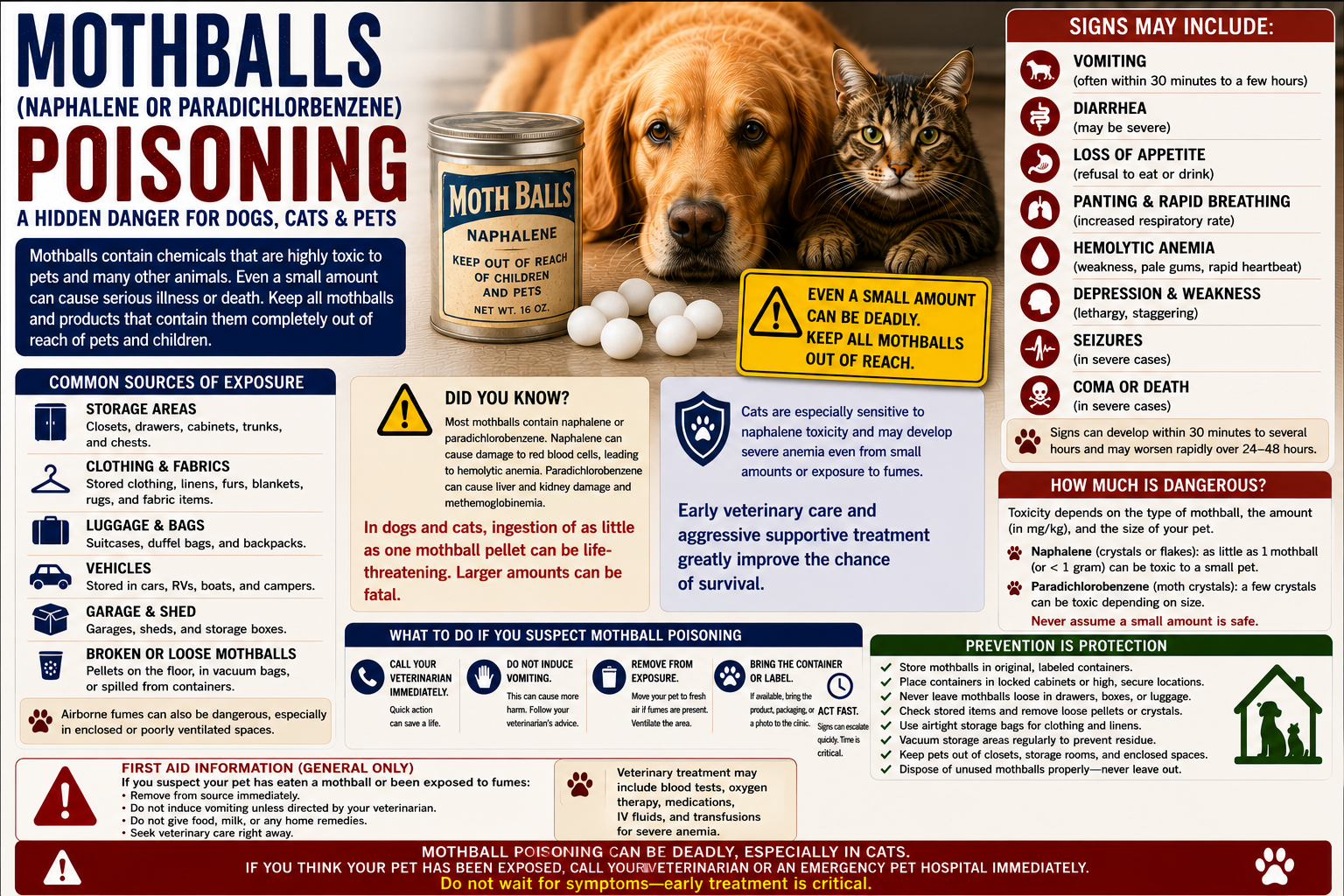
Yes. Swallowing, chewing, licking, or prolonged exposure to mothballs or concentrated mothball vapors can cause serious and sometimes life-threatening poisoning in pets. The word mothball does not identify one chemical. Products may contain naphthalene, 1,4-dichlorobenzene—also called paradichlorobenzene or p-dichlorobenzene—or, in some regions and moth-repellent products, camphor. The ingredient determines whether the dominant risks include oxidative red-blood-cell injury, methemoglobinemia, liver or kidney damage, central-nervous-system depression or seizures, respiratory irritation, or a physical gastrointestinal foreign body.
Naphthalene is especially associated with Heinz-body formation, intravascular hemolysis, anemia, pigmenturia, jaundice, methemoglobinemia, and secondary kidney injury. Paradichlorobenzene often causes gastrointestinal and neurologic signs and can injure the liver or kidneys; repeated or heavy vapor exposure may create additional neurologic risk. Camphor-containing moth repellents can produce abrupt agitation, tremors, seizures, and respiratory compromise. Packaging and the active-ingredient statement are therefore critical.
A pet may initially appear normal after swallowing a whole mothball because the solid can dissolve slowly and blood injury may develop later. Strong odor on the breath, coat, bedding, or vomit supports exposure but cannot identify the chemical reliably. A missing mothball, broken packet, contaminated garment, or animal found inside a storage chest warrants prompt veterinary assessment even before obvious signs begin.
About this guide: This page provides general pet-poisoning information and cannot diagnose or treat an individual animal. For any suspected exposure, contact a veterinarian or animal poison-control service immediately. Do not induce vomiting, give medication, or attempt home decontamination unless directed by a veterinary professional.
Agent and Exposure Profile
Quick Reference
Mothball Ingredients, Product Identity, and Hazard Differences
Mothball is a product form, not a chemical name
Mothballs, moth flakes, crystals, cakes, bars, and hanging units are pesticide products designed to release insecticidal vapor in a closed storage space. Two major active ingredients are naphthalene and 1,4-dichlorobenzene. The latter may appear on labels as paradichlorobenzene, para-dichlorobenzene, p-dichlorobenzene, p-DCB, or 1,4-DCB. Some moth-repellent tablets or imported products may use camphor. The product name, color, shape, and odor do not establish the ingredient with enough reliability for veterinary treatment.
Naphthalene mothballs
Naphthalene is a volatile polycyclic aromatic hydrocarbon. After absorption, reactive metabolites can oxidize hemoglobin and red-cell membranes. Dogs have developed Heinz-body anemia after suspected naphthalene ingestion, and toxicology evidence across species establishes the potential for hemolysis, methemoglobinemia, jaundice, pigmenturia, and kidney injury secondary to released hemoglobin. Gastrointestinal irritation, weakness, neurologic signs, and liver abnormalities may accompany the blood injury.
Naphthalene can be absorbed after ingestion and through substantial inhalational or dermal exposure. A whole ball may persist in the stomach while slowly releasing chemical. The amount of active ingredient per ball varies with size, formulation, age, and storage, so counting balls alone does not create a dependable public dose estimate.
Paradichlorobenzene or 1,4-dichlorobenzene
Paradichlorobenzene is a chlorinated aromatic compound that sublimes into vapor at room temperature. Acute ingestion can cause vomiting, abdominal discomfort, depression, incoordination, tremors, and other neurologic effects. Liver and kidney injury are important concerns, especially after a substantial or repeated exposure. Chronic human poisoning has produced severe encephalopathy, but veterinary companion-animal data are limited and should not be converted into a false species-specific safe threshold.
Paradichlorobenzene is sometimes described as less acutely hemolytic than naphthalene, but that comparison does not make it safe. Product uncertainty, mixed exposures, patient size, repeated access, and retained solid material can substantially alter risk. Management should be based on the exact label whenever possible.
Camphor-containing moth repellents
Camphor may be sold as moth-repellent tablets, blocks, or aromatic products in some markets. Camphor poisoning is typically dominated by rapid neurologic excitation, tremors, seizures, altered consciousness, and respiratory compromise. A pet exposed to an unidentified imported moth-repellent product therefore cannot be managed on the assumption that naphthalene or paradichlorobenzene is present.
Fragranced, mixed, and unlabeled products
Some products include fragrances, dyes, hangers, wrappers, hooks, plastic cages, or other ingredients. Loose balls transferred into an unmarked container create a major diagnostic problem. Do not combine packaging from several products when presenting the history. Each label, receipt, photograph, and remaining sample should be kept separate so the veterinary team can reconstruct the actual exposure.
Where Mothballs and Related Chemicals May Be Found
Closets, trunks, chests, and sealed storage containers
Mothballs are commonly placed with wool clothing, blankets, rugs, uniforms, costumes, furs, taxidermy materials, stored bedding, and seasonal textiles. Pets may enter an open cedar chest, wardrobe, garment bag, suitcase, attic bin, or under-bed box while items are being packed or unpacked. Concentrated vapor can remain trapped in fabric and enclosed spaces after the solid product has been removed.
Garages, basements, attics, sheds, and moving boxes
Older homes and storage areas may contain loose mothballs in corners, jars, paper packets, open dishes, or forgotten boxes. Dogs may eat them while exploring; cats may walk through residue and groom contaminated paws or fur. Renovation, estate cleanout, moving, and seasonal storage work can suddenly expose products that have been inaccessible for years.
Improper outdoor and wildlife-repellent use
Mothballs are sometimes scattered in gardens, crawl spaces, barns, kennels, vehicles, trash areas, feed rooms, or around wildlife burrows despite label restrictions. Open-air use can expose pets, livestock, birds, reptiles, and wildlife through ingestion, direct contact, or vapor accumulation in a confined structure. Soil, feed, bedding, and water may also become contaminated.
Toilet blocks, deodorizer cakes, and related paradichlorobenzene products
Paradichlorobenzene may be present in some restroom deodorizer blocks and trash-container deodorizers. These products are not necessarily marketed as mothballs, but the chemical hazard can overlap. A pet that chews a deodorizer cake may also ingest cleaning agents, dyes, fragrance, plastic, or contaminated water.
Imported remedies and aromatic household products
Naphthalene, camphor, and related aromatic solids may be used in traditional remedies, religious items, deodorizers, or pest-control products. The English name mothball may be applied loosely to chemically different products. Preserve labels in the original language, photographs of the package, manufacturer details, and the source country when available.
Contaminated fabrics and secondhand goods
Blankets, pet beds, costumes, rugs, furniture, luggage, and donated clothing may arrive with mothballs still inside or with heavy vapor contamination. Washing or airing may reduce odor but does not prove that every solid or residue has been removed. Inspect folds, pockets, seams, drawers, and packaging before allowing animal contact.
Mothball Exposure Scenarios and Risk Factors
Swallowing one or more intact mothballs
Dogs may swallow mothballs as small round objects, especially when the product is loose on a floor or stored with food-smelling fabrics. An intact ball can remain in the stomach and release chemical over time. The absence of immediate vomiting does not show that absorption has stopped, and delayed oxidative blood injury can occur after an apparently quiet interval.
Chewing, crushing, or licking fragments
Chewing increases surface area and can spread powder across the mouth, coat, carpet, and bedding. Other animals may then lick contaminated surfaces. Broken plastic cages, hooks, wrappers, and packet material add aspiration, oral injury, or gastrointestinal foreign-body concerns.
Enclosed-space vapor exposure
A pet confined in a closet, trunk, vehicle, crawl space, storage room, or poorly ventilated apartment can inhale concentrated vapor. Eye and airway irritation, nausea, depression, headache-like behavior, weakness, or neurologic abnormalities may occur, while repeated exposure can place the liver, kidneys, and nervous system at risk. Human safety should be considered before entering a heavily contaminated space.
Fabric, coat, paw, and skin contamination
Powder or vapor can adhere to garments, blankets, fur, paws, collars, and carriers. Cats and small mammals may ingest residue during grooming. Skin absorption is generally less predictable than direct ingestion, but prolonged contact, damaged skin, and a small patient can increase concern. Eye exposure can cause pain, tearing, and irritation.
Repeated household exposure
Repeated low-level access may be overlooked when mothballs are used openly in several rooms or replenished frequently. Recurring vomiting, anemia, Heinz bodies, pigmenturia, abnormal liver values, or neurologic episodes should prompt a detailed environmental history. Removal of one visible source is not enough if contaminated fabrics or hidden products remain.
Species and patient factors
Dogs are most likely to swallow the solid product. Cats may have substantial grooming and inhalational exposure and are generally vulnerable to oxidative red-cell injury, although direct feline mothball case data are sparse. Birds have highly efficient respiratory systems and should not be housed near pesticide vapors. Rabbits cannot vomit, and small mammals can become critically ill from a small absolute amount. Horses and livestock may encounter mothballs in feed rooms, stored blankets, barns, trailers, or improperly treated structures.
Mixed and unknown exposures
A pet may ingest mothballs together with rodenticide, medication, cleaning agents, moldy material, or foreign objects found in the same storage area. Similar signs can also arise from onions, garlic, acetaminophen, zinc, copper, propylene glycol, aniline compounds, and other oxidants. The diagnostic plan should remain broad until the ingredient and exposure are confirmed.
Mothball Poisoning Symptoms and Clinical Progression
Early gastrointestinal and behavioral signs
Initial signs can include drooling, nausea, vomiting, abdominal pain, diarrhea, reduced appetite, restlessness, depression, or unusual odor on the breath and coat. The smell may be strong after ingestion but is not a reliable way to distinguish naphthalene from paradichlorobenzene or camphor. A pet may remain outwardly normal while a swallowed ball is dissolving.
Oxidative hemolysis and Heinz-body anemia
Naphthalene metabolites can damage hemoglobin and red-cell membranes. Affected animals may develop pale gums, weakness, rapid heart rate, rapid breathing, exercise intolerance, jaundice, dark red or brown urine, and collapse. Blood smears may show Heinz bodies, eccentrocytes, bite cells, or other oxidative changes. The fall in red-cell mass can continue after the original material has left the stomach.
Methemoglobinemia and impaired oxygen delivery
Oxidized hemoglobin becomes methemoglobin and cannot carry oxygen normally. Gums and blood may appear brown, gray, blue, or muddy. The animal may breathe rapidly, seem distressed, become weak, or collapse despite receiving oxygen because the problem involves hemoglobin function as well as oxygen supply. Pulse oximetry can be misleading, and co-oximetry may be needed.
Liver, kidney, and pigment complications
Hemoglobin released during intravascular hemolysis can contribute to pigment-related kidney injury, especially with dehydration or poor perfusion. Liver injury may produce vomiting, anorexia, jaundice, abnormal enzymes, low blood sugar, impaired clotting, or encephalopathy. Paradichlorobenzene exposure may produce liver and kidney abnormalities even without the classic naphthalene hemolytic pattern.
Neurologic and respiratory signs
Depression, incoordination, tremors, abnormal behavior, stupor, seizures, or coma can occur after a substantial exposure. Camphor-containing products may cause very rapid excitation and seizures. Heavy vapor exposure can cause eye and airway irritation, coughing, breathing difficulty, weakness, and altered consciousness, particularly in enclosed spaces.
Delayed and recurrent deterioration
Hemolysis, anemia, jaundice, kidney injury, and liver abnormalities may become evident hours to days after exposure. A pet can improve after vomiting and then worsen as oxidative damage evolves. Repeated environmental exposure can trigger recurrent crises until every source is found and removed.
Foreign-body and aspiration complications
Whole mothballs, plastic holders, hooks, or wrappers can obstruct or irritate the gastrointestinal tract. Persistent vomiting, abdominal distention, pain, failure to pass stool, or repeated regurgitation may indicate a physical complication. Vomiting or impaired consciousness can also lead to aspiration pneumonia, with coughing, fever, rapid breathing, or increased respiratory effort.
First Aid for Suspected Mothball Exposure
Immediate owner actions
- Move the animal away from the source and into fresh air without entering an unsafe enclosed space.
- Prevent every other animal from accessing loose mothballs, fragments, contaminated fabric, vomit, or storage containers.
- Preserve the original package, active-ingredient statement, registration number, receipt, remaining product, and photographs.
- Record the maximum number missing, possible exposure window, route of exposure, clinical signs, and current body weight.
- Contact a veterinarian or veterinary emergency service immediately when ingestion is possible or the ingredient is unknown.
Do not induce vomiting at home
Do not give hydrogen peroxide, salt, mustard, syrup of ipecac, or attempt manual gagging. Mothball products can cause neurologic depression or seizures, increasing aspiration risk. Vomiting may also be unsafe when a pet has already vomited repeatedly, is weak, cannot swallow normally, or has inhaled concentrated vapor.
Do not give activated charcoal or oil without direction
Veterinarians may use activated charcoal in selected patients, but home administration can be aspirated and may complicate treatment. Milk, butter, cooking oil, mineral oil, or fatty food should not be given in an attempt to coat or dissolve the product; fat can increase gastrointestinal absorption of lipid-soluble chemicals.
Skin, coat, and eye contamination
Wear gloves and remove contaminated collars, bedding, or fabric. For powder on the coat, avoid creating airborne dust and obtain veterinary instructions before bathing a weak, cold, tremoring, or neurologically abnormal animal. Eyes exposed to powder or vapor can be gently flushed with clean lukewarm water while transport is arranged, provided this does not delay emergency care.
Fresh-air response to vapor exposure
Ventilate the area only when it is safe for people to do so. Do not place the animal back into the contaminated room to retrieve belongings. Birds and small mammals should be moved in their enclosure only if that can be done without spreading product or causing escape. Persistent odor on fabric warrants isolation from living areas until the source is identified and removed.
Safe transport
Keep the animal quiet and warm, minimize exertion, and use a secure carrier or restrained vehicle area. Bring the package in a sealed secondary container, but keep contaminated or strongly odorous items away from the animal and passenger compartment when possible. Call ahead for seizures, gum discoloration, dark urine, collapse, or breathing difficulty so the hospital can prepare oxygen, laboratory testing, and transfusion support.
Mothball Toxicology and Mechanism
Sublimation and continuing exposure
Naphthalene and paradichlorobenzene are volatile solids that pass directly into vapor. Their pesticide effect depends on vapor accumulation in a closed container. The same property allows exposure by inhalation and can contaminate fabrics, rooms, vehicles, or storage chests. A strong odor indicates chemical is present but does not quantify concentration or prove which active ingredient was used.
Naphthalene oxidative metabolites
Naphthalene is metabolized through reactive intermediates including naphthol and naphthoquinone pathways. These metabolites consume antioxidant defenses and oxidize hemoglobin and membrane proteins. Red cells become fragile, form Heinz bodies and eccentrocytes, and may be removed by the spleen or rupture within the circulation. Methemoglobin formation further reduces oxygen delivery.
Hemoglobin release and organ injury
Intravascular hemolysis releases free hemoglobin into plasma and urine. Pigment load, dehydration, low blood pressure, and direct toxic effects can combine to injure the kidneys. Reduced oxygen delivery stresses the brain, heart, liver, and other tissues. Bilirubin accumulation produces jaundice, while severe anemia and methemoglobinemia can become simultaneously life-threatening.
Paradichlorobenzene distribution and target organs
1,4-Dichlorobenzene is readily absorbed by inhalation and ingestion and distributes into lipid-rich tissues. Experimental and clinical evidence identifies the liver, kidneys, and nervous system as important targets. Acute pet exposures commonly present with gastrointestinal or neurologic signs, while repeated exposure raises concern for progressive hepatic, renal, and neurologic injury. Companion-animal dose-response data remain limited.
Camphor neurotoxicity
Camphor is rapidly absorbed and can cause abrupt central-nervous-system excitation. Tremors and seizures may begin before routine laboratory abnormalities develop. Because an unlabeled white aromatic tablet may be camphor rather than a conventional mothball, rapid neurologic signs should change the emergency priorities toward airway protection, seizure control, and temperature management.
Species differences and evidence boundaries
Dogs have documented oxidative anemia associated with suspected naphthalene ingestion. Cats are generally susceptible to Heinz-body injury, but controlled feline mothball data are lacking. Human case reports and laboratory-animal studies define important mechanisms but cannot supply a universal veterinary toxic dose. Product size, composition, absorption, repeated exposure, health status, and species all matter.
Why one public threshold is unsafe
Mothballs vary in weight and active ingredient, and loose products may be mislabeled or mixed. An apparently small exposure may be important in a small animal, while delayed hemolysis can occur after the initial gastrointestinal signs resolve. The absence of a precise count or label should increase caution rather than create reassurance.
Clinical Management
Veterinary Care and Prognosis
Veterinary Diagnosis and Treatment of Mothball Poisoning
Exposure reconstruction and triage
The veterinary team identifies the active ingredient, product weight, number missing, exposure window, route, and whether access was repeated. Triage focuses on airway, breathing, circulation, mental status, temperature, mucous-membrane color, pulse quality, urine color, hydration, and evidence of seizures, aspiration, anemia, or shock. Strong odor can support the history but cannot replace ingredient identification.
Laboratory evaluation
Testing may include a complete blood count, packed cell volume, reticulocyte count, blood smear for Heinz bodies and eccentrocytes, serum chemistry profile, bilirubin, liver enzymes, kidney values, electrolytes, glucose, urinalysis, blood-gas analysis, lactate, coagulation testing, and co-oximetry for methemoglobin. Serial testing is often more informative than one early normal panel because hemolysis and organ injury can evolve.
Imaging and retained material
Radiographs or ultrasound may be considered when a whole mothball, plastic cage, wrapper, or other foreign body could remain. Visibility varies with product composition and imaging technique, so a negative study may not exclude ingestion. Endoscopy may permit removal of retained gastric material in selected cases, especially when exposure is recent and the object can be retrieved safely.
Professional decontamination
Veterinary emesis may be considered only in an alert, clinically normal patient after a recent ingestion when the airway is protected and seizures or aspiration are not expected. Activated charcoal may be used in selected cases, with hydration and airway risks carefully assessed. Gastric lavage is reserved for specific circumstances under protected-airway anesthesia. There is no role for home neutralization or fat-containing remedies.
Oxygen delivery and transfusion support
Supplemental oxygen supports hemoglobin that remains functional but does not directly reverse methemoglobin. Severe anemia, ongoing hemolysis, tissue hypoxia, or cardiovascular instability may require packed red cells or whole blood. Blood typing and crossmatching, serial hematocrit measurements, smear review, bilirubin, and urine monitoring guide support.
Methemoglobinemia and antioxidant therapy
Methylene blue may be considered for clinically important methemoglobinemia in some dogs, but it requires exact dosing and can itself worsen oxidative injury if used inappropriately. Species, red-cell status, exposure chemistry, and available monitoring matter. Other antioxidant or hepatoprotective treatments may be selected case by case, but none substitute for source removal, oxygen support, transfusion when needed, and serial monitoring.
Fluids, kidneys, liver, and circulation
Intravenous crystalloids may correct dehydration, support perfusion, and reduce pigment-related kidney risk. Fluid plans must be adjusted to urine output, cardiovascular status, anemia, and renal function. Persistent hypotension after appropriate volume resuscitation may require vasopressor support. Hepatic injury may require glucose support, antiemetics, nutritional planning, coagulation assessment, and plasma-containing products when clinically indicated.
Neurologic, respiratory, and temperature management
Tremors and seizures require rapid control with veterinary anticonvulsants and active temperature monitoring. Depressed patients may need airway protection and ventilation. Aspiration pneumonia, vapor-related respiratory irritation, or pulmonary complications require oxygen, imaging, and supportive respiratory care. Camphor-type products may demand especially aggressive early seizure control.
Environmental investigation
Recurrent or unexplained oxidative hemolysis requires investigation of the home, storage areas, fabrics, imported products, deodorizers, and other oxidants. Discharge before the source is removed can lead to relapse. The veterinary record should identify which ingredient was confirmed and which hazards remain uncertain.
Mothball Poisoning Prognosis, Recovery, and Follow-Up
Early recognition improves the outlook
Prognosis is often favorable when exposure is identified promptly, retained material is removed or decontaminated safely, and the patient has no major hemolysis, methemoglobinemia, liver injury, kidney injury, seizures, aspiration, or shock. Product identification improves treatment planning and prevents unnecessary assumptions.
Guarded and poor-prognosis findings
The outlook becomes more guarded with severe or progressive anemia, high methemoglobin burden, persistent pigmenturia, acute kidney injury, hepatic failure, coagulopathy, recurrent seizures, coma, aspiration pneumonia, hypotension, or an unknown mixed product. Delayed presentation and continued environmental exposure also worsen risk.
Delayed anemia and organ injury
A stable early blood count does not end monitoring. Red-cell destruction, bilirubin elevation, kidney injury, or liver abnormalities may appear later. Hospitalization or scheduled rechecks may include serial complete blood counts, smears, chemistry profiles, urinalysis, oxygenation assessment, and coagulation testing based on the ingredient and clinical course.
Recovery after transfusion or intensive care
Transfusion can restore oxygen-carrying capacity while the body replaces damaged red cells, but it does not stop ongoing toxin absorption or environmental re-exposure. Some patients require more than one transfusion or prolonged renal, hepatic, respiratory, or neurologic support. Appetite, urine color, activity, and breathing should be monitored closely after discharge.
Return precautions
Owners should return immediately for weakness, pale or discolored gums, jaundice, dark urine, vomiting, reduced appetite, reduced urination, tremors, seizures, coughing, breathing difficulty, collapse, or any decline after initial improvement. Keep all recheck appointments even when the animal appears normal.
Long-term environmental prevention
Recovery is incomplete as a prevention plan until every mothball, hidden packet, contaminated storage container, and heavily treated fabric has been addressed. Recurrent odor or clinical signs should trigger reinspection rather than assumption that the first exposure is still resolving.
Preventing Mothball Poisoning in Pets
Use only according to the pesticide label
Mothballs are pesticide products, not general-purpose animal, snake, rodent, or odor repellents. Use them only in the locations and sealed storage systems allowed by the label. Open placement in rooms, closets, gardens, crawl spaces, kennels, barns, vehicles, or attics can expose animals and people to vapor and direct ingestion.
Keep the original container and ingredient label
Never transfer loose mothballs into food jars, bowls, unlabeled bags, or decorative containers. Keep the product name, active ingredient, concentration, registration number, and directions available. Do not mix naphthalene and paradichlorobenzene products in the same storage container.
Create a pet-free packing and unpacking area
Count mothballs before and after use, close the room to pets, and inspect the floor, fabric folds, pockets, drawers, and box seams. Vacuum or clean residue according to label and local disposal guidance. Do not allow a pet to investigate stored clothing until all solid product has been removed and the items have been aired or cleaned appropriately.
Secure garages, attics, sheds, and estate-storage areas
Use rigid, latched storage inaccessible to pets. During moving, renovation, estate cleanout, or seasonal changeover, assume old boxes may contain loose products. Separate animals from the work area until every container and spill has been checked.
Protect birds, small mammals, and enclosed habitats
Do not use mothballs near bird rooms, cages, aquariums, reptile enclosures, rabbit housing, or small-animal habitats. Vapors can concentrate in enclosed rooms and may be difficult to detect accurately by smell alone. Ventilation does not make off-label open use acceptable.
Use safer fabric-pest management
Wash or dry-clean susceptible textiles, vacuum closets and storage areas, remove lint and animal hair, use clean airtight containers, freeze suitable items when appropriate, and inspect for larvae before storage. Professional pest-management advice can address an established infestation without scattering volatile pesticide products through animal living spaces.
Dispose of products responsibly
Follow the product label and local household-hazardous-waste rules. Do not place loose mothballs in open trash, compost, yard waste, toilets, drains, or outdoor animal areas. Damaged or unlabeled products should be isolated from pets and handled through local waste guidance rather than experimentally identified at home.
Mothball Poisoning FAQ
Are all mothballs made from naphthalene?
No. Products may contain naphthalene or 1,4-dichlorobenzene, and some moth-repellent tablets may contain camphor. The ingredient changes the expected toxic syndrome and treatment priorities, so preserve the original label.
Can the smell identify which chemical is present?
No. Odor descriptions overlap and people perceive them differently. Color, shape, and household float tests are also unreliable or unsafe. Use the package, manufacturer information, or professional analytical identification.
Is one mothball dangerous to a dog?
It can be, especially for a small dog, an unknown formulation, or a product retained in the stomach. Ball size and chemical content vary, and delayed hemolysis may occur. One-count rules should not replace veterinary assessment.
My dog vomited the mothball. Is the danger over?
No. Some chemical may already have dissolved or been absorbed, fragments may remain, and vomiting can lead to aspiration. Preserve the recovered material and obtain veterinary guidance about delayed blood and organ monitoring.
Can a pet be poisoned just by smelling mothballs?
Brief odor detection in an open area is different from confinement with concentrated vapor, but inhalation can become clinically important in enclosed spaces or repeated exposure. Move the animal to fresh air and seek advice for symptoms or heavy exposure.
Why can anemia be delayed?
Reactive naphthalene metabolites progressively damage hemoglobin and red-cell membranes. The animal may look normal before enough cells have been destroyed to cause weakness, jaundice, pigmenturia, or a measurable fall in hematocrit.
What do brown or blue gums mean?
They may indicate methemoglobinemia and impaired oxygen transport. This is an emergency. Oxygen can support remaining functional hemoglobin but does not by itself reverse the abnormal pigment.
Why can the urine become dark red or brown?
Intravascular hemolysis can release hemoglobin into the urine. Pigmenturia signals significant red-cell injury and may contribute to kidney damage, especially when the patient is dehydrated or hypotensive.
Are cats more sensitive than dogs?
Cats are generally prone to oxidative red-cell injury and may ingest residue while grooming, but direct feline mothball dose data are limited. Credible exposure should be treated seriously rather than declared safe from the absence of published cases.
What if my pet licked clothing stored with mothballs?
Remove the fabric, prevent grooming, preserve the product information, and contact a veterinarian. Risk depends on residue, duration, ingredient, and the animal's size and signs. Heavy odor or visible powder increases concern.
Should I give milk or oil to dilute the mothball?
No. Fat can increase absorption of lipid-soluble chemicals, and forced liquids can be aspirated. Do not give food or home remedies unless the treating veterinarian gives a product-specific instruction.
Should I induce vomiting with hydrogen peroxide?
No. Neurologic effects, seizures, repeated vomiting, and aspiration risk can make home emesis dangerous. A veterinarian decides whether professional decontamination is appropriate based on timing and patient status.
Does activated charcoal work for mothballs?
Veterinarians may use it in selected cases, but it is not a home treatment. Airway protection, hydration, timing, ingredient, and the possibility of seizures or aspiration all affect the decision.
Can an X-ray prove that no mothball was swallowed?
Not always. Visibility varies by formulation, size, and imaging conditions. Imaging can identify some retained objects or complications, but a negative radiograph does not automatically exclude exposure.
Why might a dog need a blood transfusion?
Severe oxidative hemolysis can destroy enough red cells to compromise oxygen delivery. Transfusion replaces functional red cells while the toxin is cleared and the patient's marrow produces replacements.
Is methylene blue an antidote I can keep at home?
No. It requires precise veterinary dosing and monitoring and can worsen oxidative injury when used incorrectly. Species, degree of methemoglobinemia, anemia, and exposure chemistry must be considered.
Can mothballs cause chronic neurologic disease?
Heavy or repeated paradichlorobenzene exposure has caused serious chronic neurotoxicity in people, and animal toxicology identifies the nervous system as a concern. Veterinary evidence is limited, but repeated exposure should not be dismissed when neurologic signs recur.
What should I do if several pets had access?
Separate them, count every remaining ball and fragment, record each animal's weight and signs, and report the maximum possible exposure for each. Do not divide the missing amount evenly; one animal may have consumed most of it.