Nicotine, Tobacco, Vape, and E-Liquid Poisoning
Are Nicotine Products Poisonous to Dogs, Cats, Birds, and Other Animals?
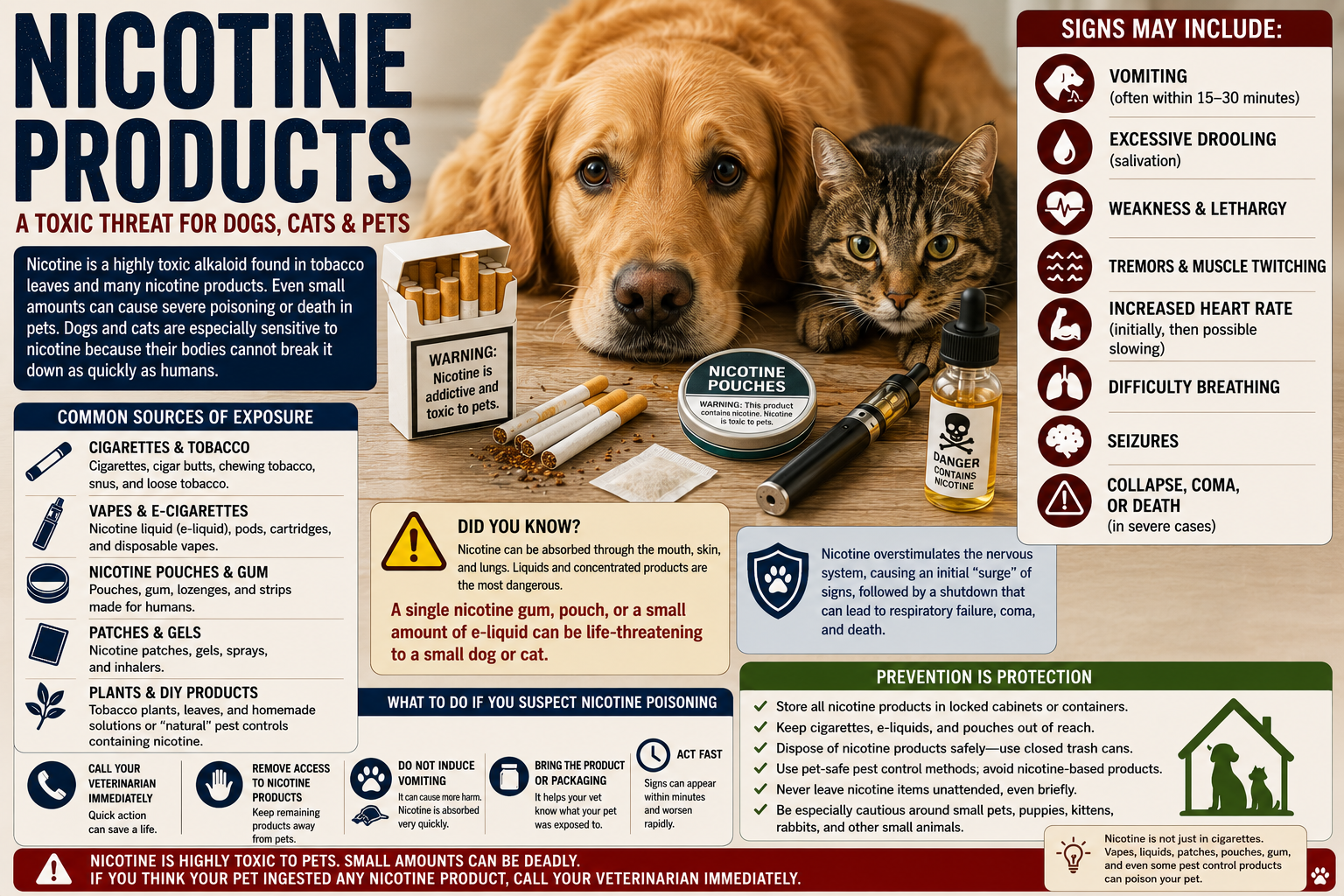
Yes. Cigarettes, cigarette butts, cigars, cigarillos, loose tobacco, chewing tobacco, nicotine pouches, nicotine gum, lozenges, patches, e-cigarettes, vape cartridges, disposable vapes, refill bottles, and nicotine-containing pod systems can all poison animals. Nicotine acts quickly on autonomic ganglia, the brain, the neuromuscular junction, and the cardiovascular system. Early stimulation can cause drooling, vomiting, agitation, tremors, tachycardia, hypertension, and abnormal pupils; more severe poisoning can progress to weakness, bradycardia, respiratory failure, seizures, collapse, and death.
Dogs are exposed most often because many nicotine products are flavored, scented, wrapped in attractive packaging, or dropped in accessible places. Cats, birds, rabbits, ferrets, horses, and livestock can also be poisoned. E-liquids and nicotine salts are especially concerning because a small volume can contain a large amount of nicotine, and products marketed as mint, candy, fruit, dessert, or unflavored may all be dangerous. Used cartridges and discarded cigarette butts still contain clinically relevant nicotine.
Some nicotine-product emergencies involve more than nicotine alone. Vape devices and e-cigarettes may contain lithium batteries, heated metal parts, essential flavor chemicals, tetrahydrocannabinol, caffeine, or sweeteners. Nicotine gum may contain xylitol, and chewing tobacco or snus may contain other toxic additives. A pet that chews a device can suffer nicotine poisoning, a foreign-body obstruction, or battery-related oral and gastrointestinal injury at the same time.
About this guide: This page provides general pet-poisoning information and cannot diagnose or treat an individual animal. For any suspected exposure, contact a veterinarian or animal poison-control service immediately. Do not induce vomiting, give medication, or attempt home decontamination unless directed by a veterinary professional.
Agent and Exposure Profile
Quick Reference
Nicotine Product Types and Toxic Components
Cigarettes, Cigars, and Loose Tobacco
Conventional cigarettes, little cigars, cigarillos, pipe tobacco, rolling tobacco, and cigar tobacco contain nicotine in shredded leaf form, blended filler, or concentrated residue. Filters and butts still retain nicotine after smoking and can also create foreign-body or gastrointestinal irritation problems. A dog may consume tobacco directly, swallow cigarette butts from the ground, or tear open packs left in bags, vehicles, or ashtrays.
Smokeless Tobacco and Nicotine Pouches
Chewing tobacco, moist snuff, snus, dissolvable tobacco, and tobacco-free nicotine pouches may deliver nicotine through the oral mucosa. Many are flavored with mint, fruit, cinnamon, coffee, wintergreen, or sweeteners that increase palatability. The total nicotine content per pouch or portion can be substantial, and used products are not harmless.
E-Cigarettes, Vape Pods, and Disposable Vapes
E-cigarettes and disposable vapes may contain free-base nicotine or nicotine salts dissolved in propylene glycol, vegetable glycerin, flavoring chemicals, acids, and other additives. Pod-based systems, refill bottles, and disposable devices vary enormously in nicotine concentration. A ruptured pod or bottle can deliver liquid nicotine rapidly by ingestion or mucosal exposure.
Nicotine Gum, Lozenges, and Oral Replacement Products
Human smoking-cessation products may contain nicotine plus sugar alcohols, sweeteners, flavor chemicals, and other excipients. Nicotine gum can create a double toxicology problem because some brands contain xylitol. Lozenges and mini-lozenges dissolve quickly and may expose the entire mouth and stomach.
Patches, Sprays, and Inhalers
Transdermal patches are designed for sustained nicotine delivery and can remain potent after use. A pet may chew a patch, swallow it whole, or receive dermal exposure. Nicotine oral sprays, nasal sprays, inhalers, and refill cartridges can deliver a concentrated dose if misused or spilled.
Vape Hardware and Battery Injury
A chewed vape pen or disposable device may release lithium battery material, cause electrical or thermal injury, and scatter sharp plastic or metal fragments. This is a separate emergency from nicotine poisoning. Oral burns, tongue injury, esophageal damage, and gastrointestinal perforation can occur when a battery leaks or ruptures.
Flavors and Co-Ingredients
Nicotine products can contain menthol, mint oils, sweet flavors, caffeine, cannabidiol or tetrahydrocannabinol products, xylitol, and other compounds. The label may not fully describe black-market or imported formulations. Treat every unknown nicotine product as a mixed-exposure possibility until proven otherwise.
Where Nicotine Exposure May Occur
Homes, Cars, and Personal Bags
Pets commonly find nicotine products in purses, backpacks, coat pockets, bedside tables, cup holders, counters, junk drawers, glove boxes, and overnight bags. Disposable vapes and pod devices are often small enough to disappear into couch cushions or under furniture, where a dog later chews them. Children and visitors may also leave products within reach.
Ashtrays, Sidewalks, and Outdoor Gathering Areas
Cigarette butts on porches, patios, parking lots, sidewalks, beaches, playground edges, outdoor restaurant seating, and apartment common areas are a major exposure source. Dogs may swallow butts during walks before the owner notices. Public ashtrays and fire pits are especially risky after parties or events.
Trash, Laundry, and Bedding
Used patches, gum, pouches, cartridge wrappers, refill bottles, and empty packs are often thrown in open trash cans or left in laundry, bedding, or couch creases. A patch stuck to clothing or bedding can expose a grooming animal. Used products should be treated as poisonous waste, not harmless leftovers.
Workplaces, Retail Stock, and Delivery Packages
Convenience stores, vape shops, gas stations, warehouse inventory, shipping boxes, and mail-order deliveries can expose pets when products are left on counters or opened near them. Refill bottles and bulk pouch containers can contain much more nicotine than a typical cigarette pack.
Stables, Barns, and Farms
Horse owners, farm workers, and visitors may leave tobacco tins, cigarette packs, or vape devices in tack rooms, trucks, tractors, haylofts, or barns. Dogs on farms may consume discarded products, and grazing animals or birds may investigate littered materials around feeding areas and parking zones.
Improvised or Illicit Products
Homemade e-liquids, unlabeled refill solutions, imported products, and illicit cartridges may contain unpredictable nicotine concentrations and additional toxicants. The actual exposure can be much greater than the packaging suggests, and laboratory confirmation may be difficult.
Exposure Scenarios and Risk Factors
Common Companion-Animal Scenarios
- A dog eats a pack of cigarettes, several cigarette butts, or loose tobacco from a purse or ashtray.
- A puppy punctures a vape pod, disposable vape, or refill bottle and swallows nicotine liquid.
- A pet chews nicotine gum, lozenges, pouches, or a used nicotine patch.
- A cat or dog licks the owner's skin after handling nicotine liquid or wearing a patch.
- A dog chews a vape device and suffers both nicotine exposure and battery-related oral injury.
- Several pets share access to the same product and the actual consumer is unknown.
- An animal ingests a mixed product containing nicotine plus cannabis, xylitol, caffeine, or another drug.
Concentrated Liquid and Nicotine-Salt Products
Liquid nicotine and nicotine-salt pods may contain high nicotine concentrations in a small volume. A small leak or swallowed pod can deliver a dangerous amount quickly, especially to toy dogs, puppies, kittens, birds, rabbits, and ferrets. The exact concentration in milligrams per milliliter or per pod matters more than the size of the device.
Rapid Absorption
Nicotine can be absorbed through the mouth, stomach, intestine, lungs, and skin. Vomiting does not guarantee safety because part of the dose may already be absorbed. Delayed discovery is common with butts, used patches, and missing pods.
Small Body Size and Young Animals
Toy breeds, puppies, kittens, pocket pets, and birds receive a larger dose per unit body weight. Their small size also makes device fragments, plastic caps, foil pouches, and used filters more likely to cause obstruction or aspiration. Birds may develop severe signs after seemingly trivial exposure.
Co-Ingredients and Packaging
Xylitol in gum, caffeine in stimulant pouches, cannabis in vape products, and lithium batteries in devices can shift the emergency dramatically. A product with low nicotine can still be serious if it causes corrosive battery injury or contains xylitol. Always report both the nicotine source and every other identified ingredient.
Repeated or Ongoing Access
A pet may continue finding cigarette butts in the same yard or repeatedly access a refill bottle, trash can, or nicotine-pouch container. Owners should report every possible event rather than assuming there was only one dose. Recurrent unexplained vomiting or agitation can reflect repeated access to a nicotine source that has not been removed.
Nicotine Poisoning Symptoms and Clinical Progression
Early Stimulatory Signs
Nicotinic receptor stimulation often begins with drooling, vomiting, retching, diarrhea, agitation, vocalization, hyperactivity, panting, tachycardia, hypertension, tremors, and dilated pupils. Some animals become markedly excitable or hypersensitive to touch and sound. Vomiting may begin quickly, but the animal can still worsen as absorption continues.
Progression to Weakness and Depression
As receptor overstimulation progresses to depolarization blockade, affected animals may develop weakness, stumbling, depressed mentation, muscle fasciculations, bradycardia, respiratory weakness, and collapse. The transition from stimulation to depression can be abrupt. A pet that seemed overly excited can later become dangerously weak or unresponsive.
Seizures and Respiratory Failure
Severe poisoning can cause seizures, paralysis, cyanosis, profound hypotension or cardiovascular instability, and respiratory failure. Death is usually related to respiratory compromise, uncontrolled seizures, severe arrhythmia, or mixed-exposure complications.
Gastrointestinal and Oral Injury
Tobacco itself can irritate the stomach, and patch adhesive, gum base, pouch material, or device fragments can worsen vomiting and abdominal discomfort. Chewed vape devices or batteries may cause oral burns, hypersalivation, difficulty swallowing, tongue pain, and delayed esophageal or gastric injury. Persistent vomiting after the stimulatory phase may reflect both nicotine and foreign-body or corrosive injury.
Secondary and Mixed Syndromes
Hypoglycemia may indicate xylitol; sedation or ataxia may reflect cannabis; tachyarrhythmia may be amplified by caffeine; oral burns and black debris can indicate battery damage. A normal neurologic examination early after exposure does not exclude later deterioration because co-ingredients and delayed complications may evolve after the first nicotine signs appear.
Species Differences
Dogs represent the largest number of reported cases, but cats, birds, horses, and other animals can be affected. Birds may show weakness, respiratory compromise, or sudden deterioration quickly because of their small size and high metabolic rate. Grazing animals and livestock are less common patients but can be exposed through litter, feed contamination, or human carelessness around barns and work areas.
First Aid for Suspected Nicotine Exposure
Immediate Owner Actions
- Remove every nicotine source, including cigarettes, butts, pouches, gum, patches, pods, refill bottles, and damaged devices.
- Preserve the original product, nicotine concentration, pod count, cigarette count, patch strength, gum strength, and all packaging.
- Identify xylitol, cannabis, caffeine, menthol, battery damage, or other co-ingredients and report them clearly.
- Record the maximum amount missing, earliest and latest exposure time, current signs, and the animal's weight.
- Separate all pets that may have shared access and evaluate each one individually.
- Contact a veterinarian immediately instead of waiting for signs to progress.
Do Not Induce Vomiting Without Veterinary Direction
Do not give hydrogen peroxide, salt, mustard, syrup of ipecac, or attempt manual gagging. Nicotine can cause rapid neurologic and respiratory deterioration, making aspiration more likely. Device fragments, batteries, sharp plastic, and mixed products can make vomiting particularly unsafe.
Do Not Give Activated Charcoal at Home
Activated charcoal may be used professionally in selected cases, but it is not a safe home treatment for a vomiting, trembling, weak, or seizuring animal. It can be aspirated and does not address battery burns, foreign bodies, or mixed exposures on its own.
Battery and Device Injury Precautions
If the product was a chewed vape pen, pod, or disposable device, look for oral pain, black residue, drooling, tongue injury, or burned tissue. Do not try to neutralize chemical exposure with vinegar, baking soda, or household products. Bring device fragments and call ahead so the clinic can prepare for possible corrosive or foreign-body injury.
Topical and Skin Contact
If nicotine liquid or patch adhesive contaminated the fur or skin, prevent grooming and contact the veterinarian for bathing instructions. Do not use solvents, alcohol, bleach, or harsh detergents. Controlled washing with a mild cleanser may be recommended depending on the product and patient.
Safe Transport
Keep the animal quiet and cool, transport in a secure carrier or restrained area, and avoid excessive stimulation. Call ahead for tremors, seizures, collapse, respiratory difficulty, severe depression, or a device exposure involving a lithium battery.
Nicotine Toxicology and Mechanism
Nicotinic Acetylcholine Receptor Agonism
Nicotine is an agonist at nicotinic acetylcholine receptors in autonomic ganglia, the adrenal medulla, neuromuscular junctions, and the central nervous system. Low-to-moderate exposure causes stimulation with catecholamine release and autonomic activation. Higher or sustained exposure causes depolarization blockade, weakness, and paralysis.
Biphasic Clinical Pattern
The classic nicotine syndrome is biphasic. Early stimulatory signs arise first, then depression and neuromuscular failure may follow as receptors become desensitized and functionally blocked. The timing varies with product type, route, amount, and whether the nicotine was swallowed in liquid, plant, gum, pouch, patch, or aerosol form.
Rapid Absorption and Variable Delivery
Nicotine is absorbed readily across mucous membranes, the gastrointestinal tract, lungs, and skin. E-liquids, nicotine salts, and replacement products are designed to enhance delivery. Product formulation, pH, flavoring chemistry, and carrier solvents can alter absorption speed and palatability.
Why Used Products Still Matter
Smoked cigarette butts, used pouches, used gum, and spent patches often retain enough nicotine to poison small animals. Owners may underestimate these products because the main nicotine dose was already used by the person. Used products also tend to be found in ashtrays, sidewalks, trash, and bedding where pets have easy access.
Mixed Nicotine and Device Hazards
Chewed pods, refill bottles, and vape devices create overlapping mechanisms: nicotine poisoning, solvent exposure, oral irritation, aspiration, foreign-body obstruction, and battery injury. Propylene glycol and vegetable glycerin are usually less important than nicotine in acute poisoning, but the overall device exposure is more complex than a swallowed cigarette.
Bird and Exotic-Species Concerns
Small birds and exotic pets have very little margin for error because a small mass of nicotine product can deliver a large dose relative to body weight. Aerosolized exposure and direct ingestion both deserve attention in these species. Published case detail is limited compared with dogs, so treatment relies heavily on toxicologic principles and early stabilization.
Why a Universal Public Toxic Threshold Is Misleading
Cigarettes, butts, pouches, gum, patches, e-liquids, nicotine-salt pods, and devices differ in concentration, residual nicotine, route, and co-ingredients. A fixed number of cigarettes or milliliters does not predict the same risk for every animal. Public dose rules can create false reassurance when the product, amount, or concentration is uncertain.
Evidence Boundaries
Veterinary evidence includes retrospective poison-center studies, case series, case reports, and broad toxicology reviews. Modern high-concentration pod systems and illicit devices change the exposure landscape faster than the formal literature can fully capture. Product-specific evaluation therefore remains essential even when general nicotine toxicology is well understood.
Clinical Management
Veterinary Care and Prognosis
Veterinary Diagnosis and Treatment
Exposure Reconstruction
The veterinary team identifies the exact product, concentration, units missing, route of exposure, exposure time, body weight, current signs, co-ingredients, and whether a device or battery was chewed. Labels on e-liquids and pods may state nicotine concentration per milliliter, per pod, or as a percentage. Foreign material, battery fragments, and packaging are assessed separately from the nicotine dose.
Initial Stabilization
Airway, breathing, circulation, temperature, neurologic status, mucous-membrane color, oral injury, hydration, blood pressure, and cardiac rhythm are evaluated first. Severe tremors, seizures, respiratory distress, collapse, or corrosive injury may require immediate stabilization before decontamination decisions are made.
Diagnostic Testing
Testing may include blood glucose, electrolytes, acid-base status, lactate, blood-gas analysis, complete blood count, serum chemistry, electrocardiography, blood pressure, and imaging when a foreign body or battery injury is suspected. Specific nicotine or cotinine testing may confirm exposure in some settings but is not required before treatment begins.
Professional Decontamination
Veterinary-induced emesis may be considered after a recent ingestion in a clinically normal patient when the product and airway make it safe. Activated charcoal may be used selectively for ingested nicotine or tobacco products, but it is not a substitute for airway protection, seizure control, or device-injury management. Bathing may be required after dermal contamination or patch exposure.
Cardiovascular and Neurologic Support
Agitation, tremors, seizures, bradycardia, tachycardia, hypertension, hypotension, and respiratory weakness are treated according to the dominant syndrome. Oxygen, airway protection, anticonvulsants, temperature control, intravenous crystalloids, and targeted cardiovascular support may all be required. Continuous electrocardiographic monitoring is prudent in symptomatic patients.
Gastrointestinal and Oral-Injury Care
Antiemetics, oral-pain management, protectants, and nutritional planning may be needed when vomiting or battery-related injury is present. Endoscopy or surgery may be necessary for retained patches, plastic devices, batteries, filters, or sharp fragments. Oral or esophageal burns can worsen after the initial presentation and may require serial rechecks.
Mixed-Exposure Management
Xylitol, cannabis, caffeine, and corrosive battery material each require their own treatment plan. A patient that chewed nicotine gum with xylitol or a cannabis vape with a lithium battery does not have a single-mechanism poisoning. The veterinarian must prioritize the most immediately dangerous components while monitoring for delayed complications from the others.
Monitoring and Prognosis-Directed Care
Many mildly affected animals recover with early decontamination and supportive care, but severe poisoning can deteriorate quickly. Observation duration depends on the product, concentration, dose estimate, clinical signs, co-ingredients, and device damage. Public drug doses are intentionally omitted because the correct care plan is product- and patient-specific.
Prognosis, Recovery, and Follow-Up
Promptly Treated Cases Often Recover
When nicotine exposure is recognized early, the product is identified quickly, and significant respiratory or neurologic compromise has not yet developed, prognosis is often favorable. Many animals improve within hours once absorption stops and supportive care controls vomiting, tremors, and cardiovascular instability.
Guarded Situations
The prognosis becomes more guarded with concentrated e-liquid exposure, nicotine-salt pods, multiple products, unknown concentrations, delayed treatment, seizures, respiratory failure, severe bradycardia, battery injury, or co-ingestants such as xylitol or cannabis. Birds and very small mammals may deteriorate rapidly because of their size.
Device and Battery Injury Can Outlast Nicotine Signs
Even when the nicotine syndrome improves, oral burns, esophageal injury, gastric ulceration, perforation, or retained foreign material may still require treatment. Persistent drooling, dysphagia, vomiting, abdominal pain, or reduced appetite after apparent neurologic recovery should not be dismissed.
After Discharge
Follow all medication, feeding, activity, and recheck instructions. Return promptly for renewed vomiting, tremors, weakness, respiratory difficulty, refusal to eat, oral pain, drooling, black stool, abdominal pain, collapse, or any sign suggesting that a device fragment or battery injury was overlooked initially.
Preventing Nicotine Poisoning
Store All Nicotine Products Like Medication
Keep cigarettes, cigars, pouches, gum, lozenges, patches, pods, refill bottles, and disposable devices in closed upper cabinets or secure containers. Child-resistant packaging is not pet resistant. Purse pockets, counters, and cup holders are common failure points.
Control Waste and Outdoor Litter
Use closed trash containers, pocket ashtrays, and secure outdoor receptacles. Pick up cigarette butts from sidewalks, porches, yards, and parking areas before allowing pets loose in those spaces. Used patches, pods, and pouches should be wrapped and discarded where pets cannot reach them.
Protect Pets from Vapes and Refill Bottles
Do not leave pod systems charging on low tables, couches, or bedside stands. Store refill bottles upright and capped, and clean leaks immediately. Keep pets away while handling nicotine liquid or changing pods because small spills can matter.
Prevent Gum, Patch, and Pouch Access
Do not leave gum in purses or on nightstands, and do not stick a used patch on furniture, counters, or bedding before disposal. Secure nicotine-pouch cans after every use. A used product should be treated as toxic waste, not as something that has already been emptied.
Plan for Multi-Pet, Child, and Visitor Homes
Ask guests, house sitters, teens, and workers to keep nicotine products secured. Multi-pet households should check floors, car seats, sofa cushions, and yard areas regularly because one dropped item can expose more than one animal.
Facility and Barn Procedures
Boarding facilities, rescues, barns, and farms should prohibit nicotine litter in animal areas, provide secure disposal containers, and require staff to report dropped products immediately. Dogs that accompany owners to smoking or vaping areas need direct supervision, especially around cigarette-butt litter and discarded pods.
Nicotine Products FAQ
Are cigarette butts still poisonous to dogs?
Yes. Used butts still contain nicotine and can poison small and medium dogs, especially if several are swallowed. They can also act as gastrointestinal irritants or foreign material.
Are vape pods more dangerous than cigarettes?
They can be. Many pods and refill solutions contain concentrated nicotine in a small volume, which can be delivered rapidly if the pod ruptures or the liquid is swallowed. The answer depends on the exact nicotine concentration and amount.
Can nicotine gum poison a dog even if only one piece is missing?
Yes, especially in small dogs. Nicotine gum may also contain xylitol, so one piece can represent a mixed emergency rather than nicotine alone.
Are nicotine pouches or tobacco-free pouches safer than chewing tobacco?
No. A tobacco-free pouch can still contain a substantial nicotine load and other additives. The absence of tobacco leaf does not make it pet safe.
What if my pet chewed a vape pen but I do not know whether liquid was inside?
Treat it as an emergency. Nicotine residue, battery leakage, plastic fragments, and sharp parts can all injure the animal. Preserve the device and seek veterinary care even if the pod seemed empty.
Can nicotine patches still be dangerous after they were already worn?
Yes. Used patches often retain enough nicotine to poison an animal, and a swallowed patch can continue releasing nicotine while also acting as a foreign body.
Why can a pet go from hyperactive to weak so quickly?
Nicotine causes a biphasic syndrome: early receptor stimulation followed by depolarization blockade and neuromuscular failure. An excited animal can later become depressed, weak, or unable to breathe normally.
Can cats be poisoned by nicotine products?
Yes. Cats are exposed less often than dogs, but they can be poisoned by cigarettes, pouches, gum, e-liquid, and especially by grooming contaminated fur or contacting residues on bedding or human skin.
Are flavored vapes more attractive to pets?
Yes, they may be. Sweet, mint, dessert, and fruit flavors can make pods and disposable vapes more interesting to curious pets, particularly dogs.
What if my dog vomited up the cigarette or gum?
Do not assume the danger is over. Some nicotine may already have been absorbed, and hidden pieces, packaging, xylitol, or device fragments may remain. Preserve the information and continue with veterinary assessment.
Can nicotine poisoning happen through the skin?
Yes. Nicotine liquid and transdermal patches can be absorbed through the skin, and contaminated fur can become a secondary ingestion source during grooming.
Do birds and small pets need emergency care for very small exposures?
Yes. Birds, rabbits, ferrets, and other small animals have very little margin for error. What looks like a tiny amount to a person may represent a major exposure relative to body weight.
What else should I worry about besides nicotine?
Xylitol in gum, cannabis in vape products, caffeine in stimulant pouches, and lithium batteries in devices are all important. Packaging and fragments can also cause obstruction or oral injury.
Can nicotine products cause seizures?
Yes. Severe nicotine poisoning can cause tremors, seizures, respiratory failure, and collapse. Seizures indicate a serious emergency requiring immediate veterinary care.
Are nicotine-free vapes harmless?
No. A product labeled nicotine free can still contain other toxic or irritating compounds, and the device itself can cause battery injury or foreign-body problems if chewed.
What if several pets were in the room with one missing vape pod?
Do not divide the dose estimate evenly. Separate the animals, record each weight and signs, preserve the packaging, and report the maximum possible exposure for each pet because one animal may have swallowed the entire pod.
How should I dispose of nicotine products safely around pets?
Use a sealed trash container or outdoor receptacle that animals cannot access. Wrap used patches, pods, pouches, and gum securely, and clean cigarette-butt litter promptly from all pet-accessible areas.
When is a nicotine exposure most dangerous?
Concentrated e-liquids, nicotine-salt pods, multiple cigarettes or butts, used patches, small pets, and any exposure involving a chewed device or battery are especially concerning. Unknown concentration or mixed ingredients should also be treated as high risk.