Permethrin, Pyrethroid Flea Products, Tremors, Seizures, and Feline Neurotoxicity
Are Permethrin and Pyrethroid Flea Products Poisonous to Cats?
Yes. Dog-only flea and tick products containing concentrated permethrin or related pyrethroids can cause severe, prolonged, and sometimes fatal poisoning in cats. The most common emergency occurs when a canine spot-on product is mistakenly applied directly to a cat, but poisoning can also follow grooming, rubbing against, or sleeping with a recently treated dog. Signs may include ear and facial twitching, skin rippling, hypersalivation, agitation, marked tremors, stumbling, seizures, hyperthermia, weakness, respiratory compromise, aspiration, coma, and death.
Permethrin is a synthetic pyrethroid insecticide. Other pyrethroids and pyrethrins appear in flea products, sprays, shampoos, powders, collars, premise treatments, garden products, and household insecticides. Product safety cannot be inferred from the front-label brand name, package color, or the word "natural." The exact active ingredient, concentration, intended species, dose size, and route of exposure determine risk.
Published feline case series consistently identify direct application of dog-labeled spot-ons as the leading cause, while secondary exposure from recently treated dogs is also well documented. Most cats survive with prompt decontamination, aggressive tremor and seizure control, temperature management, fluids, nutrition, and critical-care monitoring, but hospitalization may last several days and fatalities still occur.
About this guide: This page provides general pet-poisoning information and cannot diagnose or treat an individual animal. For any suspected exposure, contact a veterinarian or animal poison-control service immediately. Do not induce vomiting, give medication, or attempt home decontamination unless directed by a veterinary professional.
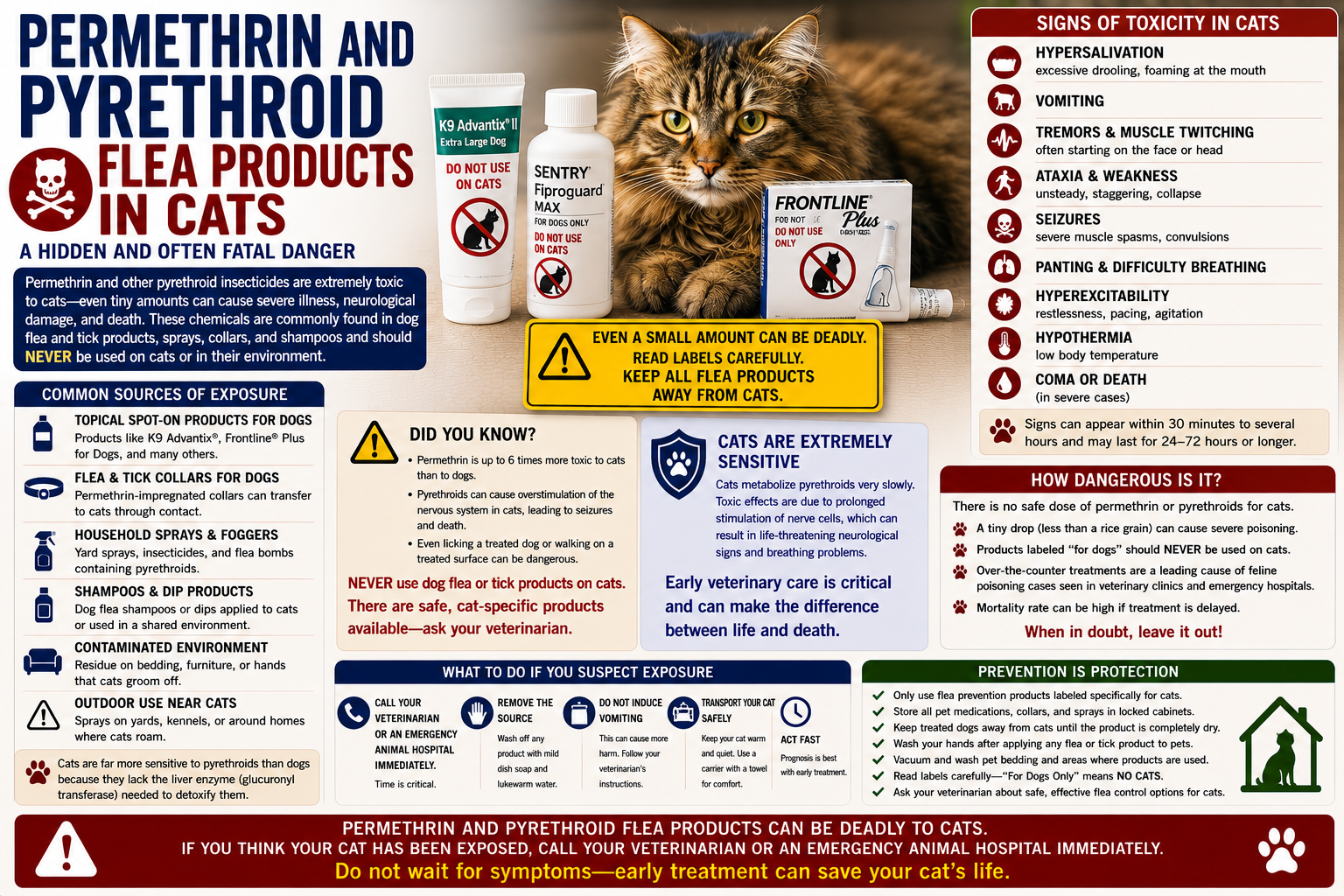
Agent and Exposure Profile
Quick Reference
Permethrin, Pyrethrins, Pyrethroids, and Flea-Product Identification
Permethrin is a synthetic pyrethroid
Permethrin belongs to the synthetic pyrethroid family of insecticides. It is widely used in dog flea and tick spot-ons, sprays, shampoos, premise products, clothing treatments, mosquito-control products, livestock applications, and household insecticides. Many canine spot-ons contain concentrations far higher than products intended for cats, which is why a single dog applicator can create a major feline emergency.
Pyrethrins are not the same as pyrethroids
Pyrethrins are naturally derived insecticidal compounds obtained from chrysanthemum flowers. Pyrethroids are synthetic chemicals designed to mimic and often prolong pyrethrin activity. Both classes act on insect nerve membranes, but individual compounds differ in potency, persistence, metabolism, formulation, and mammalian toxicity. "Natural pyrethrin" should never be interpreted as automatically harmless to a cat.
Type I and Type II pyrethroids
Pyrethroids are often grouped by toxicologic behavior. Type I compounds, which generally lack an alpha-cyano group, are associated with tremor-dominant syndromes. Type II compounds possess an alpha-cyano group and may produce salivation, abnormal movements, seizures, and choreoathetosis-like signs. Real products can contain mixtures, solvents, synergists, and other pesticides, so an exposed cat may not fit a textbook syndrome cleanly.
Related active ingredients
Labels may list permethrin, phenothrin or d-phenothrin, cyphenothrin, etofenprox, deltamethrin, flumethrin, cypermethrin, tetramethrin, prallethrin, allethrin, bifenthrin, lambda-cyhalothrin, or other pyrethroids. Piperonyl butoxide is commonly added as a synergist that inhibits insect detoxification enzymes. Fipronil, imidacloprid, selamectin, fluralaner, sarolaner, lotilaner, afoxolaner, spinosad, pyriproxyfen, and methoprene are different agents and should not be mislabeled as permethrin.
Dog-only spot-ons versus cat-labeled products
The most dangerous household error is applying a dog-only concentrated pyrethroid spot-on to a cat. Some feline products may contain a different pyrethroid or a much lower concentration and are labeled for use under specific conditions, but that does not make dog products interchangeable. The animal silhouette, species wording, weight range, active ingredient, concentration, and applicator size must all match the patient.
Brand families are unreliable identifiers
A brand may sell separate dog and cat products with similar packaging but different active ingredients. Reformulations can also occur. Owners and clinicians should work from the exact product label, not memory of a familiar name. A photograph of both front and back panels is often more useful than reporting only the brand.
Where Permethrin and Other Pyrethroids May Be Found
Dog flea and tick spot-ons
Single-dose applicators intended for dogs are the classic source of severe feline poisoning. Products may be selected by dog weight and contain enough concentrated active ingredient to remain on the coat for weeks. Cats can be poisoned when the wrong tube is applied, when dog and cat packages are confused, or when a household assumes a smaller portion of a dog tube is safe.
Recently treated dogs
A cat may be exposed without ever receiving the product directly. Grooming a treated dog, rubbing against the application site, sharing bedding, sleeping in close contact, or contacting wet residue can transfer insecticide to the cat's coat and mouth. Current EPA-required warnings for certain dog spot-ons specifically instruct owners to keep cats away from treated dogs for a defined period because secondary exposure can be fatal.
Sprays, shampoos, dips, powders, collars, and wipes
Pyrethrins and pyrethroids appear in many ectoparasite-control formulations. Concentration, application volume, solvents, propellants, and residual activity differ greatly. A shampoo diluted during use is not equivalent to a concentrated spot-on, and a household spray is not automatically safe for direct application to an animal.
Home and yard insecticides
Ant, roach, mosquito, fly, bedbug, flea, tick, and general household insecticides may contain pyrethroids. Exposure can occur through direct spraying, walking across wet treated surfaces, licking paws, contacting treated furniture or bedding, inhaling aerosol during application, or chewing a container. Once a registered premise treatment is fully dry and used according to label directions, risk differs from contact with wet concentrate or misuse.
Agricultural, garden, livestock, and clothing treatments
Pyrethroids are used in crop protection, livestock sprays, barn treatments, horse products, mosquito control, treated clothing, camping gear, and military or occupational repellency programs. Barn cats, working cats, and cats living near gardens or workshops may encounter products not marketed as pet flea control.
Combination products
Flea and tick formulations may combine permethrin or another pyrethroid with fipronil, imidacloprid, insect-growth regulators, repellents, or other pesticides. Clinical management must consider every active ingredient and the carrier solvent. The presence of one familiar ingredient does not exclude a second toxicant.
Exposure Scenarios and Risk Factors in Cats
Direct application of a dog product
Most severe cases begin when a concentrated canine spot-on is applied to a cat by mistake. Errors occur when dog and cat tubes are stored together, instructions are not read, a product is shared among pets, or a caregiver assumes flea products are universally interchangeable. Clinical signs may begin within hours but can be delayed, especially when residue remains on the coat.
Contact with a treated dog
Cats that groom dogs or sleep pressed against them are at risk while product remains transferable. Short-haired dogs, cats that allogroom, crowded multi-pet homes, and shared bedding increase contact. A cat may develop signs even when the dog remains completely normal because the product was designed for canine use.
Wrong dose, repeated application, or product stacking
Applying multiple flea products, reapplying too soon, using a product intended for a heavier animal, or combining a spot-on with a spray, shampoo, collar, or premise pesticide can increase total exposure. Owners may add a second product because fleas are still visible before the first product has fully acted.
Bathing and grooming after exposure
Bathing can reduce dermal absorption when performed early and safely, but cats with active tremors or seizures are difficult to wash without aspiration, injury, hypothermia, or staff exposure. Oil-based household cleaners and solvents should never be used. Veterinary teams balance decontamination against neurologic stability and airway protection.
Kittens, geriatric cats, and medically fragile patients
Small body mass, limited physiologic reserve, concurrent neurologic disease, respiratory disease, kidney or liver dysfunction, dehydration, and delayed presentation may complicate poisoning. However, healthy adult cats can also develop severe toxicosis; absence of underlying disease does not create protection.
Contaminated bedding, hands, towels, and surfaces
Fresh residue can transfer from an applicator, glove, hand, towel, carrier, blanket, grooming tool, or furniture. Human household members may unknowingly pet a treated dog and then handle a cat. Decontamination should include identifying and isolating contaminated materials, not only washing the patient.
Outdoor and premise exposure
Direct spraying of a cat, confinement in a poorly ventilated area during pesticide application, contact with wet floor treatments, or access to open containers can produce dermal, oral, ocular, or inhalational exposure. Product-specific label directions and drying intervals matter. Fish, aquatic invertebrates, and some other species are especially sensitive to environmental pyrethroids, so contaminated wash water must be handled carefully.
Permethrin and Pyrethroid Poisoning Symptoms in Cats
Early subtle signs
Initial abnormalities may include ear flicking, facial twitching, skin rippling, tail twitching, paw shaking, excessive grooming, hyperesthesia, restlessness, hiding, dilated pupils, hypersalivation, or an unusual response to touch. These signs can be mistaken for anxiety, a skin reaction, focal seizures, pain, or normal post-application irritation.
Generalized tremors and motor dysfunction
As toxicity progresses, twitching can become continuous whole-body tremors. Cats may develop an unsteady gait, rigid posture, exaggerated reflexes, inability to stand, paddling, disorientation, and repeated falls. Tremors generate substantial heat and energy demand and can rapidly cause exhaustion, acidosis, dehydration, and muscle injury.
Seizures and altered consciousness
Severe cases may develop focal or generalized seizures, status epilepticus, stupor, or coma. Tremors and seizures can overlap and may be difficult to distinguish without close observation. A cat that becomes suddenly quiet after prolonged violent activity may be exhausted, hypoglycemic, hyperthermic, sedated by treatment, or neurologically deteriorating.
Hyperthermia and secondary organ injury
Sustained muscle activity can elevate body temperature dangerously. Hyperthermia may contribute to dehydration, gastrointestinal injury, coagulation abnormalities, cardiovascular instability, brain injury, and multi-organ dysfunction. Conversely, repeated bathing, anesthesia, sedation, and immobility can produce hypothermia later in treatment.
Respiratory and aspiration complications
Hypersalivation, vomiting, impaired swallowing, seizures, heavy sedation, and recumbency increase aspiration risk. Cats may develop coughing, abnormal lung sounds, increased breathing effort, low oxygen levels, or aspiration pneumonia. Severe neurologic depression or medication effects can require intubation and ventilation.
Rhabdomyolysis, pigmenturia, and kidney concerns
Prolonged tremors can injure skeletal muscle, increasing creatine kinase and releasing pigments that may darken urine and stress the kidneys. Dehydration, hyperthermia, poor perfusion, and prolonged recumbency add risk. Serial laboratory monitoring helps detect complications that are not obvious from tremor severity alone.
Course and duration
Signs can persist for many hours to several days because pyrethroids are lipophilic, dermally absorbed, and slowly cleared in cats. Published case series report prolonged tremor control and hospitalization in severe cases. Improvement is often gradual rather than immediate, and recurrence can occur when sedatives wear off or residual product remains on the coat.
First Aid for Suspected Permethrin Exposure in a Cat
- Remove the product and separate the cat from treated dogs, contaminated bedding, applicators, towels, and other pesticide sources.
- Preserve the exact package, active-ingredient panel, concentration, applicator size, lot number, and time of application or contact.
- Call a veterinarian or emergency hospital immediately, even if the cat appears normal after direct application of a dog-only product.
- Keep the cat quiet, dimly lit, and protected from falls and excessive stimulation.
- Do not induce vomiting or give activated charcoal unless a veterinarian identifies a relevant oral exposure and specifically directs treatment.
- Do not give human muscle relaxants, anticonvulsants, antihistamines, oils, milk, or sedatives.
- Do not use gasoline, kerosene, solvents, essential oils, alcohol, or concentrated household degreasers on the coat.
- Do not repeatedly bathe a cat that is trembling, seizuring, weak, cold, or unable to protect its airway without veterinary guidance.
When bathing may help
If exposure was recent, the cat is fully alert, not trembling, breathing normally, and a veterinarian advises immediate washing, gentle bathing with lukewarm water and a mild liquid dishwashing detergent may reduce oily residue. Avoid the eyes, ears, mouth, and excessive chilling. Rinse thoroughly and prevent licking until the coat is clean and dry.
When not to delay transport for bathing
Any twitching, tremors, seizures, severe drooling, weakness, respiratory change, or altered consciousness takes priority over home decontamination. A neurologically unstable cat can aspirate bath water, injure itself, or worsen from stress. Bring the package and let the hospital stabilize and decontaminate under controlled conditions.
Safe transport
Use a secure carrier padded with towels. Minimize noise, bright light, and handling because stimulation can intensify tremors. Do not restrain rigidly during a seizure and do not put fingers in the mouth. Keep the car comfortably cool, but do not apply ice directly or chill the cat aggressively.
Multiple-pet homes
If a dog was treated, isolate the dog from every cat and prevent shared bedding or grooming until the product is dry and the label's separation interval has passed. Check all cats for subtle twitching or hypersalivation. The absence of signs in one cat does not clear another cat that had more contact.
Permethrin and Pyrethroid Toxicology and Mechanism
Voltage-gated sodium-channel disruption
Pyrethroids prolong opening of voltage-gated sodium channels in nerve membranes. Repetitive sodium influx delays repolarization and produces hyperexcitability, abnormal sensory signaling, tremors, and seizures. Some compounds also affect chloride channels, calcium handling, and neurotransmitter release, contributing to variable neurologic presentations.
Why cats are unusually susceptible
Cats have limited capacity for several hepatic glucuronidation pathways and may metabolize certain pyrethroids less efficiently than dogs. Their grooming behavior also converts dermal contamination into oral exposure. High-concentration canine spot-ons can deliver a large dose to a small body surface area and remain available for absorption if not removed.
Lipophilicity and prolonged effects
Permethrin and many pyrethroids are highly lipid soluble. They distribute into skin and fatty tissues, may be absorbed over time, and can be difficult to eliminate rapidly. This lipophilicity provides the rationale for intravenous lipid emulsion as an adjunct in selected severe cases, but it does not make lipid therapy an antidote or replacement for decontamination and supportive care.
Formulation and concentration matter
Clinical risk depends on active ingredient, concentration, carrier solvent, applicator volume, body weight, contact duration, and whether the product was licked. A low-concentration environmental residue is not equivalent to a concentrated dog spot-on. Products containing piperonyl butoxide or multiple insecticides may alter kinetics or broaden toxicity.
Secondary injury from sustained muscle activity
Much of the life-threatening damage can arise from uncontrolled tremors and seizures rather than direct organ toxicity alone. Continuous muscle activity drives hyperthermia, oxygen consumption, lactate production, glucose use, muscle breakdown, and exhaustion. Salivation, recumbency, and sedative therapy increase aspiration and respiratory risks.
Evidence boundaries
The strongest veterinary evidence concerns cats exposed to concentrated permethrin dog spot-ons. Evidence for every other pyrethroid, formulation, species, and route is less complete. It is therefore inappropriate to treat all flea products as equivalent or to extrapolate one study's outcome directly to a different active ingredient and concentration.
Why a universal toxic dose is unsafe
Case reports often involve uncertain amounts, partial grooming, delayed decontamination, and combination products. Cats can develop severe signs after apparently modest transfer from a dog, while another cat may have lower exposure from the same household event. Triage must be based on exact product, concentration, route, timing, clinical signs, and patient factors rather than one public threshold.
Clinical Management
Veterinary Care and Prognosis
Veterinary Diagnosis and Treatment
Exposure reconstruction and triage
The veterinary team identifies the active ingredient, concentration, intended species, applicator size, time of application, route of contact, bathing already performed, and all co-products used. Immediate priorities are airway, breathing, circulation, neurologic status, temperature, glucose, hydration, and control of tremors or seizures.
Decontamination after stabilization
Clinically stable cats may be washed repeatedly with lukewarm water and a mild detergent until oily residue is removed. Clipping may be considered when product is concentrated in long or matted hair. Staff protect themselves from pesticide exposure and prevent hypothermia. Neurologically unstable cats may require sedation, airway protection, and careful staged decontamination.
Tremor control
Methocarbamol is widely used to reduce severe muscle tremors. Availability varies by region, and dosing must be individualized and monitored because excessive central depression can complicate respiration. Benzodiazepines may help seizures but can be inconsistent for pure tremor control and may occasionally increase disinhibition.
Seizure and anesthesia management
Persistent seizures may require benzodiazepines, propofol, alfaxalone, phenobarbital, or other anticonvulsant and anesthetic strategies. Severe cases may need continuous infusions, intubation, ventilation, and intensive monitoring. The goal is to stop damaging muscle activity without causing preventable respiratory compromise.
Temperature, fluids, and metabolic support
Hyperthermic cats require controlled cooling while tremors are stopped. Intravenous crystalloids support hydration, perfusion, and renal function, but fluid plans are adjusted to cardiovascular status, urine output, and concurrent disease. Glucose, electrolytes, acid-base balance, lactate, kidney values, creatine kinase, and urine are monitored when signs are prolonged or severe.
Intravenous lipid emulsion
Controlled and observational studies suggest that intravenous lipid emulsion can accelerate neurologic improvement in some cats with permethrin toxicosis. It is an adjunct, not a universal antidote. Risks include lipemia, interference with laboratory testing, pancreatitis concerns, fat overload, catheter complications, and rare prolonged lipid abnormalities. Product selection, total dose, timing, and repeat administration require critical-care judgment.
Airway, aspiration, and respiratory care
Oxygen, suction, intubation, ventilation, chest imaging, blood-gas analysis, and antibiotics when bacterial aspiration pneumonia is documented or strongly suspected may be necessary. Salivation alone does not justify withholding nutrition indefinitely, but feeding must wait until swallowing and airway protection are adequate.
Nursing and environmental control
Quiet housing, dim lighting, padded bedding, frequent turning, eye lubrication when blinking is reduced, urinary management, pressure-injury prevention, and assisted nutrition can determine outcome during prolonged hospitalization. Noise, handling, and sudden stimulation may worsen tremors.
Diagnostic testing and differential diagnosis
There is no routine rapid blood test that confirms permethrin poisoning in clinical practice. Diagnosis usually rests on exposure history and compatible signs. Differentials include metaldehyde, organophosphate or carbamate pesticides, tremorgenic mycotoxins, essential oils, amphetamines, serotonin syndrome, hypocalcemia, hepatic encephalopathy, and primary seizure disease.
Prognosis, Recovery, and Follow-Up
Most treated cats can survive
Published case series show that survival is common when affected cats receive prompt decontamination, sustained tremor control, fluids, temperature management, and intensive nursing. However, fatalities and euthanasia still occur, particularly with delayed treatment, severe uncontrolled seizures, aspiration, respiratory failure, extreme hyperthermia, or financial limits on prolonged care.
Recovery may take several days
Neurologic signs often improve gradually. Cats may cycle between improvement and recurrent tremors as medications wear off. Hospitalization may extend through multiple days, especially after direct application of a concentrated spot-on or delayed decontamination. A long course does not necessarily mean recovery is impossible.
Guarded prognostic findings
Severe hyperthermia, status epilepticus, persistent coma, aspiration pneumonia, need for mechanical ventilation, major acid-base disturbance, rhabdomyolysis, kidney injury, or multi-organ complications worsen prognosis. Product mixtures and unknown amounts also add uncertainty.
After discharge
Residual weakness, sleepiness, unsteady movement, or reduced appetite may persist briefly after sedatives and prolonged hospitalization. Owners should follow feeding, medication, confinement, and recheck instructions exactly. Return immediately for renewed twitching, tremors, seizures, vomiting, coughing, breathing difficulty, fever, collapse, dark urine, or refusal to eat.
Long-term effects
Most survivors recover without obvious permanent neurologic deficits, but severe hyperthermia, prolonged seizures, hypoxia, or aspiration can create lasting injury. Follow-up may include neurologic examination, kidney values, muscle enzymes, urinalysis, chest imaging, and nutritional assessment according to the complications observed.
Preventing Permethrin and Pyrethroid Poisoning in Cats
Use only products specifically labeled for cats
Never apply a dog flea or tick product to a cat unless the exact label explicitly includes cats and the cat's age and weight range. Do not divide a dog applicator, estimate a smaller amount, or rely on a salesperson's verbal description when the package says dogs only.
Read the active-ingredient panel every time
Brand names, packaging, and formulations can change. Check the species icon, active ingredients, concentrations, applicator size, age restrictions, weight range, and warnings before each use. Store dog and cat products in separate labeled bins.
Separate cats from treated dogs
Follow the product label's required separation period and keep cats away from application sites until the product is fully dry. Prevent grooming and shared bedding. In multi-pet homes, treat dogs in a closed area that cats cannot enter and wash hands before touching cats.
Avoid stacking flea products
Do not combine spot-ons, shampoos, sprays, collars, powders, or premise treatments without veterinary guidance. More product does not produce faster control and may create additive toxicity. Persistent fleas often reflect environmental stages, reinfestation, incorrect application, or resistance rather than underdosing.
Control premise exposure
Remove cats, food bowls, water bowls, toys, litter boxes, and bedding before household pesticide application. Ventilate and allow surfaces to dry according to the label before re-entry. Never spray a cat with a room, garden, livestock, or clothing product.
Dispose of applicators and contaminated materials safely
Seal used tubes, gloves, towels, and packaging where pets cannot lick or chew them. Do not leave open applicators in trash cans accessible to cats. Wash contaminated bedding separately and prevent runoff from entering aquariums, ponds, or waterways because pyrethroids are highly toxic to aquatic organisms.
Build a written household flea-control plan
List each pet, species, weight, product, application date, and next due date. Designate one caregiver to prevent duplicate dosing. Ask the veterinarian to review the entire plan when the home includes cats, dogs, rabbits, birds, fish, geriatric pets, pregnant animals, or patients with neurologic disease.
Permethrin and Pyrethroid Flea Products in Cats FAQ
Why can a dog flea product poison a cat?
Dog spot-ons may contain high concentrations of permethrin or related pyrethroids. Cats metabolize some of these compounds poorly, groom residue from the coat, and receive a large dose relative to body size.
Can a cat be poisoned just by touching a treated dog?
Yes. Grooming, rubbing against, or sleeping with a recently treated dog can transfer wet residue. Published reports and regulatory warnings specifically recognize this secondary exposure route.
How soon do signs start?
Signs often begin within several hours but may be delayed. Timing depends on product concentration, route, grooming, bathing, and contact duration. A normal appearance immediately after exposure does not establish safety.
What are the earliest signs?
Ear flicking, facial twitching, skin rippling, hypersalivation, restlessness, unusual grooming, dilated pupils, and sensitivity to touch may precede generalized tremors or seizures.
My cat has no signs. Should I wash the product off?
Call a veterinarian immediately. Early gentle bathing may be advised for an alert, stable cat, but the exact product and timing matter. Do not delay emergency transport if twitching or neurologic signs have begun.
Can I use dish soap?
A veterinarian may recommend a mild liquid dishwashing detergent to remove oily residue from a stable cat. Harsh degreasers, solvents, essential oils, and repeated prolonged baths are unsafe.
Why should I not bathe a trembling cat at home?
Trembling cats can aspirate water, worsen from stress, become hypothermic, or injure themselves. Stabilization, sedation, airway protection, and controlled decontamination may be safer in hospital.
Is pyrethrin safer than permethrin?
Pyrethrins and pyrethroids are different compounds, but either can cause toxicity depending on concentration, formulation, and misuse. A natural origin does not guarantee feline safety.
Are all pyrethroids equally dangerous?
No. Potency, formulation, concentration, and metabolism differ. Nevertheless, any dog-only concentrated pyrethroid product applied to a cat should be treated as an emergency until the exact label is reviewed.
Can one dog applicator be fatal?
Yes. Concentrated dog spot-ons have caused severe poisoning and death in cats. The applicator is designed for a larger animal and may contain a high percentage of active ingredient.
Does activated charcoal help?
Most classic cases are primarily dermal, so charcoal is not the central treatment. It may be considered after a relevant oral ingestion in an appropriate patient, but aspiration risk is substantial in a neurologically abnormal cat.
What is methocarbamol used for?
Methocarbamol is a centrally acting muscle relaxant commonly used by veterinarians to control severe tremors. It must be dosed and monitored professionally because excessive sedation can impair respiration.
Is intravenous lipid emulsion an antidote?
No. It is an adjunct that may sequester lipophilic toxicant and speed neurologic improvement in selected cases. Decontamination, tremor control, fluids, temperature management, airway care, and nursing remain essential.
Can the cat recover after several days of tremors?
Yes. Many severely affected cats recover despite prolonged hospitalization. Recurrent signs as sedatives wear off are common, so continued monitoring is important.
Why is my cat panting or hot?
Continuous muscle activity generates heat and can cause dangerous hyperthermia. Panting may also reflect stress, aspiration, respiratory compromise, or medication effects and requires immediate assessment.
Can a cat develop kidney damage?
Kidney injury may occur secondarily from dehydration, hyperthermia, poor perfusion, or rhabdomyolysis after sustained tremors. Urine output and laboratory values may require serial monitoring.
How long should cats be separated from a treated dog?
Follow the exact product label. Some current warnings specify keeping cats away from treated dogs for 24 hours, but drying times and instructions vary. Longer separation may be prudent when residue remains wet or accessible.
What should I do with the remaining flea products?
Keep the package for identification, then store or dispose of it according to label and local pesticide rules. Separate dog and cat products permanently and review future flea control with the veterinarian.