Rat Poison, Mouse Poison, and Rodenticide Poisoning
Is Rodent Poison Dangerous to Dogs, Cats, Horses, Livestock, and Birds?
Yes. Every rodenticide exposure must be treated as product-specific poisoning because “rat poison” is not one toxin. Anticoagulant baits cause delayed internal bleeding; bromethalin damages the brain and spinal cord; cholecalciferol produces severe hypercalcemia and mineralization of kidneys, blood vessels, heart, lungs, and other tissues; zinc phosphide releases poisonous phosphine gas; and strychnine causes violent, stimulus-triggered muscle rigidity and seizures. Their antidotes, tests, first-aid decisions, and monitoring requirements are not interchangeable.
Bait color, block shape, brand family, package design, or the word “d-CON” cannot identify the active ingredient reliably. Consumer, professional, agricultural, imported, illegal, and older products may contain different rodenticides even when the bait looks identical. The active ingredient and concentration on the original label are the most important facts to preserve.
Dogs are exposed most often because bait is deliberately formulated to attract mammals, but cats, horses, cattle, sheep, goats, poultry, companion birds, raptors, scavengers, and wildlife can be poisoned directly or through contaminated prey and carcasses. An animal may remain outwardly normal during a critical treatment window, especially after anticoagulant, bromethalin, or cholecalciferol exposure.
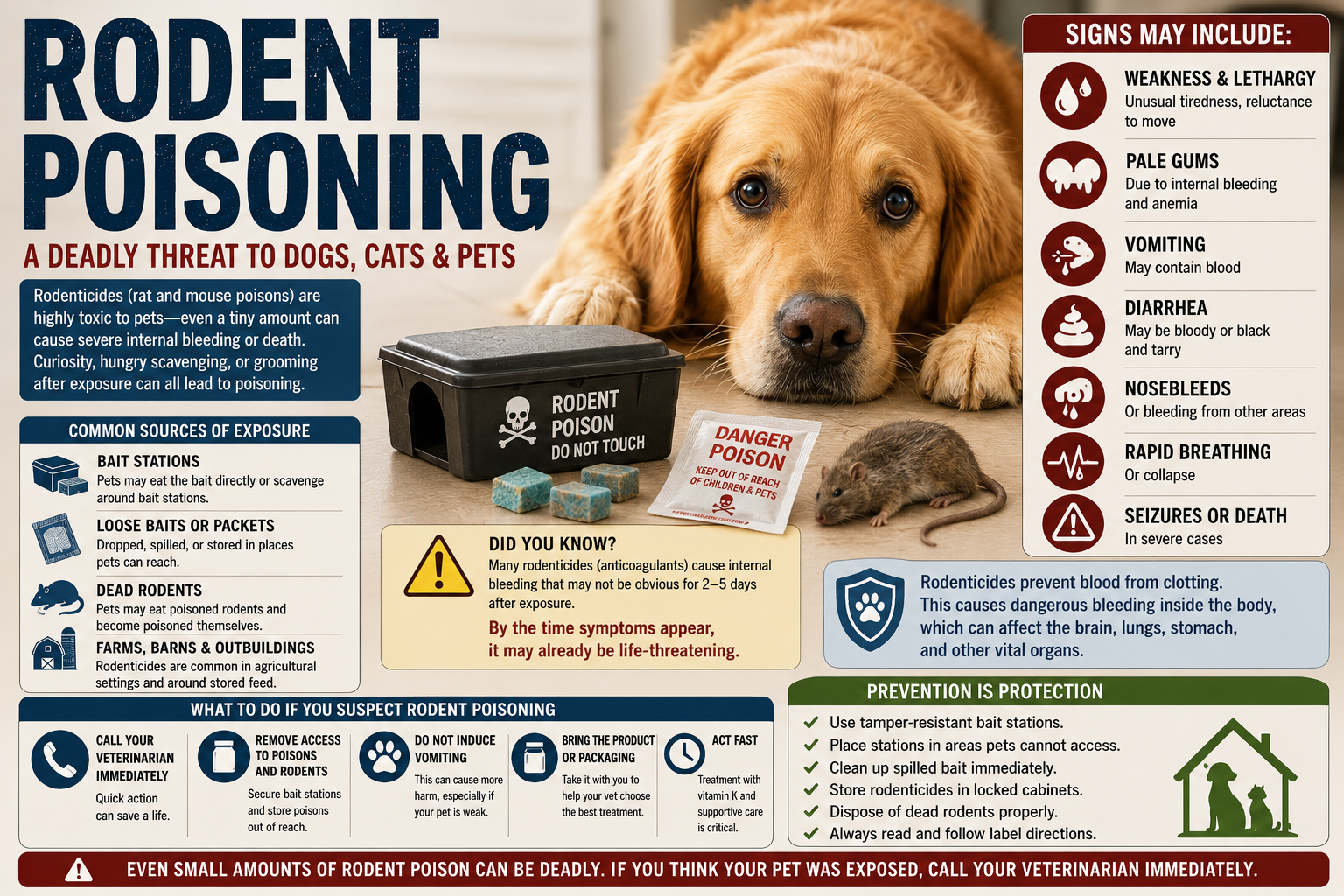
About this guide: This page provides general pet-poisoning information and cannot diagnose or treat an individual animal. For any suspected exposure, contact a veterinarian or animal poison-control service immediately. Do not induce vomiting, give medication, or attempt home decontamination unless directed by a veterinary professional.
Agent and Exposure Profile
Quick Reference
Rodenticide Classes and Active-Ingredient Recognition
First-Generation Anticoagulants
Warfarin, chlorophacinone, and diphacinone interfere with vitamin K recycling and prevent normal activation of clotting factors. First-generation products often require repeated feeding to kill resistant rodents, but a sufficiently large single exposure can still poison a non-target animal. Clinical bleeding is delayed until existing clotting factors are depleted.
Second-Generation Anticoagulants
Brodifacoum, bromadiolone, difenacoum, and difethialone are longer-acting and more persistent anticoagulants. They can produce serious poisoning after a single exposure and remain in liver and other tissues longer than first-generation compounds. Secondary exposure of predators and scavengers is a major environmental concern.
Bromethalin
Bromethalin is a non-anticoagulant neurotoxic rodenticide. Its active metabolite uncouples oxidative phosphorylation in nervous-system mitochondria, leading to energy failure, disruption of ion pumps, intramyelinic edema, and increased intracranial pressure. Vitamin K does not treat bromethalin, and no specific antidote is established.
Cholecalciferol
Cholecalciferol is vitamin D3 used at a rodenticidal concentration. Toxic exposure raises calcium and phosphorus, causing tissue mineralization and kidney injury. Rodenticide bait, excessive vitamin D supplements, compounded products, and defective pet food can produce overlapping hypercalcemic syndromes, but the exposure history and concentration differ.
Zinc Phosphide and Other Metal Phosphides
Zinc phosphide reacts with stomach acid and moisture to release phosphine gas. Some agricultural or imported products may contain aluminum phosphide or another metal phosphide. Phosphine damages mitochondria and multiple organs and can expose people through the animal's breath, stomach contents, vomit, or contaminated enclosure.
Strychnine
Strychnine blocks inhibitory glycine receptors in the spinal cord and brainstem. Affected animals remain intensely responsive to sound, touch, and light and can develop sudden generalized rigidity, opisthotonos, extensor spasms, respiratory failure, severe hyperthermia, and lactic acidosis. Strychnine use is restricted, but registered, illegal, malicious, imported, and legacy exposure still occurs.
Older, Unusual, Imported, and Illegal Rodenticides
Older or region-specific rodenticides have included sodium fluoroacetate, thallium, arsenic compounds, barium carbonate, yellow phosphorus, red squill, alpha-naphthylthiourea, and alpha-chloralose. Some are no longer legal for ordinary consumer rodent control in the United States but may remain in old containers, imported products, agricultural stores, wildlife-control settings, or deliberately poisoned bait.
Mechanical and Lower-Toxicity Products
Some products use cellulose, corn-derived material, salt-based dehydration concepts, traps, or non-poison control methods. Similar bait appearance does not prove low toxicity, and the station, plastic, wire, adhesive, or swallowed bulk material can cause gastrointestinal obstruction or injury. The package remains necessary even when the product claims a non-anticoagulant or reduced-risk approach.
Where Rodent Poisons May Be Found
Homes, Apartments, Garages, and Storage Areas
Rodenticide blocks, soft baits, gels, pellets, place packs, powders, and bait stations may be placed behind appliances, under sinks, in attics, crawl spaces, basements, closets, garages, sheds, storage units, and utility rooms. Dogs may break stations advertised as tamper resistant, and cats may reach loose bait or poisoned rodents in narrow spaces.
Professional Pest-Control Placements
Commercial applicators may use products or concentrations unavailable in ordinary retail channels. Exterior stations around apartments, warehouses, restaurants, hotels, schools, kennels, barns, offices, and food-service buildings can be damaged by vehicles, weather, wildlife, landscaping equipment, or unauthorized opening. Service records and station maps can identify the exact active ingredient.
Farms, Stables, Feed Rooms, and Agricultural Fields
Agricultural rodenticides may be placed around grain, feed storage, poultry houses, dairies, barns, orchards, fields, burrows, and equipment. Zinc phosphide and other restricted-use products are especially relevant in agricultural or field settings. Spilled bait can contaminate feed, hay, bedding, water, or machinery.
Cabins, Campgrounds, Vehicles, Boats, and Seasonal Properties
Owners often discover bait left by a prior tenant, property manager, exterminator, previous owner, marina, campground, or storage facility. Labels may be missing, and old bait may be mistaken for food, seed, or harmless wax. Vacation properties also create delayed discovery because no one knows when the product was placed.
Dead or Dying Rodents and Other Prey
Cats, dogs, raptors, owls, scavengers, snakes, and wildlife may consume poisoned rodents. Secondary poisoning is best documented with persistent anticoagulants, although prey can also retain other rodenticides or undigested bait. A dead rodent near a station should be removed with gloves and disposed of according to the label.
Trash, Illegal Bait, and Intentional Poisoning
Discarded stations, loose bait in food containers, maliciously prepared meat, and unlabeled powders can expose animals. Intentional poisoning may involve multiple toxicants. Preserve evidence, avoid contaminating it, notify the veterinarian, and involve law enforcement or animal-control authorities when deliberate harm is suspected.
Online, Imported, and Unregistered Products
Products purchased online or brought from another country may contain active ingredients, concentrations, or labeling that differ from familiar domestic brands. Foreign-language packaging, missing registration information, repackaging, or extraordinary toxicity should prompt product retention and specialist consultation.
Exposure Scenarios and Risk Factors
Common Companion-Animal Exposures
- A dog chews a bait station, place pack, bucket, tub, cardboard box, or bag of refill bait.
- A pet consumes bait spilled behind an appliance, in a garage, near a dumpster, or around a building perimeter.
- A cat or dog eats a poisoned mouse, rat, vole, gopher, squirrel, or bird.
- Several pets share access to one damaged station and the actual consumer is unknown.
- An animal vomits after a metal-phosphide exposure, exposing people in a vehicle, home, or clinic to phosphine gas.
- A horse, cow, goat, sheep, poultry flock, or wildlife species reaches agricultural bait, contaminated grain, or field application.
- An animal receives a second exposure while already taking vitamin K or recovering from an earlier incident.
Unknown Ingredient
An unknown bait is a higher-risk problem because the veterinarian cannot safely substitute one treatment for another. Giving vitamin K while delaying bromethalin or cholecalciferol care can consume the most useful decontamination window. Photographs, station numbers, receipts, property-management records, and pest-control invoices may identify the product.
Delayed Signs
Anticoagulant bleeding often begins days after exposure. Lower-dose bromethalin neurologic signs may be delayed, and cholecalciferol-associated hypercalcemia and kidney injury can evolve after an initially normal examination. Owners should not interpret normal behavior in the first hours as proof of safety.
Repeated and Secondary Exposure
First-generation anticoagulants can accumulate with repeated feeding, while persistent second-generation anticoagulants remain in tissues and prey. A dog may revisit a station or repeatedly catch poisoned rodents. Treatment history must include every possible access event, not only the most recent one.
Small, Young, and Medically Vulnerable Animals
Toy dogs, puppies, kittens, birds, rabbits, ferrets, and other small animals receive a larger dose per unit body weight. Liver disease, kidney disease, heart disease, seizure disorders, anemia, coagulopathy, dehydration, pregnancy, malnutrition, and concurrent medication can change susceptibility or treatment safety.
Wildlife and Food-Animal Concerns
Rodenticide exposure in livestock, poultry, game animals, raptors, or scavengers may create animal-welfare, environmental, residue, and food-safety questions. Veterinary and regulatory authorities may need to direct testing, withdrawal, carcass disposal, and environmental investigation.
Rodenticide Poisoning Symptoms by Active Ingredient
Anticoagulant Rodenticides
Signs are usually delayed until vitamin K-dependent clotting factors are depleted. Lethargy, weakness, pale gums, rapid breathing, coughing, bloody nasal discharge, bruising, swollen joints, lameness, abdominal enlargement, blood in urine or stool, collapse, and external bleeding can occur. Hemorrhage into the chest, abdomen, lungs, brain, eyes, muscles, joints, or retroperitoneal space may dominate the presentation.
Some dogs present with subtle or localized disease rather than obvious bleeding. Ocular hemorrhage, exophthalmos, orbital pain, coughing, exercise intolerance, or unexplained anemia can be the first clue. A normal platelet count does not exclude anticoagulant poisoning because the primary defect involves clotting-factor activation.
Bromethalin
A large exposure can produce an acute excitatory syndrome with hyperexcitability, tremors, severe seizures, hyperthermia, respiratory failure, and rapid death. Lower or intermediate exposure may produce vomiting, depression, ataxia, hind-limb weakness, paresis, paralysis, altered reflexes, loss of proprioception, coma, and progressive respiratory compromise over one or several days.
Cholecalciferol
Early signs include vomiting, appetite loss, depression, constipation or diarrhea, excessive thirst, and excessive urination. As calcium and phosphorus rise, animals may develop dehydration, weakness, abnormal heart rhythm, hypertension, kidney failure, reduced urine production, gastrointestinal bleeding, muscle tremors, seizures, or respiratory distress from mineralization and organ injury.
Zinc Phosphide and Phosphine
Vomiting, severe abdominal pain, bloating, salivation, weakness, rapid breathing, ataxia, tremors, seizures, collapse, metabolic acidosis, liver injury, kidney injury, and cardiovascular shock may occur. Vomit can release phosphine gas and may have a garlic, rotten-fish, or carbide-like odor, but odor is unreliable and deliberate smelling is dangerous.
Strychnine
Signs often begin rapidly with anxiety, stiffness, exaggerated reflexes, and violent generalized extensor spasms triggered by sound, touch, or light. The animal may remain conscious between episodes. Repeated contractions can cause hyperthermia, lactic acidosis, rhabdomyolysis, respiratory failure, and death while mucous membranes become cyanotic.
Secondary and Mixed Complications
Swallowed station plastic, wire, paper, or packaging can cause obstruction or perforation. Vomiting, aspiration, prolonged recumbency, seizures, hyperthermia, coagulopathy, kidney injury, and treatment complications can add new signs unrelated to the original mechanism. More than one bait or active ingredient may be involved.
First Aid for Suspected Rodent-Poison Exposure
Immediate Owner Actions
- Remove access to bait, stations, dead rodents, contaminated feed, and vomit without handling material bare-handed.
- Preserve the original package, complete active-ingredient panel, concentration, EPA registration number, lot number, receipt, bait station, and pest-control records.
- Record the maximum amount missing, exposure window, every animal with access, and every treatment already attempted.
- Photograph the bait and package but do not rely on bait color or shape to identify it.
- Contact a veterinarian immediately, even when the animal still appears normal.
- Tell the clinic before arrival when zinc phosphide, aluminum phosphide, strychnine, active seizures, or intentional poisoning is possible.
Do Not Induce Vomiting Without Product-Specific Direction
Do not give hydrogen peroxide, salt, mustard, syrup of ipecac, or attempt manual gagging. Emesis may be appropriate only during a limited early window in a clinically normal patient, and it can be dangerous with bromethalin neurologic effects, strychnine stimulation, aspiration risk, sharp packaging, or metal phosphides that release toxic gas.
Do Not Give Vitamin K Unless the Bait Is an Anticoagulant
Vitamin K1 is an antidote for anticoagulant rodenticides, not for bromethalin, cholecalciferol, zinc phosphide, or strychnine. Over-the-counter vitamin K products may contain the wrong form or amount and can delay definitive diagnosis and treatment.
Do Not Give Activated Charcoal at Home
Veterinary professionals may use charcoal for selected anticoagulant, bromethalin, cholecalciferol, or mixed exposures, sometimes more than once. Aspiration, vomiting, ileus, dehydration, hypernatremia, neurologic impairment, and formulation-specific risks make unsupervised use unsafe.
Special Human-Safety Warning for Metal Phosphides
Do not place your face near the animal's mouth or vomit. Move people away from contaminated air when this can be done safely, ventilate the area without spreading material through occupied spaces, and avoid transporting an actively vomiting animal in a tightly enclosed passenger compartment without emergency guidance. Call the veterinary hospital before arrival so staff can prepare an outdoor or ventilated receiving plan.
Strychnine and Stimulus Control
Do not shout, restrain forcefully, shine bright lights, or repeatedly touch an animal with rigid spasms. Reduce sound, light, and movement while arranging emergency transport. Do not place hands near the mouth during a seizure.
Safe Transport
Use a secure carrier or restrained area, minimize stimulation, and bring the product in a sealed secondary container. Do not bring loose contaminated bait or uncovered vomit into a clinic. Follow the hospital's instructions for phosphide exposure, seizures, bleeding, or large agricultural incidents.
Rodenticide Toxicology and Mechanisms
Anticoagulants and the Vitamin K Cycle
Anticoagulant rodenticides inhibit vitamin K epoxide reductase, preventing recycling of reduced vitamin K needed to activate clotting factors II, VII, IX, and X and the anticoagulant proteins C and S. Existing functional factors must decline before bleeding begins, which explains the delayed syndrome and why prothrombin time changes before obvious hemorrhage in many cases.
Bromethalin and Intramyelinic Edema
Bromethalin is converted to desmethylbromethalin, a more potent uncoupler of oxidative phosphorylation. Nervous tissue loses ATP, sodium-potassium pump function fails, sodium and water accumulate within myelin, and intracranial pressure rises. This creates either an acute convulsant syndrome or a delayed paralytic syndrome depending on exposure and timing.
Cholecalciferol and Pathologic Mineralization
Rodenticidal vitamin D3 increases intestinal calcium absorption, mobilizes calcium from bone, and alters renal handling through active vitamin D metabolites. Hypercalcemia and hyperphosphatemia promote mineralization of renal tubules, blood vessels, heart, stomach, lungs, and other tissues. Kidney damage then worsens calcium and phosphorus control.
Zinc Phosphide and Mitochondrial Poisoning
Metal phosphides release phosphine in acidic or moist conditions. Phosphine disrupts mitochondrial respiration, promotes oxidative injury, and damages heart, lungs, liver, kidneys, and nervous tissue. Gas released from gastric contents explains the unusual risk to owners, first responders, and veterinary teams.
Strychnine and Loss of Spinal Inhibition
Strychnine competitively blocks glycine-mediated inhibition in the spinal cord and brainstem. Sensory input that would normally produce a controlled response instead triggers simultaneous contraction of opposing muscle groups. Consciousness may be preserved until hypoxia, acidosis, hyperthermia, or exhaustion causes deterioration.
Secondary Poisoning
Persistent anticoagulants can remain in rodent liver and other tissues and expose predators or scavengers. The risk depends on active ingredient, residue concentration, prey burden, repeated consumption, and species susceptibility. Finding an apparently intact dead rodent near bait does not make it safe for a pet to eat.
Why Bait Appearance Cannot Identify the Toxin
Manufacturers use similar wax blocks, soft pouches, pellets, grains, pastes, and colors for chemically unrelated products. Formulations can change while branding remains similar. Only the active-ingredient statement, registration information, or laboratory identification can reliably guide product-specific treatment.
Why a Universal Public Toxic Threshold Is Misleading
Each class has a different concentration, absorption pattern, delay, target organ, and treatment window. Patient size, species, repeated access, unknown consumption, vomiting, bait matrix, co-ingredients, and secondary exposure further change risk. One rodenticide calculator or dose table cannot safely cover the entire category.
Evidence Boundaries
Anticoagulant rodenticides have the largest veterinary clinical literature and a specific antidote. Bromethalin diagnosis and treatment evidence is more limited, although recent canine and feline series improve understanding. Cholecalciferol, phosphide, and strychnine care relies on experimental work, case reports, toxicology principles, and intensive supportive treatment.
Clinical Management
Veterinary Care and Prognosis
Veterinary Diagnosis and Treatment
Identify the Active Ingredient Before Assuming a Treatment
The veterinary team will inspect the label, contact the applicator or manufacturer when necessary, calculate the maximum exposure, and identify every bait or poisoned prey item. Brand name alone is insufficient. When the product remains unknown, diagnostic and monitoring plans may need to cover several mechanisms at once.
Initial Stabilization
Airway, breathing, circulation, neurologic status, temperature, blood pressure, perfusion, hydration, mucous-membrane color, bleeding, and urine production are assessed immediately. Oxygen, airway protection, seizure control, cooling, blood products, or shock treatment may take priority over decontamination.
Professional Gastrointestinal Decontamination
Veterinary-induced emesis may be considered after a recent exposure in a clinically normal patient when the product and airway make it safe. Gastric lavage, endoscopic removal, cathartics, or charcoal may be selected for specific cases. Metal phosphide decontamination requires ventilation, personal protection, gas-risk planning, and careful handling of gastric contents.
Anticoagulant Rodenticide Testing
Prothrombin time is usually the earliest routine clotting test to become prolonged because factor VII has a short half-life. Activated partial thromboplastin time, complete blood count, packed cell volume, total solids, platelet count, imaging, and focused ultrasound help assess the extent and location of bleeding. Rodenticide analysis may identify a specific anticoagulant but treatment often begins before results return.
Anticoagulant Treatment
Vitamin K1 is the specific antidote. Clinically bleeding animals may require plasma to replace clotting factors, packed red cells or whole blood for anemia, oxygen, thoracocentesis, abdominal support, and strict activity restriction. Treatment duration depends on the active ingredient and exposure, and clotting time is rechecked after vitamin K has been withheld long enough to determine whether independent clotting has recovered.
Bromethalin Diagnosis and Treatment
No routine blood test confirms bromethalin rapidly. Exposure history, neurologic examination, MRI patterns, and specialized measurement of bromethalin or desmethylbromethalin in serum, fat, liver, or stomach contents may support diagnosis. Treatment emphasizes early decontamination before signs, control of seizures and cerebral edema, oxygen and ventilation, temperature management, fluid balance, nutritional support, bladder care, physical rehabilitation, and prevention of recumbency complications.
Cholecalciferol Diagnosis and Treatment
Serial total and ionized calcium, phosphorus, kidney values, electrolytes, urinalysis, blood pressure, electrocardiography, and sometimes 25-hydroxyvitamin D help define severity and duration. Treatment may include decontamination, intravenous saline after cardiovascular assessment, antiemetics, phosphate management, diuretics after rehydration, glucocorticoids, calcitonin, bisphosphonates, dialysis, and prolonged monitoring selected for the individual patient.
Zinc-Phosphide Diagnosis and Treatment
Diagnosis uses product history, compatible rapid gastrointestinal and systemic signs, and specialized analysis of bait, stomach contents, liver, or other samples. Treatment is performed with human-safety controls and may include ventilated decontamination, oxygen, cardiovascular support, fluids, acid-base and electrolyte correction, antiemetics after exposure control, seizure treatment, and monitoring of liver, kidney, heart, and respiratory function. No proven specific antidote exists.
Strychnine Diagnosis and Treatment
Stimulus-triggered extensor spasms with preserved awareness strongly support strychnine, but tetanus, metaldehyde, tremorgenic toxins, organophosphates, and other convulsants remain differentials. Confirmation may use stomach contents, vomit, urine, blood, liver, kidney, bait, or environmental evidence. Treatment requires a dark quiet environment, aggressive muscle-relaxant and anticonvulsant therapy, airway protection, ventilation, cooling, fluids, correction of severe acidosis, and management of rhabdomyolysis.
Foreign Bodies, Secondary Exposure, and Co-Ingestants
Radiographs or ultrasound may be required for swallowed stations, wire, plastic, paper, or other objects. A poisoned rodent can also carry pesticides, parasites, bacteria, or trauma-related hazards. Treatment must address every identified problem rather than stopping at the bait diagnosis.
Monitoring and Discharge
Observation duration ranges from outpatient follow-up after a verified low-risk event to prolonged intensive care for bleeding, neurologic disease, hypercalcemia, renal failure, phosphine exposure, or strychnine seizures. Public treatment doses are intentionally omitted because the correct plan depends on the exact active ingredient, concentration, patient, laboratory findings, and clinical progression.
Prognosis, Recovery, and Follow-Up
Anticoagulant Rodenticides
Prognosis is generally favorable when exposure is identified before bleeding and an appropriate vitamin K1 plan is completed. Clinically hemorrhaging animals can still recover with rapid blood-product and supportive care, but brain, lung, or massive internal hemorrhage worsens the outlook.
Bromethalin
Animals that remain neurologically normal after timely decontamination often do well. Prognosis becomes guarded to poor after severe seizures, coma, respiratory failure, or progressive paralysis. Lower-dose survivors may require days or weeks of nursing and rehabilitation, and some retain neurologic deficits.
Cholecalciferol
Early treatment before sustained hypercalcemia and kidney injury improves prognosis. Persistent calcium-phosphorus elevation, oliguria, renal failure, cardiac abnormalities, or widespread tissue mineralization creates a guarded prognosis and can require weeks of medication and laboratory monitoring.
Zinc Phosphide and Strychnine
Both can deteriorate rapidly. Animals surviving the initial cardiovascular, respiratory, seizure, hyperthermia, and metabolic crisis may recover, but delayed liver, kidney, pulmonary, muscle, or neurologic complications remain possible. Human exposures during rescue or decontamination can complicate the emergency.
After Discharge
Follow every medication, activity, feeding, seizure, and laboratory instruction. Return promptly for pale gums, bruising, coughing, breathing difficulty, weakness, vomiting, thirst, urination changes, appetite loss, ataxia, hind-limb weakness, tremors, seizures, collapse, or any recurrence after apparent improvement.
Preventing Rodenticide Poisoning
Use Integrated Pest Management First
Seal entry points, remove food and water, secure trash and feed, correct structural defects, trim harborage, and use properly placed mechanical traps where practical. Reducing rodent access lowers the need for poison and reduces the number of contaminated carcasses available to pets and wildlife.
Keep the Original Label and Placement Record
Never transfer bait to an unlabeled container. Photograph the front and active-ingredient panels and keep purchase or pest-control records. Maintain a station map showing product, date, and location so an emergency does not begin with an unidentified bait.
Use Stations Exactly as Labeled
Tamper-resistant does not mean pet proof. Anchor stations when required, inspect them regularly, replace damaged units, remove spilled bait, and prevent children, pets, livestock, and wildlife from reaching openings. Do not place loose bait where animals can access it unless the label and licensed-use conditions explicitly allow the application.
Control Carcasses and Secondary Exposure
Search for dead and dying rodents, wear gloves, and dispose of them according to the product label and local rules. Keep cats indoors during active baiting, supervise dogs, and prevent raptors, scavengers, poultry, reptiles, and wildlife from reaching carcasses.
Coordinate with Pest-Control Professionals
Tell the applicator about every pet, livestock species, aviary, wildlife concern, feed area, and kennel. Require written active-ingredient information and immediate notice when the product changes. Facility managers should share station maps and safety plans with animal-care staff.
Protect Farms, Stables, Kennels, and Multi-Animal Facilities
Store bulk bait away from feed, bedding, medication, and food preparation. Train staff to report damaged stations and dead rodents, document every placement, and maintain emergency contact information. One damaged container can expose an entire herd, flock, kennel, daycare, rescue, or boarding population.
Dispose of Old and Unknown Products Safely
Do not use inherited, damaged, illegal, or unlabeled rodenticide. Contact the local hazardous-waste program, pesticide regulator, or product manufacturer for disposal instructions. Do not burn bait, flush it, bury it, scatter it outdoors, or place loose concentrate in household trash accessible to animals.
Rodent Poison and Rodenticide FAQ
Can bait color or shape identify the poison?
No. Chemically unrelated rodenticides are sold as similar green, blue, red, tan, or gray blocks, pellets, pastes, and pouches. The active-ingredient statement or laboratory testing is required.
Does vitamin K treat every rat poison?
No. Vitamin K1 treats anticoagulant rodenticides. It does not reverse bromethalin, cholecalciferol, zinc phosphide, strychnine, or most older rodenticides. Giving it blindly can delay the correct treatment.
What if the package only says “kills rats and mice”?
Look for the active ingredient, concentration, EPA registration number, manufacturer, lot number, and complete label. Contact the property manager, pest-control company, retailer, or manufacturer when the package is incomplete.
My dog looks normal. Can I wait for symptoms?
No. Anticoagulant bleeding, lower-dose bromethalin disease, and cholecalciferol hypercalcemia may be delayed. Early product-specific decontamination and testing can prevent an initially silent exposure from becoming critical.
Can one bait station poison a dog?
Yes. The answer depends on active ingredient, concentration, amount, dog size, and whether refill bait was present. The station itself can also cause obstruction or injury.
Can a cat be poisoned by eating a poisoned mouse?
Yes. Secondary poisoning is especially concerning with persistent anticoagulants and repeated prey consumption. Other rodenticides or undigested bait may also remain in prey. Preserve the rodent when this can be done safely.
Why is zinc-phosphide vomit dangerous to people?
Moisture and stomach acid can release phosphine gas from the bait. Gas may continue escaping from vomit or gastric contents, creating inhalation risk in a home, vehicle, or clinic. Call ahead and avoid close unprotected exposure.
Does a garlic odor prove zinc phosphide?
No. Odor descriptions are inconsistent, some people cannot detect phosphine reliably, and deliberate smelling is unsafe. Product identification and professional assessment are required.
What is the difference between bromethalin and bromadiolone?
Bromethalin is a neurotoxic mitochondrial uncoupler with no specific antidote. Bromadiolone is a long-acting anticoagulant treated with vitamin K1 and blood-product support when bleeding occurs. Their similar names can cause dangerous confusion.
Can bromethalin signs begin days later?
Yes. Lower or intermediate exposure may produce delayed depression, ataxia, hind-limb weakness, paralysis, or tremors. Severe exposure may instead cause rapid seizures and respiratory failure.
Why does cholecalciferol rodenticide damage the kidneys?
Excess vitamin D raises calcium and phosphorus, which mineralize renal tubules and blood vessels and impair kidney function. Dehydration and reduced urine production then worsen the metabolic crisis.
Can activated charcoal be given at home?
No. Charcoal use depends on the active ingredient, timing, airway, hydration, neurologic status, and whether repeated doses are appropriate. Aspiration, ileus, dehydration, and severe sodium abnormalities are possible.
What if several pets had access to the same bait?
Do not divide the missing amount evenly. Separate the animals, record each weight and signs, and give the veterinarian the maximum possible exposure for every pet. One animal may have eaten most of the bait.
Could rodent poison cause only eye signs or lameness?
Yes. Anticoagulant hemorrhage can occur behind the eye, in muscles, or inside joints before generalized bleeding is obvious. Unexplained orbital pain, bruising, swelling, or lameness can be a clue.
Can strychnine seizures be triggered by touch or sound?
Yes. Loss of spinal inhibition makes affected animals extremely stimulus sensitive. Quiet, darkness, minimal handling, rapid seizure control, cooling, and airway support are central to treatment.
Can an animal recover and then become sick again?
Yes. Anticoagulant treatment may be too short, bromethalin deficits may progress, cholecalciferol calcium may rebound, and a hidden bait source may remain. Follow-up testing must be completed even when the animal appears normal.
Are “pet-safe” or “natural” rodent baits harmless?
No marketing phrase substitutes for the ingredient list. Some lower-toxicity products mainly cause gastrointestinal upset, but large amounts, dehydration mechanisms, salt, choking, foreign bodies, or undisclosed co-ingredients can still injure animals.
What should a boarding kennel, farm, or apartment manager keep on file?
Maintain the active ingredient, concentration, label, safety data, station map, application date, applicator contact, inspection record, and emergency procedure. Staff should know that product changes must be documented immediately.