Metaldehyde, Iron-Based Molluscicides, Carbamates, and Mixed Slug-and-Snail Products
Is Slug Bait Poisonous to Dogs, Cats, and Other Animals?
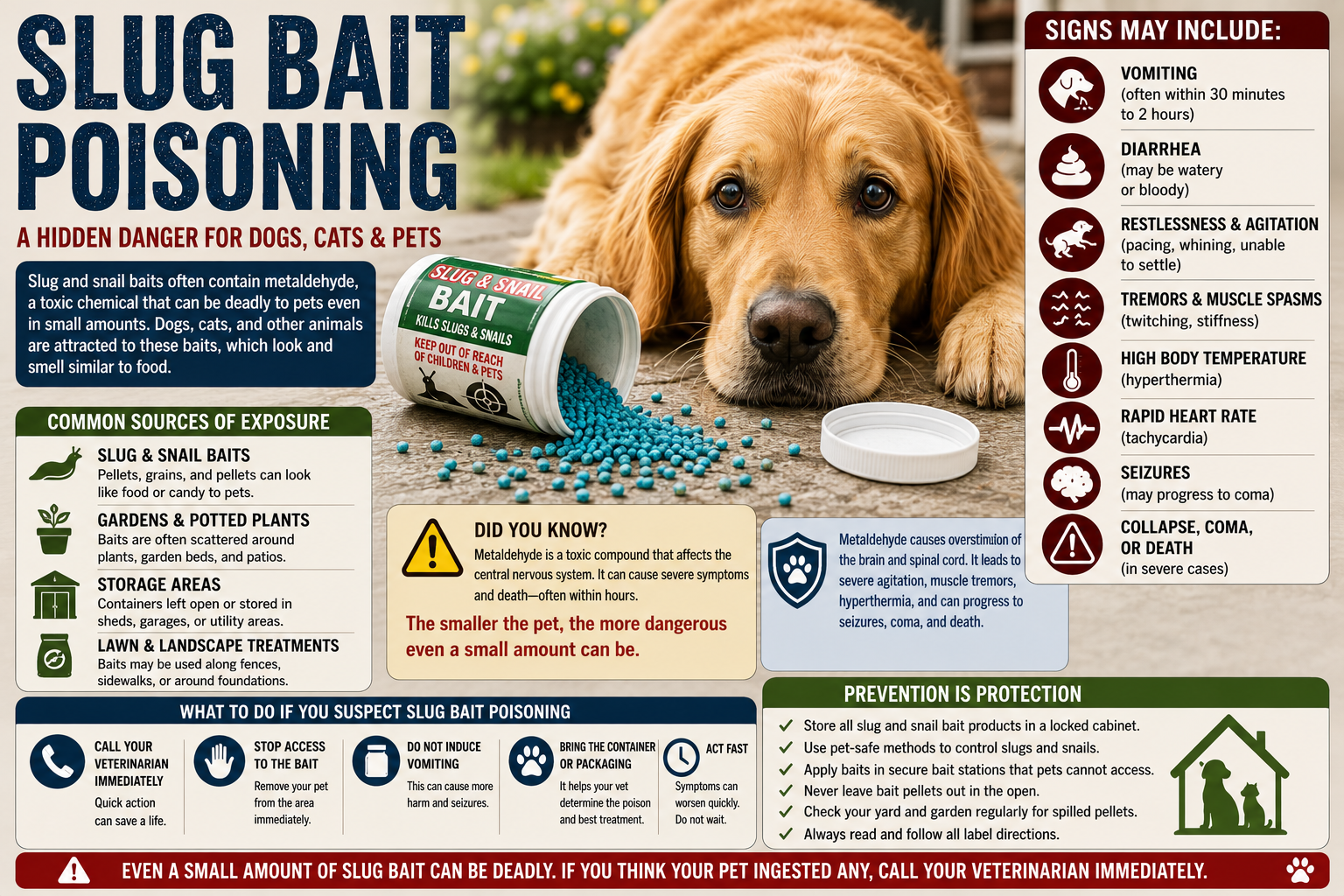
Yes. Slug and snail bait can cause rapidly fatal poisoning, severe gastrointestinal injury, systemic iron toxicosis, or cholinergic crisis depending on the active ingredient. Metaldehyde products are especially dangerous because tremors, seizures, extreme body-temperature elevation, metabolic derangement, respiratory failure, and death can develop quickly. Iron phosphate and ferric sodium EDTA products are often marketed as lower-risk alternatives, but large ingestions can still cause vomiting, abdominal pain, hemorrhagic gastroenteritis, dehydration, liver injury, cardiovascular collapse, and clinically important iron exposure.
The front of the package may emphasize words such as natural, organic, pet-friendly, child-resistant, iron-based, rain-resistant, or safer. Those descriptions do not identify the actual veterinary risk. The complete pesticide label, active ingredient, percentage, formulation, package size, amount missing, application rate, and every co-ingredient or fertilizer component must be evaluated. Older, imported, farm, or stored products may contain methiocarb or another carbamate rather than metaldehyde or iron.
Bait pellets are deliberately attractive to slugs and may also appeal to dogs because of grain, bran, molasses, oil, flavoring, or other food-like carriers. Exposure can occur directly from an open bag, after lawn or garden application, from spilled granules, contaminated soil, compost edges, greenhouses, farm stores, sheds, or products carried into a home on shoes and tools. A pet can appear normal during an early interval and then deteriorate rapidly.
About this guide: This page provides general pet-poisoning information and cannot diagnose or treat an individual animal. For any suspected exposure, contact a veterinarian or animal poison-control service immediately. Do not induce vomiting, give medication, or attempt home decontamination unless directed by a veterinary professional.
Agent and Exposure Profile
Quick Reference
Slug Bait Active Ingredients, Formulations, and Product Recognition
Metaldehyde
Metaldehyde is a cyclic polymer of acetaldehyde used in pellets, granules, meal baits, pastes, liquids, and other molluscicide formulations. Dogs are the most frequently reported companion-animal patients because they may consume large quantities of palatable bait, but cats, birds, livestock, wildlife, and other animals can also be exposed. Product concentration varies, and a low-percentage product can still deliver a dangerous amount when an animal eats a large volume.
Metaldehyde toxicosis is primarily a neurologic and metabolic emergency rather than a simple gastrointestinal upset. Clinical reports describe rapid onset of tremors, muscle twitching, seizures, hyperesthesia, ataxia, hypersalivation, vomiting, hyperthermia, and prolonged abnormal muscle activity. There is no specific antidote that reverses the toxin; outcome depends on rapid decontamination when safe, aggressive seizure control, temperature management, airway support, perfusion, correction of metabolic abnormalities, and sustained monitoring.
Iron phosphate and ferric phosphate
Iron phosphate products are commonly promoted as a lower-risk alternative to metaldehyde. Their iron is generally less bioavailable than soluble iron salts, and exposure reports have shown fewer severe outcomes than metaldehyde. That difference is not a guarantee of safety. Large ingestions can cause vomiting and diarrhea, and published surveillance has identified suspected iron toxicosis after iron phosphate molluscicide exposure.
The label may list ferric phosphate, iron phosphate, or iron(III) phosphate. Owners should not estimate risk from the percentage alone because total product ingestion, bait matrix, other ingredients, patient size, and the chemical form of iron influence exposure. A product marketed for organic gardening can still require emergency veterinary assessment.
Ferric sodium EDTA and iron EDTA
Ferric sodium EDTA, sodium ferric EDTA, and iron EDTA are chelated iron compounds used in some slug and snail products. Chelation improves iron solubility and can increase gastrointestinal availability compared with poorly soluble iron phosphate. Case series have documented abdominal pain, vomiting, diarrhea, hemorrhagic gastroenteritis, elevated serum iron, hepatic injury, cardiovascular dysfunction, and the need for deferoxamine chelation in affected dogs.
Recent multicenter studies show that many dogs survive with prompt treatment, but severe organ injury and death can occur. Those studies also caution against forcing every canine case into the classic human four-stage iron-poisoning timeline. Veterinary teams should follow the actual product, clinical signs, serum iron timing, acid-base status, perfusion, and organ trends.
Methiocarb and other carbamate products
Methiocarb is a carbamate acetylcholinesterase inhibitor historically used in slug and snail baits. Availability varies by country and regulatory period, but old containers, imported products, farm stock, unlabeled pellets, and mixed pesticide storage can preserve exposure risk. Carbamate poisoning can cause salivation, tearing, vomiting, diarrhea, urination, constricted pupils, slow or rapid heart rate, breathing difficulty, weakness, tremors, and seizures.
A carbamate product requires a different emergency approach from metaldehyde or iron. The pesticide label is therefore essential. Color, pellet shape, package claims, or where the product was found cannot reliably identify the active ingredient.
Mixed formulations and unknown products
Some products combine molluscicides with insecticides, fertilizers, repellents, or other garden chemicals. Granules may be transferred into an unmarked shaker, mixed in a shed, or scattered over soil where the original package is no longer available. When the ingredient is unknown, the veterinarian must prepare for overlapping neurologic, cholinergic, gastrointestinal, hepatic, renal, cardiovascular, and foreign-material hazards rather than assume a single toxin.
Where Slug and Snail Baits Are Found
Lawns, gardens, patios, and landscaped areas
Pellets and granules may be scattered around vegetable gardens, flower beds, hostas, groundcover, raised beds, mulch, compost piles, greenhouse benches, patios, foundations, retaining walls, damp walkways, irrigation areas, and places where pet food or water is stored outdoors. Rain, watering, mowing, leaf blowing, and foot traffic can move bait beyond the intended application zone.
Bags, tubs, shakers, and refill containers
Dogs may consume far more product from an open package than from a correctly applied area. Common access points include garages, sheds, utility rooms, farm stores, potting benches, vehicles, trash cans, recycling bins, torn shipping boxes, and bags left beside garden tools. A chewed package may leave only a partial label, so preserve every fragment.
Agricultural, nursery, greenhouse, and facility settings
Molluscicides may be used around nurseries, greenhouses, farms, orchards, kennels, boarding facilities, garden centers, warehouses, feed areas, and commercial landscaping. Concentrated stock and bulk bags create a different exposure scale from household packets. Horses, goats, cattle, pigs, poultry, barn cats, and working dogs may reach treated soil, spilled bait, contaminated feed, or improperly stored product.
Old, imported, or unidentified products
Products kept for years may no longer match current local formulations. Imported baits can use active ingredients or concentrations that differ from familiar brands. Handwritten containers, reused food jars, unmarked scoops, and mixed garden supplies make visual identification unreliable. The registration number, active-ingredient panel, manufacturer, lot number, and country of origin can help the veterinary team identify the product.
Products that are not true molluscicide baits
Diatomaceous earth, copper barriers, wool pellets, lime, salt, essential-oil products, beer traps, and mechanical slug deterrents may be sold near molluscicides but have different hazards. Some can still irritate the mouth, eyes, skin, or respiratory tract, and salt or caustic materials can cause serious poisoning. A product should be assessed from its actual label rather than the shelf category where it was purchased.
Slug Bait Exposure Scenarios and Risk Factors
Eating directly from the package
A dog may tear open a bag or tub and ingest a concentrated mass of pellets before anyone notices. The amount remaining on the floor does not reliably show how much was swallowed because pellets may be crushed, carried away, buried in bedding, or eaten by more than one animal. Package size, starting weight, and photographs can help estimate the maximum possible exposure.
Eating bait after outdoor application
Freshly scattered granules can be more visible and attractive, but weathered bait is not automatically safe. Rain-resistant carriers may persist, and dissolved or fragmented material can collect near puddles, drainage edges, planters, or low spots. Dogs that forage, eat soil, lick wet paws, or investigate compost are at particular risk.
Multiple animals and uncertain ingestion
When several pets share a yard, the animal that first develops signs may not be the only one exposed. Metaldehyde signs can appear quickly, while iron-product signs may be delayed or primarily gastrointestinal. Separate all animals, record each weight and behavior, and do not divide the missing amount evenly.
Small patients and species differences
A handful of pellets represents a much larger dose for a toy-breed dog, puppy, kitten, rabbit, bird, reptile, or small mammal than for a large adult dog. Rabbits cannot vomit, birds can deteriorate rapidly, and reptiles may show delayed or subtle signs. Veterinary evidence is deepest in dogs, but limited published data for another species should not be interpreted as proof of safety.
Concurrent heat, exertion, or disease
Metaldehyde-associated tremors and seizures generate intense muscle heat. Warm weather, delayed transport, strenuous restraint, brachycephalic airway disease, obesity, cardiac disease, or preexisting neurologic disease can worsen hyperthermia and oxygen demand. Iron-containing products may be more dangerous in dehydrated animals or patients with liver, gastrointestinal, kidney, or metabolic disease.
Co-ingestion of packaging, soil, fertilizer, or other pesticides
Animals may swallow plastic, foil, cardboard, scoops, mulch, compost, fertilizer granules, insecticides, herbicides, or rodenticides along with the bait. These materials can add obstruction, aspiration, caustic injury, electrolyte disturbance, vitamin D toxicity, anticoagulant effects, or unrelated neurologic signs. Every product in the area belongs in the exposure history.
Slug Bait Poisoning Symptoms and Clinical Progression
Metaldehyde: rapid neurologic excitation
Metaldehyde signs often begin within hours and may start sooner after a large ingestion. Early findings can include anxiety, restlessness, hypersensitivity to sound or touch, panting, drooling, vomiting, ataxia, muscle twitching, and tremors. Progression can include continuous tremors, generalized seizures, rigid extension, uncontrolled paddling, loss of consciousness, and respiratory failure.
Repeated muscle activity can drive body temperature to dangerous levels and contribute to lactic acidosis, dehydration, low blood pressure, rhabdomyolysis, kidney injury, coagulation abnormalities, and multi-organ dysfunction. A dog may cycle between apparent improvement and renewed tremors as sedative medications wear off or toxin absorption continues.
Iron phosphate and iron EDTA: gastrointestinal and systemic injury
Iron-containing baits may cause vomiting, diarrhea, appetite loss, lethargy, abdominal pain, dehydration, and blood in vomit or stool. Iron EDTA case series have documented hemorrhagic gastroenteritis and elevated serum iron. Severe patients may develop metabolic acidosis, shock, abnormal liver values, hypoglycemia or hyperglycemia, coagulation abnormalities, weakness, arrhythmias, cardiovascular collapse, or acute hepatic failure.
An initially normal examination does not exclude later illness. Recent canine studies found that a substantial proportion of dogs had no clinical signs before presentation, while others progressed after admission. Temporary improvement should not be treated as proof that systemic iron injury will not develop.
Methiocarb and carbamates: cholinergic signs
Carbamate exposure may produce profuse salivation, tearing, urination, vomiting, diarrhea, abdominal cramping, constricted pupils, bronchial secretions, coughing, breathing difficulty, weakness, slow heart rate, rapid heart rate, muscle twitching, tremors, seizures, and collapse. The combination of wet secretions, respiratory compromise, and neuromuscular dysfunction can become life-threatening quickly.
Mixed or unknown product patterns
A patient with both severe tremors and hemorrhagic diarrhea may have a mixed product, multiple exposures, aspiration, thermal injury, or secondary complications. Marked sedation is not typical of uncomplicated early metaldehyde poisoning and may indicate another pesticide, medication, or exhaustion after prolonged seizures. Product identification and serial reassessment are essential.
Delayed complications
After the immediate crisis, animals may develop aspiration pneumonia, persistent hyperthermia injury, kidney dysfunction from pigment or poor perfusion, liver injury, gastrointestinal ulceration, pancreatitis, coagulopathy, neurologic deficits, or weakness related to prolonged hospitalization. Recurrent vomiting, jaundice, dark urine, reduced urination, coughing, fever, or renewed neurologic signs require prompt reassessment.
First Aid for Suspected Slug Bait Exposure
- Remove access to the bait and prevent every other animal from entering the treated or spilled area.
- Preserve the complete package, active-ingredient panel, registration number, remaining product, receipt, and photographs of the application site.
- Record the product percentage, maximum amount missing, earliest and latest exposure time, patient weight, and every sign already observed.
- Contact a veterinarian or emergency hospital immediately even when the animal still appears normal.
- Do not induce vomiting at home. Tremors, seizures, reduced consciousness, aspiration risk, and rapidly changing neurologic status can make emesis dangerous.
- Do not give activated charcoal unless a veterinarian directs it. Its usefulness depends on the active ingredient, timing, airway protection, and whether repeated dosing is safe.
- Do not give home sedatives, alcohol, cannabis products, antihistamines, muscle relaxants, calcium, magnesium, iron supplements, antacids, food, or oil.
- Keep a trembling or seizing animal away from stairs, water, sharp objects, and excessive stimulation. Do not place hands near the mouth.
Transporting a neurologically abnormal animal
Dim lights, reduce noise, and minimize unnecessary handling. Use a blanket, crate, or flat surface to prevent falls while preserving breathing. Do not wrap a hot, panting animal in heavy bedding. Call ahead so the hospital can prepare anticonvulsants, airway equipment, temperature management, intravenous access, and monitoring.
If a seizure is continuous or repeated, transport immediately rather than attempting prolonged home cooling or cleaning. Do not force water into the mouth. A veterinarian may advise gentle external cooling during transport, but ice-water immersion and extreme cooling can cause vasoconstriction, shivering, and additional stress.
Contaminated paws, coat, or skin
Prevent licking and wear gloves while removing visible dry granules. When the patient is stable and the product label does not prohibit water, gentle washing with mild dish soap and lukewarm water may reduce dermal transfer. Do not delay emergency transport for a symptomatic animal, and avoid spreading runoff where another animal can drink it.
Evidence matters
Bring the package even when it appears empty. Photograph both the front and the detailed ingredient panel because brand families can sell different formulations under similar names. A veterinarian cannot safely infer metaldehyde, iron phosphate, iron EDTA, or carbamate exposure from pellet color alone.
Slug Bait Toxicology and Mechanism
Metaldehyde neurotoxicity
Metaldehyde is converted in part to acetaldehyde, but its veterinary neurotoxicity is not explained by one fully established pathway. Experimental and clinical evidence supports disruption of inhibitory neurotransmission and changes in gamma-aminobutyric acid, serotonin, norepinephrine, and related central nervous system signaling. The result is loss of normal motor inhibition, tremors, seizures, hyperesthesia, and autonomic instability.
Muscle activity becomes a secondary source of injury. Sustained tremors and convulsions increase oxygen consumption, carbon dioxide production, lactate, and heat. Hyperthermia, acidosis, hypoxia, hypotension, and rhabdomyolysis can then amplify neurologic and organ damage even after gastrointestinal absorption slows.
Iron phosphate and iron bioavailability
Ferric phosphate is relatively insoluble, which generally limits iron absorption compared with soluble iron salts. Nonetheless, formulation ingredients, gastric conditions, total product volume, and patient factors can make exposure clinically important. Surveillance data have associated iron phosphate baits with gastrointestinal signs and suspected iron toxicosis, even though severe outcomes are less common than with metaldehyde.
Why iron EDTA is different
EDTA chelation keeps iron more soluble and can facilitate gastrointestinal availability. Once transferrin binding capacity is exceeded, non-transferrin-bound iron promotes oxidative injury, lipid peroxidation, mitochondrial dysfunction, mucosal necrosis, vasodilation, impaired cellular metabolism, hepatic injury, and shock. Serum iron is therefore interpreted with timing and clinical status rather than as an isolated yes-or-no test.
Carbamate acetylcholinesterase inhibition
Methiocarb and related carbamates inhibit acetylcholinesterase, allowing acetylcholine to accumulate at muscarinic, nicotinic, and central nervous system receptors. Excess secretions, gastrointestinal hyperactivity, bronchoconstriction, heart-rate abnormalities, weakness, fasciculations, tremors, and seizures can occur together. Carbamate inhibition is generally reversible, but severe respiratory and neurologic effects still require immediate treatment.
Evidence boundaries
Most detailed veterinary outcome data involve dogs. Exposure frequency, product availability, and formulation differ among countries and over time. Published case series cannot establish one universal safe dose for every bait, and ingredient percentages do not capture the amount swallowed, carrier effects, co-ingredients, patient size, or delayed presentation. Label-specific assessment is more reliable than broad claims that a product category is pet-safe.
Clinical Management
Veterinary Care and Prognosis
Veterinary Diagnosis and Treatment
Emergency stabilization and product identification
The veterinary team prioritizes airway, breathing, circulation, neurologic status, body temperature, glucose, perfusion, blood pressure, and control of active tremors or seizures. At the same time, the label is reviewed for metaldehyde, ferric phosphate, ferric sodium EDTA, methiocarb, fertilizer ingredients, and other pesticides. Treatment begins from the clinical syndrome when the product is unknown rather than waiting for perfect identification.
Professional decontamination
Emesis may be considered only in an alert, neurologically normal patient after a recent exposure when aspiration risk is low. Once tremors, sedation, seizures, abnormal swallowing, or respiratory compromise develops, airway protection becomes more important than inducing vomiting. Gastric lavage under anesthesia may be considered in selected severe metaldehyde exposures, and activated charcoal may be used when the ingredient and clinical condition support it.
Iron is not effectively bound by activated charcoal. Charcoal may still be relevant for a separate co-ingested pesticide, but it should not delay iron-specific assessment or create aspiration risk. Whole-bowel irrigation, endoscopy, or other removal strategies are case-specific and depend on product volume, imaging, timing, and patient stability.
Metaldehyde seizure and temperature control
There is no specific metaldehyde antidote. Benzodiazepines, anesthetic agents, muscle relaxants, or other anticonvulsant strategies may be required to stop tremors and seizures. Refractory patients may need intubation, ventilation, continuous infusions, and intensive temperature monitoring. Active cooling is controlled and stopped before overshoot hypothermia develops.
Intravenous crystalloids support perfusion and help correct dehydration and metabolic disturbance. Electrolytes, glucose, acid-base status, lactate, kidney values, creatine kinase, urine output, coagulation, and liver values may require serial testing. Persistent hypotension after appropriate fluid resuscitation may require vasopressor support.
Iron-product evaluation and chelation
For iron phosphate or iron EDTA exposure, testing may include complete blood count, serum chemistry, blood gas, lactate, glucose, coagulation profile, urinalysis, liver and kidney values, and timed serum iron concentrations. Results are interpreted against the exposure window because serum iron rises and falls as absorption and tissue distribution change.
Deferoxamine chelation may be indicated when exposure history, serum iron, clinical signs, and systemic injury support significant iron toxicosis. Published canine iron EDTA series document good survival with prompt care but also show that deferoxamine can cause serious adverse reactions when administered incorrectly. Public dosing instructions are intentionally omitted.
Carbamate-directed treatment
Atropine can reduce life-threatening muscarinic signs such as bronchial secretions and bradycardia in carbamate poisoning, but it does not directly reverse nicotinic weakness or every neurologic sign. Oxygen, suction, airway management, anticonvulsants, fluids, temperature control, and repeated examination may be needed. Cholinesterase testing can support diagnosis but should not delay treatment of a compatible crisis.
Monitoring for secondary complications
Severe patients are monitored for aspiration pneumonia, rhabdomyolysis, acute kidney injury, hepatic failure, arrhythmias, coagulopathy, gastrointestinal bleeding, pancreatitis, and recurrent seizures. Nutritional support, antiemetics, analgesia, mucosal protection, blood products, oxygen, and ventilatory care are selected according to the evolving injury pattern.
Prognosis, Recovery, and Follow-Up
Metaldehyde outcome
Many dogs recover when treatment begins before prolonged seizures, extreme hyperthermia, aspiration, shock, or multi-organ injury develops. Published series nevertheless document fatalities, and the early course can be violent. The amount ingested, delay to treatment, duration of tremors, peak temperature, acid-base disturbance, respiratory status, and response to anticonvulsants all influence prognosis.
Iron-based bait outcome
Iron phosphate exposures often produce milder disease than metaldehyde, but large or uncertain ingestions still require assessment. Dogs with iron EDTA toxicosis frequently survive with prompt gastrointestinal care, monitoring, and chelation when indicated. Prognosis becomes guarded with hemorrhagic gastroenteritis, shock, severe acidosis, arrhythmias, hepatic failure, coagulopathy, or delayed presentation.
Carbamate outcome
Rapid recognition and respiratory support can produce a favorable outcome in methiocarb poisoning, but heavy secretions, bronchoconstriction, weakness, seizures, aspiration, and delayed treatment increase risk. Because old or imported products may be involved, uncertainty about the ingredient can complicate early management.
After discharge
Owners should follow all medication, feeding, activity, and recheck instructions. Return promptly for recurrent tremors, twitching, abnormal behavior, vomiting, diarrhea, blood, poor appetite, abdominal pain, weakness, jaundice, coughing, breathing difficulty, dark urine, reduced urination, fever, or collapse. Normal behavior immediately after discharge does not replace scheduled laboratory follow-up after systemic iron exposure or severe hyperthermia.
Preventing Slug and Snail Bait Poisoning
Use nonchemical controls where practical
Remove hiding places, reduce unnecessary moisture, repair irrigation leaks, hand-pick slugs, use physical barriers, elevate pet food, and manage compost and vegetation before relying on bait. Every control method still needs evaluation for species-specific hazards; salt, lime, essential oils, sharp materials, and poorly designed traps can injure pets.
Read the entire label before purchase and application
Identify the active ingredient and percentage rather than relying on the brand family or front-panel claims. Do not assume that iron phosphate and ferric sodium EDTA are interchangeable. Avoid products whose ingredient panel cannot be read, and retain the original label until the product is completely used and safely discarded.
Block access during storage and application
- Store bait in its original closed container inside a locked or latched cabinet.
- Keep bulk bags, scoops, spreaders, and opened packages out of garages, sheds, barns, and vehicles accessible to animals.
- Remove pets from the area before application and follow every label restriction before allowing reentry.
- Clean spills immediately and account for torn bags, leftover granules, and contaminated tools.
- Do not transfer bait into food containers, jars, or unlabeled shakers.
Protect multi-pet, farm, and facility environments
Boarding facilities, daycares, rescues, kennels, farms, nurseries, and landscaping crews should document every pesticide used on or near animal areas. Staff should know where labels and safety information are kept, close treated spaces, inspect footwear and tools, and report missing product immediately. Outdoor contractors should be required to disclose active ingredients before application.
Dispose of old and unidentified products safely
Use local hazardous-waste or pesticide-disposal programs. Do not place loose pellets or partially full containers in open trash where animals or wildlife can reach them. Old methiocarb or metaldehyde stock should not be kept simply because the package is still sealed.
Slug Bait Poisoning FAQ
Is metaldehyde slug bait always blue or green?
No. Pellet color is not a dependable ingredient test. Manufacturers use different dyes and carriers, and iron or carbamate products may look similar. Use the active-ingredient panel and registration information.
Is iron phosphate slug bait safe for dogs?
It is generally less likely than metaldehyde to cause severe neurologic poisoning, but it is not harmless. Large ingestions can cause gastrointestinal illness and suspected iron toxicosis. The exact amount and product still require veterinary assessment.
Is ferric sodium EDTA the same as iron phosphate?
No. Ferric sodium EDTA is a chelated, more soluble iron compound. Published canine cases and retrospective studies document hemorrhagic gastroenteritis, elevated serum iron, organ injury, chelation therapy, and occasional severe outcomes after iron EDTA molluscicide ingestion.
How quickly can metaldehyde signs start?
Signs can begin within an hour and commonly develop within the first several hours. A normal animal immediately after exposure may still deteriorate rapidly, so treatment decisions should not wait for tremors or seizures.
Why does metaldehyde make a dog dangerously hot?
Continuous tremors and seizures generate intense muscle heat and increase metabolic demand. Hyperthermia then worsens cellular injury, dehydration, acidosis, and organ stress. Temperature control is part of emergency treatment, not a substitute for seizure control.
Can I make my dog vomit before the tremors begin?
Do not induce vomiting at home. Neurologic deterioration can be sudden, and aspiration can be fatal. A veterinarian may induce emesis in a carefully selected alert patient with a protected airway and a recent exposure.
Does activated charcoal work for every slug bait?
No. Use depends on the active ingredient, timing, and airway status. Activated charcoal does not bind iron effectively and can be dangerous in a trembling, sedated, vomiting, or seizing patient.
My dog ate bait labeled natural or organic. Is emergency care still necessary?
Yes. Marketing and agricultural certification do not establish veterinary safety. Iron-based products can cause significant illness, and the carrier or co-ingredients may add other hazards.
What if the package says pet-friendly?
Treat that phrase as a use claim, not a guarantee after ingestion. Confirm the active ingredient and amount, preserve the label, and obtain veterinary guidance. A product intended to reduce risk can still poison an animal that eats the bag.
Can a dog be poisoned by licking treated soil or paws?
Yes, depending on the amount of residue and product. Repeated licking, wet granules stuck between toes, and access to concentrated spills can produce meaningful exposure. Prevent licking and contact a veterinarian with the label.
Can cats be poisoned by slug bait?
Yes. Reports are less common than in dogs, partly because cats are less likely to eat large volumes of bait, but metaldehyde, carbamates, iron products, and contaminated fur or paws can still cause serious illness.
What if several pets were in the yard?
Separate them, record each weight and signs, preserve the product, and report the maximum possible exposure for every animal. Do not assume the symptomatic pet ate all of it or divide the missing amount evenly.
Can an X-ray show slug bait?
Most pellets are not reliably identified on radiographs. Imaging may still be useful for packaging, obstruction, aspiration complications, or another foreign material. Product history and clinical syndrome remain central.
Is there an antidote for metaldehyde?
No specific antidote is established. Treatment focuses on stopping tremors and seizures, controlling temperature, protecting the airway, supporting circulation, correcting metabolic abnormalities, and limiting further absorption when safe.
Why would a veterinarian measure serum iron after slug bait ingestion?
Iron phosphate and especially iron EDTA products can produce clinically important iron exposure. Timed serum iron concentrations, liver values, acid-base status, and clinical signs help determine whether systemic toxicosis and chelation are concerns.
Could old slug bait contain a different poison than current products?
Yes. Methiocarb and other formulations may remain in old, imported, farm, or unlabeled stock. Never identify an old product by color or memory. Preserve the container and registration information.
Can a pet relapse after seeming better?
Yes. Sedatives can temporarily suppress metaldehyde tremors, and iron-related liver or gastrointestinal injury can emerge after early improvement. Recurrent neurologic signs, vomiting, blood, jaundice, weakness, or breathing changes require reassessment.
How long should pets stay away from a treated area?
Follow the exact label and any stricter veterinary or facility rule. Rain or drying does not automatically make pellets safe. Prevent access until the product has been applied exactly as directed, spills are removed, and no reachable bait remains.