Pressure-Treated Lumber, Railroad Tie, and Preservative-Treated Wood Exposure
Is Treated Wood Dangerous to Dogs, Cats, Horses, and Other Animals?
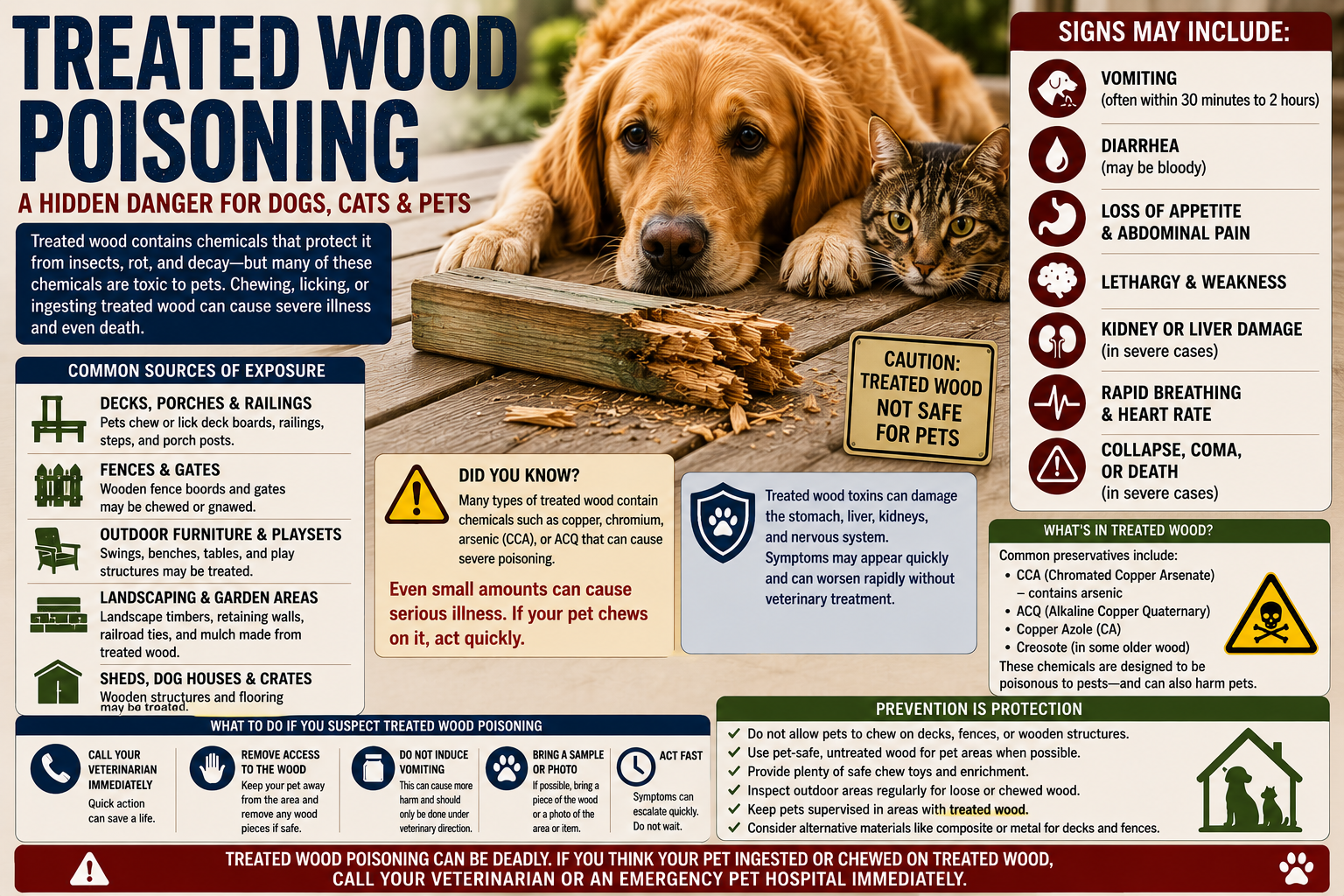
Yes. Treated wood can be dangerous because the hazard is not just “wood.” Older lumber and landscape timbers may contain chromated copper arsenate (CCA) or other preservatives, newer pressure-treated lumber may contain alkaline copper quaternary compounds (ACQ), copper azole, micronized copper systems, or borate preservatives, and specialty products such as railroad ties, bridge timbers, and utility poles may contain creosote or pentachlorophenol. Animals can be exposed by chewing boards, swallowing splinters or sawdust, licking treated surfaces, contacting ash from burned treated wood, or ingesting preservative residue in soil, bedding, or runoff.
The clinical risk depends on the treatment chemistry, the age and intended use of the wood, whether it was freshly cut or weathered, the amount actually swallowed, and whether nails, staples, screws, paint, stain, adhesive, or hardware were involved. In many cases the immediate problem is a mixed one: gastrointestinal irritation, oral trauma, splinters, obstruction, or perforation plus exposure to copper, arsenic, chromium, borates, creosote phenols, or other preservatives.
Dogs are exposed most often because they chew decking boards, garden-bed lumber, railroad ties, fence posts, mulch, sawdust, and construction scraps. Horses may crib or chew fencing and boards, cats may contact treated surfaces or sawdust, and livestock or poultry may reach construction debris, ash, or contaminated bedding. Burning treated wood creates another category of risk because ash can concentrate toxic components and should never be assumed to be safe around animals.
About this guide: This page provides general pet-poisoning information and cannot diagnose or treat an individual animal. For any suspected exposure, contact a veterinarian or animal poison-control service immediately. Do not induce vomiting, give medication, or attempt home decontamination unless directed by a veterinary professional.
Agent and Exposure Profile
Quick Reference
Treated Wood Types and Preservative Chemicals
Chromated Copper Arsenate (CCA)
Older pressure-treated lumber often contained chromated copper arsenate, a preservative system using chromium, copper, and arsenic. CCA was widely used in decks, play structures, landscape timbers, fence posts, and outdoor lumber for many years. New residential use has been restricted in the United States, but older structures and salvaged wood remain in service and can still expose animals.
Alkaline Copper Quaternary (ACQ) and Copper Azole
Many newer pressure-treated boards use ACQ, copper azole, or related copper-based preservatives. These products replaced many residential CCA uses, but they are not “pet safe” chew toys. Large splinter ingestion, sawdust exposure, and swallowed preservative residue can still produce gastrointestinal upset, copper exposure, and physical injury.
Borate-Treated Wood
Borate preservatives are used in some protected interior structural wood and insect-control applications. They are generally less weather-stable and are not interchangeable with exterior ground-contact products. Borates can still cause vomiting, diarrhea, weakness, and larger-dose systemic toxicity if enough wood dust, powder, or preservative is swallowed.
Creosote-Treated Timbers and Railroad Ties
Creosote is a complex coal-tar distillate used historically in railroad ties, bridge timbers, marine pilings, and some utility applications. It contains phenolic and polycyclic aromatic compounds that can irritate the skin and gastrointestinal tract and may produce systemic toxicity after significant exposure. Railroad ties used in landscaping deserve special caution because animals may chew, lie on, or lick them.
Pentachlorophenol and Utility-Pole Preservatives
Pentachlorophenol was used in utility poles and heavy timbers and may remain relevant in older materials. Modern restrictions have reduced common residential use, but salvaged materials, barns, outbuildings, and agricultural settings can still present exposure. Pentachlorophenol is a serious toxicant with potential systemic effects beyond simple stomach upset.
Other Construction Hazards Mixed with Treated Wood
Paint, stain, adhesives, sealants, fasteners, mold, rodenticide residue, lead-containing old coatings, insulation, fiberglass, nails, screws, and splintered fragments may accompany treated-wood exposure. The “wood” may therefore represent a combined toxicology and foreign-body emergency rather than one preservative issue alone.
Where Treated-Wood Exposure Happens
Decks, Fences, Garden Beds, and Landscape Timbers
Dogs commonly chew deck boards, stair corners, fence rails, raised-bed boards, retaining timbers, and landscaping lumber. Older gardens and playground-style structures may include CCA-treated wood or reused railroad ties, while newer installations may use ACQ or copper azole. Weathering does not eliminate physical injury from splinters or confirm that preservative residue is gone.
Construction Sites, Home Projects, and Scrap Piles
Home renovations and farm repairs create sawdust, offcuts, pressure-treated scraps, and exposed fasteners. Puppies and working dogs may chew scraps or lick sawdust-covered surfaces. Freshly cut wood may leave easier-to-swallow splinters and more accessible preservative dust.
Railroad Ties, Utility Poles, and Barn Materials
Railroad ties, utility-pole sections, corral boards, and salvaged timbers are still used in landscaping, edging, and agricultural structures. Horses may crib on these materials, livestock may rub or lick them, and farm dogs may chew or sleep against them. Creosote and pentachlorophenol exposures are especially relevant here.
Mulch, Sawdust, and Bedding Contamination
Treated wood should not be mulched for animal areas, but chipped scrap, sawdust, or woodworking debris can contaminate soil, kennels, poultry runs, bedding, or manure areas. Birds and small mammals are especially vulnerable to fine dust and contaminated substrate. Wood ash from burned treated lumber may also be spread or stored where animals can reach it.
Burn Piles, Fire Pits, and Ash
Burned treated wood is hazardous because ash can contain concentrated preservative components such as arsenic, chromium, or copper. Dogs may walk through ash and groom it from their paws, or children and owners may accidentally spread contaminated ash into yards or gardens. Fire pits, outdoor boilers, and brush piles require special caution when treated wood was burned.
Chew Toys, Enclosures, and DIY Animal Housing
Improvised dog houses, rabbit hutches, bird perches, reptile enclosures, and livestock structures sometimes use scrap treated lumber or old painted boards. Direct, prolonged contact in an enclosed environment can increase oral, skin, and inhalation exposure compared with an occasional backyard encounter.
Exposure Scenarios and Risk Factors
Common Pet and Livestock Scenarios
- A puppy chews pressure-treated decking, fence pickets, or raised-bed lumber.
- A dog swallows splinters, sawdust, or a chunk of treated board from a construction pile.
- A horse cribs on a fence board or landscape timber treated with copper or older preservatives.
- A pet licks or grooms ash after treated wood was burned in a fire pit or brush pile.
- An animal contacts or chews a railroad tie, utility-pole timber, or creosote-coated board.
- A bird or small mammal is housed on or near treated lumber, contaminated substrate, or sawdust.
- A pet swallows wood fragments plus nails, screws, paint chips, or sealant from a DIY project.
Age and Identity of the Wood Matter
Older treated wood may contain chemicals no longer used in modern residential lumber, especially CCA. Newer wood is more likely to be copper-based or borate-treated, but the product stamp, receipt, manufacturer data, or project age is still needed for identification. Owners should not guess the chemistry based only on color or appearance.
Fresh Cuts, Sawdust, and Ash Increase Access
Freshly cut board ends, sanding dust, drill residue, sawdust, and ash create preservative-rich small particles that are easier to lick or swallow than a solid board. These exposures may be overlooked because the owner sees only a dusty work area rather than obvious chewed wood.
Physical Injury Can Dominate the Emergency
Splinters, impaction, oral puncture wounds, choking, gastrointestinal obstruction, and perforation can be more urgent than systemic toxicosis. A large swallowed fragment or hardware-associated injury may require imaging, endoscopy, or surgery even if the preservative dose seems modest.
Species and Size Considerations
Puppies, toy dogs, birds, rabbits, and other small animals receive a larger exposure relative to body weight and are more vulnerable to obstruction from fragments. Horses and livestock can consume significant amounts while cribbing, but they may also have lower preservative dose exposure if they only surface-chew a board. The exposure route therefore matters as much as body size.
Treated-Wood Poisoning Symptoms and Related Injuries
Gastrointestinal Irritation
Vomiting, drooling, nausea, reduced appetite, abdominal pain, and diarrhea are common after treated-wood ingestion. Stool may contain splinters or blood if irritation becomes severe. Repeated vomiting can reflect both chemical irritation and a lodged fragment.
Oral Trauma and Foreign-Body Signs
Bleeding from the mouth, pawing at the face, difficulty swallowing, gagging, retching, and reluctance to eat may indicate oral splinters, embedded fragments, throat injury, or esophageal trauma. Wood fragments, nails, staples, and sharp edges can produce a surgical rather than purely toxicologic emergency.
Copper, Borate, and Preservative Effects
Copper-containing preservatives can add vomiting and gastrointestinal irritation, while borates may cause vomiting, diarrhea, weakness, and larger-dose systemic depression. Most minor exposures produce self-limited stomach upset, but dose increases sharply when an animal swallows dust, ash, or multiple fragments rather than simply mouthing a board.
Arsenic-Containing Wood Concerns
Older CCA-treated wood raises concern for arsenic exposure, particularly when wood ash, sawdust, or significant chewing is involved. Acute arsenic toxicosis can cause severe gastrointestinal signs, weakness, dehydration, cardiovascular compromise, and neurologic deterioration. Arsenic risk deserves greater attention when the material is known old pressure-treated wood, playground lumber, or burned residue from CCA wood.
Creosote and Pentachlorophenol Exposure
Creosote and pentachlorophenol can irritate the skin and gastrointestinal tract and may cause weakness, depression, tremors, or systemic illness with larger exposure. Animals contacting or chewing railroad ties or utility-pole materials deserve assessment even if outward signs begin as simple drooling or vomiting.
Delayed Obstruction or Perforation
An animal may seem improved after initial vomiting yet later develop persistent retching, abdominal pain, black stool, lethargy, fever, or refusal to eat because a splinter or fragment remained behind. Delayed perforation, abscess formation, or gastrointestinal obstruction should be considered whenever wood fragments were swallowed.
First Aid for Suspected Treated-Wood Exposure
Immediate Owner Actions
- Remove the animal from the area and prevent further chewing, licking, or ash contact.
- Collect the wood sample, product label, bundle tag, purchase record, or clear photographs of the material and project location.
- Note whether the wood was older CCA-era lumber, new pressure-treated lumber, a railroad tie, a utility-pole piece, or unknown scrap.
- Record whether sawdust, splinters, ash, nails, paint, stain, or battery tools were involved.
- Check the mouth only if it can be done safely and do not pull on deeply embedded splinters.
- Contact a veterinarian promptly, especially if fragments were swallowed or the preservative type is unknown.
Do Not Induce Vomiting Without Veterinary Direction
Do not give hydrogen peroxide, salt, mustard, or attempt manual gagging. Sharp splinters, nails, or hardware can worsen injury on the way back up. Vomiting also does not solve ash exposure or chemicals already absorbed from small particles.
Do Not Treat Ash or Dust as Harmless Dirt
Do not let the animal continue grooming contaminated paws or fur. Treated-wood ash can concentrate toxic components and should be removed only under safe guidance. A veterinarian may recommend careful bathing or foot washing with a mild cleanser after assessing the situation.
Do Not Feed Bread, Oil, or Bulky Foods to “Push It Through”
Owners sometimes try bread, pumpkin, grass, or oil after a splinter ingestion. These home remedies can delay imaging and do not prevent obstruction or perforation. The correct next step depends on the size and nature of the fragment and on whether the preservative itself is also a concern.
Safe Transport
Transport in a secure carrier or restrained area and bring the wood sample or product photos. Seek immediate care for persistent vomiting, mouth bleeding, choking, abdominal pain, collapse, black stool, severe weakness, or suspected arsenic-containing ash or treated-wood ingestion.
Treated-Wood Toxicology and Mechanisms
Why Treated Wood Is a Category, Not One Toxin
Treated wood refers to lumber or timbers preserved against rot, insects, marine damage, or weathering by very different chemical systems. CCA, ACQ, copper azole, borates, creosote, and pentachlorophenol do not share the same toxic mechanism, environmental persistence, or clinical risk. Accurate source identification is therefore central to diagnosis and treatment.
CCA and Arsenic Concerns
CCA contains chromium, copper, and arsenic fixed into wood fibers, but small amounts can still be released through weathering, cutting, sanding, and burning. Arsenic is the most serious systemic toxicology concern in many older treated-wood exposures. Ash from burned CCA lumber can contain concentrated arsenic and should be treated as hazardous material.
Copper-Based Preservatives
ACQ and copper azole products rely heavily on copper with additional co-biocides or quaternary compounds. Most pet exposures involve oral irritation and gastrointestinal upset rather than severe systemic copper poisoning, but substantial ingestion of shavings, dust, or preservative residue can increase risk. The physical wood burden often matters as much as the preservative chemistry.
Borate Toxicology
Borates disrupt cellular metabolism and can produce gastrointestinal signs, weakness, and more severe systemic illness at higher doses. Because borate-treated wood is often used where it remains protected from weather, exposures may involve sawdust, concentrate, or enclosed-space contamination rather than outdoor chewing alone.
Creosote and Phenolic Compounds
Creosote is a complex mixture with irritant, corrosive, and potentially systemic effects. Contact exposure can inflame the skin, while ingestion can injure the gastrointestinal tract and nervous system. Its strong odor does not make it easy to risk-rank because the concentration and amount actually transferred vary widely.
Pentachlorophenol
Pentachlorophenol is a chlorinated phenolic wood preservative associated with serious toxicology concerns in animals and humans. It can act as a metabolic toxicant and may produce hyperthermia, weakness, and multisystem illness in significant exposures. Utility-pole and industrial-timber contact is more relevant than modern residential deck boards.
Physical Injury Plus Chemical Exposure
Many treated-wood cases are mixed-mechanism emergencies. Splinters cause direct trauma, fragments obstruct the gastrointestinal tract, nails puncture tissue, ash contaminates fur and paws, and preservatives add toxicologic complexity. The correct management plan must address both the chemistry and the physical materials involved.
Evidence Boundaries
Published veterinary literature on treated-wood exposures is smaller than the literature for many drugs or pesticides, so management often relies on toxicologic principles, preservative-specific data, environmental health information, and case-based judgment. That makes source identification, sample preservation, and clinical monitoring especially important.
Clinical Management
Veterinary Care and Prognosis
Veterinary Diagnosis and Treatment
History and Source Identification
The veterinary team determines what type of wood was involved, whether the material was old or new, whether ash or sawdust was present, and whether the animal swallowed splinters, hardware, paint chips, or a large fragment. Product stamps, receipts, manufacturer information, photographs, and construction age can help distinguish CCA-era lumber from newer preservative systems.
Initial Stabilization
Airway, breathing, circulation, hydration, pain, temperature, neurologic status, and evidence of oral trauma or gastrointestinal bleeding are evaluated first. Severe vomiting, collapse, or suspected obstruction may require stabilization before detailed toxicology workup proceeds.
Oral Examination and Imaging
Oral splinters may need sedation for safe removal. Radiographs, ultrasound, and occasionally endoscopy are used to look for ingested wood fragments, metal fasteners, obstruction, perforation, or aspiration. Wooden material is not always radiopaque, so a normal initial radiograph does not completely exclude a retained fragment.
Laboratory Testing
Testing may include complete blood count, serum chemistry, electrolytes, urinalysis, blood-gas or acid-base assessment, and specific toxicant testing when arsenic or another preservative is strongly suspected. Liver and kidney values, hydration status, and acid-base changes help define severity. Ash or wood samples may sometimes be sent for laboratory analysis.
Gastrointestinal and Supportive Care
Treatment may include antiemetics, gastroprotective therapy, pain control, oral or esophageal care, intravenous crystalloids, nutritional support, and careful monitoring for bleeding or worsening abdominal pain. Persistent hypotension after appropriate fluid replacement may require vasopressor support. Public treatment doses are intentionally omitted.
Preservative-Specific Therapy
When arsenic exposure is strongly suspected or confirmed, chelation and aggressive supportive care may be considered along with fluid therapy and monitoring. Copper-dominant exposures are managed according to severity and clinical findings, while borate, creosote, or pentachlorophenol exposures require product-specific supportive and decontamination decisions. There is no single “treated wood antidote.”
Surgery, Endoscopy, and Delayed Complications
Endoscopic removal or surgery may be necessary for retained fragments, perforation, or obstructive material. Delayed rechecks are important because splinters can migrate, abscesses can form, and gastrointestinal signs can recur after apparent early improvement. Ash exposure cases may also need skin or paw decontamination and ongoing gastrointestinal monitoring.
Prognosis, Recovery, and Follow-Up
Mild Chewing Without Significant Ingestion
Prognosis is often good when an animal only mouthed a board briefly and did not swallow important amounts of splintered material, sawdust, or preservative-rich ash. These patients may show little more than transient gastrointestinal upset or mild oral irritation.
Guarded Situations
The outlook becomes more guarded when the animal swallowed large wood fragments, hardware, ash, railroad-tie material, or older CCA-treated wood; when persistent vomiting, black stool, or abdominal pain develops; or when arsenic, creosote, or pentachlorophenol exposure is suspected. Delayed presentation also worsens the risk of perforation and dehydration.
Physical Complications May Outlast the Toxic Episode
Even if the chemical exposure itself remains limited, oral wounds, esophageal injury, foreign bodies, obstruction, or perforation can extend recovery. Persistent retching, reluctance to eat, fever, drooling, or recurrent vomiting after initial improvement deserves re-evaluation.
After Discharge
Follow medication, feeding, activity, and recheck instructions closely. Return promptly for repeated vomiting, dark stool, abdominal pain, weakness, reduced appetite, mouth pain, difficulty swallowing, collapse, or any sign suggesting retained fragments or late-developing systemic illness.
Preventing Treated-Wood Exposure
Do Not Let Animals Chew Outdoor Lumber
Block access to decks, raised beds, fence corners, landscape timbers, and construction scraps that encourage chewing. Puppies, working dogs, and cribbing horses may need supervision, barriers, taste-deterrent plans approved by a veterinarian, or replacement of damaged boards.
Do Not Use Treated-Wood Scrap in Animal Areas
Do not chip treated wood for mulch, use treated sawdust for bedding, or build perches, chew surfaces, rabbit enclosures, or other direct-contact animal fixtures from questionable scraps. When the wood history is uncertain, choose untreated or clearly animal-safe materials instead.
Manage Construction and Carpentry Debris
Clean up scraps, sawdust, drill shavings, and fasteners promptly. Secure offcuts in covered bins and keep pets away from active work areas. Freshly cut treated boards should never be left where animals can chew or lick them.
Never Burn Treated Wood Around Animals
Do not burn pressure-treated lumber, railroad ties, or utility-pole scraps in fire pits, stoves, boilers, or burn piles used around pets or livestock. Dispose of ash safely and prevent any animal access to the fire area afterward.
Be Cautious with Salvaged Materials
Old playground lumber, railroad ties, fence posts, utility-pole pieces, and mystery timbers may contain preservative systems no longer used for common residential products. Avoid reusing them in gardens, kennels, barns, or animal housing unless their identity and safety are known.
Plan for Farms, Stables, and Multi-Animal Properties
Inspect cribbing surfaces, corrals, paddocks, and kennels for damaged treated boards or exposed salvage materials. Keep ash piles, sawdust, and demolition debris away from livestock and companion animals. Staff should report chewing damage or debris spills immediately.
Treated Wood FAQ
Is all pressure-treated wood arsenic treated?
No. Many newer residential products use copper-based preservatives such as ACQ or copper azole rather than CCA. Older structures and salvaged wood, however, may still contain CCA, so age and product history matter.
Is newer treated wood safe if my dog chews it?
No. Newer wood may pose less arsenic concern than older CCA lumber, but it can still cause splinter injury, obstruction, vomiting, and exposure to copper-based or borate preservatives. “Newer” does not mean harmless.
Are railroad ties dangerous to dogs?
Yes. Railroad ties are often associated with creosote treatment and should not be treated as pet-safe landscaping material for chewing or close-contact use. They also splinter and may contain surface residues.
What if my dog only ate a small splinter?
Even a small splinter can lodge in the mouth, throat, or gastrointestinal tract. The chemical exposure may be minor, but the physical injury can still be important. Watch for drooling, gagging, vomiting, pain, or trouble swallowing.
Is treated-wood ash dangerous?
Yes. Ash from burned treated wood may concentrate toxic preservative components such as arsenic, chromium, or copper. Paw contact followed by grooming can create an ingestion exposure.
Can horses be poisoned by chewing fence boards?
Yes. Horses may ingest splinters and preservative residue while cribbing or chewing boards. The risk depends on the wood type, the amount consumed, and whether the board was treated with copper, borates, creosote, or an older preservative system.
Can treated sawdust make pets sick?
Yes. Sawdust and cuttings are easier to lick or swallow than solid boards and may concentrate accessible preservative residue. They should never be used as bedding or left where animals can contact them freely.
What chemicals are most concerning in old treated wood?
Older wood can raise concern for arsenic from CCA, while railroad ties and industrial timbers may involve creosote or pentachlorophenol. These materials deserve more caution than a simple “chewed wood” assumption.
Can treated wood cause only stomach upset?
Yes, some mild exposures cause only vomiting or diarrhea. The problem is that the same history can also hide splinter injury, obstruction, perforation, or more serious chemical exposure, so symptom severity at the start does not always predict the full outcome.
Should I give bread or pumpkin after a splinter ingestion?
No. Bulking agents do not reliably protect the gut from sharp fragments and can delay appropriate imaging or endoscopic care. Let the veterinarian decide the safest next step.
How can I tell whether the wood was CCA treated?
Exact confirmation may require age, manufacturer data, project history, product stamps, or laboratory analysis. A greenish tint or outdoor use is not enough to identify CCA reliably.
Can cats be poisoned by treated wood too?
Yes. Cats are less likely than dogs to chew large boards, but they may contact treated sawdust, ash, or surfaces and then groom themselves. They can also swallow small fragments from DIY or enclosure materials.
Does sealing or painting treated wood remove the risk?
No. Surface coatings may reduce contact with some residue but do not make chewed boards, splinters, old paint chips, or burned ash safe. Coatings can add their own hazard if the animal swallows them.
What if my dog chewed a treated deck board with screws in it?
That should be treated as both a toxicology and foreign-body emergency. Metal hardware, splinters, and preserved wood together create a much higher-risk problem than preservative exposure alone.
Can treated wood be used in animal housing or perches?
It is generally a poor choice for direct-contact surfaces that animals chew, lick, perch on, or live around closely. When the material history is uncertain, untreated and animal-appropriate materials are safer.
When is treated-wood exposure most urgent?
Urgency increases when the animal swallowed fragments or ash, the wood may be old CCA lumber or a railroad tie, oral trauma is present, vomiting persists, black stool develops, or the animal seems weak, painful, or collapsed.