Venlafaxine, Effexor, Extended-Release Capsules, and Serotonin-Norepinephrine Toxicity
Is Venlafaxine (Effexor) Poisonous to Dogs, Cats, and Other Animals?
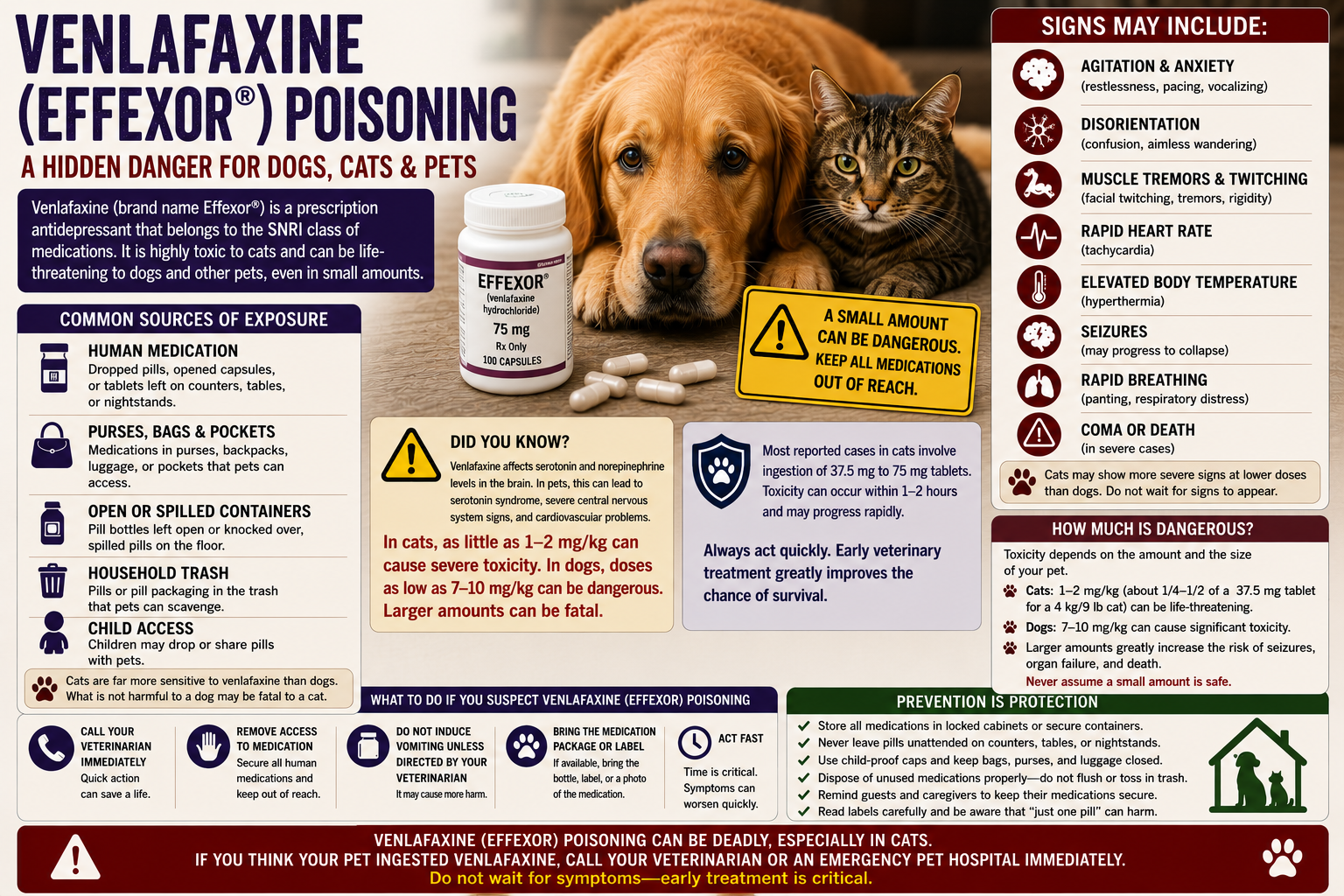
Yes. Venlafaxine can cause serious and potentially life-threatening poisoning in dogs and cats, including agitation, abnormal heart rate or blood pressure, tremors, hyperthermia, seizures, serotonin syndrome, collapse, and respiratory or cardiovascular complications. Cats are prominently represented in veterinary venlafaxine exposures and may ingest capsules or tablets voluntarily. Dogs more often gain access to prescription bottles, pill organizers, purses, luggage, dropped medication, or medication belonging to a visitor.
Venlafaxine is a serotonin-norepinephrine reuptake inhibitor, often abbreviated SNRI, sold under the brand name Effexor and as numerous generics. Immediate-release tablets and extended-release products are not interchangeable from a poisoning standpoint. Extended-release capsules or tablets can delay onset, prolong absorption, and produce signs after an animal initially appears normal.
Venlafaxine is sometimes prescribed off-label by veterinarians for selected behavioral or neurologic cases, but a therapeutic plan for one patient does not make a human tablet safe for another animal. The risk depends on species, body weight, formulation, amount, timing, concurrent drugs, underlying disease, and whether the product also contains another active ingredient.
About this guide: This page provides general pet-poisoning information and cannot diagnose or treat an individual animal. For any suspected exposure, contact a veterinarian or animal poison-control service immediately. Do not induce vomiting, give medication, or attempt home decontamination unless directed by a veterinary professional.
Agent and Exposure Profile
Quick Reference
Venlafaxine Identity, Formulations, and Product Recognition
Venlafaxine hydrochloride and Effexor
Venlafaxine hydrochloride is the active ingredient in Effexor and many generic antidepressant products. It belongs to the serotonin-norepinephrine reuptake inhibitor class. At lower exposures its pharmacology may appear more serotonin-dominant, while greater exposure increases norepinephrine and, to a lesser extent, dopamine effects. Poisoning can therefore combine serotonergic, adrenergic, neurologic, and cardiovascular signs.
Immediate-release versus extended-release products
Immediate-release venlafaxine is commonly supplied as tablets. Extended-release products may be labeled XR, ER, extended release, prolonged release, sustained release, or once daily and may be capsules filled with many small coated beads or specially manufactured tablets. Crushing or chewing an extended-release product can alter drug delivery, while intact beads may continue releasing medication after the outer capsule dissolves.
The formulation matters when estimating onset and monitoring time. A clinically normal animal soon after ingestion has not necessarily escaped toxicity, particularly when an extended-release capsule, several beads, or an uncertain number of pills is missing.
Strengths and generic appearances vary
Venlafaxine is sold in multiple strengths, shapes, colors, capsule designs, and generic versions. A pharmacy may change manufacturers without changing the prescription. Owners should not identify the drug by color alone. The imprint code, pharmacy label, National Drug Code when available, and exact dosage form help distinguish venlafaxine from other antidepressants.
Desvenlafaxine is related but not identical
O-desmethylvenlafaxine is venlafaxine's major active metabolite and is also marketed as the separate human drug desvenlafaxine, including under the brand name Pristiq. The two drugs are closely related but are separate products with different formulations and labeling. A suspected desvenlafaxine exposure should be identified accurately rather than automatically recorded as Effexor.
Veterinary prescribing does not create household safety
Venlafaxine has been studied or used in selected dogs and cats for behavior problems and other off-label indications. Those cases involve patient-specific dosing, monitoring, and consideration of interacting medications. A pet should never receive another animal's prescription, a human tablet, or a replacement dose after vomiting unless the prescribing veterinarian gives current instructions.
Where Venlafaxine May Be Found
Prescription bottles and pharmacy packaging
Venlafaxine is commonly stored in medicine cabinets, bathroom drawers, bedside tables, kitchen counters, desks, purses, backpacks, luggage, vehicles, and weekly pill organizers. Child-resistant packaging is not pet-proof. Dogs may crush a bottle, while cats may bat, chew, or ingest a loose capsule or tablet.
Extended-release capsules and loose beads
When an extended-release capsule is opened or damaged, many small beads can scatter across carpet, bedding, furniture, counters, or floors. Owners may recover the empty capsule shell yet miss beads that another animal later ingests. Vacuum contents, photographs, and an intact matching capsule can help reconstruct the event.
Mixed pill organizers and travel containers
A pill organizer may contain venlafaxine beside blood-pressure drugs, sleep medication, stimulants, opioids, benzodiazepines, acetaminophen, or other antidepressants. Unlabeled travel bags and loose tablets make product identification difficult. The veterinary team must evaluate every possible medication rather than assume venlafaxine was the only exposure.
Veterinary and compounded prescriptions
Some dogs and cats receive venlafaxine through an off-label veterinary prescription or compounded formulation. Compounded capsules, liquids, flavored chews, or transdermal products may differ in concentration and excipients. Bring the prescription label and compounding-pharmacy information because a human brand-name comparison may be inaccurate.
Household visitors and shared living spaces
Guest rooms, college housing, hotels, campers, assisted-living visits, workplace offices, and family gatherings can introduce medication into an otherwise pet-secure home. A single dropped tablet beneath a bed or chair may be enough to require assessment in a small animal.
Venlafaxine Exposure Scenarios and Risk Factors
Accidental ingestion of a dropped pill
A tablet or capsule may fall during daily dosing and be swallowed before the owner can retrieve it. The event is often witnessed, but the formulation and strength may not be immediately known. Prompt identification and veterinary contact are more useful than waiting for behavior changes.
Chewed bottle or pill organizer
Dogs may ingest several doses along with plastic, foil, desiccant, cotton, or other medications. The missing count should be based on the maximum number that could have been present, not the owner's usual daily dose. Sharp packaging and mixed drugs add foreign-body and co-toxin risks.
Cats and voluntary capsule ingestion
Veterinary poison data show that cats are an important venlafaxine-exposure group. A cat may chew a capsule, ingest loose beads, or swallow a dropped tablet despite resisting ordinary medication administration. The reason for this pattern is not established, so it should be treated as an observed exposure tendency rather than proof of a specific attractive flavor.
Extended-release exposure with delayed signs
An animal may appear normal while an extended-release product is still releasing drug. Delayed onset complicates home observation, especially when the time is uncertain or the capsule was only partly recovered. Monitoring decisions must account for formulation rather than relying on one early normal examination.
Repeated dosing or caregiver error
Duplicate administration can occur when two caregivers each give a dose, when a pill is repeated after vomiting, or when the wrong strength is selected. Repeated exposure may prolong signs and complicate interpretation because the first and last possible dosing times differ.
Concurrent serotonergic or adrenergic drugs
Risk rises when venlafaxine is combined with monoamine oxidase inhibitors, selective serotonin reuptake inhibitors, tricyclic antidepressants, trazodone, tramadol, dextromethorphan, buspirone, mirtazapine, linezolid, amphetamine-type stimulants, 5-hydroxytryptophan, St. John's wort, or other serotonergic agents. Sympathomimetics and decongestants may intensify hypertension, tachycardia, agitation, and hyperthermia.
Patients with reduced physiologic reserve
Small body size, very young or advanced age, heart disease, hypertension, seizure history, liver or kidney dysfunction, dehydration, and concurrent medication can alter risk and treatment. Species differences in metabolism and formulation-specific absorption make a universal public safe dose misleading.
Venlafaxine Poisoning Symptoms and Clinical Progression
Early gastrointestinal and behavioral changes
Early signs may include vomiting, drooling, reduced appetite, restlessness, vocalization, hiding, unusual affection or aggression, pacing, panting, or inability to settle. Some animals become depressed or sleepy rather than agitated. A normal early period is possible, especially with extended-release products.
Neurologic stimulation
Dilated pupils, heightened response to touch or sound, incoordination, muscle twitching, tremors, repetitive movements, disorientation, and seizures can develop as central monoamine activity increases. Severe agitation can lead to exhaustion, trauma, aspiration, or dangerous increases in body temperature.
Serotonin syndrome
Serotonin syndrome is a clinical pattern rather than a single laboratory result. It can include altered mental status, autonomic instability, and neuromuscular abnormalities such as agitation, hyperthermia, tachycardia, hypertension, diarrhea, tremors, inducible or spontaneous clonus, and muscle rigidity. Not every exposed animal displays every feature.
Cardiovascular abnormalities
Heart rate and blood pressure may rise, fall, or fluctuate. Arrhythmias, weak pulses, poor perfusion, collapse, and electrocardiographic abnormalities are possible in severe poisoning or mixed-drug exposure. Human overdose literature also documents QRS and QT changes and cardiogenic shock, but those findings should be used as supportive hazard evidence rather than transferred mechanically to veterinary thresholds.
Hyperthermia and secondary organ injury
Persistent tremors, rigidity, seizures, and intense agitation generate heat. Hyperthermia can contribute to dehydration, acid-base disturbance, muscle injury, pigment release, kidney damage, clotting abnormalities, and multi-organ failure. Temperature can rise rapidly even when the room is cool.
Delayed and prolonged signs
Extended-release products can produce later onset and longer duration than immediate-release tablets. Recurrence after apparent improvement may reflect ongoing absorption, redistribution, or an unrecognized second medication. Cats in a retrospective toxicosis study generally had favorable outcomes with supportive care, but monitoring was still recommended, particularly for venlafaxine exposures.
First Aid for Suspected Venlafaxine Exposure
Immediate owner actions
- Remove access to the medication, loose beads, bottle, pill organizer, wrappers, and vomited material.
- Separate every animal that may have had access and record each animal's weight and current signs.
- Preserve the original prescription bottle, pharmacy label, imprint code, package insert, and an intact matching pill when available.
- Determine whether the product is immediate-release or extended-release and estimate the maximum amount missing.
- Record the earliest and latest possible exposure time and all concurrent medications or supplements.
- Contact a veterinarian or veterinary emergency service immediately, even if the animal appears normal.
Do not induce vomiting without veterinary direction
Hydrogen peroxide, salt, mustard, manual gagging, and other home methods can cause aspiration, esophageal injury, severe gastric irritation, or delayed treatment. Emesis becomes especially dangerous once agitation, tremors, sedation, weakness, abnormal heart rhythm, or seizures begin.
Do not give activated charcoal at home
Veterinary professionals may use activated charcoal in selected cases, but an agitated, neurologically abnormal, vomiting, or sedated animal can aspirate it. Extended-release exposure may alter decontamination planning, and repeated charcoal is not automatically appropriate for every patient.
Do not give cyproheptadine or sedatives at home
Cyproheptadine may be used by veterinarians in selected serotonin-syndrome cases, but tablet strength, route, timing, mental status, aspiration risk, and co-ingestants matter. Human sleep aids, antihistamines, benzodiazepines, cannabis products, and other calming remedies can worsen toxicity or obscure progression.
Safe transport
Keep the animal in a quiet, dim, cool environment and minimize stimulation without delaying departure. Use a secure carrier or restrained vehicle area. Do not force a rigid or seizing animal into a position that compromises breathing, and do not place anything in the mouth during a seizure.
Venlafaxine Toxicology and Mechanism
Monoamine reuptake inhibition
Venlafaxine inhibits neuronal reuptake of serotonin and norepinephrine and has weaker dopamine-reuptake effects. Excess exposure increases synaptic monoamine activity beyond the intended therapeutic range. The resulting toxidrome can involve central stimulation, autonomic instability, gastrointestinal hyperactivity, neuromuscular excitation, and cardiovascular stress.
Active metabolite formation
Venlafaxine is extensively metabolized, including conversion to O-desmethylvenlafaxine, an active metabolite also known as desvenlafaxine. Laboratory-animal studies show meaningful species differences in disposition and metabolite profiles. In dogs, venlafaxine has moderate oral bioavailability and nonlinear exposure may occur as elimination pathways become saturated at higher doses.
Why formulation changes the timeline
Immediate-release products dissolve comparatively quickly, while extended-release coatings spread absorption over a longer period. A damaged capsule may release many beads at different rates. Gastric emptying, food, vomiting, bead recovery, and co-ingested material can further change the timeline, making one fixed onset window unreliable.
Serotonin syndrome is an interaction-sensitive risk
Venlafaxine alone can produce serotonin toxicity, but the risk and severity may increase when another serotonergic drug is present or when serotonin metabolism is inhibited. Monoamine oxidase inhibitors are particularly concerning. Trazodone, tramadol, dextromethorphan, selective serotonin reuptake inhibitors, tricyclic antidepressants, 5-hydroxytryptophan, and several other agents can contribute.
Cardiovascular toxicity is not purely serotonergic
Norepinephrine reuptake inhibition can raise heart rate and vascular tone, while severe overdose may impair conduction, contractility, and perfusion. Hyperthermia, acidosis, electrolyte disturbance, seizures, and co-ingestants can amplify cardiac instability. Treatment therefore requires direct cardiovascular monitoring rather than assuming that controlling agitation resolves the entire emergency.
Evidence boundaries
Veterinary evidence includes feline toxicosis data, canine and feline therapeutic studies, laboratory-animal pharmacokinetics, poison-service reports, and limited canine overdose data. Much of the detailed severe-overdose cardiology literature is human. It can identify plausible hazards but does not validate human dose thresholds, nomograms, or treatment cutoffs for dogs and cats.
Clinical Management
Veterinary Care and Prognosis
Veterinary Diagnosis and Treatment
Exposure reconstruction and triage
The veterinary team identifies the exact drug, strength, dosage form, maximum possible amount, exposure window, repeated doses, and every co-ingestant. Triage focuses on airway, breathing, circulation, mental status, temperature, pupil size, muscle tone, tremors, heart rhythm, blood pressure, perfusion, and seizure activity.
Diagnostic monitoring
Evaluation may include blood glucose, electrolytes, kidney and liver values, blood-gas analysis, acid-base status, lactate, creatine kinase, urinalysis, and serial temperature and blood-pressure measurements. Continuous electrocardiography is appropriate for symptomatic or substantial exposures. Direct venlafaxine concentrations are rarely available quickly enough to guide emergency care.
Professional decontamination
Veterinary-induced emesis may be considered after a recent exposure in an alert, asymptomatic patient with a protected airway. The decision becomes more complex for extended-release products, cats, repeated vomiting, neurologic abnormalities, or mixed medication ingestion. Activated charcoal may be used selectively when aspiration risk and gastrointestinal function permit.
Control of agitation, tremors, and seizures
Low-stimulation handling and appropriate sedative, anticonvulsant, or muscle-relaxant therapy may be required. Treatment is chosen around the patient's blood pressure, temperature, respiratory status, and co-ingestants. Persistent motor activity must be controlled promptly because it can drive hyperthermia and secondary organ injury.
Management of serotonin syndrome
Supportive care and removal of ongoing serotonergic exposure are central. Cyproheptadine may be used as a serotonin antagonist in selected patients, but it does not replace airway management, seizure control, cooling, cardiovascular support, or treatment of co-ingestants. Oral administration may be impractical or unsafe in a severely affected patient.
Temperature control
Active cooling may be needed for clinically important hyperthermia, alongside control of tremors, rigidity, and seizures. Cooling is monitored carefully to avoid overshoot hypothermia. Severe cases may require repeated laboratory assessment for muscle injury, kidney damage, coagulation disturbance, and acid-base abnormalities.
Cardiovascular and respiratory support
Intravenous crystalloids may support hydration and perfusion when appropriate. Persistent hypotension after suitable fluid resuscitation may require vasopressor support, while severe hypertension or tachyarrhythmia requires case-specific management. Oxygen, airway protection, ventilation, or advanced resuscitation may be needed in collapse, aspiration, respiratory failure, or refractory seizures.
Monitoring duration
Observation length depends on formulation, dose uncertainty, clinical signs, co-ingestants, and response to treatment. Extended-release exposure and recurrent neurologic or cardiovascular abnormalities can justify prolonged monitoring after apparent improvement. Discharge should be based on stable serial findings rather than one normal snapshot.
Venlafaxine Prognosis, Recovery, and Follow-Up
Early recognition generally improves the outlook
Prognosis is often favorable when the exposure is recognized promptly, the formulation and amount are known, decontamination is performed safely when appropriate, and neurologic, temperature, blood-pressure, and rhythm abnormalities respond to treatment. A retrospective feline study reported excellent overall outcomes with supportive care.
Features that make prognosis more guarded
Severe or persistent hyperthermia, repeated seizures, marked rigidity, aspiration, dangerous arrhythmias, refractory blood-pressure abnormalities, collapse, prolonged unconsciousness, major acid-base disturbance, kidney injury, or multiple-drug exposure worsen concern. Delayed presentation after an extended-release ingestion can allow toxicity to progress before treatment begins.
Improvement may not be permanent immediately
An animal can look calmer after sedation while extended-release drug is still being absorbed. Heart rate, blood pressure, temperature, and neurologic status must remain stable as supportive drugs wear off. Recurring agitation, tremors, vomiting, weakness, or abnormal breathing requires reassessment.
After discharge
Owners should follow all medication, feeding, activity, and recheck instructions. Return promptly for renewed agitation, pacing, weakness, vomiting, tremors, seizures, fever, collapse, reduced appetite, dark urine, coughing, breathing changes, or any decline after initial improvement.
Preventing Venlafaxine Poisoning
Store medication behind a physical barrier
Keep venlafaxine and all antidepressants inside a latched cabinet rather than on counters, nightstands, dressers, or open shelves. Child-resistant bottles are designed to slow children, not prevent a dog from crushing the container or a cat from accessing a loose pill.
Take medication over a controlled surface
Handle tablets and capsules over a sink, tray, or counter where a dropped dose can be seen and recovered. If an extended-release capsule opens, keep pets out of the room until every bead is collected and the area is vacuumed or otherwise inspected.
Keep medicines in labeled containers
A pharmacy label provides the active ingredient, strength, formulation, prescriber, and dispensing information needed during an emergency. Avoid loose pills in bags, pockets, cups, or unlabeled travel containers. Secure weekly organizers inside a cabinet between uses.
Coordinate every caregiver
Use a written medication log for pets receiving any behavioral drug. Record the patient, product, strength, time, and person giving the dose. Never repeat a dose after vomiting or a suspected missed dose without current instructions from the prescribing veterinarian.
Review interaction risks
Tell every veterinarian about all prescription drugs, supplements, flea and tick products, cough medicines, pain medications, and behavioral products. Medication changes, washout periods, and combinations involving serotonergic drugs require professional planning.
Prepare visitors and facilities
Ask guests to store medicines inside closed luggage or a cabinet. Boarding facilities, daycares, rescues, and veterinary hospitals should require labeled containers, document every administration, secure client bags, and report dropped or missing medication immediately.
Venlafaxine (Effexor) Poisoning FAQ
Are Effexor and venlafaxine the same medication?
Yes. Effexor is a brand name for venlafaxine. Generic products contain the same active drug but may differ in appearance, inactive ingredients, and release design.
What does Effexor XR mean?
XR means extended release. The product is designed to release venlafaxine over a longer period. In poisoning cases, onset may be delayed and monitoring may need to continue longer than after an immediate-release tablet.
Can one capsule be dangerous?
Yes, especially for a cat, small dog, high-strength capsule, extended-release product, or animal receiving interacting medication. The exact strength, formulation, body weight, and amount recovered must be evaluated rather than relying on pill count alone.
Why are cats frequently mentioned with venlafaxine?
Cats are prominently represented in reported venlafaxine exposures and may voluntarily ingest capsules or tablets. The mechanism for that behavior is not established. It should be treated as a practical prevention concern, not proof that every cat is attracted to the drug.
My pet looks normal. Can I wait for symptoms?
No. Extended-release medication can delay onset, and an animal may appear normal before absorption produces neurologic or cardiovascular changes. Early veterinary contact preserves more treatment options.
What if the capsule shell is empty but I found most of the beads?
It is difficult to know whether all beads were recovered, swallowed, or scattered elsewhere. Preserve the shell and recovered material, keep other animals away, and contact a veterinarian with the strength and formulation.
What is serotonin syndrome?
It is a potentially dangerous pattern of altered mental status, autonomic instability, and neuromuscular excitation caused by excessive serotonin activity. Signs may include agitation, hyperthermia, rapid heart rate, tremors, clonus, rigidity, diarrhea, and seizures.
Does every venlafaxine overdose cause serotonin syndrome?
No. Some animals have vomiting, sedation, agitation, tremors, or cardiovascular abnormalities without the full syndrome. Treatment is based on the patient's actual findings, not on whether every textbook feature is present.
Can I give cyproheptadine at home?
No. It may be used by veterinarians in selected cases, but it is not a substitute for decontamination, seizure control, cooling, rhythm monitoring, or cardiovascular support. Oral medication may also be unsafe in an animal with altered consciousness or swallowing difficulty.
Should I induce vomiting because it is a pill?
Not without veterinary direction. Neurologic signs can develop rapidly, and aspiration risk rises with agitation, sedation, tremors, or seizures. The formulation, timing, species, and co-ingestants determine whether professional emesis is appropriate.
Is activated charcoal always used?
No. It may be considered in selected patients, but aspiration risk, vomiting, mental status, formulation, and gastrointestinal function matter. It should not be given at home.
Is desvenlafaxine the same as venlafaxine?
No. Desvenlafaxine is the major active metabolite of venlafaxine and is also sold as a separate prescription drug. The products are related but should be identified and assessed separately.
Can venlafaxine be prescribed safely to pets?
Veterinarians sometimes prescribe it off-label to selected dogs or cats. Safe use depends on patient-specific dosing, medical history, behavioral diagnosis, interaction review, and monitoring. It does not make accidental ingestion safe.
What if my pet already takes trazodone, tramadol, fluoxetine, or another behavior drug?
Report every medication immediately. Several drugs can add serotonergic or adrenergic effects, and some require planned washout periods. Do not stop or add medication on your own during an exposure emergency.
Can bloodwork prove that venlafaxine was swallowed?
Routine bloodwork usually cannot confirm the drug directly. It helps identify secondary complications such as electrolyte disturbance, acidosis, muscle injury, kidney effects, or organ dysfunction. Diagnosis often depends on the exposure history and clinical pattern.
Why is an ECG or blood-pressure check needed?
Venlafaxine affects norepinephrine as well as serotonin and can alter heart rate, vascular tone, conduction, and perfusion. Continuous or repeated monitoring can reveal changes that are not obvious from behavior alone.
Can signs return after the pet seems calm?
Yes. Sedation can temporarily mask ongoing toxicity, and extended-release drug may still be absorbed. Stable temperature, rhythm, blood pressure, and neurologic status are needed after supportive medication begins wearing off.
What if several pets had access?
Separate them and do not divide the missing pills evenly. Record each animal's weight and signs and report the maximum possible exposure for every pet. One animal may have consumed most of the medication while another swallowed none.