Xanax, Alprazolam, and Benzodiazepine Poisoning
Is Xanax (Alprazolam) Poisonous to Dogs, Cats, and Other Animals?
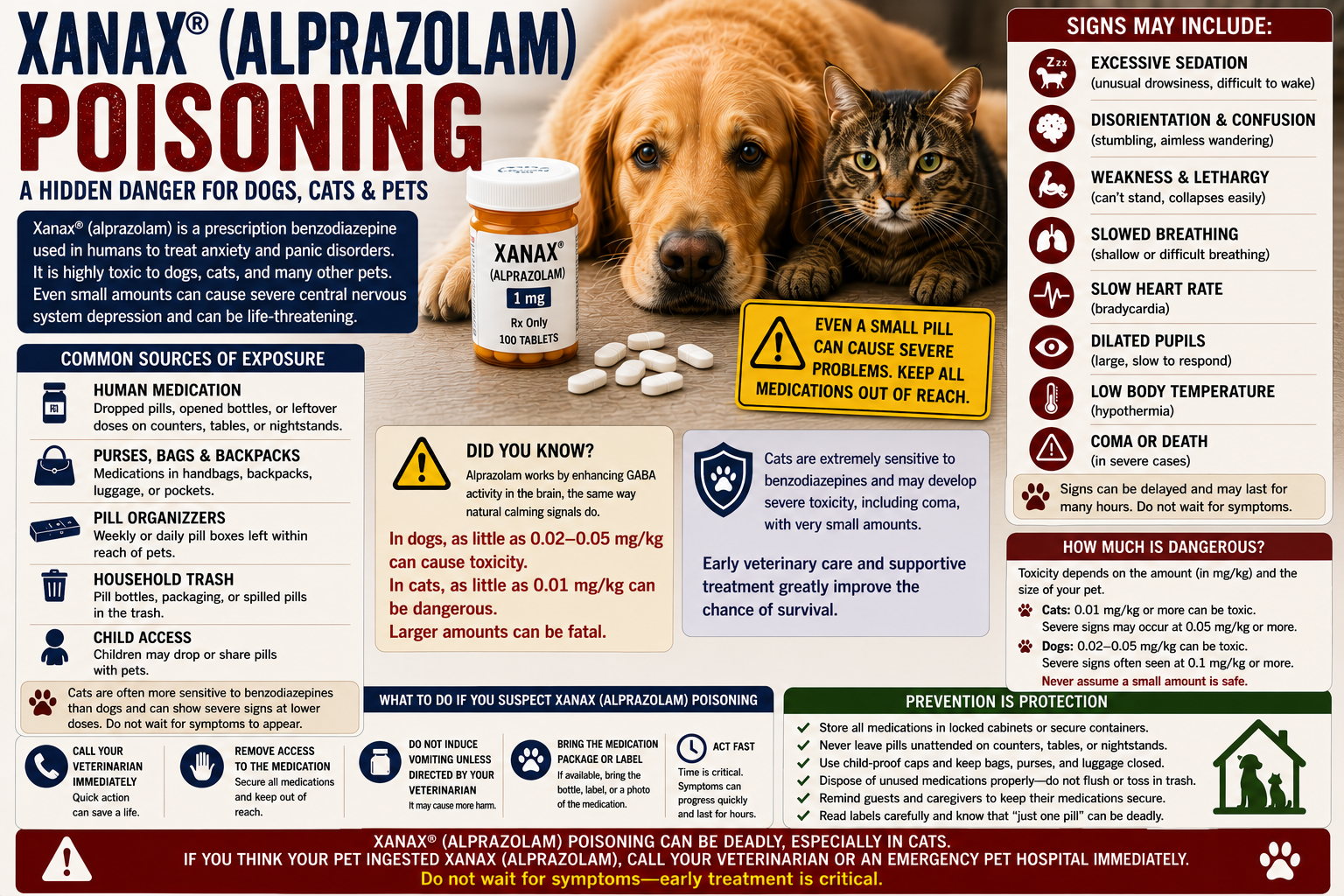
Yes. Xanax and generic alprazolam can poison dogs, cats, birds, and other animals after accidental ingestion, dosing errors, intentional but inappropriate administration, or mixed medication exposure. Expected signs include ataxia, disorientation, depression, weakness, vomiting, hypothermia, slowed breathing, and reduced responsiveness. Dogs may also develop paradoxical hyperactivity, pacing, vocalization, tremors, tachycardia, or agitation instead of simple sedation.
Alprazolam is a triazolobenzodiazepine sold as immediate-release Xanax tablets, Xanax XR and generic extended-release tablets, orally disintegrating products, and oral concentrate. Formulation matters because extended-release tablets may sustain clinical effects, while liquid or rapidly dissolving products can be absorbed quickly. Small animals can develop signs after a single human tablet.
The greatest danger often comes from co-ingestion. Alprazolam combined with opioids, sleep aids, gabapentin, pregabalin, antihistamines, muscle relaxants, alcohol, cannabis, or other central nervous system depressants can produce profound sedation, aspiration, coma, and respiratory failure. Mixed overdoses involving antidepressants or stimulants also complicate the use of the reversal agent flumazenil because abrupt benzodiazepine antagonism can precipitate seizures in selected patients.
About this guide: This page provides general pet-poisoning information and cannot diagnose or treat an individual animal. For any suspected exposure, contact a veterinarian or animal poison-control service immediately. Do not induce vomiting, give medication, or attempt home decontamination unless directed by a veterinary professional.
Agent and Exposure Profile
Quick Reference
Alprazolam Identity, Formulations, and Related Benzodiazepines
Alprazolam
Alprazolam is a triazolobenzodiazepine central nervous system depressant. Xanax is the best-known brand name, but numerous generic alprazolam products are available. It enhances inhibitory gamma-aminobutyric acid signaling through the benzodiazepine site of the GABA-A receptor.
Immediate-Release Tablets
Immediate-release alprazolam tablets are sold in several human strengths and may be scored. Generic tablets vary in color, shape, and imprint. Tablet appearance alone cannot identify the strength reliably, so the bottle, imprint, or pharmacy record should be preserved.
Xanax XR and Extended-Release Alprazolam
Xanax XR and generic extended-release alprazolam are designed to release medication over a longer period. Chewing or crushing the tablet can alter release. Extended-release exposure may justify longer monitoring because clinical signs can persist or recur after early improvement.
Orally Disintegrating Tablets and Oral Concentrate
Orally disintegrating alprazolam dissolves rapidly in the mouth, while oral concentrate permits precise human dosing in liquid form. A chewed dropper bottle or swallowed volume of concentrate can be difficult to quantify and may expose a pet rapidly.
Other Benzodiazepines
Diazepam, clonazepam, lorazepam, temazepam, oxazepam, triazolam, midazolam, and chlordiazepoxide belong to the same broad drug class but differ in potency, onset, metabolism, active metabolites, and duration. A mixed pill organizer may contain several benzodiazepines or other sedatives.
Counterfeit “Xanax” Tablets
Counterfeit tablets sold as Xanax may contain fentanyl, novel benzodiazepines, xylazine, stimulants, or other unexpected substances. A product obtained outside a licensed pharmacy should be treated as an unknown-drug exposure. Preserve the tablet safely and tell the veterinary team that it may be counterfeit.
Where Xanax and Alprazolam Exposure May Occur
Purses, Backpacks, Nightstands, and Pill Organizers
Alprazolam is frequently stored in purses, backpacks, bedside drawers, bathroom cabinets, desk drawers, weekly organizers, luggage, vehicles, and coat pockets. Dogs commonly chew child-resistant bottles or organizers, while cats and small dogs may swallow a single dropped tablet.
Guest and House-Sitter Medication
Visitors may carry alprazolam in unlabeled organizers or loose containers. The pet owner may not know the active ingredient or strength until the visitor, pharmacy, or prescriber is contacted. Guest rooms and luggage should therefore be treated as medication-access areas.
Oral-Concentrate Bottles and Droppers
Liquid alprazolam products may be kept with syringes or droppers. A punctured bottle can expose a pet to medication plus plastic or glass fragments. Residue on a dropper, spoon, food, or bedding may also be accessible to small animals.
Discarded Tablets and Pharmacy Waste
Dropped pills, damaged bottles, expired medication, discarded blister packs, and pharmacy mailers can expose animals through household trash. Medication should never be flushed into pet-accessible water or left in open bins.
Deliberate Administration
Alprazolam is sometimes prescribed by veterinarians for selected anxiety and panic disorders, but human tablets should not be given without a current veterinary plan. Wrong strength, duplicate dosing, changed body weight, organ disease, or combination with other sedatives can turn a therapeutic intention into toxicosis.
Illicit and Counterfeit Exposure
Counterfeit bars, loose powders, and unmarked tablets may be found in bags, foil, wallets, or discarded paraphernalia. These exposures are unpredictable and may involve far more dangerous ingredients than alprazolam alone.
Exposure Scenarios and Risk Factors
Common Companion-Animal Scenarios
- A dog chews a bottle of Xanax or generic alprazolam tablets.
- A small dog or cat swallows a single tablet dropped near a bed or sofa.
- A pet empties a weekly organizer containing alprazolam plus opioids, antidepressants, or sleep aids.
- A dog consumes an extended-release tablet or several fragments of a crushed tablet.
- A pet punctures an oral-concentrate bottle or chews the dropper.
- An owner repeats a veterinary-directed dose after vomiting or because another caregiver already gave it.
- An animal ingests a counterfeit “Xanax bar” containing an unknown drug mixture.
Small Body Size
One human tablet can represent a substantial exposure to a toy dog, cat, bird, rabbit, or ferret. Small animals also have less reserve against hypothermia, aspiration, and respiratory depression.
Liver Disease, Age, and Debilitation
Alprazolam undergoes hepatic metabolism. Geriatric animals, patients with liver disease, underweight animals, and those receiving drugs that alter hepatic enzymes may experience more prolonged or intense effects. Renal disease can complicate fluid and temperature management even though the parent drug is primarily metabolized hepatically.
Opioids and Other Sedatives
Opioids, gabapentinoids, sleep aids, antihistamines, muscle relaxants, anesthetics, alcohol, and cannabis can intensify depression and respiratory compromise. The combination of a benzodiazepine and an opioid is especially concerning because both can impair airway protection and ventilation.
Paradoxical Excitation
Dogs may pace, vocalize, tremble, become hyperactive, or resist handling rather than appearing sedated. These animals can fall, injure themselves, overheat, or bite unintentionally while disoriented. Excitement does not rule out alprazolam ingestion.
Chronic Use and Withdrawal
An animal receiving alprazolam repeatedly under veterinary supervision can develop physiologic dependence. Abrupt discontinuation or inappropriate administration of flumazenil may precipitate withdrawal, agitation, or seizures. Chronic-treatment history must be reported clearly.
Xanax Poisoning Symptoms and Clinical Progression
Ataxia and Disorientation
Stumbling, swaying, falling, knuckling, poor coordination, staring, and altered awareness are among the most common signs. In a 415-dog series, ataxia and disorientation were the dominant clinical abnormalities. Animals may appear intoxicated or neurologically impaired.
Depression, Weakness, and Somnolence
Lethargy, weakness, excessive sleepiness, reduced response to stimulation, recumbency, and stupor can develop. Deeply sedated patients may lose normal swallowing and airway-protection reflexes, increasing aspiration risk.
Paradoxical Hyperactivity and Vocalization
Some dogs become restless, pace, vocalize, pant, tremble, or show heightened sensitivity. This paradoxical response may alternate with sedation. Repeated restraint and environmental stimulation can worsen disorientation.
Vomiting and Aspiration Risk
Vomiting occurs in some exposures and becomes dangerous when coordination or consciousness is impaired. Coughing, rapid breathing, fever, or increased effort after vomiting may indicate aspiration pneumonia and can appear after the original drug signs begin improving.
Respiratory and Cardiovascular Effects
Isolated alprazolam exposure usually causes less respiratory depression than many other sedatives, but severe overdose and co-ingestion can produce slow breathing, hypoxemia, hypotension, bradycardia, or coma. Tachycardia and rapid breathing may accompany paradoxical agitation.
Temperature Changes
Hypothermia can occur in sedated or recumbent animals, especially small patients. Hyperthermia is less typical but may develop when agitation, tremors, or stimulant co-ingestants are present. Temperature should be measured rather than estimated from touch.
Tremors and Seizures
Tremors are reported in alprazolam-exposed dogs. Seizures are uncommon in uncomplicated acute exposure and should raise concern for a mixed overdose, counterfeit product, head trauma, hypoglycemia, chronic benzodiazepine withdrawal, or flumazenil-associated precipitation.
First Aid for Suspected Xanax Exposure
Immediate Owner Actions
- Remove all tablets, liquid medication, pill organizers, blister packs, and packaging.
- Preserve the prescription label, active ingredient, strength, formulation, tablet imprint, and remaining count.
- Record the maximum amount missing, exposure window, current weight, and all observed signs.
- Identify opioids, sleep aids, antihistamines, gabapentin, alcohol, cannabis, antidepressants, or other co-ingestants.
- Confine the animal safely away from stairs, furniture edges, pools, and traffic.
- Contact a veterinarian immediately rather than waiting for deeper sedation.
Do Not Induce Vomiting Without Veterinary Direction
Do not give hydrogen peroxide, salt, mustard, syrup of ipecac, or attempt manual gagging. Ataxia, sedation, disorientation, and impaired swallowing sharply increase aspiration risk. Sharp blister packaging and mixed medication exposure can add further danger.
Do Not Give Flumazenil or Stimulants at Home
Flumazenil is a hospital benzodiazepine antagonist that can trigger seizures in chronic benzodiazepine users or mixed proconvulsant overdoses. Caffeine, energy products, amphetamines, and other stimulants do not safely “wake up” a poisoned pet and may worsen cardiovascular instability.
Protect the Airway and Prevent Trauma
Keep the environment quiet and dim. Do not force food or water. Position a vomiting animal so material can drain without obstructing the airway, but do not place hands near the mouth of a confused or seizuring patient.
Safe Transport
Use a secure carrier or padded restrained area. Bring every possible medication container. Call ahead for profound sedation, slow breathing, collapse, severe agitation, seizures, or suspected opioid co-ingestion so the hospital can prepare oxygen, airway equipment, and reversal agents.
Alprazolam Toxicology and Mechanism
GABA-A Receptor Modulation
Alprazolam binds to the benzodiazepine site of GABA-A receptors and increases the frequency of chloride-channel opening produced by gamma-aminobutyric acid. Neuronal membranes become less excitable, producing anxiolysis, muscle relaxation, anticonvulsant effects, and dose-related central nervous system depression.
Triazolobenzodiazepine Structure
Alprazolam is a triazolo analog of the 1,4-benzodiazepine class. Its potency, relatively rapid absorption, and active alpha-hydroxy metabolite help distinguish it from some other benzodiazepines. Dogs metabolize alprazolam extensively, and repeated dosing can permit metabolite accumulation.
Paradoxical Disinhibition
Benzodiazepines can occasionally remove inhibitory behavioral control before producing full sedation. In dogs this can appear as pacing, vocalization, hyperactivity, agitation, or aggression. The precise mechanism is not fully resolved and likely involves individual receptor, behavioral, and pharmacokinetic differences.
Extended-Release Formulations
Extended-release alprazolam is designed to maintain plasma concentrations longer than immediate-release tablets. Chewing may alter release, but delayed drug can still remain available. Monitoring should follow the formulation and clinical course rather than a fixed observation period.
Flumazenil Pharmacology
Flumazenil competitively antagonizes the benzodiazepine receptor site and can reverse sedation and respiratory depression in selected cases. Its effect may wear off before alprazolam or co-ingestants clear, causing re-sedation. It can also precipitate withdrawal or seizures in dependent animals and mixed overdoses.
Why Isolated Benzodiazepine Exposure Is Often Survivable
Benzodiazepines alone generally have a wider safety margin than opioids, barbiturates, or many antidepressants because GABA enhancement has a ceiling effect. That relative margin disappears when several sedatives are combined, airway protection is lost, aspiration occurs, or the product is counterfeit.
Evidence Boundaries
The largest veterinary evidence base is a retrospective series of 415 dogs with accidental alprazolam ingestion. Published feline and exotic-species data are more limited. Treatment therefore combines canine outcome data, benzodiazepine pharmacology, careful co-ingestant assessment, and patient-specific supportive care.
Clinical Management
Veterinary Care and Prognosis
Veterinary Diagnosis and Treatment
Exposure Reconstruction
The veterinary team identifies the exact drug, strength, immediate- or extended-release formulation, maximum amount, exposure time, tablet imprint, chronic-use history, and every possible co-ingestant. Pharmacy records may be necessary when the bottle is missing or tablets were stored in an organizer.
Initial Stabilization
Airway, breathing, circulation, temperature, neurologic status, glucose, hydration, blood pressure, cardiac rhythm, trauma, and aspiration risk are assessed first. Profoundly sedated patients may require oxygen, suction, intubation, or assisted ventilation.
Diagnostic Testing
Testing may include blood glucose, electrolytes, blood-gas analysis, complete blood count, serum chemistry, liver values, electrocardiography, blood pressure, pulse oximetry, and chest imaging when aspiration is suspected. Standard human urine benzodiazepine screens may not reliably detect every alprazolam exposure and can produce misleading results.
Professional Decontamination
Veterinary-induced emesis may be considered only after a recent ingestion in an alert, clinically normal patient with a protected airway. Once ataxia, sedation, agitation, or vomiting begins, aspiration risk often outweighs benefit. Activated charcoal may be considered in selected cases, including some extended-release exposures, with airway and sodium monitoring.
Supportive Care
Quiet confinement, padded bedding, temperature support, intravenous crystalloids, antiemetics, oxygen, and serial neurologic assessment are common components of care. Hypotension is treated first with appropriate crystalloid support; persistent hypotension may require vasopressors selected from the patient's actual hemodynamic state.
Flumazenil
Flumazenil may be used when severe benzodiazepine-associated depression threatens ventilation or airway protection and the risk of precipitating seizures is low. It is used cautiously or avoided when chronic benzodiazepine dependence, cyclic antidepressants, stimulants, tramadol, bupropion, or other proconvulsant co-ingestants are suspected.
Paradoxical Excitation
Agitated animals are protected from trauma and excessive stimulation. Additional sedative selection must account for respiratory status and unknown co-ingestants. In some cases the agitation resolves with supportive care; in others carefully titrated short-acting medication is required.
Aspiration and Mixed-Drug Treatment
Coughing, fever, hypoxemia, or increased breathing effort after vomiting prompts evaluation for aspiration pneumonia. Opioid co-ingestion may require naloxone, while other drugs need their own treatment plans. Flumazenil does not reverse opioids, alcohol, gabapentinoids, antihistamines, or other non-benzodiazepine depressants.
Monitoring Duration
Many uncomplicated immediate-release exposures improve within hours, but extended-release tablets, oral concentrate, liver disease, chronic therapy, counterfeit products, and mixed sedatives justify longer monitoring. Discharge requires normal coordination, mentation, swallowing, breathing, blood pressure, and temperature.
Prognosis, Recovery, and Follow-Up
Most Isolated Exposures Recover
The prognosis is generally favorable for isolated alprazolam ingestion when the animal receives timely supportive care and does not develop aspiration, severe respiratory depression, trauma, or complications from other drugs. The large canine case series reported predominantly neurologic signs and supportive management.
Guarded Situations
The outlook becomes more guarded with opioid co-ingestion, counterfeit tablets, prolonged coma, severe hypoventilation, aspiration pneumonia, head trauma, advanced liver disease, chronic benzodiazepine dependence, or seizures after mixed overdose or antagonist administration.
Re-Sedation Can Occur
An animal may become more alert after flumazenil and then sedate again when the antagonist wears off before alprazolam has cleared. Extended-release products can also produce recurrent signs. Continued observation is essential after apparent reversal.
After Discharge
Keep the animal quiet and away from stairs, furniture, pools, and unsupervised outdoor access. Return promptly for renewed sedation, pacing, vomiting, coughing, breathing difficulty, weakness, tremors, seizures, collapse, or refusal to eat.
Preventing Xanax and Alprazolam Exposure
Store Alprazolam in Locked Medication Storage
Keep Xanax, Xanax XR, generic alprazolam, oral concentrate, and all other benzodiazepines in original labeled containers inside a locked cabinet or medication box. Child-resistant packaging is not pet resistant.
Secure Purses, Backpacks, and Pill Organizers
Place purses, backpacks, travel bags, and weekly organizers behind closed doors or in high cabinets. Do not leave loose tablets in pockets, wallets, nightstands, hotel rooms, or vehicle consoles.
Use One Documented Dosing Plan
When alprazolam is prescribed for an animal, record the patient, strength, dose time, and caregiver. Do not repeat a dose after vomiting or allow two caregivers to administer medication without confirming the log.
Protect Guest and House-Sitter Medication
Ask visitors and house sitters to secure all controlled medications and sleep aids. Guest-room floors, luggage, and bedside tables should be checked before pets gain access.
Dispose of Medication Safely
Use a medication take-back program when available. Do not leave tablets, liquid concentrate, or damaged blister packs in open trash. Counterfeit or illicit tablets should be handled carefully and may require law-enforcement guidance.
Never Share a Human Prescription Without Veterinary Direction
Do not give alprazolam to calm fireworks fear, travel anxiety, aggression, or grooming behavior unless the animal's veterinarian has prescribed the exact product and plan. Human assumptions about tablet strength and frequency are unsafe.
Xanax (Alprazolam) Poisoning FAQ
Is alprazolam the active ingredient in Xanax?
Yes. Xanax is a brand name for alprazolam, a triazolobenzodiazepine central nervous system depressant.
Can one Xanax tablet poison a dog?
Yes, especially in a small dog. Tablet strengths vary, and even one tablet can cause ataxia, depression, or paradoxical excitement relative to body weight.
Why is my dog hyper after eating Xanax?
Dogs can develop paradoxical disinhibition rather than simple sedation. Pacing, vocalization, tremors, and hyperactivity are documented signs of alprazolam exposure.
Can cats be poisoned by alprazolam?
Yes. Cats can develop sedation, ataxia, weakness, hypothermia, vomiting, and respiratory compromise, particularly after larger or mixed exposures.
Is Xanax XR more dangerous than regular Xanax?
Extended-release tablets may produce a longer or recurrent course because drug continues to release over time. Chewing can alter that release pattern.
Can I make my dog vomit after a Xanax ingestion?
Not without veterinary direction. Once ataxia, sedation, agitation, or impaired swallowing begins, vomiting can lead to aspiration.
Does activated charcoal help?
It may be considered professionally in selected early or extended-release exposures. It is unsafe for unsupervised use in a neurologically abnormal animal.
Is flumazenil an antidote for Xanax?
Flumazenil can reverse benzodiazepine effects in selected patients, but it can precipitate seizures or withdrawal in chronic users and mixed proconvulsant overdoses. It requires hospital monitoring.
Can Xanax slow a pet's breathing?
Yes, especially after a large exposure or when combined with opioids, sleep aids, alcohol, antihistamines, gabapentinoids, or other depressants.
Why are opioids and Xanax especially dangerous together?
Both can reduce alertness, airway protection, and respiratory drive. The combination raises the risk of coma, aspiration, hypoxemia, and death.
Can counterfeit Xanax contain fentanyl?
Yes. Counterfeit tablets may contain fentanyl or other unexpected drugs. Any non-pharmacy product should be treated as an unknown mixed overdose.
Can alprazolam cause seizures?
Seizures are uncommon in uncomplicated acute exposure. They raise concern for mixed ingestion, counterfeit drugs, withdrawal, head trauma, or flumazenil-associated precipitation.
Can a pet be injured even if the drug itself is not fatal?
Yes. Ataxia and disorientation can cause falls, head injury, drowning, choking, and aspiration. Environmental safety is part of treatment.
Can a human urine drug test confirm alprazolam exposure in a dog?
Not reliably. Some benzodiazepine screens do not detect alprazolam metabolites well, and false results are possible. Treatment is based on history, signs, and confirmatory testing when available.
What if my pet swallowed alprazolam with antidepressants?
Bring every bottle. Some antidepressants are proconvulsant or serotonergic, which changes monitoring and may make flumazenil unsafe.
What if several pets had access to the same bottle?
Do not divide the missing tablets evenly. Separate the animals, record each weight and signs, and report the maximum possible amount for every pet.
How long can signs last?
Many immediate-release exposures improve within hours, but extended-release tablets, liver disease, chronic use, and mixed sedatives can prolong recovery.
Can I give my dog Xanax for fireworks or travel?
Only when the animal's veterinarian has prescribed the exact formulation and plan. Human tablets and unsupervised dosing can cause toxicosis or paradoxical agitation.