Xylitol, Birch Sugar, Canine Hypoglycemia, and Acute Liver Injury
Is Xylitol Poisonous to Dogs, Cats, and Other Animals?
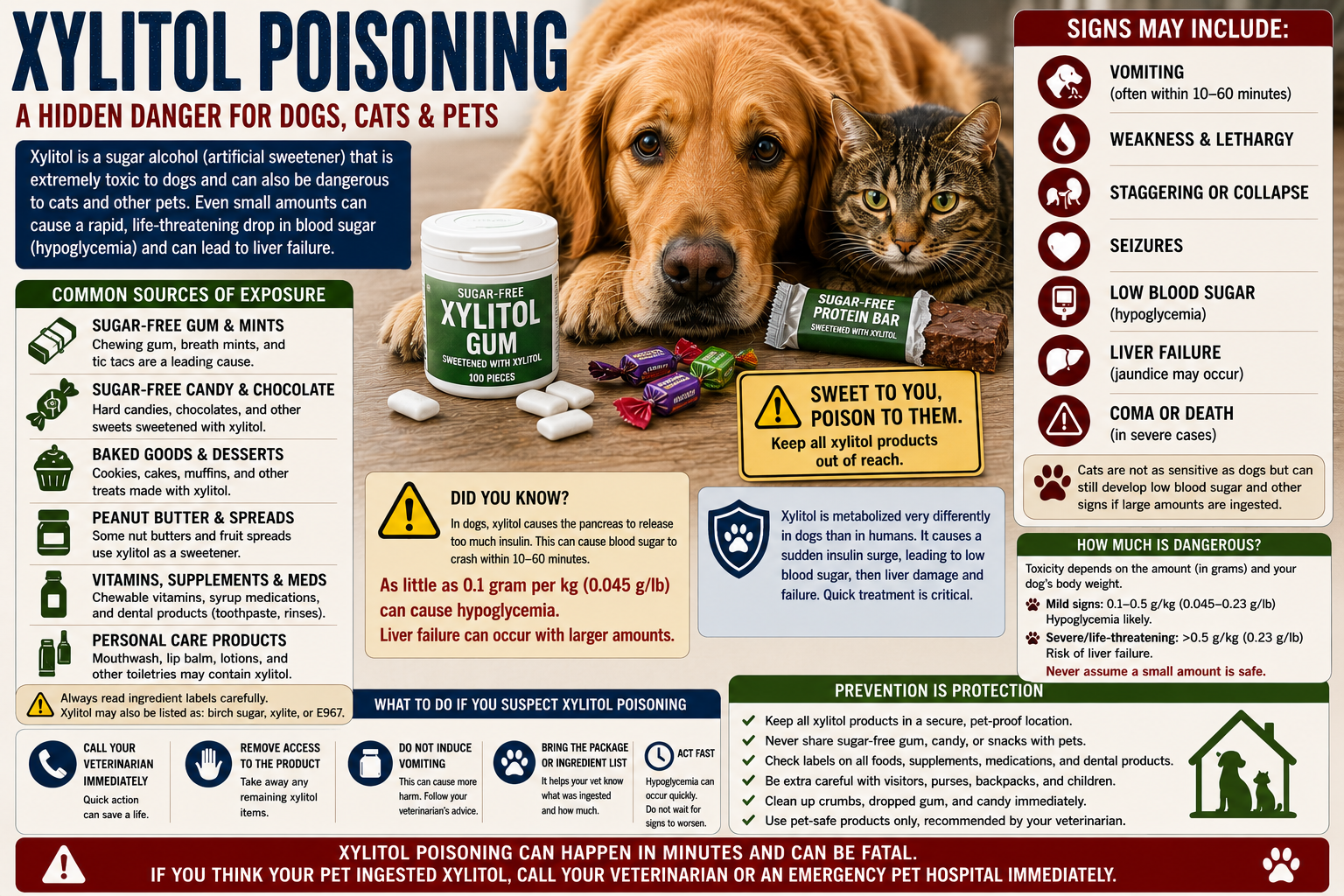
Yes. Xylitol can cause a rapid, life-threatening emergency in dogs, including profound hypoglycemia, seizures, acute liver injury, coagulopathy, collapse, and death. Dogs can release a large amount of insulin after absorbing xylitol. Blood glucose may fall before an owner recognizes that a sugar-free product was eaten, and some dogs later develop severe hepatic injury even after the first glucose problem appears controlled.
Xylitol is a sugar alcohol used in sugar-free gum, mints, candy, baked goods, nut and peanut butters, drink powders, protein products, vitamins, supplements, oral-care products, medicines, nasal products, cosmetics, and other consumer goods. It may also be marketed as birch sugar. The amount varies widely between brands, flavors, product sizes, and reformulations, and labels do not always state the grams contained in each piece or serving.
The classic severe syndrome is established primarily in dogs. A controlled feline study did not reproduce canine-like hypoglycemia or clinical toxicity, but that limited evidence does not make an unknown product safe for a cat because co-ingredients, wrappers, medications, chocolate, caffeine, nicotine, or other sweeteners may create separate hazards. Evidence for horses, livestock, birds, rabbits, reptiles, and other species is limited; every credible exposure should be assessed from the exact product and species rather than assumed to behave like a dog.
About this guide: This page provides general pet-poisoning information and cannot diagnose or treat an individual animal. For any suspected exposure, contact a veterinarian or animal poison-control service immediately. Do not induce vomiting, give medication, or attempt home decontamination unless directed by a veterinary professional.
Agent and Exposure Profile
Quick Reference
Xylitol Identity, Label Names, and Product Recognition
What xylitol is
Xylitol is a five-carbon sugar alcohol, also called a polyol, used as a sweetener, humectant, flavoring aid, and oral-health ingredient. It is not the same compound as table sugar, high-fructose corn syrup, sorbitol, erythritol, maltitol, mannitol, or stevia. Those ingredients can cause their own gastrointestinal or product-specific concerns, but the distinctive insulin-mediated emergency described on this page is associated with xylitol in dogs.
Names that may appear on labels
Labels may list xylitol directly or market it as birch sugar. Ingredient order can help show whether xylitol is a major component, but it does not reveal the exact amount in a piece, teaspoon, tablet, gummy, or serving. Sugar-free, no-sugar-added, keto, low-carb, diabetic-friendly, natural, plant-based, or dental-health marketing does not prove that xylitol is present; the full ingredient list must be checked.
Product concentration is highly variable
One stick of gum, mint, gummy, scoop of powder, spoonful of nut butter, or chewable supplement cannot be assigned a universal xylitol content. Manufacturers may change formulations without changing the front label, and different flavors within one brand may use different sweeteners. When the package does not state xylitol quantity, the veterinary team may need manufacturer information or a conservative exposure estimate.
Combination products can create more than one poisoning emergency
Xylitol may appear with chocolate, cocoa, caffeine, raisins, macadamia nuts, alcohol, cannabis, nicotine, acetaminophen, decongestants, antihistamines, melatonin, 5-hydroxytryptophan, vitamins, minerals, or prescription drugs. The complete formulation determines the case. A normal blood glucose value does not rule out a separate co-ingredient hazard.
Wrappers, containers, and delivery systems matter
Dogs often swallow foil, plastic, blister packs, bottle caps, gum wrappers, sachets, or portions of a container along with the product. These materials may complicate decontamination or create obstruction and perforation risks. The exposure history should include packaging as well as the sweetener.
Where Xylitol May Be Found
Gum, mints, candy, and breath products
Sugar-free chewing gum remains a common source, but xylitol is also found in breath mints, hard candies, gummies, lollipops, lozenges, breath strips, and novelty sweets. Purses, backpacks, cup holders, bedside tables, jacket pockets, luggage, desks, gym bags, and guest belongings are frequent access points.
Baked goods, mixes, spreads, and pantry products
Home baking supplies and finished foods may include xylitol as granules, powdered sweetener, frosting, cookies, cakes, muffins, protein bars, keto snacks, syrups, jams, drink mixes, or dessert blends. Some peanut, nut, and seed butters use xylitol, while visually similar products do not. The exact jar and ingredient panel must be preserved.
Vitamins, supplements, and chewable products
Chewable or fast-dissolving vitamins, sleep products, probiotics, electrolyte products, fiber products, sports supplements, protein powders, gummies, sublingual tablets, and flavored nutraceuticals may use xylitol. These products can contain additional active ingredients that are more dangerous than the sweetener or that change the expected clinical picture.
Medicines and medical products
Xylitol can be used in liquid medicines, compounded preparations, cough or throat products, nasal or sinus products, oral dissolving formulations, and other human health products. Medication strength and active ingredients must be evaluated separately. Never assume a pediatric, natural, homeopathic, or over-the-counter label makes the product pet-safe.
Dental and oral-care products
Toothpaste, mouth rinse, oral sprays, breath gels, dental wipes, floss products, dry-mouth products, and some pet dental products may contain xylitol. A veterinary-labeled product used exactly as directed is not equivalent to a dog chewing the tube or bottle. Human toothpaste and mouthwash may also contain fluoride, detergents, alcohol, or other ingredients requiring assessment.
Cosmetics, skin care, and personal products
Xylitol may be present as a humectant or flavoring ingredient in lip products, lotions, gels, and other personal-care items. Concentration and co-ingredients vary. The ingredient list, amount missing, and whether the dog swallowed packaging determine whether veterinary evaluation is needed.
Xylitol Exposure Scenarios and Risk Factors
A dog empties a pack of gum or mints
A dog may consume many pieces rapidly and swallow wrappers at the same time. Owners often know the package count but not how many pieces remained before the event. The safest history uses the maximum number that could be missing rather than subtracting an uncertain estimate.
Homemade baked goods or bulk sweetener
Granulated xylitol used in cooking can create a concentrated exposure, while a finished recipe may distribute it across cookies, cake, frosting, or other servings. The recipe, amount of sweetener used, number of portions produced, and maximum amount eaten can help reconstruct exposure. Online recipe calculations should not delay veterinary care.
Nut butter, protein food, or dietary product
A dog may eat directly from a jar, lick residue from a spoon, consume a filled toy, or steal a protein bar or keto snack. Product names and labels can look nearly identical across formulas. The actual ingredient panel from the specific container is controlling.
Chewable medication or supplement
Flavored vitamins, melatonin, probiotics, sleep aids, 5-hydroxytryptophan, and other supplements may combine xylitol with pharmacologically active ingredients. Neurologic signs, sedation, agitation, serotonin-like findings, heart-rate changes, or organ injury may therefore reflect more than hypoglycemia alone.
Repeated small exposures or uncertain timing
A dog may steal individual pieces over hours, receive repeated portions of a xylitol-containing food, or be found after the packaging has been missing for an unknown period. A later normal appearance does not establish safety because liver injury can develop after the earliest glucose changes.
Small dogs and high-concentration products
Toy breeds and puppies can receive a substantial dose from a small absolute amount. Concentrated sweetener, bulk powder, syrup, and products in which xylitol appears near the beginning of the ingredient list deserve particular concern. Body size does not protect larger dogs when they consume an entire package or recipe.
Multiple pets with access
Do not divide the missing amount equally among several animals. Separate them, identify each weight and signs, preserve the product, and report the maximum plausible amount for every dog. A pet that looks normal may have consumed more than the pet that vomited.
Xylitol Poisoning Symptoms and Clinical Progression
Early gastrointestinal and behavioral changes
Vomiting may occur first, followed by weakness, reduced activity, unusual sleepiness, restlessness, or reluctance to stand. Some dogs show few obvious gastrointestinal signs before glucose falls. The absence of vomiting does not mean the xylitol was not absorbed.
Hypoglycemia
Excess insulin can lower blood glucose rapidly. Signs may include weakness, trembling, disorientation, staring, stumbling, collapse, seizures, coma, and death. Clinical signs may appear soon after exposure, but onset can be delayed by product formulation, food in the stomach, repeated ingestion, or uncertainty about the exposure time.
Electrolyte and metabolic changes
Insulin-driven shifts can contribute to low potassium and other biochemical abnormalities. Dogs may develop weakness, cardiac instability, or persistent neurologic signs even while treatment is correcting glucose. Serial testing is more informative than one early measurement.
Acute liver injury and failure
Some dogs develop rising liver enzymes, vomiting, anorexia, abdominal discomfort, depression, jaundice, impaired glucose regulation, prolonged clotting times, bruising, petechiae, gastrointestinal bleeding, or hepatic encephalopathy. Severe hepatic necrosis can occur even when early hypoglycemia was not dramatic or was not documented.
Coagulopathy and bleeding
Loss of hepatic synthetic function may impair clotting-factor production. Owners may notice pinpoint hemorrhages, large bruises, nose or gum bleeding, blood in vomit or stool, black tarry stool, or bleeding from venipuncture sites. Internal bleeding may not be externally visible.
Neurologic signs can have more than one cause
Seizures, stupor, or altered consciousness may result from hypoglycemia, hepatic encephalopathy, electrolyte changes, or a co-ingested drug. A reported mixed xylitol and serotonergic-product exposure produced a broader syndrome than xylitol alone. The ingredient list is essential when signs do not match one mechanism.
Cats and other species
A controlled study in cats did not identify canine-like hypoglycemia or toxicity under the study conditions. That does not validate every xylitol-containing product for cats, and it does not address all possible doses, formulations, co-ingredients, or diseased patients. Evidence in other species remains too limited for a universal safety statement.
First Aid for Suspected Xylitol Exposure
Immediate owner actions
- Remove the product and keep every other animal away from wrappers, crumbs, vomit, containers, and spilled powder.
- Preserve the exact package, ingredient panel, nutrition or supplement panel, brand, flavor, lot information, wrappers, remaining pieces, and online product page.
- Estimate the maximum amount missing and the earliest and latest possible exposure times.
- Obtain the dog's current weight and list all medications, supplements, diseases, and other possible ingredients.
- Contact a veterinarian or veterinary emergency service immediately, even when the dog still appears normal.
Do not induce vomiting without veterinary direction
Hydrogen peroxide and other home emetics can cause aspiration, severe gastrointestinal irritation, and delay. Vomiting is unsafe in a dog that is weak, hypoglycemic, neurologically abnormal, repeatedly vomiting, or unable to protect the airway. A veterinary professional must weigh timing, product form, co-ingredients, and clinical status.
Do not give activated charcoal at home
Activated charcoal is not reliably useful for xylitol itself and can be aspirated by an animal with weakness, vomiting, seizures, or altered consciousness. It may still be considered for selected co-ingestants under veterinary supervision, but it is not a universal xylitol remedy.
Do not force sugar or food into a symptomatic dog
Honey, syrup, glucose gel, sugar water, or food placed in the mouth of a weak, disoriented, trembling, seizing, or poorly responsive dog can be inhaled. Emergency glucose support is administered and monitored by the veterinary team. A transient improvement after oral sugar does not prove that the crisis or liver risk has ended.
Transport safely
Keep the dog quiet, warm but not overheated, and protected from falls. Transport in a carrier or restrained area with another person observing when possible. Bring the product and all records, and call ahead if the dog is weak, seizing, bleeding, collapsed, or has altered consciousness.
Xylitol Toxicology and Mechanism
Species-specific insulin release in dogs
Xylitol is absorbed from the gastrointestinal tract and, in dogs, can trigger a marked insulin response. Insulin drives glucose from the circulation into tissues and suppresses hepatic glucose output, producing potentially profound hypoglycemia. Experimental canine work documented increased insulin followed by declining blood glucose and associated biochemical changes.
Why product amount is difficult to calculate
The toxicologic question is the amount of xylitol, not simply the number of pieces or total product weight. Manufacturers may not disclose xylitol grams, and formulations differ by brand, flavor, region, and production date. Public threshold numbers are useful only as clinical risk guides and should not be treated as a safe line below which no dog requires assessment.
Hepatic injury is not explained by hypoglycemia alone
Severe canine cases have developed acute hepatic necrosis, coagulopathy, thrombocytopenia, hyperbilirubinemia, and death. Proposed mechanisms include rapid hepatic metabolism of xylitol, depletion of cellular energy stores, oxidative stress, and other metabolic injury, but the precise pathway and individual susceptibility are not fully resolved.
Hypoglycemia and hepatotoxicity do not follow one fixed sequence
Some dogs experience uncomplicated glucose depression and recover with timely treatment. Others develop hepatopathy with or without clearly documented early hypoglycemia. Retrospective and case-series evidence therefore supports serial liver and coagulation monitoring rather than assuming a normal first glucose result excludes later organ injury.
Electrolytes, phosphorus, and coagulation
Insulin and severe systemic illness can alter potassium and phosphorus balance. Hepatic dysfunction reduces production of clotting proteins and may contribute to bleeding abnormalities. Laboratory patterns vary, so treatment is guided by trends, clinical signs, and functional coagulation assessment rather than a single expected panel.
Cats do not appear to reproduce the canine response
In one controlled oral study, cats did not develop significant hypoglycemia or clinicopathologic evidence of toxicity under the tested conditions. That finding is important evidence against automatically applying canine thresholds to cats, but it is not proof that every dose, product, or co-ingredient is safe in every feline patient.
Evidence boundaries
The veterinary evidence base includes experimental studies, retrospective case series, reviews, and reports of liver failure, survival, and mixed-product poisoning. Product xylitol content is often estimated rather than analytically confirmed, and the dogs reaching veterinary care may differ from untreated exposures. Clinical decisions must integrate uncertainty rather than promise safety from one dose chart.
Clinical Management
Veterinary Care and Prognosis
Veterinary Diagnosis and Treatment
Exposure reconstruction and triage
The veterinary team identifies the exact product, xylitol's position in the ingredient list, maximum amount, formulation, exposure window, wrappers or containers swallowed, and every co-ingredient. Immediate assessment focuses on mental status, blood glucose, temperature, cardiovascular stability, hydration, vomiting, neurologic signs, bruising, bleeding, abdominal discomfort, and evidence of liver dysfunction.
Serial blood-glucose monitoring
A single normal glucose result soon after ingestion does not end monitoring. Repeated measurements may be required because absorption and insulin effects vary by product and timing. Symptomatic or falling glucose is treated with carefully controlled dextrose support, followed by continued monitoring to avoid recurrence or excessive correction.
Professional decontamination
Veterinary-induced emesis may be considered for a recent exposure in an alert, clinically normal dog with a protected airway and no contraindicating co-ingredient or packaging concern. Once weakness, hypoglycemia, vomiting, seizures, or altered consciousness develops, aspiration risk can outweigh benefit. Activated charcoal is not routinely effective for xylitol itself.
Laboratory evaluation
Testing may include complete blood count, chemistry profile, electrolytes, phosphorus, liver enzymes, bilirubin, blood glucose, urinalysis, blood gas or lactate assessment, and coagulation studies. Serial trends are important because liver enzymes and clotting abnormalities may develop after presentation. Functional coagulation testing may be used in critically ill patients where available.
Fluid, electrolyte, and nutritional support
Intravenous crystalloid therapy may support circulation, correct dehydration, and provide a route for glucose and electrolytes. Potassium and phosphorus are corrected according to measured values and ongoing losses. Persistent hypotension after appropriate fluid resuscitation may require vasopressor support.
Management of acute liver injury
Dogs developing hepatopathy may require intensive monitoring, antiemetic therapy, nutritional support, glucose management, antioxidant and hepatoprotective therapy selected by the clinician, and treatment for hepatic encephalopathy. Serial bilirubin, glucose, liver values, coagulation tests, neurologic status, and urine output help define progression.
Blood products and bleeding support
Plasma-containing products may be used when clinically important coagulopathy or bleeding is present. Red-cell support may be required for significant blood loss or anemia. Decisions are based on the patient's bleeding, perfusion, laboratory results, and planned procedures rather than clotting-time prolongation alone.
Seizures, coma, and mixed-product treatment
Seizures require immediate glucose assessment and anticonvulsant therapy when they persist despite correction. Airway protection, oxygen, temperature control, and treatment of co-ingested drugs may be necessary. A xylitol-containing supplement with serotonergic or sedative ingredients cannot be managed as simple gum ingestion.
Xylitol Prognosis, Recovery, and Follow-Up
Uncomplicated hypoglycemia often has a favorable outcome
Dogs evaluated promptly, monitored, and treated before seizures, severe liver injury, or bleeding develop often recover fully. Retrospective evidence supports an excellent prognosis for many lower-dose exposures that do not progress to hepatic failure, but that outcome depends on timely veterinary assessment rather than waiting at home.
Acute liver failure carries a guarded prognosis
Severe hepatopathy, worsening coagulopathy, jaundice, persistent hypoglycemia, bleeding, hepatic encephalopathy, shock, and multi-organ dysfunction make the outlook more guarded. Published case series include deaths and euthanasia, but successful long-term recovery has also been documented with aggressive treatment.
Early improvement does not cancel monitoring
A dog's glucose may stabilize before liver injury becomes apparent. Conversely, mild liver-enzyme elevation may not progress to failure. The treating veterinarian determines monitoring duration from the product, estimated exposure, glucose trend, liver values, coagulation results, clinical signs, and response to treatment.
After discharge
Owners should follow all feeding, medication, activity, and recheck instructions. Return immediately for vomiting, appetite loss, weakness, tremors, confusion, seizures, yellow discoloration, bruising, bleeding, black stool, abdominal pain, collapse, or any decline after initial improvement.
Preventing Xylitol Poisoning
Read every ingredient list
Check gum, mints, candy, baked goods, nut butters, protein foods, supplements, medicines, toothpaste, and oral-care products for xylitol or birch sugar before bringing them into a dog-accessible area. Recheck familiar products after purchasing a new flavor, size, or reformulated package.
Secure purses, backpacks, luggage, and bedside products
Dogs often find xylitol in items carried by visitors or left in vehicles and bedrooms. Store bags behind closed doors or inside latched cabinets. Do not rely on zippers, gum boxes, blister packs, or plastic bottles as dog-resistant barriers.
Protect bulk sweetener and home-baked foods
Store granulated or powdered xylitol in a clearly labeled sealed container inside a closed cabinet. Mark baked goods and leftovers so every household member knows they are unsafe for dogs. Clean spills promptly and secure trash, compost, mixing bowls, utensils, and wrappers.
Choose dog-safe training and enrichment foods
Verify the ingredients in peanut butter, nut butter, yogurt products, protein spreads, and other foods used in toys or medication administration. Do not assume a natural, keto, low-sugar, or diabetic product is safe. Keep a known xylitol-free product reserved for the dog.
Manage medications and supplements
Keep human and veterinary products in labeled containers and administer only the product directed for that animal. Boarding facilities, daycares, rescues, and multi-caregiver homes should document every dose and prohibit unlabeled gummies, powders, and loose tablets.
Prepare for an exposure before it happens
Keep the regular veterinarian and nearest emergency hospital contact information accessible. Know each dog's current weight, and photograph ingredient labels of products used regularly. Rapid access to the exact formulation can materially improve exposure assessment.
Xylitol Poisoning FAQ
Is xylitol the same as birch sugar?
Yes. Birch sugar is a marketing name commonly used for xylitol. A product labeled natural birch sugar can cause the same canine emergency as xylitol listed by its chemical name.
Is every sugar-free product dangerous to dogs?
No. Sugar-free products use many different sweeteners, but the label must be checked. Xylitol is the ingredient associated with rapid insulin release and severe hypoglycemia in dogs. Other ingredients may still cause gastrointestinal upset or separate poisoning risks.
Can one piece of gum be dangerous?
It can be, especially for a small dog or a product with a high and undisclosed xylitol content. Piece size and formulation vary so widely that the number of pieces alone cannot establish safety.
What if xylitol appears near the end of the ingredient list?
A lower position may suggest a smaller proportion, but it does not reveal the actual amount or guarantee safety. Concentrated products, small dogs, multiple servings, and co-ingredients can still create an emergency.
My dog looks normal. Can I watch at home?
No. Glucose can fall before obvious signs appear, and liver injury may develop later. Prompt product identification and veterinary assessment are safer than waiting for weakness, seizures, jaundice, or bleeding.
Should I give honey or syrup immediately?
Do not place anything in the mouth unless a veterinarian directs it. A weak, trembling, disoriented, seizing, or poorly responsive dog can aspirate. Oral sugar is not a substitute for controlled glucose treatment and liver monitoring.
Does vomiting mean the xylitol is gone?
No. Some product may already have dissolved and been absorbed, additional pieces may remain, or another dog may have eaten part of the exposure. Preserve vomit and packaging and obtain veterinary direction.
Is activated charcoal useful for xylitol?
It is not reliably useful for xylitol itself. A veterinarian may consider charcoal for a particular co-ingestant, but aspiration risk and the complete product formulation must be evaluated first.
Can xylitol cause liver failure without obvious hypoglycemia?
Yes. Severe canine hepatopathy has been reported without a clearly documented dramatic early glucose episode. A normal initial glucose result does not eliminate the need for case-specific liver and coagulation monitoring.
Why does the clinic need the exact brand and flavor?
Xylitol content and co-ingredients vary between brands, flavors, countries, and reformulations. The veterinary team may need the exact package or manufacturer information to estimate risk accurately.
Are xylitol-containing peanut and nut butters dangerous?
They can be. Some spreads use xylitol while visually similar jars do not. Check the specific ingredient panel before using any spread in a toy, treat, or medication aid.
Can toothpaste poison a dog?
Human toothpaste may contain xylitol and other ingredients not intended for swallowing. Risk depends on concentration, amount, body weight, and co-ingredients. Veterinary dental products should still be stored securely and used only as labeled.
Are cats poisoned by xylitol the same way dogs are?
Current evidence does not show the same canine-like insulin and hypoglycemia response in cats under studied conditions. That limited finding does not make every xylitol-containing product safe because medications, chocolate, caffeine, packaging, and other ingredients may be hazardous.
What about horses, livestock, rabbits, birds, and reptiles?
Evidence is limited and does not justify applying canine thresholds automatically. Credible exposure should be evaluated from the exact species, product, amount, and co-ingredients rather than assumed safe or assumed identical to dogs.
Why are wrappers important?
Wrappers help identify the product and can also become gastrointestinal foreign bodies. A dog may swallow foil, plastic, blister material, or part of the container along with the xylitol product.
Can a dog relapse after glucose improves?
Yes. Hypoglycemia can recur, and liver injury may emerge after initial stabilization. Monitoring ends when the treating veterinarian determines that glucose, liver function, coagulation, and clinical status are stable.
Could another ingredient explain unusual signs?
Yes. Supplements and foods may combine xylitol with serotonergic compounds, sedatives, stimulants, chocolate, caffeine, raisins, medications, or minerals. Treatment must address the entire product rather than xylitol alone.
Is a product safe if the manufacturer will not disclose xylitol content?
No safety conclusion follows from missing concentration data. The veterinary team may use ingredient order, package information, maximum plausible amount, patient weight, clinical findings, and conservative assumptions while seeking manufacturer clarification.