Zinc-Containing Coins, Galvanized Metal, Supplements, Creams, and Foreign Bodies
Is Zinc Poisonous to Dogs, Cats, and Other Animals?
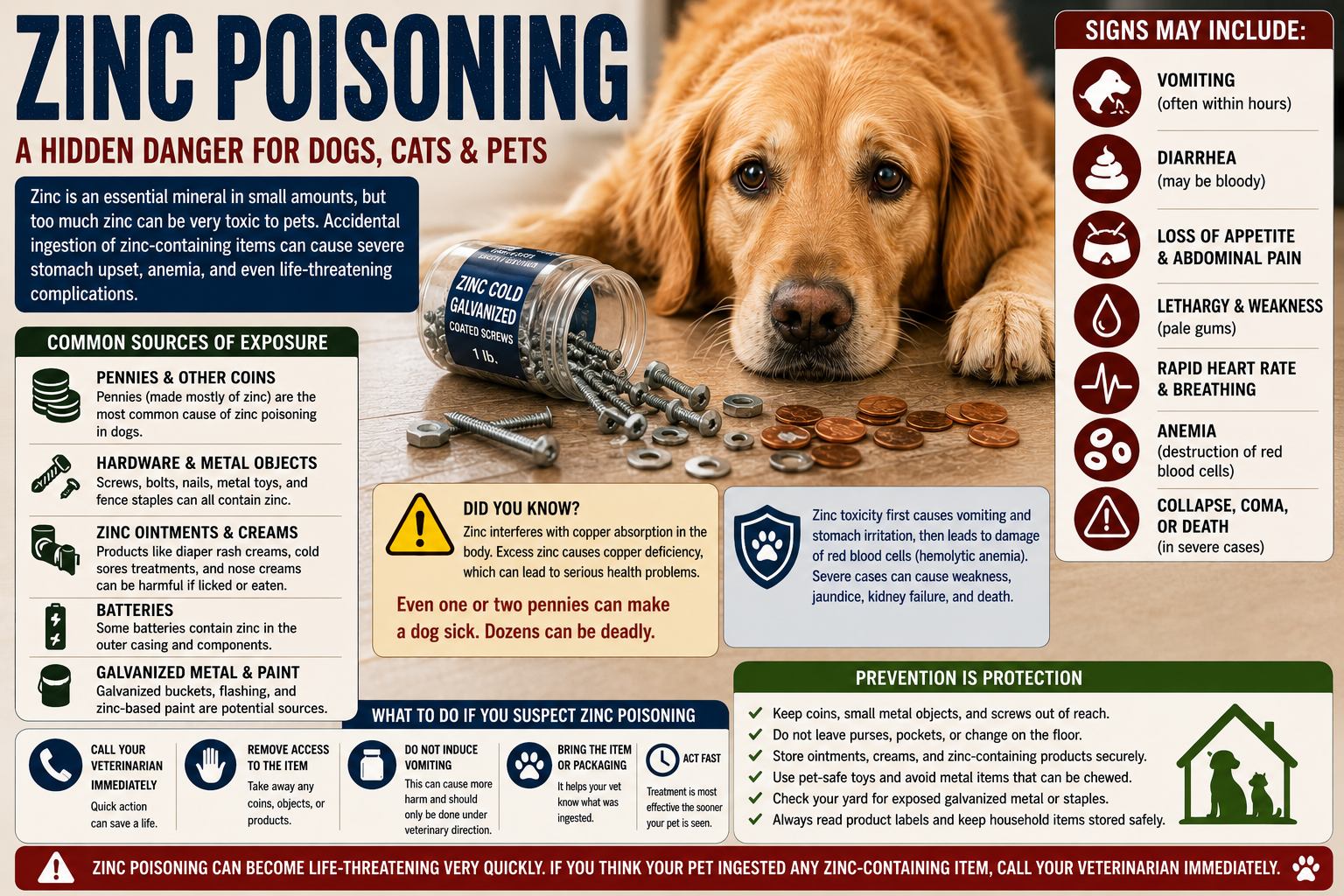
Yes. Zinc is an essential nutrient, but concentrated zinc or prolonged contact with a zinc-containing object can cause life-threatening poisoning. Dogs are affected most often after swallowing zinc-rich coins, galvanized hardware, cage parts, zippers, toys, jewelry, tags, creams, supplements, or other products. Cats are exposed less commonly, but documented feline zinc toxicosis shows that they are not protected.
The acidic stomach can dissolve zinc from a retained metal object and create absorbable zinc salts. Early vomiting, diarrhea, appetite loss, and abdominal pain may be followed by intravascular hemolysis, anemia, red or brown urine, jaundice, kidney injury, liver injury, pancreatitis, clotting abnormalities, weakness, collapse, and death. The metal object can also obstruct, abrade, or perforate the gastrointestinal tract independently of systemic poisoning.
The word zinc on a label does not identify one uniform hazard. A modern copper-colored U.S. cent has a zinc-rich core; zinc oxide appears in diaper-rash creams and some skin products; galvanized metal carries a zinc coating; and zinc supplements or lozenges contain soluble zinc salts. Zinc phosphide rodenticide is a separate emergency because it can release phosphine gas and should not be managed as ordinary zinc-metal ingestion.
About this guide: This page provides general pet-poisoning information and cannot diagnose or treat an individual animal. For any suspected exposure, contact a veterinarian or animal poison-control service immediately. Do not induce vomiting, give medication, or attempt home decontamination unless directed by a veterinary professional.
Agent and Exposure Profile
Quick Reference
Zinc Sources, Chemical Forms, and Product Recognition
Metallic zinc and zinc-coated objects
Metallic objects are the best-documented source of severe zinc toxicosis in dogs. Zinc may form most of an object, appear as a protective galvanized coating, or be present in an alloy or decorative finish. Common sources include modern U.S. cents, foreign coins, nuts, bolts, screws, washers, cage hardware, crate fasteners, zippers, jewelry, identification tags, toy parts, game pieces, curtain weights, roofing material, and holiday garland.
Color is unreliable. Copper-colored coins may contain a zinc-rich core, and silvery objects may be galvanized steel, aluminum, nickel-containing alloy, or another metal. A radiograph can localize a metal foreign body but usually cannot prove its composition. The original product, date, country, packaging, and matching hardware help identify the hazard.
Modern U.S. cents
Current U.S. one-cent coins are copper-plated zinc. The year 1982 was a composition transition, so date alone does not reliably identify every 1982 cent. Once the thin copper surface is scratched or exposed to gastric acid, the zinc core can dissolve while the coin remains in the stomach.
Zinc oxide creams and skin products
Zinc oxide is used in diaper-rash creams, barrier ointments, some sunscreens, medicated skin preparations, and selected shampoos or pastes. A dog may chew a tube, lick a large application from its skin, or repeatedly ingest cream applied during treatment for diarrhea or dermatitis. A small accidental lick may cause only gastrointestinal upset, but sustained access or a highly concentrated product can produce systemic toxicosis.
Supplements, lozenges, and soluble zinc salts
Human multivitamins, mineral tablets, prenatal products, cold lozenges, zinc gummies, veterinary supplements, feed premixes, and hoof or coat products may contain zinc gluconate, zinc sulfate, zinc acetate, zinc citrate, zinc methionine, or other forms. Risk depends on the elemental zinc content, product concentration, amount swallowed, patient size, and co-ingredients. The front label is not enough; the complete ingredient panel and supplement facts are needed.
Industrial, household, and agricultural products
Zinc chloride may occur in soldering flux and metalworking products, while zinc compounds may be present in pigments, fertilizers, rubber, ceramics, paints, and corrosion-control products. Livestock, horses, birds, and zoo or wildlife species may be exposed through excessive mineral supplementation, contaminated feed, galvanized troughs or wire, industrial contamination, or chewing metal structures.
Zinc phosphide is a different poison
Zinc phosphide is a rodenticide that reacts in the gastrointestinal tract to release phosphine gas. Its immediate danger is not the same as ordinary zinc-ion toxicosis from coins or creams, and vomit can expose people and veterinary staff to phosphine. Any suspected zinc phosphide exposure requires immediate product-specific emergency instructions and careful ventilation and handling.
Where Zinc May Be Found Around Animals
Coins and small metal objects
Dogs may swallow coins from floors, couches, purses, change jars, vehicles, vending areas, children's rooms, laundry, or dropped pockets. Other recurring sources include zipper pulls, nuts and bolts, cage hardware, kennel fasteners, jewelry, tags, tacks, screws, washers, game pieces, curtain weights, and metal-coated decorations.
Crates, kennels, fences, and galvanized hardware
Chewed crate bars, galvanized bowls, wire, fencing, clips, bolts, and transport-cage hardware can expose animals to zinc coatings or fragments. A loose fastener may be swallowed whole, while chronic chewing can remove coating over time. Boarding facilities, shelters, farms, and veterinary hospitals should investigate missing hardware when unexplained gastrointestinal signs or hemolysis occur.
Topical products and grooming supplies
Diaper-rash cream, barrier ointment, sunscreen, medicated paste, skin protectant, and some shampoos may contain zinc oxide. Tubes stored beside bathing or wound-care supplies are attractive chew objects. Repeated licking from a treated hind end, paw, surgical site, or irritated skin can create a larger cumulative exposure than the caregiver recognizes.
Supplements and cold remedies
Zinc may be present in human and veterinary multivitamins, single-mineral tablets, gummies, lozenges, immune-support products, denture products, feed supplements, mineral blocks, and premixes. Combination products may also contain iron, vitamin D, xylitol, acetaminophen, decongestants, or other ingredients that change the emergency.
Workshops, barns, construction areas, and holiday materials
Soldering flux, galvanized scrap, roofing pieces, fasteners, batteries, metal shavings, paints, pigments, fertilizers, and decorative garland may contain zinc or create mixed-metal exposure. Holiday tinsel and garland can also behave as linear or obstructive foreign material. Preserve packaging and fragments rather than assuming a shiny object is aluminum or harmless plastic.
Zinc Exposure Scenarios and Risk Factors
Swallowed metallic foreign bodies
A dog may swallow one coin, several coins, a galvanized nut, a zipper pull, a tag, or an irregular metal fragment. The object can remain in the stomach while acid dissolves zinc from its surface. Continued retention allows ongoing absorption, so signs may worsen despite anti-nausea medication or temporary improvement.
Multiple animals may have access to the same spilled change, broken crate, toy, or hardware. Do not divide the missing objects evenly or assume the symptomatic animal swallowed everything. Each animal's weight, radiographs, signs, and laboratory results must be considered separately.
Repeated licking of zinc oxide cream
Chronic ingestion can occur when cream is repeatedly applied to skin that the animal can reach. A dog may lick away each application for days while the caregiver believes only a small amount was consumed at one time. Diarrhea, vomiting, weakness, pigmenturia, or anemia may then be attributed to the original skin or gastrointestinal problem rather than the treatment product.
Chewed supplement bottles and lozenges
Flavored gummies, chewable tablets, and cold lozenges may attract dogs. The exposure calculation must use elemental zinc rather than total tablet weight or the weight of the zinc salt. Co-ingredients may create additional toxicities, and sugar-free products require assessment for xylitol.
Cats and other small animals
Cats ingest metallic objects less often than dogs, but feline zinc toxicosis has been documented after a retained metal foreign body. Ferrets, birds, rabbits, rodents, reptiles, and other small patients can be harmed by a much smaller object, obstruction, corrosive zinc salts, or contaminated feed. Limited species-specific literature should not be mistaken for safety.
Large-animal and flock exposure
Horses, cattle, sheep, goats, pigs, poultry, and captive birds may encounter excessive zinc in mineral mixes, feed contamination, galvanized equipment, wire, troughs, industrial waste, or supplements intended for another species. Group exposure may present as reduced feed intake, gastrointestinal disease, poor growth, lameness, anemia, or organ injury rather than one dramatic ingestion event.
Patient factors that increase concern
Small body size, delayed discovery, multiple objects, prolonged gastric retention, preexisting anemia, kidney or liver disease, dehydration, pancreatitis, and concurrent oxidant exposure can worsen the clinical course. Surgery or anesthesia may carry greater risk when hemolysis, coagulopathy, kidney injury, or systemic inflammation is already present.
Zinc Poisoning Symptoms and Clinical Progression
Early gastrointestinal signs
Vomiting, reduced appetite, diarrhea, abdominal discomfort, drooling, lethargy, and dehydration are common early findings. A retained coin or hardware fragment may also cause gagging, repeated swallowing, obstruction, focal pain, or gastrointestinal bleeding. These signs are nonspecific and can delay recognition when the ingestion was not witnessed.
Intravascular hemolysis and anemia
Zinc can damage circulating red blood cells and cause intravascular hemolysis. Signs include weakness, rapid breathing, rapid heart rate, pale gums, yellow gums or skin, dark red, orange, brown, or black urine, and collapse. Heinz bodies or spherocytes may be present, but neither finding is consistent enough to rule zinc toxicosis in or out by itself.
Because spherocytes and hemolysis can resemble immune-mediated hemolytic anemia, a zinc-containing foreign body may be missed if abdominal imaging and exposure history are not pursued. Agglutination, marked spherocytosis, infectious disease, and other causes still require evaluation; the diagnostic process should not assume every hemolytic anemia is zinc-related.
Liver, kidney, and clotting complications
Severe cases may develop increased liver enzymes, bilirubin elevation, acute liver injury, acute kidney injury, reduced urine production, electrolyte abnormalities, acid-base disturbance, or disseminated intravascular coagulation. Hemoglobin released during intravascular hemolysis can add pigment-associated kidney stress, especially when the patient is dehydrated or hypotensive.
Pancreatic disease
Zinc toxicosis has been associated with pancreatitis and other pancreatic abnormalities in dogs. Vomiting, cranial abdominal pain, anorexia, ileus, or increased pancreatic markers may appear with hemolysis or organ injury. Pancreatic involvement can complicate fluid, nutritional, analgesic, and postoperative management.
Foreign-body injury can occur without systemic toxicosis
A coin, screw, zipper, or jagged fragment can obstruct, ulcerate, or perforate the gastrointestinal tract even before enough zinc is absorbed to produce hemolysis. Conversely, systemic zinc toxicosis can occur while the foreign body causes few mechanical signs. Both pathways must be evaluated.
Delayed or atypical presentation
Clinical progression varies with zinc form, surface damage, gastric acidity, object retention, dose, and patient factors. Some animals show days of gastrointestinal illness before anemia is obvious, while others present in crisis. Cats and exotic species may show only vomiting, appetite loss, weight loss, weakness, or vague laboratory abnormalities until disease is advanced.
First Aid for Suspected Zinc Exposure
Immediate owner actions
- Remove access to coins, metal pieces, creams, supplements, lozenges, feed, hardware, and contaminated objects.
- Preserve the exact object or package and collect matching examples when available.
- Count missing coins, tablets, fasteners, or fragments without delaying veterinary care.
- Record the earliest and latest possible exposure time and every symptom already observed.
- Identify every animal with access and obtain a current weight for each one.
- Call a veterinarian or veterinary emergency service immediately when ingestion is possible.
Do not induce vomiting at home
Hydrogen peroxide, salt, mustard, manual gagging, and other home emesis methods can cause aspiration or additional injury. A coin or sharp metal object can lodge in or damage the esophagus on the way back up. The patient may also require imaging, endoscopy, or anesthesia, making unsupervised feeding or vomiting attempts counterproductive.
Activated charcoal is not a reliable zinc treatment
Activated charcoal does not effectively solve the hazard from a retained metal object and is not a substitute for source removal. It can complicate endoscopy, obscure gastrointestinal bleeding, worsen dehydration, or be aspirated by a weak or vomiting animal. Use is a veterinary decision when another co-ingested toxin is present.
Do not attempt chelation or mineral balancing at home
Do not give human chelators, calcium products, iron, copper, milk, antacids, supplements, or homemade mineral mixtures. Chelation can redistribute metals, affect the kidneys, interact with laboratory testing, and does not remove an obstructive source. Treatment must be matched to the patient's clinical condition and confirmed exposure.
Topical and eye exposure
If zinc-containing cream or industrial material is on the coat or skin, prevent licking and contact the veterinarian for product-specific washing instructions. For eye contamination, begin gentle flushing with clean lukewarm water when it can be done safely, and seek prompt veterinary assessment. Do not use solvents, acids, alkalis, or abrasive cleaning.
Safe transport
Keep the animal quiet and warm, transport in a secure carrier or restrained area, and bring all packaging and recovered objects. Call ahead for pale or yellow gums, dark urine, collapse, breathing difficulty, severe abdominal pain, repeated vomiting, or suspected zinc phosphide so the hospital can prepare for isolation, imaging, transfusion support, and occupational-safety precautions.
Zinc Toxicology and Mechanism
Essential nutrient versus toxic excess
Zinc is required for normal enzyme function, gene regulation, immune activity, skin integrity, and growth. Toxicity occurs when exposure overwhelms the body's ability to regulate absorption, binding, storage, and excretion. Normal dietary zinc and a concentrated zinc foreign body are not biologically equivalent.
Dissolution in the stomach
Gastric acid can corrode zinc-rich metal and create soluble zinc salts that are absorbed through the gastrointestinal tract. A retained object acts as a continuing source. Surface scratches, prolonged contact, and repeated movement may expose more zinc even when the object initially appeared intact.
Red-blood-cell injury
The precise mechanism of zinc-associated hemolysis remains incompletely defined. Oxidative injury, membrane damage, enzyme disruption, and immune-mediated components have been proposed. Heinz bodies and spherocytes occur inconsistently, which is why their absence does not exclude zinc toxicosis and their presence does not establish it without supporting evidence.
Multi-organ effects
Absorbed zinc can affect the gastrointestinal tract, liver, kidneys, pancreas, and hemostatic system. Intravascular hemolysis releases hemoglobin, while vomiting and diarrhea worsen dehydration and renal perfusion. Severe inflammation, tissue hypoxia, coagulation abnormalities, and retained foreign material can interact to produce rapid deterioration.
Zinc oxide and soluble salts
Zinc oxide is less soluble than some zinc salts, but prolonged ingestion, large amounts, gastric conditions, and repeated exposure can still produce clinically important absorption. Supplements and lozenges may contain more soluble forms, yet product labels often state compound weight rather than the amount of elemental zinc. Veterinary risk assessment therefore requires the exact formulation.
Why blood zinc is not the entire diagnosis
Serum or plasma zinc can support the diagnosis, but interpretation depends on laboratory method, sample timing, hemolysis, prior treatment, ongoing exposure, and reference intervals. A source may already have been removed or passed, and tissue injury may continue. Imaging, blood smear findings, bilirubin, kidney and liver trends, urine color, pancreatic assessment, and clinical response remain important.
Zinc phosphide evidence boundary
Zinc phosphide poisoning is dominated by phosphine generation and cellular toxicity rather than the classic zinc-ion syndrome described for coins and galvanized objects. It also creates a secondary inhalation hazard from vomit or gastric contents. Management protocols for metallic zinc should not be transferred mechanically to phosphide rodenticide exposure.
Clinical Management
Veterinary Care and Prognosis
Veterinary Diagnosis and Treatment
Exposure reconstruction and stabilization
The veterinary team identifies the likely source, number of objects, product composition, exposure window, patient weight, co-ingestants, and previous treatment. Initial priorities include airway, breathing, circulation, temperature, pain, hydration, mucous-membrane color, urine appearance, abdominal examination, and assessment for shock or severe anemia.
Imaging and source localization
Radiographs of the abdomen, and sometimes the neck or chest, are commonly used to find coins or other radiopaque objects. Multiple views help distinguish gastric from intestinal location and identify more than one object. Ultrasound or additional imaging may evaluate obstruction, pancreatitis, perforation, free fluid, or organ injury, but imaging appearance alone usually cannot confirm zinc composition.
Source removal
Removing the zinc source is central to treatment. Endoscopy may retrieve objects in the esophagus or stomach, while surgery may be required for obstruction, perforation, inaccessible objects, sharp fragments, or failed endoscopic removal. The patient should be stabilized as much as possible without allowing avoidable delay, because continued gastric retention permits ongoing zinc dissolution.
Laboratory evaluation
Testing may include a complete blood count, blood smear, packed cell volume, reticulocyte count, bilirubin, serum chemistry profile, electrolytes, kidney and liver values, urinalysis, coagulation testing, blood gas or lactate assessment, pancreatic markers, and serum or plasma zinc. Serial measurements are often more informative than one early result.
Fluids, perfusion, and kidney protection
Intravenous crystalloids may correct dehydration, support circulation, and protect renal perfusion while pigmenturia and hemolysis are managed. Fluid plans must account for urine output, anemia, blood pressure, cardiac status, kidney injury, and ongoing gastrointestinal loss. Persistent hypotension after appropriate fluid resuscitation may require vasopressor support.
Transfusion and oxygen-delivery support
Clinically important anemia or ongoing hemolysis may require packed red cells, whole blood, or other blood products. Oxygen, temperature control, and close cardiopulmonary monitoring may be needed while the zinc source is removed and red-cell destruction slows. Coagulation abnormalities can alter procedural and transfusion planning.
Chelation
Chelation may be considered in selected patients with substantial systemic exposure, persistent elevation, organ injury, or continued clinical progression after source removal. Agent selection, timing, route, kidney monitoring, and treatment duration are case-specific. Chelation is not a substitute for removing retained zinc-containing material, and evidence for an ideal veterinary protocol is limited.
Gastrointestinal, hepatic, pancreatic, and postoperative care
Patients may require antiemetics, analgesia, nutritional support, acid suppression or mucosal protection when indicated, and treatment of pancreatitis, acute kidney injury, liver dysfunction, or disseminated coagulation abnormalities. Antibiotics are not automatic but may be appropriate for perforation, aspiration, or documented infection. Close postoperative monitoring is important because severe zinc toxicosis can worsen after foreign-body removal.
Zinc phosphide precautions
When the product is zinc phosphide, the hospital may need ventilation, personal protective equipment, controlled handling of vomit or gastric contents, and product-specific decontamination decisions. Staff and owners can become ill from phosphine exposure. The animal's treatment and human-safety plan must proceed together.
Zinc Poisoning Prognosis, Recovery, and Follow-Up
Early source removal improves the outlook
Prognosis is often favorable when the zinc source is identified and removed before severe hemolysis or organ injury develops. Patients with mild gastrointestinal signs, stable blood counts, normal kidney function, and prompt endoscopic retrieval may recover quickly with monitoring and supportive care.
Guarded and poor-prognosis findings
Severe anemia, ongoing intravascular hemolysis, acute kidney injury, liver injury, pancreatitis, disseminated intravascular coagulation, perforation, sepsis, shock, prolonged retention, multiple zinc objects, or delayed diagnosis make the outlook more guarded. Published fatal cases demonstrate that removal alone does not guarantee recovery once systemic injury is advanced.
Monitoring after the object is gone
Hemolysis, bilirubin elevation, kidney injury, pancreatic abnormalities, and coagulation changes may continue after removal because absorbed zinc and established tissue damage remain. Serial blood counts, chemistry values, urinalysis, coagulation tests, zinc measurements, and clinical examinations may be required until trends are clearly improving.
After discharge
Owners should follow all feeding, medication, activity, and recheck instructions. Return immediately for renewed vomiting, appetite loss, abdominal pain, weakness, pale or yellow gums, dark urine, reduced urination, bruising, bleeding, fever, collapse, or breathing changes. A pet that appears brighter can still have evolving anemia or kidney injury.
Long-term and group-exposure follow-up
Animals exposed through repeated cream ingestion, supplements, contaminated feed, or galvanized equipment may need the source identified and removed from the environment before recovery is durable. Herds, flocks, kennels, and multi-pet homes may require testing of additional animals, feed, water, hardware, or mineral products.
Preventing Zinc Poisoning
Keep coins and small metal objects inaccessible
Store coins in closed containers and empty pockets before laundry. Pick up dropped change immediately and check under furniture, vehicle seats, vending areas, children's play spaces, and guest rooms. Do not allow pets to play with coins, keys, tags, hardware, jewelry, or metal game pieces.
Inspect crates, kennels, toys, and household hardware
Replace loose bolts, damaged galvanized wire, broken zipper pulls, corroded tags, chewed cage components, and toys with exposed metal. Count missing fasteners after repairs. Facilities should document routine inspections and investigate unexplained missing hardware promptly.
Prevent access to zinc oxide products
Store creams, ointments, sunscreens, pastes, and shampoos inside closed cabinets. When a zinc-containing product is medically necessary, prevent licking with a veterinarian-approved barrier or alternative plan. Do not repeatedly reapply a product that the animal removes and swallows.
Control supplements and lozenges
Keep multivitamins, mineral supplements, gummies, cold lozenges, feed additives, and veterinary products in labeled containers. Use only a current species- and patient-specific veterinary plan. Avoid combining products that duplicate zinc or contain other hazardous ingredients.
Manage farm, workshop, and industrial sources
Keep soldering flux, galvanized scrap, batteries, roofing pieces, fertilizers, pigments, and metal shavings away from animals, feed, and water. Test feed or environmental sources when group exposure is suspected. Replace heavily chewed or corroded galvanized equipment rather than waiting for visible fragments to disappear.
Identify rodenticides by active ingredient
Store every rodenticide in its original container and never refer to a bait only by color or brand family. Zinc phosphide, anticoagulants, bromethalin, cholecalciferol, and other rodenticides require different emergency responses. Preserve the label after any suspected exposure.
Zinc Poisoning FAQ
Are modern U.S. pennies dangerous to dogs?
Yes. Modern U.S. cents are copper-plated zinc, and gastric acid can expose and dissolve the zinc-rich core. The 1982 date is a transition year, so the exact composition of a 1982 cent may require closer identification.
Can one penny poison a dog?
One zinc-rich coin can be clinically important, especially in a small dog or when it remains in the stomach. Risk cannot be judged from coin count alone because patient size, retention time, corrosion, and individual response vary.
What if the coin has already passed into the intestine?
Location changes the removal decision but does not prove safety. The object may still obstruct or injure tissue, and zinc absorbed while it was in the stomach may continue causing hemolysis or organ damage. Veterinary imaging and laboratory monitoring remain important.
Can an X-ray tell whether a metal object contains zinc?
Radiographs can locate radiopaque objects and show number, size, and movement, but they usually cannot identify exact alloy or coating. Packaging, matching hardware, coin date and country, and laboratory findings help determine composition.
Why does zinc turn urine red or brown?
Intravascular hemolysis releases hemoglobin from damaged red blood cells. Hemoglobin and related pigments can discolor plasma and urine and can contribute to kidney injury. Red or brown urine with weakness or pale gums is an emergency.
Can zinc poisoning look like immune-mediated hemolytic anemia?
Yes. Spherocytes, anemia, bilirubin elevation, and hemolysis may overlap. Zinc should remain a differential diagnosis when a metallic foreign body is possible, particularly because source removal changes treatment. Other causes of hemolysis still require evaluation.
Does the absence of Heinz bodies rule out zinc toxicosis?
No. Heinz bodies are inconsistently present in reported canine cases. Their absence does not exclude zinc, and their presence is not specific enough to replace exposure history, imaging, zinc testing, and the broader laboratory picture.
Is zinc oxide diaper-rash cream poisonous?
A small lick may cause only gastrointestinal upset, but chewing a tube or repeatedly licking large applications can produce substantial exposure. Published canine cases show that prolonged zinc oxide ingestion can cause severe hemolytic anemia.
What if my dog ate a zinc supplement or cold lozenge?
Preserve the label and contact a veterinarian. The relevant amount is elemental zinc, not merely tablet weight, and co-ingredients such as xylitol, iron, vitamin D, acetaminophen, or decongestants may create additional emergencies.
Are galvanized bowls, crates, and fences safe?
Intact galvanized products are widely used, but chewing, corrosion, broken coatings, and swallowed hardware create risk. Replace damaged items and investigate missing nuts, bolts, clips, or wire rather than assuming the coating is harmless.
Can cats get zinc poisoning?
Yes. Cats ingest metal objects less commonly than dogs, but feline zinc toxicosis from a retained metallic foreign body has been reported. Vomiting, appetite loss, weight loss, anemia, or unexplained organ abnormalities warrant investigation when access is possible.
Can zinc cause pancreatitis?
Yes. Pancreatic disease has been documented with zinc toxicosis in dogs. Vomiting and abdominal pain may therefore reflect both gastrointestinal irritation and pancreatic injury, and pancreatic markers can improve after the zinc source is removed.
Should I give activated charcoal?
No, not unless a veterinarian directs it for a separate co-ingestant. Charcoal does not remove a zinc-containing foreign body and does not reliably bind the principal zinc hazard. It can complicate endoscopy and increase aspiration or dehydration risk.
Is chelation always required?
No. Prompt source removal and supportive care may be sufficient in some cases, while severe or persistent systemic exposure may justify chelation. The decision depends on the zinc source, clinical progression, kidney function, laboratory trends, and response after removal.
Can blood zinc be normal after a real exposure?
A single result can be influenced by timing, sample handling, prior removal, treatment, and laboratory method. Veterinarians interpret it with radiographs, hemolysis, bilirubin, urine findings, organ values, and clinical history rather than using it as an isolated yes-or-no test.
Why can a dog worsen after surgery removes the coin?
Removal stops further dissolution but does not erase zinc already absorbed or reverse established hemolysis, kidney injury, pancreatitis, or coagulation abnormalities. Severely affected patients need intensive postoperative monitoring and may require transfusion and organ support.
Is zinc phosphide rat poison the same as zinc metal poisoning?
No. Zinc phosphide can generate phosphine gas and creates a distinct, rapidly dangerous poisoning plus a human inhalation hazard from vomit or gastric contents. Call ahead and preserve the rodenticide label so the hospital can prepare safely.
What should I do when several pets had access?
Separate them, count missing objects or tablets, record each animal's weight and signs, and report the maximum possible exposure for every pet. Do not divide the missing amount evenly or assume the animal nearest the source swallowed everything.