Zolpidem, Ambien, and “Z-Drug” Sleep-Aid Poisoning
Is Zolpidem (Ambien) Poisonous to Dogs, Cats, and Other Animals?
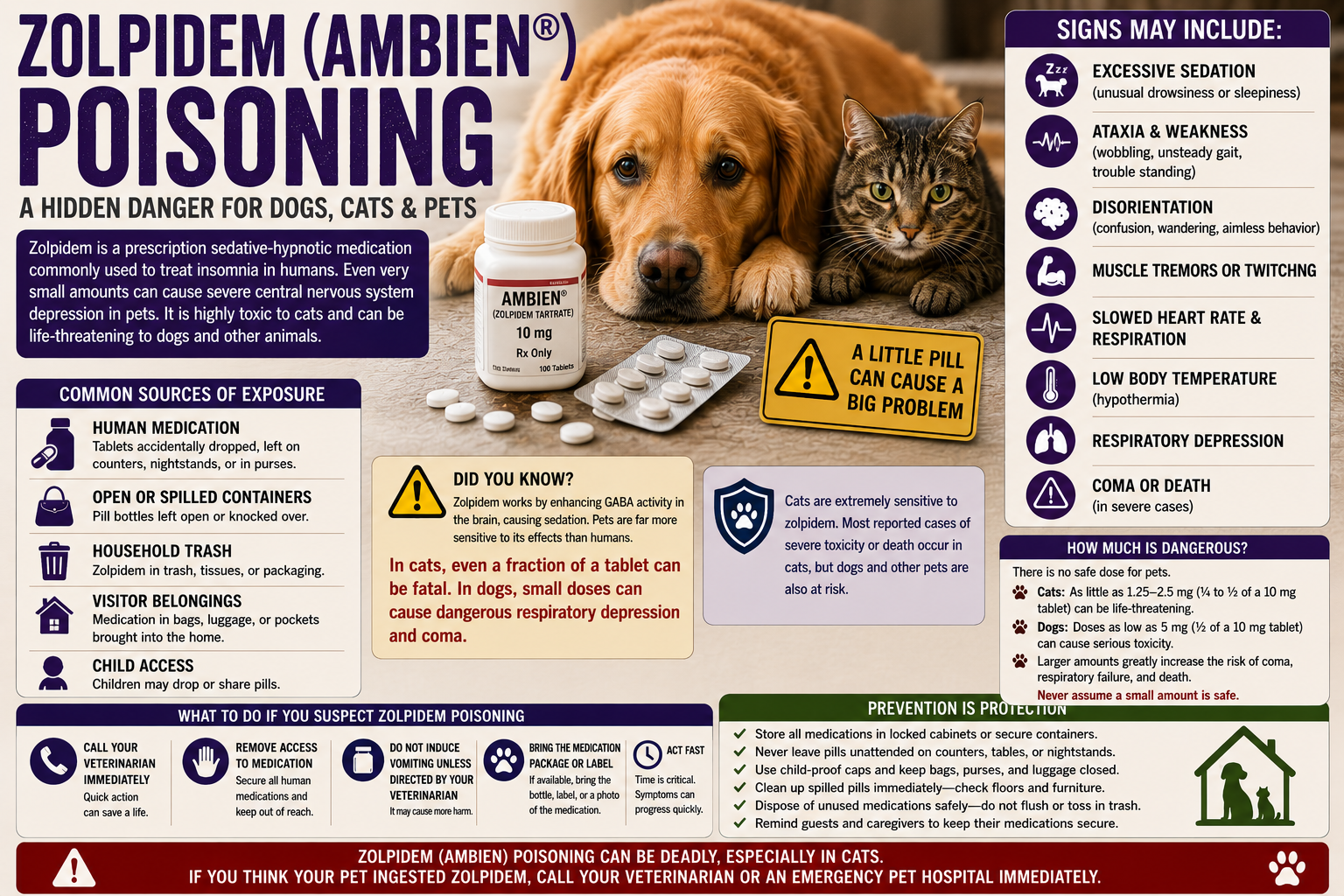
Yes. Zolpidem can poison dogs, cats, birds, and other animals after accidental ingestion of tablets, extended-release tablets, sublingual products, oral spray, crushed medication, or mixed pill-organizer contents. In dogs, zolpidem often causes an unusual combination of ataxia, disorientation, hyperactivity, agitation, vocalization, tremors, panting, vomiting, hypersalivation, and later sedation. Cats may develop stupor, severe ataxia, vomiting, hypersalivation, hypothermia, and prolonged neurologic depression.
Zolpidem is sold under names including Ambien, Ambien CR, Edluar, Intermezzo, Zolpimist, and numerous generics. Immediate-release, extended-release, sublingual, and oral-spray products are not equivalent. A single human tablet can represent a significant exposure for a small dog, cat, bird, rabbit, or ferret, and extended-release formulations may produce a longer or less predictable course.
The greatest danger often comes from rapid loss of coordination, paradoxical excitement, aspiration, trauma, or combined central-nervous-system depression when zolpidem is swallowed with alcohol, opioids, benzodiazepines, antihistamines, gabapentin, antidepressants, cannabis, or other sedatives. A normal-looking animal can deteriorate quickly because clinical signs frequently begin within the first hour.
About this guide: This page provides general pet-poisoning information and cannot diagnose or treat an individual animal. For any suspected exposure, contact a veterinarian or animal poison-control service immediately. Do not induce vomiting, give medication, or attempt home decontamination unless directed by a veterinary professional.
Agent and Exposure Profile
Quick Reference
Zolpidem Identity, Formulations, and Product Recognition
Zolpidem Tartrate
Zolpidem is an imidazopyridine sedative-hypnotic commonly grouped with the “Z-drugs.” It is not a traditional benzodiazepine, but it acts at the benzodiazepine binding site of the gamma-aminobutyric acid type A receptor. The prescription label usually lists zolpidem tartrate as the active ingredient.
Immediate-Release Tablets
Immediate-release tablets are intended to promote sleep onset and may be sold as Ambien or generic zolpidem. Human strengths commonly encountered in the home can deliver a large dose relative to a small animal's body weight. Tablets may be stored in bedside drawers, purses, weekly organizers, hotel bags, and bathroom cabinets.
Extended-Release Tablets
Ambien CR and generic extended-release zolpidem contain an immediate-release layer and a slower-release layer. Chewing or crushing can alter release characteristics. Animals exposed to extended-release products may require longer monitoring because clinical effects can persist or recur after early improvement.
Sublingual Tablets
Edluar and Intermezzo are sublingual zolpidem products designed to dissolve beneath the tongue. They can dissolve rapidly in an animal's mouth and may be packaged in individual pouches or blister material. The pouch, foil, or packaging may also be swallowed and create a foreign-body concern.
Oral Spray
Zolpimist is an oral spray formulation. A punctured bottle or chewed pump can expose a pet to multiple sprays at once, while the plastic components can create choking or obstruction hazards. The amount remaining in a pump bottle is often difficult to estimate accurately.
Generic and International Names
Zolpidem may appear under many generic and international brand names. Pill appearance and imprint vary by manufacturer. Product recognition should rely on the prescription label, imprint, pharmacy records, or verified identification rather than color alone.
Combination and Mixed-Medication Exposures
Zolpidem is often stored beside antidepressants, benzodiazepines, opioids, antihistamines, muscle relaxants, pain medication, and cardiovascular drugs. A pet that empties a pill organizer may ingest several pharmacologic classes simultaneously. The clinical syndrome may therefore be broader than zolpidem alone.
Where Zolpidem Exposure May Occur
Bedside Tables and Nighttime Medication Areas
Zolpidem is commonly taken immediately before sleep, so tablets may be left on nightstands, under pillows, beside water glasses, in hotel rooms, or in bedside organizers. Dogs can reach these areas easily, and a dropped tablet may remain hidden until a pet finds it later.
Purses, Backpacks, Luggage, and Pill Organizers
Medication carried for travel or overnight use is often stored in purses, backpacks, suitcases, coat pockets, and weekly pill organizers. Pets may consume zolpidem along with several unrelated prescriptions. Organizers also remove the original label that would otherwise identify the drug and strength.
Blister Packs and Sublingual Pouches
Individual foil packs may look like chewable objects to dogs and can be swallowed with the tablet. Sharp foil and plastic can injure the mouth or gastrointestinal tract. A torn pouch may leave little evidence of how many tablets were available.
Oral-Spray Bottles
Small oral-spray containers may be kept near beds or in travel kits. A dog can puncture the bottle and ingest both medication and plastic. Spray formulations can expose the mouth rapidly and may be harder to quantify than a missing tablet count.
Trash, Dropped Pills, and Visitor Medication
Discarded bottles, pharmacy bags, used blister packs, dropped tablets, and medication belonging to visitors or house sitters are common access points. The owner may not know the product until the pharmacy or prescriber is contacted.
Intentional or Improper Administration
Zolpidem should not be given to an animal to calm travel anxiety, stop barking, induce sleep, or manage behavior unless a veterinarian has specifically prescribed and supervised its use. Human dosing assumptions are unsafe because dogs can show paradoxical stimulation rather than predictable sedation.
Exposure Scenarios and Risk Factors
Common Companion-Animal Scenarios
- A dog chews a bottle or blister pack of zolpidem tablets.
- A pet consumes one or more tablets dropped beside the bed.
- A dog empties a pill organizer containing zolpidem plus other prescriptions.
- A cat licks or swallows a sublingual tablet or oral-spray residue.
- A pet chews an extended-release tablet, releasing medication rapidly.
- A small bird, rabbit, ferret, or toy dog consumes part of a tablet.
- An owner intentionally gives zolpidem as a sleep aid or calming medication.
Paradoxical Stimulation in Dogs
Dogs frequently become hyperactive, restless, vocal, disoriented, or tremulous rather than simply sleepy. Controlled canine pharmacology work and clinical case series both document this paradoxical excitatory response. An excited animal may injure itself, fall down stairs, run into objects, or become difficult to restrain safely.
Small Body Size
A single human tablet can represent a large exposure to a toy dog, cat, bird, rabbit, or ferret. Product strength and formulation matter, and extended-release or sublingual products may behave differently from an ordinary swallowed tablet.
Older, Debilitated, or Hepatically Compromised Animals
Because zolpidem is metabolized primarily by the liver, advanced age, liver disease, reduced protein binding, and concurrent medication can prolong or intensify effects. A published feline case involved a geriatric cat whose signs lasted substantially longer than the typical course reported in dogs.
Co-Ingestants
Alcohol, opioids, benzodiazepines, gabapentin, pregabalin, antihistamines, antidepressants, antipsychotics, muscle relaxants, cannabis, and anesthetic drugs can increase sedation, respiratory depression, aspiration, and cardiovascular instability. Stimulants and serotonergic agents may instead amplify agitation, tremors, tachycardia, or hyperthermia.
Trauma and Aspiration
Ataxic or disoriented animals may fall, strike their head, aspirate vomit, or injure the spine and limbs. The emergency is therefore not limited to the drug concentration. Safe confinement and rapid veterinary assessment are important even when signs appear mild.
Zolpidem Poisoning Symptoms and Clinical Progression
Ataxia and Disorientation
Stumbling, swaying, falling, poor coordination, altered awareness, staring, and inability to stand are among the most characteristic signs. In a canine retrospective study, ataxia was the most commonly reported clinical abnormality. Animals may appear intoxicated or neurologically impaired.
Paradoxical Hyperactivity and Agitation
Instead of sleeping, dogs may pace, vocalize, become apprehensive, pant, jump, show hyperesthesia, or resist handling. This paradoxical stimulation often begins quickly and can precede sedation. Bright light, noise, and repeated restraint may worsen agitation.
Vomiting and Hypersalivation
Vomiting, drooling, retching, and nausea occur in a meaningful subset of exposed animals. Vomiting combined with severe ataxia or stupor creates aspiration risk. The absence of visible tablets in vomit does not establish that the drug was removed.
Sedation, Stupor, and Coma
Lethargy, somnolence, stupor, reduced response to stimulation, and coma can occur, especially after larger exposures or sedative co-ingestants. Respiratory rate and airway protection become critical in deeply depressed patients. Cats may remain neurologically abnormal longer than many dogs.
Tremors, Weakness, and Seizures
Tremors, muscle twitching, weakness, and occasionally seizures may develop. Seizures are not the most common zolpidem sign and should prompt careful evaluation for severe exposure, hypoglycemia, head trauma, another medication, or withdrawal-related complications.
Cardiovascular and Temperature Changes
Tachycardia can accompany agitation, while bradycardia or hypotension may occur with severe depression or co-ingestants. Hypothermia is possible in deeply sedated animals, while agitation and tremors can raise temperature. Continuous monitoring helps distinguish drug effect from secondary complications.
Typical Timing
Clinical signs often begin within an hour. Many canine cases resolve within approximately twelve hours, but duration varies with dose, formulation, age, liver function, and co-ingestants. Extended-release products and feline exposures may require longer observation.
First Aid for Suspected Zolpidem Exposure
Immediate Owner Actions
- Remove all medication, packaging, pill organizers, and spray bottles.
- Preserve the original label, tablet strength, formulation, imprint, and remaining pill count.
- Record the maximum amount missing, exposure time, current weight, and every clinical sign.
- List all other medications and substances that may have been swallowed.
- Confine the animal safely away from stairs, furniture edges, pools, and traffic.
- Contact a veterinarian immediately rather than waiting for sedation to deepen.
Do Not Induce Vomiting Without Veterinary Direction
Do not give hydrogen peroxide, salt, mustard, syrup of ipecac, or attempt manual gagging. Zolpidem can rapidly cause ataxia, agitation, sedation, and loss of airway protection. Vomiting becomes dangerous once neurologic signs begin or when sharp blister packaging was swallowed.
Do Not Give Stimulants or Sedatives at Home
Caffeine, energy products, amphetamines, antihistamines, melatonin, benzodiazepines, and other medications can worsen the syndrome or create new complications. Flumazenil is a hospital drug with important contraindications and should never be attempted outside veterinary supervision.
Reduce Injury and Aspiration Risk
Keep the environment quiet and dim, remove access to stairs, and avoid forceful restraint. If the animal vomits, keep the head positioned so material can drain without obstructing breathing, but do not place hands in the mouth of a confused or seizuring animal.
Safe Transport
Use a secure carrier or padded restrained area. Bring the medication and all other possible co-ingestants. Call ahead for severe agitation, deep sedation, slow breathing, repeated vomiting, seizures, collapse, or an extended-release exposure so the clinic can prepare for airway and neurologic support.
Zolpidem Toxicology and Mechanism
GABA-A Receptor Modulation
Zolpidem is a positive allosteric modulator at gamma-aminobutyric acid type A receptors. It binds preferentially to benzodiazepine-site receptors containing the alpha-1 subunit, historically called the omega-1 or BZ1 receptor. This increases inhibitory chloride current and reduces neuronal excitation.
Why It Is Not a Benzodiazepine
Zolpidem is chemically an imidazopyridine rather than a benzodiazepine, even though it acts at an overlapping receptor site. Its receptor preference helps explain its hypnotic effect in people and its somewhat different clinical profile from diazepam, alprazolam, and other benzodiazepines.
Paradoxical Excitation
Dogs can show marked excitation despite zolpidem's intended sedative action. The exact reason is not fully resolved, but species differences in receptor distribution, pharmacokinetics, metabolism, and neural disinhibition likely contribute. Controlled canine research documented dose-dependent paradoxical stimulation followed by a shorter sedative phase.
Absorption and Metabolism
Zolpidem is absorbed rapidly from the gastrointestinal tract and is metabolized primarily by the liver to inactive metabolites that are eliminated through urine and feces. Food, extended-release formulation, liver function, and interacting drugs can alter onset and duration.
Immediate-Release Versus Extended-Release Exposure
Immediate-release products usually produce earlier peak effects, while extended-release tablets may sustain exposure and complicate observation decisions. Chewing or crushing an extended-release tablet can release part of the dose rapidly while another portion continues to dissolve later.
Flumazenil
Flumazenil antagonizes the benzodiazepine binding site and may reverse severe zolpidem-related central nervous system depression in selected patients. It is not routinely necessary in mild cases and can precipitate seizures in animals with mixed proconvulsant exposures or chronic benzodiazepine dependence. Use requires product review and continuous monitoring.
Why a Universal Public Toxic Threshold Is Misleading
Tablet strength, formulation, body size, age, liver function, co-ingestants, and time since exposure all change risk. Dogs can show stimulation at exposures that might be expected to cause sleep in people. A single class-wide cutoff cannot safely replace product-specific veterinary triage.
Evidence Boundaries
The strongest veterinary evidence consists of a canine retrospective series, a larger mixed sleep-aid series, canine pharmacokinetic research, and a feline case report. Published information in birds, rabbits, ferrets, and livestock is sparse. Treatment in those species relies on receptor pharmacology, general toxicology principles, and careful supportive monitoring.
Clinical Management
Veterinary Care and Prognosis
Veterinary Diagnosis and Treatment
Exposure Reconstruction
The veterinary team identifies the exact product, strength, formulation, maximum quantity, exposure time, tablet imprint, and every possible co-ingestant. Immediate-release, extended-release, sublingual, and spray products are documented separately. Pharmacy records may be needed when the container is missing.
Initial Stabilization
Airway, breathing, circulation, temperature, neurologic status, hydration, blood pressure, cardiac rhythm, trauma, and aspiration risk are assessed first. Severely sedated animals may require oxygen, suction, intubation, or assisted ventilation, while markedly agitated animals may need carefully selected sedation and environmental control.
Diagnostic Testing
Testing may include blood glucose, electrolytes, blood-gas analysis, complete blood count, serum chemistry, liver values, electrocardiography, blood pressure, and imaging when packaging or trauma is suspected. Specific zolpidem measurement is rarely available rapidly enough to guide initial care.
Professional Decontamination
Veterinary-induced emesis may be considered soon after ingestion in an alert, clinically normal patient with a protected airway. Once ataxia, agitation, sedation, or vomiting begins, aspiration risk often outweighs the benefit. Activated charcoal may be considered in selected cases, but it requires airway assessment and is not automatically appropriate for every patient.
Neurologic and Respiratory Support
Quiet confinement, padded bedding, temperature support, intravenous crystalloids, antiemetics, oxygen, and continuous observation are common components of care. Tremors and seizures are treated promptly. Deep sedation requires repeated assessment of respiratory effort and airway protection.
Flumazenil Consideration
Flumazenil may be considered for severe zolpidem-associated central nervous system depression when the exposure history is convincing and proconvulsant co-ingestion is not suspected. It is not a universal antidote and may have a shorter duration than the zolpidem effect, so re-sedation can occur. Continuous monitoring is required.
Management of Paradoxical Agitation
Agitated dogs should be protected from trauma and excessive stimulation. Drug selection must avoid worsening respiratory depression or interacting with unknown co-ingestants. The veterinarian may choose short-acting agents based on the patient's rhythm, temperature, blood pressure, and neurologic status.
Monitoring Duration
Many symptomatic dogs improve within twelve hours, but extended-release products, cats, geriatric patients, liver disease, high exposure, or sedative co-ingestants justify longer observation. Patients are not discharged solely because they can stand; normal mentation, coordination, swallowing, breathing, and temperature should be restored.
Prognosis, Recovery, and Follow-Up
Most Promptly Treated Dogs Recover
The prognosis is usually favorable for isolated zolpidem exposure when the animal receives timely decontamination or supportive care and does not develop aspiration, severe respiratory depression, trauma, or complications from other drugs. In a large sleep-aid series, no fatalities were reported in the clinical population studied.
Guarded Situations
The outlook becomes more guarded with mixed sedative ingestion, extended-release exposure, severe hypoventilation, repeated seizures, aspiration pneumonia, prolonged coma, head trauma, advanced liver disease, or delayed presentation. Small animals and geriatric cats may have a longer recovery period.
Recovery Can Outlast the Most Dramatic Signs
Ataxia and agitation may improve before swallowing, balance, and alertness fully normalize. A patient that still stumbles or remains excessively sleepy can fall, aspirate, or reinjure itself after discharge. Observation should continue until coordinated movement and normal mentation return.
After Discharge
Keep the animal quiet and away from stairs, furniture, pools, and unsupervised outdoor access. Return promptly for renewed sedation, agitation, vomiting, coughing, breathing difficulty, weakness, tremors, seizures, collapse, or any behavior suggesting recurrent drug effect or aspiration.
Preventing Zolpidem Exposure
Store Sleep Medication Like a Controlled Drug
Keep zolpidem in the original labeled container inside a closed upper cabinet or locked medication box. Child-resistant caps and blister packs are not pet resistant. Do not leave bedtime medication on a nightstand, pillow, dresser edge, or hotel table.
Use Pill Organizers Carefully
Weekly organizers should be stored inside a second secure container. Keep a current medication list and photographs of each pill so an exposure can be reconstructed quickly. Do not carry loose tablets in pockets or unlabeled bags.
Protect Travel and Guest Areas
Ask visitors, house sitters, and family members to secure sleep aids in luggage or cabinets. Inspect hotel rooms, guest rooms, couch cushions, and floors for dropped medication before allowing pets free access.
Secure Sublingual and Spray Products
Store individual pouches, blister cards, and oral-spray bottles out of reach. Replace caps immediately and dispose of damaged or expired products through an appropriate medication take-back program.
Never Use Zolpidem as a Pet Sedative
Do not give zolpidem for anxiety, travel, barking, grooming, thunderstorm fear, or sleep unless a veterinarian has specifically prescribed it. Dogs may become paradoxically excited, and interaction with other medications can make the response unpredictable.
Multi-Pet and Facility Procedures
Boarding facilities, rescues, daycares, and veterinary hospitals should require medication in original containers with written instructions, controlled storage, dose logs, and immediate reporting of dropped pills. A single missing tablet should be treated as a possible exposure until every animal is accounted for.
Zolpidem (Ambien) Poisoning FAQ
Can one Ambien tablet poison a dog?
Yes. One human tablet can cause clinical signs in a small dog, and larger or repeated exposures can affect even large dogs. The exact strength, formulation, body weight, and co-ingestants determine the risk.
Why might zolpidem make a dog hyper instead of sleepy?
Dogs commonly show paradoxical central nervous system stimulation. Hyperactivity, pacing, vocalization, agitation, tremors, and hyperesthesia are documented signs and do not mean the drug is failing to affect the brain.
How quickly do signs begin?
Signs often begin within the first hour, although food, extended-release formulation, and co-ingestants can alter timing. Rapid onset is one reason owners should not wait for symptoms before seeking veterinary guidance.
Is Ambien CR more dangerous than regular Ambien?
Extended-release zolpidem may produce a longer or more complicated course because part of the dose is designed to release later. Chewing the tablet can alter that pattern and may release a substantial amount quickly.
Can cats be poisoned by zolpidem?
Yes. A published feline case described stupor, disorientation, severe ataxia, vomiting, hypersalivation, and prolonged recovery. Cats may remain affected longer than many dogs.
Can zolpidem cause seizures?
Seizures are possible but are not the most common sign. They raise concern for severe exposure, another medication, head trauma, hypoglycemia, or a mixed toxicosis and require emergency care.
Can I make my dog vomit after swallowing zolpidem?
Not without veterinary direction. Once ataxia, agitation, sedation, or impaired swallowing develops, induced vomiting can cause aspiration. Blister packaging or mixed medication can create additional hazards.
Does activated charcoal help?
It may be considered by a veterinarian in selected early cases, but aspiration risk must be assessed carefully. It is not safe for unsupervised use in a neurologically abnormal animal.
Is flumazenil an antidote?
Flumazenil can reverse zolpidem-related central nervous system depression in selected patients, but it is not routinely required and can trigger seizures in some mixed exposures or benzodiazepine-dependent patients. It requires hospital monitoring.
What if my pet swallowed zolpidem with another medication?
Bring every bottle and pill organizer. Opioids, benzodiazepines, antihistamines, gabapentin, antidepressants, cardiovascular drugs, and other substances can change the syndrome and treatment plan substantially.
Can zolpidem cause respiratory failure?
Severe isolated exposure or combined sedative ingestion can impair breathing and airway protection. Slow, shallow, irregular breathing or inability to wake the animal is an emergency.
Why is vomiting dangerous in a sedated animal?
A sedated or severely ataxic animal may not protect the airway. Vomit can enter the lungs and cause aspiration pneumonia, which may appear after the original neurologic signs begin improving.
Can an animal be injured even if the drug itself is not fatal?
Yes. Falls, head injury, aspiration, choking, and gastrointestinal injury from blister packs can be more serious than the zolpidem concentration alone. Safe confinement matters during transport and recovery.
Can oral zolpidem spray poison a pet?
Yes. A punctured spray bottle can expose an animal to multiple doses and plastic fragments. The amount remaining in the bottle may be difficult to estimate.
Is zolpidem the same as a benzodiazepine?
No. It is an imidazopyridine “Z-drug,” but it acts at the benzodiazepine binding site of GABA-A receptors. That overlap explains some similar sedative effects and the possible use of flumazenil in selected cases.
What if several pets had access to the same bottle?
Do not divide the missing tablets evenly. Separate the animals, record each weight and signs, and report the maximum possible amount for every pet because one animal may have consumed the entire supply.
How long do signs last?
Many dogs improve within about twelve hours, but cats, geriatric patients, extended-release exposures, liver disease, and mixed sedative ingestion can prolong recovery. Observation should continue until coordination and alertness are truly normal.
Can zolpidem be used to calm a dog for travel or fireworks?
Not without a veterinarian's specific prescription and supervision. Dogs may become more excited rather than calmer, and drug interactions or underlying disease can make the response unsafe.