PAWS Pet Poison Plant Guide
Is American Mistletoe Poisonous to Dogs, Cats, Horses, and Livestock?
Yes—American Mistletoe, Phoradendron leucarpum, is poisonous to dogs, cats, horses, livestock, and other animals, although most small accidental ingestions cause gastrointestinal illness rather than life-threatening poisoning. The strongest toxin evidence concerns phoratoxin-type thionin peptides in the leafy stems and related vegetative tissues. Ingestion most commonly causes excessive drooling, nausea, vomiting, abdominal discomfort, diarrhea, reduced appetite, lethargy, and weakness. The translucent white fruit is generally less toxic than a comparable amount of leafy stems but remains unsafe and can still cause gastrointestinal illness. A substantial foliage ingestion may produce low blood pressure, an abnormally slow or irregular heartbeat, profound weakness, incoordination, breathing difficulty, collapse, tremors, seizures, or reduced responsiveness.
About this guide: This page provides general pet-poisoning information and cannot diagnose or treat an individual animal. For any suspected exposure, contact a veterinarian or animal poison-control service immediately. Do not induce vomiting, give medication, or attempt home decontamination unless directed by a veterinary professional.
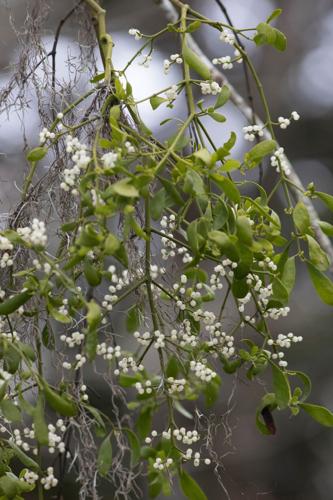
American Mistletoe
Phoradendron leucarpum (Raf.) Reveal & M.C.Johnst.
Important botanical synonyms, former names, and historical classifications include:
Viscum leucarpum Raf.
Viscum flavescens Pursh
Viscum serotinum Raf.
Viscum tomentosum DC.
Phoradendron flavescens (Pursh) Nutt.
Phoradendron serotinum (Raf.) M.C.Johnst.
Phoradendron tomentosum (DC.) Engelm. ex A.Gray
Phoradendron leucarpum subsp. tomentosum (DC.) J.R.Abbott & R.L.Thomps.
Phoradendron serotinum subsp. tomentosum (DC.) Kuijt
Phoradendron orbiculatum Engelm. ex A.Gray
Phoradendron macrotomum Trel.
Phoradendron eatonii Trel.
Phoradendron goldmanii Trel.
Phoradendron wilkinsonii Trel.
Some foundational phoratoxin research used material identified as Phoradendron tomentosum subsp. macrophyllum. That name is associated in current taxonomic treatments with Phoradendron macrophyllum, which may be recognized as a separate southwestern species. It should not be listed uncritically as an exact synonym of eastern Phoradendron leucarpum.
Santalaceae — Sandalwood Family
Older botanical and veterinary references commonly place the species in Viscaceae — Mistletoe Family.
American Mistletoe; Eastern Mistletoe; Christmas Mistletoe; Christmas Mistletoe Plant; Oak Mistletoe; False Mistletoe; Mistletoe
Phoradendron serotinum and Phoradendron flavescens are former scientific names frequently encountered in veterinary poison databases, horticultural references, and older botanical literature.
Hairy Mistletoe is sometimes used for densely hairy or tomentose forms within the broader Phoradendron leucarpum species complex, particularly plants historically classified as Phoradendron tomentosum.
American Mistletoe should not be confused with European Mistletoe, Viscum album. European Mistletoe contains viscotoxins and the toxic lectin viscumin and has a different chemical profile.
Dwarf Mistletoes belong primarily to the genus Arceuthobium. They are smaller parasitic plants of conifers and are not botanical synonyms for Phoradendron leucarpum.
Desert Mistletoe usually refers to Phoradendron californicum, a separate leafless or nearly leafless species of the southwestern United States and Mexico.
Mistletoe Cactus refers to Rhipsalis species, unrelated epiphytic cacti that are not true mistletoes.
Phoratoxin-Type Thionins and the Evidence Base
American Mistletoe is associated in veterinary toxicology with phoratoxins, a group of small, basic plant-defense peptides belonging to the thionin family. These peptides are capable of interacting with cell membranes and disturbing normal membrane permeability.
The terminology requires qualification. Foundational phoratoxin isolation studies used leaves and stems from plant material then identified as Phoradendron tomentosum subsp. macrophyllum. Modern botanical authorities do not all treat that material as identical to eastern Phoradendron leucarpum; some recognize Phoradendron macrophyllum as a separate species.
Veterinary poison references nevertheless continue to use phoratoxin as the principal American-mistletoe toxin model, and typical Phoradendron tomentosum is now often included within the broad synonymy of P. leucarpum. The most accurate public conclusion is that American Mistletoe contains or is strongly associated with phoratoxin-type membrane-active proteins, while its complete species- and tissue-specific peptide profile remains incompletely characterized.
The words lectin and toxalbumin also appear in veterinary lists, sometimes as broad descriptions of toxic plant proteins. They should not be interpreted as proof that American Mistletoe contains every lectin documented from European Mistletoe.
How Thionin Peptides Affect Cells
Phoratoxins are compact, positively charged peptides with an affinity for negatively charged phospholipid membranes. Experimental studies indicate that they can disturb membrane integrity, increase membrane conductance, alter ion movement, and cause leakage or injury in susceptible cells.
At ordinary pet-exposure levels, the most likely clinical result is irritation of the gastrointestinal tract. Nausea, vomiting, diarrhea, abdominal discomfort, reduced appetite, depression, and weakness are therefore much more common than profound cardiovascular or neurologic poisoning.
At sufficiently high experimental or absorbed concentrations, membrane-active thionins can affect vascular tone, cardiac and skeletal muscle function, circulation, and neuromuscular activity. These effects provide a biologically plausible basis for uncommon hypotension, bradycardia, abnormal rhythm, severe weakness, incoordination, tremors, respiratory compromise, collapse, or seizures after a substantial ingestion.
These severe findings should remain qualified. They are not expected after one fallen fruit or a minor nibble and should also trigger investigation for Yew, medication, chocolate, caffeine, pesticide, battery material, or another holiday hazard.
Leaves and Stems Present the Greater Systemic Concern
The strongest phoratoxin evidence concerns leaves, green stems, and other vegetative material. A pet that chews several leafy stems or consumes a substantial cut bundle therefore warrants more concern than an animal that briefly mouths one fruit.
Older woody stems and bark-like branches should also remain inaccessible. Their exact peptide concentration may differ from that of green growth, but they can deliver plant material and create a separate splinter, choking, esophageal, or gastrointestinal foreign-body risk.
Flowers are small and rarely involved in household poisoning. They remain part of the plant and should not be treated as edible merely because their toxin concentration has not been measured separately.
White Fruit, Sticky Pulp, and Seeds
The translucent white to cream fruit remains poisonous, but limited fruit ingestion generally presents a lower systemic risk than consumption of several leafy stems. Human poison-center reviews and practical veterinary experience indicate that small accidental berry exposures often cause no signs or only temporary gastrointestinal upset.
The fruit contains sticky pulp surrounding a single seed. That adhesive material, called viscin, helps attach the seed to a host branch after dispersal by birds. Viscin is primarily an identification, handling, and cleanup issue rather than the principal systemic toxin.
Sticky pulp can adhere to the lips, teeth, fur, feathers, furniture, and floors. An animal may swallow additional material while grooming or may transfer residue to the eyes and face.
No dependable safe fruit count exists. A small puppy, kitten, rabbit, or bird eating several fruits receives a different relative exposure from a large dog swallowing one, and fruit may be consumed together with stems, wire, ribbon, artificial berries, or another poisonous plant.
Phoratoxin Is Not Viscumin
Viscumin is a separate type II ribosome-inactivating lectin isolated from European Mistletoe, Viscum album. It contains an enzymatic chain that disrupts protein synthesis and a binding chain that assists cellular entry.
Phoratoxins are much smaller thionin peptides associated with American Phoradendron mistletoes and act primarily through membrane interactions. The phrases “phoratoxin viscumin” and “phoratoxin, a lectin called viscumin” incorrectly combine separate toxin families and separate mistletoe genera.
European Mistletoe also contains viscotoxins, which are thionins related in general structure and membrane activity to phoratoxins. Similarity between thionins does not make the complete chemical profiles of Viscum album and Phoradendron leucarpum interchangeable.
Drying, Host Trees, and Concentrated Products
Drying should not be used to declare American Mistletoe safe. Protein activity may decline over time under some conditions, but holiday drying is inconsistent and cannot establish how much active material remains. Dried stems also become brittle and may splinter.
Plant chemistry may vary with genetics, tissue, maturity, season, environmental stress, and possibly the host relationship. The host tree cannot be used as a reliable home predictor of toxicity, and Mistletoe growing on oak should not automatically be considered more or less poisonous than material from maple, elm, ash, or another host.
Extracts, tinctures, teas, powders, capsules, imported herbal remedies, and injectable or oral Mistletoe products may create a fundamentally different exposure from one decorative branch. Products may contain European Mistletoe, another species, alcohol, preservatives, medications, or concentrated plant proteins.
The exact scientific name, formulation, concentration, amount missing, and complete ingredient list should be preserved after any product exposure.
Mixed Decorations and No Dependable Safe Dose
Commercial decorations may combine American Mistletoe with Yew, Holly, Ivy, Boxwood, Bittersweet, pine, artificial fruit, florist foam, wire, staples, hooks, ribbon, glue, glitter, paint, artificial snow, preservatives, lights, magnets, and batteries.
Yew can cause sudden fatal cardiac collapse. Batteries, magnets, long ribbon, wire, hooks, rigid plastic, and electrical cords may create emergencies unrelated to the plant toxin.
No safe berry count, leaf count, stem weight, phoratoxin concentration, or lethal dose has been established for an individual dog, cat, horse, livestock animal, rabbit, bird, or other pet.
Risk must be assessed from the animal’s size and health, the exact material involved, the estimated amount, the time since exposure, current symptoms, and every other plant, chemical, medication, and object present.
Early Gastrointestinal Signs
The most common effects of American Mistletoe ingestion are gastrointestinal. Signs may begin within several hours and can include lip licking, repeated swallowing, excessive drooling, nausea, vomiting, abdominal discomfort, diarrhea, reduced appetite, lethargy, depression, and weakness.
A dog may pace, eat grass, stretch repeatedly, assume a hunched posture, whine, or resist abdominal handling. A cat may hide, crouch, vomit, stop grooming, approach food and then turn away, or become unusually quiet.
A very small accidental exposure may produce no visible signs. One fallen fruit or a minor nibble is less concerning than ingestion of several leafy stems, an entire decorative bundle, concentrated material, or an unknown quantity.
Vomiting, Diarrhea, and Abdominal Pain
Vomiting may occur once or become repeated after a more substantial ingestion. Vomit may contain white fruit pulp, seeds, leaves, green stems, food, foam, or decorative material.
Diarrhea may be soft or watery and can be accompanied by mucus, urgency, straining, intestinal cramping, or restlessness. Persistent gastrointestinal irritation may cause an animal to repeatedly ask to go outside, shift position frequently, or resist lying comfortably.
Repeated bloody vomiting, coffee-ground material, black stool, substantial bloody diarrhea, severe abdominal enlargement, repeated unproductive retching, or pronounced focal pain is not expected after an uncomplicated minor exposure. These findings may indicate more severe gastrointestinal injury, another poisonous plant, medication, obstruction, foreign material, pancreatitis, infection, or another disease.
Dehydration and Progressive Weakness
Repeated vomiting and diarrhea can cause clinically important dehydration even when the original plant exposure was not severe. Warning signs include dry or tacky gums, sunken eyes, reduced skin elasticity, increasing thirst, reduced urination, rapid heart rate, cool extremities, weak pulses, worsening lethargy, or collapse.
Electrolyte and acid-base abnormalities may develop during prolonged gastrointestinal illness and can contribute to muscle weakness, trembling, abnormal gastrointestinal movement, changes in heart rate, and reduced responsiveness.
Weakness may also reflect low blood pressure or a more direct neuromuscular effect after a larger exposure. An animal that becomes reluctant to stand, stumbles, sways, faints, or cannot walk normally requires prompt veterinary examination.
Low Blood Pressure and Heart-Rate Abnormalities
Cardiovascular effects are uncommon after a small accidental ingestion but may occur after substantial consumption of leafy stems or a large decorative bundle. Possible findings include hypotension, an abnormally slow heart rate, an unusually rapid or irregular rhythm, weak pulses, pale gums, cold paws or limbs, fainting, and cardiovascular collapse.
Owners cannot reliably determine blood pressure or distinguish a harmless pulse variation from a clinically important rhythm disturbance at home. Weakness, pale gums, fainting, or collapse accompanied by an obviously slow, rapid, weak, or irregular heartbeat requires emergency assessment.
Dehydration, electrolyte imbalance, Yew, medication, chocolate, caffeine, decongestants, pesticide, underlying heart disease, and other holiday exposures can cause similar cardiovascular signs. The presence of Mistletoe does not prove that it is the only toxin involved.
Breathing Difficulty and Aspiration
Breathing abnormalities may develop secondary to profound weakness, low blood pressure, cardiac dysfunction, aspiration of vomit, airway obstruction, seizures, or severe systemic poisoning.
Warning signs include rapid breathing, exaggerated chest or abdominal effort, neck extension, noisy breathing, open-mouth breathing in a cat, coughing after vomiting, gasping, blue-gray gums, or inability to maintain a normal posture.
A woody stem, florist wire, hook, ribbon, plastic berry, or another decoration component may also lodge in the mouth, throat, or esophagus. Continuous gagging, frantic pawing, inability to swallow saliva, inability to inhale normally, or sudden collapse indicates an immediate airway emergency.
Neurologic and Behavioral Changes
Neurologic signs are not expected after one minor fruit exposure but are possible after a substantial ingestion or a mixed holiday exposure. Findings may include unusual depression, restlessness, disorientation, stumbling, swaying, loss of coordination, muscle tremors, reduced responsiveness, seizures, stupor, or coma.
Some apparent neurologic signs may result from hypotension, poor oxygen delivery, electrolyte abnormalities, hypoglycemia, aspiration, or profound weakness rather than direct injury to the nervous system.
Marked agitation, continuous tremors, severe hyperactivity, hyperthermia, pronounced tachycardia, or seizures should also prompt investigation for chocolate, caffeine, medication, decongestants, stimulant products, pesticide, battery contents, or another poisonous plant.
Horses, Livestock, and Small Animals
Horses cannot vomit and may instead develop salivation, feed refusal, depression, abdominal discomfort, colic-like behavior, loose manure, diarrhea, weakness, abnormal heart rate, low blood pressure, incoordination, or breathing difficulty after a substantial ingestion.
Cattle, sheep, and goats may show reduced appetite, gastrointestinal disturbance, ruminal slowing, weakness, recumbency, abnormal breathing, or sudden deterioration after consuming fallen colonies, pruned branches, storm debris, or discarded holiday greenery.
Several affected livestock animals, sudden collapse, respiratory abnormalities, or unexplained deaths requires examination of every plant, host-tree branch, feed source, chemical, and water source available to the group. Yew and other mixed tree debris may pose a much greater immediate danger.
Rabbits and guinea pigs cannot vomit. Reduced appetite, fewer droppings, diarrhea, tooth grinding, abdominal enlargement, weakness, or unusual quietness requires prompt veterinary care because gastrointestinal stasis can become medically serious.
Companion birds may develop regurgitation, altered droppings, reduced appetite, fluffed posture, weakness, poor balance, tremors, or reduced responsiveness. Wild-bird consumption of the white fruit does not establish a safe amount for captive species.
Expected Course and Signs Suggesting Another Hazard
Most uncomplicated small exposures improve within several hours to approximately one or two days. Vomiting and diarrhea should decrease, appetite and activity should begin returning, and hydration should remain adequate.
Repeated vomiting, inability to retain water, persistent diarrhea, worsening weakness, abnormal coordination, breathing difficulty, pale or blue-gray gums, collapse, seizures, an abnormal pulse, or symptoms continuing beyond the expected period requires veterinary reassessment.
Sudden cardiac collapse is especially concerning for Yew. Marked stimulant signs suggest chocolate, caffeine, medication, or decongestant exposure. Persistent gagging or delayed vomiting may indicate swallowed wire, ribbon, foam, hooks, plastic, batteries, magnets, or woody stems.
Severe or atypical illness should never be attributed automatically to American Mistletoe merely because it was present in the same decoration or fallen branch.
Plant Identity
American Mistletoe, Phoradendron leucarpum, is a woody evergreen flowering plant that grows on the branches of living trees. It forms rounded or irregular green clumps that become especially visible during winter after a deciduous host tree loses its leaves.
The plant is familiar as a seasonal decoration because its green leaves and translucent white fruit remain present during the winter holiday period. Household exposure usually involves cut branches rather than an animal climbing into an infected tree.
Accepted Scientific Name
The accepted name is Phoradendron leucarpum (Raf.) Reveal & M.C.Johnst. Older poison lists and botanical references frequently use Phoradendron serotinum or Phoradendron flavescens.
These older names generally describe the same eastern American mistletoe or historical portions of the broader species complex. Their appearance on a veterinary record or florist label does not indicate a toxin-free plant.
Family Classification
Modern botanical classification places Phoradendron in Santalaceae, the Sandalwood family. Older systems recognized Viscaceae as a separate family for mistletoes.
Both family names remain common in reputable sources. The difference reflects changes in plant classification rather than a change in the species’ toxicity.
Native Range
American Mistletoe is native from the central and eastern United States south through Mexico. In the United States it is most abundant in warmer portions of the Southeast, South-Central states, lower Midwest, and Atlantic coastal region.
Cold temperatures limit its northern distribution, although local populations extend into portions of the Ohio Valley and southern parts of some Mid-Atlantic and Midwestern states.
Hemiparasitic Growth
American Mistletoe is a hemiparasite. It produces its own sugars through photosynthesis but obtains water and mineral nutrients from the host tree through specialized structures called haustoria.
The haustoria penetrate the host branch and connect with its water-conducting tissues. Removing only the visible green shoots may not eliminate the internal portion of the mistletoe from the branch.
Host Trees
The species can grow on many deciduous hardwood trees. Common hosts include maples, ashes, elms, oaks, walnuts, hackberries, sycamores, cottonwoods, poplars, willows, black locusts, tupelos, and fruit or ornamental trees.
The identity of the host tree should also be considered during an exposure. A fallen decorative or storm-damaged branch may contain American Mistletoe together with toxic bark, leaves, fruit, pesticide residue, fungi, or other parasitic plants.
Winter Visibility
Mistletoe colonies are easiest to see during winter when the host tree has lost its leaves. The evergreen clumps may appear as isolated green balls high in the crown or as several masses distributed across multiple branches.
Storms and winter pruning can bring the plant suddenly to ground level. Dogs, horses, livestock, and wildlife may then gain access to material that was previously far above their reach.
Stems and Branching
The stems are green to yellow-green, woody with age, and characteristically fork or branch repeatedly. The jointed stems may become brittle after cutting and drying.
A dog chewing a decorative bundle can swallow both toxic plant tissue and rigid stem fragments. Woody pieces may lodge in the mouth, scratch the esophagus, or contribute to gastrointestinal obstruction.
Leaves
The leaves occur in opposite pairs and are thick, leathery, evergreen, and generally oval to oblong. Their color ranges from yellow-green to medium green.
Leaves and green stems are usually considered the portions of greatest systemic concern. A larger foliage ingestion deserves more caution than contact with one fallen fruit.
Flowers
The flowers are small, inconspicuous, and greenish or yellow-green. Male and female flowers generally occur on separate plants, although the exact reproductive pattern may vary across the species complex.
Only female plants produce the familiar white fruit after pollination. Flowers are not a common household exposure but should not be treated as edible.
Fruit
The fruit is round, translucent white to pale cream, and commonly called a berry. Botanically it is a specialized one-seeded fruit containing extremely sticky pulp.
The fruit ripens during autumn and winter and is attractive to birds. Pets may swallow fruit that falls from a cut decoration or from storm-damaged branches beneath an infected tree.
Sticky Fruit Pulp
The pulp contains a sticky substance known as viscin. Birds wipe or deposit the sticky seed onto tree branches, where it can germinate and establish a new mistletoe plant.
Viscin can adhere to fur, feathers, floors, furniture, and the mouth. Its stickiness is primarily an identification and cleanup issue rather than the main cause of systemic poisoning.
Which Parts Are Most Poisonous?
Leaves and stems are generally treated as the more concerning portions because phoratoxin-type proteins are associated primarily with vegetative tissue. A substantial bundle of foliage can deliver a larger systemic exposure than a few fruits.
The white fruit is still considered poisonous and may cause vomiting or diarrhea. Every plant part should remain inaccessible because no dependable safe dose exists for domestic animals.
Phoratoxins
Phoratoxins are small thionin peptides produced by American mistletoes. They can interact with cell membranes and alter membrane permeability.
At a sufficient dose, these effects may disturb gastrointestinal tissue, vascular tone, cardiac function, skeletal muscle, and neurologic activity. Naturally occurring pet exposures are usually too small to produce the most dramatic experimental effects.
Lectins and Toxalbumin Terminology
Veterinary references sometimes use the terms lectin or toxalbumin broadly when describing mistletoe proteins. These labels can cause different mistletoe species and different toxin families to be combined incorrectly.
The public page should emphasize phoratoxins and other bioactive American Mistletoe proteins without implying that every lectin described in European Mistletoe has been confirmed in Phoradendron leucarpum.
Why Viscumin Should Not Be Listed
Viscumin is a toxic ribosome-inactivating lectin identified in European Mistletoe, Viscum album. It interferes with protein synthesis and is chemically different from phoratoxin thionins.
Listing “phoratoxin viscumin” combines separate toxin names and separate mistletoe genera. American Mistletoe should not be assigned European Mistletoe’s viscumin without species-specific evidence.
Actual Severity of Small Exposures
American Mistletoe has a longstanding reputation as an extremely deadly plant, but large poison-center reviews of accidental human exposure found that the overwhelming majority of cases caused no illness and no fatalities.
Human data cannot establish a safe pet dose, but it supports proportionate veterinary guidance. One minor accidental exposure in a normal animal is less concerning than ingestion of several leafy stems, a concentrated extract, or an unknown quantity from a large decorative bundle.
American and European Mistletoe
European Mistletoe is Viscum album. It resembles American Mistletoe in its evergreen parasitic growth, opposite leaves, and pale fruit, but it belongs to a different genus and contains viscotoxins and viscumin.
The European species may be imported in herbal or medicinal preparations. Product ingestion should be evaluated from the exact scientific name, concentration, formulation, and complete ingredient list.
American and Dwarf Mistletoe
Dwarf Mistletoes belong primarily to the genus Arceuthobium. They commonly infect conifers and produce small, reduced shoots rather than the broad leathery leaves of American Mistletoe.
Dwarf Mistletoe is not normally sold as holiday greenery. An unidentified parasitic plant should still be preserved for proper identification before its toxicity is assumed.
American and Desert Mistletoe
Desert Mistletoe, Phoradendron californicum, occurs in the southwestern United States and Mexico. It has green, yellow, or orange branching stems with greatly reduced leaves.
It is a separate species and should not be treated as an exact synonym for leafy eastern American Mistletoe. Unknown Phoradendron material should remain inaccessible while its identity is resolved.
Holiday Decoration Exposure
American Mistletoe is cut and sold in bundles, wreaths, kissing balls, garlands, and mixed floral arrangements. Drying branches may shed leaves and fruit onto floors where dogs and cats can reach them.
Decorations may contain wire, staples, hooks, ribbon, floral foam, glue, glitter, artificial snow, preservatives, artificial berries, and several additional plant species. These materials can create a greater emergency than the mistletoe itself.
Artificial Mistletoe
Artificial mistletoe does not contain phoratoxins, but plastic leaves and berries are not harmless when swallowed. They can cause choking, vomiting, or gastrointestinal obstruction.
Paint, glitter, wire, batteries, magnets, lights, and adhesives may add chemical, electrical, or foreign-body hazards. The product packaging should be preserved after an exposure.
Storm and Pruning Exposure
Wind, ice, tree removal, and pruning can bring large mistletoe colonies to the ground. Fresh branches may remain green and palatable-looking after they separate from the host.
All fallen material should be removed before dogs, horses, cattle, sheep, goats, rabbits, poultry, or wildlife-managed animals enter the area.
Dried Mistletoe
Drying does not provide a dependable guarantee that American Mistletoe is safe. Phoratoxin proteins may degrade gradually, but household drying conditions are inconsistent and cannot be used to calculate a safe dose.
Dried stems also become more brittle and may splinter. Old holiday decorations should be discarded in a closed container rather than placed in accessible compost or animal enclosures.
Dogs
Dogs may eat fallen white fruit, chew entire decorative bundles, retrieve branches after storms, or investigate discarded holiday greenery. Puppies and food-motivated dogs may swallow much more than one berry before the exposure is noticed.
Vomiting, diarrhea, appetite loss, abdominal discomfort, lethargy, and weakness are the most likely signs. Several leafy stems, an unknown quantity, repeated vomiting, collapse, or an abnormal heartbeat warrants prompt veterinary care.
Cats
Cats may bat loose fruit from decorations, chew leaves, climb into arrangements, or swallow plant residue while grooming. Small body size can make a modest-looking amount more significant.
Vomiting, diarrhea, hiding, food refusal, depression, or weakness may occur. Continued appetite loss is important because prolonged fasting can cause serious secondary metabolic disease in cats.
Horses
Horses may encounter American Mistletoe when decorations are hung near stalls, holiday greenery is discarded into a field, or infected tree branches fall into a paddock.
Horses cannot vomit. Possible signs include salivation, feed refusal, colic, diarrhea, depression, weakness, abnormal heart rate, low blood pressure, or breathing difficulty after a substantial ingestion.
Cattle, Sheep, and Goats
Livestock exposure is most likely after storms, tree trimming, land clearing, or disposal of decorative greenery. Limited access to normal forage may increase the likelihood of consumption.
Several affected animals, sudden weakness, recumbency, breathing abnormalities, or unexplained deaths require immediate examination of every plant, tree branch, feed source, chemical, and water source available to the group.
Rabbits and Guinea Pigs
American Mistletoe should not be offered as forage or chewing material. Gastrointestinal irritation and interruption of normal eating can become medically important in small herbivores.
Reduced appetite, fewer droppings, diarrhea, tooth grinding, abdominal distension, weakness, or unusual quietness requires prompt veterinary attention.
Birds and Wildlife
Native birds consume the white fruit and disperse the seeds. Their natural relationship with the plant does not establish safety for dogs, cats, livestock, or companion birds.
Bird species differ in digestive anatomy, natural diet, toxin tolerance, and seed-handling behavior. Mistletoe fruit and foliage should not be deliberately offered to captive birds.
Diagnosis
Diagnosis is based on plant identification, the part and amount eaten, the time of exposure, the animal’s symptoms, and every other component of the arrangement or fallen branch.
Useful evidence includes leaves, stems, fruit, photographs of the colony on its host tree, florist labels, product packaging, artificial materials, vomited fragments, and an estimate of how much is missing.
There is no routine clinical test that specifically confirms phoratoxin exposure. Blood pressure, electrocardiography, electrolytes, blood glucose, organ-function testing, and diagnostic imaging may be used when weakness, collapse, persistent vomiting, or foreign-material ingestion occurs.
Differential Diagnosis
Similar gastrointestinal signs can follow ingestion of Holly, Ivy, Poinsettia, Boxwood, spoiled food, medication, alcohol, chocolate, artificial snow, fertilizer, pesticide, or floral preservatives.
Rapid cardiovascular collapse should raise particular concern for Yew. Marked agitation, tremors, and rapid heart rate suggest chocolate, caffeine, decongestants, or stimulant medication. Persistent gagging or vomiting may result from wire, hooks, ribbon, foam, plastic, or woody stems.
Veterinary Treatment
There is no specific antidote for American Mistletoe poisoning. Treatment is supportive and matched to the amount ingested and the animal’s actual signs.
Care may include anti-nausea medication, intravenous fluids, electrolyte correction, oxygen, blood-pressure monitoring, electrocardiography, treatment of an abnormally slow heart rate or other rhythm disturbance, seizure control, and imaging or endoscopy for swallowed decorative material.
Prognosis
The prognosis is good to excellent after most small accidental exposures. Many animals remain asymptomatic or develop only temporary vomiting, diarrhea, or appetite loss.
The outlook becomes more guarded after a substantial foliage ingestion accompanied by persistent gastrointestinal loss, profound weakness, hypotension, severe bradycardia, breathing difficulty, seizures, aspiration, or foreign-body obstruction.
Prevention
Keep fresh and dried mistletoe decorations beyond realistic climbing and jumping range. Inspect beneath wreaths, garlands, and kissing balls regularly for fallen fruit, leaves, wire, and plastic pieces.
Do not hang mistletoe near stalls, cages, kennels, or food-preparation areas used for animals. Discard old decorations, tree trimmings, and storm debris in closed containers rather than paddocks, coops, hutches, or accessible compost piles.
Artificial fabric decorations without detachable berries, wire, batteries, or glitter may provide a safer visual alternative, but every decoration should still be positioned where animals cannot chew or swallow it.
Immediate Steps After American Mistletoe Exposure
- Stop further access. Move the animal away from the living plant, fallen fruit, leafy stems, storm debris, decorative bundle, wreath, garland, kissing ball, centerpiece, and discarded greenery.
- Preserve the complete exposure. Save representative leaves, stems, fruit, the entire arrangement, florist labels, packaging, photographs, artificial components, and material found in vomit.
- Determine what was swallowed. Establish whether the exposure involved fruit alone, one or more leaves, several leafy stems, an entire bundle, dried material, artificial Mistletoe, extract, tea, supplement, or an unknown product.
- Estimate the amount and time. Record the quantity missing, animal’s weight, earliest and latest possible exposure time, symptoms, and relevant heart, kidney, respiratory, neurologic, or gastrointestinal disease.
- Inspect every decorative component. Check for Yew, Holly, Ivy, Boxwood, Bittersweet, wire, hooks, staples, ribbon, string, foam, plastic fruit, artificial snow, glue, preservatives, batteries, magnets, and electrical parts.
- Remove only loose visible material. Carefully lift fruit, leaves, or stem pieces resting at the lips or front of the mouth. Do not perform a blind finger sweep or pull deeply lodged material.
- Wipe away sticky residue. Use a damp cloth to remove accessible fruit pulp from the lips, teeth, gums, tongue, muzzle, fur, or feathers of an alert animal that is swallowing normally.
- Contact a veterinarian when appropriate. Obtain guidance after a meaningful foliage or stem ingestion, multiple fruits in a small animal, an uncertain amount, concentrated product exposure, or development of symptoms.
Do Not Attempt Unsupervised Home Treatment
- Do not induce vomiting at home. Vomiting may worsen dehydration or aspiration risk and may be dangerous when woody stems, wire, hooks, ribbon, plastic, batteries, magnets, or other foreign material was swallowed.
- Do not give hydrogen peroxide. It can injure the stomach and esophagus, is especially dangerous in cats, and should not be used as an owner-administered Mistletoe treatment.
- Do not use salt, mustard, syrup of ipecac, detergent, oil, manual gagging, or fingers in the throat. These methods can cause aspiration, sodium poisoning, gastric injury, or airway trauma.
- Never attempt to induce vomiting in a horse. Horses cannot vomit.
- Do not give activated charcoal at home. It may occasionally be considered professionally after a substantial recent foliage ingestion but can be aspirated by a vomiting, weak, trembling, sedated, collapsed, or poorly swallowing animal.
- Do not force milk, food, water, broth, oil, or electrolyte drinks. They do not neutralize the toxins and may be inhaled into the lungs.
- Do not give caffeine, decongestants, stimulants, atropine, heart medication, antidiarrheals, antacids, bismuth products, pain relievers, sucralfate, acid suppressants, or leftover prescriptions. Professional treatment must be based on the measured cardiovascular, neurologic, respiratory, and hydration findings.
When Emergency Examination Is Required
- Persistent gastrointestinal illness: Repeated vomiting, inability to retain water, frequent diarrhea, blood, black stool, or severe abdominal pain requires examination.
- Progressive weakness or poor circulation: Pale gums, cold limbs, weak pulses, fainting, inability to stand, profound depression, or collapse requires immediate care.
- Abnormal breathing: Rapid or labored breathing, exaggerated chest or abdominal effort, gasping, open-mouth breathing in a cat, neck extension, or blue-gray gums is an emergency.
- Possible cardiovascular effects: An unusually slow, rapid, weak, or irregular heartbeat accompanied by illness requires blood-pressure measurement and electrocardiography.
- Neurologic abnormalities: Stumbling, severe incoordination, tremors, seizures, stupor, or reduced responsiveness requires emergency treatment.
- Choking or lodged material: Frantic pawing, continuous gagging, inability to swallow saliva, inability to inhale, or sudden collapse may indicate a stem, hook, wire, ribbon, or another obstruction.
- High-risk foreign material: Batteries, magnets, long ribbon or string, hooks, sharp wire, rigid plastic, electrical cords, or substantial artificial-decoration material requires prompt assessment even before symptoms appear.
- Possible Yew ingestion: Sudden weakness, collapse, severe rhythm disturbance, or death after chewing mixed greenery must be treated as a possible Yew emergency rather than attributed automatically to Mistletoe.
Veterinary Assessment and Decontamination
The veterinarian will assess the exact species or product, plant part, estimated amount, exposure time, hydration, abdominal discomfort, mental status, coordination, breathing, gum color, pulse quality, blood pressure, and heart rhythm.
Professional emesis may be considered after a recent substantial ingestion in a fully alert, stable, asymptomatic dog that can protect its airway and did not swallow sharp, wired, magnetic, battery-containing, string-like, or otherwise dangerous material.
Emesis is inappropriate after spontaneous vomiting, weakness, tremors, collapse, seizures, abnormal breathing, reduced responsiveness, or impaired swallowing develops.
Activated charcoal may be considered after a meaningful recent foliage or stem ingestion when the expected benefit exceeds the aspiration risk. It is not automatically necessary after one fruit or a very small exposure.
The mouth and pharynx may require direct examination for lodged stems, wire, hooks, ribbon, foam, or plastic. Sedation may be needed when pain, fear, or patient movement prevents safe inspection.
Gastrointestinal, Cardiovascular, Respiratory, and Neurologic Treatment
No specific antidote has been established for American Mistletoe poisoning. Treatment is selected according to the animal’s actual gastrointestinal, cardiovascular, respiratory, neurologic, and hydration abnormalities.
Veterinarian-selected antiemetics such as maropitant or ondansetron may control continuing nausea and vomiting. Subcutaneous or intravenous fluids may replace losses, support circulation, and correct measured electrolyte or acid-base abnormalities.
Blood pressure, electrocardiography, pulse quality, perfusion, electrolytes, blood glucose, kidney values, urine production, oxygenation, and body temperature may require repeated or continuous monitoring after a substantial exposure.
Clinically important bradycardia may require veterinarian-administered atropine after the rhythm, blood pressure, and perfusion status have been assessed. Persistent hypotension may require carefully selected intravenous fluids and, when necessary, vasopressor support.
Supplemental oxygen may be used for respiratory distress, hypoxemia, aspiration, circulatory compromise, or profound weakness. Intubation and assisted ventilation may be required when the animal cannot maintain adequate breathing or airway protection.
Tremors or seizures may require injectable anticonvulsant or muscle-relaxant medication, oxygen, temperature control, airway management, and correction of glucose or electrolyte abnormalities.
Sucralfate may be considered only when repeated vomiting, hematemesis, painful swallowing, esophagitis, erosive gastritis, or documented mucosal injury indicates a need for barrier protection. It is not a Mistletoe antidote.
Foreign Objects, Artificial Decorations, and Mixed Plants
Radiographs, ultrasound, contrast imaging, or endoscopy may be required when stems, wire, ribbon, foam, hooks, plastic, batteries, magnets, or another foreign object may have been swallowed.
Long ribbon, string, wire, or plant fiber protruding from the mouth or rectum should not be pulled without veterinary direction because it may be anchored internally.
Batteries can cause corrosive tissue injury and electrical or heavy-metal complications. Multiple magnets can trap bowel walls between them and cause pressure necrosis, perforation, or obstruction.
Yew, European Mistletoe, chocolate, caffeine, alcohol, medication, pesticide, artificial snow, preservative, and other holiday exposures require their own toxin-specific assessment and treatment.
Horses, Livestock, Small Herbivores, and Birds
Remove every exposed horse or livestock animal from infected fallen branches, storm debris, tree trimmings, decorations, and contaminated forage. Examine all animals sharing access.
Do not drench or force oil, charcoal, feed, water, or medication into a weak, bloated, coughing, recumbent, seizing, or poorly swallowing animal.
Large-animal evaluation may include oral and abdominal examination, hydration and electrolyte assessment, blood-pressure and cardiac monitoring, fluid therapy, respiratory support, and investigation of every plant, host-tree branch, feed source, and chemical available to the group.
Rabbits and guinea pigs cannot vomit. Reduced appetite, declining fecal output, diarrhea, tooth grinding, abdominal enlargement, weakness, or unusual quietness requires prompt care because gastrointestinal stasis may become serious.
Companion birds and other exotic animals require species-specific guidance. Wild-bird consumption of the fruit does not justify feeding Mistletoe to captive species or adapting dog and cat treatments to them.
Prognosis, Recovery, and Prevention
The prognosis is good to excellent after most small accidental exposures. Many animals remain asymptomatic or develop temporary vomiting, diarrhea, appetite reduction, or lethargy that improves within several hours to approximately one or two days.
The prognosis becomes more guarded when substantial foliage ingestion causes persistent gastrointestinal loss, severe hypotension, clinically important bradycardia or arrhythmia, respiratory compromise, seizures, aspiration, or foreign-body obstruction.
Continued vomiting, diarrhea, weakness, appetite loss, abnormal coordination, breathing difficulty, pulse abnormalities, or symptoms returning after apparent improvement requires veterinary reassessment.
Keep fresh, dried, and artificial Mistletoe beyond realistic climbing and jumping range. Inspect beneath hanging decorations regularly for fallen fruit, leaves, wire, ribbon, plastic, magnets, and batteries.
Remove storm-damaged infected branches before animals return to the area. Place discarded greenery and decorations directly into closed containers rather than stalls, paddocks, kennels, coops, hutches, or accessible compost piles.
Frequently Asked Questions About American Mistletoe and Animal Poisoning
How poisonous is American Mistletoe to dogs and cats?
Most small accidental exposures cause no signs or temporary gastrointestinal illness rather than life-threatening poisoning. Dogs and cats may develop drooling, nausea, vomiting, abdominal discomfort, diarrhea, appetite loss, lethargy, or weakness. Several leafy stems, an entire decorative bundle, an unknown quantity, or progressive cardiovascular, respiratory, or neurologic signs creates substantially greater concern.
What toxins are actually present in American Mistletoe?
Veterinary toxicology associates American Phoradendron mistletoes with phoratoxin-type thionin peptides and other incompletely characterized proteins. Phoratoxins are small membrane-active plant-defense peptides. The exact peptide mixture of every current Phoradendron leucarpum population and tissue has not been mapped sufficiently to treat one named phoratoxin as the sole proved toxin in every case.
Why is the phoratoxin evidence taxonomically complicated?
Foundational phoratoxin studies used material called Phoradendron tomentosum subsp. macrophyllum. Current botanical treatments may recognize the macrophyllum material as the separate species Phoradendron macrophyllum, while treating typical P. tomentosum as a synonym of the broader P. leucarpum. Phoratoxin remains the relevant toxin model, but the species-specific chemistry deserves that qualification.
Are phoratoxin and viscumin the same toxin?
No. Phoratoxins are small thionin peptides associated with American Phoradendron mistletoes and act mainly through membrane interactions. Viscumin is a much larger type II ribosome-inactivating lectin isolated from European Mistletoe, Viscum album. The phrase “phoratoxin viscumin” improperly combines different toxin families and different genera.
Which parts of American Mistletoe are most dangerous?
The strongest phoratoxin evidence concerns leaves and green stems, making substantial vegetative-tissue ingestion the greater systemic concern. Flowers, older branches, white fruit, sticky pulp, and seeds should also remain inaccessible. Woody stems create an additional choking, splinter, esophageal, and intestinal foreign-body risk.
Are American Mistletoe berries poisonous?
Yes, but a few fruits are generally less likely to cause profound poisoning than several leafy stems. They may cause nausea, vomiting, diarrhea, or abdominal discomfort. No guaranteed safe fruit count exists, especially for puppies, kittens, rabbits, birds, or animals that swallowed the fruit with stems, wire, ribbon, or another plant.
How quickly do signs develop, and what should I watch for?
Gastrointestinal signs may begin within several hours. Watch for drooling, vomiting, diarrhea, abdominal pain, appetite reduction, lethargy, weakness, staggering, pale gums, abnormal breathing, an unusual pulse, tremors, collapse, or seizures. Progressive weakness, breathing difficulty, or cardiovascular abnormalities are more concerning than one isolated vomiting episode.
Can American Mistletoe affect the heart or blood pressure?
A substantial exposure may produce low blood pressure, bradycardia, weak pulses, an irregular rhythm, fainting, or collapse, although these effects are uncommon after a minor ingestion. Dehydration, electrolyte abnormalities, Yew, medication, chocolate, caffeine, and underlying heart disease can cause similar signs and must also be considered.
Can American Mistletoe cause breathing difficulty, tremors, or seizures?
These severe effects are possible but uncommon. Breathing difficulty may result from profound weakness, hypotension, cardiac dysfunction, aspiration, or another exposure. Tremors, seizures, and reduced responsiveness warrant emergency care and investigation for a large ingestion, Yew, chocolate, medication, pesticide, battery material, or another toxin.
What is the accepted scientific name, and why do older names differ?
The accepted name is Phoradendron leucarpum (Raf.) Reveal & M.C.Johnst. Older veterinary and botanical sources commonly use Phoradendron flavescens, P. serotinum, P. tomentosum, or Viscum leucarpum. These names reflect changing treatment of a variable species complex rather than toxin-free plants.
Is American Mistletoe the same as European Mistletoe?
No. European Mistletoe is Viscum album. It contains viscotoxins and the ribosome-inactivating lectin viscumin and has a different chemical profile. Imported teas, extracts, injections, capsules, or herbal products must be evaluated from the exact scientific name and formulation rather than the word Mistletoe alone.
Is it the same as Dwarf or Desert Mistletoe?
No. Dwarf Mistletoes belong mainly to Arceuthobium and usually infect conifers, producing much smaller reduced shoots. Desert Mistletoe is generally Phoradendron californicum, a separate southwestern species with greatly reduced leaves. Their identification and chemistry should not be substituted automatically for eastern American Mistletoe.
Does the host tree determine how poisonous the Mistletoe is?
The host relationship may influence nutrition and possibly aspects of plant chemistry, but it cannot be used to calculate a safe pet dose. Mistletoe collected from oak, maple, elm, ash, walnut, sycamore, or another host should all remain inaccessible. The host branch itself may also introduce bark, fruit, pesticide, fungal, or foreign-material hazards.
Is dried American Mistletoe still poisonous?
It should still be treated as poisonous. Protein activity may decline under some drying conditions, but household drying is inconsistent and cannot establish how much active material remains. Dried stems also become brittle and may splinter, while old decorations may contain wire, hooks, foam, glue, preservatives, or other plants.
Is artificial Mistletoe safer?
Artificial material contains no natural phoratoxins, but detachable plastic or foam fruit, fabric, wire, hooks, ribbon, batteries, magnets, lights, glitter, and adhesives can cause choking, corrosive injury, electrical injury, intestinal entrapment, perforation, or obstruction. Some artificial-decoration ingestions require treatment before symptoms develop.
Why can wild birds eat American Mistletoe fruit?
Native birds have species-specific digestive anatomy, metabolism, feeding behavior, and ecological relationships with Mistletoe. They often swallow or process the fruit in ways that disperse the sticky seed. Their tolerance does not establish a safe amount for dogs, cats, horses, livestock, rabbits, poultry, or companion birds.
Is American Mistletoe poisonous to horses, livestock, rabbits, and birds?
Yes. Horses may develop salivation, feed refusal, colic, diarrhea, weakness, hypotension, abnormal heart rate, or breathing difficulty after substantial ingestion. Cattle, sheep, and goats may become weak or recumbent after consuming fallen colonies or mixed tree debris. Rabbits, guinea pigs, and companion birds may develop gastrointestinal dysfunction, appetite loss, weakness, or neurologic abnormalities.
Should I induce vomiting or give activated charcoal?
Do not induce vomiting or give hydrogen peroxide at home. A veterinarian may consider professional emesis after a recent substantial ingestion in an alert, stable dog that swallowed no dangerous foreign material. Activated charcoal may occasionally be considered professionally after meaningful foliage ingestion but should never be forced into a vomiting, weak, neurologically abnormal, or poorly swallowing animal.
How is American Mistletoe poisoning diagnosed and treated?
Diagnosis depends on plant identification, the part and amount swallowed, timing, symptoms, and every object or plant in the decoration. There is no specific antidote. Treatment may include anti-nausea medication, fluids, electrolyte correction, oxygen, blood-pressure and electrocardiographic monitoring, atropine for clinically important bradycardia, vasopressors for persistent hypotension, seizure control, ventilation support, and removal of swallowed foreign material.
What is the prognosis, and how can exposure be prevented?
The prognosis is good to excellent after most small accidental exposures. It becomes more guarded with persistent gastrointestinal loss, severe hypotension, bradycardia or arrhythmia, respiratory compromise, seizures, aspiration, or obstruction. Keep fresh, dried, and artificial decorations beyond realistic reach, inspect beneath them for fallen material, remove storm-damaged infected branches, and discard every bundle in a secured container.