PAWS Pet Poison Plant Guide
Is Australian Pine Poisonous to Dogs, Cats, Horses, and Livestock?
No—Australian Pine, more precisely called Norfolk Island Pine, Araucaria heterophylla, is not currently classified as poisonous to dogs, cats, or horses, and no characteristic livestock-poisoning syndrome has been established. No specific toxic principle or predictable kidney, liver, heart, neurologic, or blood-cell injury has been linked to ordinary exposure to the untreated plant. Many animals that taste a small amount remain completely well.
That classification does not make the plant edible or eliminate every hazard. Fibrous foliage, twigs, bark, roots, and cone material may cause drooling, gagging, vomiting, diarrhea, reduced appetite, mouth injury, choking, or gastrointestinal obstruction. A living Christmas-tree display may also expose animals to fertilizer, pesticides, artificial snow, essential oils, leaf-shine products, potting material, contaminated water, electrical cords, batteries, ornaments, hooks, tinsel, ribbon, or food hidden beneath the tree.
About this guide: This page provides general pet-poisoning information and cannot diagnose or treat an individual animal. For any suspected exposure, contact a veterinarian or animal poison-control service immediately. Do not induce vomiting, give medication, or attempt home decontamination unless directed by a veterinary professional.
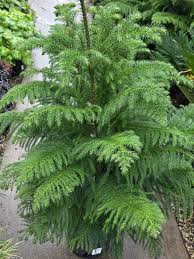
Australian Pine
Araucaria heterophylla (Salisb.) Franco Recognized botanical synonyms include: Eutassa heterophylla Salisb. Araucaria excelsa var. glauca Carrière Araucaria excelsa var. speciosissima Carrière Eutacta excelsa var. aurea-variegata Carrière Eutacta excelsa var. glauca (Carrière) Carrière Eutacta excelsa var. monstrosa Carrière Eutacta excelsa var. variegata-alba Carrière Abies columbaria (Dum.Cours.) Dum.Cours. Pinus columbaria Dum.Cours. Araucaria excelsa remains widespread in nursery, horticultural, historical, and online references, but it is best treated as a misapplied former horticultural name rather than a current botanical synonym of Araucaria heterophylla. Casuarina equisetifolia and other Casuarina species are unrelated trees also widely called Australian Pine. Araucaria columnaris, commonly called Cook Pine, is another separate Araucaria species that may be confused with Norfolk Island Pine.
Araucariaceae
Norfolk Island Pine, Norfolk Pine, House Pine, Living Christmas Tree, Star Pine, Triangle Tree, Polynesian Pine, Araucaria, Eutassa heterophylla, Araucaria excelsa
“Australian Pine” is an ambiguous common name also widely applied to unrelated Casuarina species. Norfolk Island Pine is the more precise common name for Araucaria heterophylla.
No Established Toxic Principle or Organ-Specific Syndrome
No clinically important toxic principle has been established in Norfolk Island Pine, Araucaria heterophylla. Current veterinary poison-control guidance classifies the plant as non-toxic to dogs, cats, and horses.
That classification is supported not merely by the absence of a named molecule but also by the absence of a reproducible companion-animal syndrome involving kidney failure, liver failure, cardiac injury, neurologic deterioration, hemolysis, bone-marrow suppression, or another characteristic form of systemic toxicosis after ordinary exposure to the untreated plant.
Non-toxic does not mean nutritious, digestible, or appropriate as forage. An animal can vomit after eating an indigestible plant without the plant containing a systemic poison. Grass, mulch, paper, bark, and numerous other nonpoisonous materials can produce the same nonspecific response.
Illness following access should therefore be interpreted according to the amount and material swallowed, the animal’s size and health, the presence of decorations or chemicals, and whether a foreign body or unrelated disease may be responsible.
Resin Terpenes and the Limits of Extract Chemistry
Norfolk Island Pine produces aromatic resin containing numerous terpenes. Ahmed M. Abd-ElGawad and colleagues published “Chemical Profiling of Significant Antioxidant and Phytotoxic Microwave-Extracted Essential Oil from Araucaria heterophylla Resin” in Separations in 2023.
The researchers collected resin, produced an essential oil through microwave-assisted laboratory extraction, and characterized it by gas chromatography–mass spectrometry. Thirty-three compounds were identified, accounting for nearly all of the extracted oil.
Terpenes made up the dominant chemical class. Alpha-pinene was the principal constituent, followed by smaller quantities of beta-pinene, germacrene D, beta-caryophyllene, camphene, sabinene, limonene, alpha-copaene, beta-bourbonene, camphor, and numerous minor compounds.
The study examined antioxidant activity and inhibition of weed germination and seedling growth. It did not feed foliage, resin, or extract to dogs, cats, horses, livestock, or other companion animals and did not establish a veterinary toxic dose.
A concentrated essential oil is not equivalent to an animal briefly chewing an intact branchlet. Extraction separates and concentrates volatile constituents that may occur in much smaller and less available amounts in the living plant.
The study is therefore useful for documenting resin chemistry but cannot be used to reclassify the intact plant as an essential-oil poison or to claim that ordinary chewing delivers an equivalent terpene dose.
Concentrated Resin, Essential Oil, and Manufactured Products
A bottle of Norfolk Island Pine essential oil, oleoresin extract, fragrance oil, homemade tincture, solvent extract, wood-treatment product, or concentrated resin preparation creates a fundamentally different exposure from contact with untreated foliage.
Concentrated terpene products may irritate the mouth, gastrointestinal tract, skin, and respiratory system. Depending on formulation and dose, essential oils may also cause aspiration injury, central nervous system depression, tremors, abnormal coordination, or organ stress, particularly in cats.
Product risk depends on the complete formulation. Solvents, surfactants, alcohol, preservatives, fragrances, pesticides, detergents, and other ingredients may be more important than the plant source printed on the label.
No essential oil, resin extract, cleaning product, or homemade preparation should be administered to an animal merely because the living Norfolk Island Pine is classified as non-toxic.
Fibrous Foliage, Twigs, Bark, Roots, and Cone Material
The narrow leaves and branchlets are fibrous and poorly digestible. Young indoor foliage is usually relatively soft, but older leaves, twigs, bark, woody roots, and reproductive structures can become firmer and more abrasive.
Chewed tips may scratch or irritate the lips, gums, tongue, palate, pharynx, or esophagus. A fragment can become lodged between teeth, beneath the tongue, across the palate, in the throat, or within the esophagus.
Swallowed plant material may trigger vomiting or diarrhea through nonspecific gastrointestinal irritation. A sufficiently large mass can act as a foreign body and obstruct the stomach or intestines.
Mature outdoor trees produce woody male and female cones. Indoor specimens rarely mature enough to form substantial cones, but a hard cone fragment, woody branch, or root can injure the mouth, fracture a tooth, cause choking, or obstruct the digestive tract.
Repeated gagging, inability to swallow saliva, regurgitation, persistent vomiting, abdominal enlargement, reduced stool production, or pain returning after initial improvement suggests a mechanical problem rather than systemic plant poisoning.
Potting Medium and Products Applied to the Plant
Commercial Norfolk Island Pines may be grown in potting mixtures containing bark, stones, perlite, fertilizer granules, moisture-retaining polymers, decorative moss, foam, wire, plastic mesh, or other materials.
A small amount of ordinary potting substrate may cause only transient vomiting or diarrhea. A large quantity or a concentrated additive can create a more significant exposure.
Fertilizers may irritate the mouth and gastrointestinal tract. Products containing iron, pesticides, insecticides, molluscicides, fungicides, or other active ingredients require individual assessment because their effects may extend far beyond simple stomach upset.
Plants may also be treated with leaf-shine products, preservatives, artificial snow, glitter sprays, systemic pesticides, surface insecticides, antifungal products, dyes, flame retardants, or other coatings before sale.
These applications are separate from the natural chemistry of Araucaria heterophylla. A pet developing tremors, severe salivation, weakness, abnormal heart rate, breathing difficulty, seizures, or collapse after contact with a newly purchased plant should be evaluated for an applied product rather than presumed to have developed Norfolk Island Pine toxicosis.
Tree Water, Decorative Reservoirs, and Additives
Norfolk Island Pine is normally sold rooted in soil rather than as a cut tree in a water stand. It may nevertheless be placed inside a decorative cachepot, reservoir, watering globe, hydroponic display, or holiday arrangement where accessible liquid accumulates.
Plain standing water can collect soil, plant debris, saliva, fertilizer, bacteria, algae, and mold. Drinking it may cause nausea, vomiting, diarrhea, or appetite loss without the tree itself being poisonous.
Commercial freshness mixtures and homemade tree-water recipes may contain sugar, fertilizer, acidifying agents, fungicides, bleach, aspirin, essential oils, preservatives, or other ingredients. The actual product and concentration determine the risk.
Water associated with a mixed Christmas-tree display may also be contaminated by another plant. A cat exposed to unidentified lilies, for example, requires a completely different emergency response from a cat drinking plain water near a Norfolk Island Pine.
Skin and Eye Contact
Strong species-specific evidence for a defining Norfolk Island Pine dermatitis syndrome is lacking. An individual animal may still develop redness, itching, or localized irritation after exposure to sap, resin, plant dust, friction, pesticide residue, fertilizer, artificial snow, or another product.
Repeated contact or grooming can intensify irritation and spread material from the coat or paws into the mouth and eyes.
A pointed leaf, twig, glitter particle, soil fragment, or decoration may scratch the cornea. Eye injuries are mechanical or chemical contact events rather than evidence of a systemic plant toxin.
Persistent squinting, tearing, redness, cloudiness, discharge, bleeding, light sensitivity, or inability to open the eye requires direct examination because corneal abrasions and ulcers cannot be assessed reliably from appearance alone.
No Established Toxic Dose
No toxic dose of untreated Norfolk Island Pine foliage has been established for dogs, cats, horses, livestock, rabbits, birds, reptiles, or other animals because a characteristic systemic poisoning syndrome has not been demonstrated.
This does not create an unlimited safe amount. Large quantities of fibrous material can cause vomiting, dehydration, choking, or obstruction, while concentrated resin products and applied chemicals represent separate hazards.
Severe, prolonged, neurologic, cardiac, respiratory, renal, hepatic, or hematologic abnormalities should not be attributed automatically to the plant. They require an immediate search for another toxin, foreign body, electrical injury, traumatic event, contaminated product, or medical disease.
Many Animals Remain Completely Well
Many dogs, cats, horses, and other animals that briefly taste untreated Norfolk Island Pine develop no clinical signs.
The plant is not associated with a predictable organ-damaging toxicosis, and the mere discovery of chewed foliage does not prove that later illness was caused by the tree.
Observation should focus on the amount swallowed, the animal’s comfort, vomiting, stool, appetite, swallowing, breathing, and every decoration, chemical, potting product, or foreign object that was also accessible.
Mild Gastrointestinal and Oral Signs
When signs follow uncomplicated foliage ingestion, they are expected to be mild and nonspecific. Possible findings include drooling, gagging, nausea, one or more episodes of vomiting, soft stool, diarrhea, reduced appetite, mild abdominal discomfort, or temporary lethargy.
Drooling and gagging may result from the texture of a branchlet or leaf tip rather than a chemical burn. The animal may lick its lips, repeatedly swallow, paw briefly at the mouth, cough, or refuse hard food.
A small amount of fibrous material may irritate the stomach in the same way as grass, mulch, bark, paper, or another poorly digestible material.
Marked oral blistering, extensive tongue swelling, severe salivation, profound dysphagia, or progressive airway edema is not the expected response to the untreated plant and should prompt investigation for a caustic chemical, battery, electrical burn, insect sting, another plant, or foreign object.
Retained Plant Material, Choking, and Esophageal Injury
A stiff leaf tip, twig, woody fragment, root, cone scale, ornament hook, ribbon, tinsel strand, or other material may become lodged in the mouth or throat.
Warning signs include repeated gagging without producing vomit, continuous drooling, coughing, frantic pawing at the face, painful swallowing, inability to swallow saliva, regurgitation, neck extension, noisy breathing, panic, or collapse.
A fragment trapped between teeth or across the palate may cause persistent mouth pain, bleeding, food refusal, or chewing on only one side.
Abnormal breathing or inability to swallow saliva is a mechanical emergency regardless of the tree’s non-toxic classification.
Vomiting, Diarrhea, Dehydration, and Obstruction
One episode of vomiting or a brief loose stool may resolve without further illness. Repeated vomiting or diarrhea can still cause dehydration and electrolyte abnormalities.
Warning signs of dehydration include tacky gums, sunken eyes, reduced skin elasticity, increased thirst, reduced urination, weakness, and worsening lethargy.
Puppies, kittens, toy-breed dogs, elderly animals, and patients with kidney, heart, endocrine, or gastrointestinal disease may tolerate fluid loss poorly.
A large swallowed mass of foliage, bark, cone material, potting substrate, ribbon, tinsel, foam, or plastic can obstruct the gastrointestinal tract. Persistent vomiting, repeated unproductive retching, severe abdominal pain, abdominal enlargement, reduced or absent stool, food refusal, or signs returning after temporary improvement requires imaging and foreign-body assessment.
Skin and Eye Signs
Localized redness, itching, bumps, or licking may occur after contact with sap, resin, dust, treated foliage, fertilizer, pesticide, artificial snow, or abrasive plant material.
These signs are not sufficiently consistent to define a natural Norfolk Island Pine poisoning syndrome. Fleas, mites, infection, environmental allergy, another plant, carpet cleaner, and other contact products remain plausible causes.
A leaf tip, twig, soil particle, glitter fragment, or ornament may cause blinking, tearing, squinting, redness, eyelid spasm, light sensitivity, cloudiness, or pawing at the eye.
Persistent eye pain, discharge, blood, cloudiness, or inability to open the eye suggests corneal injury or retained material and requires prompt examination.
Signs Suggesting a Holiday Product or Electrical Hazard
Vomiting or diarrhea after drinking container water may result from bacterial growth, fertilizer, preservatives, fungicides, sugar mixtures, essential oils, bleach, or another additive.
Marked drooling, mouth ulcers, burns, facial pain, coughing, abnormal breathing, or sudden collapse may follow chewing an electrical cord or battery rather than chewing foliage.
Electrical injury can cause burns that are initially difficult to see and may be followed by abnormal heart rhythm or delayed fluid accumulation in the lungs.
Tremors, seizures, severe incoordination, agitation, pronounced weakness, abnormal heart rate, or reduced responsiveness may indicate pesticide, essential oil, chocolate, xylitol, medication, cannabis, salt dough, mold, or another holiday exposure.
The entire display and surrounding area must be investigated rather than assuming that every sign came from the tree.
Horses and Livestock
A specific Norfolk Island Pine toxicosis has not been established in horses or livestock. Small accidental tastes are unlikely to produce systemic poisoning.
Heavy consumption of unfamiliar fibrous vegetation may cause feed refusal, salivation, abdominal discomfort, loose manure, diarrhea, or impaction risk.
Horses cannot vomit. Coughing, nasal discharge containing feed or saliva, repeated unsuccessful swallowing, or neck extension requires evaluation for choke or pharyngeal obstruction.
Group illness, severe colic, recumbency, respiratory distress, tremors, seizures, or death should prompt investigation of every plant, feed source, pesticide, fertilizer, water source, and chemical available to the animals.
Expected Course and Atypical Findings
Mild gastrointestinal irritation after a small untreated-foliage exposure should begin improving within several hours and usually resolves within approximately twelve to twenty-four hours.
Persistent vomiting, continuing diarrhea, inability to retain water, progressive weakness, severe pain, coughing, difficulty swallowing, abnormal breathing, or symptoms extending beyond the expected short course requires reassessment.
Kidney failure, liver failure, severe blood-cell abnormalities, persistent cardiac arrhythmias, seizures, coma, profound neurologic depression, and death are not characteristic of uncomplicated Norfolk Island Pine ingestion.
Those findings require immediate investigation for another toxin, electrical injury, battery exposure, foreign body, traumatic injury, contaminated product, infection, metabolic illness, or unrelated disease.
Correct Identity and Accepted Taxonomy
Australian Pine on this page refers to Norfolk Island Pine, Araucaria heterophylla, an evergreen conifer in Araucariaceae.
Kew recognizes the species as native only to Norfolk Island, including Phillip Island, in the southwestern Pacific. Norfolk Island is an external territory of Australia, which helps explain the Australian association in the common name.
The accepted name is Araucaria heterophylla. Eutassa heterophylla is the original botanical name and a recognized synonym.
Several historical varieties assigned to Araucaria excelsa or Eutacta excelsa are included within the recognized synonymy. The unqualified name Araucaria excelsa, however, is best treated as a long-used misapplied horticultural name rather than the accepted scientific name.
“Australian Pine” Can Identify Unrelated Trees
The common name Australian Pine is highly ambiguous. It is widely applied to Casuarina equisetifolia and related Casuarina species, which belong to Casuarinaceae rather than Araucariaceae.
Casuarinas have slender, segmented green branchlets that resemble pine needles. Their small scale leaves occur at the joints, and their compact woody fruiting structures look unlike the large cones of mature Araucaria.
Norfolk Island Pine has regularly tiered branches and spirally arranged leaves rather than jointed, horsetail-like branchlets.
A plant label or web page using only “Australian Pine” does not provide sufficient botanical identification. Toxicity conclusions for *Araucaria heterophylla* should not be transferred automatically to a *Casuarina* species.
Norfolk Island Pine, Cook Pine, and True Pines
Norfolk Island Pine is not a true pine in the genus Pinus. It belongs to an ancient Southern Hemisphere conifer family with different foliage, cones, resin chemistry, and evolutionary history.
Cook Pine, Araucaria columnaris, is a separate species native to New Caledonia. It is widely planted in tropical and coastal regions and may be mistaken for Norfolk Island Pine.
Young Norfolk Island Pines typically show a balanced, symmetrical form with level or gently ascending branch tiers. Cook Pines often develop a conspicuous lean and may have a narrower columnar appearance, although cultivated trees and photographs can overlap.
Exact species identification may require mature foliage, cone material, origin, and expert examination. That distinction should not delay treatment when the actual emergency involves an electrical cord, decoration, chemical, or foreign body.
Growth Form and Poisoning-Relevant Identification
Young plants form a narrow triangular outline with horizontal branches arranged in regular whorled tiers around a central trunk. This orderly form makes them popular indoor ornamentals and living Christmas trees.
Juvenile foliage is soft, awl-shaped, and loosely overlapping along slender branchlets. As trees mature, the leaves become firmer, more scale-like, and more densely arranged.
In its native habitat, the species can become a very large tree with a tall clear trunk. Older trees lose much of the perfectly triangular houseplant appearance and develop a broader upper crown.
Male and female reproductive structures usually occur on separate mature trees. Indoor potted specimens rarely reach the size or maturity required to produce substantial cones.
Why It Is Sold as a Living Christmas Tree
The naturally symmetrical juvenile form, compact container growth, and tiered branches allow Norfolk Island Pine to resemble a miniature conventional Christmas tree.
Retail specimens may arrive wrapped in decorative foil or burlap and may be coated with glitter, artificial snow, flocking, paint, leaf-shine products, preservatives, or other materials.
Bows, tinsel, ribbons, ornament hooks, batteries, glass, bells, lights, edible decorations, salt dough, and wrapped gifts may create greater hazards than the plant itself.
A cat may swallow ribbon or tinsel beneath the tree. A dog may eat chocolate or xylitol-containing gifts, chew a battery-powered ornament, pull down a glass decoration, or bite a light cord.
Clinical evaluation must therefore cover the complete holiday display and not stop after identifying a non-toxic plant.
Veterinary Classification and Evidence Limitations
ASPCA classifies Norfolk Island Pine as non-toxic to dogs, cats, and horses and lists no toxic principle.
Detailed peer-reviewed veterinary case reports involving authenticated plant ingestion are scarce. Many online pages label the plant “mildly toxic” while repeating vomiting, diarrhea, depression, and lethargy without identifying a toxin, dose, pathology, or controlled case series.
Nonspecific gastrointestinal signs can follow consumption of any large quantity of fibrous, unfamiliar material. Such signs do not alone establish a poisonous constituent.
The most accurate evidence-based conclusion is that the untreated plant has low inherent toxicity, while physical irritation, obstruction, contamination, and associated products remain legitimate veterinary concerns.
The 2023 Resin Essential-Oil Study
Abd-ElGawad and colleagues’ 2023 study chemically profiled essential oil produced from collected Araucaria heterophylla resin through microwave-assisted extraction.
The investigators identified thirty-three compounds. Terpenes represented the overwhelming majority of the oil, with alpha-pinene comprising the largest portion. Beta-pinene, germacrene D, beta-caryophyllene, camphene, sabinene, limonene, alpha-copaene, and other constituents occurred in smaller amounts.
The researchers evaluated antioxidant activity and phytotoxic effects against weed germination and seedling growth. They did not investigate natural poisoning in pets or livestock.
The extraction technique itself altered the composition and concentration of the resulting oil. The study therefore cannot be used to calculate the exposure received from one chewed branch or to claim that the intact plant produces essential-oil toxicosis.
Potting Medium, Fertilizer, Pesticides, and Decorative Coatings
A newly purchased tree may contain slow-release fertilizer granules, bark, perlite, stones, decorative moss, foam, moisture-retaining polymers, plastic netting, wire, or other potting materials.
Dogs may dig in the container, while cats may walk through treated soil and later groom their paws. Drainage water can carry dissolved fertilizer or pesticide residue.
Fertilizers commonly cause mouth and gastrointestinal irritation, but products containing iron or other concentrated minerals may create additional hazards. Pesticides and insecticides vary widely and can produce neurologic, respiratory, cardiovascular, or systemic illness.
Artificial snow, flocking, glitter sprays, leaf-shine preparations, dyes, adhesives, solvents, or flame-retardant treatments also vary by formulation.
Whenever a recently purchased or treated plant is involved, retain the pot label, receipt, product container, and ingredient information. The manufacturer’s formulation is more useful than a general statement that the animal contacted “Christmas-tree spray.”
Tree Water and Decorative Containers
Plain fresh water is not a Norfolk Island Pine toxin. Standing water may nevertheless accumulate soil, fertilizer, plant debris, bacteria, algae, mold, saliva, and residue from decorative materials.
Commercial additives may contain fertilizer, sugar, acidifying compounds, fungicides, or preservatives. Homemade mixtures may contain bleach, aspirin, alcohol, essential oils, or other unsuitable substances.
The risk depends on what was actually present and how much the animal consumed. Save the label or recipe rather than assuming that every tree-water exposure has the same prognosis.
Cachepots and foil wrappers may also trap stagnant drainage water around the root ball. Cats and small dogs should not be permitted to drink from these reservoirs.
Electrical Cords, Batteries, Decorations, and Wrapped Gifts
Chewed electrical cords can cause painful oral burns, abnormal heart rhythms, breathing difficulty, and delayed pulmonary edema. A small burn at the lip can accompany more serious internal electrical injury.
Batteries can leak caustic material, cause electrical current injury, burn the esophagus, or obstruct the gastrointestinal tract. Button batteries can produce severe local tissue injury rapidly.
Ribbon, string, and tinsel are especially dangerous to cats because they can become anchored beneath the tongue or within the stomach while the remaining material advances through the intestines.
Glass, metal hooks, ceramic pieces, and hard ornaments can lacerate the mouth or gastrointestinal tract. Salt-dough ornaments may contain enough sodium to cause severe neurologic illness.
Wrapped gifts may contain chocolate, xylitol, raisins, medications, cannabis products, alcohol, batteries, fragrance products, or other hazards. The area beneath the tree should be included in every exposure reconstruction.
Diagnosis and Differential Diagnosis
Diagnosis begins by confirming the plant and reconstructing everything the animal could have chewed, swallowed, inhaled, or contacted.
Useful evidence includes the full tree, branch samples, nursery tag, potting-medium label, fertilizer and pesticide packaging, artificial-snow container, tree-water additive, ornament fragments, cord damage, battery packaging, and material found in vomit.
A veterinarian will distinguish mild dietary indiscretion from oral foreign material, choking, esophageal injury, gastrointestinal obstruction, electrical trauma, caustic exposure, pesticide poisoning, pancreatitis, infection, or another medical disease.
Bloodwork, urinalysis, radiographs, ultrasound, electrocardiography, chest imaging, eye examination, endoscopy, or surgery may be appropriate when signs are severe, repeated, prolonged, or inconsistent with a small untreated-foliage exposure.
Prognosis and Prevention
The prognosis is excellent after most small ingestions of untreated foliage. Brief vomiting or diarrhea generally resolves with observation or limited supportive care.
The prognosis depends more heavily on dehydration, choking, obstruction, corneal injury, electrical burns, pulmonary edema, battery exposure, concentrated chemicals, pesticides, or another holiday hazard.
Place the tree where animals cannot chew the branches or dig in the container. Cover the soil with a secure barrier that cannot itself be swallowed and stabilize the pot against tipping.
Do not use tinsel, loose ribbon, accessible hooks, salt-dough ornaments, edible decorations, or exposed cords in homes with pets. Keep batteries, wrapped food, medication, fragrance oils, and chemical products away from the display.
Collect fallen plant material, keep standing water covered, provide a separate clean water source, and retain the labels for every fertilizer, pesticide, coating, and additive used around the tree.
Immediate Steps After Exposure
- Prevent further access. Move the animal away from the tree, potting medium, standing water, decorations, cords, batteries, wrapped gifts, and any spilled product.
- Identify the complete exposure. Determine whether the animal chewed untreated foliage, swallowed a twig or cone fragment, dug in the pot, drank water, contacted a spray, or swallowed a decoration or other object.
- Preserve evidence. Save a branch sample, plant tag, potting-medium package, fertilizer or pesticide container, tree-water additive, artificial-snow product, damaged cord, battery package, ornament fragments, and material found in vomit.
- Remove only loose visible material. Carefully lift debris resting at the lips or front of the mouth when the animal remains calm. Do not reach blindly toward the throat or pull on deeply lodged material.
- Monitor breathing and swallowing. Gagging, coughing, neck extension, continuous drooling, inability to swallow saliva, noisy breathing, or blue-gray gums requires emergency care.
- Contact a veterinarian when warranted. Obtain guidance after a large ingestion, repeated symptoms, uncertain chemical exposure, electrical-cord damage, a missing battery or ornament, or any sign inconsistent with a minor foliage nibble.
Do Not Attempt Unsupervised Home Treatment
- Do not induce vomiting. Hydrogen peroxide, salt, mustard, syrup of ipecac, detergent, oil, fingers in the throat, and manual gagging can cause aspiration, gastrointestinal injury, sodium poisoning, or trauma.
- Never use hydrogen peroxide in cats. It can cause severe feline esophagitis, gastritis, ulceration, and bleeding.
- Never attempt to induce vomiting in a horse. Horses cannot vomit.
- Do not give activated charcoal routinely. It does not remove a lodged twig, decoration, ribbon, or fibrous plant mass and may be inhaled by a vomiting or poorly swallowing animal.
- Do not attempt gastric lavage. Lavage requires anesthesia, airway protection, professional equipment, and a specific medical justification.
- Do not force food, water, milk, oil, broth, or electrolyte products. Forced swallowing may provoke vomiting or aspiration and does not neutralize fertilizers, pesticides, essential oils, or other chemicals.
- Do not give owner-selected medication. Antacids, bismuth products, antidiarrheals, antihistamines, sucralfate, corticosteroids, antibiotics, pain relievers, fever medication, and leftover prescriptions should not be used without veterinary assessment.
Mouth, Choking, and Foreign-Body Concerns
Inspect only the lips and front of the mouth when this can be done safely. Look for loose plant fragments, bleeding, a broken tooth, a visible twig, string, tinsel, hook, battery residue, or an electrical burn.
Do not perform a blind finger sweep. Reaching toward the throat may push material deeper or cause a bite injury.
Do not pull on ribbon, string, tinsel, wire, or plant material extending from the mouth. It may be anchored beneath the tongue, in the stomach, or farther along the digestive tract.
Frantic pawing, inability to inhale, continuous gagging, blue-gray gums, collapse, or inability to swallow saliva requires immediate emergency transport.
Repeated vomiting, abdominal enlargement, reduced stool production, severe pain, or signs returning after initial improvement may indicate gastrointestinal obstruction.
Tree Water, Potting Material, and Chemical Products
Prevent further access and determine exactly what the animal contacted. Plain water, fertilizer solution, pesticide, fungicide, essential oil, artificial snow, leaf shine, bleach, aspirin, sugar mixture, and another household preparation require different responses.
Do not rely on the front product name alone. Preserve the complete ingredient panel, active ingredients, concentration, manufacturer, and product container.
If an unknown product is on the coat or paws, prevent grooming. Wear gloves and gently wash the contaminated area with lukewarm water and a mild species-appropriate cleanser unless the product label or veterinary professional directs a different procedure.
Do not apply solvents, oils, alcohol, vinegar, baking soda, or another household neutralizer. Mixing products on the skin can worsen irritation or increase absorption.
Tremors, seizures, severe drooling, abnormal heart rate, profound weakness, respiratory abnormalities, or altered responsiveness after chemical contact requires emergency evaluation.
Eye Exposure
If loose debris or a liquid product entered an eye and no object is embedded, begin gentle irrigation with sterile saline or clean lukewarm water while arranging veterinary guidance.
Do not rub the eye or use tweezers, cotton swabs, cloth, human redness drops, or leftover ophthalmic medication on the eye surface.
A twig, ornament fragment, wire, or other object that appears to penetrate the eye should remain in place during transport rather than being pulled out.
Persistent squinting, tearing, redness, cloudiness, discharge, blood, light sensitivity, or inability to open the eye requires prompt corneal examination.
When Emergency Examination Is Especially Important
- Breathing difficulty or choking: Noisy breathing, gasping, open-mouth breathing, blue-gray gums, neck extension, panic, or collapse requires immediate transport.
- Inability to swallow: Continuous drooling, repeated gagging, regurgitation, or inability to swallow saliva may indicate oral, pharyngeal, or esophageal obstruction.
- Electrical-cord damage: Chewed cords can cause oral burns, arrhythmias, respiratory distress, and delayed pulmonary edema even when the animal initially appears alert.
- Battery exposure: Missing or damaged batteries can cause corrosive injury, electrical burns, heavy-metal concerns, or obstruction.
- Linear foreign material: Ribbon, string, thread, or tinsel extending from the mouth or anus must not be pulled.
- Repeated vomiting or diarrhea: Continuing losses may cause dehydration or indicate a chemical, foreign object, or unrelated disease.
- Abdominal pain or enlargement: These findings may indicate obstruction, gastric dilatation, pancreatitis, perforation, or another emergency.
- Tremors, seizures, severe incoordination, or collapse: These signs are not expected after uncomplicated foliage ingestion and require investigation for another toxin.
- Unknown applied product: Pesticides, fertilizers, essential oils, artificial snow, flocking, leaf shine, preservatives, and water additives must be evaluated from their exact formulations.
Veterinary Examination and Treatment
No plant-specific antidote is required because no clinically important toxin has been established in untreated Norfolk Island Pine.
The veterinarian will evaluate the mouth, teeth, tongue, pharynx, swallowing ability, abdomen, hydration, breathing, neurologic status, and possible exposure to a chemical, electrical source, or foreign object.
Mild nausea or vomiting may be treated with veterinarian-selected antiemetic medication. Subcutaneous or intravenous fluids may be used when repeated gastrointestinal losses cause dehydration.
Persistent mouth pain or swallowing difficulty may require sedation, direct visualization, radiographs, or endoscopy to locate and remove retained material.
Radiographs, ultrasound, endoscopy, or surgery may be necessary when a branch, cone fragment, stone, foam, ribbon, tinsel, ornament, battery, plastic, or potting material obstructs or injures the digestive tract.
Electrical injury may require oral-wound care, oxygen, electrocardiographic monitoring, chest imaging, pain control, and observation for delayed respiratory complications.
Treatment following fertilizer, pesticide, essential-oil, artificial-snow, battery, or water-additive exposure depends on the product, concentration, route, timing, and current clinical findings.
Horses, Livestock, and Other Animals
Remove all animals from branches, pruned material, potting substrate, chemical containers, and contaminated water. Examine every animal that shared access.
Do not drench or force oil, charcoal, water, feed, or medication into a horse or livestock animal that is coughing, choking, bloated, weak, recumbent, or swallowing poorly.
Horses showing salivation, nasal discharge containing feed, neck extension, or repeated swallowing attempts require evaluation for choke.
Rabbits and guinea pigs require prompt attention when vomiting is impossible but appetite or fecal production declines. Cats should be examined promptly for persistent vomiting, food refusal, abnormal breathing, linear foreign-body exposure, or possible electrical injury.
Recovery and Prevention
Most animals that eat a small amount of untreated foliage remain well or recover from mild gastrointestinal irritation within approximately twelve to twenty-four hours.
Persistent or worsening vomiting, diarrhea, abdominal pain, eye pain, coughing, breathing changes, weakness, reduced stool production, or food refusal requires reassessment because another hazard is more likely than systemic plant poisoning.
Place the tree outside realistic chewing and climbing access, secure the container against tipping, and cover the potting medium with a barrier that cannot be swallowed.
Protect electrical cords, cover water reservoirs, and avoid tinsel, ribbon, salt dough, edible ornaments, accessible hooks, batteries, and breakable decorations.
Retain every fertilizer, pesticide, artificial-snow, leaf-shine, and water-additive label and clean fallen plant material or spilled products promptly.
Frequently Asked Questions About Australian Pine and Animal Poisoning
Is Norfolk Island Pine poisonous to dogs and cats?
No recognized toxic principle or characteristic poisoning syndrome has been established, and current veterinary poison-control guidance classifies Araucaria heterophylla as non-toxic to dogs and cats. An animal may still vomit, gag, develop diarrhea, or lose its appetite after eating fibrous foliage. Choking, obstruction, potting materials, applied chemicals, and holiday decorations are separate hazards.
Is Norfolk Island Pine poisonous to horses or livestock?
It is classified as non-toxic to horses, and no characteristic livestock-poisoning syndrome has been established. It remains unsuitable as feed. Heavy consumption of fibrous material may cause digestive disturbance, while cut branches, fertilizer, pesticides, contaminated water, or another plant may explain more serious illness.
Why do some websites call Norfolk Island Pine mildly toxic?
Many pages repeat nonspecific signs such as vomiting, diarrhea, depression, and lethargy without identifying a toxin, authenticated case series, dose-response study, or characteristic pathology. A nonpoisonous plant can still cause stomach upset when an animal eats indigestible material. The available evidence supports low inherent toxicity rather than a defined toxicosis.
Is Australian Pine the same as Norfolk Island Pine?
On this page, Australian Pine refers to Norfolk Island Pine, Araucaria heterophylla. The common name Australian Pine is ambiguous and is also widely used for unrelated Casuarina species. A scientific name, nursery label, or complete plant specimen is needed for dependable identification.
What is the accepted scientific name, and is Araucaria excelsa a synonym?
The accepted name is Araucaria heterophylla (Salisb.) Franco. Eutassa heterophylla is its original name and a recognized synonym. Several historical varieties assigned to Araucaria excelsa are recognized synonyms, but the unqualified name Araucaria excelsa is better treated as a historically misapplied horticultural name.
Is Norfolk Island Pine a true pine?
No. It is a conifer in Araucariaceae rather than a member of the true-pine genus Pinus. Shared use of the word pine does not establish identical resin chemistry, cones, seed structure, toxicity, or veterinary risk.
Is Norfolk Island Pine the same as Cook Pine?
No. Cook Pine is Araucaria columnaris, a separate species native to New Caledonia. The two are commonly confused in tropical landscapes. Norfolk Island Pine often has more level, symmetrical branch tiers, while Cook Pine frequently develops a pronounced lean, but exact identification may require mature botanical material.
What toxin does Norfolk Island Pine contain?
No clinically important toxin has been established in the untreated plant. The resin contains terpenes, but chemical presence alone does not prove that ordinary chewing causes terpene poisoning. There is no established toxic dose, toxin assay, or predictable organ-injury syndrome associated with normal plant exposure.
What did the 2023 Norfolk Island Pine resin study find?
Abd-ElGawad and colleagues identified thirty-three compounds in microwave-extracted resin essential oil. Alpha-pinene was dominant, with beta-pinene, germacrene D, beta-caryophyllene, and other terpenes occurring in smaller amounts. The study evaluated antioxidant and weed-growth effects, not poisoning after dogs or cats chewed foliage.
Does the resin study mean the whole plant causes essential-oil poisoning?
No. Laboratory extraction concentrates volatile compounds and produces an exposure fundamentally different from one bite of a living branch. A bottle of essential oil, oleoresin extract, fragrance, cleaning product, or homemade preparation must be assessed separately and may be substantially more hazardous than the untreated plant.
Can the leaves, twigs, bark, or cones injure a pet?
Yes. They are fibrous and poorly digestible. Leaf tips and twigs may scratch the mouth or lodge in the throat, while woody material can cause choking, fractured teeth, vomiting, or gastrointestinal obstruction. Repeated gagging, inability to swallow saliva, persistent vomiting, severe abdominal pain, or reduced stool production requires examination.
Can Norfolk Island Pine cause dermatitis?
A defining species-specific dermatitis syndrome has not been established. An individual animal may still react to sap, resin, dust, friction, pesticide, fertilizer, artificial snow, or another product on the plant. Persistent or recurring redness, itching, swelling, licking, or hair loss should be examined rather than automatically attributed to a natural toxin.
Can Norfolk Island Pine injure an animal’s eye?
Yes, mechanically. A pointed leaf, twig, soil particle, glitter fragment, or ornament may scratch the cornea or become trapped beneath an eyelid. Continuing squinting, tearing, redness, cloudiness, discharge, bleeding, or inability to open the eye requires prompt veterinary examination.
Is water associated with a living Christmas tree dangerous?
Plain fresh water is not inherently poisonous, but standing water can collect bacteria, algae, mold, fertilizer, soil, and plant debris. Commercial or homemade additives may contain sugar, fungicide, fertilizer, bleach, aspirin, essential oils, or preservatives. Preserve the label or recipe so the actual ingredients can be assessed.
Can potting soil, fertilizer, or pesticide on the tree poison a pet?
Yes. These are separate exposures from the plant. Ordinary soil may cause transient gastrointestinal upset, while fertilizer concentrates, iron-containing products, insecticides, molluscicides, and fungicides may cause more serious illness. Bring the product packaging whenever a pet becomes sick after digging in a newly purchased or treated plant.
Are artificial snow, flocking, glitter, and leaf-shine products safe?
Safety depends on the exact formulation and amount. A small lick of a dried low-toxicity coating may cause no illness, while concentrated liquid, solvent, propellant, adhesive, glitter, or heavily treated foliage may cause more significant irritation or systemic effects. Retain the original container and complete ingredient information.
What holiday-display hazards are more serious than the tree?
Electrical cords, batteries, glass ornaments, metal hooks, tinsel, ribbon, string, salt-dough decorations, chocolate, xylitol-containing food, raisins, medications, cannabis products, essential oils, pesticides, fertilizer, and contaminated water may all present greater danger. The entire display and wrapped gifts beneath it must be considered after an exposure.
Should I make my pet vomit after chewing Norfolk Island Pine?
No home vomiting method should be used. Hydrogen peroxide, salt, mustard, ipecac, detergent, and manual gagging can cause injury or aspiration. Vomiting is especially inappropriate when a twig, hook, ribbon, battery, chemical, or other foreign material may have been swallowed.
Should I give activated charcoal?
No. Charcoal is not routinely useful for fibrous foliage and cannot remove a lodged twig, ornament, ribbon, or gastrointestinal obstruction. It may be aspirated by an animal that is vomiting, coughing, sedated, or swallowing poorly. A veterinarian may use it only for a specific charcoal-bindable chemical exposure.
How is an exposure diagnosed and treated?
Diagnosis begins by identifying the plant and every associated product or object. Mild gastrointestinal irritation may require only observation, anti-nausea treatment, or fluids. Mouth pain, gagging, persistent vomiting, or reduced stool may require radiographs, ultrasound, endoscopy, or surgery for a foreign body. Electrical, battery, pesticide, fertilizer, or essential-oil exposures require product-specific treatment.
What is the prognosis after Norfolk Island Pine ingestion?
The prognosis is excellent after a small exposure to untreated foliage. Mild gastrointestinal signs generally improve within approximately twelve to twenty-four hours. The outlook depends on whether dehydration, choking, obstruction, eye injury, electrical trauma, battery exposure, or a chemical product was involved rather than on severe systemic toxicity from the plant itself.