PAWS Pet Poison Plant Guide
Are Begonias Poisonous to Dogs, Cats, Horses, and Livestock?
Yes—begonias, Begonia species and hybrids, should be treated as poisonous when eaten by dogs, cats, horses, livestock, and other animals. Direct plant research confirms oxalic-acid and oxalate metabolism in some Begonia species, while selected species also contain bitter cucurbitacins. Most small leaf or flower exposures are expected to cause no signs or temporary salivation, nausea, vomiting, appetite loss, or gastrointestinal discomfort.
A substantial ingestion deserves greater caution, especially when a dog swallows a fleshy tuber, thick rhizome, or a large amount of plant tissue. Enough soluble oxalate can bind calcium and injure renal tubules, creating a mechanism-based risk of weakness, loss of coordination, tremors, seizures, abnormal cardiac activity, or kidney injury. These severe outcomes are not established as the routine companion-animal Begonia syndrome, and no universal toxic amount has been determined for the enormous and chemically variable genus.
About this guide: This page provides general pet-poisoning information and cannot diagnose or treat an individual animal. For any suspected exposure, contact a veterinarian or animal poison-control service immediately. Do not induce vomiting, give medication, or attempt home decontamination unless directed by a veterinary professional.
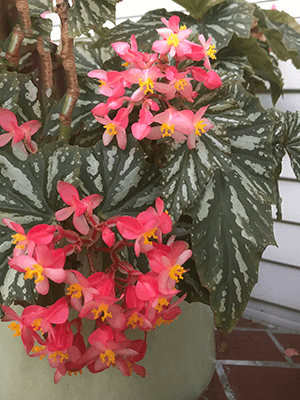
Begonia
Begonia spp.
Begoniaceae
Begonia, Begonias, Begonia spp., Tuberous Begonia, Wax Begonia, Bedding Begonia, Fibrous Begonia, Rex Begonia, Painted-Leaf Begonia, Cane Begonia, Angel Wing Begonia, Dragon Wing Begonia, Beefsteak Begonia, Rhizomatous Begonia, Rieger Begonia, Elatior Begonia, Hiemalis Begonia
These names describe different species, hybrids, cultivars, or horticultural groups rather than exact synonyms. Tuberous begonias possess fleshy underground tubers, while wax, cane, rex, rhizomatous, and Rieger begonias have different growth forms and may not present the same underground-part exposure.
What Is Established About Oxalate in Begonia
Begonias have long been associated with oxalic acid and oxalate chemistry, but Begonia is not one chemically uniform plant. It is an exceptionally large genus containing fibrous-rooted species, thick-rhizomed species, tuberous geophytes, upright cane begonias, epiphytes, hybrids, and thousands of cultivated selections. The compounds present and their concentrations can differ by species, plant part, developmental stage, genetics, environment, and analytical method.
W. M. L. Crombie’s study “Oxalic Acid Metabolism in Begonia semperflorens” provides direct evidence that free oxalic acid can be an important component of Begonia chemistry. In the seedlings and developing leaves studied, free oxalic acid accounted for most of the measured total oxalate. Accumulation accompanied early seedling development and the rapid growth of young expanding leaves, after which the oxalic acid appeared to take little further part in metabolism.
That finding should not be converted into a claim that every Begonia species, hybrid, tuber, rhizome, root, leaf, and flower contains the same amount or chemical form of oxalate. Zhihui Du, Fei Qu, Song Lu, Chaojun Zhang, Zhilin Chen, Daike Tian, Linhong Wen, and colleagues analyzed leaves, petioles, and rhizomes of Begonia edulis using metabolomic, transcriptomic, and organic-acid quantification methods. Their 2026 study identified 1,818 metabolites and found prominent tissue-specific accumulation of citric, malic, quinic, tartaric, and ascorbic acids in leaves and petioles. The work directly challenges the assumption that oxalic acid alone explains the sour chemistry of every Begonia.
Soluble Oxalate and Systemic Toxicity
Soluble oxalate includes oxalic acid and water-soluble sodium, potassium, or ammonium oxalate salts. After a sufficiently large amount is absorbed, oxalate can bind ionized calcium and form poorly soluble calcium oxalate. Ionized calcium is essential for normal nerve transmission, skeletal-muscle contraction, cardiac electrical activity, and many cellular functions.
A major soluble-oxalate exposure can therefore produce hypocalcemia, weakness, an abnormal gait, muscle twitching, tremors, tetany, seizures, or abnormal cardiac activity. Oxalate filtered through the kidneys may also precipitate within renal tubules and contribute to tubular obstruction, degeneration, or necrosis. Dehydration and reduced renal perfusion can compound that injury.
These mechanisms are well established in domestic-animal oxalate poisoning, especially after livestock consume large quantities of oxalate-rich forage. They have not been established as the routine result of ordinary Begonia leaf chewing by dogs or cats. A companion animal that nibbles one leaf is far more likely to remain normal or develop transient salivation, nausea, vomiting, appetite loss, or abdominal discomfort than profound hypocalcemia or acute kidney injury.
Soluble Oxalate Is Not the Same as Insoluble Raphides
Soluble oxalate toxicity must be distinguished from the immediate mechanical injury produced by bundles of insoluble calcium-oxalate needles called raphides. Strongly raphide-containing aroids such as dieffenbachia, philodendron, caladium, and elephant ear release microscopic needles when their specialized cells are crushed, producing intense oral pain, salivation, inflammation, and sometimes substantial swelling.
Calcium-oxalate crystals occur widely in plants, and crystal formation has been described in Begonia tissues. That does not prove that every Begonia possesses the same raphide form, crystal burden, ejecting mechanism, or clinical irritancy as an aroid. Begonia sap, free acid, bitter compounds, fibers, and mineral crystals may all contribute to local discomfort, but extensive oral blistering, dramatic tongue enlargement, and airway obstruction should not be presented as the expected genus-wide syndrome.
Persistent inability to swallow, progressive facial or tongue swelling, noisy breathing, or respiratory distress still requires emergency assessment. Such findings may indicate a lodged plant fragment, a second plant, fertilizer or pesticide exposure, trauma, an insect sting, or a genuine hypersensitivity reaction rather than uncomplicated Begonia ingestion.
Why Tubers and Rhizomes Deserve Greater Caution
Veterinary references place particular emphasis on tuberous begonia material. A fleshy tuber or thick rhizome can provide a much larger compact mass of plant tissue than an animal normally obtains from exploratory leaf chewing. Dogs may swallow underground material rapidly after digging in a pot, garden bed, storage box, or pile of discarded plants.
The greater practical risk of underground tissue should not be misrepresented as a proven universal concentration ranking across all Begonia species. Direct comparative measurements demonstrating that every Begonia tuber, rhizome, or root contains more soluble oxalate than every leaf or flower are not available. Some begonias do not form tubers at all, and fibrous roots, rhizomes, and storage tubers are botanically different structures.
A tuberous begonia tuber or a large rhizome should nevertheless be treated more cautiously because of the amount of tissue that can be swallowed, the documented chemistry of selected underground tissues, and the possibility of simultaneous ingestion of soil, fertilizer, pesticide, decorative material, or a foreign object.
Cucurbitacins in Selected Begonia Species
Begonias can contain bitter cucurbitane-type triterpenes, but the evidence is species- and tissue-specific. Barbara Frei, Michael Heinrich, Dieter Herrmann, Jimmy Orjala, Joachim Schmitt, and Otto Sticher published “Phytochemical and Biological Investigation of Begonia heracleifolia.” From the rhizomes, they isolated cucurbitacins B and D, 23,24-dihydrocucurbitacins D and F, and glucosides of cucurbitacins B and D.
Raymond W. Doskotch, M. Y. Malik, and J. L. Beal identified cucurbitacin B as a cytotoxic principle of white-flowered Begonia tuberhybrida var. alba. Doskotch and Charles D. Hufford subsequently characterized hexanor-cucurbitacin D from the same horticultural material.
Cucurbitacins are intensely bitter defensive compounds with substantial biological activity in experimental systems. Their unpleasant taste may discourage continued feeding, and gastrointestinal irritation could contribute to nausea, vomiting, abdominal pain, or diarrhea when an animal consumes a Begonia containing them.
These studies did not involve naturally poisoned dogs, cats, horses, livestock, birds, or small mammals. They do not establish a pet-toxic cucurbitacin dose, prove that cucurbitacins dominate the ordinary Begonia poisoning syndrome, or show that wax, rex, cane, angel wing, Rieger, Elatior, and other commercial begonias contain the same compounds or concentrations.
What the Evidence Does and Does Not Establish
The evidence supports treating begonias as unsuitable for animal ingestion, recognizing oxalic-acid and oxalate chemistry in the genus, and using greater caution after consumption of a substantial tuber or rhizome. It also supports the presence of cucurbitacins in selected species and horticultural material.
The evidence does not establish one toxin profile for all Begonia species, a universal safe or toxic dose, a reliable leaf count, a genus-wide concentration hierarchy, or a routine progression from leaf nibbling to hypocalcemia and kidney failure. No Begonia-specific canine or feline clinical case series was located that documents such a predictable course.
Risk assessment must therefore remain exposure-specific. The exact plant, growth form, plant part, amount eaten, animal size, health status, clinical signs, and associated potting or garden products matter more than the common name “Begonia” alone.
Expected Signs After a Small Foliage Exposure
A dog or cat that nibbles a small amount of Begonia leaf or flower may remain completely normal. When illness occurs, the most plausible early signs are salivation, lip licking, repeated swallowing, nausea, one or more episodes of vomiting, reduced appetite, mild abdominal discomfort, or temporary lethargy.
Vomiting may contain food, foam, bile, leaves, flowers, or stem fragments. A larger foliage exposure may also produce diarrhea, intestinal cramping, restlessness, repeated stretching, a hunched posture, or reluctance to be handled. Bitter cucurbitacins could contribute to gastrointestinal signs in species that contain them, but their contribution to ordinary companion-animal Begonia poisoning has not been measured.
Mild oral discomfort, gagging, pawing at the mouth, or reluctance to eat may follow contact with acidic sap, bitter tissue, plant fibers, or oxalate crystals. The intense immediate burning and major oral edema characteristic of strongly raphide-containing aroids should not be assumed after every Begonia exposure.
Signs After a Substantial Tuber or Rhizome Ingestion
A dog that digs up and swallows a fleshy tuber or thick rhizome may consume far more plant tissue than an animal that tastes one leaf. The amount may also be underestimated when underground material breaks apart in soil, is swallowed in pieces, or is partially vomited.
If enough soluble oxalate is absorbed to lower ionized calcium, possible signs include pronounced lethargy, weakness, stiffness, muscle twitching, an unsteady gait, tremors, tetany, seizures, collapse, or abnormal cardiac activity. These are mechanism-based warning signs of substantial oxalate poisoning, not the expected course after a trivial Begonia exposure.
Any neurologic abnormality following ingestion should broaden the investigation. Fertilizer, pesticide, slug bait, medication, another plant, low blood glucose, an electrolyte disorder, or an unrelated neurologic illness may be responsible.
Kidney Injury and Delayed Abnormalities
A large absorbed oxalate load can result in calcium-oxalate deposition and renal tubular injury. Possible clinical findings include continuing vomiting, profound appetite loss, dehydration, increased thirst, increased urination, reduced urination, inability to urinate, progressive weakness, or worsening depression.
Kidney abnormalities may become apparent after the earliest gastrointestinal signs rather than immediately after ingestion. An animal that initially vomits and then becomes increasingly weak, stops eating, drinks excessively, or urinates abnormally requires veterinary reassessment.
Renal tubular injury is documented in livestock poisoned by other oxalate-rich plants. A comparable Begonia-specific syndrome has not been established as a common occurrence in dogs or cats, and kidney failure should not be predicted from one small leaf nibble.
Swallowing, Skin, and Eye Findings
Continuous drooling, repeated unproductive gagging, regurgitation, neck extension, or inability to swallow saliva may indicate that a plant fragment, thick rhizome piece, stone, plastic label, or other material is lodged in the mouth, pharynx, or esophagus.
Progressive facial or tongue swelling, altered vocalization, noisy breathing, blue-gray gums, or respiratory distress is not a routine mild Begonia response. These findings require immediate evaluation for airway obstruction, another irritant plant, a chemical exposure, trauma, an insect sting, or an allergic emergency.
Sap, soil, crushed plant tissue, fertilizer, or pesticide residue may cause redness, repeated licking, itching, tearing, squinting, or pawing at the face. Persistent eye pain, cloudiness, discharge, or inability to open the eye raises concern for retained debris or corneal injury.
Dogs, Cats, Horses, Livestock, and Other Animals
Dogs create the greatest household risk for substantial underground-part exposure because they may dig in containers, garden beds, stored planting material, or discarded plant waste. Cats more commonly nibble accessible leaves or flowers and are therefore more likely to experience no illness or a limited gastrointestinal reaction. Continued food refusal in a cat still deserves prompt attention.
Horses cannot vomit. Horses and livestock with meaningful access may show salivation, feed refusal, depression, colic, diarrhea, weakness, an abnormal gait, tremors, recumbency, or changes in urination. Severe systemic oxalate poisoning is biologically possible after large consumption, but published Begonia-specific herd or flock outbreaks are lacking.
Several affected grazing animals require a complete investigation of all forage, clippings, feed, water, fertilizers, pesticides, medications, and infectious causes rather than automatic attribution to one ornamental Begonia.
Published Begonia-specific evidence involving rabbits, guinea pigs, hamsters, gerbils, birds, reptiles, and other exotic pets is limited. Appetite loss, reduced fecal output, altered droppings, regurgitation, weakness, tremors, reduced activity, or urinary changes require species-appropriate veterinary guidance because small animals may become dehydrated, hypoglycemic, or clinically unstable rapidly.
Onset, Duration, and Emergency Warning Signs
Salivation, nausea, or vomiting may begin soon after chewing or within several hours. No universal onset or recovery period can be assigned to the genus because species, plant parts, amounts, and toxin profiles differ substantially.
A mild foliage exposure should show steady improvement rather than progression. Repeated vomiting, inability to retain water, marked weakness, loss of coordination, stiffness, tremors, muscle spasms, seizures, collapse, abnormal breathing, swallowing difficulty, or increased, reduced, or absent urination requires veterinary examination.
Signs that are severe, delayed, or inconsistent with a small foliage exposure should prompt investigation of another plant, a potting product, a foreign body, medication, metabolic disease, infection, or another toxic exposure.
Plant Identity, Native Range, and Major Begonia Groups
Begonia is a large and highly variable genus in the family Begoniaceae. Begonias are native across tropical and subtropical regions of the Americas, Africa, Asia, and the Pacific, extending into central China. They are now cultivated widely outside their native ranges as houseplants, hanging plants, patio plants, flowering gift plants, and seasonal ornamentals.
“Begonia” identifies a genus rather than one uniform plant. Wax and bedding begonias are generally fibrous-rooted. Rex and many foliage begonias grow from thick horizontal rhizomes. Cane and angel wing begonias develop upright, jointed stems. Rieger, Elatior, and Hiemalis begonias are cultivated flowering-hybrid groups, while tuberous begonias develop fleshy underground storage organs.
These horticultural names are not interchangeable scientific synonyms. Terms such as “rex,” “angel wing,” “Dragon Wing,” “Rieger,” “Elatior,” “wax,” and “tuberous” may identify a growth form, hybrid group, cultivar series, or nursery category rather than one species. That distinction matters because not every Begonia has a tuber, rhizome, or the same chemical profile.
How to Recognize Begonias
Many begonias have asymmetrical leaves whose two sides meet the leaf stalk unevenly. Depending on the species or hybrid, the foliage may be rounded, heart-shaped, wing-shaped, spiraled, deeply divided, hairy, glossy, metallic, spotted, or strongly variegated. Stems may be soft and succulent, thick and rhizomatous, trailing, or upright and cane-like.
Begonia flowers may be white, yellow, orange, pink, red, or multicolored. Many plants carry separate male and female flowers, and some produce distinctly winged seed capsules. Tuberous hybrids may develop large single, double, ruffled, rose-like, or camellia-like flowers.
The underground structure is especially important after an exposure. Fine fibrous roots, a thick creeping rhizome, and a rounded or flattened tuber are different structures and should not all be called bulbs. A nursery label and clear photographs of the complete plant, stems, leaves, flowers, soil surface, and disturbed underground structure can materially improve identification.
Where and How Animals Encounter Begonias
Dogs and cats commonly encounter begonias in windowsill pots, hanging baskets, floor containers, offices, patios, greenhouse collections, seasonal bedding displays, and flowering gift arrangements. Cats may chew hanging leaves or flowers. Dogs may knock over containers, pull up plants, investigate potting material, or dig out rhizomes and tubers.
A concentrated underground-part exposure is most likely when tubers or rhizomes are stored before planting, shipped in boxes, exposed during repotting, removed from containers, or discarded with plant waste. A dog may find dormant material in a paper bag, cardboard box, open bin, garage, shed, closet, or potting area.
Horses and livestock may encounter begonias when ornamental plants or uprooted plant waste are discarded into pastures, pens, paddocks, stalls, or accessible compost piles. A small ornamental planting usually provides less material than a pile or bag of discarded tubers, rhizomes, and whole plants.
Poisonous Parts and Relative Risk
No part of a Begonia should be intentionally offered to an animal. Leaves, stems, flowers, sap, fibrous roots, rhizomes, and tubers may contain acidic, bitter, crystalline, or otherwise biologically active compounds.
A fleshy tuber or thick rhizome presents the greatest practical concern because it can provide a substantial mass of plant tissue in a compact form. This does not prove that underground tissue contains the highest soluble-oxalate concentration in every Begonia species. Direct comparative chemical data across the genus are inadequate, and many begonias have fibrous roots rather than tubers.
A dog swallowing a tuber or thick rhizome therefore creates a materially different exposure from a cat briefly nibbling one leaf. The exact plant, growth form, part consumed, amount missing, animal size, clinical signs, and associated materials must all be considered.
Dormant, wilted, dried, frost-damaged, or discarded tissue should not be assumed safe. The persistence of every relevant compound through drying and storage has not been determined across the genus, and stored underground structures can remain accessible enough for a dog to consume a large amount rapidly.
Potting Soil, Containers, and Mixed Exposures
An animal that disturbs a Begonia container may swallow more than plant tissue. Potting soil, fertilizer granules, systemic insecticides, fungicides, slug bait, decorative moss, stones, water-retaining polymers, plastic mesh, plant labels, wire, broken ceramic, and glass can cause separate toxic, caustic, choking, or obstructive injuries.
Severe tremors, repeated seizures, substantial bleeding, respiratory distress, rapid collapse, or profound neurologic depression should not be attributed automatically to a minor Begonia exposure. Every plant, chemical, medication, and container component within reach should be identified.
Mixed planters and floral arrangements also require complete identification. Lilies, daylilies, oleander, foxglove, autumn crocus, daffodils, tulips, and other plants may create toxic syndromes very different from Begonia. In cats, unidentified lily or daylily exposure requires particular urgency.
Evidence Limitations and Veterinary Diagnosis
There is no routine diagnostic test that confirms Begonia ingestion or measures a clinically useful Begonia-specific toxin concentration. Diagnosis depends on identifying the plant, determining its growth form and the part eaten, estimating the amount missing, evaluating the timing and clinical signs, and excluding other exposures or diseases.
Direct Begonia research documents oxalic-acid metabolism in Begonia semperflorens, diverse organic-acid profiles in Begonia edulis, and cucurbitacins in selected species and tuberous material. This research does not establish one universal veterinary toxic dose, one toxin mixture for the entire genus, or a predictable progression from every foliage exposure to hypocalcemia or kidney injury.
A minor leaf exposure in a clinically normal animal may require little or no diagnostic testing. A meaningful tuber or rhizome ingestion accompanied by persistent vomiting, weakness, tremors, seizures, cardiovascular abnormalities, or urinary changes may justify measurement of ionized calcium, electrolytes, kidney values, hydration, blood pressure, heart rhythm, urinalysis, and urine production.
Calcium-oxalate crystals in urine may support an oxalate exposure but are not independently diagnostic. Their absence does not exclude poisoning, and serial laboratory findings may be more informative than one early sample when systemic exposure is suspected.
Veterinary Treatment, Prognosis, and Prevention
There is no Begonia-specific antidote. Treatment is based on the animal’s measured condition and may include anti-nausea medication, correction of dehydration and electrolyte loss, pain control, nutritional support, and monitoring of calcium and kidney function. Intravenous calcium is reserved for measured or clinically significant hypocalcemia and requires cardiac monitoring.
The prognosis is good to excellent after most small foliage exposures. The outlook becomes more guarded when a substantial tuber or rhizome was consumed or when persistent vomiting, hypocalcemia, seizures, cardiovascular instability, aspiration, reduced urine production, or renal injury develops.
Keep begonias inaccessible to plant-chewing animals. Store detached tubers and rhizomes in rigid closed containers, supervise dogs around uprooted plants and repotting material, remove fallen or discarded tissue promptly, and place plant waste in closed trash rather than an open compost pile, pasture, pen, or animal enclosure.
Immediate Steps After Exposure
- Prevent further access: Secure the entire plant, fallen leaves, flowers, stems, tubers, rhizomes, roots, soil, and discarded plant material. Keep other animals away from vomit or chewed plant pieces.
- Identify the exact exposure: Determine whether the animal nibbled foliage, swallowed a thick rhizome or tuber, disturbed only fibrous roots, or had access to an unknown amount. Do not call every underground structure a bulb.
- Check the container and surrounding area: Look for missing fertilizer, pesticide, slug bait, decorative stones, water-retaining crystals, plastic mesh, wire, plant labels, ceramic, glass, or another plant.
- Remove only loose visible material: If the animal remains calm and this can be done safely, lift plant pieces resting at the lips or front of the mouth. Do not reach blindly toward the throat or pull on material that appears lodged.
- Use water cautiously: An alert animal that is breathing and swallowing normally may have voluntary access to fresh water. Give nothing by mouth when the animal is gagging, repeatedly vomiting, weak, trembling, sedated, seizing, or having difficulty swallowing or breathing.
- Preserve identification evidence: Save the nursery label, clear photographs, a representative plant sample, the remaining underground structure, and packaging from fertilizers or pesticides. Bring these materials to the veterinary clinic when safe.
- Contact veterinary help when warranted: Prompt consultation is appropriate after a meaningful tuber or rhizome ingestion, an unknown exposure, repeated vomiting, weakness, tremors, seizures, swallowing difficulty, abnormal breathing, or changes in urination.
After Skin, Coat, or Eye Contact
If sap, crushed tissue, soil, fertilizer, or pesticide residue is present on the coat, prevent grooming and gently wash the affected area with lukewarm water and a mild pet-safe cleanser. Rinse thoroughly and clean contaminated collars, harnesses, bedding, towels, tools, and carrier surfaces.
Continuing redness, pain, itching, swelling, discharge, hair loss, or self-trauma requires veterinary examination. Antihistamines and corticosteroids are not routine antidotes for direct chemical or mechanical irritation and should not be given without professional direction.
If plant sap, soil, or debris entered an eye and no penetrating object is visible, begin gentle irrigation with clean lukewarm water or sterile saline when the animal tolerates it safely. Do not rub the eye or use tweezers, cotton swabs, human redness-relief drops, or leftover ophthalmic medication.
Persistent squinting, tearing, cloudiness, swelling, discharge, light sensitivity, or inability to open the eye requires examination. A veterinarian may use fluorescein stain to identify a corneal abrasion or ulcer. Corticosteroid-containing eye medication is unsafe when corneal ulceration is present.
Do Not Attempt Unsupervised Home Treatment
- Do not induce vomiting: Hydrogen peroxide, salt, mustard, syrup of ipecac, detergent, oil, manual gagging, and fingers in the throat can cause gastric injury, aspiration, electrolyte abnormalities, or trauma.
- Do not force mouth flushing: Pouring, spraying, or syringing water into the mouth can drive fluid and plant debris into the airway, especially when the animal is gagging, vomiting, resisting, weak, or swallowing abnormally.
- Do not give milk or dairy as an antidote: Milk, yogurt, and cheese do not provide controlled treatment of hypocalcemia or reliably neutralize an unidentified Begonia exposure. They may worsen nausea or delay appropriate assessment.
- Do not administer activated charcoal: The ability of charcoal to bind oxalic acid, mineral oxalate, or the variable compounds in Begonia tissue is not sufficiently predictable to make it routine home treatment. Charcoal may be aspirated by a vomiting, weak, sedated, or dysphagic animal.
- Do not give calcium supplements: Oral calcium is not a substitute for measuring ionized calcium. Intravenous calcium administered too quickly or without monitoring can produce dangerous cardiac effects.
- Do not give gastrointestinal medication: Sucralfate, antacids, bismuth products, Kapectolin, Kaopectate, and loperamide are not universal treatments and may interfere with other medication, mask deterioration, or be inappropriate when obstruction or ileus is possible.
- Do not give human or leftover veterinary drugs: Pain relievers, anti-nausea medication, antihistamines, corticosteroids, sedatives, seizure medication, cardiac drugs, or kidney medication must be selected for the individual animal’s examination and measured abnormalities.
When Emergency Examination Is Especially Important
- Substantial tuber or rhizome ingestion: A compact underground structure may provide a much larger plant mass than exploratory foliage chewing.
- Continuing gastrointestinal illness: Repeated vomiting, inability to retain water, severe diarrhea, blood in vomit or stool, marked abdominal pain, distension, or unproductive retching can cause dehydration or indicate a foreign body or another emergency.
- Neurologic or muscular abnormalities: Pronounced weakness, stiffness, an abnormal gait, twitching, tremors, spasms, seizures, collapse, or inability to stand may indicate hypocalcemia, another toxin, or a metabolic disorder.
- Urinary changes: Increased thirst, increased urination, reduced urination, or absence of urine may indicate renal involvement and requires laboratory assessment.
- Swallowing or breathing difficulty: Continuous drooling, inability to swallow saliva, progressive facial or tongue swelling, altered vocalization, noisy breathing, blue-gray gums, or respiratory distress requires immediate treatment.
- Mixed or secondary exposure: Fertilizer, pesticide, slug bait, wire, glass, stones, plastic, another toxic plant, or illness in several animals can substantially change the diagnosis and treatment.
Veterinary Assessment and Diagnostic Priorities
No rapid test confirms Begonia ingestion or identifies one genus-wide toxin. The veterinarian will evaluate the plant identification, growth form, part eaten, amount missing, time since exposure, vomiting, hydration, abdominal comfort, swallowing ability, neurologic status, pulse, heart rhythm, breathing, and possible co-ingestants.
A clinically normal animal after a small foliage nibble may require observation rather than an extensive diagnostic workup. Testing becomes more important after a substantial underground-part ingestion or when weakness, tremors, seizures, cardiovascular abnormalities, persistent vomiting, or urinary changes occur.
- Calcium and electrolyte assessment: Ionized calcium is more informative than total calcium when clinical findings suggest hypocalcemia. Glucose, potassium, sodium, magnesium, phosphorus, and acid-base status may also affect neuromuscular or cardiac function.
- Kidney and urine assessment: Kidney values, urinalysis, urine concentration, sediment examination, and measured urine output help identify dehydration, renal tubular injury, or declining renal function.
- Cardiovascular and respiratory monitoring: Blood pressure, electrocardiography, pulse quality, oxygen saturation, and repeated respiratory assessment may be needed when weakness, collapse, an abnormal rhythm, or breathing difficulty develops.
- Foreign-body evaluation: Radiographs, ultrasound, endoscopy, or other imaging may be appropriate when a large rhizome, stone, wire, plastic, glass, plant label, or container fragment may have been swallowed.
Professional Decontamination
A veterinarian may consider medically induced vomiting after a recent and substantial tuber or rhizome ingestion when a dog remains fully alert, stable, neurologically normal, breathing normally, swallowing safely, and able to protect its airway. The potential value is removal of a large plant mass before further digestion or absorption.
Emesis is inappropriate when the animal is already vomiting repeatedly, weak, hypotensive, sedated, trembling, seizing, breathing abnormally, or unable to swallow. Sharp wire, glass, caustic potting products, a battery, or a large obstructive object may also make vomiting unsafe.
Activated charcoal is not automatically indicated. Mineral oxalate and free oxalic acid are not reliably managed simply by giving charcoal, and Begonia species contain variable mixtures of compounds. A veterinarian might consider charcoal only in a selected substantial or mixed exposure after weighing the uncertain benefit against vomiting, dehydration, poor gastrointestinal motility, and aspiration risk. Repeated doses are not supported as routine Begonia treatment.
Gastric lavage would be reserved for an exceptional severe and recent exposure under anesthesia with endotracheal intubation and airway protection. It is not justified for a minor leaf nibble or an animal already improving.
Gastrointestinal and Fluid Support
Persistent nausea or vomiting may be controlled with veterinarian-selected antiemetics after decontamination and obstruction decisions have been completed. Fluid therapy is based on measured dehydration, perfusion, maintenance requirements, continuing losses, kidney function, and urine production rather than one fixed volume for every patient.
Intravenous crystalloids are appropriate when there is meaningful dehydration, poor perfusion, continuing vomiting, systemic toxicity, or concern for renal injury. Subcutaneous fluids may be sufficient for selected stable patients with mild dehydration, but they are not suitable treatment for shock or a clinically unstable animal.
Sucralfate may be considered when repeated vomiting has caused painful swallowing, suspected esophagitis, hematemesis, or erosive mucosal injury. It forms a protective barrier rather than neutralizing Begonia toxins and can interfere with absorption of other medications. Acid suppression is not routine and is most appropriate when esophagitis, erosive gastritis, blood in vomit, black stool, or another acid-related complication is present.
Food can be reintroduced after nausea is controlled and swallowing is normal. Force-feeding a nauseated, vomiting, sedated, or dysphagic animal increases aspiration risk. Cats, rabbits, guinea pigs, and birds require species-specific nutritional planning when appetite loss continues.
Hypocalcemia, Renal Injury, and Systemic Treatment
Intravenous calcium is reserved for measured or clinically significant hypocalcemia accompanied by weakness, tetany, tremors, seizures, or relevant cardiac abnormalities. Calcium must be administered slowly under veterinary supervision with electrocardiographic monitoring because improper administration can cause serious rhythm disturbances.
Animals with evidence of renal injury may require hospitalization, sustained intravenous fluid therapy, serial kidney and electrolyte measurements, urinalysis, and accurate urine-output monitoring. Fluid delivery must be reassessed if urine production declines because indiscriminate overhydration cannot reverse complete renal shutdown and may cause additional complications.
Severe tremors may require veterinarian-selected muscle-relaxant therapy. True seizures require anticonvulsant medication, temperature control, glucose and electrolyte assessment, and airway protection. Respiratory compromise or aspiration may require oxygen, intubation, assisted ventilation, chest imaging, and intensive monitoring.
These treatments are directed by measured abnormalities. They are not expected or necessary after every Begonia exposure and should not be added merely because the plant belongs to the genus.
Horses, Livestock, and Other Species
Horses cannot vomit and should never be subjected to an attempted home emesis procedure. Remove animals from the plant, discarded tubers or rhizomes, clippings, contaminated feed, potting products, and accessible compost.
Large-animal assessment may include oral and pharyngeal examination, cardiovascular evaluation, hydration and electrolyte testing, ionized or serum calcium assessment, kidney evaluation, urinalysis, gastrointestinal-motility assessment, and examination of available forage or plant waste.
Several affected animals require investigation of all pasture plants, feed, water, pesticides, fertilizers, medications, and infectious causes. Severe livestock oxalate poisoning is documented with other oxalate-rich plants, but a Begonia-specific outbreak should not be presumed without exposure and diagnostic evidence.
Rabbits and guinea pigs cannot vomit. Reduced appetite or fecal output requires prompt assessment for gastrointestinal stasis, pain, and dehydration. Birds, reptiles, and other exotic animals require species-appropriate evaluation rather than treatment extrapolated mechanically from dogs or cats.
Recovery and Prognosis
The prognosis is good to excellent after most small foliage exposures. Improvement should include cessation of vomiting, return of normal appetite and activity, adequate hydration, comfortable swallowing, and normal urine production.
Recovery may take longer after substantial underground-part ingestion, repeated vomiting, dehydration, measured hypocalcemia, seizures, aspiration, or renal injury. No dependable Begonia-specific recovery interval has been established.
The prognosis becomes more guarded when seizures remain uncontrolled, cardiovascular instability persists, kidney values continue to rise, or urine production declines. Worsening weakness, tremors, vomiting, breathing abnormalities, appetite loss, or urinary changes requires continued veterinary management rather than home observation.
Frequently Asked Questions About Begonias and Animal Poisoning
Are begonias poisonous to dogs and cats?
Yes. Begonias should be treated as unsuitable for animal ingestion. Small foliage exposures most often cause no signs or temporary salivation, nausea, vomiting, appetite loss, or abdominal discomfort. A much larger ingestion, particularly of a fleshy tuber or thick rhizome, deserves prompt veterinary assessment.
Which part of a Begonia is most dangerous?
A tuber or thick rhizome presents the greatest practical concern because it can provide a large compact mass of plant tissue. This does not prove that every Begonia underground structure contains a higher oxalate concentration than every leaf. Some begonias have fibrous roots and no tuber at all.
Do all begonias contain the same toxins?
No. Begonia contains more than two thousand accepted species and many hybrids. Oxalic-acid metabolism has been documented in Begonia semperflorens, while selected rhizomes and tuberous material contain cucurbitacins. These findings cannot be assigned automatically to every wax, rex, cane, angel wing, Rieger, Elatior, or tuberous begonia.
Do begonias contain soluble or insoluble oxalate?
Direct research confirms free oxalic acid and oxalate metabolism in at least some Begonia species. Calcium-oxalate crystals may also occur in plant tissues. The genus should not be reduced to one universal classification because species, tissues, crystal forms, and soluble-acid concentrations vary and have not been comprehensively measured.
Will Begonia cause severe mouth burning or throat swelling?
Salivation, gagging, mild mouth discomfort, or reluctance to eat may occur. The intense immediate burning and major swelling associated with strongly raphide-containing aroids is not established as the routine genus-wide Begonia syndrome. Any progressive swelling, inability to swallow saliva, altered vocalization, or breathing difficulty still requires emergency care.
Can Begonia cause hypocalcemia, seizures, or kidney injury?
These complications are biologically possible after a sufficiently large soluble-oxalate exposure. They are well documented with other oxalate-rich plants in domestic animals but are not established as the routine outcome of Begonia leaf chewing in dogs or cats. Weakness, tremors, seizures, or urinary changes after a substantial exposure require immediate assessment.
Do all begonias contain cucurbitacin B?
No. Cucurbitacin B and related compounds have been isolated from selected species and horticultural material, including Begonia heracleifolia rhizomes and white-flowered tuberous begonia material. Their distribution and concentration across common ornamental begonias remain unknown.
Are tuberous begonias more concerning than wax or cane begonias?
A tuberous begonia creates a greater practical exposure because a dog can swallow a substantial fleshy tuber. Wax begonias are generally fibrous-rooted, while cane begonias have upright stems and rex begonias are commonly rhizomatous. The exact amount and plant part eaten matter more than the horticultural name alone.
Are begonias poisonous to horses and livestock?
Begonias should not be placed in feed, pastures, pens, or accessible plant-waste piles. Large soluble-oxalate exposures can cause hypocalcemia and renal injury in livestock, but Begonia-specific herd and flock outbreaks are not well documented. Several sick animals require investigation of every forage, chemical, medication, water source, and infectious cause.
What about rabbits, guinea pigs, birds, reptiles, and rodents?
Published Begonia-specific evidence is limited, and no safe dose has been established. These animals should not receive Begonia as food, browse, nesting material, or enrichment. Appetite loss, reduced fecal output, regurgitation, weakness, tremors, or urinary changes require species-appropriate veterinary guidance.
How quickly do signs appear and how long do they last?
Salivation, nausea, or vomiting may begin soon after chewing or within several hours. No universal onset or recovery period can be assigned to the entire genus. Mild illness should improve steadily; progressive weakness, tremors, seizures, continuing vomiting, or urinary changes require examination.
Should I make my pet vomit or give milk, charcoal, or calcium?
No. Do not induce vomiting or administer milk, yogurt, charcoal, calcium supplements, antacids, sucralfate, or another home remedy. A veterinarian may consider professional decontamination after a recent substantial ingestion and may administer intravenous calcium only when hypocalcemia is measured or clinically significant.
When should a veterinarian examine the animal?
Prompt examination is appropriate after meaningful tuber or rhizome ingestion, an unknown amount, repeated vomiting, inability to retain water, pronounced weakness, an abnormal gait, stiffness, tremors, seizures, collapse, swallowing or breathing difficulty, or increased, reduced, or absent urination.
What is the prognosis after Begonia ingestion?
The prognosis is good to excellent after most small foliage exposures. It becomes more guarded when a substantial underground structure was eaten or when persistent vomiting, hypocalcemia, seizures, aspiration, cardiovascular instability, or kidney injury develops.