PAWS Pet Poison Plant Guide
Is Buddhist Pine Poisonous to Dogs, Cats, Horses, and Livestock?
Yes—Buddhist Pine, Podocarpus macrophyllus, should be treated as poisonous to dogs, cats, horses, and other animals. Accumulated veterinary poison reports associate ingestion of its foliage and reproductive structures with vomiting, diarrhea, abdominal discomfort, appetite loss, lethargy, dehydration, and colic in horses. The precise toxic principle, dose-response relationship, and natural-poisoning mechanism have not been established in controlled veterinary studies.
Phytochemical research confirms that the plant contains numerous biologically active norditerpene and bisnorditerpene dilactones, but none has been proven to be the specific cause of reported pet illness. Buddhist Pine must also be distinguished from true yews in the genus Taxus. True yews contain taxine alkaloids that can cause severe conduction disturbances, ventricular arrhythmias, sudden collapse, and death.
About this guide: This page provides general pet-poisoning information and cannot diagnose or treat an individual animal. For any suspected exposure, contact a veterinarian or animal poison-control service immediately. Do not induce vomiting, give medication, or attempt home decontamination unless directed by a veterinary professional.
Buddhist Pine
Podocarpus macrophyllus (Thunb.) Sweet
Accepted varieties:
Podocarpus macrophyllus var. macrophyllus
Podocarpus macrophyllus var. maki Siebold & Zucc.
Relevant botanical synonyms and historical names:
Taxus macrophylla Thunb.
Nageia macrophylla (Thunb.) F.Muell.
Margbensonia macrophylla (Thunb.) A.V.Bobrov & Melikyan
Podocarpus sweetii C.Presl
Margbensonia sweetii (C.Presl) A.V.Bobrov & Melikyan
Names associated particularly with Podocarpus macrophyllus var. maki include:
Podocarpus chinensis Wall. ex Benn.
Podocarpus japonicus Siebold ex Endl.
Podocarpus makoyi Blume
Podocarpus appressus Maxim.
Podocarpus macrophyllus subsp. maki (Siebold & Zucc.) Pilg.
Podocarpus maki (Siebold & Zucc.) Pickering
Nageia macrophylla var. maki (Siebold & Zucc.) Voss
Margbensonia maki (Siebold & Zucc.) A.V.Bobrov & Melikyan
Podocarpus macrophylla is a common grammatical misspelling used in some horticultural and pet-toxicity references. The accepted species name is Podocarpus macrophyllus.
Podocarpaceae — Podocarp or Southern Conifer Family
Podocarpus macrophyllus belongs to the order Pinales. It is a conifer but is not a member of Taxaceae, the family containing true Taxus yews.
Buddhist Pine, Buddha Pine, Disciples-of-Buddha Pine, Disciples of Buddha Pine, Yew Pine, Yew Plum Pine, Plum Pine, Japanese Yew, Chinese Yew, Southern Yew, Pine Yew, Yew Podocarpus, Japanese Podocarp, Chinese Podocarp, Longleaf Podocarp, Bigleaf Podocarp, Broadleaf Podocarp, Podocarpus, Kusamaki, Kusa-Maki, Kusa Maki, Inumaki, Inu-Maki, Inu Maki, Luóhàn Sōng, Luo Han Song, Lo-Han-Sung, Buddhist Pine Podocarpus, Podocarpus macrophyllus, Podocarpus macrophyllus var. maki
The names Japanese Yew, Chinese Yew, and Southern Yew are horticultural common names and do not make this plant a true Taxus yew.
The Veterinary Toxic Principle Remains Unknown
No specific compound has been demonstrated to cause naturally occurring Buddhist Pine poisoning in dogs, cats, horses, or livestock. No controlled veterinary study has established a toxic leaf dose, seed dose, tissue concentration, receptor target, or predictable progression of illness for authenticated Podocarpus macrophyllus.
Accumulated veterinary poison reports associate ingestion primarily with vomiting, diarrhea, and colic. Those reports justify treating the plant as poisonous, but they should not be presented as proof that one named constituent has been identified as the toxin.
The absence of a confirmed mechanism does not make the plant harmless. It means the evidence must distinguish between compounds demonstrated chemically in the plant and compounds demonstrated to cause natural animal poisoning. At present, those are not the same category of evidence.
Norditerpene and Bisnorditerpene Dilactones
Podocarpus macrophyllus contains a chemically diverse group of norditerpenes and bisnorditerpenes, many of which possess two lactone rings and are commonly described as norditerpene dilactones, bisnorditerpene dilactones, or podolactone-type compounds.
These compounds are characteristic secondary metabolites of several Podocarpaceae species. They may participate in plant defense against insects, fungi, herbivores, or competing organisms and have attracted research interest because of their cytotoxic, antiproliferative, antimicrobial, antifungal, and insecticidal activity.
Their presence establishes that Buddhist Pine contains potent biologically active chemistry. It does not establish that every isolated dilactone is absorbed after raw foliage ingestion or that its cell-culture concentration is reached in a dog, cat, or horse.
S(R)-Podolactone D
Researchers isolated S(R)-podolactone D from leaves of Podocarpus macrophyllus var. maki. It is a sulfur-containing norditerpene dilactone with a methylsulfoxide group.
The compound and another known norditerpene dilactone isolated with it were evaluated for cytotoxic activity. This work established their chemical structures and biologic activity under experimental conditions.
It did not involve feeding Buddhist Pine to animals, documenting spontaneous pet exposure, measuring gastrointestinal absorption, or showing that S(R)-podolactone D causes vomiting or diarrhea in a living animal.
Rakanmakilactones
Six sulfur-containing compounds named rakanmakilactones A through F were isolated from leaves of Podocarpus macrophyllus var. maki, together with previously known norditerpene dilactones. Their structures and stereochemistry were established through spectroscopic and crystallographic methods.
The isolated compounds demonstrated cytotoxic activity against cultured murine leukemia cells. Later research identified additional compounds named rakanmakilactones G through J and a norditerpene dilactone apioside from the same variety.
These findings expand the exact-species chemical record, but cultured leukemia-cell toxicity does not establish the animal toxic dose, target organ, clinical onset, or prognosis after ingestion of unprocessed leaves.
Makilactones and Root Constituents
Activity-guided investigation of Podocarpus macrophyllus roots isolated two previously undescribed C18 norditerpenes, 2β-hydroxymakilactone A and 3β-hydroxymakilactone A, together with ten known related compounds.
The isolated root constituents were evaluated principally for antiproliferative activity. Their discovery confirms that roots contain biologically active norditerpenes and should not be assumed safe merely because most animal exposures involve foliage or reproductive structures.
The research does not establish that raw-root ingestion produces the same concentration, absorption, or clinical effects as purified compounds used in laboratory assays.
Other Documented Plant Constituents
Research on Podocarpus macrophyllus and related Podocarpaceae has reported additional diterpenoids, flavonoids, biflavonoids, lignans, sterols, fatty acids, volatile compounds, phenolics, and other secondary metabolites.
Some possess antioxidant, antimicrobial, insecticidal, antifungal, cytotoxic, or anti-inflammatory activity in experimental systems. Many are ordinary secondary plant metabolites rather than established veterinary toxins.
A long chemical inventory should therefore not be presented as though every detected constituent contributes equally to vomiting, diarrhea, colic, weakness, or another clinical sign.
No Evidence of Taxine Poisoning
Buddhist Pine should not be described as containing the taxine alkaloid mixture responsible for true-yew poisoning. Podocarpus macrophyllus belongs to Podocarpaceae, while true yews belong to Taxus in Taxaceae.
Taxine alkaloids interfere with cardiac sodium and calcium currents and can cause bradycardia, conduction block, reduced myocardial function, ventricular dysrhythmias, hypotension, collapse, and cardiac arrest.
No equivalent taxine mechanism has been demonstrated for Buddhist Pine. Its repeated horticultural names—Japanese Yew, Chinese Yew, Southern Yew, and Yew Pine—describe appearance or nursery usage and do not establish Taxus chemistry.
This distinction should not delay emergency care. When an exposed plant cannot be identified confidently, the potentially fatal Taxus syndrome must be considered until a complete specimen excludes true yew.
Leaves and Shoots
Leaves are the plant material most likely to be consumed from hedges, bonsai specimens, containers, and pruning piles. They are also the tissue from which several exact-species norditerpene dilactones have been isolated.
That chemical evidence supports keeping foliage inaccessible but does not provide a safe leaf count or prove that one brief bite will cause severe illness.
Young shoots, clipped foliage, and loose branches may be easier to swallow than material attached to a dense hedge. Horses and livestock may consume a substantially larger mass when clippings are discarded into an enclosure.
Seeds, Epimatium, and Fleshy Receptacle
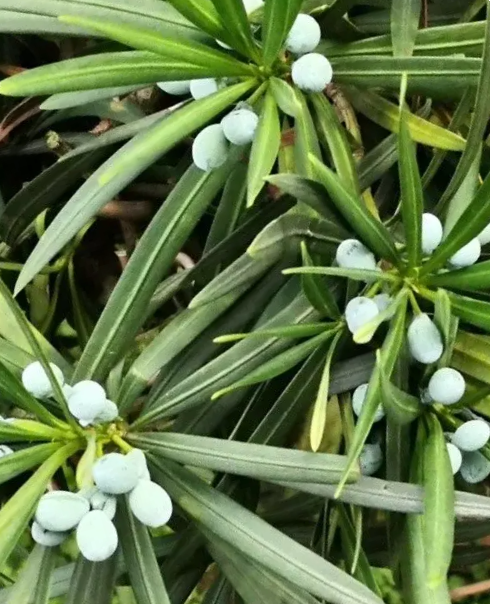
Buddhist Pine does not produce a true berry or ordinary fleshy fruit. The actual seed is enclosed by a modified fleshy seed covering called an epimatium. The seed-bearing structure sits above a swollen, often red to purple receptacle formed from fused sterile cone scales.
The epimatium and seed may become blue-green, blue-black, or purplish at maturity, while the receptacle beneath becomes red or reddish purple. Dogs may swallow the entire structure rather than separating its botanical components.
Some botanical and foraging accounts describe the fully ripe receptacle as edible for people while warning against eating the seed. That controlled human use does not demonstrate animal safety. A dog may chew the seed, swallow immature material, consume several structures, or ingest foliage at the same time.
No controlled veterinary study establishes the relative toxicity of the receptacle, epimatium, seed coat, embryo, or complete seed cone. The entire reproductive structure should remain inaccessible to animals.
Bark, Wood, and Roots
Bark, wood, and roots contain secondary metabolites with demonstrated biological activity. Root studies have isolated multiple norditerpenes, while older wood research identified compounds with termiticidal activity.
Those findings do not establish a raw-tissue poisoning dose, but they provide no basis for describing branches, roots, wood chips, bark, or bonsai trimmings as non-toxic.
Dogs that chew branches or dig around container plants may encounter several tissues at once. Wood fragments also create mechanical irritation or foreign-body concerns independent of chemical toxicity.
Fresh, Wilted, Dried, and Composted Material
No evidence shows that wilting, ordinary drying, freezing, storage, or early composting reliably destroys every biologically active constituent.
Many phytochemical studies isolate norditerpenes successfully from dried or processed plant tissue, demonstrating that at least some compounds persist after the plant is no longer fresh.
Hedge clippings, storm debris, dried bonsai material, mulch containing twigs, discarded roots, and compost accessible to animals should therefore be treated as potentially unsafe.
Why the Gastrointestinal Syndrome Remains Plausible
The reported vomiting, diarrhea, and colic could result from direct mucosal irritation by one or more diterpene lactones, other plant metabolites, fibrous foliage, seed material, or a mixture of chemical and mechanical effects.
Repeated vomiting and diarrhea can then produce dehydration, sodium, potassium and chloride abnormalities, acid-base disturbance, reduced perfusion, weakness, and depression even when the original plant constituent does not act directly on the nervous or cardiovascular system.
This is a plausible clinical interpretation rather than a demonstrated molecular pathway. No controlled study has reproduced the reported pet syndrome using a purified Podocarpus macrophyllus constituent.
No Established Safe or Toxic Dose
No validated safe leaf count, seed count, branch weight, or gram-per-kilogram threshold exists for dogs, cats, horses, cattle, sheep, goats, rabbits, birds, or other animals.
Risk depends on correct plant identification, animal size, plant tissue, quantity, degree of chewing, repeated access, underlying disease, gastrointestinal contents, and whether the exposure involved an intact hedge, loose clippings, roots, seed cones, or another yew-like species.
A small exploratory bite is less concerning than sustained chewing or consumption of a pruning pile, but the absence of a toxic-dose study means no numerical boundary can be used to guarantee safety.
Evidence Behind the Reported Syndrome
Detailed peer-reviewed case reports involving authenticated Podocarpus macrophyllus exposure in dogs, cats, or horses are scarce. The principal veterinary warning—vomiting, diarrhea, and horse colic—comes from accumulated poison-exposure reports rather than a published dose-response trial.
The expected signs should therefore be presented proportionately. Gastrointestinal irritation is the principal reported concern. Sudden severe cardiac or neurologic signs are not established as a characteristic Buddhist Pine syndrome and require immediate consideration of true yew, another toxic plant, a pesticide, a medication, metabolic disease, or another emergency.
Early Gastrointestinal Signs
A dog or cat may develop lip licking, repeated swallowing, salivation, nausea, retching, vomiting, appetite loss, abdominal discomfort, or diarrhea after chewing foliage or reproductive structures.
Plant fragments may be visible in vomit, including narrow leathery leaves, twig pieces, bluish epimatium, seed material, or reddish receptacle tissue. Recognizable material supports the exposure history but does not show how much remains in the stomach or how much was absorbed.
Some animals may remain normal after a minor taste. Continuing symptoms are more important than the mere presence of tooth marks on a hedge.
Vomiting and Diarrhea
Vomiting may occur once or recur. Diarrhea may be soft, watery, frequent, or accompanied by urgency and intestinal cramping.
Repeated vomiting can cause dehydration, chloride and potassium losses, acid-base abnormalities, esophageal irritation, and aspiration. Continuing diarrhea can cause additional water and electrolyte loss, weakness, poor perfusion, and reduced urine production.
Blood in vomit or stool, coffee-ground material, or black tar-like feces is not expected from a trivial nibble and may indicate substantial mucosal injury or another gastrointestinal disorder.
Abdominal Pain
Dogs and cats may pace, stretch repeatedly, adopt a hunched posture, guard the abdomen, whine, resist handling, or become unable to settle.
Horses may paw, look at the flank, lie down repeatedly, roll, sweat, stop eating, or show reduced manure production. Because horses cannot vomit, colic or diarrhea may be the first recognized sign.
Severe or localized abdominal pain requires evaluation for obstruction, pancreatitis, gastrointestinal displacement, another toxic plant, or an unrelated surgical emergency.
Dehydration and Secondary Weakness
Warning signs include dry or tacky gums, reduced skin elasticity, sunken eyes, inability to retain water, reduced urination, increasing lethargy, weakness, delayed capillary refill, or cold extremities.
Puppies, kittens, toy-breed dogs, elderly animals, and patients with kidney, heart, endocrine, or pre-existing gastrointestinal disease may deteriorate more quickly.
Weakness after repeated gastrointestinal loss does not prove a direct neurologic toxin. Hydration, glucose, electrolytes, circulation, and oxygenation must be assessed.
Appetite Loss and Depression
Nausea and abdominal discomfort may cause food refusal, hiding, reduced interaction, or lethargy even after active vomiting stops.
Persistent anorexia is especially important in cats, rabbits, guinea pigs, young animals, and animals with metabolic disease.
An animal that remains painful, cannot drink, or becomes progressively less responsive requires veterinary assessment rather than continued observation at home.
Possible Seed or Plant-Material Foreign Body
A complete seed-bearing structure is smaller than many Buckeye or fruit-pit foreign bodies, but an intact seed, woody fragment, or mass of fibrous foliage could still create a mechanical concern in a very small animal.
Persistent vomiting, repeated retching, abdominal pain, bloating, appetite loss, reduced stool production, or recurrent vomiting after temporary improvement may justify imaging for delayed gastric emptying or obstruction.
Charcoal and gastrointestinal medication cannot remove a retained foreign object.
Signs That Raise Concern for True Yew
Profound weakness, a slow or irregular pulse, fainting, sudden collapse, rapidly worsening breathing, or unexpected death is not the established uncomplicated Buddhist Pine syndrome.
Those findings should raise immediate concern that a horticultural “Japanese Yew” may actually be a true Taxus species. True-yew taxines can cause severe conduction delay, ventricular arrhythmias, hypotension, and cardiac arrest.
Vomiting or diarrhea can occur in true-yew poisoning as well, so early gastrointestinal signs do not exclude a developing cardiac emergency.
Tremors, Seizures, or Altered Awareness
Tremors, seizures, profound disorientation, paralysis, or coma have not been established as the characteristic progression of authenticated Buddhist Pine ingestion.
If they occur, the veterinarian should consider severe dehydration, electrolyte disturbance, hypoglycemia, aspiration, true yew, pesticides, tremorgenic mycotoxins, medications, mushrooms, other poisonous plants, head trauma, epilepsy, or inflammatory neurologic disease.
Any seizure, collapse, or inability to stand requires emergency care regardless of the suspected plant.
Dogs
Dogs may chew hedges, carry branches, eat loose trimmings, investigate fallen seed cones, or dig around the root crown.
The best-supported expected findings are vomiting, diarrhea, appetite loss, abdominal discomfort, lethargy, and secondary dehydration.
A dog with an abnormal pulse, sudden collapse, severe neurologic abnormalities, or rapid deterioration should be evaluated for Taxus misidentification or another concurrent exposure.
Cats
Cats may chew container plants, bonsai foliage, or branches brought indoors. Reliable feline-specific dose and case data are not available.
Possible signs include salivation, vomiting, diarrhea, hiding, food refusal, abdominal discomfort, and lethargy.
Persistent food refusal deserves timely attention because cats can develop serious secondary metabolic disease after prolonged inadequate intake.
Horses
Horses may consume a large amount when hedge trimmings or branches are discarded into a paddock. They cannot vomit and may present with colic, diarrhea, feed refusal, depression, dehydration, weakness, or reduced gastrointestinal motility.
Sudden collapse or unexpected death after eating an unidentified yew-like clipping should be treated as possible true-yew poisoning until the plant is confirmed.
Any substantial ingestion warrants prompt large-animal veterinary guidance because the dose is difficult to estimate and retained plant material cannot be removed through vomiting.
Livestock, Rabbits, Birds, and Other Animals
Published species-specific information for cattle, sheep, goats, pigs, rabbits, guinea pigs, poultry, and pet birds is extremely limited.
Food refusal, salivation, diarrhea, reduced fecal production, colic, weakness, abnormal behavior, or group illness after shared access warrants veterinary investigation.
Rabbits and guinea pigs cannot vomit and can develop gastrointestinal stasis after pain or nausea causes them to stop eating.
Expected Course and Prognosis
Most limited, correctly identified companion-animal exposures with signs confined to mild gastrointestinal irritation are expected to have a favorable prognosis with removal of the source and appropriate supportive care.
Recovery may require longer when vomiting or diarrhea causes substantial dehydration, gastrointestinal bleeding occurs, aspiration develops, or plant material becomes obstructive.
Repeated vomiting, inability to retain water, bloody diarrhea, severe abdominal pain, progressive weakness, an abnormal pulse, breathing difficulty, tremors, seizures, collapse, or uncertain plant identification requires immediate veterinary examination.
Accepted Name and Taxonomic History
Podocarpus macrophyllus is an accepted evergreen conifer in Podocarpaceae. Current classification places it in the order Pinales.
The species was originally described as Taxus macrophylla, which helps explain its long association with the common name yew. It was later transferred to Podocarpus and is not currently classified in Taxus or Taxaceae.
Accepted varieties are Podocarpus macrophyllus var. macrophyllus and Podocarpus macrophyllus var. maki. The latter is commonly associated with compact, densely branched landscape forms.
Podocarpus macrophylla is a common grammatical misspelling. It appears frequently in nursery records and pet-toxicity databases but is not the accepted species spelling.
Buddhist Pine Is Not a True Yew
Buddhist Pine belongs to Podocarpaceae. True yews belong to the genus Taxus in Taxaceae.
The distinction is medically critical. Veterinary poison reports associate Buddhist Pine principally with gastrointestinal illness, while true-yew taxines can interfere with cardiac conduction and produce bradycardia, ventricular arrhythmias, hypotension, collapse, and rapid death.
The common names Japanese Yew, Chinese Yew, Southern Yew, Yew Pine, and Yew Podocarpus cannot be relied upon to distinguish the plants.
A plant tag, landscaping record, complete branch, reproductive structures, and photographs of the full shrub are more useful than the common name supplied by an owner or nursery employee.
How to Recognize Buddhist Pine
Buddhist Pine is an evergreen shrub or tree commonly clipped into hedges, screens, columns, topiary, or bonsai. Unpruned trees can become substantially taller than maintained landscape plants.
The leaves are flat, narrow, leathery, and strap-shaped with smooth margins and a prominent central midrib. They are attached spirally around the stem, although their orientation can make portions of a shoot appear flattened or nearly two-ranked.
The bark becomes gray, reddish brown, or brown and may become fibrous or peel in narrow strips with age.
Male plants produce narrow pollen cones. Female plants produce highly modified seed cones rather than ordinary flowers and fruits.
The Seed Cone and Fleshy Receptacle
The visible blue-green, blue-black, or purplish structure commonly called a berry is a seed enclosed by a fleshy modified seed scale called an epimatium.
The seed is borne above a swollen receptacle formed from fused sterile cone scales. The receptacle commonly becomes red or reddish purple at maturity.
This creates a two-part structure: a darker seed cone positioned above a contrasting fleshy receptacle. It differs from a true yew seed, which sits partly enclosed within a bright red open cup called an aril.
Botanical terminology matters because statements about an edible “fruit” may refer only to the ripe receptacle and not to the seed, epimatium, foliage, or complete structure that an animal actually swallows.
How True Taxus Yew Looks Different
True-yew leaves are generally shorter, narrower, and more sharply pointed. On many lateral shoots they appear arranged in two flattened ranks, and the lower surface often shows paler stomatal bands.
The Taxus seed is partly surrounded by a bright red, open, cup-like aril. Buddhist Pine instead produces a dark seed cone positioned above a swollen red or purple receptacle.
Neither leaf length nor one detached leaf is completely reliable because pruning, cultivar, age, and shoot position alter appearance. A complete reproductive branch provides a much stronger identification.
Native Range and Landscape Exposure
The species is native from southern and southeastern China through northern Myanmar, Taiwan, and parts of Japan.
It is cultivated widely in warm-temperate and subtropical landscapes. In the southern United States it is common around homes, apartment complexes, commercial buildings, parking areas, schools, veterinary hospitals, hotels, and public landscaping.
Dogs may chew attached foliage, investigate fallen seed cones, or gain access to loose hedge trimmings. Cats may encounter indoor containers and bonsai specimens. Horses may consume branches or clipping piles discarded over a fence.
The “Edible Receptacle” Question
Some botanical and foraging sources describe the fully ripe fleshy receptacle as edible for people while warning that the seed and other tissues should not be eaten.
That claim does not establish that a dog, cat, horse, rabbit, or bird can safely consume the whole seed-bearing structure. Animals do not reliably separate a fully ripe receptacle from the enclosed seed and epimatium.
Ripeness, quantity, chewing, species susceptibility, concurrent foliage ingestion, and individual plant chemistry can all change the exposure.
No part of the reproductive structure should be offered deliberately to an animal while species-specific veterinary dose and mechanism data remain unavailable.
What Exact-Species Chemistry Establishes
Research has isolated multiple norditerpene and bisnorditerpene dilactones from leaves and roots of Podocarpus macrophyllus and var. maki.
Documented compounds include S(R)-podolactone D, rakanmakilactones A through J, several other newly characterized norditerpene dilactones, 2β-hydroxymakilactone A, 3β-hydroxymakilactone A, and related analogues.
Many demonstrated cytotoxic or antiproliferative activity in cultured cells. These experiments confirm active plant chemistry but do not establish a veterinary toxic dose or identify the compound responsible for reported vomiting and diarrhea.
What the Veterinary Evidence Does Not Establish
No peer-reviewed controlled ingestion study has defined the natural clinical syndrome in dogs, cats, or horses using authenticated Podocarpus macrophyllus.
No routine assay detects a treatment-guiding concentration of podolactones, makilactones, rakanmakilactones, or total Buddhist Pine toxin in an exposed animal.
No study establishes that the plant produces the abrupt sodium- and calcium-channel cardiotoxicity of true yew.
The most accurate veterinary description is therefore an unknown toxic principle associated through poison-report experience with gastrointestinal irritation, combined with a medically important risk of misidentification as Taxus.
Poisonous Parts and Exposure Forms
Leaves, young shoots, branches, bark, roots, seed cones, seeds, epimatium, fleshy receptacles, pollen cones, bonsai material, hedge trimmings, and other debris should remain inaccessible.
The relative toxicity of these tissues has not been established. Leaves and roots have the strongest exact-species phytochemical record, while the veterinary databases most often warn about foliage and reproductive material.
Loose clippings can create a larger practical exposure because animals can consume them more rapidly than foliage attached to a dense hedge.
Fresh, Wilted, and Dried Material
No evidence demonstrates that wilting, drying, freezing, storage, or composting reliably neutralizes all active constituents.
Several exact-species compounds were isolated successfully from dried or processed plant material, showing that biologically active chemistry can persist after harvest.
Pruning debris should be placed directly into closed waste rather than left beside kennels, paddocks, rabbit runs, poultry enclosures, compost piles, or feed-storage areas.
Diagnosis
Diagnosis depends on exposure history, accurate plant identification, compatible gastrointestinal findings, and exclusion of true yew and other causes.
Owners should bring the nursery tag, landscaping invoice, photographs of the entire plant, and a complete branch showing leaf attachment, bark, seed cone, epimatium, and receptacle when present.
A loose needle-like leaf or the phrase “Japanese Yew” is not sufficient identification.
Differential diagnoses include true yew, oleander, sago palm, gastrointestinal foreign bodies, spoiled food, medications, pesticides, infectious gastroenteritis, pancreatitis, mushrooms, and other poisonous landscape plants.
Veterinary Evaluation
Evaluation may include hydration, abdominal palpation, swallowing assessment, mucous-membrane color, capillary refill, pulse quality, heart rhythm, blood pressure, respiration, temperature, and neurologic status.
Laboratory testing may include glucose, sodium, potassium, chloride, kidney and liver values, packed cell volume, total protein, acid-base status, and urinalysis when gastrointestinal losses are substantial.
Persistent vomiting or pain after seed or woody-material ingestion may justify radiographs, ultrasound, endoscopy, or serial abdominal examinations.
When true yew remains possible, ECG and blood-pressure monitoring should begin while identification is still being resolved.
Prognosis
The prognosis is generally favorable after a limited, correctly identified Buddhist Pine exposure when signs remain confined to mild vomiting or diarrhea and hydration is maintained.
The outlook becomes more guarded with persistent fluid loss, gastrointestinal bleeding, aspiration, severe dehydration, a mechanical obstruction, substantial horse exposure, or significant underlying disease.
If the plant is identified as Taxus, the prognosis and treatment priorities change immediately because serious arrhythmias and cardiac arrest can develop rapidly.
Prevention
Keep nursery tags and landscaping records for every yew-like plant. Photograph the complete shrub and its reproductive structures before an emergency occurs.
Collect fallen seed cones and receptacles beneath female plants, especially in yards used by puppies or dogs that forage.
Remove hedge trimmings immediately and never throw them into horse paddocks, livestock pens, rabbit runs, poultry yards, or kennels.
Keep container plants and bonsai specimens beyond the reach of cats and other indoor animals.
Immediate Steps After Exposure
- Stop further access: Remove the animal from the hedge, bonsai, container, seed cones, fleshy receptacles, leaves, branches, roots, clippings, compost, or contaminated forage.
- Determine whether the plant could be true yew: Locate the nursery tag, landscaping invoice, photographs, and a complete branch. Japanese Yew, Chinese Yew, Southern Yew, and Yew Pine are not dependable botanical identifications.
- Remove only loose visible material: If the animal is calm and swallowing normally, remove plant pieces resting at the lips or front of the mouth. Do not force the jaws open or reach blindly toward the throat.
- Do not force food or fluids: An alert animal swallowing normally may have voluntary access to fresh water. Give nothing by mouth when the animal is vomiting repeatedly, gagging, weak, collapsed, abnormally drowsy, trembling, or unable to swallow normally.
- Preserve identification evidence: Bring the dark seed cone, reddish receptacle, foliage, twig, nursery tag, photographs of the complete shrub, and safely collected vomited material.
- Do not delay when Taxus remains possible: Sudden weakness, an abnormal pulse, collapse, breathing difficulty, tremors, or seizures after eating an unidentified yew-like shrub requires immediate emergency transport.
- Contact a veterinarian after a meaningful exposure: Prompt guidance is appropriate after substantial or unknown ingestion, ingestion by a small or medically fragile animal, any horse exposure, or the development of vomiting, diarrhea, abdominal pain, weakness, or dehydration.
Do Not Attempt Unsupervised Home Treatment
- Do not induce vomiting: Hydrogen peroxide, salt, mustard, syrup of ipecac, detergent, oil, manual gagging, and fingers in the throat can cause gastric injury, uncontrolled vomiting, aspiration, or dangerous delay.
- Do not attempt vomiting in horses, rabbits, or guinea pigs: These species cannot vomit.
- Do not force mouth flushing: Pouring or spraying water toward the throat can enter the lungs when the animal is nauseated, vomiting, weak, sedated, or swallowing abnormally.
- Do not give activated charcoal at home: Charcoal can be aspirated and may worsen dehydration or sodium abnormalities. Its ability to bind the unidentified Buddhist Pine toxic principle has not been established.
- Do not give laxatives or cathartics: Sorbitol, magnesium salts, mineral oil, or another laxative may intensify diarrhea and fluid loss.
- Do not give anti-diarrheal medication automatically: Loperamide, diphenoxylate, bismuth products, or leftover veterinary medication may conceal worsening illness and will not correct dehydration or possible Taxus cardiotoxicity.
- Do not give antacids or gastrointestinal protectants without direction: These medications may have a role when actual mucosal injury is present but do not neutralize an unknown plant toxin.
- Do not give human heart, blood-pressure, nausea, pain, or seizure medicine: Owner-selected drugs can produce a second poisoning, worsen hypotension, alter the cardiac rhythm, or interfere with emergency treatment.
- Do not rely on the nursery common name: A shrub sold as Japanese Yew may be Podocarpus macrophyllus or a true Taxus species.
When Emergency Examination Is Especially Important
- The plant cannot be identified confidently: Any uncertain exposure to a yew-like evergreen should be managed as possible true-yew poisoning until Taxus has been excluded.
- Vomiting is repeated or water cannot be retained: Continuing fluid loss can cause dehydration, electrolyte abnormalities, esophageal injury, aspiration, and circulatory weakness.
- Diarrhea is frequent, profuse, bloody, or black: Significant intestinal injury, bleeding, or another serious disorder may be present.
- Abdominal pain or horse colic is severe: Persistent pacing, stretching, guarding, pawing, rolling, sweating, flank watching, or refusal to eat requires examination.
- Weakness or dehydration is progressing: Tacky gums, sunken eyes, reduced urination, inability to stand, delayed capillary refill, or worsening depression indicates systemic illness.
- The pulse is slow, rapid, weak, or irregular: This raises concern for true yew, electrolyte disturbance, shock, or another cardiotoxic exposure.
- Fainting, sudden collapse, tremors, or seizures occur: These are not established routine Buddhist Pine findings and require immediate cardiovascular, neurologic, and metabolic stabilization.
- Breathing becomes abnormal: Aspiration, shock, severe weakness, airway compromise, or true-yew cardiotoxicity may be present.
- A whole seed or woody fragment may have been swallowed: Persistent vomiting, pain, bloating, food refusal, or reduced stool may indicate a foreign body.
- A horse consumed leaves or clippings: Horses can consume a substantial mass and cannot remove it by vomiting.
- Several animals become ill: Remove the group from the hedge, clipping pile, hay, bedding, feed, or water source and preserve representative samples.
Veterinary Examination and Diagnostic Priorities
The initial objective is to distinguish uncomplicated gastrointestinal irritation from dehydration, gastrointestinal obstruction, aspiration, another toxic exposure, or true-yew poisoning.
The physical examination may include hydration, abdominal pain, swallowing ability, mucous-membrane color, capillary refill, pulse quality, heart rate and rhythm, blood pressure, respiratory effort, temperature, and neurologic status.
Laboratory testing may include a complete blood count, serum chemistry profile, glucose, sodium, potassium, chloride, calcium, magnesium, kidney and liver values, total protein, acid-base measurements, lactate, and urinalysis according to the patient’s signs.
No routine assay confirms Buddhist Pine poisoning or measures total podolactone exposure.
Plant Identification Must Proceed During Treatment
Plant identification should occur while the patient is being assessed and stabilized, not before emergency care begins.
A complete branch showing leaf attachment, bark, seed cone, epimatium, and receptacle is more useful than one detached leaf or a common name.
Plant fragments in vomit, gastric contents, manure, or clippings should be retained. Nursery records and landscaping invoices may identify the purchased species or cultivar.
Professional Emesis
A veterinarian may consider medically induced vomiting after a recent meaningful ingestion when a dog remains fully alert, neurologically normal, cardiovascularly stable, not already vomiting repeatedly, and able to protect the airway.
Emesis is inappropriate when the animal is weak, collapsed, trembling, seizing, breathing abnormally, swallowing poorly, severely depressed, or already vomiting repeatedly.
If true yew remains possible, ECG monitoring, intravenous access, and cardiovascular stabilization may be more urgent than routine emesis.
Gastric Lavage and Activated Charcoal
Gastric lavage may be considered after an exceptional substantial recent exposure when the patient is anesthetized and the airway is protected. It is not required for a minor Buddhist Pine nibble.
A veterinarian or veterinary toxicologist may consider activated charcoal when the exposure is meaningful, the patient is stable, and the airway can be protected.
The benefit remains uncertain because the responsible Buddhist Pine toxic principle and its gastrointestinal behavior have not been defined.
Repeated charcoal is not routinely supported because clinically important enterohepatic recirculation of a Buddhist Pine toxin has not been demonstrated.
Control of Vomiting and Gastrointestinal Injury
Persistent vomiting should be controlled after useful decontamination has been completed and obstruction has been considered.
Veterinarian-selected antiemetics such as maropitant or ondansetron may be used according to the animal’s species, age, medical history, hydration, blood pressure, route requirements, and current clinical findings.
Gastrointestinal protectants may be considered when repeated vomiting, painful swallowing, blood in vomit, black stool, esophagitis, or erosive gastric injury is present. They do not neutralize the unknown plant toxic principle.
Acid suppression is selected when a specific acid-related complication is suspected or documented rather than given automatically.
Drugs that reduce intestinal movement may be inappropriate when a foreign body, ileus, hemorrhagic disease, infection, or continuing retention of plant material has not been excluded.
Fluid and Electrolyte Support
Fluid treatment depends on measured dehydration, circulation, maintenance needs, kidney and heart function, and continuing gastrointestinal losses.
Animals with repeated vomiting or diarrhea, inability to drink, poor perfusion, collapse, or significant electrolyte abnormalities generally require intravenous crystalloid therapy.
Sodium, potassium, chloride, glucose, kidney values, urine production, body weight, blood pressure, and respiratory findings may require serial reassessment.
A vasopressor may be added when clinically important hypotension persists after appropriate circulating volume has been restored and reversible causes have been addressed.
Foreign-Body Evaluation
Persistent vomiting, abdominal pain, bloating, food refusal, or reduced stool after seed or woody-material ingestion may justify radiographs, abdominal ultrasound, endoscopy, or serial imaging.
Some plant material may not be sharply visible on plain radiographs. Abnormal gas patterns, fluid accumulation, intestinal dilation, or failure of material to progress can still support obstruction.
Endoscopic retrieval may be considered for accessible material in the esophagus or stomach. Surgery may be required if an object obstructs, damages the gastrointestinal tract, or cannot be retrieved safely.
When True Yew Cannot Be Excluded
Possible Taxus exposure changes the urgency and monitoring plan. Continuous ECG, repeated blood-pressure measurement, intravenous access, oxygen, electrolyte assessment, and readiness for advanced cardiopulmonary support may be necessary.
Taxine poisoning can produce bradycardia, atrioventricular conduction delay, widened complexes, ventricular dysrhythmias, hypotension, and cardiac arrest.
Atropine may be considered for clinically significant bradycardia when the rhythm and response justify it, but it is not reliably effective against every taxine conduction disturbance.
Antiarrhythmics must be selected according to the documented rhythm rather than given automatically. Persistent hypotension may require vasopressor or inotropic support after appropriate fluid resuscitation.
Severe conduction failure may require temporary pacing. Respiratory failure requires intubation and assisted ventilation. Cardiac arrest requires immediate advanced resuscitation.
These are true-yew emergency measures and are not routine treatment for a correctly identified Buddhist Pine exposure confined to gastrointestinal signs.
Aspiration and Respiratory Care
Coughing, fever, nasal discharge, reduced oxygenation, abnormal lung sounds, or worsening respiratory effort after vomiting may indicate aspiration pneumonitis or pneumonia.
Evaluation may include pulse oximetry, blood gases, and chest imaging.
Treatment may include oxygen, airway suctioning, nebulization, physiotherapy, intravenous support, intubation, or mechanical ventilation. Antibiotics are used when bacterial pneumonia is suspected or documented rather than automatically after every vomiting episode.
Horses and Grazing Animals
Remove horses and livestock immediately from the shrub, clippings, overhanging branches, hay, bedding, and contaminated feed.
Do not drench or force-feed an animal that is weak, recumbent, coughing, breathing abnormally, or swallowing poorly.
Horses cannot vomit. Veterinary management may include nasogastric evaluation, assessment of gastrointestinal motility, fluid and electrolyte treatment, colic control, selected professional decontamination, and repeated cardiovascular monitoring.
When several animals are exposed, preserve complete plant samples, hay, feed, water, stomach or rumen contents, and photographs. Confirm that true-yew clippings were not mixed with Podocarpus material.
Recovery and Prognosis
Dogs and cats with limited, correctly identified Buddhist Pine exposure and signs confined to mild vomiting or diarrhea generally have a good prognosis.
Before discharge or routine home monitoring is appropriate, the animal should retain water, eat voluntarily, urinate normally, pass stool, maintain hydration, walk normally, and remain free of recurring vomiting or abdominal pain.
The prognosis becomes more guarded with severe dehydration, gastrointestinal bleeding, aspiration pneumonia, obstruction, collapse, substantial horse exposure, or serious underlying disease.
If the plant is identified as true Taxus, the prognosis and treatment priorities change immediately because fatal cardiac deterioration may occur rapidly.
Frequently Asked Questions About Buddhist Pine and Animal Poisoning
Is Buddhist Pine poisonous to dogs and cats?
Yes. Veterinary poison reports associate ingestion with vomiting, diarrhea, abdominal discomfort, appetite loss, lethargy, dehydration, and weakness. The specific toxic compound and toxic dose have not been established in controlled dog or cat studies.
How strong is the veterinary evidence?
The plant is consistently listed as toxic by veterinary poison resources, but detailed peer-reviewed case reports involving authenticated Podocarpus macrophyllus are scarce. The direct scientific literature is much stronger for the plant’s chemistry than for its natural dose-response relationship in pets.
What is the correct scientific name?
The accepted name is Podocarpus macrophyllus (Thunb.) Sweet. Podocarpus macrophylla is a common grammatical misspelling that appears in some nursery and pet-toxicity references.
Are Podocarpus macrophyllus and Podocarpus maki the same plant?
Podocarpus macrophyllus var. maki is an accepted variety. Podocarpus maki, P. chinensis, P. japonicus, and several other names appear historically for plants now associated with that variety.
Is Buddhist Pine a true yew?
No. Buddhist Pine belongs to Podocarpus in Podocarpaceae. True yews belong to Taxus in Taxaceae. Their foliage can appear similar, but their best-supported toxic syndromes are different.
Why is it called Japanese Yew?
The name refers to its yew-like evergreen foliage and historical classification. Unfortunately, Japanese Yew also refers to Taxus cuspidata, a true yew capable of causing rapidly fatal cardiac poisoning. The common name is therefore medically unreliable.
How does true-yew poisoning differ from Buddhist Pine poisoning?
Buddhist Pine is associated principally with vomiting, diarrhea, and horse colic. True-yew taxines can produce bradycardia, conduction block, ventricular arrhythmias, hypotension, sudden collapse, and cardiac arrest. An unidentified yew-like plant must be treated as possible Taxus until it is identified.
Does Buddhist Pine contain taxine?
No evidence establishes taxine alkaloids as constituents or toxic principles of Podocarpus macrophyllus. Taxines are characteristic cardiotoxic compounds of true Taxus yews.
What chemicals have actually been isolated from Buddhist Pine?
Exact-species research has identified numerous norditerpene and bisnorditerpene dilactones, including S(R)-podolactone D, rakanmakilactones, makilactone derivatives, and related compounds. Additional flavonoids, lignans, sterols, phenolics, and other metabolites have also been reported.
Are the podolactones proven pet toxins?
No. Several isolated compounds have demonstrated cytotoxic or antiproliferative activity in cultured cells. No study has shown that one purified podolactone reproduces the natural vomiting-and-diarrhea syndrome in a dog, cat, or horse after raw-plant ingestion.
Is the blue-black structure a berry?
Not botanically. The dark structure is a seed enclosed by a modified fleshy seed scale called an epimatium. It is borne above a swollen red or purple receptacle formed from fused sterile cone scales.
Is the fleshy red or purple receptacle edible?
Some botanical sources describe a fully ripe receptacle as edible for people when separated carefully from the seed. That does not establish safety for animals, which may swallow the entire structure, chew the seed, consume unripe material, or eat several structures with foliage.
Which parts should animals avoid?
Leaves, shoots, branches, bark, roots, pollen cones, seeds, epimatium, fleshy receptacles, hedge trimmings, bonsai material, and fallen debris should all remain inaccessible. No safe dose has been established for any tissue.
Is dried Buddhist Pine still potentially poisonous?
Yes. No evidence shows that wilting, drying, freezing, storage, or composting eliminates all active constituents. Several biologically active compounds have been isolated successfully from dried or processed plant material.
Is Buddhist Pine poisonous to horses?
It should be treated as poisonous. Horses may develop colic, diarrhea, feed refusal, dehydration, or weakness and can consume a large quantity of loose hedge clippings. Sudden collapse after eating an unidentified yew-like branch raises particular concern for true Taxus.
Can a seed cause an obstruction?
A complete seed-bearing structure is smaller than many large fruit pits, but an intact seed, woody fragment, or mass of fibrous foliage may still create a foreign-body concern in a very small animal. Persistent vomiting, abdominal pain, bloating, food refusal, or reduced stool warrants veterinary examination.
Should I make my dog vomit?
Do not induce vomiting at home. A veterinarian may consider clinic-induced vomiting after a recent meaningful ingestion in a fully alert and stable dog, but home emetics can cause gastric injury or aspiration and may delay critical treatment if the plant is actually a true yew.
Should I give activated charcoal?
Do not give charcoal at home. Its ability to bind the unidentified Buddhist Pine toxic principle is uncertain, and it may be aspirated by an animal that is vomiting, weak, sedated, or swallowing abnormally. A veterinarian or toxicologist should decide whether it is appropriate.
How is Buddhist Pine poisoning treated?
Treatment is supportive and may include professional decontamination, anti-nausea medication, intravenous fluids, electrolyte correction, gastrointestinal protection when injury is present, nutritional support, aspiration monitoring, and evaluation for retained plant material. ECG and blood-pressure monitoring become urgent when true yew cannot be excluded.
Is there a specific antidote?
No Buddhist Pine-specific antidote exists because the natural toxic principle has not been identified. Treatment addresses the animal’s actual gastrointestinal, circulatory, respiratory, and mechanical complications.
What should I bring to the veterinarian?
Bring the nursery tag or landscaping record, photographs of the whole plant, and a complete branch showing leaf attachment, bark, seed cone, epimatium, and fleshy receptacle. Safely collected vomit or chewed plant material may also help distinguish Podocarpus from Taxus.
What is the prognosis?
The prognosis is generally good after a limited, correctly identified exposure when signs remain confined to mild gastrointestinal irritation and dehydration is treated promptly. It becomes more guarded with severe fluid loss, bleeding, aspiration, obstruction, substantial horse exposure, or possible true-yew ingestion.