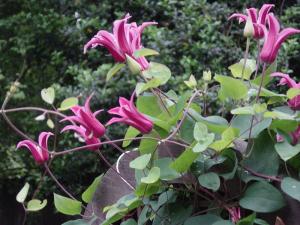
Clematis sp.
Ranunculaceae
Clematis; Virgin’s Bower; Traveller’s Joy; Old Man’s Beard; Leather Flower; Leatherflower; Vasevine; Devil’s Darning Needles; Ropevine; Clematis paniculata; Jackman’s Clematis; Italian Clematis; Chinese Clematis; Asian Clematis; Alpine Clematis; Anemone Clematis; Golden Clematis; Ground Clematis; Scarlet Leather Flower; Manycolored Leather Flower; Alabama Leather Flower; Millboro Leather Flower; Netleaf Leather Flower; Whiteleaf Leather Flower; Whitehair Leather Flower; Addison’s Leather Flower; Fremont’s Leather Flower; Bigelow Clematis; Drummond Clematis; Palmer Clematis; Pipestem Clematis; Bluebill; Curly Virginsbower; Curlyheads; Satin Curls; Cabellos de Angel; Virginia Bower; British Columbia Virgin’s-Bower; New Zealand Dwarf Clematis; Pine Hyacinth; Kusabotan; Apple Blossom; Snowdrift; Polish Spirit
Ranunculin, an irritant glycoside that is converted enzymatically into protoanemonin when fresh plant tissue is chewed, crushed, or otherwise damaged; protoanemonin, also known as anemonol or ranunculol, is the primary irritant toxin. Fresh leaves, stems, flowers, and sap are the main concern. Dried plant material is generally less irritating because protoanemonin is unstable and breaks down as the plant dries.
Burning or tingling of the mouth and throat, severe mouth pain, oral irritation, mouth ulcers, drooling, hypersalivation, pawing at the mouth, gagging, nausea, vomiting, diarrhea, abdominal pain, purging, loss of appetite, weakness, depression, and irritation of the skin or mucous membranes after contact with fresh plant sap. Contact dermatitis may include skin redness, burning, itching, rash, or blistering. Severe systemic poisoning is uncommon because the plant is bitter and immediately irritating, but large fresh-plant ingestions may cause more serious gastrointestinal distress, dehydration, weakness, and systemic illness.
Clematis, Clematis spp., is a large and diverse genus of flowering vines, shrubs, subshrubs, and herbaceous perennials in the buttercup family, Ranunculaceae. The genus includes many familiar ornamental climbers and garden plants, along with numerous native species known by common names such as Virgin’s Bower, Traveller’s Joy, Old Man’s Beard, Leather Flower, Vasevine, Devil’s Darning Needles, Ropevine, Jackman’s Clematis, Italian Clematis, Chinese Clematis, Alpine Clematis, and many others.
The common-name list for Clematis is unusually long because the genus is large, widely cultivated, and regionally variable. Garden centers may sell clematis under cultivar names such as Apple Blossom, Snowdrift, or Polish Spirit, while native or wild species may be known as leather flower, virgin’s bower, old man’s beard, traveller’s joy, vasevine, or ropevine. For pet-safety purposes, the important point is that Clematis species should be treated as irritating and toxic when fresh plant material is chewed or swallowed.
This entry should be separated from Black Hellebore, Christmas Rose, and Lenten Rose, even though those plants also belong to the Ranunculaceae family. Clematis is not best described as a helleborin, hellebrin, or helleborein cardiac-glycoside plant. The better toxicologic framing for Clematis is ranunculin and protoanemonin. When fresh Clematis tissue is damaged by chewing, crushing, tearing, or maceration, the irritant glycoside ranunculin is converted enzymatically into protoanemonin, an acrid, blistering, volatile irritant.
Sometimes called anemonol or ranunculol, protoanemonin is associated with many plants in the buttercup family. It irritates both the skin and the mucous membranes. Similar to the way members of the Araceae family protect themselves with calcium oxalate crystals, members of the Ranunculaceae produce and release protoanemonin as a self-defense mechanism when plant tissue is damaged. In Clematis, this mechanism explains the immediate burning, mouth pain, salivation, vomiting, diarrhea, and contact dermatitis seen after exposure.
Upon being damaged by an animal chewing the leaves, stems, flowers, vines, or other fresh portions of the plant, the enzymatic conversion of ranunculin to protoanemonin begins. This causes nearly immediate discomfort to the mouth, tongue, gums, mucosa, throat, and esophageal lining. The irritation may be strong enough to cause drooling, gagging, pawing at the mouth, refusal to eat, vomiting, mouth ulcers, or blistering and rashes of the mouth and throat.
Current veterinary and plant-toxicology references consistently identify protoanemonin as the principal toxic concern in Clematis. Colorado State notes that Clematis species contain the irritant glycoside ranunculin, which is converted to protoanemonin when plant tissue is chewed and macerated. Pet-toxicology references list Clematis as toxic to dogs, cats, and horses, with clinical signs including salivation, vomiting, and diarrhea. NC State’s plant database similarly describes Clematis as capable of causing severe mouth pain and ulcers if eaten, with salivation, vomiting, diarrhea, and contact dermatitis among the expected signs.
Because protoanemonin is such an immediate irritant, large ingestions are uncommon. The animal usually experiences pain and discomfort quickly enough that it stops chewing before consuming a dangerous quantity. This does not make the plant safe. It means that most exposures are self-limiting because the plant punishes the mouth before the animal can comfortably eat much of it.
The most common companion-animal exposure is likely to involve a dog chewing fresh vines, leaves, or flowers in the garden, or a cat mouthing fresh plant material from a container planting or cut vine. In most cases, signs are expected to be oral irritation and gastrointestinal upset rather than life-threatening poisoning. Affected pets may drool, vomit, develop diarrhea, refuse food, paw at the mouth, or act uncomfortable.
Skin exposure is also possible. Fresh Clematis sap may cause contact dermatitis in sensitive people or animals, producing redness, burning, itching, rash, or blistering. This can occur after chewing, rubbing against damaged vines, exposure to cut stems, or contact with sap during pruning or garden work. Pets that brush against damaged plants may develop localized irritation, particularly around the muzzle, lips, paws, or areas of thin skin.
Freshness matters. Protoanemonin is unstable and tends to break down as plant material dries. For that reason, fresh Clematis leaves, stems, flowers, and sap are the primary concern, while dried plant material is generally less irritating. That distinction is useful, but it should not be treated as permission for animals to chew garden debris or old vines. The safe rule is to prevent ingestion of all Clematis plant material.
For horses and grazing animals, Clematis exposure is usually less common than pasture-weed intoxication because most Clematis plants are ornamental vines rather than major forage plants. However, if vines grow along fence lines, hedgerows, barns, garden edges, or accessible property boundaries, horses, goats, or other browsing animals may encounter the plant. Any meaningful ingestion that produces salivation, mouth pain, vomiting in species capable of vomiting, diarrhea, colic, depression, or weakness should be treated as a veterinary concern.
The practical safety message is straightforward: Clematis is usually more of a painful irritant plant than a classic lethal poison, but the mouth and gastrointestinal irritation can be intense. Pets and livestock should not be allowed to chew the plant, and fresh prunings should be cleaned up promptly from areas accessible to dogs, cats, horses, goats, or other animals.
Immediate Response to Clematis Ingestion or Contact
- Remove the Source: Prevent further ingestion by removing the pet or grazing animal from the Clematis vine, leaves, stems, flowers, fresh prunings, garden debris, or any area containing accessible plant material.
- Remove Plant Material from the Mouth: If the animal is witnessed eating the plant, or if identifiable plant matter is found in the mouth, remove visible plant material and flush the mouth thoroughly with water.
- Wash Skin Contact Areas: If fresh plant sap contacted the skin, lips, nose, muzzle, paws, gums, or other sensitive areas, gently wash the affected area with water and mild soap if appropriate to reduce irritation from protoanemonin.
- Watch for Oral Irritation: Burning, mouth pain, drooling, pawing at the mouth, redness, swelling, mouth ulcers, blistering, reluctance to eat, or difficulty swallowing should be monitored closely.
- Watch for Digestive Signs: Vomiting, diarrhea, abdominal pain, purging, loss of appetite, weakness, depression, or dehydration may develop after ingestion.
- Contact Veterinary Help: Consult a veterinarian, emergency veterinary clinic, Pet Poison Helpline, or another animal poison-control professional if symptoms are persistent, if a large amount was eaten, if the amount is unknown, if diarrhea is severe or bloody, or if the exposed animal is a cat, dog, horse, goat, young animal, elderly animal, pregnant animal, or medically fragile animal.
Inducing Vomiting and Decontamination
- Getting Plant Material Out Matters: If a dog has recently swallowed fresh Clematis plant material, removing remaining plant material from the stomach may reduce continued irritation from ranunculin, protoanemonin, and fresh plant sap. In appropriate dog exposures, vomiting may be one of the least disruptive ways to remove recently ingested plant material before it continues irritating the stomach and intestines.
- Inducing Vomiting in Dogs Only: If ingestion was recent and the dog is alert, breathing normally, able to swallow, and not showing weakness, collapse, repeated vomiting, severe depression, severe mouth or throat swelling, respiratory distress, neurologic signs, or severe abdominal distress, a veterinarian or animal poison-control professional may recommend inducing vomiting with fresh 3% hydrogen peroxide.
- Cat Warning: Hydrogen peroxide should not be used to induce vomiting in cats unless a veterinarian specifically directs it. Cats are more prone to irritation and complications from hydrogen peroxide, and home vomiting attempts may create more risk than benefit.
- Do Not Induce Vomiting in an Unstable Animal: Vomiting should not be attempted in any animal that is weak, collapsed, sedated, having trouble breathing, unable to swallow normally, already vomiting repeatedly, showing severe oral swelling, showing neurologic signs, or otherwise unstable.
- Activated Charcoal: Activated charcoal may be considered in larger or more concerning ingestions, but it should be given under veterinary or poison-control direction, especially if the animal is vomiting, weak, depressed, or at risk of aspiration.
- Gastric Lavage: If a large amount of fresh plant material has been ingested, a veterinarian may consider gastric lavage or other decontamination measures depending on timing, species, amount, and clinical signs.
Oral, Skin, and Gastrointestinal Support
- Demulcents: Demulcents such as pectin, glycerin, honey, or syrup may be used under veterinary direction to form a soothing film over irritated membranes and ease discomfort of the mouth, throat, esophagus, or stomach.
- Antacids and Protectants: Antacids or gastrointestinal protectants may be recommended by a veterinarian when stomach irritation, vomiting, or abdominal discomfort is present.
- Hydration: Animals with vomiting, diarrhea, purging, or reduced willingness to drink should be monitored for dehydration and may require fluid support.
- Severe Diarrhea: Diarrhea that is persistent, profuse, bloody, or accompanied by weakness should be treated as a veterinary concern, especially in young animals, small animals, or medically fragile pets.
- Skin Lesions: Redness, swelling, blistering, itching, burning, or irritated skin from fresh sap exposure should be washed and monitored. Veterinary care may be needed if lesions are painful, spreading, infected, or severe.
Horses, Goats, and Browsing Animals
- Fence-Line Risk: Clematis vines growing on fences, trellises, barns, hedgerows, or garden edges should be kept out of reach of horses, goats, and other browsing animals.
- Pruning Debris: Fresh prunings should not be thrown into paddocks, pens, stalls, pastures, or areas accessible to animals.
- Monitor for Irritation: Watch for salivation, oral discomfort, reluctance to eat, colic, diarrhea, depression, or weakness after exposure.
- Remove Access: Animals should be removed from the plant source until the vines, cuttings, or accessible plant material have been cleared.
Prognosis and Recovery
- Most Companion-Animal Cases: In dogs and cats, most small exposures are expected to cause irritation and gastrointestinal upset rather than life-threatening poisoning.
- Expected Recovery: Recovery is generally good once plant material is removed, the mouth is rinsed, and vomiting, diarrhea, or skin irritation is managed supportively.
- Higher-Risk Cases: Prognosis becomes more guarded when large amounts of fresh plant material are consumed, diarrhea becomes severe or bloody, dehydration develops, or the animal becomes weak, depressed, or systemically ill.
- Prevention: Prevent further ingestion of the plant, clean up fresh Clematis prunings, keep vines away from pets and browsing animals, and consult a veterinarian when significant ingestion or concerning symptoms occur.