Coleus Diterpenes, Volatile Compounds, and Gastrointestinal Irritation
Is Coleus Poisonous to Dogs, Cats, Horses, and Livestock?
Yes—Coleus, Coleus scutellarioides, should be treated as poisonous to dogs, cats, horses, livestock, rabbits, birds, reptiles, and other animals. The most likely effects after an ordinary household or garden ingestion are oral and gastrointestinal irritation, including drooling, lip licking, nausea, vomiting, abdominal discomfort, diarrhea, appetite loss, depression, and weakness.
The plant contains a complex and highly variable mixture of abietane and cembrane diterpenoids, volatile terpenes, phenolic acids, flavonoids, anthocyanins, sterols, and other secondary metabolites. No single compound has been proven to cause every natural poisoning case, and no safe number of leaves, stems, roots, flowers, or seeds has been established for any animal species.
Most limited coleus exposures are expected to cause no signs or a mild to moderate, self-limiting gastrointestinal illness rather than liver failure, kidney failure, paralysis, or death. Repeated vomiting, profuse diarrhea, dehydration, aspiration, prolonged food refusal, or ingestion of fertilizer, pesticide, stones, wire, plastic, potting mix, or container fragments can make the event substantially more serious.
Weakness, incoordination, dilated pupils, abnormal behavior, or changes in heart rate have been described in veterinary summaries, particularly for cats, but direct exact-species case documentation is limited. One scientific study detected low concentrations of salvinorin A and salvinorin B in the cultivar ‘Electric Lime’, and a human case report described psychosis after deliberate coleus ingestion. These findings do not prove that every cultivar is psychoactive or that ordinary pet chewing predictably causes hallucinations.
Broken leaves and stems may irritate the skin or eyes, and repeated exposure can produce allergic contact dermatitis in susceptible individuals. Coleus does not have the stinging hairs of true nettles, and it is not established as an insoluble-calcium-oxalate plant like Dieffenbachia or Peace Lily. Severe immediate tongue swelling, intense mouth pain, or airway obstruction requires investigation of another plant, chemical, foreign body, or allergic reaction.
Exact identification is critical. Ornamental Painted Nettle is not Indian Borage, Coleus amboinicus; Forskolin Coleus, Coleus barbatus; Perilla or Beefsteak Plant, Perilla frutescens; Swedish Ivy; true stinging nettle; or another colorful foliage plant. These species contain different compounds and can require different veterinary responses.
About this guide: This page provides general pet-poisoning information and cannot diagnose or treat an individual animal. For any suspected exposure, contact a veterinarian or animal poison-control service immediately. Do not induce vomiting, give medication, or attempt home decontamination unless directed by a veterinary professional.
Coleus
Coleus scutellarioides (L.) Benth.
Carl Linnaeus originally described the species as Ocimum scutellarioides L. in 1763. Robert Brown transferred it to Plectranthus in 1810, and George Bentham published the accepted combination Coleus scutellarioides in 1830.
The species was later transferred to Solenostemon and was widely known as Solenostemon scutellarioides during much of the modern horticultural era. It was also treated broadly as Plectranthus scutellarioides. Molecular phylogenetic research demonstrated that the former broad concept of Plectranthus was not monophyletic and supported restoring Coleus as a separate genus.
Important homotypic synonyms and former combinations include:
- Ocimum scutellarioides L. — the basionym
- Plectranthus scutellarioides (L.) R.Br.
- Solenostemon scutellarioides (L.) Codd
- Calchas scutellarioides (L.) P.V.Heath
- Majana scutellariodes (L.) Kuntze
Important heterotypic synonyms and historical horticultural names include:
- Coleus blumei Benth.
- Plectranthus blumei (Benth.) Launert
- Solenostemon blumei (Benth.) M.Gómez
- Coleus atropurpureus Benth.
- Coleus verschaffeltii Lem.
- Solenostemon verschaffeltii (Lem.) M.Gómez
- Coleus pumilus Blanco
- Coleus laciniatus (Blume) Benth.
- Coleus marmoratus W.Bull
- Coleus pictus Van Houtte
- Coleus hybridus Cobeau
- Coleus formosanus Hayata
More than one hundred botanical synonyms and historical cultivar names have been applied to the species because wild populations are variable and cultivated coleus has undergone extensive selection and hybridization. Names such as Coleus blumei, Coleus verschaffeltii, and Coleus atropurpureus may therefore appear in phytochemical, dermatologic, psychiatric, horticultural, and toxicological literature concerning material now included within Coleus scutellarioides.
Modern ornamental coleus includes hundreds of seed-grown and vegetatively propagated cultivars. Familiar cultivar and series names include ‘Black Dragon’, ‘Campfire’, ‘Chocolate Covered Cherry’, ‘Electric Lime’, ‘Fishnet Stockings’, ‘Henna’, ‘Kong Rose’, ‘Limelight’, ‘Main Street’, ‘Pineapple’, ‘Rainbow’, ‘Redhead’, ‘Sedona’, ‘Trusty Rusty’, ‘Wasabi’, ‘Watermelon’, ColorBlaze, Kong, Main Street, Premium Sun, Stained Glassworks, and Wizard selections.
Cultivar names should be preserved during exposure assessment because growth habit, pigmentation, volatile chemistry, diterpene profile, phenolic concentration, and plant-treatment history may differ. No cultivar has been demonstrated to be uniformly free of biologically active constituents.
Lamiaceae — Mint, Sage, or Deadnettle Family; subfamily Nepetoideae; tribe Ocimeae; subtribe Plectranthinae
Labiatae is the legitimate historical alternative family name and remains common in older botanical, medicinal, dermatologic, and phytochemical literature.
Coleus; Common Coleus; Ornamental Coleus; Garden Coleus; Bedding Coleus; Painted Nettle; Flame Nettle; Painted-Leaf Plant; Painted Leaf; Variegated Coleus; Rainbow Plant; Rainbow Coleus; Foliage Coleus; Fancy-Leaved Coleus; Variegated Nettle; Flame Plant; Painted Plant
Regional and ethnobotanical names include Miana; Iler; Jawer Kotok; Ati-Ati; Mayana; Malaina; Daun Miana; Daun Iler; Siganggang; Piladang; Tzalam; and numerous additional local names applied to medicinal or cultivated forms in Southeast Asia and the Pacific.
Historical scientific and horticultural search names include Coleus blumei; Plectranthus scutellarioides; Solenostemon scutellarioides; Plectranthus blumei; Solenostemon blumei; Coleus atropurpureus; Coleus verschaffeltii; Solenostemon verschaffeltii; Coleus pumilus; Coleus pictus; Coleus marmoratus; and Ocimum scutellarioides.
Common cultivar and trade names include Black Dragon Coleus; Campfire Coleus; Chocolate Covered Cherry Coleus; Electric Lime Coleus; Fishnet Stockings Coleus; Henna Coleus; Kong Rose Coleus; Limelight Coleus; Redhead Coleus; Sedona Coleus; Trusty Rusty Coleus; Wasabi Coleus; Watermelon Coleus; ColorBlaze Coleus; Main Street Coleus; Premium Sun Coleus; Stained Glassworks Coleus; and Wizard Coleus.
Indian Borage, Cuban Oregano, Spanish Thyme, Mexican Mint, and Country Borage usually refer to Coleus amboinicus, formerly Plectranthus amboinicus. Forskolin Coleus, Indian Coleus, Makandi, and Coleus Forskohlii usually refer to Coleus barbatus. These are separate species and are not synonyms of ornamental Painted Nettle.
Scaredy-Cat Plant, Dog-Gone Plant, and Mosquito Plant may refer to Coleus caninus, Coleus neochilus, related hybrids, or retail plants of uncertain identity. Swedish Ivy generally refers to Plectranthus verticillatus. Beefsteak Plant or Shiso is Perilla frutescens. True stinging nettles belong to Urtica and related genera in Urticaceae.
No Single Clinically Proven Coleus Toxin
The chemistry of Coleus scutellarioides is too complex and variable to reduce to one substance called “coleus toxin.” Exact-species studies have identified diterpenoids, volatile terpenes, phenolic acids, flavonoids, anthocyanins, sterols, triterpenoids, tannin-like constituents, and additional metabolites in leaves, stems, roots, extracts, and tissue cultures.
No purified compound has been shown in a controlled veterinary study to reproduce the complete natural syndrome after a dog, cat, horse, or other animal eats an ornamental plant. The most defensible clinical description is exposure to an irritant and biologically active mixture whose composition changes with cultivar, tissue, environment, light, plant age, extraction method, and cultivation conditions.
Claims that every coleus contains one fixed quantity of “colein,” forskolin, coleonol, essential oil, or hallucinogen are scientifically inaccurate. Some of those names refer to compounds isolated from this species, related species, historical extracts, or medicinal coleus plants with very different chemistry.
Abietane Diterpenoids
Direct phytochemical work has established a diverse group of abietane-type diterpenoids in the aerial parts and leaves. Researchers isolated spiroscutelones A, B, and C from Indonesian material, together with another known diterpene. Spiroscutelone A was structurally unusual because it contained a cyclobutane bridge within an abietane-type framework.
Another investigation isolated ten abietane diterpenoids and one cembrane-type diterpenoid from a dichloromethane extract of aerial tissues. Identified compounds included coleon O, coleon G, lanugone K, and 6-acetylfredericone B, along with six compounds not previously described.
Several isolated diterpenoids inhibited NF-kappa-B signaling or reduced viability of cultured human cancer cells under laboratory conditions. These findings demonstrate biochemical activity in purified compounds at controlled concentrations. They do not establish a toxic leaf count or prove that a pet chewing fresh foliage receives an equivalent dose.
Coleon O, Coleon G, and Related Compounds
Coleon O is one of the better-established exact-species diterpenoids. It has shown anti-inflammatory, antiproliferative, and contact-sensitizing activity in laboratory or dermatologic research. Coleon G and related oxidized abietanes have also shown significant cellular activity.
These compounds are plausible contributors to plant defense and contact reactions, but their absorption, metabolism, and natural oral dose in domestic animals have not been defined. A cell-culture result should not be translated directly into claims of organ failure or cancer after one leaf.
“Colein,” Coleonol, and Forskolin Confusion
The term “colein” appears in consumer plant-toxicity lists but is not used consistently as a clearly characterized exact-species toxin. It may be a vague reference to coleus diterpenes rather than one validated molecule.
Coleonol is an older name associated with forskolin, a labdane diterpene best known from Coleus barbatus, historically marketed as Coleus forskohlii. Forskolin activates adenylate cyclase and has been investigated for cardiovascular, ocular, metabolic, and signaling effects.
Ornamental Coleus scutellarioides should not be assigned the established forskolin profile of Coleus barbatus. Some reviews list forskolin-like or coleonol-related substances broadly, but direct exact-species work on Painted Nettle is dominated by abietane diterpenoids rather than a validated forskolin poisoning syndrome.
Leaf Essential Oil and Volatile Constituents
Coleus leaves contain a relatively small volatile-oil fraction. One Indonesian investigation recovered approximately 0.04 percent oil and identified phytol, germacrene D, beta-caryophyllene, beta-elemene, and neophytadiene among the most abundant constituents.
A separate study using microwave-assisted hydrodistillation recovered approximately 0.18 percent essential oil and identified twenty-eight constituents. Its dominant compounds included spathulenol, germacrene D, bicyclogermacrene, nonacosane, and morillol.
The difference between these profiles demonstrates that geography, genotype, cultivar, extraction technique, plant condition, and analytical method can change the recovered volatile mixture. “Essential oils” is therefore a chemical category rather than the name of one uniform poison.
Hydrodistilled essential oil is much more concentrated than intact foliage. A pet chewing one leaf does not receive the same exposure as swallowing an extracted oil, inhaling an aerosolized concentrate, or licking a topical preparation.
Do Not Import Indian Borage Essential-Oil Toxicology
Indian Borage, Coleus amboinicus, has thick aromatic leaves and an oregano-like odor. Its oils may contain substantial thymol, carvacrol, or other strongly aromatic monoterpenes depending on chemotype.
Many pet-safety pages labeled simply “Coleus” describe Indian Borage rather than ornamental Coleus scutellarioides. Culinary use, oregano-like seasoning, Spanish Thyme common names, and thymol-rich oil descriptions belong to a different species.
That confusion can either exaggerate or minimize risk. The exact plant must be identified before assigning an essential-oil profile or treatment expectation.
Rosmarinic Acid and Caffeic Acid
Rosmarinic acid is one of the most prominent phenolic compounds in coleus. The species has been used extensively in plant-cell research because callus and suspension cultures can produce substantial amounts of this compound.
Caffeic acid and related phenylpropanoids are also present. Their concentrations are affected by cultivar, leaf temperature, blue light, tissue differentiation, and in-vitro versus whole-plant cultivation.
Rosmarinic and caffeic acids have antioxidant, antimicrobial, and anti-inflammatory activity in experimental systems. They are not established as the principal cause of ordinary vomiting or diarrhea after coleus ingestion.
Flavonoids, Quercetin, and Diterpenoid Glycosides
Exact-species research has isolated flavonoids and a diterpenoid glucoside from the plant. Quercetin and related flavonoids are repeatedly detected in leaves and extracts.
The sugar attachment on a diterpenoid glycoside can alter solubility, transport, absorption, and biological behavior. Broad qualitative screening cannot establish the concentration or clinical importance of every compound class.
Flavonoid content varies substantially among cultivars. A red or purple leaf does not necessarily contain a higher veterinary toxic dose than a green or yellow leaf.
Anthocyanins and Foliage Color
Red, magenta, burgundy, purple, and nearly black foliage contains anthocyanin pigments whose production is strongly influenced by genetics and light. Green, yellow, cream, and white sectors reflect differences in chlorophyll, carotenoids, anthocyanins, and tissue development.
High light can increase anthocyanin accumulation in some cultivars while reducing chlorophyll. Shade can cause the same plant to change pattern and intensity dramatically.
Color does not provide a toxicological ranking. Dark leaves are not proven more poisonous, and white, lime, yellow, or variegated tissue is not proven safe.
Salvinorin A and Salvinorin B
A 2024 study reported salvinorin A and salvinorin B in leaves and stems of the cultivar ‘Electric Lime’. The investigators used liquid chromatography and tandem mass spectrometry and found that tissue culture conditions and plant-growth regulators affected measured concentrations.
Salvinorin A is a potent kappa-opioid-receptor agonist best known from Salvia divinorum. Salvinorin B is a related metabolite with different activity. The quantities reported in coleus were much lower than concentrations commonly described in psychoactive Salvia divinorum material.
This was the first successful exact-species report and examined one named cultivar under specific conditions. Independent confirmation across additional cultivars, laboratories, organs, and growth environments remains important before a universal coleus salvinorin profile is assumed.
No veterinary study has established a salvinorin dose from coleus in dogs, cats, horses, birds, or other animals. Ataxia or abnormal behavior after exposure should be investigated but should not be attributed automatically to salvinorin without excluding pesticides, cannabis, medications, mushrooms, hypoglycemia, and neurologic disease.
Reported Human Psychotropic Exposure
A published human case described a young adult who developed psychosis after deliberately consuming Coleus blumei in an attempt to obtain euphoria. Historical ethnobotanical claims have also described coleus as a substitute for Salvia divinorum.
One deliberate human exposure does not establish a reproducible syndrome, exact dose, or ordinary pet risk. Plant identity, cultivar, amount, preparation, individual susceptibility, and unrecognized coexposures remain relevant.
Owners should never smoke, vaporize, brew, concentrate, or deliberately feed coleus to test psychoactive claims. Burning plant material also creates smoke particulates, carbon monoxide, combustion products, pesticide residues, and respiratory irritation unrelated to salvinorin.
Contact Allergens and Dermatitis
Coleus has caused allergic contact dermatitis. In a documented airborne-exposure case, a person with chronic facial dermatitis reacted to Coleus blumei during patch testing when other investigated allergens were negative.
Coleon O has also been studied for sensitizing potential. Allergic contact dermatitis is a delayed immune reaction and may require repeated prior exposure before a visible rash develops.
Animals may develop redness, itching, swelling, papules, or moist dermatitis after contact, especially when plant residue remains beneath a collar or in dense fur. Pesticides, horticultural oils, soaps, fertilizers, mites, and secondary infection may cause or intensify the same findings.
Saponins, Tannins, Alkaloids, and Broad Screening Results
Qualitative phytochemical screens have reported saponins, tannins, alkaloids, quinones, anthraquinone-like reactions, and other compound classes in coleus extracts. Such screening methods are useful for directing further research but can be nonspecific.
A positive color reaction does not identify a molecule, concentration, organ distribution, absorption rate, or clinical veterinary dose. These broad results should not be used to construct unsupported mechanisms such as cardiac-glycoside poisoning, oxalate nephrosis, or ricin-like toxicity.
Leaves
Leaves are the most common exposure because they are broad, accessible, colorful, and frequently pinched or shed during cultivation. Crushing releases cellular fluid, surface compounds, volatile constituents, and diterpenoids.
Young expanding leaves may differ chemically from mature leaves, and sun-grown leaves can differ from shaded foliage. No comparative study establishes that new growth, dark foliage, lime foliage, or mature leaves are uniformly most toxic.
Stems, Crown, and Roots
Coleus has square, branching stems that become firmer or woody near the base with age. Stem cuttings root readily at nodes, and animals may pull entire rooted sections from propagation trays or containers.
Roots and basal stems have been used in traditional preparations and plant-culture research but are not characterized sufficiently for veterinary safety. A dog that excavates the root ball may consume substantially more tissue than an animal biting one leaf.
Root-ball exposure commonly includes fertilizer, systemic insecticide, fungicide, perlite, bark, coir, stones, labels, plastic mesh, and pieces of the container.
Flowers, Fruits, and Seeds
Small blue, violet, lavender, or white bilabiate flowers develop on terminal spikes. After pollination, the persistent calyx can contain small nutlets characteristic of Lamiaceae.
No controlled veterinary study establishes flowers or seeds as uniquely concentrated toxin reservoirs. They should nevertheless remain inaccessible because their chemistry has not been compared comprehensively with the foliage and small seeds can contaminate mixed displays, floors, cages, or propagation areas.
Fresh, Wilted, Frost-Damaged, and Dried Material
Wilting does not prove detoxification. Water loss can concentrate nonvolatile plant matter per mouthful, while many diterpenoids, phenolic compounds, and pigments remain present.
Frost rapidly collapses coleus foliage in temperate climates. Entire beds may then be pulled and discarded at once, creating access to much larger quantities than an animal could reach during the growing season.
Dried leaves, pressed specimens, potpourri, craft material, floral displays, compost, and greenhouse waste may retain plant compounds and add mold, glue, paint, wire, preservative, fertilizer, or pesticide.
Extracts, Teas, Tinctures, and Concentrates
Coleus has a long history of regional medicinal use. Traditional preparations may use selected cultivars, plant parts, water extractions, topical applications, or culturally defined quantities.
Alcohol, dichloromethane, n-hexane, ultrasound-assisted extraction, hydrodistillation, and tissue culture concentrate very different chemical fractions. A laboratory extract is not equivalent to a fresh leaf, and a traditional human preparation does not establish a safe veterinary treatment.
Homemade teas, tinctures, powders, smoking mixtures, essential oils, wound washes, eye drops, and concentrated supplements should not be administered to animals. Solvents, sweeteners, alcohol, preservatives, and other herbs may create additional hazards.
No Validated Veterinary Toxic Dose
No controlled study defines a toxic dose of coleus leaves, stems, roots, flowers, seeds, essential oil, aqueous extract, or solvent extract in dogs, cats, horses, cattle, sheep, goats, rabbits, guinea pigs, birds, or reptiles.
The unknown dose should not be replaced by a fabricated leaf count. One bite from a miniature leaf differs from ingestion of a large Kong-series leaf, repeated access to a plant, or destruction of an entire fertilized container.
Risk assessment should consider total plant mass, cultivar, repeated access, animal size, symptoms, concentration of any preparation, treatment products, and foreign materials rather than relying on the common name alone.
Expected Clinical Pattern
The most defensible acute coleus syndrome is oral and gastrointestinal irritation. Signs may include drooling, repeated swallowing, lip licking, nausea, vomiting, abdominal discomfort, diarrhea, appetite reduction, depression, and weakness.
Signs may begin within several hours, but no controlled exact-species onset range has been established. Repeated garden or houseplant access can make the actual exposure time difficult to determine.
Most limited ingestions are expected to remain mild to moderate. Severe or progressive findings should prompt investigation of pesticides, foreign material, a misidentified plant, concentrated herbal products, or an unrelated disease.
Drooling and Oral Behavior
Early nausea or oral irritation may appear as drooling, foamy saliva, tongue movements, repeated swallowing, gulping, pawing at the mouth, face rubbing, or refusal to continue chewing.
Coleus is not a true stinging nettle and lacks the silica-tipped stinging hairs of Urtica. It is also not established as an insoluble-calcium-oxalate plant. Major immediate tongue swelling, severe burning pain, oral blistering, or inability to swallow is therefore atypical and requires reidentification.
Vomiting
Vomiting may contain colorful leaves, square stem fragments, roots, food, foam, bile, potting mix, fertilizer pellets, decorative stones, moss, or pieces of a container.
One episode in an alert animal differs from repeated vomiting with inability to retain water. Continued vomiting can cause dehydration, electrolyte disturbance, esophagitis, weakness, low blood pressure, and aspiration pneumonia.
Blood may occur after forceful retching or significant irritation but is not established as the expected result of every coleus ingestion. Hematemesis requires examination for severe gastritis, foreign material, another toxin, medication, clotting disease, or infection.
Diarrhea and Abdominal Discomfort
Stool may become soft, watery, urgent, mucus-covered, or occasionally blood-streaked. Dogs may stretch, hunch, pant, pace, guard the abdomen, or resist lying down. Cats may hide, crouch, or object to being lifted.
Severe abdominal distention, persistent focal pain, repeated unproductive retching, absent fecal passage, or progressive weakness raises concern for obstruction, bloat, pancreatitis, broken container pieces, stones, wire, or another emergency.
Appetite Loss and Depression
Nausea and abdominal discomfort may cause temporary food refusal and quiet behavior. Mild lethargy can also accompany dehydration and disrupted sleep after vomiting.
Profound depression, stupor, inability to stand, or progressive unresponsiveness is atypical after one small leaf exposure. A larger ingestion, concentrated preparation, pesticide, metabolic disorder, medication, or neurologic disease should be investigated.
Weakness and Incoordination
Weakness or an unsteady gait has been included in veterinary descriptions of coleus exposure. These findings may result from dehydration, electrolyte loss, low blood pressure, hypoglycemia, direct neuroactive constituents, or an unrelated toxin.
Significant ataxia should not be attributed casually to the plant. Cannabis, medications, pesticides, toxic mushrooms, nicotine, alcohol, essential-oil concentrates, trauma, vestibular disease, and hypoglycemia are important alternatives.
Dilated Pupils, Tachycardia, and Abnormal Behavior
Veterinary summaries have described dilated pupils and increased heart rate in some cats after suspected coleus exposure. Direct detailed case evidence and a reproducible exact-species mechanism are limited.
One cultivar study detected salvinorin A and B, and a deliberate human ingestion was followed by psychosis. These findings make unusual behavior biologically worthy of investigation but do not establish a predictable anticholinergic or hallucinogenic syndrome in pets.
Marked mydriasis, agitation, delirium, urinary retention, very rapid heart rate, dry mouth, tremors, or seizures should broaden the differential to tropane-alkaloid plants, medications, cannabis, stimulants, pesticides, and primary neurologic disease.
Skin Findings
Contact may cause localized redness, itching, swelling, papules, or eczema in a susceptible animal. Plant fluid trapped beneath a collar, harness, bandage, bedding, or dense coat can prolong exposure.
Repeated licking and scratching may produce hair loss, excoriations, moist dermatitis, or secondary bacterial infection. Horticultural oil, insecticidal soap, systemic pesticide, fertilizer, mites, and fungal disease may contribute.
Generalized hives, rapidly progressive facial swelling, vomiting with collapse, or breathing difficulty indicates a possible systemic hypersensitivity reaction and requires emergency care.
Eye Findings
Plant fluid, leaf hairs, pollen, potting grit, fertilizer, and pesticide can cause tearing, squinting, redness, eyelid swelling, discharge, and face rubbing.
Persistent pain, cloudiness, inability to open the eye, apparent vision loss, or continuing discharge requires veterinary examination. Self-trauma or retained debris may create a corneal abrasion or ulcer.
Dogs
Dogs may chew bedding plants, carry uprooted stems, raid pruning waste, eat frost-killed foliage, or destroy indoor containers. Puppies may consume several leaves or a rooted cutting before the bitter or aromatic taste discourages them.
Expected findings include drooling, vomiting, diarrhea, abdominal discomfort, appetite loss, depression, and weakness. Persistent signs after pot destruction require assessment for stones, stakes, wire, plastic, fertilizer, pesticide, and compacted substrate.
Cats
Cats may bite moving leaf tips, climb into containers, drink propagation or saucer water, or groom plant and chemical residue from their paws. Repeated small bites may leave only subtle scalloped damage.
Signs may include lip licking, quiet vomiting, diarrhea, hiding, reduced grooming, food refusal, weakness, or incoordination. Dilated pupils, abnormal behavior, or a rapid heart rate has been described but is not sufficiently characterized to be considered inevitable.
Continued feline anorexia requires attention because prolonged inadequate intake can cause hepatic lipidosis independently of the plant exposure.
Horses
Equine exposure is most likely through bedding-plant removal, greenhouse waste, landscape clippings, public-show landscaping, or potted plants discarded near a paddock. Coleus is not ordinary pasture forage.
Horses cannot vomit, so salivation, feed refusal, colic, diarrhea, depression, reduced gastrointestinal motility, or weakness may predominate after substantial consumption.
Marked respiratory distress, severe neurologic signs, photosensitization, sudden death, or rapid collapse is not the expected uncomplicated coleus pattern. Perilla, Yew, Oleander, Rhododendron, pesticide, and other plants in the same debris require investigation.
Cattle, Sheep, Goats, and Other Livestock
Livestock exposure usually follows disposal of annual flower beds, nursery waste, frost-damaged plants, mixed containers, or greenhouse trimmings into a pasture or feed area. Goats may browse aromatic stems and leaves more readily than cattle or sheep.
Salivation, feed refusal, diarrhea, reduced rumination, depression, or weakness may occur after a substantial ingestion. Direct field evidence defining severe Coleus scutellarioides poisoning in livestock is inadequate.
Group respiratory distress is particularly important because Perilla or Beefsteak Plant can resemble dark-purple coleus and can cause acute pulmonary edema and respiratory failure in livestock through a different toxin.
Rabbits and Guinea Pigs
Rabbits and guinea pigs cannot vomit. Nausea and gastrointestinal irritation may appear as food refusal, tooth grinding, salivation, hiding, abdominal discomfort, diarrhea, or reduced fecal production.
Even mild irritation can trigger gastrointestinal stasis. Coleus leaves and stems should not be offered as browse, enrichment, bedding, or experimental forage despite regional human medicinal uses.
Birds and Poultry
Parrots and other birds can shred leaves and stems efficiently. Poultry may investigate uprooted beds, seed heads, insects, fertilizer granules, and treated soil.
Regurgitation, diarrhea, reduced food intake, fluffed posture, weakness, altered balance, dilated pupils, tremors, or respiratory change requires avian veterinary guidance. No safe avian dose has been established.
Reptiles and Other Exotic Animals
Tortoises and herbivorous reptiles may sample coleus planted in an outdoor enclosure or included accidentally in gathered forage. Pigs, rodents, and other animals may excavate roots or consume propagation material.
Food refusal, regurgitation, abnormal feces, weakness, altered activity, incoordination, dermatitis, or eye irritation requires a species-experienced veterinarian. The lack of published cases does not establish safety.
Severe or Atypical Findings
Seizures, marked tremors, rigid paralysis, profound hyperthermia, acute kidney failure, jaundice, severe cardiac arrhythmia, major respiratory distress, widespread bleeding, or sudden death is not the best-supported uncomplicated Painted Nettle syndrome.
These findings should trigger urgent investigation of pesticide, metaldehyde slug bait, Perilla, toxic mushrooms, medications, nicotine, cannabis, xylitol, antifreeze, caustic products, foreign-body obstruction, and primary medical disease.
Duration and Prognosis
Mild gastrointestinal signs are expected to improve within several hours to one or two days once exposure ends, hydration remains adequate, and normal appetite resumes. No fixed observation period applies to every animal.
Skin reactions may persist longer, particularly after repeated exposure, allergy, self-trauma, or secondary infection. Eye injuries require prognosis based on corneal involvement rather than the plant name alone.
The prognosis is generally good to excellent after a limited uncomplicated ingestion. It becomes dependent on dehydration, aspiration, prolonged anorexia, foreign-body obstruction, pesticide exposure, or a more toxic look-alike when those complications are present.
Botanical Identity and Native Range
Coleus is a tropical evergreen subshrub in the mint family. Its accepted native range extends from Indo-China through Southeast Asia, Taiwan, the Nansei Islands, Malesia, New Guinea, the Solomon Islands, Vanuatu, northern Australia, and Queensland.
Wild plants grow primarily in wet tropical habitats, including forest margins, moist slopes, stream areas, disturbed vegetation, and other partially shaded environments. Cultivation has introduced the species throughout tropical and subtropical regions.
In temperate climates it is grown as an annual bedding plant, summer container plant, or indoor houseplant. In frost-free climates it can persist as a perennial shrub, escape cultivation, or naturalize.
Why the Scientific Name Changed Repeatedly
The plant has been placed in Ocimum, Plectranthus, Coleus, Solenostemon, Calchas, and Majana. These changes reflect overlapping floral characters and long-standing uncertainty within subtribe Plectranthinae.
Molecular phylogenetic research using chloroplast regions found that the former broad genus Plectranthus was paraphyletic. The clade containing the type species of Coleus, together with former Solenostemon and several allied groups, formed a distinct lineage.
The accepted name returned to Coleus scutellarioides. Older veterinary, medical, ethnobotanical, and chemical publications must still be searched under Plectranthus scutellarioides, Solenostemon scutellarioides, and Coleus blumei.
Growth Habit and Stems
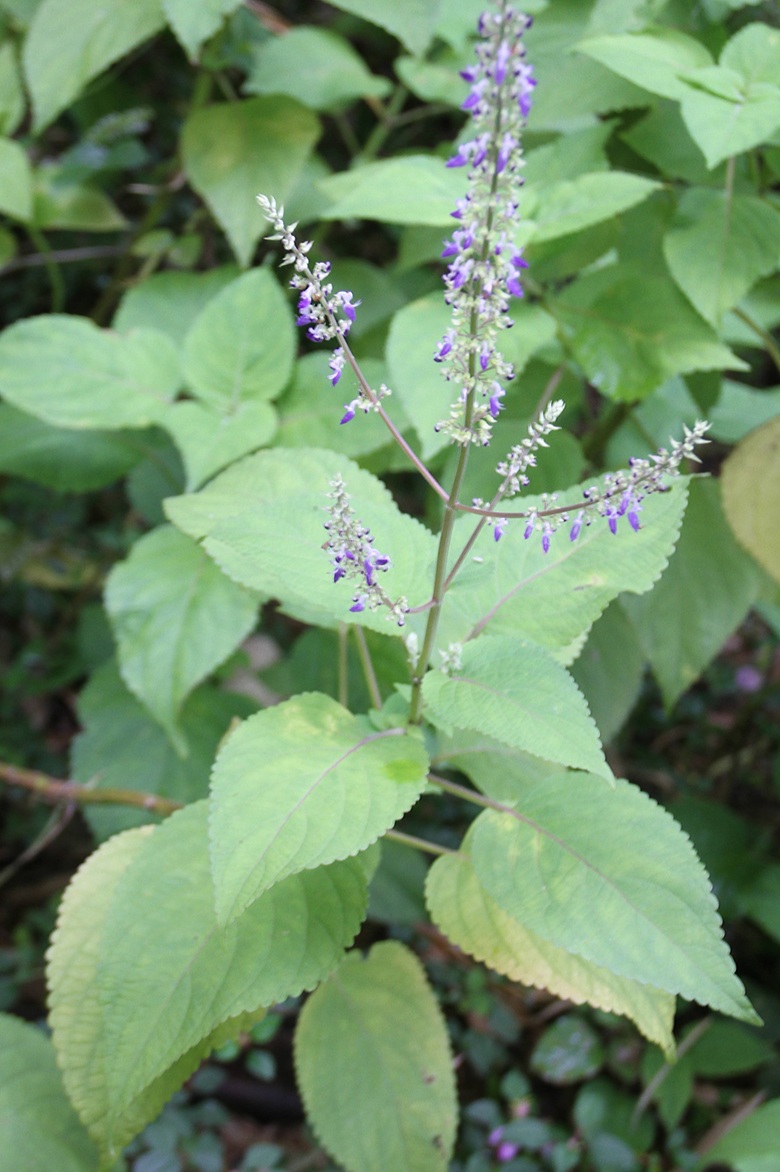
Coleus forms an upright, spreading, mounding, or trailing plant depending on cultivar. Stems are characteristically four-angled or square in cross-section, a common mint-family feature.
Young stems are soft, succulent, and easily broken. Older basal stems become firmer and may appear woody. Nodes root readily when placed in water or moist substrate.
Trailing cultivars may spill from baskets and mixed containers, creating access for cats, birds, and small dogs. Upright forms may reach several feet when grown as tropical perennials.
Leaves
Leaves are opposite, with each pair typically oriented at right angles to the pair above and below. The blades may be oval, heart-shaped, lance-shaped, deeply lobed, narrow, ruffled, scalloped, twisted, or nearly threadlike.
Margins range from gently crenate to sharply serrated or deeply dissected. Surfaces may be smooth, puckered, quilted, velvety, glossy, or softly hairy.
Colors include green, chartreuse, yellow, cream, white, pink, coral, orange, red, magenta, burgundy, bronze, purple, and nearly black. Patterns may follow the veins, margin, center, irregular blotches, netting, speckles, or broad zones.
Light-Dependent Color Changes
Leaf color is not fixed. Light intensity can change chlorophyll and anthocyanin accumulation, causing one cultivar to appear dramatically different in sun, shade, greenhouse production, or indoor conditions.
High light increases red or purple anthocyanin in some cultivars but may bleach or scorch others. Low light may produce greener, thinner, less intensely patterned leaves.
A plant should not be identified solely by its photograph on a retail tag, and color cannot be used to estimate toxicity. The same genotype can change appearance without becoming a different species.
Flowers and Nutlets
Coleus produces upright terminal flower spikes bearing small bilabiate flowers. Colors are usually blue, lavender, violet, or pale purple, although white and pinkish forms occur.
The upper and lower flower lips, projecting stamens, persistent calyx, and four small nutlets reflect its placement in Lamiaceae. Pollinated plants can self-seed in warm climates or greenhouse environments.
Gardeners often pinch off flower spikes to maintain compact foliage growth. Fresh and discarded spikes should be collected from animal areas even though they are not proven to contain a uniquely concentrated toxin.
Annual Bedding and Mass Landscape Exposure
Coleus is planted in large numbers in municipal beds, commercial properties, hotels, restaurants, schools, parks, cemeteries, apartment grounds, and private gardens. A pet may therefore encounter dozens or hundreds of plants rather than one pot.
Seasonal replacement creates piles of uprooted foliage, stems, roots, fertilizer, landscape fabric, plastic tags, irrigation tubing, mulch, and other ornamentals. This disposal period may create the largest practical exposure.
Frost-killed plants should not be thrown into paddocks, poultry runs, rabbit areas, open compost, or brush piles accessible to animals.
Indoor Houseplants and Overwintered Cuttings
Gardeners frequently bring coleus indoors before frost or root cuttings to preserve a cultivar through winter. This can introduce large numbers of plants into kitchens, bathrooms, offices, windowsills, propagation stations, and grow-light shelves.
Indoor plants may shed leaves after relocation, low light, cold drafts, pests, overwatering, or root disturbance. Fallen leaves can remain hidden beneath furniture or shelving.
Propagation jars may contain fertilizer, rooting products, bacteria, algae, mold, or other cuttings. Cats and birds should not drink the water.
Propagation Exposure
Coleus roots readily from stem cuttings. Growers often pinch dozens of shoot tips, strip the lower leaves, and place the stems in water, plugs, perlite, peat, coir, or propagation foam.
Cutting work creates fresh plant fluid on hands, tools, counters, floors, towels, and discarded leaves. Pets may gain access to more plant tissue during propagation than from the intact display.
Rooting hormones, fungicides, disinfectants, fertilizers, plastic trays, labels, razor blades, clips, and heating mats create additional hazards.
Cultivar and Chemotype Variation
Cultivated coleus is genetically diverse and frequently tetraploid. Breeding programs select for trailing or upright habit, leaf size, branching, delayed flowering, sun tolerance, pigmentation, margin shape, and disease resistance.
Research comparing cultivars has demonstrated differences in flavonoids, phenolic compounds, volatile profiles, and genetic markers. Tissue-culture conditions and plant-growth regulators can further alter metabolite production.
One chemical result from ‘Electric Lime’, medicinal red-leaved miana, or an unidentified Indonesian cultivar cannot be assigned automatically to every modern ornamental series.
Medicinal and Cultural Use
Selected coleus forms have a long ethnobotanical history in Southeast Asia, the Pacific, and other regions. Leaves or roots have been used traditionally for digestive complaints, wounds, inflammation, fever, reproductive purposes, eye or ear complaints, and numerous other conditions.
Traditional use may involve a specific locally recognized form, preparation method, quantity, and route. It does not establish that every ornamental cultivar is interchangeable or safe when fed raw to an animal.
Medicinal claims should not encourage owners to place crushed leaves in an animal’s eye, on an open wound, or into the mouth. Exact concentration, sterility, species suitability, and drug interactions are unknown.
Coleus and Indian Borage
Indian Borage, Coleus amboinicus, has thick, fleshy, softly hairy leaves with a strong oregano, thyme, or camphor-like smell. It may be called Cuban Oregano, Spanish Thyme, Mexican Mint, Country Borage, or Broadleaf Thyme.
Ornamental Coleus scutellarioides usually has thinner, brightly patterned foliage and is grown primarily for color. Its odor is generally weaker and less culinary.
The two species have different volatile-oil profiles and uses. Information about edible seasoning, thymol, carvacrol, cough remedies, or oregano-like flavor should not be copied from Indian Borage onto Painted Nettle.
Coleus and Forskolin Coleus
Forskolin Coleus, Coleus barbatus, is a separate upright perennial with aromatic green leaves, blue flowers, and thickened roots. It has been called Plectranthus barbatus, Coleus forskohlii, and Indian Coleus.
Its roots are the commercial source associated with forskolin supplements. Forskolin affects cellular cyclic-AMP signaling and may influence blood pressure, heart rate, platelets, and other physiological processes.
Those supplement concerns should not be assigned automatically to ornamental Coleus scutellarioides. Conversely, Painted Nettle’s relatively mild expected ingestion syndrome should not be used to dismiss a concentrated forskolin product.
Coleus and Scaredy-Cat Plants
Plants sold as Scaredy-Cat Plant, Dog-Gone Plant, or Mosquito Plant may be labeled Coleus caninus, Coleus neochilus, Plectranthus caninus, or a horticultural hybrid. They are promoted for a strong odor intended to deter animals.
Retail identity is inconsistent, and the volatile chemistry differs from Painted Nettle. A strong-smelling animal-repellent plant should be preserved with its label rather than identified simply as coleus.
Coleus and Perilla or Beefsteak Plant
Perilla, Perilla frutescens, is another mint-family plant with opposite serrated leaves that may be green, red, or deep purple. It can resemble an old-fashioned dark coleus from a distance.
Perilla produces small pale flowers and has a distinctive aromatic odor. Certain chemotypes contain perilla ketone, capable of causing severe pulmonary edema and respiratory distress in cattle, horses, and other livestock.
Labored breathing, grunting, open-mouth breathing, froth, and sudden respiratory failure after grazing a purple mint-family plant should not be managed as ordinary coleus gastrointestinal irritation.
Coleus and Swedish Ivy
Swedish Ivy, commonly Plectranthus verticillatus, is a trailing mint-family plant with rounded glossy green leaves and scalloped margins. Some cultivars are variegated.
It generally lacks the extreme pigmentation and diverse leaf shapes of Painted Nettle. Historical movement of species between Plectranthus and Coleus makes labels confusing, so the scientific name should be preserved.
Coleus and True Nettles
True stinging nettles belong primarily to Urtica in Urticaceae. Their hollow stinging hairs inject a mixture of irritating compounds when touched and can cause immediate burning, redness, and pain.
Painted Nettle has soft hairs on some cultivars but lacks the same specialized stinging mechanism. The name Painted Nettle refers to visual resemblance rather than true nettle toxicology.
Coleus and Caladium
Caladium has large heart- or arrow-shaped leaves patterned in red, pink, white, and green. It grows from a tuber and belongs to Araceae.
Caladium contains insoluble calcium-oxalate raphides that cause immediate intense oral pain, drooling, tongue irritation, and possible swelling. Its leaf veins, basal growth, and absence of square branching stems distinguish it from coleus.
Coleus and Hypoestes, Alternanthera, and Ornamental Sweet Potato
Polka Dot Plant, Hypoestes phyllostachya, has spotted pink, white, red, or green leaves but smaller flowers and different stem and leaf details. Alternanthera cultivars may have burgundy, pink, yellow, or variegated foliage in bedding displays.
Ornamental Sweet Potato, Ipomoea batatas, produces trailing vines with alternate rather than opposite leaves and may have deeply lobed chartreuse, bronze, or purple foliage.
Mixed beds frequently contain all of these plants with fertilizer, herbicide, mulch, and pesticide. Preserve complete stems with attached leaves and flowers whenever possible.
Dogs and Garden Exposure
Dogs may chew coleus along paths, dig through annual beds, eat uprooted plants, or raid compost and fall cleanup. Fertilizer containing bone meal, blood meal, fish products, or manure may attract a dog to the roots.
Large Kong-type leaves and mature tropical shrubs can provide much more plant mass than small seed-grown bedding cultivars. Exposure estimates should use approximate weight or missing plant area rather than leaf number alone.
Garden edging, irrigation emitters, plastic labels, stakes, landscape fabric, stones, and treated mulch may be swallowed during the same incident.
Cats and Indoor Exposure
Cats may bite leaf margins, play with trailing cultivars, climb into large containers, or groom plant residue from their paws. Coleus placed beneath grow lights may remain attractive throughout winter.
A cat may return to the same plant repeatedly and remove only small portions each time. Repeated access should be reported even if one episode appears minor.
Propagation jars, saucer water, systemic insecticide granules, and foliar sprays can create a more serious exposure than the foliage itself.
Horses and Livestock
Painted Nettle is not normal forage. Relevant exposure pathways include greenhouse waste, annual-bed removal, landscaping around barns and showgrounds, nursery disposal, storm debris, and mixed ornamental clippings.
Plants should not be incorporated into hay, silage, green chop, bedding, or brush intended for animal consumption. Drying and fragmentation remove visual and taste cues that might otherwise limit intake.
Every species in a debris load should be identified. Perilla, Yew, Oleander, Rhododendron, Black Locust, Cherry Laurel, and pesticide-treated material can produce far more serious disease.
Rabbits, Guinea Pigs, Birds, and Reptiles
Coleus may be collected accidentally with safe garden forage or placed in a naturalistic enclosure because it is colorful and easy to propagate. Regional human medicinal use does not establish suitability as animal forage.
Rabbits and guinea pigs risk gastrointestinal stasis after appetite loss. Birds can shred leaves rapidly, and tortoises may graze a planted specimen repeatedly rather than take one accidental bite.
Use plants with established species-appropriate safety evidence in cages, aviaries, rabbit runs, and edible reptile enclosures.
Nurseries, Greenhouses, and Commercial Plant Maintenance
Coleus is susceptible to aphids, whiteflies, mealybugs, mites, thrips, fungus gnats, downy mildew, root disease, and viral problems. Commercial plants may therefore receive insecticides, miticides, fungicides, growth regulators, fertilizers, and disinfectants.
Systemic products may remain within plant tissue or potting media after visible surface residue disappears. Retail labels usually identify the cultivar but not the complete treatment history.
Offices, hotels, restaurants, schools, and public buildings may use outside plant-care contractors. Treatment records should be requested after an exposure.
Compost, Pruning Debris, Hay, and Silage
Fresh pinched shoots, old flower spikes, rooted cuttings, and frost-killed plants may accumulate in large volumes. Open compost allows dogs, pigs, poultry, rabbits, and wildlife to consume plant material mixed with mold, spoiled food, mushrooms, and chemicals.
Hay or silage contamination is unlikely during ordinary agricultural production but can occur when landscape or greenhouse waste is added deliberately. No processing method has been validated to make coleus safe as livestock feed.
Diagnosis
No routine blood, urine, saliva, or stomach-content test confirms Coleus scutellarioides ingestion or measures one definitive coleus toxin. Diagnosis depends on botanical identification, exposure amount, timing, compatible signs, associated products, and exclusion of other causes.
Useful evidence includes complete stems with opposite leaves, flowers, roots, seed heads, nursery tags, cultivar labels, photographs, vomit, fecal fragments, propagation material, pesticide containers, fertilizer, substrate, and every missing foreign object.
Records should specify Coleus scutellarioides rather than simply “coleus.” This prevents later confusion with Indian Borage, Forskolin Coleus, Scaredy-Cat Plant, and other species.
Veterinary Evaluation
The veterinarian may assess oral comfort, swallowing, hydration, abdominal pain, temperature, heart rate and rhythm, pulse quality, blood pressure, respiratory function, pupils, gait, awareness, urine production, skin lesions, and eye injury.
Repeated vomiting, diarrhea, weakness, or neurologic signs may justify a complete blood count, electrolytes, glucose, kidney and liver values, acid-base testing, and urinalysis. These tests measure complications and alternative disease rather than detecting coleus directly.
Persistent abdominal pain, recurrent vomiting, absent stool, or missing stones, wire, plastic, stakes, or container pieces may require radiographs, ultrasound, endoscopy, or surgery.
Marked ataxia, mydriasis, tachycardia, or altered behavior requires a broader toxicology investigation. A drug screen or targeted testing may be appropriate when cannabis, stimulants, medications, pesticides, or other agents are possible.
Differential Diagnosis
Acute gastrointestinal signs overlap with dietary indiscretion, spoiled food, infection, parasites, pancreatitis, foreign-body obstruction, fertilizer, pesticide, mushrooms, medications, and numerous plants.
Caladium, Dieffenbachia, Pothos, Philodendron, Peace Lily, and Calla Lily produce a more intense immediate oral-crystal syndrome. Perilla is a critical livestock respiratory differential. True nettles cause direct stinging-hair injury.
Neurologic or autonomic findings require consideration of cannabis, tropane-alkaloid plants, nicotine, medications, essential-oil concentrates, metaldehyde, organophosphate or carbamate pesticide, toxic mushrooms, hypoglycemia, vestibular disease, and trauma.
Prognosis
The prognosis is generally good to excellent after a limited ingestion producing brief drooling, vomiting, diarrhea, or appetite reduction. Most animals recover after access ends and hydration and gastrointestinal comfort are restored.
The outlook depends on the complication when aspiration, severe dehydration, prolonged feline anorexia, corneal ulceration, allergic dermatitis, foreign-body obstruction, or pesticide exposure occurs.
Profound or persistent neurologic signs should not receive a guarded prognosis based on coleus alone until more dangerous alternative causes have been investigated.
Prevention
Keep indoor plants outside the reach of climbing cats, plant-chewing dogs, birds, and small herbivores. Account for fallen leaves, trailing cultivars, nearby furniture, and propagation stations.
Collect pruned shoots, flower spikes, uprooted beds, and frost-damaged plants immediately. Do not place them in paddocks, rabbit runs, poultry yards, open compost, hay, silage, or animal browse.
Retain scientific and cultivar labels and record pesticide and fertilizer applications. A precise plant record prevents the major common-name errors that surround coleus toxicology.
Replace the plant with a well-established animal-safe species when repeated access cannot be prevented reliably.
Immediate Steps After Exposure
- Stop further access: Remove the animal from the plant, garden bed, propagation station, pruning debris, compost, or mixed container.
- Preserve the complete specimen: Save attached leaves, stems, roots, flowers, seed heads, nursery labels, cultivar tags, and photographs.
- Estimate the maximum amount: Include repeated access, missing rooted cuttings, foliage still attached to broken stems, and material found in vomit.
- Record the timing: Note when access could have occurred and when drooling, vomiting, diarrhea, weakness, abnormal gait, pupil change, or skin irritation began.
- Identify mixed hazards: Preserve fertilizer, pesticide, fungicide, potting mix, stones, stakes, wire, plastic, glass, ceramic, mulch, and every other plant involved.
- Contact a professional when appropriate: Substantial ingestion, repeated signs, neurologic findings, eye exposure, major dermatitis, or uncertain plant identity deserves prompt guidance.
Do not allow the colorful foliage to distract from fertilizer, pesticide, foreign material, or a more hazardous look-alike. A plant labeled only “coleus” may not be Coleus scutellarioides.
Confirm the Species
- Look for opposite leaves: Painted Nettle usually has paired leaves positioned across from one another.
- Look for square stems: Four-angled stems support identification as a mint-family plant.
- Preserve the flowers: Small blue or lavender bilabiate flowers on upright spikes can distinguish coleus from several colorful foliage plants.
- Smell only from a safe distance: Do not taste the plant; strong oregano odor may indicate Indian Borage rather than Painted Nettle.
- Preserve every label: Old names such as Plectranthus scutellarioides, Solenostemon scutellarioides, and Coleus blumei may identify the same species.
- Do not delay stabilization: Severe vomiting, collapse, abnormal breathing, or major neurologic signs requires treatment while identification continues.
Remove Loose Material From the Mouth
- Wear gloves: Plant fluid, pesticide, fertilizer, mold, and contaminated soil may be present.
- Remove only visible loose pieces: Carefully lift accessible leaves, stems, roots, stones, or plastic from the lips and front of the mouth.
- Avoid blind finger sweeps: Do not push material farther toward the throat.
- Do not scrub the tissues: Aggressive rubbing can create abrasions and increase bite risk.
- Stop if coughing or struggling begins: Airway safety is more important than complete home cleaning.
- Save representative fragments: Retain enough material for identification.
Gentle Mouth Rinsing
- Rinse only a fully alert animal: Breathing, awareness, and swallowing must be normal.
- Use clean lukewarm water: Allow a gentle flow across the front of the mouth and outward.
- Do not direct water toward the throat: Forceful syringing can cause aspiration.
- Stop if gagging or coughing begins: Difficulty handling water makes further rinsing unsafe.
- Do not force the jaws open: Nausea, oral discomfort, and restraint increase bite risk.
Rinsing may remove loose plant material but does not neutralize swallowed diterpenoids, volatile compounds, pesticides, or concentrated extracts.
Do Not Induce Vomiting at Home
- Do not give hydrogen peroxide automatically: It can cause gastritis, esophagitis, repeated vomiting, and aspiration.
- Never give hydrogen peroxide to a cat: It can cause serious feline gastric and esophageal injury.
- Never use salt, mustard, dish soap, oil, ipecac, or manual gagging: These methods can create an additional poisoning or injury.
- Do not induce vomiting after signs begin: Vomiting, weakness, ataxia, depression, abnormal breathing, dilated pupils, or poor swallowing makes emesis unsafe.
- Do not induce vomiting after pot destruction: Stones, stakes, wire, plastic, glass, and ceramic can injure the esophagus.
- Allow veterinarian-selected emesis only: A veterinarian may consider controlled emesis in a recently exposed, fully alert, asymptomatic dog after evaluating the amount, exact plant, airway, and foreign-body risk.
Activated Charcoal
- Do not administer charcoal routinely at home: Its benefit for an ordinary limited coleus ingestion has not been established.
- Never force charcoal: A vomiting, weak, ataxic, coughing, or poorly swallowing animal can aspirate it.
- Do not use barbecue charcoal or ash: These products are not medical activated charcoal.
- Do not add an owner-selected cathartic: Diarrhea and dehydration may worsen.
- Allow professional case selection: A veterinarian may consider charcoal after a substantial recent ingestion, concentrated extract, or mixed pesticide or medication exposure.
Charcoal does not treat dehydration, corneal injury, dermatitis, aspiration, or gastrointestinal obstruction and cannot remove stones, wire, or container fragments.
Do Not Give Food, Oil, or Unsupervised Medication
- Do not give milk, yogurt, bread, eggs, or cheese: Food does not neutralize coleus diterpenes or volatile compounds.
- Do not give cooking oil or mineral oil: Oil may provoke vomiting or enter the lungs.
- Do not force food: A nauseated, weak, ataxic, or poorly swallowing animal may aspirate.
- Do not give human antidiarrheal medication: Loperamide, bismuth products, and similar drugs may be inappropriate.
- Do not give human pain medication: Ibuprofen, naproxen, aspirin, and acetaminophen can cause additional poisoning.
- Do not administer forskolin or herbal coleus products: Supplements may involve another species and concentrated pharmacological compounds.
- Do not give leftover veterinary medication: Antiemetics, sedatives, antihistamines, steroids, and gastrointestinal drugs require patient-specific selection.
Food and Water
- Do not force oral intake: Vomiting, abdominal pain, depression, ataxia, or poor swallowing makes feeding unsafe.
- Do not syringe water: Forced water cannot correct meaningful dehydration and can enter the lungs.
- Offer cautious access only when safe: The animal must be fully alert, swallowing normally, and not vomiting repeatedly.
- Prevent rapid drinking: Gulping may trigger additional vomiting.
- Remove saucer and propagation water: It may contain fertilizer, rooting product, pesticide, mold, or bacteria.
- Follow veterinary feeding instructions: Timing and food type depend on species, nausea, hydration, and medical history.
Skin and Coat Decontamination
- Prevent grooming: Stop the animal from licking plant fluid, pesticide, fertilizer, or soil from the coat and paws.
- Wear gloves: Repeated plant exposure can cause allergic contact dermatitis in susceptible people.
- Remove solid debris first: Lift leaves, stems, fertilizer pellets, and soil without grinding them into the coat.
- Wash stable animals gently: Use lukewarm water and mild pet-safe shampoo for ordinary plant and soil residue.
- Rinse thoroughly: Residual shampoo and horticultural products can prolong irritation.
- Seek product-specific advice: Pesticide, horticultural oil, alcohol, fungicide, or concentrated fertilizer may require another method.
- Do not use household solvents: Bleach, petroleum products, essential oils, concentrated detergent, and alcohol can worsen injury.
Eye Exposure
- Begin irrigation promptly: Flush the affected eye continuously with sterile saline or clean lukewarm water for at least 15 minutes.
- Use gentle pressure: Allow fluid to move across the eye without forcing grit or plant fragments into the cornea.
- Prevent rubbing: Pawing can convert mild irritation into a corneal abrasion or ulcer.
- Do not use human redness drops: Decongestants, topical anesthetics, and leftover steroid medication may worsen or conceal injury.
- Seek examination for persistent signs: Squinting, cloudiness, discharge, swelling, pain, or apparent visual change requires veterinary care.
Recognize an Emergency
- Repeated vomiting: Inability to retain water can cause dehydration and aspiration.
- Profuse or bloody diarrhea: Severe gastrointestinal injury, infection, another plant, or chemical exposure may be present.
- Severe abdominal pain: Distention, repeated unproductive retching, or absent feces raises concern for obstruction or bloat.
- Marked weakness or collapse: Severe dehydration, low blood pressure, hypoglycemia, hemorrhage, or another toxin may be involved.
- Pronounced ataxia or abnormal behavior: Cannabis, medication, pesticide, mushroom, neurologic disease, or an unusual concentrated plant exposure requires investigation.
- Dilated pupils with rapid heart rate or agitation: An anticholinergic or stimulant exposure may be present.
- Tremors or seizures: These are not routine mild coleus findings and require emergency treatment.
- Abnormal breathing: Coughing after vomiting, labored breathing, blue-gray gums, or open-mouth breathing requires immediate care.
- Major facial or mouth swelling: Allergy, an aroid, chemical burn, or airway obstruction must be considered.
- Eye cloudiness or severe pain: Corneal injury requires prompt examination.
Safe Transportation
- Keep the animal quiet: Limit exertion, excitement, and unnecessary handling.
- Do not muzzle a vomiting animal: A muzzle can trap vomit and interfere with breathing.
- Use secure padded confinement: Weak, ataxic, or disoriented animals require protection from falls.
- Allow the easiest breathing position: Do not force a respiratory patient flat.
- Prevent licking and scratching: Protect irritated skin without applying unapproved topical products.
- Bring all evidence: Transport the plant, label, photographs, vomit, substrate, product containers, and foreign materials safely.
- Call ahead: Report neurologic signs, repeated vomiting, breathing difficulty, eye injury, or suspected pesticide exposure before arrival.
Veterinary Decontamination
A veterinarian may consider controlled emesis in a recently exposed, fully alert dog without clinical signs, swallowing abnormalities, respiratory compromise, or foreign-body concerns. Many small leaf exposures do not require aggressive decontamination.
Activated charcoal may be considered after a substantial recent ingestion, concentrated preparation, or mixed toxic exposure when the airway and gastrointestinal tract can be managed safely. No evidence supports routine repeated charcoal for every coleus case.
Gastric lavage is reserved for selected severe exposures under anesthesia with a protected airway. It is not an appropriate mechanical response to one small missing leaf.
Veterinary Gastrointestinal Treatment
Veterinarian-selected anti-nausea medication may reduce vomiting, fluid loss, esophageal injury, and aspiration risk. Fluids are chosen according to hydration, blood pressure, electrolytes, glucose, species, body size, and underlying disease.
Gastrointestinal protectants, acid suppression, and veterinarian-selected analgesia may be used when persistent gastritis, esophagitis, hematemesis, or substantial abdominal discomfort is present.
Antibiotics are not required automatically for uncomplicated plant irritation. They may be selected when aspiration pneumonia, bacterial translocation, secondary skin infection, or another diagnosed infection is present.
Neurologic and Cardiovascular Monitoring
Animals with ataxia, dilated pupils, unusual behavior, weakness, tremors, or heart-rate abnormalities may require glucose measurement, electrolyte and acid-base assessment, blood pressure, ECG, temperature monitoring, and a broader toxicology investigation.
Veterinarian-selected sedation, anticonvulsant treatment, oxygen, airway protection, or temperature management may be required when severe signs develop. Treatment should address the observed syndrome rather than assuming salvinorin exposure.
Foreign-Body Assessment
Persistent vomiting, focal pain, reduced fecal production, or missing stones, stakes, wire, plastic, glass, ceramic, labels, or root-ball material may require radiographs or ultrasound.
Some plant, fabric, wood, and plastic materials are not clearly visible on ordinary radiographs. Contrast studies, endoscopy, serial imaging, or exploratory surgery may be necessary.
Veterinary Skin and Eye Treatment
Dermatologic evaluation may distinguish simple irritation from allergic contact dermatitis, pesticide injury, mites, fungal disease, bacterial infection, or another allergy. Treatment may include gentle cleansing, itch control, anti-inflammatory medication, prevention of self-trauma, and treatment of secondary infection.
Eye examination may include irrigation, fluorescein staining, removal of retained debris, tear and pressure assessment when indicated, pain control, and lesion-specific topical medication. Steroid eye medication is inappropriate when a corneal ulcer is present unless directed by an ophthalmic veterinarian.
Horses and Livestock
- Remove the entire group from the source: Prevent continued access to landscape waste, nursery plants, compost, and contaminated feed.
- Do not attempt vomiting: Horses and ruminants must never receive household emetics.
- Do not drench symptomatic animals: Salivation, weakness, neurologic signs, or abnormal swallowing increases aspiration risk.
- Inspect every plant in the debris: Perilla, Yew, Oleander, Rhododendron, and other ornamentals may dominate the prognosis.
- Preserve representative samples: Save complete stems, roots, flowers, feed, products, and photographs.
- Investigate respiratory signs urgently: Severe breathing difficulty is not adequately explained by ordinary coleus irritation.
- Monitor every exposed animal: Intake and susceptibility may differ within the group.
Rabbits, Guinea Pigs, Birds, and Other Exotics
- Do not attempt vomiting: Household emesis is unsafe or physiologically impossible in these species.
- Monitor food intake closely: Reduced eating can become a secondary gastrointestinal emergency.
- Monitor feces and droppings: Reduced output, diarrhea, or abnormal urates should be reported.
- Preserve gathered forage: Another plant, pesticide, or mushroom may be present.
- Watch gait and behavior: Weakness, altered balance, dilated pupils, tremors, or unusual behavior requires prompt care.
- Bring enclosure materials: Substrate, fertilizer, wire, stones, and mixed plants may alter the diagnosis.
Monitoring and Recovery
- Monitor vomiting and diarrhea: Episodes should decrease rather than become more frequent, painful, or bloody.
- Monitor hydration: Drinking, urination, gum moisture, strength, and activity should normalize.
- Monitor appetite: Interest in appropriate food should return as nausea resolves.
- Monitor abdominal comfort: Distention, guarding, repeated retching, or absent stool requires reassessment.
- Monitor gait and awareness: Ataxia, abnormal pupils, agitation, depression, tremors, or collapse should not progress.
- Monitor breathing: Coughing, fever, rapid respiration, or renewed lethargy may indicate aspiration.
- Monitor skin and eyes: Increasing redness, swelling, discharge, cloudiness, or self-trauma requires veterinary care.
Recovery means that oral discomfort, vomiting, and diarrhea have stopped, hydration and appetite are normal, gait and behavior are appropriate, fecal passage continues, foreign material has been excluded, and no respiratory, dermatologic, or eye complication is developing.
Prevention and Prognosis
- Use a genuinely inaccessible location: Account for climbing cats, trailing cultivars, fallen leaves, and nearby furniture.
- Contain propagation and pruning waste: Collect every stripped leaf, rooted cutting, and flower spike immediately.
- Secure garden products: Keep fertilizer, pesticide, fungicide, rooting products, and treated substrate inaccessible.
- Preserve exact labels: Distinguish Painted Nettle from Indian Borage, Forskolin Coleus, Perilla, and Scaredy-Cat Plants.
- Do not feed landscape debris: Keep coleus out of hay, silage, browse, rabbit forage, poultry areas, and livestock paddocks.
- Typical prognosis: Limited uncomplicated exposures generally have a good-to-excellent outcome.
- Complicated prognosis: Aspiration, obstruction, severe dehydration, corneal ulceration, pesticide exposure, or a more toxic look-alike requires more intensive care.
Frequently Asked Questions About Coleus and Animal Poisoning
What usually happens when a dog or cat eats ornamental Coleus?
Most limited exposures are expected to cause no signs or temporary oral and gastrointestinal irritation. Drooling, lip licking, vomiting, diarrhea, abdominal discomfort, appetite loss, depression, or weakness may occur. Repeated vomiting, inability to retain water, blood, severe pain, pronounced incoordination, abnormal behavior, collapse, or breathing difficulty requires veterinary care. The container and growing area should also be checked for fertilizer, pesticide, stones, wire, plastic, propagation products, and other plants.
What toxin has actually been proven in Coleus scutellarioides?
No single substance has been proven to cause every natural veterinary case. Exact-species studies have isolated numerous abietane diterpenoids, including spiroscutelones A–C, coleon O, coleon G, lanugone K, and 6-acetylfredericone B, along with a cembrane diterpenoid, volatile terpenes, flavonoids, rosmarinic acid, caffeic acid, anthocyanins, sterols, and other metabolites. Several compounds are biologically active in laboratory systems, but no controlled study establishes one purified molecule as the definitive pet toxin or provides a clinical dose.
Are essential oils the principal cause of Coleus poisoning?
Coleus leaves contain a small volatile-oil fraction, and concentrated oils can be biologically active, but the ordinary plant cannot be reduced to “essential-oil poisoning.” Different studies recovered very different dominant volatiles, including phytol, germacrene D, beta-caryophyllene, spathulenol, and bicyclogermacrene. Hydrodistilled oil is much more concentrated than fresh foliage. Diterpenoids, phenolics, physical plant material, pesticides, and gastrointestinal irritation may all contribute to a natural exposure.
Are colein, coleon O, coleonol, and forskolin the same thing?
No. Coleon O is a structurally characterized abietane diterpenoid isolated from Coleus scutellarioides. Coleonol is an older name associated with forskolin, a labdane diterpene best known from Coleus barbatus or Forskolin Coleus. “Colein” is used inconsistently in consumer sources and often lacks a clear molecular definition. These names should not be treated as interchangeable, and the pharmacology of concentrated forskolin supplements should not be assigned automatically to ornamental Painted Nettle.
Is ornamental Coleus the same as Indian Borage or Cuban Oregano?
No. Indian Borage is Coleus amboinicus, a separate species with thick, fleshy, strongly oregano-scented leaves and regional culinary and medicinal use. Ornamental Coleus scutellarioides usually has thinner, brightly patterned leaves and is grown for foliage color. Indian Borage can have thymol-, carvacrol-, or other aromatic-oil chemotypes that are not the established profile of Painted Nettle. Preserve the plant label because many pet-toxicity lists use the word Coleus without distinguishing the species.
Is ornamental Coleus the same as Forskolin Coleus?
No. Forskolin Coleus is generally Coleus barbatus, historically called Plectranthus barbatus or Coleus forskohlii. Its thickened roots are associated with forskolin supplements that affect cyclic-AMP signaling and may influence blood pressure, heart rate, platelets, and drug responses. Those concentrated supplement concerns should not be imported automatically into Coleus scutellarioides, and Painted Nettle’s expected mild gastrointestinal syndrome should not be used to dismiss ingestion of a forskolin product.
Does Coleus contain the hallucinogen salvinorin A?
One 2024 study detected salvinorin A and salvinorin B in the cultivar ‘Electric Lime’ using liquid chromatography and mass spectrometry. Concentrations changed with cultivation conditions and plant-growth regulators, and the reported salvinorin levels were much lower than those commonly described in Salvia divinorum. Independent confirmation across other cultivars remains important. The finding does not establish that every coleus is hallucinogenic or that one leaf causes a predictable psychoactive effect in a dog or cat.
Can Coleus cause hallucinations, psychosis, or unusual behavior?
A human case report described psychosis after deliberate Coleus blumei ingestion, and historical sources describe attempts to use coleus as a substitute for Salvia divinorum. The clinical evidence is extremely limited, and cultivar, dose, preparation, and individual susceptibility remain uncertain. Abnormal pet behavior, ataxia, dilated pupils, or tachycardia should be evaluated seriously but should also prompt investigation of cannabis, medications, pesticides, mushrooms, stimulants, hypoglycemia, and neurologic disease.
Can one Coleus leaf cause severe poisoning?
One ordinary leaf is unlikely to cause life-threatening poisoning in a healthy medium-sized dog or cat. No universal safe leaf count exists because cultivars range from miniature foliage to very large Kong-type leaves and differ chemically. An animal may also have eaten more than was observed. Risk rises with a small body size, repeated access, an entire rooted cutting, concentrated extract, pesticide-treated plant, or significant symptoms. The actual plant mass and clinical condition matter more than a simple leaf number.
Are red, purple, black, green, yellow, or variegated Coleus cultivars different in toxicity?
No color class has been proven pet-safe or uniformly more toxic. Anthocyanins create many red, purple, and dark patterns, while chlorophyll and carotenoid differences create green, yellow, and cream tissue. Light can change pigment concentration dramatically within the same cultivar. Chemical studies also show cultivar and cultivation variability, but color alone cannot predict diterpene or volatile content. Apply the same basic precautions to every foliage pattern and named series.
Can touching Coleus cause dermatitis?
Yes. A published human case linked long-standing airborne facial dermatitis to Coleus blumei, and coleon O has demonstrated sensitizing potential. Susceptible animals may develop redness, itching, swelling, papules, or eczema after contact, especially when plant residue remains beneath fur or equipment. Brief contact may cause no reaction in many individuals. Pesticides, horticultural oils, mites, fungal disease, and secondary infection can produce similar or stronger skin findings and should be considered.
What should be done if Coleus sap or plant material enters an eye?
Begin continuous gentle irrigation with sterile saline or clean lukewarm water and prevent rubbing. Persistent squinting, redness, cloudiness, discharge, eyelid swelling, severe pain, or apparent visual change requires veterinary examination. Potting grit, fertilizer, pesticide, and self-trauma may injure the cornea even when the plant fluid itself is only mildly irritating. Do not use human redness drops, topical anesthetic, or leftover steroid eye medication.
Are Coleus flowers, roots, or seeds safer than the leaves?
No plant part has been established as universally safe. Leaves are the most common exposure and contain directly characterized diterpenoids, phenolics, pigments, and volatile compounds. Roots and basal stems may contribute a larger plant mass when a container is excavated, while flowers and nutlets have not been compared comprehensively with foliage. Root-ball incidents also involve fertilizer, systemic pesticide, substrate, stones, labels, and container fragments.
Is wilted, frost-killed, dried, or composted Coleus still a concern?
Yes. Wilting and frost remove water or damage cells but do not prove that nonvolatile diterpenoids and phenolic compounds have disappeared. Seasonal bed removal may create a much larger exposure than the living garden. Dried and composted material can also contain mold, mushrooms, spoiled food, pesticides, fertilizer, plastic, wire, and other poisonous plants. Coleus waste should be contained rather than placed in animal-accessible compost, paddocks, poultry yards, or forage piles.
Can Coleus clippings be fed to horses, goats, rabbits, or tortoises?
No. Regional human medicinal use does not create a veterinary feeding recommendation. Direct safe-dose studies are unavailable, and small herbivores can consume substantial plant mass relative to body weight. Rabbits and guinea pigs may develop gastrointestinal stasis when irritation reduces appetite. Livestock debris may also contain Perilla, Yew, Oleander, Rhododendron, fertilizer, or pesticide. Use verified species-appropriate forage rather than ornamental clippings.
Why is Perilla an important Coleus look-alike for livestock?
Perilla frutescens, also called Beefsteak Plant or Shiso, can have dark purple opposite serrated leaves and may resemble an old-fashioned coleus. Certain Perilla chemotypes contain perilla ketone, which can cause severe pulmonary edema and respiratory failure in cattle, horses, and other grazing animals. Labored breathing, grunting, froth, open-mouth breathing, or sudden respiratory distress after eating a purple mint-family plant should never be dismissed as ordinary coleus gastrointestinal upset.
Should vomiting be induced after Coleus ingestion?
Do not induce vomiting at home. Hydrogen peroxide, salt, mustard, dish soap, oil, ipecac, and manual gagging can cause additional injury or aspiration. A veterinarian may consider controlled emesis after a recent substantial ingestion in a fully alert, asymptomatic dog with no swallowing, respiratory, neurologic, or foreign-body concern. Cats, horses, rabbits, guinea pigs, birds, reptiles, and symptomatic animals should not receive household emetics.
Does activated charcoal help?
Activated charcoal is not a routine home treatment for a small coleus exposure. Its benefit depends on the amount, timing, exact compounds, concentrated preparations, and any pesticide or medication involved. Forcing charcoal into a vomiting, weak, ataxic, coughing, or poorly swallowing animal can cause aspiration. A veterinarian may use it in a selected substantial or mixed exposure, but it cannot treat dehydration, dermatitis, corneal injury, aspiration, or a swallowed foreign object.
How can a veterinarian confirm Coleus poisoning?
No routine laboratory assay confirms the diagnosis. Identification depends on the complete plant, opposite leaves, square stems, flowers, cultivar label, amount missing, timing, symptoms, and associated products. Blood and urine testing evaluates dehydration, electrolytes, glucose, organ function, and alternative disease rather than detecting one coleus marker. Persistent vomiting or missing container material may require imaging. Neurologic findings require a broader toxicology and medical evaluation.
Which findings justify laboratory testing rather than home observation?
Testing becomes more useful with repeated vomiting or diarrhea, marked weakness, prolonged food refusal, abnormal heart rate, pronounced ataxia, dilated pupils, tremors, altered behavior, collapse, or an uncertain mixed exposure. A complete blood count, electrolytes, glucose, kidney and liver values, urinalysis, acid-base assessment, ECG, blood pressure, and targeted toxicology may be selected according to the syndrome. One minor bite in a completely normal animal does not automatically require an extensive panel.
Is there an antidote for Coleus poisoning?
No specific antidote has been established. Treatment is supportive and may include control of vomiting, fluid and electrolyte replacement, gastrointestinal protection, pain relief, respiratory support, management of abnormal temperature or neurologic signs, skin decontamination, and eye treatment. Foreign objects may require endoscopy or surgery. The absence of an antidote does not imply a poor prognosis because most limited exposures are expected to resolve with appropriate supportive care.
Which signs require immediate emergency care?
Repeated vomiting with inability to retain water, profuse or bloody diarrhea, severe abdominal pain, marked weakness, collapse, pronounced ataxia, tremors, seizures, extreme agitation, major pupil changes with abnormal behavior, labored breathing, blue-gray gums, major facial swelling, eye cloudiness, or reduced responsiveness requires immediate care. Signs far beyond mild gastrointestinal irritation increase concern for pesticide, medication, cannabis, mushroom, Perilla, foreign-body obstruction, or another plant.
What is the prognosis after Coleus exposure?
The prognosis is generally good to excellent after a limited ingestion causing no signs or brief gastrointestinal upset. Most animals improve within several hours to one or two days after exposure ends and hydration and appetite remain adequate. Prognosis depends on the complication when aspiration pneumonia, severe dehydration, prolonged feline anorexia, corneal ulceration, allergic dermatitis, obstruction, pesticide exposure, or a more toxic look-alike is involved.
How can repeated exposure be prevented?
Keep indoor plants in a genuinely inaccessible room or enclosed display, account for climbing cats and fallen leaves, and protect propagation jars and grow-light shelves. Collect pinched shoots, rooted cuttings, flower spikes, uprooted annuals, and frost-damaged plants immediately. Retain the scientific and cultivar label and record every chemical treatment. When an animal repeatedly reaches coleus despite barriers, replacement with a well-established animal-safe plant is the dependable solution.