
Dracaena fragrans
Agavaceae
Cornstalk Plant; Corn Plant; Mass Cane; Mass Cane Plant; Dracaena; Dragon Tree; Ribbon Plant; Fragrant Dracaena; Striped Dracaena; Dracaena fragrans
Saponins, the practical toxic principle currently associated with Dracaena fragrans and related Dracaena houseplants. Older references sometimes list the toxic principle as unknown or possible alkaloidal content, but current pet-toxicology references most commonly identify saponins as the cause of gastrointestinal and oral irritation.
Gastrointestinal upset, nausea, vomiting, vomiting occasionally with blood, diarrhea, abdominal pain, drooling, hypersalivation, loss of appetite, depression, lethargy, weakness, incoordination, ataxia, and general signs of stomach or intestinal irritation. In cats, signs may also include dilated pupils, drooling, loss of coordination, increased salivation, abdominal discomfort, and gastrointestinal upset. Serious poisoning is uncommon, but persistent vomiting or diarrhea can lead to dehydration, especially in small, young, elderly, or medically fragile animals.
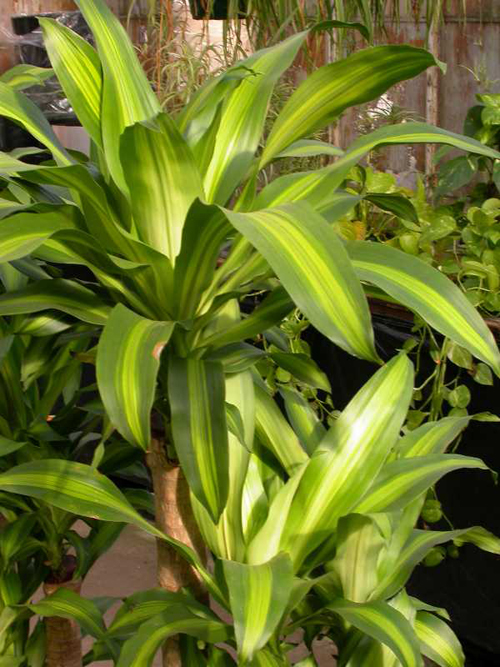
Cornstalk Plant, Dracaena fragrans, also known as Corn Plant, Mass Cane, Mass Cane Plant, Dracaena, Dragon Tree, Ribbon Plant, and Fragrant Dracaena, is one of the most recognizable indoor foliage plants in cultivation. It is commonly grown as a houseplant, office plant, lobby plant, mall plant, and interiorscape specimen because of its cane-like stems, long arching leaves, tolerance of lower indoor light, and generally forgiving nature.
Older references commonly place Dracaena in Agavaceae, which is why that family name appears in many older houseplant and toxic-plant lists. Modern taxonomy generally places Dracaena in Asparagaceae. The family-name change does not change the practical pet-safety issue: Dracaena fragrans should be treated as toxic to dogs and cats because ingestion can cause gastrointestinal and oral irritation.
In older household-plant references, the Dracaena genus was sometimes considered non-toxic or only questionably toxic, and the toxic principle was occasionally described as unknown or possible alkaloidal content. That older caution is understandable because severe fatalities are not a major feature of Dracaena exposure, and ordinary ingestion is usually not life-threatening. However, current pet-toxicology references consistently list Dracaena and Cornstalk Plant as toxic to dogs and cats, with saponins identified as the practical toxic principle.
Saponins are soap-like plant glycosides that can irritate mucous membranes and the gastrointestinal tract. When a dog or cat chews or swallows Dracaena leaves, the plant material may cause nausea, drooling, vomiting, diarrhea, abdominal discomfort, depression, anorexia, weakness, and incoordination. Cats are particularly noted in current pet-poison references for developing dilated pupils after Dracaena ingestion, in addition to drooling, gastrointestinal upset, and loss of coordination.
That said, Cornstalk Plant should not be framed as a hidden lethal houseplant in the same way as true lilies, oleander, castor bean, or yew. There are no well-established patterns of fatal Dracaena poisoning in ordinary household pet exposures. The better modern framing is that Dracaena is mildly to moderately toxic, with illness most often limited to vomiting, diarrhea, drooling, loss of appetite, depression, and, in cats, dilated pupils.
Could Dracaena make a pet ill? Quite possibly. Is it likely the result of a mysterious lethal toxin? Not usually. Over-ingestion of many common, fibrous, non-food plant materials can cause an animal to vomit as the body attempts to expel foreign, irritating, or non-digestible material. Dogs and cats do not digest grasses and houseplant leaves the way herbivores do, and the combination of fibrous plant material plus irritating saponins can readily produce gastrointestinal upset.
The quality and severity of illness may depend on the amount consumed, the plant part eaten, the individual pet’s sensitivity, the animal’s size, and the pet’s baseline health. A large dog that chews one leaf may develop little more than mild stomach upset, while a cat, puppy, small dog, elderly pet, or medically fragile animal may show more noticeable vomiting, drooling, depression, weakness, or incoordination after a similar exposure.
The plant’s taste and texture may also limit ingestion. Dracaena leaves are fibrous and not a natural food source for dogs or cats. Many animals chew a small amount, become nauseated or irritated, and stop. Some pets, however, especially cats that chew houseplants, puppies, bored dogs, or animals confined near indoor plants, may return to the plant repeatedly and consume enough to cause persistent symptoms.
For cats specifically, Cornstalk Plant deserves more caution than the old “basically non-toxic” framing suggests. Current pet-toxicology references repeatedly list cat signs including vomiting, drooling, appetite loss, depression, incoordination, and dilated pupils. A cat with dilated pupils, repeated vomiting, weakness, or abnormal coordination after chewing Dracaena should be evaluated more carefully than a pet with one brief vomiting episode and no other signs.
For practical household safety, Cornstalk Plant should be kept away from pets that chew houseplants, dig in pots, or shred leaves. Dropped leaves, damaged stems, and accessible containers should be cleaned up or moved out of reach. The plant is not among the most dangerous household toxins, but it is not truly pet-safe either.
Immediate Response to Cornstalk Plant Ingestion
- Remove the Source: Prevent further ingestion by removing the pet from the Cornstalk Plant, Corn Plant, Dracaena leaves, stems, cane pieces, dropped foliage, potting soil, or any remaining plant material.
- Remove Plant Material from the Mouth: If ingestion was recent and it is safe to do so, remove visible plant matter from the mouth.
- Rinse the Mouth: Flush the mouth gently with water to remove remaining plant material, sap, or irritating residue.
- Identify the Exposure: Determine whether the pet chewed leaves, swallowed leaf pieces, ate stems, shredded plant material, or repeatedly chewed the plant over time.
- Watch for Common Signs: Monitor for vomiting, diarrhea, drooling, loss of appetite, abdominal discomfort, depression, weakness, or incoordination.
- Watch Cats Closely: Cats should also be monitored for dilated pupils, increased salivation, loss of coordination, weakness, hiding, or worsening depression.
- Contact Veterinary Help if Needed: Consult a veterinarian, emergency veterinary clinic, Pet Poison Helpline, or another animal poison-control professional if symptoms are persistent, if vomiting is repeated, if the pet cannot keep water down, if a cat develops dilated pupils or incoordination, or if the exposed animal is very small, young, elderly, pregnant, or medically fragile.
Inducing Vomiting and Decontamination
- Usually Mild to Moderate Exposure: Most Cornstalk Plant ingestions are expected to cause gastrointestinal upset rather than life-threatening poisoning, but repeated vomiting or diarrhea can still become a dehydration problem.
- Getting Plant Material Out Matters: If a dog has recently swallowed a meaningful amount of Dracaena leaves or stems, removing remaining plant material from the stomach may reduce continued gastrointestinal irritation from saponins and fibrous plant material.
- Spontaneous Vomiting May Occur: The pet may vomit naturally as the body attempts to expel irritating, non-digestible plant material.
- Inducing Vomiting in Dogs Only: If ingestion was recent and the dog is alert, breathing normally, able to swallow, and not showing weakness, collapse, repeated vomiting, severe depression, breathing difficulty, severe abdominal pain, marked incoordination, or neurologic signs, a veterinarian or animal poison-control professional may recommend inducing vomiting with fresh 3% hydrogen peroxide.
- Cat Warning: Hydrogen peroxide should not be used to induce vomiting in cats unless a veterinarian specifically directs it. Cats are more prone to irritation and complications from hydrogen peroxide, and home vomiting attempts may create more risk than benefit.
- Do Not Induce Vomiting in an Unstable Animal: Vomiting should not be attempted in any animal that is weak, collapsed, sedated, having trouble breathing, unable to swallow normally, already vomiting repeatedly, showing significant neurologic signs, or otherwise unstable.
- Activated Charcoal: Activated charcoal is not usually necessary for ordinary Dracaena exposures, but a veterinarian or poison-control professional may consider it in unusually large or complicated cases.
Symptomatic Care and Treatment
- Hydration: Ensure the pet receives adequate fluids to reduce the risk of dehydration from vomiting, diarrhea, drooling, or reduced willingness to drink.
- Monitor Vomiting and Diarrhea: Repeated vomiting, persistent diarrhea, blood in vomit or stool, inability to keep water down, weakness, or worsening lethargy should prompt veterinary evaluation.
- Cats with Dilated Pupils: A cat with dilated pupils, incoordination, drooling, or depression after Dracaena ingestion should be monitored closely and veterinary guidance is recommended, especially if signs are persistent or worsening.
- Gastrointestinal Support: A veterinarian may recommend anti-nausea medication, gastrointestinal protectants, fluids, or other supportive care if signs are more than mild or do not resolve quickly.
- Rest and Observation: Keep the pet calm, prevent further plant access, and observe for worsening signs over the next several hours.
Prognosis and Recovery
- General Outlook: Serious poisoning from Cornstalk Plant ingestion is uncommon, and most cases are expected to involve gastrointestinal upset rather than life-threatening intoxication.
- Expected Recovery: With prevention of further ingestion and supportive care, most pets recover uneventfully once vomiting, diarrhea, drooling, or stomach irritation resolves.
- Higher-Risk Situations: Veterinary care is more important if vomiting or diarrhea is persistent, if blood appears, if the pet becomes dehydrated, if a cat develops dilated pupils or loss of coordination, or if the animal is small, young, elderly, or medically fragile.
- Prevention: Keep Cornstalk Plant, Corn Plant, Mass Cane, Dracaena, and related houseplants away from pets that chew foliage, dig in pots, or shred indoor plants.