Cyclamen Toxicity and Tuber Ingestion
Is Cyclamen Poisonous to Dogs, Cats, Horses, and Livestock?
Yes—Cyclamen, Cyclamen species, is poisonous to dogs, cats, horses, and livestock. These plants contain biologically active triterpene saponins, including cyclamin and related glycosides. Chewing flowers or leaves most often causes drooling, nausea, vomiting, diarrhea, abdominal discomfort, appetite loss, and lethargy.
The rounded underground tuber presents the greatest practical concern because an animal can consume a substantial mass of saponin-rich storage tissue after digging in a container or garden bed. Severe gastrointestinal illness, weakness, abnormal cardiovascular findings, tremors, seizures, collapse, and death have been reported or recognized as possible after substantial exposure, but exact veterinary doses and the frequency of these systemic effects have not been established.
About this guide: This page provides general pet-poisoning information and cannot diagnose or treat an individual animal. For any suspected exposure, contact a veterinarian or animal poison-control service immediately. Do not induce vomiting, give medication, or attempt home decontamination unless directed by a veterinary professional.
Cyclamen
Cyclamen spp.
Commonly cultivated species include:
Cyclamen persicum Mill. — Florist’s Cyclamen or Persian Cyclamen
Cyclamen hederifolium Aiton — Ivy-leaved Cyclamen
Cyclamen coum Mill. — Eastern or Hardy Cyclamen
Cyclamen purpurascens Mill. — Alpine Cyclamen
Cyclamen africanum Boiss. & Reut. — African Cyclamen
Cyclamen cilicium Boiss. & Heldr. — Cilician Cyclamen
Most potted plants sold as Florist’s Cyclamen are cultivated forms or hybrids centered on Cyclamen persicum. A genus-level entry is appropriate because toxic terpenoid saponins occur across cultivated and wild Cyclamen species.
Primulaceae Batsch ex Borkh. — Primrose Family
Cyclamen belongs to the order Ericales and the subfamily Myrsinoideae. Older botanical references may place the genus in Myrsinaceae, a family now generally included within Primulaceae.
Cyclamen, Sowbread, Swinebread, Florist’s Cyclamen, Florists’ Cyclamen, Persian Cyclamen, Persian Violet, Alpine Cyclamen, Alpine Violet, Ivy-leaved Cyclamen, Ivy Leaf Cyclamen, Hardy Cyclamen, Eastern Cyclamen, African Cyclamen, Cyclamen spp., Cyclamen persicum, Cyclamen hederifolium, Cyclamen coum, Cyclamen purpurascens
“Persian Violet” and “Alpine Violet” are horticultural common names. Cyclamen is not a true violet and does not belong to the violet family, Violaceae.
“Sowbread” and “Swinebread” reflect historical reports of pigs rooting for and eating the tubers. Those names do not establish that raw Cyclamen tubers are safe for pigs, pets, horses, or other animals.
Triterpene Saponins
Cyclamen species produce structurally diverse triterpene saponins, also called triterpene glycosides. Cyclamin is the best-known named constituent, but the genus contains numerous related compounds rather than one chemically uniform toxin.
Exact-species chemical investigations have isolated cyclamin, saxifragifolin B, isocyclamin, cyclamiretin-derived glycosides, and additional saponins from Cyclamen persicum, Cyclamen hederifolium, Cyclamen mirabile, Cyclamen coum, and other species.
The precise profile varies among species, individual plants, plant parts, developmental stages, and growing conditions. A compound demonstrated in one Cyclamen species should not automatically be assigned at the same concentration to every cultivated or wild member of the genus.
Cyclamin and Related Glycosides
Cyclamin is an amphipathic saponin containing a nonpolar triterpene portion and multiple water-soluble sugar groups. This combination gives saponins their characteristic surface-active and membrane-interacting properties.
Saponins can interact with membrane sterols and alter membrane permeability. Within the gastrointestinal tract, concentrated raw plant material can irritate mucosal tissue and provoke salivation, nausea, vomiting, abdominal discomfort, diarrhea, and appetite loss.
Laboratory studies have demonstrated cytotoxic, membrane-active, anticlastogenic, and other biological effects from isolated Cyclamen saponins. These experiments confirm biological potency but do not establish the clinical dose or expected syndrome after a dog or cat chews one flower or leaf.
The Underground Tuber Is the Highest-Concern Exposure
Cyclamen grows from a rounded or flattened underground stem tuber. The tuber stores nutrients and biologically active compounds and remains present during seasonal dormancy after the visible leaves and flowers disappear.
Many chemical and pharmacological investigations obtain Cyclamen saponins from tuber or other underground tissue. A dog digging in a pot or garden bed may also swallow a much larger mass of tuber than it would consume from the bitter foliage.
These factors make tuber ingestion substantially more concerning than a brief flower or leaf nibble. The distinction reflects both saponin-rich storage tissue and the amount realistically available, not a validated universal concentration applying to every tuber.
Attached roots, cut tuber pieces, dormant tubers, repotting debris, and discarded whole plants should all remain inaccessible. Dormancy, drying, or the absence of foliage does not establish that the tuber has become safe.
Leaves, Flowers, Stalks, and Seed Capsules
Leaves, flowers, petioles, flower stalks, developing seed capsules, roots, and tuber tissue should all be treated as unsuitable for animal consumption.
A small foliage or flower exposure is generally expected to deliver less plant material than a tuber ingestion. It may cause no signs or limited gastrointestinal irritation, but no leaf count, flower count, or cultivar has been established as universally safe.
After pollination, the flower stalk may bend or coil toward the soil while a capsule develops. Fallen flowers, detached foliage, seed capsules, and pruning debris should be collected before animals can chew them.
Laboratory Hemolysis Is Not a Defined Clinical Syndrome
Many saponins can damage red blood cells under laboratory conditions when they contact cellular membranes directly at sufficient concentrations. This property is often described as hemolytic activity.
That laboratory effect does not prove that ordinary gastrointestinal exposure to raw Cyclamen predictably causes clinically important intravascular hemolysis. Gastrointestinal absorption of large intact saponin molecules may be limited and variable.
Pale mucous membranes, jaundice, red or brown urine, falling red-cell values, or laboratory evidence of hemolysis requires investigation for blood loss, immune-mediated disease, oxidative injury, another toxin, infection, or a patient-specific complication rather than automatic attribution to cyclamin.
Cardiovascular and Neurologic Effects Remain Incompletely Characterized
Abnormal heart rate or rhythm, profound weakness, tremors, seizures, collapse, and death are repeatedly associated with substantial Cyclamen or tuber ingestion in poison references. Primary veterinary evidence defining their frequency, toxic dose, and exact mechanism remains limited.
Possible direct effects of absorbed saponins cannot be excluded. Severe vomiting and diarrhea can also produce dehydration, electrolyte abnormalities, acid-base disturbance, reduced blood pressure, impaired perfusion, weakness, collapse, and secondary rhythm changes.
Tremors or seizures may be worsened by low glucose, electrolyte disturbance, poor circulation, hypoxia, another toxic plant, pesticide, medication, or an unrelated neurologic disorder.
These signs remain legitimate emergency warnings, but they should not be portrayed as the routine progression after every Cyclamen exposure.
Raw Plant Material Versus Concentrated Extracts
Traditional remedies, experimental extracts, purified saponins, nasal preparations, laboratory products, and concentrated herbal formulations may deliver a substantially different dose from chewing intact ornamental foliage.
Product exposure must be evaluated using the complete ingredient list, concentration, formulation, amount missing, route, and any additional active or inactive ingredients.
Research demonstrating cytotoxicity from purified cyclamin or saxifragifolin B cannot be converted directly into a safe or lethal quantity of fresh Cyclamen tissue for an animal.
No Established Veterinary Toxic Dose
No dependable flower count, leaf quantity, seed-capsule amount, tuber weight, cyclamin concentration, total-saponin dose, or gram-per-kilogram threshold has been established for dogs, cats, horses, livestock, rabbits, birds, or other animals.
Risk depends on the Cyclamen species or cultivar, plant part, amount swallowed, degree of chewing, animal size, health, gastrointestinal losses, simultaneous exposures, and time to treatment.
A brief foliage taste is generally less concerning than a substantial or uncertain tuber ingestion. Every confirmed tuber exposure deserves prompt veterinary guidance even when the animal initially appears normal.
Most Exposures Produce Gastrointestinal Signs
Drooling, lip licking, nausea, vomiting, diarrhea, abdominal discomfort, appetite reduction, and lethargy are the most consistently expected findings after Cyclamen ingestion.
Signs may begin within several hours, but no precise onset applies to every animal. Plant part, amount, chewing, stomach contents, animal size, and individual sensitivity influence the clinical course.
A brief flower or leaf nibble may cause no observable illness or only temporary gastrointestinal upset. Tuber ingestion creates greater concern because more saponin-rich tissue may be consumed.
Vomiting, Diarrhea, and Dehydration
Vomiting may occur once or become frequent. Diarrhea may range from soft stool to repeated watery bowel movements.
Continuing gastrointestinal losses can cause dehydration, electrolyte abnormalities, acid-base disturbance, reduced urination, weakness, cool extremities, weak pulses, and impaired circulation.
Blood in vomit or stool is not expected after every Cyclamen exposure. Hematemesis, black tarry stool, substantial fresh blood, severe abdominal pain, progressive distention, or repeated unproductive retching requires examination for significant mucosal injury, foreign material, obstruction, another toxin, or unrelated disease.
Weakness and Cardiovascular Abnormalities
Marked weakness, fainting, inability to stand, pale or gray mucous membranes, prolonged capillary refill, weak pulses, or collapse indicates a clinically important problem rather than uncomplicated mild stomach irritation.
A rapid heart rate may result from pain, stress, dehydration, or low blood pressure. A slow or irregular rhythm has also been listed after substantial Cyclamen exposure, but no characteristic species-specific dysrhythmia has been defined.
Electrocardiography, blood-pressure measurement, hydration assessment, glucose testing, and electrolyte evaluation are needed before selecting rhythm-specific treatment.
Neurologic Signs Are Serious but Uncommon
Incoordination, tremors, altered awareness, seizures, and collapse are possible after a substantial exposure but are not expected following every flower or leaf nibble.
These findings may reflect absorbed plant constituents, severe dehydration, low blood pressure, electrolyte or glucose disturbance, hypoxia, another toxic plant, medication, pesticide, or unrelated neurologic disease.
Active tremors, repeated falling, a seizure, loss of consciousness, or failure to recover normally requires emergency treatment and reassessment of the complete exposure environment.
Clinical Hemolysis Is Not an Expected Routine Finding
Laboratory membrane damage by isolated saponins does not establish that natural Cyclamen ingestion commonly produces hemolytic anemia in animals.
Pale gums may instead reflect dehydration, poor circulation, gastrointestinal blood loss, or another illness. Yellow mucous membranes, red-brown urine, weakness, or laboratory evidence of falling red-cell mass requires a broader diagnostic investigation.
Horses and Livestock
Horses may develop salivation, feed refusal, colic, diarrhea, depression, weakness, altered intestinal sounds, an abnormal pulse, tremors, or collapse. Horses cannot vomit.
Cattle, sheep, goats, pigs, rabbits, poultry, and other animals may encounter Cyclamen through discarded gift plants, uprooted tubers, greenhouse debris, landscaping waste, contaminated clippings, or access to ornamental beds.
Severe illness involving several animals should prompt investigation of the entire shared feed, water, waste pile, pesticide history, fertilizer, and mixed plant material rather than attribution to one visible Cyclamen alone.
Findings That Require Broader Investigation
Persistent major dysrhythmias, paralysis, prolonged coma, severe hemolysis, liver failure, kidney failure, or multisystem organ dysfunction has not been established as the characteristic response to an ordinary raw Cyclamen exposure.
Such findings require confirmation of the plant, assessment of potting products and pesticides, and investigation for another toxic plant, medication, metabolic disorder, infection, obstruction, or underlying disease.
Emergency Warning Signs
Prompt veterinary care is important after any confirmed or possible tuber ingestion, repeated vomiting, inability to retain water, profuse or bloody diarrhea, severe abdominal pain, pronounced weakness, fainting, an irregular pulse, tremors, seizures, altered awareness, collapse, or failure to improve.
Most limited flower or leaf exposures are expected to have a good outcome. A severe or progressive course should not be dismissed, but it should trigger confirmation of both the plant identity and the complete exposure.
Plant Identity and Seasonal Growth
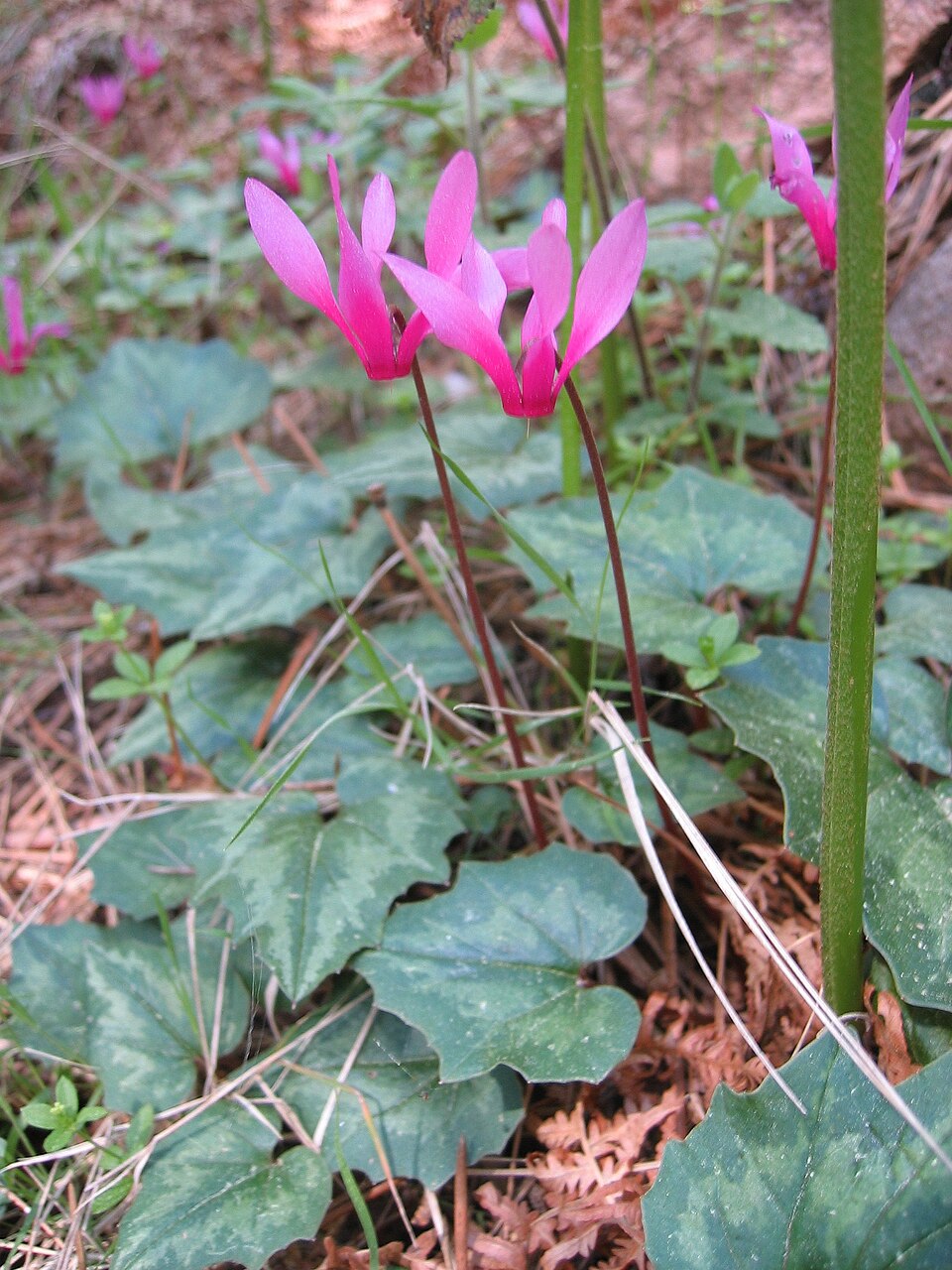
Cyclamen is a genus of tuberous perennial plants recognized by its patterned leaves and distinctive flowers with petals swept sharply backward. The leaves arise individually from the tuber on long stalks and are usually heart-shaped, kidney-shaped, or nearly round.
Leaf surfaces may be dark green, silver, gray-green, or elaborately marbled. Flowers may be white, pink, rose, red, magenta, purple, or bicolored, depending on the species and cultivar.
The plant grows from a rounded or flattened underground stem tuber. This tuber stores water and nutrients and remains alive when the flowers and leaves disappear during dormancy. An apparently empty container or bare garden bed may therefore still contain the most toxic part of the plant.
Why Cyclamen Commonly Enters Homes with Pets
Florist’s Cyclamen is widely sold during autumn and winter as a cool-season houseplant, holiday decoration, porch plant, office display, hospital gift, and seasonal centerpiece. It may enter a home unexpectedly as a gift even when the owner normally avoids toxic plants.
The plant is frequently placed on coffee tables, dining tables, low shelves, windowsills, plant stands, fireplaces, reception desks, and porch steps. These locations may place the flowers and patterned leaves directly within reach of cats, small dogs, puppies, rabbits, and other curious animals.
A plant that appears inaccessible can still create exposure when flowers fall, leaves break, a pot is knocked over, or watering moves loose material onto the floor.
How Dogs Are Exposed
Dogs may chew leaves or flowers, carry fallen plant material, knock over the container, or dig in the potting soil. Digging is especially important because it can expose the tuber, which contains a greater practical concentration of toxic saponins than the foliage.
Puppies, terriers, and dogs that habitually dig in planters may bite directly into the tuber or pull it from the container. A dog may also encounter tuber pieces during repotting, plant division, garden renovation, or disposal of a dying seasonal plant.
Outdoor dogs may dig up hardy Cyclamen growing beneath trees, shrubs, hedges, or groundcover. The risk can be overlooked during dormancy because no flowers or leaves remain above the soil to identify the plant.
How Cats Are Exposed
Cats are more likely to nibble the flowers, leaf stalks, or marbled foliage than to deliberately excavate the tuber. Dangling flowers and flexible stems may also be treated as toys.
A climbing cat may reach Cyclamen on a shelf, windowsill, mantel, or plant stand that would be inaccessible to a dog. Cats may also knock the pot to the floor, exposing the tuber and roots to themselves or another animal in the home.
Repeated small nibbles can be difficult to recognize when only minor leaf-edge damage is visible. Unexplained vomiting, drooling, appetite reduction, or diarrhea in a plant-chewing cat should prompt inspection of the entire plant and the soil surface.
Repotting and Tuber Exposure
Repotting creates one of the highest-risk household situations because the tuber and roots are removed from the soil and placed temporarily within easy reach. Cut tuber pieces, damaged roots, spilled soil, and discarded plant material should be collected immediately.
The tuber may sit partly above the soil naturally, especially in cultivated Florist’s Cyclamen. A dog does not always need to dig deeply to reach it.
After the flowering season, owners sometimes remove the plant from its pot, store the tuber, or discard it because the foliage has died back. A dormant tuber remains toxic and should not be left in an open garage, garden shed, compost pile, bucket, or yard.
Hardy Cyclamen in Gardens
Ivy-leaved Cyclamen, Cyclamen hederifolium, Eastern Cyclamen, Cyclamen coum, and other hardy species are commonly planted beneath deciduous trees, shrubs, hedges, and woodland-style borders.
These plants may naturalize and form colonies through seed production and long-lived tubers. Dogs may encounter them while digging, following rodents, investigating mulch, or disturbing shaded garden beds.
Flowers and leaves may emerge during different seasons depending on the species. The absence of visible foliage does not mean the tuber is gone or that the bed is safe for digging animals.
Fallen Flowers, Leaves, and Seed Capsules
Fallen flowers and leaves usually represent a lower-dose exposure than a tuber, but they still contain irritating saponins and should be removed promptly.
After pollination, many Cyclamen species bend or coil the flower stalk toward the soil as a rounded seed capsule develops. Curious pets may mouth the stalk or capsule, particularly when it rests near the rim of a container or ground surface.
Pruned flowers, yellowing leaves, and seed capsules should not be left in pet-accessible trash, open compost, rabbit pens, poultry runs, paddocks, or livestock feeding areas.
Leaf or Flower Nibble Versus Tuber Ingestion
A brief nibble of a flower or leaf most often causes no signs or limited gastrointestinal upset. The animal may drool, vomit, develop diarrhea, refuse food, or appear temporarily lethargic.
Tuber ingestion is a different exposure. The animal may consume a larger mass of tissue containing a greater concentration of saponins, increasing the risk of severe vomiting, diarrhea, dehydration, cardiovascular abnormalities, tremors, seizures, collapse, or death.
The plant part eaten should therefore be included in every veterinary risk assessment. “The pet ate Cyclamen” is not sufficiently specific when the underground tuber may have been involved.
Horses, Livestock, Rabbits, and Other Animals
Horses, cattle, sheep, goats, pigs, rabbits, poultry, and other animals are unlikely to encounter potted Cyclamen as ordinary forage, but poisoning can occur when whole seasonal plants or garden waste are discarded into animal-accessible areas.
Greenhouse debris, uprooted garden plants, spent gift plants, potting soil, roots, and tubers should never be dumped into paddocks, livestock pens, rabbit enclosures, poultry runs, feed-storage areas, or open compost accessible to animals.
Horses cannot vomit, so gastrointestinal irritation may appear as colic, feed refusal, depression, diarrhea, reduced intestinal sounds, or weakness rather than the repeated vomiting commonly seen in dogs and cats.
Container and Potting-Material Hazards
An animal that overturns or digs in a Cyclamen pot may be exposed to more than the plant. Fertilizer granules, systemic insecticides, pesticide residues, decorative stones, moldy potting mix, water-retaining crystals, plant labels, support pieces, and broken ceramic can produce additional poisoning or foreign-body risks.
Severe neurologic abnormalities, kidney injury, persistent arrhythmias, obstruction signs, profound depression, or illness inconsistent with the expected Cyclamen syndrome should prompt investigation of every product and object in the container.
Common-Name Confusion
Cyclamen is sometimes called Persian Violet or Alpine Violet, but it is unrelated to true violets in the genus Viola. African Violets, Streptocarpus sect. Saintpaulia, are also unrelated and have a different pet-safety profile.
The names Sowbread and Swinebread reflect historical reports of pigs rooting for wild tubers. They do not establish that raw Cyclamen tubers are safe for domestic pigs, pets, horses, or livestock.
Plant identification should rely on the upswept flowers, patterned leaves, long individual leaf stalks, rounded tuber, nursery label, and scientific name rather than one common name.
Diagnosis
No routine laboratory test confirms Cyclamen ingestion or identifies cyclamin in a clinical patient. Diagnosis depends on plant identification, the plant part eaten, estimated amount, exposure timing, gastrointestinal signs, and exclusion of another cause when cardiovascular or neurologic abnormalities develop.
Preserve photographs of the complete plant, flowers, leaves, tuber, pot, nursery label, and any fragments found in vomit or stool. Photograph the disturbed soil or damaged tuber before cleaning the area when this can be done without delaying veterinary care.
Most minor flower or leaf exposures do not require extensive diagnostic testing. Persistent vomiting, severe diarrhea, weakness, abnormal pulse, tremors, or seizures may justify electrolyte testing, glucose measurement, kidney values, acid-base assessment, blood-pressure monitoring, electrocardiography, abdominal imaging, and broader toxicologic investigation.
Prevention
Keep potted Cyclamen in a room inaccessible to plant-chewing animals. A high shelf may not protect against climbing cats, fallen flowers, or a pot being knocked to the floor.
Use a secure barrier or closed room rather than relying only on bitter sprays, decorative stones, or covering the soil. A determined dog may remove the covering and reach the tuber underneath.
Collect fallen flowers, leaves, seed capsules, roots, spilled soil, and tuber fragments promptly. During repotting, confine pets elsewhere until the work area, tools, floor, and waste have been cleaned completely.
Do not discard whole plants or dormant tubers into paddocks, livestock pens, rabbit enclosures, poultry areas, open compost, or animal-accessible yard waste. In homes with persistent plant-chewing or pot-digging animals, choosing a pet-safer seasonal flowering plant is the most reliable prevention.
Immediate Steps After Cyclamen Exposure
- Stop further ingestion: Remove the animal from the plant, fallen flowers, leaves, seed capsules, roots, exposed tuber, spilled soil, and repotting debris.
- Determine the plant part: A brief flower or leaf nibble is generally less concerning than ingestion of the underground tuber. Inspect the soil and tuber for fresh bite marks or missing tissue.
- Remove only loose visible fragments: When the animal is calm, alert, breathing normally, and swallowing normally, remove material resting at the lips or front of the mouth. Do not reach blindly toward the throat.
- Wipe visible residue gently: Use a soft water-dampened cloth on the lips, muzzle, tongue tip, and accessible gums. Do not forcefully flush the mouth.
- Allow voluntary water when appropriate: An alert animal that swallows normally and is not vomiting repeatedly may have access to fresh water. Do not syringe, pour, or force liquids.
- Preserve identification evidence: Save photographs of the complete plant, flowers, leaves, tuber, disturbed soil, nursery label, and any fragments found in vomit or stool.
- Contact a veterinarian after tuber exposure: Obtain prompt guidance whenever tuber tissue was swallowed, the underground portion is damaged, or the amount cannot be determined.
Do Not Attempt Unsupervised Home Treatment
- Do not induce vomiting at home: Hydrogen peroxide, salt, mustard, ipecac, detergent, and manual gagging can cause gastric injury, prolonged vomiting, aspiration, and electrolyte abnormalities.
- Do not administer activated charcoal yourself: Charcoal may be considered professionally after a substantial recent tuber ingestion, but it can be aspirated by a vomiting, weak, tremoring, sedated, or neurologically abnormal animal.
- Do not force food or liquids: Milk, oil, yogurt, bread, honey, or other remedies do not neutralize saponins and may worsen nausea or aspiration risk.
- Do not give antidiarrheal medication automatically: These products may obscure severe irritation, bleeding, ileus, obstruction, or another exposure.
- Do not give cardiac, seizure, or sedative medication from another patient: Treatment depends on the measured rhythm, blood pressure, neurologic findings, glucose, and electrolytes.
- Do not give human pain relievers or leftover prescriptions: Ibuprofen, naproxen, acetaminophen, aspirin, and similar drugs can create a more serious secondary poisoning.
When Veterinary Examination Is Especially Important
- Tuber ingestion: Any confirmed or possible tuber ingestion warrants prompt professional risk assessment because the amount and saponin concentration cannot be estimated reliably at home.
- Persistent gastrointestinal illness: Repeated vomiting, inability to retain water, profuse diarrhea, blood, severe abdominal pain, or continuing food refusal requires treatment.
- Dehydration or poor circulation: Dry or tacky gums, reduced urination, weak pulses, cool extremities, pale or gray mucous membranes, fainting, or collapse requires circulatory assessment.
- Abnormal pulse: A markedly rapid, slow, weak, or irregular pulse requires electrocardiography and blood-pressure monitoring.
- Neurologic abnormalities: Stumbling, tremors, seizures, severe depression, altered awareness, or inability to stand requires emergency evaluation.
- Unexpected severe illness: Paralysis, pronounced anemia, organ injury, coma, or progressive deterioration requires confirmation of the plant and investigation for another exposure.
Veterinary Assessment
The veterinarian will evaluate hydration, abdominal comfort, gastrointestinal losses, mental status, coordination, muscle activity, heart rate, pulse quality, blood pressure, perfusion, and the possibility of tuber or mixed-product ingestion.
Minor foliage exposure without clinical signs may require little or no diagnostic testing. Persistent or systemic signs may justify glucose and electrolyte measurement, kidney values, packed cell volume, total solids, acid-base assessment, urinalysis, electrocardiography, blood-pressure monitoring, and abdominal imaging.
The entire overturned container should be assessed when relevant. Fertilizer, systemic insecticide, decorative stones, moldy potting material, water-retaining polymers, plant labels, or broken ceramic may create separate toxicologic or foreign-body hazards.
Professional Gastrointestinal Decontamination
Veterinarian-induced vomiting may be considered after a recent, meaningful tuber ingestion in an alert, asymptomatic dog or cat with normal coordination, swallowing, breathing, blood pressure, and gastrointestinal function.
Emesis is inappropriate when the animal is already vomiting repeatedly, weak, hypotensive, ataxic, tremoring, seizuring, collapsed, breathing abnormally, or unable to protect its airway.
Activated charcoal may be considered after a substantial recent tuber or concentrated-product exposure when airway protection and gastrointestinal motility are adequate. Its effectiveness against the complete mixture of Cyclamen saponins has not been established sufficiently to justify routine use after a small flower or leaf nibble.
Gastric lavage would be reserved for an exceptional large recent ingestion when safer decontamination is unavailable or inadequate and the patient has been anesthetized and intubated.
Gastrointestinal and Fluid Support
Persistent nausea or vomiting may be treated with a veterinarian-selected antiemetic such as maropitant or ondansetron after obstruction, foreign material, pancreatitis, infection, and another toxin have been considered.
Fluids and electrolyte correction may be required when vomiting or diarrhea produces measurable dehydration, hypotension, poor perfusion, or reduced urine production.
Sucralfate or acid suppression may be used when repeated vomiting has caused documented esophageal or gastric injury, hematemesis, or melena. These medications are supportive treatments rather than Cyclamen antidotes.
Cardiovascular and Neurologic Support
Weakness, fainting, collapse, or an abnormal pulse may require continuous electrocardiographic and blood-pressure monitoring. Treatment should be based on the documented rhythm, perfusion, oxygenation, electrolytes, glucose, and acid-base status.
No one antiarrhythmic applies to every suspected Cyclamen patient, and no specific saponin antidote is available.
Tremors require a quiet protected environment and correction of metabolic abnormalities. Active seizures may be treated with a veterinarian-selected benzodiazepine followed by additional anticonvulsant or anesthetic therapy when necessary.
Oxygen, intubation, and assisted ventilation may be needed when consciousness, aspiration, seizure activity, or sedative treatment impairs breathing.
Horses and Livestock
Remove all animals from Cyclamen plants, uprooted tubers, greenhouse debris, garden waste, contaminated feed, and open compost.
Horses cannot vomit. Veterinary management may include colic assessment, intestinal-motility evaluation, nasogastric examination when appropriate, fluids, electrolyte correction, cardiovascular monitoring, and neurologic observation.
Group illness requires examination of all shared feed, water, clippings, pesticides, fertilizers, and discarded ornamental material.
Recovery and Prognosis
The prognosis is good to excellent after most limited flower or leaf ingestions. Gastrointestinal signs generally improve after access ends and hydration is maintained.
The prognosis becomes more guarded after substantial tuber ingestion or when persistent gastrointestinal losses, low blood pressure, significant dysrhythmia, tremors, seizures, aspiration, or collapse develops.
Because severe systemic Cyclamen poisoning is not well characterized in veterinary case series, an unexpectedly prolonged or worsening course should prompt reassessment of the identification, amount, container contents, and alternative diagnoses.
Frequently Asked Questions About Cyclamen Identification and Tuber Exposure
Why is the plant part more important than the number of visible bite marks?
A few damaged leaves may represent a limited exposure, while one hole in the soil may mean the animal reached a much larger underground tuber. Tuber tissue is the principal high-concern exposure because it is saponin-rich storage material and can be swallowed in a substantial mass. Photograph both the plant damage and the disturbed soil.
Can a dormant Cyclamen tuber remain poisonous after the plant appears dead?
Yes. Cyclamen naturally loses its visible foliage during dormancy while the living tuber remains beneath or partly above the soil. A bare container, stored tuber, or apparently empty garden bed can therefore retain the plant part of greatest concern to a digging animal.
How can I tell whether my pet reached the tuber?
Look for displaced soil, exposed rounded tissue, fresh tooth marks, missing chunks, damaged roots, or tuber fragments on the floor or in vomit. Do not assume that the tuber is intact merely because the leaves and flowers show little damage. Preserve photographs before repotting or cleaning the container.
Does the name Sowbread mean Cyclamen is safe for pigs?
No. Sowbread and Swinebread reflect historical observations and traditional names, not a controlled safety determination. Domestic pigs, pets, horses, and livestock should not be given raw Cyclamen tubers, foliage, flowers, or discarded plants.
Does laboratory hemolytic activity mean my pet will develop hemolytic anemia?
No. Many isolated saponins can damage red-cell membranes under laboratory conditions, but that does not establish clinically important hemolysis after ordinary gastrointestinal exposure to raw Cyclamen. Pale gums, jaundice, red-brown urine, or falling red-cell values require investigation for bleeding, another toxin, immune-mediated disease, or a patient-specific complication.
How strong is the evidence for Cyclamen causing seizures or heart-rhythm abnormalities?
These effects are recognized as possible after substantial ingestion, especially involving tuber tissue, but detailed primary veterinary cases and dose-response studies are limited. Severe dehydration, electrolyte disturbance, low blood pressure, hypoglycemia, another toxin, or a mixed exposure may also produce cardiovascular or neurologic abnormalities.
Could the pot contain a more dangerous exposure than the plant itself?
Yes. An animal that digs up a Cyclamen may also swallow fertilizer, systemic insecticide, moldy potting material, decorative stones, water-retaining crystals, labels, or broken ceramic. Severe neurologic signs, kidney injury, obstruction, or prolonged deterioration requires assessment of the entire container rather than the Cyclamen alone.
What evidence should I take to the veterinary clinic?
Bring photographs of the complete plant, flowers, leaves, exposed tuber, disturbed soil, nursery label, and container contents. Record the time of access, estimated amount, vomiting or diarrhea, and whether tuber pieces were found in the mouth, vomit, or surrounding area. Safely contain any recovered fragment requested by the clinic.