
Cyclamen spp
Primulaceae
Sowbread, Florist’s Cyclamen, Persian Cyclamen, Persian Violet, Alpine Violet, Ivy-leaved Cyclamen, Hardy Cyclamen
Terpenoid saponins, including cyclamin and related cyclamen saponins; highest concentrations are typically found in the tubers, corm-like rootstock, and roots
Drooling, nausea, vomiting, diarrhea, abdominal pain, gastrointestinal irritation or inflammation, reduced appetite, lethargy, weakness, dehydration, and depression. Large ingestions, especially of tubers or rootstock, may cause more serious signs including severe vomiting and diarrhea, abnormal heart rate or rhythm, tremors, seizures, collapse, and death.
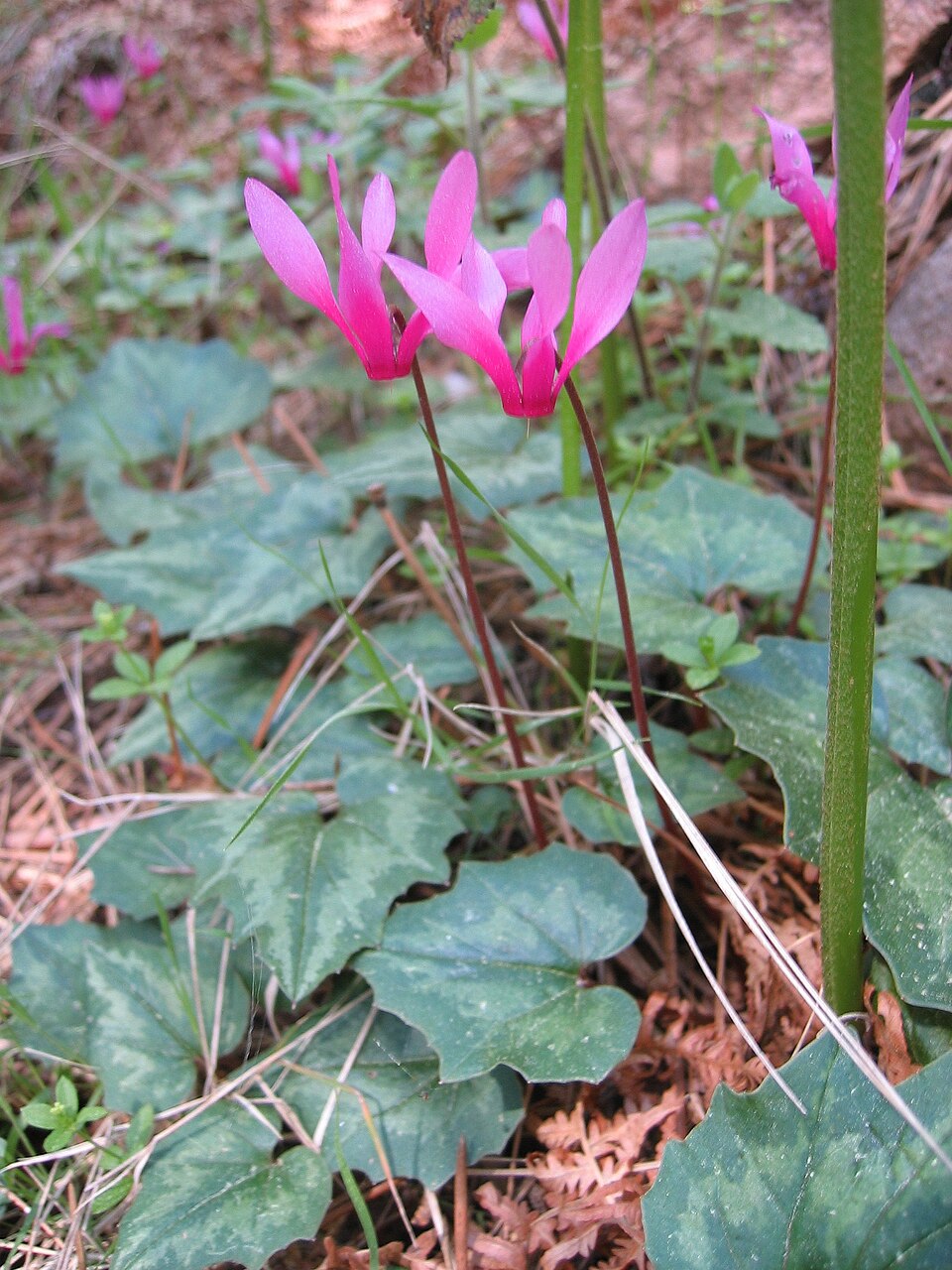
Cyclamen is a popular flowering houseplant and seasonal ornamental, often sold during the cooler months for its colorful upswept flowers and patterned heart-shaped leaves. It is commonly kept indoors, placed on porches, used in containers, or given as a holiday or winter gift plant. The plant is attractive, compact, and easy to overlook as a pet hazard, but it should be considered toxic to dogs, cats, horses, and other animals that may chew or dig into it.
The name Cyclamen refers to a group of plants in the genus Cyclamen, with florist’s cyclamen and related cultivated varieties being the most common household exposures. Older references may list the toxin as “cyclamine,” but the safer modern toxicology framing is that Cyclamen contains irritating terpenoid saponins, including cyclamin and related cyclamen saponins. These compounds can irritate the gastrointestinal tract and, in larger exposures, may contribute to more serious systemic signs.
The most important practical point is plant part. The flowers and leaves can cause drooling, vomiting, diarrhea, and stomach upset if chewed, but the tubers, rootstock, and roots are generally considered the most toxic portions of the plant. This matters because dogs may dig in potted plants, chew exposed tubers, or eat pieces of rootstock during repotting. Cats are more likely to nibble leaves or flowers, but they may also be exposed if tubers are accessible or if plant debris is left out.
Most ordinary nibbling exposures cause gastrointestinal signs. A pet may drool, lick the lips, vomit, develop diarrhea, refuse food, or act uncomfortable. The irritation may be unpleasant but is often manageable with prompt removal of the plant, mouth rinsing, hydration support, and monitoring. However, Cyclamen should not be treated as harmless. Large ingestions, concentrated tuber ingestion, repeated chewing, or exposure in a very small or medically fragile animal can be much more serious.
Severe Cyclamen poisoning is most often associated with ingestion of the tuber or rootstock. In these cases, vomiting and diarrhea may be intense enough to cause dehydration and weakness. More serious signs may include abnormal heart rate or rhythm, tremors, seizures, collapse, and death. These severe outcomes are not expected from every small exposure, but they are important because the most dangerous part of the plant may be hidden under the soil where a digging dog can reach it.
Cyclamen is sometimes confused with unrelated plants because of its common names. “Persian Violet” and “Alpine Violet” are common ornamental names, but Cyclamen is not a true violet. “Sowbread” is an old common name based on the historical observation that pigs would eat the tubers, but that should not be interpreted as a sign that the plant is safe for pets. Dogs, cats, horses, rabbits, and other animals should not be allowed to chew Cyclamen leaves, flowers, stems, tubers, or discarded plant material.
Because Cyclamen is often displayed at pet height on tables, shelves, porches, and plant stands, prevention is especially important. Fallen flowers, broken stems, repotting debris, and exposed tubers should be cleaned up promptly. In homes with plant-chewing cats or dogs that dig in pots, Cyclamen is best kept completely inaccessible or replaced with a pet-safer flowering plant.
Immediate Response to Cyclamen Ingestion
- Remove the Source: Prevent further ingestion by removing the pet or grazing animal from Cyclamen, Sowbread, flowers, leaves, stems, roots, tubers, potting soil, clippings, or any remaining plant material.
- Identify the Plant: Confirm whether the plant is Cyclamen species, including Florist’s Cyclamen, Persian Cyclamen, Hardy Cyclamen, Ivy-leaved Cyclamen, Persian Violet, Alpine Violet, or Sowbread.
- Determine the Plant Part Eaten: Try to determine whether the pet only chewed flowers or leaves, or whether roots, tubers, or the corm-like rootstock were eaten. Tuber and rootstock ingestion is the higher-risk exposure.
- Remove Plant Material from the Mouth: If ingestion was recent and it is safe to do so, remove visible leaves, flowers, stems, roots, or tuber fragments from the mouth.
- Rinse the Mouth: Flush the mouth gently with water to remove remaining plant material, bitter sap, or irritating residue.
- Watch for Symptoms: Monitor for drooling, lip licking, vomiting, diarrhea, abdominal pain, reduced appetite, lethargy, weakness, dehydration, tremors, collapse, abnormal heart signs, or seizures.
- Contact Veterinary Help if Needed: Consult a veterinarian, emergency veterinary clinic, Pet Poison Helpline, or another animal poison-control professional if any tuber or rootstock was eaten, if a large amount was consumed, if symptoms are persistent or severe, or if the exposed animal is very small, young, elderly, pregnant, medically fragile, or already ill.
Inducing Vomiting and Decontamination
- Tuber Ingestion Is Higher Risk: The tubers and rootstock contain the highest concentration of Cyclamen saponins and create the greatest concern for severe vomiting, diarrhea, abnormal heart rhythm, seizures, collapse, or death.
- Getting Plant Material Out Matters: If a dog has recently swallowed a meaningful amount of Cyclamen, especially tuber or root material, removing remaining plant material from the stomach may reduce ongoing gastrointestinal irritation and toxin absorption.
- Spontaneous Vomiting May Occur: The pet may vomit naturally because Cyclamen saponins are irritating to the stomach and intestines.
- Inducing Vomiting in Dogs Only: If ingestion was recent and the dog is alert, breathing normally, able to swallow, and not already vomiting repeatedly, weak, collapsed, tremoring, seizuring, showing abnormal heart signs, or neurologic signs, a veterinarian or animal poison-control professional may recommend inducing vomiting with fresh 3% hydrogen peroxide.
- Cat Warning: Hydrogen peroxide should not be used to induce vomiting in cats unless a veterinarian specifically directs it. Cats are more prone to irritation and complications from hydrogen peroxide, and home vomiting attempts may create more risk than benefit.
- Do Not Induce Vomiting in an Unstable Animal: Vomiting should not be attempted in any animal that is weak, collapsed, sedated, having trouble breathing, unable to swallow normally, already vomiting repeatedly, showing tremors, seizures, abnormal heart signs, severe depression, or neurologic signs.
- Activated Charcoal: Activated charcoal may be considered by a veterinarian or poison-control professional when a large amount was eaten, when tuber material was ingested, or when symptoms are significant. Ordinary small flower or leaf nibbles may not require aggressive decontamination.
- Gastric Lavage: If a very large amount of tuber or rootstock was ingested, or if severe signs are developing, a veterinarian may consider gastric lavage or other controlled decontamination in a hospital setting.
Symptomatic Care and Treatment
- No Specific Antidote: There is no specific antidote for Cyclamen ingestion. Treatment is symptomatic and supportive.
- Hydration: Ensure the pet receives adequate fluids to reduce the risk of dehydration caused by vomiting, diarrhea, drooling, or reduced drinking.
- Monitor Vomiting and Diarrhea: Repeated vomiting, persistent diarrhea, blood in stool, inability to keep water down, weakness, or worsening lethargy should prompt veterinary evaluation.
- Cardiac Monitoring: In larger ingestions, especially tuber ingestion, a veterinarian may monitor heart rate, rhythm, blood pressure, perfusion, and overall cardiovascular status because abnormal heart rhythm has been reported after significant exposure.
- Neurologic Monitoring: Tremors, seizures, stumbling, collapse, severe weakness, or abnormal mentation require emergency veterinary evaluation and supportive care.
- Gastrointestinal Protection:
- Kapectolin: To alleviate gastrointestinal upset and diarrhea, Kapectolin may be given at a dose of 1 to 2 ml/kg four times daily to help coat and protect the stomach lining.
- Sucralfate: Sucralfate may be used for gastrointestinal irritation because it reacts with stomach acid to form a paste-like protective barrier between irritated tissue and stomach contents.
- Dogs greater than 60 lbs: 1g every 6 to 8 hours.
- Dogs less than 60 lbs: 0.5g every 6 to 8 hours.
- Cats: 0.25g every 8 to 12 hours.
Houseplant and Container-Plant Prevention
- Keep Cyclamen Out of Reach: Place Cyclamen plants where dogs, cats, puppies, kittens, rabbits, and other chewing pets cannot access the flowers, leaves, stems, or soil surface.
- Prevent Digging: Dogs that dig in potted plants may expose and chew the tuber or rootstock, which is the highest-risk part of the plant.
- Clean Up Plant Debris: Pick up fallen flowers, broken leaves, pruned stems, repotting debris, roots, and tuber pieces promptly.
- Do Not Feed Clippings: Cyclamen leaves, flowers, roots, tubers, or discarded plant material should not be fed to horses, goats, sheep, cattle, rabbits, or other animals.
- Use Pet-Safer Gift Plants: Because Cyclamen is often sold as a seasonal indoor gift plant, choose pet-safer flowering alternatives for homes with plant-chewing cats or dogs.
Prognosis and Recovery
- General Outlook: Most small flower or leaf chewing exposures are expected to cause gastrointestinal upset rather than life-threatening poisoning.
- Expected Recovery: Mild cases often improve with removal of the plant, mouth rinsing, hydration, and supportive care once vomiting and diarrhea are controlled.
- Higher-Risk Cases: Prognosis becomes more guarded if tubers or rootstock were eaten, if the animal is very small, if vomiting or diarrhea is severe, or if abnormal heart rhythm, tremors, seizures, collapse, or severe weakness develops.
- Veterinary Care: Veterinary evaluation is recommended for any tuber ingestion, any significant ingestion, persistent gastrointestinal signs, neurologic signs, cardiac concerns, or uncertain plant identity.
- Prevention: Prevent further ingestion of the plant, keep Cyclamen away from animals that chew plants or dig in pots, and remove discarded plant material from animal-accessible areas.