
Narcissus spp
Amaryllidaceae
Narcissus, Jonquil, Jonquils, Paper White, Paperwhite, Paperwhite Narcissus, Poet’s Narcissus, Pheasant’s Eye Narcissus, Trumpet Daffodil, Lent Lily, Spring Daffodil
Lycorine and related phenanthridine alkaloids; galantamine; narciclasine; scillaine or scillitoxin-type glucosides reported in older references; calcium oxalate crystals, especially in bulb outer layers, stems, and sap. Bulbs contain the highest concentration of toxic alkaloids and are the most dangerous plant part.
Drooling, nausea, vomiting, diarrhea, abdominal pain, gastrointestinal inflammation, inappetence, lethargy, sedation, depression, dehydration, excessive thirst, shivering, tremors, low body temperature, low blood pressure, slow heart rate or abnormal heart rhythm, respiratory depression, collapse, convulsions, seizures, electrolyte imbalance, liver or kidney stress in severe cases, and death. Symptoms may begin within 15 minutes or may be delayed for several hours, with onset reported up to 24 hours after ingestion.
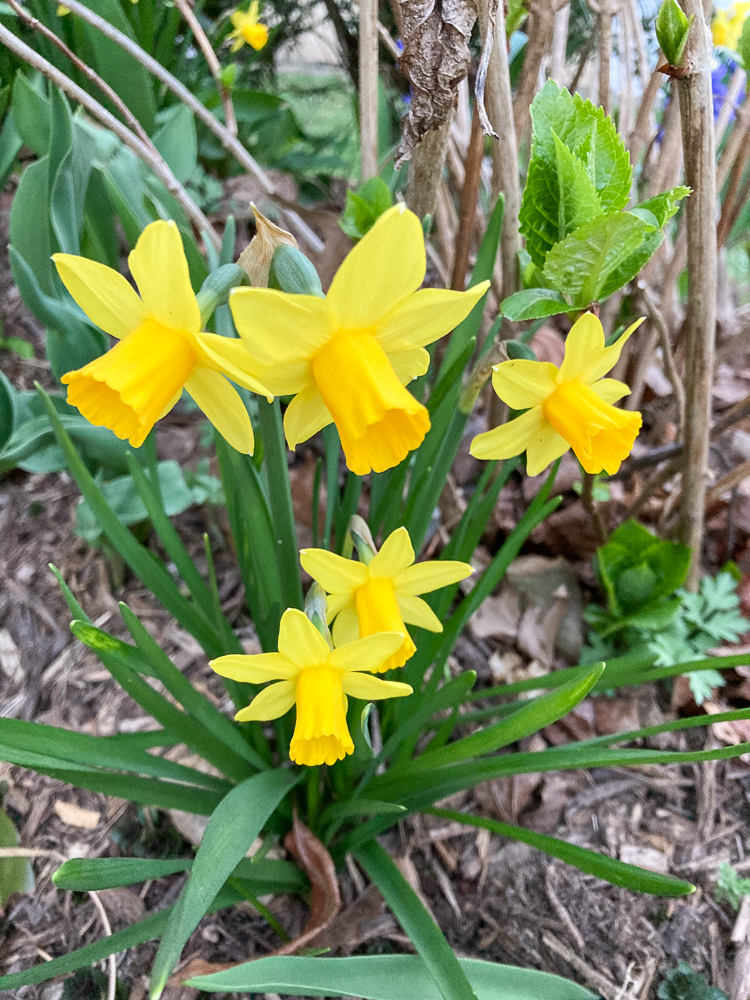
Grown from a bulb, Narcissus, often called Daffodil and less often Jonquil or Paper White, is a genus of hardy, common, spring-flowering perennials in the Amaryllis family, Amaryllidaceae. These plants are not true lilies, and their risk profile is different from the kidney-failure risk associated with true Lilium and Hemerocallis lilies in cats. Daffodils are bulb plants whose primary pet-toxic concern is gastrointestinal and systemic poisoning from Amaryllidaceae alkaloids, especially after bulb ingestion.
Originating from the western Mediterranean, their native range includes Europe, including Spain and Portugal, North Africa, and West Asia, although many species, including Narcissus poeticus, have become widely naturalized in North America. Depending upon how they are classified, the number of distinct species varies widely due to similarity between species and hybridization between species and can be as low as 26 or as high as 60 or more. Due to their brilliantly colored trumpet-shaped flowers, which come in shades and tones of yellow, white, orange, pink, red, and green, Narcissus and its hybrids are widely used to beautify and accent gardens, borders, containers, lawns, and spring landscapes.
Daffodils pose a danger to pets because they contain various phenanthridine alkaloids, the most common and toxicologically important of which is lycorine. Lycorine is strongly emetic, meaning it can trigger vomiting, and it is responsible for much of the early gastrointestinal distress associated with daffodil ingestion. Other toxins or biologically active compounds reported in Narcissus include galantamine, the glucoside scillaine or scillitoxin in older references, and the antimitotic compound narciclasine, the last of which has been described as poisoning with a colchicine-like effect.
In laboratory studies with mice, narciclasine has been reported with a subcutaneous LD50, or lethal dose at which 50% of subjects will die, of approximately 5 mg/kg, although toxic effects can be seen at lower levels. This type of laboratory value should not be used as a practical dose estimate for pets eating plants in the yard, but it does support the broader point that Narcissus contains more than one biologically active compound and should not be dismissed as merely a harmless spring flower.
The outer layers of the bulb contain the highest concentration of toxins, making bulbs the most dangerous part of the plant. This is especially important for dogs, because dogs may dig up bulbs, chew stored bulbs, eat bulbs during planting, or ingest discarded bulbs during garden cleanup. The flowers and stems also contain a notable level of toxin, so there is some risk of poisoning from ingestion of foliage or flowers as well as from bulbs. Cats may be exposed by chewing flowers or leaves brought indoors in cut arrangements, while dogs are more likely to encounter bulbs outdoors or in storage.
Daffodils also have idioblasts that contain raphides of calcium oxalate crystals, with higher concentrations described in the stems and sap. Found in a number of plant species, both poisonous and non-poisonous, idioblasts differ from neighboring cells in that they contain non-living substances such as oil, latex, gum, resin, tannin, pigments, or minerals. One of these substances is raphides, or bundles of needle-like crystals of calcium oxalate that tend to be blunt at one end and sharp at the other. The crystals are packed in a gelatinous substance that may contain free oxalic acid.
When animals chew on the leaves, flowers, stems, or bulb tissue of the plant, the tip of the idioblast is broken, allowing saliva from the animal or sap from the plant to enter the cell. This in turn causes the gelatinous material to swell, forcing the raphides, or needle-like calcium oxalate crystals, to shoot out from the cells into the surrounding tissue. The calcium oxalate crystals can then penetrate and embed themselves into the tissues of the mouth, tongue, throat, and stomach, causing immediate discomfort and aggravation, as would be expected when microscopic needles are lodged in the throat and mouth. The idioblasts may continue to expel raphides for a considerable amount of time after chewing, allowing the crystals to also irritate the lining of the stomach and intestine and contribute to additional gastrointestinal upset.
Daffodil ingestion by companion animals is uncommon compared with the sheer number of daffodils planted in gardens, and serious daffodil intoxication is rarer yet. Most documented cases involve dogs, especially those that dig up or chew bulbs. The National Animal Poison Control Center, located in Illinois, USA, reported receiving only a few inquiries annually regarding daffodil ingestion in older literature. The Veterinary Poisons Information Service, located in London, England, reported four cases of severe poisoning; of these, one animal died, another was euthanized, and the other two recovered. In most reported cases, bulbs were ingested, but poisoning has also occurred after ingestion of flowers or leaves.
The onset of symptoms after daffodil ingestion can be rapid, sometimes occurring in as little as 15 minutes, but signs may also be delayed for several hours and have been reported up to 24 hours after ingestion. The severity varies based on the animal’s size and species, the plant part ingested, the amount eaten, and how quickly treatment begins. Bulb ingestion is the highest-risk scenario. A small nibble of a flower may cause drooling, vomiting, diarrhea, and reduced appetite, while a dog that eats several bulbs may develop prolonged vomiting, dehydration, electrolyte imbalance, low blood pressure, abnormal heart rhythm, tremors, seizures, collapse, or death.
The most common clinical signs of daffodil ingestion include gastrointestinal upset, especially vomiting and diarrhea, along with lethargy, sedation, inappetence, abdominal pain, drooling, and dehydration related to extensive diarrhea and vomiting. In more severe cases, pets can experience hypothermia, hypotension, bradycardia, cardiac arrhythmias, tremors, seizures, collapse, respiratory depression, and systemic organ stress. Older descriptions sometimes use liver or kidney terminology inconsistently, but the practical modern approach is to monitor hydration, electrolytes, blood pressure, heart rate, temperature, liver values, kidney values, and overall systemic stability in significant cases.
The duration of symptoms will vary depending upon the animal’s size, species, health status, and the amount ingested. Mild cases may resolve within 24 hours with supportive care and prevention of further ingestion. Severe cases can last several days or longer, especially if the pet becomes dehydrated, hypothermic, hypotensive, bradycardic, or systemically unstable.
In the March 2004 issue of the Canadian Veterinary Journal, a successful treatment regimen was described in an article titled Daffodil Toxicosis in an Adult Cat, by Dr. Sharon Saxon-Buri. The report involved a domestic longhair cat with a 3-day history of lethargy and vomiting after ingesting dried daffodil stems. The cat was severely hypothermic, bradycardic, and hypotensive, and treatment with atropine, dexamethasone, fluid therapy, warming, and supportive care resulted in complete recovery by 6 days after exposure.
“A domestic longhair cat with a 3-day history of lethargy and vomiting after ingesting dried daffodil stems (Narcissus spp.) was severely hypothermic (33.0°C), with bradycardia (78 beats/min) and hypotension. Treatment with atropine, dexamethasone, fluid therapy, and supportive care resulted in a complete recovery by 6 days after exposure.”
The same case report described a 2-year-old, neutered, male domestic longhair cat presented with lethargy and vomiting of three days’ duration. Four days earlier, the cat had expelled a hairball, which the owners did not consider unusual. On the following day, the cat vomited food and yellow fluid several times and showed a marked decrease in appetite, with polydipsia and polyuria. No vomiting occurred on the third day, but the cat remained lethargic and anorexic. The owners initially attributed the changes to hairballs and gave a hairball remedy. On further questioning, the owner reported seeing the cat chewing on dried daffodil stalks that had been removed from the flower garden for disposal and recalled seeing plant material in the vomitus that day.
On examination, the cat was sternally recumbent, quiet, thin, conscious, and only weakly responsive. The extremities were cool to the touch, and rectal temperature readings averaged 33.5°C. Pale oral mucous membranes were noted, and auscultation of the heart revealed bradycardia, with a heart rate of 84 beats per minute against a reference range of 120 to 140 beats per minute. Respiratory rate was normal. Dehydration was estimated at 10%, and peripheral pulses were weak. The severity of the cat’s condition was discussed with the owner, who agreed to emergency therapy for possible daffodil toxicosis.
The cat was wrapped in warm towels, but catheterization of the left cephalic vein was not possible, probably because of hypotension. Accordingly, lactated Ringer’s solution was administered subcutaneously. During this procedure, rectal temperature dropped to 33.0°C. The cat was then immersed in a warm water bath, removed, dried with warm towels and a hair dryer, rewrapped with warm oat bags, and placed under a heat lamp. Once the body temperature improved, catheterization of the right cephalic vein became possible, blood was drawn, and warmed lactated Ringer’s solution was administered intravenously at shock rate. The heart rate had dropped to 78 beats per minute, and atropine and dexamethasone were administered.
Detoxification procedures such as induction of emesis, administration of activated charcoal, or gastric lavage were not elected because more than 48 hours had elapsed since exposure to the daffodil stalks. The cat was monitored continuously, with repeated body-temperature checks. Thirty minutes after warming and atropine administration, heart rate increased to 120 beats per minute and rectal temperature increased to 37.5°C, although warming had to be repeated when the temperature dropped again. Laboratory testing revealed abnormalities including elevated urea, hyperglycemia, hyponatremia, hypokalemia, and hypochloremia, supporting the seriousness of the systemic effects and dehydration/electrolyte disturbance.
The cat was transferred to an emergency clinic for continuous observation and warming. The following morning, warm towels, oat bags, and warm intravenous fluids had helped restore average rectal temperature to 38.0°C, with an average heart rate of 120 beats per minute. Serum chemistry values had substantially improved. By day 6, the cat began sitting up and walking periodically. Crackles were noted in the ventral lung fields, the IV fluid rate was decreased, and furosemide was administered. During the next hours, urine output increased and lung sounds returned to normal. By day 7, hydration and laboratory values had normalized, and by day 8 the cat was bright and energetic, with a normal appetite. A complete physical examination was unremarkable, and the cat was discharged.
This case is valuable because it demonstrates both sides of daffodil poisoning. Daffodil toxicosis can become serious, particularly in cats or in cases involving delayed recognition, dehydration, hypothermia, bradycardia, and hypotension. At the same time, complete recovery is possible with prompt recognition, warming, fluids, cardiovascular support, and careful monitoring. The safest practical approach is to treat bulb ingestion, significant ingestion, or persistent vomiting and lethargy as a veterinary concern rather than waiting for the animal to “get over it.”
Immediate Response to Daffodil Ingestion
- Remove the Source: Prevent further ingestion by removing the pet or grazing animal from Daffodil, Narcissus, Jonquil, Paper White, bulbs, leaves, flowers, stems, vase water, clippings, or any remaining plant material.
- Identify the Plant: Confirm whether the plant is Narcissus species, including Daffodil, Jonquil, Paper White, Poet’s Narcissus, or another spring-flowering Amaryllidaceae bulb plant.
- Determine the Plant Part Eaten: Try to determine whether the pet chewed flowers or leaves, drank vase water, or ate bulb material. Bulbs contain the highest concentration of toxic alkaloids and create the greatest risk.
- Remove Plant Material from the Mouth: If ingestion was recent and it is safe to do so, remove visible flowers, leaves, stems, bulb scales, or plant fragments from the mouth.
- Rinse the Mouth: Flush the mouth gently with water to remove remaining sap, plant material, and irritating calcium oxalate crystals.
- Watch for Symptoms: Monitor for drooling, nausea, vomiting, diarrhea, abdominal pain, reduced appetite, lethargy, sedation, shivering, low body temperature, weakness, excessive thirst, abnormal heart rate, tremors, collapse, respiratory depression, or seizures.
- Contact Veterinary Help if Needed: Consult a veterinarian, emergency veterinary clinic, Pet Poison Helpline, or another animal poison-control professional if bulb material was eaten, if a large amount was consumed, if symptoms are persistent or severe, or if the exposed animal is a cat, very small, young, elderly, pregnant, medically fragile, or already ill.
Inducing Vomiting and Decontamination
- Bulb Ingestion Is Higher Risk: Daffodil bulbs contain the highest concentration of lycorine and related alkaloids, and bulb ingestion is the exposure most likely to require prompt veterinary-guided decontamination.
- Getting Plant Material Out Matters: If a dog has recently swallowed a meaningful amount of Daffodil, especially bulb material, removing remaining plant material from the stomach may reduce ongoing toxin absorption and gastrointestinal irritation.
- Spontaneous Vomiting Is Common: Lycorine has strong emetic properties, so the pet may vomit naturally as the body attempts to expel the irritating plant material.
- Inducing Vomiting in Dogs Only: If ingestion was recent and the dog is alert, breathing normally, able to swallow, and not already vomiting repeatedly, weak, collapsed, hypothermic, tremoring, seizuring, showing abnormal heart signs, or neurologic signs, a veterinarian or animal poison-control professional may recommend inducing vomiting with fresh 3% hydrogen peroxide.
- Cat Warning: Hydrogen peroxide should not be used to induce vomiting in cats unless a veterinarian specifically directs it. Cats are more prone to irritation and complications from hydrogen peroxide, and home vomiting attempts may create more risk than benefit.
- Do Not Induce Vomiting in an Unstable Animal: Vomiting should not be attempted in any animal that is weak, collapsed, sedated, hypothermic, having trouble breathing, unable to swallow normally, already vomiting repeatedly, showing tremors, seizures, abnormal heart signs, severe depression, or neurologic signs.
- Activated Charcoal: Activated charcoal may be considered by a veterinarian or poison-control professional when a significant amount was eaten, when bulb material was ingested, or when symptoms are clinically important. Its usefulness may be limited if repeated vomiting is already occurring.
- Gastric Lavage: If a very large amount of bulb material was ingested, if vomiting cannot be safely induced, or if severe signs are developing, a veterinarian may consider gastric lavage or other controlled decontamination in a hospital setting.
Symptomatic Care and Treatment
- No Specific Antidote: There is no specific antidote for Daffodil or Narcissus poisoning. Treatment is symptomatic and supportive.
- Hydration: Ensure the pet receives adequate fluids to reduce the risk of dehydration caused by vomiting, diarrhea, drooling, reduced drinking, or inability to keep water down.
- Monitor Vomiting and Diarrhea: Repeated vomiting, persistent diarrhea, blood in stool, inability to keep water down, weakness, or worsening lethargy should prompt veterinary evaluation.
- Temperature Support: Severe cases may involve low body temperature. Hypothermic animals need veterinary care, warming, and monitoring rather than home observation alone.
- Cardiovascular Monitoring: In larger ingestions, especially bulb ingestion, a veterinarian may monitor heart rate, rhythm, blood pressure, perfusion, and overall cardiovascular status because bradycardia, hypotension, arrhythmias, and collapse have been reported.
- Electrolyte and Organ Monitoring: Significant vomiting and diarrhea can cause dehydration and electrolyte imbalance. Bloodwork may be needed to monitor hydration status, kidney values, liver values, glucose, sodium, potassium, chloride, and overall systemic stability.
- Neurologic Monitoring: Tremors, shivering, seizures, severe weakness, abnormal mentation, collapse, or coma require emergency veterinary evaluation and supportive care.
- Gastrointestinal Protection:
- Kapectolin: To alleviate gastrointestinal upset and diarrhea, Kapectolin may be given at a dose of 1 to 2 ml/kg four times daily to help coat and protect the stomach lining.
- Sucralfate: Sucralfate may be used for gastrointestinal irritation because it reacts with stomach acid to form a paste-like protective barrier between irritated tissue and stomach contents.
- Dogs greater than 60 lbs: 1g every 6 to 8 hours.
- Dogs less than 60 lbs: 0.5g every 6 to 8 hours.
- Cats: 0.25g every 8 to 12 hours.
Garden, Bulb, and Cut-Flower Prevention
- Control Access to Bulbs: Store unplanted Daffodil, Narcissus, Jonquil, and Paper White bulbs where pets cannot reach them. Bulbs are the most dangerous plant part.
- Prevent Digging: Dogs that dig in flower beds may expose and chew bulbs, especially during planting season, after garden disturbance, or when bulbs are freshly placed in soft soil.
- Clean Up Yard Waste: Do not leave pulled bulbs, dried stalks, leaves, flowers, or garden debris where pets, livestock, or other animals can chew them.
- Use Caution with Cut Flowers: Cats may chew Daffodil leaves, stems, or flowers brought indoors in bouquets. Keep cut arrangements and vase water out of reach.
- Do Not Feed Clippings: Daffodil leaves, flowers, stems, bulbs, or garden waste should not be fed to horses, goats, sheep, cattle, rabbits, or other animals.
Prognosis and Recovery
- General Outlook: Most small flower or leaf chewing exposures are expected to cause gastrointestinal upset rather than life-threatening poisoning.
- Expected Recovery: Mild cases may improve within 24 hours once vomiting and diarrhea are controlled and the pet remains hydrated.
- Higher-Risk Cases: Prognosis becomes more guarded if bulbs were eaten, if the animal is a cat or very small pet, if vomiting or diarrhea is severe, if dehydration or electrolyte imbalance develops, or if bradycardia, hypotension, hypothermia, tremors, seizures, collapse, or respiratory depression occurs.
- Veterinary Care: Veterinary evaluation is recommended for bulb ingestion, significant ingestion, persistent gastrointestinal signs, neurologic signs, cardiac concerns, hypothermia, collapse, respiratory depression, or uncertain plant identity.
- Prevention: Prevent further ingestion of the plant, keep Daffodil bulbs and cut flowers away from pets, remove garden debris promptly, and treat significant future exposure as a veterinary concern rather than waiting for symptoms to become severe.