
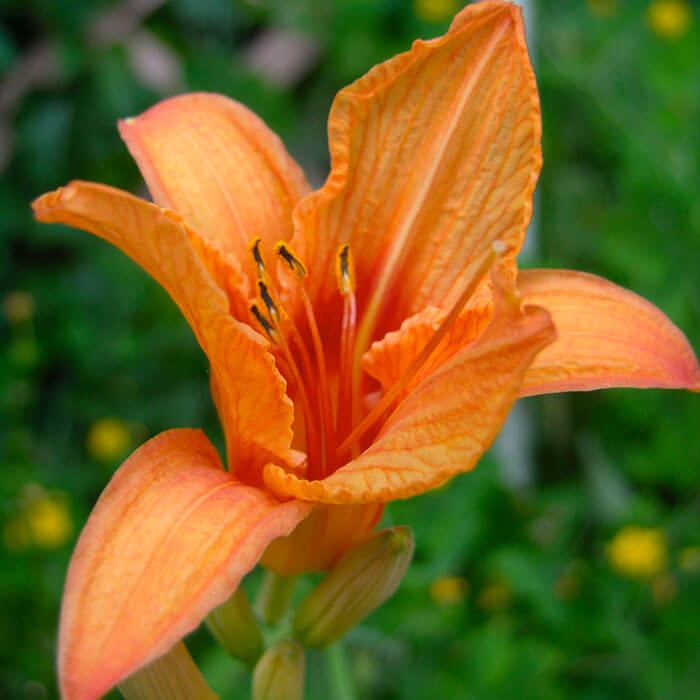
Hemerocallis spp.
Asphodelaceae; formerly and historically treated in Liliaceae
Daylily, Day Lily, Orange Day Lily, Tawny Daylily, Ditch Lily, Tiger Daylily, Hemerocallis, The Perfect Perennial
Unknown nephrotoxic principle affecting cats. All parts of the plant should be considered dangerous to cats, including leaves, flowers, petals, stems, pollen, and vase water from cut flowers.
Cats: vomiting, drooling, lack of appetite, lethargy, depression, dehydration, increased urination early in the course of poisoning, decreased or absent urination as kidney failure progresses, elevated kidney values, acute kidney failure, weakness, collapse, seizures in severe uremic cases, coma, and death. Dogs may develop vomiting or gastrointestinal upset after chewing Day Lily, but dogs are not expected to develop the severe acute kidney-failure syndrome seen in cats.
Day Lily, Hemerocallis species, is a common flowering perennial widely planted in gardens, borders, roadside ditches, naturalized areas, and landscape beds. It is often marketed as “the perfect perennial” because it is hardy, colorful, easy to divide, tolerant of many growing conditions, and capable of producing repeated blooms over the growing season. Those same qualities make it common around homes, sidewalks, parks, and yards where outdoor cats, indoor-outdoor cats, and curious kittens may encounter it.
Botanically, Day Lilies are not true Lilium lilies. Modern taxonomy generally places Hemerocallis in Asphodelaceae, although older references and many garden sources historically treated daylilies within or near the broad lily-family concept of Liliaceae. That botanical distinction is useful for plant classification, but it should not soften the pet-safety warning. For cats, Hemerocallis daylilies are grouped with true Lilium lilies as one of the most dangerous lily-type plants encountered in homes and gardens.
The toxin in Day Lily has not been identified. What is known is the clinical syndrome: cats exposed to Hemerocallis species can develop acute kidney failure. The exact nephrotoxic compound remains unknown, but the effect is severe, rapid, and potentially fatal. All parts of the plant should be considered dangerous to cats, including the leaves, petals, flowers, stems, pollen, and even water from a vase containing cut daylilies.
The only definitive way to diagnose lily ingestion is to observe the cat eating lilies, to see lily fragments in vomited material, or to confirm exposure through plant damage, pollen on the coat, missing petals or leaves, or access to a bouquet or garden containing Day Lilies. Unfortunately, many cats are not seen eating the plant. A cat may brush against pollen, groom it from the coat, chew a leaf, bite a petal, drink vase water, or vomit plant fragments after the owner has already missed the exposure.
It is extremely important to seek veterinary attention immediately if Day Lily ingestion or exposure is suspected. Waiting for symptoms can be dangerous because early signs may look deceptively mild. Vomiting, drooling, depression, and lack of appetite may appear within a few hours, but kidney injury can continue to develop after the stomach signs begin to improve. In untreated cats, lily toxicosis can progress to acute renal failure, weakness, collapse, and death within several days.
Early signs of Day Lily poisoning in cats commonly include vomiting, drooling, lethargy, depression, and refusal to eat. As kidney injury develops over the next 12 to 30 hours, cats may become increasingly dehydrated and may initially urinate more than usual. As renal failure progresses, urination may decrease or stop entirely. Lack of urination is an especially grave sign because it suggests severe kidney failure and a much poorer prognosis.
One of the most frightening aspects of Day Lily poisoning is how little plant material may be needed to cause serious harm in cats. A bite from a leaf or petal, chewing a small part of the flower, licking pollen from the coat, or drinking water from a vase that held lilies can be enough to justify emergency treatment. Because the toxic dose is not reliably known and the toxin has not been identified, there is no safe “wait and see” amount for cats.
Dogs are different. Day Lily ingestion in dogs may cause vomiting, drooling, or gastrointestinal upset, but dogs are not expected to develop the severe acute kidney-failure syndrome seen in cats. This species difference is important because a plant that causes only stomach upset in a dog can be lethal to a cat in the same household. For that reason, Day Lily should be treated as a cat-prohibited plant, not merely a mildly toxic garden ornamental.
Day Lily should also be distinguished from plants that merely have “lily” in the common name but do not cause the same cat kidney-failure syndrome. Peace Lily and Calla Lily are aroid plants that cause oral irritation from insoluble calcium oxalate crystals. Peruvian Lily, Alstroemeria, is more commonly associated with mild gastrointestinal upset. Those plants are still not ideal for chewing pets, but they are not the same emergency kidney-failure risk as Hemerocallis Day Lily or true Lilium lilies.
There is no specific antidote for Day Lily poisoning. Survival depends on rapid recognition, immediate veterinary decontamination when appropriate, and aggressive intravenous fluid therapy to protect the kidneys. The best outcomes occur when treatment begins early, ideally before kidney values rise and before the cat stops producing urine. Once a cat becomes anuric, meaning no longer producing urine, the prognosis becomes guarded to grave even with intensive care.
The safest practical approach is prevention. Cat owners should not keep Day Lilies in the house, in cut-flower arrangements, or in cat-accessible gardens. Florists should be told not to include Day Lilies or true lilies in bouquets sent to homes with cats. Outdoor cats should be kept away from Day Lily plantings, and spent flowers, cut stems, pollen-bearing blooms, and vase water should never be accessible to cats.
Immediate Response to Day Lily Exposure in Cats
- Treat as an Emergency: Any confirmed or suspected exposure of a cat to Day Lily, Daylily, Hemerocallis, leaves, flowers, petals, stems, pollen, or vase water should be treated as a veterinary emergency.
- Remove the Source: Prevent further exposure by removing the cat from the plant, bouquet, garden bed, vase water, pollen, clippings, or any remaining plant material.
- Identify the Plant: Confirm whether the plant is Hemerocallis species, commonly called Day Lily or Daylily. Day Lilies are different botanically from true Lilium lilies, but both groups can cause life-threatening acute kidney failure in cats.
- Save Evidence of Exposure: Bring the plant, plant label, bouquet tag, a clear photo, vomited plant fragments, or pollen-contaminated material to the veterinarian if available.
- Remove Plant Material from the Mouth: If it is safe to do so, remove visible petals, leaves, pollen, or plant fragments from the cat’s mouth. Do not delay transport to the veterinarian to do this.
- Prevent Grooming of Pollen: If pollen is visible on the fur, prevent the cat from grooming and contact a veterinarian immediately. The veterinarian may recommend careful bathing or wiping before or during transport depending on the situation.
- Do Not Wait for Symptoms: Vomiting, drooling, lethargy, and lack of appetite may be early signs, but kidney injury can develop even if the cat initially appears normal.
- Call Veterinary Help Immediately: Contact a veterinarian, emergency veterinary clinic, Pet Poison Helpline, or another animal poison-control professional immediately for instructions and transport guidance.
Inducing Vomiting and Emergency Decontamination
- Early Decontamination Can Be Life-Saving: If Day Lily exposure is recognized quickly, veterinary-guided decontamination may reduce absorption of the unknown nephrotoxin and improve the chance of survival.
- Do Not Treat This as Home-Care Only: Hydrogen peroxide or any other home vomiting attempt is not a substitute for emergency veterinary care. Cats exposed to Day Lily need professional evaluation even if vomiting is successfully induced.
- Cat Warning: Hydrogen peroxide should not be used to induce vomiting in cats unless a veterinarian specifically directs it. Cats are more prone to irritation and complications from hydrogen peroxide, and home vomiting attempts may create more risk than benefit.
- Veterinary-Induced Emesis: If exposure was recent and the cat is stable, a veterinarian may induce vomiting using safer clinic-based methods appropriate for cats.
- Activated Charcoal: A veterinarian may administer activated charcoal after decontamination to help reduce absorption, depending on timing, clinical status, and poison-control guidance.
- Bathing or Pollen Removal: If pollen is on the coat, veterinary staff may recommend bathing or careful removal to prevent grooming and continued ingestion.
- Do Not Induce Vomiting in an Unstable Animal: Vomiting should not be attempted in any animal that is weak, collapsed, sedated, having trouble breathing, unable to swallow normally, already vomiting repeatedly, showing seizures, severe depression, or neurologic signs.
Emergency Veterinary Treatment
- No Specific Antidote: There is no specific antidote for Day Lily poisoning. Treatment is aggressive, supportive, and focused on preventing or limiting acute kidney failure.
- Aggressive IV Fluid Therapy: Intravenous fluid therapy is the central treatment for cats exposed to Day Lily. Fluids are typically used to support kidney perfusion, promote urine production, correct dehydration, and reduce the severity of renal injury.
- Early Treatment Window: The best outcomes occur when treatment begins as soon as possible after exposure, before kidney values rise and before urination decreases or stops.
- Hospitalization: Cats commonly require hospitalization for continuous IV fluids, urine-output monitoring, anti-nausea medication, electrolyte monitoring, and repeated kidney-value testing.
- Baseline Bloodwork: The veterinarian may check kidney values, electrolytes, hydration status, urine concentration, and other laboratory markers at presentation and repeat them over the next several days.
- Anti-Vomiting Medication: Vomiting and nausea may require veterinary antiemetics so the cat can remain stable while kidney-protective treatment continues.
- Urine Output Monitoring: Monitoring urine production is critical. Increasing urination may occur early, while decreased urination or lack of urination can indicate severe kidney failure.
- Advanced Care: Cats with severe acute kidney failure may require referral-level care, intensive monitoring, feeding support, management of electrolyte abnormalities, or dialysis where available.
Monitoring for Acute Kidney Failure
- Early Signs: Watch for vomiting, drooling, lack of appetite, lethargy, depression, and dehydration after any suspected Day Lily exposure.
- Progressive Kidney Signs: Increased thirst or urination may occur early, followed by reduced urination or complete lack of urination as kidney failure worsens.
- Severe Signs: Weakness, collapse, seizures, severe depression, coma, or inability to urinate are emergency signs and may indicate advanced uremia or severe kidney injury.
- Repeat Testing: Kidney values may be normal early after exposure, so repeat bloodwork and monitoring may be needed even when the cat looks better after initial vomiting.
- Anuria Is Grave: A cat that stops producing urine after Day Lily exposure has a much poorer prognosis and requires emergency intensive care.
Dog Exposure and Other Pets
- Dogs Are Different: Dogs that chew Day Lily may develop vomiting, drooling, or gastrointestinal upset, but dogs are not expected to develop the severe acute kidney-failure syndrome seen in cats.
- Still Remove the Plant: Even though the cat-specific kidney risk is the major concern, dogs should still be prevented from chewing Day Lily leaves, flowers, stems, or plant debris.
- Call if Symptoms Occur: Veterinary advice is recommended for dogs or other animals that eat a large amount, vomit repeatedly, become lethargic, or have uncertain plant exposure.
- Protect Cats in Multi-Pet Homes: A plant tolerated by a dog can still be fatal to a cat. Do not keep Day Lilies in any home where a cat can access them.
Household, Garden, and Bouquet Prevention
- Do Not Keep Day Lilies Around Cats: The safest prevention is to avoid Day Lilies entirely in homes, bouquets, patios, porches, and gardens accessible to cats.
- Warn Florists: Tell florists not to include Day Lilies, true lilies, Easter lilies, tiger lilies, Asiatic lilies, Oriental lilies, Stargazer lilies, or any Lilium or Hemerocallis species in arrangements sent to homes with cats.
- Control Vase Water: Do not allow cats to drink water from vases that contain or previously contained Day Lilies or true lilies.
- Remove Pollen Hazards: Pollen can cling to fur and be swallowed during grooming. Keep blooming Day Lilies completely away from cats.
- Clean Up Garden Debris: Remove spent blooms, cut stems, leaves, and clippings from cat-accessible areas immediately.
- Choose Cat-Safer Alternatives: In cat households, choose non-lily flowers and cat-safer garden plants instead of relying on placement or supervision alone.
Prognosis and Recovery
- General Outlook: Prognosis is best when exposure is recognized quickly and veterinary treatment begins before kidney injury develops.
- Early Treatment Improves Survival: Cats treated early with decontamination when appropriate and aggressive IV fluids have a much better chance of recovery.
- Higher-Risk Cases: Prognosis becomes guarded to grave if treatment is delayed, kidney values rise, the cat becomes severely dehydrated, or urination decreases or stops.
- Untreated Exposure Can Be Fatal: Untreated Day Lily exposure in cats can progress to acute kidney failure and death within several days.
- Prevention: Prevent further exposure, remove Day Lilies from cat-accessible environments, and treat any future suspected exposure as an emergency rather than waiting for symptoms.