
Atropa belladonna; also written Atropa bella-donna
Solanaceae
Belladonna, Deadly Nightshade, Devil’s Cherries, Devil’s Herb, Devil’s Berries, Naughty Man’s Cherries, Dwayberry, Dwale, Banewort, Divale, Great Morel
Tropane alkaloids, primarily atropine, L-hyoscyamine and racemic hyoscyamine, and scopolamine, also known as hyoscine. All parts of the plant are toxic, including leaves, stems, flowers, roots, and berries, although toxin concentration may vary by plant part, season, and growing conditions.
Anticholinergic toxicosis; dry mouth or throat irritation; intense thirst; difficulty swallowing; delayed gastrointestinal emptying; vomiting; diarrhea; abdominal pain; reduced gut motility; inability or difficulty urinating or defecating; dilated pupils; visual disturbance or apparent blindness; disorientation; agitation; confusion; hallucination-like behavior; increased aggression; ataxia; weakness; asthenia; drowsiness; stupor; fever or abnormal body temperature; flushed skin or rash; rapid heart rate; abnormal heart rhythm; cardiac abnormalities; respiratory depression; loss of coordination; tremors; convulsions; seizures; coma; and death. Cats and dogs are especially susceptible compared with many grazing animals.
Atropa belladonna, also written Atropa bella-donna, is commonly known as Belladonna or Deadly Nightshade and is one of the most famous poisonous plants of the Eastern Hemisphere. It belongs to the Solanaceae family, the nightshade family, a large plant family that includes both important food crops and some of the most historically feared poisonous plants. Deadly Nightshade should not be casually grouped with every plant called “nightshade.” Black Nightshade, Silverleaf Nightshade, Bittersweet Nightshade, and Deadly Nightshade may all share the nightshade name, but they are different plants with different toxic profiles and different levels of risk.
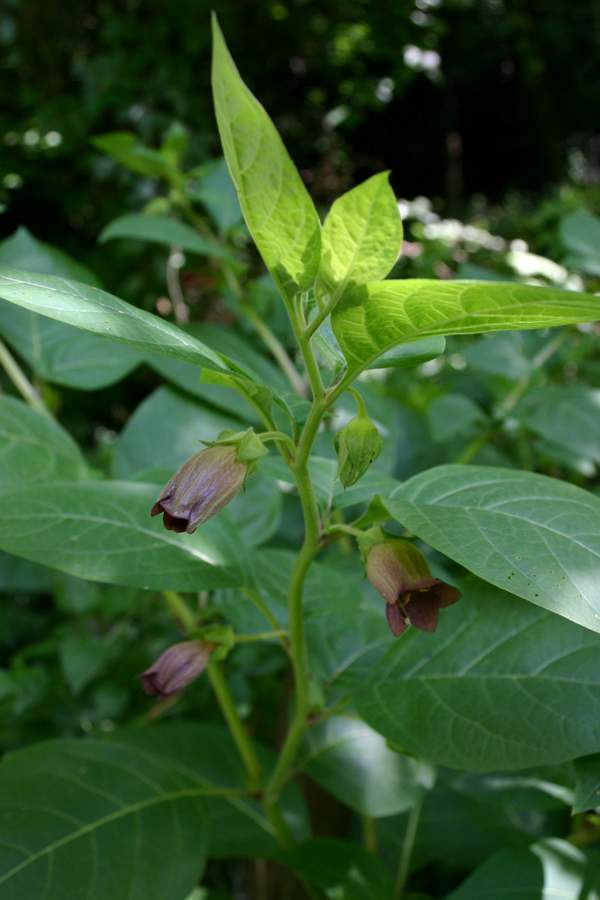
Deadly Nightshade is a branching herbaceous perennial with dull green leaves, bell-shaped purple-brown flowers, and glossy dark berries that can look deceptively attractive. The berries are one of the reasons this plant is so dangerous to people and animals. They may appear cherry-like, and older common names such as Devil’s Cherries and Naughty Man’s Cherries reflect both their appearance and their reputation. Pets should never be allowed to chew or eat any part of the plant, including berries, leaves, stems, flowers, or roots.
All parts of Deadly Nightshade are toxic and contain anticholinergic tropane alkaloids, including atropine, hyoscyamine, and scopolamine, also known as hyoscine. These compounds interfere with normal acetylcholine signaling at muscarinic receptors. In practical terms, they block part of the nervous system that normally helps control salivation, pupil constriction, gut movement, urination, heart-rate regulation, sweating or heat control, and many smooth-muscle functions. When those signals are blocked, the animal develops the classic anticholinergic pattern: dilated pupils, dry mouth, abnormal heart rate, reduced gut motility, urinary retention, disorientation, agitation, delirium-like behavior, seizures, coma, and potentially death.
This plant has a long history as both a medicine and a poison. Going back to Roman times, it is rumored that Livia and Agrippina, the wives of Roman emperors, used it to kill their husbands Augustus and Claudius, respectively. The ancient Romans were also said to treat spear tips with a decoction of Deadly Nightshade to ensure poisoning, incapacitation, or death regardless of the severity of the actual spear wound. Belladonna was also rumored to have been the plant that poisoned the troops of Marcus Antonius during the Parthian wars.
Another testament to the deadly nature of this plant comes from the name of its genus, Atropa. The genus was named for Atropos, one of the Greek Fates, who held the shears that cut the thread of human life. According to ancient legend, the plant was considered the property of the devil, who went about caring for it at his leisure and could only be diverted from its care on one night of the year, Walpurgis, when he was preparing for the witches’ sabbath.
The primary component that makes this plant so dangerous is atropine and related tropane alkaloids. Atropine interferes with the parasympathetic division of the nervous system. The parasympathetic system is responsible for many “rest and digest” functions, including slowing the heartbeat, constricting the pupils, stimulating digestion, helping move material through the intestines, and allowing normal urination and glandular secretions. When working normally, parasympathetic nerves release acetylcholine, which binds to receptors on adjacent cells and transmits the nerve signal. Atropine and related alkaloids block these receptors, preventing acetylcholine from transmitting the nerve impulse properly. In layman’s terms, the poison disrupts the ability of one nerve cell or target tissue to receive messages from another.
The clinical signs of atropine-type intoxication generally begin within 30 to 60 minutes after ingestion, although timing can vary depending on the amount eaten, the plant part involved, the species of animal, and whether food is present in the stomach. Signs may last 24 to 48 hours or longer because anticholinergic effects slow the digestive tract and can interfere with elimination. Since atropine and related compounds are eliminated through urine, urinary retention and hydration status become important clinical concerns.
In the heart, atropine blocks the action of the vagus nerve, the nerve responsible in part for regulating and slowing the heartbeat. As a result, the heart may beat faster than normal and rhythm disturbances may occur. In the eyes, atropine causes dilation of the pupil by blocking contraction of the pupillary sphincter muscle, allowing the pupillary dilator muscle to dominate. It can also interfere with the ability of the eye to focus, which may make an animal appear visually confused, startled, or unable to track objects normally.
Of most importance in cases of poisoning is the effect on the central nervous system and involuntary body functions. Acetylcholine is also used as a neurotransmitter in the brain and throughout the body. Once these pathways are disrupted, there can be a severe disconnect between normal neurologic signaling and the body’s response. Animals may show loss of coordination, inability to swallow normally, inability to walk properly, extreme excitement, agitation, delirium, mental confusion, disorientation, hallucination-like behavior, and eventually unconsciousness or coma. Paralysis or failure of involuntary functions, including respiratory function, can be fatal.
As every part of the plant is poisonous, it is not advisable to handle the leaves, berries, or roots with bare hands if there are cuts or abrasions on the skin. Handling should be done with gloves, and plant material should be bagged securely so that pets, livestock, children, and wildlife cannot access it. In older references, the roots are often reported as the most poisonous, followed by the leaves and flowers, and lastly the berries. However, berries are still dangerous because they are attractive and easily eaten.
Most sources indicate that Deadly Nightshade is considerably more toxic to humans, dogs, and cats than it is to many grazing animals. Early literature dating near the first part of the twentieth century notes:
“Though so powerful in its action on the human body, the plant seems to affect some of the lower animals but little. Eight pounds of the herb are said to have been eaten by a horse without causing any injury, and an ass swallowed 1 lb. of the ripe berries without any bad results following. Rabbits, sheep, goats and swine eat the leaves with impunity, and birds often eat the seeds without any apparent effect, but cats and dogs are very susceptible to the poison.”
That older passage is useful because it highlights an important species difference, but it should not be used to dismiss the plant’s danger. Dogs and cats are susceptible, and Deadly Nightshade should be treated as a high-risk poison in companion animals. Grazing animals may be less sensitive in some reported circumstances, but livestock exposures should still be taken seriously because plant identification, amount consumed, plant part, and individual susceptibility can vary substantially.
There are no simple definitive home tests to determine whether an animal has consumed Deadly Nightshade. Diagnosis is usually based on a witnessed ingestion, identifiable plant fragments in the mouth or vomit, access to the plant, compatible clinical signs, and veterinary evaluation. Older writings note that urine from an affected animal may dilate the pupil if applied topically to the eye, but this is not a practical or recommended diagnostic method for pet owners. Suspected exposure should be handled by a veterinarian or animal poison-control professional.
Consumption may sometimes be self-limiting because the plant can cause early signs that reduce continued eating, but that should not create a false sense of safety. A small amount can be dangerous in cats and dogs, and the berries may be more willingly eaten than bitter leaves. Prompt treatment greatly improves the outlook. If poisoning is recognized early and the animal receives appropriate decontamination and supportive care, many animals can recover within 24 to 48 hours, but severe poisoning can progress to seizures, respiratory depression, coma, and death.
Immediate Response to Deadly Nightshade Ingestion
- Treat as an Emergency: Any confirmed or suspected ingestion of Deadly Nightshade, Belladonna, Atropa belladonna, berries, leaves, stems, flowers, or roots should be treated as a veterinary emergency, especially in dogs and cats.
- Prevent Further Exposure: Remove the animal from the plant immediately and prevent access to berries, leaves, roots, discarded plant material, contaminated vomit, or clippings.
- Use Gloves When Handling: Wear gloves when handling Deadly Nightshade, especially if you have cuts, abrasions, or irritated skin. Bag plant material securely and keep it away from pets, children, and livestock.
- Identify the Plant: Confirm whether the plant is Atropa belladonna, commonly called Deadly Nightshade or Belladonna. Do not assume that all “nightshade” plants are the same; different Solanaceae plants have different toxin profiles.
- Save Evidence: Bring a plant sample, berries, leaves, photos, plant label, or vomited plant fragments to the veterinarian if this can be done safely. Keep vomitus and plant fragments contained because they may still contain toxin.
- Remove Plant Material from the Mouth: If ingestion was recent and it is safe to do so, remove visible berries, leaves, stems, or root fragments from the mouth. Do not put your fingers in the mouth of an animal that is disoriented, agitated, seizuring, or likely to bite.
- Rinse the Mouth: Flush the mouth gently with water to remove remaining plant material or plant residue if the animal is alert and able to swallow normally.
- Call Veterinary Help Immediately: Contact a veterinarian, emergency veterinary clinic, Pet Poison Helpline, or another animal poison-control professional immediately for case-specific instructions.
Inducing Vomiting and Emergency Decontamination
- Early Decontamination Can Be Important: Deadly Nightshade contains tropane alkaloids that can cause serious anticholinergic poisoning. If exposure is recent, veterinary-guided decontamination may reduce absorption and improve outcome.
- Vomit May Be Toxic: Vomited plant material should be considered contaminated and potentially toxic. Keep other animals away from vomit and clean it up using gloves or protective barriers.
- Inducing Vomiting in Dogs Only: If ingestion was very recent and the dog is alert, breathing normally, able to swallow, and not already vomiting repeatedly, agitated, disoriented, weak, collapsed, tremoring, seizuring, or showing neurologic signs, a veterinarian or animal poison-control professional may recommend inducing vomiting with fresh 3% hydrogen peroxide.
- Cat Warning: Hydrogen peroxide should not be used to induce vomiting in cats unless a veterinarian specifically directs it. Cats are more prone to irritation and complications from hydrogen peroxide, and home vomiting attempts may create more risk than benefit.
- Do Not Induce Vomiting in an Unstable Animal: Vomiting should not be attempted in any animal that is weak, collapsed, sedated, disoriented, hallucinating, extremely agitated, having trouble breathing, unable to swallow normally, already vomiting repeatedly, showing tremors, seizures, abnormal heart signs, or neurologic signs.
- Activated Charcoal: Activated charcoal may be administered by a veterinarian or poison-control professional to reduce absorption of tropane alkaloids. Repeat dosing may be considered in selected cases depending on timing, severity, and clinical guidance.
- Gastric Lavage: If a large amount was ingested, if berries or roots were consumed, or if vomiting cannot be safely induced, a veterinarian may consider gastric lavage or other controlled decontamination in a hospital setting.
- Mineral Oil or Cathartics: Older treatment references mention orogastric mineral oil or cathartics to reduce absorption or promote passage of plant material. These should only be used under veterinary direction because inappropriate use can create aspiration or dehydration risks.
Emergency Veterinary Treatment
- No Simple Home Antidote: Deadly Nightshade poisoning requires veterinary management. Treatment is based on limiting absorption, controlling anticholinergic effects, supporting breathing and circulation, and monitoring neurologic and urinary function.
- Cardiac Monitoring: A veterinarian may monitor heart rate, rhythm, blood pressure, perfusion, and body temperature because atropine-like toxins can cause rapid heart rate, abnormal rhythm, hypotension, or other cardiovascular instability.
- Respiratory Support: If respiration is depressed, oxygen therapy, assisted ventilation, or other emergency respiratory support may be necessary.
- Temperature Control: Anticholinergic poisoning may interfere with normal heat regulation. Fever, overheating, or abnormal body temperature should be managed in a veterinary setting.
- Neurologic Support: Agitation, delirium-like behavior, tremors, seizures, collapse, stupor, or coma require emergency veterinary evaluation and supportive care.
- Urinary Retention: Catheterization may be necessary if urinary retention occurs. Maintaining urine output is important because atropine and related alkaloids are eliminated through the kidneys.
- Fluid Therapy: Intravenous fluids may be needed to support circulation, hydration, kidney elimination, temperature regulation, and recovery from vomiting, diarrhea, or systemic illness.
- Antidotal Therapy: Cholinergic drugs such as physostigmine have been used in severe anticholinergic poisoning, but they require careful veterinary judgment and monitoring. They should never be attempted outside a veterinary setting.
Monitoring for Anticholinergic Poisoning
- Eye Signs: Dilated pupils, poor light response, apparent visual disturbance, bumping into objects, or inability to focus may occur.
- Mouth and Swallowing Signs: Dry mouth, throat irritation, intense thirst, difficulty swallowing, or repeated attempts to swallow can occur as secretions and smooth-muscle function are affected.
- Digestive Signs: Vomiting, diarrhea, abdominal pain, delayed gut movement, bloating, constipation, or inability to defecate may occur.
- Urinary Signs: Straining, inability to urinate, or reduced urine output may indicate urinary retention and requires veterinary attention.
- Behavioral and Neurologic Signs: Confusion, agitation, hallucination-like behavior, increased aggression, ataxia, weakness, tremors, seizures, stupor, coma, or collapse are emergency signs.
- Cardiovascular and Temperature Signs: Rapid heart rate, abnormal rhythm, weakness, red or flushed skin, fever, abnormal body temperature, or respiratory depression should be treated as urgent.
Garden, Pasture, and Handling Prevention
- Remove Deadly Nightshade from Pet Areas: Deadly Nightshade should not be allowed to grow in yards, gardens, kennels, runs, pastures, or animal-accessible landscapes.
- Control Berries: The berries are especially dangerous because they may be attractive and easy to eat. Remove plants before fruiting whenever possible.
- Do Not Feed Clippings: Leaves, berries, roots, stems, flowers, or garden waste should not be fed to horses, goats, sheep, cattle, rabbits, poultry, or other animals.
- Dispose of Plant Material Securely: Bag removed plants and dispose of them where animals cannot reach them. Do not leave pulled plants, roots, or berries on the ground.
- Use Gloves and Wash Hands: Wear gloves when removing or handling the plant, and wash hands and tools afterward.
- Do Not Confuse Nightshades: Common names such as Black Nightshade, Silverleaf Nightshade, Bittersweet Nightshade, and Deadly Nightshade may refer to different plants. Accurate identification matters.
Prognosis and Recovery
- General Outlook: Prognosis depends on the amount eaten, the plant part involved, the species exposed, how quickly treatment begins, and whether severe neurologic, respiratory, urinary, or cardiac signs develop.
- Early Treatment Improves Outcome: With prompt decontamination and supportive veterinary care, many animals can recover from anticholinergic poisoning within 24 to 48 hours.
- Higher-Risk Cases: Prognosis becomes more guarded if berries or roots were eaten, if treatment is delayed, if the animal is a dog or cat, or if seizures, respiratory depression, coma, urinary retention, severe hyperthermia, or serious cardiac abnormalities occur.
- Severe Poisoning Can Be Fatal: Death is possible from severe Deadly Nightshade poisoning, particularly when respiratory function, neurologic status, or cardiovascular stability is compromised.
- Prevention: Prevent further ingestion, remove Deadly Nightshade from animal-accessible areas, dispose of plant material securely, and treat any future suspected exposure as an emergency.