
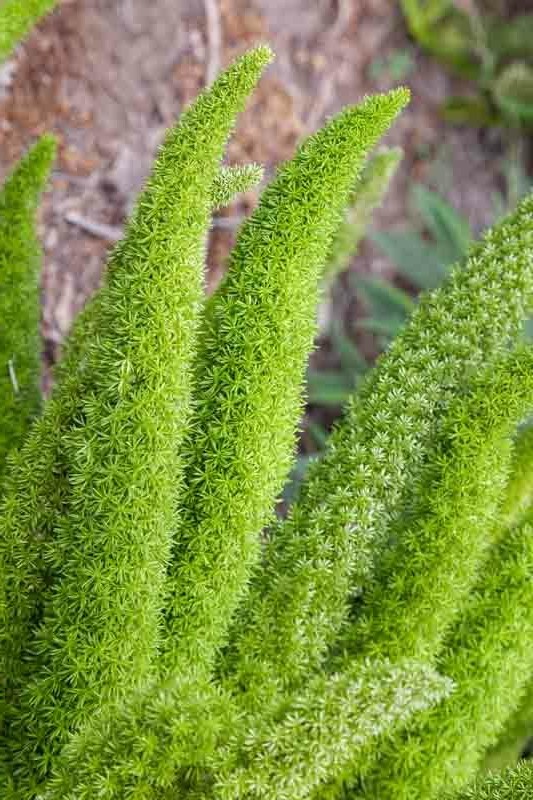
Asparagus densiflorus
Asparagaceae; formerly treated in Liliaceae
Emerald Feather, Emerald Fern, Asparagus Fern, Asparagus, Sprengeri Fern, Sprenger’s Asparagus Fern, Foxtail Fern, Plumosa Fern, Lace Fern, Racemose Asparagus, Shatavari, Asparagus densiflorus, Asparagus densiflorus ‘Sprengeri’, Asparagus setaceus, Asparagus plumosus
Sapogenins and steroidal saponins, especially in the berries; gastrointestinal and skin irritants in plant sap and foliage. The exact irritant profile may vary by species or cultivar, but the practical concerns are vomiting, diarrhea, abdominal pain, and allergic contact dermatitis with repeated skin exposure.
Vomiting, diarrhea, abdominal pain, drooling, reduced appetite, nausea, mild depression, and gastrointestinal upset. Berry ingestion may cause more pronounced vomiting, diarrhea, or abdominal discomfort than foliage chewing. Repeated skin contact may cause allergic dermatitis, itching, redness, rash, or skin irritation, especially in sensitive animals. Serious or life-threatening poisoning is not expected from ordinary exposure, but persistent vomiting, diarrhea, dehydration, or significant dermatitis should be evaluated by a veterinarian.
Emerald Feather, Asparagus densiflorus, is commonly sold as Asparagus Fern, Emerald Fern, Sprengeri Fern, Foxtail Fern, Plumosa Fern, or Lace Fern. Despite those names, it is not a true fern. It is an asparagus relative, now placed in the family Asparagaceae, although older references often placed it in Liliaceae. This distinction matters because many true ferns are considered relatively safe, while Asparagus Fern-type plants are consistently listed as toxic to dogs, cats, and horses.
Emerald Feather is a common indoor houseplant, hanging-basket plant, porch plant, and floral filler. Its fine, feathery foliage gives it a soft fern-like appearance, but the stems can be wiry, arching, and sometimes prickly or thorny. The plant may trail from baskets, spill over containers, or form dense mounded growth. Those features make it attractive in homes and arrangements, but they also create pet exposure points: cats may bat at the feathery stems, dogs may chew trailing growth, and pets may find dropped berries or broken plant material under the container.
The older statement that the toxic principle is “not yet identified” should be modernized rather than simply deleted. Historically, many houseplant references treated Asparagus Fern toxicity as somewhat vague because severe poisoning was uncommon and symptoms were usually limited to vomiting, diarrhea, abdominal discomfort, and skin irritation. The safer current framing is that the plant contains sapogenins or steroidal saponins, especially in the berries, along with sap and foliage irritants that can cause gastrointestinal upset and dermatitis.
The berries deserve special emphasis. Asparagus Fern plants can produce small berries that are often more concerning than ordinary foliage chewing. These berries may be green when immature and red or darker when mature, making them more visible and sometimes more attractive to pets or children. Berry ingestion can result in gastric upset, including vomiting, abdominal pain, and diarrhea. A pet that eats multiple berries may show stronger signs than a pet that merely chews a small piece of foliage.
The foliage and stems can also cause problems, but usually in a different way. Chewing the feathery stems may produce drooling, mild nausea, vomiting, diarrhea, or reduced appetite. Skin exposure, especially repeated exposure to the sap or plant hairs, may cause allergic dermatitis in sensitive pets. A cat that repeatedly brushes against the plant, a dog that lies in fallen clippings, or an animal that licks sap from irritated skin may develop redness, itching, licking, rash, or localized inflammation.
A common indoor houseplant, Emerald Feather can make pets ill when ingested or cause minor skin irritation in pets with sensitive skin. Typically the symptoms are minor and limited to gastrointestinal upset, including vomiting, diarrhea, and abdominal pain. Allergic reactions may also occur, including skin irritation or swelling around irritated tissues. The berries seem to be more toxic than the foliage, and the severity of clinical signs will depend largely on the amount eaten, whether berries were involved, and the size, age, health, and sensitivity of the exposed animal.
Puppies, kittens, cats, toy-breed dogs, elderly animals, and medically fragile pets may show more noticeable signs than large healthy adult dogs after the same exposure. A small animal that vomits repeatedly can dehydrate more quickly, and persistent vomiting or diarrhea should not be ignored. Older notes describing possible blood chemistry changes, including elevated ALT in a symptomatic pet, should be treated as a reason for veterinary evaluation in persistent or severe cases rather than as an expected outcome after every small nibble.
Emerald Feather also creates confusion because several different plants may be sold under “asparagus fern” names. Asparagus densiflorus includes the commonly sold Sprengeri-type and foxtail-type forms, while Asparagus setaceus, often called Plumosa Fern or Lace Fern, is another asparagus-fern type with similar pet-safety concerns. These plants are not identical in appearance, but the practical advice is the same: do not allow pets to chew the foliage, eat the berries, or repeatedly contact the sap.
This plant is best described as low-to-moderate in toxicity. It should not be framed like a lily, cycad, oleander, water hemlock, or cardiac-glycoside emergency plant. Serious or fatal poisoning is not expected from ordinary Emerald Feather exposure. At the same time, it should not be called pet-safe. Berry ingestion, repeated chewing, dermatitis, or persistent gastrointestinal upset can make a pet uncomfortable and may require veterinary care.
The safest practical approach is to keep Emerald Feather out of reach, especially in homes with cats that play with dangling foliage or dogs that eat dropped berries. Remove fallen berries promptly, clean up pruned stems and clippings, and avoid using Asparagus Fern in floral arrangements or hanging baskets where pets can reach the trailing growth.
Immediate Response to Emerald Feather Ingestion
- Remove the Source: Prevent further ingestion by removing the pet or grazing animal from Emerald Feather, Asparagus Fern, Sprengeri Fern, Foxtail Fern, Plumosa Fern, Lace Fern, foliage, stems, berries, clippings, floral arrangements, hanging baskets, or any remaining plant material.
- Identify the Plant: Confirm whether the plant is Asparagus densiflorus, commonly called Emerald Feather, Emerald Fern, Asparagus Fern, Sprengeri Fern, Foxtail Fern, or Racemose Asparagus, or whether it may be another asparagus-fern type such as Asparagus setaceus.
- Determine Whether Berries Were Eaten: Try to determine whether the pet chewed foliage only or swallowed berries. Berry ingestion is more likely to cause vomiting, diarrhea, and abdominal pain than a small amount of foliage chewing.
- Remove Plant Material from the Mouth: If ingestion was recent and it is safe to do so, remove visible stems, leaves, berries, or plant fragments from the mouth.
- Rinse the Mouth: Flush the mouth gently with water to remove bitter plant material, sap, berry residue, or irritating fibers.
- Wash Skin Exposures: If sap, berries, or plant material contacted the skin, paws, lips, muzzle, belly, or fur, wash the area with mild soap and water to reduce the risk of itching, redness, rash, or contact dermatitis.
- Watch for Symptoms: Monitor for vomiting, diarrhea, abdominal pain, drooling, reduced appetite, depression, itching, redness, rash, licking, skin irritation, weakness, or dehydration.
- Contact Veterinary Help if Needed: Consult a veterinarian, emergency veterinary clinic, Pet Poison Helpline, or another animal poison-control professional if berries were eaten, if a large amount was consumed, if vomiting or diarrhea persists, if dermatitis is significant, or if the exposed animal is very small, young, elderly, medically fragile, or already ill.
Inducing Vomiting and Decontamination
- Usually Low-to-Moderate Severity: Life-threatening intoxication from ordinary Emerald Feather ingestion is not expected, and most cases involve gastrointestinal upset or dermatitis rather than severe poisoning.
- Berries Are the Main Ingestion Concern: If a dog has recently swallowed multiple berries or a meaningful amount of plant material, removing remaining material from the stomach may reduce continued gastrointestinal irritation.
- Spontaneous Vomiting May Occur: The pet may vomit naturally as the body attempts to expel irritating berries, saponins, or fibrous plant material.
- Inducing Vomiting in Dogs Only: If ingestion was recent and the dog is alert, breathing normally, able to swallow, and not already vomiting repeatedly, weak, collapsed, severely depressed, tremoring, seizuring, showing abnormal heart signs, or neurologic signs, a veterinarian or animal poison-control professional may recommend inducing vomiting with fresh 3% hydrogen peroxide.
- Cat Warning: Hydrogen peroxide should not be used to induce vomiting in cats unless a veterinarian specifically directs it. Cats are more prone to irritation and complications from hydrogen peroxide, and home vomiting attempts may create more risk than benefit.
- Do Not Induce Vomiting in an Unstable Animal: Vomiting should not be attempted in any animal that is weak, collapsed, sedated, having trouble breathing, unable to swallow normally, already vomiting repeatedly, showing tremors, seizures, abnormal heart signs, severe depression, loss of coordination, or neurologic signs.
- Activated Charcoal: Activated charcoal is rarely needed for ordinary Asparagus Fern chewing, but a veterinarian or poison-control professional may consider it if many berries or a large amount of plant material was ingested.
- Gastric Lavage: Gastric lavage is not expected for routine Emerald Feather exposure, but a veterinarian may consider controlled decontamination in an unusual large-volume berry or plant ingestion.
Symptomatic Care and Treatment
- No Specific Antidote: There is no specific antidote for Emerald Feather or Asparagus Fern ingestion. Treatment is symptomatic and supportive.
- Hydration: Ensure the pet receives adequate fluids to reduce the risk of dehydration caused by vomiting, diarrhea, drooling, or reduced drinking.
- Monitor Vomiting and Diarrhea: Repeated vomiting, persistent diarrhea, blood in vomit or stool, inability to keep water down, weakness, worsening lethargy, or signs of dehydration should prompt veterinary evaluation.
- Dermatitis Care: Itching, redness, rash, licking, or skin irritation after contact with Emerald Feather should be washed gently. Persistent or severe dermatitis may require veterinary treatment.
- Small or Fragile Pets: Puppies, kittens, toy-breed dogs, elderly animals, and medically fragile pets should be monitored more closely because vomiting and diarrhea can dehydrate them faster.
- Gastrointestinal Protection:
- Kapectolin: To alleviate gastrointestinal upset and diarrhea, Kapectolin may be given at a dose of 1 to 2 ml/kg four times daily to help coat and protect the stomach lining.
- Sucralfate: Sucralfate may be used for gastrointestinal irritation because it reacts with stomach acid to form a paste-like protective barrier between irritated tissue and stomach contents.
- Dogs greater than 60 lbs: 1g every 6 to 8 hours.
- Dogs less than 60 lbs: 0.5g every 6 to 8 hours.
- Cats: 0.25g every 8 to 12 hours.
Houseplant, Hanging Basket, and Berry Prevention
- Control Falling Berries: Pick up fallen berries promptly. Berries are the main concern for gastrointestinal upset and may be more attractive to pets than the foliage.
- Keep Trailing Growth Out of Reach: Hanging baskets can still trail into reach of cats, puppies, and playful dogs. Trim or secure stems so pets cannot bat, pull, or chew them.
- Use Caution in Floral Arrangements: Asparagus Fern is often used as greenery in bouquets and floral arrangements. Keep arrangements and discarded stems away from pets.
- Clean Up Clippings: Do not leave pruned stems, berries, repotting debris, or broken plant material where animals can chew or roll in it.
- Prevent Repeated Skin Contact: Pets that develop itching or rash after brushing against the plant should be kept away from it because repeated exposure can worsen dermatitis.
- Do Not Confuse with True Ferns: Emerald Feather is an asparagus fern, not a true fern. Do not assume it is pet-safe because it is sold under a fern name.
- Use Pet-Safer Alternatives: In homes with plant-chewing pets, especially cats and puppies, choose pet-safer hanging plants or floral greenery.
Prognosis and Recovery
- General Outlook: Prognosis is usually good after ordinary Emerald Feather exposure, especially when ingestion is limited to a small amount of foliage and symptoms are mild.
- Expected Recovery: Most pets recover within 24 to 48 hours with prevention of further ingestion, hydration, monitoring, and supportive care once vomiting, diarrhea, or skin irritation resolves.
- Higher-Risk Cases: Prognosis becomes more guarded if many berries were eaten, vomiting or diarrhea is persistent, dehydration develops, dermatitis is significant, or the animal is very small, young, elderly, or medically fragile.
- Veterinary Care: Veterinary evaluation is recommended when symptoms are persistent, severe, involve dehydration, involve significant skin irritation, involve blood in vomit or stool, or when the plant identity is uncertain.
- Prevention: Prevent further ingestion, remove fallen berries, keep asparagus fern growth out of reach, and monitor pets that have a history of chewing houseplants or floral greenery.