Foxglove Toxicity and Life-Threatening Cardiac Glycoside Poisoning
Is Foxglove Poisonous to Dogs, Cats, Horses, and Livestock?
Yes—Common Foxglove, Digitalis purpurea, is highly poisonous and potentially fatal to dogs, cats, horses, cattle, sheep, goats, pigs, poultry, rabbits, and other animals. Its tissues contain potent cardenolide cardiac glycosides that inhibit sodium-potassium ATPase, disrupt potassium and calcium movement, alter electrical conduction, and can produce rapidly changing slow or fast heart rhythms.
All parts should be considered dangerous, including first-year rosette leaves, flowering stems, flowers, roots, seed capsules, seeds, cut stalks, dried arrangements, garden waste, and plant material contaminating hay. Vomiting and diarrhea may appear before an abnormal rhythm becomes obvious, while some animals may collapse or die with little warning. Every credible ingestion requires immediate veterinary or animal poison-control guidance even when the animal still appears normal.
About this guide: This page provides general pet-poisoning information and cannot diagnose or treat an individual animal. For any suspected exposure, contact a veterinarian or animal poison-control service immediately. Do not induce vomiting, give medication, or attempt home decontamination unless directed by a veterinary professional.
Foxglove
Digitalis purpurea L.
Accepted botanical varieties include:
- Digitalis purpurea var. amandiana (Samp.) Cout.
- Digitalis purpurea var. purpurea
- Digitalis purpurea var. toletana Font Quer
Relevant historical synonyms associated with Digitalis purpurea var. purpurea include:
- Digitalis alba Schrank
- Digitalis carnea Meigen & Weing.
- Digitalis gloxinioides Carrière
- Digitalis libertiana Dumort.
- Digitalis longiflora Lej.
- Digitalis nevadensis Kunze
- Digitalis speciosa Salisb.
- Digitalis tomentosa Hoffmanns. & Link
Important botanical exclusions:
- Digitalis lanata Ehrh., Woolly Foxglove, is a separate species and the principal commercial botanical source of digoxin.
- Digitalis grandiflora Mill., Large Yellow Foxglove, is a separate species.
- Digitalis lutea L., Straw Foxglove or Small Yellow Foxglove, is a separate species.
- Digitalis thapsi L., Spanish Foxglove, is currently accepted as a separate species rather than a synonym of Common Foxglove.
- Penstemon digitalis Nutt. ex Sims is Foxglove Beardtongue, an unrelated North American species that should not be treated as Digitalis purpurea.
Plantaginaceae; formerly classified in Scrophulariaceae
Foxglove; Common Foxglove; Purple Foxglove; Lady’s Glove; Ladies’ Glove; Fairy Gloves; Fairy Fingers; Fairy Bells; Witches’ Gloves; Witch’s Glove; Dead Men’s Bells; Dead Man’s Bells; Bloody Fingers; Finger Flower; Fingerhut; Digitalis; Digitalis purpurea; Digitalis alba; Digitalis carnea; Digitalis gloxinioides; Digitalis speciosa
White Foxglove, Pink Foxglove, Rose Foxglove, Apricot Foxglove, and Spotted Foxglove may describe flower-color forms or cultivated selections of Digitalis purpurea. Flower color does not establish reduced toxicity.
“Foxglove” is also used for other Digitalis species, including Digitalis lanata, Digitalis grandiflora, Digitalis lutea, and Digitalis thapsi. These species contain their own cardiac-glycoside mixtures and are not exact synonyms of Digitalis purpurea.
Foxglove Beardtongue refers to Penstemon digitalis, a separate North American plant. It should not be confused with the cardiac-glycoside-producing Digitalis purpurea.
First-year Foxglove rosettes may be confused with Comfrey (Symphytum officinale), Borage (Borago officinalis), Great Mullein (Verbascum thapsus), or broad-leaved Plantain (Plantago major). An unidentified rosette should never be collected as food, tea, medicine, or animal forage.
Cardenolide Cardiac Glycosides
Foxglove produces a complex mixture of steroidal cardiac glycosides belonging principally to the cardenolide class. These molecules contain a steroid nucleus, a five-membered unsaturated lactone ring, and one or more attached sugars. The sugar groups influence absorption, distribution, protein binding, metabolism, and persistence, while the steroidal portion binds sodium-potassium ATPase.
Direct chemical analysis of Digitalis purpurea leaves has identified purpurea glycosides A and B, glucogitaloxin, digitoxin, gitoxin, gitaloxin, verodoxin, strospesid, and related compounds. The plant should therefore not be described as containing only digitoxin or only digoxin.
Primary glycosides in fresh plant tissue may lose terminal glucose or acetyl groups through plant enzymes, drying, storage, digestion, or laboratory processing and form secondary glycosides. Purpurea glycoside A can yield digitoxin, while purpurea glycoside B can yield gitoxin. Glucogitaloxin is related to gitaloxin. The exact balance changes as the plant is harvested, damaged, dried, and stored.
Digitoxin Versus Digoxin
Digitoxin is the cardiac glycoside most strongly associated with Digitalis purpurea. Digoxin is produced most prominently and commercially from Digitalis lanata, although modern analyses have reported digoxin or closely related compounds in selected D. purpurea material.
The distinction matters because digitoxin is highly protein-bound, undergoes extensive hepatic metabolism and enterohepatic recycling, and generally persists longer than digoxin. A natural Foxglove exposure may nevertheless involve several glycosides with different pharmacokinetic properties rather than a pharmaceutical dose of one purified compound.
Neither a serum digoxin concentration nor a pharmaceutical digitoxin dose can be converted directly into the amount of garden plant eaten. The botanical dose is unknown, the glycoside mixture varies, and commercial assays recognize different plant compounds to different degrees.
Variation Among Plants and Growing Conditions
Cardiac-glycoside concentration varies with genetics, botanical variety, leaf age, season, light exposure, temperature, nutrition, moisture, disease, tissue culture, harvest timing, and storage. Controlled research has demonstrated that changing the light spectrum can alter digitoxin and digoxin-related cardenolide accumulation in D. purpurea leaves.
Wild plants, named cultivars, white-flowered selections, dwarf forms, first-year rosettes, and greenhouse-grown plants should not be assumed to contain an identical concentration. The absence of purple flowers does not establish a less toxic plant.
This variability makes statements such as “one leaf is always fatal” or “five leaves are safe for a large dog” scientifically unreliable. Any credible ingestion should be evaluated as a potentially serious exposure rather than managed through a public leaf-count calculation.
Sodium-Potassium ATPase Inhibition
Cardiac glycosides bind to sodium-potassium ATPase, a membrane pump that normally moves sodium out of cells and potassium into them. Inhibition increases intracellular sodium and reduces the sodium gradient that drives the sodium-calcium exchanger.
Calcium then accumulates within cardiac cells and their intracellular storage structures. At a controlled pharmaceutical dose, the increased available calcium can strengthen myocardial contraction. During poisoning, excessive pump inhibition disrupts electrical stability, automaticity, impulse formation, conduction, and coordinated contraction.
The resulting problem is not simply that the heart contracts too strongly. An animal may develop excessive vagal influence, slowed sinoatrial activity, delayed atrioventricular conduction, abnormal automaticity, triggered electrical activity, premature beats, conduction block, tachyarrhythmias, fibrillation, or rapidly changing combinations of slow and fast rhythms.
Acute Hyperkalemia
When sodium-potassium ATPase is inhibited extensively, potassium remains outside affected cells and the blood-potassium concentration may rise. Hyperkalemia is therefore an important marker of severe acute cardiac-glycoside poisoning.
A high potassium concentration can further slow conduction and destabilize the myocardium. Weakness, poor pulse quality, bradycardia, conduction block, collapse, or cardiac arrest may accompany the abnormality, but its presence and severity cannot be determined from appearance alone.
Vomiting, diarrhea, dehydration, kidney perfusion, pre-existing disease, and treatment can alter potassium in other directions. Serial laboratory measurements are more meaningful than one isolated result or an assumption based on symptoms.
Autonomic, Gastrointestinal, and Neurologic Effects
Cardiac glycosides influence the autonomic nervous system as well as the myocardium. Increased vagal activity contributes to nausea, vomiting, sinus slowing, and atrioventricular block, while direct effects on excitable tissue contribute to weakness, confusion-like behavior, tremors, and electrical instability.
Gastrointestinal signs commonly precede obvious cardiac findings. Vomiting may reduce the unabsorbed plant burden, but it does not neutralize glycosides already absorbed or prove that the animal is no longer at risk.
Neurologic abnormalities may result from direct glycoside effects, electrolyte disturbance, reduced cardiac output, inadequate brain perfusion, hypoxia, or a combination of these mechanisms.
All Plant Parts Are Dangerous
Leaves are the best-studied source of Foxglove glycosides, but roots, crowns, stems, flowers, flower buds, nectar-bearing structures, green capsules, mature capsules, and seeds should all be treated as poisonous.
First-year rosettes remain toxic before the conspicuous flower spike develops. Seed packets and dried capsules may expose pets even when no living garden plant is present.
No plant part has been established as reliably safe for animal consumption. Gardeners should not assume that removing the leaves while leaving stems, roots, or seed heads eliminates the hazard.
Fresh, Wilted, Dried, and Composted Material
Wilting and drying do not reliably destroy cardenolides. Dried leaves, pressed botanical specimens, old flower spikes, seed stalks, hay contamination, and dried floral arrangements remain potentially dangerous.
Partial decomposition does not establish safety. Plant material in a compost pile may remain recognizable and glycoside-bearing long enough for a dog, pig, chicken, goat, or other animal to consume it.
Heating or brewing can extract glycosides into water rather than neutralize them. Foxglove tea, cooked leaves, tinctures, powders, extracts, soaked material, and water from plant containers should never be administered or offered to an animal.
No Dependable Safe Dose
No universal safe leaf count, seed count, plant weight, hay percentage, cardenolide concentration, or gram-per-kilogram dose has been established for natural Foxglove ingestion in dogs, cats, horses, cattle, sheep, goats, pigs, rabbits, or birds.
Risk depends on plant chemistry, part eaten, fresh or dried state, preparation, amount, animal size, species, cardiovascular and kidney health, electrolyte status, and concurrent medications. Animals already receiving digoxin, diuretics, antiarrhythmics, calcium-modifying drugs, or other cardiovascular medication may have additional vulnerability.
Early Gastrointestinal Warning Signs
Nausea, excessive salivation, lip licking, repeated swallowing, vomiting, diarrhea, abdominal discomfort, reduced appetite, depression, and lethargy are common early manifestations of Foxglove poisoning. These signs may develop before an abnormal rhythm is noticed and should never be dismissed as a simple stomach upset after a known exposure.
Vomiting may be forceful or recurrent and may contain recognizable leaf or flower material. Diarrhea and fluid loss can worsen dehydration and electrolyte abnormalities, but an animal may develop dangerous cardiotoxicity without either vomiting or diarrhea.
A temporary improvement after vomiting does not establish recovery. Absorbed glycosides remain active, and plant material left in the gastrointestinal tract may continue releasing toxin.
Slow Rhythms and Conduction Block
Increased vagal activity and direct effects on cardiac conduction may produce sinus bradycardia, sinoatrial dysfunction, first-, second-, or third-degree atrioventricular block, junctional escape rhythms, or long pauses.
An animal with a slow ineffective rhythm may appear weak, profoundly tired, cold, reluctant to stand, mentally dull, or faint. The pulse may be abnormally slow, irregular, intermittent, or difficult to feel.
A normal rate measured once does not exclude poisoning. Cardiac glycoside rhythms can change rapidly, and the electrical rhythm may be abnormal even when the average heart rate temporarily falls within a familiar range.
Rapid and Irregular Rhythms
Foxglove poisoning can also produce atrial premature complexes, atrial tachycardia with block, junctional tachycardia, ventricular premature complexes, bigeminy, ventricular tachycardia, bidirectional ventricular tachycardia, ventricular fibrillation, or combinations of bradyarrhythmia and tachyarrhythmia.
An excessively rapid or chaotic rhythm may prevent adequate filling and effective pumping. Signs can include restlessness, weakness, pale or gray mucous membranes, poor pulse quality, low blood pressure, rapid breathing, fainting, collapse, or sudden death.
The presence of both slow and fast rhythm disturbances is a defining feature of cardiac-glycoside poisoning. Treatment cannot be selected safely from the perceived pulse rate alone.
Hyperkalemia and Circulatory Failure
Severe acute poisoning may raise blood potassium as sodium-potassium ATPase inhibition becomes extensive. Marked hyperkalemia is associated with serious toxicity and can worsen bradycardia, conduction block, muscle weakness, and cardiac arrest.
Poor cardiac output may cause cold extremities, weak pulses, prolonged capillary refill, pale or muddy mucous membranes, low body temperature, reduced urine production, confusion-like behavior, collapse, and inadequate blood flow to the brain and other organs.
Blood pressure and potassium may deteriorate before a pet owner can recognize a specific rhythm abnormality. Laboratory testing and continuous ECG monitoring are therefore central to assessment.
Neurologic and Behavioral Signs
Weakness, trembling, an unsteady gait, disorientation, unusual quietness, agitation, altered awareness, apparent visual difficulty, convulsions, and coma may accompany severe poisoning.
Neurologic signs may arise directly from digitalis-like effects or secondarily from inadequate cerebral perfusion, hypoxia, glucose abnormalities, potassium disturbance, or shock.
Visual blurring, halos, and altered yellow or green color perception are recognized in human digitalis toxicity. Animals cannot report these experiences reliably. Walking into objects, hesitation, abnormal navigation, or apparent blindness should be documented without claiming that the animal is experiencing a specific human color-vision disturbance.
Dogs and Cats
Dogs may chew rosette leaves, flower stalks, seed heads, cut flowers, garden waste, dried arrangements, seed packets, or contaminated compost. Puppies and dogs with pica may continue eating despite the bitter taste.
Cats may bite leaves or flowers brought indoors and can be exposed through dried botanical arrangements. Detailed feline Foxglove case series are sparse, but cats should be considered susceptible to the same cardiac-glycoside mechanism and require immediate evaluation after a credible ingestion.
Neither vomiting nor apparently normal behavior justifies home observation after confirmed exposure. A dog or cat may deteriorate as absorption continues or as the cardiac rhythm changes.
Horses
Horses may develop salivation, colic, diarrhea, sweating, depression, weakness, exercise intolerance, an irregular pulse, poor coordination, recumbency, collapse, or sudden death. They cannot vomit.
A published incident involving two miniature Shetland ponies illustrates the severity of the syndrome: one died shortly after examination, while the second required antiarrhythmic treatment and remained hospitalized before eventual discharge.
Foxglove may enter equine feed through contaminated hay, dumped garden waste, dried ornamental stalks, or pasture invasion. Every horse sharing the feed source should be assessed.
Cattle, Sheep, Goats, and Other Livestock
Livestock may show salivation, appetite loss, abdominal discomfort, diarrhea, depression, weakness, labored breathing, irregular pulse, recumbency, collapse, or sudden death. Published reports document suspected poisoning in dairy cattle and sheep.
The bitter living plant is often avoided when desirable forage is abundant. Drying and mixing it into hay removes the animal’s ability to identify and reject individual leaves reliably.
When one animal becomes ill, the entire group should be removed from the pasture, hay, or clippings because clinically normal animals may have consumed the same material.
Onset, Persistence, and Recurrence
Gastrointestinal or cardiovascular signs may begin within the first several hours, but onset varies with plant preparation, stomach contents, dose, and the glycosides present. Sudden collapse can occur before a complete sequence of warning signs is recognized.
Digitoxin-related compounds can persist and undergo enterohepatic recycling. Continued gastrointestinal absorption and redistribution may cause rhythm abnormalities to recur after apparent improvement.
Observation may therefore need to continue well beyond the disappearance of vomiting. Discharge decisions should be based on sustained rhythm stability, potassium and other laboratory values, blood pressure, hydration, and clinical recovery.
Prognosis
Animals that receive early decontamination and remain free of ECG abnormalities, hyperkalemia, hypotension, and neurologic compromise generally have a more favorable outlook.
The prognosis becomes guarded when clinically important conduction block, ventricular arrhythmias, rising potassium, persistent hypotension, collapse, seizures, or prolonged poor perfusion develops.
Foxglove poisoning can be fatal despite intensive treatment. Rapid access to digoxin-specific immune Fab and advanced cardiovascular monitoring can materially improve treatment options in severe cases.
Accepted Identity and Family Placement
Common Foxglove is Digitalis purpurea L., an accepted species in Plantaginaceae. The genus was historically placed in Scrophulariaceae, and that former family continues to appear on old nursery labels, veterinary references, herbal literature, and botanical records.
Modern classification recognizes three botanical varieties: D. purpurea var. amandiana, var. purpurea, and var. toletana. Most widely cultivated and naturalized plants belong to or are associated horticulturally with the nominate variety.
White, pink, rose, apricot, spotted, dwarf, and unusually tall garden selections remain Foxglove. Flower color and cultivar name do not establish a toxin-free form.
Native and Introduced Range
The species is native from western and southwestern Europe into northern Morocco. It has been introduced widely across other temperate regions, including substantial areas of North and South America, New Zealand, parts of Asia, and southern Africa.
Foxglove favors woodland openings, forest margins, banks, hedgerows, roadsides, logged or burned ground, disturbed slopes, abandoned fields, railway corridors, gardens, and other sites where bare soil and adequate moisture permit seedling establishment.
Disturbance can produce dense colonies because numerous small seeds remain available for germination. A garden plant allowed to mature may establish additional rosettes beyond the original bed.
Biennial and Short-Lived Perennial Growth
Many plants spend their first growing season as a low basal rosette and produce the characteristic flowering stem during the following year. Some cultivars flower in their first year, while established plants may behave as short-lived perennials under favorable conditions.
The first-year rosette is fully poisonous despite lacking the recognizable flower spike. Its broad wrinkled leaves may be overlooked during garden cleanup or mistaken for an edible or medicinal herb.
During the flowering stage, an upright leafy stem commonly reaches several feet in height and carries a long raceme of pendulous tubular flowers. Lower flowers generally open before those nearer the top.
Leaves and Rosette Identification
The basal leaves are generally ovate to lance-shaped, softly hairy, deeply veined, wrinkled or quilted, and rounded-toothed along the margins. Their upper surfaces are dull green, while the undersides may appear paler, grayish, or woolly.
Leaves become smaller and less distinctly stalked higher on the flowering stem. One detached leaf is difficult to identify safely because texture, size, and hairiness change with age and position.
Photographs for identification should show the full rosette, both leaf surfaces, leaf attachment, stem, flower spike, capsules, and surrounding plants whenever available.
Flowers, Capsules, and Seeds
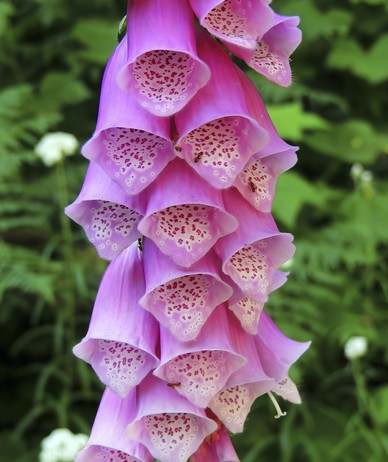
The flowers hang outward or downward from a generally one-sided raceme. Their fused tubular corollas may be purple, rose, pink, cream, or white and commonly display dark spots and pale rings inside the lower part of the tube.
After pollination, each flower forms a dry capsule containing numerous tiny seeds. Mature stalks release enough seed to establish extensive new growth.
Seed capsules, loose seeds, stored seed packets, dead flower stalks, dried bouquets, and pressed specimens remain inappropriate for animal access. Their small size makes seed contamination difficult to recognize after scattering.
Foxglove Versus Comfrey
First-year Foxglove has repeatedly been mistaken for Comfrey, Symphytum officinale, when collected for herbal tea or food. Both can form broad hairy leaves, especially when flowering structures are absent.
Comfrey generally has more bristly foliage, strongly decurrent upper leaves, and later produces coiled clusters of smaller tubular flowers. Those distinctions can be difficult to apply to one young or detached leaf.
No unknown rosette should be gathered as Comfrey for an animal or person. Foxglove poisoning outbreaks have followed precisely this type of identification error.
Foxglove Versus Foxglove Beardtongue
Foxglove Beardtongue is Penstemon digitalis, a North American member of Plantaginaceae with white tubular flowers. Its common name refers to the superficial resemblance of its flowers, not membership in the genus Digitalis.
The plants differ in leaf texture, flower arrangement, internal floral structure, and fruit, but common-name searches often combine them. A veterinary record should use the scientific name rather than “Foxglove” alone.
Other Digitalis Species
Woolly Foxglove, Digitalis lanata, is the principal commercial source of digoxin and contains a different glycoside profile. Large Yellow Foxglove, D. grandiflora, Straw Foxglove, D. lutea, and Spanish Foxglove, D. thapsi, are separate species.
All members of the genus should be approached cautiously because cardenolide production is widespread. This page remains species-specific to D. purpurea and should not be used to claim identical chemistry or dose for every Foxglove.
Exact-Species Chemistry and Environmental Variation
Direct HPLC investigations of D. purpurea leaves have separated and quantified purpurea glycosides, glucogitaloxin, digitoxin, gitoxin, gitaloxin, and several related compounds.
Additional cultivation research demonstrates that cardenolide production changes with environmental conditions. Light quality alone altered both plant growth and measured digitoxin and digoxin-related accumulation in controlled plants.
These findings explain why one leaf-count rule cannot apply across wild plants, garden cultivars, seasons, leaf positions, and stored material.
Veterinary Evidence
Detailed dog and cat case reports involving botanically confirmed D. purpurea are limited, but the mechanism is directly relevant across mammalian species and veterinary references consistently classify Foxglove as a high-severity cardiotoxic plant.
Published livestock reports include suspected poisoning in a dairy cow and sheep. A report involving two miniature Shetland ponies documented serious digitalis-associated arrhythmias, one death, and prolonged treatment of the survivor.
The limited number of detailed reports should not be mistaken for low toxicity. Bitter taste and immediate gastrointestinal illness may reduce exposure frequency, while sudden livestock deaths may go unconfirmed when no plant analysis, ECG, or toxicology is performed.
Medicinal History Does Not Establish Safety
Foxglove became historically important after physicians learned that carefully prepared Digitalis could reduce edema in selected heart-failure patients. Modern purified cardiac glycosides are standardized drugs with narrow therapeutic ranges.
Raw plant material is fundamentally different. A leaf, tea, tincture, powder, extract, herbal capsule, homeopathic mother tincture, or livestock drench may contain an unknown mixture and concentration of active glycosides.
An animal already prescribed digoxin must never receive Foxglove as a natural supplement or substitute. Combining the plant with prescribed cardiac medication may intensify toxicity and makes laboratory interpretation more difficult.
Hay, Garden Waste, and Compost
Foxglove is often avoided while growing because of its taste, but livestock cannot sort dried fragments reliably after the plant enters hay, silage, chopped forage, or bedding.
Ornamental plants, uprooted rosettes, seed stalks, bouquets, and garden debris should never be thrown over a fence or placed in livestock-accessible compost. One contaminated load can expose multiple animals.
Suspect hay should be isolated as a complete lot. Representative samples should be collected from several bales and depths rather than removing one visible leaf and continuing to feed the remainder.
Diagnosis
Diagnosis combines the exposure history, botanical identification, clinical signs, continuous or serial electrocardiography, blood pressure, electrolytes, kidney values, glucose, acid-base status, and response to treatment.
Useful evidence includes the complete flowering plant, first-year rosette, roots, capsules, seeds, photographs of the growing site, seed packaging, bouquet labels, herbal-product containers, vomited fragments, and representative forage samples.
Continuous ECG monitoring is particularly important because the rhythm can shift between bradycardia, conduction block, ectopy, and tachyarrhythmia. A pulse count taken at home cannot characterize the electrical disturbance adequately.
Digoxin Immunoassay Limitations
Commercial digoxin immunoassays may cross-react with Foxglove glycosides and produce an apparent serum digoxin concentration. A positive result can support exposure when interpreted with the history and ECG.
The numerical value may not equal the actual total concentration of digitoxin, gitoxin, gitaloxin, purpurea glycosides, or other cardenolides because different assays recognize each compound differently.
A low or negative result cannot exclude Foxglove poisoning. Treatment decisions should be based on the animal’s rhythm, potassium, blood pressure, perfusion, clinical progression, and complete diagnostic picture rather than one assay number.
Prevention
Foxglove is a poor choice for areas used by plant-chewing pets, young children, rabbits, poultry, horses, or livestock. Complete removal should include first-year rosettes, mature plants, roots, capsules, seeds, and volunteer seedlings.
Bag removed material rather than leaving it in piles. Secure seed packets, dried flowers, herbal preparations, and pressed botanical specimens in closed storage.
Inspect hay and garden clippings before they enter an enclosure. In a household with a persistent plant-chewing dog or cat, replacing Foxglove with a genuinely pet-safer ornamental is more dependable than relying on bitter taste or supervision.
Immediate Emergency Response
- Treat every credible ingestion as urgent. Contact an emergency veterinarian or animal poison-control professional immediately even when the animal remains outwardly normal.
- Stop further exposure. Remove access to living plants, first-year rosettes, cut flowers, dried stalks, capsules, seeds, herbal products, contaminated hay, garden waste, and compost.
- Remove only loose visible material. When this can be done without delaying transport or risking a bite, lift leaves, flowers, stems, capsules, or seeds resting at the lips or front of the mouth.
- Preserve the evidence. Bring the complete plant or clear photographs, seed packet, bouquet label, herbal-product container, vomited fragments, and representative hay or feed samples.
- Document the exposure. Record the time, plant part, estimated quantity, fresh or dried state, whether material was brewed or ground, and whether vomiting has occurred.
- List every medication. Report digoxin, diuretics, antiarrhythmics, heart medication, kidney medication, supplements, and all other drugs the animal receives.
- Keep the animal quiet. Restrict running, stairs, excitement, and unnecessary handling because physical exertion increases cardiovascular demand.
- Do not wait for symptoms. Vomiting, hyperkalemia, conduction block, ventricular arrhythmias, and collapse may develop after an apparently normal interval.
Do Not Attempt Unsupervised Home Treatment
- Do not induce vomiting. Do not use hydrogen peroxide, salt, mustard, syrup of ipecac, dish soap, detergent, manual gagging, or fingers in the throat.
- Do not force food or water. A nauseated, weak, arrhythmic, collapsed, seizuring, or poorly swallowing animal can aspirate material.
- Do not administer activated charcoal yourself. Charcoal can cause severe lung injury if inhaled and requires airway and gastrointestinal assessment.
- Do not give milk, oil, bread, antacids, or herbal preparations. They do not neutralize cardiac glycosides and may interfere with professional decontamination.
- Do not give potassium or calcium. Electrolyte treatment must be based on measured values, ECG findings, and veterinary judgment.
- Do not give digoxin or another heart medication. Beta blockers, calcium-channel blockers, antiarrhythmics, atropine, diuretics, and leftover prescriptions may worsen the actual rhythm or blood pressure.
- Do not rely on vomiting as evidence of safety. Absorbed glycosides and plant material remaining in the gastrointestinal tract can continue producing cardiotoxicity.
Professional Gastrointestinal Decontamination
A veterinarian may induce vomiting after a very recent ingestion when the dog or cat remains fully alert, neurologically normal, cardiovascularly stable, not already vomiting repeatedly, and able to protect the airway.
Emesis is inappropriate after weakness, tremors, incoordination, collapse, respiratory abnormality, repeated vomiting, significant bradycardia or tachycardia, altered awareness, or suspected conduction disturbance develops.
Veterinary activated charcoal may reduce absorption of glycosides remaining in the gastrointestinal tract. Multiple doses may be considered because digitoxin-related compounds can persist and undergo enterohepatic or gastrointestinal recycling.
Repeated charcoal requires continued assessment of consciousness, swallowing, vomiting, hydration, sodium, potassium, bowel sounds, and aspiration risk. Repeated cathartics can worsen dehydration and electrolyte disturbance and should not be used routinely.
Gastric lavage is reserved for exceptional recent and potentially massive exposures when emesis is unsafe or ineffective and the airway can be protected through endotracheal intubation under anesthesia.
Continuous Cardiac Monitoring
The patient may require continuous electrocardiography because Foxglove poisoning can shift rapidly among sinus bradycardia, atrioventricular block, junctional rhythms, premature complexes, atrial tachycardia with block, ventricular tachycardia, ventricular fibrillation, and asystole.
Repeated pulse checks cannot substitute for ECG monitoring. Some electrical complexes may fail to produce an effective peripheral pulse, and a temporarily normal rate can conceal conduction disease or ectopy.
Blood pressure, mucous-membrane color, capillary refill, temperature, mentation, urine production, and peripheral pulse quality should be followed with the ECG to determine whether the rhythm is maintaining circulation.
Potassium and Laboratory Monitoring
Serial potassium measurements are central to acute Foxglove management. Hyperkalemia indicates extensive sodium-potassium ATPase inhibition and may accompany life-threatening cardiac instability.
Sodium, chloride, magnesium, calcium, glucose, kidney values, acid-base status, lactate, hydration, and urine output may also require repeated evaluation. Vomiting and diarrhea can create additional abnormalities that influence rhythm and treatment.
A commercial digoxin immunoassay may support the diagnosis but cannot quantify the complete plant glycoside burden reliably. A negative or modest value does not override a compatible exposure, ECG, or potassium abnormality.
Digoxin-Specific Immune Fab
Digoxin-specific immune Fab is the principal antidotal treatment for life-threatening cardiac-glycoside poisoning. The antibody fragments bind circulating digoxin-like molecules, reduce the free glycoside available to sodium-potassium ATPase, and promote elimination of the bound complex.
Fab was designed for digoxin, and its affinity for the various compounds in Digitalis purpurea is not identical. Published Foxglove cases document successful treatment, partial or temporary responses, need for repeated administration, and treatment failure.
The required amount cannot be calculated confidently from an unknown number of leaves. The veterinarian must consider body size, estimated plant burden, rhythm, potassium, perfusion, apparent assay concentration, clinical response, product availability, and toxicology consultation.
Additional Fab may be considered when severe arrhythmias, hyperkalemia, or circulatory instability persist or recur after an initial response.
Rhythm-Specific Treatment
No single antiarrhythmic medication is appropriate for every Foxglove rhythm. Therapy must follow the actual ECG disturbance and its effect on blood pressure and perfusion.
Clinically important vagally mediated bradycardia or selected conduction block may be treated with a veterinarian-selected anticholinergic. Response can be incomplete when direct conduction-system toxicity is substantial.
Dangerous ventricular ectopy or ventricular tachycardia may require selected ventricular antiarrhythmics. Lidocaine or phenytoin may be considered while Fab is obtained or when arrhythmias persist, but both require professional cardiovascular monitoring.
Temporary cardiac pacing may be considered for severe bradycardia or high-grade conduction block that fails to maintain perfusion. Pacing can be technically difficult or provoke electrical instability in a severely toxic myocardium and does not neutralize the glycosides.
Hyperkalemia and Circulatory Support
Severe hyperkalemia requires controlled emergency treatment directed by laboratory values and ECG findings. Treatment priorities include neutralizing the cardiac glycoside with Fab when available and supporting circulation while the toxin burden is reduced.
Intravenous fluids may be required for dehydration and poor perfusion, but indiscriminate volume loading may be harmful when cardiac output is severely impaired. Fluid type and rate should be individualized.
Persistent hypotension may require veterinarian-selected vasopressor or inotropic support after rhythm, circulating volume, temperature, glucose, electrolytes, and acid-base abnormalities have been assessed.
Oxygen, active temperature management, intubation, assisted ventilation, and cardiopulmonary resuscitation may be required in a collapsed or arrested patient.
Vomiting, Diarrhea, and Aspiration
Veterinary antiemetic treatment may be used after immediate decontamination decisions have been made. Controlling continued vomiting can reduce dehydration, electrolyte loss, esophageal injury, and aspiration risk.
Food and water are generally withheld until the patient is stable, useful decontamination is complete, swallowing is safe, and vomiting is controlled. Force-feeding is inappropriate.
Coughing, fever, nasal discharge, rapid breathing, or increased respiratory effort after vomiting may indicate aspiration and can require thoracic imaging, oxygen, and treatment based on the pulmonary findings.
Weakness, Collapse, and Seizures
Keep weak or disoriented patients in padded ground-level confinement away from stairs, water, traffic, hard furniture, and other hazards. Do not force an unstable animal to walk.
Seizures require veterinarian-selected anticonvulsant treatment while oxygenation, glucose, electrolytes, blood pressure, temperature, cardiac rhythm, and cerebral perfusion are corrected.
Do not place hands or objects in the mouth during a seizure. Clear nearby hazards and transport the animal for emergency treatment.
Horses and Livestock
Remove the entire exposed group from suspect pasture, hay, bedding, garden clippings, or feed. Quarantine the full related feed lot rather than removing only visible Foxglove fragments.
Horses cannot vomit and must never receive an emetic. Large-animal treatment may include ECG monitoring, electrolyte testing, careful fluid support, rhythm-specific medication, adsorbents administered through a veterinarian-managed tube, and Fab when indicated and obtainable.
Inspect every exposed animal for appetite, salivation, colic, diarrhea, weakness, breathing, pulse quality, rhythm, behavior, and manure production. Clinically normal animals may still require monitoring.
Collect representative plants and feed samples from several bales, pasture locations, or feeding areas. Preserve flowering stalks, rosettes, capsules, and seeds whenever possible.
Prognosis and Recovery
The prognosis is more favorable when treatment begins before hyperkalemia, conduction block, ventricular arrhythmias, hypotension, or neurologic compromise develops.
The outlook becomes guarded to poor with marked potassium elevation, persistent ventricular arrhythmias, high-grade atrioventricular block, severe hypotension, recurrent collapse, seizures, prolonged poor perfusion, or cardiac arrest.
Rhythm disturbances may recur after apparent improvement because of ongoing absorption and glycoside recirculation. Monitoring should continue until sustained ECG, potassium, blood-pressure, hydration, and neurologic stability have been established.
Animals that survive the acute period without prolonged hypoxia, cardiac arrest, aspiration, or secondary organ injury may recover fully.
Frequently Asked Questions About Foxglove and Animal Poisoning
Which cardiac glycosides have been found directly in Digitalis purpurea?
Exact leaf analyses have identified purpurea glycosides A and B, glucogitaloxin, digitoxin, gitoxin, gitaloxin, verodoxin, strospesid, and related cardenolides. Their proportions vary. Foxglove poisoning should therefore be described as exposure to a complex glycoside mixture rather than to digitoxin alone.
Does Common Foxglove contain digoxin or digitoxin?
Digitoxin is the compound most strongly associated with D. purpurea. Commercial digoxin is obtained principally from D. lanata, although digoxin or closely related material has been measured in selected D. purpurea studies. A natural exposure contains several compounds and should not be treated as a pharmaceutical overdose of only one drug.
Are white or cultivated Foxgloves less poisonous?
No dependable evidence establishes a pet-safe flower color or cultivar. Plant genetics and growing conditions can change glycoside concentrations, but a white, pink, apricot, dwarf, or named garden selection still belongs to a cardenolide-producing species and must be treated as highly poisonous.
Can one Foxglove leaf kill a dog or cat?
No universal leaf count predicts survival or death. Leaf size, plant chemistry, fresh or dried state, animal size, health, medications, and the amount actually swallowed vary too widely. Because even a modest uncontrolled dose can destabilize the heart, any credible ingestion warrants immediate professional assessment.
Is dried Foxglove still poisonous?
Yes. Drying changes the relative proportions of primary and secondary glycosides but does not reliably destroy the cardenolide hazard. Dried leaves, hay contamination, flower stalks, capsules, seeds, pressed specimens, and botanical arrangements should remain inaccessible.
Why can Foxglove cause both a slow and a fast heartbeat?
Cardiac glycosides increase vagal influence and slow conduction while also increasing abnormal automaticity and triggered electrical activity in cardiac cells. One animal may therefore develop bradycardia or atrioventricular block, while another develops ventricular ectopy or tachycardia. Slow and fast abnormalities may occur sequentially or together.
Why is hyperkalemia important?
Extensive sodium-potassium ATPase inhibition prevents normal movement of potassium into cells, allowing blood potassium to rise. Marked hyperkalemia signals severe acute toxicity and can worsen conduction block, weakness, and cardiac arrest. The concentration requires blood testing and cannot be estimated from symptoms alone.
Does vomiting mean the animal removed the poison?
No. Vomiting may remove part of the unabsorbed plant, but cardiac glycosides may already be circulating and additional material may remain in the stomach. The rhythm can deteriorate after the animal temporarily appears more comfortable.
Can a normal pulse at home rule out serious poisoning?
No. Cardiac-glycoside rhythms can change quickly, and some abnormal electrical beats do not create an effective peripheral pulse. A normal rate counted for a few seconds does not exclude conduction block, premature complexes, intermittent tachycardia, or later deterioration. Continuous ECG monitoring is more informative.
Can a digoxin blood test confirm how much Foxglove was eaten?
No. A digoxin immunoassay may cross-react with several Foxglove glycosides and support the diagnosis, but individual assays recognize the compounds differently. The reported value cannot be converted reliably into a plant dose, and a low or negative result does not exclude poisoning.
Does digoxin-specific immune Fab work for Foxglove?
It can. Fab fragments bind digoxin and structurally related glycosides and are the principal antidotal option for life-threatening cardiotoxicity. Foxglove case reports include strong responses, temporary responses, repeated administration, and treatment failure because the botanical glycoside mixture and dose are uncertain.
Why might activated charcoal be given more than once?
Digitoxin-related glycosides can persist and recirculate between the liver, bile, intestine, and bloodstream. Repeated veterinary charcoal may bind material entering the intestine and enhance elimination. It is unsafe as an owner-administered treatment because vomiting, weakness, arrhythmia, and altered awareness create a serious aspiration risk.
Is Foxglove poisoning documented in horses and livestock?
Yes. Published reports describe suspected poisoning in cattle and sheep and severe illness in two miniature Shetland ponies. One pony died, while the survivor required antiarrhythmic treatment and prolonged hospitalization. Contaminated hay and dumped ornamental waste are important livestock exposure routes.
Why is Foxglove commonly confused with Comfrey?
Before flowering, both plants may form broad hairy leaves in a basal or low-growing arrangement. The differences are difficult to apply to one detached young leaf. Several serious human outbreaks occurred after Foxglove was gathered and prepared as supposed Comfrey, demonstrating why an unidentified rosette should never be used as food or medicine.
Is Foxglove Beardtongue the same poisonous plant?
No. Foxglove Beardtongue is Penstemon digitalis, a separate North American species whose tubular flowers resemble Foxglove. The shared common name does not make it Digitalis purpurea. The complete plant and scientific name should be verified before a poisoning record is assigned.
Is medicinal, herbal, or homeopathic Foxglove safer than the garden plant?
No. Raw leaves, tea, tincture, powders, extracts, mother tinctures, and homemade preparations deliver an uncontrolled mixture and concentration of cardiac glycosides. Pharmaceutical digoxin is purified, standardized, prescribed for a specific patient, and monitored; Foxglove preparations are not safe substitutes or supplements.