Golden Bird’s Nest Snake Plant Toxicity and Steroidal Saponin Irritation
Is Golden Bird’s Nest Snake Plant Poisonous to Dogs, Cats, Horses, and Livestock?
Yes—Golden Bird’s Nest Snake Plant, Dracaena trifasciata ‘Golden Hahnii’, is poisonous to dogs and cats and should be considered unsafe for horses, livestock, rabbits, birds, and other animals. The species contains numerous steroidal saponins that can irritate the mouth, esophagus, stomach, and intestines, producing nausea, drooling, vomiting, reduced appetite, abdominal discomfort, diarrhea, lethargy, and depression.
Most limited household exposures cause mild or moderate gastrointestinal illness rather than progressive organ failure. Repeated vomiting, blood, inability to retain water, marked weakness, abnormal pupils or coordination, persistent gagging, abdominal enlargement, or ingestion of a substantial leaf, offset, root mass, or rhizome requires veterinary assessment. Pupil dilation and an unsteady gait have been reported in cats exposed to snake plants, but the mechanism and exact-cultivar evidence remain limited.
About this guide: This page provides general pet-poisoning information and cannot diagnose or treat an individual animal. For any suspected exposure, contact a veterinarian or animal poison-control service immediately. Do not induce vomiting, give medication, or attempt home decontamination unless directed by a veterinary professional.
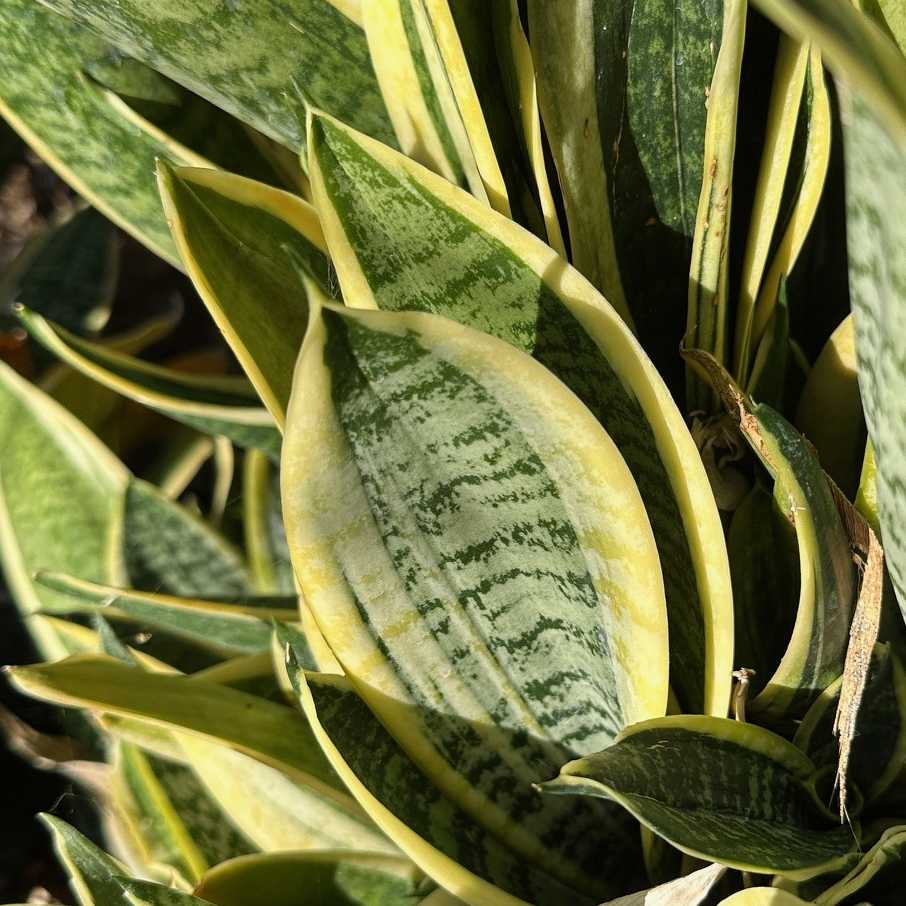
Golden Bird’s Nest Snake Plant
Dracaena trifasciata ‘Golden Hahnii’
Formerly and still widely sold as Sansevieria trifasciata ‘Golden Hahnii.’ The trade spelling ‘Gold Hahnii’ is also used for closely matching yellow-margined Bird’s Nest plants.
The accepted species name is Dracaena trifasciata (Prain) Mabb. Its principal botanical synonym is Sansevieria trifasciata Prain.
‘Golden Hahnii’ is a cultivated dwarf rosette form rather than a botanical variety or subspecies. The cultivar epithet should appear in single quotation marks and should not be italicized.
Asparagaceae Juss. — Asparagus Family
Subfamily: Nolinoideae
Order: Asparagales
Older horticultural and veterinary references may place Snake Plant in Agavaceae, Dracaenaceae, Ruscaceae, or Liliaceae. These historical classifications do not identify different plants or different poisoning syndromes.
Golden Bird’s Nest Snake Plant, Golden Bird’s Nest Sansevieria, Golden Bird’s-Nest Plant, Golden Hahnii, Gold Hahnii, Golden Hahnii Snake Plant, Dwarf Golden Snake Plant, Golden Dwarf Mother-in-Law’s Tongue, Bird’s Nest Snake Plant, Bird’s Nest Sansevieria, Dwarf Snake Plant, Snake Plant, Mother-in-Law’s Tongue, Good Luck Plant, Dracaena trifasciata ‘Golden Hahnii,’ Sansevieria trifasciata ‘Golden Hahnii’
‘Hahnii’ ordinarily identifies the compact green Bird’s Nest form. ‘Golden Hahnii’ is a yellow- or cream-margined selection from the same dwarf rosette group. Plants sold as ‘Silver Hahnii,’ ‘Black Star,’ ‘Jade Pagoda,’ ‘Black Jack,’ or other dwarf Snake Plant selections are related cultivars rather than exact synonyms.
Magic Sword is a broad and inconsistent trade name more commonly associated with taller yellow-margined Snake Plants, especially ‘Laurentii.’ It should not be used as the defining cultivar name for a short, tightly nested Golden Hahnii rosette.
Viper’s Bowstring Hemp, Saint George’s Sword, Devil’s Tongue, Bowstring Hemp, and African Snake Plant are broad names applied to full-sized Dracaena trifasciata and sometimes other former Sansevieria species. African Spear or Cylindrical Snake Plant more properly refers to Dracaena angolensis, formerly Sansevieria cylindrica, while Whale Fin Snake Plant is Dracaena masoniana.
Steroidal Saponins Are the Established Toxic Principle
Golden Bird’s Nest Snake Plant contains steroidal saponins, the toxin class recognized by veterinary poison-control references for Dracaena trifasciata. Saponins are glycosides composed of a water-soluble sugar portion attached to a fat-soluble steroidal or triterpenoid structure. This dual chemical character gives them detergent-like properties and allows them to interact with biological membranes.
When an animal chews the plant, saponins contact the lining of the mouth, esophagus, stomach, and intestines. The most consistent result is local gastrointestinal irritation manifested as nausea, salivation, vomiting, appetite loss, abdominal discomfort, and diarrhea. The plant’s bitter taste and early gastrointestinal effects commonly discourage continued eating, which helps explain why most household cases remain mild or moderate.
A phytochemical investigation of the whole plant isolated twelve steroidal saponins, ten of which were newly characterized at the time of publication. Later research has identified additional steroidal saponins and related compounds from *Dracaena trifasciata*, formerly *Sansevieria trifasciata*. These studies confirm that “saponins” is not merely a vague historical label, although they do not establish which molecule or combination produces every naturally occurring sign in a dog, cat, horse, or other animal.
Specific Compounds and the Limits of Laboratory Chemistry
Research on the species has described spirostane-, furostane-, and other steroidal saponin structures, including compounds built from sapogenins such as ruscogenin, neoruscogenin, and sansevierigenin. Pregnane glycosides, homoisoflavanones, steroids, triterpenoids, flavonoids, polyphenols, phenolic acids, fatty acids, and other secondary metabolites have also been reported from laboratory extracts.
Detection of a compound in methanol, ethanol, or another solvent extract does not prove that it causes the clinical poisoning syndrome observed after a pet bites a living leaf. Extraction can concentrate substances, alter their proportions, and expose compounds that would not be absorbed in the same amount during an ordinary household ingestion.
Organic acids are normal constituents of plant metabolism but are not recognized as the defining toxic principle of Golden Bird’s Nest Snake Plant. Alkaloids, flavonoids, tannins, glycosides, phenolics, and other broad phytochemical categories should not all be listed automatically as veterinary toxins merely because a screening study detected them.
Plant Parts and Cultivar Differences
The leaves are the most accessible and best-documented source of exposure. However, the safest practical approach is to treat the complete plant as unsuitable for ingestion, including leaves, sap, rhizomes, roots, offsets, flowers, fruit, seeds, propagation cuttings, and discarded plant material.
Part-specific saponin concentrations have not been measured adequately enough to establish that a flower, fruit, root, or rhizome is harmless. Whole-plant chemical studies and the presence of biologically active compounds in leaves and underground structures support avoiding every plant part rather than assigning an unsupported “safe” portion.
Variegation does not reduce toxicity. The green centers, yellow margins, newly emerging offsets, damaged leaf bases, and rhizomes all belong to the same cultivar. Likewise, green offspring produced from a variegated leaf cutting should not be considered safer merely because they lose the parent plant’s golden margins.
Mechanical Hazards from Leaves and Rhizomes
The toxicity is primarily chemical irritation, but the plant also creates physical hazards. Golden Hahnii leaves are short compared with ordinary Snake Plant foliage, yet they remain thick, leathery, fibrous, and pointed. A swallowed leaf section can trigger gagging, painful swallowing, repeated retching, or vomiting independently of the saponins.
The firm creeping rhizomes and dense root mass may be exposed when a pet overturns a container, digs in the soil, or reaches material left after division and repotting. A large rhizome section can lodge in the mouth or esophagus, remain in the stomach, or contribute to intestinal obstruction in a small animal.
Long plant fibers should not be pulled blindly from the mouth or rectum. A fiber may be anchored around the tongue, embedded in the pharynx, or extending through the gastrointestinal tract, and pulling can cause additional injury.
Skin, Coat, and Eye Contact
Sap may produce temporary redness, itching, burning, or irritation, particularly on damaged, inflamed, or sensitive skin. An animal that lies on divided plants, walks through sap, or rubs against broken leaves may later swallow additional plant material while grooming.
The pointed leaf tips create a separate ocular hazard. A pet investigating the compact rosette can scratch the cornea, while sap, soil, fertilizer, or broken plant tissue can be transferred into the eye by a contaminated paw.
Eye pain, tearing, squinting, redness, eyelid swelling, discharge, cloudiness, or apparent visual difficulty should not be attributed automatically to the systemic plant toxin. These signs may indicate a corneal abrasion, retained foreign material, or chemical exposure from the container.
Why Severe Systemic Poisoning Is Uncommon
Most naturally occurring exposures cause gastrointestinal illness rather than progressive organ failure. Immediate bitterness, nausea, and vomiting commonly limit the amount retained. There is no well-established syndrome of direct acute kidney failure, liver failure, severe respiratory paralysis, prolonged coma, or sudden death after an ordinary limited ingestion.
Saponins can disrupt cells and produce hemolysis in laboratory systems, but clinically significant destruction of red blood cells is not an expected routine consequence of chewing a Golden Hahnii leaf. Claims of inevitable anemia, liver injury, kidney destruction, or fatal systemic poisoning go beyond the available companion-animal evidence.
Serious illness can still develop through complications such as severe dehydration, aspiration of vomit, gastrointestinal bleeding, foreign-body obstruction, pesticide exposure, fertilizer ingestion, or an unrelated disease mistakenly attributed to the plant.
Early Gastrointestinal Irritation
The expected clinical course begins with gastrointestinal irritation. An affected dog or cat may lick the lips, swallow repeatedly, drool, gag, retch, become nauseated, or vomit. Appetite commonly decreases, and the animal may become quiet, hide, resist abdominal handling, assume a hunched posture, or approach food and water without consuming them.
Signs may develop within a few hours, although onset depends on the quantity eaten, whether the stomach contained food, the animal’s size and health, and whether plant material remains in the gastrointestinal tract. Some animals vomit once and recover promptly. Others develop repeated vomiting, loose stool, diarrhea, abdominal discomfort, lethargy, or depression that continues into the following day.
Leaf pieces may remain recognizable in vomit or feces because the thick fibrous tissue is not readily broken apart. Visible plant fiber does not prove that the illness is merely indigestion: chemical irritation from steroidal saponins and the mechanical effects of swallowed foliage may occur together.
Blood, Dehydration, and Metabolic Consequences
Small red streaks can appear after repeated forceful retching irritates the esophagus or stomach. Blood is not an inevitable or harmless feature of snake-plant poisoning. Repeated fresh blood, coffee-ground material, black tarry stool, bloody diarrhea, progressive abdominal pain, or pale mucous membranes requires veterinary examination for substantial mucosal injury, a foreign body, another toxin, medication exposure, or an unrelated gastrointestinal disorder.
Ongoing vomiting or diarrhea can cause dehydration and loss of sodium, potassium, chloride, glucose, and acid-base balance. Dry or tacky gums, reduced urination, sunken eyes, rapid heart rate, increasing lethargy, muscular weakness, cool extremities, or inability to retain water indicates that the illness has progressed beyond a minor transient exposure.
Kittens, puppies, toy-breed dogs, elderly animals, and patients with kidney, heart, endocrine, or gastrointestinal disease may become clinically unstable after fewer episodes than a healthy adult. Collapse is not expected after one small bite and should prompt immediate assessment for severe dehydration, aspiration, obstruction, chemical co-exposure, or another emergency.
Reported Feline Pupil and Coordination Changes
Dilated pupils and an unsteady gait have been reported by animal poison-control sources in cats exposed to snake plants. An affected cat may appear light-sensitive, hesitate before jumping, misjudge a landing, sway, stumble, or move more cautiously than usual. These findings are not documented in every cat, and the responsible compound and physiological mechanism have not been established.
Published chemistry confirms numerous steroidal saponins in Dracaena trifasciata, but chemical isolation does not establish which compound, if any, produces mydriasis or incoordination. Dehydration, electrolyte disturbance, pain, stress, reduced food intake, medication exposure, or a pesticide associated with the pot may also alter pupil size or coordination.
Equal pupil dilation that resolves with otherwise typical gastrointestinal illness may fit the reported snake-plant syndrome. One pupil larger than the other, apparent blindness, eye pain, persistent dilation, head tilt, circling, seizures, abnormal awareness, or progressive inability to walk is not adequately explained by an ordinary mild exposure and requires urgent ocular and neurologic evaluation.
Oral, Esophageal, and Foreign-Body Complications
Snake Plant does not contain the penetrating calcium oxalate raphides responsible for the immediate severe oral-burning syndrome of Dieffenbachia, Philodendron, or many other aroids. Mild drooling, gagging, repeated swallowing, or oral discomfort may nevertheless follow contact with sap, bitter plant compounds, and tough leaf fibers.
The short leaves of ‘Golden Hahnii’ remain thick, leathery, and fibrous. A substantial leaf section, dense offset, root mass, or firm rhizome may lodge in the pharynx or esophagus, remain in the stomach, or contribute to intestinal obstruction. Persistent gagging, regurgitation, repeated unproductive retching, difficulty swallowing water, abdominal enlargement, reduced fecal output, or vomiting that continues after the expected irritant period requires diagnostic investigation.
A long fiber protruding from the mouth or rectum should not be pulled blindly. It may be anchored beneath the tongue or extend through the gastrointestinal tract, where traction could produce laceration, bunching, or perforation.
Eye, Skin, and Aspiration Injury
Broken leaves and sap may cause localized skin irritation, especially when residue contacts an abrasion or remains beneath the coat. Continued grooming can increase oral exposure. Redness, itching, repeated licking, or persistent discomfort should improve after thorough washing; worsening inflammation may indicate a chemical product associated with the plant rather than sap alone.
The pointed leaf tips create a direct mechanical eye hazard. A corneal scratch can cause sudden squinting, tearing, redness, light sensitivity, cloudiness, or refusal to open the eye. Soil, sap, fertilizer, or pesticide transferred by a contaminated paw can create additional ocular injury. Persistent eye signs after irrigation require fluorescein staining and examination for an abrasion, ulcer, or retained material.
Aspiration pneumonia can follow repeated vomiting, particularly in a weak, sedated, or poorly coordinated patient. Coughing, fever, rapid or labored breathing, reduced oxygenation, abnormal lung sounds, or renewed lethargy after vomiting should not be attributed to direct saponin injury of the lungs.
Other Animal Species
Detailed species-specific clinical evidence is concentrated on companion-animal poison-control experience, and no dependable toxic plant dose has been established for horses, livestock, rabbits, guinea pigs, birds, reptiles, or rodents. The complete plant should nevertheless be kept out of feed, enclosures, paddocks, aviaries, and animal-accessible compost.
Horses cannot vomit and may instead show salivation, feed refusal, abdominal discomfort, diarrhea, depression, altered gastrointestinal motility, or weakness. Rabbits and guinea pigs also cannot vomit; appetite loss, declining fecal production, abdominal distension, diarrhea, or lethargy may progress into dehydration or gastrointestinal stasis.
Birds may show regurgitation, altered droppings, reduced food intake, weakness, reduced perching, or behavioral change. A fragment that appears minor to a person may represent a meaningful exposure for a small animal, and dog or cat emesis instructions should never be transferred to another species.
Signs Suggesting Another Exposure
Seizures, severe respiratory failure, jaundice, primary acute kidney failure, major hemolytic anemia, prolonged coma, or rapidly progressive multiple-organ dysfunction is not the expected uncomplicated syndrome after chewing Golden Bird’s Nest Snake Plant.
The pot and surrounding area may contain fertilizer, systemic insecticide, fungicide, leaf-shine product, mold, water-retaining material, decorative stone, broken ceramic, or another plant. Tremors, major pupil inequality, profound collapse, uncontrolled bleeding, severe respiratory signs, or organ abnormalities require investigation of these additional hazards.
Expected Course and Prognosis
The prognosis is good to excellent after most limited exposures. Brief nausea, drooling, one or two vomiting episodes, appetite reduction, or mild diarrhea often begins improving within several hours after access ends.
More substantial gastrointestinal illness may continue for one or two days and may require anti-nausea medication, fluid therapy, electrolyte correction, and nutritional support. Persistent signs beyond that period, repeated blood, continuing anorexia, pupil abnormalities, incoordination, abdominal distension, or recurrent vomiting warrants reassessment for dehydration, obstruction, aspiration, co-exposure, or another disease.
Direct kidney destruction, liver failure, respiratory paralysis, or sudden death is not expected from an ordinary limited ingestion. Prognosis changes when complications arise from uncontrolled fluid loss, aspiration, gastrointestinal obstruction, or another substance associated with the plant.
A Dwarf Cultivar of the Familiar Snake Plant
Golden Bird’s Nest Snake Plant is a compact cultivated form of the species currently accepted as Dracaena trifasciata. The plant was known for more than a century as Sansevieria trifasciata, and that former name remains deeply established in nurseries, houseplant collections, gardening books, veterinary databases, and poison-control listings.
Modern molecular and taxonomic work places the former genus Sansevieria within Dracaena. The name change does not identify a new plant or alter its saponin poisoning risk. A label reading Sansevieria trifasciata ‘Golden Hahnii’ refers to the same cultivar now written Dracaena trifasciata ‘Golden Hahnii.’
The accepted species is a rhizomatous plant native from southern Nigeria through west-central tropical Africa and into Tanzania. It is adapted to seasonally dry tropical environments and stores water in thick leaves and underground rhizomes.
How to Identify ‘Golden Hahnii’
Full-sized Dracaena trifasciata plants may produce rigid sword-shaped leaves several feet long. Golden Hahnii instead forms a compact, funnel-shaped rosette usually measuring only several inches tall.
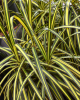
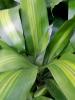
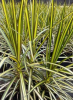
The leaves are short, broad, thick, leathery, and slightly curved inward. Their green centers commonly show darker horizontal bands or mottling, while the edges display broad cream, pale-yellow, or golden-yellow variegation.
The overlapping circular arrangement resembles a bird’s nest. Established plants produce additional rosettes from creeping rhizomes and may eventually form a broad clustered mound containing multiple offsets or “pups.”
‘Hahnii’ generally identifies the compact green Bird’s Nest form. ‘Golden Hahnii’ is a yellow-margined selection from that dwarf group. Other rosette-forming cultivars may differ in color, width, mottling, and variegation but should not be assumed safe for chewing.
Why Magic Sword Is Not the Best Cultivar Name
Magic Sword is used inconsistently across the plant trade and is more often attached to taller, yellow-margined Snake Plants resembling ‘Laurentii.’ It may appear as a generic common name for the species rather than as a stable cultivar designation.
A short, nest-like plant with broad golden margins is more accurately identified as ‘Golden Hahnii’ or the trade variant ‘Gold Hahnii.’ Retaining the correct cultivar name helps distinguish it from tall variegated forms, Golden Flame, Futura selections, and other compact Snake Plants.
The identification difference does not substantially change first aid because these related *Dracaena trifasciata* cultivars share the same saponin hazard. It does improve page accuracy, search intent, image matching, and prevention advice.
Rhizomes, Offsets, Flowers, and Fruit
Golden Hahnii has no conspicuous woody above-ground stem. Its leaves arise from short shoots connected by firm creeping rhizomes at or just beneath the soil surface. The rhizomes store water and carbohydrates and produce new offsets.
An expanding rhizome can press against and eventually crack a thin plastic or ceramic container. Repotting, division, and pot failure can expose dense root masses, rhizome sections, loose offsets, fertilizer, and potting material to pets.
Flowers are uncommon indoors but may develop on a mature or mildly stressed plant. A slender stalk bears clusters of small greenish-white or cream-colored flowers that may be sticky and strongly fragrant, especially in the evening. Successful pollination can produce orange fruit, although fruiting is unusual in an ordinary indoor specimen.
Flowers, fruits, seeds, rhizomes, and offsets should not be treated as safer than the foliage. Part-specific toxic doses have not been established, and these materials can also create choking or foreign-body hazards.
Common Household Exposure Patterns
Golden Hahnii’s compact size makes it easy to place on desks, coffee tables, low shelves, plant stands, and windowsills where pets can reach it. Its rosette can also trap fallen treats, insects, water, or small household objects that attract an animal to the plant.
Cats may chew leaf tips, pull an offset, rub against the rosette, or investigate propagation material. Dogs may overturn the pot, shred an entire cluster, or chew an exposed rhizome like a root or toy.
Detached leaves and offsets remain exposure hazards during propagation. Division preserves the cultivar’s rosette form and variegation more reliably than ordinary leaf cuttings, while leaf propagation may produce green offspring without the golden margins. The resulting green plant retains the same species-level toxicity.
Potting Soil and Plant-Care Products
Snake Plants tolerate drought and irregular watering because their leaves and rhizomes store water. Constantly wet soil can cause root and rhizome rot, leaving soft, foul-smelling tissue, mold, fungus gnats, and contaminated drainage water.
A pet that digs in the pot or drinks from the saucer may encounter fertilizer, systemic insecticide, fungicide, leaf-shine products, decaying tissue, bacteria, mold, decorative stones, moss, water-retaining crystals, or broken container material in addition to the plant.
Low-light tolerance does not mean the plant requires darkness, and placing it in a dim floor-level corner may increase pet access. Brighter indirect light generally maintains more compact growth and stronger golden variegation, but the safest location is one the animal genuinely cannot reach.
Traditional Uses and Concentrated Products
Long-leaved Snake Plants have historically supplied strong fibers used for cordage and bowstrings, which explains names such as Viper’s Bowstring Hemp. Golden Hahnii’s short leaves make it less useful as a fiber plant, but its tissue remains structurally tough and difficult to break down.
The species also appears in traditional medicine and laboratory investigations of antimicrobial, wound-healing, anti-inflammatory, antioxidant, and cytotoxic activity. Those studies commonly use purified fractions, solvents, measured extracts, or isolated compounds under controlled conditions.
Traditional use and laboratory activity do not make a raw leaf, homemade tea, juice, tincture, poultice, powder, or extract safe for an animal. A concentrated product may expose the pet to far more plant material than an ordinary bite and may contain alcohol, solvents, sweeteners, preservatives, or other ingredients.
Diagnosis and Veterinary Assessment
No routine laboratory test confirms Golden Hahnii ingestion or measures a specific Snake Plant saponin. Diagnosis depends on reliable plant identification, witnessed chewing, missing leaves or offsets, plant fragments in vomit or stool, disturbed potting material, and a compatible clinical course.
Useful evidence includes the nursery label, photographs of the complete rosette and leaf pattern, damaged portions, detached rhizomes, vomited plant material, fertilizer or pesticide packaging, and information about drainage-water access.
Bloodwork is often unnecessary after a minor exposure in an animal that remains normal or improves promptly. Persistent vomiting, blood, dehydration, marked weakness, pupil abnormalities, incoordination, or an atypical course may justify a complete blood count, serum chemistry, electrolytes, glucose, urinalysis, blood-pressure measurement, imaging, or neurologic and ophthalmic examination.
Radiographs, ultrasound, contrast imaging, or endoscopy may be required when a large fibrous leaf, root mass, or rhizome is missing and gagging, repeated vomiting, abdominal pain, reduced stool production, or appetite refusal continues.
Prognosis and Prevention
The prognosis is good to excellent after most limited Golden Hahnii exposures. A pet that takes one or two small bites may show no signs or brief nausea, drooling, vomiting, or loose stool. Mild illness commonly improves over several hours to one or two days after access ends and hydration remains adequate.
Prognosis becomes less predictable when vomiting or diarrhea is persistent, blood is present, dehydration develops, the animal cannot eat or drink, pupils remain abnormal, coordination deteriorates, or a large plant section creates obstruction.
Prevention requires more than placing the compact plant slightly higher. Use a closed room, secure plant cabinet, or genuinely inaccessible shelf; remove detached leaves and offsets immediately; secure propagation water; and bag rhizomes, roots, soil, and fertilizer after repotting.
Where a cat, puppy, rabbit, bird, or other animal persistently chews plants, replacing Golden Hahnii with a verified pet-safer species is more dependable than bitter sprays, essential oils, hot pepper, concentrated citrus, or other deterrents that may create additional irritation or toxicity.
Immediate Steps After Exposure
- Stop further access. Move the animal away from the plant, detached leaves, offsets, rhizomes, roots, flowers, fruit, seeds, propagation cuttings, soil, drainage water, and plant-care products.
- Identify the plant and cultivar. Save any label showing Dracaena trifasciata ‘Golden Hahnii,’ Sansevieria trifasciata ‘Golden Hahnii,’ Golden Bird’s Nest, Snake Plant, or Mother-in-Law’s Tongue.
- Remove only loose visible material. When the animal is calm and swallowing normally, lift away leaf pieces or fibers resting at the lips or front of the mouth. Do not reach deeply into the throat.
- Gently wipe accessible residue. Use a clean damp cloth around the lips, muzzle, and front of the mouth. Avoid forceful flushing toward the throat.
- Offer voluntary water only when safe. An alert animal that is breathing normally, swallowing comfortably, and not vomiting repeatedly may drink a small amount on its own. Do not force water.
- Estimate what is missing. Determine whether the animal made superficial tooth marks, swallowed a leaf section, shredded an entire rosette, or ate an offset, root mass, or rhizome.
- Check for additional exposures. Identify fertilizer, pesticide, fungicide, leaf shine, decorative stones, mold, water-retaining crystals, or other container materials that were disturbed.
- Save evidence. Preserve photographs, the label, remaining plant material, vomited leaves, soil additives, chemical packaging, and information about drainage-water access.
Do Not Attempt Unsupervised Home Treatment
- Do not induce vomiting at home. Most limited exposures do not justify it, and symptomatic animals may already be nauseated, gagging, or vomiting.
- Never give hydrogen peroxide to a cat. It can cause severe stomach and esophageal irritation and is not an appropriate home feline emetic.
- Do not use hydrogen peroxide, salt, mustard, syrup of ipecac, or manual gagging in dogs. These methods can cause gastric injury, aspiration, sodium poisoning, or additional trauma.
- Do not force water, food, milk, oil, bread, vitamins, or electrolyte products. None neutralizes the saponins, and forced oral material may be aspirated.
- Do not give activated charcoal routinely. Its benefit for an ordinary Snake Plant exposure is uncertain, and it can be aspirated by a vomiting, weak, visually abnormal, or uncoordinated animal.
- Do not give human antidiarrheals or stomach remedies. Loperamide, bismuth products, antacids, acid suppressants, and similar medications may be inappropriate or may mask a foreign body.
- Do not give antihistamines as a universal antidote. Diphenhydramine does not treat saponin-induced gastrointestinal irritation and may cause sedation that complicates monitoring.
- Do not give human pain relievers or leftover prescriptions. Ibuprofen, naproxen, acetaminophen, aspirin, and many other medications can create a more dangerous secondary poisoning.
When Veterinary Examination Is Especially Important
- Persistent gastrointestinal illness: Repeated vomiting, inability to retain water, frequent diarrhea, severe abdominal discomfort, or continued appetite refusal requires examination.
- Blood or erosive injury: Repeated red streaks, obvious blood, coffee-ground vomit, black stool, or bloody diarrhea indicates more than a minor upset stomach.
- Dehydration: Dry or tacky gums, sunken eyes, reduced urination, rapid heart rate, worsening weakness, cool extremities, or collapse requires fluid and electrolyte assessment.
- Feline pupil or coordination changes: Persistent dilated pupils, unequal pupils, missed jumps, swaying, falling, apparent blindness, head tilt, or altered awareness requires prompt evaluation.
- Foreign-body signs: Persistent gagging, repeated swallowing, regurgitation, abdominal swelling, increasing pain, reduced stool production, or vomiting beyond the expected irritant period may indicate retained plant material.
- Eye injury: Continuing squinting, tearing, redness, discharge, cloudiness, eyelid swelling, or visual difficulty after irrigation needs veterinary examination.
- Atypical systemic signs: Tremors, seizures, severe respiratory distress, profound collapse, organ abnormalities, or major pupil inequality suggests another toxin, chemical co-exposure, aspiration, or unrelated disease.
Veterinary Decontamination and Diagnostic Evaluation
Most small leaf exposures do not require induced vomiting. A veterinarian may consider clinic-induced emesis after an unusually large, very recent ingestion in an alert dog that remains completely stable, can protect its airway, and has not swallowed a large rhizome or fibrous mass.
Emesis is inappropriate when the animal is already vomiting, gagging, weak, depressed, uncoordinated, visually abnormal, collapsed, unable to swallow, or breathing abnormally. A large rhizome or leaf mass may lodge during attempted vomiting and may require imaging or physical removal instead.
Activated charcoal is not routine because its effectiveness against the relevant saponins is not clearly established. It may be considered professionally after an unusual large or mixed ingestion when aspiration risk is controlled. Gastric lavage would be reserved for exceptional circumstances under anesthesia with a protected airway.
The veterinary examination may include hydration, abdominal palpation, pupil size and symmetry, vision, coordination, swallowing, heart rate, temperature, neurologic status, and inspection of the mouth and pharynx. Bloodwork and electrolyte testing may be appropriate after substantial ingestion, bloody vomiting, dehydration, weakness, or an atypical clinical course.
Vomiting, Diarrhea, and Gastrointestinal Treatment
Persistent nausea or vomiting may require a veterinarian-selected antiemetic such as maropitant or ondansetron. These medications improve comfort and reduce fluid loss but do not neutralize the plant’s saponins.
Sucralfate may be used when repeated vomiting, blood, painful swallowing, esophagitis, or documented erosive injury indicates a need for mucosal protection. It forms a barrier over damaged tissue rather than acting as an antidote and can interfere with absorption of other medications.
Acid suppression may be selected when there is evidence of erosive gastritis, esophagitis, gastrointestinal bleeding, or another acid-related complication. It is not required automatically after every small bite.
Diarrhea treatment prioritizes hydration, electrolyte balance, appropriate nutrition, and exclusion of obstruction, infection, another toxin, or hemorrhagic disease. Antimotility medications may be counterproductive when intestinal clearance of irritating or fibrous material is desirable.
Fluid, Electrolyte, and Nutritional Support
Oral, subcutaneous, or intravenous fluids may be used according to the animal’s hydration, circulation, species, body size, continuing losses, kidney and heart function, and ability to drink.
Repeated vomiting or diarrhea may alter sodium, potassium, chloride, glucose, and acid-base balance. Intravenous crystalloids are appropriate when dehydration or poor perfusion cannot be corrected safely by voluntary oral intake.
Food may be reintroduced gradually after vomiting has stopped and the animal shows voluntary interest. Force-feeding a nauseated, vomiting, gagging, dysphagic, sedated, or neurologically abnormal animal creates an aspiration risk.
Prolonged appetite loss is particularly important in cats because extended fasting can create additional metabolic complications. A cat that continues refusing food after the initial nausea should receive veterinary guidance rather than repeated forced feeding.
Feline Pupil and Neurologic Monitoring
A cat with equally dilated pupils should be kept indoors in a quiet environment with comfortably reduced light. Access to stairs, balconies, tall furniture, open windows, and other fall hazards should be restricted until vision and coordination appear normal.
The veterinarian may assess pupil symmetry and response to light, vision, eye pressure, retinal appearance, coordination, posture, reflexes, blood pressure, and possible exposure to medications or pesticides.
Persistent dilation, unequal pupils, eye pain, blindness, head tilt, seizures, circling, or altered awareness requires investigation beyond routine Snake Plant poisoning. These findings may indicate direct eye injury, neurologic disease, hypertension, medication exposure, or another toxin.
Foreign-Body, Skin, and Eye Treatment
Radiographs, ultrasound, contrast imaging, or endoscopy may be required when a substantial leaf section, fibrous wad, root mass, or rhizome is missing and symptoms suggest obstruction. A lodged object may require endoscopic or surgical removal rather than additional toxin treatment.
Do not pull a long fiber protruding from the mouth or rectum unless a veterinarian has determined that it is safe. An anchored linear fiber can damage the tongue, esophagus, stomach, or intestines.
Sap-contaminated skin and fur should be washed with lukewarm water and a mild species-appropriate cleanser. Harsh solvents, alcohol, peroxide, bleach, essential oils, or concentrated vinegar can worsen irritation.
An exposed eye should be irrigated promptly with sterile saline or clean lukewarm water. Persistent signs may require fluorescein staining, removal of retained debris, pain control, lubrication, and topical antimicrobial treatment when the corneal surface is injured. Steroid-containing eye medication should not be used until an ulcer has been excluded.
Horses, Rabbits, Birds, and Other Animals
Horses and livestock should be removed from the plant and from discarded houseplants or repotting debris. Horses cannot vomit, so assessment focuses on salivation, feed intake, abdominal discomfort, diarrhea, hydration, gastrointestinal motility, and weakness.
Rabbits and guinea pigs also cannot vomit. Reduced appetite, declining fecal production, abdominal distention, diarrhea, or lethargy requires prompt veterinary care because gastrointestinal stasis and dehydration may become more serious than the original irritant exposure.
Birds, rodents, reptiles, and other exotic animals require species-specific advice. Dog and cat emesis methods, charcoal decisions, medications, and fluid plans should never be improvised for another species.
Prognosis and Recovery
The prognosis is good to excellent after most limited Golden Bird’s Nest Snake Plant exposures. Brief nausea, drooling, isolated vomiting, or mild diarrhea often improves within several hours.
Moderate cases involving repeated vomiting, diarrhea, appetite loss, weakness, or dehydration may require prescription medication and fluids but commonly resolve within one or two days. Blood in vomit may still carry a favorable prognosis with prompt treatment, but it should never be dismissed.
Dilated pupils in a cat should improve as the exposure resolves. Persistent or unequal dilation, continued incoordination, or visual abnormalities requires reassessment rather than prolonged home observation.
Recovery from foreign-body ingestion depends on whether the plant material passes normally or requires endoscopic or surgical removal. Prognosis may change substantially when pesticide, fertilizer, mold, drainage water, or another substance was also involved.
Frequently Asked Questions About Golden Bird’s Nest Snake Plant and Animal Poisoning
Has ‘Golden Hahnii’ itself been chemically compared with ordinary green Snake Plant?
No dependable cultivar-comparison study has established that ‘Golden Hahnii’ contains more or less saponin than green ‘Hahnii’, ‘Laurentii’, or another Dracaena trifasciata selection. The detailed phytochemical studies examined material identified at the species level rather than establishing a veterinary toxin profile for every cultivar. Golden margins, dwarf growth, and rosette form should therefore be treated as ornamental traits rather than evidence of reduced toxicity.
Can a green plant produced from a Golden Hahnii leaf cutting become pet-safe?
No. Variegated Snake Plant leaf cuttings may produce green offspring because the propagated shoot does not always preserve the parent’s golden-margin pattern. The resulting plant remains Dracaena trifasciata and should still be treated as containing the species’ steroidal-saponin system. Loss of variegation changes appearance, not the established safety assessment.
Can laboratory saponin studies tell an owner how many leaves are dangerous?
No. The principal studies used methanol or other extraction and purification methods to identify individual compounds. They did not feed measured Golden Hahnii leaves to dogs or cats or establish a household toxic dose. Solvent extraction can concentrate compounds far beyond the proportions encountered during one bite, while natural leaves vary in size, water content, age, and chemistry. No reliable leaf-count calculation is available.
Are dilated pupils enough to diagnose Snake Plant poisoning in a cat?
No. Bilateral pupil dilation has been reported in cats after snake-plant exposure, but it is not specific and does not confirm the diagnosis. Lighting, fear, pain, medications, hypertension, retinal disease, neurologic disorders, and other toxins can also enlarge the pupils. Unequal pupils, apparent blindness, eye pain, persistent dilation, or neurologic deterioration requires a broader examination.
How can vomiting from saponin irritation be distinguished from a swallowed leaf obstruction?
Saponin irritation often produces nausea and vomiting relatively soon after chewing and then improves as exposure ends and the stomach settles. Obstruction becomes more concerning when gagging, regurgitation, repeated unproductive retching, inability to swallow water, abdominal distension, reduced fecal output, or persistent vomiting continues despite supportive treatment. Imaging or endoscopy may be necessary because fibrous plant material is not always obvious on a routine radiograph.
Is “Gold Hahnii” always an exact synonym for ‘Golden Hahnii’?
It is commonly used as a trade variation for compact yellow-margined Bird’s Nest Snake Plants, but nursery naming is not perfectly standardized. A plant labeled Gold Hahnii may closely match ‘Golden Hahnii’ without having a documented cultivar history. The short nest-like rosette and broad yellow margins support the identification, while treatment after ingestion remains the same for closely related D. trifasciata cultivars.
Is there a blood or urine test for Snake Plant saponins?
No routine veterinary assay confirms exposure to trifasciatosides or the other steroidal saponins isolated from Dracaena trifasciata. Laboratory testing is used to assess dehydration, electrolyte loss, glucose, kidney and liver function, anemia, and alternative diagnoses. Plant identification and the timing of compatible gastrointestinal signs remain central to the diagnosis.
Could drinking from the pot saucer cause signs different from eating a leaf?
Yes. Drainage water may contain dissolved fertilizer, systemic insecticide, fungicide, mold, bacteria, decaying root material, or other potting additives. These substances can produce neurologic, cardiovascular, corrosive, renal, or respiratory signs that are not expected from uncomplicated snake-plant saponin exposure. Preserve the product labels and report saucer-water access to the veterinarian.