Greasewood Toxicity, Acute Hypocalcemia, and Oxalate Nephropathy
Is Greasewood Poisonous to Dogs, Cats, Horses, and Livestock?
Yes—Greasewood, Sarcobatus vermiculatus, can cause severe and potentially fatal soluble-oxalate poisoning. Sheep and cattle are affected most often because grazing can deliver a large plant dose rapidly, but horses, goats, dogs, cats, and other animals may also be harmed by a substantial ingestion. The leaves contain soluble sodium and potassium oxalates that can bind biologically active calcium, disrupt nerve, skeletal-muscle, respiratory-muscle, and cardiac function, and form calcium oxalate crystals that injure the kidneys.
Early depression, drooling, weakness, reluctance to move, muscle tremors, rapid shallow breathing, staggering, or recumbency may progress to tetany, seizures, abnormal heart activity, coma, acute kidney failure, and death. Animals surviving the initial hypocalcemic phase can continue deteriorating as oxalate crystals obstruct and damage renal tubules.
About this guide: This page provides general pet-poisoning information and cannot diagnose or treat an individual animal. For any suspected exposure, contact a veterinarian or animal poison-control service immediately. Do not induce vomiting, give medication, or attempt home decontamination unless directed by a veterinary professional.
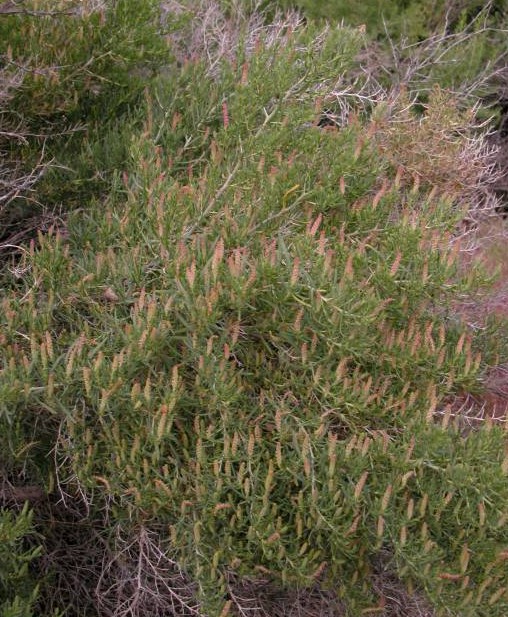
Greasewood
Sarcobatus vermiculatus (Hook.) Torr.
The basionym is Batis vermiculata Hook.
Important botanical synonyms and former combinations include:
- Fremontia vermiculatus (Hook.) Torr.
- Sarcobatus maximiliani Nees
- Sarcobatus vermiculatus var. procumbens S.C.Sand. & G.L.Chu
Sarcobatus baileyi Coville, Bailey’s Greasewood, is currently accepted as a separate, more geographically restricted species rather than as a synonym of Sarcobatus vermiculatus.
Sarcobataceae Behnke — Greasewood Family
Order: Caryophyllales
Older botanical, range-management, and veterinary literature commonly places Sarcobatus in Chenopodiaceae. Some broader classifications subsequently included Chenopodiaceae within Amaranthaceae. The modern family Sarcobataceae was established to recognize the distinct systematic position of Sarcobatus.
Black Greasewood; Greasewood; Chico; Chico Bush; Seepwood; Seep Weed; Seepweed; Greasewood Saltbush; Saltbush; Sarcobatus; Sarcobatus vermiculatus; Batis vermiculata; Fremontia vermiculatus; Sarcobatus maximiliani
“Saltbush” is highly ambiguous and is applied to numerous Atriplex species and other salt-tolerant plants. A plant identified only as Saltbush should not automatically be assumed to be Greasewood.
Bailey’s Greasewood is Sarcobatus baileyi, a separate species centered primarily in Nevada. It is generally a lower shrub with hairier leaves and should not be treated as an exact synonym of Sarcobatus vermiculatus.
The unrelated creosote bush, Larrea tridentata, is also occasionally called greasewood in parts of western North America. It belongs to Zygophyllaceae and has different botanical and toxicological characteristics.
Greasewood should not be confused with greasebush or sticky-leaved shrubs in other genera merely because their foliage or stems feel resinous.
Soluble Sodium and Potassium Oxalates
The principal toxicants in Greasewood are soluble sodium and potassium oxalates. These salts differ fundamentally from the insoluble calcium oxalate raphides found in Pothos, Dieffenbachia, Philodendron, and many other houseplants. Raphides primarily puncture and inflame the mouth and throat; Greasewood oxalates can dissolve in gastrointestinal fluid, be absorbed, disturb systemic calcium balance, and injure the kidneys.
The leaves contain the greatest recognized concentration, while fine green stems and other tissues can add to the total exposure. Reported concentrations vary markedly among plants, sites, seasons, soils, and sampling methods and may reach approximately 10 to 22 percent of plant dry matter. A measured concentration from one location cannot be used to calculate the toxicity of every Greasewood stand.
Greasewood remains potentially poisonous throughout the year. Concentrations generally rise as the growing season progresses, but poisoning has also followed early spring growth and consumption of fallen leaves during autumn and winter. A leaf does not become safe merely because it has frozen, dried, or fallen beneath the shrub.
Acute Binding of Ionized Calcium
Once absorbed, oxalate binds free ionized calcium and forms poorly soluble calcium oxalate. Ionized calcium is the physiologically active fraction needed for nerve conduction, skeletal-muscle contraction, respiratory-muscle function, vascular tone, blood coagulation, and normal electrical activity of the heart.
A rapid fall in ionized calcium can therefore produce diffuse neuromuscular and cardiovascular failure. Muscle fasciculations may progress to tremors, stiffness, weakness, staggering, tetany, recumbency, seizures, and coma. Respiratory muscles may become weak while cardiovascular instability, low blood pressure, and abnormal rhythms reduce tissue perfusion.
Total serum calcium does not always reflect the immediately available ionized fraction. Direct ionized-calcium measurement is particularly valuable when clinical signs suggest acute oxalate poisoning, although treatment may need to begin before every laboratory result is available.
Calcium Oxalate Crystals and Renal Tubular Injury
Calcium oxalate formed in the circulation is filtered through the kidneys. Crystals can precipitate within renal tubules, where they obstruct urine flow, damage tubular epithelial cells, trigger inflammation, and produce acute tubular degeneration and necrosis. Polarized light can reveal strongly birefringent crystals in renal tissue.
Renal injury may develop alongside the acute hypocalcemic syndrome or become more evident after tremors and tetany begin to improve. Crystalluria, blood or protein in urine, casts, rising creatinine and urea concentrations, altered phosphorus and electrolyte values, metabolic acidosis, reduced urine production, and complete anuria may follow.
Intravenous calcium can improve hypocalcemic neuromuscular signs, but it cannot remove crystals already deposited in the kidneys or reverse established tubular necrosis. This explains why an animal may appear neurologically better after calcium treatment and then deteriorate from progressive renal failure.
Additional Metabolic Effects
Experimental oxalate poisoning studies in sheep have documented physiological disturbances that extend beyond one low-calcium measurement. Oxalate exposure can impair cellular energy metabolism, disrupt electrolyte and acid-base balance, reduce circulation, and contribute to respiratory and cardiac abnormalities. The relative importance of these effects depends on the absorbed dose, rate of consumption, ruminal metabolism, hydration, and extent of renal injury.
Renal failure subsequently permits uremic toxins, acids, phosphorus, and fluid abnormalities to accumulate. Depression, appetite loss, weakness, gastrointestinal signs, abnormal breathing, neurologic deterioration, and cardiovascular instability can therefore persist or recur even after the original plant material has left the digestive tract.
Dose Rate, Feeding Conditions, and Partial Rumen Adaptation
Greasewood is most dangerous when a large amount is consumed quickly and without enough safe forage to dilute intake. Historical feeding work concluded that sheep were poisoned when leaves and green stems were eaten nearly exclusively in a quantity approaching gastrointestinal capacity over a relatively short period. The same total quantity spread across a varied diet and longer interval may not create the same absorbed dose.
Approximately one gram of oxalate per kilogram of body weight has been reported as potentially lethal to sheep. Under some Greasewood conditions, this has been estimated to correspond to roughly half a kilogram of green leaves and fine stems for a sheep and approximately one and one-half to two kilograms for a cow. These estimates are not safe thresholds. Plant concentration, intake rate, rumen contents, animal adaptation, hydration, body condition, and laboratory method can change the outcome substantially.
Rumen microorganisms can degrade oxalate. Controlled studies have shown that oxalate-degradation capacity increases after gradual dietary exposure and that the microbial response can begin during the first week. Goats have demonstrated greater mean degradation capacity than sheep in some experiments. This adaptation is partial, dose-dependent, and reversible; it can be overwhelmed by sudden heavy consumption.
Adaptation must not be interpreted as immunity or used as a do-it-yourself dosing program. Newly transported, hungry, dehydrated, young, pregnant, sick, or unadapted animals remain at particular risk, and previously exposed animals can still die when intake exceeds microbial detoxification capacity.
Species Susceptibility and Evidence Limits
Sheep are affected most often, followed by cattle, because range conditions can permit rapid consumption of substantial foliage. Goats may possess somewhat greater ruminal oxalate-degradation capacity, but they are not immune. Horses and companion animals lack the same ruminal detoxification system and can absorb soluble oxalates after a sufficiently large ingestion.
Specific dose-response data for horses, dogs, cats, rabbits, birds, and other non-ruminants are sparse. The absence of numerous published Greasewood cases in these species reflects a lower likelihood of consuming livestock-sized amounts of a range shrub, not proof that sodium and potassium oxalates become harmless outside ruminants.
Animals with dehydration, pre-existing renal disease, limited calcium availability, or simultaneous exposure to another nephrotoxin may tolerate less. Small dogs and cats can also receive a proportionally meaningful dose from pruning waste or branches brought into a yard even when the absolute quantity appears small compared with a livestock exposure.
Nitrate, Cyanide, and Mechanical Hazards Are Separate Problems
Nitrate is not the established defining toxin of Sarcobatus vermiculatus. Nitrate or nitrite poisoning may occur in the same pasture through another forage, fertilizer, or contaminated water source, but it produces methemoglobinemia rather than calcium binding and renal oxalosis. Chocolate-brown blood and gray-brown or blue mucous membranes support that separate differential diagnosis.
Cyanogenic glycosides are likewise not established as characteristic Greasewood toxins. Cyanide exposure from sorghums, Johnson grass, chokecherry, wild cherry, arrowgrass, or another cyanogenic plant may cause exceptionally rapid collapse and unusually bright or cherry-red blood. Blood color is only a clue and cannot replace laboratory testing.
The shrub also creates nonchemical injury. Hard pointed lateral branches can puncture the lips, mouth, eyelids, udder, legs, or skin. Broken branch tips may become embedded in tissue, and dense shrubs can cause additional trauma when weak or frightened livestock struggle through them.
Early Livestock Signs
Clinical signs commonly begin within approximately four to six hours after a toxic meal, although a very large dose may act sooner and smaller exposures may produce delayed or less obvious illness. Feeding rate, animal species, rumen adaptation, hydration, calcium status, and the amount of alternative forage all influence the onset.
Early findings may include sudden feed refusal, depression, dullness, separation from the herd, lowered head carriage, excessive salivation, reduced rumen motility, abdominal discomfort, weakness, and reluctance to walk. An affected animal may lag behind, stand with an abnormal posture, or resist being moved before dramatic tremors become visible.
Rapid shallow breathing can appear early. It may reflect metabolic disturbance, pain, hypocalcemia, impaired respiratory-muscle function, circulatory compromise, or a combination of these problems rather than primary disease of the lungs.
Hypocalcemic Neuromuscular and Cardiac Progression
As ionized calcium falls, fine muscle fasciculations may progress to generalized tremors, stiffness, an altered gait, ataxia, staggering, weakness, and inability to rise. Tetanic contraction, extensor rigidity, seizures, recumbency, coma, and death can follow in severe cases.
Respiratory-muscle dysfunction may cause increasing effort, apparent air hunger, open-mouth breathing, or terminal respiratory failure. Cardiovascular effects can include a weak or irregular pulse, abnormal heart rhythm, low blood pressure, poor peripheral circulation, and collapse.
Repeatedly forcing an affected animal to walk can worsen oxygen demand, muscle injury, and circulatory stress. A weak or recumbent animal should be protected from crowding, steep ground, water hazards, and additional handling trauma.
Renal Injury and the Delayed Uremic Phase
Animals surviving the initial metabolic crisis may develop progressive kidney disease. Increased thirst or urination may occur early, but urine production can subsequently decline as crystals obstruct and injure renal tubules. Oliguria and anuria are grave findings.
Renal failure can produce continued depression, appetite loss, dehydration, oral or gastrointestinal irritation, weakness, abnormal breath odor, altered breathing, neurologic deterioration, and worsening electrolyte and acid-base abnormalities. Dogs and cats may vomit; horses and ruminants cannot use vomiting as the same clinical indicator.
The delayed renal phase explains why apparent improvement in tremors or standing ability does not end the monitoring period. Creatinine, urea, phosphorus, electrolytes, acid-base status, urine concentration, and measured urine output may continue worsening for several days.
Findings in Sheep and Cattle
Sheep are especially vulnerable when snow, drought, overgrazing, transport, trailing, or abrupt pasture changes leave Greasewood as the easiest available browse. They may become dull, salivate, breathe rapidly, tremble, stagger, become recumbent, and die within hours. Animals surviving longer may develop severe oxalate nephrosis and uremia.
Cattle develop a similar syndrome of depression, weakness, incoordination, muscle tremors, recumbency, and renal injury. Individual animals in the same herd may differ substantially because plant intake is uneven. The absence of signs in some herd mates does not prove that the pasture is safe or that clinically normal animals consumed no Greasewood.
A 2025 Utah investigation confirmed oxalate poisoning in cattle and sheep through several independent methods: calcium oxalate crystals were present in the kidneys, oxalate was detected chemically in rumen contents, and Greasewood together with Halogeton was identified in rumen material by DNA metabarcoding.
Horses, Dogs, Cats, and Other Animals
Horses may show depression, reduced appetite, colic, salivation, muscle tremors, weakness, stiffness, altered gait, abnormal breathing, or reduced urine production. Horses cannot vomit, and repeated walking should not be used automatically when weakness or hypocalcemia is possible.
Dogs and cats may initially develop drooling, nausea, vomiting, diarrhea, abdominal discomfort, appetite loss, lethargy, weakness, tremors, or incoordination after a substantial ingestion. Severe hypocalcemia can progress to seizures or collapse, while renal injury may cause increased thirst, altered urination, vomiting, worsening depression, or laboratory evidence of acute kidney failure.
Detailed Greasewood case data are limited for companion animals. Marked tremors, seizures, profound weakness, or kidney abnormalities after a reported exposure should therefore prompt investigation for Greasewood and for other possible causes such as ethylene glycol, another oxalate plant, rodenticide, medication, fertilizer, or unrelated renal disease.
Goats may develop greater ruminal oxalate-degradation capacity than sheep, but can still be poisoned when a rapid dose overwhelms that capacity. Rabbits, camelids, swine, and other animals should not be considered resistant merely because Greasewood poisoning is reported less frequently in them.
Laboratory, Urine, and Postmortem Findings
Ionized hypocalcemia is particularly important during the acute phase. Additional abnormalities may include changes in total calcium, magnesium, phosphorus, potassium, acid-base status, creatinine, urea, urine specific gravity, and circulating volume. No single result proves plant identity.
Urinalysis may reveal calcium oxalate crystals, blood, protein, epithelial cells, or casts. Crystal absence in one urine sample does not exclude poisoning, particularly when urine production is already markedly reduced.
Kidneys may be swollen, pale, or hemorrhagic. Histologically, calcium oxalate crystals may obstruct tubules and accompany epithelial degeneration, necrosis, inflammation, and cortical edema. Crystals are typically strongly birefringent under polarized light.
Rumen or gastrointestinal contents should be preserved for botanical examination, oxalate analysis, and, where available, DNA-based plant identification. Feed, water, fertilizer, and other pasture plants may need separate nitrate, cyanide, or toxicant testing.
Differential Signs and Prognosis
Chocolate-brown blood and gray-brown or blue mucous membranes are more consistent with nitrate- or nitrite-induced methemoglobinemia. Exceptionally rapid collapse with bright or cherry-red blood may suggest cyanide. Neither observation is perfectly reliable after death or air exposure, and mixed pasture poisonings can occur.
Death may occur within several hours or after a course lasting several days. Early removal, mild signs, correctable calcium abnormalities, preserved urine production, and stable kidney values support a better prognosis.
Persistent seizures, coma, prolonged recumbency, severe hypocalcemia, metabolic acidosis, oliguria, anuria, rising renal values, or extensive renal crystal deposition creates a guarded to grave prognosis. Animals that initially improve require continued monitoring because kidney injury may progress after the acute neuromuscular signs decline.
Accepted Identity and Family Placement
Greasewood is Sarcobatus vermiculatus (Hook.) Torr., a long-lived woody shrub in Sarcobataceae. The species was originally described as Batis vermiculata and later appeared as Fremontia vermiculatus. Sarcobatus maximiliani is another important synonym encountered in historical literature.
Older botanical, range, and veterinary publications commonly place the genus in Chenopodiaceae. Some later systems incorporated Chenopodiaceae into Amaranthaceae, while detailed anatomical and systematic research supported recognition of Sarcobataceae as a separate family within Caryophyllales.
Greasewood is not a species of Chenopodium. Goosefoot, lambsquarters, quinoa, and other Chenopodium plants have their own food uses, chemistry, and poisoning profiles. Historical family proximity does not justify transferring their ethnobotany or toxicology to Sarcobatus.
Native Range and Saline Habitat
Sarcobatus vermiculatus is native from portions of Alberta and Saskatchewan through the western and central United States into northwestern Mexico. It is characteristic of the Great Basin, interior valleys, alkaline flats, saline seeps, dry lake margins, stream terraces, desert basins, and other salt-affected environments.
The species is a sodium-accumulating halophyte. Field research along extreme soil-salinity gradients has demonstrated that leaf sodium can reach very high concentrations while the plant continues selectively obtaining potassium, calcium, magnesium, nitrogen, and phosphorus. This physiological tolerance helps Greasewood dominate soils unsuitable for many competing shrubs.
Its presence commonly indicates saline or sodic soil and often relatively accessible groundwater, but one Greasewood stand cannot provide a precise measurement of water-table depth or soil salinity. Plants also occur in less saline upland and drainage settings.
Identification
Black Greasewood is generally an erect, densely branched shrub approximately one to three meters tall, although exceptionally favorable sites can support larger plants. Rigid branches often leave the main stems at broad or nearly right angles and become interlocking within mature stands.
Young bark is pale gray or almost white, while older trunks become darker, rougher, and sometimes nearly black. Short lateral shoots harden into sharp thorn-like points capable of puncturing skin and eyes.
The leaves are alternate or clustered, narrow, bright green to olive green, fleshy, succulent, and usually cylindrical or slightly flattened. Their vivid green color often contrasts with neighboring gray-green sagebrush and saltbush foliage.
Plants are generally monoecious, bearing separate male and female flowers on the same shrub. Male flowers form small cone-like spikes near branch tips. Female flowers are less conspicuous and develop into distinctive one-seeded fruits surrounded by broad membranous wings that mature from green or reddish tones to tan.
Greasewood, Saltbush, Creosote Bush, and Bailey’s Greasewood
“Saltbush” is applied broadly to many species of Atriplex and other halophytes. Several saltbushes have broader, flatter, grayer, or scaly leaves and lack the same rigid thorn-like branch structure. Identification should use the complete shrub, leaves, flowers or fruit, bark, and growing site rather than the shared habitat alone.
Creosote bush, Larrea tridentata, is also called greasewood in some regions. It has small paired resinous leaflets, yellow flowers, fuzzy fruits, and a strong creosote-like odor. It is not Sarcobatus vermiculatus and should not inherit the Greasewood soluble-oxalate profile without confirmation.
Bailey’s Greasewood, Sarcobatus baileyi, is a separate low-growing species centered mainly in Nevada. It generally has hairier leaves, a shorter growth form, and larger fruits or seeds. When the exact species is uncertain, representative plant material should be submitted for qualified botanical identification.
Seasonal Exposure and Fallen-Leaf Hazard
Livestock commonly consume small amounts of Greasewood within a diverse diet without apparent illness. The principal danger arises when it becomes the dominant accessible forage and animals eat a large quantity rapidly.
Risk increases when hungry or unadapted animals are released after transport, trailing, corralling, drought, fire, overgrazing, snow cover, or abrupt pasture changes. Sheep may be especially vulnerable during snow because they are less inclined than cattle to paw through snow for buried grasses and may concentrate on exposed shrubs.
The foliage remains succulent through much of the growing season. After freezing, leaves dry and accumulate beneath the shrub, producing a concentrated autumn or winter exposure. Early spring growth can also attract hungry animals before other forage becomes abundant.
Pruning, land clearing, herbicide treatment, road work, or mechanical control can place branches and leaves at ground level. Cut or wilted debris must not be dumped into paddocks, corrals, kennels, poultry runs, rabbit enclosures, or open compost areas accessible to animals.
Historical and Modern Evidence of Poisoning
Controlled feeding investigations published in 1928 established Greasewood as a range plant capable of poisoning sheep when leaves and green stems were consumed heavily and nearly exclusively over a short interval. Those experiments also demonstrated why simple plant-weight estimates vary: feeding rate, ration composition, plant moisture, oxalate content, and the amount already present in the gastrointestinal tract all influence toxicity.
A diagnostic case involving sheep after snowfall demonstrated the same practical pattern decades later. Greasewood was the principal browse projecting through the snow; affected animals developed fatal toxic tubular nephrosis, and losses declined after the flock was removed and provided safe hay.
The 2025 Utah cattle and sheep investigation added modern analytical confirmation. Renal histology demonstrated oxalate crystals, gas chromatography identified oxalate in rumen material, and DNA metabarcoding detected Greasewood and Halogeton. The study illustrates why several lines of evidence are preferable when multiple oxalate plants occur together.
Rumen Adaptation Is Protective but Incomplete
Rumen microorganisms can metabolize oxalate before it is absorbed. Experimental work has shown increased degradation after repeated low-level exposure, increases in populations of oxalate-degrading bacteria, and substantial differences among animals and species.
Adaptation develops over days rather than instantly, declines when dietary oxalate exposure falls, and can be overwhelmed by a rapid high dose. It also does not protect the animal from every possible effect of poor forage, dehydration, another toxic plant, or a simultaneous mineral imbalance.
Any grazing plan relying on controlled exposure should be designed by a veterinarian, livestock nutritionist, and range professional. It must not be translated into an owner-administered quantity of Greasewood or oxalate intended to “vaccinate” an animal against poisoning.
Diagnosis and Differential Poisoning
Diagnosis integrates the grazing history, plant identification, clinical signs, ionized-calcium results, kidney values, urine findings, rumen analysis, and renal histology. Oxalate crystals alone establish oxalosis but may not identify the source because Halogeton, dock, rhubarb, sorrel, certain grasses, ethylene glycol, and other exposures can produce calcium oxalate injury.
Nitrate poisoning should be investigated when compatible forage, fertilizer, or water exposure exists, especially when blood is chocolate brown or methemoglobin is measured. Cyanide testing is appropriate when sorghums, Johnson grass, chokecherry, wild cherry, arrowgrass, or another cyanogenic plant is present.
Methylene blue is an antidotal treatment for nitrate- or nitrite-induced methemoglobinemia. It does not neutralize Greasewood oxalates, restore calcium, or prevent crystal nephropathy. Administering it without an appropriate diagnosis can delay necessary calcium, renal, and supportive treatment and may itself harm susceptible species.
Prevention and Range Management
Animals should not enter dense Greasewood range while hungry. Safe hay or other forage should be provided before turnout, adequate clean water should remain available, and abrupt introduction of unadapted animals should be avoided.
Fall and winter inspections should include the layer of leaves beneath shrubs rather than only standing foliage. Snow, drought, fire, and overgrazing can change which plant is easiest to reach even when the Greasewood stand itself has not changed.
Greasewood resprouts from crowns and lateral roots after cutting, fire, or mechanical damage. One treatment may reduce canopy structure without eliminating the stand. Control plans should protect animals from treated debris, herbicide concentrate, contaminated water, and newly accessible regrowth.
After a poisoning, apparently healthy herd mates should be removed with the affected animals and observed for delayed signs. The pasture should not be reused until forage availability, Greasewood density, water, weather, management history, and the possible presence of Halogeton or another toxic plant have been evaluated.
Immediate Actions After Suspected Exposure
- Remove every exposed animal. Move the herd, flock, horse, or companion animal away from standing Greasewood, fallen leaves, contaminated hay, roots, and pruning debris. Do not leave apparently healthy animals in the same stand while treating only the visibly sick animals.
- Call a veterinarian immediately. Treat substantial ingestion or any depression, weakness, tremors, abnormal breathing, recumbency, altered urination, seizure activity, or collapse as an urgent toxicology case.
- Provide confirmed safe forage. Offer uncontaminated hay or feed to animals able to eat normally so they do not return to Greasewood while assistance is being arranged.
- Make clean water accessible. Do not force water into a weak, recumbent, seizuring, poorly coordinated, or swallowing-impaired animal.
- Keep affected animals quiet. Avoid chasing, long-distance driving, forced walking, crowding, repeated loading, and unnecessary restraint.
- Protect recumbent ruminants. When it can be done safely, maintain a down ruminant on its sternum, prevent bloat and aspiration, provide deep bedding, and protect it from weather and herd mates.
- Preserve evidence. Collect representative leaves, fine stems, fallen foliage, flowers or fruit, photographs, hay, feed, water, fertilizer information, and samples of other suspicious pasture plants.
- Document the timeline. Record when animals entered the area, whether they were hungry or newly transported, what alternative forage was available, when signs began, and how many animals may have been exposed.
Do Not Attempt Unsupervised Home or Field Treatment
Do not force affected livestock to exercise or walk repeatedly. Neuromuscular weakness and abnormal respiration may reflect hypocalcemia and systemic illness rather than ordinary fatigue or uncomplicated colic.
- Do not drench a weak or neurologically abnormal animal. Oral fluids, mineral oil, cathartics, charcoal, calcium mixtures, or feed supplements can be aspirated.
- Do not give calcium tablets, antacids, milk, cheese, dicalcium phosphate, electrolyte preparations, or mineral supplements as an improvised antidote. Oral binding is inconsistent and does not correct severe ionized hypocalcemia or renal injury.
- Do not administer methylene blue for Greasewood exposure. It treats methemoglobinemia from nitrate or nitrite, not oxalate poisoning.
- Do not administer human pain medication, anti-nausea medication, diuretics, or leftover veterinary drugs. Dehydration and kidney injury can make many medications more dangerous.
- Do not force a recumbent animal to rise. Repeated attempts increase exertion, aspiration risk, muscle injury, and handling trauma.
Home-induced vomiting is not appropriate for livestock, horses, rabbits, guinea pigs, or other species incapable of vomiting. Dogs and cats should not be given hydrogen peroxide or another emetic without direct professional instruction. Vomiting is contraindicated once weakness, tremors, incoordination, seizures, respiratory abnormalities, or impaired swallowing develops.
Emergency Warning Signs
- Neuromuscular deterioration: Muscle fasciculations, tremors, stiffness, staggering, inability to stand, tetany, seizures, or coma indicates severe systemic disease.
- Respiratory compromise: Rapid shallow breathing, marked effort, open-mouth breathing, apparent air hunger, or declining responsiveness requires immediate treatment.
- Cardiovascular instability: A weak or irregular pulse, cold extremities, poor mucous-membrane perfusion, collapse, or shock requires urgent support.
- Reduced urine production: Oliguria or anuria suggests significant renal tubular obstruction or necrosis and substantially worsens prognosis.
- Progressive depression after initial improvement: Renal failure can worsen after calcium-responsive tremors or weakness begin to resolve.
- Multiple animals affected: A cluster involving one pasture, hay source, water supply, or recent management change requires immediate herd-level investigation.
Veterinary Diagnosis
The veterinarian may measure ionized and total calcium, magnesium, phosphorus, sodium, potassium, glucose, creatinine, urea, acid-base status, blood gases, hydration, and cardiac rhythm. Ionized calcium is especially important because it reflects the biologically available calcium directly affected by soluble oxalate.
Urinalysis may assess urine concentration, calcium oxalate crystals, blood, protein, casts, and epithelial injury. Urine output should be measured whenever possible because falling production may be more clinically important than the presence or absence of crystals in one sediment sample.
Rumen or gastrointestinal contents may be submitted for oxalate analysis and plant identification. DNA metabarcoding can help identify fragmented plants when conventional examination is difficult. Feed and water should be tested separately for nitrate, cyanide, fertilizer, or another toxicant when the exposure history warrants it.
Animals that die should have kidney, rumen content, urine, blood, ocular fluid, liver, and representative plant samples preserved according to diagnostic-laboratory instructions. Renal tissue should be examined with polarized light for birefringent calcium oxalate crystals.
Calcium and Cardiovascular Treatment
A veterinarian may administer intravenous calcium when clinically important hypocalcemia is documented or strongly suspected. Calcium must be delivered carefully with cardiac monitoring because excessive or rapid administration can provoke dangerous heart-rhythm abnormalities.
Improvement in tremors, tetany, weakness, or posture does not prove that poisoning has resolved. Absorbed oxalate may continue binding calcium, and kidney crystals may continue causing tubular injury. Repeat calcium testing and continued observation are often necessary.
Magnesium, potassium, phosphorus, glucose, sodium, and acid-base abnormalities are corrected according to laboratory findings. Persistent hypotension may require circulatory support after hydration and calcium status have been evaluated.
Renal and Fluid Support
Fluid therapy may be used to correct dehydration, support circulation, and maintain renal perfusion. The volume and rate must be individualized according to cardiovascular status, electrolyte values, urine production, ongoing losses, and the degree of renal impairment.
Fluids require particular caution when urine production is markedly reduced or absent. Aggressive administration to an anuric animal can produce dangerous fluid overload, pulmonary edema, and further cardiopulmonary compromise.
Urinary catheterization or other accurate output measurement may be needed in hospitalized animals. Rising creatinine and urea, worsening acidosis, persistent electrolyte abnormalities, oliguria, or anuria may justify referral for advanced renal support. Dialysis or another renal-replacement procedure may be considered for selected companion animals where available.
Potentially nephrotoxic medications should be avoided or adjusted. Kidney values and urine output must continue to be monitored after neurologic signs improve because renal injury can be delayed or progressive.
Seizure, Respiratory, and Recumbency Care
Persistent seizures require veterinarian-selected anticonvulsant treatment together with correction of hypocalcemia, glucose, temperature, acid-base status, and other metabolic abnormalities. Do not place hands, ropes, sticks, or other objects in the animal’s mouth during a seizure.
Oxygen, airway support, and assisted ventilation may be necessary when respiratory-muscle weakness or severe metabolic disturbance compromises ventilation. Oxygen supports the patient but does not neutralize oxalate.
Recumbent animals require deep bedding, regular repositioning, bloat prevention, eye protection, temperature control, and monitoring for pressure injury, muscle damage, and peripheral nerve injury. Oral treatment should not be attempted until swallowing and airway protection are adequate.
Gastrointestinal Decontamination
There is no gastrointestinal procedure proven to reverse every Greasewood exposure. The value of decontamination depends on species, timing, amount ingested, neurologic status, and whether substantial material remains in the gastrointestinal tract.
A veterinarian may consider professional emesis in a dog only after a recent substantial ingestion when the patient remains fully alert, stable, able to swallow, and free of tremors, weakness, respiratory abnormalities, and other contraindications. Cats should not receive hydrogen peroxide.
Activated charcoal does not reliably bind simple soluble mineral salts and is not a universal treatment for oxalate exposure. It should not be forced into a weak, vomiting, sedated, seizuring, or poorly coordinated animal. Cathartics can worsen dehydration and electrolyte disturbance.
Rumen lavage, rumen evacuation, transfaunation, or other procedures may be considered in selected livestock cases. These are veterinary procedures requiring airway protection, fluid planning, and evaluation of the animal’s stability.
Nitrate and Cyanide Differential Treatment
Greasewood’s established toxins are soluble oxalates. Methylene blue should be reserved for confirmed or strongly suspected nitrate- or nitrite-induced methemoglobinemia based on exposure history, blood findings, and appropriate testing.
Methylene blue does not bind sodium or potassium oxalate, restore ionized calcium, remove renal crystals, or protect damaged tubules. Dogs and cats are particularly susceptible to oxidative injury from inappropriate methylene-blue use, and food-animal residue rules also apply.
Suspected cyanide exposure requires a different emergency protocol. Because mixed plant exposures occur, representative samples of Greasewood, other pasture vegetation, hay, water, and fertilizer should be preserved before the site is disturbed whenever doing so does not delay treatment.
Dogs, Cats, and Horses
For dogs and cats, remove loose visible plant material from the front of the mouth when safe and prevent further access. Do not force water, food, calcium products, charcoal, or medication. Repeated vomiting, tremors, weakness, abnormal walking, seizure activity, reduced urination, or collapse requires emergency examination.
Horses cannot vomit. Depression, colic, muscle tremors, weakness, abnormal gait, respiratory changes, or reduced urine production after Greasewood exposure requires urgent evaluation. Do not administer mineral oil automatically and do not repeatedly walk a weak horse.
Herd and Flock Management
Remove all animals from the suspect area and provide safe forage rather than waiting for each one to become symptomatic. Animals may have consumed different quantities and can develop signs at different times.
Monitor appetite, rumen activity, posture, gait, breathing, hydration, and urination for several days. Hungry, newly transported, unadapted, young, pregnant, dehydrated, or medically compromised animals may need closer observation and laboratory screening.
Do not return animals to the pasture until Greasewood density, fallen-leaf accumulation, alternative forage, weather, water, and the presence of Halogeton or another toxic plant have been evaluated. Any deliberate rumen-adaptation program must be professionally designed.
Prognosis and Recovery
Prognosis may be favorable when exposure is stopped early, clinical signs remain mild, ionized calcium can be stabilized, and kidney function and urine production remain normal.
Recumbency, seizures, persistent hypocalcemia, severe metabolic acidosis, rising renal values, extensive crystalluria, oliguria, anuria, or renal tubular necrosis creates a guarded to grave prognosis.
Animals may survive the initial hypocalcemic crisis and deteriorate later from renal failure. Calcium, electrolytes, kidney values, hydration, appetite, gait, cardiac rhythm, and urine output may require repeated monitoring over several days.
Frequently Asked Questions About Greasewood and Oxalate Poisoning
Why can an animal improve after calcium treatment and then deteriorate?
Intravenous calcium can restore part of the biologically active calcium fraction and improve tremors, tetany, weakness, or cardiac instability. It does not remove calcium oxalate crystals already lodged within renal tubules. Kidney injury can therefore continue after the most visible hypocalcemic signs improve, producing rising renal values, reduced urine production, acidosis, uremia, and renewed depression.
Does a normal total-calcium result exclude Greasewood poisoning?
No. Total calcium includes protein-bound, complexed, and ionized calcium. Soluble oxalate directly affects the free ionized fraction responsible for normal nerve, muscle, and cardiac activity. Ionized calcium may therefore provide more useful acute information, although diagnosis still depends on exposure history, clinical signs, renal findings, and plant or rumen analysis.
Why do fallen Greasewood leaves remain dangerous?
Freezing and drying do not reliably eliminate soluble oxalates, and fallen leaves can accumulate in a concentrated layer beneath shrubs. During snow, drought, or forage shortage, that layer may become easier to consume than buried grasses or distant forage. Fallen foliage also permits rapid intake without animals browsing widely through the stand.
Can rumen adaptation be measured or guaranteed?
Oxalate-degradation capacity can be studied experimentally in rumen fluid, and microbial populations increase after repeated low-level exposure. Routine field animals are not normally tested individually before grazing. Adaptation varies among animals, declines when exposure stops, and can be overwhelmed by a sudden high dose. Previous grazing without illness does not guarantee protection during a new exposure.
How can a diagnostic laboratory distinguish Greasewood from Halogeton in rumen contents?
Recognizable plant fragments may be examined botanically, but chewing and digestion can destroy diagnostic structures. DNA metabarcoding can identify plant genetic material within mixed rumen contents, while chemical analysis can demonstrate oxalate and kidney histology can confirm oxalate nephropathy. The 2025 Utah investigation used all three approaches rather than relying on one observation.
Do calcium oxalate crystals in the kidneys prove Greasewood was the source?
No. They prove oxalosis or oxalate-associated renal injury but not the source by themselves. Halogeton, dock, sorrel, rhubarb, certain oxalate-rich grasses, ethylene glycol, and some metabolic disorders can also produce calcium oxalate crystals. Plant identification, rumen analysis, exposure history, and testing of feed and water remain necessary.
Can Greasewood contamination in hay cause poisoning?
Yes, particularly when leaves and fine stems are concentrated in baled material or the hay provides little dilution with safe forage. Drying does not guarantee detoxification. Suspect hay should be withheld and sampled from several bale locations because contamination may be uneven.
Why is methylene blue dangerous when the diagnosis is actually oxalate poisoning?
Methylene blue addresses methemoglobinemia caused by nitrate or nitrite. It does not correct hypocalcemia or renal oxalosis. Using it without the correct indication can delay calcium and renal support, create oxidative red-cell injury in susceptible species, and complicate food-animal residue compliance.
Can a small number of shrubs poison an animal?
Shrub count is not a dependable dose measure. Risk depends on leaf mass, oxalate concentration, how rapidly material is consumed, the animal’s size and adaptation, and the availability of other forage. One large shrub with accumulated fallen leaves may provide more accessible material than several lightly browsed shrubs.
Can an animal safely return to the same pasture after recovering?
Not until the exposure conditions have been corrected. Recovery does not guarantee lasting adaptation, and kidney function may remain impaired. The pasture should be evaluated for Greasewood density, fallen foliage, Halogeton, forage shortage, snow cover, water availability, and management conditions before reintroduction.