House Pine Pet Safety, Nonspecific Plant Irritation, and Holiday-Display Hazards
Is House Pine Poisonous to Dogs, Cats, Horses, and Livestock?
No—House Pine, Araucaria heterophylla, is not known to be poisonous to dogs, cats, horses, or livestock. No specific veterinary toxin, validated toxic dose, reproducible target-organ injury, or dependable House Pine poisoning syndrome has been established. A pet that chews a small amount of untreated foliage will often remain normal, although swallowing enough fibrous vegetation, resinous material, bark, or potting medium can still cause drooling, nausea, vomiting, soft stool, diarrhea, appetite loss, abdominal discomfort, or temporary lethargy.
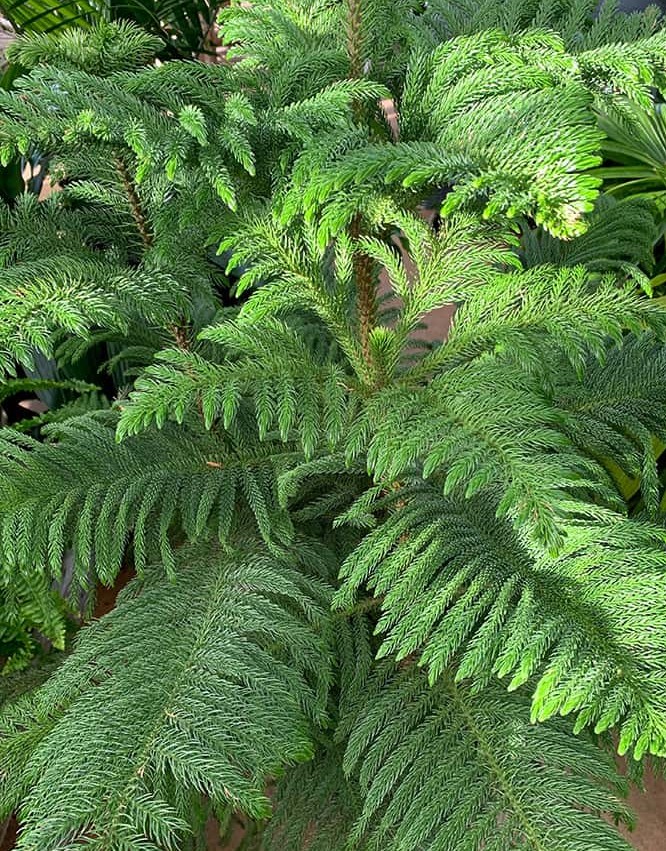
House Pine is the same species commonly sold as Norfolk Island Pine, Norfolk Pine, Star Pine, Triangle Tree, and Living Christmas Tree. Despite the common name, it is not a true pine in the genus Pinus. It is an araucarian conifer with soft awl-shaped juvenile leaves, tiered branches, and a straight central leader. Indoor plants commonly retain juvenile foliage, while mature outdoor trees develop shorter, thicker, overlapping leaves and can look substantially different.
The most important hazards often come from the plant’s surroundings rather than from an intrinsic poison. Potting soil, fertilizer granules, systemic insecticide, leaf-shine products, mold, decorative moss, artificial snow, glitter, paint, tinsel, ribbon, ornament hooks, batteries, electrical cords, stagnant saucer water, and Christmas-tree preservatives require their own risk assessment. Cook Pine, Araucaria columnaris, is also frequently mislabeled or sold as House Pine, making complete plant photographs and the original nursery information useful when exact identification matters.
Profound weakness, tremors, seizures, jaundice, kidney failure, major cardiovascular abnormalities, abnormal bleeding, coma, or collapse is not an expected result of uncomplicated House Pine foliage chewing. Serious or progressive illness requires investigation for another plant, chemical treatment, essential-oil product, foreign body, electrical injury, medication, contaminated water, food toxin, or unrelated disease.
About this guide: This page provides general pet-poisoning information and cannot diagnose or treat an individual animal. For any suspected exposure, contact a veterinarian or animal poison-control service immediately. Do not induce vomiting, give medication, or attempt home decontamination unless directed by a veterinary professional.
Norfolk Island Pine
Araucaria heterophylla (Salisb.) Franco
- Eutassa heterophylla Salisb. — basionym and homotypic synonym
- Araucaria excelsa var. glauca Carrière — historical heterotypic synonym
- Araucaria excelsa var. speciosissima Carrière — historical heterotypic synonym
- Eutacta excelsa var. aurea-variegata Carrière — historical horticultural variety
- Eutacta excelsa var. glauca (Carrière) Carrière — historical combination
- Eutacta excelsa var. monstrosa Carrière — historical horticultural variety
- Eutacta excelsa var. variegata-alba Carrière — historical variegated horticultural variety
- Abies columbaria (Dum.Cours.) Dum.Cours. — historical heterotypic synonym
- Pinus columbaria Dum.Cours. — historical heterotypic synonym and former placement as a pine
- Araucaria excelsa (Lamb.) R.Br. — name historically and horticulturally misapplied to House Pine; currently treated as a synonym of Cook Pine, Araucaria columnaris
- Araucaria columnaris (G.Forst.) Hook. — Cook Pine; a separate New Caledonian species frequently confused with and sold as House Pine
- Casuarina equisetifolia L. — Australian Pine; an unrelated flowering tree that should not be identified as House Pine
Araucariaceae — Araucaria Family
House Pine; Norfolk Island Pine; Norfolk Pine; Norfolk Island-Pine; Star Pine; Triangle Tree; Living Christmas Tree; Polynesian Pine; Norfolk Island Araucaria; House Araucaria; Araucaria
House Pine and Norfolk Island Pine refer to the same accepted species, Araucaria heterophylla. The name House Pine reflects its widespread use as an indoor container plant, while Norfolk Island Pine refers to its native range. Neither name indicates a true pine in the genus Pinus.
Cook Pine, Araucaria columnaris, is a separate New Caledonian species that is frequently mislabeled, photographed, landscaped, or sold as House Pine or Norfolk Island Pine. Young plants of the two species can be difficult to distinguish, particularly when nursery stock lacks cones, mature foliage, reliable provenance, or a verified seed source.
Araucaria excelsa appears frequently in older horticultural writing and on nursery labels associated with House Pine. Under current botanical treatment, however, Araucaria excelsa is linked taxonomically with Araucaria columnaris rather than accepted as a synonym of Araucaria heterophylla. The name should therefore be treated as a historical or commercial identification problem rather than an exact modern synonym for House Pine.
Australian Pine is an ambiguous and misleading common name. It commonly refers to Casuarina equisetifolia, an unrelated flowering tree in Casuarinaceae, but has also been used loosely for House Pine in pet-safety lists and nursery commerce. The scientific name and complete plant should be verified before applying safety information.
No Established House Pine Veterinary Toxin
No specific veterinary toxin has been established for House Pine, Araucaria heterophylla. The species is currently classified as non-toxic to dogs, cats, and horses, and the available literature does not establish a reproducible poisoning syndrome after ordinary chewing of untreated foliage. No validated toxic dose, lethal dose, expected target organ, delayed organ-failure pattern, or species-specific antidote has been identified.
Non-toxic does not mean that the plant is food or that unlimited ingestion is harmless. Leaves, branchlets, bark, wood, resin, cone fragments, seeds, and potting material are fibrous, indigestible, and outside the normal diet of companion animals. Sufficient plant mass may cause nonspecific gastrointestinal irritation, while large woody or decorative material can create choking, esophageal injury, or gastrointestinal obstruction independently of chemical toxicity.
Reports that label House Pine poisonous frequently repeat vomiting, diarrhea, depression, mouth irritation, or dermatitis without identifying the original animal, confirmed botanical specimen, dose, co-exposure, diagnostic testing, or isolated toxic principle. Those signs are possible after many plant and container exposures, but they do not by themselves establish a distinct A. heterophylla toxicosis.
Foliage and Resin Chemistry
Direct phytochemical studies demonstrate that House Pine foliage and oleoresin contain complex mixtures of terpenes and other secondary metabolites. Depending on the plant material and analytical method, reported constituents have included α-pinene, β-pinene, sabinene, limonene, α-copaene, germacrene D, γ-gurjunene, δ-cadinene, caryophyllene, caryophyllene oxide, spathulenol, phyllocladene, beyerene, rimuene, 13-epi-dolabradiene, sandaracopimara-type diterpenes, and related compounds.
The composition is not fixed. Foliage oil, bark oil, wood oil, and oleoresin oil can differ markedly, and samples collected in different countries have produced different dominant compounds. Plant age, tissue, climate, soil, season, damage, storage, extraction temperature, hydrodistillation, microwave extraction, and analytical technique can all change the measured profile.
This chemistry establishes that House Pine is biologically active as a plant. It does not establish that a dog or cat chewing intact juvenile leaves receives a clinically important toxic dose. Isolation and concentration can transform a trace component of living tissue into a laboratory preparation that is chemically and toxicologically unlike the houseplant.
Laboratory Activity Is Not Natural Pet Poisoning
House Pine extracts and essential oils have demonstrated antibacterial, cytotoxic, antioxidant, enzyme-inhibitory, anti-inflammatory, antiparasitic, insect-repellent, and phytotoxic activity in experimental systems. These studies have used hydrodistilled oils, methanolic extracts, purified fractions, nanoemulsions, cultured cells, isolated enzymes, bacteria, insects, parasites, or laboratory animals receiving prepared products.
An in vitro effect does not establish oral toxicity from a few leaves. Cell cultures lack the intact animal’s gastrointestinal barrier, metabolism, distribution, protein binding, detoxification, and excretion. Purified essential oil also bypasses the physical limits imposed by chewing dilute plant tissue.
The correct evidence boundary is therefore important: House Pine contains measurable secondary metabolites, but no constituent has been shown to produce a dependable veterinary poisoning syndrome through ordinary access to the living plant.
Essential Oils, Extracts, and Homemade Preparations
Concentrated House Pine essential oil, oleoresin extract, tincture, solvent extract, powder, nanoemulsion, homemade remedy, or experimental formulation should not be treated as equivalent to the intact plant. Concentration may deliver a much larger quantity of volatile or resinous compounds than natural chewing and may include a solvent, surfactant, preservative, alcohol, carrier oil, or other active ingredient.
Essential oils can irritate the mouth, gastrointestinal tract, skin, and eyes and may present an aspiration hazard when swallowed. Cats, birds, and small mammals may be particularly vulnerable to concentrated aromatic products because exposure relative to body weight can become substantial and because metabolic handling differs among species.
No House Pine extract or essential-oil product should be administered to an animal without direct veterinary instruction. Preserve the exact container, ingredient list, concentration, amount, route, and exposure time when a product rather than the living plant is involved.
Resin, Sap, and Contact Irritation
Freshly damaged branchlets, bark, or trunk tissue may release resinous material. Resin can adhere to fur, feathers, lips, oral tissue, skin, collars, bedding, tools, and household surfaces. A sensitive animal may experience localized redness, itching, licking, mouth discomfort, or eye irritation after direct contact.
A defined species-specific allergic or irritant dermatitis syndrome has not been established for untreated House Pine. Local inflammation may instead result from friction, stiff mature foliage, a sharp branch tip, concentrated resin, pesticide residue, decorative spray, cleanser, or another substance on the plant.
Persistent redness, swelling, papules, blistering, open lesions, facial involvement, or continued eye pain requires veterinary evaluation. The presence of resin does not justify assuming that every dermatologic sign is plant allergy.
Juvenile and Mature Foliage
The species name heterophylla refers to its different leaf forms. Juvenile leaves are soft, narrow, awl-shaped, curved, and relatively loosely overlapping. This is the foliage most commonly encountered on indoor House Pines and young landscape trees.
Mature leaves are shorter, broader, thicker, stiffer, and more tightly overlapping. They are especially prominent on older trees and fertile branches. Mature foliage may create greater mechanical irritation than the softer juvenile leaves, but no comparative veterinary study has demonstrated that either stage contains a clinically important poison or that one is chemically more toxic to pets.
Cones, Seeds, Bark, and Wood
Mature outdoor trees produce elongated pollen cones and larger rounded seed cones. Indoor House Pines rarely become old or large enough to produce them. No cone, seed, bark, wood, or root tissue has been validated as routine animal food.
Large cone scales, seeds, bark, wood fragments, and branch pieces can create choking, oral injury, dental injury, esophageal obstruction, gastrointestinal irritation, or physical blockage. The practical danger depends on fragment size, animal size, chewing behavior, and amount swallowed rather than on an established House Pine toxin.
Historical human use of araucarian seeds or reports of edible seeds from particular species do not establish that unidentified House Pine cone material is appropriate for pets, livestock, birds, rabbits, or guinea pigs.
Potting Soil, Fertilizer, and Pesticides
A potted House Pine may contain more consequential hazards than the tree. Slow-release fertilizer pellets, insecticide granules, systemic pesticide, fungicide, slug bait, decorative stones, water-retaining crystals, mold, mushrooms, treated moss, and contaminated potting medium must be assessed separately.
Fertilizers may cause oral irritation, vomiting, diarrhea, electrolyte disturbance, or more serious effects depending on ingredients and concentration. Products containing iron, insecticide, herbicide, or another additive require product-specific assessment. Moldy soil or mushrooms can produce neurologic, gastrointestinal, or hepatic disease unrelated to House Pine.
Digging may also allow an animal to swallow enough soil or decorative material to create gastrointestinal impaction or obstruction. The complete container should be inspected after any unexplained illness associated with access to the plant.
Holiday Coatings and Decorations
House Pine is commonly marketed as a living Christmas tree. Artificial snow, flocking adhesive, glitter, paint, preservative, fire-retardant coating, fragrance, leaf-shine product, ribbon, tinsel, wire, ornament hooks, glass, plastic, ceramic fragments, batteries, and electrical lights all change the exposure.
Tinsel, ribbon, thread, and string can form a linear foreign body that anchors beneath the tongue or in the stomach while intestinal movement pulls the bowel along the material. Hooks, wire, and broken ornaments may puncture tissue. Batteries can cause caustic burns and electrical components may cause oral burns, pulmonary edema, or fatal shock.
These risks should never be described as House Pine poisoning. Treatment is determined by the decoration, chemical, electrical injury, or foreign material involved.
Standing Water and Plant Reservoirs
Water collected in a saucer, decorative foil, cachepot, or open reservoir may contain soil runoff, fertilizer, pesticide, resin, mold, bacteria, algae, decaying roots, or household additives. Most living House Pines remain rooted in soil and do not require the open water reservoir used for a cut Christmas tree.
Commercial tree preservatives and homemade mixtures may contain sugar, aspirin, bleach, fertilizer, vinegar, alcohol, essential oil, or other substances. The risk is based on the actual additive and concentration, not on the presence of House Pine.
Cook Pine Identification and Evidence Transfer
Cook Pine, Araucaria columnaris, is a separate New Caledonian species closely related to House Pine. Young nursery plants can look extremely similar, and ornamental stock may be mislabeled. The historical name Araucaria excelsa has also contributed to confusion between the two.
A plant sold as House Pine may therefore require botanical verification when the clinical question depends on exact identity. Initial care for mild foliage chewing remains similar, but House Pine’s evidence record should not be presented as a direct chemical or veterinary study of every related Araucaria species.
Toxic-Dose and Evidence Limitations
No validated toxic leaf count, branch weight, cone quantity, resin amount, or body-weight dose has been established for House Pine in dogs, cats, horses, livestock, rabbits, guinea pigs, birds, or reptiles. The absence of a known toxic dose reflects the absence of a demonstrated ordinary toxicosis rather than proof that every conceivable preparation is harmless.
Most brief exposures to clean, untreated foliage are expected to cause no signs or limited nonspecific gastrointestinal irritation. A large ingestion, concentrated extract, treated plant, contaminated pot, or swallowed decoration requires a different assessment. The animal’s actual findings and the complete exposure scene should guide care.
No Defined House Pine Poisoning Syndrome
House Pine does not have a well-established species-specific poisoning syndrome in dogs, cats, horses, or livestock. A small exposure to clean untreated foliage may produce no abnormality. Mild signs reported after plant chewing are more appropriately described as nonspecific irritation or gastrointestinal response unless another substance or foreign material is identified.
No dependable onset period exists because controlled animal poisoning data and confirmed veterinary case series are lacking. Irritation from foliage, resin, soil, fertilizer, or a decorative product would generally be expected to appear relatively soon, while a swallowed foreign body may not produce obvious signs until obstruction or tissue injury develops.
Mild Oral and Gastrointestinal Effects
Possible findings after chewing foliage include lip licking, repeated swallowing, mild drooling, nausea, gagging, one or more episodes of vomiting, soft stool, diarrhea, appetite loss, abdominal discomfort, or temporary lethargy. These effects may result from fibrous material, plant texture, resin, swallowed soil, or another material associated with the container.
A single episode in an otherwise bright, comfortable animal differs from repeated vomiting or progressive illness. Continued vomiting and diarrhea can cause dehydration regardless of whether the original trigger was toxic, mechanical, dietary, infectious, or unrelated to the plant.
Mouth and Throat Irritation
Resinous material, broken branch tips, and mature scale-like foliage may irritate the lips, gums, tongue, or throat. An affected animal may drool, paw at the mouth, chew abnormally, gag, cough, repeatedly swallow, refuse food, or resist opening the mouth.
Continuous drooling, painful swallowing, neck extension, regurgitation, coughing whenever water is offered, or inability to swallow saliva raises concern for a retained branch piece, decoration, hook, ribbon, or other esophageal or pharyngeal foreign body. This is not expected after every foliage exposure and requires examination.
Vomiting, Diarrhea, and Dehydration
Vomiting or diarrhea may contain foliage, soil, decorative moss, fertilizer pellets, glitter, ribbon, plastic, or other clues to the exposure. Record the number of episodes and preserve representative foreign material when safe.
Dry or tacky gums, reduced urination, worsening lethargy, sunken eyes, weakness, or inability to retain water indicates clinically important fluid loss. Small animals, elderly patients, and animals with kidney, cardiac, endocrine, or gastrointestinal disease may deteriorate more quickly.
Repeated blood in vomit or stool, dark coffee-ground material, black stool, pale gums, or collapse is not typical of uncomplicated House Pine chewing and requires investigation for significant gastrointestinal injury, medication, foreign material, chemical exposure, clotting disease, infection, or another toxin.
Choking and Esophageal Obstruction
Panic, pawing at the mouth, inability to inhale, blue-gray gums, collapse, or silent respiratory effort may indicate choking. Heavy drooling, regurgitation, repeated swallowing, coughing, and refusal of water may indicate material lodged in the esophagus.
Branchlets, woody pieces, cone scales, ornament hooks, ribbon, tinsel, wire, plastic, and decorative moss can create mechanical emergencies even though the plant is not intrinsically poisonous. Do not blindly reach into the throat or push food and water behind suspected material.
Gastrointestinal Foreign Bodies
Persistent vomiting, repeated unproductive retching, abdominal pain, abdominal enlargement, appetite loss, reduced stool, straining, or signs that recur after temporary improvement can indicate a swallowed foreign body. Linear objects may cut into or bunch the intestine as normal contractions pull against an anchored segment.
Tinsel, string, ribbon, or thread visible from the mouth or rectum must not be pulled. The visible portion may be attached internally, and traction can cause severe intestinal injury.
Skin Contact
Resin, sap, pesticide residue, glitter, flocking, paint, or rough foliage may cause localized redness, itching, licking, rubbing, swelling, papules, or surface irritation. A consistent untreated-House-Pine dermatitis syndrome has not been established.
Worsening facial swelling, widespread hives, weakness, vomiting with rapid swelling, or breathing difficulty may indicate an allergic emergency or another exposure. Owner-administered antihistamine should not delay airway assessment.
Eye Exposure
Broken foliage, resin, soil, glitter, flocking, fertilizer dust, or pesticide can cause tearing, blinking, squinting, redness, eyelid swelling, rubbing, or visible discomfort. Plant fragments may remain trapped beneath an eyelid or abrade the corneal surface.
Continued squinting, cloudiness, discharge, inability to open the eye, apparent vision change, or worsening swelling requires veterinary examination. Eye pain should not be dismissed as a non-toxic plant exposure.
Fertilizer and Pesticide Findings
Fertilizer exposure may cause drooling, vomiting, diarrhea, abdominal pain, or more serious effects depending on formulation. Pesticides can produce tremors, weakness, abnormal pupils, excessive secretions, agitation, depression, respiratory change, or seizures.
Neurologic findings after access to a House Pine container should prompt immediate inspection for insecticide granules, systemic products, slug bait, mushrooms, mold, essential oils, medications, and other chemicals. The plant itself should not become the automatic explanation.
Electrical Injury
An animal chewing decorative lights may have pale, red, gray, or charred burns on the lips, gums, tongue, or palate. Coughing, rapid breathing, labored breathing, weakness, or collapse may occur immediately or after a delay if electrical injury causes pulmonary edema.
A pet can appear stable shortly after an electrical shock and deteriorate later. Any confirmed cord bite, oral burn, loss of consciousness, abnormal breathing, or weakness warrants prompt veterinary evaluation.
Dogs
Dogs may chew low branchlets, carry dried pieces, dig in the pot, drink saucer water, raid fertilizer, or swallow decorations. Puppies are particularly likely to combine plant chewing with ribbon, wire, plastic, soil, and electrical-cord exposure.
One brief foliage nibble in an alert dog is unlikely to cause serious illness. Repeated vomiting, abdominal pain, inability to retain water, marked lethargy, coughing, breathing difficulty, tremors, or suspected foreign material requires examination.
Cats
Cats may chew branch tips, climb the tree, knock over the pot, groom resin or glitter from their coat, drink from the saucer, or swallow tinsel and ribbon. Quiet hiding, reduced grooming, food refusal, vomiting, drooling, or decreased activity may be the first recognized findings.
Continued food refusal matters even when the original exposure was mild because prolonged inadequate intake can create secondary metabolic disease in cats. Open-mouth breathing, collapse, severe weakness, or suspected linear foreign-body ingestion is an emergency.
Horses and Livestock
Horses and livestock are more likely to encounter House Pine through landscape pruning, storm debris, discarded container plants, or decorative material thrown into an enclosure. No characteristic livestock toxicosis has been established.
Colic, repeated diarrhea, feed refusal, choking, coughing, difficulty swallowing, tremors, recumbency, or significant depression requires veterinary evaluation and investigation of fertilizer, pesticide, mold, another plant, or foreign material. Horses and ruminants should not be drenched when swallowing is abnormal.
Rabbits, Guinea Pigs, and Birds
House Pine has not been validated as forage or enrichment for rabbits, guinea pigs, or companion birds. Small animals may receive a substantial relative exposure and can be injured by stiff foliage, resin, treated branches, soil, wire, glitter, or decorative products.
Reduced eating, abnormal droppings, regurgitation, diarrhea, weakness, poor balance, inability to perch, tremors, or respiratory change requires species-experienced veterinary guidance. Rabbits and guinea pigs cannot vomit.
Severe or Atypical Findings
Tremors, seizures, profound weakness, marked ataxia, jaundice, kidney failure, coma, severe hypotension, major arrhythmia, abnormal bleeding, or rapid collapse is not an expected uncomplicated House Pine syndrome. These findings require immediate investigation for another toxin, chemical treatment, electrical injury, metabolic disease, infection, or incorrect plant identification.
Cook Pine, true pines, yew, cycads sold as palms, treated Christmas greenery, and unrelated plants may all be confused by common name or display context. Preserve the complete exposure scene rather than assuming the safest-looking plant caused every sign.
Duration and Prognosis
Mild nonspecific gastrointestinal signs should begin improving after access ends and the animal remains hydrated. Persistent vomiting, diarrhea, pain, food refusal, coughing, or lethargy beyond the expected brief course requires reassessment.
The prognosis after uncomplicated House Pine foliage chewing is generally excellent. Prognosis is determined by the actual co-exposure when fertilizer, pesticide, battery, electrical injury, essential oil, hook, glass, tinsel, string, or another foreign body is involved.
Plant Identity
House Pine, Araucaria heterophylla, is an evergreen conifer in Araucariaceae. It is not a true pine. True pines belong to Pinus in Pinaceae, while House Pine belongs to an ancient Southern Hemisphere conifer lineage that also includes Cook Pine, Hoop Pine, Bunya Pine, Monkey Puzzle Tree, kauri trees, and Wollemi Pine.
House Pine is the established title of this page. Norfolk Island Pine is the most widely recognized alternate common name and identifies the species’ native island. The indoor houseplant, living Christmas tree, and mature coastal landscape tree are different growth stages and cultivation forms of the same species.
Accepted Taxonomy and Historical Names
The accepted scientific name is Araucaria heterophylla (Salisb.) Franco. Salisbury originally described the species as Eutassa heterophylla, which remains its basionym and homotypic synonym.
Historical varieties were described under Araucaria excelsa and Eutacta excelsa. The bare species name Araucaria excelsa has frequently been used in horticulture for House Pine, but current botanical treatment associates that name with Cook Pine, Araucaria columnaris. This is more than a technical detail because nursery labels and older articles may merge two separate species.
Native Range
House Pine is native to Norfolk Island, including the historical natural occurrence on nearby islands in the same group. Its natural range is extremely restricted compared with its worldwide ornamental distribution.
The species grows in a mild maritime environment influenced by ocean wind, salt, humidity, and coastal conditions. Commercial propagation has made the tree common in homes, greenhouses, landscapes, florists, supermarkets, and holiday displays far beyond its native range.
Growth Form and Mature Size
Young House Pines have a straight central leader, narrow pyramidal outline, and regularly spaced whorls of nearly horizontal branches. This geometric form creates the familiar tabletop Christmas-tree appearance.
In suitable outdoor climates, the species becomes a massive tree rather than remaining a small houseplant. Mature trunks are straight and substantial, while storms, lightning, salt wind, pruning, or branch loss may make older crowns less symmetrical.
Several seedlings may be planted in one nursery pot to create a fuller display. What appears to be one bushy tree may therefore contain multiple separate trunks. This matters when a pet tips the container or pulls down a larger amount of foliage than expected.
Juvenile and Adult Leaves
Juvenile leaves are soft, narrow, awl-shaped, bright green, and curved slightly inward. They grow densely along slender branchlets and are the form most familiar on indoor plants.
Adult leaves become shorter, broader, thicker, stiffer, and tightly overlapping. Mature foliage is especially apparent on older outdoor trees and reproductive branches. Both forms may occur on the same tree, reflecting the “different leaves” meaning of the epithet heterophylla.
The foliage change can complicate identification. A mature outdoor specimen may look substantially different from a grocery-store House Pine even though both belong to the same species.
Cones and Seeds
House Pine is a cone-bearing plant rather than a flowering tree. Mature specimens produce elongated pollen cones and larger rounded seed cones. Seed cones break apart as they mature instead of remaining as permanently intact woody cones.
Indoor plants rarely become large or mature enough to produce cones. Cone scales and seeds should not be offered to pets merely because seeds from certain araucarian species have histories of human food use. Mechanical size, species identity, preparation, and animal physiology remain important.
House Pine as an Indoor Plant
House Pine is widely sold as a long-lived indoor foliage plant and living Christmas tree. Exposure commonly occurs when a cat bites moving branch tips, a puppy mouths lower limbs, an animal digs in the container, or dropped foliage and decorations accumulate beneath the plant.
The indoor environment introduces hazards not present on a wild tree. Potting products, decorative wrappers, fertilizer, pesticide, artificial snow, electrical lights, ornaments, and stagnant water may be more medically important than the foliage itself.
Holiday Exposure Pathways
House Pine is commonly decorated with miniature lights, ribbon, tinsel, bows, hooks, glitter, artificial snow, and lightweight ornaments. Pets may pull the tree over, swallow decorations, bite cords, drink collected water, or ingest soil while investigating the display.
Decorative foil may trap water beneath the pot and create stagnant runoff. Flocking and glitter can transfer to paws and coats and then be swallowed during grooming. Broken ornaments, hooks, and batteries require immediate attention because they can puncture, burn, obstruct, or cause electrical and chemical injury.
Cook Pine Confusion
Cook Pine, Araucaria columnaris, is a separate species native to New Caledonia. Young Cook Pines and House Pines both have narrow conical crowns, tiered branches, and soft juvenile foliage, making small nursery specimens difficult to separate visually.
Mature Cook Pines commonly develop a narrow columnar form and a characteristic directional lean, but growth conditions can alter shape and branch angle. One visual feature should not be treated as definitive identification.
Nursery labels, commercial photographs, and landscape records are not always reliable. Complete foliage, bark, cones, mature growth form, provenance, and expert review may be needed when exact identification is important.
Australian Pine Is Unrelated
Australian Pine most commonly refers to Casuarina equisetifolia, an unrelated flowering tree in Casuarinaceae. Its thin green jointed branchlets resemble pine needles, but it is neither a true pine nor an araucaria.
The name Australian Pine has also appeared on pet-safety entries for House Pine. Owners should therefore verify the scientific name rather than assuming every tree under that common name has the same chemistry or safety profile.
Other Araucaria Look-Alikes
Monkey Puzzle Tree, Araucaria araucana, has rigid triangular leaves with sharp points and a heavily armored appearance. Bunya Pine, Araucaria bidwillii, develops much larger cones capable of causing serious falling-object injury beneath mature trees.
Hoop Pine, Araucaria cunninghamii, is an Australian and New Guinean forestry and landscape species. Young plants can resemble House Pine, but mature foliage, bark, crown form, cone structure, and provenance differ.
Safety information for House Pine should not be transferred automatically to every member of Araucaria. Each species and exposure form requires its own evidence assessment.
Dogs and Cats
Dogs usually encounter lower branchlets, fallen foliage, potting soil, fertilizer granules, saucer water, and holiday decorations. A dog that carries or shakes a branch may swallow more material than the visible bite initially suggests.
Cats may climb the branches, chew flexible tips, hide beneath the tree, drink from the saucer, groom resin or glitter from their coat, or swallow string-like decorations. Tinsel and ribbon are particularly dangerous because linear foreign bodies can damage large sections of intestine.
Horses and Livestock
House Pine is not ordinarily grown as forage. Exposure may occur when landscape branches fall into an enclosure, storm debris is accessible, a potted plant is discarded near livestock, or pruning material is thrown into a paddock.
Large amounts of unfamiliar woody vegetation, fertilizer, pesticide, decorative material, and mold remain inappropriate feed even when the plant is not classified as poisonous. Adequate uncontaminated forage reduces exploratory consumption.
Rabbits, Guinea Pigs, Birds, and Other Exotics
House Pine should not be offered as forage, bedding, nesting material, or chewing enrichment for rabbits or guinea pigs. A lack of established poisoning does not constitute nutritional validation or feeding-safety research.
Companion birds may shred foliage and bark, exposing the beak, mouth, feet, feathers, and gastrointestinal tract. Treated branches, resin extracts, glitter, wire, and essential oils present different risks from one bite of clean foliage.
Diagnosis
Diagnosis begins by identifying what was actually contacted or swallowed. Preserve the complete plant, pot label, soil and fertilizer packaging, pesticide information, decorative products, water additives, electrical components, missing objects, photographs, and representative vomited material.
No routine blood or urine assay confirms House Pine exposure. Clinical testing is selected to evaluate dehydration, bleeding, infection, organ function, electrical injury, respiratory compromise, chemical exposure, or a foreign body rather than to prove the presence of one House Pine toxin.
Veterinary Evaluation
The veterinarian may examine the mouth and throat, hydration, abdomen, heart rate, respiratory effort, neurologic status, skin, and eyes. Persistent vomiting, diarrhea, pain, weakness, or abnormal behavior may justify blood testing and urinalysis.
Radiographs, ultrasound, endoscopy, or surgery may be required when ribbon, tinsel, hooks, glass, plastic, batteries, potting material, or woody fragments are missing. Chest imaging and oxygen assessment may be necessary after vomiting, electrical shock, or coughing.
Differential Diagnosis
Vomiting and diarrhea may result from dietary indiscretion, infection, parasites, pancreatitis, medication, spoiled food, another plant, fertilizer, pesticide, mold, mushrooms, or gastrointestinal obstruction. Oral pain may reflect a foreign body, electrical burn, dental injury, caustic chemical, or sharp decoration.
Tremors, seizures, collapse, jaundice, kidney failure, major arrhythmia, or severe neurologic depression requires investigation for a more plausible toxin or disease. Uncomplicated House Pine foliage chewing should not become a diagnosis of exclusion for every illness occurring near the plant.
Prognosis
The prognosis after limited ingestion of clean untreated House Pine foliage is generally excellent. Improvement should include cessation of vomiting, normal hydration, renewed appetite, comfortable posture, ordinary stool production, and return to normal activity.
The outlook depends on the actual co-exposure when a pet swallows tinsel, string, hooks, glass, batteries, fertilizer, pesticide, essential oil, treated water, or another toxic plant. Early identification of those hazards materially improves treatment decisions.
Prevention
Use a stable container and keep lower foliage, soil, fertilizer, saucer water, and fallen branchlets away from animals that chew plants or dig. Do not leave pruning debris or discarded potted plants beside kennels, paddocks, rabbit areas, poultry runs, or compost accessible to animals.
Avoid low tinsel, ribbon, exposed hooks, edible ornaments, fragile glass, loose batteries, and accessible electrical cords. Preserve product labels for flocking, glitter, fertilizer, pesticide, and water additives. Unplug decorative lights when the display cannot be supervised.
Immediate Response After House Pine Exposure
- Stop further access: Move the animal away from the House Pine, fallen branchlets, cone material, soil, standing water, decorations, and electrical cords.
- Remove loose visible material: Carefully take plant fragments from the lips and front of the mouth when the animal is alert and handling can be performed safely.
- Identify the entire exposure: Determine whether the animal reached foliage alone or also swallowed soil, fertilizer, pesticide, resin product, decorative moss, flocking, glitter, tinsel, ribbon, hooks, batteries, glass, plastic, or electrical components.
- Preserve evidence: Save the plant, pot label, chemical packaging, decorations, water-additive ingredients, photographs, and representative vomited material.
- Estimate the maximum amount: Report the greatest amount of foliage, soil, product, string, wire, or other material that could be missing.
- Record the timeline: Note when access occurred and when vomiting, diarrhea, drooling, coughing, skin irritation, eye pain, or behavioral change began.
A brief nibble of clean untreated foliage in a normal animal generally does not require aggressive decontamination. The response changes immediately when the exposure includes chemicals, essential oils, electrical cords, batteries, sharp objects, or foreign material.
Do Not Induce Vomiting Automatically
- Do not give hydrogen peroxide routinely: House Pine has no established toxin that requires automatic home emesis.
- Never give peroxide to a cat: Hydrogen peroxide can cause severe feline stomach and esophageal injury.
- Do not induce vomiting after symptoms begin: Repeated vomiting, weakness, coughing, abnormal breathing, tremors, collapse, or poor swallowing creates an aspiration risk.
- Do not induce vomiting after sharp or linear material: Hooks, wire, glass, tinsel, ribbon, thread, woody pieces, and batteries may cause additional injury while returning through the esophagus.
- Do not use household emetics: Salt, mustard, dish soap, detergent, oil, manual gagging, and fingers in the throat are unsafe.
- Reserve emesis for professional direction: A veterinarian may consider controlled emesis in a dog only when the specific co-exposure, timing, airway safety, and clinical condition support it.
Inducing vomiting because the object was near a plant can convert a manageable exposure into aspiration, esophageal injury, or perforation. Identification of everything missing from the display is more important than the House Pine name alone.
Activated Charcoal and Oral Remedies
- Do not give activated charcoal for simple foliage chewing: No specific adsorbable House Pine toxin has been established.
- Use charcoal only under veterinary direction: It may be considered when a pesticide, medication, or another adsorbable toxin was involved.
- Never force charcoal: Vomiting, weakness, sedation, coughing, tremors, seizures, or poor swallowing makes aspiration dangerous.
- Do not use household charcoal: Barbecue briquettes, fireplace ash, burned food, and homemade carbon are not medical activated charcoal.
- Do not give milk, oil, bread, yogurt, or food as an antidote: These products do not neutralize foliage, resin, fertilizer, pesticide, or foreign material.
- Do not give human medication: Antacids, anti-diarrheal drugs, pain medication, sedatives, antihistamines, and leftover prescriptions may create additional harm or obscure deterioration.
Food and Water
- Do not force food: A nauseated, vomiting, weak, coughing, or poorly swallowing animal may aspirate.
- Allow only cautious voluntary drinking: Small amounts of clean water may remain available when the animal is alert, swallowing normally, and not vomiting repeatedly.
- Prevent rapid gulping: Drinking a large volume quickly may trigger additional vomiting.
- Do not syringe water: Forced fluid can enter the lungs and cannot correct clinically important dehydration.
- Remove contaminated water: Empty saucers, foil wrappers, cachepots, and reservoirs containing runoff, fertilizer, preservative, or stagnant water.
Persistent food refusal requires earlier attention in cats, rabbits, guinea pigs, birds, and very small animals. Assisted feeding should not begin until nausea, swallowing function, and obstruction risk have been evaluated.
Vomiting and Diarrhea
- Track every episode: Record frequency, volume, blood, dark material, foliage, soil, fertilizer granules, glitter, plastic, ribbon, or other fragments.
- Save representative material: Preserve unusual plant, chemical, or foreign material recovered from vomit or stool.
- Watch hydration: Tacky gums, reduced urination, sunken eyes, worsening weakness, or inability to retain water requires veterinary care.
- Watch for bleeding: Repeated fresh blood, coffee-ground vomit, black stool, pale gums, or collapse requires urgent examination.
- Watch for aspiration: Coughing, fever, nasal discharge, rapid breathing, or renewed lethargy after vomiting may indicate aspiration pneumonia.
- Watch for obstruction: Persistent vomiting, abdominal enlargement, pain, straining, or reduced stool may indicate swallowed plant or decorative material.
One brief episode in an otherwise normal animal is different from progressive gastrointestinal disease. Continued fluid loss may require veterinary anti-nausea medication, fluid therapy, electrolyte assessment, and diagnostic testing.
Choking, String, Hooks, and Foreign Bodies
- Recognize choking: Panic, silent attempts to breathe, blue-gray gums, collapse, or inability to move air is an immediate emergency.
- Recognize esophageal obstruction: Heavy drooling, regurgitation, repeated swallowing, neck extension, coughing, or inability to swallow water requires prompt examination.
- Do not perform blind sweeps: Reaching deeply into the throat can push material farther inward or cause injury.
- Never pull visible string: Do not pull tinsel, ribbon, thread, or string from the mouth or rectum because it may be anchored internally.
- Do not induce vomiting after hooks or glass: Sharp objects can perforate the esophagus or mouth during return.
- Bring a matching object: An identical hook, battery, ornament, or decoration helps the veterinarian assess size, shape, and composition.
Radiographs do not reveal every type of plastic, ribbon, or plant material. Ultrasound, contrast imaging, endoscopy, serial examination, or surgery may be necessary when clinical evidence remains strong.
Potting Soil, Fertilizer, and Pesticide Exposure
- Inspect the entire pot: Look for missing fertilizer pellets, insecticide spikes, slug bait, mushrooms, mold, water crystals, treated moss, and disturbed soil.
- Preserve every label: Ingredient lists and concentrations determine the risk and treatment.
- Do not neutralize products: Vinegar, baking soda, milk, oil, salt, and improvised mixtures can worsen injury.
- Do not assume the tree caused the signs: Tremors, seizures, excessive secretions, profound weakness, or collapse may reflect pesticide or mushroom exposure.
- Call promptly for concentrated products: Fertilizer, insecticide, herbicide, fungicide, slug bait, essential oil, and unknown soil treatments require product-specific advice.
The veterinarian or poison-control specialist may need the exact active ingredient, formulation, concentration, package size, estimated missing amount, and animal weight. The plant’s non-toxic classification does not reduce the risk of a dangerous chemical placed in the same pot.
Skin and Coat Exposure
- Wear gloves: Protect yourself from resin, pesticide residue, fertilizer, glitter, flocking, and vomit.
- Remove visible debris: Pick foliage, soil, and decorations from the coat without crushing or spreading them.
- Wash the coat: Use lukewarm water and mild pet-safe shampoo, followed by thorough rinsing.
- Prevent grooming: Stop the animal from licking contaminated fur until cleanup is complete.
- Clean equipment: Wash collars, harnesses, bedding, carriers, grooming tools, and surfaces contaminated with resin or chemicals.
- Monitor the skin: Continued redness, itching, swelling, open lesions, or facial involvement requires veterinary examination.
Do not apply solvents, alcohol, bleach, essential oils, concentrated detergent, or human rash medication to animal skin. Treatment depends on whether the problem is resin, friction, allergy, chemical irritation, infection, or another dermatologic disease.
Eye Exposure
- Begin irrigation promptly: Flush an exposed eye with sterile saline or clean lukewarm water for at least 15 to 20 minutes.
- Flush beneath the eyelids: Allow fluid to reach the inner and outer corners without scraping the ocular surface.
- Prevent rubbing: Stop the animal from pawing the eye or rubbing against furniture and carpet.
- Do not use tools: Tweezers, cotton swabs, cloth, and fingernails can worsen corneal injury.
- Do not use human eye drops: Redness relievers, topical anesthetics, and leftover prescriptions may delay healing or obscure examination findings.
- Obtain examination for persistent pain: Continued squinting, cloudiness, discharge, swelling, or inability to open the eye requires veterinary care.
Electrical and Battery Emergencies
- Disconnect power before touching the animal: Turn off the electricity at the outlet or breaker when a pet is attached to a live cord.
- Check the mouth: Electrical burns may appear white, gray, red, blackened, or charred.
- Watch breathing closely: Coughing, rapid breathing, labored breathing, weakness, or collapse can indicate pulmonary injury.
- Report battery exposure immediately: Chewed button batteries and battery packs can cause caustic burns and tissue necrosis.
- Seek care even after apparent recovery: Respiratory complications can be delayed after electrical shock.
Do not assume the absence of an external burn excludes electrical injury. Cardiac and pulmonary monitoring may be necessary according to the exposure and clinical findings.
Recognize an Emergency
- Repeated gastrointestinal signs: Persistent vomiting or diarrhea, blood, black stool, severe pain, or inability to retain water requires prompt care.
- Airway or swallowing problems: Choking, continuous gagging, inability to swallow saliva, or coughing whenever water is offered requires urgent examination.
- Breathing changes: Rapid, noisy, shallow, gasping, open-mouth, or labored breathing is an emergency.
- Neurologic signs: Tremors, seizures, profound weakness, ataxia, collapse, or reduced responsiveness is not expected from simple House Pine chewing.
- Suspected foreign material: Tinsel, ribbon, thread, wire, hooks, glass, batteries, and large woody fragments require prompt veterinary direction.
- Electrical injury: Any confirmed shock, mouth burn, breathing abnormality, or loss of consciousness requires immediate care.
Veterinary Examination and Treatment
Veterinary evaluation focuses on the animal’s actual problem rather than on a nonexistent House Pine antidote. The examination may include the mouth, throat, hydration, abdomen, heart, lungs, neurologic status, skin, and eyes. Blood and urine testing may be appropriate when signs are persistent, severe, neurologic, respiratory, or inconsistent with simple vegetation ingestion.
Veterinarian-selected anti-nausea medication and fluid therapy may be used for repeated vomiting, diarrhea, dehydration, or appetite loss. Analgesia and gastrointestinal protection may be required for significant oral, esophageal, gastric, or intestinal irritation. Treatment must be individualized for cardiac disease, kidney impairment, reduced urine production, or respiratory complications.
Oxygen, airway management, chest imaging, and treatment for aspiration or electrical pulmonary injury may be necessary. Endoscopy or surgery may be required to retrieve hooks, batteries, glass, string, ribbon, tinsel, plastic, woody material, or another obstruction.
Horses and Livestock
- Remove access: Keep animals away from pruning debris, fallen branches, discarded containers, treated plants, and decorations.
- Do not attempt vomiting: Horses and ruminants must never receive household emetics.
- Do not drench a compromised animal: Drooling, coughing, weakness, recumbency, or swallowing difficulty creates an aspiration risk.
- Provide uncontaminated forage and water: Prevent further exploratory consumption while the exposure is investigated.
- Monitor the group: More than one animal may have reached the same plant, pesticide, or discarded material.
- Preserve samples: Retain the plant, branches, soil, feed, chemical labels, decorations, and photographs.
Monitoring, Recovery, and Prevention
- Monitor vomiting and diarrhea: Episodes should decrease rather than become more frequent, painful, or bloody.
- Monitor hydration: Normal drinking, urination, gum moisture, and activity should return.
- Monitor appetite: Continued food refusal may indicate persistent nausea, oral pain, obstruction, or another illness.
- Monitor breathing: Coughing, rapid breathing, or renewed lethargy after vomiting or electrical exposure requires reassessment.
- Monitor stool production: Reduced stool, straining, abdominal pain, or recurrent vomiting can indicate obstruction.
- Secure the display: Use a stable pot and remove accessible tinsel, ribbon, hooks, glass, batteries, and cords.
- Keep products inaccessible: Store fertilizer, pesticide, essential oils, and decorative sprays with other chemicals rather than beside pet supplies.
The prognosis after uncomplicated foliage chewing is generally excellent. Failure to improve, new symptoms, or recurrence after apparent recovery should prompt reevaluation for a foreign body, chemical exposure, aspiration, electrical injury, or unrelated disease.
Frequently Asked Questions About House Pine and Animal Safety
Is House Pine poisonous to dogs?
No specific House Pine poison has been established, and Araucaria heterophylla is generally classified as non-toxic to dogs. A dog that swallows enough foliage, bark, resinous material, soil, or other container contents may still develop drooling, vomiting, diarrhea, abdominal discomfort, appetite loss, or temporary lethargy. Check the complete exposure for fertilizer, pesticide, decorative moss, flocking, tinsel, wire, hooks, batteries, glass, and electrical cords because those hazards may be substantially more important than the foliage itself.
Is House Pine poisonous to cats?
House Pine is generally classified as non-toxic to cats, but chewing should still be prevented because indigestible vegetation, resin, soil, fertilizer residue, treated foliage, and holiday decorations can cause problems without a defined plant toxin. Continued food refusal, repeated vomiting, open-mouth breathing, marked weakness, or possible tinsel, ribbon, or string ingestion requires prompt veterinary care.
Is House Pine the same as Norfolk Island Pine?
Yes. House Pine and Norfolk Island Pine are common names for the accepted species Araucaria heterophylla. House Pine reflects its widespread use as an indoor container plant, while Norfolk Island Pine refers to its native range. Despite both names, the plant is an araucarian conifer rather than a true pine in the genus Pinus.
Is House Pine safe for puppies and kittens?
The untreated foliage is considered low risk, but puppies and kittens are more likely than mature animals to chew branches, dig in soil, tip the container, swallow ornaments, or bite electrical cords. Their smaller body size also makes a given amount of fertilizer, pesticide, string, battery material, or foreign debris more consequential. A stable pot, blocked soil surface, inaccessible cords, and decoration-free lower branches are more important than relying only on the plant’s non-toxic classification.
Is House Pine poisonous to horses and livestock?
No established House Pine toxicosis has been documented in horses or livestock, and the species is generally classified as non-toxic to horses. Landscape trimmings and discarded container plants should still not be dumped into paddocks because fertilizer, pesticide, mold, decorative products, and large quantities of unfamiliar woody vegetation may create separate gastrointestinal, respiratory, or mechanical hazards.
Is House Pine safe for rabbits and guinea pigs?
A defined poisoning syndrome has not been established, but House Pine has not been validated as safe forage for rabbits or guinea pigs and should not be offered as food, bedding, a chew toy, or enrichment. Reduced eating, abnormal fecal output, diarrhea, abdominal discomfort, weakness, or drooling requires species-experienced veterinary guidance because rabbits and guinea pigs cannot vomit and can develop serious secondary gastrointestinal problems when food intake declines.
Is House Pine safe for pet birds?
Species-specific feeding research is limited. A clean, untreated living plant may present less chemical concern than many poisonous houseplants, but companion birds should not chew resin extracts, treated foliage, glitter, flocking, fertilizer residue, wire, electrical decorations, or chemically coated branches. Regurgitation, altered droppings, weakness, poor balance, inability to perch, or respiratory change requires avian veterinary advice.
Is House Pine a true pine?
No. House Pine belongs to the genus Araucaria in Araucariaceae, while true pines belong to the genus Pinus in Pinaceae. The shared word pine reflects the plant’s conifer-like outline and historical common naming rather than close botanical placement within the true-pine genus.
What is the accepted scientific name for House Pine?
The accepted scientific name is Araucaria heterophylla (Salisb.) Franco. Salisbury originally described the species as Eutassa heterophylla, which remains its basionym. The epithet heterophylla means “different leaves” and refers to the distinct juvenile and mature foliage produced during the tree’s development.
Is Araucaria excelsa a synonym for House Pine?
The name Araucaria excelsa has often been used for House Pine in horticultural commerce and older writing, but it should not be treated as a straightforward modern synonym. Current botanical treatment associates the name with Cook Pine, Araucaria columnaris. Historical varieties described under Araucaria excelsa or Eutacta excelsa have also been associated with Araucaria heterophylla, which helps explain the longstanding confusion on nursery labels and in older literature.
Is Cook Pine the same as House Pine?
No. Cook Pine is Araucaria columnaris, a separate species native to New Caledonia. Young Cook Pines and House Pines can look extremely similar and are frequently mislabeled in nursery and landscape commerce. Complete growth form, mature foliage, bark, cones, geographic or nursery provenance, and expert botanical review may be needed when exact identification matters.
Is Australian Pine the same as House Pine?
Usually not. Australian Pine most commonly refers to Casuarina equisetifolia, an unrelated flowering tree in Casuarinaceae. The name has also been used loosely for House Pine in some nursery and pet-safety material, so the scientific name should always be verified before applying identification or toxicity information.
What toxin is in House Pine?
No specific veterinary toxin has been established. House Pine contains natural terpenes, diterpenes, phenolic compounds, biflavonoids, and resin constituents, but none has been shown to produce a dependable poisoning syndrome after ordinary pet exposure to the intact plant. Laboratory activity demonstrated by concentrated extracts, purified resin, or essential oil does not establish natural poisoning from a few chewed leaves.
Why do some websites call House Pine toxic?
Some secondary sources repeat vomiting, diarrhea, depression, mouth irritation, or dermatitis without identifying the original veterinary evidence, confirmed plant specimen, amount consumed, or associated exposures. Those signs can occur after swallowing many types of fibrous vegetation, soil, resin, or container material and do not establish a unique House Pine toxicosis. The species is generally treated as non-toxic to dogs, cats, and horses, but that classification does not make soil, chemicals, decorations, concentrated extracts, or foreign objects harmless.
Are House Pine needles poisonous?
The soft juvenile leaves commonly called needles are not known to contain an established pet poison, and they are technically leaves rather than true-pine needles. Swallowing a large amount may still cause nausea, vomiting, soft stool, diarrhea, mouth discomfort, or physical irritation because fibrous plant material is not normal animal food.
Are mature House Pine leaves more dangerous than young leaves?
Mature House Pine leaves are shorter, thicker, stiffer, and more scale-like than the soft juvenile foliage found on most indoor plants. They may create greater mechanical irritation of the lips, mouth, throat, or gastrointestinal tract, but no veterinary study has established that mature foliage contains a more clinically important poison or is chemically more toxic than juvenile foliage.
Is House Pine sap or resin toxic?
House Pine resin contains biologically active terpenoids, but ordinary contact has not been linked to a defined veterinary poisoning syndrome. Resin may adhere to the coat and irritate the mouth, skin, or eyes of a sensitive animal. Concentrated oleoresin extract, essential oil, tincture, or experimental preparation is a different exposure from natural sap released by one broken branchlet and should be assessed separately.
Can House Pine cause dermatitis?
A consistent dermatitis syndrome caused by untreated House Pine has not been established. Local irritation may occur from resin, rough mature foliage, pesticide residue, flocking, glitter, paint, fertilizer, or another product on the plant. Persistent redness, swelling, itching, open lesions, facial involvement, or spreading inflammation requires veterinary examination rather than assuming the animal has a harmless plant rash.
Can House Pine cause vomiting or diarrhea?
Yes, nonspecific gastrointestinal upset is possible when an animal swallows enough foliage, bark, resinous material, soil, stagnant water, or other pot contents. This does not establish a special House Pine toxin. Repeated vomiting, blood, black stool, inability to retain water, significant abdominal pain, reduced stool production, or progressive lethargy requires veterinary care and investigation for dehydration, obstruction, chemicals, infection, or another cause.
Can House Pine cause kidney or liver failure?
Kidney and liver failure are not expected consequences of ordinary House Pine foliage ingestion. Abnormal kidney or liver values require investigation for fertilizer, pesticide, medication, another toxic plant, infection, severe dehydration, electrical injury, contaminated water, or unrelated disease rather than being attributed automatically to the tree.
Can House Pine cause tremors, seizures, or death?
Tremors, seizures, coma, and death are not part of an established House Pine poisoning syndrome. These findings require immediate investigation for pesticide, fertilizer, essential oil, electrical injury, medication, mushroom, another toxic plant, metabolic disease, foreign-body complications, or a different emergency.
What happens if my dog eats one House Pine branch?
Many dogs will remain normal or develop only brief stomach upset after chewing one untreated branch. Remove the remaining material and determine whether the dog also swallowed wire, ribbon, hooks, soil, fertilizer, pesticide, glitter, flocking, or another object. Persistent vomiting, abdominal pain, coughing, difficulty swallowing, inability to retain water, or reduced stool production requires veterinary examination.
What happens if my cat chews a House Pine branch tip?
A few bites of untreated foliage are unlikely to cause serious poisoning. Remove access and watch for drooling, vomiting, food refusal, diarrhea, repeated swallowing, or evidence that the cat swallowed tinsel, ribbon, string, wire, or another decoration. Continued food refusal or any possible linear foreign-body exposure requires prompt veterinary advice.
How quickly would symptoms appear?
Nonspecific mouth irritation or stomach upset would generally be expected relatively soon after chewing. No validated House Pine onset period exists because a species-specific toxicosis has not been established. Foreign-body obstruction, aspiration pneumonia, and delayed electrical lung injury may develop later, making the complete exposure history more important than one symptom-free interval.
How long should mild symptoms last?
A brief episode of nausea, vomiting, or soft stool should begin improving after access ends and the animal remains hydrated. Repeated vomiting, continued diarrhea, appetite loss, abdominal pain, coughing, difficulty swallowing, reduced stool production, or lethargy lasting beyond the same day deserves veterinary guidance because uncomplicated foliage chewing should not cause prolonged or progressive illness.
Should I make my dog vomit after eating House Pine?
Do not induce vomiting automatically. House Pine has no established toxin requiring routine emesis, and vomiting may be dangerous when the dog swallowed hooks, wire, glass, batteries, string, woody material, chemicals, or decorations. A veterinarian or animal poison-control professional may consider controlled emesis only after evaluating the complete exposure, timing, material involved, and the dog’s airway and neurologic condition.
Should I give activated charcoal?
Activated charcoal is not routinely indicated after simple House Pine foliage ingestion because no specific adsorbable plant toxin has been identified. It may be considered only when a veterinarian determines that a pesticide, medication, or another toxin was involved. Never force charcoal into a vomiting, weak, sedated, coughing, neurologically abnormal, or poorly swallowing animal because aspiration can cause severe lung injury.
Is House Pine a safe living Christmas tree for pets?
The plant is one of the lower-toxicity living Christmas-tree choices, but the complete display may not be pet-safe. Tinsel, ribbon, ornament hooks, glass, batteries, artificial snow, glitter, electrical cords, potting products, stagnant water, and unstable containers can create much more serious hazards than the foliage. Use a stable pot, block access to soil and water, keep lower branches free of string-like decorations, and secure or cover electrical cords.
Is a flocked House Pine safe around pets?
Flocking changes the exposure because artificial snow, adhesive, paint, glitter, preservative, fragrance, or fire-retardant coating may cause mouth irritation, vomiting, diarrhea, or other product-specific effects. Prevent chewing and preserve the product label. A treated or decorated plant should not be assessed as though the animal ate clean, untreated House Pine foliage alone.
Can pets drink water from a House Pine pot?
Pets should not drink from the saucer, decorative foil, or cachepot beneath a House Pine. The water may contain soil runoff, fertilizer, pesticide residue, mold, bacteria, algae, decaying organic material, or decorative-product residue even though the plant itself is considered non-toxic. Empty standing water, clean the container, and provide fresh drinking water in the animal’s normal bowl.
Does House Pine need a Christmas-tree water stand?
Most House Pines sold for holiday use are living rooted plants growing in potting soil. They do not require the open water reservoir used for a cut fir or spruce. Water the soil normally and allow excess moisture to drain freely rather than collecting inside decorative foil, a sealed wrapper, or an undrained outer container.
What if my pet ate fertilizer from the House Pine pot?
Fertilizer is a separate exposure whose risk depends on the ingredients, concentration, amount swallowed, animal size, and whether the product contains iron, insecticide, herbicide, fungicide, or another additive. Preserve the package and contact a veterinarian or animal poison-control service with the exact product information rather than treating the event as simple House Pine ingestion.
What if my cat swallowed tinsel or ribbon from the House Pine?
Tinsel, ribbon, thread, and string can form a linear foreign body that anchors beneath the tongue or in the stomach while intestinal contractions pull the bowel along the material. Do not pull any portion visible from the mouth or rectum because it may be attached internally and cutting into the intestines. Contact a veterinarian promptly even when the cat initially appears normal.
What if my dog swallowed an ornament hook?
A metal ornament hook can puncture or become lodged in the mouth, throat, esophagus, stomach, or intestine. Do not induce vomiting because the hook may cause additional injury while returning through the esophagus. Seek veterinary care and bring an identical hook or a clear photograph showing its size, shape, and material.
Are House Pine cones or seeds safe for pets?
Indoor House Pines rarely become mature enough to produce cones. Cone scales and seeds should not be offered as pet food and may create choking, oral injury, or gastrointestinal foreign-body concerns depending on the animal’s size and the amount swallowed. Historical human use of seeds from House Pine or related araucarias does not establish veterinary feeding safety.
What is the prognosis after House Pine ingestion?
The prognosis after uncomplicated chewing of clean, untreated House Pine foliage is generally excellent, and mild gastrointestinal irritation should resolve with exposure removal and appropriate supportive care. The outcome may be more serious when the animal swallowed a foreign body, chewed an electrical cord, drank chemically treated water, or consumed fertilizer, pesticide, essential oil, battery material, glass, or another toxin.
What should I do after suspected House Pine exposure?
Remove further access, take loose visible material from the front of the mouth when safe, identify every substance and object the animal could have reached, and preserve labels, photographs, plant samples, decorations, and representative vomited material. Do not automatically induce vomiting or give activated charcoal, food, milk, oil, or medication. Seek urgent care for repeated vomiting, inability to retain water, severe abdominal pain, choking, difficulty swallowing, coughing, abnormal breathing, tremors, collapse, electrical injury, or possible ingestion of string, ribbon, hooks, glass, batteries, fertilizer, pesticide, or treated water.