Morning Glory Seed Alkaloids, Fungal Symbionts, Altered Behavior, and Species-Specific Livestock Poisoning
Is Morning Glory Poisonous to Dogs, Cats, Horses, and Livestock?
Yes—ornamental Morning Glories in the genus Ipomoea can be poisonous to dogs, cats, horses, livestock, birds, rabbits, guinea pigs, reptiles, and other animals, with the mature seeds of certain species presenting the greatest acute household concern. Seeds from some cultivars and populations contain fungal-produced ergoline alkaloids such as ergine, also called lysergic acid amide or LSA, together with isoergine, ergometrine, lysergic acid hydroxyethylamide, chanoclavine, elymoclavine, penniclavine, and related compounds. Exposure may cause nausea, vomiting, diarrhea, marked sleepiness, disorientation, unusual fear or agitation, abnormal responsiveness, dilated pupils, weakness, poor coordination, tremors, seizures, overheating, or collapse.
Morning Glory is a genus-level name rather than one chemically uniform plant. Some Ipomoea species contain seed-associated ergoline alkaloids, some cause chronic swainsonine-related storage disease in livestock, and others contain fungal indole diterpenes capable of causing tremors and severe incoordination. Sweet Potato is also an Ipomoea, but its ordinary edible tuber does not create the same seed-alkaloid syndrome; mold-damaged tubers can develop a separate, potentially fatal pulmonary toxin affecting cattle.
The ergot alkaloids in affected ornamental Morning Glories are made by inherited fungal partners associated with the plant. In Ipomoea tricolor, the symbiont has been identified as Periglandula clandestina. The fungus is transmitted with the plant through seed, but alkaloid concentration varies by species, cultivar, individual seed, plant tissue, fungal status, geography, maturity, and storage. Seed color, flower color, brand name, and the cultivar name ‘Heavenly Blue’ cannot reveal the dose.
Descriptions such as “natural LSD” are chemically misleading. Ergine and related lysergamides share structural features with lysergic acid diethylamide, but they are distinct compounds with different potency, pharmacology, metabolism, and adverse effects. In animals, intoxication may be expressed less as a recognizable psychedelic experience and more as sedation, staring, panic, abnormal reactions to ordinary stimuli, snapping at empty space, agitation, aggression, stumbling, tremors, or inability to stand.
Commercial seed packets introduce additional uncertainty. Seeds intended for planting may have been treated with fungicides, insecticides, colorants, repellents, polymers, or other agricultural coatings. A dog that tears open several packets may also swallow paper, foil, plastic, staples, labels, desiccants, and seeds from several unrelated plant species.
About this guide: This page provides general pet-poisoning information and cannot diagnose or treat an individual animal. For any suspected exposure, contact a veterinarian or animal poison-control service immediately. Do not induce vomiting, give medication, or attempt home decontamination unless directed by a veterinary professional.
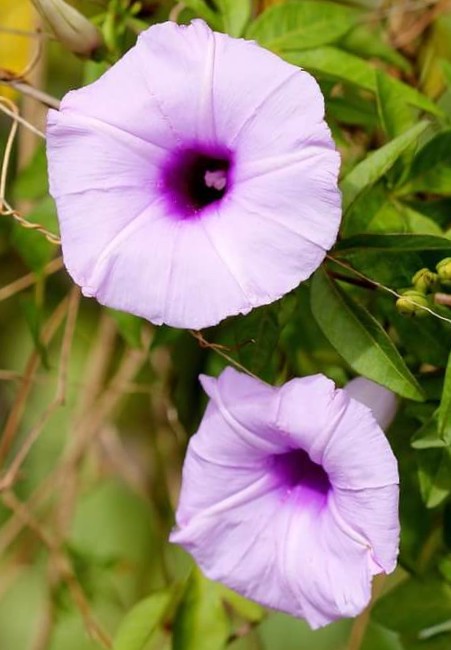
Morning Glory
Ipomoea spp.
Ipomoea L. is the accepted genus for the true Morning Glories covered collectively by this page. The abbreviation “spp.” indicates that multiple species are included rather than one exact species; “spp.” is not italicized.
Ornamental species commonly sold or described as Morning Glory include:
- Ipomoea tricolor Cav. — Mexican Morning Glory, Blue Morning Glory, or Heavenly Blue Morning Glory
- Ipomoea purpurea (L.) Roth — Common, Purple, or Tall Morning Glory
- Ipomoea nil (L.) Roth — Japanese Morning Glory or Asagao
- Ipomoea indica (Burm.) Merr. — Blue Morning Glory or Oceanblue Morning Glory
- Ipomoea hederacea Jacq. — Ivy-Leaved Morning Glory
- Ipomoea alba L. — Moonflower, Moonvine, or Tropical White Morning Glory
- Ipomoea coccinea L. — Scarlet Morning Glory or Red Morning Glory
- Ipomoea quamoclit L. — Cypress Vine or Star Glory
- Ipomoea cairica (L.) Sweet — Mile-a-Minute Vine or Cairo Morning Glory
- Ipomoea pes-caprae (L.) R.Br. — Beach Morning Glory or Railroad Vine
Species associated with clinically distinct livestock or feed-related syndromes include:
- Ipomoea carnea Jacq., including Ipomoea carnea subsp. fistulosa — Bush Morning Glory; associated with swainsonine-containing chronic storage disease
- Ipomoea asarifolia (Desr.) Roem. & Schult. — Ginger-Leaf Morning Glory; associated with a tremorgenic indole-diterpene syndrome
- Ipomoea muelleri Benth. — Poison Morning Glory; associated with tremorgenic indole diterpenes
- Ipomoea batatas (L.) Lam. — Sweet Potato; ordinary edible roots differ from mold-damaged tubers capable of developing pneumotoxic furans
The genus contains hundreds of accepted species with radically different growth forms, food uses, fungal associations, and chemical profiles. A record of Ipomoea spp. should therefore be refined to the exact species whenever a complete specimen, seed packet, nursery tag, herbarium comparison, or specialist identification permits it.
Some plants historically placed in or associated closely with Ipomoea are treated in other genera by current botanical authorities. Historical ethnobotanical literature may also use the names Ipomoea violacea, Rivea corymbosa, or Turbina corymbosa in ways that do not correspond neatly to modern ornamental trade names. Those historical names should not be used to identify a pet exposure from flower color alone.
Convolvulaceae — Morning Glory or Bindweed Family
Morning Glory; Morning-Glory; Common Morning Glory; Tall Morning Glory; Purple Morning Glory; Blue Morning Glory; Mexican Morning Glory; Heavenly Blue Morning Glory; Grannyvine; Japanese Morning Glory; Japanese Asagao; Asagao; Ivy-Leaved Morning Glory; Scarlet Morning Glory; Red Morning Glory; Cypress Vine; Cardinal Creeper; Cardinal Vine; Star Glory; Hummingbird Vine; Moonflower; Moon Flower; Moonvine; Moon Vine; Tropical White Morning Glory; White Morning Glory; Oceanblue Morning Glory; Beach Morning Glory; Railroad Vine; Goat’s Foot; Bayhops; Saltmarsh Morning Glory; Bush Morning Glory; Pink Morning Glory; Tree Morning Glory; Ginger-Leaf Morning Glory; Poison Morning Glory; Mile-a-Minute Vine; Cairo Morning Glory; Woolly Morning Glory; Wild Potato Vine; Man-of-the-Earth
Common ornamental scientific names include Ipomoea tricolor, Ipomoea purpurea, Ipomoea nil, Ipomoea indica, Ipomoea hederacea, Ipomoea alba, Ipomoea coccinea, and Ipomoea quamoclit.
“Moonflower” is dangerously ambiguous. It may identify the twining white-flowered vine Ipomoea alba, but it is also used for Datura species containing atropine, scopolamine, and hyoscyamine. Some people also apply Moonflower to large-flowered Brugmansia. An unidentified Moonflower should never be assigned the Morning Glory seed syndrome solely from the common name.
“Morning Glory” may also be used loosely for Field Bindweed and Hedge Bindweed in Convolvulus or Calystegia, Blue Daze in Evolvulus, Hawaiian Baby Woodrose in Argyreia, and other members of Convolvulaceae. These plants may differ substantially in chemistry and accepted scientific name.
Sweet Potato, Ipomoea batatas, and Water Spinach, Ipomoea aquatica, are true members of the genus. Their legitimate food use demonstrates why “all Ipomoea plants contain LSA” is inaccurate; it does not make unidentified ornamental seeds, vines, seed packets, mold-damaged tubers, or livestock-poisoning species safe.
A Genus with Several Unrelated Poisoning Syndromes
Morning Glory is not one toxic plant. The genus Ipomoea contains ornamental vines, shrubs, coastal ground covers, tuberous plants, edible crops, and livestock-poisoning species. Several chemically distinct fungal partnerships occur across the group, and the resulting toxins do not act through one shared mechanism.
The familiar household warning about Morning Glory seeds concerns ergoline or ergot alkaloids in certain ornamental species. Chronic livestock poisoning from Ipomoea carnea is associated mainly with swainsonine and lysosomal storage disease. Ipomoea asarifolia and I. muelleri contain fungal indole diterpenes that produce a tremorgenic syndrome. Mold-damaged Sweet Potato can produce pneumotoxic furan compounds. Combining these syndromes into one symptom list obscures diagnosis and treatment.
Direct companion-animal dose data are sparse. Most acute dog-and-cat guidance is based on seed chemistry, human intoxication, general ergoline pharmacology, poison-center experience, and the broader effects expected from centrally active alkaloids. No validated number of seeds predicts safety or poisoning in every dog, cat, bird, horse, or exotic animal.
Ergoline Alkaloids in Ornamental Morning Glory Seeds
Seeds from some ornamental Morning Glories contain mixtures of lysergic-acid derivatives and clavine alkaloids. Frequently reported compounds include ergine, isoergine, lysergic acid hydroxyethylamide, ergometrine, lysergol, chanoclavine, elymoclavine, penniclavine, agroclavine, and related molecules.
Ergine is also called lysergic acid amide, lysergamide, LSA, or LA-111. Isoergine is its stereochemical isomer. Ergometrine is also known as ergonovine. Older literature, product discussions, and toxicology reports may use several names for the same molecule or use “LSA” loosely for an entire seed extract.
The toxic exposure is a variable chemical mixture rather than a purified dose of ergine. Different alkaloids have different receptor activity, vascular effects, stability, absorption, and metabolism. Some compounds can also isomerize or degrade during drying, storage, grinding, extraction, laboratory handling, or digestion.
Not Every Seed Packet Contains the Same Alkaloids
Analytical testing of commercial Morning Glory cultivars found detectable ergot alkaloids in only some of the tested products. Seeds sold under similar ornamental names differed in total concentration and relative composition.
Variation also occurred among individual seeds within a packet. One seed may contain considerably more or less alkaloid than another from the same envelope. That variation prevents a dependable conversion from “number of seeds” to dose.
The cultivar ‘Heavenly Blue’ is frequently associated with Ipomoea tricolor and documented ergoline-containing seeds, but the trade name does not guarantee one genetic line, fungal infection rate, purity, or concentration. Flower color and seed-coat appearance are not chemical tests.
The Periglandula Fungal Symbiosis
Ergot alkaloids are fungal natural products. Many alkaloid-containing Morning Glories maintain a heritable relationship with fungi in the family Clavicipitaceae. The fungi grow closely associated with the plant and are transmitted from one plant generation to the next through infected seed.
The fungus associated with Ipomoea tricolor was formally characterized as Periglandula clandestina. It is related to other Periglandula species found on or within alkaloid-bearing Morning Glories.
The partnership benefits the plant by adding chemical defenses against insects, nematodes, and herbivores. The fungus receives a protected habitat and reliable transmission into the next generation. A seed therefore contains more than plant genetics; it may also perpetuate the microorganism responsible for its alkaloid chemistry.
Fungal association is not uniform across all Ipomoea species, populations, or commercial lines. Plants lacking the appropriate symbiont may contain little or no ergot alkaloid even when their flowers look identical to an infected line.
Seeds Are Important, but Alkaloids Are Not Always Seed-Only
Ergot alkaloids are frequently concentrated in seeds, where they protect valuable reproductive tissue. This makes mature capsules, loose seed, stored packets, planting trays, crushed seed preparations, and dried vines carrying capsules the most important household exposures.
“Seeds only” is still too absolute for a genus-level page. Alkaloids have been detected in vegetative and reproductive tissues of several symbiotic Morning Glories. Recent work with Ipomoea asarifolia, for example, found ergine across several plant organs and particularly high concentrations in mature leaves.
That exact distribution should not be transferred automatically to I. tricolor, I. purpurea, or I. nil. It demonstrates that toxin location can differ by host-symbiont system and that leaves and stems should not be advertised as universally alkaloid-free.
Ergine Is Not LSD
Lysergic acid diethylamide and ergine share an ergoline-related structural framework, but they are different chemicals. LSD contains diethylamide substitutions absent from ergine and is active at much smaller human doses.
Calling Morning Glory “natural LSD” encourages inaccurate expectations. Seed extracts contain multiple compounds, plant oils, fiber, and sometimes agricultural treatments. Their clinical effects are often dominated by nausea, vomiting, sedation, weakness, vasoconstriction, confusion, and poor coordination rather than a predictable human-style psychedelic experience.
No fixed statement such as “LSD is exactly one hundred times stronger” adequately describes differences in receptor binding, dose, preparation, route, and patient response. Such comparisons also provide no useful veterinary dose calculation.
Serotonergic, Adrenergic, Dopaminergic, and Vascular Effects
Ergoline compounds can interact with several serotonin-receptor subtypes and may influence adrenergic and dopaminergic signaling. The combined effect can alter arousal, perception, anxiety, vascular tone, gastrointestinal motility, body temperature, and motor control.
Vasoconstrictive activity may contribute to pale or cool extremities, weakness, blood-pressure changes, and discomfort after a substantial exposure. Severe peripheral ischemia is well recognized with some ergot toxins but is not established as a routine result of ornamental Morning Glory seed ingestion.
Heart rate and blood pressure may rise, fall, or remain within reference limits depending on the alkaloid mixture, dose, agitation, sedation, temperature, dehydration, and concurrent seed treatment. One pulse pattern should not be presented as diagnostic.
Hallucination-Like Behavior and Its Limits
An animal cannot verbally describe a hallucination. The phrase hallucination-like behavior is therefore an interpretation of observable actions rather than proof of the animal’s internal perception.
Possible behaviors include staring into empty space, tracking something that is not present, barking or swatting suddenly, snapping at invisible objects, reacting dramatically to ordinary sounds, hiding, panicking, pressing against barriers, failing to recognize familiar people, or alternating between agitation and profound withdrawal.
The same behavior can arise from cannabis, amphetamines, antidepressants, anticholinergic plants, mushrooms, pesticides, head injury, seizures, metabolic disease, vision loss, or fear. Morning Glory exposure should remain one differential rather than an automatic explanation.
Gastrointestinal Irritation and the Physical Seed Burden
Hard seeds and their chemical contents may produce drooling, nausea, abdominal discomfort, vomiting, diarrhea, and appetite loss. Gastrointestinal signs can precede altered behavior or occur without an obvious neurologic syndrome.
The seed coat may pass intact or may be cracked thoroughly by chewing. Crushed, ground, soaked, or partially germinated seeds expose internal tissues more readily, but an owner cannot determine absorption simply by looking at vomit or stool.
A large packet ingestion also introduces indigestible material. Paper, foil, plastic, staples, labels, adhesive, and desiccant packets can cause gastrointestinal irritation, choking, or obstruction independent of the alkaloids.
Commercial Seed Treatments
Planting seed may be coated with fungicides, insecticides, polymers, colorants, bird repellents, or other products. Brightly colored seed strongly suggests treatment, but natural-looking seed does not prove that no coating was applied.
Clinical effects from a coating may overlap with the plant alkaloids or create a completely different syndrome. Excessive secretions, muscle fasciculations, pinpoint pupils, pronounced tremors, respiratory distress, profound weakness, or seizures may reflect a pesticide rather than ergine alone.
The original packet, lot number, brand, species, cultivar, treatment statement, safety label, and remaining seeds must be preserved. A mixed packet may contain several unrelated flowers with separate toxicologic concerns.
Swainsonine-Associated Storage Disease
Ipomoea carnea and several related Morning Glories can contain swainsonine. The alkaloid is produced through an association with fungi in the order Chaetothyriales rather than by the Periglandula system responsible for ornamental-seed ergot alkaloids.
Swainsonine inhibits lysosomal alpha-mannosidase and Golgi mannosidase II. Partially processed sugars accumulate within lysosomes, causing cellular vacuolation and a systemic storage disease that particularly affects the nervous system.
Clinical illness generally follows repeated consumption rather than one seed packet. Livestock may develop progressive weight loss, depression, altered behavior, exaggerated reactions, tremors, an unsteady gait, abnormal posture, difficulty eating, reduced performance, recumbency, and persistent neurologic deficits.
Calystegines are also present in some swainsonine-containing Morning Glories and inhibit other glycosidases. Comparative experimental work indicates that swainsonine accounts for the characteristic disease in I. carnea, while calystegines contribute little or no measurable effect under the tested conditions.
Pregnancy and Maternal Exposure to Ipomoea carnea
Experimental maternal exposure has altered fetal development, neonatal behavior, maternal-offspring interaction, and reproductive outcomes in laboratory and livestock studies. These effects involve sustained experimental intake and cannot be converted into a claim that one ornamental seed causes miscarriage.
Pregnant livestock repeatedly grazing I. carnea should be removed from the source and evaluated. Maternal undernutrition, neurologic impairment, placental effects, and fetal exposure may all influence the outcome.
Concentrated herbal products or intentional feeding during pregnancy should not occur without veterinary toxicology review, even when the plant has a history of traditional medicinal use.
Indole-Diterpene Tremorgenic Morning Glories
Ipomoea asarifolia and Ipomoea muelleri are associated with a tremorgenic livestock syndrome caused by fungal indole diterpenes. Identified compounds include terpendole-related molecules and additional paspaline-derived metabolites.
Affected animals may develop fine or coarse tremors, an exaggerated response to movement, stiff or wide-based gait, repeated falling, inability to stand, nystagmus, and worsening signs when driven or handled.
Experimental work demonstrated that endophyte-associated plant material produced tremors and coordination deficits, while comparable endophyte-free material did not. Tremorgenic compounds can also pass through milk under some exposure circumstances and affect nursing young.
This syndrome is distinct from swainsonine storage disease and from ornamental-seed lysergamide intoxication. Tremors caused by indole diterpenes may intensify dramatically with stimulation even when the animal is alert.
Mold-Damaged Sweet Potato and 4-Ipomeanol
Sweet Potato is Ipomoea batatas, a legitimate food crop. Sound edible tubers are not equivalent to ornamental Morning Glory seeds and do not contain the same routine ergoline profile.
When Sweet Potato tubers are damaged and invaded by certain fungi, they may produce furanoterpenoid defense compounds including 4-ipomeanol. In cattle, metabolic activation of 4-ipomeanol damages bronchiolar and pulmonary tissue and can produce severe atypical interstitial pneumonia.
Affected cattle may develop sudden respiratory distress, rapid shallow breathing, open-mouth breathing, expiratory grunting, neck extension, frothing, cyanosis, weakness, and death. The syndrome is pulmonary rather than hallucinogenic and may begin after animals eat visibly moldy or damaged tubers, culls, waste, or contaminated feed.
Ornamental Sweet Potato vines should not be described automatically as a source of 4-ipomeanol. The hazard depends on damaged, diseased tuber tissue and fungal-associated production of the pneumotoxin.
No Universal Toxic Dose or Specific Antidote
No validated toxic seed count exists for dogs, cats, horses, livestock, birds, rabbits, guinea pigs, or reptiles. Risk depends on the exact species, fungal association, seed lot, concentration, plant part, treatment coating, quantity, chewing, extraction, animal size, health, and co-exposures.
There is no specific antidote that neutralizes Morning Glory ergoline alkaloids, swainsonine, indole diterpenes, and 4-ipomeanol collectively. Treatment must match the actual syndrome and may include controlled decontamination, anti-nausea medication, intravenous fluids, cardiovascular and temperature monitoring, veterinary sedation, seizure control, respiratory support, protection from traumatic injury, or long-term removal from a toxic forage source.
Clinical Timing Depends on the Exact Morning Glory Syndrome
Signs after a substantial ornamental-seed ingestion may begin within a few hours, but no exact onset applies to every seed lot or animal. Chewing, grinding, stomach contents, seed coating, alkaloid concentration, body size, and species influence absorption.
Swainsonine storage disease develops through repeated ingestion over days or longer rather than as a typical rapid seed-packet event. Indole-diterpene tremors may emerge during continued grazing and become more obvious when an animal is moved. Mold-damaged Sweet Potato pneumonia can develop after a separate feed exposure and is dominated by respiratory disease.
The time course itself is therefore diagnostic information. Acute vomiting and altered behavior after a torn ornamental seed packet is different from progressive weight loss and incoordination in a herd grazing Bush Morning Glory.
Early Gastrointestinal Signs
Possible early findings include lip licking, drooling, repeated swallowing, nausea, vomiting, diarrhea, abdominal discomfort, food refusal, restlessness, or lethargy. Seed fragments, packet material, and brightly colored coatings may be visible in vomit.
Vomiting can reduce part of the unabsorbed exposure but does not establish that the remaining dose is safe. Repeated vomiting creates dehydration and aspiration risk and may prevent safe oral administration of water, food, or charcoal.
Horses, rabbits, guinea pigs, and several other species cannot vomit normally. Their absence of vomiting should not be interpreted as absence of poisoning.
Sedation, Lethargy, and Reduced Responsiveness
Some animals may become profoundly quiet, drowsy, weak, or difficult to arouse. They may lie in an unusual location, fail to respond normally to familiar people, stumble when encouraged to move, or progress toward stupor.
Sedation may alternate with brief periods of agitation or abnormal reaction. A patient that appears merely sleepy can still aspirate vomit, fall from furniture, become hypothermic, or deteriorate neurologically.
Markedly reduced responsiveness also requires evaluation for cannabis, sedatives, hypoglycemia, liver disease, head injury, seizures, or another toxin.
Disorientation and Altered Behavior
Behavioral changes may include staring, wandering, pacing, sudden freezing, hiding, unusual vocalization, exaggerated startle, fear of familiar surroundings, compulsive movement, pressing into barriers, or failing to recognize routine commands.
Hallucination-like activity may appear as tracking invisible objects, barking or swatting at empty space, snapping without an obvious target, or reacting dramatically to ordinary light, sound, and touch. These behaviors indicate altered neurologic processing but cannot confirm a subjective hallucination.
Unexpected aggression may arise from panic, confusion, sensory distortion, or defensive response to restraint. It is not deliberate misbehavior. Handler safety and controlled low-stimulation transport become immediate priorities.
Coordination, Tremors, and Seizures
Weakness, swaying, a wide-based stance, stumbling, crossing of the limbs, repeated falling, inability to rise, muscle rigidity, tremors, and seizures may occur after a substantial acute exposure or a different toxic Ipomoea species.
Animals with poor coordination are vulnerable to head trauma, fractures, drowning, road injury, and aspiration. They should be confined away from stairs, pools, traffic, sharp furniture, horses, livestock, and other animals.
Seizures are not required for diagnosis and may indicate a large exposure, pesticide coating, another toxic plant, hyperthermia, hypoglycemia, electrolyte disturbance, or primary neurologic disease.
Pupils and Sensory Responses
Pupils may become dilated, and responses to light may appear altered. Some animals become unusually sensitive to light, sound, movement, or touch, while others respond poorly to their environment.
Dilated pupils are not specific to Morning Glory. Datura, medications, decongestants, antidepressants, cannabis, eye disease, fear, and neurologic disorders can produce similar findings.
Panting and Body-Temperature Changes
Panting may accompany fear, nausea, agitation, muscle activity, pain, cardiovascular effects, or rising temperature. Persistent heavy panting with hot skin, dark-red gums, weakness, tremors, or collapse raises concern for hyperthermia.
Overheating is generally a secondary complication of agitation, struggling, continuous movement, tremors, seizures, or environmental heat rather than a unique direct marker of ergine.
Profound sedation, shock, or prolonged immobility may instead cause a low body temperature. Temperature should be measured and corrected under controlled veterinary supervision.
Cardiovascular and Peripheral-Circulation Findings
Heart rate and blood pressure may change, although cardiovascular abnormalities are less consistent than gastrointestinal and behavioral signs in ornamental-seed exposure. An animal may have a fast, slow, weak, or irregular pulse depending on agitation, sedation, dehydration, temperature, and the alkaloid mixture.
Pale gums, cold feet, weak pulses, collapse, or marked weakness may indicate poor circulation or vasoconstriction and requires urgent assessment. Dark-red gums may accompany overheating or severe exertion.
Dogs
Dogs most often gain access to seed packets, mature capsules, loose planting seed, garden-storage containers, spilled trays, or dried vines. They may also swallow several packets and their packaging at one time.
Possible signs include vomiting, diarrhea, panting, staring, altered responsiveness, unusual fear, agitation, aggression, pacing, profound lethargy, dilated pupils, weakness, stumbling, tremors, seizures, collapse, or abnormal breathing.
A dog that has eaten an unknown number of commercial seeds should be assessed from the maximum possible quantity and the treatment label. The absence of signs immediately after the incident does not establish that no alkaloid or pesticide was absorbed.
Cats
Cats may bat loose seeds across a floor, chew seedlings, shred dry capsules, or investigate vines brought indoors. They may vomit, hide, vocalize unusually, develop dilated pupils, become agitated, stare into space, lose coordination, become profoundly sleepy, tremble, or seize.
A cat’s quiet behavior can conceal significant intoxication. Continued food refusal, repeated vomiting, inability to walk normally, open-mouth breathing, tremors, or reduced responsiveness requires urgent care.
Horses and Livestock After Acute Seed or Plant Exposure
Acute exposure to an ergoline-containing ornamental Morning Glory may cause salivation, gastrointestinal discomfort, depression, altered behavior, weakness, incoordination, tremors, or collapse. Exact large-animal case evidence for ornamental seed packets is limited.
Forage exposures require broader identification. A vine in pasture or hay may be an ergoline-bearing species, a swainsonine-containing species, a tremorgenic species, Bindweed, Datura, or another plant growing through the same crop.
Driving a weak, trembling, or disoriented animal can worsen falls, injury, and overheating. Exposed groups should be moved with the least stress practical.
Chronic Swainsonine Storage Disease
Animals repeatedly consuming Ipomoea carnea or another swainsonine-bearing Morning Glory may develop progressive weight loss despite continued appetite, depression, reduced performance, abnormal posture, head tremors, exaggerated reactions, an unsteady gait, difficulty turning, difficulty eating, separation from the herd, and eventual recumbency.
Microscopic cellular vacuolation and lysosomal storage may affect neurons and additional organs. Clinical recovery depends on cumulative exposure and the extent of irreversible nervous-system injury.
Removal from the plant may lead to improvement in less advanced cases, but animals with prolonged exposure can retain behavioral or coordination deficits. The disease should not be given the short recovery timeline used for uncomplicated ornamental-seed intoxication.
Tremorgenic Ipomoea Poisoning
Ipomoea asarifolia and I. muelleri can cause pronounced tremors and incoordination through fungal indole diterpenes. Signs often become worse when animals are chased, handled, startled, or forced to walk.
Affected animals may remain aware while developing fine tremors, stiff gait, nystagmus, repeated falling, wide-based stance, inability to stand, and exhaustion. Nursing young may be affected after maternal exposure under some circumstances.
Reduced stimulation and removal from the source are important, but severely affected livestock still require veterinary evaluation for dehydration, injury, aspiration, hyperthermia, and other poisonous plants.
Mold-Damaged Sweet Potato Pneumotoxicosis
Cattle consuming mold-damaged Sweet Potato tubers may develop rapid shallow breathing, extended head and neck, open-mouth breathing, expiratory grunting, frothing, cyanosis, severe anxiety, reluctance to move, weakness, and death.
The syndrome results from pulmonary injury caused by 4-ipomeanol and related stress metabolites rather than from lysergic-acid amides. Moving affected cattle can increase oxygen demand and precipitate collapse.
This diagnosis requires a history of damaged or moldy Sweet Potato feed. Ordinary ornamental Morning Glory seed exposure should not be described as a routine cause of bovine interstitial pneumonia.
Birds, Rabbits, Guinea Pigs, and Reptiles
Birds may crack seeds efficiently and develop regurgitation, depression, altered behavior, dilated pupils, weakness, poor balance, tremors, seizures, or abnormal breathing. Small body size makes an uncertain seed quantity important.
Rabbits and guinea pigs may develop drooling, food refusal, diarrhea, lethargy, altered behavior, incoordination, tremors, or reduced fecal output. They cannot vomit, and secondary gastrointestinal stasis may become clinically important.
Direct reptile evidence is minimal. Morning Glory vines and seeds should not be offered as browse or planted in tortoise and herbivorous-reptile enclosures. Food refusal, regurgitation, tremors, weakness, abnormal posture, or reduced responsiveness requires species-experienced veterinary care.
Findings Suggesting Datura or Another Poison
Extreme dry mouth, very rapid heartbeat, intensely dilated pupils, hot dry skin, urinary retention, severe delirium, repetitive purposeless movement, and marked hyperthermia after an unidentified Moonflower increases concern for Datura anticholinergic poisoning.
Excessive salivation, pinpoint pupils, muscle fasciculations, diarrhea, bronchial secretions, and respiratory weakness may indicate an insecticide. Profound sedation may indicate cannabis or a medication. Repetitive violent tremors may result from mold toxins or metaldehyde.
The presence of a Morning Glory vine nearby does not exclude a second poison or incorrect plant identification.
Duration and Prognosis
Many limited ornamental-seed exposures improve with decontamination, supportive care, and protection from secondary injury. Sedation, nausea, altered behavior, or incoordination can continue beyond the initial gastrointestinal period.
No animal should be promised recovery within a fixed 12-, 24-, or 48-hour period. Large ingestions, extracts, seed coatings, aspiration, trauma, hyperthermia, seizures, and mixed toxins can prolong hospitalization.
The prognosis is generally favorable when cardiovascular and respiratory function remain stable and severe neurologic complications do not develop. It becomes guarded with persistent seizures, dangerous temperature elevation, aspiration, respiratory failure, major trauma, chronic swainsonine disease, severe tremorgenic exposure, or mold-damaged Sweet Potato pneumotoxicosis.
What Is Morning Glory?
Morning Glory is a broad common name applied most often to flowering plants in the genus Ipomoea. Familiar garden forms are twining vines with funnel-shaped flowers, but the genus also contains trailing coastal plants, upright shrubs, small trees, tuberous geophytes, food crops, and plants capable of causing chronic livestock disease.
This page uses a genus-level identity because many seed packets, poison lists, nursery tags, and owner descriptions provide only the word Morning Glory. Exact species identification remains central because the toxins, affected plant parts, exposure pathways, and expected prognosis can differ radically.
Accepted Genus and Global Distribution
Ipomoea is an accepted genus in Convolvulaceae. Its native distribution spans tropical and subtropical regions of the Americas, Africa, Asia, Australia, and Pacific islands, with ornamental and food species now cultivated far beyond their original ranges.
Escaped ornamental vines grow along fences, roadsides, railway corridors, vacant lots, crop margins, streambanks, abandoned gardens, utility lines, and disturbed soil. Other species are native components of beaches, dunes, deserts, grasslands, wetlands, woodland edges, and tropical shrubland.
Twining Stems and Climbing Habit
Many ornamental Morning Glories climb by wrapping their stems around supports rather than producing tendrils. Vines may encircle trellises, fences, posts, shrubs, wires, porch railings, cages, and other plants.
Twining growth allows seed capsules and fallen seeds to occur far from the plant’s original base. A vine climbing above a dog run, aviary, rabbit enclosure, horse fence, or patio can drop toxicologically important material into the animal area.
Dead vines may remain wrapped around a support after frost. Their dry stems can retain numerous inconspicuous seed capsules until pruning or wind releases them.
Leaf Variation
Leaves may be heart-shaped, arrow-shaped, ivy-like, deeply lobed, palmately divided, rounded, kidney-shaped, or finely dissected. Leaf architecture is one of the most useful field features for narrowing the species.
Ipomoea quamoclit, or Cypress Vine, has narrow feather-like segments that look unlike the broad heart-shaped leaf commonly associated with Morning Glory. I. hederacea may have three-lobed ivy-like leaves, while beach species often have thick notched or two-lobed leaves.
Leaf shape does not predict ergoline content. It is an identification clue, not a toxicity scale.
Funnel-Shaped Flowers
Morning Glory flowers have a fused corolla forming a funnel, trumpet, or salver-like shape. Colors include blue, purple, violet, pink, red, white, striped, edged, and multicolored forms.
Many ornamental flowers open in the morning and fade as the day warms. Moonflower, Ipomoea alba, opens large fragrant white flowers in the evening and remains open overnight.
Flowers are not a reliable guide to seed chemistry. Different species and fungal states can produce nearly identical blooms, while one cultivar may show several colors.
Seed Capsules and Hard Seeds
After pollination, many ornamental Morning Glories form round, ovoid, or slightly pointed capsules. The capsule dries and splits to release several hard seeds that may be black, dark brown, tan, gray, or mottled.
Mature capsules can remain hidden within dead leaves and stems. They may be carried indoors in dried arrangements, wreaths, seed-saving projects, classroom activities, or garden waste.
Dogs may crush capsules in the mouth, cats may bat loose seeds, birds may crack them with the beak, and rodents or small herbivores may collect them from bedding. Prompt removal before seed release is the most dependable prevention.
Why Alkaloid Content Cannot Be Judged Visually
The presence of an appropriate fungal symbiont is a major determinant of ergot-alkaloid production. Two visually similar plants can differ because one lineage carries the fungus and another does not.
Commercial seed analysis also demonstrates variation among products and individual seeds. Age, storage, seed maturity, geography, cultivar ancestry, fungal infection, and laboratory method may all influence the measured profile.
Seed color, bitterness, packet artwork, flower color, organic certification, untreated status, and the absence of a warning label do not establish a safe alkaloid concentration.
Heavenly Blue Morning Glory
‘Heavenly Blue’ is generally associated with blue-flowered Ipomoea tricolor. Its seeds are among the most frequently analyzed ornamental Morning Glory seeds and have repeatedly contained ergine and related alkaloids.
Commercial use of the name is not always genetically controlled. A packet can contain a selected line, hybrid, substitute, or seeds from variable sources. The cultivar name supports concern but cannot calculate a dose.
Common or Purple Morning Glory
Common, Purple, or Tall Morning Glory generally refers to Ipomoea purpurea. It is a fast-growing annual vine with heart-shaped leaves and flowers ranging from purple and blue to pink, white, and patterned forms.
Ergot-alkaloid detection varies among populations and seed sources. A previous uneventful exposure to one plant does not prove that every I. purpurea seed lot is chemically identical.
Japanese Morning Glory
Japanese Morning Glory or Asagao usually refers to Ipomoea nil. Centuries of horticultural selection have produced diverse flowers, variegated or unusually shaped leaves, dwarf plants, and many seed lines.
Some lines contain ergot alkaloids, while chemistry varies among cultivars and individual seeds. Ornamental breeding for color and form does not prove that the fungal symbiosis or alkaloid pathway has been removed.
Blue Morning Glory and Ipomoea indica
Ipomoea indica is a vigorous perennial vine with blue to purple flowers and broad leaves. It can become invasive in warm regions and may cover fences, trees, buildings, and waste areas.
Its common names overlap with I. tricolor, and photographs of flowers alone may not distinguish them. Seed production may also differ among climates and populations.
Moonflower Vine
Ipomoea alba is a vigorous tropical vine with large white flowers that open in the evening. It is known as Moonflower, Moonvine, and Tropical White Morning Glory.
Its exact toxin profile is less consistently documented than the best-studied I. tricolor seed systems. Seeds and vegetative material should remain inaccessible, but the page should not claim that every I. alba plant contains the same ergine concentration as Heavenly Blue Morning Glory.
The Dangerous Datura Moonflower Confusion
Datura species are upright or spreading herbs and shrubs rather than twining vines. Their large white, lavender, or purple trumpet flowers may open in the evening, leading to the same Moonflower common name.
Datura fruits are commonly conspicuously spiny capsules. The plant contains atropine, scopolamine, and hyoscyamine and can cause severe anticholinergic delirium, rapid heart rate, dry mucous membranes, dilated pupils, urinary retention, overheating, seizures, coma, and death.
An owner should photograph the whole plant, stem habit, leaves, flower orientation, and fruit. A detached white trumpet flower is not enough to distinguish Ipomoea alba, Datura, or Brugmansia.
Cypress Vine and Scarlet Morning Glory
Cypress Vine, Ipomoea quamoclit, has delicate feathery leaves and small red, pink, or white star-shaped flowers. Scarlet Morning Glory, I. coccinea, has broader heart-shaped leaves and small red to orange flowers.
Both may be included in hummingbird or pollinator seed mixtures. Mixed packets complicate exposure assessment because they may contain several Ipomoea species and unrelated flowers with their own seed coatings.
Beach Morning Glory
Ipomoea pes-caprae is a sprawling coastal vine with thick two-lobed leaves and pink to purple flowers. It stabilizes tropical and subtropical dunes and may grow around beaches, resorts, dog-walking areas, coastal horse trails, and landscaped shorelines.
Coastal herbicide, fertilizer, salt, contaminated sand, discarded food, and marine debris may accompany an apparent plant exposure. Exact identification and environmental context remain important.
Seed Packets and Gardening Supplies
Many dog and cat exposures occur before planting. Packets may be stored in open baskets, drawers, gardening totes, garage shelves, greenhouse benches, classrooms, seed libraries, or planting trays.
A dog can consume several packets rapidly and may ingest paper, foil, plastic windows, staples, string, rubber bands, labels, and desiccant. A cat may scatter seeds under appliances, making the total quantity impossible to count.
Soaked or pre-germinated seeds remain relevant. Water does not reliably remove every alkaloid or seed treatment, and soaking liquid may contain dissolved compounds.
Mature Garden and Cleanup Exposure
Vines allowed to mature can scatter seeds across soil, gravel, mulch, decks, kennel runs, poultry yards, and neighboring enclosures. Seeds may persist and germinate in later seasons.
End-of-season debris often contains many concealed capsules. Do not leave pulled vines in an open pile, animal-accessible compost, horse paddock, livestock pen, aviary, or small-herbivore area.
Mowing or string trimming can distribute seed and plant fragments. Animals should remain away from the work area until debris is collected and pesticide use is known.
Human Ethnobotanical and Recreational Use
Certain Morning Glory seeds have a documented history of ceremonial use in Mesoamerica. Modern chemical investigation confirmed naturally occurring lysergic-acid amides in some historically used seeds.
Historical use establishes psychoactive potential but does not define a safe animal dose. Human accounts also involve deliberate selection, preparation, and self-reporting that cannot be translated into veterinary guidance.
Deliberately ground, extracted, or soaked seed preparations may be more bioavailable than incidental ingestion of intact seeds and may introduce alcohol, solvents, citrus products, medications, cannabis, mushrooms, or other substances. Preserve every container after an animal accesses such material.
Ipomoea carnea and Chronic Livestock Exposure
Ipomoea carnea is a scrambling shrub or small tree native from Mexico through tropical South America and introduced into many tropical and subtropical regions. It commonly grows around wetlands, canals, floodplains, roadsides, waste ground, and livestock areas.
The plant may remain green during seasons when desirable forage is scarce. Repeated ingestion can cause swainsonine-associated storage disease in goats, sheep, cattle, and other animals.
Risk rises with drought, overgrazing, confinement, inadequate forage, and established browsing habits. Once an animal becomes accustomed to eating the plant, it may seek it even when other forage becomes available.
Ipomoea asarifolia and Tremorgenic Exposure
Ipomoea asarifolia is a trailing or twining tropical plant with rounded to kidney-shaped leaves. It has poisoned cattle, sheep, goats, and water buffalo in regions where animals consume it during forage scarcity.
Its fungal indole diterpenes produce tremors and incoordination that intensify with movement. Affected animals may fall repeatedly when driven yet appear quieter while resting.
Milk transfer has been implicated in illness of nursing young. The dam’s plant exposure must therefore be considered when suckling animals develop tremors despite no direct grazing.
Sweet Potato Is an Ipomoea
Sweet Potato, Ipomoea batatas, is a true member of the genus. Sound cooked or raw edible roots are not equivalent to ornamental Morning Glory seeds and should not be labelled automatically as LSA-containing hallucinogenic material.
Ornamental Sweet Potato vines are cultivated for colorful foliage. Their stems, leaves, tubers, pesticide treatments, and container materials still should not be offered indiscriminately to animals, but they require their own evidence rather than borrowed claims from I. tricolor.
Mold-damaged, injured, diseased, or stressed Sweet Potato tubers can develop furan compounds including 4-ipomeanol. Feeding damaged culls to cattle can cause severe pulmonary toxicosis.
Dogs
Dogs commonly encounter stored packets, planting trays, mature seed capsules, dried vines, seed-saving envelopes, discarded extracts, and garden waste. Puppies may tear packets apart before bitterness or gastrointestinal discomfort develops.
Exposure investigations should include every packet in the area. A mixed flower blend may contain Morning Glory, Castor Bean, Larkspur, Foxglove, Lupine, or another toxic seed.
An altered dog may bite, escape, fall, enter water, or run into traffic. Environmental safety becomes as important as the direct toxic effects.
Cats
Cats may bat loose seeds, chew seedlings, climb flowering vines, and bring dry capsules indoors on fur. A packet stored on a countertop or windowsill remains accessible.
Quiet hiding can represent sedation or fear rather than recovery. Dilated pupils, poor coordination, unusual vocalization, persistent vomiting, tremors, or inability to eat normally warrants prompt evaluation.
Horses and Livestock
Large-animal exposure pathways include pasture weeds, vines growing through fences, contaminated hay, harvested feed, garden trimmings, seed spills, ornamental waste, and mold-damaged Sweet Potato culls.
The exact species and duration determine the syndrome. Acute altered behavior after ornamental seed ingestion, progressive storage disease after repeated I. carnea consumption, stimulation-sensitive tremors after I. asarifolia, and respiratory distress after moldy Sweet Potato require different management.
When multiple animals are affected, preserve the feed source, whole plants, rumen material when available, photographs of the field, and specimens from several locations rather than one convenient vine.
Rabbits, Guinea Pigs, Birds, and Reptiles
Morning Glory vines and seeds should not be used as forage, browse, cage decoration, perches, nesting material, enrichment, or terrarium vegetation. Genus-level uncertainty and seed treatments make casual collection unsafe.
Birds can crack seeds efficiently. Rabbits and guinea pigs may develop serious secondary gastrointestinal dysfunction when nausea interrupts feeding. Reptiles may show subtle food refusal or abnormal posture before more obvious neurologic signs appear.
Morning Glory Versus Bindweed
Field Bindweed, Convolvulus arvensis, is a perennial vine with arrow-shaped leaves, small white to pink flowers, and an extensive root system. Hedge Bindweeds in Calystegia may have larger flowers and leaves.
They share Convolvulaceae with Ipomoea but should not be assigned automatically to the ornamental Morning Glory ergoline profile. Photographing the calyx, flower, leaf base, stem, and fruit can help a botanist distinguish them.
Morning Glory Versus Brunfelsia
Yesterday-Today-and-Tomorrow plants in Brunfelsia are woody shrubs with purple flowers that fade toward lavender and white. They are not twining Morning Glory vines.
Brunfelsia poisoning can cause vomiting, agitation, tremors, seizures, and severe neurologic signs, creating substantial clinical overlap. Preserving the whole plant prevents a dangerous common-name or flower-color assumption.
Diagnosis
Diagnosis combines exact plant or packet identification with the number and condition of seeds, chewing, treatment coating, time since exposure, gastrointestinal findings, behavior, gait, pupils, temperature, heart rate, blood pressure, respiratory status, glucose, electrolytes, acid-base balance, and possible co-exposures.
Preserve complete vines with lower and upper leaves, flowers, capsules, roots when relevant, loose seeds, unopened packets from the same lot, packaging, photographs, and representative material from vomit, stool, hay, or rumen contents.
Routine veterinary laboratories do not offer a rapid bedside Morning Glory alkaloid test. Specialized toxicology can identify selected alkaloids, pesticides, or other chemicals, but treatment generally begins from the history and clinical syndrome.
Differential Diagnosis
Acute altered behavior may result from cannabis, amphetamines, antidepressants, decongestants, sleep medication, hallucinogenic mushrooms, tremorgenic mold toxins, metaldehyde, pesticides, Datura, Brunfelsia, head trauma, hypoglycemia, liver disease, electrolyte disturbance, or primary seizures.
Chronic livestock incoordination requires consideration of Locoweed, toxic grasses, lead, polioencephalomalacia, listeriosis, rabies, parasitic disease, malnutrition, and additional storage-disease plants.
Severe bovine respiratory distress requires investigation of mold-damaged Sweet Potato, fog fever, toxic gases, anaphylaxis, pneumonia, aspiration, heat stress, and other pulmonary toxins.
Prognosis and Prevention
The prognosis is generally good after a limited ornamental-seed exposure recognized promptly and managed before hyperthermia, prolonged seizures, aspiration, major trauma, or respiratory compromise develops.
Prevention requires closed seed storage, prompt removal of mature capsules, secure disposal of dead vines, exclusion of toxic livestock species from forage, and refusal to feed mold-damaged Sweet Potato culls.
Unidentified Moonflowers should remain inaccessible until the whole plant and fruit have been identified. Common names are not adequate safeguards when Datura and Morning Glory share the same label.
Immediate Response
- Stop further exposure: Remove the animal from living vines, mature capsules, loose seeds, seed packets, planting trays, dried vines, extracts, soaking liquid, treated seed, garden waste, hay, and suspect feed.
- Preserve the complete plant: Save stems, lower and upper leaves, flowers, capsules, roots when relevant, and photographs showing the whole growth habit.
- Preserve every packet: Retain the brand, species, cultivar, lot number, treatment warning, remaining seeds, packaging, labels, desiccants, and mixed-seed information.
- Estimate the maximum amount: Count missing packets, seeds, capsules, or pieces and assume the greatest plausible quantity was swallowed.
- Record the timeline: Note when exposure occurred and when vomiting, staring, panting, agitation, aggression, weakness, sedation, or incoordination began.
- Contact a professional: Call a veterinarian or animal poison-control service after meaningful or unknown seed ingestion, treated seed, neurologic signs, extracts, livestock illness, or an unidentified Moonflower exposure.
Determine Which Moonflower Was Involved
- Look at the growth form: Ipomoea alba is a twining vine, while most Datura Moonflowers grow as upright or spreading herbs or shrubs.
- Look at the fruit: Morning Glory generally has smooth capsules, while Datura commonly develops a conspicuously spiny pod.
- Look at the flower position: Datura flowers are commonly upright or outward-facing; Brugmansia flowers usually hang downward; Moonflower Vine grows on a climbing stem.
- Do not identify from one flower: A detached white trumpet is insufficient for safe diagnosis.
- Do not wait for certainty: Severe agitation, rapid heartbeat, overheating, seizures, collapse, or coma requires emergency treatment while identification continues.
Check Immediately for an Emergency
- Check responsiveness: Stupor, collapse, coma, confusion, failure to recognize familiar people, or reduced responsiveness requires emergency care.
- Check coordination: Repeated falling, inability to stand, tremors, rigidity, or seizures requires urgent transport.
- Check behavior: Panic, uncontrolled running, biting, severe agitation, or unexpected aggression can injure the animal and handlers.
- Check breathing: Rapid, labored, shallow, irregular, open-mouth, or weak breathing is an emergency.
- Check temperature when safe: Extreme panting, hot skin, dark-red gums, tremors, or collapse may indicate hyperthermia.
- Check the packet: Treated seed or a mixed packet can change the emergency assessment before every sign appears.
Create a Low-Stimulation, Injury-Safe Area
- Reduce noise and light: Move the animal to a quiet, dimly lit area while veterinary care is arranged.
- Block dangerous access: Keep the animal away from stairs, balconies, pools, traffic, fireplaces, furniture edges, tools, glass, and slippery floors.
- Separate other animals and children: A frightened or disoriented patient may bite, scratch, trample, or escape.
- Do not chase: Pursuit can increase panic, aggression, body temperature, and traumatic injury.
- Avoid face-level handling: Do not lean over, hug, or place your face close to an animal showing altered awareness.
- Use barriers rather than force: Doors, gates, blankets held as visual shields, and quiet confinement may be safer than wrestling with the patient.
Remove Loose Material from the Mouth
- Wear gloves: Seeds, vomit, extracts, and coatings may expose the handler to plant alkaloids or agricultural chemicals.
- Remove visible loose pieces: Carefully take accessible seeds, capsules, leaves, and packet fragments from the lips and front of the mouth when handling is safe.
- Avoid blind sweeps: Do not reach deeply into the throat or push seeds and packaging toward the airway.
- Do not struggle with an aggressive animal: Personal safety takes priority when the patient is panicked, confused, or snapping.
- Rinse only when safe: A gentle low-pressure mouth rinse may be considered only when the animal is fully alert, calm, breathing normally, swallowing normally, and able to protect the airway.
- Stop if coughing or gagging begins: Further oral cleaning becomes unsafe when swallowing is impaired.
Do Not Induce Vomiting at Home
- Do not give hydrogen peroxide automatically: Morning Glory exposure may cause spontaneous vomiting, agitation, aggression, sedation, poor coordination, tremors, seizures, and loss of airway protection.
- Never give peroxide to a cat: Hydrogen peroxide can cause serious feline gastric and esophageal injury.
- Never induce vomiting after signs begin: Do not attempt emesis in an animal that is vomiting, panting heavily, agitated, aggressive, weak, stumbling, sedated, trembling, seizing, collapsed, or swallowing poorly.
- Do not induce vomiting after sharp or bulky packaging: Staples, foil, hard plastic, and other materials may injure the esophagus on return.
- Do not use household emetics: Salt, mustard, ipecac, dish soap, oil, syrup, fingers in the throat, and manual gagging are unsafe.
- Do not induce vomiting in horses, livestock, rabbits, guinea pigs, birds, or reptiles: Household emesis is inappropriate or physiologically impossible in these species.
- Allow professional selection: A veterinarian or poison-control professional may consider controlled emesis only in an appropriate fully alert, stable, asymptomatic dog after a recent exposure.
Activated Charcoal
- Do not give charcoal yourself: Sedation, agitation, vomiting, tremors, seizures, poor coordination, and impaired swallowing create a high aspiration risk.
- Allow veterinary administration: A veterinarian may consider charcoal after assessing the amount, seed treatment, time, airway, hydration, and neurologic condition.
- Do not force charcoal: Never administer it to a vomiting, aggressive, sedated, trembling, seizing, recumbent, coughing, or poorly swallowing animal.
- Do not repeat doses without direction: Repeated charcoal can cause dehydration, electrolyte abnormalities, high blood sodium, constipation, obstruction, or aspiration.
- Do not use household charcoal: Barbecue briquettes, fireplace ash, burned food, and homemade carbon are not medical activated charcoal.
Do Not Give Sedatives, Stimulants, or Household Medication
- Do not give human sedatives: Sleep aids, anxiety medication, tranquilizers, alcohol, cannabis, and sedating antihistamines may worsen neurologic or respiratory depression.
- Do not give stimulants: Coffee, caffeine tablets, energy drinks, nicotine, decongestants, and human stimulants can worsen agitation, heart rate, and temperature.
- Do not give antihistamines automatically: They do not neutralize ergoline alkaloids and may increase sedation or interact with another toxin.
- Do not give anti-diarrheal medication: Loperamide, bismuth products, kaolin mixtures, and similar remedies should not be owner-selected.
- Do not give human pain medication: Ibuprofen, naproxen, acetaminophen, aspirin, and similar drugs can create an additional poisoning.
- Do not give an herbal counteragent: Additional teas, mushrooms, roots, oils, extracts, or supplements can complicate the syndrome.
Food and Water
- Do not force food: A nauseated, disoriented, sedated, trembling, or poorly coordinated animal may choke or aspirate.
- Do not force water: Syringed, poured, or drenched fluids can enter the lungs.
- Offer water only when stable: Small amounts may remain available only when the animal is alert, calm, swallowing normally, and not vomiting repeatedly.
- Remove breakable bowls: A disoriented animal may fall into or shatter ceramic and glass containers.
- Avoid human electrolyte products: Sports drinks may contain excessive sugar, sodium, caffeine, artificial sweeteners, or xylitol.
- Follow veterinary instructions: Food and water may need to be withheld when sedation, decontamination, imaging, or anesthesia is anticipated.
Vomiting and Recovered Material
- Track every episode: Record frequency, volume, color, and whether seeds, capsules, packet material, blood, or coating is visible.
- Prevent re-ingestion: Remove other animals before cleaning because seeds and plant fragments may remain toxic in vomit.
- Wear gloves: Treated seeds and vomit may contain fungicide, insecticide, or other residues.
- Save a representative sample: Place visible seeds or packet fragments in a sealed container when this can be done safely.
- Watch for aspiration: Coughing, nasal discharge, fever, rapid breathing, or renewed lethargy after vomiting may indicate lung injury.
- Do not muzzle a vomiting animal: A muzzle may trap vomit and interfere with breathing.
Agitation, Fear, or Aggression
- Protect people and animals: Move children, visitors, and other animals away without cornering the patient.
- Do not punish the animal: Aggression may result from fear, altered perception, or neurologic intoxication.
- Do not attempt forceful restraint: Struggling can increase temperature, panic, muscle injury, and risk of bites.
- Warn the clinic before arrival: Staff should know that the animal may be disoriented, aggressive, or difficult to handle.
- Use a secure transport plan: A padded crate, carrier, divided vehicle area, or professionally selected sedation may be safer than holding the animal manually.
Tremors and Seizures
- Treat tremors and seizures as emergencies: They may indicate substantial alkaloid exposure, pesticide treatment, overheating, or another toxin.
- Clear the area: Move furniture, tools, sharp objects, water containers, and other hazards away.
- Do not put anything in the mouth: Keep hands, food, water, cloth, spoons, and medication away during a seizure.
- Do not restrain the limbs: Protect the animal from impact without pinning it down.
- Reduce stimulation: Lower light and noise while immediate transportation is arranged.
- Time each event: Record the onset, duration, and whether normal awareness returns between episodes.
Hyperthermia
- Recognize warning signs: Extreme panting, hot skin, dark-red gums, tremors, weakness, vomiting, or collapse may indicate dangerous overheating.
- Move to a cooler environment: Remove the animal from direct sun, a hot vehicle, heated room, or crowded enclosure.
- Do not use ice water: Extreme cold can cause vasoconstriction, shivering, distress, and uncontrolled cooling.
- Do not delay transport: Significant hyperthermia requires measured temperature reduction, fluids, and control of the neurologic activity generating heat.
- Stop forceful exercise: Do not walk, run, chase, or repeatedly restrain an overheated animal.
Commercially Treated Seeds
- Bring the original packet: The veterinarian needs the brand, species, cultivar, lot number, coating warning, and listed treatment chemicals.
- Preserve remaining seed: Do not wash away or discard evidence before a representative sample is secured.
- Report seed color: Bright coatings may indicate treatment, although natural-looking seeds may also have been treated.
- Report mixed packets: A blend may contain several Morning Glories and unrelated flower species.
- Report packaging ingestion: Paper, plastic, foil, staples, string, adhesive, labels, and desiccants may create separate hazards.
- Do not apply a household neutralizer: Vinegar, baking soda, oil, milk, detergent, and chemical mixtures do not safely remove an ingested seed coating.
Skin, Coat, Feather, or Eye Exposure
- Prevent grooming: Stop the animal from licking seed dust, pesticide coating, extract, or plant residue from the coat and paws.
- Wear protective gloves: Avoid direct contact with treated seeds, extracts, and contaminated vomit.
- Wash contaminated fur or skin: Use lukewarm water and mild pet-safe shampoo, then rinse thoroughly.
- Replace contaminated habitat material: Remove affected bedding, substrate, perches, food, water, toys, and cage furnishings.
- Flush exposed eyes: Irrigate with sterile saline or clean lukewarm water for at least fifteen to twenty minutes.
- Prevent rubbing: Stop the animal from pawing at the eye or rubbing against furniture, fencing, carpet, or the ground.
- Seek care for persistent eye signs: Continued squinting, redness, swelling, cloudiness, discharge, or inability to open the eye requires examination.
Safe Transportation
- Call ahead: Tell the clinic that Morning Glory seeds, treated seed, an unidentified Moonflower, or possible hallucinogenic alkaloid exposure is involved.
- Use a secure padded space: Transport the animal in a carrier, crate, or confined vehicle area that limits falling and escape.
- Reduce sensory stimulation: Keep the vehicle quiet and avoid unnecessary bright lights, loud music, and handling.
- Protect the handler: A frightened or disoriented animal may bite, scratch, or escape unexpectedly.
- Keep the airway clear: Position a vomiting or sedated animal so fluid can drain from the mouth.
- Bring all evidence: Take the complete plant, packets, loose seed, remaining products, photographs, and recovered material.
Veterinary Evaluation
- Confirm the plant: Distinguishing Morning Glory from Datura, Brugmansia, Brunfelsia, Bindweed, and other trumpet-flowered plants can change treatment substantially.
- Evaluate neurologic status: Awareness, pupils, gait, reflexes, tremors, seizures, behavior, and response to stimulation help determine severity.
- Measure temperature: Agitation, panting, tremors, and seizures can produce dangerous hyperthermia.
- Assess circulation: Heart rate, rhythm, blood pressure, gum color, perfusion, and peripheral temperature may require monitoring.
- Check glucose and electrolytes: Weakness, tremors, seizures, vomiting, and altered behavior may be worsened or mimicked by metabolic abnormalities.
- Assess organ and respiratory function: Kidney, liver, acid-base, oxygenation, and lung evaluation may identify complications or another toxin.
- Evaluate foreign material: Packet components, plastic, staples, and mixed seeds may require imaging or endoscopic assessment.
Veterinary Decontamination and Treatment
A veterinarian may induce vomiting after a recent ingestion in an appropriate asymptomatic dog, administer activated charcoal with airway protection, or remove retained material through another controlled procedure. Neurologic impairment, aggression, vomiting, abnormal breathing, or poor swallowing may make decontamination more dangerous than beneficial.
Veterinarian-selected anti-nausea medication can reduce vomiting, fluid loss, and aspiration risk. Intravenous fluids may support hydration, circulation, temperature control, kidney perfusion, and correction of measured electrolyte abnormalities.
Carefully selected veterinary sedation may be required when agitation, panic, aggression, or continuous movement threatens the patient and handlers. Drug choice must account for heart rate, blood pressure, temperature, respiratory status, and possible co-exposures.
Tremors and seizures may require anticonvulsants or muscle-relaxant therapy. Hyperthermia requires controlled cooling and treatment of the activity generating excess heat. Oxygen, intubation, ventilation, suction, and aspiration treatment may be needed after severe sedation, seizures, or vomiting.
Horses and Livestock
- Remove the entire source: Move animals away from infested pasture, contaminated hay, garden waste, planting seed, and mold-damaged Sweet Potato feed.
- Identify the species and syndrome: Ornamental-seed ergolines, swainsonine storage disease, indole-diterpene tremors, and 4-ipomeanol pneumonia require different management.
- Inspect the group: Other animals sharing the same feed or pasture may develop signs later.
- Minimize stress: Do not chase, drive, or over-handle weak, trembling, breathless, or excited animals.
- Do not drench neurologic animals: Poorly coordinated or weak livestock may aspirate oral fluids and medication.
- Preserve representative forage: Collect whole plants and material from several parts of the bale, paddock, trough, or feed load.
- Protect affected cattle with respiratory distress: Do not force cattle suspected of moldy Sweet Potato pneumotoxicosis to walk long distances.
Rabbits, Guinea Pigs, Birds, and Reptiles
- Do not attempt vomiting: Household emesis is inappropriate and dangerous in these species.
- Monitor appetite immediately: Continued food refusal can become a serious gastrointestinal or metabolic emergency.
- Monitor feces or droppings: Diarrhea, reduced output, abnormal color, blood, or cessation requires species-specific advice.
- Do not force feed before assessment: Poor swallowing, regurgitation, obstruction, sedation, and neurologic dysfunction must be excluded.
- Remove loose seed from the habitat: Replace contaminated food, water, substrate, bedding, perches, and enrichment.
- Use a species-experienced veterinarian: Fluids, temperature support, nutrition, cardiovascular care, and anticonvulsant treatment differ substantially among species.
Monitoring and Recovery
- Monitor behavior: Agitation, aggression, staring, panic, hiding, and abnormal responsiveness should resolve rather than intensify.
- Monitor coordination: The animal should regain the ability to stand and walk safely without repeated falling.
- Monitor temperature: Panting and overheating should improve as stimulation and muscle activity are controlled.
- Monitor eating and drinking: Nausea, sedation, and poor coordination may interfere with safe intake.
- Watch for delayed aspiration: Coughing, fever, rapid breathing, nasal discharge, or renewed lethargy may appear after vomiting or sedation.
- Reassess persistent signs: Failure to improve may indicate treated seed, another toxin, trauma, a different Ipomoea syndrome, or incorrect plant identification.
Prevention and Prognosis
- Secure seed packets: Store planting seed in closed cabinets inaccessible to animals and children.
- Remove mature capsules: Prevent seed from accumulating in animal yards, kennels, paddocks, aviaries, and small-herbivore areas.
- Bag garden waste promptly: Do not leave dead seed-bearing vines in open piles or animal-accessible compost.
- Do not feed unidentified Morning Glories: Never collect vines as forage, browse, cage material, or enrichment.
- Typical prognosis: Limited ornamental-seed exposures generally carry a good prognosis with prompt supportive care and protection from complications.
- Guarded circumstances: Large or extracted-seed ingestion, treated seed, severe agitation, hyperthermia, prolonged seizures, aspiration, major trauma, chronic swainsonine exposure, tremorgenic livestock poisoning, or mold-damaged Sweet Potato pneumotoxicosis creates a more serious outlook.
Frequently Asked Questions About Morning Glory and Animal Poisoning
Are all Morning Glories equally poisonous?
No. Morning Glory is a genus-level common name covering chemically different plants. Some ornamental species carry fungal symbionts that produce ergoline alkaloids, while other species cause swainsonine storage disease, indole-diterpene tremors, or no comparable syndrome. Sweet Potato and Water Spinach are also Ipomoea food crops. Exact identification is necessary before assigning a toxin, dose, or prognosis.
Are Morning Glory seeds the most dangerous part?
Mature seeds are the principal acute household concern for several ornamental species because ergot alkaloids are often concentrated in reproductive tissue. Packets, loose seed, and dry capsules can deliver more alkaloid than one brief leaf bite. Seeds are not the only possible toxic tissue across the genus, however. Alkaloid distribution differs by species and fungal association, and several livestock-poisoning Morning Glories are dangerous through repeated consumption of leaves and stems.
Does every Morning Glory seed contain LSA?
No. Direct analysis of commercial Morning Glory products found detectable ergot alkaloids in only some tested seed lots, and individual seeds within one packet varied substantially. The appropriate fungal symbiont, species, cultivar lineage, maturity, geography, and storage all influence chemistry. A seed cannot be declared positive or negative from color, size, taste, packet artwork, or flower color.
What is Periglandula clandestina?
Periglandula clandestina is the fungal symbiont formally described from Ipomoea tricolor in 2025. It belongs to a group of fungi associated with ergot-alkaloid-producing Morning Glories. The partnership is inherited through seed, allowing the fungus and plant to persist together. The fungus produces the alkaloids; the plant provides habitat and reliable transmission.
Is LSA the same as LSD?
No. Ergine, or LSA, and LSD share structural features but are separate chemicals with different potency, receptor activity, metabolism, and adverse effects. Morning Glory seeds also contain mixtures of isoergine, ergometrine, clavines, oils, fiber, and sometimes seed treatments. Describing the seeds as natural LSD is chemically inaccurate and can misrepresent their frequent nausea, sedation, weakness, and vascular effects.
Can Morning Glory make a pet hallucinate?
An animal cannot confirm a subjective hallucination. Substantial exposure may produce hallucination-like or perceptually abnormal behavior such as staring into empty space, tracking invisible objects, sudden barking or swatting, panic, hiding, or snapping without an obvious target. The same behaviors can arise from cannabis, medications, Datura, mushrooms, pesticides, seizures, or metabolic illness, so the observation is not specific to Morning Glory.
Can Morning Glory make a dog aggressive?
It may produce unusual fear, agitation, irritability, or defensive aggression through altered neurologic processing. The animal may fail to recognize ordinary handling or may react dramatically to light, sound, and touch. Do not punish or corner the animal. Move other people and animals away, reduce stimulation, warn the veterinary clinic, and use a secure transport plan that protects handlers from bites.
How many Morning Glory seeds are toxic?
No validated veterinary seed count exists. Alkaloid concentrations vary among species, seed lots, packets, and individual seeds, and commercial coatings can add another toxin. Chewing, crushing, extraction, animal size, health, and co-ingested packaging also affect risk. A fixed number borrowed from human recreational reports should never be used to guarantee that an animal is safe.
Are crushed seeds more dangerous than whole seeds?
Chewing, grinding, or crushing breaks the hard seed coat and makes internal compounds more accessible for digestion and absorption. Some intact seeds may pass with less release, but an owner cannot rely on that outcome. A swallowed packet usually contains both cracked and intact seeds, and vomiting does not prove that every seed was recovered.
Can seed coatings be more dangerous than the plant?
They can add a separate toxic exposure. Planting seeds may be treated with fungicides, insecticides, colorants, repellents, or polymers. The resulting signs may overlap with ergoline intoxication or produce excessive secretions, muscle fasciculations, respiratory weakness, seizures, or other unexpected findings. Preserve the original packet, lot number, warning label, and remaining seeds.
Is Heavenly Blue Morning Glory poisonous?
Seeds sold as ‘Heavenly Blue’ Ipomoea tricolor are among the most frequently documented sources of ergine and related ergot alkaloids. The cultivar name does not establish one fixed concentration, however, because commercial lines and individual seeds vary. Store every packet securely and remove mature capsules before seeds accumulate in animal-accessible areas.
Is Moonflower the same as Morning Glory?
True Moonflower Vine, Ipomoea alba, is a Morning Glory relative. The same common name is also used for much more dangerous Datura species containing atropine, scopolamine, and hyoscyamine. I. alba is a twining vine with generally smooth capsules, while Datura grows upright or spreading and commonly develops spiny pods. A detached flower is not sufficient for identification.
Is Sweet Potato a Morning Glory?
Yes. Sweet Potato is Ipomoea batatas, but sound edible tubers do not share the routine ornamental-seed ergoline syndrome of I. tricolor. Mold-damaged Sweet Potato tubers can develop 4-ipomeanol and related pneumotoxic compounds capable of causing severe respiratory disease in cattle. That feed-related pulmonary syndrome is separate from LSA-associated altered behavior.
What is Ipomoea carnea poisoning?
Repeated consumption of Ipomoea carnea can cause swainsonine-associated lysosomal storage disease in livestock. Animals may develop progressive weight loss, depression, unusual behavior, exaggerated reactions, tremors, an unsteady gait, abnormal posture, difficulty eating, and recumbency. It is a chronic forage-related disease rather than the typical rapid syndrome expected after a dog tears open an ornamental seed packet.
What causes tremors after Ipomoea asarifolia exposure?
Ipomoea asarifolia contains fungal indole diterpenes capable of producing stimulation-sensitive tremors and severe incoordination in livestock. The compounds are distinct from ergine and swainsonine. Trembling often worsens when animals are chased or forced to walk. Keep affected animals quiet, remove the source, and obtain veterinary assistance rather than repeatedly driving them.
Should I make my dog vomit?
Do not induce vomiting unless a veterinarian or animal poison-control professional specifically directs it while the dog remains fully alert, stable, asymptomatic, breathing normally, swallowing normally, and able to protect its airway. Morning Glory exposure may cause spontaneous vomiting, aggression, sedation, tremors, seizures, and poor coordination. Hydrogen peroxide must never be used in cats, and salt, mustard, oil, dish soap, ipecac, or manual gagging is unsafe.
Does activated charcoal help?
A veterinarian may consider activated charcoal after assessing the seed amount, treatment coating, time since ingestion, neurologic status, hydration, and airway. It must never be forced into a vomiting, aggressive, sedated, trembling, seizing, recumbent, coughing, or poorly swallowing animal. Charcoal does not replace treatment for hyperthermia, seizures, aspiration, pesticide exposure, or chronic livestock disease.
Should I put the animal in a dark room?
A quiet, dimly lit, hazard-free area can reduce excessive sensory stimulation while professional care is arranged. It is not a treatment or a reason to delay evaluation after a meaningful seed ingestion. The area must also prevent falls, escape, drowning, traumatic injury, and contact with children or other animals.
What findings require immediate emergency care?
Severe agitation, panic, unusual aggression, repeated vomiting, inability to stand, repeated falling, tremors, rigidity, seizures, extreme panting, overheating, pale or dark-red gums, collapse, abnormal breathing, or reduced responsiveness requires immediate veterinary care. Give nothing by mouth when awareness, breathing, swallowing, or coordination is abnormal, and bring the complete plant, packets, seeds, coating information, and recovered material.