Norfolk Island Pine Safety, Non-Toxic Plant Exposure, Foreign-Body Risk, and Holiday-Decoration Hazards
Is Norfolk Island Pine Poisonous to Dogs, Cats, Horses, and Livestock?
No—correctly identified Norfolk Island Pine, Araucaria heterophylla (Salisb.) Franco, is not recognized as poisonous to dogs, cats, or horses, and no plant-specific systemic toxic principle has been established. A small exploratory bite from an untreated plant is not expected to cause neurologic, cardiac, kidney, liver, or respiratory poisoning. The plant should still remain inaccessible because swallowed foliage, branchlets, bark, roots, cone scales, or other fibrous material can cause nonspecific nausea, vomiting, diarrhea, gagging, appetite loss, mouth discomfort, choking, or gastrointestinal obstruction.
Research has identified many natural compounds in Norfolk Island Pine foliage and resin, including terpenes, diterpenes, biflavonoids, phenolic compounds, and other metabolites. Laboratory activity in an essential oil, alcoholic extract, concentrated resin preparation, cell culture, insect assay, enzyme assay, or experimentally treated rodent does not demonstrate that the intact houseplant causes the same effect when chewed by a pet. Living foliage must also not be treated as equivalent to concentrated conifer essential oil, pine cleaner, fragrance oil, liquid potpourri, resin extract, or another manufactured product.
The greatest household risks frequently come from materials associated with the plant rather than from A. heterophylla itself. Potting soil, fertilizer, systemic pesticide, insecticidal granules, decorative moss, mold, stagnant drainage water, artificial snow, flocking, glitter, adhesive, paint, ornaments, hooks, wire, batteries, ribbon, tinsel, light strings, and electrical cords can create gastrointestinal, corrosive, respiratory, electrical, or foreign-body emergencies.
Identification must be secure before the non-toxic classification is applied. Cook Pine, Araucaria columnaris, is frequently confused with or sold as Norfolk Island Pine, while Sago Palm, Cycas revoluta, yews in Taxus, Podocarpus, Casuarina, and other plants may be described loosely as pines despite belonging to different lineages and having different hazards. Preserve the complete plant and label whenever the identity is uncertain.
About this guide: This page provides general pet-poisoning information and cannot diagnose or treat an individual animal. For any suspected exposure, contact a veterinarian or animal poison-control service immediately. Do not induce vomiting, give medication, or attempt home decontamination unless directed by a veterinary professional.
Norfolk Island Pine
Araucaria heterophylla (Salisb.) Franco
- Eutassa heterophylla Salisb. — basionym and homotypic synonym
- Araucaria excelsa var. glauca Carrière — historical heterotypic synonym
- Araucaria excelsa var. speciosissima Carrière — historical heterotypic synonym
- Eutacta excelsa var. aurea-variegata Carrière — historical variegated horticultural name
- Eutacta excelsa var. glauca (Carrière) Carrière — historical combination
- Eutacta excelsa var. monstrosa Carrière — historical horticultural name
- Eutacta excelsa var. variegata-alba Carrière — historical variegated horticultural name
- Abies columbaria (Dum.Cours.) Dum.Cours. — historical placement in Abies
- Pinus columbaria Dum.Cours. — historical placement in Pinus
- Araucaria columnaris (G.Forst.) Hook. — Cook Pine or Columnar Araucaria; a closely related separate species frequently confused with or sold as Norfolk Island Pine
Araucariaceae — Araucaria Family
Norfolk Island Pine; Norfolk-Island Pine; Norfolk Pine; Norfolk Island Araucaria; House Pine; Australian House Pine; Living Christmas Tree; Living Christmas Pine; Star Pine; Triangle Tree; Polynesian Pine; Araucaria
“Norfolk Island Pine” is the standard common name for Araucaria heterophylla, although the species is an araucaria rather than a true pine in Pinus. House Pine, Living Christmas Tree, Star Pine, and Triangle Tree refer to the symmetrical juvenile form commonly sold as a potted houseplant. “Araucaria” is a genus name and may refer to numerous separate species.
“Australian Pine” is highly ambiguous. It may identify Norfolk Island Pine in horticultural commerce, but it is also widely applied to Casuarina equisetifolia and related Casuarina species, which belong to Casuarinaceae. The common name should not be used without the scientific identity.
Cook Pine, Cook’s Pine, New Caledonia Pine, Columnar Araucaria, and Coral-Reef Araucaria refer to Araucaria columnaris, a separate New Caledonian species frequently confused with A. heterophylla. Young plants may be difficult to distinguish, and commercial seed or potted stock has historically been mislabeled. The name Araucaria excelsa has also been used inconsistently in older horticultural literature for Norfolk Island Pine, Cook Pine, or cultivated material whose identity was not resolved securely.
Norfolk Island Pine must not be confused with Sago Palm, Cycas revoluta; Monkey Puzzle Tree, Araucaria araucana; Bunya Pine, Araucaria bidwillii; Buddhist Pine or Yew Pine, usually Podocarpus macrophyllus; true yews in Taxus; or commercially scented “pine” oils and cleaners. Shared common names do not establish botanical relationship or equivalent animal safety.
No Recognized Plant-Specific Systemic Toxin
No specific constituent of intact Araucaria heterophylla has been established as a cause of a characteristic systemic poisoning syndrome in dogs, cats, horses, or livestock. Current veterinary plant-safety classification treats the species as non-toxic rather than as a plant containing an unidentified poison. No validated toxic foliage dose, dangerous branch length, lethal seed quantity, or expected organ-failure pattern has been defined.
This conclusion is narrower than saying that the plant contains no chemicals or could never contribute to illness. Every plant contains biologically active metabolites, and any poorly digestible vegetation may cause nonspecific gastrointestinal upset when swallowed in sufficient quantity. The distinction is between ordinary irritation or physical complications and reproducible systemic toxicosis caused by a defined plant constituent.
Exact-Species Phytochemistry
Phytochemical research has identified terpenes, diterpenes, biflavonoids, phenolic compounds, fatty acids, sterols, and numerous additional metabolites in Norfolk Island Pine foliage and resin. Comparative metabolomic research has also shown that Araucaria species differ in their chemical profiles. Chemical detection alone does not establish oral poisoning in a dog, cat, horse, bird, or other animal.
Many studies prepare methanolic, ethanolic, dichloromethane, or other solvent extracts that concentrate selected compounds and exclude much of the original plant matrix. Others distill an essential oil from foliage or oleogum resin. The dose, route, concentration, and chemical availability in those preparations differ fundamentally from chewing one fresh juvenile branchlet.
Foliage and Resin Essential Oils
Exact-species studies have chemically characterized essential oils from Norfolk Island Pine foliage, bark resin, and oleogum resin. Reported mixtures commonly include monoterpenes and sesquiterpenes such as α-pinene and other volatile constituents, although proportions vary with plant material, geography, extraction method, and analytical conditions. Some preparations have demonstrated antimicrobial, antiproliferative, enzyme-inhibiting, anti-inflammatory, antipyretic, insecticidal, or phytotoxic activity in laboratory models.
Those findings do not make the intact foliage a recognized pet poison, and they do not establish a safe concentration for concentrated oil. Distilled essential oil can deliver volatile compounds at concentrations that an animal would not receive from casual contact with a living potted plant. Cats, birds, small animals, and patients with respiratory or neurologic disease may be particularly vulnerable to concentrated fragrance products.
Norfolk Island Pine essential oil, resin extract, pine-scented cleaner, liquid potpourri, diffuser oil, fragrance oil, turpentine-like product, and commercial conifer preparation must therefore be evaluated as separate exposures. The living plant’s non-toxic classification cannot be transferred to an extracted or formulated product.
Laboratory Bioactivity Is Not Veterinary Poisoning Evidence
Cytotoxicity in cultured tumor cells does not prove that an animal eating foliage will sustain generalized tissue destruction. Phytotoxicity against weed seedlings does not predict mammalian toxicity, and pesticidal activity against ectoparasites does not establish that an incidental pet exposure will reproduce the same concentration or route. Enzyme inhibition in vitro likewise does not demonstrate a clinical neurologic syndrome after plant chewing.
Experimental rat studies have administered measured resin extracts to examine anti-inflammatory or hepatoprotective effects. Those studies involve prepared extracts, selected doses, controlled routes, and laboratory monitoring. They should not be converted into claims that raw resin is therapeutic, that every dose is safe, or that the intact plant protects an animal’s liver.
Nonspecific Gastrointestinal Irritation
A dog or cat may develop nausea, vomiting, soft stool, diarrhea, appetite reduction, or temporary lethargy after swallowing a substantial amount of otherwise non-toxic foliage. Fibrous plant material can irritate the stomach, alter gastrointestinal motility, or be vomited because it is unfamiliar and poorly digestible. Similar signs can follow grass eating or ingestion of many non-poisonous houseplants.
These signs do not demonstrate an undiscovered Norfolk Island Pine toxin. The complete exposure must include soil, fertilizer, drainage water, decorative products, treatment chemicals, mold, and foreign objects. Repeated or severe gastrointestinal illness is not adequately explained by one small bite from a clean untreated plant.
Mechanical Mouth, Throat, and Gastrointestinal Hazards
Juvenile foliage is relatively soft, but mature leaves, dry branchlets, bark, cone scales, and woody stems can be stiff or pointed enough to irritate the mouth or scratch the eye. A swallowed piece may cause gagging, repeated swallowing, coughing, or painful swallowing without any chemical poisoning. Larger pieces may lodge in the esophagus or remain in the stomach.
A bulky mass of foliage or woody material may create gastric retention or intestinal obstruction. The practical risk depends on the animal’s size, the object’s dimensions, fragmentation, and gastrointestinal passage rather than on a toxic dose. Small dogs, kittens, birds, rabbits, and other small animals may be affected by material that a much larger animal could pass.
Skin and Eye Contact
Norfolk Island Pine is not supported as a common veterinary contact allergen. A small historical human patch-test experiment did not produce irritation or a delayed flare in either tested individual. That limited result cannot prove that no animal will ever react, but it does not support routine claims that the species commonly causes blistering dermatitis.
Localized redness, itching, paw licking, or facial rubbing may result from mechanical abrasion, resinous material, contaminated fur, an individual sensitivity, or something applied to the plant. Pesticides, fertilizer residue, glitter adhesive, artificial snow, leaf-shine products, cleaning agents, mold, mites, and other nearby plants must remain in the differential. Eye pain may arise from a physical scratch or trapped debris rather than from a toxin.
Potting Soil and Growing Media
Commercial potting mixes may contain bark, peat, coir, compost, perlite, vermiculite, fertilizer pellets, moisture-retaining polymers, wetting agents, limestone, decorative moss, or pesticide products. Small incidental soil ingestion may cause no illness, while large quantities can produce vomiting, constipation, obstruction, or exposure to an added chemical. Moldy organic material creates another possible hazard.
Colored granules cannot be identified safely by appearance. Fertilizer pellets, systemic insecticide, slug bait, moisture crystals, decorative stone, and slow-release products may resemble one another. Preserve the bag, label, active ingredients, and application history after an exposure.
Fertilizer, Pesticide, and Nursery Treatments
Norfolk Island Pines may be treated for scale insects, mealybugs, mites, root disease, fungus gnats, or nutritional deficiency. Foliar sprays, soil drenches, systemic granules, insecticidal soaps, horticultural oils, fungicides, and concentrated fertilizers have product-specific risks. A chemically treated plant is not equivalent to an untreated specimen simply because the botanical species is non-toxic.
Clinical signs may depend on the active ingredient and route. Salivation, vomiting, diarrhea, tremors, weakness, respiratory difficulty, abnormal heart rate, burns, or seizures require product-specific evaluation. The plant name alone cannot guide treatment.
Artificial Snow, Flocking, Glitter, Paint, and Adhesive
Holiday retail plants may be coated with artificial snow, flocking, glitter, paint, dye, leaf-shine products, or adhesive. These materials are not natural constituents of A. heterophylla. Their hazards depend on chemical composition, particle size, amount swallowed or inhaled, and whether a solvent or propellant was used.
Decorative coatings can cause mouth or eye irritation, coughing, vomiting, diarrhea, or respiratory exposure. Some may harden foliage into sharper fragments. Preserve tags, retailer information, packaging, and photographs of the coating rather than assuming that every white or glittered product has the same formulation.
Drainage Water and Standing Water
A potted Norfolk Island Pine usually drains into a saucer, cachepot, basket liner, or decorative foil sleeve. Water may accumulate fertilizer, pesticide, soil, decomposing roots, mold, bacteria, and fallen foliage. Illness after drinking from the container should be assessed according to the water’s contents rather than attributed automatically to plant sap.
Plain fresh drainage water is not a recognized Norfolk Island Pine poison, but it should not be used as pet drinking water. Stagnation and additives increase uncertainty. Empty accumulated water and provide a separate clean water source.
String, Ribbon, Tinsel, Wire, and Ornament Hazards
Tinsel, ribbon, thread, garland, string, ornament cord, and thin wire may become linear foreign bodies. Cats are particularly vulnerable when one end anchors beneath the tongue or in the stomach while intestinal movement draws the remaining length through the bowel. The material can bunch, perforate, or saw through intestinal tissue.
Metal ornament hooks, broken glass, ceramic pieces, staples, and rigid wire can puncture the mouth, esophagus, stomach, or intestine. Button batteries can cause rapid electrical and caustic tissue injury. These hazards can become life-threatening even though the tree itself is non-toxic.
Electrical Cords and Holiday Lights
Chewed live electrical cords can cause painful oral burns, muscle contraction, abnormal heart rhythm, collapse, and electrocution. Lung injury and pulmonary edema may develop after the initial shock, producing coughing or breathing difficulty after the animal appeared to recover. Electrical injury is independent of the plant’s botanical safety.
A pet found beside a damaged cord should be assessed for power exposure before the mouth is handled. Disconnect electricity safely rather than touching an animal that may still be in contact with a live source. Mouth burns, breathing changes, weakness, or collapse requires emergency examination.
No Plant-Specific Antidote or Toxic Dose
No Norfolk Island Pine antidote is required because no plant-specific systemic toxin has been established. Activated charcoal is not routinely indicated for plant-only ingestion and cannot treat a branch, string, hook, battery, fertilizer pellet, or other foreign material. Treatment follows the actual clinical problem.
No universal safe foliage amount can be guaranteed because physical gastrointestinal risk depends on patient size and the amount swallowed. That is different from assigning the plant a toxic dose. A small exploratory bite generally carries very low risk, while ingestion of a large woody mass or an associated hazardous product requires individual assessment.
No Characteristic Norfolk Island Pine Poisoning Syndrome
Most dogs, cats, or horses that take a small bite from correctly identified, untreated Norfolk Island Pine are expected to remain normal. The plant is not associated with a reproducible sequence of neurologic stimulation, organ failure, cardiac toxicity, renal injury, or respiratory paralysis. Symptoms should therefore be interpreted through the actual swallowed material rather than through a presumed hidden tree toxin.
A substantial plant-only ingestion may cause nonspecific gastrointestinal upset. Possible signs include lip licking, nausea, one or more episodes of vomiting, soft stool, diarrhea, temporary appetite reduction, mild abdominal discomfort, and short-lived lethargy. These findings should improve rather than progress after access ends.
Mouth and Throat Irritation
Chewed foliage or branchlets may cause drooling, gagging, repeated swallowing, coughing, face rubbing, or pawing at the mouth. A fragment may lodge between the teeth, under the tongue, near the pharynx, or in the esophagus. Older scale-like leaves, dry material, and woody pieces can be more mechanically irritating than soft juvenile foliage.
Marked tongue swelling, extensive blistering, severe throat edema, or inability to swallow is not the expected effect of ordinary Norfolk Island Pine foliage. These findings require evaluation for a foreign object, caustic product, electrical burn, allergic reaction, insect sting, oxalate-containing plant, or another exposure. Breathing difficulty is an emergency regardless of cause.
Vomiting and Diarrhea
A pet may vomit after swallowing a meaningful quantity of fibrous plant material, soil, stagnant water, or a product applied to the plant. Vomit may contain green branchlets, bark, roots, potting media, moss, fertilizer pellets, glitter, ribbon, or ornament pieces. Identifying the contents helps determine whether the event remained plant-only.
Brief soft stool or diarrhea can occur after dietary indiscretion. Repeated, bloody, black, painful, or prolonged gastrointestinal signs are not expected after a small clean-foliage bite and require broader investigation. Dehydration, electrolyte disturbance, pancreatitis, infection, obstruction, chemical exposure, and unrelated disease must be considered.
Choking and Esophageal Lodging
A stiff branchlet, cone-scale fragment, ornament cord, or other elongated material may lodge in the mouth, pharynx, or esophagus. Signs include sudden gagging, repeated swallowing, salivation, regurgitation, neck extension, distress when swallowing, coughing, or refusal of food and water. Complete obstruction can interfere with breathing or cause rapid deterioration.
Do not pull a deeply anchored strand or rigid object blindly. It may be wrapped around the tongue, embedded in tissue, or extending farther into the gastrointestinal tract. Sedated oral examination, imaging, or endoscopic retrieval may be necessary.
Gastric Retention and Intestinal Obstruction
A swallowed bundle of foliage, woody stem, root material, ribbon, tinsel, wire, or decorative object may remain in the stomach or pass into the intestine. Early signs may be intermittent and can develop after an initially normal period. Recurrent vomiting, inability to retain water, abdominal pain, enlargement, reduced appetite, reduced stool, straining, or worsening lethargy requires examination.
String and ribbon may produce a linear foreign body rather than a simple plug. Intestinal tissue can gather along the anchored material and become cut or perforated. String visible from the mouth or anus must not be pulled.
Aspiration After Vomiting
Plant fragments, food, forced water, charcoal, or stomach contents may enter the lungs during vomiting, especially in a weak, sedated, neurologically impaired, or poorly swallowing animal. Immediate coughing may occur, but aspiration pneumonia can become apparent later. The original plant may be non-toxic while the respiratory complication becomes severe.
Coughing, fever, nasal discharge, rapid breathing, increased respiratory effort, abnormal lung sounds, blue-gray gums, or renewed lethargy after vomiting requires prompt reassessment. Open-mouth breathing in a cat or bird is an emergency. Forced oral treatment increases aspiration risk.
Skin and Coat Findings
Routine contact is not expected to cause dermatitis in most animals. Localized redness, itching, paw licking, scaling, or facial rubbing may follow mechanical friction, resinous material, an individual sensitivity, or exposure to something applied to the plant. Delayed or spreading lesions require investigation beyond the botanical identity.
Severe blistering, generalized hives, marked facial swelling, moist ulcerated skin, or systemic weakness is not a recognized plant-only pattern. Pesticides, fertilizer, adhesive, artificial snow, cleaning products, mites, infection, another plant, and an acute allergic emergency should be considered. Continued grooming can convert a minor contact exposure into oral ingestion or self-trauma.
Eye Findings
A branch tip, dry leaf, soil particle, glitter fragment, or decorative product may cause tearing, squinting, redness, eyelid swelling, discharge, or persistent face rubbing. A physical corneal abrasion can occur even when the plant contains no ocular toxin. Pain may worsen as the animal rubs the eye.
Cloudiness, inability to open the eye, continuing pain, visible foreign material, blood, or impaired vision requires prompt examination. Human redness drops or leftover eye medication may worsen injury or interfere with diagnostic staining. The eye should be treated as a separate exposure site.
Fertilizer and Pesticide Signs
Product signs vary with the active ingredient. Fertilizer may cause salivation, vomiting, diarrhea, abdominal discomfort, or mineral-related complications, while certain insecticides can cause tremors, weakness, seizures, respiratory abnormalities, or changes in heart rate. Corrosive or petroleum-based products may injure the mouth, esophagus, skin, eyes, or lungs.
The appearance of a pellet or spray residue does not identify its chemistry. Preserve the original package and application information. Severe neurologic, cardiovascular, or respiratory findings after chewing a treated tree should be managed as a possible chemical exposure rather than attributed to Norfolk Island Pine.
Artificial Snow, Glitter, Paint, and Adhesive
Decorative coatings may produce coughing, mouth irritation, vomiting, diarrhea, eye pain, or respiratory discomfort. Large ingestions can introduce a substantial quantity of polymer, adhesive, pigment, solvent, or carrier. Hardened coatings may also make branch fragments more abrasive.
No single symptom list applies to every flocking or glitter product. Product identification determines the assessment. Breathing difficulty, persistent coughing, severe mouth injury, repeated vomiting, or eye exposure requires veterinary guidance.
Electrical Injury
A pet chewing a light cord may yelp, collapse, become rigid, drool, or develop burns on the lips, tongue, gums, or palate. Abnormal heart rhythm, weakness, or respiratory distress may occur immediately. Pulmonary edema can develop later after an apparently brief shock.
Rapid breathing, coughing, crackling lung sounds, blue-gray gums, or frothy oral or nasal fluid requires emergency care. Electrical burns may be deeper than they initially appear. The cord hazard must not be minimized because the tree is classified as non-toxic.
Dogs
Dogs may pull off lower branchlets, dig in the pot, eat soil, carry woody pieces, or knock over a decorated container. Puppies may chew light cords, ornaments, ribbon, and plant stakes during the same event. A single clean-foliage bite is low risk, but the full scene should be inspected before the exposure is dismissed.
Persistent gagging, vomiting, abdominal pain, reduced stool, blood, inability to retain water, or marked lethargy suggests a complication or another material. Large woody pieces and sharp decorations deserve particular concern. A dog that remains bright, comfortable, and symptom-free after a small verified plant-only bite usually has an excellent prognosis.
Cats
Cats may bat at flexible branch tips, climb into the pot, chew foliage, drink drainage water, or swallow tinsel and ribbon hanging from the plant. A small amount of untreated foliage is not expected to cause systemic poisoning. Linear decorations are often the more consequential feline hazard.
Repeated vomiting, hiding, food refusal, abdominal tension, reduced stool, or string visible beneath the tongue may indicate a foreign body. Continued anorexia deserves attention even without vomiting. Do not pull visible ribbon or tinsel from the mouth or anus.
Horses and Livestock
No characteristic plant toxicosis is expected after incidental access, but Norfolk Island Pine is not normal forage. Storm-damaged branches, landscape clippings, nursery waste, roots, wire, fertilizer, and treated container material may be discarded into an enclosure together. Salivation, coughing, repeated swallowing, nasal discharge containing feed, or inability to eat suggests choke.
Colic, diarrhea, reduced manure, abdominal enlargement, or feed refusal may follow ingestion of a large woody mass or an associated chemical. Several affected animals suggest shared feed, water, pesticide, or mixed ornamental waste rather than a rare hidden Norfolk Island Pine toxin. Large-animal veterinary evaluation should address the entire group and environment.
Rabbits, Guinea Pigs, and Other Small Herbivores
No recognized systemic toxin has been established for these species, but the plant should not be offered as forage or chewing enrichment. Unfamiliar fibrous material may reduce normal hay intake, irritate the mouth, or contribute to gastrointestinal disturbance. Rabbits and guinea pigs cannot vomit.
Food refusal, fewer or absent feces, tooth grinding, diarrhea, abdominal enlargement, weakness, or abnormal posture requires prompt exotic-animal care. Gastrointestinal stasis can become serious regardless of whether the initiating plant was poisonous. Forced feeding is inappropriate until obstruction, bloat, and swallowing ability have been assessed.
Birds and Reptiles
Companion birds may shred soft foliage without developing systemic plant poisoning, but fertilizer, pesticide, glitter, artificial snow, wire, adhesive, electrical insulation, and swallowed fibers remain important. Regurgitation, altered droppings, weakness, inability to perch, open-mouth breathing, or abnormal balance requires avian evaluation. Airborne fragrance or cleaning products should be assessed separately.
Herbivorous reptiles and tortoises should not be encouraged to graze on the plant because it is not established dietary forage. Food refusal, regurgitation, abnormal mouth opening, weakness, altered movement, or respiratory change warrants species-experienced care. Mammalian timelines should not be transferred automatically to exotic species.
Severe Findings Require Another Explanation
Seizures, profound ataxia, coma, major dysrhythmia, liver failure, kidney failure, hemolysis, respiratory paralysis, or progressive multisystem collapse is not the expected result of ordinary Norfolk Island Pine ingestion. These findings require immediate investigation for another plant, pesticide, medication, battery, electrical injury, toxic essential oil, foreign body, aspiration, metabolic disease, infection, or unrelated illness.
The presence of a chewed Norfolk Island Pine can be coincidental. Diagnostic anchoring becomes especially dangerous when the animal’s syndrome does not match the low-risk plant-only exposure. The non-toxic classification should guide the search toward the actual cause rather than end the investigation.
Duration and Prognosis
Most animals remain normal after a small plant-only exposure. Mild nonspecific gastrointestinal signs should improve within several hours to one or two days. Continuing or recurrent illness is not following the expected uncomplicated course.
The prognosis for clean-foliage ingestion is excellent. The outlook depends on the associated hazard when the animal swallowed a linear object, battery, sharp ornament, electrical material, fertilizer, pesticide, contaminated water, or enough woody matter to cause obstruction. Aspiration and delayed electrical lung injury can also change the prognosis after the original event appears to have passed.
Correct Botanical Identity
Norfolk Island Pine is Araucaria heterophylla (Salisb.) Franco, an evergreen conifer in Araucariaceae. Salisbury originally described the species as Eutassa heterophylla in 1807, and João Manuel António do Amaral Franco transferred it to Araucaria in 1952. The species epithet heterophylla refers to the marked difference between juvenile and mature foliage.
The plant is not a member of Pinus and does not belong to Pinaceae. Historical placements in Pinus and Abies reflect older conifer classification rather than modern relationship. Common-name statements about true-pine needles, pine resin, pine oils, or pine toxicosis cannot be transferred automatically.
Native Range and Conservation Context
The species is native to Norfolk Island, including Phillip Island, in the southwestern Pacific Ocean. Its natural distribution is narrow even though the tree is cultivated widely across tropical, subtropical, Mediterranean, and frost-free coastal regions. Indoor cultivation extends its presence into much colder climates.
Norfolk Island Pine may reach a very large size outdoors in suitable conditions. Mature landscape trees bear little resemblance in scale to the tabletop living Christmas trees sold in temperate regions. The native-range restriction should not be confused with its extensive global horticultural distribution.
Growth Form
Young trees develop a straight central leader and regularly spaced whorls of horizontal or slightly ascending branches. The broad pyramidal outline and tiered symmetry create the familiar miniature Christmas-tree appearance. Branch damage, crowding, inadequate light, multiple seedlings, wind, and pruning can alter the idealized form.
Retail containers may hold several seedlings planted together to produce a fuller display. Each stem is a separate young tree rather than one naturally multitrunked specimen. A pet pulling one stem can destabilize the entire pot and expose soil, roots, stakes, decorative foil, and broken ceramic.
Juvenile and Mature Foliage
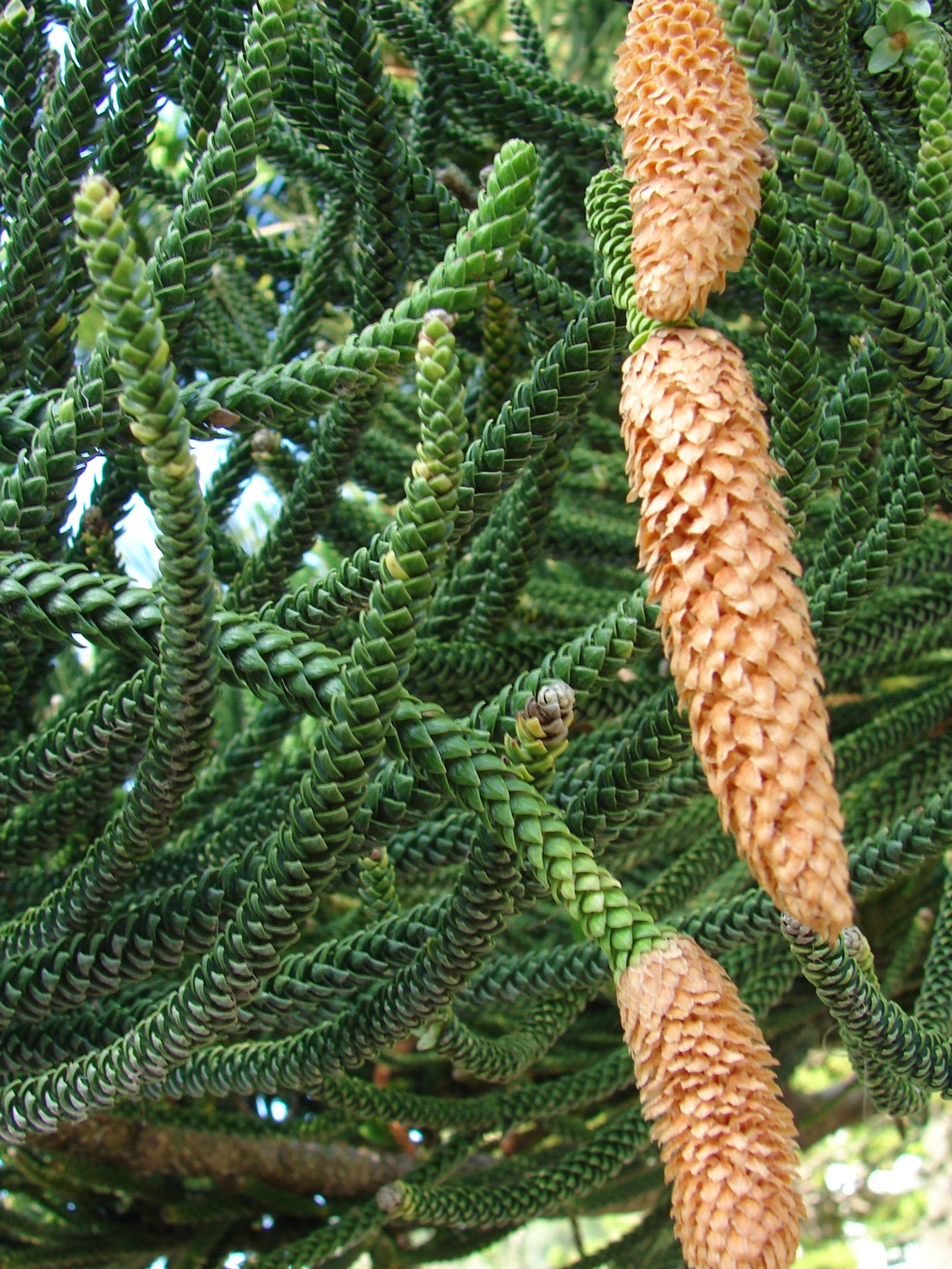
Juvenile leaves are soft to moderately firm, awl-shaped, green, incurved, and arranged densely along slender branchlets. This is the foliage normally encountered on indoor plants. It is more accurate botanically to call them leaves or needle-like juvenile leaves than true pine needles.
Mature branches develop shorter, denser, overlapping scale-like leaves. Fertile branchlets may bear broader, firmer, spine-tipped foliage. Mature and dried material can therefore create greater mechanical mouth or eye irritation even though no systemic toxin has been established.
Cones and Seeds
Mature outdoor trees may produce male pollen cones and large rounded female seed cones. The female cones break apart at maturity and release winged, nut-like seeds attached to cone scales. Indoor potted plants rarely reach the size and maturity required for cone production.
Norfolk Island Pine seeds have documented human food use, but that does not make an unidentified seed or cone appropriate pet food. Whole seeds, hard scales, stem pieces, mold, and debris may create choking or gastrointestinal concerns. Large cones can also cause impact injury when they fall from mature landscape trees.
Houseplant and Living Christmas Tree Use
The species tolerates container culture sufficiently well to be marketed widely as a houseplant and seasonal living Christmas tree. Retail plants may be wrapped in foil, placed in decorative cachepots, sprayed with artificial snow, covered in glitter, tied with ribbon, or fitted with lights and small ornaments. Those additions materially change the exposure.
A rooted Norfolk Island Pine usually does not sit in a traditional cut-tree stand. Its water hazards more commonly involve drainage saucers, foil sleeves, cachepots, self-watering reservoirs, or decorative containers. Owners should inspect the actual setup rather than repeat generic advice written for cut firs and spruces.
Norfolk Island Pine Versus Cook Pine
Cook Pine is Araucaria columnaris, a separate species native to New Caledonia. Young trees can closely resemble A. heterophylla, and nursery material has historically been sold under the wrong name. A USDA Forest Service account reported that seed and foliage supplied from Hawaii as “Norfolk-Island-pine” were commonly identified as A. columnaris.
Norfolk Island Pine generally develops a broader pyramidal crown with longer horizontal branches, while Cook Pine tends toward a narrower columnar form. Crown shape alone is unreliable in damaged, wind-exposed, potted, or juvenile material. Mature cone shape, seed dimensions, seedling cotyledon width, foliage, provenance, and expert examination may be necessary.
The non-toxic veterinary classification applies specifically to correctly identified A. heterophylla. The close relationship may support cautious comparison, but it does not replace species-specific toxicology for A. columnaris. An uncertain retail araucaria should be described honestly as an unidentified Araucaria until resolved.
Norfolk Island Pine Versus Casuarina
Casuarina equisetifolia and related species are commonly called Australian Pine, Beach Sheoak, or Ironwood. They belong to Casuarinaceae and have thin jointed green branchlets bearing tiny scale leaves. The apparent needles are largely photosynthetic branchlets rather than foliage resembling juvenile araucaria leaves.
Casuarina should not be substituted automatically into a Norfolk Island Pine assessment. Preserve branch joints, cones, bark, growth habit, and location. “Australian Pine” without a scientific name is insufficient identification.
Norfolk Island Pine Versus Sago Palm
Sago Palm is Cycas revoluta, a cycad rather than a conifer or true palm. It develops a central crown of stiff feather-like fronds and may produce large orange-red seeds. Every part contains potent toxins, with seeds presenting a particularly serious risk of liver failure and death.
A vague report that an animal chewed a small pine-like or palm-like houseplant is not adequate. Preserve the complete plant, root or caudex, fronds, seeds, nursery label, and photographs. The benign Norfolk Island Pine conclusion must never be applied to an uncertain Sago Palm exposure.
Norfolk Island Pine Versus Podocarpus and Yew
Podocarpus may be sold as Buddhist Pine, Yew Pine, Japanese Yew, or Southern Yew despite belonging to Podocarpaceae. It usually has flattened strap-like leaves rather than whorled tiers of awl-shaped juvenile araucaria foliage. Its reproductive structures and toxicological evidence differ from Norfolk Island Pine.
True yews in Taxus contain potent cardiotoxic taxine alkaloids and can cause sudden collapse and death. A plant called “yew pine” must not be treated as a harmless Norfolk Island Pine. Scientific identification is essential when severe cardiovascular signs are present.
Dogs and Household Exposure
Dogs may chew low branchlets, pull the plant over, dig through potting mix, eat fertilizer pellets, drink drainage water, or carry woody stems. Puppies may investigate lights, ornament hooks, ribbon, artificial snow, and decorative foil at the same time. The scene must be reconstructed before the exposure is classified as plant-only.
A stable heavy container and protected electrical cords reduce risk. Fallen foliage, loose decorations, and drainage water should be removed promptly. A non-toxic plant does not make an unsafe holiday installation pet-safe.
Cats and Linear Foreign Bodies
Cats may bat at branch tips and hanging decorations, climb into the container, chew the foliage, or drink from a cachepot. Tinsel, ribbon, thread, and garland are substantially more dangerous than an exploratory plant bite. The cat may swallow the decoration without visibly damaging much foliage.
String may anchor beneath the tongue or within the stomach. Vomiting, food refusal, abdominal discomfort, hiding, reduced stool, or a strand visible from the mouth or anus requires prompt evaluation. Pulling can cause intestinal tearing.
Horses and Livestock
Outdoor landscape trees may be accessible after storms, pruning, removal, or nursery disposal. The species is not recognized as systemically poisonous to horses, but large woody branches and cones are inappropriate forage. Choke, oral injury, colic, impaction, or exposure to landscape products remains possible.
Never dump ornamental clippings into a pasture merely because one species in the pile is non-toxic. Oleander, yew, Sago Palm, azalea, rhododendron, and other dangerous plants may be mixed with the debris. Fertilizer, herbicide, insecticide, wire, and plastic can also accompany landscape waste.
Rabbits, Guinea Pigs, Birds, Reptiles, and Other Exotics
Norfolk Island Pine should not replace species-appropriate hay, browse, greens, perches, or enclosure plants. Lack of a recognized dog-and-cat toxin does not establish nutritional suitability or a controlled safe intake for every exotic species. Small body size magnifies the importance of associated products and foreign material.
Birds may shred foliage and reach glitter, wire, adhesive, fertilizer, or electrical insulation hidden within the plant. Rabbits and guinea pigs may reduce hay intake after chewing unfamiliar material. Reptiles may swallow potting substrates or decorative stones while investigating foliage.
Potting Products and Drainage Water
Potting media should be evaluated as its own mixture. Fertilizer, pesticide, moisture crystals, mold, perlite, vermiculite, decorative stone, moss, wire supports, and plastic plant labels may be swallowed. A product applied weeks earlier can remain present in soil or plant tissue.
Drainage water can concentrate soluble fertilizer and systemic pesticide. A foil sleeve may retain stagnant water that is not visible until the pot is lifted. Empty and clean collection areas and prevent routine pet access.
Decorative and Electrical Hazards
Artificial snow, glitter, flocking, paint, scented spray, adhesive, ornaments, hooks, batteries, and light strings must be evaluated independently. Some products primarily irritate the gastrointestinal tract, while batteries and electricity can cause rapid destructive injury. Broken glass and wire can perforate tissue.
Use nonbreakable decorations without loose strings, rigid hooks, or accessible batteries. Protect cords with physical barriers and unplug lights whenever the tree is unsupervised. Do not spray a plant-access area with concentrated fragrance or cleaning products around birds or cats.
Diagnosis
There is no diagnostic toxin assay for ordinary Norfolk Island Pine ingestion because no plant-specific poison has been established. Diagnosis begins by confirming A. heterophylla and determining whether the exposure genuinely involved only untreated foliage. A plant label alone may be unreliable when Cook Pine or another species was sold under the same common name.
Useful evidence includes the complete plant, juvenile and mature foliage when available, cone material, nursery label, receipt, potting mix, product packages, decoration fragments, photographs, vomit, stool, and the original exposure scene. Each associated product should remain in its own labeled container. Do not wash away residues before their identity is documented.
Veterinary Evaluation
A small asymptomatic plant-only exposure may not require testing. Persistent gastrointestinal signs may justify hydration assessment, electrolytes, glucose, abdominal palpation, and additional laboratory work according to severity. Gagging or painful swallowing may require sedated oral and esophageal examination.
Radiographs, ultrasound, endoscopy, or surgery may be needed when woody material, string, wire, glass, ornament pieces, or batteries were swallowed. Chest imaging and oxygen assessment may be necessary after aspiration or electrical injury. Product-specific toxicology guides treatment when fertilizer, pesticide, artificial snow, cleaner, or another chemical is involved.
Differential Diagnosis
Vomiting and diarrhea may result from dietary indiscretion, potting soil, fertilizer, pesticide, stagnant water, infection, pancreatitis, foreign material, or unrelated gastrointestinal disease. Severe oral pain may reflect electrical burns, a caustic product, sharp decoration, oxalate plant, or lodged fragment. Marked neurologic disease requires another explanation.
Botanical differentials include Cook Pine, Casuarina, Podocarpus, true yew, Sago Palm, Monkey Puzzle Tree, Bunya Pine, fir, spruce, juniper, and true pine. Correct identification can radically change urgency. Severe signs should be managed according to the most dangerous plausible exposure while identification proceeds.
Prognosis
The prognosis after a small, clean, plant-only ingestion is excellent. Most animals remain normal or experience brief nonspecific gastrointestinal discomfort. Normal appetite, hydration, stool, breathing, and behavior should return without progression.
The prognosis depends on the accompanying hazard when the exposure involves obstruction, aspiration, battery injury, electrical shock, sharp material, pesticide, fertilizer, or another toxic plant. Delay is especially dangerous with linear foreign bodies, batteries, and electrical lung injury. The non-toxic plant classification does not lessen those emergencies.
Prevention
Place the plant in a stable container and prevent access to branchlets, soil, roots, drainage water, and chemical products. Remove fallen foliage and inspect regularly for mold or leaked fertilizer. Keep every product label for the life of the plant.
During holiday use, avoid tinsel, loose ribbon, thread, exposed wire, glass ornaments, accessible batteries, and unprotected electrical cords. Use untreated or clearly labeled decorations and prevent access to glittered or flocked foliage. Confirm the scientific identity before advertising any araucaria as pet-safe.
Immediate Steps After Exposure
- Remove access: Move the animal away from the plant, pot, soil, drainage water, decorations, electrical cords, fallen material, and every associated product.
- Confirm what was actually involved: Determine whether the animal swallowed only untreated foliage or also soil, fertilizer, pesticide, mold, artificial snow, glitter, ribbon, string, wire, glass, batteries, or electrical insulation.
- Preserve the complete evidence: Save the plant, nursery label, photographs, potting-product packages, chemical labels, decorations, and representative material recovered from vomit or stool.
- Estimate the maximum amount: Record the amount missing, likely object dimensions, time of exposure, animal’s weight, and whether symptoms have begun.
- Separate low-risk from urgent exposure: One small plant-only bite in a normal animal is different from swallowed string, a battery, a live electrical cord, a large woody piece, or an unidentified chemical.
Remove Loose Material from the Mouth
- Remove only visible loose pieces: Carefully clear accessible foliage, bark, soil, or decoration fragments from the lips and front of the mouth when this can be done safely.
- Do not perform a blind sweep: Reaching deeply may push an object farther into the throat or result in a bite.
- Do not pull string or wire: Material visible in the mouth may be anchored beneath the tongue or extend into the gastrointestinal tract.
- Use only a gentle rinse when safe: A small low-pressure mouth rinse may be used in an alert animal that is breathing and swallowing normally.
- Stop if gagging or coughing develops: Continued oral treatment can cause aspiration.
Do Not Induce Vomiting
- Do not give hydrogen peroxide routinely: No recognized Norfolk Island Pine toxin requires automatic emesis, and peroxide can cause additional gastrointestinal injury.
- Never give peroxide to a cat: It can seriously injure the feline stomach and esophagus.
- Do not use salt, mustard, ipecac, detergent, oil, fingers, or manual gagging: These methods create additional hazards without treating a foreign body.
- Never induce vomiting after string, wire, hooks, glass, batteries, or sharp material: Bringing these objects back through the esophagus can worsen injury.
- Do not induce vomiting in horses, rabbits, guinea pigs, birds, or reptiles: Household emesis is impossible or unsafe in these animals.
Do Not Give Activated Charcoal or Household Medication Automatically
- Do not give activated charcoal for a simple plant bite: No adsorbable Norfolk Island Pine toxin has been established.
- Recognize what charcoal cannot treat: It does not remove a branch, string, hook, battery, glass fragment, fertilizer pellet, or electrical injury.
- Do not give antidiarrheals: Loperamide, bismuth products, and Kaopectate-type products may be inappropriate and can conceal obstruction.
- Do not give antacids or sucralfate automatically: These do not prevent foreign-body injury or neutralize unidentified chemicals.
- Do not give human pain medication: Ibuprofen, naproxen, aspirin, acetaminophen, and similar drugs can create another poisoning.
- Do not give milk, oil, bread, or food as an antidote: These substances do not neutralize plant fibers, fertilizer, pesticides, batteries, or decorations.
Food and Water
- Allow only voluntary drinking when appropriate: Fresh water may remain available to an alert animal that is swallowing normally and not vomiting repeatedly.
- Prevent rapid gulping after vomiting: A large drink may trigger another episode.
- Do not force fluids: Never syringe water into a gagging, coughing, weak, vomiting, or poorly swallowing animal.
- Do not force food: Persistent nausea, painful swallowing, or possible obstruction requires assessment before feeding.
- Seek care when water will not stay down: Repeated vomiting may require injectable treatment and fluid replacement.
When Emergency Examination Is Especially Important
- Persistent gagging or difficulty swallowing: Repeated swallowing, drooling, neck extension, regurgitation, or inability to eat may indicate lodged material.
- Repeated vomiting: Frequent episodes, inability to retain water, blood, black material, or marked lethargy requires veterinary care.
- Possible obstruction: Abdominal pain, enlargement, reduced stool, recurrent vomiting, or progressive appetite loss may indicate retained material.
- Respiratory signs: Labored breathing, blue-gray gums, coughing after vomiting, weakness, or collapse is an emergency.
- Linear material: Any known or suspected string, ribbon, tinsel, thread, or garland ingestion requires prompt veterinary advice.
- Sharp or corrosive material: Glass, wire, ornament hooks, staples, and batteries require urgent assessment even when the animal appears normal.
- Chemical exposure: Fertilizer, pesticide, artificial snow, glitter adhesive, paint, cleaner, or an unidentified coating requires product-specific evaluation.
- Electrical exposure: A damaged live cord, mouth burns, breathing difficulty, collapse, or abnormal behavior requires immediate emergency treatment.
String, Ribbon, Tinsel, and Garland
- Do not pull visible material: String emerging from the mouth or anus may be anchored internally and can cut the intestine when tension is applied.
- Prevent further swallowing: Stop access without tugging on the exposed end.
- Seek care before symptoms begin: Serious intestinal damage may develop before obvious vomiting or pain.
- Report the probable length: Preserve matching decorations so the veterinarian can estimate what may be missing.
- Expect possible imaging or endoscopy: Some linear materials are difficult to see on routine radiographs.
Glass, Metal, Hooks, and Batteries
- Do not induce vomiting: Sharp material can cause additional injury while returning through the esophagus.
- Do not feed bulky food to surround the object: This may delay retrieval or worsen obstruction.
- Handle broken glass carefully: Preserve representative fragments without exposing people or animals to cuts.
- Treat batteries as urgent: Button and cylindrical batteries can leak corrosive material or generate electrical injury against moist tissue.
- Contact a veterinarian promptly: Imaging and retrieval may be indicated before symptoms develop.
Electrical-Cord Exposure
- Disconnect power safely: Turn off the circuit or unplug the source before touching an animal still in contact with a live cord.
- Do not place yourself in the circuit: Use a nonconductive method only when immediate separation is necessary and safe.
- Check breathing and responsiveness: Begin species-appropriate CPR only when the animal is unresponsive, not breathing, and lacks a detectable heartbeat.
- Inspect for mouth burns: Burns may appear on the lips, tongue, palate, or gums and can be deeper than the surface suggests.
- Seek emergency care: Pulmonary edema and rhythm abnormalities may develop after the initial shock.
Potting Soil, Fertilizer, and Pesticide
- Save every product label: Record the brand, active ingredients, concentration, application date, and approximate amount missing.
- Do not identify pellets by color: Fertilizer, insecticide, slug bait, moisture crystals, and decorative granules may look similar.
- Do not improvise dilution: Extra water, milk, oil, or food may worsen vomiting or be inappropriate for the product.
- Prevent grooming of contaminated fur: Wash residues away before the animal can ingest them.
- Obtain product-specific advice: Treatment depends on the identified chemical rather than the tree.
Drainage Water and Decorative Containers
- Remove the water source: Empty and clean the saucer, cachepot, reservoir, basket liner, or foil sleeve.
- Identify possible additives: Determine whether fertilizer, systemic pesticide, preservative, cleaning product, or another substance entered the water.
- Record stagnation: Note odor, slime, mold, soil, decomposing roots, insects, and how long the water accumulated.
- Monitor for gastrointestinal signs: Vomiting, diarrhea, pain, or lethargy may arise from the contaminated water rather than the plant.
- Provide clean drinking water elsewhere: Prevent repeated access to the plant container.
Skin and Coat Exposure
- Remove contaminated equipment: Take off collars, harnesses, clothing, or bedding holding resin, pesticide, glitter, or adhesive against the skin.
- Wear gloves when chemicals may be present: Avoid transferring unknown residues to your own skin or eyes.
- Wash the coat and skin: Use lukewarm water and mild pet-safe shampoo and rinse thoroughly.
- Prevent grooming: Stop the animal from licking the coat until residues are removed.
- Seek care for persistent lesions: Spreading redness, swelling, blistering, severe itching, pain, or facial involvement requires examination.
Eye Exposure
- Begin irrigation promptly: Flush with sterile saline or clean lukewarm water in a sustained gentle flow.
- Do not scrape or probe the eye: Branch fragments, glitter, soil, and grit can scratch the cornea.
- Prevent rubbing: Stop the animal from pawing at the eye or rubbing against furniture or the ground.
- Do not apply human eye medication: Redness relievers, anesthetics, steroids, and leftover prescriptions may worsen injury.
- Seek examination for persistent signs: Continued squinting, redness, cloudiness, discharge, swelling, or inability to open the eye requires prompt care.
Dogs and Cats
- Monitor a verified small plant-only exposure: Observe appetite, vomiting, stool, comfort, activity, swallowing, and breathing.
- Inspect the entire scene: Check soil, drainage water, decorations, electrical cords, fertilizer, pesticide, and missing objects.
- Do not assume marked lethargy is benign: Persistent depression may indicate dehydration, obstruction, aspiration, chemical exposure, electrical injury, or unrelated disease.
- Contact a veterinarian for continuing signs: Progressive illness is not expected after a simple exploratory foliage bite.
Horses and Livestock
- Remove ornamental waste: Prevent access to storm debris, landscape clippings, nursery waste, cones, branches, wire, and potting material.
- Check for choke: Salivation, repeated swallowing, coughing, neck extension, feed material from the nostrils, or inability to eat requires immediate large-animal care.
- Do not drench a compromised animal: Abnormal swallowing, coughing, weakness, or recumbency increases aspiration risk.
- Inspect the full pile: Determine whether another poisonous ornamental, fertilizer, pesticide, plastic, or metal was mixed with the tree material.
- Evaluate the whole group: Multiple affected animals suggest a shared feed, water, chemical, or mixed-plant exposure.
Rabbits, Guinea Pigs, Birds, and Reptiles
- Remove access: Do not permit continued chewing merely because no systemic toxin is recognized.
- Monitor food intake and feces: Reduced eating or droppings in rabbits and guinea pigs requires prompt veterinary guidance.
- Do not force-feed a compromised animal: Bloat, obstruction, weakness, regurgitation, and impaired swallowing must be considered first.
- Inspect for hidden decorations: Birds may swallow glitter, artificial snow, wire, adhesive, fertilizer, or electrical insulation while shredding branches.
- Seek specialized care: Regurgitation, breathing difficulty, poor balance, weakness, inability to perch, abnormal posture, or gastrointestinal stasis warrants an exotic-animal veterinarian.
Veterinary Evaluation
- Confirm the plant: Distinguish Norfolk Island Pine from Cook Pine, Casuarina, Podocarpus, yew, Sago Palm, and other plants sharing pine-like names or appearance.
- Reconstruct the complete exposure: Identify every chemical, decoration, foreign object, potting product, and electrical source involved.
- Examine the mouth and esophagus: Persistent gagging, drooling, regurgitation, or painful swallowing may require sedation, imaging, or endoscopy.
- Assess hydration and the abdomen: Repeated vomiting or diarrhea may justify laboratory work, fluids, radiographs, or ultrasound.
- Assess respiratory status: Coughing after vomiting or electrical exposure may require oxygen evaluation and chest imaging.
- Search for another cause of severe signs: Neurologic, cardiovascular, renal, hepatic, or multisystem disease is not expected from ordinary plant-only ingestion.
Veterinary Treatment
No plant-specific antidote or routine activated-charcoal protocol is indicated for correctly identified Norfolk Island Pine. Veterinarian-selected antiemetic medication and fluid or electrolyte replacement may be used when gastrointestinal signs are persistent. Oral and ocular injuries require examination, irrigation, analgesia, and removal of embedded material as appropriate.
Endoscopy or surgery may be necessary when a branch, string, wire, hook, glass fragment, battery, or another object cannot pass safely. Aspiration may require oxygen, thoracic imaging, airway support, and treatment directed at the resulting lung injury. Electrical injury may require cardiac monitoring, burn care, oxygen support, and observation for delayed pulmonary edema.
Fertilizer, pesticide, artificial snow, adhesive, cleaner, and other chemical exposures require ingredient-specific management. Treatment should follow the product, route, dose, and patient rather than the botanical name. A non-toxic tree should redirect attention toward the actual hazard rather than prevent appropriate care.
Monitoring and Recovery
- Monitor vomiting and stool: Mild plant-only gastrointestinal signs should decrease rather than become more frequent, painful, or bloody.
- Monitor appetite and hydration: Normal drinking, eating, gum moisture, urination, and activity should return.
- Monitor swallowing: Gagging, regurgitation, drooling, or food refusal should not persist.
- Monitor for obstruction: Recurrent vomiting, reduced stool, abdominal pain, or renewed appetite loss may develop after an initially quiet period.
- Monitor breathing: Coughing, rapid breathing, fever, or lethargy after vomiting or electrical injury requires reassessment.
- Monitor skin and eyes: Redness, swelling, itching, squinting, and discharge should improve rather than spread.
Prevention and Prognosis
- Secure the plant: Use a stable container and keep branches, soil, roots, and drainage water out of reach.
- Avoid linear decorations: Do not use tinsel, loose ribbon, thread, or easily swallowed garland around animals.
- Protect electrical cords: Block access to light strings and unplug them when the area is unsupervised.
- Use nonbreakable decorations: Avoid glass, rigid hooks, exposed wire, and accessible batteries.
- Keep product labels: Retain fertilizer, pesticide, flocking, glitter, paint, and preservative packaging.
- Plant-only prognosis: A small uncomplicated foliage ingestion has an excellent prognosis and usually causes no illness or brief gastrointestinal upset.
- Complicated prognosis: Obstruction, aspiration, electrical injury, battery exposure, sharp-object ingestion, toxic chemical exposure, or misidentified plants create a substantially different emergency.
Frequently Asked Questions About Norfolk Island Pine and Animal Safety
My dog swallowed one small branch tip from an untreated Norfolk Island Pine. Is emergency poisoning treatment expected?
A small branch-tip ingestion from a correctly identified untreated plant is not expected to cause systemic poisoning. Remove further access and observe for gagging, vomiting, diarrhea, appetite change, or discomfort. Inspect the plant and surrounding area for missing fertilizer pellets, pesticide products, wire, decorations, or electrical material before classifying the event as plant-only. Persistent signs or uncertainty about what was swallowed warrants veterinary guidance.
Why might a pet vomit after eating a plant classified as non-toxic?
Non-toxic plant material can still be fibrous, unfamiliar, and poorly digestible. A substantial amount may irritate the stomach or alter gastrointestinal movement without a systemic poison being involved. Vomiting can also result from potting soil, stagnant water, fertilizer, pesticide, mold, or a swallowed decoration encountered at the same time. Repeated or severe vomiting requires investigation rather than an assumption that the plant’s classification must be wrong.
My cat chewed the plant and some tinsel is missing. Which exposure matters more?
The missing tinsel is the higher-priority concern. Tinsel can act as a linear foreign body, anchoring beneath the tongue or in the stomach while intestinal movement draws the remaining length through the bowel. Serious injury may begin before obvious vomiting or pain develops. Do not pull visible tinsel from the mouth or anus, and contact a veterinarian promptly.
Can water collected beneath a potted Norfolk Island Pine make a pet sick?
Yes, but the concern is usually what accumulated in the water rather than a recognized plant toxin. Drainage water may contain soluble fertilizer, systemic pesticide, soil, mold, bacteria, decomposing roots, or residues from a decorative container. Empty the water, preserve product labels, and note how long it had been standing. Persistent vomiting, diarrhea, abdominal discomfort, or lethargy requires product-specific veterinary assessment.
What should I do when fertilizer pellets are missing from the pot?
Preserve the fertilizer package and record the product name, active ingredients, concentration, and greatest amount that may be missing. Do not identify the pellets by color because fertilizer, systemic pesticide, moisture crystals, and decorative granules can look similar. Do not induce vomiting or attempt to dilute the product with milk, oil, food, or forced water. Contact a veterinarian or animal poison-control service for ingredient-specific advice.
Is a glittered or flocked Norfolk Island Pine still a pet-safe houseplant?
The botanical plant may remain non-toxic, but the finished retail product cannot be judged from the species alone. Glitter, flocking, artificial snow, paint, adhesive, fragrance, and propellant formulations vary and may cause mouth, eye, gastrointestinal, or respiratory irritation. Hardened coatings may also make the foliage more abrasive. Keep the product tag and retailer information and prevent animals from chewing a coated plant.
My pet swallowed an ornament hook but appears normal. Should I wait for symptoms?
No. A metal hook can puncture the mouth, esophagus, stomach, or intestine before visible illness develops. Inducing vomiting can pull the sharp object back through vulnerable tissue and worsen injury. Prompt imaging and retrieval planning may prevent perforation. Bring a matching hook so its shape and dimensions are known.
What makes a swallowed button battery especially urgent?
A battery can generate electrical current against moist tissue and leak corrosive contents, producing rapid burns and tissue necrosis. Serious injury can develop while the animal still appears relatively normal. Do not induce vomiting or offer food as a protective coating. Immediate veterinary imaging and removal guidance is required.
Is Norfolk Island Pine the same as a true pine?
No. Norfolk Island Pine belongs to Araucaria in Araucariaceae, while true pines belong to Pinus in Pinaceae. The juvenile leaves merely resemble needles superficially. Safety claims about one conifer, pine resin, pine essential oil, or pine-scented cleaner cannot be transferred automatically to another. Scientific identity is more reliable than the word “pine.”
Could a plant sold as Norfolk Island Pine actually be Cook Pine?
Yes. Cook Pine, Araucaria columnaris, has historically been distributed and sold under the Norfolk Island Pine name, particularly from some Hawaiian sources. Young specimens can be difficult to distinguish from A. heterophylla, and crown shape alone may be altered by pot culture, wind, crowding, or damage. Preserve the nursery label, provenance, complete foliage, and any cone or seed material. An uncertain plant should be described as an unidentified Araucaria until resolved.
How can I avoid confusing Norfolk Island Pine with highly poisonous Sago Palm?
Norfolk Island Pine has a central conifer-like stem with tiered whorls of flexible branchlets. Sago Palm has a stout caudex or trunk topped by a crown of stiff feather-like fronds and may produce large orange-red seeds. Every part of Sago Palm is dangerous, and its seeds are especially serious. An uncertain pine-like or palm-like houseplant exposure must not receive the Norfolk Island Pine reassurance until identification is secure.
Can birds safely use untreated Norfolk Island Pine branches as perches or toys?
No recognized systemic Norfolk Island Pine toxin has been established, but that does not automatically make retail branches suitable avian enrichment. Nursery pesticides, fertilizer, resin, mold, wire, glitter, artificial snow, and environmental contamination must be excluded. Branch diameter, splintering, hygiene, and species-specific chewing behavior also matter. A decorated or chemically treated plant should never be used as a bird toy.
How should a veterinarian triage a reported Norfolk Island Pine ingestion?
The first division is between a verified small untreated plant-only exposure and a complicated or uncertain event. History should cover identity, missing plant mass, woody-piece dimensions, soil, fertilizer, pesticide, water, decorations, batteries, electrical cords, and every product applied to the plant. A normal patient after one small clean-foliage bite may require little intervention. Gagging, repeated vomiting, respiratory signs, abdominal pain, severe systemic abnormalities, or any associated foreign object changes the triage completely.
Is emesis or activated charcoal justified for verified plant-only exposure?
Routine decontamination is difficult to justify because no plant-specific systemic toxin or adsorbable toxic dose has been established. Hydrogen peroxide creates gastrointestinal and aspiration risk, while charcoal adds no benefit for a woody foreign body. Controlled emesis may become actively harmful when sharp objects, batteries, string, wire, or substantial branch material were swallowed. Management should follow the actual associated hazard rather than the plant name.
When should imaging be considered after Norfolk Island Pine exposure?
Imaging is appropriate when the animal may have swallowed a substantial woody piece, ornament hook, glass, battery, wire, stone, or other foreign material. Persistent gagging, regurgitation, abdominal pain, repeated vomiting, reduced stool, or recurrent illness after initial improvement increases concern. Plant material and string may not be conspicuous on every plain radiograph, so ultrasound, contrast evaluation, or endoscopy may be required. The imaging plan should match the object and suspected location.
What should severe neurologic, cardiac, renal, or hepatic abnormalities suggest?
They should suggest that ordinary Norfolk Island Pine foliage is an incomplete or incorrect diagnosis. Differential considerations include Sago Palm, yew, pesticide, medication, concentrated essential oil, electrical injury, battery exposure, toxic mold, another plant, metabolic disease, infection, and primary organ disease. The chewed houseplant may be incidental or only one component of a mixed exposure. Diagnostic expansion is more appropriate than inventing an unidentified Norfolk Island Pine toxin.
What evidence supports calling Norfolk Island Pine non-toxic?
The practical classification is supported by current veterinary plant-safety listing and the absence of a recognized toxic principle or reproducible companion-animal syndrome. No convincing controlled feeding study or veterinary case series establishes systemic poisoning from ordinary intact-plant ingestion. This is not proof that unlimited quantities are harmless or that every associated retail product is safe. It is an evidence-based distinction between a plant without established systemic toxicosis and a plant proven to contain a veterinary poison.
Do cytotoxic, pesticidal, or enzyme-inhibiting research results contradict the non-toxic classification?
No. Those studies generally use concentrated essential oils, solvent extracts, isolated resin, cultured cells, insect or parasite models, purified enzymes, weeds, or experimentally dosed rodents. Biological activity depends on concentration, route, preparation, and target system. A substance can inhibit an enzyme in vitro without producing clinical poisoning when an animal chews fresh foliage. The findings justify separating concentrated preparations from the intact houseplant, not relabeling every plant bite as toxicosis.
How strong is the evidence that Norfolk Island Pine causes contact dermatitis?
The species-specific evidence is limited. A small historical human experiment applying fresh foliage under occlusion to two individuals did not produce irritation or delayed reactions, while persuasive veterinary case documentation was not located. That study is far too small to exclude every individual sensitivity. Persistent dermatitis should nevertheless be investigated for treatment chemicals, adhesives, mechanical abrasion, infection, parasites, and other allergens before being assigned to the tree itself.
What research would improve the veterinary safety assessment?
Prospective poison-center and clinical data should document authenticated plant identity, including separation from A. columnaris, the exact plant part, swallowed mass, animal species, concurrent products, symptoms, treatment, and outcome. Foliage, resin, seeds, cone scales, juvenile and mature tissues, and common commercial coatings should be analyzed separately. Oral toxicokinetic work would need to distinguish intact tissue from distilled oil and solvent extracts. Until those data exist, the strongest conclusion remains that ordinary plant-only exposure lacks an established systemic toxicosis while mechanical, chemical, and identification hazards remain important.