Sprenger Asparagus Fern Saponins, Red-Berry Ingestion, and Spine Injury
Is Plumosa Fern Poisonous to Dogs, Cats, Horses, and Livestock?
Yes—the plant covered by this record is Sprenger Asparagus Fern, usually identified horticulturally as Asparagus aethiopicus ‘Sprengeri’, and it is mildly poisonous to dogs, cats, horses, livestock, rabbits, guinea pigs, birds, and other animals that eat its berries or substantial plant material. It is commonly mislabeled Plumosa Fern, Asparagus Fern, Lace Fern, or Sprengeri Fern and is also widely listed under the competing name Asparagus densiflorus ‘Sprengeri’. True Plumosa Fern is normally Asparagus setaceus, a separate ornamental asparagus species.
The bright red berries are the best-documented ingestion hazard. Veterinary references associate them with steroidal saponins or their non-sugar sapogenin components, while exact-species chemical research confirms saponins and sterols in Asparagus aethiopicus roots. An animal that eats enough berries or plant material may develop lip licking, drooling, nausea, vomiting, abdominal discomfort, diarrhea, reduced appetite, depression, or temporary lethargy.
Most uncomplicated exposures remain limited to short-lived gastrointestinal irritation rather than progressive systemic poisoning. Repeated vomiting or diarrhea can nevertheless cause clinically important dehydration, electrolyte abnormalities, weakness, aspiration, and reduced urine production. Puppies, kittens, small birds, rabbits, guinea pigs, elderly animals, and patients with existing gastrointestinal, kidney, endocrine, or cardiac disease may deteriorate more quickly from the same fluid losses.
Repeated contact with sap or plant surfaces may cause localized dermatitis in susceptible animals. The arching stems also carry short, rigid spines that can puncture the lips, gums, tongue, paws, skin, eyelids, or cornea and may leave a fragment embedded in the tissue. Persistent mouth pain, limping, swelling, a draining wound, squinting, or inability to open an eye may result from mechanical injury even when no toxic amount was swallowed.
Serious neurologic disease, kidney failure, liver failure, hemolytic anemia, profound cardiovascular abnormalities, paralysis, or coma is not the expected syndrome from an uncomplicated Sprenger Asparagus Fern exposure. Those findings require immediate investigation for pesticide, fertilizer, medication, another poisonous plant, a swallowed foreign object, severe dehydration, infection, trauma, or unrelated illness.
About this guide: This page provides general pet-poisoning information and cannot diagnose or treat an individual animal. For any suspected exposure, contact a veterinarian or animal poison-control service immediately. Do not induce vomiting, give medication, or attempt home decontamination unless directed by a veterinary professional.
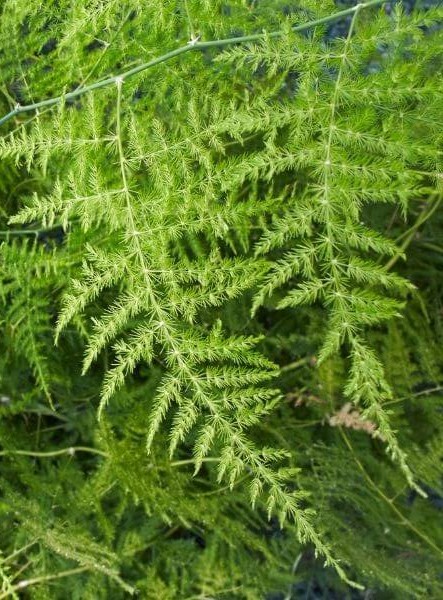
Plumosa Fern
Asparagus aethiopicus L. ‘Sprengeri’
The cultivated Sprenger Asparagus Fern has an unsettled horticultural naming history. Current University of Florida treatment uses Asparagus aethiopicus ‘Sprengeri’ and identifies Asparagus densiflorus ‘Sprengeri’ as a misapplied name. Kew’s global taxonomic backbone instead treats the historical name Asparagus sprengeri Regel as a synonym of the separately accepted species Asparagus densiflorus. Both treatments remain important for nursery labels, poison records, veterinary searches, and older literature.
- Asparagus densiflorus ‘Sprengeri’ — extremely common horticultural and veterinary usage; treated as misapplied to the Sprenger plant by current University of Florida horticultural guidance
- Asparagus sprengeri Regel — historical species name; treated by Kew as a synonym of Asparagus densiflorus
- Asparagopsis aethiopica (L.) Kunth — homotypic synonym of Asparagus aethiopicus
- Protasparagus aethiopicus (L.) Oberm. — historical transfer of Asparagus aethiopicus to Protasparagus
- Asparagus lanceus Thunb. — historical heterotypic synonym of Asparagus aethiopicus
- Asparagopsis lancea (Thunb.) Kunth — historical synonym based on Asparagus lanceus
- Asparagus laetus Salisb. — historical heterotypic synonym of Asparagus aethiopicus
- Asparagus aculeatus Voss — historical synonym referring to the plant’s spiny character
- Asparagus maximus Voss — historical heterotypic synonym
- Asparagus densiflorus (Kunth) Jessop — separate accepted southern African species in current Kew treatment; commonly confused with A. aethiopicus
- Asparagus setaceus (Kunth) Jessop — true Plumosa Fern, Lace Fern, or Asparagus Plumosus; a separate finely divided scrambling species
- Asparagus densiflorus ‘Myersii’ — Foxtail Fern; an upright plume-form cultivar distinct from the trailing Sprenger plant
- Asparagus racemosus Willd. — Shatavari or Racemose Asparagus; a separate medicinal climbing species
- Asparagus officinalis L. — edible Garden Asparagus; a separate cultivated food species
Asparagaceae — Asparagus Family
Subfamily Asparagoideae
Older references may place the genus in Liliaceae, but Asparagaceae is the currently accepted family.
Sprenger Asparagus Fern; Sprenger’s Asparagus Fern; Sprengeri Fern; Sprenger Fern; Asparagus Fern; Trailing Asparagus Fern; Basket Asparagus; Basket Fern; Ground Asparagus; Emerald Fern; Emerald Feather; Emerald Feather Asparagus; Hanging Asparagus Fern; Sprenger’s Asparagus; Plumosa Fern; Plumosa Asparagus Fern; Lace Fern
Historical and taxonomic search variations include Asparagus aethiopicus ‘Sprengeri’, Asparagus densiflorus ‘Sprengeri’, Asparagus densiflorus cv. sprengeri, Asparagus sprengeri, Asparagopsis aethiopica, Protasparagus aethiopicus, Asparagus lanceus, Asparagopsis lancea, Asparagus laetus, Asparagus aculeatus, and Asparagus maximus.
“Plumosa Fern” and “Lace Fern” more properly identify Asparagus setaceus, while “Foxtail Fern” normally identifies the upright Asparagus densiflorus ‘Myersii’. Shatavari and Racemose Asparagus belong to Asparagus racemosus, and edible Garden Asparagus is Asparagus officinalis. These names should not be treated as interchangeable botanical synonyms.
Steroidal Saponins and the Limits of Exact-Species Evidence
Sprenger Asparagus Fern is associated with steroidal saponins, a broad group of plant glycosides composed of a steroid-like sapogenin attached to one or more sugar chains. Veterinary poison references frequently identify sapogenins as the toxic principle responsible for berry-associated gastrointestinal upset. No one purified compound has been established as the sole cause of every dog, cat, horse, bird, rabbit, or livestock exposure.
Exact chemical evidence for Asparagus aethiopicus remains incomplete but supports the presence of this chemical class. Phytochemical screening of root extracts detected saponins, sterols, glycosides, flavonoids, alkaloids, and tannins. That study confirms chemically active constituents in the species but did not analyze the berries, establish an animal toxic dose, or identify which individual compound produces vomiting or diarrhea after a household exposure.
Steroidal saponins have also been studied in fruit, roots, and aerial tissues of the closely related but separately accepted Asparagus densiflorus. Those studies strengthen the broader biological expectation that ornamental asparagus plants contain membrane-active saponins, but they cannot be transferred silently to Sprenger Asparagus Fern as though every tissue and cultivar were chemically identical. Taxonomy, cultivar identity, plant part, maturity, season, environment, and analytical method all affect the evidence boundary.
The scientifically defensible conclusion is that Sprenger Asparagus Fern contains saponins and related steroidal constituents, with the berries representing the best-documented practical ingestion hazard. The precise saponin mixture in every red berry, seed, cladode, stem, root, and cultivated clone has not been mapped. Public guidance should therefore focus on the established irritant syndrome rather than inventing a single named toxin or exact concentration.
How Saponins Irritate the Gastrointestinal Tract
Saponins are amphiphilic molecules. Their sugar-containing portion interacts readily with water, while their sapogenin portion has greater affinity for lipids and membrane sterols. This structure gives many saponins soap-like surface activity and allows them to interact with biological membranes.
When enough berries or plant material is chewed and swallowed, saponins can irritate the mouth, esophagus, stomach, and intestines. The expected consequences are lip licking, salivation, nausea, abdominal cramping, vomiting in animals capable of vomiting, diarrhea, appetite loss, and temporary depression. The severity depends on the amount consumed, the chemical content of the material, the animal’s size, and its underlying health.
Saponins are not one uniform toxin with identical absorption and potency. Large glycosides may remain poorly absorbed, undergo hydrolysis in the gastrointestinal tract, interact with food and proteins, or be eliminated before reaching a significant systemic concentration. Those factors help explain why the characteristic syndrome is localized gastrointestinal irritation rather than predictable multiorgan failure.
Continued vomiting and diarrhea can still become medically important. Secondary dehydration, electrolyte changes, acid-base disturbance, weakness, reduced kidney perfusion, and aspiration may develop even when direct systemic absorption of the plant compounds remains limited. Treatment must address those complications rather than dismiss the incident because the original plant is categorized as mildly toxic.
Red Berries Are the Best-Documented Ingestion Hazard
The round berries mature from green to bright red and are the plant part most consistently associated with animal illness. Their color, size, and tendency to fall beneath a hanging basket or landscape colony make them accessible to dogs, cats, poultry, companion birds, and young animals. Several berries may be swallowed before an owner notices that fruit has dropped.
Each berry contains one or more hard dark seeds surrounded by fleshy tissue. Chewing may release more of the fruit contents, while swallowing the berry whole still exposes it to digestive processing. Berry skins, pulp, and seeds may appear in vomit or stool and should be preserved when plant identification remains uncertain.
No validated safe berry count exists. One or two berries may produce no visible illness in one animal, while a smaller or medically fragile patient may develop repeated vomiting or diarrhea after a limited amount. The absence of symptoms after an earlier exposure does not establish a safe dose for a later incident.
Wild birds consume and disperse the fruit, but this ecological relationship does not prove the berries are safe for companion birds or mammals. Species differ in gastrointestinal anatomy, metabolism, feeding behavior, seed handling, and quantity eaten relative to body weight. A parrot deliberately crushing several berries in a cage is not equivalent to a wild disperser consuming seasonal fruit.
Green Growth, Flowers, Roots, and Incomplete Tissue Mapping
The berries receive the strongest veterinary warning, but the green growth should not be considered edible. The fine structures that resemble leaves are cladodes—modified branchlets that perform photosynthesis—while the true leaves are reduced to small scales near the nodes. Chewing cladodes and stems may expose an animal to saponins, sap, fiber, and sharp spines.
Small white or pale-pink flowers develop along the stems before fruit formation. Flowers have not been studied as thoroughly as the berries for animal toxicity, but they remain part of the same incompletely characterized plant and should not be offered as food. Fallen flowers may also carry pesticide, fertilizer, pollen, mold, or debris.
The underground system includes fibrous roots, short rhizomatous crown tissue, and swollen storage tubers. These tubers store water and nutrients and should not be confused with independently spreading bulbs. Digging dogs may chew the entire root mass, swallowing soil, fertilizer, bark, perlite, plastic labels, and stones along with plant tissue.
Exact concentrations have not been established across every root, stem, cladode, flower, berry, and seed. It is therefore inaccurate to claim that every tissue is equally poisonous, but equally inaccurate to describe all nonberry material as harmless. All accessible plant parts should remain unavailable to animals.
Contact Dermatitis and the Evidence Boundary
Repeated contact with ornamental asparagus plants is associated with irritant or allergic dermatitis. Sap, plant residue, mechanical friction, and repeated exposure to stems and cladodes may contribute. A susceptible animal may develop redness, itching, papules, localized swelling, crusting, hair loss, licking, scratching, or rubbing where the plant repeatedly contacts the muzzle, paws, abdomen, or other exposed skin.
Allergic dermatitis generally requires sensitization, so the first contact may produce little or no visible reaction while later exposures produce a stronger response. Irritant dermatitis can occur without previous sensitization when enough plant material, sap, friction, or moisture remains against the skin. The two processes may appear similar without diagnostic testing.
Exact animal patch-testing studies identifying a single *Asparagus aethiopicus* allergen were not located. Human allergy research involving edible asparagus demonstrates that the genus can produce contact and protein-associated hypersensitivity, but it does not establish the same allergen or frequency in Sprenger Asparagus Fern. The public page should therefore recognize dermatitis while avoiding claims that one confirmed ornamental-fern molecule causes every reaction.
Plant residue trapped beneath a collar, harness, bandage, clothing, blanket, dense coat, or feathers prolongs exposure. Licking the contaminated area adds an oral and gastrointestinal route. Prompt washing and preventing grooming until the coat is clean are more useful first steps than automatically administering an antihistamine.
Spines Are Mechanical Hazards, Not Chemical Toxins
Sprenger Asparagus Fern has short, rigid, often backward-pointing spines along older stems. The airy green plant may look soft, but these structures can catch clothing, fur, feathers, skin, and nearby vegetation. A spine can puncture the lips, gums, tongue, paws, skin, eyelids, or cornea.
Oral punctures may cause localized bleeding, one-sided swelling, reluctance to chew, pawing at the mouth, food dropping, or persistent salivation. A spine embedded between the toes or in a paw pad may cause limping and repeated licking. Small punctures can close over a retained fragment and later develop swelling, pain, drainage, infection, or a foreign-body tract.
Eye injury may occur when an animal pushes its face into a trailing plant or snaps a stem during play. Sudden tearing, squinting, redness, eyelid swelling, light sensitivity, cloudiness, or inability to open the eye requires prompt examination. A superficial scratch, retained thorn, corneal puncture, and intraocular injury cannot be distinguished safely at home.
The mechanical syndrome must not be confused with saponin poisoning. An animal may have no vomiting or diarrhea but still require veterinary treatment for a deeply embedded spine. Conversely, berry ingestion may cause gastrointestinal illness without any puncture injury.
Laboratory Hemolysis and Systemic-Toxicity Overstatement
Many saponins can disrupt red-blood-cell membranes when purified compounds are mixed directly with blood at sufficient concentrations in laboratory testing. This hemolytic property is often discussed in general saponin toxicology. It does not establish that ordinary oral ingestion of several Sprenger Asparagus Fern berries produces the same circulating exposure.
Digestion, incomplete absorption, metabolism, protein binding, distribution, and elimination separate an oral plant exposure from direct laboratory contact between purified compound and blood cells. Hemolytic anemia is not recognized as the defining veterinary syndrome of uncomplicated Asparagus Fern ingestion. Routine warnings that a few berries destroy circulating red cells are unsupported.
Pale gums, jaundice, dark red-brown urine, rapid breathing, profound weakness, collapse, or falling red-cell values still requires emergency investigation. Blood loss, immune-mediated hemolysis, onion or garlic exposure, zinc, acetaminophen, infection, inherited disease, or another toxin may be responsible. The presence of an ornamental asparagus plant should not prevent a broader diagnosis.
Primary liver failure, progressive kidney failure, seizures, coma, paralysis, and major cardiac abnormalities are likewise not expected direct outcomes of a routine exposure. Abnormal laboratory results may arise secondarily from dehydration, reduced circulation, another ingestion, medication, or unrelated disease. Causation should not be assigned merely because berries were present in the environment.
Dry, Wilted, Frost-Damaged, and Discarded Material
Drying, wilting, freezing, cutting, or aging does not prove that steroidal saponins have disappeared. Fallen berries, dried stems, old wreath material, frost-damaged groundcover, uprooted root balls, and pruning waste should remain inaccessible. Dry stems may become stiffer and more capable of puncturing the mouth or eye.
Cleanup commonly creates greater access than the intact plant. A hanging basket may have been out of reach until it was removed, pruned, or left on the floor. Root divisions, berries, soil, and thorny stems spread across a work area may attract dogs, cats, birds, rabbits, and poultry.
Compost and landscape waste may contain Sprenger Asparagus Fern mixed with mold, mushrooms, fertilizer, pesticide, wire, plastic, food waste, and other toxic plants. Illness after access to mixed debris should not be attributed automatically to mild saponin irritation. Preserve representative material from the complete source.
Pesticides, Fertilizers, and Associated Hazards
Indoor, greenhouse, nursery, and landscape plants may carry insecticide, fungicide, miticide, systemic pesticide, fertilizer, leaf-shine product, growth regulator, or herbicide residue. The animal owner may not know which products were applied before purchase or by a maintenance contractor. Chemical residue may contaminate berries, stems, paws, fur, feathers, potting soil, and drainage water.
Tremors, seizures, marked agitation, profuse secretions, abnormal pupils, major heart-rate changes, bleeding, severe weakness, or prolonged neurologic depression requires product-specific investigation. Those findings extend beyond the expected berry-associated gastrointestinal syndrome. Preserve labels and request application records when possible.
Hanging baskets and containers may also expose animals to metal hooks, wire, chains, plastic liners, coconut fiber, sphagnum moss, bark, perlite, slow-release fertilizer, decorative stones, water-retaining crystals, mold, and broken pottery. The entire damaged arrangement should be inventoried after an animal pulls it down.
Toxic-Dose Limitations
No validated safe berry count, plant weight, root quantity, or body-weight dose applies to every animal. Risk depends on the maximum amount possibly eaten, fruit maturity, plant identity, patient size, species, age, health, and whether the material was treated with another product. Statements that one berry is always harmless or a fixed number is fatal are unsupported.
Most limited exposures are expected to cause no signs or temporary gastrointestinal irritation. Repeated ingestion can produce sufficient vomiting or diarrhea to require veterinary fluids. A swallowed root mass, thorny stem, plant label, wire, basket liner, or stone may create a more serious mechanical problem than the saponins.
Triage should focus on symptoms, hydration, ability to retain water, food intake, abdominal comfort, skin and eye exposure, spine injury, and foreign material. The animal’s clinical condition is more useful than an estimated berry count alone. Any course substantially more severe than brief gastrointestinal upset requires reassessment of the plant identification and exposure scene.
Expected Onset and Clinical Pattern
Most symptomatic Sprenger Asparagus Fern exposures involve the red berries and produce gastrointestinal irritation within several hours. An affected animal may lick its lips, drool, swallow repeatedly, appear nauseated, refuse food, vomit, develop abdominal discomfort, pass soft or watery diarrhea, or become temporarily quiet and lethargic. Recognizable red berry skin, dark seeds, cladodes, or stem fragments may appear in vomit or stool.
One small exposure may cause no visible signs, particularly in a healthy larger animal. Repeated berry ingestion or a greater plant quantity increases the likelihood of vomiting and diarrhea. Patient size, age, health, stomach contents, and co-exposures influence the clinical response.
Most uncomplicated cases do not progress to severe neurologic or organ disease. Signs should begin improving after access ends and gastrointestinal losses stop. Worsening illness, recurrence after apparent recovery, or symptoms extending beyond the expected short course requires evaluation for dehydration, aspiration, foreign material, pesticide, another plant, or unrelated disease.
Nausea, Vomiting, and Appetite Loss
Dogs and cats may show lip licking, repeated swallowing, grass eating, restlessness, drooling, dry heaving, or reluctance to eat before vomiting begins. Vomit may contain foam, mucus, food, red berry fragments, dark seeds, green cladodes, potting material, or other debris. A single episode may resolve without further complication.
Repeated vomiting can inflame the esophagus and stomach, produce blood streaking, increase abdominal pain, and prevent the animal from retaining water. Coffee-ground material, repeated fresh blood, recurrent unproductive retching, marked abdominal enlargement, or severe distress requires urgent examination. Those findings exceed an ordinary mild berry exposure.
Continued food refusal may reflect nausea, abdominal discomfort, oral spine injury, a retained foreign object, or another disease. Prolonged inadequate intake is especially important in cats, rabbits, guinea pigs, birds, puppies, kittens, and medically fragile animals. Improvement in vomiting does not establish recovery when the animal still cannot or will not eat.
Diarrhea, Cramping, and Dehydration
Diarrhea may range from soft stool to frequent watery episodes accompanied by urgency, mucus, cramping, or straining. Dogs may become restless, assume a hunched posture, look at the abdomen, or resist handling. Cats may hide, reduce activity, or repeatedly visit the litter box.
Continued vomiting and diarrhea can produce tacky gums, sunken eyes, reduced skin elasticity, reduced urination, weakness, cold extremities, weak pulses, prolonged capillary refill, and worsening lethargy. Small patients have less fluid reserve and may become dehydrated after fewer episodes. Animals with kidney, heart, endocrine, or gastrointestinal disease may tolerate losses poorly.
Electrolyte and acid-base abnormalities may develop secondarily when losses are prolonged. These changes can contribute to muscle weakness, altered gastrointestinal movement, abnormal mentation, and cardiac rhythm changes. They do not prove that the plant directly poisoned the heart, kidneys, or nervous system.
Abdominal Pain and Possible Foreign-Body Disease
Mild abdominal discomfort may accompany gastrointestinal irritation, but persistent or severe pain requires a broader assessment. A dog pulling down a basket may swallow a long stem, root fragment, plastic label, stone, metal hook, wire, coconut fiber, or piece of the container. The visible berries may distract from a more consequential mechanical exposure.
Recurrent vomiting, abdominal enlargement, reduced stool, straining, inability to settle, pain after eating, or symptoms returning after temporary improvement may indicate obstruction or gastrointestinal injury. Organic material, plastic, fiber, and thin wire may not be obvious on ordinary radiographs. Ultrasound, contrast imaging, endoscopy, or surgery may be required.
String, wire, basket liner, or plant fiber extending from the mouth or rectum should not be pulled. The material may be anchored internally and can damage the tongue, stomach, or intestine when tension is applied. Veterinary-controlled removal is safer.
Contact Dermatitis
Repeated skin contact may produce redness, itching, localized swelling, papules, crusting, hair loss, licking, scratching, or rubbing. Signs commonly appear on the muzzle, paws, abdomen, inner limbs, or other areas that brush against trailing stems. A reaction may become more pronounced after repeated exposures.
Sap and plant residue trapped beneath a collar, harness, clothing, bandage, blanket, feathering, or matted coat can prolong exposure. Grooming converts a skin exposure into an oral exposure and may contribute to drooling, vomiting, or diarrhea. Contaminated equipment and bedding should be removed before the animal is washed.
Extensive blistering, rapidly spreading redness, major facial swelling, severe pain, fever, discharge, or breathing difficulty is not a routine mild dermatitis presentation. Pesticide, another plant, insect exposure, infection, or a more substantial allergic reaction should be considered. Progressive facial swelling or respiratory compromise is an emergency.
Spine Punctures of the Mouth and Skin
Short spines can puncture the lips, gums, tongue, palate, skin, or paw pads. Oral injury may cause blood-tinged saliva, localized swelling, chewing on one side, food dropping, pawing at the mouth, or refusal of hard food. A small puncture can be difficult to locate without sedation and magnification.
Paw and skin injuries may produce limping, persistent licking, focal swelling, tenderness, a small scab, or a draining tract. A fragment left beneath the skin may cause continuing inflammation or secondary bacterial infection. Symptoms may appear several days after the original contact.
A superficial spine clearly visible at the skin surface may be removable without difficulty, but deep, broken, painful, infected, mouth-adjacent, or eye-adjacent fragments require veterinary care. Digging blindly can break the spine and push it deeper. A retained foreign body must be considered when inflammation repeatedly returns.
Eye Injury
An animal may injure an eye while pushing through trailing stems, pulling down a hanging basket, or batting at the plant. Sudden tearing, squinting, redness, eyelid swelling, light sensitivity, cloudiness, discharge, or inability to open the eye may indicate a corneal scratch, puncture, or retained spine.
Eye pain is an emergency because corneal wounds can deepen, become infected, or threaten vision. Surface irrigation may remove loose plant residue but cannot exclude penetration or a retained fragment. Fluorescein staining, magnified examination, eyelid eversion, and sometimes imaging or surgery may be necessary.
Human redness-relief drops, topical anesthetics, antibiotics, or steroid medication should not be applied without veterinary examination. Steroids may worsen an unrecognized corneal ulcer or infection. Rubbing should be prevented because it can enlarge the injury.
Dogs
Dogs most often eat fallen berries, pull trailing stems from containers, raid pruning debris, or dig into the root system. Puppies may dismantle a hanging basket and swallow soil, coconut fiber, wire, plastic, fertilizer, and stones along with the plant. Vomiting, diarrhea, abdominal discomfort, and reduced appetite are the principal expected toxic effects.
A larger dog may eat numerous berries before signs appear, while a small dog may become dehydrated after fewer vomiting or diarrhea episodes. Persistent gastrointestinal illness, marked weakness, blood, inability to retain water, or severe abdominal pain requires examination. Recurrent vomiting may indicate a swallowed nonplant object.
Cats
Cats may bat red berries from the stems, chew the fine green growth, climb into hanging baskets, or groom sap from their paws and coat. Vomiting, diarrhea, hiding, reduced appetite, and temporary lethargy may follow. A spine wound can remain hidden beneath facial or paw fur.
Continued food refusal is important even when vomiting appears mild. Prolonged inadequate intake can create additional metabolic illness in cats. Repeated approaches to the food bowl without eating may indicate nausea, mouth pain, or an embedded spine.
Horses and Livestock
Horses cannot vomit and may instead show reduced appetite, mild colic, loose manure, diarrhea, depression, or irritation around the muzzle after eating berries or a meaningful amount of plant material. Thick stems, roots, basket material, and garden waste may also create choke or gastrointestinal foreign-body concerns. Forced drenching is unsafe in an animal with abnormal swallowing or significant depression.
Cattle, sheep, goats, pigs, llamas, alpacas, and other livestock are unlikely to develop a classic severe pasture-plant syndrome from a brief taste. They should not receive the plant in forage, bedding, greenhouse waste, or landscape clippings. Hunger, confinement, curiosity, and mixing with familiar feed can increase consumption.
Severe colic, major cardiovascular abnormalities, neurologic disease, organ failure, or sudden death requires identification of every plant and chemical in the waste source. Yew, Oleander, rhododendron, azalea, cycads, pesticides, mold, wire, and other hazards may be mixed with the ornamental asparagus. The entire group should be removed when a shared exposure occurs.
Rabbits and Guinea Pigs
Rabbits and guinea pigs should not receive the berries, cladodes, stems, or roots as forage or enrichment. Gastrointestinal discomfort may reduce normal feeding and fecal output even when vomiting cannot occur. Reduced appetite, smaller or fewer feces, abdominal enlargement, painful posture, diarrhea, or weakness requires prompt veterinary guidance.
Force-feeding should not begin until obstruction, severe abdominal pain, oral injury, and swallowing ability have been evaluated. A long fibrous stem or basket material may create a mechanical problem distinct from mild saponin irritation. These species can deteriorate quickly once normal gastrointestinal movement slows.
Companion Birds and Poultry
Parrots and other companion birds may crush and swallow multiple berries relative to their body size. Regurgitation, diarrhea, altered droppings, reduced feeding, weakness, depression, or reduced activity may occur. Stems can injure the beak, mouth, feet, eyelids, or eyes.
Wild-bird fruit consumption does not establish safety for a captive bird. A companion bird may remain with one branch and consume a concentrated quantity rather than moving among varied foods. Sap and berry material may also contaminate feathers and be ingested during grooming.
Poultry should not receive uprooted plants or landscape waste. Birds may pick berries and seeds rapidly, while wire, plastic labels, fertilizer granules, and thorny stems add separate risks. Group exposure requires removal of the entire source and monitoring of all birds.
Findings That Do Not Fit an Uncomplicated Exposure
Seizures, coma, profound paralysis, primary liver failure, progressive kidney failure, severe anemia, uncontrolled bleeding, major arrhythmias, or prolonged neurologic depression does not fit the expected mild gastrointestinal syndrome. Those findings require investigation for another plant, pesticide, medication, metabolic disorder, hypoxia, infection, trauma, or unrelated disease.
Abnormal kidney values may develop secondarily after severe dehydration and reduced circulation. Elevated liver enzymes can occur for many reasons in a vomiting or medically ill animal. Neither finding establishes direct Sprenger Asparagus Fern organ toxicity without supporting evidence.
Breathing difficulty may indicate aspiration, a severe allergic response, choking, thoracic disease, or another toxin rather than routine saponin irritation. Rapidly worsening weakness, collapse, abnormal gum color, or reduced responsiveness requires emergency care regardless of the presumed plant.
Duration and Prognosis
Most limited berry or foliage exposures improve within several hours and resolve within approximately twenty-four to forty-eight hours. Vomiting and diarrhea should become less frequent, appetite should return, and hydration and activity should steadily improve. A prior quiet period followed by renewed illness is not a normal recovery pattern.
A longer course may reflect dehydration, aspiration, persistent gastrointestinal inflammation, a retained spine, corneal injury, a swallowed foreign object, pesticide, mold, another plant, or unrelated disease. Continued food refusal is especially important in cats, rabbits, guinea pigs, birds, young animals, and patients with existing medical problems.
The prognosis is generally good to excellent after an uncomplicated exposure. The outlook depends on the complication when severe dehydration, aspiration, eye penetration, infection, obstruction, or a mixed poisoning develops. Prompt removal of the source and recognition of mechanical injury improve the likelihood of complete recovery.
This Page Preserves a Common Search Name but Corrects the Plant Identity
The title Plumosa Fern is retained because it appears widely in older pet-poison lists, nursery catalogs, household records, and online searches for ornamental asparagus toxicity. The actual plant described by this record is Sprenger Asparagus Fern: an arching, spiny ornamental with clustered narrow cladodes, small pale flowers, and round red berries. Calling it simply Plumosa Fern without clarification creates a botanical mismatch.
True Plumosa Fern is normally Asparagus setaceus, formerly known as Asparagus plumosus. It is a more delicate scrambling or climbing plant with wiry stems and broad triangular planes of extremely fine cladodes. Its mature fruit is generally dark purple to nearly black rather than the conspicuous bright red fruit associated with the Sprenger plant.
Both species are ornamental asparagus rather than true ferns, and neither should be fed to animals. They are not botanically interchangeable, however, and exact-species chemistry or distribution should not be copied from one to the other. Photographs should include the whole growth habit, stems, spines, cladode arrangement, flowers, fruit color, roots, and nursery label.
Why the Scientific Name Remains Complicated
Current University of Florida horticultural treatment identifies the Sprenger plant as Asparagus aethiopicus ‘Sprengeri’ and calls Asparagus densiflorus ‘Sprengeri’ a misapplied name. That treatment matches the sprawling, arching, spiny plant widely naturalized under the name A. aethiopicus in Australia and portions of the southeastern United States.
Kew recognizes both Asparagus aethiopicus and Asparagus densiflorus as accepted species but places the historical name Asparagus sprengeri under A. densiflorus. Its own publication history shows that major floras have treated the same name under both accepted species. Older horticultural literature also uses Protasparagus densiflorus and Asparagus densiflorus cv. sprengeri.
Molecular research has sampled A. aethiopicus and A. densiflorus ‘Myers’ separately and supports treating them as distinct taxonomic entities rather than universal synonyms. The cultivated Sprenger plant’s nomenclature remains a practical collision between horticultural usage, historical synonymy, and modern species concepts.
The finished page therefore leads with Asparagus aethiopicus ‘Sprengeri’ while preserving Asparagus densiflorus ‘Sprengeri’ and Asparagus sprengeri for veterinary, horticultural, and historical searches. This is more accurate than pretending that only one naming tradition exists.
It Is a Flowering Plant, Not a Fern
Sprenger Asparagus Fern belongs to Asparagaceae. It produces flowers, fleshy berries, seeds, true stems, reduced scale leaves, and photosynthetic cladodes. True ferns belong to entirely different evolutionary lineages and reproduce through spores rather than flowers and seeds.
The structures that create the soft fernlike appearance are cladodes, also called cladophylls. These are modified branchlets that carry out much of the plant’s photosynthesis. The actual leaves are reduced to small dry or scale-like structures at the nodes.
This distinction matters for pet owners because many true ferns are considered nonpoisonous while asparagus ferns are not. A label reading fern should never be used alone to determine animal safety. Boston Fern, Bird’s-Nest Fern, Plumosa Asparagus, and Sago Palm may all be called ferns despite having very different identities and hazards.
Growth Form, Stems, Cladodes, and Spines
Sprenger Asparagus Fern is a clump-forming perennial with numerous stems emerging from a central crown. New stems begin upright or arching and then spread, trail, cascade, or scramble through nearby vegetation. Mature growth may extend several feet beyond the container or planting bed.
Narrow bright-green cladodes occur singly or in clusters along the ridged stems. Their size and spacing give the plant an airy texture without producing the flat triangular sprays typical of true Plumosa Fern. The plant may appear soft from a distance even though the older stems carry rigid spines.
Short spines arise near some nodes and may point backward along the stem. They help the plant catch surrounding vegetation and can entangle fur, clothing, netting, cage material, and landscape plants. Pruned stems may spring backward unexpectedly when tension is released.
Long trailing stems create exposure well beyond the pot. A basket hung above an animal bed, food bowl, cage, or climbing shelf may still place berries and spines within reach. Fallen fruit and stem sections may remain unnoticed beneath furniture or outdoor groundcover.
Roots, Rhizomatous Crown Tissue, and Storage Tubers
The underground system consists of fibrous roots, crown or rhizomatous tissue, and numerous swollen storage tubers. These tubers hold water and nutrients, helping the plant survive drought and regrow after the above-ground stems are damaged. They are commonly exposed during repotting, division, removal, or digging.
The storage tubers should not be described automatically as propagating bulbs. Seed is the principal dispersal mechanism across many invaded landscapes, while crown or rhizome fragments may also move during gardening and soil disturbance. Detached storage tubers without viable crown tissue may not produce a new plant.
Dogs may pull apart the root ball and swallow fibrous roots, crown material, tubers, soil, bark, perlite, fertilizer, labels, and stones. A root mass or tuber can become a gastrointestinal foreign body independently of the plant’s saponins. Persistent vomiting or abdominal pain after access to a disturbed pot requires assessment of everything missing.
Uprooted plants should not be left on patios, garage floors, tarps, driveways, or open compost piles. The root system concentrates plant material at ground level and may be more attractive to an animal than the intact basket. Disposal should prevent both ingestion and invasive spread.
Flowers, Red Berries, and Seeds
Small white, cream, or pale-pink flowers develop along the stems and may be lightly fragrant. They are not visually prominent compared with the foliage. Successful pollination produces round fruit that changes from green to bright red as it matures.
Mature berries may remain attached for a prolonged period or fall beneath the plant. Each fruit contains one or more hard dark seeds capable of germination. Their conspicuous color and convenient size make the berries the most important household and landscape poisoning feature.
Fruit production varies with plant maturity, pollination, light, climate, and growing conditions. An indoor plant that has never produced berries may fruit later after being moved outdoors or grown under improved conditions. Owners should not assume that a previously fruitless hanging basket will remain fruitless permanently.
Removing flowers or immature berries can reduce exposure, but every fallen fruit must still be collected. Berries may roll beneath furniture, outdoor pots, decking, leaf litter, kennel equipment, and cages. Seeds recovered from vomit or stool should be preserved when identification remains uncertain.
True Plumosa Fern
True Plumosa Fern, Asparagus setaceus, is a separate accepted species native across a much broader region of eastern and southern Africa and the Comoros. It is a scrambling perennial with fine wiry stems and flattened triangular sprays of extremely delicate cladodes. It is also known historically as Asparagus plumosus.
Its mature fruit is typically dark purple or nearly black rather than bright red. This fruit-color difference is useful but should not be the only identifying feature because immature berries begin green and nursery plants may not be fruiting. Stem form, cladode arrangement, growth habit, and label should be evaluated together.
True Plumosa Fern is commonly used as cut greenery in bouquets and floral work. An animal may therefore encounter it through florist trimmings even when no potted plant is present. Its toxicology should be addressed on its own species page rather than merged silently with the Sprenger plant.
Foxtail Fern and Other Asparagus Ferns
Foxtail Fern usually refers to Asparagus densiflorus ‘Myersii’. It produces dense upright cylindrical plumes resembling green bottle brushes or fox tails. Sprenger Asparagus Fern instead produces looser arching or trailing stems with more openly spaced cladode clusters.
Both plants may be sold under Asparagus Fern and may appear together in nurseries. Their red berries, storage roots, and ornamental use create overlapping animal-exposure concerns. Their differing growth habits affect where berries fall and how animals reach the stems.
Other ornamental asparagus plants include Ming Asparagus, Sicklethorn Asparagus, Climbing Asparagus, and numerous regional species. The genus is chemically diverse, and a generic Asparagus Fern label does not prove that every species contains the same compounds or produces an identical syndrome. Complete plant identification remains valuable.
Shatavari Is a Different Species
Shatavari and Racemose Asparagus properly refer to Asparagus racemosus, a climbing medicinal species with a long history of human herbal use. Its roots contain a chemically characterized mixture of steroidal saponins known as shatavarins and related compounds. It is not a botanical synonym of the Sprenger plant.
The name Shatavari has been copied into several pet-poison and consumer plant lists as though it were another common name for Asparagus Fern. That error can confuse a household berry ingestion with exposure to a powdered root, capsule, liquid extract, supplement, or herbal mixture. Those products require ingredient-specific assessment.
Medicinal use of one asparagus species does not establish safety for another. Concentrated extracts and supplements may expose an animal to doses and additional ingredients unavailable from casual plant chewing. Preserve packaging whenever an herbal product rather than a living plant is involved.
Edible Garden Asparagus Is Also a Different Species
Edible Garden Asparagus is Asparagus officinalis. Humans cultivate and eat its young shoots before the plant develops its tall mature fernlike growth. Sprenger Asparagus Fern is a separate ornamental species or cultivated form and is not a miniature version of the vegetable crop.
The existence of an edible relative does not make ornamental berries, roots, stems, or cladodes suitable animal food. Even Garden Asparagus produces nonfood structures and may cause contact allergy in susceptible people. Safety must be evaluated by species, plant part, preparation, and dose.
Owners should not harvest young Sprenger shoots as vegetables or use ornamental roots in homemade animal diets. Nursery plants may also carry pesticide, fertilizer, systemic treatments, and potting products that are not intended for consumption.
Native Range, Cultivation, and Naturalization
*Asparagus aethiopicus* is native to portions of South Africa, including the Cape and northern regions. It grows primarily in subtropical settings and has been transported widely as a container plant, hanging-basket ornamental, groundcover, border plant, and cascading landscape species.
The species has become naturalized in warm coastal, subtropical, and island regions around the world. Introduced populations occur in disturbed woodland, forest edges, coastal vegetation, roadsides, shaded urban habitat, old gardens, drainage corridors, and beneath ornamental plantings. Dense growth and extensive root systems can suppress lower vegetation.
Fruit-eating wildlife contributes to spread. Research comparing invasive asparagus species found high germination and emergence for *A. aethiopicus*, while gut passage by frugivorous birds can move viable seed away from the original planting. Fallen berries should therefore be removed for both animal safety and invasive-plant control.
Dumped garden waste is another pathway. Plants discarded at woodland edges, vacant lots, drainage areas, pond margins, and coastal vegetation may retain berries and viable crown material. Animal access and environmental invasion arise from the same poor disposal practice.
Homes, Apartments, Patios, and Hanging Baskets
Sprenger Asparagus Fern is frequently grown in hanging baskets because its stems cascade attractively over the edge. A hanging container may appear inaccessible while long stems, berries, irrigation runoff, or fallen debris remain at dog, cat, bird, or child height. Cats may also climb furniture, shelves, curtains, and plant stands.
Berries can fall onto animal beds, food dishes, water bowls, cages, balconies, patios, and floors. A single fruiting plant may drop many berries gradually rather than in one obvious event. Routine inspection beneath the basket is more dependable than waiting for a poisoning incident.
Indoor containers may contain metal hangers, hooks, chains, coconut-fiber liners, sphagnum moss, plastic pots, fertilizer, water-retaining crystals, decorative stones, and saucer water. Pulling one stem may dislodge the complete basket. Every damaged component must be included in the exposure reconstruction.
Florists, Greenhouses, Nurseries, and Commercial Interiors
Ornamental asparagus greenery is used in floral design, greenhouse production, offices, hotels, restaurants, shopping centers, event spaces, hospitals, schools, and public interiors. Service animals, therapy animals, visiting pets, resident cats, birds, and animals living with florists or nursery workers may encounter cut stems or production waste.
Greenhouse and nursery plants may carry insecticide, fungicide, miticide, systemic pesticide, fertilizer, growth regulator, or rooting-product residue. A clinical syndrome extending beyond mild gastrointestinal irritation requires identification of those products. Treatment records should be requested from the grower or maintenance contractor.
Cut stems remain capable of causing spine injuries after separation from the root system. Dry arrangements may become stiffer and more abrasive. Floral wire, tape, foam, ribbon, and preservatives add mechanical and chemical risks.
Pruning, Repotting, Division, and Disposal
Pruning creates numerous small thorny stem sections that can spread across floors, counters, patios, tools, clothing, and animal areas. Long stems may remain under tension and spring backward when cut. Gloves and eye protection are appropriate when handling a large tangled specimen.
Repotting exposes the storage tubers, crown, fibrous roots, potting products, slow-release fertilizer, labels, drainage mesh, and broken container material. Animals should be excluded until every fragment is collected and the work area has been cleaned. A temporary pile of roots and stems may be more accessible than the original plant.
Waste should go directly into a closed animal-inaccessible container. Do not discard the plant into a pasture, poultry yard, rabbit run, kennel, pond edge, woodland, vacant lot, or open compost pile. The red fruit can spread the plant while simultaneously exposing animals.
Dogs and Cats
Dogs commonly eat fallen berries, pull trailing stems, raid pruning piles, or dig into the root ball. Puppies may dismantle the complete hanging basket and swallow nonplant material. Continued vomiting or abdominal pain after the berries have been expelled may indicate a root mass, wire, hook, liner, stone, or plastic fragment.
Cats may bat berries from the stems, chew fine cladodes, sleep beneath the plant, climb into a basket, or groom sap and residue from their paws. A spine embedded in the mouth, eyelid, or paw may remain hidden beneath fur. Continued food refusal, facial rubbing, limping, or squinting requires examination.
Most limited exposures remain mild, but patient-specific risk matters. A kitten with repeated diarrhea, an elderly cat with kidney disease, or a small dog unable to retain water may require fluids sooner than a healthy large animal. Treatment decisions should follow the patient rather than a generic mild-toxicity label.
Horses and Livestock
Horses and livestock are most likely to encounter the plant through discarded hanging baskets, greenhouse waste, uprooted groundcover, landscape clippings, contaminated bedding, or naturalized stands. The plant is not an appropriate forage or browse species. Animals should not be expected to sort berries and thorny stems from familiar feed.
Horses may show reduced appetite, mild colic, loose manure, or diarrhea rather than vomiting. Cattle, sheep, goats, and pigs may develop gastrointestinal irritation after a meaningful ingestion. A brief taste is unlikely to create a classic fatal pasture-plant syndrome, but contaminated waste may contain far more dangerous plants.
Every plant in a mixed load should be identified. Yew, Oleander, rhododendron, azalea, cycads, laurel, nightshades, pesticides, mold, and hardware may be present. Severe illness must not be assigned to Sprenger Asparagus Fern merely because its green stems are easy to recognize.
Rabbits, Guinea Pigs, Birds, Reptiles, and Other Exotics
The berries, cladodes, stems, and roots should not be offered as forage, bedding, nesting material, chew items, or enrichment. Rabbits and guinea pigs can develop secondary gastrointestinal stasis when discomfort reduces food intake. Companion birds may consume several berries quickly and can be injured by the spines.
Reptiles, tortoises, and other herbivorous exotics may encounter the plant in outdoor runs or planted enclosures. Exact species-specific toxic doses are unavailable. Pesticide residue, fertilizer, sharp stems, and swallowed substrate add risks beyond the saponins.
A plant that has remained untouched for months is not proven safe. Animal behavior, enclosure access, hunger, breeding condition, and environmental damage can change suddenly. Safer enclosure vegetation should have a stronger species-specific safety record.
Diagnosis and Exposure Reconstruction
Diagnosis is usually based on plant identification, access to red berries, and compatible vomiting, diarrhea, abdominal discomfort, appetite loss, or dermatitis. No routine clinical test confirms Sprenger Asparagus Fern poisoning. The plant should be considered one part of the diagnostic evidence rather than a laboratory-proven cause.
Preserve the complete plant, green and red berries, seeds, spiny stems, roots, storage tubers, pot, nursery label, and clear photographs of the growth habit. Photograph the arrangement before removing material when it can be done safely. Save recognizable fragments from vomit or stool.
Record the maximum number of berries possibly missing, earliest and latest exposure time, patient weight, vomiting and diarrhea frequency, water retention, urination, food intake, skin contact, limping, and eye symptoms. Inventory every missing hook, wire, liner, label, stone, and container fragment.
Bloodwork and urinalysis may be appropriate when gastrointestinal signs persist, dehydration develops, or the patient has existing disease. Imaging, endoscopy, skin examination, sedation, or ophthalmic testing may be needed for foreign material or spine injury. Abnormal laboratory findings should be interpreted according to the entire patient rather than labeled direct sapogenin toxicity automatically.
Differential Diagnosis and Evidence Boundaries
Other ornamental asparagus species may produce similar berries or fernlike growth but differ in fruit color, stem form, cladode arrangement, and chemistry. True ferns, Sago Palm, asparagus vegetable plants, and unrelated houseplants may be mislabeled using overlapping common names. Exact identification remains important.
Vomiting and diarrhea may result from spoiled food, dietary indiscretion, parasites, infection, pancreatitis, medication, fertilizer, pesticide, mold, mushrooms, another plant, or a swallowed object. Dermatitis may result from insects, cleaning chemicals, contact allergens, infection, fleas, or another environmental exposure.
Eye pain may reflect a spine, corneal scratch, grass awn, seed, chemical splash, infection, glaucoma, or trauma. Limping may result from a retained thorn, fracture, nail injury, bite, or joint disease. The ornamental plant should not become a convenient explanation that prevents complete examination.
Exact veterinary dose-response and case-series evidence is sparse. This limits claims about frequency and severity but does not eliminate the consistent gastrointestinal warning attached to berry ingestion. The strongest page distinguishes the well-supported mild syndrome from unsupported systemic speculation.
Prognosis, Recovery, and Prevention
The prognosis is generally good to excellent after a small uncomplicated berry or foliage exposure. Most animals recover within twenty-four to forty-eight hours after access ends and hydration remains adequate. Vomiting, diarrhea, appetite, and activity should improve progressively.
Recovery is more complicated when repeated fluid loss causes dehydration, vomit is aspirated, a spine penetrates the eye or skin, a foreign body is swallowed, or pesticide residue is involved. Prognosis then follows the complication rather than the mild saponin exposure alone. New or recurrent symptoms require reassessment.
Remove fruit before it ripens or falls in homes containing animals. Do not hang baskets above beds, bowls, cages, climbing furniture, or frequently used animal areas. Trim stems before they reach the floor and collect every berry promptly.
Wear gloves and eye protection during pruning and removal, account for every thorny stem, and clean tools and surfaces. Secure potting supplies and chemicals. Dispose of the complete plant in a closed container that prevents animal access and environmental spread.
Immediate Response After Exposure
- Stop further access: Move the animal away from the living plant, fallen berries, stems, cladodes, roots, cuttings, sap, potting material, and vomited fragments.
- Preserve the complete specimen: Save green and red berries, stems, spines, roots, storage tubers, nursery label, pot, and clear photographs.
- Estimate the maximum ingestion: Record how many berries or how much plant material may be missing, the animal’s weight, and the earliest possible exposure time.
- Inventory associated objects: Identify missing hooks, wire, chain, basket liner, coconut fiber, plastic labels, stones, fertilizer, and container fragments.
- Preserve product labels: Save pesticide, fertilizer, fungicide, miticide, leaf-shine, and potting-product information.
- Contact a professional: Obtain veterinary or animal poison-control guidance when several berries were eaten, the amount is unknown, the patient is small or medically fragile, or symptoms begin.
Most limited berry exposures produce mild gastrointestinal irritation, but the visible plant damage does not reveal whether a spine, root mass, wire, or basket component was swallowed. The response should remain proportionate while accounting for the complete exposure scene.
Check Breathing, Responsiveness, and Swallowing
- Watch respiratory effort: Open-mouth breathing, gasping, blue-gray gums, severe facial swelling, or collapse requires emergency care.
- Assess alertness: A weak, disoriented, collapsing, or poorly responsive animal should receive nothing by mouth.
- Assess swallowing: Continuous gagging, choking, repeated neck stretching, or inability to swallow saliva may indicate a foreign body.
- Watch for repeated retching: Unproductive retching with abdominal enlargement is an emergency.
- Do not delay transport: Severe signs do not fit a routine mild berry exposure and require immediate investigation.
Remove Only Loose Visible Material
- Wear gloves: Protect your skin from sap, plant residue, and sharp spines.
- Clear the front of the mouth: Remove only loose berries, seeds, cladodes, or stem fragments clearly visible around the lips and front of the tongue.
- Do not perform a blind finger sweep: Reaching deeply may push material farther inward or result in a bite.
- Look around the teeth: A thin stem, fiber, or wire may become trapped across the palate, beneath the tongue, or around a tooth.
- Do not pull resistant material: String, wire, liner fiber, or a long stem may be anchored in the esophagus or gastrointestinal tract.
- Preserve removed material: Place representative berries, seeds, and fragments in a secure container for identification.
Continued drooling, one-sided chewing, localized bleeding, food dropping, or mouth pain after loose material is removed may indicate an embedded spine. A painful animal may require sedation for a complete oral examination. Digging at a suspected fragment can break it or push it deeper.
Water and Food
- Allow voluntary water only when safe: An alert animal that is breathing and swallowing normally may have access to fresh water.
- Do not force water: Syringing liquid into a nauseated, gagging, weak, or poorly responsive animal can cause aspiration.
- Prevent rapid gulping: Large volumes may trigger further vomiting.
- Do not force food: Continued nausea, abdominal pain, or a suspected foreign body makes force-feeding unsafe.
- Report persistent food refusal: This is especially important in cats, rabbits, guinea pigs, birds, puppies, kittens, and medically fragile animals.
Fresh water is supportive rather than an antidote. Milk, oil, food, electrolyte mixtures, and sports drinks do not neutralize the saponins. Clinically important dehydration requires measured veterinary fluid therapy rather than forced oral administration.
Do Not Induce Vomiting
- Do not give hydrogen peroxide automatically: The expected syndrome is usually mild, while peroxide can cause prolonged vomiting, gastric injury, dehydration, and aspiration.
- Never give hydrogen peroxide to a cat: It can cause severe feline stomach and esophageal injury.
- Do not use salt, mustard, detergent, oil, syrup, or manual gagging: These methods can create another poisoning or physical injury.
- Do not induce vomiting after signs begin: Weakness, repeated vomiting, gagging, coughing, abnormal breathing, or reduced responsiveness increases aspiration risk.
- Do not induce vomiting after foreign-object ingestion: Wire, hooks, stones, plastic, thorny stems, and basket components may cause additional injury while returning through the esophagus.
- Never attempt vomiting in horses, rabbits, guinea pigs, ruminants, birds, or other non-vomiting species: Household emesis is ineffective or dangerous.
A veterinarian may assess an unusual recent ingestion individually, but routine home emesis is not warranted for this mild irritant exposure. The potential harm from peroxide or aspiration may exceed the expected plant toxicity. Supportive monitoring is usually more appropriate.
Activated Charcoal and Unsupervised Medication
- Do not force activated charcoal: Its benefit for a mild saponin irritant is uncertain, and vomiting animals may inhale it into the lungs.
- Do not use household charcoal: Barbecue briquettes, ash, burned food, and homemade carbon are not medical activated charcoal.
- Do not give diphenhydramine automatically: It does not treat vomiting or diarrhea and may cause sedation that complicates assessment.
- Do not give anti-diarrheal medication: Loperamide, bismuth products, and owner-selected veterinary products may be inappropriate.
- Do not give sucralfate automatically: It is a prescription medication and does not neutralize the plant.
- Do not give human pain medication: Ibuprofen, naproxen, aspirin, and acetaminophen can cause a more serious poisoning.
- Do not use leftover veterinary drugs: Medication choice depends on species, health history, hydration, and the actual diagnosis.
Skin and Coat Decontamination
- Remove contaminated equipment: Take off collars, harnesses, clothing, blankets, bandages, or bedding holding plant residue against the skin.
- Wash promptly: Use lukewarm water and mild pet-safe shampoo.
- Rinse thoroughly: Residual shampoo and plant material can continue irritating the skin.
- Prevent grooming: Stop licking until the coat has been cleaned and rinsed.
- Do not scrub aggressively: Friction and hidden spines may worsen tissue injury.
- Inspect for punctures: Check the muzzle, paws, abdomen, inner limbs, and areas beneath equipment.
- Clean the environment: Remove berries and stem fragments from floors, furniture, carriers, bedding, and animal enclosures.
Mild redness and itching may improve after the source is removed and the coat is washed. Spreading inflammation, blisters, facial swelling, severe pain, discharge, fever, or continued self-trauma requires veterinary examination. A retained spine or secondary infection may be present.
Spine Injuries
- Inspect in good light: Examine the lips, gums, tongue, paws, skin, and coat without forcing a painful animal.
- Remove only an easy superficial spine: A fragment clearly protruding from ordinary skin may be grasped gently when removal requires no digging.
- Do not dig into tissue: Probing can break the spine, push it deeper, and introduce infection.
- Do not attempt deep oral removal: Sedation and a controlled examination may be needed.
- Watch for delayed inflammation: Swelling, limping, pain, discharge, or a recurrent draining tract may indicate retained material.
- Seek care for sensitive locations: Eye, eyelid, mouth, throat, paw-pad, joint-adjacent, and deeply embedded spines require professional removal.
Eye Exposure or Puncture
- Flush loose residue: Irrigate with sterile saline or clean lukewarm water for at least 15 to 20 minutes when no penetrating object remains visibly embedded.
- Do not remove an embedded spine: Stabilize the animal and seek emergency ophthalmic care.
- Do not rub the eye: Rubbing may enlarge a scratch or drive a fragment more deeply.
- Do not apply human eye products: Redness relievers, anesthetics, antibiotics, and steroid drops may be inappropriate.
- Prevent self-trauma: Stop persistent face rubbing without pressing on the eye.
- Obtain prompt examination: Squinting, tearing, cloudiness, swelling, discharge, blood, or inability to open the eye requires veterinary care.
Veterinary examination may include eyelid eversion, fluorescein staining, magnification, imaging, removal of retained plant material, pain control, and prescription ophthalmic medication. A superficial appearance does not exclude deeper penetration. Delay can threaten vision.
Monitor Vomiting, Diarrhea, and Hydration
- Count episodes: Record the number and timing of vomiting and diarrhea events.
- Document contents: Note berries, seeds, blood, dark material, roots, stems, soil, wire, plastic, or basket fibers.
- Check water retention: Report when even small voluntary drinks trigger vomiting.
- Watch gum moisture: Tacky or dry gums may indicate dehydration.
- Monitor urination: Markedly reduced urine output requires assessment.
- Watch activity and circulation: Increasing weakness, cold extremities, weak pulses, or collapse is an emergency.
- Preserve representative material: Save recognizable fragments from vomit or stool in a secure container.
Watch for Foreign-Body Complications
- Inventory every damaged component: Account for hooks, wire, chain, liner, labels, stones, stems, roots, tubers, and container pieces.
- Watch for persistent vomiting: Ongoing or recurrent episodes may indicate retained material.
- Watch stool production: Reduced or absent stool can accompany obstruction.
- Watch abdominal size and comfort: Enlargement, severe pain, repeated stretching, or inability to settle requires care.
- Do not pull visible linear material: String, wire, or basket fiber may be anchored internally.
- Seek reassessment after recurrence: Symptoms returning after apparent improvement do not fit a simple resolved irritant exposure.
Emergency Findings
- Repeated gastrointestinal illness: Frequent vomiting or diarrhea, blood, black stool, severe pain, or inability to retain water requires treatment.
- Dehydration or circulatory weakness: Tacky gums, sunken eyes, reduced urination, cold extremities, marked lethargy, or collapse requires fluid assessment.
- Breathing difficulty: Open-mouth breathing, gasping, blue-gray gums, severe facial swelling, or respiratory distress is an emergency.
- Persistent food refusal: This is especially important in cats, rabbits, guinea pigs, birds, puppies, kittens, and medically fragile animals.
- Eye injury: Continued squinting, cloudiness, blood, swelling, discharge, or inability to open the eye requires urgent care.
- Retained-spine signs: Persistent limping, mouth pain, focal swelling, drainage, or infection requires examination.
- Atypical systemic signs: Tremors, seizures, paralysis, jaundice, severe anemia, kidney failure, liver failure, coma, or major cardiac abnormalities requires investigation for another cause.
Safe Transportation
- Call ahead: Describe berry ingestion, gastrointestinal signs, possible spine injury, and any swallowed basket material.
- Use a carrier or restraint appropriate to the species: Do not force a weak animal to walk.
- Position for drainage: Keep the head so vomit and saliva can leave the mouth.
- Do not muzzle a vomiting or respiratory-compromised animal: A muzzle may trap vomit or restrict airflow.
- Protect an injured eye: Prevent rubbing without pressing on a protruding object or the globe.
- Bring the evidence: Transport the plant, berries, nursery label, photographs, product packages, damaged hardware, and contained vomited material.
Veterinary Evaluation and Treatment
There is no specific antidote. Veterinary treatment follows the animal’s symptoms and may include antiemetic medication, measured fluid and electrolyte replacement, pain control, and appropriate gastrointestinal support. Most uncomplicated patients require limited supportive care rather than aggressive decontamination.
Bloodwork and urinalysis may be used when vomiting or diarrhea is persistent, dehydration is evident, the patient has underlying disease, or signs are more severe than expected. Abnormal kidney or liver values must be interpreted in the context of hydration, circulation, medication, age, and other possible exposures. They do not establish direct organ toxicity automatically.
A retained spine may require sedation, magnification, local exploration, wound flushing, pain control, and treatment of secondary infection. Eye injury requires fluorescein staining and a complete ophthalmic examination. Deep penetration, an intraocular fragment, or corneal perforation may require surgery.
Persistent abdominal signs may justify radiographs, ultrasound, contrast imaging, endoscopy, or surgery when a root mass, stem, hook, wire, basket liner, label, stone, or container fragment may have been swallowed. Not every organic or plastic object is visible on a standard radiograph. Exposure history remains essential.
Horses and Livestock
- Remove the entire group: Prevent access to discarded baskets, greenhouse waste, uprooted plants, landscape clippings, naturalized growth, and contaminated bedding.
- Identify every plant: Severe illness may result from another ornamental mixed with the asparagus foliage.
- Do not attempt vomiting: Horses and ruminants must not receive household emetics.
- Do not force-drench a depressed or poorly swallowing animal: Oral treatment may be aspirated.
- Preserve representative samples: Collect complete stems, berries, roots, and material from several areas of the waste source.
- Preserve chemical records: Greenhouse and landscape plants may carry pesticide, fertilizer, or herbicide residue.
- Check for hardware: Wire, hooks, labels, stones, and container fragments may be mixed with the plant.
Rabbits, Guinea Pigs, Birds, and Other Exotics
- Remove all access: Collect berries, stems, roots, contaminated bedding, and enclosure material.
- Do not attempt vomiting: Rabbits and guinea pigs cannot vomit, and home emesis is unsafe for birds and other exotics.
- Do not force food or water: Abdominal pain, weakness, regurgitation, or obstruction risk makes forced administration dangerous.
- Monitor intake and output: Reduced eating, fewer feces, altered droppings, diarrhea, or abdominal enlargement requires prompt care.
- Inspect feet, beak, mouth, and eyes: Small spines may cause hidden punctures.
- Seek emergency care for severe signs: Open-mouth breathing, inability to perch, profound weakness, collapse, or reduced responsiveness is an emergency.
Monitoring and Recovery
- Monitor vomiting and diarrhea: Episodes should become less frequent rather than recur or become bloody.
- Monitor hydration: Gum moisture, voluntary drinking, urination, and activity should normalize.
- Monitor appetite: Continued food refusal requires reassessment.
- Monitor abdominal comfort: Increasing pain, enlargement, or reduced stool may indicate a foreign body.
- Monitor skin and paws: Swelling, drainage, limping, or persistent licking may indicate a retained spine.
- Monitor the eyes: Squinting, cloudiness, or discharge requires prompt examination.
- Watch for delayed coughing: Coughing, fever, nasal discharge, or increasing respiratory effort after vomiting may indicate aspiration.
Most limited uncomplicated exposures recover within twenty-four to forty-eight hours. The prognosis is generally good to excellent, but dehydration, aspiration, a retained spine, corneal injury, obstruction, pesticide, or another plant can create a longer and more serious course. Recovery should be steady rather than brief improvement followed by renewed illness.
Frequently Asked Questions About Plumosa Fern and Animal Poisoning
Is the plant on this page really Plumosa Fern?
The plant described by this record is Sprenger Asparagus Fern, an arching spiny ornamental with bright red berries. True Plumosa Fern is normally Asparagus setaceus, a separate scrambling species with much finer flattened sprays and dark purple-black mature berries. The page retains Plumosa Fern for established search intent while correcting the identification prominently.
What is the correct scientific name for Sprenger Asparagus Fern?
Current University of Florida horticultural treatment uses Asparagus aethiopicus ‘Sprengeri’. The plant is also widely listed as Asparagus densiflorus ‘Sprengeri’, while Kew treats the historical name Asparagus sprengeri as a synonym of Asparagus densiflorus. The competing names reflect a genuine taxonomic and horticultural history rather than simple spelling variation.
Is Sprenger Asparagus Fern poisonous to dogs and cats?
Yes. Eating the berries or enough plant material may cause vomiting, diarrhea, abdominal discomfort, reduced appetite, and temporary lethargy. Repeated contact may cause localized dermatitis, while the short stem spines can puncture the mouth, paws, skin, eyelids, or cornea.
Is it poisonous to horses and livestock?
It should not be included in forage, bedding, greenhouse waste, or landscape clippings. Horses may develop reduced appetite, mild colic, loose manure, or diarrhea, while other livestock may experience gastrointestinal irritation after a meaningful ingestion. Severe systemic or fatal poisoning is not the expected syndrome from this plant alone and requires investigation of the entire waste source.
Is Asparagus Fern actually a fern?
No. It is a flowering plant in Asparagaceae. Its apparent leaves are modified photosynthetic branchlets called cladodes, while its true leaves are reduced scales near the stem nodes. It produces flowers, berries, and seeds rather than fern spores.
Which part is most likely to make an animal sick?
The bright red berries are the best-documented ingestion hazard and are more consistently associated with vomiting, abdominal pain, and diarrhea than one incidental bite of green growth. Stems, cladodes, roots, flowers, sap, and seeds should still remain inaccessible because their chemical contents are incompletely mapped and the thorny stems create physical injury risks.
What toxin is in the berries?
Veterinary sources generally describe steroidal saponins or their sapogenin components as the toxic principle. Exact Asparagus aethiopicus research confirms saponins and sterols in root extracts, but no single purified berry compound has been proven responsible for every animal exposure. The mixture may vary among plants, tissues, and taxonomic treatments.
How many berries are dangerous?
No validated safe or toxic berry count exists for every animal. One or two may cause no visible illness in some patients, while a smaller, younger, elderly, or medically fragile animal may become dehydrated after a limited number of vomiting or diarrhea episodes. Triage should follow symptoms, patient size, health, and the maximum possible amount.
How quickly do symptoms begin?
Gastrointestinal signs generally begin within several hours. Lip licking, drooling, nausea, vomiting, abdominal discomfort, diarrhea, appetite reduction, and temporary lethargy are typical. A spine injury may cause immediate pain or may become noticeable later when swelling, limping, drainage, or infection develops.
Can the plant cause dermatitis?
Yes. Repeated contact with sap, stems, or plant residue may produce irritant or allergic dermatitis in susceptible animals. Redness, itching, papules, swelling, crusting, licking, scratching, or localized hair loss may occur. Wash the skin and coat and seek care when the reaction spreads, blisters, becomes painful, affects the face, or interferes with breathing.
Are the small thorns poisonous?
The spines are not chemical toxins, but they can puncture the lips, gums, tongue, paws, skin, eyelids, or eyes. A retained fragment may cause continuing pain, swelling, limping, a draining wound, infection, or corneal injury. Deep, broken, mouth-adjacent, paw-pad, or eye-adjacent spines require veterinary removal.
Birds eat the red berries, so are they safe for pets?
No. Wild birds and domestic animals differ in digestion, metabolism, seed handling, and the quantity consumed relative to body size. A companion bird, dog, cat, rabbit, or guinea pig may consume several berries rapidly and develop gastrointestinal illness. Wildlife dispersal is evidence of an ecological relationship, not universal animal safety.
Is Foxtail Fern the same plant?
Foxtail Fern usually refers to Asparagus densiflorus ‘Myersii’, which produces dense upright bottle-brush shoots. Sprenger Asparagus Fern has looser arching or trailing stems. The plants are closely related and share overlapping berry, saponin, dermatitis, and spine concerns, but their identities and growth habits should not be merged.
Is Shatavari another name for this plant?
No. Shatavari and Racemose Asparagus refer to Asparagus racemosus, a separate medicinal species. Its roots and concentrated herbal products create a different exposure from an animal eating berries from an ornamental Sprenger plant. Supplement packaging should be preserved whenever Shatavari is involved.
Is ornamental Asparagus Fern the same as edible asparagus?
No. Edible Garden Asparagus is Asparagus officinalis, cultivated for its young shoots. Sprenger Asparagus Fern is a different ornamental species or cultivar. Its red berries, thorny stems, cladodes, and roots should not be eaten or added to animal food.
Can Asparagus Fern cause liver damage or elevated ALT?
Primary liver injury and a characteristic ALT increase are not established defining effects of this exposure. Vomiting, dehydration, medication, another toxin, infection, and preexisting disease can alter laboratory values. Liver abnormalities should not be attributed automatically to Sprenger Asparagus Fern without investigating other causes.
Can it cause kidney failure, seizures, paralysis, or coma?
Those are not expected direct effects of an uncomplicated berry or foliage exposure. Kidney failure, severe liver abnormalities, seizures, paralysis, coma, major cardiac changes, or rapid collapse requires immediate investigation for severe dehydration, another plant, pesticide, medication, foreign material, metabolic disease, or unrelated illness.
Should I make my dog vomit after it eats the berries?
Do not induce vomiting unless a veterinarian or animal poison-control professional specifically directs it. Hydrogen peroxide can cause prolonged vomiting, stomach injury, dehydration, and aspiration and may produce more harm than the original mild plant exposure. Swallowed wire, hooks, thorny stems, or basket material makes vomiting especially unsafe.
Should I give activated charcoal or Benadryl?
Do not give either automatically. Activated charcoal is rarely justified for this mild irritant exposure and can be aspirated by a vomiting animal. Diphenhydramine does not treat gastrointestinal illness and should be used only when a veterinarian determines that a clinically important allergic or skin reaction warrants it.
How do veterinarians treat the exposure?
There is no specific antidote. Treatment may include antiemetic medication, fluid and electrolyte replacement, pain control, gastrointestinal support, bathing for dermatitis, removal of an embedded spine, eye examination, and imaging or endoscopy for suspected foreign material. Most uncomplicated cases need only limited supportive care.
When is the exposure an emergency?
Prompt care is needed for repeated vomiting or diarrhea, blood, severe abdominal pain, inability to retain water, dehydration, marked weakness, collapse, continued food refusal, extensive facial swelling, breathing difficulty, persistent limping, a draining puncture, or eye pain. Tremors, seizures, paralysis, coma, or major organ abnormalities require an immediate search for another or additional cause.
What is the prognosis?
The prognosis is generally good to excellent. Most uncomplicated cases recover within twenty-four to forty-eight hours after access ends and hydration remains adequate. A longer course usually reflects dehydration, aspiration, a retained spine, corneal injury, a swallowed object, pesticide residue, another plant, or unrelated disease.
What should I do if my animal eats the berries?
Remove the plant and fallen fruit, preserve the complete specimen and label, estimate the maximum amount eaten, and inventory every damaged basket or container component. Remove only loose material visible at the front of the mouth and allow voluntary water only when swallowing is normal. Contact a veterinarian for repeated gastrointestinal signs, abdominal pain, dehydration, weakness, food refusal, significant dermatitis, limping, or eye injury.