
Rubber Plant Latex, Proteolytic Irritation, and Gastrointestinal Injury
Is Rubber Plant Poisonous to Dogs, Cats, Horses, and Livestock?
Yes—Rubber Plant or Rubber Tree, Ficus elastica, is poisonous in the practical veterinary sense that its milky latex and chewed plant tissues can irritate the mouth, throat, gastrointestinal tract, skin, and eyes. Dogs and cats may develop lip licking, drooling, mouth discomfort, repeated swallowing, gagging, nausea, vomiting, appetite loss, abdominal discomfort, or diarrhea. Latex coating the paws or fur may create repeated oral exposure during grooming.
The latex is a complex defensive secretion rather than one purified toxin. Exact-species studies have identified Ficin E, a proteolytic enzyme, rubber particles, rubber-associated proteins, and numerous other plant constituents, but no single compound has been proven to explain every natural animal exposure. Most limited ingestions are expected to produce no signs or mild-to-moderate local and gastrointestinal irritation rather than acute liver, kidney, cardiac, or neurologic failure.
Freshly cut leaves, broken petioles, stems, bark, aerial roots, ordinary roots, figs, and pruning debris can release or carry latex. Large landscape trees and heavily pruned indoor specimens may produce substantially more exposed latex than one undamaged houseplant leaf. No cultivar—including Robusta, Burgundy, Abidjan, Tineke, Ruby, Belize, Decora, Melany, or variegated forms—has been demonstrated to be nontoxic to animals.
Rubber Plant must not be confused with Pará Rubber Tree, Hevea brasiliensis; Baby Rubber Plant, usually Peperomia obtusifolia; Panama Rubber Tree, Castilla elastica; Rubber Vine, Cryptostegia grandiflora; or Pencil Cactus, Euphorbia tirucalli. Those plants differ botanically and may have very different toxin classes and treatment priorities.
About this guide: This page provides general pet-poisoning information and cannot diagnose or treat an individual animal. For any suspected exposure, contact a veterinarian or animal poison-control service immediately. Do not induce vomiting, give medication, or attempt home decontamination unless directed by a veterinary professional.
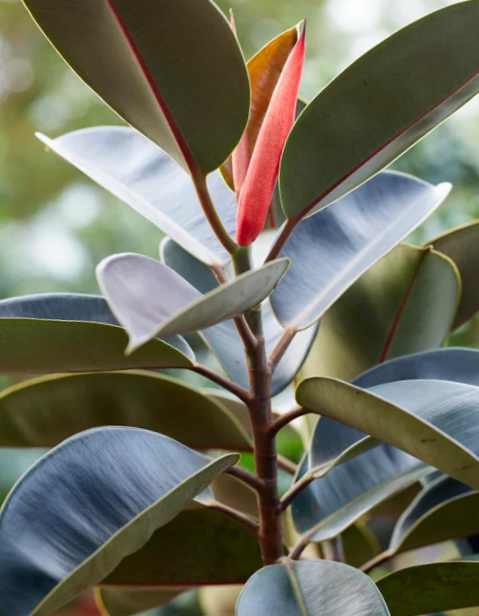
Rubber Plant / Rubber Tree
Ficus elastica Roxb. ex Hornem.
William Roxburgh originated or used the name, and Jens Wilken Hornemann validly published it in 1819. The author construction “Roxb. ex Hornem.” records Roxburgh’s contribution while crediting Hornemann with valid publication.
Important historical, taxonomic, and literature-search names include:
- Urostigma elasticum (Roxb. ex Hornem.) Miq.
- Visiania elastica (Roxb. ex Hornem.) Gasp.
- Macrophthalma elastica (Roxb. ex Hornem.) Gasp.
- Stilpnophyllum elasticum (Roxb. ex Hornem.) Drury
- Ficus karet (Miq.) King
- Urostigma karet Miq.
- Urostigma odoratum Miq.
- Urostigma circumscissum Miq.
- Ficus skytinodermis Summerh.
- Ficus taeda Kunth & C.D.Bouché
Older horticultural names include Ficus elastica var. decora, var. belgica, var. rubra, var. variegata, var. minor, var. karet, and var. odorata. These names do not establish different toxicological species or prove that a particular leaf color lacks irritating latex.
Commercial selections commonly include ‘Robusta’, ‘Decora’, ‘Burgundy’, ‘Abidjan’, ‘Melany’, ‘Tineke’, ‘Ruby’, ‘Belize’, ‘Doescheri’, ‘Shivereana’, ‘Moonshine’, ‘Sophia’, ‘Black Prince’, and other green, red, burgundy, pink, cream, or yellow-variegated cultivars. Trade names vary among producers, and the same cultivar may be marketed under more than one name.
Ficus elastica is not the principal commercial rubber-producing species Hevea brasiliensis. It is also not Baby Rubber Plant, Peperomia obtusifolia; Panama Rubber Tree, Castilla elastica; Rubber Vine, Cryptostegia grandiflora; or Pencil Cactus, Euphorbia tirucalli.
Moraceae — Fig or Mulberry Family
Rubber Plant; Rubber Tree; Rubber Fig; India Rubber Plant; India Rubber Tree; India Rubber Fig; Indian Rubber Plant; Indian Rubber Tree; Indian Rubber Bush; Rubber Bush; Assam Rubber; Assam Rubber Tree; East Indian Rubber Tree; Rambung; Karet; Karet Tree; Ficus Rubber Plant
Historical and botanical search names include Urostigma elasticum, Visiania elastica, Macrophthalma elastica, Stilpnophyllum elasticum, Ficus karet, Urostigma karet, Urostigma odoratum, Urostigma circumscissum, Ficus skytinodermis, and Ficus taeda.
Cultivar and trade names include Robusta Rubber Plant; Decora Rubber Plant; Burgundy Rubber Plant; Abidjan Rubber Plant; Black Rubber Plant; Black Prince Rubber Plant; Melany Rubber Plant; Tineke Rubber Plant; Ruby Rubber Plant; Belize Rubber Plant; Doescheri Rubber Plant; Shivereana Rubber Plant; Moonshine Rubber Plant; Sophia Rubber Plant; Variegated Rubber Plant; Tricolor Rubber Plant; Pink Rubber Plant; and Red Rubber Plant.
Baby Rubber Plant and American Rubber Plant usually refer to Peperomia obtusifolia or another Peperomia, not Ficus elastica. Commercial Rubber Tree or Pará Rubber Tree usually refers to Hevea brasiliensis. Panama Rubber Tree is Castilla elastica, and Rubber Vine is Cryptostegia grandiflora.
Indian Rubber Plant is also used inconsistently for Weeping Fig, Ficus benjamina, in some plant and poison references. Fiddle-Leaf Fig, Ficus lyrata; Banyan, Ficus benghalensis; Chinese Banyan, Ficus microcarpa; and Common Fig, Ficus carica, are separate species whose chemistry and exposure patterns should not be assumed identical.
A Complex Irritating Latex Rather Than One Purified Toxin
Rubber Plant produces an abundant milky latex when a leaf, petiole, stem, bark surface, aerial root, ordinary root, or fig is damaged. Latex is not identical to ordinary watery sap. It is a specialized emulsion containing rubber particles, proteins, enzymes, lipids, resins, carbohydrates, and numerous low-molecular-weight plant compounds suspended in an aqueous phase.
The most defensible poisoning description is exposure to a complex irritant latex and crushed plant tissues. Exact veterinary dose-response studies are sparse, and no single constituent has been shown to reproduce every natural dog, cat, horse, skin, eye, and gastrointestinal reaction. Describing the plant as though one named chemical explains all toxicity exceeds the evidence.
Latex is produced as a defensive secretion. It flows rapidly from wounds, adheres to tissue and fur, and coagulates as it is exposed to air. Its stickiness can prolong contact with the lips, gums, tongue, coat, skin, and ocular surface unless it is removed carefully.
Ficin E Is Confirmed Directly in Rubber Plant Latex
Ficin E is a proteolytic enzyme purified directly from Ficus elastica latex. The published enzyme had an approximate molecular mass of 50,000, an acidic isoelectric point, and greatest measured activity near mildly acidic conditions. Its activity depended on serine and histidine residues, distinguishing it from the better-known cysteine proteases commonly grouped under the general name ficin.
Proteases break peptide bonds in proteins. A proteolytic enzyme contacting mucous membranes or damaged skin is biologically capable of contributing to irritation, inflammation, and tissue discomfort. Ficin E therefore provides a plausible exact-species component of Rubber Plant latex injury.
Plausibility is not the same as a completed veterinary mechanism. No controlled study has measured how much Ficin E enters an animal’s mouth from one leaf, how long it remains active after dilution and digestion, or what proportion of vomiting, dermatitis, or eye irritation it causes. The latex mixture, tissue trauma, individual sensitivity, and accompanying products remain relevant.
Ficin Is a Functional Name That Can Cause Species Confusion
The word ficin is often used broadly for proteolytic activity in fig latex. Much of the detailed ficin literature concerns Common Fig, Ficus carica, rather than Rubber Plant. Enzymes isolated from different Ficus species may differ in active-site chemistry, molecular size, substrate preference, stability, and concentration.
Ficin E from Ficus elastica is unusual because it was characterized as serine-centered. It should not be represented automatically as chemically identical to every cysteine protease purified from Ficus carica. Genus-level enzyme evidence can provide context but cannot replace exact-species findings.
Rubber Particles and Cis-1,4-Polyisoprene
The latex contains particles involved in the biosynthesis and storage of natural rubber, principally cis-1,4-polyisoprene. Researchers isolated active rubber particles from Ficus elastica latex and identified a predominant rubber-associated protein related to proteins from Hevea brasiliensis and guayule, Parthenium argentatum.
These findings explain the plant’s common name and its historical use as a rubber source. They do not establish polyisoprene itself as the cause of oral vomiting or dermatitis. Processed rubber, intact plant latex, synthetic rubber, and commercial natural-rubber products are different exposure materials.
Rubber-associated proteins also demonstrate that the latex is not merely an inert hydrocarbon suspension. Protein content may matter to biological reactivity, but the specific allergenic significance of each Rubber Plant particle protein remains incompletely defined.
Latex Adhesion and Prolonged Contact
Fresh latex is sticky and can coat the mouth, teeth, fur, feathers, collars, harnesses, bedding, floors, pruning tools, and a person’s skin. An animal may receive repeated oral exposure while licking the lips or grooming contaminated paws and coat. Dried residue may remain attached even after the visible white color fades.
Mechanical removal must be gentle. Aggressive rubbing can worsen inflamed skin or spread latex into the eyes. Solvents, alcohol, petroleum products, essential oils, and concentrated household detergents can create an additional chemical injury and should not be used on an animal.
Oral and Gastrointestinal Irritation
Chewing releases latex directly across the lips, tongue, gums, and oral mucosa. Expected early signs include lip licking, salivation, mouth discomfort, repeated swallowing, gagging, face rubbing, or abrupt refusal to continue chewing. The intensity depends on the amount of latex released, the surface area exposed, and individual sensitivity.
Swallowed latex and crushed plant tissue can irritate the pharynx, esophagus, stomach, and intestine. Nausea, vomiting, appetite reduction, abdominal discomfort, and diarrhea may follow. Large leathery leaf pieces may also create mechanical irritation or, less commonly, contribute to a gastrointestinal foreign-body problem.
Repeated vomiting can become more important than the original plant dose by causing dehydration, electrolyte disturbance, esophagitis, weakness, and aspiration. Blood appearing repeatedly in vomit or stool is not the expected mild course and requires veterinary examination.
Skin Irritation
Fresh latex can cause localized redness, burning, itching, tenderness, or swelling, particularly on thin, damaged, or previously inflamed skin. Sap trapped beneath a collar, harness, watch, glove, bandage, or dense coat may remain in contact longer than sap on an exposed surface.
Direct irritant contact and immune-mediated allergy are different processes. Irritation can occur during an initial exposure, while allergy requires sensitization and may become more severe after later contact. Exact veterinary information on Rubber Plant sensitization remains limited, so a persistent rash should also be evaluated for pesticides, cleaning products, insects, infection, and another plant.
Eye Exposure
Latex may enter an eye when a branch snaps, a leaf is cut, an animal rubs a contaminated paw across the face, or a person handles the plant and then touches the animal’s eyelids. Expected findings include tearing, blinking, squinting, redness, eyelid swelling, discharge, and rubbing.
Coagulating latex and plant fragments may remain beneath an eyelid or adhere to the ocular surface. Continued pain after irrigation requires veterinary examination because corneal abrasion, ulceration, retained material, or a reaction to an applied pesticide cannot be excluded at home.
Natural-Rubber Allergy Is Not Automatic Rubber Plant Allergy
Pará Rubber Tree, Hevea brasiliensis, is the principal source of commercial natural-rubber latex. Rubber Plant, Ficus elastica, belongs to a different plant family and produces a latex with a different protein profile. The shared capacity to synthesize polyisoprene does not make the two latexes immunologically identical.
In one small study, seven people with systemic IgE-mediated allergy to Hevea latex had negative skin-prick tests to tested Ficus elastica material. The study suggests that cross-reactivity is not inevitable, but its small sample cannot prove that Rubber Plant latex is incapable of causing allergy in every person or animal.
A known natural-rubber allergy should still be reported when a person handles a latex-covered animal. Gloves and careful washing are prudent. Hives, rapidly progressive swelling, wheezing, throat symptoms, weakness, or collapse requires emergency medical or veterinary attention.
The Psoralen and Ficusin Evidence Boundary
Psoralen, bergapten, and related furanocoumarins are well established in certain Ficus species, particularly Common Fig, Ficus carica, and may contribute to light-dependent skin reactions. Secondary pet-safety descriptions sometimes assign psoralen or ficusin broadly to every ornamental fig.
The exact-species studies used for this page confirm Ficin E, rubber-associated proteins, numerous leaf phenolics and glycosides, triterpenes, steroids, and aerial-root compounds. They do not provide equally strong evidence that psoralen or ficusin is the principal toxin in ordinary Ficus elastica exposures.
Rubber Plant dermatitis should therefore not be presented automatically as phototoxic furanocoumarin injury. Sunlight may aggravate damaged skin for many reasons, but a precise light-dependent veterinary syndrome has not been established for this species. Exact evidence from another fig should be labeled as comparative rather than silently transferred.
Exact-Species Leaf Constituents
Direct chemical investigation of Rubber Plant leaves isolated two newly described compounds, ficuselastic acid and a glucosylated sodium abscisate derivative, along with numerous known constituents. These included flavonoid glycosides, phenolic glycosides, roseoside-related compounds, oleanolic acid, ursolic acid, benzyl glucoside, and other plant metabolites.
Another exact-species leaf investigation isolated emodin, sucrose, morin, and rutin. Essential-oil analysis found volatile constituents including 6,10,14-trimethyl-2-pentadecanone, geranyl acetone, heneicosene, and 1,8-cineole. Different solvents and analytical methods recover different fractions of the plant’s chemistry.
Isolation or detection does not establish clinical responsibility. Antioxidant, antimicrobial, or laboratory activity does not mean the compound causes natural vomiting or that it can be used as a home antidote. Dose, absorption, metabolism, tissue contact, and route of exposure remain essential.
Aerial-Root Chemistry
Researchers isolated ficusamide, ficusoside, and the triterpenoid saponin elasticoside from the bark of Rubber Plant aerial roots, together with known triterpenes, steroids, and aliphatic alcohols. Other aerial-root investigations identified additional compounds with in vitro antiproliferative or antimicrobial activity.
These findings confirm that aerial roots are chemically active tissues and should not be assumed safe for animals to chew. They do not prove that elasticoside or another root compound causes the ordinary houseplant ingestion syndrome, and they do not establish that aerial roots are more toxic than leaves.
Saponins and Laboratory Membrane Activity
Elasticoside is a confirmed triterpenoid saponin from aerial-root bark. Saponins as a broad class may interact with biological membranes and can produce gastrointestinal or laboratory hemolytic effects depending on structure and concentration. Those general properties do not establish a natural pet dose or prove clinically important hemolysis after chewing an ornamental Rubber Plant.
Pale gums, dark urine, anemia, or collapse requires measured hematologic evaluation rather than assumption based on one isolated root saponin. Direct irritant latex exposure and repeated vomiting remain more defensible explanations for routine cases.
Leaves, Petioles, Stems, Bark, Roots, Figs, and Seeds
Leaves, petioles, stems, trunk bark, aerial roots, underground roots, young growing sheaths, figs, and pruning material can all be damaged and should remain inaccessible. Latex-bearing structures may release the secretion immediately after cutting or chewing. No controlled study has ranked every tissue by irritant concentration.
Large leaves are the most common indoor exposure because they are accessible and can release latex along a broad torn edge. Stems and branches become more important during pruning, air layering, storm breakage, or when a large dog pulls down the plant. Aerial roots and trunk tissue become accessible on mature landscape trees.
The fig is a syconium containing many tiny flowers internally rather than an ordinary exposed flower. Fruiting is uncommon on many indoor specimens because successful reproduction depends on a specialized pollinating wasp, but outdoor trees in regions where the pollinator is present may produce figs and viable seeds.
Fresh, Wilted, and Dried Material
Freshly damaged tissue presents the greatest opportunity for wet latex to coat the mouth, skin, and eyes. Newly cut leaves, pruning piles, propagation material, and air-layering wounds may release much more latex than an old intact leaf.
Wilting reduces water content but does not prove that proteases, rubber-associated proteins, saponins, phenolics, or other plant constituents have disappeared. Dried leaves and branches may contain less transferable wet latex while still causing gastrointestinal irritation or mechanical injury.
Coagulated latex may remain adherent to dried plant material, tools, floors, fabric, and containers. Dried wreaths, pressed specimens, craft material, old supports, and discarded trees should remain inaccessible.
Cultivars and Variegated Forms
Robusta, Burgundy, Abidjan, Melany, Tineke, Ruby, Belize, Decora, Doescheri, Shivereana, Moonshine, Sophia, and other cultivars differ in leaf dimensions, internode length, pigmentation, variegation, and growth habit. Those traits influence how the plant is displayed and how easily an animal can reach it.
No cultivar has been demonstrated to lack latex, Ficin E, or the capacity to cause irritation. Cream, pink, red, burgundy, yellow, mottled, or nearly black foliage should receive the same initial precautions as ordinary green Rubber Plant. A compact cultivar may be more accessible because it is placed on a table or floor.
Concentrated Latex, Extracts, and Traditional Preparations
Fresh latex, dried latex, medicinal extracts, alcohol preparations, powders, oils, experimental products, and homemade remedies are not equivalent to one exploratory leaf bite. Concentration and extraction can deliver selected plant constituents in amounts not encountered during ordinary chewing.
Traditional medicinal use and laboratory studies do not establish a veterinary dose. A product may also contain alcohol, solvents, sweeteners, oils, other herbs, preservatives, medication, or contaminants. Preserve the original container and complete ingredient list after any prepared-product exposure.
Toxic-Dose and Evidence Limitations
No validated toxic dose exists for Rubber Plant in dogs, cats, horses, cattle, sheep, goats, rabbits, guinea pigs, birds, reptiles, or other domestic animals. There is no dependable number of leaves, stem pieces, aerial roots, or bites that guarantees either illness or safety.
Risk depends on the amount of latex released, plant mass, degree of chewing, animal size, repeated access, contact route, individual sensitivity, cultivar, pesticide treatment, and underlying disease. One superficial tooth mark is different from crushing and swallowing several leathery leaves.
Most limited exposures are expected to remain local or gastrointestinal and have a favorable outcome. Severe systemic findings require investigation rather than automatic expansion of Rubber Plant’s toxin profile beyond what exact evidence supports.
Expected Onset and Clinical Course
Oral signs may begin soon after a leaf, petiole, stem, or aerial root is chewed because latex contacts the mouth immediately. Lip licking, salivation, repeated swallowing, gagging, head shaking, mouth pawing, or abrupt refusal to continue chewing may be the first evidence.
Nausea, vomiting, reduced appetite, abdominal discomfort, and diarrhea may develop over the following hours after latex and plant tissue are swallowed. No controlled onset range applies to every species, plant part, and exposure amount. Repeated access can make the actual starting time uncertain.
Most limited exposures are expected to remain mild to moderate and improve after access ends. Persistent or progressive illness should prompt evaluation for a large exposure, retained leaf material, aspiration, pesticide, foreign material, allergy, another Ficus, or an entirely different plant.
Oral Irritation
Expected oral findings include lip licking, excessive salivation, repeated tongue movement, mouth pawing, face rubbing, gagging, retching, or reluctance to eat. Latex may adhere to the lips, gums, tongue, teeth, and palate. Mild redness or tenderness may be visible.
Severe immediate burning, extensive blistering, pronounced tongue enlargement, or widespread oral ulceration is not established as the usual Rubber Plant presentation. Those findings raise concern for a caustic chemical, insoluble-calcium-oxalate plant, electrical injury, foreign body, severe allergy, or another latex-producing species.
Drooling and Abnormal Swallowing
Drooling may be clear, foamy, rope-like, or lightly streaked with blood after forceful rubbing or repeated vomiting. An animal may stretch the neck, swallow repeatedly, approach water and back away, or cough when attempting to drink.
Persistent dysphagia, regurgitation, inability to swallow saliva, or coughing with water suggests pharyngeal or esophageal involvement. Do not force food, water, or oral medication into an animal that cannot swallow normally.
Nausea and Vomiting
Vomiting is one of the most likely gastrointestinal findings after ingestion. Vomit may contain glossy leaf fragments, white or coagulated latex residue, food, foam, bile, soil, fertilizer pellets, or decorative material.
One episode in an otherwise alert animal differs from repeated vomiting with inability to retain water. Continued vomiting can cause dehydration, electrolyte disturbance, esophagitis, weakness, and aspiration. Persistent vomiting also raises concern for a swallowed leaf mass, support tie, plastic, stone, or other foreign material.
Diarrhea and Abdominal Discomfort
Stool may become soft, loose, watery, mucus-covered, or occasionally blood-streaked after gastrointestinal irritation. Abdominal discomfort may appear as restlessness, stretching, a hunched posture, guarding, vocalization, or reluctance to lie down.
Repeated blood, coffee-ground vomit, black tar-like stool, severe abdominal enlargement, repeated unproductive retching, or persistent intense pain is not the expected mild course. These findings require evaluation for significant mucosal injury, gastrointestinal obstruction, pancreatitis, coagulopathy, another toxin, or unrelated disease.
Appetite Loss and Depression
Food refusal can result from oral tenderness, nausea, esophageal discomfort, gastritis, or stress. Dogs may reject hard food but remain interested in water, while cats may hide and stop approaching the food area altogether.
Mild quietness can accompany nausea and dehydration. Profound depression, stupor, inability to remain awake, or progressive loss of responsiveness is atypical and requires investigation for another toxicant, shock, metabolic illness, or neurologic disease.
Skin Findings
Latex contact may cause localized redness, burning, itching, swelling, papules, tenderness, or persistent licking. Areas with damaged skin, thin hair, or prolonged contact beneath equipment may react more strongly.
Irritant findings may begin promptly, while allergic inflammation can emerge later. Spreading redness, blistering, open lesions, severe pain, facial involvement, or secondary infection requires veterinary evaluation. Latex-coated fur also creates ongoing ingestion during grooming.
Eye Findings
Eye exposure may cause tearing, blinking, squinting, conjunctival redness, eyelid swelling, discharge, light avoidance, and face rubbing. Plant fragments or coagulated latex may remain beneath an eyelid.
Continued squinting after irrigation, corneal cloudiness, apparent vision change, marked swelling, or inability to open the eye requires veterinary examination. Self-trauma from rubbing can create a corneal abrasion even when the original latex reaction was limited.
Allergic Swelling and Respiratory Signs
Immediate allergy is not established as the routine veterinary outcome, but rapidly increasing facial swelling, hives, respiratory noise, wheezing, weakness, vomiting with collapse, or impaired breathing must be treated as an emergency. A direct irritant reaction and an immune-mediated allergic reaction can also occur together.
Coughing may result from throat irritation, aspiration of vomit, retained plant material, pesticide spray, or another inhaled substance. Persistent coughing, fever, rapid breathing, nasal discharge, or renewed lethargy after vomiting may indicate aspiration pneumonia.
Dogs
Dogs may chew broad leaves, pull down a plant by its trunk or support, carry pruning material, or dig around a landscape tree. Expected findings include drooling, gagging, vomiting, appetite reduction, diarrhea, abdominal discomfort, or localized skin irritation.
An overturned indoor plant may also expose the dog to fertilizer, pesticide, support stakes, wire, plastic ties, moss poles, decorative stones, and broken pottery. Persistent vomiting, severe abdominal pain, reduced stool, or repeated retching may reflect foreign material rather than latex alone.
Cats
Cats may bite leaf tips, climb through branches, rub against cut stems, drink saucer water, or groom latex from the paws and coat. Signs may be subtle and include lip licking, quiet drooling, hiding, one or more vomiting episodes, food refusal, or reduced grooming.
Continued anorexia is important even when active vomiting has stopped. Oral or esophageal discomfort may persist, and prolonged inadequate intake can cause serious secondary metabolic disease in cats. Open-mouth breathing, progressive facial swelling, collapse, or inability to swallow requires immediate care.
Horses
Horses may encounter Rubber Plant as a large landscape tree, greenhouse specimen, pruned branch, or ornamental waste discarded near a paddock. Horses cannot vomit, so salivation, feed refusal, repeated swallowing, coughing, oral discomfort, colic, diarrhea, or depression may predominate.
A horse with abnormal swallowing should not be drenched. Respiratory noise, significant facial swelling, persistent salivation, severe colic, weakness, or abnormal behavior requires large-animal veterinary examination and identification of every plant in the debris.
Cattle, Sheep, Goats, and Other Livestock
Livestock exposure is most likely when landscape trimmings, greenhouse waste, aerial roots, uprooted plants, or storm-damaged branches are placed in a pasture, feed area, brush pile, or pen. Goats may browse unfamiliar leaves readily, while cattle and sheep may consume debris mixed with more desirable forage.
Expected concerns include salivation, feed refusal, muzzle rubbing, gastrointestinal disturbance, and reduced intake. Sudden death, severe arrhythmia, jaundice, kidney failure, widespread neurologic disease, or major group illness is not established as an ordinary Rubber Plant outbreak and requires investigation for other plants, pesticides, contaminated feed, and metabolic disease.
Rabbits and Guinea Pigs
Rabbits and guinea pigs cannot vomit. Oral discomfort, salivation, food refusal, dropping food, reduced fecal production, diarrhea, abdominal pain, tooth grinding, hiding, or weakness may be the important findings.
A mild irritant exposure can become medically important when feeding stops and gastrointestinal stasis develops. Rubber Plant leaves, bark, roots, and pruning debris should not be offered as forage, chew material, nesting material, or enrichment.
Birds
Companion birds may shred leaves and bark while leaving little evidence of how much was swallowed. Latex can contact the beak, tongue, oral cavity, eyes, feet, and feathers. Preening contaminated feathers may continue the exposure.
Beak wiping, excessive oral secretions, regurgitation, diarrhea, food refusal, eye closure, weakness, altered balance, respiratory change, or unusual quietness requires avian veterinary guidance. A small bird can receive a meaningful exposure relative to body size.
Reptiles and Other Exotic Animals
Small mammals, reptiles, and other exotic animals may encounter Rubber Plant in indoor exercise areas, planted enclosures, greenhouse rooms, or outdoor landscaping. They may bite the plant, rub an eye against a cut surface, or contact latex and pesticide on the substrate.
Species-specific evidence is extremely limited and does not establish safety. Oral redness, mucus, food refusal, regurgitation, eye closure, facial swelling, lethargy, or respiratory change requires an exotic-animal veterinarian and review of the entire enclosure.
Severe or Atypical Findings
Seizures, profound ataxia, progressive paralysis, coma, persistent arrhythmia, jaundice, acute kidney failure, severe hypocalcemia, widespread bleeding, or rapid unexplained collapse is not the expected uncomplicated Rubber Plant syndrome. These findings require immediate investigation for another or additional cause.
Important alternatives include Rubber Vine, Sago Palm, oleander, yew, true lilies in cats, calcium-oxalate aroids, pesticides, medications, cannabis, nicotine, xylitol, toxic mushrooms, antifreeze, foreign-body obstruction, hypoglycemia, and primary cardiac, hepatic, renal, or neurologic disease.
Duration and Prognosis
Most uncomplicated oral and gastrointestinal signs are expected to improve within several hours to one or two days after exposure ends, vomiting is controlled, hydration remains adequate, and eating resumes. Skin inflammation may persist longer, and eye injuries follow their own course.
The prognosis is generally good to excellent after a limited ingestion or brief latex contact. The outlook depends on the complication when airway swelling, aspiration, severe dehydration, prolonged anorexia, corneal injury, gastrointestinal obstruction, or a mixed chemical exposure develops.
Plant Identity
Rubber Plant, Ficus elastica, is a broadleaf evergreen fig capable of growing as a massive tropical tree outdoors and as a much smaller shrub or tree indoors. Young houseplants usually have one or several upright trunks with large glossy leaves, while mature landscape specimens may develop a broad crown, buttress-like support, and numerous descending aerial roots.
The difference between an indoor specimen and an adult tropical tree is important to exposure assessment. One damaged potted plant may release latex from a few leaves or stems, while pruning or storm damage to a mature tree can create dozens of fresh latex-bearing surfaces and a large quantity of accessible foliage, bark, and roots.
Rubber Plant is a true fig in Moraceae, not the principal commercial Rubber Tree in Euphorbiaceae and not a palm, peperomia, succulent, or vine. Common names alone are unreliable because Rubber Plant, Rubber Tree, Rubber Bush, and Indian Rubber Plant are applied to several unrelated ornamentals.
Accepted Taxonomy and Naming History
The accepted name is Ficus elastica Roxb. ex Hornem., first validly published in 1819. Historical classifications placed the species in Urostigma, Visiania, Macrophthalma, and Stilpnophyllum. Those names remain useful when researching old rubber-production, botanical, and toxicological literature.
Ficus karet, Urostigma karet, and Urostigma odoratum reflect historical treatments of regional forms. Numerous named varieties were also published for broad-leaved, narrow-leaved, red-veined, variegated, compact, or cultivated forms. Modern ornamental cultivar names have largely replaced those formal varietal names in the plant trade.
Older poison references may use Indian Rubber Plant for Ficus benjamina rather than Ficus elastica. The scientific name should be checked before transferring a toxin statement, clinical expectation, or citation from one ornamental fig to another.
Native Range and Poisoning-Relevant Habitat
The accepted native range extends from Nepal through parts of the eastern Himalayan region and western Yunnan into western Malesia. The species grows primarily in wet tropical environments and is associated with forests, limestone country, cliffs, rocky sites, and humid valleys. Its historical cultivation for latex and its use as an ornamental have expanded its distribution greatly.
In natural or semi-natural tropical settings, Rubber Plant may begin as a facultative hemiepiphyte. A seed can germinate above ground on a tree or rock, after which aerial roots descend and eventually reach the soil. Older roots thicken, fuse, and create a supporting network around the original host or substrate.
Animals in the native or introduced range may encounter fallen leaves, figs, aerial roots, bark, branches, and seedlings rather than a labeled potted houseplant. Botanical confirmation becomes especially important where multiple Ficus species, cycads, aroids, vines, and latex-producing trees grow together.
Outside its accepted native range, Rubber Plant is grown throughout tropical and subtropical landscapes and in containers worldwide. Exposure can occur in gardens, courtyards, parks, resorts, apartment grounds, schools, offices, botanical collections, cemeteries, shopping areas, restaurants, and public walkways.
Strangler-Fig Growth and Aerial Roots
Rubber Plant belongs to the banyan-like group of figs and can produce abundant aerial roots. These roots descend from branches, enter soil, thicken, branch, and may fuse with adjacent roots. Mature aerial roots can resemble trunks, cables, vines, or exposed woody debris.
Aerial roots are relevant to dogs, horses, livestock, zoo animals, and free-ranging species because they may hang or run at mouth level even when the canopy is inaccessible. Freshly cut or broken aerial roots can release latex. Bark from aerial roots has yielded exact-species ceramides, cerebrosides, triterpenes, steroids, and the saponin elasticoside.
In Meghalaya, aerial roots are trained into living root bridges and other durable structures. Animals moving near those trees may encounter managed roots, cut ends, young flexible roots, and maintenance debris. The cultural use does not establish that roots are safe to chew.
Leaves, Petioles, and Growing Sheaths
Leaves are large, thick, leathery, glossy, and generally elliptic to oval with an entire margin and prominent midrib. New leaves develop inside a conspicuous terminal sheath or stipule that may be red, burgundy, pink, or green depending on the cultivar. The sheath eventually falls after the leaf expands.
The broad blade can release latex along a long torn edge when bitten. Petioles and young growing points may release an especially visible flow after breakage. Fallen stipules, damaged new leaves, and pruned leaf stalks should be removed promptly from animal-accessible floors and soil.
Indoor cultivars often produce larger juvenile leaves than those visible high in the canopy of mature outdoor trees. A single houseplant leaf may therefore represent a substantial leathery plant mass for a small dog, cat, rabbit, or bird.
Figs, Internal Flowers, and Pollinating Wasps
Rubber Plant does not produce an ordinary exposed flower. Its tiny flowers develop inside a hollow fig-like structure called a syconium. These small greenish or yellow-green figs may form on outdoor trees but are uncommon on typical indoor plants.
Successful pollination depends on the specialized fig wasp Platyscapa clavigera. Trees grown where the wasp is absent may remain sterile even when they form syconia. Research in Singapore documented renewed natural reproduction after the pollinator became established.
Figs, seeds, and attached stems have not been established as pet-safe food. Fruit from a known Rubber Plant should not be confused with edible Common Fig, Ficus carica. Fallen syconia may also carry latex, fermenting material, insects, mold, pesticide residue, or debris from neighboring plants.
Latex Canals and Wound Exposure
Latex is stored in specialized internal structures and appears when living tissue is cut, torn, crushed, or punctured. A clean-looking leaf can release white latex within seconds after a bite. The exudate then becomes tacky and may darken or coagulate.
Pruning, propagation, air layering, storm damage, moving a large plant, and cutting aerial roots create multiple wounds at once. Latex may drip or spray onto floors, tools, gloves, furniture, animal bedding, skin, and eyes. Cleanup should occur before animals are allowed back into the area.
Dried white or brown residue on a stem does not necessarily indicate pesticide or fungal disease. It may be coagulated latex from an earlier wound. That residue should still be prevented from entering an animal’s mouth or eye.
Poisonous Parts
Leaves, petioles, stems, bark, trunk wounds, aerial roots, ordinary roots, growing sheaths, figs, seeds, seedlings, cuttings, and pruning material should remain inaccessible. No plant part has been established as a universally safe chew or forage source.
The greatest practical hazard varies by setting. Leaves dominate indoor pet exposures, aerial roots and branches become more important around mature outdoor trees, and stems or cuttings dominate propagation and pruning incidents. Root-ball exposures frequently include fertilizer, pesticide, soil, plastic, stones, and pot fragments.
Seasonal and Growth-Stage Exposure
Indoor Rubber Plants remain accessible throughout the year. New leaves and colorful sheaths may attract cats and birds, while ordinary leaf drop can place mature leaves on the floor. Moving plants for cleaning, redecorating, holidays, or improved light may create new access unexpectedly.
Spring and summer commonly bring pruning, repotting, air layering, outdoor relocation, fertilizing, and pesticide use. These activities produce fresh wounds, latex-coated tools, loose leaves, exposed roots, moss, rooting hormones, plastic wrap, ties, and chemical containers.
Outdoor landscape exposure may increase after storms, high winds, construction, tree trimming, or root maintenance. Tropical trees can drop large branches and leaves throughout the year. Fallen material should not be left where dogs, horses, livestock, or wildlife can investigate it.
Fruiting exposure depends more on tree maturity and presence of the pollinating wasp than on a simple household season. Fallen figs may appear beneath mature trees in regions where pollination occurs and should be collected from animal areas.
Cultivars and Commercial Forms
Robusta and Decora generally have broad dark green leaves. Burgundy, Abidjan, Black Prince, and similar cultivars produce very dark green to burgundy foliage. Tineke, Ruby, Belize, Doescheri, Shivereana, and Moonshine may show cream, yellow, gray-green, pink, or red variegation.
No leaf color or cultivar has been demonstrated to eliminate latex irritancy. Variegated leaves may be mistaken for a different species, while nearly black cultivars may be mistaken for dead or artificial foliage. Preserve the cultivar label during identification.
Compact cultivars and young plants may be placed on floors, desks, or low tables where animals can reach them easily. Mature specimens may require stakes, ties, wheeled bases, or heavy decorative pots that create additional foreign-body and trauma hazards.
Rubber Plant and Pará Rubber Tree
Pará Rubber Tree, Hevea brasiliensis, is the principal industrial source of natural rubber and belongs to Euphorbiaceae. Its leaves are compound with three leaflets, unlike the single large leaves of Ficus elastica. The trees also differ in flowers, fruit, bark, and branching.
Commercial latex allergy is associated principally with proteins from Hevea. Rubber Plant latex contains a different protein profile, and one small human study found no skin-test response to tested Ficus elastica material among Hevea-allergic subjects. That evidence does not make either latex safe for ingestion or eye contact.
Rubber Plant and Baby Rubber Plant
Baby Rubber Plant is usually Peperomia obtusifolia, an unrelated member of Piperaceae. It has smaller, thick, rounded leaves and soft green stems and is widely sold as Baby Rubber, American Rubber Plant, or Pepper Face.
The shared waxy appearance and common name cause frequent identification errors. A photograph of one detached glossy leaf may not be sufficient. Include the stem, leaf arrangement, plant size, and nursery label.
Rubber Plant and Weeping Fig
Weeping Fig, Ficus benjamina, has smaller, thinner leaves and slender drooping branches. It is a separate species despite belonging to the same genus and producing irritating latex. Human respiratory allergy and cross-reactivity research is much more extensive for Ficus benjamina than for Rubber Plant.
Do not transfer every named Ficus benjamina allergen or case report automatically to Ficus elastica. The two plants share genus-level traits but differ in exact protein profiles, leaf chemistry, growth form, and ordinary exposure mass.
Rubber Plant and Fiddle-Leaf Fig
Fiddle-Leaf Fig, Ficus lyrata, has much larger violin-shaped leaves with prominent pale veins and a different outline. It also produces latex and may cause similar oral or gastrointestinal irritation when chewed.
Correct identification still matters because leaf size, amount swallowed, cultivar, pesticide treatment, and accompanying evidence differ. A page about one ornamental fig should not serve as a substitute for exact evaluation of another.
Rubber Plant and Rubber Vine
Rubber Vine, Cryptostegia grandiflora, is an unrelated climbing plant in Apocynaceae. It produces milky latex but contains cardiac glycosides capable of causing dangerous gastrointestinal and cardiovascular poisoning.
A vine with opposite leaves, twining stems, and trumpet-shaped flowers should not be assessed as Ficus elastica. Bradycardia, conduction block, ventricular arrhythmia, profound weakness, or collapse requires immediate cardiac-glycoside evaluation.
Rubber Plant and Pencil Cactus
Pencil Cactus or Pencil Tree, Euphorbia tirucalli, has narrow cylindrical green branches and caustic milky latex. Its eye and skin injury can be much more severe than the expected limited Rubber Plant exposure.
The word rubber and the presence of white latex are insufficient for identification. Preserve a full branch and photographs before cleanup when a latex-producing plant has caused marked ocular or dermal injury.
How Dogs Gain Access
Dogs may bite broad leaves, pull at a flexible trunk, carry fallen leaves, chew pruning debris, investigate latex-coated tools, or dig into the pot. Puppies may chew supports and branches while teething, while adult dogs may be attracted by newly disturbed soil, fertilizer odor, or a plant moved into a different room.
A tall specimen may fall when a dog pulls a leaf, support tie, tablecloth, electrical cord, rolling base, or nearby object. The animal may then gain access to the entire root ball, numerous damaged stems, fertilizer, pesticide, stakes, wire, and broken pottery.
Outdoor dogs may reach low branches, aerial roots, storm debris, landscape trimmings, nursery waste, curbside disposal, or compost. A mature tree can provide far more material than an indoor pot, and one pruning pile may contain many freshly exuding surfaces.
Repeated vomiting, abdominal pain, or reduced stool after an overturned plant requires consideration of leaf mass, plastic, ties, wire, stones, bark, and pot fragments. Do not assume latex irritation explains every symptom.
How Cats Gain Access
Cats may bite leaf tips, puncture new leaves while climbing, rub against a fresh pruning wound, drink from the saucer, or groom latex from the paws and coat. A tall shelf may remain accessible from furniture, curtains, cabinets, or a nearby windowsill.
One cat may chew the same leaf edge repeatedly over several nights, making the total exposure difficult to estimate. Another may break a petiole while climbing and create a fresh latex source without swallowing much plant material initially.
Signs can be subtle. Quiet drooling, lip licking, hiding, one vomiting episode, reduced grooming, or approaching food and turning away may be the only early evidence. Continued anorexia deserves attention because oral or esophageal pain and nausea may persist.
Latex on the coat may also expose people during handling. Wear gloves, prevent grooming until decontamination is complete, and avoid touching the eyes or face.
Horses and Equine Exposure
Horses may encounter Rubber Plant where it is grown as a large tropical landscape tree, greenhouse specimen, resort planting, or ornamental near barns and event facilities. Pruned branches, aerial roots, storm debris, or discarded indoor trees may be placed inadvertently near paddocks.
Horses cannot vomit. Salivation, feed refusal, repeated swallowing, muzzle rubbing, coughing, colic, diarrhea, or depression may therefore predominate. A horse with abnormal swallowing should not be drenched because fluid or charcoal may enter the respiratory tract.
The entire debris pile must be identified. Oleander, yew, cycads, azaleas, ornamental vines, pesticides, and fertilizer may be discarded with Rubber Plant. Severe cardiovascular, neurologic, hepatic, or renal disease is not explained adequately by ordinary Ficus elastica irritation.
Cattle, Sheep, Goats, and Other Livestock
Livestock exposure is most likely when landscape branches, greenhouse waste, storm debris, aerial roots, or old potted plants are thrown into a pasture, dry lot, barnyard, feed lane, or pen. Plant material may also become mixed into hay, silage, bedding, brush piles, or mechanically collected vegetation.
Goats may browse unfamiliar leaves and bark readily and should not be used deliberately to clear a Rubber Plant or mixed tropical planting. Cattle and sheep may consume ornamental debris when forage is scarce or when leaves are mixed with palatable plant material.
All potentially exposed animals should be inspected even when only one shows salivation or feed refusal. Different animals may consume different tissues and amounts. Remove the source, preserve representative specimens, and retain feed and chemical samples.
Sudden death, arrhythmia, widespread bleeding, severe neurologic disease, jaundice, or major group illness demands investigation for other plants, pesticides, contaminated feed, and metabolic disorders. The presence of Rubber Plant in a waste pile does not prove that it caused an outbreak.
Rabbits and Guinea Pigs
Rabbits and guinea pigs may reach fallen leaves during indoor exercise, pull foliage through enclosure bars, or receive pruning material mistakenly offered as browse. They cannot vomit, so absence of vomiting does not indicate safety.
Oral discomfort and nausea may appear as salivation, dropping food, tooth grinding, food refusal, hiding, diarrhea, or reduced fecal production. Gastrointestinal stasis can become a serious secondary problem when feeding stops.
Rubber Plant leaves, bark, aerial roots, figs, and dried branches should not be used as forage, chew material, bedding, or enrichment. Limited species-specific research does not establish a safe amount.
Birds and Other Exotic Animals
Companion birds may shred broad leaves, strip bark, or perch on a branch and contact a pruning wound. Latex can coat the beak, oral cavity, eyes, feet, and feathers, and preening can continue the oral exposure.
Small mammals and reptiles may encounter Rubber Plant in planted rooms, tropical vivariums, atriums, or outdoor exercise spaces. They may contact treated soil, fertilizer, pesticide, or latex even when deliberate ingestion is not observed.
Regurgitation, food refusal, eye closure, excessive oral mucus, altered breathing, weakness, or abnormal behavior requires a veterinarian experienced with the affected species. Bring plant, substrate, chemical, and enclosure information.
Household, Office, and Commercial Exposure
Rubber Plant is widely used as a statement plant in homes, offices, lobbies, hotels, restaurants, schools, salons, clinics, stores, and apartment buildings. Large specimens are frequently placed on floors where dogs can reach lower leaves and cats can climb into the branches.
Shared commercial spaces create uncertainty about plant ownership and treatment history. Building staff or plant-service companies may apply leaf shine, systemic insecticide, fertilizer, fungicide, or cleaning products without informing the animal’s owner.
Fallen leaves may collect beneath desks, couches, reception counters, shelving, or rolling plant bases. Cleaning crews may break leaves and spread latex onto floors or equipment. Ask who maintains the plant and preserve treatment records whenever signs are atypical.
Greenhouse, Nursery, and Landscape Exposure
Commercial production creates broken leaves, stem cuttings, air layers, discarded root balls, pesticide-treated plants, fertilizer residue, support stakes, clips, and plastic sleeves. A nursery dog or cat may encounter a concentrated mixture rather than one intact plant.
Landscape trees may be pruned aggressively to control size. Fresh branch cuts and piles of foliage can release large amounts of latex. Storm damage, construction, utility work, and removal of aerial roots can create similar access.
Commercial waste should be contained rather than placed in open compost, livestock pens, wildlife-accessible piles, or unsecured dumpsters. Wilted appearance does not prove that the tissue or coagulated latex is harmless.
Pruning, Propagation, and Air Layering
Rubber Plant is propagated through stem cuttings and air layering. Both techniques deliberately wound the plant and can produce a substantial latex flow. Air layering may also involve moss, rooting hormone, plastic film, ties, foil, wire, and support material.
Cut leaves, stem sections, used gloves, paper towels, and latex-coated tools should be placed directly into an inaccessible container. Work surfaces and floors should be cleaned before animals return. Cutting material left in water or soil remains living plant tissue.
A dog that swallows an air-layering bundle may ingest moss, plastic, wire, rooting hormone, and stem material. The entire bundle and product labels should accompany the animal to the veterinary facility.
Latex Tapping and Historical Rubber Use
Rubber Plant was cultivated historically as a source of natural rubber before Pará Rubber Tree became commercially dominant. Tapping or repeated bark cutting exposes a much larger latex volume than ordinary houseplant contact.
Animals near a tapped, damaged, or experimentally harvested tree may contact collection cups, coagulated latex, knives, bark fragments, processing chemicals, and contaminated water. That situation should not be assessed as one leaf nibble.
Processed rubber sheets or objects also differ from fresh plant latex. An animal chewing a rubber product requires evaluation of the material’s additives, size, and obstruction risk rather than assumption that it is equivalent to Ficus elastica tissue.
Potting Soil, Fertilizer, Pesticides, and Foreign Material
An overturned container may expose an animal to potting mix, bark, coir, perlite, fertilizer pellets, systemic pesticide, fungicide, mold, decorative stone, plastic mesh, tags, stakes, ties, and broken pottery. These materials can produce signs that do not fit uncomplicated latex irritation.
Slow-release fertilizer beads may resemble food. Concentrated fertilizer can cause salivation, vomiting, diarrhea, abdominal discomfort, and electrolyte disturbance. Some products contain iron or other ingredients requiring separate evaluation.
Systemic pesticide may be present inside plant tissue even after the leaf surface has been rinsed. Tremors, seizures, pronounced pupil changes, severe respiratory signs, or rapid systemic deterioration should prompt identification of every applied chemical.
Missing wire, plastic, stones, moss poles, or pot fragments requires careful accounting. Persistent vomiting, abdominal enlargement, severe pain, straining, or reduced stool may justify radiographs, ultrasound, endoscopy, or surgery.
Fresh, Wilted, Dried, and Coagulated Material
Fresh wounds release the greatest amount of transferable wet latex. Wilted leaves and branches may release less fluid but can still contain proteases, proteins, saponins, phenolics, and leathery plant material capable of causing gastrointestinal irritation.
Coagulated latex may remain adhered to stems, tools, fabric, floors, gloves, and pruning debris. An animal can lick dried residue or carry it on the coat. Ordinary drying has not been demonstrated to eliminate every relevant constituent.
Pressed leaves, craft material, dried branches, wreaths, bonsai debris, and old landscape material should remain inaccessible. Dry plant tissue may also carry pesticides, mold, paint, glitter, glue, wire, or preservative.
Diagnosis
No routine blood, urine, saliva, or stomach-content test confirms Rubber Plant ingestion or measures one definitive Ficus elastica toxin. Diagnosis relies on reliable plant identification, the damaged part, estimated amount, latex exposure, timing, compatible oral or gastrointestinal findings, and exclusion of other causes.
Useful evidence includes intact leaves, growing sheaths, petioles, stems, aerial roots, ordinary roots, figs, nursery tags, cultivar labels, photographs, vomited fragments, pruning tools, propagation materials, and every associated product. Photograph fresh latex and the location of the plant before cleaning when this can be done safely.
The access pathway should be reconstructed. A cat with one bitten leaf tip presents a different problem from a dog beside an overturned air-layered plant or livestock exposed to mixed landscape waste. The amount missing from still-attached leaves and branches must be considered.
A chewed Rubber Plant does not prove that it caused severe systemic illness. Marked oral swelling may indicate an aroid, arrhythmia may indicate Rubber Vine or another cardiac-glycoside plant, and jaundice may indicate a cycad or unrelated hepatic disease. Diagnosis should remain revisable as clinical and botanical evidence develops.
Veterinary Evaluation
The veterinarian may assess the lips, tongue, gums, oral mucosa, pharynx, swallowing, hydration, abdominal comfort, temperature, heart rate, pulse quality, blood pressure, respiration, gait, skin, and eyes. Persistent drooling or dysphagia may require a more detailed or sedated oral examination.
Repeated vomiting or diarrhea may justify a complete blood count, electrolytes, blood glucose, serum chemistry, acid-base assessment, and urinalysis. These tests measure dehydration, organ perfusion, electrolyte loss, and competing disease rather than detecting Rubber Plant latex directly.
Coughing, low oxygen, fever, or respiratory effort after vomiting may require chest imaging for aspiration. Persistent regurgitation or painful swallowing may justify neck imaging or endoscopy. Continued abdominal pain or missing foreign material may require radiographs, ultrasound, or endoscopic evaluation.
Eye exposure may require prolonged irrigation, eyelid eversion, magnified examination, tear testing, and fluorescein staining. Skin lesions should be assessed for retained latex, pesticide, self-trauma, infection, and allergic inflammation.
Severe cardiovascular, hepatic, renal, or neurologic abnormalities require a broader toxicologic investigation. The evaluation should be driven by the patient’s documented abnormalities rather than expansion of Rubber Plant toxicity beyond the available evidence.
Differential Diagnosis
Other Ficus species can cause overlapping latex irritation, but exact allergen and phytochemical profiles may differ. Common look-alikes include Weeping Fig, Fiddle-Leaf Fig, Chinese Banyan, Banyan, and Common Fig.
Baby Rubber Plant, Pará Rubber Tree, Panama Rubber Tree, Rubber Vine, Pencil Cactus, and various plants sold as Rubber Bush must be separated botanically. Rubber Vine is particularly important because its cardiac glycosides can cause life-threatening arrhythmias.
Immediate severe mouth pain and swelling may indicate Pothos, Philodendron, Dieffenbachia, ZZ Plant, or another calcium-oxalate aroid. Severe eye injury may indicate Euphorbia latex or a corrosive chemical. Persistent vomiting may reflect foreign-body obstruction, pancreatitis, infection, medication, dietary indiscretion, or another plant.
Seizures, jaundice, kidney failure, profound ataxia, or collapse should prompt investigation for pesticides, cannabis, nicotine, xylitol, mushrooms, cycads, true lilies, antifreeze, medications, and primary medical disease. One damaged Rubber Plant should not terminate the diagnostic process prematurely.
Prognosis
The prognosis is generally good to excellent after a limited ingestion or brief latex exposure producing mild drooling, vomiting, diarrhea, or localized skin irritation. Favorable progression includes decreasing gastrointestinal signs, comfortable swallowing, normal hydration, renewed appetite, and return of ordinary behavior.
Skin or eye inflammation may persist after gastrointestinal signs resolve. Corneal injury, aspiration, significant esophagitis, severe dehydration, prolonged feline anorexia, or foreign-body obstruction can extend treatment and alter prognosis.
Failure to improve should trigger reassessment of the plant identification and the complete exposure scene. The prognosis in a mixed incident belongs to the most serious confirmed plant, chemical, foreign body, or underlying disease.
Prevention
Keep indoor Rubber Plants beyond the reach of climbing cats, dogs, rabbits, guinea pigs, birds, and other animals. A high shelf is not sufficient when leaves can fall, the pot can be pulled down, or a cat can reach the plant from nearby furniture.
Remove fallen leaves and stipules promptly. Secure large containers, supports, stakes, wires, ties, and rolling bases. Prevent access to saucer water, fertilizer, pesticide, and leaf-cleaning products.
Prune, air-layer, and propagate plants in a closed animal-free work area. Wear gloves, protect the eyes, contain every cutting, clean tools and floors, and allow wounds to stop exuding before animals return.
Do not discard Rubber Plant branches, aerial roots, root balls, or greenhouse waste into pastures, paddocks, pens, open compost, accessible brush piles, or unsecured dumpsters. Contain the plant, soil, foreign materials, and chemical products together during disposal.
Preserve the scientific label and correct generic names such as Rubber Tree or Indian Rubber Plant. Accurate identification prevents a dangerous Rubber Vine, Euphorbia, cycad, or other plant from being managed as a usually mild Ficus elastica exposure.
Immediate Response
- Stop further exposure: Move the animal away from the plant, fallen leaves, pruning material, latex-coated surfaces, roots, figs, soil, chemicals, and broken container material.
- Preserve the complete plant: Save intact and damaged leaves, growing sheaths, petioles, stems, bark, aerial roots, ordinary roots, figs, nursery tags, cultivar labels, and photographs.
- Estimate the maximum amount: Report the greatest amount that could be missing from both detached and still-attached tissues.
- Record the timing: Note when access occurred and when drooling, vomiting, diarrhea, skin irritation, eye pain, swelling, coughing, or abnormal behavior began.
- Record the patient’s information: Provide species, weight, age, medications, medical conditions, allergy history, and current symptoms.
- Contact a professional: Obtain veterinary or animal poison-control guidance when more than a brief nibble occurred, the amount is uncertain, exact identification is incomplete, or any significant sign develops.
Most limited Rubber Plant exposures are not expected to produce fatal systemic poisoning, but early evaluation prevents a mild latex incident from obscuring a more serious look-alike, pesticide, foreign body, or mixed plant exposure. Do not discard the plant or cleanup material until the complete scene has been documented.
Identify the Complete Exposure
- Confirm the scientific name: Distinguish Ficus elastica from Baby Rubber Plant, Pará Rubber Tree, Panama Rubber Tree, Rubber Vine, Pencil Cactus, Weeping Fig, and Fiddle-Leaf Fig.
- Inspect the pot: Account for fertilizer, pesticide, soil, stones, mesh, tags, support stakes, moss poles, plastic ties, and broken pottery.
- Inspect propagation material: Air-layering moss, wire, foil, plastic wrap, rooting hormone, clips, and cut stems may be missing.
- Check chemical treatment: Preserve leaf-shine, insecticide, fungicide, fertilizer, cleaning-product, and systemic-treatment labels.
- Inspect mixed displays: Identify every plant in a dish garden, greenhouse bench, landscape pile, or commercial display.
- Report other accessible toxins: Medications, cannabis, nicotine, xylitol, mushrooms, rodenticide, and toxic foods may explain atypical signs.
A dog that swallowed air-layering wire or a horse exposed to mixed landscape debris does not have a simple Rubber Plant case. Treatment and prognosis depend on every substance and object involved.
Remove Loose Material From the Mouth
- Wear gloves: Fresh latex may irritate human skin and can be transferred to the eyes.
- Remove only visible loose pieces: Carefully lift plant fragments from the lips and front of the mouth when the animal permits safe handling.
- Avoid blind finger sweeps: Do not reach deeply into the throat or push material toward the airway.
- Use a damp cloth cautiously: Accessible latex may be dabbed from the lips and front of the mouth of a fully alert animal.
- Do not scrub: Aggressive rubbing can spread sticky latex and worsen irritated tissue.
- Save representative material: Retain enough plant and residue for identification.
Removing loose material limits continued exposure but does not reverse irritation already affecting the pharynx, esophagus, stomach, or intestine. Pain can cause even a normally gentle animal to bite, so stop if safe handling is not possible.
Gentle Mouth Rinsing
- Rinse only a fully alert animal: Breathing, awareness, and swallowing must be normal.
- Use clean lukewarm water: Apply a gentle flow across the front of the mouth and allow it to drain outward.
- Keep fluid away from the throat: Do not aim a hose, syringe, or stream backward.
- Stop if coughing or gagging begins: Difficulty handling fluid makes continued rinsing unsafe.
- Do not force the jaws open: Painful restraint increases bite and aspiration risk.
- Do not delay care: Progressive swelling, abnormal breathing, or inability to swallow requires immediate transportation.
A gentle rinse may remove free latex and plant debris but cannot reverse tissue injury already present. Persistent drooling, repeated swallowing, regurgitation, or oral pain requires veterinary assessment.
Do Not Induce Vomiting at Home
- Do not give hydrogen peroxide automatically: Vomiting can re-expose the mouth and esophagus to latex, plant fragments, and stomach acid.
- Never give peroxide to a cat: It can cause serious feline gastric and esophageal injury.
- Never use household emetics: Salt, mustard, dish soap, oil, ipecac, manual gagging, and fingers in the throat are unsafe.
- Do not induce vomiting after signs begin: Drooling, vomiting, coughing, swelling, weakness, sedation, or abnormal swallowing makes emesis unsafe.
- Do not induce vomiting after foreign-material exposure: Wire, stakes, stones, pot fragments, plastic, or moss poles may cause additional injury.
- Reserve emesis for professional selection: A veterinarian may consider controlled emesis in a suitable asymptomatic dog only after reviewing the exact exposure and airway status.
Most brief Rubber Plant ingestions do not justify the additional injury risk of routine household vomiting. Once the animal is symptomatic, control of nausea, hydration, pain, swallowing, and breathing becomes more important.
Activated Charcoal
- Do not administer charcoal routinely: Its benefit for Rubber Plant’s local latex irritation has not been established.
- Never force charcoal: A drooling, vomiting, coughing, weak, sedated, or poorly swallowing animal can aspirate it.
- Do not use household charcoal: Fireplace ash, burned food, and barbecue briquettes are not medical activated charcoal.
- Avoid owner-administered cathartics: Sorbitol-containing products can worsen diarrhea, dehydration, and electrolyte loss.
- Allow case-specific veterinary use: A veterinarian may consider charcoal when a medication, pesticide, or another absorbable toxicant was swallowed.
Charcoal cannot remove latex from the mouth, skin, coat, or eye and cannot treat foreign-body obstruction. The risk of pulmonary aspiration often exceeds its uncertain benefit in an uncomplicated plant exposure.
Do Not Give Household Remedies or Improvised Medication
- Do not give milk or dairy: Milk, yogurt, cream, cheese, and ice cream do not neutralize Rubber Plant latex.
- Do not give oils or fatty products: Cooking oil, mineral oil, butter, and similar products do not bind the irritants and may be aspirated.
- Do not give bread or forced food: Food cannot detoxify the plant and may trigger more vomiting.
- Do not give antidiarrheal drugs automatically: Human products may be inappropriate for the species or obscure deterioration.
- Do not give human pain medication: Ibuprofen, naproxen, acetaminophen, aspirin, and similar drugs can create another poisoning emergency.
- Do not give leftover veterinary drugs: Antiemetics, antihistamines, corticosteroids, antibiotics, sedatives, and gastrointestinal medications require patient-specific selection.
No household antidote neutralizes the complete latex mixture. Adding oral substances to a nauseated or poorly swallowing animal can increase vomiting and aspiration risk.
Food and Water
- Do not force food: Oral discomfort, nausea, vomiting, coughing, weakness, or dysphagia can make feeding unsafe.
- Do not syringe water: Forced fluid cannot correct meaningful dehydration and may enter the lungs.
- Offer small amounts only when safe: Water may be available cautiously when the animal is fully alert, swallowing normally, and not vomiting repeatedly.
- Prevent rapid drinking: Gulping a large volume may trigger vomiting or coughing.
- Remove saucer and propagation water: It may contain fertilizer, pesticide, latex, mold, bacteria, or rooting products.
- Follow veterinary feeding instructions: Food texture and timing should reflect oral comfort, nausea, hydration, species, and medical history.
Continued food refusal requires earlier reassessment in cats, rabbits, guinea pigs, birds, very young animals, and patients with chronic disease. Assisted feeding should not begin until swallowing safety, nausea, pain, and obstruction have been considered.
Skin and Coat Exposure
- Wear gloves: Protect your own skin and avoid touching the face or eyes.
- Remove visible plant material: Lift leaves, bark, and coagulated latex without crushing or smearing them further.
- Wash with lukewarm water: Use a mild pet-safe shampoo on ordinary coat contamination when the animal is stable.
- Rinse thoroughly: Dense fur, skin folds, paw pads, collars, harnesses, and bandage areas may retain sticky latex.
- Prevent grooming: Stop the animal from licking contaminated fur until cleanup is complete.
- Clean equipment: Wash bedding, carriers, tools, clothing, collars, and harnesses.
- Preserve chemical labels: A pesticide-treated plant may require different decontamination.
Do not apply bleach, alcohol, solvents, petroleum products, essential oils, concentrated detergent, adhesive removers, or human rash products. Spreading redness, blistering, facial involvement, severe pain, or secondary infection requires veterinary care.
Eye Exposure
- Begin irrigation promptly: Flush the affected eye with sterile saline or clean lukewarm water for approximately 15 to 20 minutes.
- Use gentle pressure: Allow fluid to pass across the ocular surface and beneath the eyelids without force.
- Prevent rubbing: Stop the animal from scratching the eye or rubbing it against furniture, bedding, carpet, or the ground.
- Do not scrape coagulated material: Do not use tweezers, cotton swabs, cloth, fingernails, or solvents on the ocular surface.
- Do not apply human eye medication: Redness drops, topical anesthetics, steroid drops, and leftover prescriptions may worsen injury or obscure findings.
- Obtain examination for continuing signs: Squinting, cloudiness, discharge, swelling, pain, or apparent visual change requires veterinary care.
Irrigation reduces retained latex and debris but cannot exclude corneal abrasion, ulceration, or material beneath an eyelid. Fluorescein staining and magnified examination may be necessary.
Recognize an Emergency
- Progressive facial or throat swelling: Rapid enlargement can interfere with swallowing and breathing.
- Inability to swallow saliva: Continuous drooling with choking, coughing, or repeated gagging requires urgent assessment.
- Abnormal breathing: Noisy, rapid, labored, open-mouth, gasping, or weak breathing requires immediate transportation.
- Repeated vomiting: Inability to retain water, severe weakness, or reduced urination requires examination.
- Severe eye injury: Persistent squinting, cloudiness, marked swelling, or apparent vision change requires prompt care.
- Possible obstruction: Missing wire, plastic, stone, stake, moss pole, or pot fragment with persistent vomiting or pain requires imaging.
- Atypical systemic illness: Seizures, jaundice, arrhythmia, profound weakness, collapse, or reduced responsiveness suggests another or additional hazard.
Do not delay transportation while attempting several household treatments. Airway compromise, aspiration, corneal injury, severe dehydration, and foreign-body obstruction cannot be managed safely at home.
Safe Transportation
- Keep the animal quiet: Limit excitement, exertion, jumping, and unnecessary handling.
- Do not muzzle a vomiting or respiratory patient: A muzzle can trap vomit and interfere with breathing.
- Remove a tight collar: Use a carrier or harness when facial or throat swelling is suspected.
- Allow the easiest breathing position: Do not force a distressed animal flat when it breathes more comfortably upright.
- Prevent falls: Use a padded carrier, crate, stretcher, board, or blanket when weakness is present.
- Call ahead: Report swelling, respiratory signs, repeated vomiting, eye exposure, foreign material, and estimated arrival time.
Veterinary Examination and Monitoring
- Inspect the mouth and pharynx: Redness, swelling, retained fragments, latex residue, and swallowing ability should be assessed.
- Assess hydration and circulation: Gum moisture, pulse quality, heart rate, blood pressure, body weight, and urine output help measure fluid loss.
- Assess the abdomen: Persistent pain, distention, vomiting, or missing foreign material may require imaging.
- Assess the lungs: Coughing or abnormal breathing after vomiting may require oxygen measurement and chest radiographs.
- Examine the eyes and skin: Retained latex, corneal injury, dermatitis, and pesticide exposure require targeted evaluation.
- Investigate atypical findings: Seizures, jaundice, kidney injury, arrhythmia, or collapse requires a broader toxicologic and medical workup.
No routine laboratory assay confirms Rubber Plant exposure. Testing is selected to measure complications and exclude more dangerous plants, pesticides, medications, foreign bodies, and underlying disease.
Veterinary Treatment
Treatment may begin with careful removal of remaining plant material and irrigation of exposed oral, ocular, or dermal surfaces. Veterinarian-selected analgesia may be appropriate when mouth, skin, eye, or abdominal pain is significant. Anti-nausea medication can reduce vomiting, fluid loss, esophageal irritation, and aspiration risk.
Intravenous or subcutaneous fluids may be selected according to dehydration, circulation, electrolyte measurements, species, and underlying disease. Gastrointestinal mucosal protectants or acid suppression may be considered when persistent esophageal or gastric irritation, hematemesis, or ulceration is suspected.
Antihistamines and corticosteroids are not universal latex antidotes. A veterinarian may use them when immediate allergy, urticaria, or clinically important inflammatory swelling is suspected, but they must not delay oxygen, injectable emergency medication, airway preparation, or treatment of shock.
Oxygen, suctioning, intubation, ventilation, and intensive monitoring may be required during airway compromise, aspiration, severe allergy, or profound weakness. Eye treatment may include prolonged irrigation, removal of retained material, analgesia, corneal protection, and medication selected after examination.
Endoscopy or surgery may be required when stakes, wires, plastic ties, moss poles, stones, bark masses, or pot fragments obstruct or injure the gastrointestinal tract. No single medication neutralizes every component of Rubber Plant latex.
Horses and Livestock
- Remove the source: Prevent further access to trees, branches, aerial roots, greenhouse waste, landscaping debris, contaminated feed, and chemical products.
- Do not attempt vomiting: Horses and ruminants must never receive household emetics.
- Do not drench symptomatic animals: Salivation, coughing, weakness, or abnormal swallowing increases aspiration risk.
- Inspect the entire group: Other animals may have consumed different amounts or different plants from the same pile.
- Preserve all plant species: Retain branches, leaves, roots, fruits, seeds, feed, and photographs.
- Preserve chemical records: Fertilizer, pesticide, hay, silage, and greenhouse treatment information may be essential.
Large-animal treatment may include oral examination, airway assessment, fluid support, pain control, colic management, and monitoring of feed and water intake. Severe systemic or herd-level disease requires investigation beyond Rubber Plant latex irritation.
Rabbits, Guinea Pigs, Birds, and Other Exotics
- Do not attempt vomiting: Rabbits and guinea pigs cannot vomit, and household emesis is unsafe for birds and reptiles.
- Monitor eating closely: Reduced intake can become medically important before dramatic signs appear.
- Monitor fecal production: Reduced or absent feces may indicate pain, nausea, or gastrointestinal stasis.
- Remove coat and feather contamination: Prevent continued exposure during grooming or preening.
- Watch the airway and eyes: Facial swelling, excessive mucus, eye closure, voice change, or altered breathing requires urgent care.
- Bring enclosure materials: Substrate, fertilizer, pesticide, mixed plants, and feeder-animal information may contribute to illness.
Monitoring and Recovery
- Monitor drooling and swallowing: The animal should handle saliva and water increasingly comfortably.
- Monitor vomiting and diarrhea: Episodes should decrease rather than become more frequent, painful, or bloody.
- Monitor hydration: Drinking, urination, gum moisture, strength, and activity should normalize.
- Monitor appetite: Interest in appropriate food should return as oral and gastrointestinal irritation improves.
- Monitor breathing: Coughing, fever, rapid respiration, nasal discharge, or renewed lethargy may indicate aspiration.
- Monitor skin and eyes: Redness, itching, squinting, discharge, or cloudiness should not progress.
- Watch for foreign-body signs: Recurrent vomiting, abdominal pain, straining, or reduced stool requires reassessment.
Recovery means that the animal swallows comfortably, retains water, resumes appropriate eating, urinates and defecates normally, breathes quietly, and returns to ordinary behavior. The absence of vomiting alone does not prove that eye injury, aspiration, dermatitis, or obstruction has resolved.
Prevention and Prognosis
- Keep the whole plant inaccessible: Account for climbing cats, falling leaves, large dogs, and pots that can be pulled down.
- Secure pruning and propagation work: Contain leaves, stems, latex-coated tools, moss, plastic, ties, and rooting products.
- Secure outdoor debris: Remove branches, aerial roots, figs, and storm material from animal areas promptly.
- Retain labels and treatment records: Scientific identity, cultivar, pesticide, and fertilizer information improve emergency assessment.
- Typical prognosis: Limited oral or dermal exposures generally have a good-to-excellent prognosis.
- Complicated prognosis: Airway compromise, aspiration, eye injury, severe dehydration, prolonged anorexia, or foreign-body ingestion requires more intensive treatment.
Frequently Asked Questions About Rubber Plant, Rubber Tree, and Animal Poisoning
Is Rubber Plant poisonous to dogs?
Yes. Dogs that chew Ficus elastica may develop drooling, mouth discomfort, gagging, nausea, vomiting, appetite loss, abdominal discomfort, or diarrhea because broken tissues release irritating milky latex. Most limited exposures are expected to remain mild to moderate, but repeated vomiting, inability to retain water, progressive swelling, abnormal breathing, severe weakness, or collapse requires veterinary examination. An overturned plant also creates possible fertilizer, pesticide, wire, stone, plastic, stake, and pot-fragment exposures.
Is Rubber Plant poisonous to cats?
Yes. Cats may show lip licking, quiet drooling, repeated swallowing, vomiting, hiding, food refusal, or reduced grooming after biting a leaf or grooming latex from the paws and coat. Continued anorexia requires attention because oral or esophageal discomfort may persist and prolonged inadequate intake can cause serious secondary metabolic disease. Open-mouth breathing, inability to swallow saliva, rapidly progressive facial swelling, collapse, or reduced responsiveness requires emergency care.
Is Rubber Plant poisonous to horses and livestock?
Rubber Plant should not be offered to horses, cattle, sheep, goats, or other livestock. Exposure is most likely through landscape trimmings, storm debris, greenhouse waste, aerial roots, or old potted plants discarded into an enclosure. Salivation, feed refusal, muzzle rubbing, coughing, colic, or diarrhea may occur, but severe herd-level systemic disease requires investigation for another plant, pesticide, feed contaminant, or metabolic disorder. Horses and ruminants should never receive household emetics.
Is Rubber Plant dangerous to rabbits, guinea pigs, birds, or reptiles?
It should remain inaccessible to these animals. Rabbits and guinea pigs cannot vomit, so oral discomfort, food refusal, tooth grinding, reduced fecal production, diarrhea, or gastrointestinal stasis may be the important findings. Birds may shred leaves and coat the beak, eyes, feet, and feathers with latex, while reptiles may contact latex or treated soil in a planted enclosure. Reduced eating, eye closure, regurgitation, facial swelling, altered breathing, or weakness requires species-experienced veterinary guidance.
What makes Rubber Plant poisonous?
The principal hazard is its complex milky latex and the chewed plant tissues that carry it. Exact-species research has identified a proteolytic enzyme called Ficin E, rubber-associated proteins, rubber particles, phenolics, flavonoids, triterpenes, steroids, and numerous other constituents. Ficin E provides a plausible contributor to mucosal irritation, but no single compound has been proven to cause every natural exposure sign. The most accurate description is irritant latex toxicosis rather than poisoning by one fully characterized molecule.
What is Ficin E?
Ficin E is a proteolytic enzyme purified directly from Ficus elastica latex. It was characterized as a serine-dependent protease, meaning it differs from many cysteine proteases commonly grouped under the name ficin in other fig species. A protein-digesting enzyme can plausibly contribute to irritation of mucous membranes or damaged skin. No veterinary study has established the dose delivered by one leaf or proven that Ficin E acts alone.
Does Rubber Plant contain psoralen or ficusin?
Psoralen and related furanocoumarins are well documented in certain other Ficus species, especially Common Fig, but they are not established with equally strong exact-species evidence as the principal toxins of Ficus elastica. Many summaries combine ficin and psoralen as though all figs have one uniform toxin formula. This page confirms Ficin E and the complex latex but does not present psoralen or ficusin as proven causes of ordinary Rubber Plant poisoning. Phototoxic findings from another fig should not be transferred silently.
Is Rubber Plant latex the same as commercial natural-rubber latex?
No. Commercial natural rubber is produced principally from Hevea brasiliensis, while Rubber Plant is Ficus elastica in a different plant family. Both species produce polyisoprene-containing latex, but their protein profiles and other chemical components differ. One small study found negative skin tests to tested Rubber Plant material among seven people with systemic Hevea latex allergy. That finding does not make either plant latex safe to swallow or place in an eye.
Will someone with a latex allergy react to Rubber Plant?
A reaction is not inevitable, and commercial natural-rubber allergy should not be treated as automatic proof of Rubber Plant allergy. The available small human study did not find skin-test reactions to tested Ficus elastica material among seven Hevea-allergic subjects. Direct irritation can still occur without an allergy, and individual sensitization remains possible. A latex-allergic person should wear gloves during cleanup and seek medical care for hives, wheezing, throat symptoms, dizziness, or progressive swelling.
Which parts of Rubber Plant are poisonous?
Leaves, petioles, stems, bark, trunk wounds, aerial roots, ordinary roots, growing sheaths, figs, seeds, seedlings, cuttings, and pruning debris should remain inaccessible. Any living part that is torn or cut may release latex, although no study has ranked every tissue by irritant concentration. Leaves are the most common indoor exposure, while aerial roots and branches become more relevant around large landscape trees. Root-ball exposure also commonly includes soil, fertilizer, pesticide, stones, mesh, and plastic.
Can one Rubber Plant leaf seriously poison a pet?
One brief bite is more likely to cause no signs or limited oral and gastrointestinal irritation than life-threatening systemic poisoning. No safe number of leaves has been established, however, and one large leathery leaf can represent a substantial plant mass for a small animal. Thorough chewing releases more latex than a superficial puncture, and repeated access increases the total exposure. The animal’s symptoms, size, and greatest amount that could be missing should determine urgency.
How quickly do Rubber Plant symptoms begin?
Lip licking, drooling, repeated swallowing, mouth discomfort, or gagging may begin soon after a leaf or stem is damaged because latex contacts the mouth immediately. Nausea, vomiting, appetite loss, abdominal discomfort, or diarrhea may follow during the next several hours. No precise onset range applies to every species and exposure amount. Delayed or rapidly progressive systemic illness should prompt investigation for another plant, pesticide, foreign body, or disease.
Can Rubber Plant cause dangerous throat swelling?
Progressive swelling is possible after significant local irritation or an allergic reaction, although severe airway obstruction is not the routine outcome of every bite. Rapidly enlarging lips, tongue, face, or throat; noisy breathing; inability to swallow saliva; neck extension; blue-gray gums; or open-mouth breathing requires immediate emergency care. Do not force food, water, antihistamines, or other oral medication into an animal with abnormal swallowing. Airway assessment takes priority over identifying the exact latex component.
Can Rubber Plant latex irritate skin?
Yes. Fresh latex may cause localized burning, redness, itching, tenderness, papules, or swelling, particularly on damaged skin or where it remains trapped beneath a collar, harness, bandage, or dense coat. Wash contaminated fur with lukewarm water and mild pet-safe shampoo while wearing gloves, then prevent grooming until cleanup is complete. Spreading, blistering, facial, painful, or infected lesions require veterinary evaluation and consideration of pesticide or another plant.
Can Rubber Plant latex damage a pet’s eyes?
Eye contact may cause tearing, blinking, squinting, redness, eyelid swelling, discharge, and rubbing. Begin gentle irrigation promptly with sterile saline or clean lukewarm water and prevent the animal from scratching the eye. Continued pain, cloudiness, inability to open the eye, marked swelling, or apparent vision change requires veterinary examination. Do not use solvents, human redness drops, topical anesthetics, or leftover steroid eye medication.
Are Rubber Plant leaves phototoxic in sunlight?
A specific light-dependent veterinary syndrome has not been established for Ficus elastica. Phototoxic furanocoumarin injury is better documented in other fig species, particularly Common Fig, and should not be transferred automatically to Rubber Plant. Damaged skin can still worsen with heat, sunlight, licking, and continued contamination for nonspecific reasons. A persistent or sun-associated rash should be examined rather than assumed to prove psoralen exposure.
Are Burgundy, Tineke, Ruby, and Robusta Rubber Plants poisonous?
Yes, they should receive the same precautions as ordinary green Rubber Plant. Burgundy, Abidjan, Tineke, Ruby, Belize, Robusta, Decora, Melany, and other commercial forms remain cultivars of Ficus elastica. No cultivar has been demonstrated to lack irritating latex or Ficin E. Leaf color, variegation, compact growth, or trade name does not establish pet safety.
Are variegated Rubber Plants less toxic?
No pet-safe variegated cultivar has been established. Cream, yellow, pink, gray-green, or red areas change leaf pigmentation but do not prove that latex-bearing tissues or biologically active proteins are absent. Variegated plants may also receive more frequent pruning, propagation, leaf cleaning, and pesticide treatment because of their ornamental value. Preserve the cultivar label but use the same initial exposure precautions.
Are Rubber Plant aerial roots poisonous?
Aerial roots should not be treated as safe chew material. Exact-species studies of aerial-root bark have isolated ficusamide, ficusoside, elasticoside, triterpenes, steroids, and other compounds, confirming that the roots are chemically active. Cutting or breaking a living root can also expose latex. No controlled comparison proves that aerial roots are more toxic than leaves, but dogs, horses, livestock, and zoo animals should not be allowed to chew them.
Are Rubber Plant figs edible?
Rubber Plant figs should not be treated as the edible Common Fig sold for human food. The small syconia are separate botanical structures from Ficus carica fruit and have not been established as pet-safe. Fruiting is uncommon indoors but can occur on mature outdoor trees where the specialized pollinating wasp is present. Fallen figs may also contain latex, insects, fermentation products, mold, pesticide, or foreign debris.
Why does a Rubber Plant sometimes have tiny wasps in its figs?
Rubber Plant depends on the specialized fig wasp Platyscapa clavigera for pollination. The tiny flowers occur inside the fig-like syconium, and the wasp enters that structure during its reproductive cycle. This relationship is relevant mainly to mature outdoor trees in regions where the pollinator has become established. The presence or absence of wasps does not determine whether the plant’s latex is irritating.
Is Rubber Plant the same as Baby Rubber Plant?
No. Baby Rubber Plant is usually Peperomia obtusifolia, an unrelated species with smaller rounded leaves and softer green stems. The plants share a waxy appearance and overlapping common names but differ botanically and should not share one poison record automatically. Photograph the complete plant, leaf arrangement, stems, and nursery label. One detached glossy leaf may not be enough for reliable identification.
Is Rubber Plant the same as the tree used to make commercial rubber?
No. Most commercial natural rubber comes from Pará Rubber Tree, Hevea brasiliensis, although Ficus elastica was used historically as a rubber source. Hevea has compound leaves with three leaflets and belongs to Euphorbiaceae, while Rubber Plant has single broad leaves and belongs to Moraceae. Their latex protein profiles and allergy relationships differ. The common product name rubber does not make the two plants interchangeable.
Is Rubber Plant the same as Rubber Vine?
No. Rubber Vine, Cryptostegia grandiflora, is an unrelated climbing plant containing cardiac glycosides capable of causing dangerous arrhythmias and death. It has twining stems, opposite leaves, and trumpet-shaped flowers rather than the large tree-like growth of Ficus elastica. A suspected Rubber Vine exposure requires immediate cardiac-focused assessment. Never apply the usually favorable Rubber Plant prognosis to an unidentified latex-producing vine.
Is Rubber Plant the same as Pencil Cactus?
No. Pencil Cactus or Pencil Tree, Euphorbia tirucalli, has narrow cylindrical green branches and highly irritating milky latex. Its ocular and dermal injury may be much more severe than the expected limited Rubber Plant reaction. Preserve a complete branch and photographs when identification is uncertain. The presence of white latex alone does not establish Ficus elastica.
Is a wilted or dried Rubber Plant still poisonous?
Wilting and drying do not prove that all proteins, enzymes, saponins, phenolics, or other plant constituents have disappeared. Dried material may contain less transferable wet latex but can still irritate the gastrointestinal tract or carry coagulated residue. Leathery leaves, bark, wires, preservatives, pesticide, and mold may add mechanical or chemical hazards. Dried branches, craft material, and discarded plants should remain inaccessible.
Is water from a Rubber Plant pot dangerous?
Saucer or propagation water may contain fertilizer, systemic pesticide, rooting hormone, mold, bacteria, soil runoff, and plant residue. It should not be treated as drinking water for dogs, cats, birds, or other animals. Illness after drinking the water may differ from the oral irritation expected after chewing a leaf. Preserve all product labels and report the amount of water that could be missing.
Can pruning or air layering create a larger exposure?
Yes. Pruning and air layering deliberately create fresh wounds and may produce much more latex than one animal bite. The work area may also contain moss, rooting hormone, plastic film, foil, ties, wire, gloves, and latex-coated tools. Conduct the work in a closed animal-free area and contain every cutting and used material. A swallowed air-layering bundle creates foreign-body and chemical risks in addition to plant exposure.
Should vomiting be induced after a pet eats Rubber Plant?
Do not induce vomiting at home. Hydrogen peroxide, salt, mustard, dish soap, oil, ipecac, manual gagging, and fingers in the throat can cause additional injury and aspiration. Vomiting also returns latex, leathery plant fragments, and stomach acid across irritated oral and esophageal tissue. A veterinarian may consider controlled emesis in a suitable asymptomatic dog only after evaluating the plant, timing, foreign material, neurologic status, and airway safety.
Does activated charcoal help after Rubber Plant ingestion?
Activated charcoal is not routinely useful for local latex irritation, and its ability to bind the complete Rubber Plant mixture has not been established. It cannot remove latex from the mouth, coat, skin, or eye and cannot treat swallowed wire or plastic. A drooling, vomiting, coughing, weak, or poorly swallowing animal can aspirate charcoal and develop severe lung injury. A veterinarian may consider it only when another appropriate absorbable toxin was involved.
Should milk, bread, oil, or yogurt be given?
These products do not neutralize Rubber Plant latex and should not be treated as antidotes. Forced food or liquid may trigger vomiting or enter the lungs when swallowing is painful or abnormal. Oils and dairy may also cause additional gastrointestinal upset. Follow patient-specific veterinary instructions rather than adding household products to a symptomatic animal.
Is there an antidote for Rubber Plant poisoning?
No single antidote neutralizes the complete latex mixture. Treatment focuses on removing loose plant material, washing exposed skin or coat, irrigating the eyes, controlling pain and nausea, maintaining hydration, and monitoring swallowing and breathing. Oxygen, airway support, ocular medication, or hospitalization may be required in complicated cases. Endoscopy or surgery may be necessary when support materials or pot debris were swallowed.
Is there a blood or urine test for Rubber Plant poisoning?
No routine clinical test confirms Ficus elastica ingestion or measures one definitive latex toxin. Diagnosis relies on plant identification, documented damage, amount missing, latex contact, timing, compatible signs, and exclusion of other hazards. Blood and urine tests may still measure dehydration, electrolytes, glucose, kidney and liver values, and competing disease. Imaging may be needed when foreign material or aspiration is suspected.
Which signs require immediate emergency care?
Rapidly increasing facial or throat swelling, inability to swallow saliva, noisy or labored breathing, open-mouth breathing in a cat, blue-gray gums, collapse, or reduced responsiveness requires immediate care. Repeated vomiting with inability to retain water, severe eye pain, apparent vision loss, significant bleeding, or suspected foreign-material ingestion also warrants prompt examination. Seizures, jaundice, arrhythmia, kidney abnormalities, or profound weakness suggests another or additional hazard. Bring the plant, labels, photographs, chemical containers, and recovered material.
How long do Rubber Plant poisoning symptoms last?
Most uncomplicated oral and gastrointestinal signs are expected to improve within several hours to one or two days after exposure ends, vomiting is controlled, and hydration and appetite return. Skin inflammation may persist longer, and corneal injury follows its own healing period. No exact recovery time applies to every species and exposure size. Persistent drooling, vomiting, food refusal, coughing, dermatitis, or eye pain requires veterinary reassessment.
What is the prognosis after Rubber Plant exposure?
The prognosis is generally good to excellent after a limited bite or brief latex exposure causing mild drooling, vomiting, diarrhea, or localized dermatitis. Recovery should include comfortable swallowing, normal hydration, renewed appetite, normal stool, and return of ordinary behavior. The outlook becomes more guarded with airway compromise, aspiration, corneal injury, severe dehydration, prolonged feline anorexia, or gastrointestinal obstruction. Atypical systemic disease should be prognosed according to the actual plant, chemical, foreign body, or medical condition identified.
How can Rubber Plant exposure be prevented?
Place the plant where climbing cats, dogs, birds, and small herbivores cannot reach the foliage, pot, or fallen leaves. Prune and propagate it in a closed animal-free work area, wear gloves, protect the eyes, and clean every latex-coated surface before animals return. Secure supports, wires, moss poles, fertilizer, pesticide, and saucer water. Never discard branches, aerial roots, or whole plants into open compost, pastures, animal pens, brush piles, or unsecured trash.