Oxalis Soluble-Oxalate Poisoning, Hypocalcemia, and Kidney Injury
Is Shamrock or Oxalis Poisonous to Dogs, Cats, Horses, and Livestock?
Yes—Shamrock plants and wood sorrels in the genus Oxalis should be treated as poisonous to dogs, cats, horses, livestock, rabbits, birds, and other animals. Their principal poisoning hazard is soluble oxalate, including oxalic acid and soluble potassium or sodium oxalate salts. Small exposures commonly cause drooling, nausea, vomiting, abdominal discomfort, diarrhea, appetite loss, or depression, while a large absorbed dose can lower ionized calcium and damage the kidneys.
The severe systemic syndrome is much more likely after extensive grazing, repeated access, consumption of dense plant growth, ingestion of concentrated plant material, or exposure by a small, dehydrated, kidney-compromised, or otherwise vulnerable animal than after one exploratory bite of an ornamental leaf. Acute hypocalcemia may cause weakness, muscle twitching, tremors, an abnormal gait, tetany, seizures, collapse, or cardiac abnormalities. Calcium oxalate deposited in renal tubules may cause increased thirst and urination initially, followed by reduced urine production, complete absence of urine, vomiting, profound depression, or kidney failure.
Chronic exposure can produce a different disease. Horses and grazing animals consuming oxalate-rich forage over time may lose nutritionally available calcium and develop secondary hyperparathyroidism, osteopenia, stiffness, lameness, enlarged facial bones, spinal deformity, loose teeth, or pathological fractures. Sheep and other livestock may develop chronic oxalate nephrosis, weight loss, edema, abdominal enlargement, poor production, and progressive renal failure.
Oxalis chemistry varies substantially among almost six hundred accepted species, among cultivars, and among leaves, flower stalks, flowers, stems, seeds, bulbs, bulbils, tubers, rhizomes, and roots. Cape Sorrel or Soursob, Oxalis pes-caprae, has caused documented sheep and horse outbreaks, but Purple Shamrock, Oxalis triangularis, Four-Leaf Shamrock, Oxalis tetraphylla, Common Wood Sorrel, Oxalis acetosella, yellow woodsorrels, and ornamental hybrids should not be assumed free of soluble oxalate.
The name shamrock does not identify one botanical species. True clovers in Trifolium are also marketed or recognized culturally as shamrocks and do not share the same Oxalis-specific soluble-oxalate profile. Preserve the complete plant, pot label, flowers, underground structures, and photographs rather than making a treatment decision from the three-leaf shape alone.
About this guide: This page provides general pet-poisoning information and cannot diagnose or treat an individual animal. For any suspected exposure, contact a veterinarian or animal poison-control service immediately. Do not induce vomiting, give medication, or attempt home decontamination unless directed by a veterinary professional.
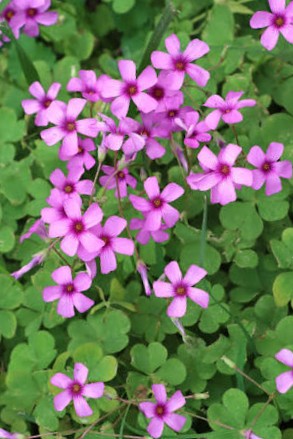
Shamrock / Oxalis
Oxalis spp.
The accepted genus is Oxalis L., first validly published by Carl Linnaeus in 1753. Current global taxonomic treatment recognizes approximately 597 accepted species distributed naturally across most nonpolar regions of the world.
Species commonly encountered as houseplants, ornamentals, lawn weeds, wild foods, cultivated crops, invasive pasture plants, or poisoning hazards include:
- Oxalis triangularis A.St.-Hil. — Purple Shamrock, False Shamrock, Butterfly Plant, or Love Plant
- Oxalis tetraphylla Cav. — Four-Leaf Shamrock, Lucky Clover, Iron Cross Oxalis, or Four-Leaf Wood Sorrel
- Oxalis pes-caprae L. — Cape Sorrel, Soursob, Bermuda Buttercup, African Wood Sorrel, or Goat’s-Foot Oxalis
- Oxalis acetosella L. — Common Wood Sorrel or European Wood Sorrel
- Oxalis stricta L. — Common Yellow Woodsorrel, Upright Yellow Woodsorrel, or Yellow Oxalis
- Oxalis corniculata L. — Creeping Woodsorrel or Procumbent Yellow Sorrel
- Oxalis dillenii Jacq. — Slender Yellow Woodsorrel
- Oxalis articulata Savigny — Pink Wood Sorrel, Windowbox Wood Sorrel, or Jointed Wood Sorrel
- Oxalis latifolia Kunth — Broadleaf Woodsorrel or Garden Pink Sorrel
- Oxalis debilis Kunth — Largeflower Pink-Sorrel or Pink Woodsorrel
- Oxalis adenophylla Gillies ex Hook. & Arn. — Silver Shamrock or Chilean Oxalis
- Oxalis versicolor L. — Candy Cane Sorrel or Peppermint Rock Oxalis
- Oxalis enneaphylla Cav. — Scurvygrass Sorrel
- Oxalis oregana Nutt. — Redwood Sorrel
- Oxalis montana Raf. — Mountain Wood Sorrel
- Oxalis tuberosa Molina — Oca, New Zealand Yam, or Andean Oxalis
Oxalis regnellii Miq., a name still common on Purple Shamrock labels, is currently treated as a synonym of Oxalis triangularis. Other synonyms encountered for that species include Oxalis papilionacea, Oxalis palustris, Oxalis oxyptera, Oxalis tenuiscaposa, and several older varieties or forms.
Oxalis deppei Lodd. ex Sweet, commonly printed on Four-Leaf Shamrock and Iron Cross Oxalis labels, is currently treated as a synonym of Oxalis tetraphylla var. tetraphylla. Older combinations include Acetosella deppei and Ionoxalis deppei.
Oxalis cernua Thunb. is an important historical name associated with Cape Sorrel poisoning literature and is generally treated within the synonymy of Oxalis pes-caprae. The accepted name should be used while retaining Oxalis cernua as a search term for older veterinary reports.
Commercial “shamrock” labels may omit the species entirely or use a cultivar name such as ‘Mijke’, ‘Charmed Wine’, ‘Burgundy Wine’, ‘Sunny’, ‘Irish Mist’, ‘Iron Cross’, or ‘Zinfandel’. Leaf color, number of leaflets, dormancy pattern, or trade name does not establish an oxalate concentration or veterinary safe dose.
Oxalidaceae — Wood Sorrel Family
Shamrock; Shamrock Plant; False Shamrock; Purple Shamrock; Green Shamrock; Four-Leaf Shamrock; Lucky Shamrock; Lucky Clover; Four-Leaf Clover; Iron Cross Plant; Iron Cross Oxalis; Butterfly Plant; Love Plant; Wood Sorrel; Woodsorrel; Wood-Sorrel; Yellow Woodsorrel; Pink Woodsorrel; Creeping Woodsorrel; Common Wood Sorrel; Sourgrass; Sour Grass; Sour Clover; Sorrel; Oxalis; Oxalises
Pasture, lawn, and invasive-weed names include Cape Sorrel; Cape Woodsorrel; African Wood Sorrel; Bermuda Buttercup; Buttercup Oxalis; Soursob; Soursop; Goat’s-Foot Oxalis; Goatfoot; Broadleaf Woodsorrel; Common Yellow Woodsorrel; Upright Yellow Woodsorrel; Creeping Oxalis; Procumbent Yellow Sorrel; Redwood Sorrel; and Mountain Wood Sorrel.
Ornamental names include Purple Butterfly Plant; Purple Wood Sorrel; Burgundy Shamrock; Black Shamrock; Black Oxalis; Pink Shamrock; Silver Shamrock; Candy Cane Sorrel; Peppermint Rock Oxalis; Chilean Oxalis; Windowbox Wood Sorrel; Jointed Wood Sorrel; and Garden Pink Sorrel.
Food-crop names include Oca; New Zealand Yam; Uqa; Apilla; and Andean Oxalis for Oxalis tuberosa. Regional food use of oca tubers or selected wood-sorrel tissues does not make every ornamental or invasive Oxalis species safe for animals.
True shamrock may also refer to Lesser Trefoil, Trifolium dubium; White Clover, Trifolium repens; Red Clover, Trifolium pratense; Black Medic, Medicago lupulina; or other trifoliate plants. Those species are not botanical synonyms of Oxalis.
Common Sorrel and Garden Sorrel usually refer to Rumex acetosa, while Sheep Sorrel is generally Rumex acetosella. These unrelated Polygonaceae plants can also contain substantial oxalate and must be identified separately.
Soluble Oxalates Are the Principal Toxicological Hazard
The central poisoning concern in Oxalis is soluble oxalate. Plant tissues may contain oxalic acid and soluble sodium, potassium, or acid oxalate salts that can dissolve within gastrointestinal fluid and become available for absorption. This chemistry is responsible for the characteristic sour taste of many wood sorrels.
The genus does not contain one fixed concentration or distribution of oxalate. Species, population, cultivar, plant organ, developmental stage, season, water availability, soil fertility, temperature, and light can influence accumulation. A concentration measured in Cape Sorrel cannot be assigned automatically to Purple Shamrock, Four-Leaf Shamrock, yellow woodsorrel, or oca.
Most ordinary ornamental exposures involve much less plant mass than livestock outbreaks. That distinction should temper clinical predictions without creating a false safe-leaf count.
Oxalic Acid and Oxalate Salts
Oxalic acid is a small dicarboxylic acid. Depending on cellular pH and the minerals available within the plant, it may occur as free acid, hydrogen oxalate, or salts with potassium, sodium, calcium, magnesium, and other cations.
Potassium and sodium oxalates are relatively soluble and can be absorbed from the digestive tract. Calcium oxalate is poorly soluble and is more likely to remain as crystals within plant tissue or precipitate after soluble oxalate binds calcium.
The proportion of soluble to insoluble oxalate is clinically more important than total oxalate alone. A plant may contain substantial total oxalate yet expose the animal to a different absorbed dose depending on which salts dominate.
Binding of Ionized Calcium
Absorbed oxalate binds circulating calcium to form poorly soluble calcium oxalate. A rapid, sufficiently large exposure can reduce biologically active ionized calcium even when total calcium measurement is less dramatically altered.
Ionized calcium is required for normal nerve transmission, muscle contraction, cardiac electrical stability, vascular tone, and many cellular processes. Acute hypocalcemia can therefore cause weakness, facial or muscle twitching, tremors, an abnormal gait, stiffness, tetany, seizures, collapse, and cardiac rhythm abnormalities.
Clinical hypocalcemia is best documented in livestock and horses after large oxalate exposure. It should not be predicted routinely after one small houseplant nibble, but it must be considered when substantial material is missing or compatible neuromuscular signs appear.
Calcium Oxalate Nephrosis
Oxalate filtered through the kidneys can combine with calcium and precipitate within renal tubules. Crystals obstruct tubular flow, injure epithelial cells, stimulate inflammation, and may contribute to acute tubular necrosis and loss of filtration.
Early renal injury may produce increased thirst and urination as concentrating ability declines. Progressive damage can cause vomiting, food refusal, depression, dehydration, rising urea and creatinine, reduced urine production, complete anuria, electrolyte abnormalities, acid-base disturbance, uremia, and death.
The presence of calcium oxalate crystals in urine can support exposure but is not diagnostic by itself. Crystals may occur without major renal disease, and severe oxalate nephrosis can exist even when a routine urine sample contains few or no visible crystals.
Acute and Chronic Renal Oxalosis
Acute renal oxalosis follows a substantial absorbed load over a short period. Tubular crystal deposition, hypocalcemia, gastrointestinal irritation, circulatory compromise, and direct renal injury may overlap.
Chronic exposure may deposit crystals repeatedly, producing tubular atrophy, interstitial fibrosis, reduced renal reserve, weight loss, poor production, edema, abdominal enlargement, increased drinking, abnormal urination, and progressive kidney failure. A 2025 field investigation documented both acute deaths and chronic renal lesions in sheep grazing Oxalis pes-caprae.
Repeated small access by a companion animal with preexisting chronic kidney disease deserves greater concern than the same exposure in a healthy animal, even though exact risk has not been quantified.
Chronic Calcium Depletion and Secondary Hyperparathyroidism
Long-term dietary oxalate can reduce the calcium available for absorption by binding calcium within the digestive tract. The body compensates for persistent calcium imbalance by increasing parathyroid hormone activity and mobilizing mineral from the skeleton.
In horses, chronic oxalate intake has been associated with nutritional secondary hyperparathyroidism, generalized osteopenia, stiffness, lameness, enlarged facial bones, loose teeth, spinal curvature, neurologic abnormalities, and pathological fractures. This syndrome is sometimes called big-head disease or bran disease, although oxalate-containing forage is only one possible cause.
Normal serum calcium does not exclude chronic skeletal depletion because hormonal compensation can maintain blood calcium at the expense of bone. Radiographs, diet history, mineral assessment, alkaline phosphatase activity, and physical findings may be more informative.
Oxalis Is Not an Insoluble-Oxalate Aroid
Oxalis poisoning should not be confused with the intense oral-crystal syndrome caused by Dieffenbachia, Pothos, Philodendron, Peace Lily, Calla Lily, and other aroids. Those plants contain bundles of insoluble calcium oxalate raphides that penetrate oral tissues immediately when chewed.
Oxalis may contain calcium oxalate deposits within its tissues, but its major systemic toxicological importance arises from soluble oxalic acid and soluble oxalate salts. Mild mouth irritation or salivation may occur, but severe immediate tongue pain, dramatic swelling, and inability to swallow are not the defining Oxalis syndrome.
An animal with major oral swelling should be evaluated for an aroid, caustic product, electrical injury, foreign body, allergic reaction, or mixed exposure rather than assuming that soluble oxalate alone explains the findings.
Oxalis pes-caprae as a Proven Poisoning Species
Cape Sorrel or Soursob, Oxalis pes-caprae, is the best-documented genus member in veterinary field poisoning. It forms dense seasonal growth in Mediterranean-type climates and can dominate pasture, orchards, roadsides, vineyards, gardens, and disturbed land.
Its tissues contain substantial oxalic acid, and historical quantitative work demonstrated changing oxalic-acid content during the plant’s life cycle. Recent sheep cases emphasized high oxalate content, particularly in flower scapes, while equine outbreaks established both acute hypocalcemia and chronic skeletal disease.
The former name Oxalis cernua appears in older toxicology literature. Veterinary searches should include both names so historical reports are not missed.
Ornamental Purple Shamrock
Purple Shamrock, Oxalis triangularis, is a common indoor and patio plant with triangular leaflets colored purple, burgundy, green, or variegated. Its accepted synonym Oxalis regnellii remains prominent in the nursery trade.
Direct veterinary dose-response data for this species are sparse. Phytochemical research confirms organic acids, acidic extracts, anthocyanins, flavonoids, and other bioactive constituents, but no study establishes its exact soluble-oxalate dose in dogs or cats.
A small ornamental-leaf nibble is expected to pose less risk than grazing a dense stand of Soursob. Large ingestion, repeated access, rhizome consumption, concentrated extract, or illness in a kidney-compromised animal still warrants careful assessment.
Four-Leaf Shamrock and Iron Cross Oxalis
Oxalis tetraphylla, often sold under the synonym Oxalis deppei, normally produces four leaflets and is marketed as Lucky Clover, Four-Leaf Shamrock, or Iron Cross Oxalis. The dark central marking seen in many cultivars is decorative pigmentation rather than evidence of clover ancestry.
Its underground storage structures allow substantial plant mass to remain in a small pot even when above-ground growth is limited. Dogs that overturn the container may ingest bulbs, rhizomes, potting mix, fertilizer, stones, and plastic together.
No evidence establishes the four-leaf form as safer than three-leaf Oxalis species. Leaflet number is an identification characteristic, not a toxicology measurement.
Leaves and Petioles
Leaves and their stalks are the most common household and grazing exposure. They contain the acidic sap responsible for the sour taste and may contribute a meaningful soluble-oxalate dose when eaten in quantity.
Leaf age and growing conditions can affect chemistry. A study of Common Wood Sorrel documented differences in antioxidants with leaf age and cited substantial foliar oxalate concentrations, while life-cycle studies of Oxalis pes-caprae demonstrated changing oxalic-acid content over time.
Green, purple, burgundy, silver, spotted, or variegated pigmentation does not show the soluble-oxalate concentration.
Flower Stalks, Flowers, Capsules, and Seeds
Flower stalks may contain substantial oxalic acid in Oxalis pes-caprae. Their upright growth makes them easy for sheep, horses, rabbits, dogs, and children to grasp even when the basal leaves are partly hidden by surrounding vegetation.
Flowers generally have five petals and may be yellow, white, pink, lavender, red, orange, or bicolored. They should not be assumed safe merely because small amounts have culinary or decorative use.
Seed capsules can split explosively and scatter small seeds. Seeds are not documented as a uniquely concentrated lethal tissue comparable to Castor Bean or Wisteria seeds, but no veterinary safe dose is established.
Bulbs, Bulbils, Tubers, Rhizomes, and Roots
Oxalis species use several kinds of underground storage and reproductive structures. Oxalis pes-caprae produces numerous bulbs or bulbils, Oxalis triangularis forms rhizomatous storage structures, Oxalis tetraphylla is tuberous, and Oxalis tuberosa produces cultivated edible tubers known as oca.
Underground tissue can remain after foliage becomes dormant and may be exposed by digging dogs, pigs, poultry, gardeners, erosion, transplanting, or weed removal. A root-ball exposure also introduces fertilizer, pesticide, mold, wire, mesh, stones, and pot fragments.
Oca studies found moderate to high soluble oxalate in edible tubers with substantial cultivar variation. The existence of an edible crop species therefore reinforces rather than eliminates the need to distinguish species, cultivar, preparation, amount, and animal.
Fresh, Wilted, Frost-Damaged, and Dried Material
Fresh growth provides soluble oxalate in plant water and sap. Wilting removes water and may increase the amount of dry plant matter consumed per mouthful without proving that the oxalate has disappeared.
Frost damage, mowing, cutting, and herbicide treatment may make plants easier to consume or mix them with desirable forage. Drying does not reliably destroy oxalate salts, and contaminated hay or dried garden debris should not be treated as safe.
Hay, haylage, and silage exposures must be assessed from actual plant concentration and processing. Fermentation may change some chemical availability, but no general rule establishes complete detoxification of Oxalis-contaminated forage.
Cooking, Soaking, and Food Preparation
Several Oxalis species have regional culinary use. Common Wood Sorrel leaves may be used sparingly for their sour flavor, Cape Sorrel has traditional food uses, and oca tubers are a significant Andean crop.
Boiling and discarding water may reduce soluble oxalate in some foods, but reduction varies with tissue size, cultivar, water volume, cooking time, and preparation. Cooking does not create a validated veterinary safe dose for an ornamental plant.
Prepared foods may also contain onion, garlic, salt, butter, oils, sauces, sweeteners, chocolate, or other ingredients with separate animal-health implications. Oxalis dishes and kitchen scraps should not be fed deliberately to pets or livestock.
Rumen Adaptation
Ruminants can develop increased capacity to degrade oxalate when exposure rises gradually. Studies in sheep and goats demonstrated increasing ruminal degradation rates with repeated oxalic-acid administration, and microbial investigations identified enrichment of oxalate-degrading anaerobes.
This adaptation can reduce the amount available for systemic absorption, but it is not permanent or unlimited. Degradation capacity falls when dietary oxalate decreases, and a sudden high intake can exceed the adapted microbial population.
Goats may develop greater degradation capacity than sheep under some experimental conditions, but that does not make goats immune. Hungry, transported, recently shorn, naïve, young, or forage-deprived animals may consume a dense stand rapidly before protective adaptation develops.
Oxalobacter formigenes and Other Oxalate-Degrading Bacteria
Oxalobacter formigenes is an anaerobic bacterium originally characterized from gastrointestinal environments because it uses oxalate as an energy source. Other ruminal microorganisms also contribute to oxalate degradation.
The abundance of oxalate-degrading organisms responds to diet. Sheep consuming higher-oxalate forage have carried markedly larger populations than those receiving lower amounts.
These bacteria explain part of ruminant tolerance but do not provide an owner-administered probiotic cure. Commercial products, transfaunation, and pasture adaptation require veterinary and nutritional oversight rather than improvisation during an acute poisoning event.
Other Constituents
Oxalis species contain flavonoids, anthocyanins, phenolic acids, organic acids, vitamins, pigments, and other metabolites. Purple Shamrock contains complex anthocyanin and flavone chemistry responsible for its dark foliage, while Cape Sorrel and Common Wood Sorrel have been investigated for nutritional and antioxidant constituents.
These compounds may influence color, taste, antimicrobial activity, or laboratory bioactivity but are not the primary explanation for the classic hypocalcemia and renal oxalosis syndrome.
A concentrated herbal extract may deliver a different mixture and dose than intact foliage. Product solvents, alcohol, sweeteners, medications, and preservatives must also be considered.
No Universal Toxic Dose
No validated genus-wide toxic dose exists for dogs, cats, horses, cattle, sheep, goats, rabbits, guinea pigs, birds, or reptiles. Almost six hundred accepted species, extensive cultivar variation, and inconsistent exposure estimates make a universal leaf count scientifically indefensible.
Severe field cases involve substantial plant intake, repeated exposure, or dense contaminated forage. A small ornamental nibble is usually a lower-risk event, but animal size, kidney function, hydration, diet, plant identity, and symptoms remain important.
Risk assessment should use the greatest possible plant mass, tissue involved, species or cultivar, duration of access, prior dietary adaptation, clinical findings, ionized calcium, kidney values, urinalysis, and urine production.
Clinical Pattern Depends on Dose and Duration
Oxalis exposure does not produce one universal syndrome. A dog that nibbles a Purple Shamrock leaf may develop only drooling or vomiting, while a horse grazing Soursob may develop acute hypocalcemia or chronic skeletal disease and sheep consuming dense growth may develop fatal renal oxalosis.
The principal patterns are gastrointestinal irritation, acute hypocalcemia, acute oxalate nephrosis, chronic renal disease, and chronic calcium depletion with secondary hyperparathyroidism. These patterns may overlap after a large or prolonged exposure.
Early Gastrointestinal Signs
Early signs can include lip licking, drooling, repeated swallowing, nausea, vomiting, abdominal discomfort, diarrhea, appetite reduction, and depression. The acidic sap may make the plant unpalatable and limit continued chewing, but animals can still consume substantial quantities when hungry or when the plant is mixed with forage.
Repeated vomiting and diarrhea can cause dehydration, electrolyte abnormalities, weakness, low blood pressure, and reduced renal perfusion. These secondary effects can worsen kidney injury from absorbed oxalate.
Oral Signs
Mild mouth irritation, face rubbing, salivation, or reluctance to continue chewing may occur. The sour taste itself may provoke salivation and head shaking.
Severe immediate oral burning, major tongue or lip swelling, inability to swallow, and respiratory obstruction are not the expected soluble-oxalate pattern. Those findings require evaluation for an aroid with insoluble raphides, a caustic product, foreign body, electrical injury, or allergic reaction.
Acute Hypocalcemia
A sufficiently large absorbed oxalate load can lower ionized calcium. Early findings may include weakness, anxiety, restlessness, facial twitching, muscle fasciculations, stiffness, an abnormal gait, and exaggerated responses to sound or touch.
Progression can cause tremors, tetany, recumbency, synchronous diaphragmatic flutter in horses, seizures, collapse, weak pulses, and cardiac rhythm abnormalities. Hypocalcemia may develop before measurable kidney failure.
Total serum calcium can be less informative than ionized calcium in an acute case. A compatible neurologic or muscular syndrome after heavy Oxalis exposure requires immediate testing and monitored veterinary calcium treatment.
Synchronous Diaphragmatic Flutter in Horses
Synchronous diaphragmatic flutter occurs when the diaphragm contracts in time with the heartbeat because an irritable phrenic nerve is stimulated abnormally. Owners may describe a visible rhythmic thump in the flank or abdomen.
This sign is associated with electrolyte disturbance, including hypocalcemia, and was documented in Miniature Horses exposed to Oxalis pes-caprae. It requires urgent examination rather than exercise, oral mineral dosing, or continued grazing.
Acute Kidney Injury
Renal tubular crystal deposition may initially cause vague signs such as nausea, appetite loss, vomiting, depression, weakness, increased thirst, or increased urination. Kidney values can rise during the hours or days after exposure.
Progressive damage may produce dehydration, foul breath, oral ulceration, reduced urine production, complete anuria, electrolyte abnormalities, irregular heartbeat, tremors, seizures, coma, or death. An animal can worsen after gastrointestinal signs appear to settle.
Urinary Findings
Urine may become dilute, concentrated, cloudy, blood-tinged, or reduced in volume depending on the stage and severity of renal injury. Calcium oxalate crystals may be visible microscopically but are not guaranteed.
Frequent attempts to urinate with little output also raises concern for urethral obstruction, particularly in male small ruminants and other animals with urinary calculi. Obstruction and renal failure require different immediate procedures and may occur together.
Chronic Oxalate Nephrosis
Chronic disease may develop after repeated lower-level ingestion. Signs can include weight loss, poor body condition, reduced production, dullness, increased thirst, altered urination, weakness, submandibular edema, abdominal enlargement, and progressive exercise intolerance.
Pathology may reveal pale firm kidneys, irregular renal surfaces, tubular crystal accumulation, tubular atrophy, interstitial fibrosis, and loss of functional renal tissue. Chronic lesions may remain after the Oxalis growth has declined seasonally.
Nutritional Secondary Hyperparathyroidism
Horses chronically consuming oxalate-rich forage may maintain a normal blood calcium concentration by withdrawing calcium from bone. The result is progressive skeletal demineralization rather than obvious acute hypocalcemia.
Signs include stiffness, reluctance to move, shifting lameness, enlarged facial bones, soft or painful jaw structures, loose teeth, difficulty chewing, spinal curvature, weakness, neurologic abnormalities, and pathological fractures. Young, growing, miniature, pregnant, or lactating animals may be especially vulnerable to mineral imbalance.
The skeletal syndrome evolves over weeks or months and will not resolve immediately after the pasture is changed. Bone remodeling, dietary correction, fracture management, and rehabilitation require prolonged veterinary supervision.
Cardiac Abnormalities
Calcium is essential to cardiac conduction and contraction. Severe hypocalcemia may cause rapid, slow, weak, or irregular heart activity, poor pulse quality, low blood pressure, collapse, or sudden death.
Kidney failure can add dangerous potassium, acid-base, and fluid abnormalities. Continuous ECG and electrolyte monitoring may be required in a severe case.
Dogs
Dogs most often encounter potted Purple Shamrock, Four-Leaf Shamrock, lawn woodsorrel, garden clumps, pulled weeds, or compost. Expected signs after limited ingestion include drooling, vomiting, diarrhea, abdominal discomfort, appetite loss, and quietness.
A dog that destroys a pot may ingest far more than leaves. Rhizomes, bulbs, fertilizer, potting mix, decorative stones, plastic, wire, pesticides, and slug bait can change the syndrome and create obstruction or a separate poisoning.
Marked muscle twitching, tremors, seizures, collapse, abnormal heartbeat, increased thirst, or reduced urination after substantial ingestion raises concern for hypocalcemia, renal injury, or another toxicant and requires immediate care.
Cats
Cats may nibble leaf edges, drink saucer water, play with moving leaflets, or groom plant and soil residue from their paws. Signs may be subtle and include quiet drooling, vomiting, hiding, reduced grooming, food refusal, or lethargy.
Persistent anorexia deserves attention because cats can develop secondary metabolic liver disease when they stop eating. Cats with preexisting kidney disease, dehydration, urinary disease, or repeated access may have less physiological reserve.
Oxalis does not produce the true-lily nephrotoxin syndrome, but a cat with kidney abnormalities still requires careful plant identification because true lilies, daylilies, antifreeze, medications, and urinary obstruction can produce overlapping findings.
Horses
Horses may develop either acute or chronic oxalate disease. Acute cases can show colic, feed refusal, weakness, muscle fasciculations, tremors, stiffness, synchronous diaphragmatic flutter, abnormal gait, recumbency, or collapse.
Chronic exposure may cause poor condition, stiffness, enlarged facial bones, kyphosis, osteopenia, fractures, loose teeth, and neurologic abnormalities. Miniature Horses have been affected in multiple documented outbreaks associated with Soursob.
Horses cannot vomit. A weak, trembling, dysphagic, or recumbent horse should not be drenched with calcium, mineral oil, charcoal, water, or a homemade electrolyte preparation.
Cattle, Sheep, Goats, and Other Ruminants
Acute signs may include salivation, feed refusal, weakness, muscle tremors, an abnormal gait, recumbency, collapse, reduced rumination, diarrhea, or sudden death. Kidney injury may become apparent through thirst, altered urination, depression, and rising renal values.
Chronic sheep cases may show weight loss, submandibular edema, abdominal enlargement, poor production, weakness, and progressive renal disease. Animals grazing the same pasture can differ greatly because plant intake and previous oxalate adaptation are uneven.
Goats may develop greater ruminal degradation capacity than sheep after gradual exposure, but they are not immune. Sudden access to dense growth by hungry or naïve goats remains hazardous.
Rabbits and Guinea Pigs
Rabbits and guinea pigs cannot vomit. Oxalis exposure may present as salivation, food refusal, tooth grinding, abdominal discomfort, soft stool, diarrhea, reduced fecal production, hiding, or weakness.
Reduced eating can lead to gastrointestinal stasis in addition to the oxalate concern. Animals with urinary sludge, calcium-related urinary disease, kidney dysfunction, or chronic dehydration require particular caution.
Birds and Poultry
Companion birds may shred shamrock leaves and flowers, while poultry may consume lawn woodsorrel, bulbs, insects, fertilizer, or treated soil. Small body size can make an uncertain quantity clinically important.
Regurgitation, diarrhea, reduced appetite, weakness, tremors, altered balance, increased drinking, abnormal droppings, or reduced urine component in the droppings requires avian veterinary guidance. Species-specific Oxalis dose-response evidence is limited.
Reptiles and Other Exotic Animals
Tortoises and other herbivorous reptiles may graze Oxalis deliberately because it is tender and sour. Small mammals, pigs, and other exotics may dig up bulbs, tubers, or rhizomes.
Food refusal, regurgitation, abnormal feces, weakness, tremors, reduced activity, altered urination, or skeletal disease requires a species-experienced veterinarian. Regular inclusion in an enclosure can create chronic mineral imbalance even when no single dramatic exposure occurs.
Severe or Atypical Findings
Profound immediate oral swelling, extensive mouth ulceration, blue-gray mucous membranes, severe persistent bleeding, jaundice, marked liver failure, or rapid rigid paralysis is not the classic uncomplicated Oxalis pattern. These findings require reidentification and investigation of another plant, chemical, or disease.
Tremors and seizures may occur with severe hypocalcemia, but they are also characteristic of metaldehyde slug bait, pesticides, medications, mushrooms, nicotine, and other toxins commonly present in gardens. The complete environment must be examined.
Duration and Prognosis
Mild gastrointestinal signs after a limited ornamental exposure may improve within several hours to one or two days with appropriate hydration and symptom control. No fixed home-observation period applies when the amount is uncertain or systemic signs develop.
Acute renal injury can evolve over several days and may require prolonged hospitalization. Chronic renal fibrosis and skeletal demineralization can require weeks or months of management and may leave permanent impairment.
The prognosis is favorable for small uncomplicated exposures but guarded when anuria, severe hyperkalemia, persistent hypocalcemia, seizures, pathological fractures, advanced fibrosis, or prolonged recumbency develops.
Plant Identity and Worldwide Diversity
Oxalis is one of the largest genera in Oxalidaceae, with almost six hundred accepted species. The genus is cosmopolitan and includes tiny annual lawn weeds, creeping woodland herbs, bulbous geophytes, tuber crops, succulent or woody species, alpine plants, and widely cultivated ornamentals.
Major centers of diversity occur in southern Africa and the Americas, but native and introduced Oxalis species now occur through much of the world. A genus-level poisoning page is necessary because the common words shamrock, wood sorrel, sourgrass, and oxalis refer to many chemically and botanically different plants.
The poisoning evidence is not distributed evenly across the genus. Oxalis pes-caprae dominates veterinary field reports, while Oxalis triangularis and Oxalis tetraphylla dominate household shamrock exposures. That difference reflects exposure opportunity and available research, not proof that unstudied species contain no oxalate.
Shamrock Is a Cultural Name, Not a Scientific Identification
The shamrock associated with Irish symbolism has been attributed to several trifoliate plants, particularly clovers in Trifolium. Commercial growers also sell Oxalis species as shamrocks because their leaflets have a similar three-part form and are attractive indoors around Saint Patrick’s Day.
True clovers have pea-family flowers grouped into compact heads and leaves with three oval leaflets. Oxalis generally has five-petaled flowers, leaflets that are often heart-shaped or triangular, and a distinctly sour sap.
The common name does not determine poisoning management. Preserve flowers, fruits, stems, underground structures, and labels so an Oxalis can be separated from clover, Black Medic, wood sorrel, and other trifoliate plants.
Leaf Structure and Nighttime Folding
Many Oxalis species produce three leaflets arranged at the end of one petiole, while Oxalis tetraphylla commonly produces four. Individual leaflets may be heart-shaped, triangular, rounded, folded, or narrow depending on species.
Leaves frequently fold downward or inward at night, in strong light, during drought stress, or after disturbance. This movement, called nyctinasty when tied to the day-night cycle, can make a healthy plant appear wilted.
Moving leaves attract cats, puppies, and birds. Repeated batting and chewing may create several small exposures that are more substantial collectively than one observed bite.
Flowers and Seed Capsules
Oxalis flowers usually have five petals and may be yellow, white, pink, lavender, purple, red, orange, or bicolored. Flowers may occur singly or in clusters on slender stalks above the leaves.
Many species produce elongated capsules that open forcefully and scatter seeds. Seeds can contaminate potting benches, floors, animal enclosures, lawn clippings, and stored soil.
Flowers and seed capsules should remain inaccessible, although neither is established as a uniquely concentrated toxin reservoir across the genus. Exact tissue chemistry varies by species.
Underground Structures and Dormancy
Ornamental Oxalis may grow from bulbs, bulbils, tubers, rhizomes, or thickened roots. These structures store energy and allow the plant to become dormant during heat, cold, drought, or seasonal change.
An apparently empty pot can still contain living plant material. Dogs may overturn dormant containers, and cats or birds may gain access while bulbs are being stored, repotted, divided, or mailed.
Underground tissues can contain soluble oxalate and may represent a larger plant mass than the visible leaves. They may also be coated with fertilizer, fungicide, pesticide, potting media, or mold.
Purple Shamrock
Oxalis triangularis is the familiar Purple Shamrock with three broad triangular leaflets that may be deep purple, burgundy, green, mottled, or variegated. Small white, pink, or pale lavender flowers rise above the foliage.
The older name Oxalis regnellii remains common on nursery labels. Purple Butterfly Plant, False Shamrock, Love Plant, and Burgundy Shamrock also commonly refer to this species or its cultivars.
It is frequently grown indoors, on patios, and in hanging containers, creating direct access for cats and small dogs. Repeated leaf nibbling, overturned pots, and ingestion of underground rhizomes are the principal exposure routes.
Four-Leaf Shamrock and Iron Cross Oxalis
Oxalis tetraphylla usually has four leaflets, often with a dark maroon mark near the center. It is sold under the historical name Oxalis deppei and common names Lucky Clover, Four-Leaf Shamrock, and Iron Cross Plant.
Its four leaflets do not make it a true clover. The plant produces five-petaled flowers and tuberous underground structures characteristic of Oxalis.
Seasonal bulbs and gift pots may be sold without durable labels. Photograph the plant and preserve the packaging before disposing of a chewed specimen.
Cape Sorrel, Soursob, and Bermuda Buttercup
Oxalis pes-caprae is native to southern Africa and has become invasive in many Mediterranean and warm-temperate regions. It produces bright yellow flowers, clover-like leaves, and numerous underground bulbils.
The plant can form nearly continuous winter and spring carpets in orchards, vineyards, pastures, roadsides, gardens, disturbed soil, and field margins. Dense growth creates the possibility of consuming kilograms of plant material rather than a few ornamental leaves.
Flower stalks, leaves, and other above-ground tissues contribute to exposure, while bulbils spread the infestation through soil movement and cultivation. Former scientific names such as Oxalis cernua remain important in veterinary records.
Yellow Woodsorrels in Lawns and Gardens
Oxalis stricta, Oxalis corniculata, and Oxalis dillenii are common yellow-flowered weeds in lawns, garden beds, greenhouses, sidewalks, nurseries, and containers. They are often overlooked because of their small size.
A dog grazing a few stems is unlikely to receive the mass associated with a livestock outbreak, but repeated lawn eating can involve herbicide, fertilizer, pesticide, feces, mushrooms, and other weeds. Gathered grass for rabbits or tortoises may contain a much larger proportion of Oxalis than the owner realizes.
Creeping Woodsorrel may root along the stem and spread beneath other plants, while upright yellow species can disperse seed explosively. Complete removal requires attention to roots and seed capsules.
Woodland and Native Sorrels
Common Wood Sorrel, Redwood Sorrel, Mountain Wood Sorrel, and related native species grow in shaded forests, redwood groves, moist woodland, and mountain habitats. Their sour leaves have a history of limited human use.
Hiking dogs, pack animals, grazing livestock, and gathered-forage pets may encounter large patches. Native status and historical food use do not establish a veterinary safe amount.
Wild-plant collection also creates a look-alike problem. Sorrel in Rumex, clovers, young anemones, and numerous trifoliate plants may occur nearby and require separate identification.
Oca and Other Food Uses
Oca, Oxalis tuberosa, is an Andean crop cultivated for colorful tubers. Analytical research found moderate to high soluble-oxalate concentrations with meaningful differences among cultivars.
Traditional processing, storage, sun exposure, cooking, and cultivar selection may affect flavor and composition. An edible crop designation does not make raw tubers or foliage suitable for unrestricted animal feeding.
Wood-sorrel leaves and Cape Sorrel tissues are also consumed in limited regional food traditions. These practices generally involve small human portions and should not be converted into a pet or livestock feeding recommendation.
How Dogs Gain Access
Dogs may chew potted shamrocks, graze lawn woodsorrel, eat pulled weeds, dig up bulbs or rhizomes, raid compost, or consume plant material mixed with grass clippings. Gift plants placed on low tables around Saint Patrick’s Day create a predictable seasonal household exposure.
An overturned pot can produce a mixed ingestion involving rhizomes, fertilizer pellets, perlite, decorative stones, moss, plastic, foil wrapping, wire, and irrigation products. Persistent vomiting or absent stool may reflect a foreign body rather than soluble oxalate alone.
Dogs with chronic kidney disease, dehydration, urinary stones, calcium disorders, or repeated access deserve a lower threshold for examination because they have less reserve and may already have abnormal urine findings.
How Cats Gain Access
Cats may bite the moving triangular leaflets of Purple Shamrock, drink saucer water, walk through spilled soil, or groom plant residue from the paws. Hanging baskets may still shed leaves and flowers onto accessible surfaces.
Quiet vomiting, hiding, food refusal, reduced grooming, or increased drinking may be the earliest signs. The absence of dramatic oral pain does not prove that nothing was swallowed.
Oxalis should be distinguished from true lilies, daylilies, Peace Lily, and Lily-of-the-Valley. Each uses the word lily or shamrock differently and carries a different poisoning mechanism.
Horses and Equine Exposure
Horses encounter Oxalis through dense Soursob pasture, hay contamination, roadside grazing, orchard groundcover, lawn clippings, landscaping debris, and weeds beneath fences. Miniature Horses have developed both acute and chronic disease in documented outbreaks.
Acute risk increases when a hungry or naïve horse gains sudden access to lush Oxalis. Chronic risk develops when oxalate-rich plants form a sustained part of the diet and interfere with calcium availability.
Dietary mineral balance must be evaluated across the entire ration. High-phosphorus grain, low-calcium forage, rapid growth, pregnancy, lactation, and chronic Oxalis consumption can combine to worsen skeletal disease.
Cattle, Sheep, Goats, and Other Ruminants
Ruminants are most often poisoned when dense Oxalis growth replaces ordinary forage or when hungry animals are introduced suddenly. Recently transported animals may lack both behavioral familiarity and ruminal microbial adaptation.
Gradual dietary exposure can increase oxalate degradation, but adaptation should never be assumed from the presence of resident animals that appear healthy. Animals differ in intake, age, microbial community, health, and access to alternative forage.
Sheep outbreaks have included sudden death as well as chronic weight loss, edema, abdominal enlargement, and renal fibrosis. Every animal sharing the pasture should be assessed rather than waiting for signs in each individual.
Rabbits, Guinea Pigs, and Gathered Forage
Oxalis may be gathered accidentally with grass, dandelion, clover, or plantain. Its sour taste may not prevent a rabbit or guinea pig from consuming it when mixed into a forage bundle.
Small occasional contamination differs from deliberate repeated feeding. Chronic inclusion can affect mineral availability and may be particularly inappropriate for animals with urinary calcium problems or kidney disease.
The entire gathered batch should be discarded when herbicide, pesticide, fertilizer, slug bait, roadside contamination, mold, or botanical identity is uncertain.
Birds and Poultry
Companion birds may shred delicate leaves and flowers, while poultry may scratch up bulbils, roots, insects, treated soil, and seeds. Oxalis in a run can regrow repeatedly from underground structures.
Small birds can consume substantial plant material relative to body mass. The absence of livestock-style case reports does not establish avian safety.
Do not apply herbicide or slug bait to Oxalis where poultry or aviary birds can reach treated vegetation, contaminated insects, soil, or runoff.
Reptiles and Other Exotic Animals
Tortoises may select Oxalis as tender grazing material, and the plant is sometimes intentionally left in outdoor enclosures because it appears edible. Repeated free-choice access can create chronic oxalate and mineral-balance concerns.
Pigs, rodents, and other digging animals may consume underground bulbs or rhizomes. Enclosure planting should account for both above-ground intake and access during dormancy.
Species-specific evidence is insufficient to establish a safe routine percentage of the diet. Safer, nutritionally balanced forage should remain the foundation of feeding.
Houseplants, Gift Pots, and Seasonal Exposure
Shamrock pots are marketed heavily around Saint Patrick’s Day and may enter homes that do not ordinarily contain plants. Foil sleeves, ribbons, decorative picks, fertilizer tablets, glitter, and dyed moss can accompany the living plant.
Retail plants may be treated with systemic insecticides, fungicides, miticides, or growth regulators. Treatment records may not appear on the decorative label.
Place the plant in a genuinely inaccessible room or cabinet rather than on a shelf a cat can climb to or beneath a hanging basket that sheds leaves.
Lawns, Herbicides, and Weed Removal
Yellow woodsorrel and Creeping Oxalis are common lawn weeds. Dogs and grazing pets may encounter the plant together with broadleaf herbicide, fertilizer, insecticide, mushrooms, or chemically treated grass clippings.
Herbicide-wilted Oxalis should not be offered to livestock or left in rabbit, poultry, tortoise, or dog areas. Wilting does not prove that oxalate has been destroyed, and the chemical treatment creates a separate exposure.
Weeding can scatter capsules, bulbs, and bulbils. Collected material should be contained rather than added to open animal-accessible compost.
Pasture, Hay, Silage, and Green Chop
Pasture risk is greatest where Oxalis pes-caprae or another high-oxalate species forms dense growth. Animals may consume it deliberately when ordinary forage is scarce or accidentally when it is cut with other vegetation.
Drying does not guarantee safety, and hay can conceal species identity and concentration. Green chop may distribute acidic plant material evenly through palatable feed, defeating normal avoidance.
A suspect lot should be isolated, sampled from multiple locations, and linked to its source field. Diluting contaminated feed does not ensure that every animal receives a harmless dose.
Diagnosis
No routine assay identifies generic Oxalis ingestion directly. Diagnosis combines botanical identification, amount and duration of access, compatible gastrointestinal, neuromuscular, renal, or skeletal signs, ionized calcium, kidney values, urinalysis, and exclusion of other causes.
Useful evidence includes complete leaves, flowers, flower stalks, capsules, seeds, bulbs, bulbils, rhizomes, tubers, roots, nursery labels, pasture photographs, hay, silage, rumen contents, vomited material, urine, and every garden or agricultural chemical involved.
Acute testing may include ionized and total calcium, phosphorus, magnesium, potassium, sodium, kidney values, blood gases, acid-base status, glucose, ECG, urinalysis, urine specific gravity, and serial urine output.
Chronic equine evaluation may require dietary analysis, radiographs, dental and facial examination, alkaline phosphatase assessment, calcium-phosphorus evaluation, and investigation of pathological fractures or spinal abnormalities. Normal serum calcium does not exclude skeletal mineral loss.
Calcium Oxalate Crystals and Diagnostic Limits
Calcium oxalate monohydrate or dihydrate crystals may appear in urine after oxalate exposure. Crystal morphology can support a differential but does not identify whether the source was Oxalis, ethylene glycol, another oxalate plant, diet, or endogenous metabolism.
Ethylene glycol poisoning may also produce calcium oxalate crystalluria and severe acute kidney injury in dogs and cats. Antifreeze access must be investigated immediately because treatment is time-critical and differs fundamentally from plant management.
The absence of crystalluria does not rule out oxalate nephrosis. Tissue deposition may be patchy, urine production may be low, and crystals may not be present in the collected sample.
Differential Diagnosis
Acute hypocalcemia can also result from eclampsia, lactation, endocrine disease, pancreatitis, massive phosphate exposure, citrate administration, and other metabolic disorders. Muscle tremors and seizures may result from slug bait, pesticides, medications, mushrooms, or primary neurologic disease.
Acute kidney injury differentials include ethylene glycol, grapes or raisins in dogs, true lilies in cats, nonsteroidal anti-inflammatory drugs, aminoglycosides, dehydration, leptospirosis, urinary obstruction, and other nephrotoxins.
Chronic equine secondary hyperparathyroidism can result from an imbalanced calcium-to-phosphorus ratio, high-phosphorus bran or grain diets, low-calcium forage, tropical grasses rich in oxalate, and other nutritional problems. Oxalis may be one component of a broader ration failure.
True clovers, Rumex sorrels, aroids, shamrock-marketed plants, and numerous trifoliate weeds require botanical differentiation. One photograph of three leaflets is not sufficient.
Veterinary Evaluation
The veterinarian may assess hydration, body temperature, mentation, gait, muscle fasciculations, facial twitching, reflexes, heart rate and rhythm, pulse quality, blood pressure, respiration, abdominal comfort, urine production, and evidence of chronic skeletal disease.
Serial ionized calcium and ECG monitoring may be needed during acute neuromuscular signs or calcium replacement. Kidney values may remain normal initially and rise later, so repeat testing can be necessary after a major exposure.
Ultrasound may evaluate the kidneys, urinary tract, bladder, and abdominal organs. Radiographs are important for suspected urinary obstruction, swallowed foreign material, osteopenia, facial-bone changes, or pathological fractures.
Severe oliguria or anuria requires exact fluid-balance monitoring. Uncontrolled fluid administration can worsen pulmonary edema and hypertension when damaged kidneys cannot excrete the administered volume.
Prognosis
The prognosis is generally good after one limited ornamental exposure that causes no signs or brief gastrointestinal upset. Improvement should include cessation of vomiting or diarrhea, normal appetite, ordinary activity, and normal urine production.
Acute hypocalcemia can respond well when recognized and corrected before prolonged seizures, cardiac instability, or irreversible kidney damage occurs. Continued plant absorption and recurrent calcium decline must still be monitored.
Oxalate nephrosis has a guarded prognosis when urine production falls substantially. Complete anuria, severe hyperkalemia, persistent acidosis, pulmonary edema, or advanced uremia indicates critical disease and may require dialysis.
Chronic renal fibrosis and advanced skeletal demineralization may be irreversible. Early pasture correction, mineral rehabilitation, fracture prevention, and long-term monitoring improve the chance of functional recovery.
Prevention
Keep ornamental Oxalis outside the reach of animals that chew plants or dig in containers. Account for leaf fall, flowers, dormant bulbs, and cats capable of reaching shelves and hanging baskets.
Identify and monitor Oxalis pes-caprae and other dense Oxalis growth in pastures, orchards, vineyards, and horse properties. Do not turn hungry or naïve animals abruptly onto heavily infested ground.
Maintain adequate safe forage and a veterinarian- or nutritionist-designed calcium-to-phosphorus balance. Do not rely on unmeasured mineral supplements or deliberate oxalate adaptation as substitutes for pasture control.
Prevent Oxalis from entering hay, silage, green chop, gathered rabbit forage, poultry runs, and tortoise diets. Contain weed-removal debris and do not feed herbicide-treated or frost-damaged material.
Preserve durable labels for Purple Shamrock, Four-Leaf Shamrock, and mixed shamrock pots. Clear identification is especially important in homes with cats, kidney-compromised animals, and pets that repeatedly eat plants.
Immediate Steps After Exposure
- Stop further access: Remove the animal from the houseplant, lawn, pasture, hay, silage, gathered forage, compost, or weed pile.
- Preserve the complete plant: Save leaves, flowers, stalks, capsules, seeds, bulbs, bulbils, tubers, rhizomes, roots, labels, and photographs.
- Estimate the maximum amount: Include plant material missing from the pot, pasture access, feed consumed, and repeated unsupervised exposure.
- Record timing: Note when access began and when vomiting, weakness, twitching, tremors, urinary changes, or skeletal signs appeared.
- Identify mixed hazards: Preserve fertilizer, pesticide, herbicide, slug bait, potting mix, stones, wire, plastic, antifreeze, and other plants.
- Seek prompt guidance after significant exposure: Heavy ingestion, pasture illness, neuromuscular signs, kidney disease, or urinary change should not be observed casually at home.
A tiny ornamental-leaf bite and a pasture-level exposure require different responses, but symptoms take priority over assumptions about dose. Weakness, twitching, reduced urination, or collapse after Oxalis access is an emergency.
Identify Oxalis Rather Than Relying on “Shamrock”
- Preserve flowers: Oxalis usually has five-petaled flowers rather than compact pea-family clover heads.
- Preserve underground structures: Bulbs, bulbils, rhizomes, or tubers can distinguish ornamental species and establish a larger exposure.
- Save the nursery label: Purple Shamrock may be labeled Oxalis triangularis or Oxalis regnellii.
- Photograph the growing site: Include pasture density, surrounding plants, herbicide treatment, and available forage.
- Do not taste the plant: Sourness is not a safe or precise identification test.
- Do not delay treatment for perfect identification: Compatible hypocalcemia or renal signs require stabilization while botany continues.
Remove Loose Plant Material
- Wear gloves: Garden chemicals, mold, fertilizer, and contaminated soil may be present.
- Remove only visible loose fragments: Carefully lift accessible leaves, flowers, roots, or bulbs from the lips and front of the mouth.
- Avoid blind finger sweeps: Do not push plant material, stones, wire, or plastic deeper into the throat.
- Stop if coughing or struggling begins: Airway safety takes priority over complete cleaning.
- Save representative material: Retain enough for botanical confirmation and chemical-exposure review.
Gentle Mouth Rinsing
- Rinse only a fully alert animal: Awareness, breathing, and swallowing must be normal.
- Use clean lukewarm water: Allow a gentle flow across the front of the mouth and outward.
- Do not aim toward the throat: Forceful syringing can cause aspiration.
- Stop if gagging or coughing begins: Continued rinsing is unsafe when swallowing is impaired.
- Do not force the jaws open: Nausea and fear increase bite risk.
Rinsing can remove acidic sap and loose soil but cannot neutralize oxalate already swallowed or absorbed.
Do Not Induce Vomiting at Home
- Do not give hydrogen peroxide automatically: It can cause gastritis, esophagitis, repeated vomiting, and aspiration.
- Never give hydrogen peroxide to a cat: It can cause serious feline gastrointestinal injury.
- Never use salt, mustard, dish soap, oil, ipecac, or manual gagging: These methods can create an additional poisoning or injury.
- Do not induce vomiting after symptoms begin: Weakness, muscle twitching, tremors, seizures, depression, coughing, or abnormal swallowing makes emesis unsafe.
- Do not induce vomiting after pot destruction: Stones, wire, plastic, bulb fragments, and other material can injure the esophagus.
- Allow veterinarian-selected emesis only: A veterinarian may consider controlled emesis in a recently exposed, fully alert dog after a substantial ingestion when airway and foreign-body risks are acceptable.
Do Not Give Milk, Calcium, or Antacids at Home
- Do not force milk or dairy products: They are not a controlled treatment and can provoke vomiting or aspiration.
- Do not give calcium tablets or liquid supplements: Product concentration, absorption, kidney status, and cardiac rhythm must be considered.
- Do not give antacids: Calcium-, magnesium-, aluminum-, and sodium-containing products can complicate electrolyte and kidney management.
- Do not give livestock mineral preparations to pets: They are not formulated for emergency companion-animal treatment.
- Do not drench horses or ruminants: Weakness, tremors, recumbency, or swallowing abnormalities create severe aspiration risk.
- Allow monitored veterinary calcium treatment: Calcium may be lifesaving for confirmed hypocalcemia but must be administered while heart rhythm and ionized calcium are assessed.
Activated Charcoal
- Do not give charcoal at home: A vomiting, weak, trembling, or poorly swallowing animal can aspirate it.
- Do not use barbecue charcoal or ash: These products are not medical activated charcoal.
- Do not assume charcoal binds soluble oxalate effectively: Dissolved inorganic and organic ions may not be adsorbed predictably.
- Do not add a cathartic: Diarrhea and dehydration may already be present.
- Allow case-specific veterinary use: Charcoal may be selected when another adsorbable pesticide, medication, or toxin was swallowed.
Charcoal does not correct hypocalcemia, remove calcium oxalate crystals from kidneys, relieve urinary obstruction, or reverse chronic skeletal demineralization.
Food and Water
- Do not force food: Nausea, weakness, tremors, or abnormal swallowing increases aspiration risk.
- Do not syringe water: Forced water cannot correct significant dehydration safely.
- Allow cautious water only when appropriate: The animal must be fully alert, swallowing normally, and not vomiting repeatedly.
- Prevent rapid drinking: Gulping may provoke additional vomiting.
- Remove contaminated water: Plant saucers, pasture puddles, herbicide tanks, and irrigation runoff may contain other hazards.
- Follow veterinary nutritional instructions: Calcium, phosphorus, sodium, potassium, and fluid management depend on actual test results.
Skin, Coat, and Paw Exposure
- Remove visible debris: Lift leaves, bulbs, fertilizer, bait granules, and treated soil without crushing them into the coat.
- Prevent grooming: Licking converts coat contamination into oral exposure.
- Wash stable animals gently: Use lukewarm water and mild pet-safe shampoo for ordinary plant and soil residue.
- Seek product-specific advice: Herbicide, pesticide, fertilizer, or slug bait may require a different decontamination method.
- Do not use solvents: Alcohol, petroleum products, bleach, essential oils, and concentrated detergent can create additional injury.
Eye Exposure
- Begin irrigation promptly: Flush the eye with sterile saline or clean lukewarm water for approximately 15 to 20 minutes.
- Use a gentle flow: Avoid forcing soil or plant fragments against the cornea.
- Prevent rubbing: Continued pawing can cause an abrasion.
- Do not use human eye medication: Redness drops, anesthetics, and leftover steroid products may worsen or conceal injury.
- Seek examination for persistent signs: Squinting, cloudiness, discharge, swelling, pain, or apparent visual change requires veterinary care.
Recognize an Emergency
- Muscle twitching or tremors: Acute hypocalcemia or another neurotoxin may be present.
- Stiffness, tetany, or seizures: Immediate electrolyte, glucose, temperature, and neurologic assessment is required.
- Synchronous diaphragmatic flutter: A heartbeat-linked flank contraction in a horse is an urgent electrolyte sign.
- Collapse or abnormal heartbeat: Calcium, potassium, acid-base, and circulatory abnormalities may be life-threatening.
- Repeated vomiting or profuse diarrhea: Dehydration can worsen renal injury.
- Increased or reduced urination: Renal concentrating failure, tubular injury, or obstruction may be developing.
- Complete absence of urine: Anuria is a critical emergency.
- Facial enlargement, fractures, or progressive lameness: Chronic secondary hyperparathyroidism requires immediate removal from the source and full dietary evaluation.
- Severe tremors with hyperthermia: Search urgently for metaldehyde slug bait, pesticides, or another neurotoxin.
Safe Transportation
- Keep the patient quiet: Reduce exertion, stimulation, and unnecessary walking.
- Do not muzzle a vomiting animal: A muzzle can trap vomit and interfere with breathing.
- Use padded confinement: Trembling, tetanic, weak, or fractured animals must be protected from falls.
- Do not force a horse with suspected fracture to walk: Obtain large-animal transport and stabilization guidance.
- Allow the easiest breathing position: Do not force a distressed animal flat.
- Bring all evidence: Transport plants, feed, labels, product containers, vomit, and photographs safely.
- Call ahead: Report possible hypocalcemia, anuria, seizures, pathological fracture, or antifreeze exposure.
Veterinary Examination and Monitoring
- Measure ionized calcium: It is the biologically active fraction most relevant to acute neuromuscular signs.
- Monitor cardiac rhythm: Hypocalcemia and kidney-related electrolyte changes can destabilize the heart.
- Assess kidney function serially: Urea, creatinine, phosphorus, potassium, acid-base status, urinalysis, and urine output may change after the initial examination.
- Measure hydration and blood pressure: Vomiting, diarrhea, and renal disease can produce opposing fluid-management problems.
- Examine the urine: Crystal type, specific gravity, blood, protein, and sediment can support the investigation.
- Investigate chronic bone disease: Radiographs, dental examination, dietary analysis, and fracture assessment may be required.
- Exclude ethylene glycol: Antifreeze can cause a similar calcium oxalate renal syndrome and requires time-critical antidotal treatment.
Veterinary Treatment for Acute Hypocalcemia
A veterinarian may administer an appropriate calcium preparation when clinical findings and ionized calcium support treatment. Intravenous administration requires controlled delivery and cardiac monitoring because overly rapid or unnecessary calcium can produce dangerous arrhythmias.
Muscle tremors, seizures, hypoglycemia, magnesium abnormalities, hyperthermia, and acid-base disturbances are treated according to measured findings. Calcium may need to be rechecked because ongoing gastrointestinal absorption or urinary losses can cause recurrence.
Calcium treatment does not prevent renal crystal injury by itself. Kidney perfusion, urine production, hydration, and electrolyte status must be managed concurrently.
Veterinary Treatment for Kidney Injury
Intravenous fluids may support circulation and renal perfusion in a dehydrated patient that is still producing urine. Fluid selection and rate must be individualized from hydration, blood pressure, electrolytes, acid-base status, cardiac condition, body weight, and urine output.
Oliguric or anuric patients require exact intake-and-output measurement. Continued uncontrolled fluid administration can cause pulmonary edema, hypertension, brain swelling, and worsening respiratory distress when the kidneys cannot excrete the volume.
Anti-nausea medication, gastrointestinal protection, nutritional support, blood-pressure treatment, electrolyte correction, and seizure control may be necessary. Urinary catheterization and imaging may distinguish low production from obstruction.
Hemodialysis or another renal-replacement technique may be considered for severe anuria, refractory hyperkalemia, progressive acidosis, fluid overload, or advanced uremia. Dialysis supports the patient while renal recovery is assessed; it does not undo established fibrosis.
Veterinary Management of Horses and Livestock
- Remove the entire group from the source: Do not leave apparently normal animals in the same dense Oxalis pasture or on contaminated feed.
- Provide safe forage: Prevent hungry animals from returning to the toxic growth.
- Do not force oral mineral preparations: A weak or neurologically abnormal animal can aspirate.
- Assess every exposed animal: Intake and ruminal adaptation vary across the herd or flock.
- Preserve pasture and feed samples: Collect plants from multiple locations and retain hay or silage from several parts of the lot.
- Evaluate the complete ration: Calcium, phosphorus, forage species, grain, supplements, and growth or reproductive demands determine chronic skeletal risk.
- Restrict animals with osteopenia: Fracture prevention and controlled movement are essential during mineral recovery.
Veterinary treatment may include monitored calcium replacement for acute hypocalcemia, fluids, electrolyte correction, gastrointestinal support, renal monitoring, and treatment of fractures or recumbency. Chronic secondary hyperparathyroidism requires removal of the oxalate source and professionally designed mineral and nutritional rehabilitation.
Rumen Adaptation Is Prevention, Not Emergency Treatment
Gradual exposure can increase ruminal oxalate degradation, but this process takes time and cannot be created safely after animals are already symptomatic. Abruptly feeding additional Oxalis to “build tolerance” can worsen poisoning.
Rumen transfaunation or microbial strategies may be considered by a veterinarian or nutritionist in selected herd-management settings. They do not replace pasture removal, calcium assessment, renal monitoring, and supportive care during an acute outbreak.
Rabbits, Guinea Pigs, Birds, and Other Exotics
- Do not attempt vomiting: Rabbits and guinea pigs cannot vomit, and household emesis is unsafe for birds and reptiles.
- Monitor eating and fecal production: Reduced intake can create a secondary gastrointestinal emergency.
- Report urinary history: Kidney disease, urinary sludge, stones, and chronic dehydration affect risk.
- Remove Oxalis from the regular diet: Repeated exposure creates a different concern from one accidental nibble.
- Preserve gathered forage: Keep the entire batch for plant and chemical identification.
- Bring enclosure materials: Substrate, fertilizer, pesticide, bulbs, and mixed plants may alter diagnosis.
Monitoring and Recovery
- Monitor gastrointestinal signs: Vomiting and diarrhea should decrease without new blood or pain.
- Monitor muscle function: Twitching, tremors, stiffness, weakness, and gait should normalize as calcium stabilizes.
- Monitor cardiac rhythm: New weakness, fainting, or pulse abnormalities requires reassessment.
- Monitor drinking and urination: Both excessive and reduced output can indicate kidney dysfunction.
- Monitor kidney values: Laboratory deterioration may lag behind the initial exposure.
- Monitor skeletal patients carefully: Bone pain and fracture risk persist after the pasture is changed.
- Monitor appetite and weight: Chronic renal or skeletal disease requires long-term nutritional follow-up.
Recovery from a small exposure means normal appetite, hydration, activity, urination, fecal passage, and absence of neuromuscular signs. Recovery from renal or skeletal disease requires stable laboratory values, adequate urine production, corrected diet, improved bone strength, and sustained removal from the oxalate source.
Prevention and Prognosis
- Keep potted shamrocks inaccessible: Include fallen leaves and dormant underground structures in the plan.
- Control pasture Oxalis: Identify dense Soursob growth before introducing horses, sheep, cattle, or goats.
- Never turn hungry animals onto an infested field: Sudden heavy intake can overwhelm ruminal protection.
- Prevent feed contamination: Exclude Oxalis from hay, silage, green chop, gathered forage, and animal-accessible compost.
- Balance minerals professionally: Chronic calcium-phosphorus correction should be based on the complete ration.
- Typical prognosis: Limited ornamental exposures without systemic abnormalities generally have a favorable outcome.
- Guarded prognosis: Anuria, severe electrolyte disturbance, seizures, advanced renal fibrosis, pathological fractures, and prolonged recumbency require intensive care.
Frequently Asked Questions About Shamrock, Oxalis, and Animal Poisoning
Is Oxalis poisonous to dogs?
Yes. Dogs may develop drooling, vomiting, abdominal discomfort, diarrhea, appetite loss, or depression after eating Oxalis. One small ornamental-leaf bite is more likely to cause no signs or mild gastrointestinal illness than kidney failure, but substantial plant, rhizome, bulb, or repeated ingestion can expose the dog to more soluble oxalate. Weakness, twitching, tremors, collapse, increased thirst, or reduced urination requires immediate veterinary care.
Is Oxalis poisonous to cats?
Yes. Cats may drool, vomit, hide, refuse food, develop diarrhea, or become lethargic after chewing a shamrock plant. Large or repeated exposure creates concern for calcium disturbance and renal injury, particularly in a dehydrated cat or one with preexisting kidney disease. Oxalis is not a true lily, but any uncertainty about access to Lilium or Hemerocallis requires urgent feline kidney-protective care.
Can Oxalis poison horses, cattle, sheep, and goats?
Yes, and the strongest severe-poisoning evidence involves grazing animals. Dense ingestion can cause acute hypocalcemia, muscle fasciculations, tremors, weakness, recumbency, renal oxalosis, or sudden death. Repeated exposure may produce chronic kidney disease or, in horses, nutritional secondary hyperparathyroidism with osteopenia, facial enlargement, stiffness, and fractures. Sudden access by hungry or unadapted animals is especially dangerous.
Is Oxalis safe for rabbits, guinea pigs, birds, or tortoises?
It should not be used as routine forage. Rabbits and guinea pigs cannot vomit and may show food refusal, abdominal pain, diarrhea, reduced fecal production, or gastrointestinal stasis. Birds and tortoises can consume substantial amounts relative to body size, and repeated access may affect calcium availability or kidney health. Limited species-specific research does not establish a safe dietary percentage.
What toxin is present in shamrock plants?
The principal toxicological concern is soluble oxalate, including oxalic acid and soluble potassium or sodium oxalate salts. After absorption, oxalate can bind ionized calcium and precipitate as calcium oxalate in renal tubules. Plant concentrations vary greatly among species, organs, seasons, and cultivars. The genus should therefore not be reduced to one fixed “oxalic-acid dose.”
What is the difference between soluble and insoluble calcium oxalate?
Soluble sodium and potassium oxalates can dissolve in gastrointestinal fluid, be absorbed, bind circulating calcium, and contribute to systemic hypocalcemia and kidney injury. Insoluble calcium oxalate crystals are poorly absorbed and may remain within plant tissue or the digestive tract. Aroids such as Dieffenbachia use insoluble needle-like raphides to cause immediate oral pain, while Oxalis is important primarily because of its soluble-oxalate burden. The two syndromes should not be treated as interchangeable.
Which parts of Oxalis are poisonous?
Leaves and flower stalks are major exposure sources, but flowers, stems, seed capsules, seeds, bulbs, bulbils, tubers, rhizomes, and roots should also remain inaccessible. Species use different underground structures and distribute oxalate differently among their tissues. Oxalis pes-caprae flower scapes have been identified as an important high-oxalate tissue, while oca research demonstrates soluble oxalate in tubers. No plant part is universally proven safe across the genus.
Is Purple Shamrock, Oxalis triangularis, poisonous?
Yes, it should be treated as an oxalate-containing plant. Direct dog and cat dose-response evidence for Purple Shamrock is limited, so a small leaf nibble should not be exaggerated into a guaranteed renal emergency. Large ingestion, repeated chewing, rhizome consumption, vomiting, weakness, or urinary abnormalities deserves professional assessment. Oxalis regnellii on a nursery label is a synonym of Oxalis triangularis.
Is Four-Leaf Shamrock or Iron Cross Oxalis poisonous?
Yes. Four-Leaf Shamrock is generally Oxalis tetraphylla, often sold under the synonym Oxalis deppei. Its four leaflets do not make it a true clover or establish reduced oxalate content. Dogs that overturn the pot may swallow tuberous plant material, fertilizer, stones, and plastic in addition to the leaves. Preserve the label and complete plant after exposure.
Is a true clover shamrock poisonous in the same way?
Not necessarily. The word shamrock may refer to clovers in Trifolium, which are legumes rather than members of Oxalis. They do not automatically share the same soluble-oxalate concentration or poisoning syndrome, although some clovers have their own forage, fungal, photosensitization, or reproductive concerns. Flowers, fruits, stems, and labels are needed because three leaflets alone do not identify the plant.
Can one Oxalis leaf cause kidney failure?
One small leaf from an ornamental shamrock is unlikely to cause renal failure in a healthy medium-sized animal. No universal safe leaf count exists because the genus contains almost six hundred species, leaf sizes vary, and individual health matters. Kidney failure is a greater concern after heavy grazing, repeated access, ingestion of a large root mass, or exposure by a small, dehydrated, or kidney-compromised animal. Clinical signs and actual plant mass should guide urgency.
How does Oxalis cause acute hypocalcemia?
Absorbed soluble oxalate binds ionized calcium and forms poorly soluble calcium oxalate. If the absorbed load is large and rapid, biologically active calcium can fall faster than the body replaces it. Weakness, twitching, tremors, stiffness, tetany, seizures, cardiac abnormalities, or collapse may follow. Acute hypocalcemia is documented most clearly in heavily exposed livestock and horses rather than after routine minor houseplant contact.
How does Oxalis damage the kidneys?
Oxalate filtered into urine can combine with calcium and precipitate inside renal tubules. The crystals obstruct flow and injure tubular cells, causing inflammation, necrosis, reduced filtration, and sometimes renal failure. Increased thirst or urination may occur early, followed by reduced urine output or anuria as damage progresses. Vomiting, depression, and rising kidney values may develop after the original plant material is no longer visible.
Can chronic Oxalis grazing cause big-head disease in horses?
Yes. Miniature Horse outbreaks associated with Oxalis pes-caprae included chronic secondary hyperparathyroidism, osteopenia, enlarged facial bones, stiffness, kyphosis, neurologic abnormalities, and pathological fractures. Dietary oxalate binds calcium and reduces its availability, causing the body to mobilize mineral from bone. Serum calcium may remain normal because hormonal compensation masks skeletal depletion. The entire calcium-to-phosphorus balance and forage program must be corrected.
Why can some sheep or goats eat Oxalis without becoming sick?
Gradual exposure can increase ruminal populations of oxalate-degrading microorganisms and improve the rate at which oxalate is destroyed before absorption. Goats have shown greater degradation capacity than sheep under some experimental conditions. This adaptation declines when dietary exposure falls and can be overwhelmed by sudden heavy intake. Healthy resident animals do not prove that naïve, hungry, young, transported, or sick animals can enter the same pasture safely.
Why is Soursob or Cape Sorrel particularly important?
Oxalis pes-caprae can form dense seasonal stands that replace ordinary forage and permit very large intake. It has caused documented acute and chronic sheep deaths and acute hypocalcemia and skeletal disease in Miniature Horses. Its flower stalks, leaves, and other tissues contain substantial oxalic acid, and the former name Oxalis cernua appears in older poisoning literature. A pasture carpet of Soursob is fundamentally different from one potted ornamental plant.
Is dried Oxalis in hay still dangerous?
It can be. Drying removes water but does not reliably destroy oxalic acid or oxalate salts, and it may make the plant harder to identify within hay. Chopping and mixing can prevent animals from avoiding the sour plant. A contaminated lot should be isolated and sampled rather than diluted with clean forage. Hay safety depends on the species, concentration, processing, and total ration.
Why are some Oxalis species eaten by people?
Food use depends on species, cultivar, tissue, preparation, amount, and cultural practice. Wood-sorrel leaves may be used sparingly for flavor, Cape Sorrel has regional food uses, and oca is cultivated for edible tubers. These plants can still contain meaningful oxalate, and analytical work has shown substantial cultivar variation in oca. Human food history does not establish unrestricted safety for pets or livestock.
Does cooking or boiling make Oxalis safe for animals?
Boiling and discarding the water may reduce soluble oxalate in some food plants, but the reduction depends on the species, tissue, piece size, water volume, and cooking duration. No preparation method has been validated to make ornamental shamrock or pasture Oxalis safe as animal feed. Cooked dishes may also contain onion, garlic, butter, salt, sauces, or other hazardous ingredients. Oxalis should not be prepared deliberately for pets or livestock.
Should vomiting be induced after a dog eats Oxalis?
Do not induce vomiting at home. Hydrogen peroxide, salt, mustard, dish soap, oil, ipecac, and manual gagging can create gastrointestinal injury or aspiration. A veterinarian may consider controlled emesis in a recently exposed, fully alert dog after a substantial ingestion when no neurologic, respiratory, swallowing, or foreign-body risk is present. Cats, horses, ruminants, rabbits, guinea pigs, birds, reptiles, and symptomatic animals should not receive household emetics.
Should milk or calcium be given after Oxalis ingestion?
Do not force milk, calcium tablets, antacids, or livestock mineral products at home. Oral products may provoke vomiting, be aspirated, fail to correct a rapid ionized-calcium decline, or complicate kidney and electrolyte management. Confirmed hypocalcemia may require carefully monitored veterinary calcium administration with ECG and repeat ionized-calcium testing. Treatment must be based on the animal’s actual calcium, kidney function, and heart rhythm.
Does activated charcoal help with Oxalis poisoning?
Activated charcoal is not a dependable home treatment for soluble oxalate. Small dissolved ions are not adsorbed predictably, and forcing charcoal into a vomiting, weak, trembling, or poorly swallowing animal can cause aspiration. A veterinarian may use charcoal when another adsorbable pesticide, medication, or toxin was swallowed during the same incident. Charcoal cannot correct hypocalcemia or remove crystals from the kidneys.
How is Oxalis poisoning diagnosed?
Diagnosis combines plant identification, the amount and duration of access, clinical signs, ionized calcium, electrolytes, kidney values, urinalysis, urine output, and exclusion of other diseases. Calcium oxalate crystals in urine may support the diagnosis but are neither required nor specific to Oxalis. Chronic equine disease may require radiographs and full ration analysis. Preserving the whole plant, feed, and exposure scene is often as important as finding one laboratory abnormality.
How can Oxalis be distinguished from antifreeze poisoning?
Both can produce calcium oxalate crystalluria and acute kidney injury, but ethylene glycol is a time-critical chemical poisoning with its own antidotal treatment. Exposure history, neurologic signs, acid-base abnormalities, osmolal or anion-gap findings, specialized testing, and access to vehicles or stored antifreeze help distinguish them. A chewed shamrock should not cause clinicians or owners to overlook a leaking container. Suspected antifreeze exposure requires immediate emergency evaluation.
Which Oxalis signs require immediate emergency care?
Muscle twitching, tremors, stiffness, seizures, synchronous diaphragmatic flutter, collapse, abnormal heartbeat, repeated vomiting, profuse diarrhea, severe weakness, increased thirst, reduced urine, complete anuria, or altered awareness requires immediate care. Chronic facial enlargement, pathological fracture, progressive lameness, or weight loss in a grazing animal also demands urgent pasture and dietary investigation. Bring the plant, feed, chemical products, and photographs rather than relying on the word shamrock.
What is the prognosis after Oxalis exposure?
The prognosis is generally good after a limited ornamental exposure causing no signs or brief gastrointestinal upset. Acute hypocalcemia may respond well when treated before prolonged seizures, arrhythmias, or kidney damage develops. The outlook becomes guarded with oliguria, anuria, severe hyperkalemia, progressive uremia, advanced renal fibrosis, pathological fractures, or prolonged recumbency. Chronic skeletal and renal cases may require months of management and can retain permanent damage.
How can Oxalis poisoning be prevented?
Keep potted shamrocks and dormant bulbs outside animal access, collect fallen leaves, and preserve species labels. Identify dense Soursob and other Oxalis growth before introducing horses or livestock, maintain adequate safe forage, and never turn hungry naïve animals abruptly onto an infested pasture. Prevent contamination of hay, silage, gathered forage, poultry runs, rabbit feed, and tortoise enclosures. Mineral balance and pasture control are safer than attempting unsupervised dietary adaptation.