Japanese Yew Taxine Poisoning, Sudden Cardiac Collapse, Red Aril and Seed Risk, and Hedge-Clipping Exposure
Is Yew Poisonous to Dogs, Cats, Horses, and Livestock?
Yes—Yew is one of the most dangerous ornamental plants for dogs, cats, horses, cattle, sheep, goats, pigs, birds, zoo animals, and many other species. This page keeps the established plant title “Yew” but is centered on Japanese yew, Taxus cuspidata, a common evergreen landscape shrub and hedge plant. Unidentified true yew, Taxus spp., should be treated with the same emergency response until a qualified identification proves otherwise. Japanese yew, English yew, Anglo-Japanese yew hybrids, Chinese yew, Canadian yew, Pacific yew, and other true yews contain taxine-type alkaloids capable of causing sudden fatal cardiac poisoning.
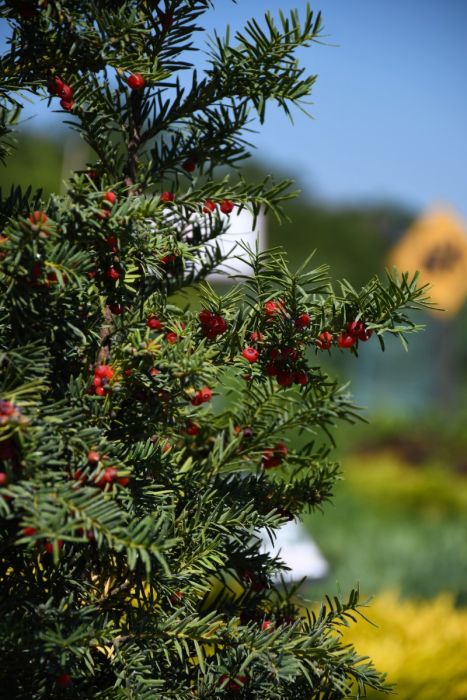
The needles, twigs, bark, wood, roots, pollen, and seeds contain taxine alkaloids, especially taxine A, taxine B, and related compounds. These toxins block cardiac sodium and calcium currents, slow electrical conduction through the heart, weaken heart contraction, lower blood pressure, and can trigger severe atrioventricular block, wide QRS complexes, ventricular arrhythmias, ventricular fibrillation, cardiac standstill, collapse, and death. The bright red fleshy structure is an aril rather than a true berry and contains little or no taxine, but the exposed seed inside the aril is poisonous. Chewing the aril can crush the seed and release the toxin.
Yew poisoning may not give owners a long warning period. An animal may appear normal, continue eating, and then suddenly stagger, gasp, collapse, and die within minutes. Other animals may first show drooling, vomiting, diarrhea, colic, trembling, dilated pupils, weakness, breathing difficulty, abnormal pulse, seizures, or profound depression. Dried yew remains toxic for months, and winter exposure is especially dangerous because evergreen clippings, wreaths, cemetery greenery, storm debris, and hedge trimmings may be available when ordinary forage is sparse.
About this guide: This page provides general pet-poisoning information and cannot diagnose or treat an individual animal. For any suspected exposure, contact a veterinarian or animal poison-control service immediately. Do not induce vomiting, give medication, or attempt home decontamination unless directed by a veterinary professional.
Yew
Taxus cuspidata Siebold & Zucc.
Important botanical synonyms include:
- Taxus baccata subsp. cuspidata (Siebold & Zucc.) Pilg.
- Taxus baccata var. cuspidata (Siebold & Zucc.) Carrière
Accepted infraspecific names include:
- Taxus cuspidata var. cuspidata
- Taxus cuspidata var. nana Rehder
Important taxonomic and safety notes:
- Taxus sp. is appropriate only when the exact yew species or hybrid has not been identified.
- This page is centered on Japanese yew, Taxus cuspidata, but unidentified true-yew exposure should be treated as an emergency until proven otherwise.
- Dwarf Japanese yew generally refers to Taxus cuspidata var. nana or cultivars selected from Japanese yew. Dwarf growth does not reduce the poisoning emergency.
Important non-synonym confusion names:
- Taxus × media Rehder — Anglo-Japanese yew; hybrid between Taxus baccata and Taxus cuspidata, also dangerously taxine-containing
- Taxus baccata L. — English yew or European yew; separate true yew, also highly poisonous
- Taxus canadensis Marshall — Canadian yew or American yew; separate true yew, poisonous
- Taxus brevifolia Nutt. — Pacific yew or western yew; separate true yew, poisonous
- Taxus chinensis (Pilg.) Rehder — Chinese yew; separate true yew, poisonous
- Taxus floridana Nutt. ex Chapm. — Florida yew; separate true yew, poisonous
- Taxus globosa Schltdl. — Mexican yew; separate true yew, poisonous
- Cephalotaxus harringtonia (Knight ex J.Forbes) K.Koch — Japanese plum yew; yew-like but not Taxus, with different seed structure and toxin profile
- Podocarpus macrophyllus (Thunb.) Sweet — yew pine or Buddhist pine; not a true yew and not a synonym of Taxus cuspidata
- Prumnopitys spp. — New Zealand yews; not true Taxus yews
- Taxodium spp. — bald cypress; not yew despite the superficially similar beginning of the name
Taxaceae — Yew Family
Japanese yew belongs to Taxaceae, the true-yew family. The genus Taxus contains evergreen conifers whose leaves, twigs, wood, bark, roots, pollen, and seeds may contain taxine-type alkaloids. This family placement matters because true yews are not ordinary low-toxicity landscape evergreens; they are among the classic sudden-death ornamental plants in veterinary toxicology.
Common names can be dangerous. Japanese plum yew, yew pine, Buddhist pine, New Zealand yew, and other “yew-like” plants are not necessarily members of Taxus. Conversely, Anglo-Japanese yew, English yew, Japanese yew, Canadian yew, Chinese yew, Pacific yew, and many horticultural Taxus cultivars are true-yew plants or true-yew hybrids and should be treated as potentially lethal until identified precisely.
Yew; Japanese Yew; Japanese Yew Tree; Japanese Taxus; Spreading Yew; Dwarf Japanese Yew; Dwarf Yew; Taxus; Taxus cuspidata; Taxus baccata subsp. cuspidata; Taxus baccata var. cuspidata; Taxus cuspidata var. nana.
Important horticultural and search-related names include Anglo-Japanese Yew, Taxus × media, Hicks Yew, Hicksii Yew, Densiformis Yew, Brownii Yew, Wardii Yew, Taunton Yew, Capitata Yew, Columnar Yew, Spreading Yew, and other Taxus landscape cultivars. Many are hybrids or selections rather than pure Taxus cuspidata, but they retain taxine-type poisoning risk and require the same emergency response.
English Yew, Taxus baccata; Chinese Yew, Taxus chinensis; Canadian or American Yew, Taxus canadensis; Pacific Yew, Taxus brevifolia; Florida Yew, Taxus floridana; and Mexican Yew, Taxus globosa, are separate true-yew species. Japanese Plum Yew, Cephalotaxus harringtonia; Yew Pine or Buddhist Pine, Podocarpus macrophyllus; and New Zealand Yew, Prumnopitys species, are not members of the genus Taxus and should not be treated as botanical synonyms.
Taxine Alkaloids
The principal toxins in Japanese yew are taxine alkaloids, particularly taxine A and taxine B. The name “taxine” does not identify one pure chemical. It refers to a complex mixture of closely related alkaloids and taxane-type constituents whose proportions vary by species, plant, tissue, season, age, and analytical method.
Taxine B is usually emphasized because it is a larger and substantially more cardiotoxic portion of the classic taxine mixture. Taxine A is also cardioactive, and several cinnamate metabolites and related compounds may contribute to myocardial depression, conduction disturbance, vascular effects, and rhythm instability. A yew exposure therefore should not be treated as one simple single-drug overdose.
The clinical importance of taxines is their direct effect on cardiac myocytes. These alkaloids can suppress the electrical and mechanical activity needed for the heart to maintain circulation. That is why yew poisoning can kill an animal before prolonged vomiting, diarrhea, or neurologic signs are ever observed.
Sodium-Channel and Calcium-Channel Blockade
Taxine B directly inhibits fast sodium currents and calcium currents in cardiac muscle cells. Sodium-channel blockade slows the rapid depolarization required for normal impulse conduction through atrial and ventricular myocardium. As conduction slows, the QRS complex may widen, coordinated ventricular contraction becomes less reliable, and ventricular ectopy or lethal ventricular arrhythmias may develop.
Calcium-channel blockade suppresses myocardial contraction, sinoatrial-node automaticity, and conduction through the atrioventricular node. The heart may beat too slowly, conduct impulses poorly, and contract with insufficient force. The combined syndrome resembles severe sodium-channel and calcium-channel blocker poisoning, but the source is a variable plant alkaloid mixture rather than one pharmaceutical product with a predictable dose.
As conduction becomes progressively impaired, P waves may become small or disappear, the PR interval may lengthen, and the QRS complexes may become broad and abnormal. Sinus bradycardia, atrioventricular block, ventricular premature complexes, ventricular tachycardia, ventricular fibrillation, terminal asystole, and pulseless electrical activity are all possible.
Myocardial Depression, Vasodilation, and Sudden Collapse
Taxines reduce the force of cardiac contraction. This negative inotropic effect means the heart may no longer generate enough pressure to circulate blood effectively, even before complete electrical standstill occurs. Taxines can also relax vascular smooth muscle, contributing to vasodilation, low blood pressure, inadequate coronary perfusion, and circulatory collapse.
A severely poisoned heart may become electrically and mechanically incapable of maintaining life within minutes. Peracute death is often attributed to diastolic cardiac standstill, refractory ventricular arrhythmia, profound hypotension, ventricular fibrillation, or a combination of those effects.
This mechanism explains the classic field presentation: an apparently normal horse or cow eats, walks, chews cud, or stands quietly, then abruptly staggers, gasps, collapses, and dies. The absence of a long visible illness does not argue against yew; it is one of the most characteristic features of severe yew poisoning.
Toxic Plant Parts
Taxine alkaloids occur in the needles, young and mature twigs, bark, wood, roots, pollen, and seeds. Male plants, nonfruiting female plants, clipped hedges, dwarf cultivars, branches without red arils, dried wreaths, and leafless-looking woody fragments can all remain dangerous if they are true yew.
The fleshy red structure surrounding the seed is an aril rather than a true botanical berry. The ripe aril itself contains little or no taxine and is eaten by some wildlife, but the exposed seed inside it is toxic. An animal chewing or crushing the aril can break the seed coat and release the dangerous contents. Seed exposure should never be dismissed simply because the red flesh is comparatively low in taxine.
Chewed needles retain their narrow, flat, linear form and may be recognizable in vomit, stomach contents, rumen contents, manure, or feed. Even small fragments should be saved because diagnosis may depend on finding plant material after a sudden collapse.
Dried, Wilted, Frozen, and Stored Yew Remains Dangerous
Taxines remain active after the plant has wilted or dried. Hedge clippings, Christmas greenery, wreaths, cemetery arrangements, dried branches, hay contamination, partially burned debris, compost, storm-damaged limbs, and old plant material remain dangerous for months. Freezing does not make yew safe.
Winter exposure is especially hazardous. Yew remains green when grass, weeds, and many browse plants are dormant. Taxine concentrations are often considered higher during cold weather, and animals may be more willing to investigate evergreen foliage when other forage is limited.
Disposal is a major prevention issue. The common scenario is not an animal carefully browsing a living hedge for weeks; it is someone throwing yew trimmings, holiday greenery, cemetery waste, or storm-cleanup branches into an animal area where the plant becomes concentrated and easy to eat.
Taxine Concentration Varies
Taxine concentration varies by Taxus species, individual plant, tissue, season, plant age, weather, and growing conditions. Japanese and English yews are generally regarded as among the most toxic cultivated yews, whereas some other species may contain lower concentrations. That difference cannot be judged safely by appearance.
No owner should count needles, estimate branch length, or assume that a small amount is harmless. A branch or pruning stick can carry many grams of needles and bark. A dog chewing it for play or a horse stripping it quickly can receive a dangerous dose before anyone realizes plant material has been swallowed.
Paclitaxel and Other Taxanes
Paclitaxel, historically called Taxol, and related taxanes also occur in yews. Paclitaxel is pharmacologically important as an antimitotic cancer medication and can affect cardiac rhythm in some treated patients.
Paclitaxel is not considered the principal cause of acute yew-plant poisoning. The rapidly fatal veterinary syndrome is driven predominantly by taxine alkaloids and their cardioactive metabolites. Public toxin fields should not replace taxines with paclitaxel simply because paclitaxel is the better-known yew-derived pharmaceutical.
Taxicatine and 3,5-Dimethoxyphenol
Taxicatine and its aglycone-related breakdown marker, 3,5-dimethoxyphenol, are additional constituents relevant to diagnosis. Detection of 3,5-dimethoxyphenol in stomach contents, blood, urine, liver, or other biological samples has been used as chemical evidence of yew exposure.
This marker helps confirm exposure but does not fully explain the cardiotoxic syndrome and does not provide a simple survival prediction. An animal can die rapidly before advanced toxicology results are available, so treatment and herd protection must begin from history, plant identification, and clinical signs.
Volatile Oils and Gastrointestinal Irritation
Yew tissues also contain volatile oils and other irritant constituents capable of affecting the gastrointestinal tract. Animals surviving long enough may develop nausea, vomiting, diarrhea, abdominal pain, salivation, ruminal dysfunction, inflammation of the stomach and intestine, or colic.
Gastrointestinal signs are not reassuring. Vomiting may remove some plant fragments, but taxines may already have been absorbed. A patient that vomits yew material can still deteriorate suddenly from conduction block, hypotension, or ventricular arrhythmia.
No Reliable Safe Dose
Historic dose estimates exist for some species, including reports of very low lethal amounts in horses and dogs. These values are useful for illustrating danger but should not be used as safe-versus-lethal dividing lines. Plant concentration, species, tissue, season, chewing, digestion, stomach contents, animal size, health, and speed of treatment all create uncertainty.
The only safe public instruction is to treat every credible ingestion of true-yew needles, twigs, bark, wood, roots, seed, clipping material, wreath material, or contaminated feed as an emergency. Waiting for symptoms can mean waiting until the heart is already failing.
Sudden Death Is the Defining Danger
Sudden death is the defining danger of yew poisoning. An animal may appear normal, continue eating, chew cud, walk beside an owner, or stand quietly, then abruptly stagger, collapse, gasp several times, and die from acute cardiac failure. In rapidly fatal cases there may be no prolonged warning period and no opportunity for an owner to observe vomiting, diarrhea, or trembling before circulation stops.
This peracute pattern is especially important in horses and cattle. One dead animal near yew clippings, hedge trimmings, landscape waste, cemetery greenery, or a browsed shrub should be treated as a warning to remove every other animal from access immediately.
Gastrointestinal Signs
When early signs are visible, gastrointestinal irritation may cause salivation, nausea, repeated swallowing, vomiting, retching, abdominal discomfort, diarrhea, or refusal to eat. Dogs and cats may vomit plant fragments or needles. Horses cannot vomit and may instead develop colic, diarrhea, reduced intestinal sounds, sweating, anxiety, or depression. Ruminants may show ruminal stasis, salivation, abdominal distress, bloat-like discomfort, or diarrhea if they survive long enough for those signs to develop.
Vomiting or diarrhea does not mean the body has cleared the poison. Taxines can be absorbed rapidly. Gastrointestinal signs may be followed by sudden bradycardia, conduction block, collapse, seizures, or death.
Cardiac Signs
Cardiac signs may include an abnormally slow, rapid, weak, or irregular pulse; dropped beats; poor pulse quality; low blood pressure; and sudden changes between bradycardia and ventricular tachyarrhythmia. The heart sounds may become irregular, muffled, or difficult to detect.
Pale, gray, blue, or muddy mucous membranes, delayed capillary refill, cold extremities, weakness, recumbency, and collapse indicate critically inadequate circulation. A patient may remain conscious briefly while circulation is failing, then lose consciousness rapidly.
Electrocardiographic abnormalities can include reduced or absent P waves, prolonged atrioventricular conduction, widening of the QRS complex, atrioventricular block, ventricular premature complexes, ventricular tachycardia, ventricular fibrillation, and asystole. Rhythm abnormalities may be resistant to conventional antiarrhythmic medication because taxines simultaneously depress sodium currents, calcium currents, contractility, and vascular tone.
Neurologic and Respiratory Signs
Neurologic signs may include uneasiness, trembling, muscular fasciculations, generalized tremors, dilated pupils, hyperexcitability, unusual aggression, anxiety, a wide-based stance, incoordination, weakness, staggering, tetanic or tonic-clonic seizures, depression, coma, and loss of normal reflexes.
These findings may result from direct central nervous system effects, poor brain perfusion, hypoxia, acidosis, shock, or severe cardiovascular collapse. A seizure after yew exposure is not merely a neurologic event; it may be a sign that the cardiovascular system is already critically unstable.
Breathing may become rapid, shallow, weak, irregular, or labored. Dyspnea can reflect hypotension, pulmonary edema, respiratory-muscle weakness, seizure activity, aspiration after vomiting, metabolic acidosis, or terminal cardiac failure. Cyanosis may develop as circulation and oxygen delivery deteriorate.
Timing
Signs can begin within minutes, particularly in dogs, horses, pigs, and other animals with a single-chambered stomach. Recorded horses have collapsed within approximately 15 minutes of eating yew. Dogs chewing branches or swallowing needles may also deteriorate quickly.
Other patients survive for hours or, after a smaller exposure, experience gastrointestinal and neurologic illness for several days. Prolonged survival does not make the exposure mild. Subacute cardiac injury, rhythm changes, gastrointestinal inflammation, or delayed deterioration may still occur.
Dogs
Dogs may be exposed through branches, landscape pruning, red arils, seeds, sticks, mulch, wreaths, cemetery decorations, storm debris, compost, holiday greenery, or garden waste. Chewing rather than deliberate feeding is sufficient to release a dangerous amount of needles, bark, and seed material.
Possible signs include vomiting, diarrhea, trembling, dilated pupils, unusual aggression, hyperexcitability, weakness, bradycardia, wide QRS complexes, abnormal pulse, seizures, respiratory distress, collapse, and sudden death. A dog that plays with a yew branch may have swallowed more plant material than is obvious from what remains on the ground.
Cats
Published feline cases are less common than canine, equine, and ruminant reports, but yew should be treated as toxic to cats. Cats may chew indoor holiday greenery, investigate cut branches, bite red arils, or ingest needles while grooming contaminated paws or fur.
The expected danger is the same taxine-mediated cardiovascular collapse. Vomiting, drooling, weakness, dilated pupils, trembling, abnormal breathing, collapse, or any suspected ingestion requires immediate veterinary consultation rather than observation at home.
Horses
Horses are highly vulnerable and may collapse within minutes. Common exposure routes include hedge clippings, storm-damaged branches, cemetery greenery, wreaths, shrubs growing along paddock fences, and landscaping waste dumped into a pasture or dry lot.
Because horses cannot vomit, plant material remains available for absorption unless it is removed professionally. Signs may include trembling, weakness, dyspnea, colic, diarrhea, dilated pupils, sweating, anxiety, abnormal cardiac rhythm, convulsions, sudden recumbency, and death. No field estimate of plant amount should be used to delay treatment.
Cattle, Sheep, and Goats
Ruminants are commonly poisoned when branches are discarded into a pasture or mixed with hay. Yew may appear unusually attractive when green foliage is scarce during winter. The first sign may be one or more animals found dead.
Survivors may exhibit salivation, abdominal distress, diarrhea, trembling, breathing difficulty, weakness, arrhythmias, recumbency, seizures, or sudden collapse. Plant material can remain within the rumen and continue releasing toxin. The remaining herd must be removed from the source immediately, and the full ration, pasture perimeter, compost, burn pile, neighboring landscaping, and hay supply should be inspected.
Pigs, Poultry, Birds, and Exotic Animals
Pigs, pet birds, poultry, chinchillas, primates, zoo animals, and other species have been poisoned by yew or are considered at risk. Experimental bird reports and veterinary summaries describe vomiting or regurgitation, breathing difficulty, depression, weakness, wide-based stance, ataxia, cyanosis, and death after yew exposure.
Species susceptibility varies, but no yew branch should be used as browse, cage enrichment, perch material, nesting material, tortoise browse, rabbit chew, goat treat, poultry greenery, or zoo enrichment unless it has been positively identified as a non-Taxus safe plant. Common-name guesses are not good enough.
Subacute and Delayed Injury
Most yew poisonings are acute or peracute, but lower or repeated exposure may produce gastroenteritis, weakness, intermittent rhythm changes, myocarditis, myocardial necrosis, or fibrosis. Calves and other animals surviving the first collapse window may still have clinically important cardiac injury.
A surviving animal may need follow-up electrocardiography, cardiac biomarkers, echocardiography, exercise restriction, or repeat examination depending on the exposure and clinical course. Apparent stabilization after a yew exposure should not be treated as proof that the heart escaped injury.
Yew on This Page Means Japanese Yew First
This page retains the established plant title Yew but is centered on Japanese yew, Taxus cuspidata. The earlier scientific entry Taxus sp. identifies only the genus and does not distinguish Japanese yew from English, Chinese, Canadian, Pacific, Florida, Mexican, or hybrid ornamental yews.
That distinction matters botanically, but not as permission to treat an unidentified yew as safe. All true Taxus species and horticultural true-yew hybrids should be considered poisonous until definitively identified. Japanese yew is among the most dangerous ornamental species planted in North America.
Accepted Taxonomy
The accepted scientific name is Taxus cuspidata Siebold & Zucc. Philipp Franz von Siebold and Joseph Gerhard Zuccarini published the species in 1846.
Important homotypic synonyms include Taxus baccata subsp. cuspidata and Taxus baccata var. cuspidata. These names reflect periods when botanists treated Japanese yew as an eastern Asian subspecies or variety of English yew.
Two infraspecific varieties are accepted: Taxus cuspidata var. cuspidata and the lower-growing Taxus cuspidata var. nana. Both must be treated as poisonous.
Native Range
Japanese yew is native from the southern Russian Far East through northeastern Asia to northern China, Korea, the Kuril Islands, Sakhalin, and Japan. Wild plants grow in temperate forests, mountain woodlands, rocky slopes, shaded valleys, and cool forest margins.
The species has been introduced and cultivated far beyond that range because it tolerates shade, severe pruning, cold winters, and urban landscaping conditions. It is particularly common as an ornamental hedge in northern portions of the United States and Canada.
Landscape Exposure
Japanese yew is planted as a foundation shrub, privacy hedge, topiary, screen, cemetery planting, windbreak, specimen tree, clipped evergreen border, and commercial landscape shrub. Its ability to remain green through winter makes it attractive in landscapes but also leaves poisonous foliage available when other forage is dormant.
Dogs may chew branches during play, retrieve pruning sticks, eat red arils, crush seeds, or investigate clippings. Horses and livestock are commonly exposed when owners, neighbors, landscapers, cemetery crews, holiday decorators, or storm cleanup crews throw branches or hedge trimmings into a paddock, pasture, barnyard, feeder, compost area, or dry lot.
Yew poisoning is therefore often a disposal failure. A living hedge along a driveway is dangerous, but a pile of fresh clippings inside a pasture is worse because it concentrates the plant and removes the animal’s normal ability to browse around it.
Growth Form
Japanese yew is a slow-growing evergreen shrub or tree. Unpruned plants may become broad, dense trees, while landscape forms are commonly maintained as compact hedges, spreading shrubs, columns, rounded foundation plantings, dwarf mounds, bonsai, and formal clipped shapes.
The bark is reddish brown to gray brown and may become scaly or fibrous with age. Young twigs are green and flexible before turning brown. The wood, bark, and twig material remain part of the poisonous exposure, not harmless support tissue.
Needles
The leaves are flat, narrow needles, usually approximately one to two-and-one-half centimeters long and less than one-quarter centimeter wide. They are attached spirally around the twig, but their bases twist so the needles often appear arranged in two flattened rows.
The upper surface is dark green, while the underside is lighter and bears two pale stomatal bands. Needle tips are pointed or abruptly sharp, contributing to the species name cuspidata, meaning pointed or cuspidate.
Chewed needles retain their recognizable linear shape in vomit, stomach contents, rumen contents, manure, and feed. Even a small amount should be preserved for identification because many fatal cases have few distinctive gross lesions.
Male and Female Plants
Yews are generally dioecious, meaning that male and female reproductive structures occur on separate plants. Male shrubs produce small pollen-bearing structures, while pollinated female plants produce exposed seeds surrounded by fleshy red arils.
A yew without red fruit is not safe. Male plants and nonfruiting female plants still contain taxines in their needles, twigs, bark, wood, roots, and pollen.
The Red Structure Is an Aril, Not a True Berry
The bright red fleshy cup surrounding the seed is called an aril. Unlike a conventional fruit, it remains open at the end and leaves the seed visibly exposed.
The ripe red aril is the one part of a true yew considered essentially free of taxines. The seed inside it is poisonous. Dogs, cats, horses, livestock, poultry, pet birds, zoo animals, or children should never be encouraged to eat arils because chewing can crush the seed and release its toxins.
Swallowing an intact seed may release less toxin than crushing it, but seed coats can be damaged by chewing or digestion. No seed exposure should be dismissed as harmless.
Japanese Yew and Anglo-Japanese Yew
Taxus × media, commonly called Anglo-Japanese yew, is a hybrid between English yew, Taxus baccata, and Japanese yew, Taxus cuspidata.
Popular landscape cultivars such as ‘Hicksii,’ ‘Densiformis,’ ‘Brownii,’ ‘Wardii,’ ‘Tauntonii,’ and several spreading or columnar forms may be hybrids rather than pure Japanese yew. They retain taxine-type toxicity and require the same emergency response.
Japanese Yew and English Yew
English yew, Taxus baccata, is native to Europe, western Asia, and northern Africa. Japanese yew is native to northeastern Asia and generally possesses greater winter hardiness.
The two species are closely related and have been hybridized extensively. Both contain potent taxine alkaloids and are associated with sudden animal deaths. English-yew toxicology cannot be ignored simply because the shrub in a North American landscape may be Japanese yew or a hybrid.
Pacific, Canadian, Chinese, Florida, and Other True Yews
Pacific or western yew is Taxus brevifolia, a native western North American forest tree. Canadian or American yew is Taxus canadensis. Chinese yew, Florida yew, Mexican yew, and Himalayan or Asian yews are additional true-yew taxa or taxonomic complexes.
Species may differ in taxine concentration, growth habit, range, conservation status, and horticultural use. Those differences are not owner-level permission to allow chewing. Any true-yew exposure should be treated as dangerous until a veterinarian or poison-control specialist determines otherwise.
Japanese Plum Yew Is Not a True Yew
Japanese plum yew belongs to the genus Cephalotaxus, most commonly Cephalotaxus harringtonia. It resembles a yew but is botanically distinct and produces plum-like seed structures rather than open red arils.
Yew pine or Buddhist pine belongs to Podocarpus. New Zealand yews belong to genera such as Prumnopitys. These common-name overlaps make photographs of the complete plant, needles, twigs, bark, and reproductive structures important during a suspected poisoning.
Taxine Is a Mixture
Taxine was once discussed as though it were one purified alkaloid. Chemical work demonstrated that the toxic fraction is a complex mixture containing taxine A, taxine B, and related compounds.
Taxine B is normally the most abundant and potent cardiotoxic component. Taxine A is also cardioactive, and cinnamate metabolites derived from both compounds can further disrupt cardiac function, cardiac conduction, and coronary blood flow.
Taxine A and Taxine B
Christina R. Wilson, John-Michael Sauer, and Stephen B. Hooser published a major review of the mechanism and toxicity of yew alkaloids. That review brought together chemistry, animal experiments, clinical reports, and electrophysiological evidence showing that taxines act primarily on cardiac myocytes.
Taxine B has stronger negative inotropic and atrioventricular-conduction effects than taxine A. It slows depolarization, suppresses impulse conduction, widens the QRS complex, and reduces the heart’s ability to contract effectively. Taxine A and other related compounds still matter because the plant delivers a mixture.
Alloatti and Colleagues’ Isolated-Heart Study
Giuseppe Alloatti, Cristina Penna, Riccardo C. Levi, Maria P. Gallo, Giovanni Appendino, and colleagues studied yew alkaloids and related compounds in guinea-pig isolated perfused heart and papillary muscle preparations.
Both taxine A and taxine B produced cardiotoxic effects, but taxine B was substantially more potent. The experiments documented reduced contractility and delayed atrioventricular conduction consistent with the electrocardiographic abnormalities observed in naturally poisoned animals.
Cardiac Sodium-Channel Blockade
Fast sodium channels permit the rapid electrical depolarization that carries an impulse through atrial and ventricular myocardium. Taxine inhibition slows that electrical wave.
Progressive blockade produces QRS widening, slowed conduction, loss of coordinated contraction, ventricular ectopy, and the possibility of ventricular tachycardia or ventricular fibrillation. This mechanism explains why sodium bicarbonate has been considered in severe poisoning, although the clinical evidence remains inconsistent and species-dependent.
Cardiac Calcium-Channel Blockade
Calcium movement is essential for cardiac contraction, sinoatrial-node automaticity, and atrioventricular-node conduction. Taxines inhibit these currents in a manner often compared with calcium-channel blocker drugs such as verapamil.
The result may include reduced heart rate, weak contraction, conduction block, vasodilation, low blood pressure, and poor coronary perfusion. Unlike one pharmaceutical calcium-channel blocker, yew delivers a variable mixture of alkaloids and metabolites.
Why Sudden Death Can Occur
The combination of conduction failure, weak contraction, vasodilation, and ventricular electrical instability can terminate effective circulation abruptly. An animal may die in diastolic cardiac standstill, ventricular fibrillation, asystole, pulseless electrical activity, or profound shock.
There may be no prolonged period of visible illness before collapse. A normal appetite, a normal walk across the pasture, or a few minutes of apparently normal behavior after access does not clear the animal.
Volatile Oils and Gastrointestinal Irritation
Yew also contains volatile irritant oils. These can produce nausea, vomiting, diarrhea, abdominal pain, salivation, ruminal dysfunction, and gastrointestinal inflammation.
Gastrointestinal illness does not neutralize the cardiac danger. An animal that vomits yew material may still have absorbed enough taxine to develop fatal arrhythmias.
Paclitaxel Is Not the Primary Acute Toxin
Paclitaxel, historically called Taxol, is a taxane compound developed as an anticancer medication. It interferes with cell division by stabilizing microtubules.
Paclitaxel can affect cardiac rhythm in some treated patients, but it does not account for the rapid yew-poisoning syndrome as directly as taxine A, taxine B, and their metabolites. A plant-poisoning page should keep taxines at the center of the acute emergency.
Taxicatine and 3,5-Dimethoxyphenol
Taxicatine is a yew glycoside whose aglycone-related breakdown marker, 3,5-dimethoxyphenol, can be detected analytically.
Veterinary and forensic laboratories have used 3,5-dimethoxyphenol as evidence of yew exposure in gastrointestinal contents, blood, urine, liver, and other specimens. The marker helps confirm exposure but does not provide a simple calculation of the original dose or predict survival by itself.
Toxicity Persists Through Winter and Drying
Taxines remain in the plant throughout the year. Veterinary sources report that concentrations are often highest during winter and in older plants, particularly in highly toxic species such as Japanese and English yew.
Dried yew retains its toxicity for months. Wreaths, hedge clippings, holiday greenery, dead branches, dried needles, hay contamination, compost, and partially burned debris remain hazardous.
The Reported Dog Lethal Dose
R. B. Cope summarized a reported minimum lethal dose in dogs of approximately 2.3 grams of yew leaves per kilogram of body weight, corresponding to approximately 11.5 milligrams of taxine alkaloids per kilogram.
This does not mean that 2 or 3 grams is a universal lethal amount for every dog. A 10-kilogram dog would reach that historical plant-material estimate at roughly 23 grams, while a 30-kilogram dog would reach it at roughly 69 grams.
The value is an approximate historical minimum rather than a safe-versus-lethal dividing line. Species, season, individual shrub, leaf age, chewing, stomach contents, body condition, and toxin measurement all create uncertainty.
A Dog Can Receive a Fatal Dose from a Branch
A branch or pruning stick can carry many grams of needles and bark. A dog playing with it may strip and swallow plant material without appearing to eat a meal.
Yew branches should never be used as fetch toys, chew sticks, decorative kennel material, bird perches, reptile cage branches, rabbit chews, goat browse, or livestock enrichment.
Evans and Cook’s Japanese-Yew Dog Case
K. L. Evans and J. R. Cook reported Japanese-yew poisoning in a dog in the Journal of the American Animal Hospital Association in 1991. The dog survived but developed marked central nervous system effects, particularly dilated pupils, tetanic seizures, and increased aggression. Gastroenteritis persisted for approximately one week.
The case demonstrates that nonfatal Japanese-yew poisoning can produce prolonged neurologic and gastrointestinal illness rather than only immediate cardiac arrest. Survival does not mean the exposure was minor or safe.
Thomson and Barker’s 1978 Cattle Report
G. W. Thomson and I. K. Barker reported Japanese-yew poisoning in cattle in the Canadian Veterinary Journal in 1978. In one group of Angus cows, one became recumbent, gasped several times, rolled onto her side, and died. Another cow that had been eating hay suddenly became recumbent and died within minutes.
In another herd, four of thirty-five Holstein heifers and cows were found dead after appearing normal the previous evening. The report emphasized that Japanese yew can cause sudden livestock death with little warning and that the plant remains poisonous after storage and drying.
The 2024 New England Cattle Deaths
In January 2024, Cornell University’s Animal Health Diagnostic Center investigated the sudden deaths of four New England beef cattle following accidental access to Japanese yew.
One cow was reportedly eating and behaving normally before collapsing and dying moments later. Three others were found dead over a three-day period. Field necropsies found no distinctive gross lesions. Branch and fruit material recovered from the rumen was identified as Japanese yew, and nearby shrubs showed evidence of browsing.
This recent diagnostic case reinforces the older literature: yew poisoning can be sudden, lethal, and grossly subtle at necropsy unless plant material is found and identified.
Japanese-Yew Poisoning in Horses
J. E. Lowe, H. F. Hintz, H. F. Schryver, and J. M. Kingsbury published Japanese-yew poisoning in horses in Cornell Veterinarian in 1970. P. A. Karns later reported equine intoxication due to Japanese-yew ingestion in Equine Practice in 1983.
Equine yew poisoning commonly presents as sudden collapse or death. Horses surviving long enough to show signs may develop trembling, weakness, dyspnea, colic, diarrhea, dilated pupils, abnormal cardiac rhythm, convulsions, and terminal recumbency.
Rapid Absorption in Monogastric Animals
Dogs, horses, pigs, and other animals with a single-chambered stomach may absorb taxines rapidly. Recorded horses have collapsed within approximately fifteen minutes of ingestion.
The speed of absorption sharply limits the usefulness of home first aid and makes immediate veterinary transportation more important than attempting household decontamination.
Sula and Colleagues’ Calf Investigation
Mee Ja M. Sula, Sandra Morgan, Keith L. Bailey, Mark Schumpert, and Bradley L. Njaa described cardiac lesions in calves after ingestion of Japanese-yew clippings. In two related outbreaks, seven of thirty calves died after confirmed exposure.
Acute deaths were consistent with the usual peracute yew syndrome, but calves surviving longer developed important cardiac lesions. Findings included cardiomyocyte loss, necrosis, inflammation, and fibrosis consistent with previous myocardial injury.
The study demonstrates that survival of the initial exposure does not guarantee that the heart escaped injury. Subacute or chronic cardiac damage may remain after the foliage has passed from the digestive tract.
Gross Lesions May Be Absent
Many yew-poisoned animals have no distinctive lesions at necropsy. Nonspecific pulmonary edema, congestion, hemorrhage, or gastrointestinal inflammation may be present, but a completely unremarkable gross examination does not exclude yew.
The stomach or rumen must be examined carefully for small linear needles, seeds, red aril material, twigs, or bark. Because a lethal dose may contain relatively little foliage, a casual inspection can miss the diagnostic material.
Chronic and Subacute Injury
Most yew poisonings are acute or peracute, but lower or repeated exposure may produce gastroenteritis, weakness, intermittent rhythm changes, myocarditis, myocardial necrosis, or fibrosis.
A surviving animal may require follow-up electrocardiography, cardiac biomarkers, echocardiography, or activity restriction depending on the exposure and clinical course.
Wildlife Consumption Does Not Establish Safety
Deer and some other wildlife browse yew or consume arils with fewer apparent effects than domestic livestock. Rumen microorganisms, feeding behavior, gradual adaptation, seed passage, and species-specific metabolism may reduce exposure or detoxify part of the alkaloid mixture.
Wildlife resistance is incomplete and cannot be transferred to dogs, cats, horses, cattle, sheep, goats, captive wildlife, pet birds, rabbits, reptiles, or exotic pets.
Dogs
Dogs may be exposed through branches, landscape pruning, red arils, sticks, mulch, wreaths, holiday decorations, cemetery greenery, compost, or garden waste. Chewing rather than deliberate feeding is sufficient to release a dangerous amount of needles and bark.
Possible signs include vomiting, diarrhea, trembling, dilated pupils, aggression, weakness, bradycardia, wide QRS complexes, seizures, respiratory distress, collapse, and sudden death.
Cats
Published feline cases are less common, but yew is classified as toxic to cats and should be treated as a true emergency. Cats may chew indoor holiday greenery, investigate cut branches, bite arils, or ingest needles while grooming contaminated paws or fur.
The expected danger is the same taxine-mediated cardiovascular collapse. Any credible feline ingestion requires immediate veterinary consultation rather than observation at home.
Horses
Horses are highly vulnerable and may collapse within minutes. Common exposure routes include hedge clippings, storm-damaged branches, wreaths, cemetery greenery, shrubs growing along a paddock fence, and landscape waste dumped where horses can reach it.
Because horses cannot vomit, plant material remains available for absorption unless it is removed professionally. A small-looking pile can still contain a dangerous amount of needles and bark. No field estimate should be used to delay treatment.
Cattle, Sheep, and Goats
Ruminants are commonly poisoned when branches are discarded into a pasture or mixed with hay. Yew may appear unusually attractive when green foliage is scarce during winter.
The first sign may be one or more animals found dead. Survivors may exhibit salivation, abdominal distress, diarrhea, trembling, breathing difficulty, weakness, arrhythmias, recumbency, or seizures.
Plant material can remain within the rumen and continue releasing toxin. The remaining herd must be removed from the source immediately, and the full ration, pasture perimeter, compost, cemetery waste, landscape debris, and neighboring shrubs should be inspected.
Pigs, Birds, and Exotic Animals
Pigs, chinchillas, budgerigars, canaries, primates, zoo animals, and other species have been poisoned by yew or are considered vulnerable. Experimental birds developed vomiting or regurgitation, breathing difficulty, depression, weakness, ataxia, cyanosis, and death after yew exposure.
Species susceptibility varies, but an ornamental branch should never be used as browse, cage enrichment, or a perch unless it has been identified as a safe non-toxic plant by scientific name.
Diagnosis
Diagnosis relies on exposure history, rapid cardiovascular collapse, electrocardiographic abnormalities, and identification of yew needles or seeds in vomit, stomach contents, rumen contents, feed, manure, or the environment.
Continuous electrocardiography may reveal bradycardia, absent P waves, atrioventricular block, QRS widening, ventricular ectopy, ventricular tachycardia, or fibrillation. Blood pressure, pulse quality, mucous membrane color, respiratory effort, and neurologic status can change rapidly.
Laboratory testing may include electrolytes, blood gases, glucose, kidney and liver values, cardiac troponin, lactate, acid-base status, complete blood count, and urinalysis. Results can be nonspecific, particularly when death occurs rapidly.
Specialized laboratories can detect taxine derivatives or 3,5-dimethoxyphenol by gas or liquid chromatography combined with mass spectrometry. Samples should be collected and stored according to laboratory instructions.
Important Differential Diagnoses
Other rapidly cardiotoxic plants include oleander, Yellow Oleander, foxglove, lily of the valley, milkweed, dogbane, kalanchoe, monkshood, and several species containing sodium-channel, calcium-channel, or cardiac-glycoside toxins.
Sudden livestock death also requires consideration of lightning, electrocution, cyanide, nitrate or nitrite, ionophore-contaminated feed, acute bloat, anaphylaxis, toxic algae, severe electrolyte disorders, traumatic injury, and infectious disease.
Tremors and seizures in dogs additionally require consideration of metaldehyde, tremorgenic mold toxins, methylxanthines, amphetamines, nicotine, pyrethroids, organochlorines, strychnine, and primary neurologic disease.
There Is No Proven Specific Antidote
No treatment has been demonstrated consistently to neutralize taxines in animals. Management centers on removing unabsorbed plant material when safely possible and supporting circulation, ventilation, rhythm, blood pressure, temperature, and neurologic function until the toxin is eliminated.
The absence of an antidote does not make treatment pointless. Some exposed animals survive after rapid decontamination and intensive cardiovascular support, particularly when the ingested dose was below the lethal threshold or when care begins before collapse.
Professional Gastrointestinal Decontamination
A veterinarian may induce vomiting after a very recent ingestion only when a dog or cat remains completely asymptomatic, has no electrocardiographic abnormality, and can protect its airway.
Once weakness, vomiting, tremors, altered behavior, breathing difficulty, or rhythm changes begin, induced vomiting can trigger collapse or aspiration. Gastric lavage under anesthesia with a protected airway may be considered instead.
Activated charcoal may be administered professionally to bind material remaining in the gastrointestinal tract. It should never be forced into a weak, vomiting, seizuring, tremoring, collapsed, or poorly swallowing animal.
Rumen Evacuation
Veterinarians may consider rumen lavage, evacuation, rumenotomy, or other methods of removing foliage after a substantial recent ruminant exposure.
Handling, restraint, sedation, surgery, and transport can increase cardiac demand and precipitate collapse. The procedure must be weighed against cardiovascular instability and the amount of material likely to remain.
Electrocardiographic Monitoring
Continuous monitoring is essential because rhythm changes can appear suddenly and progress rapidly. QRS duration, atrioventricular conduction, heart rate, blood pressure, ventricular ectopy, and pulse quality require repeated assessment.
Apparently normal animals may require monitoring after a credible substantial exposure because taxine absorption and clinical onset are not perfectly predictable.
Atropine
Atropine has been suggested for clinically important bradycardia or atrioventricular block. It may improve heart rate when vagal influence contributes to bradycardia.
Response is inconsistent because taxines directly damage conduction and contractility. Raising the heart rate can also increase myocardial oxygen demand or expose ventricular instability. Atropine must be used only under electrocardiographic supervision.
Lidocaine and Other Antiarrhythmics
Intravenous lidocaine has been used successfully in individual human yew cases involving ventricular arrhythmias and may be considered professionally in selected veterinary rhythms.
Other antiarrhythmics can worsen conduction block, hypotension, or myocardial depression. Treatment must be based on the actual rhythm rather than an assumption that every yew patient has the same arrhythmia.
Sodium Bicarbonate
Hypertonic sodium bicarbonate has been considered because taxines block cardiac sodium channels and can produce marked QRS widening.
An experimental swine study involving Taxus × media did not demonstrate dependable reversal of QRS widening. A separate human Taxus cuspidata berry case improved after sodium bicarbonate when amiodarone had not corrected the electrocardiographic abnormalities.
These conflicting findings support veterinarian-selected use in particular sodium-channel-blocking patterns, not routine owner administration or a claim that bicarbonate is an antidote.
Digoxin Immune Fab
Digoxin-specific antibody fragments are highly effective for cardiac-glycoside plants such as oleander, but taxines are alkaloid sodium- and calcium-channel blockers rather than digoxin-like cardenolides.
Fab has been attempted in human yew poisoning with inconsistent or uncertain benefit. It should not be presented as a proven yew antidote.
Fluids, Vasopressors, Inotropes, and Ventilation
Intravenous fluids may support blood pressure and kidney perfusion but must be adjusted carefully in an animal with weak cardiac contraction, pulmonary edema, or arrhythmia.
Vasopressors and inotropes may be required for severe hypotension, although response can be poor while cardiac channels remain blocked. Oxygen, endotracheal intubation, and positive-pressure ventilation may be necessary when respiratory function fails.
Seizure Control
Tremors, aggression, and seizures require veterinarian-selected sedatives or anticonvulsants. Severe recurrent seizures may require anesthesia and mechanical ventilation.
Quiet handling is essential. Exercise, transportation stress, noise, restraint, crowding, and excitement increase cardiac demand and may worsen arrhythmias or precipitate collapse.
Extracorporeal Cardiopulmonary Support
Human case reports describe survival after extracorporeal life support maintained circulation while taxines were metabolized and eliminated.
This treatment is available only in highly specialized centers and is rarely practical in veterinary patients. It demonstrates, however, that prolonged mechanical circulatory support may bridge an otherwise fatal but potentially reversible channel-blocking toxicosis.
Prognosis
The prognosis is guarded to grave after a confirmed substantial ingestion. Sudden collapse, marked QRS widening, severe hypotension, ventricular arrhythmia, seizures, respiratory failure, or inability to remove continuing gastrointestinal plant material substantially worsens the outlook.
Animals that remain stable through the initial period and receive prompt decontamination and monitoring may recover. Survivors of substantial exposure may require follow-up evaluation for persistent myocardial injury.
Prevention
Do not plant Japanese yew within reach of dogs, horses, livestock, pet birds, rabbits, zoo animals, or exotic pets. Remember that animals can reach through or over fences and that snow, wind, pruning, or storm damage may drop branches into an enclosure.
Never throw hedge clippings, wreaths, cemetery greenery, holiday decorations, or landscape waste into a pasture, paddock, kennel, compost area, feed bin, poultry run, rabbit pen, tortoise enclosure, or zoo habitat.
Do not use yew branches as fetch sticks, chew toys, bird perches, firewood, bedding, browse, livestock treats, or enrichment. Dry material remains poisonous.
Label landscape plants with the scientific name and train landscapers, neighbors, barn visitors, cemetery crews, holiday decorators, and cleanup crews to recognize yew before disposing of branches around animals.
Immediate Steps After Exposure
Treat the exposure as an emergency. Do not wait for vomiting, trembling, an abnormal heartbeat, weakness, or collapse before contacting a veterinarian.
- Remove access immediately: Secure branches, needles, arils, seeds, wreaths, clippings, hay, compost, burn-pile debris, or feed so no other animal can reach them.
- Keep the animal quiet: Prevent running, play, unnecessary walking, excitement, and stressful restraint because exertion can precipitate cardiovascular collapse.
- Transport for emergency veterinary care: Call while traveling so the veterinary team can prepare electrocardiographic monitoring, airway equipment, decontamination supplies, and cardiovascular support.
- Preserve evidence: Bring the branch, needles, arils, seeds, vomit, manure, stomach material, rumen material, feed, wreath, clippings, or photographs in a secure container.
- Protect the rest of the animals: If one livestock animal, horse, dog, or pet had access, assume others may have access until the area, feed, compost, and waste pile are inspected.
Do Not Attempt Unsupervised Home Treatment
- Do not induce vomiting with hydrogen peroxide: Taxines are absorbed rapidly, and vomiting can trigger arrhythmia, collapse, seizure, or aspiration.
- Do not use salt, mustard, oil, syrup of ipecac, or manual gagging: These methods can cause additional poisoning and delay emergency treatment.
- Do not force activated charcoal: Charcoal can be inhaled by a vomiting, weak, collapsed, tremoring, seizuring, or poorly swallowing animal.
- Do not force food, water, milk, or electrolyte solution: Cardiovascular and neurologic deterioration can impair swallowing without warning.
- Do not give atropine, lidocaine, sodium bicarbonate, digoxin immune Fab, calcium, potassium, beta blockers, antiarrhythmics, sedatives, stimulants, or seizure medication yourself: Yew can produce several dangerous rhythm patterns, and treatment for one pattern can worsen another.
- Do not exercise the animal to see whether it seems normal: Physical activity increases cardiac workload and may precipitate sudden collapse.
- Do not assume a red berry is safe: The fleshy aril is low in taxine, but the exposed seed inside it is poisonous and may have been crushed.
- Do not wait for laboratory confirmation: Treatment and removal of the source must begin from credible exposure history and plant identification.
When Emergency Examination Is Required
- Any needle, twig, bark, wood, root, or seed was swallowed: A clinically important dose can be small, and no reliable safe amount has been established.
- A branch was used as a chew or fetch stick: The dog may have swallowed far more foliage and bark than is visible afterward.
- The pulse seems slow, rapid, weak, or irregular: Taxines can cause conduction block, ventricular arrhythmia, and sudden cardiac arrest.
- Vomiting, diarrhea, or abdominal distress develops: Gastrointestinal signs may occur before severe cardiac deterioration.
- Trembling, dilated pupils, weakness, aggression, staggering, or seizures develops: These signs indicate major neurologic or circulatory involvement.
- Breathing becomes rapid, weak, or difficult: Respiratory change may reflect hypotension, pulmonary edema, aspiration, seizure activity, or terminal cardiac failure.
- An animal collapses even briefly: Temporary recovery does not mean that the rhythm has stabilized.
- One livestock animal is found dead near yew: Immediately remove the entire group and inspect the pasture, feeder, hay, trimmings, compost, and neighboring landscape.
Veterinary Stabilization
The veterinary team will assess heart rhythm, QRS duration, atrioventricular conduction, pulse quality, blood pressure, respiratory function, neurologic status, body temperature, hydration, and acid-base status. Continuous electrocardiographic monitoring is usually required.
Oxygen, intravenous access, fluids, vasopressors, inotropes, assisted ventilation, anticonvulsants, and rhythm-specific treatment may be necessary. Exercise and unnecessary handling should be minimized.
Veterinary Decontamination
A veterinarian may induce vomiting after a very recent ingestion only when the dog or cat remains completely asymptomatic, has a normal electrocardiogram, and can protect its airway. The rapidly changing cardiovascular risk makes this a professional decision.
Gastric lavage may be considered under anesthesia with endotracheal airway protection. Activated charcoal may be administered professionally to reduce continuing gastrointestinal absorption.
In horses or ruminants, veterinarians may consider stomach or rumen evacuation when substantial material remains and the cardiovascular condition permits intervention. The risk of handling, sedation, restraint, or surgery must be weighed against the danger of leaving toxic material in the digestive tract.
Cardiac Treatment
Bradycardia or atrioventricular block may prompt cautious veterinarian-selected atropine treatment. Ventricular arrhythmias may require lidocaine or another rhythm-specific medication.
Sodium bicarbonate may be considered when severe sodium-channel blockade produces QRS widening, but published results are inconsistent. It is not a specific antidote.
Temporary pacing may support selected bradyarrhythmias but does not restore contractility, reverse vascular collapse, or remove the taxines. Severe ventricular instability can also complicate pacing.
Respiratory and Neurologic Support
Seizures require immediate anticonvulsant treatment. Refractory seizure activity or respiratory weakness may require anesthesia, endotracheal intubation, and mechanical ventilation.
Aspiration pneumonia, pulmonary edema, muscle injury, acid-base abnormalities, electrolyte disturbance, kidney stress, and secondary organ damage must be monitored and treated as they develop.
Dogs and Cats
Dogs and cats with credible yew ingestion should be transported immediately. A quiet, apparently normal patient can become unstable quickly, especially after needles, bark, twigs, or seeds were chewed. Do not attempt repeated home remedies before travel.
Bring the plant material and any vomited needles. If a cat only brushed against dry needles or plant fragments, prevent grooming and contact a veterinarian; ingestion may occur when the cat cleans contaminated paws or fur.
Horses
Horses require immediate emergency care after any credible ingestion. They cannot vomit, may absorb taxines rapidly, and may collapse within minutes. Keep the horse quiet and avoid unnecessary walking, lunging, trailering delay, or crowding.
Inspect the paddock, fence line, bedding, hay, feed tub, manure pile, compost, cemetery waste, and neighboring yard. One branch thrown over a fence can be enough to kill.
Cattle, Sheep, Goats, and Herd Response
Remove the entire group from access immediately. If one animal is dead or sick, assume the rest may have eaten the same material. Do not drive animals hard, crowd them, or force stressful movement unless required to remove them from the source.
Preserve rumen contents, feed, hay, clippings, and branches. Inspect areas where landscapers, neighbors, cemetery workers, or storm crews may have dumped evergreen debris. Remaining plant material should be secured before scavenging dogs, goats, cattle, sheep, horses, pigs, poultry, or wildlife can reach it.
Birds, Rabbits, Reptiles, and Exotic Animals
Do not use yew branches as perches, hides, browse, tortoise enclosure branches, rabbit chews, zoo enrichment, or aviary decorations. If exposure occurs, contact a veterinarian experienced with the species immediately. Small patients may deteriorate rapidly, and signs may be subtle before collapse.
Vomiting or regurgitation, weakness, ataxia, respiratory distress, cyanosis, tremors, depression, or sudden death after an evergreen-branch exposure should trigger immediate investigation for yew.
Recovery and Prognosis
Death can occur within minutes, and the first sign may be collapse. The prognosis is particularly poor once severe QRS widening, ventricular arrhythmia, profound hypotension, recurrent seizures, respiratory failure, or pulseless collapse develops.
Recovery is possible after a smaller exposure and rapid intensive treatment. Monitoring may need to continue beyond apparent stabilization because rhythm abnormalities or myocardial injury can persist.
Survivors of significant poisoning may require follow-up electrocardiography, cardiac biomarkers, echocardiography, temporary exercise restriction, or continued observation for recurrent weakness, arrhythmia, respiratory difficulty, or gastrointestinal signs.
Prevention After the Incident
Remove all true yews from areas accessible to dogs, horses, livestock, pet birds, rabbits, reptiles, and zoo animals. Where removal is not possible, install secure fencing that prevents reaching through, leaning over, or accessing fallen storm branches.
Never dump yew clippings, wreaths, cemetery greenery, holiday decorations, hedge trimmings, storm debris, or pruning waste into animal areas. Dispose of yew as toxic landscape waste, not as browse, mulch, compost, or enrichment.
Label landscape plants with the scientific name. Train landscapers, neighbors, barn staff, cemetery crews, dog owners, holiday decorators, and cleanup crews that dried yew remains lethal.
Frequently Asked Questions About Japanese Yew and Animal Poisoning
Is Japanese Yew’s correct scientific name Taxus cuspidata?
Yes. Taxus cuspidata Siebold & Zucc. is the accepted species name for Japanese yew. Taxus sp. identifies only an unspecified member of the genus and is less precise. If the exact species is unknown, the exposure should still be treated as a true-yew emergency until proven otherwise.
Which parts of Japanese Yew are poisonous?
Needles, twigs, bark, wood, roots, pollen, and seeds contain taxines. Male plants, female plants, dwarf cultivars, nonfruiting hedges, clipped branches, and dried wreaths can all be dangerous. The fleshy red aril is the major low-taxine exception, but the exposed seed inside it is poisonous.
Can the red Yew berries poison a dog?
The red flesh is an aril, not a true berry, and it is low in taxine. The seed inside it is highly poisonous. Chewing the aril can crush the seed and release toxin, so every suspected aril or seed ingestion should be discussed with a veterinarian immediately.
Can only two or three grams of Yew kill a dog?
The commonly cited value is approximately 2.3 grams of leaves per kilogram of body weight, not two or three grams for every dog. It is an approximate minimum lethal-dose estimate rather than a dependable threshold. Plant concentration, season, species, chewing, body size, and individual susceptibility make any exposure unsafe to dismiss.
Can a dog be poisoned by playing with a Yew branch?
Yes. A branch can carry many grams of needles and bark, and fatal canine poisonings have followed chewing on Taxus branches. Yew must never be used as a fetch stick, chew toy, kennel decoration, mulch source, or enrichment item.
How quickly can Yew poisoning kill an animal?
Collapse and death can occur within minutes. Horses have reportedly collapsed within approximately fifteen minutes of ingestion. Other animals may develop signs over several hours or survive with prolonged gastrointestinal, neurologic, or cardiac illness. A normal appearance immediately after access does not make the exposure safe.
Why does Yew cause sudden cardiac failure?
Taxine alkaloids block sodium and calcium currents in cardiac cells. This suppresses contraction, slows impulse conduction, widens the QRS complex, lowers blood pressure, and can cause atrioventricular block, ventricular fibrillation, cardiac standstill, or sudden collapse.
Is Yew more poisonous during winter?
Taxines are present throughout the year, but veterinary sources report higher concentrations during winter and in older plants. Winter exposure is also common because yew foliage remains green while other forage is scarce, and holiday greenery, wreaths, and clippings may be discarded near animals.
Does drying or freezing make Yew safe?
No. Dried branches, clippings, wreaths, hay contamination, and dead needles can remain poisonous for months. Freezing and ordinary weather exposure do not reliably destroy taxines. Old landscape waste should be treated as dangerous until disposed of securely.
Is Anglo-Japanese Yew poisonous too?
Yes. Anglo-Japanese yew, Taxus × media, is a hybrid of English yew and Japanese yew. Common landscape cultivars contain taxine-type alkaloids and require the same emergency precautions as Japanese yew.
Is English Yew as dangerous as Japanese Yew?
Yes. English yew, Taxus baccata, is also highly poisonous and is one of the classic sudden-death plants in veterinary and human toxicology. Japanese yew, English yew, and their hybrids should all be treated as severe poisoning hazards.
Is Pacific Yew safe because it may contain less taxine?
No. Pacific yew, Taxus brevifolia, is a separate true yew and should still be treated as poisonous. Species differences in toxin concentration are not reliable enough for an owner to permit chewing or delay treatment after exposure.
Is Japanese Plum Yew the same as Japanese Yew?
No. Japanese plum yew belongs to Cephalotaxus, not Taxus. It resembles yew but has different reproductive structures and chemistry. During a suspected poisoning, photographs and the scientific name are needed because common names alone are unreliable.
Should vomiting be induced after Yew ingestion?
Do not induce vomiting at home. A veterinarian may do so only after a very recent exposure in a completely asymptomatic animal with no electrocardiographic abnormalities and a protected airway plan. Rapid taxine absorption makes collapse and aspiration serious risks.
Should activated charcoal be given?
Only under veterinary supervision. Charcoal may reduce continuing absorption, but it can be inhaled by a vomiting, weak, tremoring, seizuring, collapsed, or poorly swallowing animal. It is not a home antidote and should not delay emergency transport.
Is there an antidote for Yew poisoning?
No proven taxine-specific antidote exists. Treatment relies on rapid decontamination when safe, continuous electrocardiographic monitoring, blood-pressure support, ventilation, seizure control, and rhythm-specific medication. The lack of an antidote makes prevention and immediate veterinary care especially important.
Does sodium bicarbonate reverse Yew poisoning?
Sodium bicarbonate may be considered by veterinarians when severe sodium-channel blockade produces QRS widening, but published results are inconsistent. It is not a specific antidote and should never be given by an owner. Treatment must be based on the actual electrocardiographic pattern.
Does digoxin immune Fab work for Yew?
Digoxin immune Fab is designed for cardiac glycosides such as oleander or foxglove toxins. Yew taxines are sodium- and calcium-channel-blocking alkaloids, not digoxin-like cardenolides. Fab has been attempted in some human yew cases with uncertain benefit, but it is not a proven yew antidote.
Can horses and cattle die without showing warning signs?
Yes. Sudden death is common. An animal may be eating normally and then become recumbent and die within minutes. The remaining herd must be removed immediately whenever yew exposure is suspected, even if the rest of the animals appear normal.
Can yew poisoning cause lesions in surviving calves?
Yes. Calf investigations have documented myocardial injury, including cardiomyocyte loss, necrosis, inflammation, and fibrosis in animals that survived longer after Japanese-yew exposure. Survival of the initial event does not guarantee that the heart escaped injury.
Why can necropsy look normal after Yew poisoning?
Many yew-poisoned animals have few or no distinctive gross lesions because death can occur from abrupt electrical and mechanical cardiac failure. Diagnosis may depend on finding yew needles, twigs, arils, or seeds in stomach or rumen contents and matching them to the exposure site.
Can birds, rabbits, reptiles, or zoo animals be poisoned by Yew?
Yes. Yew should never be used as a bird perch, rabbit chew, reptile enclosure branch, browse, bedding, or enrichment item. Multiple species have been poisoned, and small or exotic animals may deteriorate quickly or show subtle signs before collapse.
Can wildlife eat Yew safely?
Some wildlife browse yew or consume arils without obvious illness, but wildlife behavior does not establish safety for domestic animals. Species differences in seed handling, digestion, rumen microbes, feeding pattern, and adaptation cannot be transferred to dogs, cats, horses, cattle, sheep, goats, or exotic pets.
Can an animal recover from Yew poisoning?
Recovery is possible after a smaller exposure and rapid intensive veterinary care. Severe rhythm abnormalities, low blood pressure, seizures, respiratory failure, collapse, or delayed treatment make the prognosis guarded to grave. Survivors may need follow-up cardiac evaluation.
How can Japanese Yew poisoning be prevented?
Keep yew outside animal areas, collect every pruning fragment, never dump clippings into pastures, and do not use branches as toys, browse, perches, mulch, compost, or firewood around animals. Clearly label landscape plants and teach anyone performing yard work that dried yew remains lethal.