ZZ Plant Toxicity, Calcium Oxalate Raphides, and Acute Oral Injury
Is ZZ Plant Poisonous to Dogs, Cats, Horses, and Livestock?
Yes—ZZ Plant, Zamioculcas zamiifolia, is poisonous to dogs, cats, horses, livestock, rabbits, birds, and other animals because its tissues contain needle-shaped calcium oxalate raphides. Chewing a leaflet releases bundles of microscopic crystals that can penetrate the lips, tongue, gums, throat, and esophagus. Expected signs include immediate mouth pain, lip licking, drooling, pawing at the face, repeated swallowing, gagging, food refusal, vomiting, and difficulty swallowing.
Exact-species microscopy has confirmed raphides in the leaves, and documented human ingestions produced rapid burning pain, oral inflammation, swelling, and excessive salivation. Most limited exposures are expected to remain local and self-limiting once chewing stops and loose plant material is removed. Severe or progressive tongue, throat, or facial swelling, however, can threaten swallowing or breathing and requires immediate veterinary care.
The calcium oxalate in ZZ Plant should not be confused with the soluble oxalates in plants capable of causing systemic hypocalcemia and kidney injury. Ordinary ZZ Plant poisoning is characterized principally by mechanical irritation from insoluble crystals rather than widespread oxalate absorption. Acute kidney failure, profound hypocalcemic tremors, persistent arrhythmia, jaundice, progressive paralysis, coma, or unexplained collapse is not the expected uncomplicated syndrome and requires investigation for another plant, chemical, medication, or disease.
The plant’s leaves are compound: each upright structure commonly mistaken for a stem is actually a thick leaf stalk and rachis bearing multiple glossy leaflets. Large potato-like rhizomes remain below the soil and become accessible when a pot is overturned or divided. Direct crystal evidence is strongest for the leaflets, but pet access should be prevented to the entire plant, including petioles, rhizomes, roots, inflorescences, cuttings, and discarded material.
About this guide: This page provides general pet-poisoning information and cannot diagnose or treat an individual animal. For any suspected exposure, contact a veterinarian or animal poison-control service immediately. Do not induce vomiting, give medication, or attempt home decontamination unless directed by a veterinary professional.
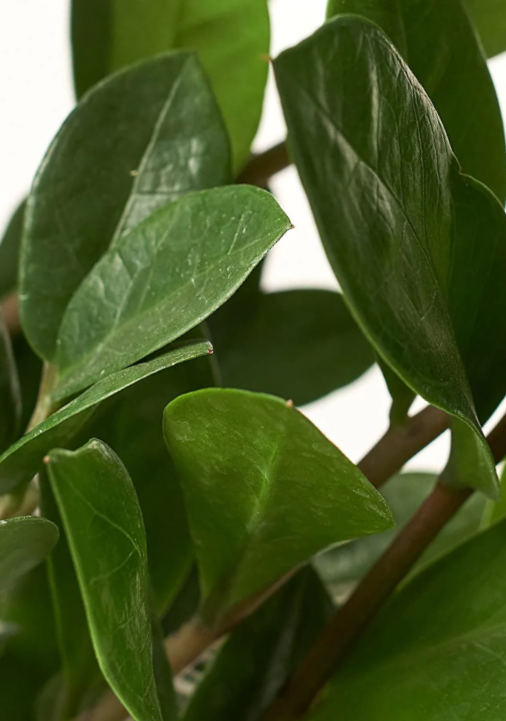
ZZ Plant
Zamioculcas zamiifolia (G.Lodd.) Engl.
George Loddiges originally published the species as Caladium zamiifolium in 1829. Adolf Engler transferred it to Zamioculcas and published the accepted combination Zamioculcas zamiifolia in 1905. The parenthetical authorship preserves Loddiges as the author of the original name while crediting Engler for the accepted combination.
The accepted botanical synonyms are:
- Caladium zamiifolium G.Lodd., the basionym
- Zamioculcas loddigesii Schott, an illegitimate superfluous name
- Zamioculcas lanceolata Peter
Zamioculcas is currently treated as a monotypic genus containing one accepted species. Earlier publications, nursery records, and poison reports may omit the initial “G.” from the author abbreviation or spell the species incorrectly as Zamioculcas zamifolia, Zamioculcas zamiifolia, or Zamioculcus zamiifolia. These spelling variants should be recognized during searches but are not accepted botanical names.
Raven ZZ is the black-leaved cultivar Zamioculcas zamiifolia ‘Dowon’. Zenzi is a compact cultivar commonly listed as Zamioculcas zamiifolia ‘Hansoti13’. Chameleon, Super Nova, Black ZZ, variegated ZZ, dwarf ZZ, and other commercial selections remain associated with the same species unless a reliable botanical label establishes otherwise.
ZZ Plant is not a species of Zamia. Zamia is a cycad genus in Zamiaceae whose seeds and other tissues may contain cycasin and related toxins capable of causing severe gastrointestinal, hepatic, and neurologic disease. The superficial resemblance of the leaflets and the common misname “Zamia Plant” must not be treated as botanical equivalence.
Araceae — Aroid or Arum Family
ZZ Plant; Zee Zee Plant; Z-Z Plant; Zanzibar Gem; Zuzu Plant; Zu Zu Plant; Eternity Plant; Emerald Palm; Aroid Palm; Arum Fern; Fern Arum; Dollar Plant; Welcome Plant; Fortune Plant; Lucky Plant; Lucky Tree; Money Plant; Money Tree
Cultivar and trade names include Raven ZZ; Black ZZ; Raven Plant; Zamioculcas zamiifolia ‘Dowon’; Zenzi ZZ; Dwarf ZZ; Compact ZZ; Zamioculcas zamiifolia ‘Hansoti13’; Super Nova ZZ; Chameleon ZZ; Gold Variegated ZZ; Variegated ZZ; and Zamicro.
Zamia and Zamia Plant are misleading common names used for ZZ Plant in some regions. True Zamia species are cycads, not aroids, and include plants such as Cardboard Palm, Zamia furfuracea. Sago Palm, Cycas revoluta, is another unrelated cycad with potentially fatal toxins and must never be confused with ZZ Plant.
Money Plant and Money Tree may also refer to Crassula ovata, Pachira aquatica, Pilea peperomioides, Golden Pothos or Epipremnum aureum, and several other plants. Emerald Palm may refer to palms, cycads, or ornamental foliage plants unrelated to Zamioculcas zamiifolia. Exact scientific identification is necessary whenever the animal’s signs are severe or do not fit local calcium oxalate injury.
Confirmed Toxic Principle and Evidence Boundary
The strongest exact-species evidence identifies needle-shaped calcium oxalate raphides as the clinically important toxic structures in ZZ Plant leaves. Microscopic studies have directly observed these crystals in leaf tissue, and accidental human ingestions have produced the acute burning, redness, swelling, and salivation expected after raphide exposure. The toxic action is therefore more accurately described as mechanical and inflammatory tissue injury than as systemic poisoning by a freely circulating chemical.
Evidence is not equally strong for every plant part. Leaves have been examined directly, while petioles, rhizomes, roots, and inflorescences have not received the same tissue-by-tissue quantitative analysis. Because raphides are widespread defensive structures in Araceae and the whole plant may be chewed or broken during an exposure, every part should remain inaccessible even though precise crystal concentration rankings are unavailable.
Needle-Shaped Calcium Oxalate Raphides
Raphides are elongated microscopic calcium oxalate crystals stored in specialized plant cells called idioblasts. Many crystals may be packed together in one cell as a needle-like bundle. When an animal crushes a leaflet, the idioblasts rupture and release the crystals into the mouth.
Recent exact-species microscopic examinations identified needle-shaped calcium oxalate crystals in ZZ Plant leaves. Another anatomical study observed grouped raphide crystals within leaf epidermal preparations and reported a substantial oxalate signal in dried leaf material. These findings provide direct evidence for the physical structures capable of producing oral injury.
The number of crystals released is not measured reliably by counting tooth marks. A single deep bite through a thick leaflet may rupture many cells, while an animal that mouths a leaflet gently may release fewer crystals. Thorough chewing, repeated bites, and crushing plant material against the tongue or palate can increase the affected tissue area.
How Raphide Injury Develops
The sharp crystals penetrate superficial layers of the lips, tongue, gums, oral mucosa, pharynx, and potentially the esophagus. This produces abrupt pain and inflammation and stimulates salivation, lip licking, mouth pawing, repeated swallowing, gagging, and refusal to continue eating. Tissue swelling may become more apparent during the minutes following the bite.
The crystals do not need to dissolve to cause injury. Their shape and mechanical penetration are central to the local reaction. Plant juice, mucilage, cellular debris, and additional unidentified constituents may intensify irritation, but no specific ZZ Plant enzyme or inflammatory cofactor has been proven to account for the complete syndrome.
Raphides embedded in swallowed plant material may continue to irritate the pharynx, esophagus, stomach, and proximal gastrointestinal tract. Vomiting can carry crystals and acidic stomach contents back across already irritated tissue, which is one reason routine home emesis is inappropriate.
Insoluble and Soluble Oxalates Are Not the Same Hazard
Insoluble calcium oxalate raphides primarily cause local mechanical injury. They differ from soluble oxalates capable of binding circulating calcium after absorption and contributing to hypocalcemia, metabolic disturbance, and calcium oxalate deposition in the kidneys. Conflating the two forms can make an ordinary aroid exposure sound like systemic oxalate poisoning.
Exact ZZ Plant evidence supports raphides and local oral inflammation. It does not establish that normal ornamental-plant ingestion produces the severe systemic soluble-oxalate syndrome recognized after large exposures to certain Oxalis, sorrel, rhubarb, greasewood, halogeton, or oxalate-accumulating forage plants.
Profound hypocalcemic tremors, sustained muscle tetany, severe electrolyte disturbance, or acute kidney injury should therefore not be attributed automatically to ZZ Plant. Those abnormalities require measured laboratory evaluation and investigation for another plant, toxin, medication, urinary disorder, dehydration complication, or underlying disease.
Direct Human Poisoning Evidence
Two young children developed rapid symptoms after biting ZZ Plant leaves. One experienced severe oral burning, inflamed oral mucosa, mild swelling of the lips and tongue, and excessive salivation. The second developed excessive salivation and mild oral redness.
Both recovered completely and were discharged within 24 hours. These cases confirm that intact ornamental leaves can produce clinically apparent local injury without requiring a concentrated extract. They also support the usual expectation of a short, self-limiting course after limited exposure when airway function and swallowing remain stable.
Human cases cannot provide a veterinary dose or prove that every dog, cat, horse, or bird will respond identically. They are nevertheless valuable exact-species evidence because the plant was preserved and identified and the clinical findings matched the directly observed leaf raphides.
Veterinary Evidence and Its Limitations
Published veterinary documentation specific to ZZ Plant remains limited. A recent ten-year poison-center review from Thailand included one feline Zamioculcas zamiifolia exposure, demonstrating that clinically recognized animal contact occurs, but the dataset did not establish a detailed species-specific dose-response curve.
Most veterinary expectations are therefore based on the plant’s confirmed raphides, the established behavior of insoluble calcium oxalate plants, exact human cases, and real-world poison-service experience. The most defensible animal syndrome includes abrupt oral pain, drooling, mouth pawing, gagging, dysphagia, food refusal, and possible vomiting.
Severe airway compromise is possible in principle when swelling affects the tongue, pharynx, or laryngeal region, but it should not be presented as the routine outcome of every bite. Similarly, mild gastrointestinal signs may follow swallowed plant tissue, but extensive organ failure is not established as a characteristic uncomplicated ZZ Plant syndrome.
Exact-Species Natural Products
A 2015 chemical investigation characterized seven natural products from ZZ Plant leaves and petioles using two-dimensional nuclear magnetic resonance spectroscopy and high-resolution mass spectrometry. Petiole constituents included rosmarinic acid, protocatechuic aldehyde, caffeic acid, and caffeic acid methyl esters. Leaf material contained an unusual tetrahydroxytetrahydropyran carboxylic acid and an acylated apigenin C-glycoside as a major aromatic constituent.
These compounds establish that ZZ Plant has a complex and distinctive phytochemistry. They do not prove that rosmarinic acid, caffeic acid derivatives, apigenin glycosides, or the other isolated products cause the abrupt oral-burning syndrome. The clinical mechanism is better explained by directly observed raphides unless future research demonstrates an additional specific toxin.
Brine-Shrimp Testing Does Not Disprove Oral Toxicity
The same 2015 investigation tested plant extracts in a brine-shrimp lethality assay and did not detect lethality under the study conditions. That result argues against assuming that the tested extracts contain a highly lethal broad cytotoxin at the concentrations used. It does not reproduce an animal chewing intact leaf tissue.
Extraction can separate soluble molecules from the intact physical crystals responsible for mechanical injury. Brine shrimp also do not possess the lips, tongue, pharynx, or chewing behavior involved in mammalian aroid poisoning. A negative extract assay therefore cannot negate exact human cases of acute oral inflammation or direct microscopic evidence of raphides.
Recent Cycasin, BMAA, and Methylazoxymethanol Claims
A 2026 exact-species paper reported HPLC peaks assigned to cycasin glucoside, β-methylamino-L-alanine, methylazoxymethanol, and oxalate in dried ZZ Plant leaves. Cycasin and methylazoxymethanol are associated principally with cycads, while BMAA is a nonprotein amino acid investigated in cyanobacteria and certain plant associations. If independently confirmed in Zamioculcas zamiifolia, the findings would materially expand the plant’s toxicological profile.
The reported identifications require caution. The study used HPLC retention and ultraviolet detection but did not report mass-spectrometric or NMR structural confirmation of those unexpected compounds. The findings have not yet been independently replicated in ZZ Plant tissues, and the ordinary clinical syndrome has not demonstrated cycad-like hepatic, carcinogenic, or progressive neurologic poisoning.
Cycasin, BMAA, and methylazoxymethanol should therefore be described as preliminary reported findings rather than established ZZ Plant toxins. They do not currently justify telling owners that one ZZ leaflet produces the severe toxicosis associated with Sago Palm or true Zamia cycads. Severe or delayed systemic illness still warrants broad investigation and botanical reidentification.
ZZ Plant Is Not a Cyanide Plant
No convincing exact-species evidence establishes cyanogenic glycosides or rapid hydrogen-cyanide release as the cause of ordinary ZZ Plant poisoning. Calcium oxalate and cyanide are chemically and clinically different hazards. Raphides produce immediate local pain, while clinically important cyanide poisoning can cause rapid respiratory distress, altered consciousness, seizures, cardiovascular collapse, and death.
The presence of an unrelated glycoside or a preliminary report of cycasin should not be converted into a claim that ZZ Plant releases cyanide. An animal with rapid collapse, severe respiratory distress, seizures, or bright-red venous blood requires immediate emergency evaluation for cyanide, smoke exposure, pesticides, another plant, or a separate medical emergency.
Leaves, Petioles, Rhizomes, Roots, and Inflorescences
The glossy structures commonly called leaves are individual leaflets borne on one compound leaf. The thick upright axis is the petiole and rachis of that leaf rather than a conventional aboveground stem. Chewing either the leaflets or the thick axis can expose an animal to crushed living tissue.
Below the soil, ZZ Plant forms swollen, potato-like rhizomes that store water and produce roots and new leaves. Dogs may uncover these structures after overturning a pot, while gardeners may leave divided rhizomes at floor level during repotting. Exact raphide concentration in the rhizomes has not been quantified adequately, so compact underground tissue should not be labeled either the most toxic or harmless.
The inflorescence consists of a short spadix partly enclosed by a greenish or brownish spathe near the base of the plant. It may be overlooked because it does not resemble a showy flower. Reproductive tissues and developing fruit have not been established as safe.
Fresh, Wilted, and Dried Material
Freshly crushed tissue presents the clearest immediate raphide hazard because chewing ruptures crystal-containing cells. Leaflets detached for propagation may remain firm and viable for months while forming a new rhizome, so a fallen or deliberately removed leaflet cannot be treated as harmless dead material.
Wilting and drying do not reliably dissolve calcium oxalate crystals. Dried leaflets, discarded roots, old rhizomes, herbarium material, crafts, and plant debris may retain crystals even when the tissue no longer looks fresh. Dry fragments may also become brittle and lodge mechanically in the mouth or throat.
Cultivars and Black-Leaved Forms
Raven ZZ, ‘Dowon’, Zenzi, ‘Hansoti13’, Super Nova, Chameleon, dwarf forms, and variegated cultivars remain forms of Zamioculcas zamiifolia. Raven leaflets emerge green and darken toward purple-black as they mature, while Zenzi produces compact growth and closely spaced curled leaflets.
No cultivar has been demonstrated to lack calcium oxalate raphides or to be pet-safe. Black, yellow, cream, miniature, curled, or variegated foliage should receive the same initial precautions as ordinary green ZZ Plant. A cultivar label remains useful because it helps distinguish expected coloration from disease, chemical treatment, or a different species.
Skin and Eye Contact
Broken plant tissue, juice, and microscopic crystals may irritate exposed skin, particularly when sap remains beneath a glove, watch, collar, bandage, or dense animal coat. Exact-species skin-reaction data are less complete than oral-ingestion evidence, so severe dermatitis should not be attributed automatically to ZZ Plant without considering pesticides, cleaning products, or another plant.
Eye exposure can cause immediate tearing, blinking, squinting, redness, eyelid swelling, and rubbing. Plant fragments, soil, fertilizer, and calcium oxalate crystals may remain beneath the eyelids. Continued pain, cloudiness, discharge, or inability to open the eye requires veterinary examination and corneal assessment.
Toxic Dose and Evidence Limitations
No validated toxic dose exists for ZZ Plant in dogs, cats, horses, livestock, rabbits, guinea pigs, birds, reptiles, or other animals. There is no dependable number of leaflets, petiole pieces, rhizomes, or bites that guarantees either illness or safety.
Local injury depends on the amount of tissue crushed, crystal density, depth of chewing, affected surface area, animal size, and whether plant material reaches the throat or eyes. A brief superficial bite may cause little injury, while repeated chewing of one thick leaflet can produce substantial oral pain without a large swallowed mass.
The expected prognosis is favorable after limited exposure when breathing remains normal, swelling does not progress, and the animal can swallow. The absence of a lethal-dose calculation should not be used to exaggerate every bite into expected death, but it also prevents declaring a particular amount safe.
Onset and Typical Clinical Course
Signs usually begin rapidly because raphides act as soon as plant cells are crushed against the mouth. An animal may stop chewing abruptly, shake the head, lick the lips, paw at the face, drool, gag, or retreat from the plant within minutes. Owners may first notice wet fur beneath the mouth or a chewed leaflet on the floor.
Swelling and inflammation may become more noticeable over the next several minutes. Most limited exposures remain local and begin improving after plant access ends, loose material is removed, and the animal receives appropriate supportive care. Continued or worsening signs require reassessment for retained fragments, deeper pharyngeal injury, eye contact, another plant, or an accompanying chemical.
Oral Pain and Inflammation
Burning or stabbing oral pain is the most characteristic finding. Dogs may paw at the muzzle, rub the face, chew strangely, whine, or refuse treats. Cats may crouch, flick the tongue, drool quietly, hide, or make repeated grooming motions without eating.
The lips, tongue, gums, and oral mucosa may become red, tender, or swollen. Small puncture injuries are microscopic and may not be visible during a casual home inspection. Extensive blistering, deep ulceration, tissue discoloration, or sloughing is not the expected mild course and suggests a more caustic plant, chemical burn, electrical injury, or severe secondary trauma.
Drooling, Gagging, and Repeated Swallowing
Excessive salivation develops because of pain and difficulty handling oral secretions. Drool may be clear, foamy, rope-like, or faintly blood-streaked when irritated tissue has been traumatized. Repeated swallowing, lip smacking, throat clearing, gagging, and neck stretching can indicate involvement beyond the front of the mouth.
An animal unable to swallow its own saliva requires urgent examination. Continuous gagging may also result from a retained leaflet, string, plastic tag, bone, stick, or another foreign body. Do not force water or medication into an animal that cannot swallow normally.
Pharyngeal and Esophageal Injury
Plant material swallowed after chewing may expose the pharynx and esophagus to crystals. Painful swallowing, regurgitation, refusal of food, repeated neck extension, or coughing when water is offered may occur. The esophagus cannot be evaluated fully by looking only at the lips and tongue.
Vomiting can return crystals and stomach acid across already irritated tissue. Persistent regurgitation, repeated attempts to swallow, or pain lasting beyond the expected brief period may justify imaging, sedated examination, or endoscopy according to severity.
Vomiting and Gastrointestinal Signs
Vomiting may follow oral irritation, swallowed crystals, nausea, or distress. Vomit can contain glossy leaf fragments, green pulp, foam, food, bile, soil, fertilizer beads, or plastic material. Visible plant pieces confirm exposure but do not prove that every fragment has been removed.
Diarrhea and abdominal discomfort may occur but are less defining than oral pain and salivation. Repeated vomiting can cause dehydration, electrolyte disturbance, weakness, esophagitis, and aspiration even when the plant’s principal action is local. Blood appearing repeatedly, black stool, marked abdominal enlargement, or persistent severe pain requires investigation for another injury or toxin.
Facial, Tongue, and Throat Swelling
Mild lip or tongue swelling may accompany the local inflammatory response. Swelling should be monitored closely because progression toward the rear of the mouth can interfere with swallowing or airway movement. A small animal has less available airway space than a large adult animal.
Rapidly enlarging tongue, facial, or throat swelling; noisy inspiration; neck extension; inability to swallow saliva; blue-gray gums; or labored breathing is an emergency. These signs may result from severe local inflammation, immediate hypersensitivity, aspiration, or another plant and require airway-focused care rather than observation at home.
Skin Exposure
Broken tissue may cause localized burning, redness, itching, tenderness, or swelling where plant juice and crystals contact damaged or sensitive skin. Animals may lick or scratch the site, converting an external exposure into additional oral contact. Sap trapped beneath a collar, harness, bandage, or thick coat can prolong irritation.
Spreading dermatitis, blistering, facial involvement, severe pain, or persistent itching is not established as the routine ZZ Plant response. Pesticides, fertilizer, cleaning products, insects, and another sap-producing plant should remain in the differential diagnosis.
Eye Exposure
Eye contact may produce immediate tearing, blinking, squinting, conjunctival redness, eyelid swelling, light avoidance, or face rubbing. A fragment or crystal lodged beneath an eyelid may continue causing pain after the external surface has been rinsed.
Cloudiness, discharge, apparent vision loss, marked swelling, or inability to open the eye requires prompt veterinary examination. Corneal abrasion or ulceration can result from the plant particle, the crystal, or self-trauma caused by rubbing.
Dogs
Dogs are likely to bite upright leaves, swallow fallen leaflets, pull a plant from its container, or dig out rhizomes. Expected signs include abrupt mouth discomfort, drooling, pawing at the face, gagging, food refusal, vomiting, and painful swallowing. Puppies may chew repeatedly before the irritation becomes strong enough to stop them.
Persistent vomiting, inability to drink, repeated coughing, progressive swelling, abnormal breathing, profound weakness, tremors, or collapse requires examination. Stones, fertilizer, pesticide, plastic pots, and plant labels may have been swallowed during an overturned-pot exposure and can produce a different clinical course.
Cats
Cats may bite leaflet edges, rub against a broken stalk, drink saucer water, or groom plant juice from the paws and coat. Signs may include tongue flicking, quiet drooling, lip licking, repeated swallowing, pawing at the mouth, hiding, vomiting, and refusal of food.
Persistent food refusal deserves attention even after visible drooling stops. Oral pain, esophageal irritation, nausea, or retained material may continue, and prolonged inadequate intake can produce serious secondary metabolic disease in cats. Open-mouth breathing, inability to swallow, severe weakness, or collapse requires immediate care.
Horses
Horses are unlikely to encounter ZZ Plant as normal pasture forage but may reach greenhouse stock, landscaping in warm climates, discarded office plants, nursery waste, or decorative containers around barns and event facilities. Because horses cannot vomit, salivation, feed refusal, repeated swallowing, coughing, oral pain, colic, or diarrhea may be the principal findings.
A horse with painful swallowing should not be drenched. Significant tongue or throat swelling, respiratory noise, persistent salivation, colic, weakness, or incoordination requires large-animal veterinary assessment. Severe systemic illness should prompt identification of every plant and chemical in the discarded material.
Cattle, Sheep, Goats, and Other Livestock
Livestock exposure is most likely when nursery plants, office landscaping, greenhouse waste, divided rhizomes, or ornamental debris are dumped into an enclosure. Goats may sample the thick leaflets readily, while cattle or sheep may consume them when mixed with more desirable cut vegetation or feed.
Salivation, tongue movement, feed refusal, muzzle rubbing, coughing, or reduced rumination may indicate oral injury. Widespread herd illness, severe hypocalcemia, kidney failure, tremors, sudden death, or major neurologic disease is not established as the ordinary ZZ Plant syndrome and requires investigation for other plants, feed contaminants, pesticides, and metabolic disorders.
Rabbits and Guinea Pigs
Rabbits and guinea pigs cannot vomit. Oral pain may appear as salivation, tooth grinding, food refusal, dropping food, reduced grooming, hiding, or reluctance to chew. Reduced fecal production and gastrointestinal stasis can become serious secondary complications when eating stops.
Leaflets should not be offered as forage or enrichment even when a small herbivore appears willing to eat them. Painful swallowing, reduced feces, diarrhea, abdominal distention, weakness, or abnormal breathing requires prompt species-experienced veterinary guidance.
Birds
Companion birds may shred leaflets and petioles while swallowing an uncertain amount. Beak wiping, repeated tongue movement, salivation, regurgitation, food refusal, facial rubbing, eye irritation, weakness, or respiratory change may follow exposure.
A bird’s small airway and body size make oral swelling and aspiration especially concerning. Plant juice or fragments on feathers and feet may be ingested repeatedly during preening. An avian veterinarian should assess continuing oral pain, reduced eating, voice change, altered breathing, or weakness.
Reptiles and Other Exotic Animals
ZZ Plant is sometimes placed near or inside tropical vivariums because it tolerates low light. Reptiles may bite vegetation, consume contaminated feeder insects, rub their eyes against broken tissue, or contact fertilizer and pesticide in the potting medium. Species-specific toxicology is extremely limited and does not establish safety.
Oral redness, mucus, food refusal, regurgitation, eye closure, facial swelling, lethargy, or respiratory change requires an exotic-animal veterinarian. The entire planted enclosure, substrate, fertilizer, pesticide history, and feeder-insect exposure should be reviewed.
Severe or Atypical Findings
Seizures, progressive paralysis, profound ataxia, jaundice, liver failure, acute kidney failure, severe hypocalcemia, persistent arrhythmia, coma, or rapid unexplained collapse is not the expected uncomplicated ZZ Plant syndrome. These findings should not be explained solely by the presence of one chewed leaflet.
Important alternatives include Sago Palm, true Zamia cycads, soluble-oxalate plants, pesticides, corrosive chemicals, cannabis, nicotine, xylitol, medication, toxic mushrooms, true lilies in cats, foreign-body obstruction, hypoglycemia, and primary neurologic, hepatic, renal, or cardiovascular disease.
Duration and Prognosis
Limited oral irritation often begins improving within several hours after exposure ends and loose material is removed. Mild tenderness or reluctance to eat may persist longer than active drooling. The two documented human cases recovered completely within 24 hours, but no controlled recovery timetable exists for every animal species or exposure size.
The prognosis is generally good to excellent when breathing remains normal, swelling does not progress, and the animal can maintain hydration and nutrition. The outlook depends on the complication when airway compromise, aspiration, serious eye injury, prolonged anorexia, severe dehydration, or a mixed chemical or foreign-body exposure develops.
Plant Identity
ZZ Plant, Zamioculcas zamiifolia, is a perennial rhizomatous aroid rather than a palm, fern, cycad, or woody tree. It produces thick upright compound leaves from swollen underground rhizomes. The plant’s symmetrical growth, glossy foliage, tolerance of low light, and ability to survive irregular watering have made it common in homes, offices, hotels, stores, schools, restaurants, medical facilities, and other interiorscapes.
Each upright structure commonly called a stem is actually one compound leaf. Its thick lower petiole continues upward as a rachis bearing multiple individual leaflets. This distinction matters after an exposure because an owner may report that a pet ate a “stem” when the missing tissue was actually the central axis of a large leaf.
The species is the only accepted member of Zamioculcas. One complete specimen is therefore usually identifiable when the leaf form, rhizomes, and basal inflorescence are available, but cultivar variation and misleading common names can create major toxicological confusion.
Accepted Taxonomy and Naming History
The accepted botanical name is Zamioculcas zamiifolia (G.Lodd.) Engl. George Loddiges first described it as Caladium zamiifolium in 1829. Adolf Engler published the accepted combination in Zamioculcas in 1905.
Zamioculcas loddigesii is an illegitimate superfluous name based on the same species, while Zamioculcas lanceolata is an accepted heterotypic synonym. Older literature and nursery records may use any of these names or contain misspellings of zamiifolia.
The name refers to the foliage’s superficial resemblance to Zamia, a cycad genus, combined with historical comparison to other aroids. The resemblance does not establish botanical or toxicological identity. ZZ Plant is a flowering aroid, while Zamia species are gymnosperm cycads with substantially different toxins.
Native Range and Poisoning-Relevant Habitat
ZZ Plant is native from Kenya southward through Tanzania, Malawi, Mozambique, Zimbabwe, and KwaZulu-Natal in South Africa. It grows primarily in seasonally dry tropical habitats and survives periods of limited moisture by storing water in its rhizomes, petioles, and leaflets.
Wild plants may occur in forest or woodland understorey, thicket margins, rocky shaded sites, and seasonally dry vegetation. Free-ranging animals in the native range may encounter the plant among numerous other aroids, cycads, succulents, and toxic shrubs, making field identification more complex than identifying a labeled houseplant.
Outside Africa, poisoning most often involves cultivated indoor plants. In frost-free climates, however, ZZ Plant may also occur in shaded landscaping, patio containers, commercial courtyards, public gardens, apartment complexes, and discarded ornamental waste. Landscape division or storm damage can leave leaf clusters and large rhizomes at ground level.
Compound Leaves, Leaflets, and Petioles
One mature compound leaf may rise directly from the soil and bear several pairs of thick, smooth, glossy leaflets. Leaflets are generally oval to elliptic with entire margins and pointed tips. Their firm waxy appearance helps distinguish ZZ Plant from many soft-leaved aroids.
A pet may bite one leaflet without breaking the full compound leaf, leaving only a crescent-shaped wound. Cats often chew leaflet tips or margins, while dogs may pull the entire leaf from the rhizome. Exposure estimates should include missing portions of still-attached leaflets rather than relying only on fallen pieces.
Exact microscopy has demonstrated needle-shaped calcium oxalate crystals in the leaves. Chewing depth, not merely surface area, determines how many crystal-containing cells are ruptured. Thick leaflets can therefore cause substantial local irritation even when the swallowed plant mass is small.
Underground Rhizomes and Roots
ZZ Plant forms swollen, potato-like underground rhizomes that store water and produce roots and new leaves. These are rhizomes—modified underground stems—not bulbs or ordinary storage roots. Mature plants may fill a pot with a dense cluster of fleshy rhizomes.
Rhizomes become accessible when a dog overturns or digs into the pot, when the plant is divided, or when an old specimen is discarded. A compact piece can represent a substantial plant mass, but no direct study establishes rhizomes as the most toxic tissue or quantifies their raphide concentration relative to leaflets.
The root ball may also contain fertilizer, systemic pesticide, mold, drainage stone, perlite, plastic mesh, ceramic fragments, and decaying organic material. A rhizome exposure should therefore be assessed as a mixed plant-and-potting-product event until every component is identified.
Inflorescence, Flowers, and Fruit
The inflorescence develops near soil level and may be partly hidden among the petiole bases. It consists of a short spadix bearing numerous small flowers and a surrounding greenish, yellow-green, or brownish spathe. Its appearance is typical of an aroid but far less conspicuous than the flower of a Peace Lily or Anthurium.
Flowering is uncommon in many indoor specimens, and absence of an inflorescence does not affect identification. The spathe, spadix, developing fruit, and seeds have not been established as safe for animals. Fallen or decaying reproductive material may also carry mold or pesticide residue.
Poisonous Parts and Tissue Uncertainty
Leaf raphides are confirmed directly. Leaflets, petioles, rachises, rhizomes, roots, inflorescences, fruit, seed, propagation pieces, wilted leaves, and dried debris should nevertheless remain inaccessible because exact tissue-by-tissue crystal measurements are incomplete.
This whole-plant precaution should not be misrepresented as proof that every tissue has an identical concentration. Direct evidence is strongest for the leaves. The risk from another part depends on how much tissue is crushed, how extensively it contacts the mouth or eyes, and what potting or treatment products accompany it.
Seasonal and Growth-Stage Exposure
Indoor ZZ Plants remain available throughout the year. Their low-light tolerance makes them common in rooms where other plants fail, including hallways, bedrooms, offices, and windowless commercial areas. A pet may therefore encounter the plant during every season rather than only during active outdoor growth.
Repotting, rhizome division, and propagation create the greatest concentration of loose material. Individual leaflets may be placed in trays for months while they form new rhizomes, and divided underground structures may remain on floors or worktables during potting. These pieces remain living plant tissue even when they are no longer attached to the parent specimen.
Plants moved outdoors for warm weather may receive fertilizer or pesticide before returning indoors. Autumn relocation can place a previously inaccessible specimen on a lower stand or floor. Flowering and new growth may also attract animals to structures that differ in color or texture from mature foliage.
Cultivars and Commercial Forms
Raven ZZ or ‘Dowon’ produces new green growth that matures to dark purple-black. Zenzi or ‘Hansoti13’ is a compact form with shortened petioles and closely spaced, sometimes curled leaflets. Super Nova, Chameleon, Zamicro, dwarf forms, and yellow- or cream-variegated plants are also sold.
No cultivar has been demonstrated to be free of raphides or safe for pets. Dark coloration does not indicate tissue death or chemical treatment, and variegation does not establish reduced toxicity. The cultivar label should be retained because it can help distinguish normal appearance from plant disease or a different species.
ZZ Plant and True Zamia Cycads
ZZ Plant is sometimes sold or described simply as Zamia because its leaflets resemble those of a cycad. True Zamia species belong to Zamiaceae and produce cones and seeds rather than aroid spadices and spathes. Cardboard Palm, Zamia furfuracea, is one common ornamental example.
Cycads may contain cycasin and related azoxyglycosides capable of causing severe vomiting, hemorrhagic gastroenteritis, liver injury, coagulopathy, neurologic dysfunction, and death. Their seeds can be especially dangerous. The relatively favorable expectation for a limited ZZ Plant bite must never be applied to a plant identified only as Zamia.
Preserve seeds, cones, leaf bases, trunks, rhizomes, and the full plant after an uncertain exposure. Severe delayed vomiting, jaundice, bleeding, rising liver values, profound weakness, seizures, or liver failure fits a cycad emergency far better than uncomplicated calcium oxalate irritation.
ZZ Plant and Sago Palm
Sago Palm, Cycas revoluta, is another cycad commonly mistaken for a palm. It forms a woody trunk or caudex with stiff feather-like leaves and may produce orange-red seeds. It is unrelated to ZZ Plant despite superficial leaflet similarities and misleading palm names.
Sago Palm exposure is potentially fatal and requires immediate veterinary treatment even before symptoms appear. A plant with a cone, visible trunk, stiff narrow leaflets, or large seeds should not be managed as ZZ Plant. Every seed and fragment must be preserved and counted.
ZZ Plant and Other Calcium Oxalate Aroids
Pothos, Philodendron, Monstera, Dieffenbachia, Peace Lily, Aglaonema, Syngonium, Alocasia, and Colocasia are other aroids capable of causing insoluble-calcium-oxalate injury. Their clinical signs may overlap substantially with ZZ Plant, including oral pain, drooling, gagging, swelling, and vomiting.
Shared toxin class does not make the plants identical. Crystal density, accompanying plant compounds, growth form, tissue structure, and the amount commonly chewed may alter severity. Dieffenbachia and some large aroids may produce more dramatic oral injury than the typical limited ZZ Plant nibble.
Exact identification remains important when the plant is part of a mixed tropical display. A chewed trailing vine, cane, tuber, or large arrow-shaped leaf may belong to another aroid requiring different foreign-body, airway, or exposure considerations.
How Dogs Gain Access
Dogs may bite the upright petioles, swallow fallen leaflets, pull an entire leaf from the plant, or overturn the heavy container. Puppies may chew foliage during teething, while adult dogs may investigate a newly purchased plant, damp soil, fertilizer odor, or movement of the leaflets.
An overturned pot gives access to the large rhizomes and root ball. Dogs may swallow soil, drainage stone, plastic tags, slow-release fertilizer beads, systemic insecticide granules, mesh, or ceramic fragments with the plant. Persistent vomiting or abdominal pain may therefore reflect more than oral crystal irritation.
Outdoor exposure may occur when plants are moved to patios, discarded at curbside, divided near a garage, or used in shaded landscaping. Whole plants and rhizomes left beside a trash bin or compost pile can provide a much larger dose than one indoor leaflet.
How Cats Gain Access
Cats may bite leaflet tips, rub against a broken petiole, climb into the pot, drink saucer water, or bat detached propagation leaflets onto the floor. A high shelf may still be reachable from furniture, curtains, cabinets, or a nearby windowsill.
Plant juice and fragments on the paws or coat can be swallowed during grooming after direct chewing has stopped. Cats may show quiet drooling, tongue flicking, hiding, or food refusal rather than dramatic mouth pawing. The exposure can be missed unless the owner inspects the leaf margins carefully.
Continued refusal of food requires reassessment because oral pain and dysphagia may persist after active salivation improves. Prolonged fasting creates a separate metabolic risk in cats. Open-mouth breathing or inability to swallow saliva is an immediate emergency.
Horses and Equine Exposure
Horses are unlikely to encounter ZZ Plant in ordinary pasture but may reach landscaping around barns, indoor arenas, event centers, offices, hotels, or warm-climate facilities. Greenhouse waste, divided rhizomes, discarded office plants, or decorative containers may also be dumped near paddocks.
Horses cannot vomit. Salivation, repeated swallowing, feed refusal, muzzle rubbing, coughing, colic, or reluctance to drink may be the principal findings. A horse with abnormal swallowing should not be drenched because fluid, charcoal, or plant material may enter the respiratory tract.
Severe weakness, arrhythmia, jaundice, neurologic dysfunction, or collapse requires identification of every plant in the debris. Cycads, oleander, yew, pesticides, and other toxic landscaping may have been discarded with the ZZ Plant.
Cattle, Sheep, Goats, and Other Livestock
Livestock exposure is most likely when greenhouse waste, nursery stock, office plants, landscape trimmings, or divided rhizomes are discarded into a pen, dry lot, pasture, or feed area. Material may become mixed with hay, silage, bedding, brush piles, or mechanically collected vegetation.
Goats may sample thick green leaflets readily and should not be used deliberately to clear an unidentified tropical planting. Cattle and sheep may consume ornamental debris when normal forage is limited or when it is mixed with palatable material. Remove the source immediately and inspect every animal that could have gained access.
Expected concerns are mouth irritation, salivation, feed refusal, and impaired swallowing. Group hypocalcemia, kidney failure, sudden death, severe tremors, or widespread neurologic disease is not established as a ZZ Plant outbreak pattern and requires investigation for soluble oxalates, pesticides, contaminated feed, or another poisonous plant.
Rabbits and Guinea Pigs
Rabbits and guinea pigs may reach fallen leaflets during indoor exercise, pull foliage through enclosure bars, or receive plant trimmings mistakenly offered as forage. They cannot vomit, so the absence of vomiting does not indicate safety.
Oral pain may lead to salivation, dropping food, tooth grinding, reduced appetite, smaller fecal pellets, hiding, and gastrointestinal stasis. A leaflet should not be offered as a chew item merely because it remains firm and green for a long period. Propagation material must remain outside exercise and feeding areas.
Birds and Other Exotic Animals
Companion birds may shred leaflets, petioles, or propagation pieces and leave little evidence of how much was swallowed. Plant material can contact the beak, oral cavity, eyes, feet, feathers, and respiratory tract. Preening contaminated feathers creates repeated oral exposure.
ZZ Plant is also used near tropical vivariums because it tolerates low light and infrequent watering. Reptiles, amphibians, and small mammals may contact broken tissue, treated soil, fertilizer, or pesticide even when they do not deliberately eat the leaves. Limited species-specific evidence does not establish safety.
Food refusal, excessive oral mucus, eye closure, regurgitation, altered breathing, weakness, or abnormal behavior requires a veterinarian experienced with the affected species. Bring the enclosure substrate, plant label, chemical products, and photographs of the setup.
Household, Office, and Commercial Exposure
ZZ Plant is especially common in offices and commercial buildings because it tolerates low light and missed watering. Animals may encounter it in hotel rooms, apartment lobbies, stores, veterinary waiting rooms, restaurants, schools, salons, nursing facilities, and workplaces where no one present knows the plant’s treatment history.
Fallen leaflets can remain beneath desks, couches, cabinets, reception counters, and shelving. Cleaning crews may break leaves and move the debris into corners or open waste containers. Office dogs and visiting pets may find the material before the plant’s owner notices damage.
Shared environments also create uncertainty about leaf shine, cleaning spray, fertilizer, insecticide, and saucer water. Ask building maintenance personnel, the plant-service company, or the property manager about recent applications when clinical signs are atypical or severe.
Greenhouse, Nursery, and Landscape Exposure
Commercial production generates leaf cuttings, divided rhizomes, rejected plants, broken containers, fertilizer residue, and pesticide-treated waste. A nursery dog or cat may gain access to a much larger amount than a household pet. Chemical treatment records may be tied to a production batch rather than to the individual retail plant.
In warm climates, ZZ Plant may be installed in shaded outdoor beds or large commercial planters. Landscape crews can leave uprooted rhizomes and entire compound leaves at ground level during division or replacement. Storm damage and vandalism may create similar access.
Discarded commercial material should be contained rather than placed in open compost, livestock pens, wildlife-accessible brush piles, or unsecured dumpsters. Wilted appearance does not prove that raphides have disappeared.
Propagation and Rhizome Division
ZZ Plant is commonly propagated from individual leaflets, leaflet sections, compound-leaf cuttings, and divided rhizomes. A detached leaflet may take months to form a new rhizome and shoot, remaining living tissue throughout that period. Trays may contain dozens or hundreds of pieces within an animal’s reach.
Rhizome division creates cut surfaces, loose roots, and dense pieces that can be carried away by a dog. Gloves, knives, soil, fertilizer, rooting products, and plastic propagation covers may accompany the plant exposure. Count and secure all pieces before allowing animals back into the work area.
Potting Soil, Fertilizer, Pesticides, and Foreign Material
An overturned ZZ Plant may expose an animal to potting mix, perlite, bark, coir, fertilizer pellets, systemic insecticide, fungicide, mold, decorative stones, plastic mesh, tags, and broken ceramic. These hazards can produce vomiting, neurologic signs, obstruction, or traumatic injury not explained by calcium oxalate alone.
Slow-release fertilizer beads may resemble food. Concentrated products can cause salivation, vomiting, diarrhea, abdominal pain, and electrolyte abnormalities. Systemic pesticides may remain inside plant tissues even after the external leaf surface is rinsed.
Missing stones, plastic, mesh, or pot fragments require careful accounting. Persistent vomiting, abdominal enlargement, severe pain, straining, or reduced stool may justify imaging for obstruction or perforation.
Fresh, Wilted, and Dried Material
Freshly crushed tissue releases raphides most readily, but detached leaflets can remain firm and viable for prolonged periods. Propagation leaflets may appear unchanged for months while developing underground structures. They should not be considered dead or detoxified.
Calcium oxalate crystals are mineral structures and are not reliably destroyed by ordinary wilting or air drying. Dried leaves, rhizomes, pressed specimens, craft material, and discarded plant debris should remain inaccessible. Brittle dry fragments can also create mechanical irritation.
Diagnosis
No routine blood, urine, or saliva test confirms ZZ Plant ingestion. Diagnosis relies on reliable botanical identification, the plant part and amount involved, the timing, immediate oral signs, and exclusion of other plants, chemicals, and foreign bodies.
Useful evidence includes the complete plant, chewed leaflets, petioles, rhizomes, inflorescences, nursery labels, cultivar labels, photographs, vomited fragments, soil products, pesticide containers, and material found around the animal. A fragment identified only as a glossy green leaf is not sufficient to exclude a cycad, another aroid, or an unrelated ornamental.
The access pathway should be reconstructed. A cat chewing one leaflet presents a different problem from a dog beside an overturned pot or livestock exposed to mixed nursery waste. Severe systemic abnormalities require the diagnosis to remain open rather than being forced into a local raphide-injury model.
Veterinary Evaluation
The veterinarian may assess the lips, tongue, gums, oral mucosa, pharynx, swallowing, respiratory effort, hydration, abdominal comfort, temperature, heart rate, pulse quality, blood pressure, gait, and mental status. The mouth examination should look for retained fragments, foreign material, swelling progression, and injuries inconsistent with ordinary raphides.
Persistent dysphagia, regurgitation, voice change, or inability to handle saliva may require sedated oral and pharyngeal examination, neck imaging, or endoscopy. Respiratory noise, low oxygen, or progressive swelling may require immediate airway preparation before extensive diagnostics.
Repeated vomiting or significant illness may justify a complete blood count, electrolytes, glucose, serum chemistry, acid-base assessment, and urinalysis. These tests measure dehydration, kidney perfusion, electrolyte status, and competing diagnoses; they do not detect a unique ZZ Plant toxin.
Eye exposure may require eyelid eversion, flushing, magnified examination, tear testing, and fluorescein staining. Persistent coughing or breathing change after vomiting may require chest imaging for aspiration. Abdominal imaging may be necessary when soil, stone, plastic, fertilizer packaging, or pot fragments are missing.
Differential Diagnosis
Other insoluble-calcium-oxalate aroids can produce nearly identical oral signs. Pothos, Philodendron, Monstera, Dieffenbachia, Peace Lily, Aglaonema, Syngonium, Alocasia, and Colocasia should be considered when identification is uncertain. Corrosive cleaners, electrical injury, caterpillar hairs, bones, sticks, string, and oral foreign bodies can also cause salivation and mouth pain.
Soluble-oxalate plants become more important when laboratory testing shows hypocalcemia, metabolic disturbance, or kidney injury. True Zamia, Sago Palm, oleander, yew, true lilies, autumn crocus, pesticides, medication, cannabis, mushrooms, nicotine, and foreign-body obstruction should be investigated when systemic illness dominates.
The recent preliminary report of cycasin-associated compounds in ZZ Plant should not cause clinicians to ignore a true cycad exposure. A plant with seeds, cones, a woody caudex, or stiff cycad fronds requires immediate cycad-focused assessment.
Prognosis
The prognosis is generally good to excellent after a limited ZZ Plant bite when breathing remains normal, swelling does not progress, and the animal can swallow. Improvement should include reduced drooling, greater oral comfort, normal drinking, and return of appetite.
The prognosis becomes more guarded when severe tongue or pharyngeal swelling, aspiration, corneal injury, repeated vomiting, dehydration, prolonged anorexia, or swallowed foreign material develops. Atypical systemic illness may ultimately be explained by another plant or chemical and should be prognosed according to that confirmed hazard.
Prevention
Keep ZZ Plant beyond the reach of climbing cats, curious dogs, small herbivores, birds, and exotic animals. A high shelf is not sufficient when leaflets can fall, pets can reach the plant from furniture, or the heavy pot can be pulled down. Collect detached leaflets promptly.
Secure propagation trays, rhizome divisions, pruning debris, soil products, and chemical treatments in a closed work area. Do not leave living leaflets or cut rhizomes on windowsills, desks, potting benches, patios, or open trash containers.
Never discard ZZ Plant or mixed tropical foliage into a pasture, paddock, animal pen, open compost pile, brush pile, or wildlife-accessible waste area. Contain the leaves, rhizomes, roots, soil, and treatment products together during disposal.
Preserve nursery and cultivar labels and correct any plant record that identifies ZZ Plant merely as Zamia or Palm. Accurate naming prevents a potentially fatal cycad exposure from being mistaken for a usually localized aroid injury.
Immediate Response
- Stop further exposure: Move the animal away from the plant, fallen leaflets, petioles, rhizomes, propagation trays, soil, chemicals, and discarded material.
- Preserve the whole specimen: Save intact and chewed leaflets, compound leaves, rhizomes, roots, inflorescences, nursery tags, cultivar labels, and photographs.
- Estimate the maximum amount: Record the greatest amount that could be missing, including pieces removed from still-attached leaflets.
- Record the timing: Note when access occurred and when drooling, mouth pawing, swelling, gagging, vomiting, eye pain, or breathing change began.
- Check every associated product: Preserve fertilizer, pesticide, leaf shine, potting mix, decorative stones, plastic mesh, and broken-container material.
- Contact a professional: Obtain veterinary or animal poison-control guidance when the amount is uncertain, signs develop, the animal is small, or exact identification is incomplete.
Raphide injury often produces signs quickly, so a normal animal immediately after access should still be watched closely. Early preservation of the complete plant is particularly important because ZZ Plant may be mislabeled as Zamia, and true cycads require a very different emergency response.
Confirm That the Plant Is Really ZZ Plant
- Look for compound leaves: Multiple glossy leaflets should be attached along one thick petiole and rachis emerging from the soil.
- Look for swollen rhizomes: Potato-like underground structures support ZZ Plant identification.
- Check for cones or seeds: A cone, woody caudex, or large exposed seed raises concern for a true cycad rather than ZZ Plant.
- Inspect mixed containers: Dish gardens may contain several aroids, succulents, cycads, or unrelated ornamentals.
- Preserve the label: Do not rely on the common names Zamia, Palm, Money Plant, or Fortune Plant.
- Report severe systemic signs: Jaundice, bleeding, seizures, kidney injury, or collapse may indicate another plant or chemical.
Do not delay urgent care while attempting perfect botanical identification. Photograph and transport the specimen safely so identification can continue while the animal is stabilized.
Remove Loose Material From the Mouth
- Wear gloves: Broken plant material may irritate human skin and can be transferred to the eyes.
- Remove only visible loose pieces: Carefully lift leaf fragments from the lips and front of the mouth when the animal allows safe handling.
- Avoid blind finger sweeps: Do not reach deeply into the throat or push material toward the airway.
- Use a damp cloth cautiously: Accessible residue may be wiped from the lips and front of the mouth of a fully alert animal.
- Stop if the animal struggles: Pain can cause even a normally gentle animal to bite.
- Save representative fragments: Retain enough material for identification rather than discarding everything.
Removing loose material limits continued crystal contact but does not extract raphides already embedded in tissue. Do not scrape, brush, or rub the oral surfaces aggressively because mechanical manipulation may worsen injury.
Gentle Mouth Rinsing
- Rinse only an alert animal: Breathing, awareness, and swallowing must be normal.
- Use a gentle flow: Allow clean lukewarm water to move across the front of the mouth and drain outward.
- Keep the head neutral or slightly downward: Do not direct fluid toward the throat.
- Stop after coughing or gagging: Difficulty handling fluid makes continued rinsing unsafe.
- Never force the jaws open: Painful handling increases bite and aspiration risk.
- Do not delay transportation: Progressive swelling or abnormal breathing requires immediate care rather than prolonged home rinsing.
A rinse may remove free crystals and plant debris but cannot reverse tissue already penetrated by raphides. Continued drooling, swelling, gagging, or painful swallowing requires veterinary examination.
Do Not Induce Vomiting
- Do not give hydrogen peroxide: Additional vomiting can return crystals and acid across irritated oral and esophageal tissue.
- Never give peroxide to a cat: It can produce serious gastric and esophageal injury.
- Do not use salt, mustard, dish soap, oil, or ipecac: These are unsafe household emetics.
- Do not gag the animal manually: Fingers or objects in the throat can worsen injury and aspiration risk.
- Do not induce vomiting after symptoms begin: Drooling, swelling, gagging, coughing, vomiting, weakness, or abnormal breathing makes emesis inappropriate.
- Do not induce vomiting after foreign-material exposure: Stones, plastic, ceramic, mesh, and plant tags may cause further injury.
Professional emesis is rarely useful for a plant whose principal effect begins in the mouth and whose taste and pain often stop further ingestion. A veterinarian may consider gastric decontamination only when another significant ingestant is involved and the airway can be protected.
Activated Charcoal
- Do not give charcoal at home: It does not remove raphides embedded in the mouth or throat.
- Do not force an oral slurry: A drooling, swelling, gagging, vomiting, or poorly swallowing animal can aspirate it.
- Do not use household charcoal: Ash, burned food, and barbecue briquettes are not medical activated charcoal.
- Avoid cathartic products: Sorbitol can worsen diarrhea and dehydration.
- Reserve professional use for another toxin: Charcoal may be considered when medication, pesticide, or another absorbable poison was swallowed.
Calcium oxalate crystals are physical mineral structures, and charcoal is not an antidote for their mechanical injury. The aspiration risk usually exceeds any theoretical benefit after an uncomplicated ZZ Plant bite.
Do Not Give Household Remedies or Improvised Medication
- Do not give milk, yogurt, or cheese: Dairy does not extract raphides or prove that swelling is resolving.
- Do not give oils, butter, or bread: These products do not neutralize calcium oxalate crystals and may trigger vomiting.
- Do not give antacids automatically: They do not treat crystals embedded in oral tissue.
- Do not give human pain medication: Ibuprofen, naproxen, acetaminophen, and aspirin can cause another poisoning.
- Do not give calcium or mineral supplements: This is not established systemic soluble-oxalate poisoning.
- Do not give leftover veterinary medication: Antiemetics, sedatives, corticosteroids, antihistamines, antibiotics, and gastrointestinal drugs require patient-specific selection.
No household antidote dissolves or neutralizes the crystals safely inside an animal’s mouth. Adding food, medication, or fluid to an animal with abnormal swallowing can increase aspiration risk.
Food and Water
- Do not force food: Oral pain, swelling, gagging, or dysphagia can make feeding unsafe.
- Do not syringe water: Forced fluid can enter the lungs when swallowing is abnormal.
- Offer small amounts only when safe: An alert animal with normal swallowing and no repeated vomiting may be allowed cautious access to water.
- Prevent rapid drinking: Gulping may trigger coughing, regurgitation, or vomiting.
- Remove saucer water: It may contain fertilizer, pesticide, mold, bacteria, or plant debris.
- Follow veterinary feeding guidance: Food texture and timing should reflect oral comfort, swallowing, nausea, and species.
Cats, rabbits, guinea pigs, and birds require particular attention when eating stops. Assisted feeding should not begin until the airway, swallowing ability, oral pain, and obstruction risk have been evaluated.
Skin and Coat Exposure
- Wear gloves: Avoid transferring plant residue to your own mouth or eyes.
- Remove visible material: Lift leaf fragments and soil from the coat without crushing them further.
- Wash with lukewarm water: Use a mild pet-safe shampoo when the animal is stable.
- Rinse collars and harnesses: Plant juice may remain trapped against the skin.
- Prevent grooming: Stop the animal from licking contaminated fur until washing is complete.
- Preserve pesticide labels: A chemically treated plant may require different decontamination.
Do not apply bleach, alcohol, solvents, essential oils, concentrated detergent, or human rash creams. Persistent redness, swelling, blistering, pain, or facial involvement requires veterinary assessment and investigation for another irritant.
Eye Exposure
- Begin irrigation promptly: Flush the affected eye with sterile saline or clean lukewarm water for approximately 15 to 20 minutes.
- Use gentle pressure: Allow fluid to pass across the eye and beneath the eyelids without force.
- Prevent rubbing: Stop the animal from scratching the eye or rubbing it against furniture, bedding, carpet, or the ground.
- Do not scrape the eye: Do not use tweezers, cotton swabs, cloth, or fingernails on the ocular surface.
- Do not apply human eye medication: Redness drops, anesthetics, steroid drops, and leftover prescriptions may worsen injury or obscure findings.
- Obtain examination for continuing signs: Squinting, cloudiness, discharge, swelling, pain, or apparent vision change requires veterinary care.
Irrigation reduces retained crystals and debris but cannot exclude a corneal abrasion or particle beneath an eyelid. A veterinarian may use fluorescein stain, magnification, eyelid eversion, tear testing, and other ocular diagnostics.
Recognize an Emergency
- Progressive tongue or throat swelling: Rapid enlargement can impair swallowing and breathing.
- Inability to swallow saliva: Continuous drooling with choking or repeated gagging requires urgent assessment.
- Abnormal breathing: Noisy, rapid, labored, open-mouth, gasping, or weak breathing requires immediate transportation.
- Abnormal gum color: Pale, gray, or blue gums indicate inadequate oxygenation or circulation.
- Repeated vomiting: Inability to retain water, severe weakness, or reduced urination requires examination.
- Severe atypical signs: Seizures, jaundice, bleeding, profound weakness, collapse, or reduced responsiveness suggests another or additional hazard.
- Possible foreign body: Missing stone, plastic, mesh, pot fragment, or fertilizer packaging with persistent vomiting or pain requires imaging.
Do not delay transportation while trying multiple household treatments. Airway compromise, aspiration, corneal injury, serious dehydration, and foreign-body obstruction cannot be managed safely at home.
Safe Transportation
- Keep the animal quiet: Excitement can worsen respiratory effort and swelling-related distress.
- Do not muzzle a drooling or vomiting animal: A muzzle can trap secretions and interfere with breathing.
- Remove a tight collar: Use a carrier or harness when facial or throat swelling is suspected.
- Allow the easiest breathing position: Do not force a distressed animal flat on its side.
- Use a secure carrier: Prevent falls and unnecessary movement.
- Call ahead: Report swelling, swallowing difficulty, respiratory signs, exact plant identification, and estimated arrival time.
Veterinary Examination and Monitoring
- Inspect the mouth and pharynx: The veterinarian will assess redness, swelling, retained fragments, secretions, and airway risk.
- Assess swallowing: Dysphagia and regurgitation may require imaging, sedation, or endoscopy.
- Monitor breathing and oxygenation: Progressive swelling may require repeated examination rather than one initial assessment.
- Assess hydration: Vomiting and reluctance to drink can produce secondary fluid loss.
- Examine the eyes and skin: Retained particles, corneal injury, and contact irritation require targeted care.
- Investigate atypical findings: Liver injury, kidney injury, severe hypocalcemia, seizures, or arrhythmia requires a broader toxicologic workup.
No routine laboratory test proves ZZ Plant ingestion. Testing is selected to measure complications and exclude cycads, soluble oxalates, pesticides, medications, foreign bodies, and underlying disease.
Veterinary Treatment
Treatment begins with removal of remaining plant material and careful irrigation of exposed oral, ocular, or dermal surfaces. Veterinarian-selected analgesia may be necessary because the crystals produce genuine tissue pain. Anti-nausea medication and fluid therapy may be used when vomiting, reduced intake, or dehydration develops.
Animals with painful swallowing may require injectable rather than oral medication. Gastrointestinal mucosal protection or acid suppression may be considered when repeated vomiting or esophageal irritation is suspected. Soft or modified food may be introduced after swallowing is judged safe.
Oxygen, suctioning of secretions, sedation for controlled examination, intubation, or ventilation may be necessary during severe tongue, pharyngeal, or laryngeal swelling. Antihistamines and corticosteroids are not crystal antidotes; a veterinarian may use them when allergic or clinically significant inflammatory swelling is suspected after weighing their limitations and risks.
Eye treatment may include prolonged irrigation, removal of retained particles, analgesia, corneal protection, and medication selected after fluorescein examination. Endoscopy or surgery may be required when plastic, stone, mesh, ceramic, or another foreign material was swallowed.
Horses and Livestock
- Remove the source: Prevent further access to plants, rhizomes, nursery waste, landscaping debris, and contaminated feed.
- Do not attempt vomiting: Horses and ruminants must never receive household emetics.
- Do not drench a symptomatic animal: Salivation, coughing, or abnormal swallowing increases aspiration risk.
- Inspect the entire group: Other animals may have consumed different amounts from the same waste pile.
- Preserve all plant species: Cycads, oleander, yew, and other ornamentals may be mixed with ZZ Plant.
- Retain feed and chemical samples: Pesticide, fertilizer, hay, silage, and potting material may require analysis.
Large-animal care may include oral examination, airway assessment, fluids, pain control, colic management, and monitoring of feed and water intake. Severe systemic or group disease requires investigation beyond ordinary raphide injury.
Rabbits, Guinea Pigs, Birds, and Other Exotics
- Do not attempt vomiting: Rabbits and guinea pigs cannot vomit, and household emesis is unsafe for birds and reptiles.
- Monitor eating closely: Reduced intake can become medically important before dramatic signs appear.
- Monitor fecal production: Reduced or absent feces may indicate pain and gastrointestinal stasis.
- Remove feather and coat contamination: Prevent continued exposure during grooming or preening.
- Watch the airway: Facial swelling, mucus, voice change, open-mouth breathing, or altered respiratory effort requires urgent care.
- Bring enclosure materials: Substrate, fertilizer, pesticide, feeder insects, and mixed plants may contribute to illness.
Monitoring and Recovery
- Monitor swelling: Lip and tongue enlargement should stabilize and decrease rather than progress.
- Monitor swallowing: The animal should handle saliva and small amounts of water normally.
- Monitor appetite: Food interest should return as oral pain improves.
- Monitor vomiting: Episodes should stop rather than become more frequent or bloody.
- Monitor breathing: Coughing, rapid respiration, fever, or renewed lethargy may indicate aspiration.
- Monitor the eyes: Squinting, discharge, or cloudiness should not persist.
- Report delayed systemic illness: Jaundice, bleeding, seizures, kidney abnormalities, or collapse requires diagnostic reassessment.
Recovery means that swelling is resolving, the animal can swallow comfortably, normal eating and drinking have resumed, and breathing remains quiet and effortless. Failure to improve should prompt reassessment of the plant identification and the possibility of a mixed exposure.
Prevention and Prognosis
- Keep the plant genuinely inaccessible: Account for climbing cats, falling leaflets, large dogs, and pots that can be pulled down.
- Secure propagation material: Store leaflet cuttings and divided rhizomes in a closed room or protected container.
- Contain disposal: Do not place plants or rhizomes in open compost, brush piles, pastures, or animal pens.
- Retain labels: Correct misleading Zamia or Palm labels and preserve cultivar information.
- Typical prognosis: Limited oral exposures generally have a good-to-excellent prognosis.
- Complicated prognosis: Airway compromise, aspiration, eye injury, prolonged anorexia, or foreign-body ingestion requires more intensive treatment.
Frequently Asked Questions About ZZ Plant and Animal Poisoning
Is ZZ Plant poisonous to dogs?
Yes. Dogs that bite Zamioculcas zamiifolia may develop immediate mouth pain, drooling, pawing at the face, gagging, food refusal, vomiting, or difficulty swallowing because chewing releases needle-shaped calcium oxalate crystals. Most limited exposures cause local irritation rather than widespread organ failure, but progressive tongue or throat swelling and abnormal breathing require emergency care. An overturned pot also creates possible fertilizer, pesticide, stone, plastic, and rhizome exposures.
Is ZZ Plant poisonous to cats?
Yes. Cats may show tongue flicking, lip licking, quiet drooling, repeated swallowing, pawing at the mouth, hiding, vomiting, or refusal of food after chewing a leaflet or grooming plant residue from the coat. Continued food refusal requires attention because oral pain or esophageal irritation may persist and prolonged inadequate intake can cause serious secondary metabolic disease. Open-mouth breathing, inability to swallow saliva, severe swelling, weakness, or collapse requires immediate veterinary care.
Is ZZ Plant poisonous to horses and livestock?
ZZ Plant should not be offered to horses, cattle, sheep, goats, or other livestock. Exposure is most likely when nursery plants, landscaping, greenhouse waste, divided rhizomes, or discarded office plants are placed near an enclosure or mixed with forage. Oral irritation may cause salivation, feed refusal, muzzle rubbing, coughing, and difficulty swallowing. Severe systemic or group illness requires investigation for another plant, pesticide, feed contaminant, or soluble oxalate source.
Is ZZ Plant dangerous to rabbits, guinea pigs, birds, or reptiles?
It should remain inaccessible to these animals. Rabbits and guinea pigs cannot vomit, so salivation, food refusal, tooth grinding, reduced fecal production, or gastrointestinal stasis may be the important findings. Birds may shred leaflets and contaminate the beak, mouth, eyes, feet, and feathers, while reptiles may contact plant fragments or treated soil in an enclosure. Reduced eating, facial swelling, eye closure, altered breathing, regurgitation, or weakness requires species-experienced veterinary guidance.
What makes ZZ Plant poisonous?
The best-established toxic structures are needle-shaped calcium oxalate raphides confirmed microscopically in the leaves. Chewing ruptures specialized crystal-containing cells and releases the raphides into the mouth, where they puncture and inflame exposed tissue. This explains the abrupt pain, redness, swelling, salivation, and dysphagia documented after exact-species exposure. No additional compound has been proven to account for every ZZ Plant poisoning sign.
What are calcium oxalate raphides?
Raphides are microscopic needle-shaped crystals stored in specialized plant cells called idioblasts. Many needles may occur together as a bundle and remain enclosed until chewing, cutting, or crushing breaks the cell. Once released, the crystals can penetrate the lips, tongue, gums, throat, eyes, or damaged skin. Their injury is mechanical and inflammatory rather than dependent on the crystals being absorbed into the bloodstream.
Does ZZ Plant cause soluble oxalate poisoning?
Ordinary ZZ Plant poisoning is best classified as insoluble-calcium-oxalate raphide injury. Current evidence does not establish the systemic soluble-oxalate syndrome characterized by severe hypocalcemia, widespread oxalate absorption, and primary kidney damage after normal ornamental exposure. Tremors, low calcium, or acute kidney injury should be confirmed with laboratory testing and investigated for another plant or medical cause. The words calcium oxalate alone do not make all oxalate plants clinically identical.
Can ZZ Plant cause kidney failure?
Acute kidney failure is not the expected uncomplicated result of chewing ZZ Plant. Its confirmed raphides primarily cause local oral and gastrointestinal injury rather than the absorbed soluble-oxalate syndrome seen with certain other plants. Kidney values may become abnormal for unrelated reasons or after severe dehydration from repeated vomiting. A patient with altered urination, rising kidney values, or profound illness needs a broader diagnostic investigation.
Can one ZZ Plant leaflet seriously poison a pet?
One brief bite is more likely to cause local mouth irritation than life-threatening systemic poisoning, but no safe number of leaflets has been established. Severity depends on how deeply the tissue was crushed, how many crystal-containing cells ruptured, the animal’s size, and whether swelling reaches the throat. A small animal that chews one thick leaflet thoroughly may experience more pain than a larger animal that mouths several leaflets without crushing them. The clinical signs should guide urgency rather than leaf count alone.
Which parts of ZZ Plant are poisonous?
Raphides have been confirmed directly in the leaves, and the entire plant should remain inaccessible. This includes leaflets, petioles, rachises, rhizomes, roots, inflorescences, propagation pieces, wilted foliage, and dried debris. Exact crystal concentrations have not been compared across every tissue, so the underground rhizome should not be declared either the most toxic part or harmless. Potting products and pesticides may add separate hazards.
Are ZZ Plant rhizomes more poisonous than the leaves?
No reliable comparative study establishes the rhizome as the most poisonous tissue. The swollen underground structures can provide a substantial plant mass when a dog overturns a pot or an owner divides the plant, but direct microscopic evidence is strongest for the leaves. Rhizome exposure also commonly includes soil, fertilizer, pesticide, stones, mesh, and plastic. It should therefore receive prompt assessment without inventing an unsupported concentration ranking.
How quickly do ZZ Plant symptoms begin?
Oral pain, drooling, tongue movement, mouth pawing, gagging, or repeated swallowing can begin within minutes because the crystals act immediately after plant cells are crushed. Swelling may become more apparent during the following minutes, while vomiting or food refusal may develop later. A precise onset range has not been established for every animal species and amount. Delayed severe systemic illness should prompt reconsideration of the plant identity and other possible exposures.
Can ZZ Plant cause dangerous throat swelling?
Significant swelling is possible when crystals injure the tongue, pharynx, or tissues near the airway, although severe airway obstruction is not the routine outcome of every bite. Rapidly increasing swelling, noisy breathing, neck extension, inability to swallow saliva, blue-gray gums, or open-mouth breathing requires immediate emergency care. Small animals and birds have less available airway space and may deteriorate quickly. Do not force food, water, or oral medication into an animal with abnormal swallowing.
What do the documented human ZZ Plant cases show?
Two young children developed rapid symptoms after biting identified ZZ Plant leaves. Findings included severe mouth burning, oral redness, mild lip or tongue swelling, and excessive salivation, and both recovered completely within 24 hours. These cases support the local raphide-injury model and show that intact ornamental leaves can cause real symptoms without a concentrated extract. They do not establish a veterinary toxic dose or guarantee an identical response in every animal.
Is there direct evidence of ZZ Plant poisoning in animals?
Detailed published veterinary case reports remain limited, but a ten-year poison-center review from Thailand recorded a feline Zamioculcas zamiifolia exposure. Veterinary expectations also rely on direct leaf microscopy, exact human cases, and the established behavior of insoluble calcium oxalate raphides. That evidence supports oral pain, drooling, dysphagia, and vomiting as the principal concerns. It does not support inventing a precise lethal dose or claiming that organ failure is routine.
Do ZZ Plants contain cycasin?
One 2026 HPLC study reported a peak assigned to cycasin glucoside in dried ZZ Plant leaves, along with BMAA and methylazoxymethanol. Those unexpected identifications were not reported as independently confirmed by mass spectrometry or NMR and have not been replicated in another exact-species study. They should therefore be treated as preliminary findings rather than established ZZ Plant toxins. Current clinical evidence does not show that an ordinary ZZ Plant bite behaves like severe cycad poisoning.
Does ZZ Plant contain BMAA or methylazoxymethanol?
A recent study reported HPLC peaks assigned to β-methylamino-L-alanine and methylazoxymethanol, but the findings require independent confirmation with more specific structural methods. These compounds are not currently proven to explain the rapid oral pain and swelling caused by ZZ Plant leaves. Directly observed raphides provide a much stronger mechanism for the ordinary syndrome. Severe neurologic or hepatic illness should trigger investigation for another exposure rather than automatic reliance on the preliminary report.
Does ZZ Plant contain cyanide?
ZZ Plant is not established as a cyanide-releasing plant, and calcium oxalate is not cyanide. The expected syndrome begins with local mouth pain, drooling, and swelling rather than rapid cellular hypoxia and cardiovascular collapse. A preliminary report of cycasin-associated compounds also does not prove that chewing a leaflet releases hydrogen cyanide. Severe respiratory distress, seizures, or collapse requires emergency investigation for cyanide, pesticide, smoke, another plant, or a medical emergency.
What did the brine-shrimp study prove?
A 2015 investigation found no lethality when selected ZZ Plant extracts were tested in a brine-shrimp assay under the study conditions. That result argues against assuming the extracts contained a broadly lethal cytotoxin at the tested concentrations. It does not reproduce chewing an intact leaflet or the mechanical release of raphides into a mammalian mouth. The assay therefore limits systemic-toxicity claims without disproving oral injury.
Are Raven, Black ZZ, and Zenzi plants poisonous too?
They should receive the same precautions as ordinary green ZZ Plant. Raven or ‘Dowon’ develops dark purple-black mature foliage, while Zenzi or ‘Hansoti13’ is a compact form with shortened growth. No cultivar has been demonstrated to lack calcium oxalate raphides or to be pet-safe. Preserve the cultivar label because it helps distinguish normal dark or compact foliage from another plant or a chemical problem.
Are variegated or dwarf ZZ Plants safer?
No pet-safe variegated, yellow, cream, curled, or dwarf cultivar has been established. Appearance and growth habit can change through horticultural selection without removing the species’ crystal-containing tissues. Compact plants may actually be placed at lower levels where pets can reach them more easily. Initial exposure management should remain the same for every recognized Zamioculcas zamiifolia cultivar.
Is ZZ Plant the same as Zamia or Sago Palm?
No. ZZ Plant is an aroid, while Zamia species and Sago Palm are cycads capable of causing much more serious poisoning. Cycads may contain cycasin-related toxins and can produce severe vomiting, liver failure, bleeding, neurologic disease, and death. A cone, seed, woody trunk or caudex, or stiff cycad frond requires immediate cycad-focused assessment. Never apply the usually favorable ZZ Plant prognosis to a plant identified only as Zamia or Palm.
Is ZZ Plant more dangerous than Pothos or Peace Lily?
ZZ Plant, Pothos, Peace Lily, Philodendron, and several other aroids share insoluble calcium oxalate raphides as an important hazard. Their expected signs overlap, but exact crystal density, tissue structure, plant size, and accompanying compounds may differ. No dependable ranking proves that one bite of every ZZ Plant is stronger or weaker than one bite of every Pothos or Peace Lily. The animal’s actual oral injury, swelling, swallowing, and breathing should determine urgency.
Can ZZ Plant irritate skin?
Broken tissue and crystals may irritate exposed or damaged skin, although exact-species skin evidence is less complete than oral evidence. Wear gloves during pruning, rhizome division, cleanup, and bathing of a contaminated animal. Wash plant juice from fur, collars, tools, and skin rather than allowing prolonged contact. Severe, spreading, blistering, or persistent dermatitis should prompt consideration of pesticide, cleaning product, or another plant.
Can ZZ Plant damage a pet’s eyes?
Plant fragments and calcium oxalate crystals may cause tearing, blinking, squinting, redness, eyelid swelling, and rubbing. Begin gentle irrigation with sterile saline or clean lukewarm water and prevent the animal from scratching the eye. Continued squinting, cloudiness, discharge, inability to open the eye, or apparent vision change requires veterinary examination. Human redness drops and leftover steroid eye medication should not be used.
Is a wilted or dried ZZ Plant still poisonous?
Wilting and drying do not reliably destroy mineral calcium oxalate crystals. Detached leaflets may remain alive for months while forming new rhizomes, and fully dried material can still contain persistent crystals. Dried leaflets, rhizomes, craft specimens, and discarded plants should remain inaccessible. Old material may also retain pesticide, fertilizer, mold, plastic, or potting debris.
Is water from a ZZ Plant pot dangerous?
Saucer water may contain fertilizer, systemic pesticide, mold, bacteria, soil runoff, and plant debris. It should not be treated as drinking water for dogs, cats, birds, or other animals. Illness after drinking from the pot may differ from the immediate oral pain expected after chewing a leaflet. Preserve fertilizer and pesticide labels and report the amount of water that may be missing.
Should vomiting be induced after a pet eats ZZ Plant?
Do not induce vomiting at home. Returning crystals and stomach acid across an already irritated mouth and esophagus can worsen pain and aspiration risk. Hydrogen peroxide, salt, mustard, dish soap, oil, ipecac, manual gagging, and fingers in the throat are unsafe. Emesis is especially inappropriate in cats, horses, rabbits, guinea pigs, birds, or any animal that is drooling, swelling, gagging, coughing, vomiting, weak, or swallowing abnormally.
Does activated charcoal help after ZZ Plant ingestion?
Activated charcoal does not remove calcium oxalate raphides embedded in oral tissue and is not routinely useful after an uncomplicated ZZ Plant bite. A drooling, gagging, vomiting, or poorly swallowing animal can aspirate the charcoal and develop severe lung injury. Do not administer it at home. A veterinarian may consider charcoal only when another absorbable toxin, medication, or pesticide was also swallowed.
Should milk, yogurt, bread, or oil be given?
These products do not extract or neutralize the crystals and should not be treated as antidotes. Forced food or liquid may be aspirated when the tongue or throat is swollen or swallowing is painful. Milk and fatty products can also provoke vomiting or cause digestive upset. Use only the mouth-rinsing and feeding instructions provided for the individual animal by a veterinary professional.
Is there an antidote for ZZ Plant poisoning?
No medication dissolves or neutralizes embedded raphides instantly. Treatment focuses on removing loose material, irrigating exposed surfaces, controlling pain and nausea, maintaining hydration, monitoring swelling, and protecting the airway. Oxygen, intubation, ocular treatment, or hospitalization may be required in complicated cases. Antihistamines and corticosteroids are not universal crystal antidotes and should be selected only for a specific clinical reason.
Is there a blood or urine test for ZZ Plant poisoning?
No routine clinical test confirms that an animal chewed ZZ Plant. Diagnosis relies on plant identification, rapid compatible oral signs, the amount and part involved, and exclusion of other hazards. Blood and urine tests may still measure dehydration, electrolytes, kidney and liver function, glucose, and competing diagnoses when illness is significant. Abnormal results do not identify one unique ZZ Plant toxin.
Which signs require immediate emergency care?
Rapidly increasing tongue, face, or throat swelling; inability to swallow saliva; noisy or labored breathing; open-mouth breathing in a cat; blue-gray gums; collapse; or reduced responsiveness requires immediate care. Repeated vomiting with inability to retain water, severe eye pain, significant bleeding, or suspected foreign-material ingestion also warrants prompt examination. Seizures, jaundice, severe weakness, or kidney abnormalities suggests another or additional hazard. Bring the complete plant, label, photographs, potting products, and recovered fragments.
How long do ZZ Plant poisoning symptoms last?
Limited oral irritation often begins improving within several hours once chewing stops and loose plant material is removed. Mild tenderness or reluctance to eat may last longer than active drooling. Two documented human cases recovered completely within 24 hours, but no exact recovery period has been established for every animal and exposure. Persistent swelling, food refusal, vomiting, coughing, or eye pain requires veterinary reassessment.
What is the prognosis after ZZ Plant exposure?
The prognosis is generally good to excellent after a limited bite when the animal breathes normally, handles saliva, and can maintain hydration. Most cases should improve as the local inflammation subsides. The outlook becomes more guarded with airway compromise, aspiration, corneal injury, prolonged anorexia, severe dehydration, or swallowed pot material. Atypical systemic illness should be prognosed according to the actual plant, chemical, foreign body, or disease ultimately identified.
How can ZZ Plant exposure be prevented?
Place the plant where climbing cats, dogs, birds, and small herbivores cannot reach either the pot or fallen leaflets. Secure propagation trays and rhizome divisions in a closed work area and collect every piece after repotting. Do not discard plants into open compost, brush piles, livestock enclosures, or accessible trash. Preserve the scientific label and correct any misleading identification as Zamia or Palm so a future exposure is assessed accurately.