Palestine Arum Raphide Injury, Black Calla Name Confusion, Oral Swelling, Eye Exposure, and True-Lily Differentiation
Is Palestine Arum Poisonous to Dogs, Cats, Horses, and Livestock?
Yes—Palestine Arum, Arum palaestinum, is poisonous to dogs, cats, horses, livestock, birds, rabbits, reptiles, and people when its raw tissues are chewed or swallowed. This dark-flowered Levantine aroid is also called Black Calla, Black Arum, Wild Calla, Wild Arum, Solomon’s Lily, Priest’s Hood, and Witch’s Paintbrush. The name Palestine Arum is the clearest primary name for this page because “Wild Calla” is widely used for Calla palustris, “Wild Arum” overlaps with other Arum pages, and “Calla Lily” usually refers to Zantedeschia.
Leaves and seeds of Arum palaestinum are documented as containing needle-shaped calcium oxalate crystals, and every raw part of the plant should be treated as irritating, including leaves, flowers, spathe, spadix, fruits, seeds, stems, sap, roots, and the underground tuber. Chewing releases insoluble calcium oxalate raphides into the lips, gums, tongue, mouth, throat, and sometimes the esophagus or eyes. Signs can include immediate burning pain, head shaking, pawing at the mouth, heavy drooling, gagging, retching, vomiting in species capable of vomiting, difficulty swallowing, mouth redness, tongue swelling, skin irritation, and eye pain.
Most limited exposures remain localized because the plant tastes acrid and painful, so animals often stop after the first bite. The best direct clinical series for this exact species, although in children rather than animals, found a mostly mild, self-limited mucous-membrane syndrome and no upper-airway compromise. That evidence should keep the page from overstating routine kidney failure, liver failure, coma, or permanent organ damage. It does not remove the need for emergency care when an animal has increasing tongue or throat swelling, noisy breathing, repeated gagging, inability to swallow, severe eye pain, persistent vomiting, collapse, or signs that do not match ordinary insoluble-raphide irritation.
About this guide: This page provides general pet-poisoning information and cannot diagnose or treat an individual animal. For any suspected exposure, contact a veterinarian or animal poison-control service immediately. Do not induce vomiting, give medication, or attempt home decontamination unless directed by a veterinary professional.

Palestine Arum
Arum palaestinum Boiss.
Important botanical synonyms include:
- Arum magdalenae Sprenger
- Arum sanctum E.Dammann & Sprenger
- Richardia sancta (Dammer) Pynaert
Important spelling and naming cautions:
- Arum palestinum — common misspelling; the accepted botanical spelling is Arum palaestinum
- Wild Calla — ambiguous common name also widely applied to Calla palustris, a separate wetland aroid
- Wild Arum — broad common name applied to multiple Arum species and not the best primary page title when a separate Wild Arum page already exists
- Black Calla or Black Calla Lily — useful search names but easily confused with dark Zantedeschia cultivars
- Solomon’s Lily — useful regional common name but not the same as Solomon’s Seal, Polygonatum spp.
Important non-synonym confusion names:
- Calla palustris L. — true Wild Calla, Water Arum, Bog Arum, or Swamp Lily in many northern floras; separate aroid with a white spathe
- Zantedeschia spp. — ornamental calla lilies; separate southern African aroids with overlapping insoluble calcium oxalate toxicity
- Arum maculatum L. — Cuckoo-Pint, Lords-and-Ladies, or Wild Arum; separate European aroid
- Arum italicum Mill. — Italian Arum; separate aroid commonly naturalized or cultivated
- Lilium spp. — true lilies; unrelated plants that cause a different and potentially fatal kidney-poisoning syndrome in cats
- Hemerocallis spp. — daylilies; unrelated plants with true-lily-like cat kidney risk
- Polygonatum spp. — Solomon’s Seal; unrelated to Solomon’s Lily / Palestine Arum
Araceae
Palestine Arum; Palestinian Arum; Black Calla; Black Calla Lily; Black Arum; Wild Calla; Wild Arum; Solomon’s Lily; Solomon Lily; Priest’s Hood; Witch’s Paintbrush; Mekhalet El-Ghoule; Kardi; Noo’ah Loof; No’ah Loof; Loof Falastini; Arum palaestinum; Arum sanctum; Arum magdalenae; Richardia sancta.
Historical and taxonomic search variations include Arum palaestinum Boiss., Arum magdalenae Sprenger, Arum sanctum E.Dammann & Sprenger, Richardia sancta (Dammer) Pynaert, and the common misspelling Arum palestinum.
“Wild Calla” is ambiguous and more commonly refers in northern botanical literature to Calla palustris, also called Water Arum, Bog Arum, Swamp Lily, or Wild Dragon. “Wild Arum” is also too broad because it can refer to several Arum species, including Arum maculatum. “Calla Lily” generally refers to Zantedeschia species and cultivars from southern Africa. “Solomon’s Lily” should not be confused with Solomon’s Seal, Polygonatum spp. True lilies belong to Lilium and produce a different, potentially fatal kidney-poisoning syndrome in cats.
Insoluble Calcium Oxalate Raphides
The principal confirmed toxic material in Palestine Arum is insoluble calcium oxalate arranged in long, narrow crystals called raphides. Needle-shaped oxalate crystals have been documented in the leaves and seeds of Arum palaestinum, and every raw portion of the plant should be treated as potentially irritating. Unlike a poison that must first enter the bloodstream, raphides begin causing injury at the instant a leaf, fruit, flower, stem, sap-covered surface, or tuber is crushed against sensitive tissue.
The crystals are stored within specialized plant cells called idioblasts. Idioblasts differ from surrounding cells because they accumulate distinctive nonliving materials such as minerals, oils, latex, resin, tannins, pigments, or mucilage. Raphide idioblasts contain tightly packed bundles of calcium oxalate needles suspended within a gelatinous matrix. Chewing tears and compresses the plant tissue, rupturing the cells and releasing or forcing the crystal bundles into the surrounding mouth and throat.
The discharge mechanism is often compared with thousands of microscopic needles entering the tissue at once. Individual crystals penetrate the lips, gums, tongue, palate, cheeks, pharynx, and other moist surfaces. Their combined effect produces immediate burning, stabbing, or prickling pain. Because the crystals are poorly soluble, they do not simply disappear when water reaches the mouth. They continue irritating tissue until they are wiped away, swallowed, dislodged, or gradually cleared.
Mechanical Injury, Sap, and Possible Secondary Irritants
The crystal-bearing mucilage and sap may contain additional irritating substances, but the complete chemical mixture has not been established for this species. Free oxalic acid and other soluble irritants have been discussed in broader aroid literature, yet they should not be assigned automatically to A. palaestinum without species-specific analysis. The confirmed raphide mechanism alone is sufficient to explain the immediate oral and gastrointestinal syndrome.
Proteolytic enzymes are another possible contributor. A protease breaks peptide bonds within proteins and can intensify tissue injury when introduced through crystal-created punctures. Research involving other aroids supports a synergistic mechanism in which raphides open numerous microscopic pathways and proteinaceous irritants magnify inflammation. No particular proteinase has been isolated and established as a principal toxin of A. palaestinum, so enzyme involvement remains a qualified family-level possibility rather than a confirmed species-specific conclusion.
Once tissue has been punctured, the body releases inflammatory mediators including kinins, histamine, prostaglandins, and related substances. These compounds stimulate pain receptors, dilate local blood vessels, and increase vascular permeability. Fluid then moves into the damaged tissue, causing redness and swelling of the lips, tongue, oral mucosa, pharynx, and occasionally the laryngeal region. This inflammatory amplification explains why swelling can continue increasing for a period after the animal has stopped chewing.
Insoluble Raphides Are Not Soluble Oxalate Kidney Poisoning
Insoluble calcium oxalate must be distinguished from soluble oxalate salts. Soluble oxalates can enter the circulation, bind calcium, produce hypocalcemia, interfere with muscle and cardiac function, and contribute to renal tubular injury. The insoluble raphides in aroids act principally where they contact tissue and do not normally produce that systemic syndrome.
Direct kidney failure and permanent liver injury are therefore not expected consequences of a routine Palestine Arum bite. Abnormal kidney values after a severe exposure require investigation of dehydration, shock, hypoxia, another plant, medication, ethylene glycol, underlying renal disease, or another toxicant. A cat exposed to Palestine Arum should also not be treated as though it ate a true lily unless the plant identification is uncertain or a true Lilium or Hemerocallis exposure is possible.
Plant Parts, Tuber Exposure, Fruits, and Drying
Leaves and seeds are directly confirmed as crystal-bearing tissues, while flowers, spathe, spadix, fruits, stems, sap, roots, and the underground tuber are also treated as poisonous. The colorful fruiting spike may encourage swallowing without prolonged chewing, and a dog, pig, or other digging animal can encounter the tuber when no foliage is visible. Drying or wilting should not be assumed to neutralize the mineral crystals.
The plant’s acrid taste and immediate pain usually limit the amount consumed. Most animals abandon the plant after the first bite, which helps explain why severe cases are uncommon. This deterrence is not absolute. A pet may swallow berries quickly, continue chewing despite pain, consume cut material mixed with food, or repeatedly lick sap from its paws or coat after the original contact has ended.
Traditional human food preparation in parts of the Levant must not be confused with animal safety. Repeated boiling, discarding water, acidic preparation, or other cultural processing methods may reduce acridity for people who know the plant and method. No safe preparation or dose has been established for dogs, cats, horses, livestock, rabbits, birds, reptiles, or other animals.
Immediate Oral Pain and Swelling
Clinical signs usually begin immediately or within minutes of chewing Palestine Arum. An animal may abruptly drop the plant, shake its head violently, rub its muzzle, paw at its mouth, lick its lips, cough, gag, retch, or cry out. Heavy drooling develops because the mouth is painful and swallowing becomes uncomfortable. The lips, gums, tongue, inner cheeks, and palate may appear red, swollen, tender, blistered, or superficially ulcerated.
Inflammation may extend into the pharynx, producing dysphagia or an inability to swallow normally. The animal may repeatedly attempt to swallow, stretch its neck, approach water but pull away, or allow saliva to run continuously from the mouth. A dog’s bark may become hoarse or strained, while a cat’s meow may sound weak or altered. Coughing during attempts to drink raises concern that painful or swollen tissues are interfering with airway protection.
Most exposures do not obstruct the airway, but marked edema of the tongue, pharynx, or laryngeal region can make breathing difficult. Warning signs include stridor, wheezing, open-mouth breathing, rapid shallow gasps, exaggerated movement of the chest or abdomen, panic, blue-gray mucous membranes, weakness, and collapse. These signs require emergency treatment because swelling within a narrow airway can become critical even when the visible amount eaten appeared small.
Gastrointestinal, Skin, and Eye Signs
Swallowed crystals and plant tissue can irritate the esophagus, stomach, and intestine. Nausea, vomiting, dry heaving, appetite loss, depression, abdominal discomfort, and diarrhea may follow the initial mouth pain. Repeated vomiting or diarrhea can lead to dehydration, electrolyte imbalance, weakness, reduced circulation, and shock. Blood in vomit or stool is not expected after a minor taste and suggests more substantial mucosal injury or another gastrointestinal disorder.
Skin exposure may produce burning, redness, itching, swelling, or contact dermatitis, particularly on the lips, muzzle, eyelids, paws, and damaged or sparsely haired skin. Sap carried on the paws can be rubbed into the eyes. Ocular exposure can cause intense pain, blinking, tearing, conjunctival swelling, corneal abrasion, ulceration, and persistent cloudiness.
Expected Severity and Course
The largest species-specific clinical review found a predominantly mild syndrome in children. Of 53 reported pediatric exposures, 34% caused no symptoms and 66% produced minor findings such as oral redness, irritation, agitation, and drooling. No severe poisoning or upper-airway compromise occurred in that series. The patients were children rather than domestic animals, but the findings provide important direct evidence that most A. palaestinum exposures remain confined to contacted tissue.
Most limited animal exposures improve substantially within several hours and resolve within approximately 12 to 24 hours. More severe oral ulceration, tongue swelling, esophageal irritation, gastrointestinal inflammation, or corneal damage may require several days to heal. Symptoms continuing close to two weeks are possible after unusually extensive aroid injury but are not the ordinary course after a brief taste.
Convulsions, coma, direct renal failure, and permanent liver damage are not characteristic effects of uncomplicated insoluble-raphide exposure. Seizures or coma could occur secondarily after profound hypoxia, shock, aspiration, severe dehydration, electrolyte disturbance, or another poison. Reduced urination may reflect dehydration and poor kidney perfusion rather than oxalate crystals depositing directly in the kidneys. Such findings require an immediate search for complications, plant misidentification, or an additional toxicant.
Dogs and Cats
Dogs may bite leaves, chew the dark inflorescence, swallow berries, or dig up the tuber. Immediate signs include head shaking, pawing, drooling, gagging, vomiting, and food refusal. Short-nosed dogs and animals with laryngeal paralysis, collapsing trachea, brachycephalic airway syndrome, or other airway disease may tolerate swelling poorly. Any respiratory noise or increasing tongue enlargement requires prompt examination.
Cats may nibble leaves, play with berries, or walk through sap during plant handling. Crystal-bearing residue on the paws or coat can be swallowed repeatedly during grooming. Drooling, oral pain, vomiting, hiding, and refusal to eat are principal concerns. Continued anorexia requires veterinary attention because prolonged food refusal can produce serious secondary metabolic illness in cats.
Horses, Cattle, Sheep, Goats, and Other Livestock
Horses cannot vomit. An exposed horse may salivate heavily, toss or rub its head, refuse feed, cough, repeatedly attempt to swallow, develop nasal reflux, or show diarrhea and colic. Choke-like signs or respiratory noise require immediate equine assessment. Forced water, feed, medication, or drenching is unsafe when swallowing is impaired.
Cattle, sheep, goats, pigs, and other livestock generally stop eating after the first painful bite when adequate forage is available. Exposure becomes more likely when plants are mixed with cut vegetation, disposed of in an enclosure, or encountered during forage shortage. Possible signs include salivation, repeated mouth movements, feed refusal, tongue swelling, ruminal discomfort, diarrhea, and breathing difficulty. A group exposure should prompt immediate removal of all plant material and evaluation for other discarded ornamentals or chemicals.
Why This Page Should Be Called Palestine Arum
Palestine Arum is the clearest primary name for Arum palaestinum on this site. The old title, Wild Calla, is ambiguous and more commonly refers in northern botanical literature to Calla palustris. Wild Arum is also too broad because it can refer to multiple Arum species, including Cuckoo-Pint, Arum maculatum. Black Calla is useful but can be confused with dark ornamental Zantedeschia cultivars. Solomon’s Lily is useful regionally but can be confused with Solomon’s Seal.
Renaming the page to Palestine Arum preserves the species identity, matches the accepted scientific epithet, avoids a duplicate Wild Arum page, and still allows every older or ambiguous common name to remain in the AKA field and FAQ. This is the cleanest way to keep search coverage without making the page title fight other arum, calla, and lily pages.
Wild Calla, Black Calla, and Wild Arum Are Ambiguous Common Names
The name Wild Calla does not identify one plant reliably. In this entry it refers historically to Arum palaestinum, the dark-flowered Levantine aroid now better titled Palestine Arum. In northern European, Asian, Canadian, and American botanical literature, Wild Calla more commonly refers to Calla palustris. Gardeners may also use calla or calla lily for species and cultivars of Zantedeschia.
Wild Arum is also ambiguous. It may refer to Arum maculatum, Arum italicum, Arum palaestinum, or another species depending on region, trade source, and local tradition. Because all of these can share insoluble calcium oxalate raphide concerns, the first-aid response may overlap, but the page title should still identify the actual species whenever possible.
Palestine Arum Is the Same Species Formerly Listed Here as Wild Calla
Arum palaestinum is one accepted botanical species with several common names. Palestine Arum, Palestinian Arum, Black Calla, Wild Calla, Black Arum, Wild Arum, Solomon’s Lily, Priest’s Hood, and Witch’s Paintbrush may all refer to this same dark-flowered plant in different contexts.
The common names emphasize different features. “Black Calla” describes the nearly black-purple inflorescence, “Palestine Arum” reflects the plant’s Levantine regional identity, and “Wild Calla” compares its hooded spathe and spadix with plants sold or known as callas. For a PAWS title, Palestine Arum is the least ambiguous of the widely useful names.
Accepted Name and Correct Spelling
The accepted scientific name is Arum palaestinum Boiss. Pierre Edmond Boissier published the name in 1854. The form Arum palestinum omits the second “a” and is not the accepted botanical spelling.
Kew recognizes Arum magdalenae, Arum sanctum, and Richardia sancta as synonyms. These names may still appear in nursery records, herbarium specimens, historical horticultural literature, ethnobotanical material, and plant collections.
How to Distinguish It from Calla palustris
Calla palustris is the plant most consistently called Wild Calla in northern wetland floras. It is a small rhizomatous aquatic or semiaquatic perennial native across northern North America, Europe, and Asia. It grows in bogs, swamps, marshes, lake margins, shallow streams, and other saturated habitats.
Calla palustris has smooth, waxy, heart-shaped leaves and a conspicuous oval white spathe surrounding a short yellow-green spadix. Palestine Arum grows in the eastern Mediterranean and Levant rather than circumboreal wetlands. It has larger arrow-shaped leaves, a subterranean tuber, and a deep uniform purple interior to the spathe surrounding a black-purple spadix appendix.
Both plants contain irritating calcium oxalate crystals, so confusing them may not change the immediate response to mouth pain and drooling. Correct identification still matters for range, exposure source, plant removal, page targeting, and evaluation of unusual symptoms.
How to Distinguish It from Ornamental Calla Lilies
The familiar florist and garden calla lilies belong to Zantedeschia, a southern African genus. White calla lily is commonly Zantedeschia aethiopica, while yellow, pink, orange, burgundy, and nearly black ornamental callas may be other species or hybrids.
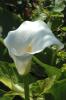
Zantedeschia plants usually have large arrow-shaped leaves and a showy funnel-like spathe surrounding a yellow or orange spadix. The darkest cultivars may be marketed as black callas, making that common name particularly unreliable.
Ornamental callas also contain insoluble calcium oxalate crystals and can cause immediate oral pain, drooling, vomiting, and difficulty swallowing. They are not botanically identical to Arum palaestinum even when flower color and common names overlap.
Palestine Arum Is Not a True Lily
Neither Arum palaestinum, Calla palustris, nor Zantedeschia is a true lily. True lilies belong to Lilium in Liliaceae. Daylilies belong to Hemerocallis.
This distinction is critical for cats. True lilies and daylilies can cause fatal acute kidney failure after very small exposures, including pollen and vase water. Palestine Arum causes immediate raphide injury and is not expected to produce the same feline renal syndrome. A plant label containing only the word “lily” is therefore inadequate during an emergency. The scientific name or a clear photograph of the entire plant is essential.
Native Range and Habitat
Palestine Arum is native from western Syria and Lebanon through Palestine and Jordan. It is a characteristic Levantine and eastern Mediterranean geophyte rather than a plant native throughout northern Europe or North America.
The species has been cultivated outside its natural range and has been recorded as introduced in California. Elsewhere it is most likely encountered as a specialty ornamental, botanic-garden plant, culturally significant food plant, or escaped garden specimen.
Palestine Arum grows on open hillsides, rocky ground, field margins, fallow fields, waste places, woodland openings, and cultivated or formerly cultivated land. It occurs on limestone-derived terra rossa, calcareous rock, alluvial soils, and soils formed from basalt and other regional substrates. These comparatively well-drained Mediterranean habitats differ sharply from the bogs and shallow water occupied by Calla palustris.
Seasonal Growth, Leaves, and Flowers
The plant is a tuberous geophyte. Leaves emerge during the cooler, wetter autumn and winter season, flowering generally occurs from March through May, and the aboveground growth disappears as the hot, dry summer approaches. The underground tuber remains alive during dormancy. A digging dog, pig, or other animal can therefore encounter toxic tissue when no leaves or flowers are visible.
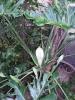
The leaves arise on individual cylindrical stalks from the underground tuber. Mature blades are deep green, hairless, and sagittate to oblong-sagittate, giving them a broad arrowhead or trowel-like appearance. Leaf blades may reach approximately 15 to 36 centimeters long and 10 to 25 centimeters wide. The petiole may be stained purple along part of its length, especially near the base.
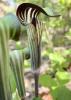
The structure commonly described as the flower consists of a fleshy spadix surrounded by a modified leaf called a spathe. The exterior of the spathe is greenish to pale brown, sometimes with purple staining. The inner spathe surface is a deep, relatively uniform purple. A black-purple cylindrical or slightly spindle-shaped appendix rises from the spadix, producing the nearly black appearance responsible for the name Black Calla.
The true flowers are tiny and located near the base of the spadix. Female flowers occupy a lower zone and male flowers an upper zone, with rings of sterile bristles participating in the plant’s temporary insect-trapping pollination system. The inflorescence may smell like fermenting apples or overripe fruit, and some plants produce weaker dung-like or carrion-like odors. The scent is a pollination mechanism and may attract curious animals.
Fruit, Seeds, and Tuber Exposure
After pollination, the spathe and leaves may disappear while a compact fruiting spike develops closer to the ground. The berries become yellow-green, orange, or red as they mature, depending on stage and observation. Colorful fruits may be more readily swallowed than the acrid leaves because an animal can gulp several before extensive chewing occurs. The seeds are confirmed to contain needle-shaped oxalate crystals.
Fallen berries should be collected promptly from animal areas. A fruiting spike should not be left where dogs, livestock, birds, rabbits, or children can investigate it. The underground tuber should also be treated as poisonous. It can remain after the visible plant disappears and may be exposed by digging, gardening, erosion, transplanting, or yard clearing.
The Araceae Family and Raphide Cells
Araceae contains thousands of species, including arums, callas, peace lilies, dumb canes, philodendrons, pothos, monsteras, elephant ears, anthuriums, and arrowhead vines. Many aroids use calcium oxalate crystals as a defense against herbivores. Their toxic syndromes overlap because chewing releases crystals directly into contacted tissues.
An idioblast is a specialized cell that differs from the tissue around it. Raphide idioblasts contain bundles of long calcium oxalate needles suspended within mucilage. Pressure, crushing, tearing, and the entry of saliva or sap into damaged cells can release or propel the crystal bundle outward. Not every idioblast behaves as an identical spring-loaded syringe, but the combined release from large numbers of cells creates an effective mechanical defense.
Raphides are rigid mineral structures. When released, their sharp ends penetrate moist mucous membranes far more readily than an intact smooth leaf surface would. One crystal creates a tiny wound. Thousands of crystals distributed across the lips, tongue, gums, and throat stimulate pain receptors simultaneously and allow sap to reach beneath the superficial protective layer. The response can be dramatic even when the actual amount swallowed is small.
Inflammation and Possible Proteinase Activity
Tissue damage triggers release of kinins, histamine, prostaglandins, and other inflammatory mediators. These compounds increase pain, blood flow, and leakage of fluid into the damaged tissue. The resulting edema may enlarge the lips and tongue and make swallowing painful. Swelling in the comparatively narrow pharyngeal or laryngeal space can have a greater effect on breathing than similar swelling on an exposed lip.
Direct crystal injury can produce marked inflammation without a classic allergy. An antihistamine cannot remove embedded raphides or secure an airway that is mechanically narrowing. Medication for swelling may be useful in selected veterinary cases, but airway protection comes first when breathing is compromised.
Proteolytic enzymes break proteins into smaller peptides or amino acids. In some aroids, proteinaceous irritants intensify the damage created by calcium oxalate crystals. The raphides may act as delivery structures by carrying sap into microscopic punctures. No specific proteinase has been established as the primary toxin of A. palaestinum, so the possibility remains scientifically reasonable but unconfirmed for this species.
Insoluble and Soluble Oxalates Produce Different Syndromes
Insoluble calcium oxalate raphides act mainly through direct tissue contact. The calcium and oxalate are already bound into crystals that do not dissolve readily in the digestive tract. Soluble oxalates can be absorbed, bind circulating calcium, cause hypocalcemia, disturb cardiac and muscular function, and contribute to calcium oxalate deposition within the kidneys.
Kidney failure should not be assigned automatically to Palestine Arum merely because the plant contains calcium oxalate. Abnormal kidney values after a severe exposure require investigation of dehydration, shock, hypoxia, another plant, medication, ethylene glycol, or underlying renal disease.
The 53-Patient Clinical Review
Saar Hashavya, Aus Maree, Itai Gross, Yaakov Asaf, and Yedidia Bentur reviewed pediatric Arum palaestinum exposures reported to the Israel National Poison Information Center during 2017. The 53 patients ranged from nine months to fifteen years of age, with a mean age of 3.3 years.
Thirty-four percent remained asymptomatic. Sixty-six percent developed minor effects, principally redness and irritation of the mouth, agitation, and drooling. No severe poisoning or upper-airway compromise occurred. The researchers concluded that the typical poisoning was self-limited and confined to contacted mucous membranes.
The patients were children rather than dogs, cats, horses, or livestock, so the study cannot define every veterinary outcome. It remains the strongest direct clinical series for this exact species and does not support presenting renal failure, coma, or permanent organ damage as the ordinary result.
Traditional Food Use Requires Careful Context
Palestine Arum leaves have a history of culinary use in parts of Palestine and the broader Levant. Preparation may involve repeated boiling, discarding water, combining the leaves with acidic ingredients, or using other culturally specific methods intended to reduce acridity.
Traditional processing demonstrates that preparation changes the plant; it does not make raw tissue safe. Incomplete preparation can leave enough irritating material to cause poisoning. No home-processing method or safe dose has been established for dogs, cats, horses, livestock, or other animals. Raw or prepared Palestine Arum should never be offered as animal food.
Dogs, Cats, Horses, and Livestock
Dogs may bite leaves, chew the dark inflorescence, swallow berries, or dig up the tuber. Short-nosed dogs and animals with existing airway disease may tolerate swelling poorly. Cats may nibble leaves, play with berries, or walk through sap during plant handling. Crystal-bearing residue on the paws or coat can be swallowed repeatedly during grooming.
Horses may encounter garden clippings, tubers disturbed during landscaping, or ornamental plants growing beside a paddock. They cannot vomit. Salivation, head tossing, mouth rubbing, feed refusal, coughing, repeated swallowing, nasal reflux, tongue swelling, diarrhea, and colic may occur.
Livestock generally stop eating after the first painful bite when adequate forage is available. Exposure becomes more likely when plants are mixed with cut vegetation, disposed of in an enclosure, or encountered during forage shortage. Possible signs include salivation, repeated mouth movements, feed refusal, tongue swelling, ruminal discomfort, diarrhea, and breathing difficulty. A group exposure should prompt immediate removal of all plant material and evaluation for other discarded ornamentals or chemicals.
Skin and Eye Exposure
Sap and crushed tissue may irritate the lips, muzzle, paws, eyelids, and damaged or sparsely haired skin. Burning, redness, itching, swelling, or dermatitis may develop. An animal can spread residue by licking or scratching. Gloves should be worn while handling damaged plants, and contaminated tools, clothing, bedding, and surfaces should be cleaned.
Calcium oxalate crystals entering the eye can abrade the corneal surface and cause severe pain, blinking, tearing, conjunctival swelling, and cloudiness. Rubbing may drive material deeper or create additional scratches. Prompt gentle irrigation is appropriate, followed by veterinary examination if discomfort or visible abnormalities persist.
Diagnosis and Differentials
Diagnosis usually rests on a credible exposure, immediate oral-pain syndrome, and accurate plant identification. Photographs should include the leaves, dark spathe and spadix, fruiting spike, tuber, and growing habitat. The veterinarian assesses the mouth, tongue, pharynx, larynx, breathing, swallowing, hydration, gastrointestinal signs, skin, and eyes.
The first botanical differentials are Calla palustris, ornamental Zantedeschia, Arum maculatum, Arum italicum, and other Arum species. All are aroids capable of causing oxalate irritation, but their habitat, morphology, and geographic origin differ. True lilies, lily of the valley, peace lilies, calla lilies, Solomon’s Seal, philodendrons, Dieffenbachia, elephant ears, and other plants containing “lily,” “arum,” or “calla” in their common names produce different or partially overlapping syndromes.
Caustic cleaners, batteries, electrical burns, insect stings, caterpillar hairs, bones, sticks, fishhooks, and esophageal foreign bodies can also cause sudden drooling, gagging, oral pain, and inability to swallow.
Veterinary Treatment, Prognosis, and Prevention
There is no specific antidote. Treatment focuses on removing remaining plant material, relieving pain, controlling vomiting, maintaining hydration, treating eye or skin injury, and protecting the airway. A veterinarian may gently cleanse the mouth, provide analgesia and an antiemetic, and administer fluids when vomiting or inability to drink causes dehydration. Medication for inflammation or hypersensitivity is selected according to the actual examination rather than given automatically.
Progressive tongue, pharyngeal, or laryngeal swelling may require oxygen, sedation, endotracheal intubation, or another emergency airway procedure. An animal with significant swelling should remain under observation until breathing and swallowing are clearly normal. Induced vomiting is inappropriate once oral pain, gagging, or dysphagia is present because crystals and sap will contact the mouth and esophagus again. Activated charcoal does not remove mineral needles embedded in tissue and is not routine treatment for uncomplicated Palestine Arum exposure.
The prognosis is excellent for most limited exposures. Immediate pain generally prevents prolonged consumption, and the strongest species-specific clinical evidence supports a mild, self-limiting syndrome. The outlook becomes more guarded with progressive airway swelling, aspiration, corneal ulceration, shock, persistent inability to swallow, or signs that suggest another toxin or complication.
Keep Palestine Arum outside pet runs, kennels, paddocks, and areas used by grazing animals. Remember that the underground tuber remains after visible foliage becomes dormant. Wear gloves while digging or dividing the plant. Collect every leaf, berry, seed cluster, tuber fragment, and piece of contaminated debris. Do not place plant trimmings in open compost or livestock areas. Label the plant with the accepted scientific name because Wild Calla, Black Calla, Wild Arum, and Solomon’s Lily are too ambiguous for dependable emergency identification.
Immediate Steps After Exposure
Stop further exposure. Remove the animal from Palestine Arum leaves, berries, seed clusters, spathe, spadix, tuber, cut foliage, garden waste, and contaminated surfaces. Prevent other animals from reaching the same material.
- Contact a veterinarian or animal poison-control service: Report the species, body weight, plant part, estimated amount, time of exposure, and any change in breathing, swallowing, vocalization, or behavior.
- Remove loose material carefully: If the animal is alert and cooperative, clear visible plant pieces from the front of the mouth without reaching deeply toward the throat.
- Gently remove visible residue: Wipe accessible lips, gums, tongue, muzzle, paws, and coat with a damp cloth. A gentle rinse is appropriate only when breathing and swallowing are completely normal.
- Prevent grooming and rubbing: Sap or crystal-bearing residue on the paws, coat, muzzle, or eyelids can be spread into the mouth and eyes.
- Preserve identification evidence: Bring clear photographs or a secured specimen showing the arrow-shaped leaves, dark reddish-purple spathe, black-purple spadix, fruiting spike, and tuber when available.
Do Not Attempt Unsupervised Home Treatment
- Do not induce vomiting: Hydrogen peroxide, salt, mustard, oil, syrup of ipecac, and manual gagging can worsen irritation and cause aspiration.
- Do not force water into the mouth: An animal that is gagging, coughing, heavily drooling, or struggling to swallow may inhale the liquid.
- Do not automatically give milk, yogurt, cheese, or other food: Dairy does not remove raphides already embedded in tissue and may be aspirated when the throat is swollen.
- Do not give diphenhydramine without veterinary direction: Direct crystal injury can cause severe swelling without a classic allergic reaction, and an antihistamine cannot secure a narrowing airway.
- Do not force activated charcoal: Charcoal does not remove mineral needles and creates an aspiration risk in a drooling, vomiting, or poorly swallowing animal.
- Do not administer Kapectolin, Kaopectate, sucralfate, antacids, pain relievers, corticosteroids, antibiotics, or antidiarrheal medication without veterinary direction: Treatment depends on the species, swallowing ability, hydration, and extent of tissue injury.
- Do not wait for collapse: Increasing tongue swelling, repeated gagging, hoarseness, stridor, or worsening difficulty swallowing may precede serious airway compromise.
Skin and Eye Decontamination
Wear gloves and wash sap from the paws, coat, muzzle, and exposed skin with lukewarm water and a mild pet-safe cleanser. Prevent licking until the residue has been removed. Clean collars, bedding, tools, clothing, crates, vehicle surfaces, and contaminated work areas.
If sap or plant material enters an eye, begin gentle irrigation with sterile saline or clean lukewarm water when this can be done safely. Do not rub the eye or attempt to scrape away crystals. Persistent squinting, tearing, redness, swelling, cloudiness, discharge, or apparent vision difficulty requires veterinary examination.
When Emergency Examination Is Especially Important
- Breathing becomes noisy or difficult: Stridor, wheezing, open-mouth breathing, rapid shallow gasps, exaggerated respiratory effort, blue-gray gums, weakness, or collapse may indicate airway compromise.
- Tongue or throat swelling is increasing: Progressive edema can interfere with swallowing and narrow the airway after chewing has stopped.
- Swallowing or vocalization changes: Continuous drooling, repeated gagging, coughing with water, neck extension, nasal reflux, a hoarse bark, or a weakened meow requires assessment.
- Vomiting or diarrhea is persistent: Inability to retain water, tacky gums, weakness, reduced urination, or collapse indicates clinically important dehydration.
- The eye remains painful: Severe squinting, cloudiness, eyelid swelling, or inability to open the eye may indicate corneal injury.
- Seizures, coma, or markedly reduced urination develops: These are not expected uncomplicated signs and require investigation for hypoxia, shock, another toxicant, or unrelated disease.
- A horse develops respiratory or choke-like signs: Nasal reflux, coughing, neck extension, severe salivation, or abnormal airway noise requires immediate equine care.
Veterinary Treatment
The veterinarian may examine the mouth, tongue, pharynx, larynx, respiratory effort, hydration, abdomen, skin, and eyes. Treatment can include careful oral cleansing, pain control, antiemetics, fluids, oxygen, and ophthalmic care.
Significant upper-airway swelling may require continued observation, endotracheal intubation, or another emergency airway procedure. Medication should not delay physical airway support when airflow is deteriorating.
Persistent vomiting, abdominal pain, weakness, reduced urination, or systemic abnormalities may justify blood chemistry, electrolytes, urinalysis, imaging, and repeated monitoring to identify dehydration, aspiration, another toxin, or an unrelated disorder.
Recovery and Prognosis
Most animals with limited exposure improve within several hours and recover fully within approximately 12 to 24 hours. More substantial oral, esophageal, gastrointestinal, skin, or eye injury may require several days or longer to heal.
An animal with meaningful tongue or throat swelling should remain under professional observation until normal breathing and swallowing are clearly restored. Persistent pain, vomiting, food refusal, eye abnormalities, or systemic weakness requires reassessment rather than repeated household treatment.
Prevention After the Incident
Remove Palestine Arum from animal-accessible areas. Collect fallen fruit, seed clusters, leaves, tuber fragments, and cut foliage. Do not discard plant material into animal pens, paddocks, compost piles, chicken runs, rabbit areas, tortoise enclosures, or anywhere dogs can reach it.
Label retained plants with the accepted scientific name, Arum palaestinum, and the primary page name Palestine Arum. Keep Wild Calla, Black Calla, Wild Arum, and Solomon’s Lily as secondary names only because they can refer to or be confused with other plants.
Frequently Asked Questions About Palestine Arum and Animal Poisoning
Why should this page be called Palestine Arum instead of Wild Calla?
Palestine Arum is the clearest name for Arum palaestinum. Wild Calla is widely used for the separate wetland plant Calla palustris, and Wild Arum is broad enough to overlap with other Arum pages. Palestine Arum keeps the page species-specific while preserving Wild Calla, Black Calla, Wild Arum, and Solomon’s Lily as search names.
Does Wild Calla mean Arum palaestinum or Calla palustris?
It can mean either plant depending on region and source. On this page, the old title Wild Calla referred to Arum palaestinum, the dark-flowered Palestine Arum. In northern wetland floras, Wild Calla commonly means Calla palustris, a separate plant with heart-shaped leaves, a white spathe, and a yellow-green spadix.
Is Palestine Arum the same as Black Calla or Wild Arum?
When those names refer to Arum palaestinum, they identify the same species. Black Calla describes the dark purple-black inflorescence, while Wild Arum is a broader common name. Wild Arum should not be used as the primary page title when the site already has another Wild Arum page or when several Arum species are being covered separately.
Is Palestine Arum the same as an ornamental Calla Lily?
No. Ornamental calla lilies belong to Zantedeschia. They are separate southern African aroids, although they also contain insoluble calcium oxalate crystals and can cause similar oral pain, drooling, and difficulty swallowing. Dark ornamental calla cultivars may be marketed as black callas, which makes common-name identification unreliable.
Is Palestine Arum a true lily?
No. Palestine Arum belongs to Araceae. True lilies belong to Lilium, and daylilies belong to Hemerocallis. This matters especially for cats because true lilies and daylilies can cause fatal acute kidney failure, while Palestine Arum primarily causes immediate raphide injury to contacted tissues.
Is the correct spelling Arum palestinum or Arum palaestinum?
The accepted spelling is Arum palaestinum Boiss. The form Arum palestinum is a common misspelling. The older synonyms Arum magdalenae, Arum sanctum, and Richardia sancta may still appear in historical or horticultural sources.
Which parts of Palestine Arum are poisonous?
Leaves, flowers, spathe, spadix, fruits, seeds, stems, sap, roots, and the underground tuber should all be treated as poisonous. Leaves and seeds are specifically documented as containing needle-shaped oxalate crystals. The fruiting spike and tuber deserve special attention because animals may swallow berries or dig up the tuber when foliage is absent.
How do the calcium oxalate crystals cause injury?
Needle-shaped raphides are stored inside specialized cells called idioblasts. Chewing ruptures the cells and releases the crystal bundles into the mouth. The needles puncture soft tissue, causing intense pain, redness, drooling, gagging, and inflammatory swelling of the lips, tongue, mouth, and throat.
Does Palestine Arum contain a proteinase toxin?
Proteolytic enzymes can intensify raphide injury in some aroids, but no specific proteinase has been confirmed as a principal toxin of Arum palaestinum. Insoluble calcium oxalate raphides remain the best-supported species-specific toxic principle, while enzyme involvement remains a qualified family-level possibility.
Can Palestine Arum block an animal’s airway?
Severe airway swelling is uncommon but possible. Increasing tongue or throat edema, hoarseness, stridor, open-mouth breathing, rapid shallow gasps, blue-gray gums, weakness, or collapse requires immediate emergency treatment. Airway compromise can become dangerous even after the animal has stopped chewing the plant.
Can Palestine Arum cause kidney failure or permanent liver damage?
Direct kidney failure and permanent liver damage are not expected effects of ordinary insoluble calcium oxalate exposure. Dehydration, shock, hypoxia, another poison, or underlying disease can cause secondary organ abnormalities and must be investigated separately. Cats with possible true-lily exposure require a different emergency approach.
What did the 53-patient Arum palaestinum study find?
Thirty-four percent of the pediatric patients remained asymptomatic, while 66% developed minor effects such as oral redness, irritation, agitation, and drooling. No severe poisoning, upper-airway compromise, or death occurred. The study involved children rather than animals, but it provides valuable direct evidence that typical exposure to this exact species is usually mild and localized.
How long do Palestine Arum symptoms last?
Most limited exposures improve within several hours and resolve within approximately 12 to 24 hours. Substantial oral ulceration, esophageal irritation, tongue swelling, gastrointestinal inflammation, or eye injury may require several days. Symptoms lasting nearly two weeks are possible after unusually severe aroid injury but are not typical after a brief taste.
Should the mouth be flushed or dairy products be given?
Loose residue may be gently wiped or rinsed away only when the animal is alert, breathing normally, and swallowing without difficulty. Do not force water, milk, yogurt, or cheese. Dairy does not remove crystals embedded in tissue and may be aspirated when swallowing is impaired.
Should diphenhydramine, hydrogen peroxide, or activated charcoal be used?
Not without veterinary direction. Hydrogen peroxide can worsen irritation and cause aspiration. Diphenhydramine cannot remove crystals or secure an obstructed airway. Activated charcoal does not remove mineral needles embedded in contacted tissue and is not routine treatment for uncomplicated Palestine Arum exposure.
Is Palestine Arum poisonous to dogs?
Yes. Dogs may bite the leaves, chew the dark inflorescence, swallow berries, or dig up the tuber. Signs may include head shaking, mouth pawing, drooling, gagging, vomiting, food refusal, tongue swelling, and difficulty swallowing. Short-nosed dogs or dogs with airway disease should be examined promptly if any swelling or breathing noise develops.
Is Palestine Arum poisonous to cats?
Yes. Cats may nibble leaves, play with berries, or groom sap from the paws and coat. Drooling, mouth pain, vomiting, hiding, and food refusal are principal concerns. Continued anorexia requires veterinary attention because cats can develop secondary metabolic illness when they stop eating.
Is Palestine Arum poisonous to horses and livestock?
Yes. Horses and livestock may develop salivation, mouth pain, tongue swelling, feed refusal, difficulty swallowing, diarrhea, colic, or respiratory distress. Horses cannot vomit. Plants, tubers, fruiting spikes, and clippings should never be discarded into paddocks, pens, pastures, or livestock feed areas.
Can rabbits, guinea pigs, birds, reptiles, or tortoises eat Palestine Arum?
No. Palestine Arum should not be used as forage, browse, enclosure greenery, nesting material, or enrichment. Safe doses are not established, and raphide injury can cause mouth pain, food refusal, eye irritation, and gastrointestinal signs. Small animals that stop eating after exposure need species-appropriate veterinary advice.
Can traditionally cooked Palestine Arum be fed to animals?
No. Human culinary use relies on culturally specific preparation intended to reduce acridity. It does not establish a safe preparation or dose for dogs, cats, horses, livestock, rabbits, birds, reptiles, or other animals. Raw or prepared Palestine Arum should never be offered as animal food.
How can Palestine Arum poisoning be prevented?
Keep the plant outside animal areas, remove fallen fruits, and remember that the underground tuber remains after the leaves disappear. Wear gloves while handling it, secure every plant fragment, and label it with the accepted scientific name because Wild Calla, Black Calla, Wild Arum, and Solomon’s Lily are ambiguous common names.