Monstera Toxicity, Insoluble Calcium Oxalate Raphides, Mouth and Throat Injury, Eye Exposure, and Unripe Fruit Risk
Is Cutleaf Philodendron Poisonous to Dogs, Cats, Horses, and Livestock?
Yes—Cutleaf Philodendron, Swiss Cheese Plant, or Monstera deliciosa is poisonous to dogs, cats, horses, livestock, rabbits, guinea pigs, birds, reptiles, and other animals that chew it. The accepted plant is a Monstera, not a true Philodendron, but the old nursery name remains common. Its leaves, petioles, stems, aerial roots, underground roots, sap, inflorescences, cuttings, unripe fruit, and incompletely ripened fruit contain insoluble calcium oxalate crystals called raphides. Chewing releases these microscopic needle-like crystals into the lips, tongue, gums, mouth, throat, and sometimes eyes or skin, causing immediate burning pain, heavy drooling, pawing at the mouth, gagging, swelling, difficulty swallowing, appetite refusal, and sometimes vomiting.
Most Monstera exposures remain localized because pain discourages continued chewing. That does not make the plant harmless. Progressive tongue or throat swelling can interfere with swallowing or breathing, eye exposure can damage the cornea, and swallowed plant fragments may irritate the esophagus or stomach. A fallen pot can also expose an animal to fertilizer, systemic insecticide, decorative stones, moss-pole fibers, wire, plant ties, broken ceramic, moldy soil, or water-retaining crystals. Severe kidney failure, systemic calcium depletion, generalized seizures, persistent arrhythmias, liver failure, prolonged coma, or multisystem organ injury are not expected from uncomplicated Monstera raphide injury and should trigger investigation for another toxin, severe aspiration, foreign material, dehydration, potting chemicals, or unrelated disease.
About this guide: This page provides general pet-poisoning information and cannot diagnose or treat an individual animal. For any suspected exposure, contact a veterinarian or animal poison-control service immediately. Do not induce vomiting, give medication, or attempt home decontamination unless directed by a veterinary professional.
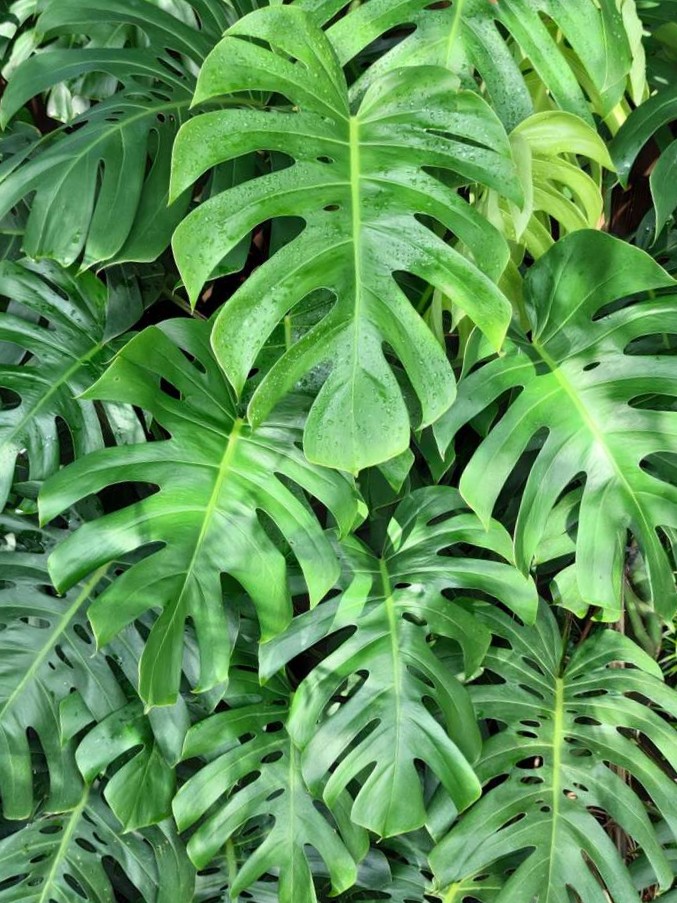
Cutleaf Philodendron
Accepted name: Monstera deliciosa Liebm.
Important botanical synonyms and historical names include:
- Monstera borsigiana K.Koch
- Monstera deliciosa var. borsigiana (K.Koch) Engl.
- Monstera deliciosa var. sierrana G.S.Bunting
- Monstera lennea K.Koch
- Monstera lenneana K.Koch — alternate historical spelling associated with Monstera lennea
- Philodendron anatomicum Kunth & C.D.Bouché — invalid historical usage published as a synonym
- Philodendron anatomicum Morsch — later published historical name
- Philodendron fenestratum Linden
- Philodendron pertusum Kunth & C.D.Bouché
- Tornelia fragrans Gutierrez ex Schott — illegitimate historical name
Important taxonomy and non-synonym confusion notes:
- Monstera borsigiana and Monstera deliciosa var. borsigiana are not currently accepted as a separate species or variety. Plants sold as “Borsigiana” are included within Monstera deliciosa.
- Monstera tacanaensis Matuda is a separate accepted species rather than a synonym. Some wild Central American plants historically identified as Monstera deliciosa, especially south of Guatemala, have been reassigned to Monstera tacanaensis.
- Monstera adansonii, Monstera obliqua, Monstera lechleriana, and other perforated-leaf Monstera species may also be called Swiss Cheese Plant but are separate species.
- Philodendron bipinnatifidum, Philodendron selloum, and Thaumatophyllum bipinnatifidum are large split-leaf aroids sometimes confused with Cutleaf Philodendron but are not Monstera deliciosa.
Araceae Juss. — Arum or Aroid Family
Cutleaf Philodendron belongs to the order Alismatales and the genus Monstera. Other insoluble-calcium-oxalate aroids include Aglaonema, Alocasia, Caladium, Colocasia, Dieffenbachia, Epipremnum, Philodendron, Spathiphyllum, Syngonium, and Zantedeschia.
Although “Cutleaf Philodendron” and “Split-leaf Philodendron” remain common trade names, Monstera deliciosa is not botanically a member of the genus Philodendron.
Cutleaf Philodendron; Cut-leaf Philodendron; Split-leaf Philodendron; Split Leaf Philodendron; Swiss Cheese Plant; Swiss Cheese Vine; Cheese Plant; Windowleaf; Window Leaf Plant; Window Plant; Hurricane Plant; Ceriman; Ceriman Fruit; Mexican Breadfruit; Mexican Breadfruit Vine; Breadfruit Vine; Fruit Salad Plant; Fruit Salad Tree; Delicious Monster; Monstera; Monstera Plant; Monstera Vine; Monstera deliciosa; Monstera borsigiana; Philodendron pertusum; Philodendron fenestratum.
Cultivar, trade, and search variants include Borsigiana, Albo Variegata, Aurea, Thai Constellation, Mint Monstera, Variegated Monstera, Large Form Monstera, Small Form Monstera, and green Monstera deliciosa. These cultivated forms remain Monstera plants and should not be treated as pet-safe because of leaf color, variegation, internode spacing, growth rate, or nursery price.
Naming caution: “Swiss Cheese Plant” is also used for Monstera adansonii and other perforated-leaf Monstera species. “Split-leaf Philodendron” is also applied to large self-heading aroids that are not Monstera deliciosa. “Cutleaf Philodendron” remains a common trade name, but Monstera deliciosa is not botanically a member of the genus Philodendron. Exact identification should rely on the scientific name, climbing growth habit, nodes, aerial roots, leaf fenestrations, support structure, fruit or flower structure when present, and nursery label rather than a common name alone.
Insoluble Calcium Oxalate Raphides Are the Confirmed Monstera Toxin
The established toxic structures in Monstera deliciosa are insoluble calcium oxalate crystals called raphides. These are elongated microscopic crystals produced in specialized plant cells known as idioblasts. In practical veterinary terms, they behave like tiny needles embedded in plant sap and fresh plant tissue. When a dog, cat, horse, goat, rabbit, bird, or other animal chews the plant, the problem starts immediately at the surface of contact: lips, tongue, gums, mouth, throat, eyes, skin, esophagus, or stomach.
This is not a delayed liver poison, not a classic kidney-failure oxalate plant, and not a cardiac-glycoside plant. The hallmark is rapid local injury. An animal bites the leaf or petiole, the idioblasts rupture, the raphides are released, and the mouth reacts before the plant has to be digested. That is why many animals suddenly drop the plant, shake their head, paw at the mouth, drool heavily, gag, cough, or refuse another bite. The pain response is often the animal’s own limiting mechanism, but it does not make the exposure harmless.
Exact-species ultrastructural research has documented raphide-forming cells in Monstera deliciosa, so the page does not need to lean only on evidence from Dieffenbachia, Philodendron, Epipremnum, taro, or other aroids. The warning belongs directly on this species. At the same time, many related aroids share the same broad injury mechanism, which is why a pet owner may see similar first-aid advice for pothos, peace lily, dumb cane, philodendron, caladium, alocasia, colocasia, syngonium, and calla lily.
The important public distinction is insoluble versus soluble oxalate. The crystals in Monstera are chiefly insoluble raphides that remain at contacted surfaces. They are not absorbed readily in a way that pulls major amounts of calcium from the bloodstream. Primary hypocalcemia, kidney calcium-oxalate deposition, acute renal failure, persistent dysrhythmias, generalized seizures, liver failure, coma, and multisystem organ failure are not expected from an uncomplicated Monstera nibble. If those signs appear, the veterinarian should look for severe hypoxia, aspiration, dehydration, another toxic plant, pesticide, fertilizer, medication, potting-material exposure, foreign body, or unrelated disease.
Where the Irritating Material Is Found
Leaves, petioles, stems, nodes, aerial roots, underground roots, fresh sap, inflorescences, immature fruit, partly ripe fruit, propagation cuttings, and freshly pruned material should all be treated as irritating. The highest practical risk in ordinary homes is usually not a rare fruiting event; it is a cat chewing a dangling leaf, a dog tearing a fallen petiole, an animal mouthing aerial roots, or a pet reaching a propagation cutting in water.
Aerial roots deserve more attention than most houseplant pages give them. They can trail down to floors, furniture, nearby plant stands, or water jars even when the leafy canopy seems out of reach. A pet may never touch the main pot yet still chew an aerial root or node. Freshly cut aerial roots and stem cuttings can release sap, and cut surfaces may be more accessible than intact leaves because they are placed on counters, in water glasses, or in propagation stations.
Variegated tissue is not exempt. ‘Albo Variegata,’ ‘Aurea,’ ‘Thai Constellation,’ mint forms, mottled collector plants, and plants sold as “Borsigiana” remain Monstera tissue. White, cream, yellow, or mottled leaf sectors do not prove the absence of raphides. A smaller internode, different growth rate, expensive price, or collector label does not create a safer pet plant.
How Chewing Turns a Beautiful Houseplant Into a Painful Exposure
Monstera tissue is not dangerous because it has to be swallowed in large amounts and metabolized. It is dangerous because chewing physically opens the crystal-containing cells. Crushing a leaf, snapping a petiole, biting a node, shredding an aerial root, or breaking a fresh cutting releases raphide bundles into the sap and directly against the mucosa.
The crystals produce many microscopic punctures. They abrade tissue, activate pain receptors, and start local inflammation. The animal’s saliva increases, the tongue becomes painful to move, the throat may feel irritated, and swallowing can become difficult. This explains the classic pattern: immediate mouth pain first, then drooling, pawing, gagging, retching, appetite refusal, and sometimes vomiting.
Raphides may also help other sap constituents reach tissue beneath the surface. Work in other raphide-containing plants supports the concept that crystals can act as a delivery device for defensive proteins or enzymes. For Monstera deliciosa, however, public veterinary toxicology should not overclaim a specific independent protease, histamine mechanism, alkaloid, or soluble toxin as the main cause. The confirmed, owner-relevant mechanism is raphide-driven local injury, possibly amplified by sap constituents after the crystals puncture tissue.
Mouth, Throat, Esophagus, and Stomach Injury
The lips, tongue, gums, palate, floor of the mouth, cheeks, and pharynx usually take the first and worst contact. The animal may drool not because the salivary glands are systemically poisoned, but because swallowing hurts. Saliva may pool or hang in ropes. Some animals approach water or food but back away because moving the tongue or swallowing is painful.
If the back of the mouth or pharynx is involved, the presentation becomes more concerning. Gagging, repeated swallowing, coughing, neck extension, altered bark or meow, refusal to drink, or apparent panic when trying to swallow can mean irritation has extended beyond the front of the mouth. Most cases still do not progress to airway obstruction, but this is where the owner should stop treating the incident as a simple “plant bite.”
Swallowed fragments can carry raphides into the esophagus and stomach. This may cause retching, vomiting, nausea, abdominal discomfort, appetite loss, or diarrhea. Horses cannot vomit, so equine exposure may appear as salivation, feed refusal, cough, dysphagia, choke-like behavior, or depression. Persistent regurgitation, blood in saliva or vomit, black stool, repeated vomiting, severe abdominal pain, coughing after vomiting, or inability to retain water is not the expected course after a minor nibble and should trigger veterinary reassessment.
Airway Risk: Serious When Present, but Not the Routine Outcome
Most animals that chew Monstera retain a normal airway. Local tongue and oral swelling are much more common than complete pharyngeal or laryngeal obstruction. The page should not scare owners into thinking every leaf bite equals suffocation.
That said, the airway warning must remain strong because the rare bad case can move quickly. Progressive tongue enlargement, inability to close the mouth, inability to swallow saliva, noisy inspiration, open-mouth breathing, blue-gray gums, rapid shallow breathing, increasing chest effort, or collapse is an emergency. These signs suggest swelling, secretion-handling failure, aspiration, or another respiratory complication that cannot be managed with milk, charcoal, antihistamines, or observation at home.
Veterinary management may require oxygen, suction of secretions, sedation or anesthesia, airway visualization, endotracheal intubation, and close monitoring. An emergency tracheostomy is not the normal course for ordinary Monstera exposure, but it belongs in the professional treatment boundary because severe pharyngeal or laryngeal swelling can become an airway problem before dehydration or vomiting becomes the main issue.
Unripe Fruit, Partly Ripe Fruit, and the Dangerous “Edible Fruit” Misunderstanding
Monstera deliciosa is unusual because part of the mature fruit can be eaten by people when it is naturally ripe. That fact causes a lot of bad pet-safety reasoning. The edible human portion is not the whole plant, not the entire fruit at every stage, and not an animal treat.
The fruit develops as an elongated green structure covered by overlapping hexagonal scales. Ripening proceeds gradually, section by section, commonly from one end of the fruit. As a section becomes ready, the scales loosen and fall away, exposing softened aromatic pulp underneath. Firm sections beneath attached scales remain immature and irritating. Published fruit work describes ripe, half-ripe, and unripe stages as chemically distinguishable, with ripe fruit developing a volatile profile rich in esters and terpenoids.
For humans who know the plant, the practical rule is to eat only the naturally exposed soft ripe pulp and leave the unripe portion alone. Pets do not follow that rule. A dog may bite across ripe and unripe sections, swallow scales, chew the central core, tear the fruit stalk, or gulp plant material before the owner can separate anything. Cats, birds, rabbits, reptiles, and livestock likewise cannot be trusted to select only properly loosened pulp. The safest veterinary recommendation is simple: do not offer Monstera fruit to animals.
Skin, Eye, and Pruning Exposure
Fresh sap can irritate skin, especially around the muzzle, lips, paws, eyelids, thinly haired skin, damaged skin, or areas the animal keeps licking. Skin exposure is usually less important than oral or eye exposure, but it can prolong the problem if sap remains on the coat and the animal grooms it into the mouth.
Eye exposure deserves its own level of concern. Sap or plant debris can reach an eye from a broken petiole, freshly cut stem, severed aerial root, contaminated paw, pruning tool, falling leaf piece, or human hand. Signs may include sudden squinting, tearing, redness, eyelid swelling, light sensitivity, rubbing, discharge, or corneal cloudiness. Continued rubbing can worsen the injury and trap plant material under the eyelids.
A painful eye cannot be judged safely from across the room. If squinting, cloudiness, tearing, discharge, rubbing, or inability to open the eye persists after gentle irrigation, the animal needs veterinary examination. The concern is not systemic poisoning through the eye; the concern is corneal epithelial injury, retained irritant material, ulceration, and secondary trauma from rubbing.
No Established Veterinary Toxic Dose
No dependable leaf area, stem length, petiole mass, aerial-root amount, fruit portion, raphide concentration, or gram-per-kilogram threshold has been established for dogs, cats, horses, livestock, rabbits, birds, reptiles, or other animals. A tiny taste may cause dramatic drooling in one animal because the crystals contacted a sensitive area, while a larger swallowed piece may cause more stomach signs because more plant tissue reached the esophagus or stomach.
Severity depends on how much tissue was crushed, where the sap contacted the animal, whether the back of the throat was involved, whether the animal can swallow saliva, how much was swallowed, whether vomiting occurred, whether the eye was exposed, whether the plant was fresh-cut, and whether the pot or support system introduced additional hazards.
A brief painful bite followed by rapid improvement is usually a mild case. Repeated chewing, unripe fruit exposure, propagation cutting exposure, eye contact, persistent vomiting, continued inability to eat or drink, progressive swelling, respiratory noise, weakness, collapse, or signs outside the expected raphide pattern deserve veterinary guidance or emergency care.
The Usual First Sign Is Immediate Mouth Pain
Clinical signs usually begin while the animal is chewing or within minutes. The animal may suddenly drop the leaf, shake its head, rub its face, paw at the mouth, cry out, back away from the plant, or refuse another bite. This fast reaction is one of the strongest clues that the exposure is an insoluble-calcium-oxalate raphide injury rather than a delayed systemic poison.
Heavy drooling is typical. Saliva may hang in ropes or appear foamy because moving the tongue and swallowing are painful. The lips, gums, tongue, palate, and inner cheeks may become red, tender, or swollen. Some animals resist even gentle mouth inspection, and forcing the mouth open can worsen distress or trigger gagging.
The animal may want relief but be unable to drink comfortably. It may approach a water bowl, try to lick, then stop. Food may fall from the mouth. Cats may hide, sit quietly, lip-lick, drool, or refuse food instead of making an obvious dramatic display. Dogs may paw, rub, gag, and vomit more visibly.
When Swallowing Becomes the Main Concern
Gagging, retching, repeated swallowing, coughing, neck extension, altered vocalization, or refusal to drink can mean irritation has reached the back of the mouth, pharynx, or esophagus. A pet that can swallow saliva normally and is improving is very different from an animal that cannot manage its own secretions.
Most swelling remains localized to the mouth and tongue. Progressive swelling is the warning sign. Increasing tongue size, inability to close the mouth, inability to swallow saliva, rapidly worsening facial swelling, noisy inspiration, open-mouth breathing, blue-gray gums, or increased chest effort indicates a more serious airway or secretion-handling problem.
Owners often want to “wash it down,” but this can make things worse if swallowing is impaired. Forcing water, milk, oil, yogurt, honey, or food into the mouth can be aspirated. An alert animal that swallows normally may drink voluntarily. A gagging, drooling, panicked, or dysphagic animal should not have liquid forced into the mouth.
Vomiting, Regurgitation, and Gastrointestinal Signs
Swallowed raphides and plant fibers may cause nausea, vomiting, appetite loss, abdominal discomfort, or diarrhea. Vomiting is not required for diagnosis, and its absence does not prove the animal is safe. Conversely, one vomit episode after chewing Monstera does not automatically mean the exposure has become severe.
The pattern matters. Occasional vomiting with improving mouth pain is one scenario. Repeated vomiting, persistent regurgitation, coughing after vomiting, blood in vomit, black stool, severe abdominal pain, weakness, dry gums, reduced urination, or inability to retain water is another. Those findings suggest dehydration, aspiration risk, esophagitis, more extensive mucosal injury, foreign material, potting-material exposure, or another problem beyond a simple bite.
Horses cannot vomit. In horses, ponies, and donkeys, swallowed irritation may appear as salivation, feed refusal, slow chewing, repeated attempts to swallow, coughing, choke-like signs, neck extension, nasal discharge after aspiration, colic-like discomfort, or depression. A horse with dysphagia or respiratory noise after access to Monstera debris needs veterinary evaluation, not routine “wait and see” observation.
Eye and Skin Signs
Sap on the skin may cause localized redness, itching, swelling, burning, licking, rubbing, or discomfort. The muzzle, lips, chin, paws, eyelids, belly, and thinly haired areas are common contact sites. Licking contaminated fur can transfer additional raphides or sap into the mouth, extending the exposure after the plant itself has been removed.
Eye exposure can look dramatic quickly. Squinting, tearing, eyelid swelling, conjunctival redness, discharge, rubbing, light sensitivity, or corneal cloudiness after contact with Monstera sap or plant debris should be taken seriously. Gentle irrigation may help remove loose residue, but persistent signs require examination for corneal abrasion, ulceration, retained plant material, or deeper irritation.
Dogs
Dogs may chew large leaves, tear petioles, pull down vines, mouth aerial roots, eat pruning debris, shred fallen leaves, or overturn the entire container. The most common signs are immediate mouth discomfort, drooling, pawing at the mouth, gagging, vomiting, and refusal to eat or drink. Many dogs improve once access ends and loose plant material is removed.
The more concerning dog cases are the ones that do not follow the short, improving pattern. A dog that repeatedly vomits, coughs after vomiting, cannot swallow water, develops progressive tongue swelling, has noisy breathing, shows eye pain, becomes weak, or collapses needs veterinary care. A dog that pulls over the whole pot also needs evaluation for fertilizer, systemic insecticide, support-pole material, sphagnum moss, coir, wire, plant ties, decorative stones, water-retaining crystals, moldy soil, and broken container fragments.
Large dogs may shred a plant quickly and swallow more material before the pain stops them. Small dogs may receive a more meaningful exposure from a smaller amount. Dogs that chew cuttings or aerial roots in propagation water may also ingest decomposing plant material, rooting products, algae, or fertilizer residue. The plant should not be viewed in isolation when the exposure involved the whole pot or propagation setup.
Cats
Cats often encounter Monstera differently from dogs. They may climb the support pole, chew dangling leaves, bite aerial roots, paw at cuttings in water, or mouth new growth. A cat may drool, lip-lick, paw at the mouth, vomit, hide, refuse food, or sit quietly after chewing. Because many cats hide pain, the absence of dramatic pawing does not rule out oral irritation.
Ongoing appetite refusal deserves special attention. A cat that does not resume eating after the initial mouth pain improves should be checked, especially if vomiting, drooling, squinting, hiding, or lethargy continues. Prolonged feline anorexia can become its own medical problem. Monstera exposure should not be treated at home with hydrogen peroxide, forced milk, oil, charcoal, essential oils, human pain relievers, antihistamines, or leftover medication.
Horses, Ponies, Donkeys, and Livestock
Monstera exposure in large animals is usually a management failure rather than pasture ecology: discarded houseplants, greenhouse waste, tropical landscaping debris, compost, or clippings thrown into a pen, paddock, goat yard, or poultry area. Horses, cattle, sheep, goats, pigs, poultry, camelids, and other livestock may show salivation, mouth rubbing, reduced feed intake, abnormal chewing, difficulty swallowing, coughing, gagging, or gastrointestinal discomfort.
Horses cannot vomit and should be watched for dysphagia, choke-like signs, cough, nasal discharge, feed refusal, and respiratory noise. Goats and cattle may mouth or browse discarded plant waste more aggressively than expected, especially when mixed with other clippings. Pigs may root through compost or plant debris and swallow pieces rapidly. Poultry may peck at soft plant tissue, potting material, or fruit fragments.
Severe illness in several animals should not be blamed automatically on one Monstera leaf. Mixed ornamental debris may include oleander, lilies, sago palm, dieffenbachia, pothos, philodendron, pesticides, fertilizer, mold, plastic, wire, stones, or other hazards. Preserve the plant material, waste pile, feed, and water source before cleanup so the veterinarian can evaluate the whole exposure.
Rabbits, Guinea Pigs, Birds, Reptiles, and Other Small Animals
Monstera should not be used as rabbit browse, guinea pig greens, poultry greens, bird enrichment, reptile décor, tortoise forage, cage foliage, or bedding. Small animals may not show the dog-and-cat pattern clearly. Rabbits and guinea pigs may show drooling, mouth pain, reduced appetite, fewer fecal pellets, soft stool, diarrhea, dehydration, or secondary gut slowing. A small amount of oral pain can become serious if the animal stops eating.
Birds may show beak wiping, reduced appetite, regurgitation, poor perching, weakness, oral irritation, or reluctance to manipulate food. Reptiles and tortoises may show reduced appetite, mouth irritation, abnormal stool, inactivity, dehydration, or difficulty swallowing rather than obvious vomiting. Because safe doses are not established and species responses differ, meaningful chewing or persistent signs in small pets should be discussed with an appropriate veterinarian.
What Does Not Fit a Simple Monstera Case
Generalized seizures, persistent cardiac arrhythmias, primary kidney failure, severe hypocalcemia, paralysis, liver failure, prolonged coma, severe incoordination, or multisystem organ failure is not typical of uncomplicated Monstera raphide injury. Those signs should prompt investigation for severe hypoxia, aspiration, dehydration, fertilizer, pesticide, medication, potting material, foreign body, another poisonous plant, or an unrelated emergency.
Mild oral pain, drooling, gagging, and localized swelling commonly begin improving over several hours, and many uncomplicated animals are close to normal within about one day. The course becomes more concerning when signs intensify instead of fading, swallowing worsens, breathing becomes noisy, vomiting repeats, eye pain persists, weakness develops, or the animal collapses.
Plant Identity: Cutleaf Philodendron Is Monstera deliciosa
Cutleaf Philodendron is the page-title name, but the accepted scientific plant is Monstera deliciosa Liebm. It belongs to Araceae, the Arum or Aroid family, and is not botanically a member of the genus Philodendron. The older trade names Cutleaf Philodendron and Split-leaf Philodendron remain widespread because nurseries and houseplant owners used them for decades before the name Monstera became common in the general public.
That naming mistake matters for accuracy, but it usually does not change the immediate first-aid response. Many true philodendrons and related aroids also contain insoluble calcium oxalate raphides, so the first owner-facing response—remove access, do not induce vomiting, watch swallowing and breathing, and call a veterinarian if signs progress—often overlaps. Scientific identification still matters because different “split leaf” or “Swiss cheese” plants can have different growth habits, fruiting behavior, size, exposure routes, and surrounding risks.
The accepted native range of true Monstera deliciosa is Mexico to Guatemala in modern botanical treatment. It is widely cultivated elsewhere as a tropical ornamental, indoor foliage plant, greenhouse plant, patio plant, and landscape climber. In pet poisoning, most exposures are not from wild forest plants. They are from indoor pots, propagation cuttings, fallen leaves, pruned stems, aerial roots, tropical landscaping debris, or discarded houseplants.
Growth Habit, Nodes, Aerial Roots, and Why Pets Reach It
Monstera deliciosa is a large tropical climbing aroid. In its native habitat it can grow as a hemiepiphyte, beginning near the forest floor and climbing onto tree trunks as thick stems and aerial roots anchor it upward. Indoors it is commonly tied to moss poles, coir poles, wood slabs, trellises, bamboo stakes, or other supports. Without support, heavy stems may sprawl across floors, furniture, and nearby plant stands.
This growth habit creates several pet-specific exposure routes. Cats can climb the support, chew dangling leaves, bat at aerial roots, or reach a cutting in a propagation jar. Dogs can pull down a top-heavy container, chew a petiole, shred a fallen leaf, mouth an aerial root, or bite a fresh stem after pruning. Rabbits, guinea pigs, birds, reptiles, and poultry may be exposed when owners use tropical foliage as enclosure decoration or when clippings are discarded in animal areas.
A detached leaf is less useful for identification than a stem section with a node and aerial root. Nodes, petioles, aerial roots, growth habit, fenestrated leaves, nursery label, cultivar name, and support system all help distinguish Monstera deliciosa from Monstera adansonii, true philodendrons, pothos, rhaphidophora, epipremnum, and other aroids sold under similar common names.
Leaves, Fenestrations, and Variegated Forms
Young plants initially produce smaller, mostly entire heart-shaped leaves. As the plant matures, climbs, and receives adequate support and light, leaves can become very large and develop deep marginal splits plus internal holes called fenestrations. Indoor plants with poor light, juvenile growth, or inadequate support may have fewer holes and splits, which can make identification more confusing.
Fenestration is not a safety feature. The holes and splits do not vent the toxin, reduce raphide injury, or make mature leaves safer for animals. Large mature leaves may offer more chewable surface, while juvenile leaves may be easier for cats or small dogs to access. Fresh petioles and torn leaf bases can release sap readily.
Variegated forms require the same safety management. ‘Albo Variegata,’ ‘Aurea,’ ‘Thai Constellation,’ mint-variegated plants, cream-sector plants, yellow-sector plants, and other collector forms remain Monstera deliciosa. Expensive plants often create a practical problem: owners may keep cuttings, wet sticks, nodes, and propagation jars in more places, increasing opportunities for cats or dogs to chew fresh tissue.
Monstera deliciosa, Monstera borsigiana, and Monstera tacanaensis
Plants sold as Monstera borsigiana or Monstera deliciosa var. borsigiana are currently included within Monstera deliciosa. A nursery label saying “Borsigiana,” “small form,” or “large form” does not establish a separate pet-safety category. The plant should still be treated as a raphide-containing Monstera.
Monstera tacanaensis is different. It is a separate accepted species, and modern work has reassigned some wild Central American material historically called M. deliciosa to M. tacanaensis. That matters for plant collectors, wild-plant identification, and article accuracy. In an emergency, however, an animal that chewed an unidentified Monstera species should still be managed as a likely insoluble-calcium-oxalate aroid exposure until proven otherwise.
Monstera adansonii is another common source of owner confusion. It is also called Swiss Cheese Plant but usually has smaller, thinner leaves with many enclosed oval holes and less of the giant split-leaf form typical of mature M. deliciosa. Both belong in the practical “do not let pets chew this” category because both are aroids with raphide risk.
Flowers, Fruit, and the Ceriman Problem
Mature Monstera deliciosa can produce an aroid inflorescence made of a fleshy spadix surrounded by a pale spathe. Flowering and fruiting are uncommon in ordinary indoor conditions but occur more readily outdoors in warm climates, tropical landscapes, greenhouses, conservatories, and mature collections.
The fruit is the source of one of the most persistent Monstera safety misunderstandings. It resembles a green elongated cone or ear of corn covered with overlapping hexagonal scales. As ripening progresses, scales loosen and fall away, exposing fragrant softened pulp. Human use is limited to naturally exposed ripe pulp. Firm green tissue, sections beneath attached scales, the core, stalk, immature regions, and neighboring vegetative tissue remain irritating.
Pets should not be offered Monstera fruit. A person may wait for one section to loosen, remove only the ripe pulp, and leave the rest. A dog may bite the whole structure. A cat may chew fibers. A bird may peck scales. A goat may consume the fruit with the stem. A tortoise may chew across ripe and unripe tissue. The plant’s human food use does not create a safe animal serving size.
Propagation Water, Cuttings, and Indoor Plant Setups
Propagation water is usually not the primary poison. The more important hazard is the cutting itself: the node, aerial root, cut stem, petiole, or fresh sap. Still, propagation jars can create mixed exposures. Water may contain decaying plant material, fertilizer residue, rooting products, microbial growth, algae, recently released sap, or dropped leaves. A cat may drink from the jar and then chew the submerged node. A dog may pull the jar down and swallow glass, stones, plant ties, or wet stem pieces.
Monstera support systems add another layer. Moss poles, coir poles, sphagnum, wire, plant clips, Velcro ties, bamboo stakes, decorative stones, water-retaining crystals, fertilizers, systemic insecticides, and broken ceramic may become part of the incident when a pot tips over. If the animal has signs beyond ordinary mouth irritation—seizures, profound collapse, kidney injury, persistent arrhythmias, severe abdominal obstruction signs, prolonged neurologic signs, or severe ongoing vomiting—the veterinarian should evaluate the entire container environment, not just the leaf.
Dogs
Dogs most often encounter Monstera by chewing leaves, tearing petioles, mouthing aerial roots, shredding cuttings, eating pruning debris, or overturning the pot. A typical uncomplicated dog exposure causes sudden oral pain, drooling, pawing at the mouth, gagging, possibly vomiting, and reluctance to eat or drink for a period of time.
The dog-specific danger is escalation or complexity. A large dog can destroy a lot of plant material quickly. A small dog may be more affected by a modest piece lodged at the back of the mouth. A playful dog may swallow moss-pole fibers, plastic ties, decorative stones, or pot shards during the same event. A dog that cannot swallow water, coughs after vomiting, develops noisy breathing, has progressive tongue swelling, shows eye pain, or becomes weak should be examined promptly.
Cats
Cats are drawn to Monstera because the plant is elevated, climbable, dangling, and often placed near windows. They may chew leaf tips, aerial roots, new growth, or propagation cuttings. Signs may be quieter than in dogs: drooling, lip licking, hiding, pawing at the mouth, vomiting, squinting, or refusing food.
A cat that refuses food after the initial mouth pain matters. The original raphide injury may be localized, but cats can develop secondary problems when they do not eat. Persistent drooling, repeated vomiting, continued hiding, ongoing appetite refusal, or eye discomfort should not be dismissed as “just a houseplant bite.” Home peroxide, forced milk, oils, essential oils, charcoal, human pain relievers, and leftover medication are unsafe.
Horses, Livestock, Poultry, and Exotic Animals
Large-animal Monstera exposure is most likely when people discard indoor plants, greenhouse waste, or tropical landscaping debris into animal areas. Horses, cattle, sheep, goats, pigs, poultry, camelids, and other livestock may contact leaves, stems, roots, fruit, clippings, potting mix, and other ornamental waste. Expected Monstera signs are salivation, mouth pain, reduced feed intake, difficulty swallowing, coughing, gagging, and gastrointestinal discomfort.
Horses cannot vomit, so dysphagia, coughing, nasal discharge, feed refusal, choke-like signs, or respiratory noise are especially important. Goats may browse discarded plants aggressively. Pigs may root through compost and swallow mixed debris. Poultry may peck leaves, fruit, potting material, or fertilizer granules. Severe group illness should always broaden the investigation because mixed plant waste can contain more dangerous species and chemicals than Monstera alone.
Rabbits, guinea pigs, birds, reptiles, and tortoises should not be given Monstera as décor, browse, cage greenery, enrichment, or forage. Their signs may not look like dog-and-cat poisoning. Reduced appetite, fewer fecal pellets, beak wiping, regurgitation, poor perching, oral irritation, abnormal stool, inactivity, or difficulty swallowing may be the first clues.
Diagnosis and Differentials
No routine blood test confirms Monstera ingestion. Diagnosis usually depends on plant identification, witnessed chewing, immediate oral pain, drooling, swelling, gagging, dysphagia, vomiting, or eye irritation. Useful evidence includes photos of the entire plant, mature and juvenile leaves, nodes, petioles, aerial roots, support poles, nursery labels, cultivar names, fruit or flowers, plant fragments in vomit, and anything from the overturned pot.
Mild localized exposure often does not require bloodwork. Persistent vomiting, dehydration, collapse, respiratory signs, neurologic signs, kidney changes, or signs inconsistent with ordinary mouth irritation may justify broader testing. Eye cases need ocular examination, not just general observation. A painful eye may require fluorescein staining and treatment for corneal injury.
Other insoluble-calcium-oxalate aroids include Aglaonema, Alocasia, Caladium, Colocasia, Dieffenbachia, Epipremnum, Philodendron, Spathiphyllum, Syngonium, and Zantedeschia. These can look similar clinically. Other differentials depend on the signs: foreign material, esophageal obstruction, aspiration, pancreatitis, infection, fertilizer, pesticide, moldy soil, lilies in cats, sago palm, oleander, metaldehyde, tremorgenic mycotoxins, or unrelated disease.
Veterinary Treatment and Prognosis
Veterinary treatment is guided by location and severity. The veterinarian may examine the lips, tongue, gums, floor of the mouth, palate, pharynx, visible laryngeal region, eyes, swallowing ability, secretion handling, respiratory noise, hydration, and abdominal comfort. The basic decontamination is physical and local: remove retained plant fragments and gently wipe or irrigate the mouth or eye under appropriate restraint.
Induced vomiting, activated charcoal, and gastric lavage are generally unnecessary for uncomplicated insoluble-oxalate exposure. Charcoal does not pull raphides out of the tongue. Vomiting can return irritating material through an already painful throat. Treatment may instead involve veterinarian-selected pain control, antiemetics for persistent vomiting, fluids for dehydration, eye medication for corneal injury, and monitoring until swelling and swallowing improve.
More serious cases require escalation. Progressive pharyngeal or laryngeal swelling may require oxygen, suction, sedation or anesthesia, endotracheal intubation, or rarely emergency tracheostomy. Coughing, fever, nasal discharge, abnormal lung sounds, falling oxygen saturation, or worsening breathing after gagging or vomiting raises concern for aspiration and may require imaging, airway support, nebulization, coupage, and antimicrobial therapy when bacterial pneumonia is established or strongly suspected.
The prognosis is good to excellent for most ordinary exposures. Mild oral pain, drooling, gagging, appetite reduction, and localized swelling usually begin improving within several hours, and many animals are close to normal within about one day. Recovery takes longer when there is extensive oral inflammation, esophagitis, persistent vomiting, dehydration, corneal injury, aspiration, foreign material, or mixed exposure. The prognosis becomes guarded when airway swelling cannot be controlled or prolonged hypoxia occurs.
Prevention
Keep Monstera in a room animals cannot access. Height alone is not enough for climbing cats, jumping dogs, trailing aerial roots, falling leaves, or top-heavy containers. Secure vines and aerial roots, collect pruning debris immediately, keep propagation jars closed off, and wash sap from tools, floors, furniture, and hands after cutting.
Do not discard Monstera plants or clippings into paddocks, livestock pens, poultry areas, rabbit enclosures, reptile enclosures, open compost, or animal-accessible landscape-waste piles. If the plant fruits outdoors, collect fallen or partly ripe fruit before animals investigate it. Do not offer the fruit to pets. Keep moss poles, plant ties, water-retaining crystals, fertilizers, insecticides, decorative stones, and broken pots out of animal reach because the worst “Monstera” cases may actually be mixed plant-and-container exposures.
Immediate Steps After Cutleaf Philodendron Exposure
Stop further chewing. Remove the animal from the plant, fallen leaves, stems, aerial roots, unripe fruit, propagation cuttings, fresh clippings, or potting debris. Keep other animals away from the same plant until the source is secured.
- Remove only loose visible fragments: If the animal is calm, alert, breathing normally, and able to swallow, take away pieces resting at the lips or front of the mouth. Do not scrape the tongue, probe the throat, or force open the jaws.
- Gently wipe away residue: Use a soft cloth dampened with water to remove visible sap and plant material from the lips, muzzle, tongue tip, and accessible gums. Avoid aggressive rubbing.
- Allow voluntary fresh water only when swallowing is normal: An alert animal that manages saliva comfortably and is not gagging or vomiting repeatedly may drink on its own. Do not syringe, pour, or spray liquid into the mouth.
- Watch swallowing and breathing closely: Monitor tongue size, facial swelling, drooling, gagging, vocalization, respiratory noise, chest movement, and whether the animal can swallow its saliva.
- Preserve identification material: Save photographs, the nursery label, a leafy stem with a node, aerial roots, fruit, plant fragments, and any potting or support-system material involved.
- Check for mixed exposure: Determine whether the animal also swallowed fertilizer, pesticide, decorative stones, moss-pole fibers, plant ties, wire, support stakes, water-retaining crystals, or broken container material.
Do Not Attempt Unsupervised Home Treatment
- Do not induce vomiting: Returning raphide-containing material through an already irritated esophagus and pharynx provides little benefit and increases pain and aspiration risk.
- Do not forcefully flush the mouth: Spraying or pouring water toward the throat can carry liquid, saliva, and plant fragments into the lungs when gagging or dysphagia is present.
- Do not force milk, yogurt, cheese, food, oil, honey, or another coating remedy: These products do not remove crystals already embedded in tissue and may be aspirated when swallowing is impaired.
- Do not administer activated charcoal routinely: Charcoal does not remove local insoluble crystals and offers little benefit for the primary mechanism.
- Do not give antihistamines automatically: Most swelling results from direct crystal injury rather than a simple allergic reaction, and sedation may interfere with swallowing and airway assessment.
- Do not give corticosteroids, anti-inflammatory drugs, anti-diarrheal medicine, stomach medication, or pain medication without veterinary direction: Their usefulness depends on the specific injury and the animal’s overall condition.
- Do not give human pain relievers or leftover prescriptions: Ibuprofen, naproxen, acetaminophen, aspirin, and similar medications can create a more serious secondary poisoning.
When Emergency Examination Is Especially Important
- Possible airway compromise: Increasing tongue or throat swelling, inability to close the mouth, inability to swallow saliva, noisy inspiration, open-mouth breathing, blue-gray gums, or increasing respiratory effort requires immediate care.
- Significant swallowing injury: Repeated gagging, neck extension, regurgitation, altered vocalization, blood in saliva or vomit, or complete refusal of water may indicate deeper pharyngeal or esophageal involvement.
- Persistent gastrointestinal signs: Repeated vomiting, inability to retain water, substantial diarrhea, severe abdominal pain, weakness, dry gums, reduced urination, or collapse can indicate dehydration or another gastrointestinal problem.
- Eye exposure: Continuing squinting, tearing, cloudiness, discharge, rubbing, or inability to open the eye after irrigation may indicate corneal injury.
- Mixed or foreign-body exposure: Swallowed moss-pole fibers, wire, stones, plant ties, pot fragments, water-retaining crystals, or fertilizer may require imaging or separate toxicologic treatment.
- Unexpected systemic findings: Seizures, persistent arrhythmias, profound collapse, kidney abnormalities, liver abnormalities, paralysis, or coma is not typical of uncomplicated Monstera irritation and requires investigation for another cause.
Skin and Eye First Aid
For skin or coat exposure, wipe or wash visible sap from the muzzle, paws, coat, skin, feathers, or scales with lukewarm water and a mild animal-safe cleanser. Prevent grooming until loose plant residue has been removed. Do not apply essential oils, salves, alcohol, hydrogen peroxide, or irritating cleansers to the skin.
For eye exposure, do not let the animal rub the eye. If loose sap or debris entered the eye and there is no visible penetrating object, gently irrigate with sterile saline or clean lukewarm water. Persistent squinting, tearing, cloudiness, redness, discharge, swelling, or inability to open the eye requires veterinary examination.
Veterinary Treatment
The veterinarian will examine the lips, tongue, gums, floor of the mouth, palate, pharynx, and visible laryngeal region while assessing swallowing, secretion handling, respiratory noise, oxygenation, and progression of edema. The eyes, skin, hydration, temperature, and abdomen may also be checked depending on the exposure.
Veterinary decontamination centers on gently wiping or irrigating the oral cavity and removing retained plant fragments under appropriate restraint. Induced vomiting, activated charcoal, and gastric lavage are generally unnecessary for an uncomplicated insoluble-oxalate exposure. Significant oral pain may require veterinarian-selected analgesia. Persistent nausea or vomiting may be treated with antiemetic medication after obstruction, foreign material, and another toxin have been considered.
Sucralfate or acid suppression may be used when painful swallowing, esophagitis, hematemesis, melena, or another documented mucosal injury is present. These medications are not antidotes and are not required after every exposure. Fluids may be provided when drooling, vomiting, diarrhea, pain, or difficulty swallowing causes measurable dehydration.
Airway and Aspiration Support
Progressive pharyngeal or laryngeal swelling may require oxygen, sedation or anesthesia, endotracheal intubation, suction of secretions, and close monitoring. An emergency temporary tracheostomy may be necessary if severe swelling prevents oral intubation.
Coughing, fever, nasal discharge, abnormal lung sounds, falling oxygen saturation, or worsening respiratory effort after gagging or vomiting raises concern for aspiration. Treatment may include oxygen, airway suction, nebulization, coupage, imaging, and antimicrobial medication when bacterial pneumonia is established or strongly suspected.
Dogs and Cats
Dogs and cats with mild oral irritation may improve after access ends and loose plant material is removed. Veterinary guidance is still appropriate when swelling progresses, vomiting repeats, appetite remains poor, the animal cannot swallow normally, a cutting or aerial root was chewed heavily, or the pot was overturned.
Cats need special monitoring for appetite after the initial mouth pain. A cat that refuses food for an extended period can develop secondary complications. Dogs need closer evaluation when they chew large stems, swallow support material, cough after vomiting, or show abdominal pain.
Horses, Livestock, and Group Exposures
Remove horses, cattle, sheep, goats, pigs, poultry, camelids, and other animals from discarded Monstera plants, roots, fruit, greenhouse waste, and mixed landscaping debris. Horses cannot vomit, so dysphagia, salivation, coughing, nasal discharge, and feed refusal require careful assessment.
Veterinary assessment may include examination of the mouth and pharynx, swallowing evaluation, endoscopy, nasogastric assessment when esophageal obstruction is suspected, fluid support, and airway monitoring. When several animals are affected, preserve representative plant and waste samples before cleanup because mixed ornamental debris may include other toxic plants or chemicals.
Rabbits, Guinea Pigs, Birds, Reptiles, and Other Small Animals
Small animals should not be given Monstera leaves, aerial roots, flowers, fruit, or clippings as food, cage décor, browse, perches, or enrichment. If exposure occurs, remove the plant and contact an appropriate veterinarian when the amount is meaningful or signs develop.
Rabbits and guinea pigs with appetite loss, reduced fecal output, mouth pain, diarrhea, or weakness need prompt care. Birds with beak wiping, poor perching, regurgitation, weakness, or oral irritation need avian guidance. Reptiles and tortoises may show reduced appetite, abnormal stool, oral irritation, or difficulty swallowing rather than obvious vomiting.
Recovery and Prognosis
The prognosis is good to excellent for most ordinary exposures. Mild oral pain, drooling, gagging, appetite reduction, and localized swelling commonly begin improving within several hours, and many animals are close to normal within about one day.
Recovery may take longer when there is extensive oral inflammation, esophagitis, persistent vomiting, dehydration, corneal injury, aspiration, or mixed exposure. The prognosis becomes guarded when severe airway swelling cannot be controlled or prolonged hypoxia occurs.
Prevention After the Incident
Keep Monstera in a room inaccessible to plant-chewing animals. Elevation alone may not protect against climbing cats, trailing aerial roots, falling leaves, or top-heavy containers. Secure vines and aerial roots, collect pruning and propagation debris immediately, and wash sap from tools, floors, furniture, and hands.
Do not discard Monstera plants or clippings into paddocks, livestock pens, poultry areas, rabbit enclosures, reptile enclosures, open compost, or animal-accessible landscape-waste piles. Keep propagation jars, cuttings, moss poles, plant ties, and loose potting materials away from pets.
Frequently Asked Questions About Cutleaf Philodendron, Monstera, and Animal Poisoning
Why is Monstera deliciosa called Cutleaf Philodendron when it is not a philodendron?
Cutleaf Philodendron and Split-leaf Philodendron are longstanding nursery and household names that predate modern public familiarity with the genus Monstera. The accepted plant is Monstera deliciosa, not a member of Philodendron. The naming error usually does not change the immediate first response because many true philodendrons also contain insoluble calcium oxalate raphides, but the scientific name remains important for accurate identification.
Is Cutleaf Philodendron poisonous to dogs?
Yes. Dogs that chew Monstera deliciosa may develop immediate mouth burning, drooling, pawing at the mouth, gagging, vomiting, appetite refusal, and painful swallowing. Most cases are localized, but progressive tongue or throat swelling, repeated vomiting, coughing after vomiting, eye pain, weakness, or collapse requires veterinary care.
Is Cutleaf Philodendron poisonous to cats?
Yes. Cats may chew dangling leaves, aerial roots, or propagation cuttings and develop drooling, pawing at the mouth, vomiting, hiding, or refusal to eat. Continued appetite loss is important in cats because secondary complications can develop even after the initial mouth irritation begins improving. Cats should not be treated with peroxide, forced charcoal, milk, oil, or human medication at home.
Is Cutleaf Philodendron poisonous to horses and livestock?
Yes. Horses, cattle, sheep, goats, pigs, poultry, and other livestock should not be allowed to eat discarded Monstera plants, tropical landscape debris, greenhouse waste, or clippings. Expected signs include salivation, mouth pain, reduced feed intake, difficulty swallowing, coughing, gagging, and gastrointestinal discomfort. Severe group illness should trigger investigation for mixed plant waste, pesticides, fertilizer, mold, or another shared exposure.
What is the toxic principle in Monstera?
The established toxic structures are insoluble calcium oxalate raphides. These microscopic needle-like crystals are released when the plant is chewed or crushed. They puncture and irritate contacted tissue, producing rapid burning pain, drooling, swelling, gagging, and difficulty swallowing.
Is Monstera poisoning the same as soluble oxalate kidney poisoning?
No. The typical Monstera syndrome is local insoluble-raphide injury in the mouth, throat, eyes, skin, esophagus, or stomach. It is not the same as soluble-oxalate poisoning that can cause systemic hypocalcemia and kidney injury. Kidney failure, severe calcium depletion, seizures, coma, or multisystem organ failure should prompt investigation for another toxin or complication.
Is Monstera borsigiana a different and safer plant?
No. Current taxonomic treatment includes Monstera borsigiana and Monstera deliciosa var. borsigiana within Monstera deliciosa. Plants sold as Borsigiana may have a different growth rate or appearance, but no evidence establishes that they lack raphides or are safer for animals to chew.
Are variegated Monstera plants safer for pets?
No. ‘Albo Variegata,’ ‘Aurea,’ ‘Thai Constellation,’ mint-variegated plants, and other collector forms still contain living Monstera tissue capable of producing raphides and irritating sap. White, cream, yellow, or mottled leaf color does not make the plant edible or pet-safe.
Could a wild Central American plant identified as Monstera deliciosa be another species?
Yes. Modern taxonomic work distinguishes true Monstera deliciosa, native primarily to Mexico and Guatemala, from Monstera tacanaensis, which extends farther south through Central America. This distinction matters for botanical accuracy, although an unidentified Monstera should still be treated cautiously because related species may contain the same type of irritating raphides.
Is Monstera adansonii the same as Cutleaf Philodendron?
No. Monstera adansonii is a separate species that is also commonly called Swiss Cheese Plant. It usually has smaller leaves with many enclosed oval holes. Monstera deliciosa develops much larger leaves with deep splits and internal holes. Both should be kept away from chewing animals because both are aroid plants with insoluble calcium oxalate risk.
Is ripe Monstera fruit safe for pets?
No Monstera fruit should be offered to pets. People may eat naturally softened exposed ripe pulp, but animals can chew unripe sections, attached scales, the central core, the fruit stalk, or nearby vegetative tissue. Unripe and partly ripe sections can cause intense mouth and throat irritation.
Is a naturally opened section of ripe Monstera fruit the same as green fruit beneath attached scales?
No. Ripening moves gradually along the fruit. Naturally loosened scales expose softened aromatic pulp, while firm sections beneath attached scales remain immature and irritating. An animal may bite across ripe and unripe areas, chew the central core, or swallow scales and the fruit stalk, which is why the fruit should not be offered as a pet treat.
Can propagation water become poisonous merely because a Monstera cutting is standing in it?
The principal hazard remains chewing the cutting or contacting fresh sap rather than ordinary intact-cutting water acting as a potent systemic poison. However, propagation containers may contain decaying plant material, fertilizer, microbial growth, rooting products, or recently released sap. They should remain inaccessible, especially to animals that may drink the water and then chew the submerged node or aerial root.
Why should the entire overturned plant container be investigated when an animal becomes severely ill?
A fallen Monstera may expose the animal to fertilizer, systemic insecticide, decorative stones, water-retaining polymers, moldy soil, support-pole fibers, wire, plant ties, or broken ceramic in addition to raphide-containing tissue. Seizures, persistent dysrhythmias, kidney injury, profound collapse, obstruction signs, or prolonged neurologic illness are not explained well by uncomplicated Monstera mouth irritation alone.
What plant material is most useful for confirming the identity?
Preserve photographs of the complete growth habit, mature and juvenile leaves, leaf bases, petioles, nodes, aerial roots, support system, nursery label, and fruit or flower structure when present. A leafy stem containing a node is more useful than one detached leaf because several unrelated aroids are sold under Swiss Cheese Plant or Split-leaf Philodendron names.
Should I induce vomiting after my pet chews Monstera?
No. Vomiting raphide-containing material back through an irritated mouth, throat, and esophagus can increase pain and aspiration risk. Most uncomplicated cases are managed by removing access, clearing loose visible plant pieces, gently wiping residue, and getting veterinary guidance when signs persist or worsen.
Should activated charcoal be given after Monstera exposure?
Not routinely. Activated charcoal does not remove local insoluble crystals embedded in mouth and throat tissue. It can also be aspirated by a gagging, vomiting, drooling, or poorly swallowing animal. A veterinarian may consider it only if another toxin or mixed product exposure is suspected.
Does milk neutralize Monstera crystals?
Milk does not remove raphides already embedded in tissue and should not be forced into an animal with gagging, drooling, vomiting, or difficulty swallowing. Some veterinary references discuss voluntary oral dilution or comfort measures in selected stable patients, but forced milk, food, oil, yogurt, or honey can worsen aspiration risk when swallowing is impaired.
Can Monstera sap injure the eyes?
Yes. Fresh sap or plant debris can cause sudden squinting, tearing, redness, eyelid swelling, light sensitivity, rubbing, or corneal irritation. Flush loose material with sterile saline or clean lukewarm water if safe, but persistent eye pain, cloudiness, discharge, swelling, or inability to open the eye requires veterinary examination.
How long do Monstera poisoning signs last?
Mild mouth pain, drooling, gagging, and localized swelling often improve substantially over several hours, and many animals are near normal within about one day. Persistent vomiting, inability to swallow, eye pain, breathing noise, weakness, or collapse is not a routine mild course and needs veterinary care.
When is Monstera exposure an emergency?
Emergency care is needed for increasing tongue or throat swelling, inability to swallow saliva, noisy breathing, open-mouth breathing, blue-gray gums, repeated vomiting, coughing after vomiting, blood in vomit or saliva, persistent eye pain, marked weakness, collapse, or any signs suggesting mixed exposure to fertilizer, pesticide, potting material, wire, stones, or another toxic plant.