PAWS Pet Poison Plant Guide
Is Arum Poisonous to Dogs, Cats, Horses, and Livestock?
Yes—Arum, Arum maculatum, is poisonous to dogs, cats, horses, livestock, rabbits, and other animals that chew or swallow it. Its leaves, petioles, hooded flower structure, orange-red berries, sap, roots, and underground tuber contain insoluble calcium oxalate crystals, especially microscopic needle-shaped raphides. Chewing ruptures specialized crystal-bearing cells and drives these needles into the lips, gums, tongue, oral lining, throat, and other contacted tissues. Exposure commonly causes immediate burning pain, excessive drooling, pawing at the mouth, gagging, swelling, painful swallowing, food refusal, and vomiting in animals capable of vomiting.
Most animals stop eating because the pain begins quickly, but severe swelling near the pharynx or larynx can interfere with breathing. The berries and tuber provide access to a larger mass of plant tissue and also contain reported secondary constituents, making a substantial ingestion more concerning than one brief leaf taste. Ordinary Arum exposure is not expected to produce the systemic hypocalcemia or oxalate-related kidney failure associated with soluble-oxalate plants.
About this guide: This page provides general pet-poisoning information and cannot diagnose or treat an individual animal. For any suspected exposure, contact a veterinarian or animal poison-control service immediately. Do not induce vomiting, give medication, or attempt home decontamination unless directed by a veterinary professional.
Arum
Arum maculatum L.
Important botanical synonyms, former names, and historical infraspecific names include:
Arisarum maculatum (L.) Raf.
Arum vernale Salisb.
Arum byzantinum Blume
Arum heldreichii Orph. ex Boiss.
Arum immaculatum (Rchb.) Rchb.
Arum malyi Schott
Arum pyrenaeum Dufour
Arum vulgare Lam.
Arum zeleborii Schott
Arum maculatum var. immaculatum Rchb.
Arum maculatum subsp. pyrenaeum (Dufour) Nyman
Arum maculatum var. vulgare (Lam.) Engl.
Kew recognizes numerous additional historical forms, varieties, and regional names within the synonymy of Arum maculatum. Some names once applied broadly around the Arum maculatum complex are now associated with separate accepted species.
Arum italicum Mill., Arum cylindraceum Gasp., Arisaema triphyllum (L.) Schott, and Zantedeschia aethiopica (L.) Spreng. are separate species and should not be listed as synonyms of Arum maculatum.
Araceae
Wild Arum, Cuckoo-Pint, Cuckoopint, Lords-and-Ladies, Lord-and-Ladies, Devils and Angels, Cows and Bulls, Adam and Eve, Bobbins, Cuckoo Plant, Starch-Root, Wake-Robin, Naked Boys, Jack-in-the-Pulpit, Lamb-in-a-Pulpit, Friar’s Cowl, Adder’s Root, Adder’s Meat, Snakeshead, Arum Lily
“Jack-in-the-pulpit” and “wake-robin” are also used for Arisaema species, while “arum lily” commonly refers to Zantedeschia species. These names do not reliably identify Arum maculatum.
Insoluble Calcium Oxalate Raphides
The principal established toxic material in Arum maculatum is insoluble calcium oxalate arranged in bundles of microscopic needle-shaped crystals called raphides. The crystals are stored within specialized plant cells known as idioblasts and remain enclosed until the tissue is chewed, crushed, cut, dug up, or otherwise damaged.
When an animal bites a leaf, petiole, flower structure, berry, root, or tuber, the damaged idioblasts release their raphide bundles into the surrounding sap. The needles penetrate the lips, gums, tongue, palate, oral lining, pharynx, esophagus, and other moist tissues they contact.
This physical penetration produces immediate burning pain and initiates a strong local inflammatory response. Redness, swelling, profuse salivation, gagging, painful swallowing, and reluctance to continue eating can therefore develop before a meaningful amount of plant material reaches the stomach.
The dramatic early signs are primarily a localized contact injury rather than a toxin that must first be absorbed and distributed through the bloodstream. A small bite can still cause substantial distress because it may release thousands of microscopic crystals.
The Flower, Berries, and Tuber Are All Poisonous
All fresh plant parts should be considered poisonous and irritating. This includes the glossy leaves, petioles, pale green spathe, spadix, flowers, sap, developing fruit, ripe orange-red berries, seeds, roots, and underground tuber.
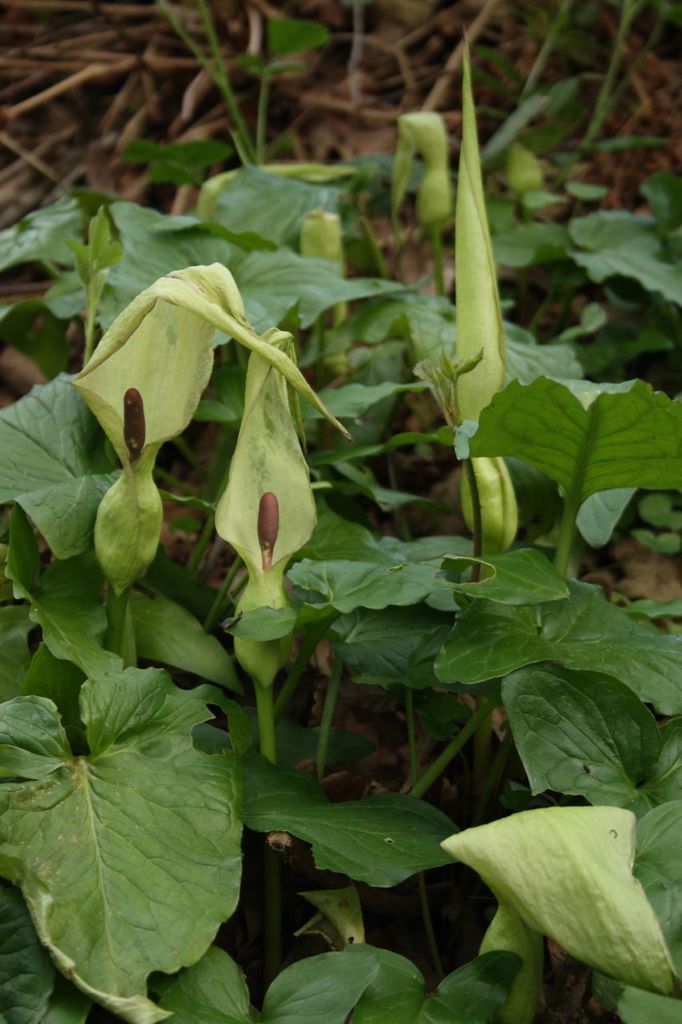
The hooded structure commonly regarded as one flower is a modified leaf called a spathe. It surrounds the club-shaped spadix, with the small true flowers arranged near its lower portion. Both the spathe and spadix can release irritating sap and crystals when chewed.
The berries create a distinctive seasonal hazard because they form a dense, upright, conspicuous orange-red cluster after the leaves and spathe may have withered. An animal may therefore encounter an attractive berry spike without the foliage that would make identification easier.
The starchy underground tuber presents a different exposure pattern. A dog may uncover it while digging or gain access during plant division, soil disturbance, transplanting, traditional food preparation, or disposal of uprooted plants. The tuber can provide access to a much greater mass of plant tissue than one exploratory leaf bite.
Triglochinin and Cyanogenic Potential
The cyanogenic glycoside triglochinin has been reported from Arum maculatum leaves and spathes. Cyanogenic glycosides can release hydrogen cyanide when damaged plant tissue allows the glycoside to interact with the appropriate degradative enzymes.
Cyanide prevents cells from using oxygen efficiently by inhibiting mitochondrial cytochrome c oxidase. A clinically important exposure could theoretically produce rapid breathing, anxiety, weakness, tremors, seizures, collapse, unusually bright-red mucous membranes, and rapid deterioration.
Detection of triglochinin establishes a potential secondary hazard but does not prove that routine pet ingestion of one leaf or several berries releases a clinically important cyanide dose. Species-specific veterinary dose-response studies and well-documented natural cyanide cases involving A. maculatum are lacking.
The expected presentation remains immediate oral pain, drooling, swelling, dysphagia, vomiting, and gastrointestinal irritation. Rapid hypoxic or neurologic collapse should prompt investigation for a very large exposure, another cyanogenic plant, smoke, pesticide, medication, contaminated feed, household chemical, or a mixed poisoning.
Tuber Lectins and Pro-Inflammatory Activity
Lectins have been isolated from the roots and tubers of Arum maculatum, including an N-acetyllactosamine-binding tuber lectin and the material commonly described as Arum maculatum agglutinin.
Experimental work has demonstrated that purified Arum maculatum lectin can stimulate inflammatory-cell migration and other pro-inflammatory responses. Tuber lectin has also been studied for insecticidal and biologic activity.
These findings provide a plausible reason that a substantial tuber ingestion should not be reduced to a trivial mouth-irritation event. They do not, however, establish the amount absorbed from a chewed raw tuber, a toxic veterinary lectin dose, or a predictable lectin-mediated syndrome in dogs, cats, horses, livestock, or rabbits.
Lectins should therefore remain a documented secondary component rather than being promoted to the same level of clinical certainty as the raphides.
Saponins, Volatile Amines, Alkaloid-Like Compounds, and Other Constituents
Phytochemical reviews report saponins, volatile amines, alkaloid-like compounds, terpenic constituents, proanthocyanidins, carotenoids, mucilage, gum, starch, and other compounds from different parts or extracts of Arum maculatum.
Saponins and amines may contribute to gastrointestinal irritation, salivation, membrane disturbance, or the plant’s acrid character. Extract-based chemical detection does not establish that each compound contributes equally to natural poisoning or has a defined veterinary toxic dose.
The strongest evidence still supports raphide-driven oral and gastrointestinal injury. The additional chemistry mainly increases uncertainty after a substantial berry, tuber, concentrated extract, prepared-food, or unidentified plant exposure.
Severe neurologic, cardiovascular, hepatic, or renal illness should not be assigned automatically to one listed secondary constituent merely because it has been identified in laboratory analysis.
Proteinase Is Not a Confirmed Principal Toxin
Proteolytic enzymes are sometimes included in general descriptions of aroid poisoning. In some raphide-containing plants, enzymes or other biologically active sap constituents may pass through the microscopic punctures created by the crystals and intensify local inflammation.
A clinically important proteinase has not been established adequately as a principal toxin of Arum maculatum. The term should not be presented as though one defined enzyme has been isolated, quantified, and proved responsible for natural animal poisonings.
The most accurate explanation is that the raphides cause the primary injury, while sap constituents and inflammatory mediators may worsen the local reaction.
Insoluble and Soluble Oxalates Are Different Hazards
Insoluble calcium oxalate raphides must be distinguished from absorbable soluble oxalates. The raphides in Arum primarily remain at the point of contact and cause localized mechanical injury and inflammation.
Soluble oxalates from other plants can enter the bloodstream, bind circulating calcium, produce hypocalcemia, and contribute to calcium oxalate deposition in renal tubules. Those exposures may cause weakness, tremors, seizures, abnormal heart rhythms, metabolic disturbance, and kidney failure.
That systemic syndrome is not expected after an uncomplicated leaf-chewing exposure to correctly identified Arum maculatum. Kidney failure, markedly reduced urination, systemic hypocalcemia, persistent arrhythmias, or profound neurologic illness requires investigation for another plant, ethylene glycol, medication, dehydration, mixed exposure, or unrelated disease.
Traditional Processing Does Not Establish Pet Safety
Arum leaves and tubers have a long history of human food use after elaborate regional preparation. Documented methods have included repeated boiling, prolonged heating, fermentation, drying, washing, acidic ingredients, starch extraction, and disposal of cooking water.
Those techniques varied by plant species, region, plant part, and intended food. Historical use often occurred during severe food shortages, and improperly processed material remained capable of causing painful irritation and illness.
No household cooking method, recipe, soup, fermented preparation, flour, starch, leftover, or discarded cooking liquid should be assumed safe for an animal. Pets may consume raw fragments, concentrated sediment, discarded water, or incompletely processed plant tissue that a human diner would not intentionally eat.
No Dependable Safe Dose
No safe leaf amount, berry count, tuber weight, raphide concentration, triglochinin dose, lectin dose, or lethal threshold has been established for an individual dog, cat, horse, livestock animal, rabbit, bird, or other pet.
Severity depends on the plant part, amount chewed, location of crystal contact, degree of tissue damage, animal size, swallowing ability, airway anatomy, vomiting, hydration, and whether another plant, pesticide, food preparation, or foreign material was involved.
A brief leaf taste that causes immediate pain is not equivalent to a dog swallowing a large tuber fragment or a rabbit eating several berries. Every case should be assessed from the actual exposure rather than from one universal berry or leaf rule.
Immediate Oral Pain and Defensive Behavior
Signs commonly begin while the animal is chewing the plant or within minutes because the raphides act directly on contacted tissues. A dog or cat may abruptly drop the plant, cry out, shake the head, paw at the muzzle, rub the face against the floor, retreat from food, or behave as though something sharp is lodged in the mouth.
Profuse drooling, lip smacking, repeated swallowing, gagging, retching, tongue movements, and reluctance to close the mouth are characteristic. Saliva may become thick, foamy, or stringy because swallowing is painful.
The severity of the apparent distress may seem disproportionate to the amount chewed. This is expected because one bite can release large numbers of microscopic crystals into highly sensitive tissues.
Redness and Swelling of the Mouth and Throat
The lips, gums, tongue, palate, oral lining, pharynx, and surrounding facial tissues may become red, painful, and swollen. The animal may resist opening the mouth or having the face handled.
Painful swallowing can cause food refusal, reluctance to drink, repeated unsuccessful attempts to swallow, or saliva running continuously from the mouth. A bark, meow, whinny, or other vocalization may sound hoarse or altered when tissues near the pharynx or larynx are inflamed.
Most swelling remains localized and begins subsiding as loose material is cleared and inflammation decreases. Progressive enlargement of the tongue, face, throat, or neck is not suitable for prolonged home observation.
Upper-Airway Obstruction
Severe pharyngeal or laryngeal edema is uncommon but represents the most important immediate life-threatening complication. Airway narrowing can worsen after the animal has stopped chewing.
Warning signs include harsh or noisy inspiration, rapid or labored breathing, exaggerated chest or abdominal movement, neck extension, panic, inability to settle, open-mouth breathing in a cat, blue-gray mucous membranes, weakness, or collapse.
These findings require immediate emergency transport. Food, water, oral medication, and repeated attempts to inspect the back of the mouth can increase stress or aspiration risk and should not delay airway management.
Respiratory distress may also result from aspiration, a lodged berry stalk, a tuber fragment, an allergic reaction, caustic exposure, or another foreign body. The presence of Arum does not exclude those emergencies.
Vomiting, Diarrhea, and Dehydration
Dogs and cats may vomit after swallowing leaves, sap, berries, tuber fragments, or saliva containing crystals. Vomiting may occur once or become repeated after a larger exposure.
Nausea, abdominal discomfort, reduced appetite, soft or watery diarrhea, mucus, urgency, and intestinal cramping may follow. These signs reflect gastrointestinal irritation rather than proof that oxalate has been absorbed systemically.
Repeated vomiting or diarrhea can cause dry or tacky gums, sunken eyes, reduced urination, weakness, electrolyte abnormalities, acid-base disturbance, and poor circulation. A small animal may become dehydrated more quickly than a large dog or horse.
Repeated bloody vomiting, coffee-ground material, black stool, marked abdominal enlargement, unproductive retching, or severe focal pain is not expected after one uncomplicated leaf taste and requires investigation for extensive injury, another toxin, a foreign object, or unrelated gastrointestinal disease.
Berries and Tuber Ingestion
A substantial berry or tuber exposure can produce more prolonged oral pain, vomiting, diarrhea, dysphagia, and mucosal inflammation because the animal has access to more plant tissue than during one brief leaf bite.
The orange-red berries may be swallowed rapidly from an upright cluster, while a dog may chew or swallow a dense portion of tuber before the exposure is noticed.
Reported cyanogenic, lectin, saponin, amine, and alkaloid-like constituents create additional uncertainty after these larger exposures. Marked weakness, tremors, abnormal behavior, cardiovascular instability, severe respiratory distress, or collapse warrants poison-service consultation and a broader diagnostic evaluation.
These systemic signs are not consistent enough to define one routine Arum syndrome and should not be assigned automatically to triglochinin or lectins without considering another poison or medical cause.
Possible Cyanide-Like Warning Signs
Clinically important cyanide poisoning is not the expected result of ordinary Arum maculatum exposure, but rapid deterioration after a substantial fresh-tissue ingestion must be treated seriously.
Possible warning signs include sudden anxiety, very rapid or labored breathing, weakness, tremors, loss of coordination, seizures, collapse, reduced responsiveness, and unusually bright-red mucous membranes or blood.
These findings may also result from another cyanogenic plant, smoke inhalation, carbon monoxide, pesticide, medication, contaminated feed, industrial chemical, or another acute toxin.
Blue-gray gums, gasping, inability to stand, seizures, or collapse is an emergency regardless of whether cyanide is ultimately confirmed.
Rabbits and Other Small Herbivores
Rabbits and guinea pigs cannot vomit. They may develop oral irritation, salivation, reluctance to chew or swallow, food refusal, lethargy, fewer droppings, tooth grinding, abdominal discomfort, or gastrointestinal stasis.
Food refusal is especially important because a rabbit can develop secondary gastrointestinal and metabolic complications even after the original mouth irritation begins improving.
A rabbit that continues refusing food, produces fewer or no droppings, sits hunched, grinds the teeth, drools, or becomes quiet requires prompt species-appropriate veterinary care.
Companion birds may develop regurgitation, altered droppings, appetite loss, fluffed posture, oral discomfort, or weakness. Wild-bird interaction with fruit does not establish a safe amount for captive species.
Horses and Livestock
Horses, cattle, sheep, goats, pigs, and other grazing animals may develop hypersalivation, head shaking, repeated tongue movements, painful chewing, feed refusal, oral redness, swelling, and difficulty swallowing.
Horses cannot vomit. Continued salivation, coughing, neck extension, nasal discharge containing feed or saliva, repeated unsuccessful swallowing, or inability to eat must also be differentiated from esophageal choke, dental injury, oral foreign material, pharyngeal trauma, and caustic exposure.
Large livestock exposures may occur when berry stalks or tubers are mixed into cleared vegetation, when hungry animals enter woodland edges, or when uprooted material is discarded into an enclosure.
Group illness, severe colic, recumbency, respiratory abnormalities, tremors, seizures, or death requires investigation of every available plant, feed source, pesticide, fertilizer, water source, and chemical.
Eye and Skin Signs
Sap or raphides entering an eye may cause immediate blinking, tearing, squinting, redness, eyelid swelling, light sensitivity, pawing at the face, or persistent eyelid closure.
Corneal irritation or ulceration may produce cloudiness, discharge, marked pain, or apparent visual difficulty. The seriousness of a corneal injury cannot be determined reliably without direct examination and fluorescein staining.
Skin contact may produce local burning, redness, itching, swelling, or dermatitis, particularly on the muzzle, lips, paws, thinly haired areas, or damaged skin.
Continued licking and rubbing can spread sap from the skin or coat into the mouth and eyes and intensify the reaction.
Expected Course and Atypical Findings
Most small, uncomplicated oral exposures begin improving within several hours and resolve within approximately twelve to twenty-four hours.
Persistent inability to swallow, continuing food refusal, repeated vomiting, progressive swelling, dehydration, coughing, fever, eye pain, or signs continuing beyond the expected short course requires veterinary reassessment.
Convulsions, coma, kidney failure, severe liver injury, prolonged cardiac abnormalities, or progressive multisystem deterioration is not characteristic of one minor raphide exposure.
Those findings should prompt investigation for substantial tuber or berry ingestion, soluble oxalates, another cyanogenic plant, pesticide, medication, household chemical, toxic mushroom, foreign material, or unrelated disease.
Plant Identity, Native Range, and Exposure Habitat
Arum maculatum is a tuberous woodland perennial in the Arum Family. Its native range extends across much of Europe through northern Türkiye and the western Caucasus.
It is associated particularly with deciduous woodland, hedgerows, shaded banks, riversides, moist forest margins, fertile disturbed ground, old gardens, compost edges, and shaded rural or suburban sites.
Dogs may encounter it while walking in woods, investigating berry spikes, digging in shaded soil, or accessing uprooted plants. Horses and livestock are more likely to encounter it along wooded pasture edges, hedgerows, stream margins, or in cleared vegetation and garden waste.
The page title Arum is broad, but this record concerns specifically Arum maculatum. Other Arum species share some identification features and raphide toxicology but are separate botanical records.
Leaves, Spathe, Spadix, Berries, and Tuber
The plant grows from a horizontal or rounded underground tuber and produces glossy arrow-shaped or spear-shaped leaves. Some leaves bear dark purple or blackish spots, while others are completely unspotted.
The specific name maculatum refers to spotting, but the absence of spots does not rule out the species. Identification should use the full plant, seasonal stage, flower structure, berry spike, habitat, and geographic location.
The reproductive structure consists of a pale green hooded spathe surrounding a club-shaped spadix that is often dark purple. The small true flowers are arranged near the lower portion of the spadix rather than forming the conspicuous hood.
After flowering, the foliage and spathe wither. The fruiting stalk develops into a dense upright cluster of orange-red berries, creating a seasonal hazard that may remain conspicuous after the identifying leaves have disappeared.
The underground tuber can remain accessible after above-ground growth has declined. Dogs may uncover it while digging, and gardening or traditional food preparation may place dense raw fragments at ground or kitchen level.
The Berry Spike Is a Distinct Seasonal Exposure
The orange-red berries are visually conspicuous and clustered tightly enough that an animal may swallow several quickly. Their persistence after leaf dieback can make the exposure difficult to identify.
Immediate irritation may discourage continued chewing, but the berries should not be described as harmless or assigned a universal safe number. They contain raphides, and the contribution of additional plant constituents has not been quantified sufficiently for a dependable dose rule.
Berry stalks may be cut during maintenance or carried into piles with other vegetation. Fallen berries and fruiting spikes should be collected before dogs, rabbits, poultry, horses, or livestock gain access.
The Tuber and the Documented Human Poisoning
The tuber is starchy, dense, and capable of providing a much greater exposure than one leaf. It also contains documented lectins and other reported constituents in addition to calcium oxalate crystals.
K. N. J. Prakash Raju and colleagues described a twenty-year-old man who intentionally consumed approximately fifty grams of wild Arum maculatum tuber. He presented about three hours later with angioedema, required hospital treatment and observation, and was discharged four days later.
This was a human case rather than a controlled veterinary study and cannot be converted into a toxic dose for a dog, cat, horse, rabbit, or livestock animal.
It nevertheless demonstrates that deliberate substantial tuber ingestion can produce clinically important swelling and a prolonged medical course rather than only momentary mouth tingling.
Secondary Chemistry and Its Limitations
Burçin Ergene and Melek Karaaslan’s 2023 review, “Food, Medicine or a Poisonous Plant: Arum maculatum L.,” summarized reports of oxalate crystals, triglochinin, saponins, volatile amines, alkaloid-like constituents, terpenoids, proanthocyanidins, carotenoids, lectins, mucilage, gum, and starch.
The tuber is especially notable for its lectins, while triglochinin has been reported from leaves and spathes. Purified Arum maculatum lectin has demonstrated pro-inflammatory activity experimentally.
These findings document a chemically complex plant but do not establish how much of each compound is absorbed after a natural animal exposure or which compounds explain each sign.
Calcium oxalate raphides remain the best-established cause of the immediate mouth and throat syndrome. The additional chemistry mainly supports closer monitoring after large tuber, berry, extract, or prepared-food exposures.
Raw Food Use Does Not Make Arum Pet-Safe
Łukasz Łuczaj and Gizem Emre’s 2025 review, “Lords-and-Ladies (Arum) as Food in Eurasia,” documented historical and continuing food use of several Arum species, including A. maculatum.
Preparation methods have included prolonged boiling, repeated changes of water, fermentation, drying, washing, starch separation, acidic ingredients such as sumac or lemon, and disposal of cooking liquid. European tuber use was often associated with famine or severe food scarcity.
The range and complexity of these techniques demonstrate the difficulty of reducing the plant’s acridity and other harmful constituents. They do not establish that raw foliage, casual cooking, one family recipe, discarded liquid, soup scraps, starch sediment, or partly processed tuber is safe for an animal.
Pets should not be offered any raw or processed portion, and they should be kept away from preparation surfaces, soaking water, discarded leaves, tuber pulp, and cooking waste.
Italian Arum and Other Look-Alikes
Italian Arum, Arum italicum, is a separate accepted species. It commonly has conspicuous pale or silvery leaf veins and often follows a different seasonal growth pattern, but it can still produce a similar hooded spathe and orange-red berry spike.
Both species should be treated as poisonous. Exact identification remains useful for range, seasonal exposure, and species-specific chemistry, but the immediate oral first aid is similar.
Jack-in-the-Pulpit and Wake-Robin are commonly used for North American Arisaema species, especially Arisaema triphyllum. These plants also contain irritating raphides but are not botanical synonyms of Arum maculatum.
Arum Lily usually refers to Zantedeschia species. Those are also aroids with raphides but are separate plants. True lilies belong to Lilium or Hemerocallis and pose a fundamentally different renal emergency to cats.
Rabbits, Dogs, Cats, Horses, and Livestock
Dogs are the domestic animals most likely to investigate the upright berry spike, dig up a tuber, chew garden waste, or swallow raw scraps associated with foraging or food preparation.
Cats may bite leaves, contact sap on the paws or coat, or investigate cut plant material brought indoors. Continued feline food refusal requires attention even when the original injury is confined to the mouth.
Rabbits may develop oral irritation, salivation, reluctance to eat, and lethargy. Because they cannot vomit and depend on continuous food intake, prolonged appetite loss can progress to gastrointestinal stasis.
Horses and livestock may browse emerging leaves or ingest material in hedge cuttings, dumped vegetation, or disturbed woodland margins. Severe group illness should trigger a broad investigation rather than automatic attribution to Arum.
Diagnosis and Differential Diagnosis
Diagnosis usually depends on witnessed exposure, accurate identification, abrupt oral pain, hypersalivation, swelling, and difficulty swallowing.
Useful evidence includes an intact leaf, both leaf surfaces, the spathe and spadix, berry spike, tuber fragment, photographs of the complete plant and habitat, and any raw or processed food material involved.
The veterinarian may inspect the lips, tongue, beneath the tongue, gums, palate, pharynx, and upper airway for swelling, retained plant pieces, ulceration, or another foreign body. Breathing and swallowing safety take priority over a prolonged oral examination.
Laboratory testing may not be necessary after a small, clearly identified leaf exposure. Bloodwork, blood gases, lactate, electrolytes, kidney and liver values, urinalysis, cardiovascular monitoring, or imaging may be appropriate after substantial berry or tuber ingestion or when signs are severe or atypical.
Differential diagnoses include Italian Arum, Arisaema, Calla Lily, other aroids, soluble-oxalate plants, true lilies in cats, caustic chemicals, oral foreign bodies, allergic reactions, insect stings, pesticides, medication, smoke exposure, and cyanogenic plants.
Prognosis and Prevention
The prognosis is good to excellent after most small, uncomplicated oral exposures. Immediate pain usually limits continued eating.
The prognosis becomes more guarded when progressive airway swelling, persistent vomiting, inability to swallow, eye injury, dehydration, prolonged rabbit anorexia, substantial tuber ingestion, or unexplained systemic illness develops.
Prevent exposure by checking shaded animal-accessible areas for emerging leaves, removing fruiting stalks before berries fall, blocking digging around known plants, and collecting uprooted tubers and garden waste immediately.
Wear gloves while handling the plant, clean tools and preparation surfaces, and prevent animals from licking sap or residue from hands, clothing, paws, fur, kitchen waste, or discarded cooking liquid.
Immediate Steps After Exposure
- Stop additional exposure. Move the animal away from leaves, berry stalks, flower structures, sap, roots, tubers, processed food, cooking waste, and garden debris.
- Assess breathing before examining the mouth. Noisy or labored breathing, gasping, neck extension, open-mouth breathing, rapidly increasing tongue or throat swelling, blue-gray gums, weakness, or collapse requires immediate emergency transport.
- Remove only loose visible material. Carefully lift plant pieces resting near the lips or front of the mouth when this can be done without being bitten. Do not perform a blind finger sweep or reach toward the throat.
- Wipe away accessible sap. Use a damp cloth on the lips, muzzle, and safely reached front portions of the mouth when the animal is alert and swallowing normally.
- Preserve identification evidence. Save leaves, the spathe and spadix, berries, tuber fragments, prepared food, or photographs of the entire plant and exposure site.
- Estimate the exposure. Record the plant part, quantity missing, time of access, vomiting, swelling, eye contact, abnormal behavior, and whether the animal ate raw or processed material.
- Contact veterinary help promptly. Berry or tuber ingestion, an uncertain amount, persistent oral pain, repeated vomiting, systemic signs, or a rabbit stopping food warrants professional guidance.
Do Not Attempt Unsupervised Home Treatment
- Do not induce vomiting. Returning raphide-containing material through the esophagus and mouth can cause additional injury and increases aspiration risk when swallowing is painful or impaired.
- Do not use hydrogen peroxide at home. It can injure the stomach and esophagus, is particularly unsafe in cats, and is inappropriate for an insoluble-oxalate oral-irritant exposure.
- Do not use salt, mustard, syrup of ipecac, detergent, oil, manual gagging, or fingers in the throat. These methods can cause poisoning, aspiration, or traumatic injury.
- Never attempt to induce vomiting in a horse. Horses cannot vomit.
- Do not force milk, yogurt, cheese, food, water, broth, oil, or electrolyte drinks. Forced swallowing may worsen pain or cause aspiration when the mouth or throat is swollen.
- Do not give activated charcoal at home. Charcoal does not remove raphides embedded in tissue and may be inhaled by an animal with vomiting, swelling, or impaired swallowing.
- Do not give diphenhydramine, other antihistamines, corticosteroids, pain medication, antacids, bismuth products, sucralfate, antidiarrheals, or leftover prescriptions. These are not universal Arum antidotes and must be selected from the actual examination.
- Do not assume cooked material is safe. Raw or partly processed leaves, tubers, soups, starch residue, scraps, soaking liquid, and discarded cooking water retain an uncertain hazard.
Mouth and Swallowing Care
Do not repeatedly manipulate a painful mouth. Excessive handling can increase inflammation, push material farther back, cause aspiration, or result in a bite injury.
Remove loose fragments and wipe accessible sap only when the animal remains calm, alert, breathing normally, and able to swallow.
Do not pour or spray water forcefully into the mouth. Give nothing by mouth to an animal that is repeatedly vomiting, severely swollen, collapsed, seizing, breathing abnormally, or unable to swallow safely.
Continuous drooling, repeated gagging, an altered voice, food refusal, inability to retain water, or repeated unsuccessful swallowing requires examination of the mouth, pharynx, esophagus, and upper airway.
Eye and Skin Exposure
If sap entered an eye and no object is visibly embedded, begin gentle irrigation with sterile saline or clean lukewarm water while preventing the animal from rubbing the face.
Do not use tweezers, cotton swabs, cloth, fingers, human redness drops, or leftover eye medication on the eye surface.
Persistent squinting, tearing, cloudiness, redness, discharge, swelling, light sensitivity, or inability to open the eye requires prompt veterinary examination.
Wash sap from the skin, paws, or fur with lukewarm water and a mild species-appropriate cleanser. Rinse thoroughly and prevent grooming until residue has been removed.
When Emergency Examination Is Required
- Airway abnormalities: Noisy, harsh, rapid, labored, shallow, or open-mouth breathing; neck extension; gasping; blue-gray gums; or collapse requires immediate care.
- Progressive swelling: Increasing enlargement of the lips, tongue, face, throat, or neck should not be monitored at home.
- Inability to swallow: Continuous drooling, choking motions, regurgitation, inability to retain water, or refusal to swallow requires airway and hydration assessment.
- Substantial berry or tuber ingestion: These exposures involve a greater quantity of tissue and increased uncertainty from secondary constituents.
- Persistent gastrointestinal illness: Repeated vomiting, severe diarrhea, blood, black stool, marked abdominal pain, or progressive weakness requires examination.
- Rabbit food refusal: Continued anorexia or declining fecal output can lead to gastrointestinal stasis and requires prompt species-specific treatment.
- Possible systemic poisoning: Rapid breathing, bright-red or blue-gray mucous membranes, tremors, seizures, marked weakness, abnormal behavior, collapse, or reduced responsiveness requires emergency investigation.
- Eye injury: Continuing squinting, cloudiness, discharge, bleeding, or persistent eye rubbing requires corneal evaluation.
Veterinary Examination and Oral Treatment
The veterinarian will assess the lips, tongue, gums, palate, beneath the tongue, pharynx, swallowing ability, voice, breathing effort, oxygenation, hydration, and degree of swelling.
Remaining plant fragments may be removed under direct visualization, and accessible oral tissues may be gently cleansed. Sedation may be required when pain prevents a safe examination, but airway status must be considered before sedating an animal with throat swelling.
Veterinarian-selected analgesics may be used for significant oral pain. Anti-inflammatory medication may be appropriate when edema is clinically important, but antihistamines and corticosteroids are not automatic antidotes and should be selected from the examination findings.
A carefully controlled soothing oral material may sometimes be considered professionally after the veterinarian confirms that the animal is alert and swallowing safely. It does not dissolve embedded raphides and must not be forced at home.
Veterinarian-selected antiemetics such as maropitant or ondansetron may control continuing nausea and vomiting. Subcutaneous or intravenous fluids may correct dehydration and measured electrolyte abnormalities.
Sucralfate may be considered only when repeated vomiting, hematemesis, esophagitis, erosive injury, or documented mucosal damage requires barrier protection. It is not an Arum antidote and can interfere with absorption of other medications.
Airway and Respiratory Treatment
An animal with significant pharyngeal or laryngeal edema may require oxygen, injectable treatment, continuous observation, repeated airway examinations, and hospitalization.
Progressive obstruction may require placement of an endotracheal tube before swelling makes the airway impossible to access. Assisted ventilation may be needed when breathing remains inadequate.
A temporary surgical airway may rarely be required when severe swelling prevents normal airflow or ordinary intubation. Securing oxygen delivery takes priority over gastrointestinal decontamination.
Coughing, fever, worsening respiratory effort, abnormal lung sounds, or oxygen abnormalities after vomiting or regurgitation may require chest imaging and treatment for aspiration pneumonitis or pneumonia.
Large Berry or Tuber Exposures
Professional emesis is generally inappropriate once oral pain, drooling, vomiting, weakness, abnormal breathing, or impaired swallowing has developed.
After an unusually large, very recent berry or tuber ingestion in a fully alert, stable, asymptomatic dog, a veterinarian or poison specialist may consider whether controlled decontamination offers more benefit than risk. Owners must not attempt it themselves.
Activated charcoal has limited value against raphides and may worsen aspiration risk. A toxicologist may consider it only when a meaningful absorbable secondary toxin exposure is suspected and the patient can protect its airway.
Blood pressure, electrocardiography, electrolytes, blood glucose, kidney and liver values, blood gases, acid-base status, lactate, oxygenation, and neurologic examinations may be appropriate when systemic signs follow a large ingestion.
Cyanide-directed treatment is not routine after ordinary Arum chewing. If rapid respiratory and neurologic collapse creates a credible cyanide diagnosis, a veterinarian may consult a toxicologist and consider professional antidotal treatment such as hydroxocobalamin or sodium thiosulfate while supporting oxygenation and circulation.
Rabbit and Small-Herbivore Treatment
Rabbits and guinea pigs require prompt attention when mouth pain causes reduced food intake. Treatment may include species-appropriate analgesia, hydration, assisted nutrition after swallowing safety is confirmed, gastrointestinal motility support when indicated, and monitoring of fecal output and abdominal comfort.
Food or water should not be syringe-fed before a veterinarian confirms that the animal can swallow safely and is not obstructed or severely swollen.
Continued anorexia, absent droppings, marked lethargy, abdominal enlargement, tooth grinding, or weakness requires urgent care because gastrointestinal stasis can become medically serious.
Horses and Livestock
Remove every exposed animal from berry stalks, leaves, uprooted tubers, cleared vegetation, contaminated forage, and garden-waste piles.
Do not drench or force oil, charcoal, feed, water, or medication into an animal that is drooling heavily, coughing, choking, regurgitating, bloated, recumbent, or swallowing poorly.
Large-animal evaluation may include oral and pharyngeal examination, assessment for choke, airway evaluation, pain control, fluid therapy, and treatment of aspiration or dehydration.
Several affected animals, severe respiratory abnormalities, tremors, seizures, recumbency, or sudden death requires investigation of every plant, feed source, pesticide, fertilizer, chemical, and water supply.
Recovery, Prognosis, and Prevention
Most mild exposures improve within several hours and resolve within approximately twelve to twenty-four hours. The prognosis is good to excellent when breathing and swallowing remain normal.
Recovery may take longer after extensive oral injury, persistent vomiting, eye exposure, aspiration, significant airway swelling, prolonged rabbit anorexia, or substantial tuber ingestion.
Continued drooling, swelling, eye pain, food refusal, vomiting, coughing, abnormal breathing, or difficulty swallowing should be reassessed rather than accepted as a normal prolonged effect.
Remove berry stalks before fruit falls, block digging around known colonies, collect all uprooted tubers and garden waste, and secure raw or processed Arum material, cooking liquid, and food scraps in closed containers.
Frequently Asked Questions About Arum and Animal Poisoning
How poisonous is Arum maculatum to dogs and cats?
It is a painful raphide-containing poisonous plant. Chewing usually causes immediate mouth burning, drooling, pawing at the face, gagging, swelling, painful swallowing, food refusal, and sometimes vomiting. Most small exposures remain localized and recover well, but progressive throat swelling, substantial berry or tuber ingestion, or systemic signs requires urgent veterinary assessment.
What is the principal toxin?
The best-established toxic material is insoluble calcium oxalate arranged in microscopic needle-shaped raphides. These crystals are stored in specialized idioblast cells and are released when leaves, flower structures, berries, roots, or tubers are chewed or damaged.
Are the raphides a chemical poison or a physical injury?
They primarily cause microscopic physical penetration. The needles puncture the lips, tongue, oral lining, and throat and trigger intense local inflammation. Sap constituents and inflammatory mediators may worsen the reaction, but the mechanical needle injury remains the most firmly established cause of the immediate syndrome.
Which parts of Arum are poisonous?
All fresh parts should be treated as poisonous, including leaves, petioles, sap, spathe, spadix, flowers, orange-red berries, seeds, roots, and the underground tuber. Cut, uprooted, or partly processed plant material remains hazardous.
Are the orange-red berries especially dangerous?
They are an important exposure hazard because they are bright, tightly clustered, and may remain after the leaves have disappeared. They contain irritating crystals, and no safe berry count has been established. Multiple berries or an uncertain amount should be discussed with a veterinarian.
Why is the underground tuber more concerning?
The tuber provides access to a much larger mass of tissue than one leaf taste and contains documented lectins and other secondary constituents. Dogs may uncover it while digging or find it after gardening or food preparation. A substantial tuber ingestion can cause prolonged swelling, vomiting, diarrhea, and more uncertain systemic effects.
What happened in the documented human tuber case?
A twenty-year-old man intentionally consumed approximately fifty grams of wild Arum maculatum tuber and presented about three hours later with angioedema. He required hospital treatment and observation before discharge four days later. The case confirms that large tuber exposure can be clinically important but does not provide a veterinary toxic dose.
Does Arum maculatum contain cyanide-producing compounds?
Triglochinin, a cyanogenic glycoside, has been reported from the leaves and spathes. This establishes potential cyanide release from damaged tissue but does not prove that routine pet exposure causes a clinically important cyanide dose. Immediate oral and gastrointestinal irritation remains the expected syndrome.
What signs would raise concern for cyanide or another acute toxin?
Sudden rapid or labored breathing, severe weakness, tremors, seizures, collapse, reduced responsiveness, or unusually bright-red mucous membranes after a large exposure requires emergency treatment. These findings can also result from another cyanogenic plant, smoke, pesticide, medication, chemical, or mixed poisoning.
What are Arum tuber lectins?
Lectins are carbohydrate-binding proteins isolated from Arum maculatum tubers. Purified lectin has shown pro-inflammatory activity in experimental research. Its presence supports caution after major tuber ingestion, but no dependable veterinary lectin dose or natural lectin-poisoning syndrome has been established.
Can Arum cause kidney or liver failure?
Kidney or liver failure is not expected after a small uncomplicated raphide exposure. Insoluble crystals primarily injure contacted tissues and differ from absorbable soluble oxalates that can damage the kidneys. Organ abnormalities require investigation for dehydration, substantial or mixed ingestion, another poison, or unrelated disease.
How quickly do symptoms begin?
Oral pain, drooling, pawing, gagging, and reluctance to swallow usually begin while the plant is being chewed or within minutes. Swelling and gastrointestinal signs may become more apparent over the following minutes or hours, so breathing and swallowing should continue to be monitored.
Can Arum poisoning be fatal?
Most small oral exposures are not fatal. Severe swelling near the larynx can obstruct the airway, while aspiration, substantial tuber ingestion, severe dehydration, or another toxin can complicate the case. Breathing difficulty, progressive swelling, collapse, seizures, or reduced responsiveness is an emergency.
Is Arum poisonous to rabbits?
Yes. Rabbits may develop oral irritation, salivation, lethargy, and reluctance to eat. Because rabbits cannot vomit and can develop gastrointestinal stasis when food intake declines, continued anorexia or reduced fecal output requires prompt veterinary attention.
Is Arum poisonous to horses and livestock?
Yes. Horses and livestock may develop mouth pain, salivation, head shaking, feed refusal, tongue or throat swelling, and difficulty swallowing. Horses cannot vomit. Persistent drooling and feeding difficulty must also be distinguished from choke, dental disease, oral foreign material, caustic exposure, or another poisonous plant.
Is Arum maculatum the same as Italian Arum?
No. Italian Arum is Arum italicum, a separate accepted species that often has prominent pale or silvery leaf veins and a different seasonal growth pattern. Both produce raphide-containing tissues and orange-red fruit spikes and should be treated as poisonous.
Is Arum the same as Jack-in-the-Pulpit or Arum Lily?
No. Jack-in-the-Pulpit usually refers to North American Arisaema species. Arum Lily generally refers to Zantedeschia. They are related aroids with similar raphide hazards but are not botanical synonyms of Arum maculatum.
Is Arum a true lily?
No. True lilies belong to Lilium, and Daylilies belong to Hemerocallis. Those plants can cause fatal kidney failure in cats after tiny exposures. Arum causes immediate oral raphide injury instead. Any unidentified plant called a lily should be identified promptly, especially after feline exposure.
Does cooking, fermenting, washing, or drying make Arum safe for pets?
No home preparation should be assumed safe. Traditional human food methods have involved complicated combinations of repeated boiling, fermentation, acidity, drying, washing, starch extraction, and disposal of liquid. Raw or casually processed leaves, tubers, soups, scraps, sediment, and cooking water should not be given to animals.
Should I make my pet vomit?
No. Do not induce vomiting or give hydrogen peroxide. Vomiting returns raphide-containing plant material through already injured tissues and may cause aspiration when swallowing is painful or impaired. A veterinarian should decide whether any controlled decontamination is justified after an unusually large recent ingestion.
Should I give milk, yogurt, Benadryl, or activated charcoal?
Do not force dairy products, food, liquids, antihistamines, or medication into an animal with mouth or throat swelling. Forced swallowing may be painful or unsafe. Activated charcoal does not remove embedded raphides and may be aspirated. Veterinary treatment must be selected after assessing breathing and swallowing.
How is Arum poisoning treated?
There is no antidote that dissolves embedded raphides. Treatment may include removal of visible plant material, gentle oral cleansing, pain control, anti-inflammatory treatment when appropriate, antiemetics, fluids, oxygen, repeated airway examinations, intubation for serious swelling, eye treatment, and additional monitoring after substantial berry or tuber ingestion.
How long do symptoms last, and what is the prognosis?
Mild oral irritation generally improves within several hours and commonly resolves within approximately twelve to twenty-four hours. The prognosis is good to excellent when breathing and swallowing remain normal. Persistent swelling, food refusal, vomiting, eye pain, rabbit anorexia, abnormal breathing, or systemic signs requires reassessment.